
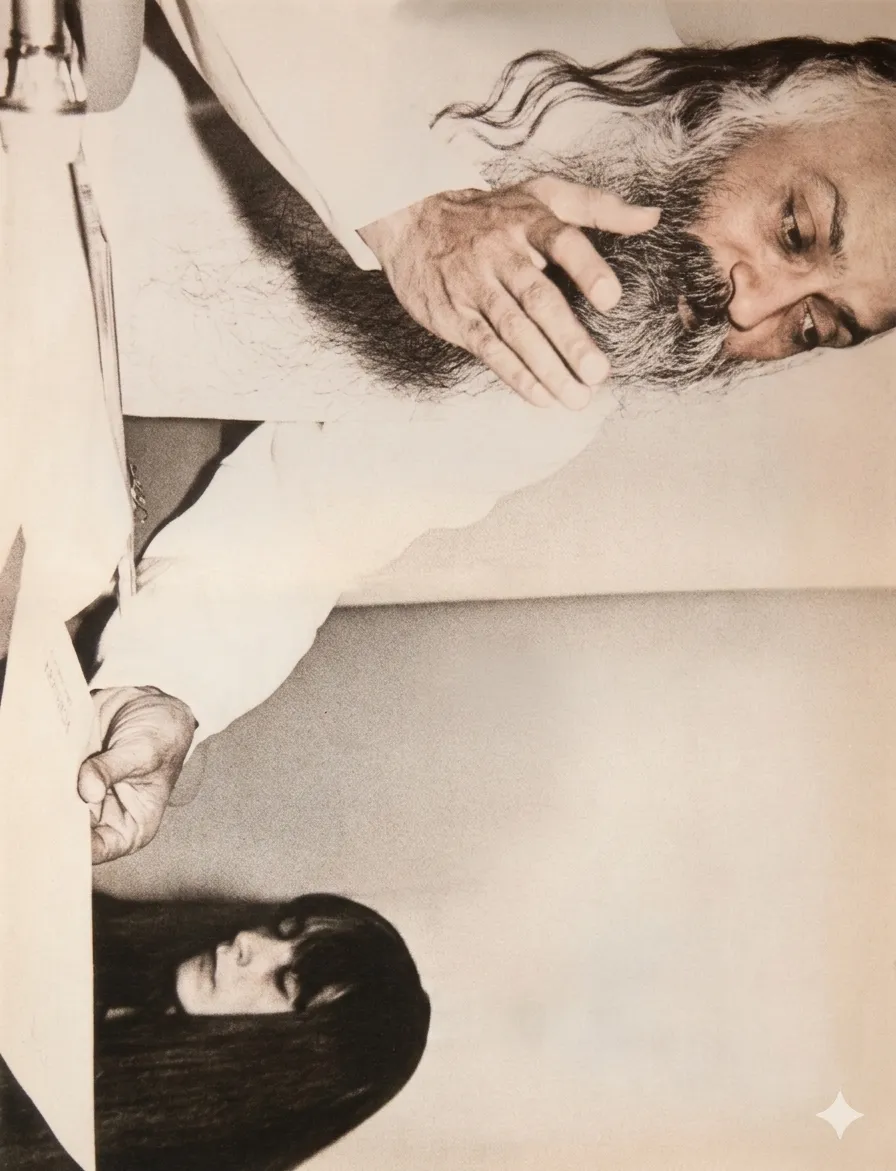
Escaping means running away from the hard truth that could crack your old habits, instead of staying and letting it change you.
From the Discourses
Passages where Osho speaks to this question — each links to the complete discourse.
Osho, should I understand that not accepting a challenge is a kind of escapism?
Yes, not accepting challenges is a kind of escape, an escapism. And until we accept challenges, our real birth cannot happen. The second birth I speak of will happen only when we accept all challenges. We accept them, we fight with them, we face them; in that very facing, the soul is born within us. In an escapist, the soul is never going to be born, because he runs away from the very occasions where the soul takes birth. Take a seed: the gardener plants it in the soil. If the seed gets frightened and says, “I am not going into the darkness of the earth; I was fine lying in a corner of the gardener’s house. I will not go into the earth, into the dark,” then the seed is refusing the challenge of descending into darkness—no sprout will ever arise in it. Or suppose the seed is placed…
शुड आई मीन ओशो, दैट दि नॉन-एक्सेप्टेंस ऑफ दि चैलेंज इ़ज वन काइंड ऑफ एस्केपिज्म?
हां, चुनौतियों को स्वीकार न करना एक प्रकार का पलायन और एस्केप है। और जब तक हम चुनौतियों को स्वीकार नहीं करते, तब तक हमारा जन्म नहीं हो सकता। जिस दूसरे जन्म की मैं बात कर रहा हूं, वह जन्म तो तभी होगा जब हम समस्त चुनौतियां को स्वीकार कर लेते हैं। स्वीकार करते हैं, चुनौती को लड़ते हैं, सामना करते हैं, उसी सामना करने में हमारे भीतर आत्मा का जन्म होता है। एस्केपिस्ट के पास कभी आत्मा पैदा होने वाली नहीं है क्योंकि वह उन मौकों से ही भाग गया जहां आत्मा पैदा होती है। जैसे एक बीज है, उसे माली जमीन में गाड़ता था। वह डर गया कि जमीन के अंधेरे में मैं नहीं जाता हूं, मैं तो ठीक था माली के घर में कोने में रखा हुआ। मैं जमीन में, अंधेरे में नहीं जाता। एक चुनौती मिलती थी अंधेरे में उतरने की, वह बीज ने इनकार कर दिया। उस बीज में अंकुर पैदा नहीं होगा। या समझ लें कि बीज डाल दिया गया जमीन में, अब बीज से अंकुर फूटने का सवाल है, लेकिन अंकुर डरता है, बीज के भीतर सुरक्षित है, बाहर निकलेगा, खतरा है। …
[A sannyasin says: I think the groups have made me confused. They're making me frightened. And after the lectures I feel sick. I just find that I try to escape from you and I daydream on purpose to avoid you.] Try... you cannot escape. And wherever you will go, I will haunt you! Once caught it is very difficult to escape [laughter]. I know. I know you don't want to try, but to each sannyasin it has to come one day or other. When you really start coming close to me, fear arises, because a little closer and you will be gone. Then you will never be able to return back to your old self. And that is the only self you know. You will have a new self, but that you don't know right now, so how can you be certain about it ?
Sannyas is a gamble. It is risking your known life for something unknown, That's why a master is needed to persuade you, to push you, to seduce you towards the unknown. A master is needed whom you can trust, whose love you can trust, whose presence gives you the confidence to take the step into the unknown, to take your small boat into the uncharted sea. Once you have entered into the unknown then there is no problem: you know that is bliss, that is truth, that is god. Then one never looks back. But to drop the safety of the shore, to drop the safety of the known and the familiar, one needs courage.
It is as if a person thinks that he is his clothes and one day you take his clothes off. He starts crying and weeping: "Don't kill me -- I will die!" It is ridiculous. We know that he is not going to die -- these are only clothes and he will be getting new clothes, that's why we are taking the old clothes. They are dirty and rotten and they don't fit and they make him look ridiculous. But he has lived with those clothes so long. He has completely forgotten that he is separate from them. Personality is just a psychological clothing, a garment. We have become too attached to it, we have lived with it so long. We have never known any separation from it.
Osho, you have titled this series of talks “Sahaj Yoga.” Do “sahaj” and “yoga” not seem mutually opposed?
Anand Maitreya! They don’t just seem opposed, they are opposed. But no ultimate truth of life can manifest without contradiction. Life is made of opposites—darkness and light, day and night, woman and man, negative electricity and positive electricity, birth and death. The very structure of life is woven of opposites. Hence the opposites are not only opposed; they are complementary to each other. If you have labored hard all day, you will be able to sleep deeply. Labor and rest are opposites, yet only the one who has worked can rest deeply—and the one who has not worked cannot. So the opposites are not only opposed, they complete each other. And only the one who has rested deeply at night can rise in the morning and engage in work again. One who has not rested through the night will not be able to work in the morning. Look closely at…
पहला प्रश्न: ओशो, आपने इस प्रवचनमाला का शीर्षक दिया है--सहज-योग। क्या सहज और योग परस्पर-विरोधी नहीं लगते?
आनंद मैत्रेय! विरोधी लगते ही नहीं, विरोधी हैं। लेकिन जीवन का कोई भी परम सत्य बिना विरोधाभास के प्रगट हो ही नहीं सकता। जीवन बना है विरोधों से--अंधेरा और प्रकाश, दिन और रात, स्त्री और पुरुष, ऋण विद्युत-धन विद्युत, जन्म-मृत्यु। जीवन की संरचना विरोधों से है। इसलिए विरोधी विरोधी ही नहीं हैं, एक-दूसरे के परिपूरक भी हैं। दिन भर श्रम किया खूब तो गहरी नींद सो सकोगे। श्रम और विश्राम विरोधी हैं, पर जिसने श्रम किया है वही गहरा विश्राम कर सकेगा। और जिसने श्रम नहीं किया वह गहरा विश्राम भी न कर सकेगा। तो विरोधी विरोधी ही नहीं हैं, एक-दूसरे के परिपूरक भी हैं। और जिसने रात्रि गहरा विश्राम किया है वही सुबह जागकर फिर श्रम में संलग्न हो सकेगा। जो रात-भर विश्राम नहीं कर सका वह सुबह श्रम में भी न लग सकेगा।