
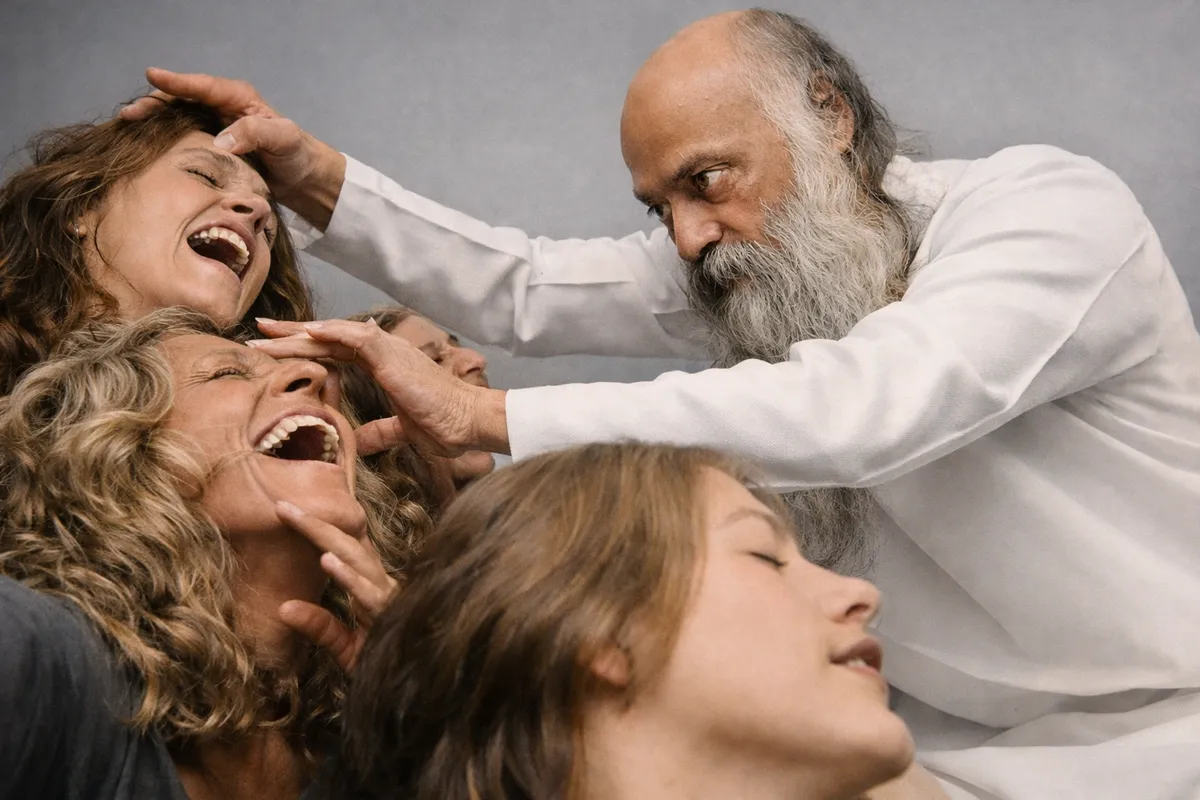
He sees our pretend face, our hidden real feelings, our deep old stuff from long ago, and behind all that an empty, peaceful space—and wants us to notice each part gently until we rest in that quiet.
From the Discourses
Passages where Osho speaks to this question — each links to the complete discourse.
Osho, Zen Master Hogen of Seiryo Monastery was just about to give his discourse before the evening meal when he noticed that the bamboo screen hung for meditation had not yet been put away. He pointed to it, and immediately two monks rose from the assembly and began to put it away. Observing that very moment, the Master said: “The first monk’s state is good, but the second’s is not.” Osho, please explain the purport of this Zen enlightenment story.
A Marwari, dying, told his lawyer: “To every servant who has served me for five years, I bequeath fifty thousand rupees.” The lawyer couldn’t believe it—he knew the man; he never gave five paise. Fifty thousand to each—and there were many servants. He asked, “Are you in your senses?” The Marwari said, “More than you. There is no servant in my house I let stay for five years! I’ll give nothing—but the news of my charity will spread.” Even at death, the relish is in reputation. The mask doesn’t drop, not even in the last moment. What people say after you die is important; what you are is not. You have no taste for being—only for others’ opinions. That is the mark of the householder. The sannyasin’s mark is: what I am is my relish. What people say—what is the use? That is their business. What I am—that is mine,…
ओशो, सीरो विहार के सदगुरु होगेन, रात्रि-भोजन के पूर्व प्रवचन करने ही वाले थे कि उन्होंने देखा कि जो बांस की जाली ध्यान के लिए लटकायी गयी थी, वह अभी तक समेटी नहीं गयी है। उन्होंने उसकी ओर इशारा किया और तुरंत दो साधु सभा से उठकर उसे समेटने लगे। उस प्रकृत क्षण का निरीक्षण करते हुए सदगुरु ने कहा: ‘पहले साधु की दशा तो अच्छी है, पर दूसरे की नहीं।’ ओशो, इस झेन बोध-कथा का अभिप्राय बताने की कृपा करें।
एक मारवाड़ी मरा, तो उसने अपने वकील को कहा कि जो-जो नौकर मेरे घर पांच साल से नौकरी कर रहे हैं, सबको पचास-पचास हजार रुपया मैं दान कर देता हूं। वकील को भी भरोसा नहीं हुआ। क्योंकि वह जिंदगी से इसको जानता था। इसने पांच पैसे कभी किसी को नहीं दिया। यह पचास हजार रुपये एक-एक नौकर को? और नौकर उसके काफी थे, बड़ा कारबार था। वकील ने कहा कि ‘मैं समझा नहीं, आप होश में तो हैं?’ उस मारवाड़ी ने कहा, ‘मैं और बेहोश? तुम्हारी समझ में नहीं आ रहा है। मेरे घर ऐसा कोई नौकर है ही नहीं जिसे पांच साल तक मैं टिकाऊं। इसलिए देना तो एक को भी न पड़ेंगे, लेकिन पचास हजार एक-एक को दिये, दान की चर्चा हो जायेगी।’ मरते वक्त भी दान की चर्चा में रस है। मुखौटा छूटता नहीं है आखिरी दम तक। मरने के बाद भी लोग मेरे संबंध में क्या कहेंगे, यही महत्वपूर्ण है। मैं क्या हूं, यह महत्वपूर्ण नहीं है। तुम्हें अपने होने में तो कोई रस ही नहीं है, लोग क्या कहते हैं तुम्हारे संबंध में बस, इसी में रस है। यह गृहस्थ का लक्षण है। …
Question: OSHO, HOW DOES ONE EXPLORE THE HIGHER STATES OF CONSCIOUSNESS? ... If you start looking... just whenever you have time, just sit silently and look at what is passing in your mind. There is no need to judge, because if you judge, the mind immediately changes its scenes according to you. The mind is very sensitive, touchy. If it feels that you are judging, then it starts showing things that are good. Then it won't show you the naked washerwoman of Bombay, that picture will be missed out. So don't judge, then that picture is bound to come. Don't judge, don't make any condemnation, don't make any appreciation. Be indifferent. You just sit silently looking at things, whatsoever is happening. And absurd things will be happening: a horse becomes a man.... Now you need not ask why, there is no need to ask, you simply see it.
Question: SO'YAM ATMA CATUS-PAT. JAGARITA-STHANO BAHIH-PRAJNAH SAPTANGA, EKONA-VIMSATI-MUKHAH STHULA-BHUG VAISVANARAH PRATHAMAH PADAH. SVAPNA-STHANO'NTAH-PRAJNAH, SAPTANGA. EKONA-VIMSATI-MUKHAH, PRAVIVIKTA-BHUK, TAIJASO DVITIYAH PADAH. YATRA SUPTO NA KANCANA KAMAM KAMAYATE, NA KANCANA SVAPNAM PASYATI, TAT SUSUPTAM. SUSUPTA-STHANA EKI-BHUTAH PRAJNANA-GHANA, EVANANDAMAYO, HYANANDA-BHUK, CETO MUKHAH PRAJNAS TRTIYAH PADAH. ESA SARVESVARA, ESA SARVAJNA ESONTAR-YAMYESA YONIH SARVASYA, PRABHAVAPYAYA HI BHUTANAM. THIS PURE SELF HAS FOUR QUARTERS: THE FIRST IS THE WAKING STATE, EXPERIENCE OF THE REALITY COMMON TO EVERYONE. THE ATTENTION FACES OUTWARDS, ENJOYING THE WORLD IN ALL ITS VARIETY. THE SECOND IS EXPERIENCE OF SUBJECTIVE WORLDS, SUCH AS IN DREAMING. HERE THE ATTENTION DWELLS WITHIN, CHARMED BY THE MIND'S SUBTLER CREATIONS. THE THIRD IS DEEP SLEEP, THE MIND RESTS, WITH AWARENESS SUSPENDED. THIS STATE BEYOND DUALITY, -- FROM WHICH THE WVES OF THINKING EMERGE, IS ENJOYED BY THE ENLIGHTENED AS AN OCEAN OF SILENCE AND BLISS. THE FOURTH, SAY THE WISE, IS THE PURE SELF ALONE.
Master lu-tsu said: only the primal spirit and the true nature overcome time and space.
THE PRIMAL SPIRIT IS BEYOND THE POLAR DIFFERENCES. HERE IS THE PLACE WHENCE HEAVEN AND EARTH DERIVE THEIR BEING. WHEN STUDENTS UNDERSTAND HOW TO GRASP THE PRIMAL SPIRIT THEY OVERCOME THE POLAR OPPOSITES OF LIGHT AND DARKNESS AND TARRY NO LONGER IN THE THREE WORLDS BUT ONLY HE WHO HAS ENVISIONED HUMAN NATURE'S ORIGINAL FACE IS ABLE TO DO THIS. WHEN MEN ARE SET FREE FROM THE WOMB THE PRIMAL SPIRIT DWELLS IN THE SQUARE INCH BUT THE CONSCIOUS SPIRIT DWELLS BELOW IN THE HEART. THIS HEART IS DEPENDENT ON THE OUTSIDE WORLD. IF A MAN DOES NOT EAT FOR ONE DAY EVEN IT FEELS EXTREMELY UNCOMFORTABLE. IF IT HEARS SOMETHING TERRIFYING IT THROBS; IF IT HEARS SOMETHING ENRAGING IT STOPS; IF IT IS FACED WITH DEATH IT BECOMES SAD; IF IT SEES SOMETHING BEAUTIFUL IT IS DAZZLED. BUT THE HEAVENLY HEART IN THE HEAD, WHEN WOULD IT HAVE MOVED…