
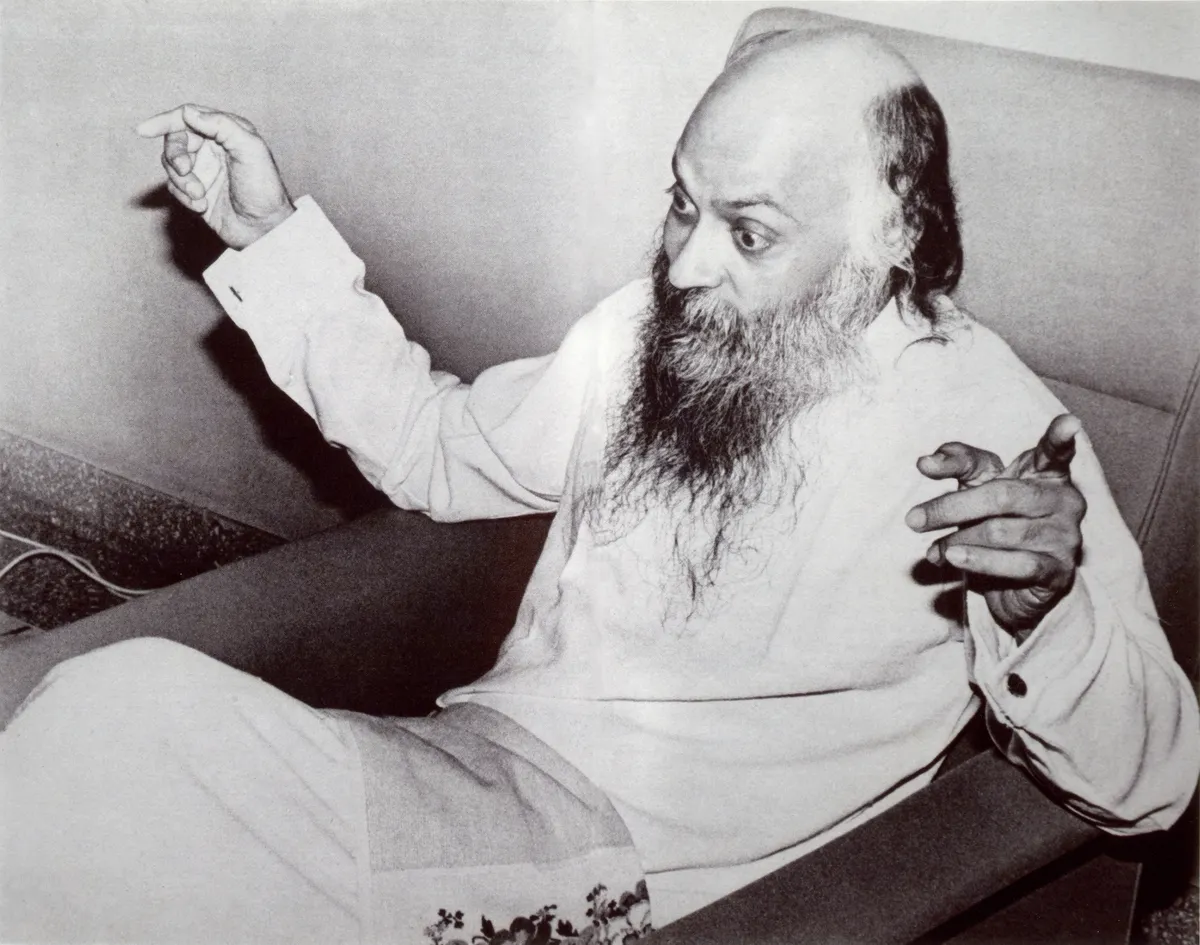
First listen with all your heart, then think it over until it’s clear, then sit quietly until it becomes your own living experience.
From the Discourses
Passages where Osho speaks to this question — each links to the complete discourse.
Osho, yesterday you said that when anger is watched consciously, it dissolves. But why is it that when sexual desire arises, even in awareness its intensity persists? Why is it so?
There is no entanglement in the breath. If you try to practice on anger… Anger is not happening every moment; it happens sometimes. And when it happens, it happens with such intensity that you are already going deep into it; so much is at stake in those moments that you may think, “We will look into awareness later; first let’s settle this now.” Lust is very deep, because existence has made it so deep; life depends on it. If lust were so easy that you decided and were freed, perhaps you would not even have been born—because many before you would have become free, and the possibility of your being would have been almost nil. But your parents, and their parents, did not become free; therefore you are. You too will not get free so easily, because your children are also to be—they are waiting: “Do not run away midway.”…
दूसरा प्रश्न: ओशो, आपने कल कहा कि क्रोध को होशपूर्वक देखने पर क्रोध विलीन हो जाता है। लेकिन क्या कारण है कि कामवासना के उठने पर होश में भी उसकी प्रगाढ़ता बनी रहती है। ऐसा क्यों है?
श्वास में कुछ झंझट नहीं है। अब तुम या तो क्रोध पर साधोगे...। क्रोध रोज तो होता नहीं, प्रतिपल होता नहीं, कभी-कभी होता है; जब होता है तब इतनी प्रगाढ़ता से होता है कि तुम गहरे में उतर रहे हो; जब होता है तब इतनी बातें दांव पर लग जाती हैं कि शायद तुम सोचोगे, ‘फिर देख लेंगे होश इत्यादि! यह अभी, अभी तो निपट लें।’ कामवासना तो बहुत गहरी है, क्योंकि प्रकृति ने उसे बहुत गहरा बनाया है, क्योंकि जीवन उस पर निर्भर है। अगर कामवासना इतनी आसान हो कि तुमने चाहा और छूट गए, तो तुम शायद पैदा ही न होते, क्योंकि तुमसे पहले बहुत लोग छूट चुके होते; तुम्हारे होने की संभावना न के बराबर होती। मगर वह तो तुम्हारे माता-पिता उनके माता-पिता नहीं छूट सके, इसलिए तुम हो। तुम भी इतनी आसानी से न छूट जाओगे, क्योंकि तुम्हारे बच्चों को भी होना है; वे भी प्रतीक्षा कर रहे हैं कि ऐसे भाग मत जाना बीच से। जीवन बहुत कुछ टिका है कामवासना पर। इसलिए उसका छूटना इतना आसान नहीं है। असंभव नहीं है, आसान भी नहीं है। …
Thus, through the statements like tattvamasi, that art thou, to pursue the meanings such as oneness of jiva, the embodied soul, and brahma, the absolute reality, is shravana, the listening. And to reasonably pursue the meaning of whatever has been listened to is manan, contemplation. Establishing your mind in the indubitable meaning attained through this listening and contemplation, attunement with it is nididhyasan, assimilation. Dropping the meditator and the meditation respectively, when the meditated-upon, the goal, remains as the only objective and the mind becomes still like the flame of
But no, people make simultaneous claims from both sides. If you are right, if you think you know, then there is nothing left to seek, the matter is over. Every person moves with the presumption of "I am right" and then says, "I want to seek the truth." If one is to seek the truth, the decision must be clear before the consciousness that "I don't know." Only then is the search possible. When I don't know, my entry into some truth is possible; if I know from the very beginning, the truth itself will appear to be wrong, because when a person who does not know believes that he knows, he can never see the truth as it is. The very working of the mind is to move with the assumption that "I am right" -- my idea, my viewpoint, my religion, my scripture. If you have to begin…
Verse (Sanskrit): इत्थं वाक्यैस्तदर्थानुसंधानं श्रवणं भवेत। युक्ता सभावितत्वा संधानं मननं तु तत्।। 33।। ताभ्यां निर्विचिकित्सेऽर्थे चेतसः स्थापितस्य तत्। एकतानत्वमेतद्धि निदिध्यासनमुच्यते।। 34।। ध्यातृध्याने परित्यज्य क्रमाद्धयैयैकगोचरम्। निवातदीपवच्चितं समाधिरभिधीयते।। 35।। Transliteration: itthaṃ vākyaistadarthānusaṃdhānaṃ śravaṇaṃ bhaveta| yuktā sabhāvitatvā saṃdhānaṃ mananaṃ tu tat|| 33|| tābhyāṃ nirvicikitse'rthe cetasaḥ sthāpitasya tat| ekatānatvametaddhi nididhyāsanamucyate|| 34|| dhyātṛdhyāne parityajya kramāddhayaiyaikagocaram| nivātadīpavaccitaṃ samādhirabhidhīyate|| 35|| Translation: Thus, through the sentences, the tracing of their meaning is hearing. By reasoning, securing that meaning with firm conviction—this is called reflection.।। 33।। By these two, when the mind, doubtless in the meaning, has been established there, its unbroken one-pointedness—this is called deep contemplation.।। 34।। Letting go, by degrees, of meditator and meditation, with the object alone as the field, the mind, like a lamp in a windless place—this is called samadhi.।। 35।। Four words have been used. Each word is a world unto itself.
… एक-एक शब्द अपने आप में एक-एक जगत है। वे चार शब्द हैं: श्रवण, मनन, निदिध्यासन और समाधि। इन चार शब्दों में सत्य की सारी यात्रा समाहित हो जाती है। ये चार चरण जो सम्यकरूपेण, ठीक-ठीक पूरा कर ले, उसे कुछ और करने को शेष नहीं रह जाता है। …