
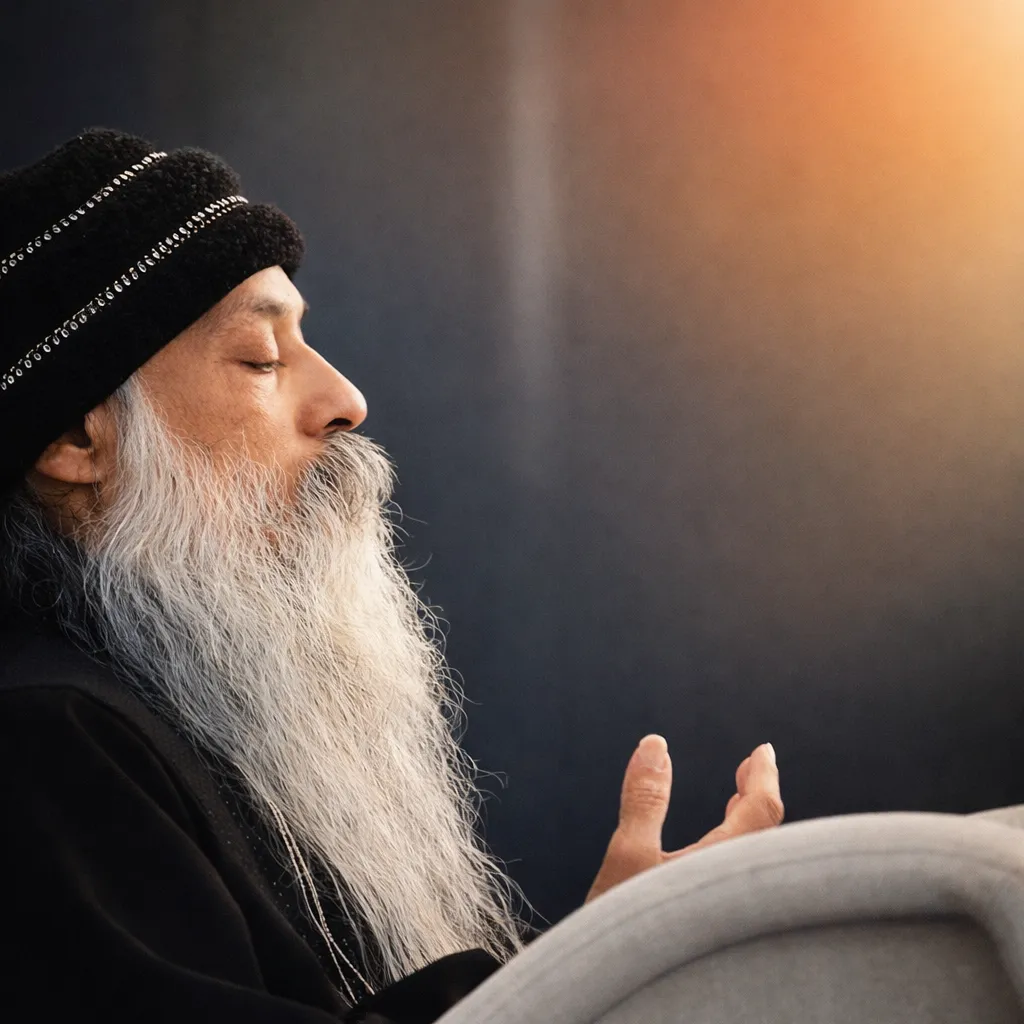
Be yourself, do what you like, and don’t disturb others—then you can truly feel at ease.
From the Discourses
Passages where Osho speaks to this question — each links to the complete discourse.
Question: First question: Osho, isn’t it right to live with contentment? Devdas! There is a great difference between one kind of contentment and another. One is the contentment of a dead man, a defeated man, a man who has lost. It looks like contentment, but it is not. Inside, the flames of discontent are raging, but outwardly he has put on a show, reasoned himself into it; he could not win, and even bearing defeat seems hard, so he whitewashes his defeat to look like contentment. There is Aesop’s old story: a fox keeps leaping—leaping many times—to reach bunches of grapes; but she cannot reach, her reach falls short. Tired, beaten, with a sorrowful heart, she turns back. At least there is the reassurance that no one has seen her defeat. But just then a rabbit, hidden in a nearby thicket, comes out and says: Auntie, what happened?
देवदास! संतोष और संतोष में बड़ा भेद है। एक तो है संतोष मरे हुए आदमी का, पराजित आदमी का, हारे हुए आदमी का। वह संतोष मालूम होता है, लेकिन संतोष है नहीं। भीतर तो लपटें हैं असंतोष की, लेकिन बाहर से टीम-टाम किया, समझा लिया अपने को; जीत तो सके नहीं, हार को भी सहना कठिन मालूम होता है, तो हार को लीप-पोत लिया संतोष की भांति। ईसप की पुरानी कहानी है कि एक लोमड़ी छलांग लगाती है--बहुत छलांग लगाती है--अंगूर के गुच्छों को पाने के लिए; फिर नहीं पहुंच पाती, पहुंच छोटी पड़ जाती है; हारी-थकी, उदास चित्त वापस लौटती है; पर कम से कम एक आश्वासन है कि किसी ने उसकी हार देखी नहीं; लेकिन तभी एक खरगोश पास की झाड़ी में छिपा, बाहर आता है और कहता है: चाची, क्या हुआ? अंगूरों तक पहुंच न सकीं? लोमड़ी ने कहा कि नहीं, पहुंच क्यों न सकूं, मेरी पहुंच के बाहर क्या है, चांद-तारे तोड़ लाऊं, लेकिन अंगूर खट्टे थे, पहुंचने योग्य ही न थे।
contentment is something invisible the person who has it experiences it but a few others who are sensitive they can also feel it the very presence of it is almost tangible to the alert, to the attentive that's how for thousands of years disciples have been finding the masters there is no other way, no other criterion it is not a question of logic not a question of intellect it is a question of feeling when the disciple feels the contentment when the disciple can smell the fragrance of contentment then he knows that he has come home that this is the place where he belongs that this is the man to be with that this is the light i have been seeking and searching no visible criterion is possible it is certainly invisible, a transmission beyond words but if awareness is there then it is not something you have…
I am a part of nature; a part can never conquer the whole. He can fight; fighting, he can destroy himself; he can become miserable and pained; but he cannot arrive at that good fortune where each moment becomes a festival. Such festivity is possible only when a deep sense of unity with existence begins to dawn in me—when I feel I am not an outsider, when I feel I am not a stranger, when I feel that trees and moon and stars and plants and earth and animals and birds are all with me. The feeling of acceptance gives birth to this sense of togetherness. In the West a new thinking arose—existentialism.
और ध्यान रहे, जैसे ही कोई व्यक्ति लड़ने की वृत्ति पकड़ लेता है, उसके जीवन में धर्म का अनुभव कठिन हो जाएगा। क्योंकि धर्म के अनुभव का एक ही अर्थ है कि इस अस्तित्व के साथ मेरी मैत्री है, विरोध नहीं; इस समग्र अस्तित्व का मैं एक हिस्सा हूं, इसका शत्रु नहीं, और यह पूरा ब्रह्मांड मुझे खिला हुआ देखना चाहता है, मुझे मिटाने को आतुर नहीं है। उसी ने मुझे पैदा किया है, वही मेरी शक्ति को सहारा दे रहा है। श्वास उसकी है, रोआं-रोआं उसका दान है। मैं जो कुछ भी हूं, इस विराट विश्व के भीतर से उठा हूं और यह विराट विश्व मेरा शत्रु नहीं है। यह मेरा घर है। यहां कोई कांक्वेस्ट ऑफ नेचर, कोई प्रकृति पर विजय करने की बात नहीं है। क्योंकि प्रकृति पर विजय हो नहीं सकती। मैं प्रकृति का हिस्सा हूं; हिस्सा पूर्ण पर कोई भी विजय नहीं पा सकता। लड़ सकता है; लड़ कर नष्ट हो सकता है; दुखी और पीड़ित हो सकता है; लेकिन उस सौभाग्य को उपलब्ध नहीं हो सकता जहां प्रतिपल उत्सव हो जाता है। …
Beloved Osho, if discontentment does not lead to real progress, then is the contented man the alternative?
Whom can you disrespect? How can you feel superior to anybody? Can you feel superior to a rose? Can you feel superior to a bird on the wing? How can you feel inferior to anybody? You have all the contentment, all the serenity, all the silence. Where can that dark wound -- inferiority -- exist in you? You are all light. This is the man who can bring beauty to the world -- songs of silence, out of silence; really authentic poetry. This man will transform the whole nature of science. Progress will not stop, but it will have a different dimension to it. Now the whole of science is devoted to destruction. Albert Einstein cannot be forgiven; he was the man who wrote to President Roosevelt that the atom bomb can be created, and that it is the only way to defeat the fascist forces in the world. He…
Satisfaction is a poor man's effort to keep his face smiling, somehow. Contentment is the joy of inner richness. It is the aura that surrounds a meditative person. It is the fragrance that naturally comes to those who go beyond mind. Satisfaction is of the mind, contentment is of no-mind. And that's what meditation is all about: a shift of your consciousness from thought to no-thought, from constant chattering to an inner silence. And unless one knows contentment one is not really alive. One is somehow dragging, somehow keeping oneself together. But the moment you experience contentment you need not keep yourself from falling apart. You become integrated, you become crystallized. You are not only a union, you become a unity; you are one. And that oneness is the goal of sannyas. Knowledge can be acquired in two ways. Either you acquire knowledge from others... Then it is superficial.