
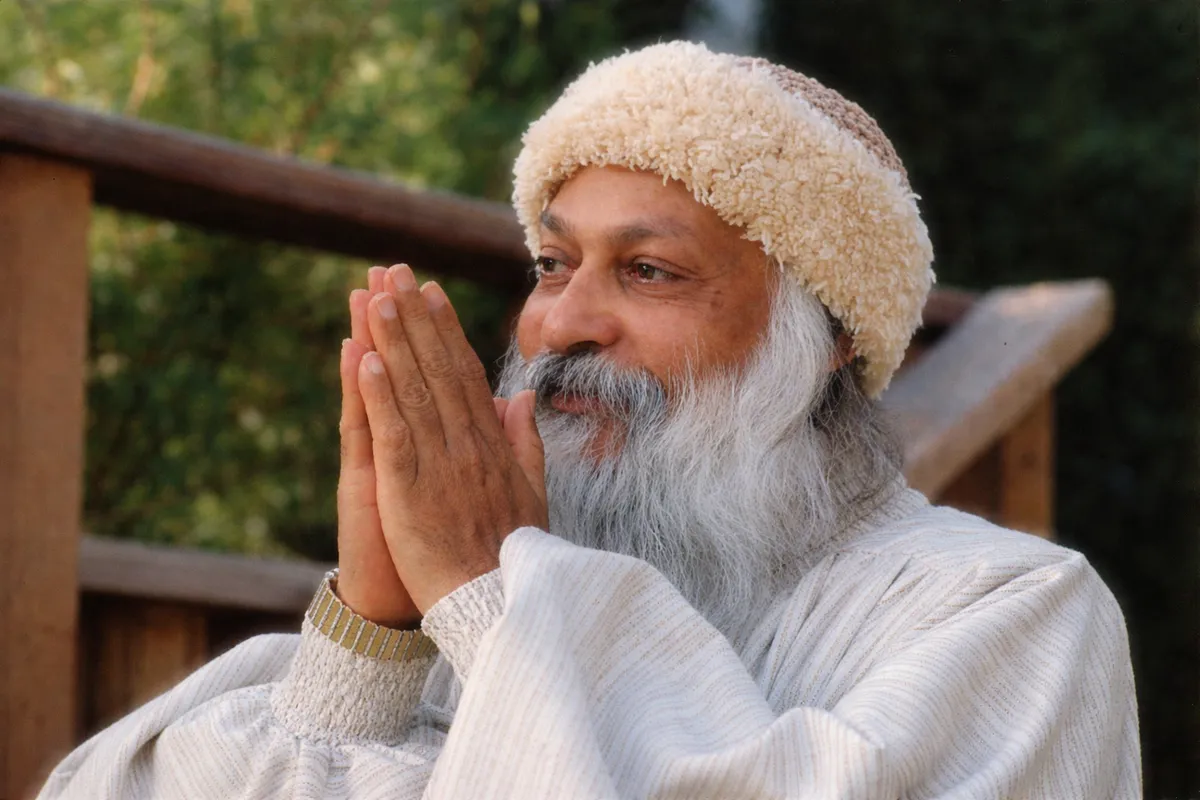
The silent part of you just watches; any amusement or feeling happens in the mind, and the watcher only sees it.
From the Discourses
Passages where Osho speaks to this question — each links to the complete discourse.
Question: BELOVED OSHO, IS THE WATCHER AMUSED? The watcher cannot do anything except watch. If it is amused, it has lost its watching. There may be amusement but that will be part of the mind. The watcher will watch it, too. The watcher cannot do anything else but be a watcher. The moment it does anything else, the watcher slips back and it is the mind. The watcher is not amused. And there is nothing in the world for the watcher to be amused about. The world is so miserable that if the watcher could weep and shed tears that may have been the right thing for it to do, but it has no eyes, no tear glands. So remember it: even when you are feeling blissful, it is not the watcher who becomes blissful. The watcher is still watching the blissfulness. Whatever happens, the watcher simply reflects it.
Osho does witnessing always bring joy? The moments that I call witnessing sometimes feel distant -- almost cold in their neutrality. Other times it is like sprouting wings and soaring in joy over the open sea.
THE STATE OF WITNESSING IS NEITHER COLD NOR hot. It is neither happiness nor unhappiness. It is neither dark nor light. It is neither life nor death. The Upanishads say NETI NETI -- neither this nor that. If you feel joy you have already become identified; witnessing is gone. If you feel sad you are no more a witness; you have forgotten witnessing, you have become involved. You are colored by your psychology of the moment. Joy, sadness, all these qualities, are part of your psychology. And witnessing is a transcendence; it is not psychological. The whole art of meditation consists in witnessing. Then what does it bring? At the most we can say it brings total peace; it simply brings eternal silence. You cannot define it as joy. The moment you define it as joy you have fallen into the world of duality again. Then you have become part…
Question: BELOVED OSHO, THESE LAST FEW DAYS I OFTEN FIND MYSELF BEING IN VERY DRAMATIC AND MISERABLE MOODS. I SEE MYSELF WALKING AROUND WITH A LONG, LONG FACE AND WITH THOUGHTS LIKE, "I AM A FAILURE." THEN SUDDENLY SOMETHING -- ANYTHING -- HAPPENS, AND I JUST STAND THERE, WATCHING AND FEELING AN OVERWHELMING GIGGLING INSIDE ME, WHICH INCREASES TO A BIG SMILE AND SOMETIMES EVEN TO AN EXPLOSION OF LAUGHTER AND THE FEELING OF BEING ABSOLUTELY HAPPY. IT IS ALWAYS SO STRONG THAT I CAN'T EVEN HOLD ON TO MY DRAMATIC MOOD ANYMORE! YESTERDAY, IN ONE OF THESE SITUATIONS, WITH THE GIGGLING FROM SOMEWHERE DEEP INSIDE ME CAME THE WORDS: "LAUGH YOUR WAY TO GOD." IT FELT LIKE A RECIPE FOR GROWTH. OSHO, DOES THIS GIGGLING HAVE ANYTHING TO DO WITH THE WATCHER INSIDE ME? WOULD YOU PLEASE SPEAK ON THE RELATIONSHIP BETWEEN EASY-GOING LAUGHTER AND THE WATCHER?
Osho, it feels that to be a witness is also a kind of thought. So what is the difference between the witness and a thought of the witness?
The mystic laughed. He said, "Not underneath this tree, but within me there is a treasure and I am watching it. And the treasure is growing every day, it is becoming bigger and bigger, hence I have to be more and more alert." The mystic said to the king, "You can sleep, you have nothing to lose. I cannot, I have much to lose; and if I can remain awake I have much to gain." The king was very much impressed. He asked him to come to his palace, he invited him. The monk agreed. The king was a little puzzled: a monk agreeing so soon without even refusing once is not thought to be right. A monk should say, "No, I cannot come to the palace. I have renounced the world. It is all futile. It is all dream, illusion, maya I cannot come back to the world. I…
Beloved Osho, for the last four days I have been taking part in the zazen group. When anger arises, it is so difficult for me to watch this feeling instead of throwing this anger on others. Beloved master, would you please speak about the art of watching?
Anand Urmila, everything that I have been saying to you consists of the art of watching -- from different dimensions, from different aspects, from different angles. My whole teaching can be reduced to a single word -- watching. That is the only thing in you which is not part of the mind. That is the only thing in you which does not belong to you, but belongs to existence itself. For example, I can watch my hand; that means I am not the hand. Whatever you can watch you are not. This is a simple arithmetic. The watcher is bound to be separate from the object that he is watching. You can watch your body from outside, and from inside too. You can close your eyes and you can watch your body from the inside. It will be dark, and it will not be so visible and so clear, but…