
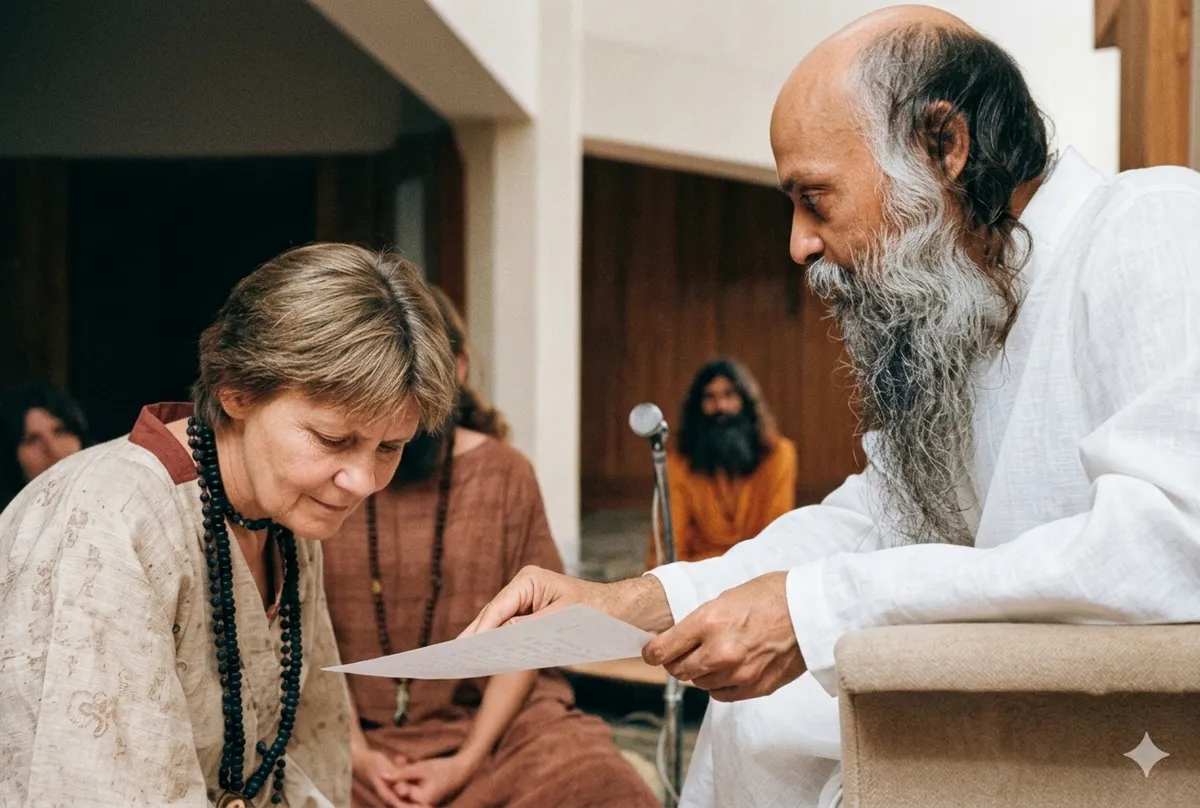
Kids look pure because they don’t know yet; real, unbreakable purity comes later when you learn, see knowledge’s limits, and let go into awareness.
From the Discourses
Passages where Osho speaks to this question — each links to the complete discourse.
Osho, is the innocence of small children just ignorance, or has it got any value too?
The innocence of the children is ignorance, it is not true innocence. The true innocence happens only after the second birth. The true innocence happens only after you have reached your very core through awareness; that is the second birth, that is resurrection -- you are born anew. The first innocence of a child when it is born is only ignorance, but that ignorance is far more valuable than the knowledge that your so-called learned people are burdened with. So these things have to be remembered. Real innocence belongs to the Buddhas. They have lost their first childhood in knowledge and then they become aware of what they have lost. They have lost the precious, the essential for the non-essential, so they drop their knowledge. Dropping their knowledge they become innocent again. This is second innocence, second birth. In India we call such a person dwija, twice-born. He is a…
Beloved Osho, sitting close to you these last few mornings and looking into your eyes, I felt so much like a small child, full of innocence and excitement. Many times I wanted to wave my hand in the air wildly and shout: hello, hello, hello, my most beloved. Beloved master, can you talk about this blissful innocence that I am feeling and how it relates to meditation?
It is good to start with innocence, but remember there are two kinds of innocence: one is of the child and another is of the meditator. The meditator also becomes a child, but that is on such a different level, at such a great height -- as if the child is in the valley and the enlightened man who has again become a child is on the sunlit peak. The distance is tremendous. But there is a certain similarity, a thread running from the child to the heart of the sage. The child cannot understand the sage, but the sage can understand the child. Always remember it as a fundamental rule: the lower cannot understand the higher, but the higher can always understand the lower. And in your life, if anything can be compared with that high peak, it is your childhood. Try to rediscover it. Don't cover it with…
It is my understanding that you see innocence as the opposite of knowledge -- but what about ignorance? People without knowledge are so often misused by the ones with the knowledge. Please say something about this.
Ignorance is the state which exists before knowledge, innocence is the state which exists after knowledge. Ignorance is pre knowledge, innocence, post knowledge. They appear similar -- they are in a way, and yet totally different. A child is ignorant. When you call a child innocent you are misunderstanding the whole thing. Ignorance looks like innocence because the child does not know, he looks innocent, but he will know, he will taste the bitter fruit of knowledge, he will have to. He is just like Adam in the garden of Paradise -- he will have to be thrown out. He will pass through that, he will sin, he will become corrupted. His innocence is not powerful, it is impotent. It cannot avoid being in knowledge, knowledge will enter, the serpent will seduce him, the world will corrupt him, he will move into the ways of knowledge, into the ways of…
every child is born innocent and brings with him a great message of the whole every child is a messenger of good tidings every child is a christ but before he can deliver the message we destroy it before he can utter a single word we start stuffing his mind with our cunningness before his heart opens and releases its fragrance we divert his energies from the heart to the head -- and the head is never innocent t is always calculating, cunning; it is a cheat the heart is always innocent hence only the heart can be in connection with the divine not the head the head is good in the marketplace but not in the temple but people who are full of the head are dominating the temples also man has completely forgotten his heart his heartfulness, his innocence, his purity and the message that he had come…
Osho, could you say something about what is going on in Delhi?
I’ll tell a little story. When Lanka’s former ruler Ravana was on his deathbed, Rama sent Lakshman to learn statecraft from him—saying, “Son, we may have won, but we have no experience of running the administration here; go and ask him how to run things.” Lakshman went there and said to Ravana, “You are dying now—tell us how to govern here.” Ravana said, “Half the politics I handled, half Kumbhakarna did. Had you gotten in touch with Kumbhakarna as well?” Lakshman said, “Yes—he said: eat to your heart’s content and then sprawl on the sofa with your eyes closed. This is the best method.” “Tell me,” Ravana asked, “are you going to unleash dictatorship, or will you run things by democracy? Which method will be suitable?” “What will go down well with the people?” “Nothing,” said Ravana. “When you impose dictatorship, the people will yearn for democracy; and when you…
अंतिम प्रश्न: ओशो, दिल्ली में जो चल रहा है, उसके संबंध में कुछ कहें?
एक छोटी कहानी कहूंगा। लंका का पिछला शासक रावण जब मरने लगा, तो राम ने लक्ष्मण को उसके पास राजनीति की शिक्षा लेने के लिए भेजा--यह कह कर कि तात, अपन जीत तो गये हैं, मगर अपने को यहां शासन चलाने का कोई अनुभव नहीं है; इससे पूछ कर आओ कि कैसे क्या चलाना है। लक्ष्मण वहां गया, रावण से कहा कि अब तू तो मर ही रहा है, यहां शासन कैसे चलाएं, यह बताता जा? रावण ने कहा कि आधी राजनीति मैं करता था, आधी कुंभकर्ण; तुमने कुंभकर्ण से भी संपर्क साधा था क्या? लक्ष्मण ने कहा: हां, वह कह गया है कि आनंद से जमकर खाना पेलो और सोफे पर आराम से आंखें मूंदकर डले रहो। यह पद्धति सर्वश्रेष्ठ है। यह बताओ, रावण ने पूछा: तुम लोग तानाशाही मचाओगे कि प्रजातंत्र से चलोगे? कौन-सी पद्धति उपयुक्त होगी? ‘जनता को क्या जमेगा?’ कुछ नहीं, रावण ने कहा, जब तानाशाही मचाओगे तो जनता प्रजातंत्र के लिए छटपटायेगी और जब प्रजातंत्र लागू करोगे तो तानाशाही के गुण गाने लगेगी। ‘फिर?’ ‘फिर क्या, ऐसे चलना कि लोग समझ ही न पायें कि तानाशाही है या प्रजातंत्र। …