
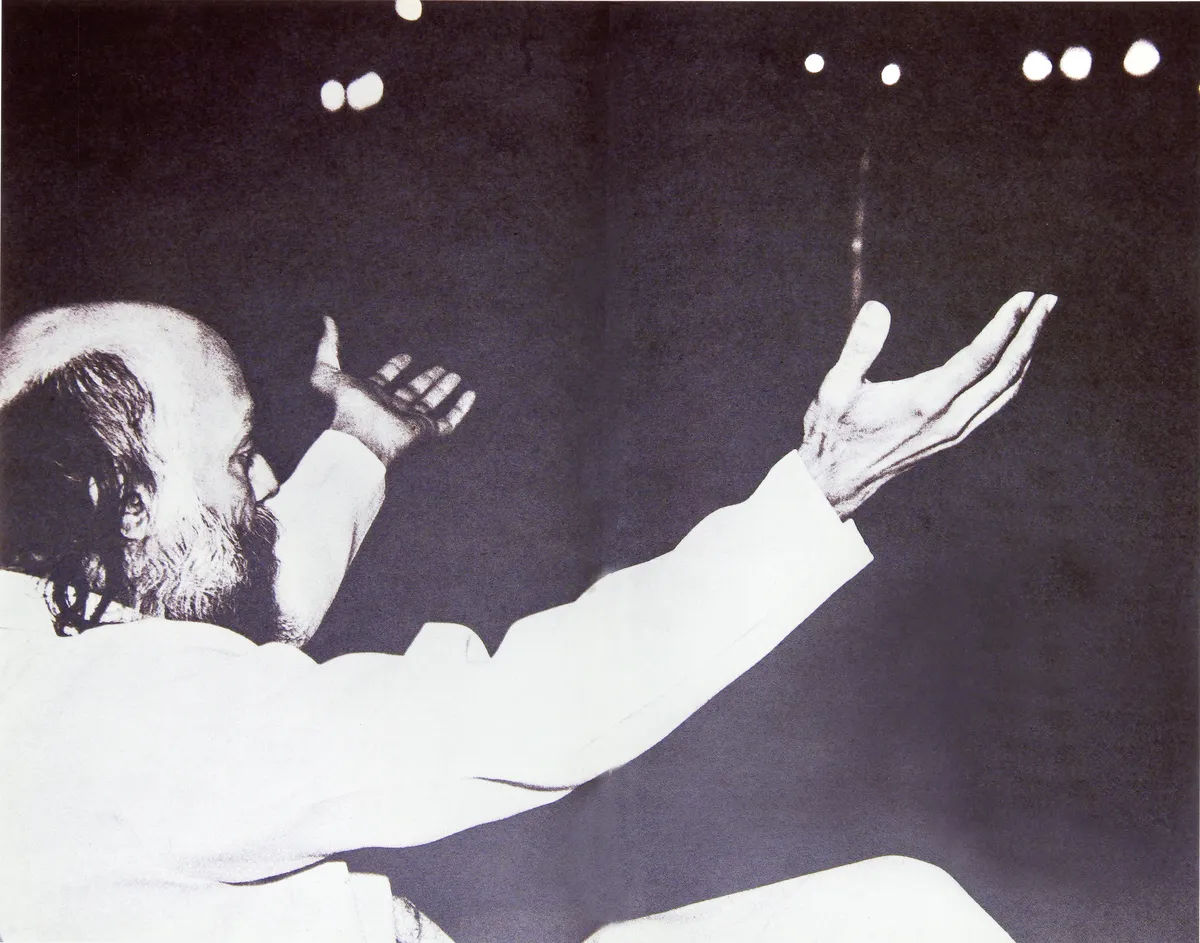
Wanting new things isn’t for everyone all the time—it’s the lively, restless energy of being young, while older people often prefer what they already know.
From the Discourses
Passages where Osho speaks to this question — each links to the complete discourse.
Is this due to the human need for newness?
It is only the young man who becomes interested in new things. An old man has such an investment in old things that he cannot be interested in new things. And it is always the youth who feels the future in his veins, not the old man. The past is the home of the old man; the future, that of the young man. Because the young man will be living in the future, he is more interested in new developments, in new things. The young are always dissatisfied -- always. Dissatisfaction is in their very hearts; otherwise they could not be young. If romance were absolutely satisfied they would not just be old but already dead. They always feel a discontent, a dissatisfaction, an inner restlessness. It is a good sign. Because of the inner restlessness they are ready to move into new dimensions.
Osho, I am always seeking the new. Whatever is new appeals to me. Is there something wrong in this?
A mistake, certainly. Not a small one—a big mistake. Because this is precisely the way the mind lives. The mind is always in search of the new. The mind is an itch for the new. The old wife doesn’t appeal; a new wife is wanted. The old house doesn’t appeal; a new house is wanted. The old clothes don’t appeal; new clothes are wanted. Always the new. This is what the mind is—it keeps you running. From this craving for the new, ambition is born. And you remain restless. After all, every new thing will soon become old, and the restlessness will only go on increasing. There is so much restlessness in the West because there is a mad race for the new. Everything must be new. It’s not even a question of utility; it’s a question of newness. It may be that the old thing is better, stronger, more…
चौथा प्रश्न: ओशो, मैं सदा नए की खोज में लगा रहता हूं। कुछ भी नया हो, तो मुझे भाता है। इसमें कुछ भूल तो नहीं है?
भूल तो निश्चित है। कुछ नहीं; बड़ी भूल है। क्योंकि यही तो मन के जीने का ढंग है। मन सदा नए की तलाश करता है। मन नए के लिए खुजलाहट है। पुरानी पत्नी नहीं भाती; नयी पत्नी चाहिए। पुराना मकान नहीं भाता; नया मकान चाहिए। पुराने कपड़े नहीं भाते; नए कपड़े चाहिए। हमेशा नया चाहिए। यही तो मन है, जो दौड़ाता है। नए की इस आकांक्षा से महत्वाकांक्षा पैदा होती है। और तुम सदा बेचैन रहते हो। आखिर हर नयी चीज पुरानी पड़ जाएगी, और बेचैनी ब़ढ़ती ही चली जाएगी। पश्चिम में इतनी बेचैनी है, क्योंकि नए की बहुत पागल दौड़ है। हर चीज नयी होनी चाहिए। उपयोगिता का भी सवाल नहीं है; नए का सवाल है। हो सकता है, पुरानी चीज ज्यादा बेहतर हो; ज्यादा मजबूत हो; ज्यादा काम की हो। लेकिन इससे कोई संबंध नहीं है। नयी चीज चाहिए। नयी बदतर हो, तो भी चलेगा। टीम-टाम हो, तो भी चलेगा। मगर नयी चाहिए। फिर नए की दौड़ पूरी करने में तुम्हारा जीवन लग जाता है। और नया कभी कुछ भी नहीं हो पाता। चीजें कहीं नयी हो सकती हैं? चीजों की दौड़ का कोई अंत नहीं है। …
Why does one cling to the old? Why is one afraid of the new?
There is a natural reason in it. With the old one is efficient, with the new one is awkward. With the old you know what to do, with the new you will have to learn from ABC. With the new you start feeling ignorant. With the old you are knowledgeable: you have done something again and again, you can do it mechanically, you need not have any awareness, With the new you will have to be alert, aware, otherwise something may go wrong. Have you not watched it? When you learn driving, you are so alert. When you have learned it, you forget about it. You sing a song, you listen to the radio, you talk to the friend or you think a thousand and one thoughts, and driving continues as a mechanical thing, robot-like -- you are not needed. The old becomes mechanical, habitual. That's why with the new…
If you give the body something new every day, the body becomes troubled, the body suffers. The body does not adjust to the new. The body is a demand for the old. Therefore in the old world, the body was greatly at ease. Everything was fixed. In the new world a great difficulty has arisen—everything changes daily. The body is in great distress. Hence the body experiences many illnesses which it had never known in the old world. New diseases, new troubles have arisen for the body, because all its rhythms have been broken. A man travels by airplane; this morning he is in India, after a while in Pakistan, a little later in Arabia, then in Europe. Everything changes. In a single day ten countries change, ten kinds of food change, ten atmospheres change, ten kinds of beds to sleep in, ten languages, ten kinds of people.
अगर शरीर को रोज-रोज नया दो, शरीर तकलीफ में पड़ जाता है, शरीर कष्ट में पड़ जाता है। शरीर एडजस्ट नहीं हो पाता नये के लिए। शरीर पुराने की मांग है। इसलिए जो पुरानी दुनिया थी, उसमें शरीर बहुत आराम में था। सब बंधा हुआ काम था। नई दुनिया में बड़ी मुश्किल हो गई, सब चीजें रोज बदल जाती हैं। शरीर को बड़ी तकलीफ हो रही है। इसलिए शरीर बहुत सी बीमारियां अनुभव कर रहा है, जो पुरानी दुनिया में उसने कभी अनुभव नहीं की थीं। नई बीमारियां, नई तकलीफें शरीर के लिए खड़ी हो गई हैं, क्योंकि शरीर की सारी की सारी व्यवस्था टूट गई है। एक आदमी हवाई जहाज से चलता है। आज सुबह हिंदुस्तान में है, थोड़ी देर बाद पाकिस्तान में है, थोड़ी देर बाद अरब में है, थोड़ी देर बाद यूरोप में है। सब बदल जाता है। दिन भर में दस मुल्क बदल जाते हैं, दस तरह का खाना बदल जाता है, दस तरह की हवा बदल जाती है, दस तरह के मकानों में सोना पड़ता है, दस तरह की भाषाएं बदल जाती हैं, दस तरह के लोग बदल जाते हैं। शरीर बड़ी मुश्किल में पड़ता है कि यह क्या हो रहा है? …
What has gone wrong? Why is it that people meet everything new reluctantly, and with fear, rather than with eager joy?
The new does not arise out of you, it comes from the beyond. It is not part of you. Your whole past is at stake. The new is discontinuous with you, hence the fear. You have lived in one way, you have thought in one way, you have made a comfortable life out of your beliefs. Then something new knocks on the door. Now your whole past pattern is going to be disturbed. If you allow the new to enter you will never be the same again, the new will transform you. It is risky. One never knows where you will end with the new. The old is known, familiar; you have lived with it for long, you are acquainted with it. The new is unfamiliar. It may be the friend, it may be the enemy, who knows. And there is no way to know. The only way to know…