
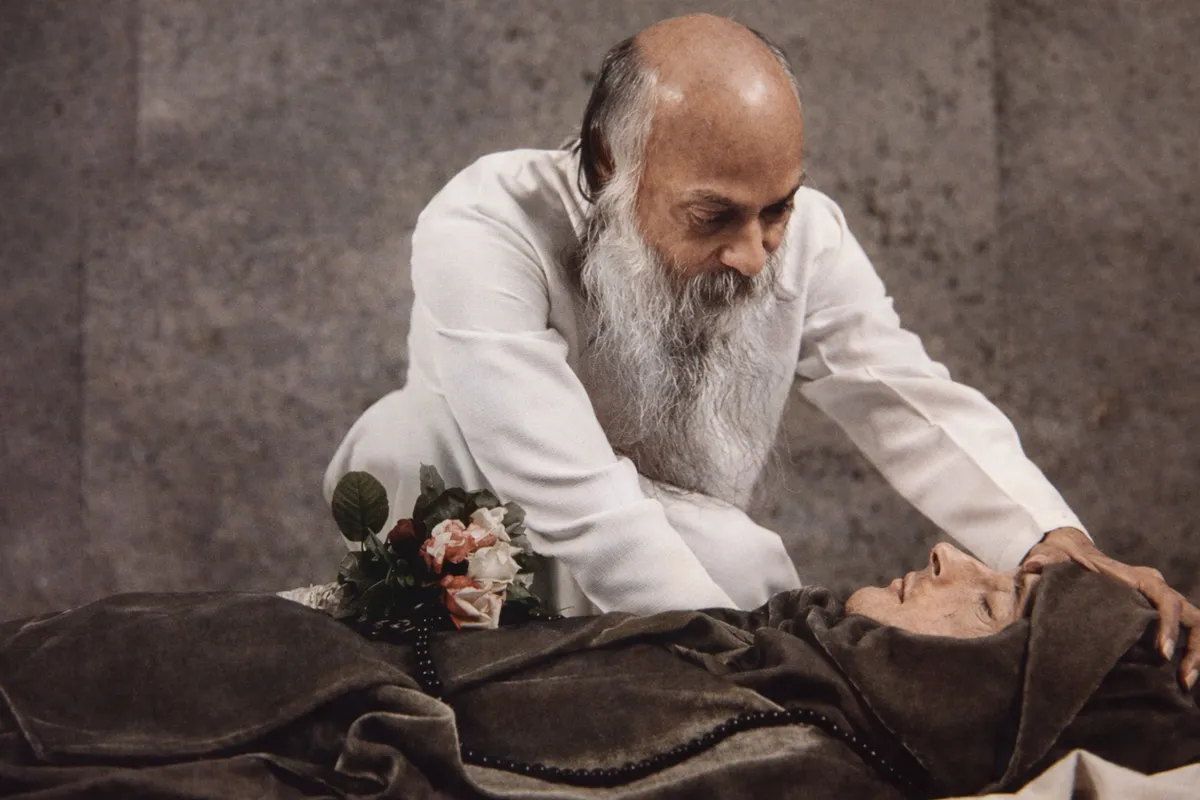
He says the idea of God makes people feel guilty, that guilt twists natural life into madness, and without that idea there’d be no madhouses.
From the Discourses
Passages where Osho speaks to this question — each links to the complete discourse.
Question: OUR BELOVED MASTER, SEKITO SAID: "MY TEACHING, WHICH HAS COME DOWN FROM THE ANCIENT BUDDHAS, IS NOT DEPENDENT ON MEDITATION OR ON DILIGENT APPLICATION OF ANY KIND. "WHEN YOU ATTAIN THE INSIGHT AS ATTAINED BY THE BUDDHA, YOU REALIZE THAT NO-MIND IS BUDDHA, AND BUDDHA IS NO-MIND; THAT NO-MIND, BUDDHA, SENTIENT BEINGS, BODHI, AND KLESA, ARE OF ONE AND THE SAME SUBSTANCE WHILE THEY VARY IN NAMES. "YOU SHOULD KNOW THAT YOUR OWN NO-MIND ESSENCE IS NEITHER SUBJECT TO ANNIHILATION NOR ETERNALLY SUBSISTING, IS NEITHER PURE NOR DEFILED. IT REMAINS PERFECTLY UNDISTURBED AND SELF-SUFFICIENT. THE SAME IS SO WITH THE WISE AND THE IGNORANT. YOUR NO-MIND ESSENCE IS NOT LIMITED IN ITS WORKING, AND IS NOT INCLUDED IN THE CATEGORY OF MIND, CONSCIOUSNESS, OR THOUGHT. "THE THREE WORLDS OF DESIRE, FORM, AND NO-FORM, AND THE SIX PATHS OF EXISTENCE ARE NO MORE THAN MANIFESTATIONS OF YOUR MIND ITSELF.
Question: BELOVED OSHO, ONCE, WHEN TOZAN WAS TRAVELING WITH ANOTHER MONK, THEY SAW A VEGETABLE LEAF FLOATING DOWN A VALLEY STREAM. TOZAN SAID, "IF THERE WERE NO-ONE IN THE DEEP MOUNTAINS, HOW COULD THERE BE A VEGETABLE LEAF HERE? IF WE GO UPSTREAM WE MIGHT FIND A WAYFARER STAYING THERE." MAKING THEIR WAY THROUGH THE BRUSH AND GOING SEVERAL MILES UP THE VALLEY, THEY SUDDENLY SAW THE STRANGE-LOOKING, EMACIATED FIGURE OF A MAN. IT WAS MASTER RYUZAN. HIS NAME MEANT "DRAGON MOUNTAIN," AND HE WAS ALSO KNOWN AS YINSHAN, MEANING, "HIDDEN IN THE MOUNTAINS." TOZAN AND THE OTHER MONK PUT DOWN THEIR BUNDLES AND GREETED RYUZAN. RYUZAN THEN SAID, "THERE IS NO ROAD ON THIS MOUNTAIN -- HOW DID YOU GET HERE?" TOZAN SAID, "LEAVING ASIDE THE FACT THAT THERE IS NO ROAD, WHERE DID YOU ENTER?" RYUZAN SAID, "I DIDN'T COME BY CLOUDS OR WATER.
Do you feel, Osho, that all this is pathological or sociological in origin—an outcome of our education, perhaps of religion, society, or administration?
I hold that we should regard society as the machine and the individual as the life. To save the individual—even if society collapses—no worry! It won’t be that society vanishes; this society will pass, and a new society will take its place. When the individual becomes the center of education, the thousand kinds of pathology and mental illness that arise will diminish greatly. The social diseases we see—theft, murders, suicides—will also diminish greatly. What happens now is not visible to us. For example, across the world women commit many suicides. The cause is not women’s nature; the cause is the slavery imposed upon women. Slavery reaches a point where death seems better than life. In India, widows became satis; it was merely giving suicide a religious form, granting it a social sanction—nothing else. We created such a painful condition for widows that dying always seemed better to them. If widows…
डु यू फील ओशो, दैट आल दिस आउटकम मे बी ऑफ पैथालॉजिकल ऑर सोशियोलॉजिकल इ़ज दि आउटकम ऑफ अवर एजुकेशन, मे बी ऑफ रिलीजन ऑर सोशल ऑर एडमिनिस्ट्रेटिव?
अब मेरा मानना है कि समाज को हमें यंत्र मानना चाहिए, व्यक्ति को प्राण। और व्यक्ति को बचाने के लिए चाहे समाज चला जाए, कोई फिकर नहीं! जाएगा नहीं, यह समाज चला जाएगा, नया समाज इसकी जगह आएगा। तो व्यक्ति केंद्र होगा शिक्षा का और जैसे ही व्यक्ति केंद्र हो जाएगा, तो अब तक जो हजार तरह की पैथालॉजी, मानसिक बीमारी पैदा होती है, वह बहुत कम पैदा होगी। अब तक जो सामाजिक रोग, चोरी, हत्याएं, आत्महत्याएं पैदा होती हैं, वे बहुत कम पैदा होंगी। होता क्या है? हमें दिखाई नहीं पड़ता। अब जैसे कि सारी दुनिया में स्त्रियां बहुत आत्महत्याएं करती हैं। उसका कारण, स्त्रियों का स्वभाव नहीं है, उसका कारण स्त्रियों के ऊपर थोपी गई गुलामी है। गुलामी इस सीमा पर पहुंचा देती है जहां कि जीने से मरना बेहतर हो जाता है।
Maneesha's question:
It is really megalomania. If God is not there, there is every possibility that anybody who has an egoistic mind will move to the other extreme. First he was kneeling down before God. Now knowing there is no God, he moves to the other extreme. Now he declares, "I am God." God has to be there. But this is the experience of one who only knows the mind and not anything beyond it. As you move beyond the mind, you are no more. There is no one to declare, "I am the son of God," or, "I am God." There is no one to declare, "I am the savior of mankind," or, "I am a prophet," or, "I am the reincarnation of God." All these people are simply insane. And you have been worshipping insane people because they declared themselves to be God. All these so-called founders of religion needed…
Osho, in some ancient time, Khidr, the master of Moses, warned that after a certain date the quality of all the water in the world would change, and whoever drank it would go mad. Only those who put aside a little water and drank only that would remain sane. Only one person paid attention to Khidr’s warning. He set aside a little water.
After the appointed date, exactly what Khidr had said came to pass. Except for this one man, all the villagers went mad. But when he spoke with people, he discovered that everyone thought he was the mad one. Gradually, his loneliness among the mad became unbearable, and he too drank the new water. Then he even forgot that he had saved some pure water. And the villagers began to say that the one madman among them had also become sane. Osho, please be gracious and explain to us in detail the purport of this Sufi tale. ... The event from which you got that experience will never occur again. Nothing in this world occurs twice. There is no repetition here. Every moment is new—every bud is new, every morning’s dew is new—so each instant is new. You bring old rubbish into this newness—that’s the mischief. Become new yourself; remain, like a
ओशो, किसी पुराने समय में मूसा के गुरु खिद्र ने चेतावनी दी कि एक खास तारीख के बाद दुनिया के सारे पानी का गुण बदल जायेगा और उसे पीनेवाले पागल हो जायेंगे। केवल वे ही लोग सही-सलामत रहेंगे जो थोड़ा पानी अलग बचा कर रख लेंगे और उसे ही पीयेंगे। केवल एक व्यक्ति ने खिद्र की चेतावनी पर ध्यान दिया। उसने थोड़ा पानी बचाकर रख लिया। निश्चित तिथि के बाद वही हुआ जो खिद्र ने कहा था। और इस एक आदमी को छोड़ कर गांव के सभी लोग पागल हो गये। लेकिन जब उसने लोगों से बातचीत की, तब उसे पता चला कि सब उसे ही पागल समझते हैं। धीरे-धीरे उसके लिये पागलों के बीच अपना अकेलापन असह्य हो गया और उसने भी नया पानी पी लिया। फिर तो वह यह भी
जिस घटना से तुम्हें अनुभव मिला, वह घटना दुबारा होगी नहीं। इस दुनिया में दुबारा कुछ भी नहीं होता। यहां पुनरुक्ति तो है ही नहीं। यहां प्रतिपल नया है। जैसे हर कोंपल नई है और हर सुबह की ओस नई है, ऐसा हर क्षण यहां नया है। इस नये में पुराने का तुम जो कचरा ले आते हो, उसी से उपद्रव होता है। तुम भी नये हो जाओ। और तुम भी कोंपल की तरह नये, बोधपूर्ण रहो। तब तुम्हारा जो भी प्रत्युत्तर होगा जीवन को, वह सही होगा।