
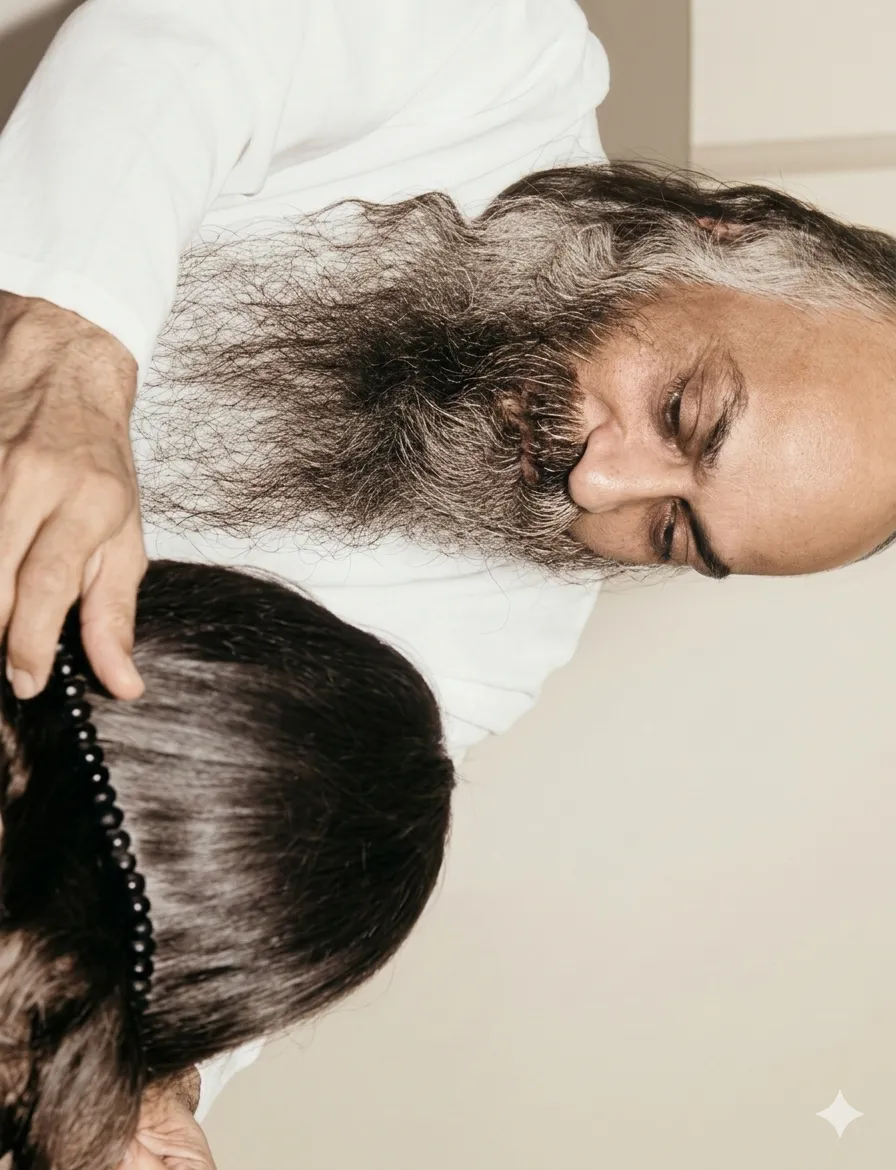
Let go and trust your inner voice; you may not always win outside, but you’ll feel peaceful inside—and that’s the real success.
From the Discourses
Passages where Osho speaks to this question — each links to the complete discourse.
When that intuition starts functioning, is surrender the only technique for that intuition, or the inner guide? Does a person living through intuition always succeed? How do you value success and failure? Is it not true that the person living intuitively will become weak intellectually?
Surrender is the only technique for the inner being to become active. DOES A PERSON LIVING THROUGH INTUITION ALWAYS SUCCEED? No, but he is always happy -- whether he succeeds or not. And a person not living intuitively is always unhappy whether he succeeds or not. Success is not the criterion because success depends on many things. Happiness is the criterion because happiness depends only on you. You may not succeed because others are competitors there. Even if you are working intuitively, others may be working more cunningly, more cleverly, more calculatingly, more violently, more immorally. So success depends on many other things; success is a social phenomenon. You may not succeed. Who can say that Jesus succeeded? Crucifixion is not a success, it is the greatest failure. A man crucified when he was just thirty-three -- what type of success is this? No one knew about him. Just a…
Osho, this “total surrender” you speak of—the worldly people are never going to accept it. Otherwise a man seems like a sadhu, even a madman, not civilized... If he works with discernment, with a little intelligence, it’s fine; otherwise he’ll be a failure everywhere.
Our trouble is this: we are proceeding on the assumption that success will happen—therefore we fear failure. What I am saying is that we are taking it for granted that success must be. And we never ask how success could exist without failure. Success and failure are the two legs of the same mind. The person who succeeds will also fail—daily. Today he’ll win an election; tomorrow he’ll lose. Today people will praise; tomorrow they’ll condemn. Today he’ll be up; tomorrow down. Lao Tzu used to say: never climb to a place from which you will have to fall. But our desire is to climb precisely to the place from which all have fallen and we alone will not; to climb where no one has ever managed to climb. Our desire is to reach the very place where whoever climbed fell—and there I should not fall: that is what we…
प्रश्न: ओशो, यह जो टोटल सरेंडर आप कहते हैं न, दुनिया वाले तो यह कभी मानने वाले नहीं हैं। नहीं तो आदमी साधु जैसा, समझो पागल जैसा है, सभ्य नहीं है...। विवेक से, थोड़ी बुद्धि से काम करे तो ठीक है, नहीं तो सब जगह फेल्योर ही होगा।
यह जो हमारी तकलीफ है न, हमारी तकलीफ यह है कि हम यह मान कर चल रहे हैं कि सक्सेस हो जाएगी, इसलिए फेल्योर का डर है। मैं जो कह रहा हूं वह यह कह रहा हूं कि हम यह समझ कर चल रहे हैं कि एक तो सफलता होनी चाहिए ही। और हम कभी यह नहीं सोच रहे हैं कि सफलता विफलता के बिना कैसे हो सकती है? क्योंकि सफलता और विफलता, मैं कह रहा हूं कि एक ही मन के दो पैर हैं। जो आदमी सफल होगा, वह रोज विफल भी होगा और रोज सफल भी होगा। आज इलेक्शन जीतेगा, कल हारेगा। आज लोग प्रशंसा करेंगे, कल निंदा करेंगे। आज ऊपर होगा, कल नीचे होगा। वह लाओत्से कहता था कि कभी ऐसी जगह चढ़ना ही मत, जहां से गिरना पड़े। …
Beloved Osho, I have always heard you speaking about surrender, and it seems to me that surrender is the only important factor in achieving transformation. Then how to surrender? What is the meaning, method and process of it? And what contribution does the active meditation make in reaching the state of surrender?
Mahavira succeeded -- the other seeker in the same part of the world. He was doing certain techniques and he succeeded. Through techniques he succeeded in dissolving his ego. That is why Jainas and Buddhists are bonafide enemies. They cannot come to any reconciliation, they cannot come to any compromise, because they are so absolutely opposite. Mahavira succeeded through technique, so the whole teaching of Mahavira is of method. Buddha succeeded through failure, so his whole teaching is of effortlessness: "Do not do anything." These are the two dimensions. Both are good, but my suggestion is to first try to follow technique. If you succeed, it is okay. If you fail, then surrender will be possible. Then it too is okay. I am for both; that is why I look contradictory. One young man reached me today and he said, "You are so contradictory that it is impossible to follow…
On the path of surrender, how does the seeker come to the right technique out of one hundred and twelve methods?
There are so many stories which have become meaningless for us because we do not know how they happened. Mahakashyap came to Buddha, and Buddha just touched his head with his hand, and the thing happened. And Mahakashyap began to dance. So Ananda asked Buddha, "What has happened to him? And I have been for forty years with you! Is he mad? Or is he just fooling others? What has happened to him? And I have touched your feet thousands and thousands of times." Of course, to Ananda, this Mahakashyap will either look like he is mad or as if he is just deceiving. He was with Buddha for forty years, but there was a problem. He was his elder brother, Buddha's elder brother; that was the problem. When Ananda came to Buddha forty years before, the first thing he said to Buddha was this: "I am your elder brother,…
Osho, sometimes you say, “Live from the feeling within,” and sometimes you say, “Live in tathata with whatever life brings, live in total acceptance.” How can the inner rhythm and the outer situation always be one? Kindly guide.
When your inner instrument gets tuned—have you seen a musician tuning his instrument? He taps, tightens the drum, tightens the strings—likewise, when within you tighten your strings, set your instrument, when music is born within you, when you begin to dance inside, to be ecstatic—then suddenly you see the entire world ready to support you. Helping hands come from all around. In this land we gave God a thousand hands—for this very reason. A lovely image. How can a two-handed God support everyone who needs support? We made Him a thousand-handed God. A thousand is symbolic—for infinite, numberless. And more than a thousand are hard to carve in paintings or statues. The meaning is clear: awaken just once, and with a thousand hands the Divine supports you. From every side His hand reaches for you. His hand has always been reaching—you have been running away. You keep defending yourself from…
पहला प्रश्न: ओशो, कभी आप कहते हैं, ‘भीतर के भाव से जीओ’ और कभी कहते हैं, ‘जीवन जो कुछ लाए उसके साथ तथाता में जीओ, सर्व-स्वीकार के साथ जीओ।’ भीतर का छंद और बाहर की स्थिति दोनों हमेशा एक कैसे रह सकते हैं? कृपापूर्वक मार्गदर्शन करें।
तुम्हारे भीतर जब छंद जम जाता है...देखा न, संगीतज्ञ साज को बिठाते हैं, ठोक-ठाक करते हैं, तबला, तार कसते हैं--ऐसे ही जब तुम्हारे भीतर तुम अपने तबलों को ठोक-ठाक कर, तार को कस कर, साज को बिठा लेते हो; जब तुम्हारे भीतर संगीत का जन्म होने लगता है; जब तुम भीतर नाचने लगते हो, मगन हो जाते हो, मस्त हो जाते हो--तब तुम्हें अचानक दिखाई पड़ता है कि सारा जगत तुम्हारे साथ देने को तत्पर खड़ा है। सब तरफ से हाथ आ गए। हमने इस देश में परमात्मा के हजार हाथ बनाए हैं--इसीलिए। बड़ी प्यारी धारणा है। दो हाथ का परमात्मा किस-किस को सहारा देगा! इतनों को सहारे की जरूरत है! उसके हमने हजार हाथ बनाए हैं। हजार तो प्रतीक है। उसका मतलब अनंत, अनगिनत। और हजार से ज्यादा बनाना भी कठिन था--चित्रों में, मूर्तियों में। मगर अर्थ साफ है। हम यह कह रहे हैं कि तुम एक बार जागो भर कि हजार हाथों से परमात्मा तुम्हें साथ देता है। हर तरफ से उसका हाथ तुम्हारे पास आ जाता है। उसका हाथ पास आना ही चाह रहा है; तुम भागे जा रहे हो। तुम बचते हो। …