
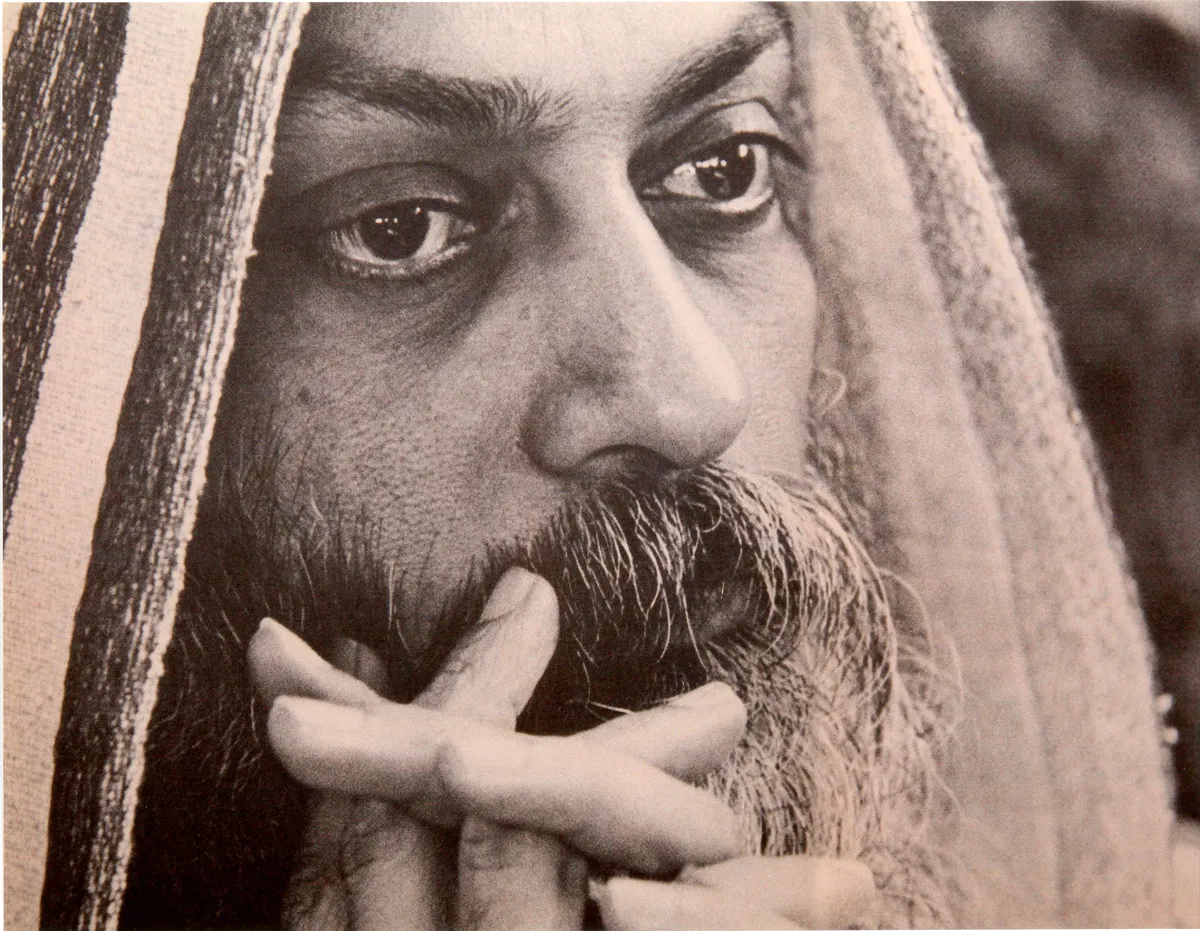
Stop trying so hard; just be aware and let things happen naturally—that’s real simplicity.
From the Discourses
Passages where Osho speaks to this question — each links to the complete discourse.
Osho, have I learned correctly that simplicity is a state of effortlessness, and that wherever there is effort there is no simplicity?
Only the person who has not made efforts for simplicity can be simple in the true sense. But what does this mean? Does it mean we should do nothing for simplicity? No, it does not mean that. I am saying: do not make effort—but you will have to be aware. And being aware is not effort, because in awareness we are not suppressing anything. In awareness we are not repressing anything. In awareness, the light of our consciousness, which lies asleep in dark corners, we lift it up; we awaken it. A man is asleep; we wake him. We are not making him repress anything; we are only breaking his sleep. Our consciousness within is asleep—deeply asleep in many ways. We are awakening it. This awakening may look like a kind of effort, but it is not effort in that sense. Therefore the Zen masters call it effortless effort—actionless action,…
ओशो, हैव आई करेक्टली लर्न्ट दैट दि सिंपलिसिटी इ़ज दि स्टेट ऑफ एफर्टलेसनेस। एण्ड व्हेअर देअर इ़ज स्टेट ऑफ एफर्टस् देअर इ़ज नो सिंपलिसिटी?
सिर्फ वही आदमी सच्चे अर्थों में सरल हो सकता है, जिसने सरलता के लिए प्रयास नहीं किया। लेकिन, इसका क्या मतलब है? क्या इसका यह मतलब है कि सरलता के लिए कुछ भी न करें? नहीं, इसका यह मतलब नहीं है। प्रयास न करें, यह मैं कह रहा हूं, लेकिन जागरूक होना पड़ेगा। और जागरूक होना प्रयास नहीं है, क्योंकि जागरूक होने में हम किसी चीज को दबा नहीं रहे हैं। जागरूक होने में हम किसी चीज का दमन नहीं कर रहे हैं। जागरूक होने में हमारी जो चेतना है, जगह-जगह अंधेरे में पड़ी है, उसे हम उठा रहे हैं, उसे जगा रहे हैं। एक आदमी सोया है, हम उसे जगाते हैं। हम उस आदमी के भीतर कुछ दमन नहीं करवा रहे हैं, सिर्फ उसकी नींद तोड़ रहे हैं। हमारी चेतना भीतर सोई हुई है, बहुत-बहुत रूपों में सोई हुई है। उसे हम जगा रहे हैं। यह जगाना भी एक तरह का प्रयास मालूम होगा, लेकिन यह उस अर्थों में प्रयास नहीं है। इसलिए इसे झेन फकीर तो कहते हैं, एफर्टलेस एफर्ट। यह प्रयास रहित प्रयास या एक्शनलेस एक्शन, कर्मरहित कर्म। …
Dear master, what is simplicity?
The really humble people will not know that they are humble; how can they then brag about it? How can the humble person know that he is humble? The humble person is a person no more. The humble person is in a state of fana: the humble person has dissolved. Now he is only a presence. Humbleness is a presence, not a characteristic of personality, not a trait, but just a presence. Others will feel it, but you will not be able to feel it yourself. So is the case with simplicity. Simplicity simply means living moment to moment spontaneously, not according to some philosophy, not according to Jainism, Buddhism, Hinduism, not according to any philosophy. Whenever you live according to a philosophy you have betrayed yourself, you are an enemy to yourself. Simplicity means to be in a deep friendship with oneself, to live your life with no idea…
So I am not telling you that by dropping this or that you will become simple. If you drop them for the sake of simplicity, you have started with calculation—and that calculation is your complexity. Someone convinces you: leave cigarettes and you will attain liberation; you give them up. Have you thought how cheaply you want liberation? By dropping cigarettes? If liberation were gained by not smoking, it would not be worth having. If it came by giving up liquor—not worth it. What value would something have that is bought so cheaply? What you do is not the point. Simplicity has to do with not flowing in opposite directions. Whatever you do, let it have an inner harmony, an inner music; no division, no conflict. Simplicity means: you flow in one direction. This is intelligence—do not scatter yourself in many directions.
तो मैं तुमसे नहीं कहता कि तुम इन-इन चीजों को छोड़ दोगे तो सरल हो जाओगे। अगर तुमने सरलता के लिए इन्हें छोड़ा तो तुमने गणित तो पहले बिठा लिया। यही गणित तो तुम्हारी जटिलता है। तुमको कोई भरोसा दिला देता है कि सिगरेट मत पीओ तो मोक्ष मिल जायेगा; तो तुम छोड़ देते हो। कभी तुमने सोचा कि कितने सस्ते में तुम मोक्ष पाना चाहते हो? सिगरेट छोड़कर तुम मोक्ष पाना चाहते हो। सिगरेट छोड़कर अगर मोक्ष मिलता हो तो पाने योग्य भी नहीं है। क्योंकि कीमत कितनी! अगर शराब छोड़कर मोक्ष मिलता हो तो पाने योग्य भी नहीं है। कितना मूल्य होगा उसका, जो शराब छोड़ने से मिल जाता हो? नहीं, तुम क्या करते हो, इससे बहुत सवाल नहीं है। तुम्हारी सरलता का संबंध है कि तुम विपरीत दिशाओं में मत बहो। तुम जो भी करो, उसमें एक संगति हो; उसमें एक आंतरिक संगीत हो; उसमें विघटन और विरोध न हो।
Question: Osho, Saint Ryokan lived in a hut at the foot of a mountain. His life was utterly simple. One evening a thief entered his hut, but he saw there was nothing in it. Meanwhile the saint returned to the hut and saw the thief leaving. He said to the thief, “You have come a long way to see me, so it would not be right for you to go back empty-handed. Please, as a gift, take my robe. The thief was utterly astonished. Embarrassed, he took the clothes and slipped away without a word. Ryokan was now naked. Sitting there, he kept gazing at the moon in the sky. And then he said to himself: “If only I could give that poor fellow this beautiful moon as well! Osho, what is the essence of this beautiful Zen parable? ... What does simple life mean?
और फिर उन्होंने मन ही मन कहा, ‘काश, उस गरीब को मैं यह सुंदर चांद भी दिये देता!’
Chapter 2: sutra 2 so it is that existence and non-existence give birth the one to the idea of the other; that difficulty and ease produce the one the idea of the other; that length and shortness fashion out the one the figure of the other; that the idea of height and lowness arise from the contrast of the one with the other; that the musical notes and tones become harmonious through the relationship of one with another; and that being before and behind give the idea of one following another.
The child has the greatest amount of energy. This old man is the weakest of all. If it was left to us to decide, then like Bernard Shaw, we would want our children to be absolutely weak and the elders to be strong for they are experienced. But the inexperienced child has the energy to develop, to expand -- while the experienced old man has none. What is the reason? The reason is significant. Actually, the accumulation of experiences is the advance of death, Aggregation of experiences means approach of death. It means, life's work is over and one should depart. It is now time to leave the University of Life. So now you need strength no more. No energy is required to go to the grave. You have only to slip into the grave. The inexperienced require strength, for strength is required to gain experience. There will be many…