
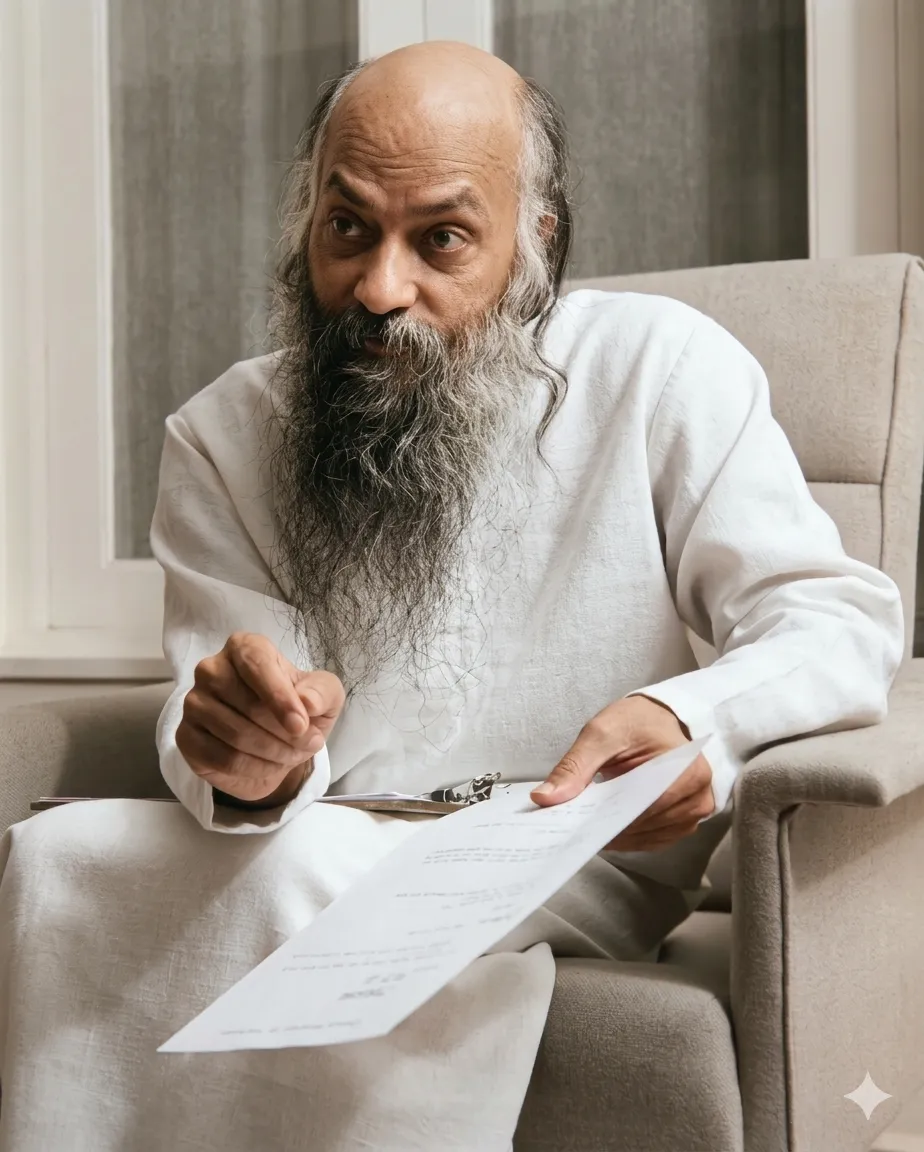
Eat what helps you be calm and aware; if meat makes meditation easier it’s fine, if it disturbs you, don’t eat it.
From the Discourses
Passages where Osho speaks to this question — each links to the complete discourse.
Someone has asked: Is eating meat auspicious or inauspicious?
The touchstone is within. If meat-eating deepens your meditation, then it is auspicious. If meat-eating hinders your meditation, then it is inauspicious.
किसी ने पूछा है: क्या मांसाहार शुभ है या अशुभ?
कसौटी भीतर है। अगर मांसाहार से तुम्हारा ध्यान बढ़ता हो, तो शुभ। अगर मांसाहार से ध्यान में बाधा पड़ती हो, तो अशुभ।
Osho, the Gita certainly emphasizes sattvic food for seekers, but nowhere does it explicitly forbid meat. And you have said meat is easy to digest—and that’s what doctors say, too. Then what obstacle does meat-eating create? For spiritual practice you have strongly stressed the usefulness of a vegetarian diet. But books indicate that many saints who attained through Sufi, Zen, and Tantra paths did not remain vegetarian. And in our own country, Paramhansa Ramakrishna always ate non-vegetarian food. What is the reason for this contradiction?
Then my vision is this: Ramakrishna is an exceedingly pure man. Therefore such a small impurity could not obstruct him. You may not be able to conceive this. Exceedingly pure. If you permit me, I would say: purer than Mahavira. Had Mahavira eaten meat or fish, he could not have attained the supreme. But Ramakrishna did. This means only this: the man is so pure that such a small impurity could not hinder him. Despite that impurity he crossed beyond. Understand it like this: you climb a mountain. The rule for mountain-climbing is that the less the load, the better. If you climb with loads of weight on your head, climbing becomes hard. You may abandon the idea or stop at some midway camp. But then a very powerful man, a Hercules, climbs the mountain with a heavy weight—and reaches the top. This man is not the rule. This Hercules…
आखिरी प्रश्न: ओशो, गीता में साधकों के लिए सात्विक भोजन पर बल अवश्य दिया गया है, लेकिन उसमें कहीं मांसाहार का स्पष्ट निषेध नहीं है। और आपने मांसाहार को सुपच बताया और यही डाक्टरों का मत भी है। फिर मांसाहार से क्या बाधा आती है? धर्म-साधना के लिए आपने निरामिष भोजन की उपादेयता पर बहुत बल दिया। लेकिन पुस्तकों से पता चलता है कि प्रायः ही सूफी, झेन और तंत्र मार्ग से सिद्ध हुए संतों का भोजन निरामिष नहीं रहा। और अपने ही देश में परमहंस रामकृष्ण सदा आमिष भोजन लेते रहे। इस विरोध का क्या कारण है?
… मैं स्थिति को देखता हूं। देखता हूं, रामकृष्ण ज्ञान को उपलब्ध हुए और यह होना तो नहीं चाहिए; लेकिन हुआ है। इसलिए जाल थोड़ा जटिल है। तब मुझे मेरी जो दृष्टि है, वह यह है कि रामकृष्ण अत्यंत शुद्ध पुरुष हैं। इसलिए इतनी थोड़ी-सी अशुद्धि उन्हें बाधा न डाल पाई। यह तुम्हारे खयाल में न आ सकेगा। अत्यंत शुद्ध पुरुष हैं। अगर तुम मुझे आज्ञा दो, तो मैं कहना चाहूंगा, महावीर से ज्यादा शुद्ध पुरुष हैं। महावीर अगर मांसाहार करते या मछली खाते, परम ज्ञान को उपलब्ध नहीं हो सकते थे। लेकिन रामकृष्ण हुए हैं। इसका अर्थ केवल इतना ही है कि यह व्यक्ति इतना शुद्ध है कि इतनी-सी अशुद्धि इस पर कुछ बाधा नहीं डाल पाई। यह उस अशुद्धि के बावजूद भी पार हो गया। ऐसा ही समझो कि पहाड़ पर तुम चढ़ते हो। तो पहाड़ पर चढ़ने का नियम तो यही है कि जितना कम बोझ हो, उतना ठीक। …
A friend has asked: Osho, are you a samyavadi—are you a communist?
If I were opposed to the great ones, it would be hard to find anyone who loves the great ones more than I do. I am not even an opponent of Godse—so how could I be an opponent of Gandhi? But when I criticize some great person, I am not opposing the person; I am trying to shake the peg to which you are tied, so that you may be free. You praise the peg so much that your praise becomes the reason for your bondage. Therefore I try to break even your praises. Do not mistakenly think I have any enmity. But our understanding is so small—so very small. And the understanding of the prejudiced is always small. One who has a doctrine has no understanding, because he is already bound and looks at the world only through that fixed lens. Difficulties arise. He cannot grasp what is being…
एक मित्र ने पूछा है कि ओशो, क्या मैं साम्यवादी हूं? कम्युनिस्ट हूं?
मैं अगर महापुरुषों का विरोधी हूं, तो महापुरुषों को प्रेम करने वाला आदमी खोजना बहुत मुश्किल हो जाएगा। महापुरुषों का मैं विरोधी नहीं हूं। मैं तो गोडसे तक का विरोधी नहीं हूं, तो गांधी का विरोधी कैसे हो सकता हूं? लेकिन जब मैं विरोध करता हूं किसी महापुरुष का, तो महापुरुष का विरोध नहीं कर रहा हूं, वह जो आपकी खूंटी है, जिससे आप बंधे हैं, उसको हिलाने की कोशिश कर रहा हूं, आप छूट जाएं इसलिए। और आप खूंटी की इतनी प्रशंसा करते हैं कि वही प्रशंसा आपके बंधने का कारण हो जाती है। इसलिए आपकी प्रशंसा को भी तोड़ने की कोशिश करता हूं। भूल कर यह मत समझ लेना कि मेरी कोई दुश्मनी है। लेकिन हमारी समझ इतनी कम है, इतनी कम है समझ...और समझ कम होती है उस आदमी की जो कहीं बंधा होता है, प्रिज्युडिस्ड होता है। जिसका कोई मत है, उसकी कोई समझ नहीं होती। जिसका कोई सिद्धांत है, उसकी कोई अंडरस्टैंडिंग नहीं होती। क्योंकि वह पहले से बंधा है। और उस बंधी दुनिया की तरफ से ही, उसी चश्मे से देखना शुरू करता है। …
Beloved Osho, when you were testing your enlightenment by smoking, drinking alcohol, and having sex, did you try eating fish and meat? Does a vegetarian diet have a real value for our consciousness, or is it optional, like smoking?
Of course, there is some existential difference which I cannot destroy. But this is not the existential difference -- that you smoke and I don't smoke, that you drink and I don't drink. This is not existential. The existential difference is very small, and that is: I am awake and you are asleep. It is not much, because I am just sitting on the same bed where you are asleep. Just a little effort will make you awake. Your sleep gives a guarantee: anybody who is capable of sleeping is capable of awakening, they come together. So what is the fuss about? Take your time. Whenever you want to wake up, wake. There is no hurry, you have the whole eternity available to you. Yes, I may not be there to wake you up, that is the only unfortunate thing about it. But somebody else.... One day you are going…
If Mahavira also preferred vegetarian food — not meat — it was not only for ahimsa. Ahimsa was one reason. But more important was this: meat demands more power to digest; it makes the body heavier; it makes the stomach more important; it depletes the brain’s energy and deepens stupor. If ahimsa alone were the reason, Mahavira could have said: there is no harm in eating the flesh of animals who have died naturally — Buddha even allowed this. If only nonviolence were the cause, then do not kill; the violence lies in killing, not in eating. An animal has died — we did not kill; we eat — where is violence? In eating the flesh of the dead there is no violence. Buddha permitted it. But Mahavira did not permit even that. Because his purpose was not only ahimsa.
अगर महावीर ने भोजन में भी पसंदगियां कीं कि शाकाहार हो, मांसाहार न हो, तो वह सिर्फ अहिंसा ही कारण नहीं था, अहिंसा एक कारण था। उससे भी ज्यादा महत्वपूर्ण कारण दूसरा था और वह यह था कि मांसाहार पचने में ज्यादा शक्ति मांगता है और बुद्धि की मूर्च्छा बढ़ती है। अहिंसा अकेला कारण होता तो महावीर कह सकते थे: मरे हुए जानवर का मांस लेने में कोई हर्जा नहीं है, बुद्ध ने कहा भी। अगर अहिंसा ही एक मात्र कारण है, तो मार कर मत... क्योंकि मारने में हिंसा है, मांस खाने में तो कोई हिंसा नहीं है! अब एक जानवर मर गया है, हम तो मार नहीं रहे, मर गया है, अब तो मांस खा रहे हैं, तो मांस खाने में कौन सी हिंसा है? मरे हुए के मांस खाने में कोई भी हिंसा नहीं है। इसीलिए बुद्ध ने आज्ञा दे दी कि मरे हुए जानवर का मांस खाया जा सकता है। हिंसा तो मारने में थी। लेकिन महावीर ने मरे हुए जानवर का मांस खाने की भी आज्ञा नहीं दी है। क्योंकि महावीर का प्रयोजन मात्र अहिंसा नहीं है। महावीर का उससे भी गहरा प्रयोजन यह है कि मांस पचने में ज्यादा शक्ति मांगता है, शरीर को ज्यादा भारी कर जाता है, पेट को ज्यादा महत्वपूर्ण कर जाता है और मस्तिष्क की ऊर्जा क्षीण होती है, और तंद्रा गहरी होती है।