
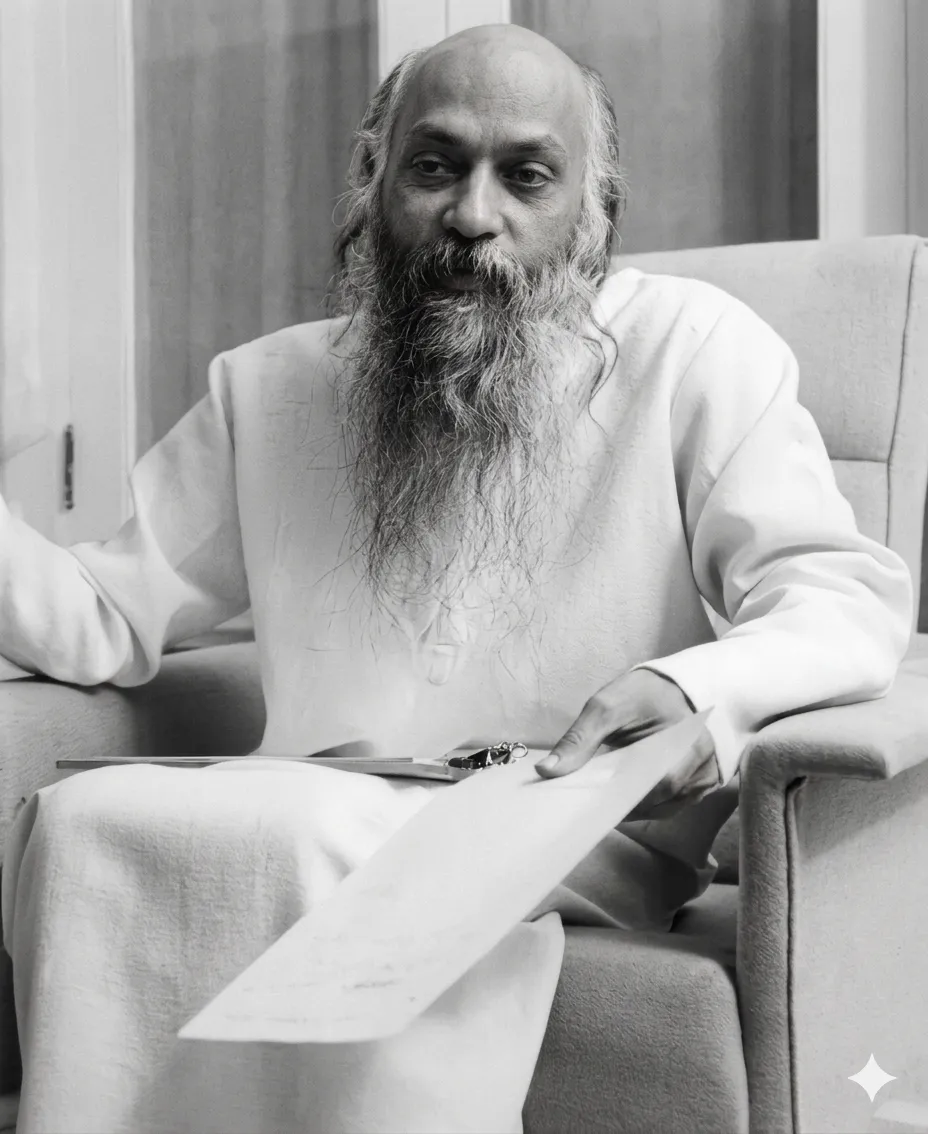
When you meditate, you stop being just your body and feel the quiet you inside, which doesn’t get old.
From the Discourses
Passages where Osho speaks to this question — each links to the complete discourse.
Beloved Osho, you have said recently that a sannyasin has no nationality anymore. Do you say the same thing about age? Since I have been a sannyasin, I have felt ageless. I am sixty-two and young people accept me as one of them. How is this possible?
Meditation is a transformation of your whole being. You are no more part of a crowd, no more a cog in the wheel. You have taken your responsibility on your own shoulders; you have become a free individual. Nationality will disappear, because these are all arbitrary lines, man-made -- and their existence is ugly, because their existence shows that man is not mature yet. Otherwise, what is the need to have so many nations, and every nation having great armies.... People are dying in poverty and seventy percent of the national income all over the world goes to the military. Humanity is living on only thirty percent, and the army gets everything better -- naturally, because they have sold their lives and they are being prepared for death, either to kill or to be killed. This seems so useless. Why should there be wars? Why should there be violence? And…
Mind is always old, never young. Even the youngest mind is not young. It cannot be young because mind means the accumulated past. Your mind consists of your past experiences -- how can it be young? It can be one day old, it can be ten years old, it can be eighty years old, but it cannot be young. Even the child who is just born has a mind, a few seconds old. By its very nature mind is old. And meditation is young, always young; hence the meditator retains a certain inner youthfulness. Of course the body will become old. If you go into Indian temples you will be surprised: you will not see a single statue of Rama as an old man -- not that he never became old. You will not find a single statue of Krishna as old, yet he died when he was eighty-five.
Osho, I have heard that a seeker has to pass through four stages of sadhana: tariqat, shari’at, marifat, and haqiqat. The last is haqiqat, where the seeker meets his beloved and comes face to face with Truth. Osho, please explain the first three states.
These words are from the Sufis—very significant, and very straightforward. The first is tariqat. Tariqat means: the way, the method, the discipline, the means, the yoga. Tariqat means: something has to be done; only then will you attain—without doing, you will not receive. One has to walk a path; find the way; make a footpath. One has to bring some discipline into life, give it an order. Tariqat means learning the way to become worthy of it. When you go to have an audience with an emperor, you learn the etiquette of his court. You don’t just walk in. If you do, you will not be accepted. You learn how to sit there, how to stand there, how to bow there. If you are going to meet an emperor, you must taste something of the flavor of the emperor’s way of life. If you are going to meet the Divine,…
दूसरा प्रश्न: ओशो, मैंने सुना है कि साधक को साधना के चार चरणों से गुजरना पड़ता है: तरीकत, शरीअत, मारिफत और हकीकत। अंतिम है हकीकत, जहां साधक अपने सनम से मिलता है और सत्य के साथ उसका साक्षात्कार हो जाता है। ओशो, कृपया पहली तीन स्थितियों को समझायें।
… बहुत सीधे-साफ भी हैं। पहला है तरीकत। तरीकत का अर्थ होता है: तौर-तरीका, विधि-विधान, उपाय, योग। तरीकत का अर्थ होता है: कुछ करना है, तो उसे पा सकेंगे; बिना किये तो न मिलेगा। कुछ रास्ता चलना है; मार्ग खोजना है; पगडंडी बनानी है। कुछ जीवन में अनुशासन लाना है, व्यवस्था देनी है। तरीकत का अर्थ होता है, उसके योग्य हो सकें, इसका तौर-तरीका सीखना है। तुम किसी सम्राट के दर्शन करने जाते हो, तो तुम उसके दरबार का तौर-तरीका सीखते हो। ऐसे ही तो नहीं चले जाते। ऐसे ही तो स्वीकार न हो सकोगे। तुम सीखोगे कि कैसे वहां बैठेंगे, कैसे वहां उठेंगे, कैसे वहां झुकेंगे। सम्राट से मिलने जा रहे हो तो सम्राट के जीवन का जो ढंग है उस ढंग का कुछ स्वाद तुम्हें लेना होगा।
Joshu was a master who started to study zen when he was sixty. When he was eighty he found enlightenment. They say he taught for forty years after his enlightenment.
ONCE A STUDENT ASKED OLD JOSHU: 'YOU TEACH THAT WE SHOULD EMPTY OUR MINDS. I HAVE NOTHING IN MY MIND -- NOW WHAT SHOULD I DO? 'THROW IT OUT,' SAID JOSHU. 'BUT I HAVE NOTHING -- HOW CAN I THROW IT OUT? JOSHU SAID:' IF YOU CAN'T THROW IT OUT, CARRY IT OUT, DRIVE IT OUT, EMPTY IT OUT -- BUT DON'T STAND THERE IN FRONT OF ME WITH NOTHING IN YOUR MIND ! ... At the age of sixty, Joshu started. You can start any time, and this has always been my feeling. Joshu lived so long -- he lived one hundred and twenty years -- he must have lived one hundred and twenty years, because he started at the age of sixty. And when you start meditating, you become so fresh and young, you can simply live long without any effort. A person who is ready to learn always
Osho, I have grown old; I used to think there was no remedy left for me. But your words have stirred new enthusiasm. Eyes that were losing their light have been touched again by a ray of some unknown radiance. Osho, what is happening? Am I not just dreaming?
The Beloved wears no veil, no curtain. But you have bound a bandage over your eyes. You are like a bullock at the oil press. And those who bound it used a clever device: had there been no blindfold, you would have rebelled long ago. You would never have fallen for the hollow politicians and the two-bit priests. You would have broken the chains. Look at the horse harnessed to a cart—blinders are put on his eyes. Otherwise he would bolt. If he could see clearly, he would run off. With blinders, only four steps ahead are visible. Seeing only four steps, he loses the very sense that there is anywhere to run to. Slowly he believes—“This is all there is; this is life.” A philosopher once went to a grocer to buy oil. Behind the grocer, the oil press was turning, the oil being pressed. A bullock was circling,…
दूसरा प्रश्न: ओशो, मैं वृद्ध हो गया हूं, सोचता था कि अब मेरे लिए कोई उपाय नहीं है। लेकिन आपके शब्दों ने फिर उत्साह जगा दिया है। रोशनी खोती आंखें फिर किसी अज्ञात प्रकाश की किरण से आंदोलित हो उठी हैं। ओशो, यह क्या हो रहा है? मैं कोई स्वप्न तो नहीं देख रहा हूं?
नाफहमी अपनी पर्दा है दीदार के लिए। वर्ना कोई नकाब नहीं यार के लिए।। उस प्यारे के ऊपर कोई नकाब नहीं है, कोई पर्दा नहीं है। उसने कोई घूंघट नहीं डाल रखा है। लेकिन तुम्हारी आंख पर तुमने पट्टी बांध रखी है। तुम कोल्हू के बैल जैसे हो। और बांधने वालों ने बड़ी तरकीब से बांधी है। आंख पर पट्टी न हो तो तुम कभी के बगावत कर जाते। तुम थोथे राजनीतिज्ञों, दो कौड़ी के पंडित-पुरोहितों के चक्कर में न पड़ते। कभी के बाहर हो गए होते। जंजीरें तोड़ दी होतीं। देखते हो, तांगे में घोड़े को जोतते हैं तो आंख पर पट्टियां बांध देते हैं। नहीं तो घोड़ा निकल भागे। अगर उसको ठीक-ठीक दिखाई पड़ता रहे, तो निकल भागे। उसे कुछ दिखाई ही नहीं पड़ता, उसे बस सिर्फ आगे चार कदम दिखाई पड़ते हैं। चार कदम दिखाई पड़ते हैं, इसलिए उसे यह भरोसा भी नहीं आता कि भागूंगा भी तो भागूंगा कहां? जगह कहां है भागने की? धीरे-धीरे वह यह भरोसा कर लेता है--इतनी ही तो जगह है, इतनी ही जिंदगी है। एक दार्शनिक, विचारक तेली के घर तेल लेने गया था। …