
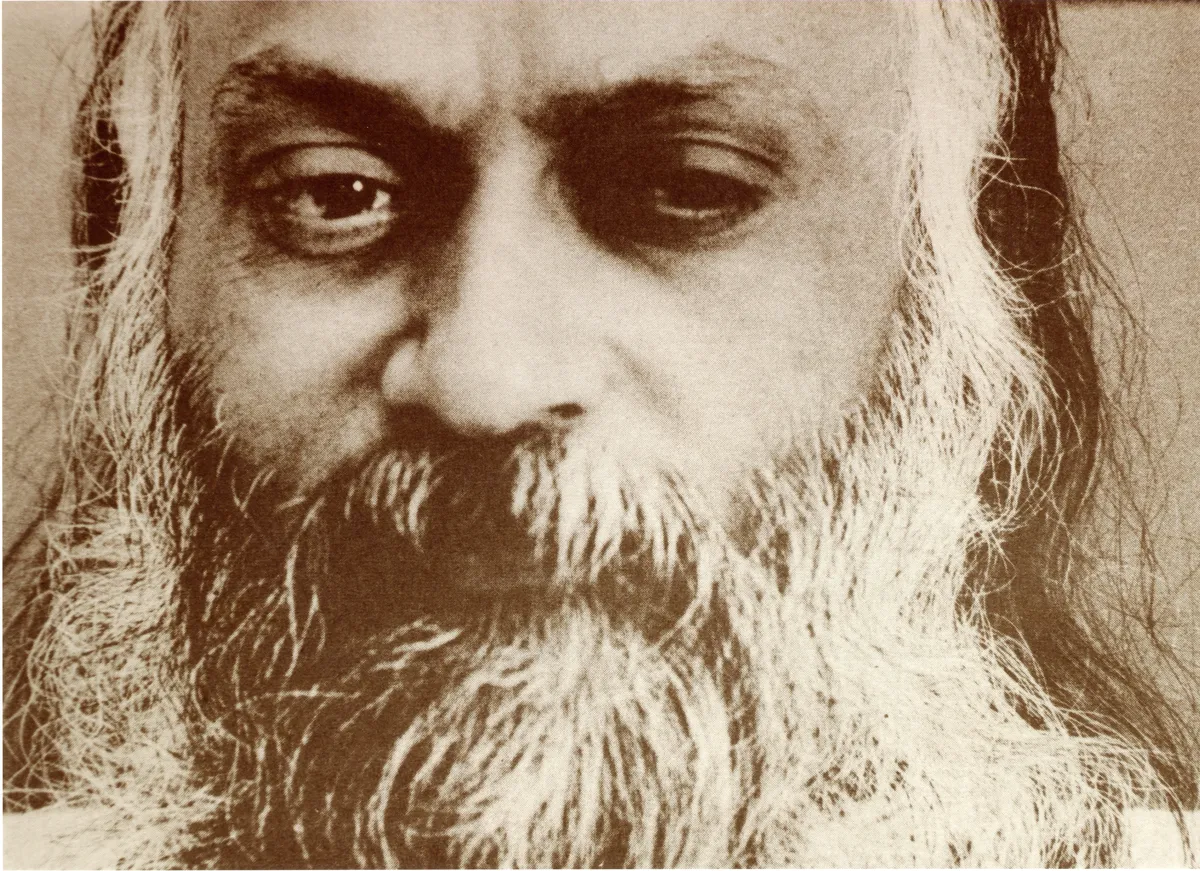
Just keep calmly watching everything that happens inside and around you while living your day, without forcing anything or running away.
From the Discourses
Passages where Osho speaks to this question — each links to the complete discourse.
Then take the heart as a lotus—only a symbol to help you understand. Move your entire awareness into the heart where the throb is; where breath touches and sets the heart beating; where the thread of breath is hitched. You have seen the breath; now step behind breath—deeper; slip into the throb of the heart. See the heart as a lotus. As in the lotus, at the core a small space exists where sometimes the bee is trapped—sit in that empty space. Place your awareness—your surati—there. Placing surati upon the lotus of the heart, if one enters ajapa… This is what Nanak called ajapa-japa. Now there is no chanting and no chanter; only then does true chanting happen—ajapa. Now, for the first time, you hear the sound of existence itself. This is Omkar—the Om resounding. It is heard—not done.
तो हृदय को एक कमल समझो। यह तो प्रतीक है; सिर्फ तुम्हें समझ में आ जाए बात। अब सारे बोध को हृदय में ले जाना है, जहां धक-धक हो रही है; जहां श्वास जाकर हृदय को गतिमान कर रही है; जहां श्वास का धागा अटका है। श्वास को देख लिया, अब श्वास से पीछे उतरे, और गहरे उतरे; हृदय की धक-धक में उतरे। हृदय को समझो एक कमल। कमल में जैसे भीतर थोड़ी सी शून्य जगह होती है जहां कभी भंवरा बंद हो जाता है, उसी शून्य जगह में आसन मार कर बैठ जाओ। वहीं रखो अपनी सुधि को, वहीं रखो अपने बोध को, सुरति को।
Question: KATHA JAPAH. DANAMATMAGYANAM. YOAVIPASTHO OYAHETUSHCHA. SVASHAKTI PASCHAYOASYA VISHVAM. STHITILAYAU. WHATEVER HE UTTERS IS JAPA. SELF-KNOWLEDGE ITSELF IS HIS GIFT. HE IS THE MASTER OF THE INNER POWERS AND THE SOURCE OF KNOWLEDGE. THE CONSTANT ENJOYMENT OF SELF-ENERGIES IS HIS UNIVERSE. LIFE AND DEATH ARE UNDER HIS WILL. ... Be aware of this distinction. You make meditation one more act to add to your daily activities. There are a thousand involvements in your life already, and you add God as just one more, but you will miss God, for God cannot be at the periphery. God has nothing to do with the market and the shops. He is the very core of your being -- where you actually are. Where all work becomes rest, where you simply exist, where there is no doer, where only the witness is -- this where He lives. God does not occupy a part of you.
Osho, in the world of sadhana there is much mention of yajnas and rituals. There are many methods of yajna; people speak of homa-type yajnas. But in the Gita, japa-yajna and jnana-yajna are given special importance. And while speaking on japa you also spoke of ajapa-japa. So please shed light on the Gita’s japa-yajna, jnana-yajna, and on ajapa-japa as well.
Third: we see the flames of fire rising; we can only see them a little way, then they vanish. Fire is visible only a short distance; beyond that it becomes invisible. Knowledge too is visible only a little—or say: for a short distance its relation remains with the visible; beyond that its relation is with the invisible. Then the visible is lost; only the invisible remains. For all these reasons fire became a potent symbol of knowledge, and Krishna could use the word jnana-yajna. If these symbols are in our awareness, jnana-yajna will continue forever. The other rituals and yajnas built around fire will disappear, because they arise from circumstances; but jnana-yajna will continue. Thus Krishna, for the first time, freed yajna from circumstance and gave it an eternal meaning. The yajna of the Vedas was bound to particular conditions, tied to an event. Krishna freed it from that event…
ओशो, साधना-जगत में यज्ञों और रिचुअल्स का बहुत उल्लेख है। यज्ञ की बहुत सी विधियां भी हैं। होमात्मक यज्ञ की बात आती है। लेकिन गीता में जपयज्ञ और ज्ञानयज्ञ को विशेष स्थान दिया गया है। साथ ही आपने जप पर बात करते हुए अजपा-जप के बारे में कहा था। तो गीता के जपयज्ञ, ज्ञानयज्ञ और अजपा-जप पर भी प्रकाश डालने की कृपा करें।
तीसरी बात। अग्नि की लपटें हमने उठते देखी हैं, थोड़ी दूर तक ही दिखाई पड़ती हैं, फिर खो जाती हैं। अग्नि बहुत थोड़े दूर तक दृश्य है, इसके बाद अदृश्य हो जाती है। ज्ञान भी बहुत थोड़े दूर तक दिखाई पड़ता है, या ऐसा कहें कि थोड़े दूर तक ज्ञान का संबंध दिखाई पड़ने वाले से रहता है, दृश्य से रहता है, और इसके बाद उसका संबंध अदृश्य से हो जाता है। फिर दृश्य खो जाता है और अदृश्य ही रह जाता है। इन सारे कारणों से अग्नि बड़ा ही समर्थ प्रतीक ज्ञान का बन गया और कृष्ण ज्ञान-यज्ञ शब्द का उपयोग कर सके। ये प्रतीक अगर हमारे खयाल में हों, तो ज्ञान-यज्ञ सदा जारी रहेगा। अग्नि के आस-पास निर्मित हुए दूसरे रिचुअल और यज्ञ तो खो जाएंगे, क्योंकि वे परिस्थिति से पैदा होते हैं, लेकिन ज्ञान-यज्ञ सदा जारी रहेगा। इसलिए कृष्ण ने यज्ञ को पहली दफा परिस्थिति से मुक्त करके शाश्र्वत अर्थ दे दिया। वेद जिस यज्ञ की बात करते थे वह परिस्थिति से बंधा था, एक घटना से जुड़ा था। कृष्ण ने उसे उस घटना से मुक्त कर दिया और एक शाश्र्वत अर्थ दे दिया। …
Their cessation is brought about by persistent inner effort and non-attachment. Of these two, abhyasa the inner practice is the effort for being firmly established in oneself.
IT BECOMES FIRMLY GROUNDED ON BEING CONTINUED FOR A LONG TIME, WITHOUT INTERRUPTION AND WITH REVERENT DEVOTION. ... Your whole being feels filled, vibrates with it, it becomes your deeper breath. You cannot live without it. And by and by it creates an inner harmony, a music. Your whole being starts falling into harmony. An ecstasy is born, a humming sensation, a sweetness surrounds you. By and by this sweetness becomes your nature. Then whatsoever you say, it becomes the name of Allah; whatsoever you say, it becomes the remembrance of the divine. Any practice WITHOUT INTERRUPTION AND WITH REVERENT DEVOTION... for the western mind it is very difficult. They can understand practice; they cannot understand REVERENT DEVOTION. They have completely forgotten that language, and without that language practice is just Western seekers come to me and they say, "Whatsoever you say we will do," and they follow it exactly as
Osho, “By continual practice the dull-witted become wise. As the rope goes to and fro, it carves marks in the stone.” Does one also need some practice to attain the divine? Please clarify.
Some people, when they have to think, start scratching their heads. Hold their hand and don’t let them scratch, and they’re in trouble—they can’t think. “Let go of my hand, or my thinking is ruined!” It’s a mechanical habit. Someone must light a cigarette to think; as the smoke begins, thinking becomes easier. Snatch the cigarette and he’s disoriented—“What do I do now?” Another person must ring the temple bell every morning, wave the plate of offerings. Keep him from entering the temple for a day and he is upset all day. You think there is a difference between scratching the head, ringing the bell, smoking a cigarette? There is none. Dr. Hari Singh Gaur had a habit—he told me this story himself—that whenever he argued a deep point before the Privy Council, he would twirl the button of his coat. If his fingers found that button, his brain worked…
दूसरा प्रश्न: ओशो, करत-करत अभ्यास के, जड़मति होत सुजान। रसरी आवत-जात है, सिल पर परत निशान।। क्या परमात्मा को पाने के लिए भी किसी अभ्यास की जरूरत होती है? कृपया स्पष्ट करें।
जैसे किसी आदमी को कुछ सोच-विचार करना हो, तो वह सिर खुजलाने लगता है। बस उसका हाथ पकड़ लो, सिर न खुजलाने दो। वह बड़ी मुश्किल में पड़ जाएगा! वह सोच-विचार ही नहीं पाएगा। वह कहेगा, मेरा हाथ छोड़ो, नहीं तो मेरा सब सोच-विचार खराब हुआ जा रहा है! वह यंत्रवत आदत है। किसी आदमी को सोचना हो, सिगरेट को जला लेता है। धुआं निकालने लगे, फिर सोच-विचार सुगम हो जाता है। उसकी सिगरेट छीन लो, वह एकदम अस्तव्यस्त हो जाएगा। उसकी समझ में न आएगा कि अब मैं क्या करूं, क्या न करूं? और एक आदमी रोज सुबह प्रार्थना करता है, मंदिर में घंटी बजाता है, पूजा का थाल उतारता है। बस एक दिन उसको मंदिर में न घुसने दो, वह दिन भर परेशान रहेगा। इन सब में कुछ भेद है--तुम समझते हो--सिर खुजलाना, या मंदिर की घंटी बजाना, या सिगरेट पीना? जरा भी भेद नहीं है। डाक्टर हरि सिंह गौर को एक आदत थी--यह कहानी उन्होंने खुद ही मुझे सुनाई थी--कि जब भी वे प्रिवी कौंसिल में कोई गहरे मसले पर बोलते, तो अपने कोट का बटन घुमाते रहते थे। …