
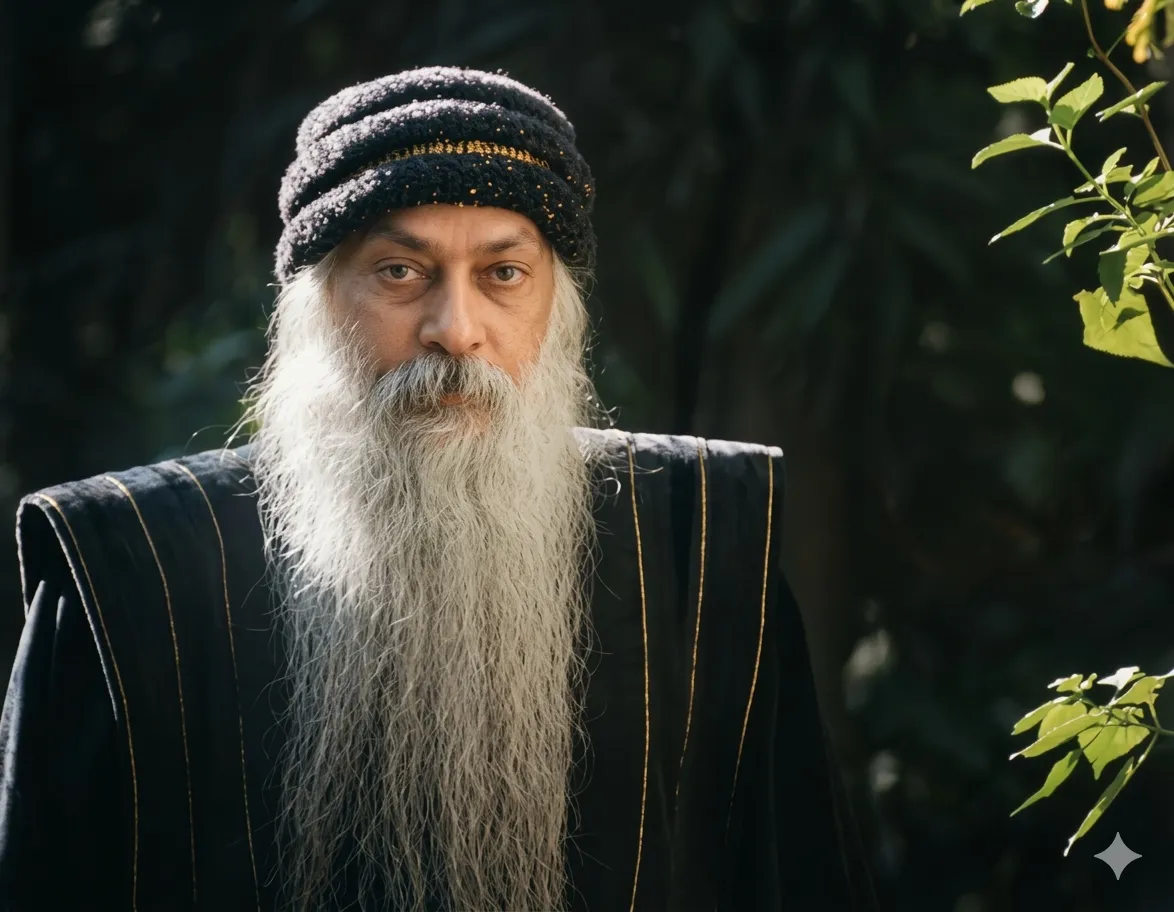
Like a river and a seed growing into a tree, his views change shape as he grows, but their living heart stays the same.
From the Discourses
Passages where Osho speaks to this question — each links to the complete discourse.
Osho, after what you have experienced over the last thirty-two years, living in India and abroad, have there been any significant changes in your views about India, America, religion, sex, India’s problems and their solutions?
Much has changed. Because I am not a stagnant, rotting pond; I am a flowing Ganga. Every moment I am moving forward. The famous Greek thinker Heraclitus has said: you cannot step into the same river twice. Sooner or later, somewhere under some constellation in eternity, I am bound to meet Heraclitus. Then I would like to tell him: you cannot step into the same river even once. For the river is flowing. When you touch the river’s upper layer, the lower layer is already moving; and by the time you reach the lower, the upper has gone. The seed is the same—but it has become a tree, laden with leaves, with flowers in bloom. In my life I have never evolved in opposition to anything. What I have said, I have only refined. Therefore, certainly, I will not say now what I said thirty years ago. Thirty years ago…
प्रश्न: ओशो, आपने पिछले बत्तीस वर्षों में जो अनुभव किया है हिंदुस्तान में और बाहर रह कर, उसके बाद भारत, अमरीका, धर्म, सेक्स, भारत की समस्याएं और उनके समाधान के बारे में आपके जो अब तक विचार रहे हैं, उनमें कोई खास बदलाव आया है क्या?
… क्योंकि मैं कोई सड़ता हुआ बंद तालाब नहीं हूं। मैं एक बहती हुई गंगा हूं। हर क्षण मैं आगे बढ़ रहा हूं। यूनान के प्रसिद्ध विचारक हेराक्लाइटस ने कहा है: एक ही नदी में तुम दुबारा नहीं उतर सकते। कभी न कभी, किसी न किसी नक्षत्र पर अनंत काल में हेराक्लाइटस से मेरी मुलाकात होगी ही। तो मैं उसको कहना चाहता हूं कि तुम एक ही नदी में एक बार भी नहीं उतर सकते। क्योंकि नदी बही जा रही है। जब तुम नदी का ऊपर का तल छू रहे हो, तब नीचे का तल बह रहा है। और जब तक तुम नीचे के तल पर पहुंचते हो, ऊपर का तल जा चुका है। बीज तो वही है--वृक्ष बना है, पत्तों से भरा है, फूल खिले हैं। मैंने अपने जीवन में किसी चीज के विरोध में विकास नहीं किया है। जो मैंने कहा है, उसे और परिष्कृत किया है। इसलिए निश्र्चित ही मैं वही नहीं कहूंगा जो मैंने तीस साल पहले कहा था। …
You can see my people. I have got one million people to prove this. They have dropped repression but they have not gone to overindulgence. On the other hand, by dropping repression their energy is freed; they have become immensely creative, and they have become meditative. Sannyasins who have been with me for ten, twelve, fifteen years have almost lost all interest in sex. They are no more interested in it because the same energy can give them so much joy, that sex seems to be just a wastage. And the second day is a hangover -- dull, dissipated, weak, while the same energy can reach to higher peaks of meditation and can give you spaces that you have never known, heights that you have never flown, light, clarity that has never been your experience.
Osho, you say you don’t speak for the crowd, that you won’t speak merely to please them. But people are saying that whenever someone speaks against Gandhi or against the Congress, people like it, and that’s why such large crowds gather.
For all of India—more so for Gujarat, of course, but certainly for the whole of India. There isn’t much distance between us and him yet; the generation that lived close to him is still alive. And for India’s future, decisions will have to be taken in some relation to Gandhi—whether in support or in opposition. Gandhi will remain significant for the next hundred years in India—that’s my understanding—whether for or against is another matter. Therefore Gandhi should be thought about very clearly. That was one reason. Second, it seems to me that not only in India but outside India too, reflection on Gandhi has begun—sometimes it even seems that people outside India are thinking more. In this country, reflection has almost stopped. So Gandhi is just a beginning. I would say we should also try to reawaken reflection on Mahavira and the Buddha. But there is a great distance between…
ओशो, वही बात है जो भीड़ जानती है, आप कहते हैं। वह आप उसके लिए नहीं बोलते। लेकिन लोग आज ऐसा बोल रहे हैं कि गांधी के विरुद्ध, कांग्रेस के विरुद्ध, ऐसी कुछ बात आती है तो लोगों को अच्छी लगती है, इसीलिए इतनी भीड़ हो जाती है।
सारे हिंदुस्तान के लिए ही! गुजरात के लिए और भी ज्यादा। और सारे हिंदुस्तान के लिए निकटतम हैं। फिर अभी भी हमारे और उनके बीच बहुत फासला नहीं हुआ। अभी जो पीढ़ी उनके निकट जीयी थी, वह अभी जिंदा है। और हिंदुस्तान के लिए मेरा मानना है कि भविष्य में जो भी निर्णय लेने हैं, वे निर्णय किसी न किसी रूप में गांधी पर विचार करके ही लेने होंगे--चाहे पक्ष में, चाहे विपक्ष में। गांधी हिंदुस्तान के आने वाले सौ वर्षों में महत्वपूर्ण रहेंगे, ऐसी मेरी समझ है--चाहे पक्ष में, चाहे विपक्ष में, यह दूसरी बात है। और इसलिए गांधी पर बहुत निश्चित रूप से विचार किया जाना चाहिए।
Beloved master, as one grows old, one's ideas slowly change. Are your ideas about sex to superconsciousness the same? Your comment please.
Perhaps you are not aware that there are two kinds of growth. Most people grow old; a few people simply grow up. I belong to the second category. I don't grow old, I simply grow up. The body will grow old, but the body has nothing to do with my ideas. My consciousness grows up. I have more profound ideas about sex and superconsciousness than I had before. There has been evolution about everything in me, but whatever I have said before has deepened, has become more solid. Now I have more arguments for it -- that's what growing up means. Nothing has changed, only everything has become more clear, more solid, more conclusive. I have been thinking to speak -- because I have never read my books -- on each book again, so that you can see that I have not contradicted a single thing in those books. Although…
Osho, how are you? I am just the same. And you too are the same. That which changes is not our real face, not our soul. That which does not change—neither in life nor in death—that is our reality. We ask people, “How are you?” We should not ask. For in asking we have already conceded change—change itself, childhood, youth, old age, life, death.
There is something within you which you yourself also know. It was the same in childhood, and even before you were born it was the same. Much water has flowed in the Ganges, but you stand on the bank and remain the same. Even if tomorrow you are not visible, you will still be the same. Forms will be new, shapes will be new; perhaps you will not even recognize yourself. Names will be new, introductions new, attire new; still I say—you will be the same. You have always been the same, and you will always remain the same. This eternal, everlasting—call it God if you wish, or call it your very being. Many waves come and go upon it, but the ocean remains the same. Change is false. But we have taken change to be true and made a world out of it. If only we could understand that…
प्रश्न: ओशो, आप कैसे हैं? मैं तो वैसा ही हूं। और तुम भी वैसे ही हो। जो बदल जाता है, वह हमारा असली चेहरा नहीं है, वह हमारी आत्मा नहीं है। जो नहीं बदलता, न जीवन में, न मृत्यु में, वही हमारा यथार्थ है। हम लोगों से पूछते हैं--कैसे हो? नहीं पूछना चाहिए। क्योंकि हमने स्वीकार ही कर लिया पूछने में--बदलाहट को, परिवर्तन को, बचपन को, जवानी को, बुढ़ापे को, जीवन को, मौत को।
कुछ है तुम्हारे भीतर जिसका तुम्हें भी पता है। बचपन में भी यही था, और नहीं जन्मे थे, तब भी यही था। गंगा में बहुत जल बहता गया, लेकिन तुम किनारे खड़े हो और वही हो। तुम दिखाई भी न पड़ोगे कल, तो भी वही रहोगे। नये होंगे रूप, नई आकृतियां, शायद तुम अपने को भी पहचान न पाओ। नये होंगे नाम, नया होगा परिचय, नया होगा वेश, फिर भी मैं कहता हूं--तुम वही होओगे। तुम सदा से वही हो और तुम सदा वही रहोगे। इस सदा सनातन, शाश्वत को चाहो तो ईश्वर कहो, चाहो तो तुम्हारी सत्ता कहो। इस पर बहुत लहरें आती और जाती हैं, पर समुंदर वही है।