
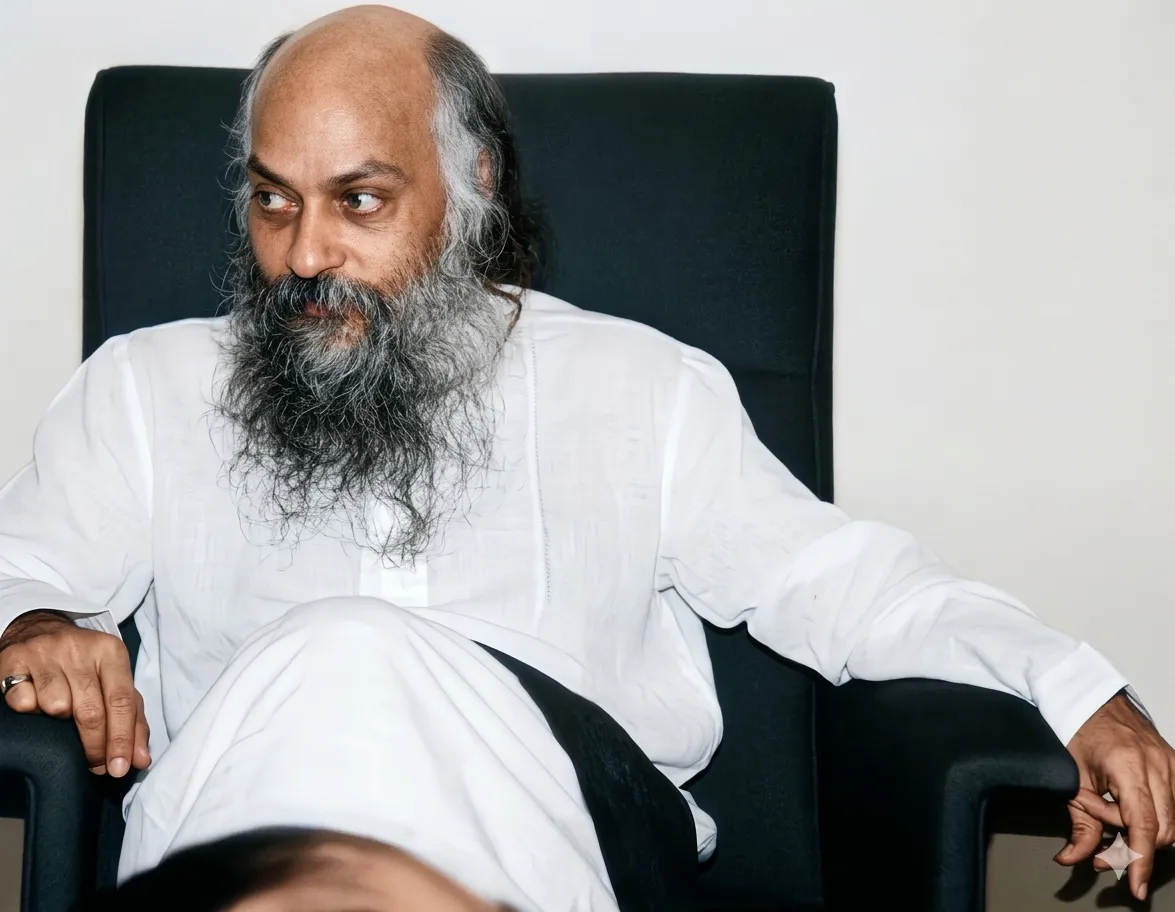
Make vows as a gentle experiment in keeping your word, not as a way to fight yourself or punish your body.
From the Discourses
Passages where Osho speaks to this question — each links to the complete discourse.
Osho, a friend has asked: in the practice of resolve (sankalpa), doesn’t a little repression slip in? In the practice of resolve, doesn’t a touch of bodily mortification (kaya-klesh) come in?
Two things need to be understood here. First: if a resolve is taken in order to suppress a tendency, that is a different matter. For example, a person has a habit of overeating. If, to get rid of this habit, he takes a vow of fasting, then there will be repression. But if there is no habit of overeating, nor any idea of fighting overeating, and he takes a vow to fast, then it is simply a resolve; there is no repression in it. In this meditation camp the resolve I have spoken of is not to suppress any tendency, but to expand resolve itself. Resolve can be used to suppress a tendency—it can be, it is, it has been. But that is the negative form of resolve. I go out of this room: two possibilities are there. I go out because being outside feels joyous, or I go out…
Osho, in the previous verse you spoke about resolve. What is the difference between resolve and repression of the senses? We want to understand this.
It is necessary to understand the word deva. Much confusion has arisen from it. Deva is a technical term. In this world, when people die, ordinary people find a womb quickly; a body becomes available immediately. But for a very exceptional, auspicious soul, a suitable womb is not immediately available; it must wait. For a very evil soul too, a womb is not readily available; it also must wait. For ordinary souls the womb becomes available at once—hence an ordinary man dies here and is born there; there is little gap between death and new birth—sometimes moments, sometimes not even that. Wombs are available round the clock; the soul immediately enters. But a superior soul waits for a worthy womb. Such superior souls are called devas. Inferior souls also wait; they are called pretas—ghosts. Those who died doing much evil—such as a Hitler, on whose head lies the murder of…
Osho, is there any method to increase willpower?
So do not take a very big resolve all at once, one that you already know is beyond you—and this is what often happens: those who set out on the journey of resolve take resolves beyond their limits. Your own mind counsels you, “Yes, take it.” And then you get stuck, and you fall. Then the same mind says, “Now drop it. You’re not anyone’s slave; you took it yourself, now leave it.” Why does the mind do this? Because the greater your resolve becomes, the smaller your mind becomes. The day a resolve is fulfilled, the mind dies; it cannot survive. Mind and resolve are opposing forces. Mind is the name of your weakness; resolve is the name of your soul. Mind is your disease; resolve is your health. Therefore the mind will keep putting you in difficulties. It will say, “Take a big one.” When you take it,…
With pleasure, the event of diminishing begins; with bliss, the event of growth begins. And as pleasure diminishes, pain increases. Therefore behind every pleasure stands the dark shadow of pain; and behind bliss there is a world ever more luminous—no shadow of sorrow behind bliss. Bliss goes on deepening—because the gathering increases daily, and the possibility of infinite gathering is there. Second: resolve and struggle. It is useful to understand a little what resolve means, and how energy can go up through resolve. Let me give two or four examples so it may come to your mind. Just yesterday a friend was asking me, ‘Muslims keep fasts, Jains and Hindus fast, Christians fast—what is the relation? What will come from staying hungry?’ From staying hungry, nothing ever happens. From hunger nothing can happen. But these people are not mad.
Osho, you have spoken of separating from the subtle body by resolve. Can one who practices witnessing, or one who practices tathata, have the subtle body separate without resolve?
In truth, practicing witnessing is itself a very great resolve, and practicing tathata is an even greater resolve—this is the great resolve. When a man decides, “I will live as a witness,” there is no bigger resolve than that. For example, one man decides, “Today I will not eat,” he resolves to fast. Another decides, “I will eat, but I will not see myself as the eater; I will see the seeing.” This second one is the tougher resolve. Not eating is not such a big difficulty. In fact, for people who get proper food, not eating for a day or two in a month is quite easy. That is why whenever a society begins to have adequate food, the cult of fasting starts to spread. As in America these days, fasting is a strong trend. Naturopathy quickly catches on when people are well-fed. And it even feels right—sometimes stay…