
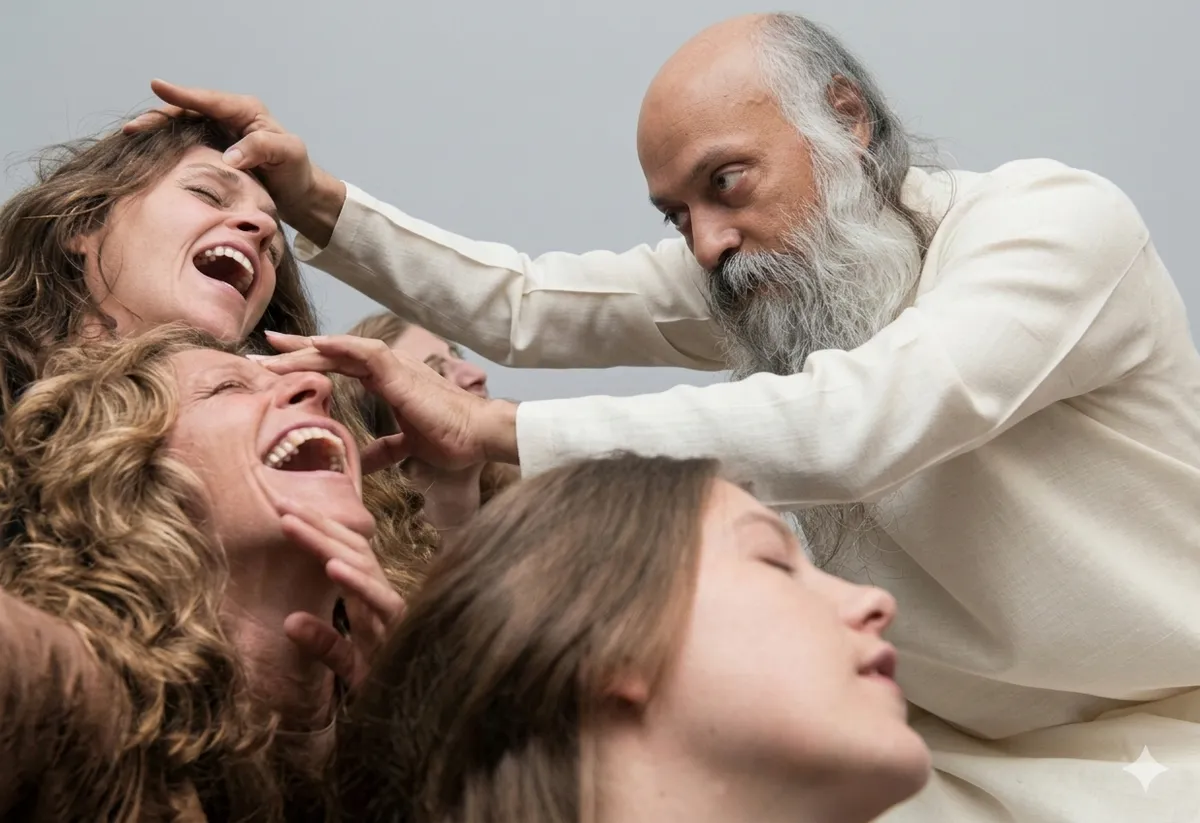
Even if you have enough, be thankful and keep kindly reaching higher, working without worrying about the reward.
From the Discourses
Passages where Osho speaks to this question — each links to the complete discourse.
A friend has asked: Osho, if a person feels he is adequately meeting his needs, does he also need to be discontent?
In this regard, two or three things must be understood. First, a person who thinks his needs are being met stops the process of growth—his own and others’. One who believes that what he has is sufficient stops moving forward. It may be that he himself does not suffer much from this, but the society of which he is a part certainly does. And he himself will also be harmed. Ordinarily we have been taught to arrest our needs at some point and to assume they are fulfilled. We have gone on defining the religious person as one who reduces his needs and becomes content. The truth is quite the opposite. In my view, the religious person is of a different kind altogether. I call religious the person whose needs begin to touch the sky beyond the earth. I call religious the one whose needs rise above the body and…
एक मित्र ने पूछा है कि ओशो, जो व्यक्ति समझता है कि उसकी आवश्यकताएं जितनी हैं, वह उनको ठीक तरह से पूरी कर रहा है, तो क्या उसे भी असंतुष्ट होने की आवश्यकता है?
इस संबंध में दो-तीन बातें समझ लेनी जरूरी हैं। पहली बात तो यह कि जो व्यक्ति ऐसा समझता है कि उसकी आवश्यकताएं पूरी हो रही हैं, वह व्यक्ति स्वयं के या अन्य के विकास के क्रम से रुक जाता है। ऐसा व्यक्ति जो समझता है कि जो उसे मिल गया वह पर्याप्त है, वह आगे बढ़ने से रुक जाता है। और हो सकता है कि उसे स्वयं को तो इससे बहुत ज्यादा नुकसान न पहुंचे, लेकिन जिस समाज का वह हिस्सा है उस समाज को जरूर नुकसान पहुंचता है। उसे स्वयं भी बहुत नुकसान पहुंचेगा। लेकिन साधारणतः हमें ऐसा ही समझाया गया है कि अपनी आवश्यकताओं को एक जगह रोक कर हमें समझना चाहिए कि वे पूरी हो गई हैं। धार्मिक आदमी की हम ऐसी ही परिभाषा करते रहे हैं कि वह अपनी आवश्यकताओं को कम कर लेता है और संतुष्ट हो जाता है। सच्चाई बहुत उलटी है। मेरी दृष्टि में धार्मिक आदमी और ही प्रकार का आदमी है। मैं उस आदमी को धार्मिक कहता हूं, जिसकी आवश्यकताएं इस पृथ्वी को छोड़ कर आकाश को भी छूने लगती हैं। …
Beloved Osho, is it necessary to develop a sense of divine discontentment, when being around you provokes nothing but divine contentment? Or is it enough just to be sad about not being realized?
There is no need to develop a divine discontentment. It is for those who are contented with mundane things -- with money, with power, with prestige -- they need to develop a sense of divine discontentment. But if you have a divine contentment, you are in a totally different category. You need not be sad that you don't have discontent, you should be happy and rejoice. Medicines are for those who are sick. When you are not sick, don't be sad -- "How unfortunate I am that I have to live without medicines." Divine discontent is a medicine for those who are feeling contented with things which are simply rubbish, crap. They have to be drawn out of their so-called contentment, and a discontent for the divine has to be created in them. But you are feeling a divine contentment, you are feeling health; you don't need the medicine. Now…
Osho, total contentment is a consequence of desirelessness, moment to moment living and total flowering of the consciousness. This is the state of an enlightened one. But a spiritual seeker who is just a seed, a possibility to grow into the divine, is bound to pass through spiritual anguish, spiritual thirst and the uneasiness of the dark night of the soul. Thus, a seeker is bound to be in a constant inner discontentment unless enlightenment happens. How can a seeker cope with the fact of his inner discontentment in view of the principle of total contentment?
You can become your own teacher only when you have met many, many teachers and followed them. Only meeting will not do. When you have followed them and still your discontent remains, only then. Otherwise, listening to Krishnamurti you feel, "Okay! No teacher is needed. I am already a teacher." You are deceiving. A moment comes when no teacher can help, but that moment comes only through a long line of teachers -- and that, too, not just by meeting and listening to them, but by following them. Then Buddha said, "Now no one can help me. I am helpless, so I will try on my own." And he tried, and that was a long effort. He did whatsoever came to his mind. It was an effort into the unknown, so everything was uncharted: no guide, no teacher. Whatsoever came into his mind he would try. He tried long fasts.…
Osho, you said there should be contentment toward the world and discontent toward God. And you also said that no craving should remain; there should be acceptance of what is, and a witnessing attitude. Please have the compassion to clarify the apparent contradiction between these two statements.
The world is not made to fit together. If it did, you would never search for God. Why does the search for the divine arise? Because the world does not fit. If it did, would Buddha search? Would Mahavira? Would Ashtavakra? If the world fit, God would become nonessential! Understand this: If contentment were possible in the world, religion would be meaningless. Religion has meaning because contentment is not possible here. So we seek contentment elsewhere. That is why I said: whatever is here—little or much—be at ease with it. Being at ease does not mean you will find contentment in it; it means don’t keep running after it. Don’t try to assemble this toy; it won’t fit. And toward God become discontent. There, discontent itself is contentment. There, thirst itself is the quenching. The more intense the thirst, the nearer the lake comes. The day the thirst is so…
पहला प्रश्न: ओशो, आपने कहा कि संसार के प्रति तृप्ति और परमात्मा के प्रति अतृप्ति होनी चाहिए। और आपने यह भी कहा कि कोई भी आकांक्षा न रहे; जो है उसका स्वीकार, उसका साक्षी-भाव रहे। इन दोनों वक्तव्यों के बीच जो विरोधाभास है, उसे स्पष्ट करने की अनुकंपा करें।
इसलिए मैंने तुमसे कहा कि जो भी है यहां--थोड़ा या ज्यादा--इससे राजी हो जाओ। राजी होने का मतलब यह नहीं है कि इससे तृप्ति मिल जायेगी। इससे राजी होने का मतलब यह है कि अब इसमें और दौड़-धूप मत करो। अब इस खिलौने को और मत जमाओ; यह जमने वाला नहीं है। और परमात्मा के लिए अतृप्त हो जाओ। वहां अतृप्ति ही तृप्ति है। वहां प्यास ही प्यास का बुझ जाना है। वहां प्यास जितनी प्रबल होगी उतना ही सरोवर निकट आ जाता है। जिस दिन प्यास इतनी गहरी होती है कि प्यास ही बचती है, तुम नहीं बचते--उसी क्षण वर्षा हो जाती है। तुम जिस दिन सिर्फ एक लपट रह जाते हो, एक प्यास...।
Poverty is sanctioned by the shadow of contentment. How then will there be revolution? Transformation? The birth of the new? We clutch the old to our chest and call it contentment. Do you know, the old tree dies by giving birth to new seeds? The old person departs by giving birth to new children. Old leaves fall so new leaves can sprout. But our social beliefs—old beliefs—neither die nor depart. There is no space for the new. No room where a new sprout could break through—no chance, no opening. No—the old must be rejected; we must be dissatisfied with what is. Only then can we create what should be. Dissatisfaction with what is is essential to give birth to what ought to be. But does anyone teach us to be dissatisfied? Even small children are told: be content; there is great joy in contentment.
गरीबी स्वीकृत है संतोष की छाया में। तो कैसे होगी क्रांति? कैसे होगा रूपांतरण? कैसे होगा नये का जन्म? पुराने को छाती से लगा कर हम संतोष कर रहे हैं। क्या आपको पता है, पुराना वृक्ष मर जाता है नये बीजों को जन्म देकर? पुराना आदमी विदा हो जाता है नये बच्चों को जन्म देकर। पुराने पत्ते गिर जाते हैं, ताकि नये पत्ते पैदा हो सकें। लेकिन हमारी समाज की धारणाएं, पुरानी धारणाएं न मरती हैं, न हटती हैं, न विदा होती हैं। नये के लिए अवकाश नहीं, स्पेस नहीं; नये का अंकुर जहां से फूट सके उसकी कोई गुंजाइश नहीं, उसके लिए कोई मौका नहीं, कोई अवसर नहीं। नहीं, पुराने से असंतुष्ट होना पड़ेगा, जो है उससे असंतुष्ट होना पड़ेगा, तब हम उसे पैदा कर पाएंगे जो होना चाहिए। जो है उससे असंतुष्ट होना जरूरी है, ताकि वह पैदा किया जा सके जो होना चाहिए। लेकिन कोई सिखाता है हमें कि हम असंतुष्ट हो जाएं...छोटे से बच्चों तक को हम कहते हैं कि संतुष्ट रहो, संतोष में बड़ा सुख है।