
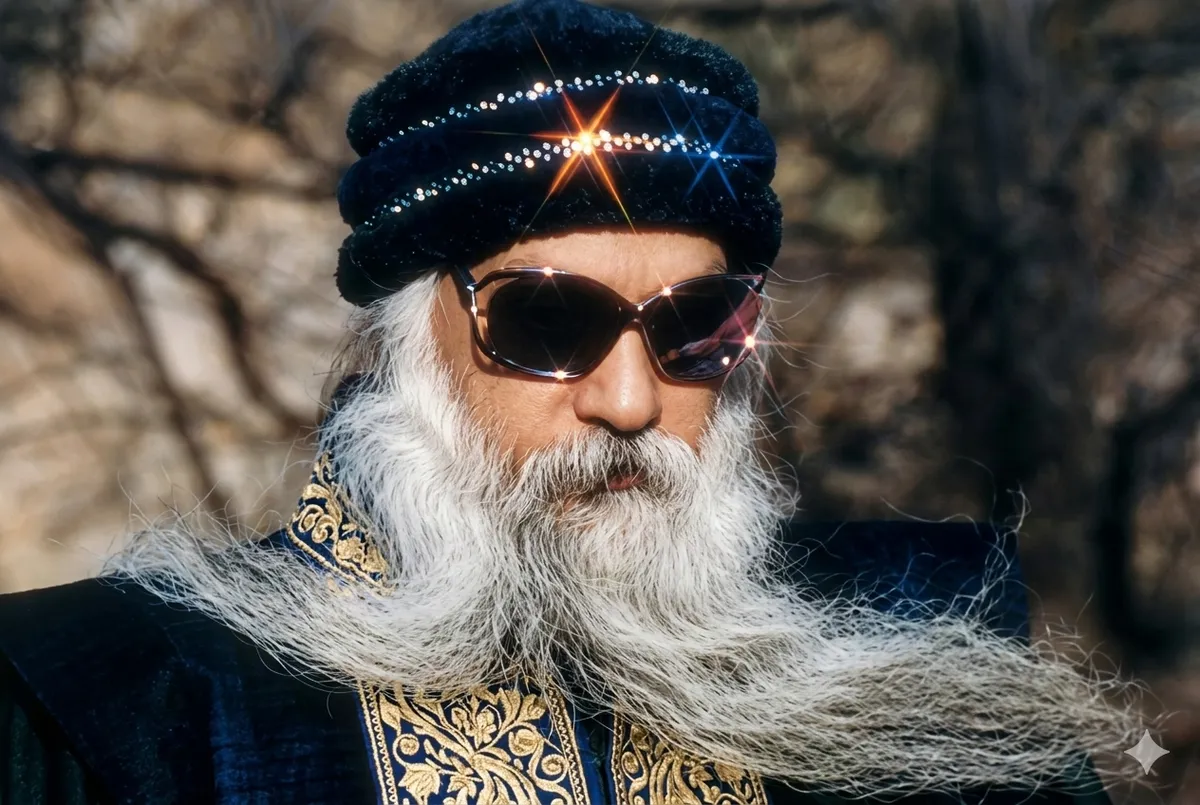
Yes: people in darkness need help most, so he brings them close and teaches meditation until bad habits drop by themselves.
From the Discourses
Passages where Osho speaks to this question — each links to the complete discourse.
Beloved Osho, why do you give sannyas to almost anybody who comes to see you? What is your concept of sannyas? What obligation does it involve?
But once you know a greater phenomenon -- a greater bliss, a greater happiness -- then you are not renouncing things. They just drop away, just like dry leaves from the tree. No one knows and no one hears, the dry leaves just drop. The tree remains oblivious to it and there is no wound left behind. So, to me, everything has a moment to happen, a moment of ripeness -- ripeness is all. One must ripen; otherwise one will be wandering unnecessarily and harassing himself unnecessarily and destroying himself unnecessarily. One should ripen, then the opportunity comes by itself. So renunciation is through positive growth. That is what I mean by my sannyas -- renunciation through positive growth. There is no negativity at all, no denial, no suppression. I accept the human being as he is. Of course, now much is potential, but as he is, he is not…
Osho, sannyas was born in this land; it was granted the dignity of Gaurishankar (Everest). But today its honor has become merely superficial. Inside, the individual and society alike are afraid of it. Why have sannyas and the sannyasin lost their meaning? Please explain.
In my sannyas there is no prohibition—no “leave this, run from that.” Awakening is enough. Cowards run. Those who awaken remain where they are and are free there. My sannyas does not want to give you knowledge; it wants to give you meditation. Meditation means emptiness; it means: I do not know. Life is such an ultimate mystery that nothing definitive can be known about it. And I want to give sannyas a new posture—creativity. I will call him a sannyasin who sings a new song; who strikes a new music from the veena; who dances a new dance; who makes this world a little more beautiful, brings a little more blessedness to the earth. Then sannyas can regain its dignity. And I would have the sannyasin not imitate. Listen, understand, contemplate—but live from your own individuality. Therefore I give my sannyasins no codes of conduct—only processes to awaken the…
Osho, the Yajurveda has a sutra—“Vratena dīksham āpnoti; dīkshayā āpnoti dakshinām. Dakshinā shraddhām āpnoti; shraddhayā satyam āpyate.” That is: from a vow comes initiation; from initiation, offering; from offering, faith; and from faith, truth. Osho, please be compassionate and explain the four stages of attaining truth.
Two years passed. Exactly two years later Buddha said, “Now, stand up and ask.” Malunkyaputta burst out laughing. “Now I understand why Mahakashyapa laughed,” he said. “In these two years, everything has fallen away—the very mind that asks is no more. The questioner has gone. These two years of silence were like a flood that washed away all the rubbish. I have nothing to ask. Without my asking you have given the solution—by giving me samadhi, you gave the resolution.” Sitting near the true master, revolution happens. Life is transformed. Vows come; they are not taken. The false drops away; the right mode of living arises. In satsang even death happens—your past dies; and rebirth happens too. Therefore I cannot agree with this Yajurveda sutra: “Vratena dīksham āpnoti—by vow, initiation.” No—absolutely not. From initiation, vows! And by vows I mean not oaths or pledges, but that which is natural and…
That's what sannyas is: becoming a child again again reclaiming the innocence of childhood which the society has destroyed. It will be difficult, because to live with people who live in lies, without lies living with them is difficult. People who are all pseudo and phony, to live with them as true is to invite danger -- but it is worth. This life is bound to go, so even if one has to sacrifice one's life for truth one should not be worried about it. Truth is far more valuable than life itself because life ends in death but truth never ends. Truth is eternal, timeless, deathless. Manoj Bharti. One thing to be remembered: that from this moment meditation becomes your goal; everything else is secondary. So arrange your life in such a way that everything revolves around meditation.
Question: BELOVED OSHO, I AM A SINNER. CAN I ALSO BECOME YOUR SANNYASIN? A few people, just out of curiosity, a few people who had nothing to do.... It was a holiday, so they said, "Okay, we are coming. Let us see what happens!" Somebody had quarreled with his wife and had nowhere to go, so he said, "I am coming." A gambler and a drunkard who were just on the road, simply followed seeing this whole bunch of people, not knowing where they were going. So this strange crowd reached the master's place, and he started initiating them one by one. The first man he initiated was the drunkard. Of course he was so drunk that he could not even think that the master was mad -- he did not even realize that he was being initiated! He was not aware at all what was happening.