
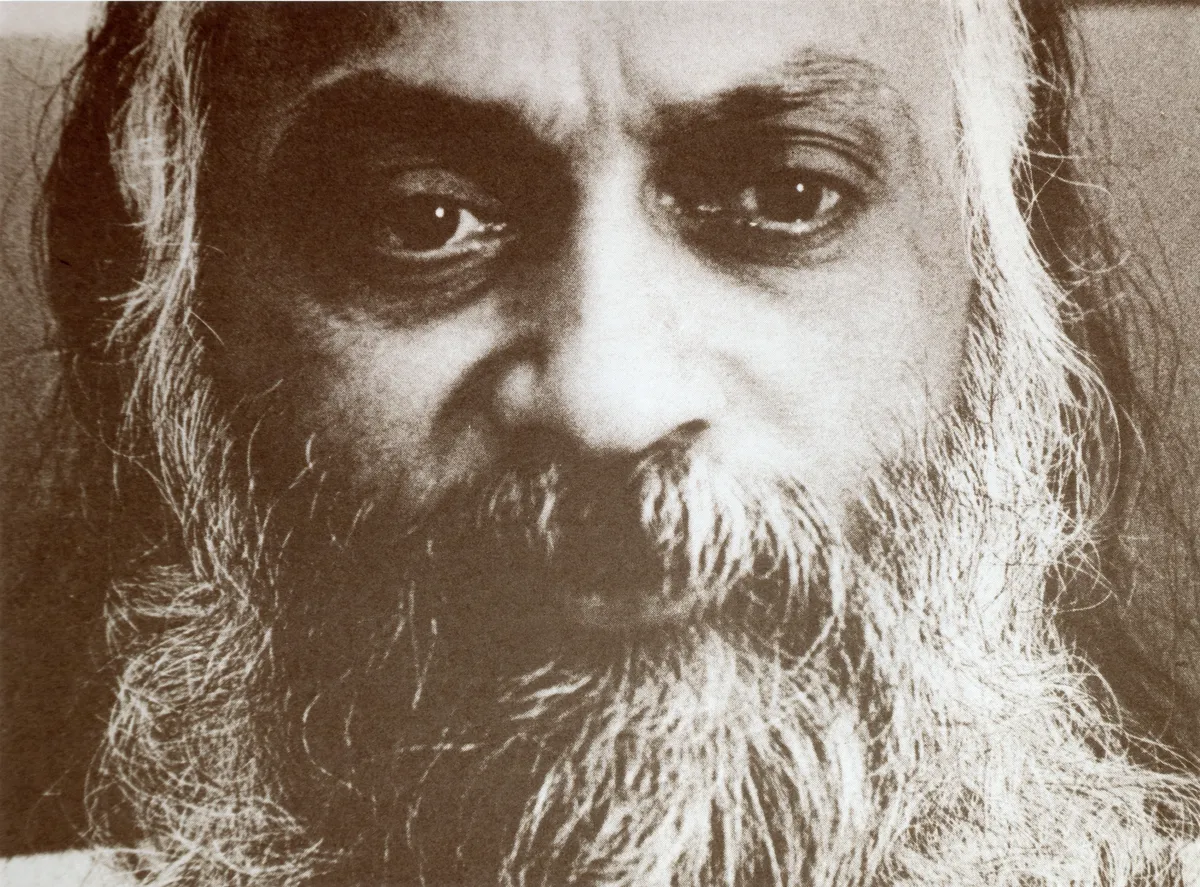
They reached the same top of the mountain; their maps look different only to guide different climbers.
From the Discourses
Passages where Osho speaks to this question — each links to the complete discourse.
If lao tzu and patanjali met today could they reconcile their teachings about spiritual growth? If in their buddhahood no distinction exists between them why are their teachings so different. And why has there not been a master before you in all the ages who has combined and synthesized all the teachings of past buddhas?
You cannot conceive any philosophy in the world which does not have a parallel in India. Everything that has been thought anywhere else has already been thought in India. In thinking you cannot compete with Indians. Not of today's Indians -- I'm not talking about today's Indians. They are just a ruin of a past glory. In fact, India no longer exists. The India of Buddha, the India of Patanjali, the India of the Upanishads and Vedas, does not exist at all. They thought and thought and they created magnificent theories about the world, but they were not empirical, they were not practical. China is totally different. They were not interested in contemplating about theories; rather, they were interested in living. They were interested in being, more than in thinking. And Lao Tzu is the pinnacle. When Bodhidharma went to China these two currents met -- the Lao-Tzian meditation and…
Osho, yoga is a method of upward ascent; it seeks to take energy, power, upward. And Lao Tzu’s method seems exactly the opposite—to bring energy downward, toward the navel. So a question naturally arises: between these two methods, which one is right?
A disciple of Lao Tzu, Lieh Tzu, was once asked: We have heard that the Buddha attained enlightenment sitting under a tree. And we have heard that some yogi, chanting a mantra, sitting under a tree, attained truth by his mantra. Lieh Tzu, what is your view? Lieh Tzu said: As we understand it, chanting mantras, doing practices, performing yogasanas—these are for those who cannot remain without doing. But the real point is not that Buddha arrived by practice; he arrived because he sat. The essential thing is: he sat, therefore he arrived. Some yogi kept reciting a mantra and arrived; the mantra is not the essential thing. He arrived because he sat. The mantra is a pretext—for he cannot sit empty, so he keeps reciting. Lieh Tzu is saying: whoever has arrived, has arrived because they sat and left everything. Some can sit having left everything; they will not…
ओशो, योग ऊर्ध्वगमन की पद्धति है, ऊर्जा को, शक्ति को ऊपर की ओर ले जाना है। और लाओत्से की पद्धति ठीक विपरीत मालूम पड़ती है--ऊर्जा को नीचे की ओर, नाभि की ओर लाना है। तो प्रश्न उठना बिलकुल स्वाभाविक है कि इन दोनों पद्धतियों में कौन सी पद्धति सही है?
लाओत्से का एक शिष्य हुआ, लीहत्जू। लीहत्जू से किसी ने जाकर पूछा, कि हमने सुना है कि बुद्ध एक वृक्ष के नीचे बैठ कर और ज्ञान को उपलब्ध हो गए। और हमने सुना है कि कोई योगी मंत्र का जाप करके और वृक्ष के नीचे बैठ कर जाप से सत्य को उपलब्ध हो गया। लीहत्जू, तुम्हारा क्या खयाल है? तो लीहत्जू ने कहा, जहां तक हम समझते हैं, मंत्र करना, साधना करनी, योगासन करना, ये उन लोगों के काम हैं, जो बिना किए नहीं रह सकते हैं। लेकिन असली बात यह नहीं है कि बुद्ध साधना करके पहुंच गए; बुद्ध बैठ गए, इसलिए पहुंच गए। असली बात, बैठ गए, इसलिए पहुंच गए। कोई योगी मंत्र पढ़ता रहा और पहुंच गया; मंत्र असली चीज नहीं है, बैठ गया, इसलिए पहुंच गया। मंत्र तो बहाना है; क्योंकि वह खाली नहीं बैठ सकता, इसलिए मंत्र पढ़ता रहा।
One friend has asked: "yoga is a path of elevation, of raising the life-energy upwards, whereas lao tzu's method is exactly the opposite: of bringing down the energy to the navel centre. So the question invariably rises: which is the right method?"
There was one disciple of Lao Tzu by the name of Lieh Tzu. Someone said to him, "It is said that Buddha sat under a tree and was enlightened. Also, yogis repeat mantras and attain enlightenment. What do you say?" Lieh Tzu replied, "As far as my understanding goes, the repetition of mantras or the practising of sadhanas and yogasanas is the work of those who cannot remain without something to do." The real thing is not that Buddha attained because of sadhana. Rather, Buddha attained because he sat in one place. It is not that a yogi attained by repeating a mantra, but because he sat in one place. The mantra was only an excuse to do something since he could not remain inactive. Lieh Tzu meant to say that those who have attained did so because of the fact that they left everything and became inactive. There are…
Osho. I have heard that patanjali and lao tzu came to a stream. Patanjali began to cross the stream by walking on the surface of the water. Lao tzu stood on the bank and called him to come back. "what's the matter?" patanjali inquired. "that is no way to cross a stream," said lao tzu, and led him to a place where the water was shallow, and they waded across together.
The king opened it and found the same grain again -- the same grain of wheat that Zarathustra had given him before. He thought there must be something mysterious and magical in it, so he put it in a golden box and hid it among his treasures. Almost every day he looked at it expecting some miracle to happen, such as the turning of the grain of wheat into something or someone that would teach him all he wished to know. Months went by, and then years, but nothing happened. At last the king lost patience and said. "It seems that Zarathustra has deceived me again. Either he is making a mock of me or else he does not know the answers to my questions, but I will show him that I can find the answers without his help." So the king sent a caravan to a great Indian mystic,…
You said there are only two types of people: those whose path is awareness and those whose path is surrender or bhakti. It seems to me that lao tzu has nothing to do with either of them -- is there a third type then who follow neither or both?
Yes, there are two types of people, two types of persons. Humanity is divided into two types: the male and the female, the yin and the yang, the negative and the positive, the aggressive and the passive. These two types of people both live in illusion, in a sort of dream, a kind of sleep; drunk with desire, blind with desire. The person who belongs to the male type needs some path upon which he can exercise his will; that will suit him. Finally, a day will come when by this exercising of his will, by and by, he will start understanding that he is engaging in a futile effort. But he will take a long time to understand this. He will have to fall many times, and he will again stand, and he will again make efforts, and he will again be a failure because the will cannot succeed.…