
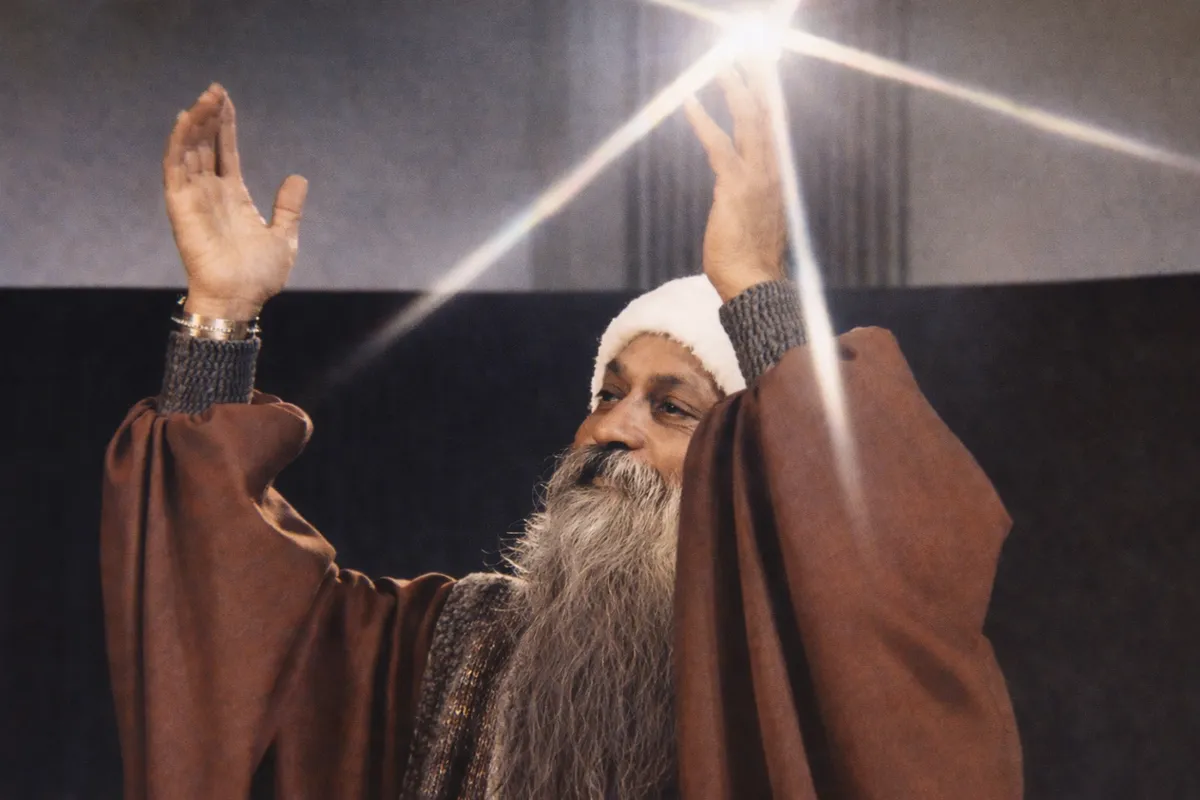
When you do unkind or unaware things, they hurt you right away; kind, aware actions feel good immediately.
From the Discourses
Passages where Osho speaks to this question — each links to the complete discourse.
Are we not punished for out sin?
No, We are punished BY our sin, not FOR our sin. Sin itself is its punishment. You over-eat, you suffer; you over-indulge, you suffer. It is not that the suffering will come later on, that suffering will come as a result, no. Suffering comes in the act itself. So let me tell it in this way: We are punished BY our sin, not for our sin. That FOR has created great difficulties for man, because 'for' means 'in the future', maybe in the other life. 'Who bothers about the future? And we will see when it comes if some ways and means can be found to avoid it. Or we can always go to the priest and confess, or we can go to the Ganges and take a bath and be relieved of the sin. Or we can go to a saint and be blessed by him.' Some strategy can…
Osho, what do you want man to do? What is right and wrong according to you? Is there something like sin and its punishment too?
Perhaps I am the only person here, on this whole earth, who is objecting that this is befooling people. This is creating a camouflage, a bogus spiritual jargon. If God has any sense, any intelligence at all, He should find some better way to bring the best out in people. This does not seem to be very intelligent. If this is what God is doing then where is the devil? And what will the devil do? God has taken his job too; the devil is unemployed. And people applauded her; she is a great saint. And what present has she brought to them? -- a small statue of Mother Mary. A great help: "Pray to Mother Mary, and don't take it as a tragedy and don't complain that it is the fault or carelessness of certain officers concerned; no, that is not good." Of course if those people were not…
Question: BELOVED OSHO, IN YOUR RELIGION IS THERE SUCH A THING AS SIN? ... In the library of the Vatican they don't allow anybody. That library should be taken over by UNO, immediately. It is not the property of the Vatican. And that library may reveal thousands of truths, inventions, discoveries which the popes down the ages have prevented from happening by burning the books. Now they cannot do that, but at least they can do one thing: they can publish, secretly, a black list. And they can put any book on that black list; then no Catholic is allowed to read it. If you read it you are committing a sin, a great sin -- disobeying the pope, who is infallible. I don't see there is any need of sin. Yes, you are human beings and you will live like human beings, and sometimes you may commit a mistake.
A friend has asked: Osho, what is the difference between sin and virtue? And as long as the mind is filled with sin, how can there be faith, devotion, feeling? How will prayer happen while the mind is full of sin? So first let the mind be filled with virtue; then prayer will happen!
It sounds right. It seems reasonable. Yet it is not right—and it is full of unawareness. It sounds right to say, “As long as the mind is full of sin, how can there be prayer!” But that is like a physician saying, “As long as you are sick, how can I give you medicine! First get well and healthy, and then take the medicine.” But once you are well, why would you need medicine? If you decide to pray only after you’ve dropped all sin, you will never get the chance to pray. As long as there is sin, you won’t pray. And when there is no sin left, why pray? What would be the meaning of prayer then? Prayer is the medicine. Therefore, one has to pray while still a sinner. And another thing: how will sin go? It cannot go without prayer. Those who try to remove sin…
एक मित्र ने पूछा है कि ओशो, पाप और पुण्य का भेद क्या है? और जब तक मन पाप से भरा है, तब तक श्रद्धा, भक्ति, भाव कैसे होगा? प्रार्थना कैसे होगी, जब तक मन पाप से भरा है? तो पहले मन पुण्य से भरे, फिर प्रार्थना होगी!
ठीक लगता है कि जब तक मन पाप से भरा है, तो प्रार्थना कैसे होगी! यह तो ऐसे ही हुआ कि कोई चिकित्सक कहे कि जब तक तुम बीमार हो, जब तक मैं औषधि कैसे दूंगा! पहले तुम ठीक हो जाओ, स्वस्थ हो जाओ, फिर औषधि ले लेना। लेकिन जब ठीक हो जाओ, तो औषधि की जरूरत क्या होगी? अगर पाप छोड़ने पर प्रार्थना करने का आपने तय किया है, तो आपको कभी प्रार्थना करने का मौका नहीं आएगा। जब तक पाप है, आप प्रार्थना न करोगे। और जब पाप ही न रह जाएगा, तो प्रार्थना किसलिए करोगे? फिर प्रार्थना का अर्थ क्या है?
Beloved Osho, in the morning you said that one who realizes the brahman thus destroys sin and is well established in brahman. In this reference, explain the difference between the concept of sin in the upanishads and in the bible. And please also explain the implications in human life.
There is a very basic difference. To the biblical religions -- to Jews, Christians, and even Mohammedans -- the concept of sin is totally different than it is to the Hindus and Buddhists. The concept of sin in Christianity, in The Bible, is related to your acts -- to what you do. What you do may be a sin, or it may not be a sin; it may be a virtue but it is related to your doing. To the Upanishads, it is not related to the doing at all. What you do is irrelevant; what you ARE is the point. It is not the doing but the being itself that is significant. So what will it mean to call a man a sinner? We mean that he is ignorant, unaware of his own self. Because of this ignorance, his acts become sins. The act can become a sin only…