
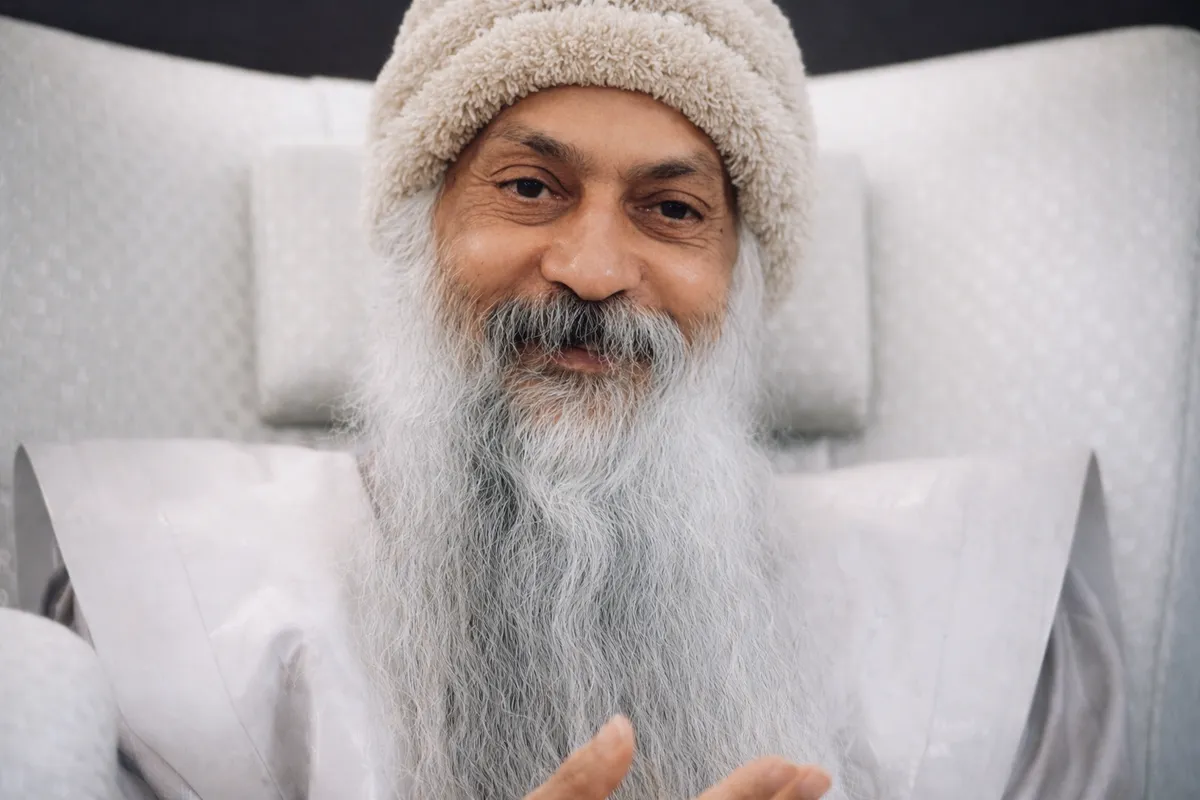
Seeing Krishna like a person is your mind making pictures; the real experience is quiet, clear awareness with no pictures at all.
From the Discourses
Passages where Osho speaks to this question — each links to the complete discourse.
Questioner: a part of our previous question remains unanswered: it is about shree arvind seeing visions of krishna. You had once said at ahmedabad that such visions are mostly nothing more than mental projections. Is it a mental projection or a real mystical experience in the case of arvind?
Whoever says he has encountered Krishna in his physical form is a victim of mental projection; he is projecting his own mental images on the vast screen of universal consciousness and viewing the objective reality. It is like a movie projector projects fast moving pictures on all empty screen; there is really nothing on the screen except shadows. Such visions are not a spiritual experience, they are wholly psychic. They are, however, very gratifying; a Krishna devotee is bound to be overjoyed to see visions of one he has been desiring to see all his life. But remember, it is only a kind of happiness, not bliss. Nor can you call it an experience of truth. I don't mean to cay that Arvind's experience is not real, but he describes it in the way of a scholar, an intellectual. And this makes the experience appear to be one of mental…
Osho, something was left unsaid about Sri Aurobindo’s vision of Krishna. In Ahmedabad you said that his Krishna-vision could largely be a mental projection. So is Aurobindo’s Krishna-vision only a mental projection, or could it also be a mystic realization? A second question: If Arjuna is only a mere instrument, then he becomes just a machine. What happens to his individuality?
Aurobindo’s manner of saying is Hegelian. Like Hegel he is a system-maker. He says very little, uses big words, long words, takes very long detours. Expression must, of course, be intellectual; but when it is expression of realization, at the same time it keeps pointing beyond itself—it brings the news that the man has known something beyond words. But if everything fits within words, such news does not come. And after reading all of Aurobindo, the taste left in the mouth is only of words. Not a trace of the taste of experience is left. Sometimes a person may not speak at all, and his very presence can leave the taste of realization in your mouth. Sometimes someone may speak a lot, and yet only the taste of words remains; no taste of experience can remain. Expression will be intellectual, but when it is expression of realization it simultaneously transcends…
ओशो, श्री अरविंद के कृष्ण-दर्शन के बारे में कुछ कहने को बाकी रह गया था। आपने अहमदाबाद में बताया था कि उनका कृष्ण-दर्शन बहुत हद तक मानसिक प्रक्षेपण हो सकता है। तो अरविंद का कृष्ण-दर्शन क्या मानसिक प्रक्षेपण ही है या मिस्टिक अनुभूति भी हो सकती है? एक दूसरा प्रश्र्न भी है: अर्जुन यदि सिर्फ निमित्त मात्र हैं, तो वे यंत्रमात्र रह जाते हैं। उनकी इंडिविजुअलिटी का क्या होगा?
अरविंद का भी कहने का ढंग हीगेलियन है। वे हीगल जैसे ही सिस्टम मेकर हैं। तो वह कहते तो बहुत कम हैं, शब्द बड़े उपयोग करते हैं, लंबे उपयोग करते हैं, बहुत लंबा चक्कर लेते हैं। अभिव्यक्ति तो बुद्धिगत रूप से करनी पड़ेगी, लेकिन अभिव्यक्ति निरंतर ही अपने से पार का इशारा बनती हो तो इस बात की खबर लाती है कि उस आदमी ने शब्दों के पार भी कुछ जाना है। लेकिन सब शब्दों में समा जाता हो, तो इस बात की खबर नहीं मिलती। और फिर, सारा अरविंद को पढ़ जाने के बाद मुंह में जो स्वाद छूट जाता है, वह सिर्फ शब्दों का है। मुंह में जो स्वाद छूट जाता है, वह अनुभव का जरा भी नहीं है। कई बार कोई आदमी बिलकुल न बोले, तो उसकी मौजूदगी भी मुंह में अनुभूति का स्वाद छोड़ सकती है। कई बार कोई बहुत बोले, तो भी मुंह में सिर्फ शब्दों का स्वाद छूट जाता है, अनुभव का कोई स्वाद नहीं छूट पाता है। अभिव्यक्ति तो बुद्धिगत होगी ही, लेकिन जब अनुभूति की अभिव्यक्ति होगी तो वह साथ ही साथ बुद्धि को अतीत और अतिक्रमण करने वाली भी होती है। …
Osho, in one talk you said that the soul of Sri Krishna can be realized, because nothing dies. Then what process must one go through to bring the vision of Krishna within the bounds of possibility? And please also tell us whether, through meditation on Krishna’s image, chanting Krishna’s name, and kirtan of Krishna’s name, one can move toward the fullness of worship.
There is a little process called post-hypnotic suggestion. If a person is put into deep trance—which is very easy—and in that deep trance he is told, “Look closely at this talisman; whenever it is placed on your chest you will again go into a trance,” then that suggestion settles into the depths of the unconscious. From then on, whenever that talisman is placed on his chest, he will immediately go into trance. And in trance, the unconscious faculties of our brain begin to function: what we cannot do in wakefulness, we often do in trance. We hear with far greater acuity, we see far more deeply. That talisman will not work on you, because no such deep suggestion has been planted in your unconscious. When people like Krishna, Mahavira, Buddha, and Christ depart from the earth, those who love them, who have longed for them, who have received much in…
ओशो, एक चर्चा में आपने कहा है कि श्रीकृष्ण की आत्मा का साक्षात्कार हो सकता है, क्योंकि कुछ मरता नहीं। तो कृष्ण-दर्शन को संभावितता की हद में लाने के लिए कौन सी प्रोसेस से गुजरना पड़ेगा? और साथ ही यह भी बताएं कि कृष्ण-मूर्ति पर ध्यान, कृष्ण-नाम का जप और कृष्ण-नाम के संकीर्तन से क्या उपासना की पूर्णता की ओर जाया जा सकता है?
पोस्ट हिप्नोटिज्म की एक छोटी सी प्रक्रिया है। वह प्रक्रिया यह है कि यदि किसी व्यक्ति को गहरी बेहोशी में डाल दिया जाए, जो कि बहुत सरल है, उस गहरी बेहोशी की हालत में यदि उसे कहा जाए कि यह ताबीज ठीक से देख लो, और जब भी इस ताबीज को हम तुम्हारी छाती पर रखेंगे तब तुम पुनः बेहोश हो जाओगे, तो यह उसके अचेतन की गहराइयों में यह सुझाव बैठ जाता है। फिर कभी भी उस व्यक्ति के ऊपर वह ताबीज रखा जाए, वह तत्काल बेहोश हो जाएगा। और बेहोशी में हमारे मस्तिष्क की अचेतन शक्तियां काम करना शुरू कर देती हैं; जो हम होश में नहीं कर पाते, वह हम बेहोशी में कर लेते हैं। जितना हम होश में सुनते हैं, उससे बहुत तीव्रता से बेहोशी में सुनने लगते हैं। जितना हम होश में देखते हैं, उससे बहुत गहरा बेहोशी में देखने लगते हैं। लेकिन वह ताबीज आपके ऊपर काम नहीं करेगा, क्योंकि आपको वैसा आपके अचेतन में कोई गहरा सुझाव नहीं दिया गया है।
Osho, even now many devotees and saints have direct visions of Krishna. For twenty-four hours I too see nothing but Krishna. So does the formless God take a form for devotees—is this true?
And when, through Islam, he came to the very experience he had attained through prayer and worship of Kali, he said, “Alright, this path too arrives at the same.” This path too takes one there. Those who walk on this path will reach the same place as those who walk by other paths. Then Ramakrishna conducted experiments in about six religions. And when through all of them he reached the same samadhi, he declared: The paths are different, but the mountain peak is one. From different paths—even paths that sometimes go in opposite directions—one arrives at that one peak. So do not be hasty. Be compassionate toward the other. Do not try to hurt the other. Keep only this one attention: that your whole energy is engaged in your own experiment. And slowly, slowly, your consciousness becomes one with your own feeling. There is only one art for bringing God…
ओशो, अभी भी कई भक्तों को और संतों को कृष्ण का साक्षात दर्शन होता है। चौबीस घंटे मुझे भी कृष्ण के सिवाय दूसरा कुछ दिखाई नहीं पड़ता। तो निराकार परमात्मा भक्तों के लिए साकार रूप लेते हैं, क्या यह सच है?
और जब इस्लाम से भी उन्हें वही अनुभव हो गया, जो अनुभव उन्होंने काली की प्रार्थना और पूजा करके पाया था, तब उन्होंने कहा कि ठीक है, यह रास्ता भी वहीं आता है। यह रास्ता भी वहीं ले जाता है। इस रास्ते से चलने वाले भी वहीं पहुंच जाएंगे, जहां दूसरे रास्तों से चलने वाले पहुंचते हैं। फिर तो रामकृष्ण ने कोई छह धर्मों के अलग-अलग प्रयोग किए। और सभी धर्मों से जब वे एक ही समाधि को पहुंच गए, तब उन्होंने यह वक्तव्य दिया कि रास्ते अलग हैं, लेकिन पर्वत का शिखर एक है। और अलग-अलग रास्तों से, कभी-कभी विपरीत दिशाओं में जाने वाले रास्तों से भी आदमी उसी एक शिखर पर पहुंच जाता है। तो जल्दी मत करना। दूसरे पर कृपा करना। दूसरे को चोट पहुंचाने की कोशिश मत करना। एक ही ध्यान रखना कि आपकी पूरी शक्ति अपने ही प्रयोग में लगे। और धीरे-धीरे आपकी चेतना आपके ही भाव के साथ एक हो जाए।
Do you not consider a vision of krishna or of christ a spiritual experience?
No, this is not a spiritual experience. No vision is a spiritual experience because on that plane all experiences are psychological. As long as there is the vision or realization of someone else it cannot be the realization of the self. Even in such experiences you are still outside yourselves, you have still not come into your selves. That coming into one's self takes place when there are no outer experiences. When consciousness is not related to any object it settles spontaneously on the self. Only a consciousness without object can settle on the self. Outside myself I am surrounded by two worlds, the world of matter and the world of the mind. Both of these are outside me. Not only is matter outside, the mind is outside as well. Because the mind is inside the body it creates the illusion of being inner, but the mind is not within.…