
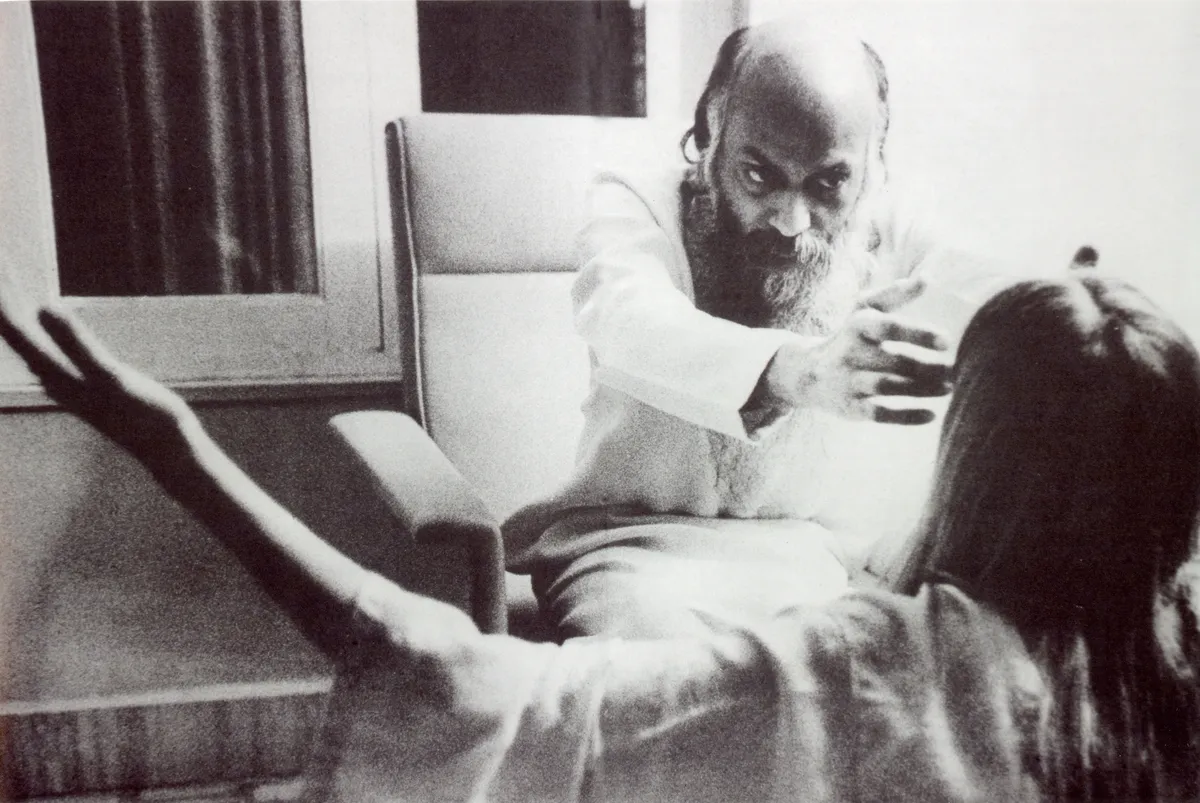
Osho's original Hindi beside Osho Live's English translation, matched passage by passage.
संतों के वचन तो हीरों की खदान हैं। लेकिन हीरों की खदान में भी कभी-कभी--और कभी-कभी ही--कोहनूर भी मिल जाते हैं। ऐसे तो सभी वचन प्यारे हैं, लेकिन कभी कोई वचन अपूर्व होता है।
The sayings of the saints are a diamond mine. Yet even in a diamond mine—only once in a while—Kohinoors are found. All sayings are dear, but sometimes one is utterly unique.
आज का पहला सूत्र ऐसा ही अपूर्व है; कोहनूर जैसा है। समझोगे तो बहुत रस पाओगे। जी सके तो जीवन रूपांतरित हो जाएगा। एक महत कुंजी जगजीवनदास इस सूत्र में दे रहे हैं।
Today’s first sutra is such a rarity; it is a Kohinoor. If you understand it, you will be drenched in nectar. If you can live it, life will be transformed. In this sutra Jagjivan gives a great key.
हमारा देखि करै नहिं कोई।
“Let no one act merely by watching us.”
मनुष्य नकलची है। चार्ल्स डार्विन ठीक ही कहता है कि आदमी बंदर से पैदा हुआ है। और चाहे कारण ठीक हों या न हों, मगर एक मनोवैज्ञानिक कारण तो ठीक मालूम पड़ता ही है कि आदमी बंदरों जैसा ही नकलची है। शायद बंदर भी सीख लेते हों कुछ, आदमी नहीं सीखता। आदमी बस नकल ही करता है।
Man is an imitator. Charles Darwin was right to say that man has come from the monkey—if not for biological reasons, then certainly for one psychological reason: man imitates as apes do. Perhaps apes still learn a little; man hardly learns—he just copies.
मैंने सुना है, एक आदमी टोपियां बेचता था बाजार में। एक दिन टोपियां बेच कर वापस लौटता था, एक बड़े बरगद के वृक्ष के नीचे विश्राम करने को रुका। ठंडी-ठंडी हवा, दिन भर का थका! झपकी लग गई। जब आंख खुली तो देखा, टोकरी का ढक्कन खुला पड़ा है और टोकरी के भीतर जितनी टोपियां थीं, सब नदारद हैं। हैरान हुआ, कहां गईं? चारों तरफ नजर डाली। ऊपर देखा, वृक्ष पर बहुत से बंदर बैठे थे। सब टोपियां लगाए बैठे थे, सब टोपियां ले गए थे। सब बिलकुल गांधीवादी हो गए थे। बड़ी जंच रही थीं टोपियां उन्हें; जैसे दिल्ली में लोगों को जंचती हैं!
I have heard: a man sold caps in the marketplace. One day, after selling caps he was returning home, and stopped to rest beneath a great banyan tree. Cool breeze, tired from the day—he dozed off. When he woke, the basket-lid lay open and every cap inside had vanished. Astonished, he looked about. He peered up: the tree was full of monkeys—and each monkey wore a cap. They had taken them all. All had become Gandhian! The caps looked good on them—just as they look good in Delhi!
घबड़ाया दुकानदार। अब क्या करे! एक ही टोपी बची थी सिर पर। उसे याद आया, बंदर नकलची होते हैं। उसने अपनी टोपी निकाल कर फेंक दी। सारे बदंरों ने अपनी टोपियां निकाल कर फेंक दीं। उसने टोपियां इकट्ठी कर लीं, घर लौट गया।
The shopkeeper panicked. What to do now? Only one cap remained—on his own head. Then he remembered: monkeys are imitators. He removed his cap and threw it down. Instantly all the monkeys took off their caps and threw them down. He gathered the caps and went home.
फिर बहुत वर्षों बाद उसका बेटा वही काम करने लगा। बाप ने उसे बताया था कि खयाल रखना, कभी उस वृक्ष के नीचे--बरगद के वृक्ष के नीचे विश्राम करने मत रुकना। बंदरों का अड्डा है वहां। एक बार मेरी सारी टोपियां ले गए थे। फिर अगर कभी भूल-चूक से ऐसा तेरे जीवन में हो जाए तो सूत्र खयाल रखना, अपनी टोपी निकाल कर फेंक देना।
Years later his son started the same trade. The father had warned him: Never rest beneath that banyan tree. Monkeys live there. Once they took all my caps. And if by chance you forget and it happens to you—remember the formula: take off your own cap and throw it.
बेटा भी आया। और बरगद का झाड़ बड़ा प्यारा था। उसके नीचे बड़ी गहन छाया थी, शीतलता थी। थका-मांदा था। फिर सूत्र भी उसे मालूम था तो फिकर की कोई जरूरत भी न थी। टोकरी रख कर वह भी विश्राम करने लेट गया, नींद आ गई। और वही हुआ जो होना था। उठा तो टोकरी खाली थी। ऊपर देखा, सब बैठे थे--सब नेतागण टोपी लगाए हुए। हंसा। उसने कहा, मन में ही कहा कि पागलो, तुम्हें मालूम नहीं है कि मुझे सूत्र भी पता है। अपनी टोपी निकाल कर फेंक दी। एक बंदर नीचे उतरा और वह टोपी भी उठा कर ले गया।
The son too came that way. The banyan’s shade was tempting—deep, cool. He was exhausted, and since he knew the formula there seemed nothing to fear. He set down his basket and lay down to rest; sleep came. And what had to happen, happened. When he awoke the basket was empty. He looked up—there they were, all the leaders, each wearing a cap. He laughed inwardly: Fools! You don’t know I know the formula. He took off his cap and threw it. One monkey climbed down, picked up that cap too, and ran off with it.
बंदरों की भी यह दूसरी पीढ़ी थी। उनके बापदादे भी समझा गए थे कि अगर ऐसी भूल मत करना। एक बार हम कर चुके सोकर चुके।
These monkeys were the second generation. Their elders too had warned them: Don’t make that mistake again. Once done is enough.
बंदर भी सीख लेते हैं, पर आदमी शायद ही सीखता हो। आदमी नकल से जीता है।
Monkeys learn; man hardly learns. Man lives by imitation.
महावीर को लोगों ने देखा कि नग्न हैं, लोग नग्न हो गए बिना समझे, बिना बूझे कि महावीर की नग्नता कोई आचरण नहीं है, अंतस्तल में पैदा हुई निर्दोषता का परिणाम है। तुम परिणाम का आरोपण कर सकते हो, अंतस्तल कहां से लाओगे?
People saw that Mahavira was naked, and without understanding they too became naked—without seeing that Mahavira’s nakedness is not a discipline, but the outcome of an inner innocence. You can impose the result; but where will you bring the inner source?
नग्न खड़े होने से तुम निर्दोष हो जाओगे? हां, निर्दोष होने से कोई नग्न खड़ा हो जाए, वह बात दूसरी। क्रांति भीतर से बाहर की तरफ होती है, बाहर से भीतर की तरफ नहीं होती।
Will standing naked make you innocent? Yes—if innocence happens, one may stand naked; that is a different matter. Revolution moves from within to without, not from without to within.
ढाई हजार साल बीत गए महावीर को, अब भी कुछ लोग उसी नकल में नग्न हो जाते हैं। न तो उनमें महावीर की सुगंध मालूम होती है, न सौंदर्य मालूम होता है, न महावीर की महिमा, न प्रसाद; कुछ भी नहीं। बस नंगे खड़े हैं। तो नंगे तो बहुत आदिवासी हैं। नग्न होने से अगर कोई तीर्थंकर होता हो, नग्न होने से अगर कोई परम ज्ञान को उपलब्ध होता हो तो सारे आदिवासी कभी के हो गए होते। यह नग्नता सिर्फ नकल है।
Two and a half thousand years have passed since Mahavira, yet some still imitate and go naked. But the fragrance of Mahavira is not felt in them, nor his beauty, nor his majesty, nor his grace—nothing; they are simply naked. Many tribes are naked. If nakedness made one a Tirthankara, if nakedness brought supreme knowledge, all tribes would have attained it long ago. Such nakedness is only imitation.
महावीर ने उपवास किए--किए कहना ठीक नहीं, हुए। ऐसे रसविभोर हो जाते थे अंतर्लोक में कि भूल ही जाते भोजन की बात। दिन आते, चले जाते, सुबह होती, सांझ होती, उनकी डुबकी, लगी रहती समाधि में। लोगों ने देखा, महावीर उपवास करते हैं। उपवास हो रहे थे, लोगों ने देखा, उपवास करते हैं। लोग तो यही देखेंगे जो बाहर से दिखाई पड़ेगा।
Mahavira fasted—no, better: fasting happened. He became so intoxicated in the inner realm that food was forgotten. Days came and went; mornings and evenings passed; his plunge in Samadhi continued. People saw: Mahavira fasts. Fasting was happening; people saw: Mahavira is fasting. The crowd sees only what is outward.
और बाहर से केवल लक्षण दिखाई पड़ते हैं। बाहर से भीतर का अंतस्तल दिखाई नहीं पड़ सकता। महावीर का अंतस्तल कौन देखेगा? जो महावीर जैसा हो जाए। बुद्ध का अंतस्तल कौन देखेगा? जो बुद्ध जैसा हो जाए। बाहर से लक्षण दिखाई पड़ते हैं।
From the outside only symptoms are visible; the inner ground is not. Who can see the inner being of Mahavira? Only one who becomes like Mahavira. Who will see Buddha’s interior? Only one who becomes like Buddha. From outside only signs appear.
देखा कि महावीर भोजन नहीं करते; कई दिन बीत जाते हैं। लोगों ने भी उपवास शुरू कर दिया। ढाई हजार साल बीत गए, लोग उपवास कर रहे हैं। और कोई भी यह नहीं सोचता कि उपवास से फिर तुम एक बार भी तो महावीर पैदा नहीं कर सके। ढाई हजार साल की कहानी तुम्हारी हार की, पराजय की कहानी है। फिर भी नकल जारी है। लोग सोचते हैं, शायद उपवास ठीक से नहीं कर पा रहे हैं इसलिए। जितना करना चाहिए उतना नहीं कर पा रहे हैं इसलिए चूक रहे हैं।
They saw that Mahavira went without food for many days. People began to fast. Two and a half thousand years have passed; people are still fasting. No one stops to think that fasting has not produced a single Mahavira. These twenty-five centuries narrate your defeat—and still the imitation continues. People think: perhaps we didn’t fast rightly; perhaps we didn’t do enough—hence the failure.
नहीं, इसलिए चूक रहे हो कि उपवास तो किसी और चीज की मौजूदगी का परिणाम है। दीया जले तो अंधकार दूर हो जाता है, लेकिन अंधकार दूर करने से दीया नहीं जलता; और न अंधकार दूर हो सकता है।
No—the failure is because fasting is the result of something else being present. Light a lamp and darkness disappears; but by removing darkness you cannot light a lamp—nor can darkness really be removed that way.
इसलिए यह आज का पहला सूत्र कोहिनूर जैसा है। इतनी साफ-साफ सीधी-सीधी बात इस तरह कभी नहीं कही गई थी।
Therefore today’s first sutra is Kohinoor-like. This truth has rarely been stated so directly, so simply.
“Let no one act merely by watching us.”
हमारा देखि करै नहिं कोई।
जगजीवन कहते हैं, जैसा हम करते हैं वैसा तुम मत करना। हमारा देख कर करोगे, मुश्किल में पड़ोगे।
Jagjivan says: Do not do as you see us doing. If you do it by watching us, you will get into trouble.
जो कोई देखि हमारा करि है, अंत फजीहति होई।
सिर्फ फजीहत होगी, और कुछ भी न पाओगे।
जस हम चले चलै नहिं कोई, करी सो करै न सोई।
“Whoever copies what he sees us doing—he comes to humiliation in the end.”
जैसे हम चलते हैं वैसे मत चलना। जैसा हम करते हैं वैसा मत करना। क्योंकि जो हमें हो रहा है... जो तुम्हें दिखाई पड़ रहा है, वह केवल बाह्य लक्षण है। जड़ें भीतर हैं, फूल बाहर आए हैं। तुम फूलों को बिना जड़ों के न ला सकोगे। और अगर ले आए तो बाजार से खरीदे गए कागजी फूल होंगे। ऊपर से चिपका लेना, मगर कागजी फूल कागजी फूल हैं। इनसे न कोई महावीर बनता है, न बुद्ध, न मोहम्मद, न कृष्ण, न क्राइस्ट। इससे सिर्फ झूठे, थोथे, पाखंडी पैदा होते हैं।
Only disgrace will be your lot—you will gain nothing.
“Do not walk as we walk; do not do as we do. Do only what we tell you.”
What you see occurring in us is only the outer symptom. The roots are inside; flowers appear outside. You cannot bring flowers without roots. And if you bring them, they will be paper flowers bought from the market—pasted on top. But paper flowers are paper flowers. From them no Mahavira, no Buddha, no Mohammed, no Krishna, no Christ is born. From them only the false, the hollow, the hypocrite are produced.
पहले भीतर की जड़ें पैदा करो, पहले बीज बोओ। लेकिन लोग जल्दी में हैं। लोग कहते हैं, बीज बोएं, फिर प्रतीक्षा करें, फिर वर्षा के बादल जब आएंगे तब आएंगे, फिर वर्षा होगी--इतनी लंबी कौन प्रतीक्षा करे? फूल बाजार में मिलते हैं, हम ऊपर से क्यों न चिपका लें?
First grow the inner roots—first sow the seed. But people are in a hurry. They say: If we sow the seed we must then wait; who will wait for the clouds, for the rain? Flowers are available in the market; why not paste them on?
आचरण से बचना। अंतःकरण में क्रांति होती है। अंतःकरण में जड़ें हैं। आचरण तो केवल अंतःकरण में जो होता है, उसको बाहर तक लाता है। लेकिन लोग आचरण के पीछे ही चलते हैं। और जो स्वयं आचरण के पीछे चलते हैं वे दूसरों को भी समझाते हैं कि हम जैसा करते हैं वैसा करो। हमारे आचरण का अनुसरण करो।
Beware of conduct as the primary thing. Revolution is of the inner being; there the roots are. Conduct only expresses outwardly what has happened within. Yet people cling to conduct. And those who cling to conduct teach others too: Do as we do. Follow our way of life.
तुम्हें जगजीवन के वचन बड़े हैरानी में डालेंगे। तुम्हारे तथाकथित साधु-संत यही कहते हैं: हमारे जैसा करो। हम जैसा करते हैं वैसा तुम करो। इतना न बन सके तो थोड़ा सही; ज्यादा न बन सके तो थोड़ा सही। दो मील न चल सको तो आधा मील सही, दस कदम सही। हमारे जितने व्रत न कर सको तो एकाध तो व्रत ले लो। हमारे जैसे लंबे उपवास न कर सको तो छोटे उपवास सही, मगर कुछ तो करो। हमारे जैसा करो। वे खुद भी नकल कर रहे हैं, वे तुम्हें भी नकल ही सिखा रहे हैं। नकलची नकल ही सिखा सकते हैं। बंदरों से और ज्यादा की आशा भी नहीं है।
Jagjivan’s words will shock you, for your so-called saints say precisely the opposite: Do as we do. If you cannot do it all, do a little. If you cannot walk two miles, walk half a mile—ten steps at least. If you cannot take all our vows, take one or two. If you cannot fast long, do short fasts; but do something. Do as we do. They themselves are imitators; they can only teach imitation. From monkeys you cannot expect more than monkey-ness.
जगजीवन का सूत्र बड़ा क्रांतिकारी है। ठीक इस ढंग से किसी ने कहा ही नहीं है। इतना सीधा-सीधा, साफ-साफ। गंवार आदमी थे, पढ़े-लिखे नहीं थे। बातों को उलझा कर कहने की आदत भी न थी। जैसा था वैसा कह दिया है। एक बात साफ दिखाई पड़ गई होगी कि लोग नकल करने लगे होंगे।
Jagjivan’s sutra is revolutionary. No one has said it in just this way—so straight, so clear. He was a rustic, uneducated. He had no habit of entangling words. He simply said what he saw. One thing must have become clear to him: people had started imitating.
लोग नकल करने में बड़े कुशल हैं। और कभी-कभी तो इतनी कुशलता से नकल करते हैं कि मूल को भी मात दे दें; मूल भी हार जाए।
Human beings are skilled at imitation; sometimes so skilled they outdo the original.
जो कोई देखि हमारा करिहै, अंत फजीहति होई।।
जस हम चले चलै नहिं कोई, करी सो करै न सोई।
मानै कहा कहे जो चलिहै, सिद्ध काज सब होई।।
जगजीवन कहते हैं: हम जो कहते हैं वह मानो। हम जो करते हैं, उसकी फिकर न करो अभी। क्योंकि हम जहां हैं, वहां जो हो रहा है, वहां तुम अभी नहीं हो। तुमने अभी वैसा किया तो तुम बुरी तरह गिरोगे; बड़ी फजीहत होगी।
“Whoever copies what he sees us doing—he comes to humiliation in the end. Do not walk as we walk; do not do as we do. If you heed what we say and walk accordingly—every task will be fulfilled.”
Jagjivan says: Obey what we say. Do not worry yet about what we do. Because where we are, what is happening there—you are not yet there. If you imitate now you will fall badly; you will be disgraced.
मनुष्य के भीतर चेतना के कई तल हैं। जो व्यक्ति समाधि को उपलब्ध हो गया है उसे जीवन के छोटे-मोटे नियम, मर्यादाएं मानने की कोई जरूरत नहीं है। जो वृक्ष बादलों को छूने लगा है, अब उसे बचाने के लिए बागुड़ थोड़े ही लगानी पड़ती है! मगर जो पौधा अभी-अभी पैदा हुआ है, नये-नये पत्ते आए हैं, अगर इसको ऐसा ही छोड़ दिया बिना बागुड़ के, जानवर चर जाएंगे। यह बच नहीं सकेगा।
Within man there are many planes of consciousness. For one who has attained Samadhi, the small social rules are no longer needed. A tree that touches the clouds needs no fence. But a new sapling, tender leaves just appearing—if left without a fence, animals will graze it down; it will not survive.
जब आदमी जवान हो जाता है तो अपने पैरों से चलता है। जब छोटा बच्चा होता है तब तो नहीं चल सकता। तब किसी के हाथ के सहारे की जरूरत होती है। तब तो घुटने के बल रेंगता है। हां, कोई हाथ का सहारा दे दे, एक-दो कदम चल लेता है। एक दिन चल पाएगा; अपने ही पैरों से चल पाएगा लेकिन अभी देर है। अभी थोड़ी तैयारी होनी जरूरी है। अभी देह को इस योग्य बनना है।
When one is grown, he walks on his own feet; as a small child he cannot. Then he needs a hand to hold; he crawls on his knees. Yes, if someone gives a hand, he may walk a step or two. One day he will walk on his own—but not yet; preparation is needed. The body must become capable.
जैसी देह की योग्यता निर्मित होती है ऐसी ही आत्मा की योग्यता भी क्रमशः निर्मित होती है। जो पहुंच गए हैं समाधि में उन्हें न नियम की कोई जरूरत है, न मर्यादा की कोई जरूरत है। लेकिन जो नहीं पहुंचे हैं, अगर सब नियम और मर्यादा छोड़ देंगे तो कभी भी पहुंच नहीं पाएंगे। टूट ही जाएंगे। रास्ते में ही बिखर जाएंगे।
Just as bodily capacity is built, so too is the soul’s capacity built, step by step. Those who have reached Samadhi need neither rules nor restraints. But those who have not—if they drop all rules and restraints, they will never reach; they will break, they will scatter along the way.
मानै कहा कहे जो चलिहै, सिद्ध काज सब होई।।
हम तो देह धरे जग नाचब, भेद न पाई कोई।
जगजीवन कहते हैं कि हमारी तो तुम मत पूछो। क्योंकि हम तो अब ऐसी हालत में हैं कि जहां हम जानते हैं कि हम देह नहीं हैं।
हम तो देह धरे जग नाचब,...
“If you heed what we say and walk accordingly—every task will be fulfilled. We shall dance in the world wearing a body; none will grasp the secret.”
अब तो हम जानते हैं कि हम और हैं, देह और है। अब तो हम नाच रहे हैं देह में। अब देह से हमारा कोई बंधन नहीं रह गया है। अब देह से हमारी कोई आसक्ति नहीं रह गई है। अब देह और हमारे बीच फासला पैदा हो गया है, तादात्म्य टूट गया है।
Do not ask about us, says Jagjivan. We now know we are not the body.
“We shall dance in the world wearing a body...”
We now know that we are one thing and the body is another. We dance in the body. There is no bondage to the body, no more attachment. Distance has arisen between us and the body; identification is broken.
तो हम जो करें, वही तुम मत करने लगना। जब तक तुम्हारा देह से तादात्म्य है तब तक तुम वही मत करने लगना, अन्यथा तुम मुश्किल में पड़ जाओगे। पहले तादात्म्य टूटने दो। और तादात्म्य टूटने की प्रक्रियाएं हैं। और अक्सर ऐसा हो जाता है कि तादात्म्य टूटने के बाद जो व्यक्ति करता है अगर वही तादात्म्य रहते हुए करे तो तादात्म्य और मजबूत हो जाता है।
So do not do what we do. So long as you are identified with the body, don’t imitate us—or you will get into trouble. First let the identification break. And there are processes for that. Often, if one does now—while identified—what another does after identification is broken, the identification becomes even stronger.
जनक के पास एक संन्यासी गया। पूछने गया था। उसके गुरु ने भेजा था कि जाकर ब्रह्मज्ञान ले आ। मन में बहुत सकुचाया भी, सोचा भी कि सम्राट के पास क्या ब्रह्मज्ञान होगा? लेकिन गुरु कहते हैं तो गया। देखा तो और भी चौंका। वहां तो महफिल जमी थी। शराब के दौर चल रहे थे, नर्तकियां नाच रहीं थीं। सम्राट मस्त बीच में बैठा था। संन्यासी के तो हाथ-पैर कंप गए। वह तो तत्क्षण भागना चाहता था लेकिन जनक ने कहा: जब आ ही गए तो रुको। कम से कम रात तो विश्राम करो। फिर तुम जो पूछने आए हो, वह बिना पूछे जाओ मत। सुबह उठ कर पूछ लेना।
A sannyasin went to King Janaka. His guru had sent him to receive Brahma-knowledge. He was hesitant: What could a king know of Brahman? But the guru insisted; he went. He was shocked: there was a royal revelry, wine flowing, dancers dancing; the king sat in the midst, utterly at ease. The sannyasin began to tremble. He wanted to run away at once, but Janaka said: Since you have come, stay the night. At least rest. Then ask your question in the morning.
दूर जंगल से थका-मांदा आया था तो सो गया रात। सुंदर बिस्तर--सुंदरतम; जीवन में देखा भी नहीं था ऐसा। दिन भर का थका-मांदा भी था, खूब गहरी नींद आनी थी मगर नींद आई ही नहीं। सुबह सम्राट ने पूछा कि कोई अड़चन तो नहीं हुई? नींद तो ठीक आई? उसने कहा: नींद कैसे आए? नींद आती कैसे? आपने भी खूब मजाक की। इतना सुंदर भवन, इतना सुंदर बिस्तर, इतना सुंदर भोजन! मैं थका-मांदा भी बहुत। गहरी नींद आनी ही थी। रोज आती है मगर आज नहीं आ सकी। यह आपने क्या मजाक किया? जब मैं सोया बिस्तर पर और मैंने ऊपर आंख की तो देखा एक नंगी तलवार कच्चे धागे से लटकी है। रात भर यही सोचता रहा कि पता नहीं यह तलवार कब गिर जाए, कब प्राण ले ले। डर के मारे नींद न लगी। सो नहीं पाया। पलक नहीं झपी।
He had come from a distant forest, exhausted. The bed was beautiful—most beautiful; he had never seen such a bed. He was tired; he should have slept deeply. But sleep did not come. In the morning the king asked: Any difficulty? Did you sleep well? He said: How could I sleep? What a joke! Such a palace, such a bed, such food! I was exhausted; I should have fallen into deep sleep—but above my head, hanging by a fragile thread, was a naked sword. All night I wondered when it might fall and take my life. Fear kept me awake. Not a wink.
सम्राट ने कहा: मेरी तरफ देखो। यह मेरा उत्तर है। मौत की तलवार मेरे ऊपर भी लटकी है। और मौत का मुझे प्रतिक्षण स्मरण है, इसलिए नर्तकियां नाचें, शराब का दौर चले, स्वर्ण-महल हों, वैभव-विलास हो, सब ठीक--लेकिन तलवार ऊपर लटकी है। वह तलवार मुझे भूलती नहीं। तुम जैसे सो नहीं पाए ऐसे ही मैं भी मूर्च्छित नहीं हो पाता हूं। मेरा होश जगा रहता है। ध्यान सधा रहता है।
The king said: Look at me—this is my answer. The sword of death hangs above me as well. Its memory is with me every instant; therefore dancers may dance, wine may flow, gold palaces and luxury may be there—it is all fine—but the sword hangs above. I do not forget. Just as you could not sleep, I too do not become unconscious. My awareness remains alert. My meditation remains poised.
तो देख कर मत लौट जाओ। बाहर से तुम देख कर लौट जाओगे, भूल हो जाएगी। मैं बैठा था वहां, फिर भी वहां था नहीं। दौर चलता था तो चलता था। मेरी मौजूदगी सिर्फ ऊपर-ऊपर थी। भीतर से मैं वहां मौजूद न था। भीतर से मैं कोसों दूर था। जैसे रात भर तुम बिस्तर पर थे और बिस्तर पर नहीं थे, सोने का सब आयोजन था और सो न पाए, ऐसे ही भोग का सब आयोजन है और भोग नहीं है। मैं अलिप्त हूं। मैं दूर-दूर हूं। मैं जल में कमलवत हूं। पानी से घिरा हूं लेकिन पानी की बूंद भी मुझे छूती नहीं है।
Do not judge by outer appearance alone. From the outside you will err. I sat there, yet I was not there. The revelry went on; on the surface I was present, but inwardly I was not. I was miles away—just as all night you were on the bed and yet not on the bed; all arrangements for sleep were there, but you could not sleep. Here all arrangements for enjoyment exist, but enjoyment is not. I am unattached—lotus-like in water: surrounded by water, yet not touched by even a drop.
लेकिन क्या तुम सोचते हो यही स्थिति बाकी दरबारियों की भी थी? तो तुम गलती में पड़ जाओगे। हालांकि दरबारी भी वही कर रहे थे जो सम्राट कर रहा था। ऊपर-ऊपर दोनों एक जैसे थे, भीतर-भीतर बड़ा भेद था।
But do you think the courtiers were in the same state? You would be mistaken. Although they were outwardly doing what the king was doing, inwardly there was a vast difference.
जगजीवन से मैं राजी हूं। इसे खूब गहरे बैठ जाने दो इस विचार को।
I agree with Jagjivan. Let this sink deep.
“We shall dance in the world wearing a body; none will grasp the secret.”
हम तो देह धरे जग नाचब, भेद न पाई कोई।
हम तो नाच रहे हैं देह धरे। देह तो हमें वस्त्रों-जैसी हो गई है। हम बसे हैं देह में। हम मालिक हैं देह के। हम देह नहीं हैं।
We dance wearing the body; to us the body is like clothing. We inhabit it, but we are its master; we are not the body.
और अब हमें इस संसार में कोई भेद नहीं दिखाई पड़ता, सब अभेद हो गया है। मिट्टी और सोना एक जैसा है।
“And now no difference appears in this world; all has become non-dual.”
Mud and gold are alike.
महाराष्ट्र में राका-बांका की बड़ी प्यारी कहानी है। एक फकीर हुआ, राका, बड़ा त्यागी। सब छोड़ दिया। संपत्ति थी बहुत, सब लात मार दी। पत्नी भी उसके साथ हो ली। पत्नियां इतनी आसानी से साथ नहीं हो जातीं, क्योंकि स्त्री का मोह पृथ्वी पर बहुत है। स्त्री पृथ्वी का रूप है--घर, जायदाद, मकान। इसलिए देखते हो न! पुरुष कमाता है धन, खरीदता है मकान, लेकिन स्त्री कहलाती है घरवाली। पुरुष को कोई घरवाला नहीं कहता। उनकी कोई गिनती ही नहीं। कमाए वह, खून-पसीना करे, मकान खरीदे, मगर खरीदते ही से स्त्री का हो जाता है--घरवाली। स्त्री की पकड़ स्थूल पर गहरी है।
In Maharashtra there is a lovely story of Raka and Banka. A fakir named Raka renounced everything—vast wealth thrown away. His wife joined him. Wives do not easily join, for a woman’s attachment to earth is deep. Woman is the very form of earth—home, property, house. You see? A man earns, buys a house; yet she is called homemaker; no one calls a man homemaker. He may sweat and bleed to earn, buy the house—and instantly it becomes hers: she is the lady of the house. Woman’s grip on the gross is strong.
तो राका थोड़ा चिंतित था कि पत्नी साथ जाएगी कि नहीं, लेकिन बड़ा हैरान हुआ। पत्नी ने तो एक बार भी इनकार नहीं किया। जब सब लुटा रहा था धन-दौलत तो पत्नी खड़ी देखती रही। जब चला तो वह भी पीछे हो ली। उसने पूछा: तू भी आती है? उसने कहा: मैं भी आती हूं। यह झंझट मिटी, अच्छा हुआ। उपद्रव ही था व्यर्थ का।
Raka worried whether his wife would come, but she amazed him. She did not refuse even once. She watched quietly as he gave away all wealth. When he left, she followed. You too are coming? he asked. She said: I am coming. Good, one trouble less; unnecessary nuisance ended.
राका को तो भरोसा ही न आया। उसने तो कभी सोचा ही न था। कोई पति सोचता ही नहीं कि उसकी पत्नी कभी इतनी ज्ञानवान होगी। दोनों फिर जंगल से लकड़ी काटते, बेच देते, उसी से भोजन मिल जाता, काम चला लेते।
Raka could hardly believe it. No husband imagines his wife so wise. They cut wood in the forest, sold it, lived simply.
एक दिन बेमौसम तीन दिन तक पानी गिर गया तो लकड़ी काटने जा न पाए। तीनों दिन भूखे रहना पड़ा। चौथे दिन थके-मांदे, भूखे-प्यासे लकड़ी काटने गए। काट कर लौटते थे, राका आगे था। उसने देखा कि रास्ते के किनारे किसी राहगीर की सोने की अशर्फियों से भरी थैली गिर गई है। कोई घुड़सवार... घोड़े के टाप के निशान हैं। अभी धूल भी हवा में है। अभी-अभी गुजरा होगा। उसकी स्वर्ण-अशर्फियों की थैली गिर गई है।
Three days of unseasonal rain kept them from cutting wood; they remained hungry. On the fourth day, weak and hungry, they went to cut. Returning, Raka walking ahead, saw on the roadside a pouch full of gold coins dropped by some rider—hoof prints in the dust, the dust still in the air—he had just passed.
राका के मन में हुआ कि मैं तो त्यागी हूं। मैंने तो जान-बूझ कर त्यागा है, सोच-समझ कर त्यागा है। मेरी पत्नी तो सिर्फ मेरे पीछे चली आई है शायद मोहवश। शायद पति को नहीं छोड़ सकी है। शायद मेरे कारण। शायद अब और कोई उपाय नहीं है। शायद अकेली नहीं रह सकी है। पता नहीं किस कारण मेरे साथ चली आई है। कहीं उसका मन लोभ में न आ जाए। स्त्री स्त्री है। कहीं मन पकड़ने का न हो जाए। और इतनी अशर्फियां! फिर तीन दिन के हम भूखे भी हैं। सोचने लगे कि इनको बचा कर रख लो। कभी पानी गिरे, अड़चन हो, लकड़ियां न काटी जा सकें, बीमारी आ जाए तो काम पड़ेंगी। तो इसे से जल्दी छिपा दूं।
Raka thought: I am a renunciate by understanding. But my wife—she only followed me. Perhaps out of attachment to me, or fear of being alone. Who knows? A woman is a woman; her mind may be tempted. And so many coins! Also we are hungry for three days. Better hide them aside for hard times: if rain returns, sickness comes. Let me quickly bury them.
तो वह पास के ही एक गड्ढे में सारी अशर्फियों को डाल कर उस पर मिट्टी पूर रहा था। जब वह मिट्टी पूर ही रहा था कि पत्नी भी आ गई। पत्नी ने पूछा: क्या करते हैं आप? सच बोलने की कसम खाई थी इसलिए झूठ भी न बोल सका। कहा कि अब मैं बड़ी मुश्किल में पड़ गया। तूने पूछा तो मुझे कहना पड़ेगा। बहुत सी स्वर्ण-अशर्फियों से भरी हुई एक थैली पड़ी थी। किसी राहगीर की गिर गई है। कोई घुड़सवार अभी-अभी भूल गया है। यह सोच कर कि कहीं तेरे मन में मोह न आ जाए... मैं तो त्यागी हूं; सर्वत्यागी! मेरे लिए तो मिट्टी और सोना बराबर है। मगर तू... तेरा मुझे अभी भी भरोसा नहीं है। तू आ गई है मेरे साथ, लेकिन पता नहीं किस हेतु से आ गई है। शायद यह भी मेरे प्रति आसक्ति हो कि सुख में साथ रहे, दुख में भी साथ रहेंगे। जीवन-मरण का साथ है, इस कारण आ गई हो। डर कर कि कहीं तेरा मन डोल न जाए; फिर तीन दिन की भूख! सोच कर कि रख लो उठा कर।
तो मैं अशर्फियों के ऊपर मिट्टी डाल कर छिपा रहा हूं।
He dropped the coins into a pit nearby and was covering them with earth when his wife arrived. What are you doing? she asked. He had sworn to truth, so he could not lie. He said: I am in a dilemma. You asked, so I must tell you. A pouch of gold coins lay here, dropped by a rider. Thinking your mind might be tempted—I am a renunciate; to me mud and gold are alike. But you—I still have no full trust in you. You came with me, but for what reason I do not know—perhaps attachment to me, that as in happiness, so in sorrow we remain together. Fearing your mind might waver, and given three days of hunger—I thought to keep it. So I am covering the coins with earth.
उसकी पत्नी खिलखिला कर हंसने लगी और उसने कहा: हद हो गई। तो तुम्हें अभी सोने और मिट्टी में फर्क दिखाई पड़ता है? मिट्टी पर मिट्टी डाल रहे हो, शर्म नहीं आती? उस दिन से उसकी स्त्री का नाम हो गया बांका। राका तो उसका नाम था पति का; उस दिन से उसका नाम हो गया बांका। बांकी औरत रही होगी। अदभुत स्त्री रही होगी। कहा: मिट्टी पर मिट्टी डालते शर्म नहीं आती? कुछ तो शर्माओ! कुछ तो लज्जा खाओ! यह क्या बेशर्मी कर रहे हो? तो तुम्हें अभी सोने और मिट्टी में फर्क दिखाई पड़ता है! तो तुम किस भ्रांति में पड़े हो कि तुमने सब छोड़ दिया? छोड़ने का मतलब ही होता है, जब भेद ही दिखाई न पड़े।
His wife burst into laughter: This is too much! Do you still see a difference between gold and mud? Aren’t you ashamed to pour earth on earth? From that day her name became Banka. Raka was the husband; she became Banka. She must have been a wondrous woman. She said: Pouring earth on earth! At least blush a little! Do you still perceive the difference between gold and soil? Then what delusion is your renunciation? Renunciation means that difference has vanished.
अब तुम फर्क समझो। एक तो ऐसी समाधि की दशा है जहां भेद दिखाई नहीं पड़ता। सब बराबर है। और एक ऐसी दशा है जहां भेद तो साफ-साफ दिखाई पड़ता है, चेष्टा करके हम त्याग देते हैं। तो अड़चन आएगी। तो तुम्हारे भीतर द्वंद्व आएगा, पाखंड आएगा। तुम मिथ्या हो जाओगे।
See the difference. One is the state of Samadhi in which no difference appears—everything equal. The other is where difference is clearly seen, and by effort you renounce. Then there will be conflict inside, hypocrisy; you will become false.
ऐसे मिथ्या न हो जाओ इसलिए जगजीवन का यह सूत्र है कि मैं तुमसे जो कहूं वह करो, ताकि धीरे-धीरे, सीढ़ी-सीढ़ी तुम्हें चढ़ाऊं; ताकि इंच-इंच तुम्हें रूपांतरित करूं। एक दिन ऐसी घड़ी जरूर आ जाएगी कि जो मैं करता हूं वही तुम भी करोगे लेकिन नकल के कारण नहीं, तुम्हारे भीतर से बहाव होगा। तुम्हारा अपना फूल खिलेगा। तुम्हारी अपनी सुगंध उठेगी।
So that you do not become false, Jagjivan offers this sutra: Do what I tell you—so slowly, step by step, I can lead you upward; inch by inch I can transform you. A day will come when what I do you too will do—but not out of imitation; it will flow from within you. Your own flower will bloom; your own fragrance will arise.
धर्म के जगत में नकल की बहुत सुविधा है, क्योंकि नकल सस्ती है। ज्यादा अड़चन नहीं मालूम होती। बुद्ध जिस ढंग से चलते हैं, तुम भी चल सकते हो। क्या अड़चन है? थोड़ा अभ्यास करना पड़ेगा।
In religion imitation is easy—because it is cheap. Buddha’s way of walking—you too can adopt it; what difficulty is there? A little practice.
लाओत्सु ने कहा है कि ज्ञानी ऐसे चलता है जैसे प्रत्येक कदम पर खतरा है--इतना सावधान! ज्ञानी ऐसे चलता है सावधान, जैसे कोई ठंड के दिनों में, गहरी ठंड के दिनों में बर्फीली नदी से गुजरता हो। एक-एक पांव सोच-सोच कर रखता है। ज्ञानी ऐसे चलता है जैसे चारों तरफ दुश्मन तीर साधे बैठे हों--कब कहां से तीर लग जाए, इतना सावधान चलता है। जैसे शिकारियों के भय से कोई हिरन जंगल में सावधान चलता है।
Lao Tzu has said the wise one walks as if danger were at every step—so watchful. He walks like one crossing a frozen river in the deep of winter—placing each foot with care. He walks as if enemies surround him with drawn arrows—so cautious. Like a deer in the forest alert to hunters.
मगर यह सावधानी भीतर से आ रही है, होश से आ रही है, सजगता से आ रही है। तुम यह सावधानी बाहर से भी सीख सकते हो। तुम बिलकुल पैर सम्हाल-सम्हाल कर रख सकते हो। मगर क्या तुम्हारे पैर सम्हाल-सम्हाल कर रखने से तुम्हारे भीतर जागरूकता पैदा हो जाएगी? पैर सम्हाल कर रखना तुम्हारी आदत हो जाएगी, अभ्यास हो जाएगा। भीतर की नींद अछूती बनी रहेगी; जैसी थी वैसी ही बनी रहेगी।
But that carefulness comes from within—from awareness, from wakefulness. You can learn carefulness from the outside too: you can place your feet ever so carefully. But will that give you inner awareness? Careful walking will become a habit, a practice; the inner sleep will remain untouched, as it was.
जो भी करना है, भीतर से बाहर की तरफ करना है, बाहर से भीतर की तरफ नहीं करना है।
Whatever is to be done must be from within toward without—not from without toward within.
महावीर को भीतर अभेद का बोध हुआ, अहिंसा जन्मी। उनके पीछे चलने वाले अहिंसा को साधते हैं और सोचते हैं कि अभेद का जन्म हो जाएगा। पागल हुए हो? इतना सस्ता है जीवन के सत्य को पा लेना? महावीर ने जरूर फूंक-फूंक कर कदम रखे कि कहीं कोई चींटी न मर जाए। महावीर के पीछे चलने वाले भी फूंक-फूंक कर कदम रखते हैं कि कहीं कोई चींटी न मर जाए। लेकिन दोनों में बड़ा भेद है। एक से कृत्य और भेद जमीन-आसमान का है।
In Mahavira, the sense of non-difference arose; from that, ahimsa was born. Followers try to cultivate ahimsa, hoping non-difference will come. Are you mad? Is truth so cheap? Certainly Mahavira placed his feet gently lest an ant be crushed. The follower also places his feet gingerly. But between the two the difference is vast—as between earth and sky.
महावीर इसलिए पैर सम्हाल-सम्हाल कर रखते हैं कि चींटी में भी मैं ही हूं। अपने पर ही कैसे पैर रखूं? अपने को ही कैसे कष्ट दूं? जैसे कोई अपने ही हाथ से अपने गाल पर चांटा मारे, ऐसा पागलपन है महावीर के लिए। क्योंकि एक का ही वास है। एक ही आत्मा सब में व्यापक है।
Mahavira is careful because even in the ant he is; how can he step on himself? How can he inflict pain upon himself? For him, to strike his own cheek with his own hand—that kind of madness. One presence is in all; one Atman pervades.
लेकिन जब जैन मुनि--तथाकथित जैन मुनि पैर सम्हाल कर रखता है, चींटी न मर जाए; तुम सोचते हो उसका कारण वही है? नहीं, वह डर रहा है कहीं चींटी मर गई तो नरक जाना पड़े। वह नरक से बचने की कोशिश में लगा हुआ है। उसकी फिकर अपनी है। चींटी से क्या लेना-देना है? भाड़ में जाए चींटी। कल की मरती, आज मर जाए। मगर इतना ही भर उसे खयाल रखना है कहीं मेरा नरक, कहीं मैं झंझट में न पड़ जाऊं। मेरा नरक बच जाए, मेरा स्वर्ग निश्चित हो जाए।
But when the so-called Jain monk watches his step lest an ant die, do you think the reason is the same? No—he is afraid he will go to hell if the ant dies. He is busy saving himself from hell. His anxiety is about himself; what has he to do with an ant? To hell with the ant—she would die tomorrow, let her die today. He only wants to avoid trouble for his own afterlife; let his hell be saved, his heaven assured.
यह तो अहंकार, लोभ--उसी की यात्रा चल रही है। यह तो महत्वाकांक्षा का ही खेल चल रहा है। यह तो राजनीति का ही विस्तार है। इस दुनिया से उस दुनिया तक फैल गई राजनीति। चींटी को बचाने में चींटी को बचाने से कोई प्रयोजन नहीं है। चींटी को बचाने में अभेद का कोई भाव नहीं है। अपना नरक बचाना है। कंप रहा है, डर रहा है। डर के मारे सम्हल कर कदम रख रहा है।
This is the same old journey of ego and greed—ambition disguised as religion. Politics extended from this world to the next. He saves the ant not for the ant’s sake, not from non-difference; he saves his own skin. Fear makes him cautious.
महावीर डर के मारे सम्हल कर कदम नहीं रख रहे हैं, प्रेम के कारण। और प्रेम और भय में कितना फर्क है थोड़ा सोचो तो! उलटे हैं एक-दूसरे से। भय तो प्रेम से बिलकुल उलटा है। कृत्य एक से मालूम पड़ते हैं, कारण बिलकुल विपरीत हैं। जिससे तुम भयभीत हो उसके कारण तुम्हारी आत्मा विस्तीर्ण नहीं होगी। सिकुड़ोगे तुम। इसलिए तथाकथित जैन मुनि सिकुड़ गए हैं; बिलकुल सिकुड़ गए हैं, विस्तार नहीं हुआ है। और धर्म तो विस्तार है। आत्मा फैलनी चाहिए। जितने डर जाओगे उतने सिकुड़ जाओगे। जितना प्रेम बढ़ेगा उतने फैलते जाओगे। एक दिन प्रेम इतना विराट हो जाता है कि सारे जगत को अपने भीतर समा लेता है; आकाश जैसा हो जाता है।
Mahavira is cautious not out of fear, but out of love. And between love and fear is a gulf. Actions may seem similar; causes are opposite. Nothing that arises from fear will expand your being; you will contract. Therefore the so-called Jain monk has shriveled—no expansion. Religion is expansion. The soul must grow vast. Fear shrinks; love dilates. One day love becomes so immense that it contains the whole universe; it becomes sky-like.
महावीर को ऐसा ही प्रेम उपलब्ध हुआ। उस प्रेम से अहिंसा जन्मी। अहिंसा से समाधि पैदा नहीं होती, समाधि से अहिंसा पैदा होती है। और यही सूत्र जीवन के सारे नियमों के संबंध में सच है।
Such love blossomed in Mahavira. From that love ahimsa was born. Ahimsa does not create Samadhi; Samadhi flowers into ahimsa. The same is true of every rule of life.
“We shall dance in the world wearing a body; none will grasp the secret. We dwell in satsang; surati has merged within.”
हम तो देह धरे जग नाचब, भेद न पाई कोई।
हम आहन सतसंगी-बासी, सूरति रही समोई।।
तुम हमारी देख-देख कर मत करो, जगजीवन कहते हैं, हमें तो सत्संग मिल गया, तुम्हें अभी कहां मिला? हमें तो गुरु मिल गया, तुम्हें अभी कहां मिला? हमारे ऊपर तो गुरु बरसा है, उसका प्रसाद आया है। हमने तो अपने को गुरु के चरणों में रख दिया। हम सत्संग के वासी हो गए। हमारे भीतर अहंकार नहीं बचा; तभी तो प्रसाद मिला।
Do not do by watching us, says Jagjivan. We have found satsang; you have not yet. We have found the Guru; you have not yet. On us the Guru has poured, his grace has descended. We have placed ourselves at the Guru’s feet; we have become residents of satsang. Our ego is gone; only then was grace received.
बुल्लेशाह के हाथ रखते ही जगजीवन के सिर पर, ज्योति जगमगा उठी। कोई रुकावट ही न पाई। द्वार-दरवाजे खुले थे। दीया बिलकुल पास सरक आया बुल्लेशाह के, तो बुझा दीया भी जल गया।
Bulleh Shah just placed his hand upon Jagjivan’s head; light flashed. There was no obstruction—doors were open. The lamp of Bulleh Shah drew near; the extinguished lamp lit up.
हम आहन सतसंगी-बासी,...
हम तो हैं सत्संग के बासी। हमें तो मिल गया सत्य का संग-साथ। उस संग-साथ के कारण हमारे जीवन में क्रांति हुई है।
...सूरति रही समोई।
“We dwell in satsang; surati has merged within.”
समाधि जग गई है, स्मरण पैदा हुआ है। परमात्मा का बोध जगा है, दीया जला है।
Samadhi has dawned; remembrance has arisen. The sense of the Divine has awakened; the lamp is lit.
अब हमारे जीवन में जो हो रहा है ऐसा ही तुम मत करना, नहीं तो तुम झूठे हो जाओगे, तुम थोथे हो जाओगे। तुम प्रवंचक हो जाओगे।
Now do not do outwardly what is happening in us; otherwise you will become false and hollow—deceivers.
जरा सोचो! जैसे किसी आदमी को लॉटरी मिल गई और वह नाच रहा है। और तुम भी उसकी देखा-देखी नाचने लगे। तुम क्या सोचते हो, नाचने से तुम्हें लॉटरी मिल जाएगी? और तुम वैसे ही नाचो बिलकुल जैसा वह नाच रहा है, तो भी उसके भीतर कुछ है जो तुम्हारे भीतर नहीं है। उसके भीतर एक आनंदभाव है--लॉटरी मिल गई। तुम्हें तो कुछ मिला नहीं। तुम तो शायद इसलिए नाच रहे हो कि देखो, यह आदमी नाचने से कितना आनंदित हो रहा है! हम भी नाचें, हम भी आनंदित हों।
Consider: A man wins a lottery and dances. You begin dancing by watching him. Do you think dancing will bring you the lottery? Even if you imitate every move, something is in him that is not in you—an inner joy: he has won. You have not. Perhaps you dance because you think: Look, by dancing he is so joyous—let me dance and be joyous too.
बस वहीं चूक हो रही है। गणित वहीं भूल से भर रहा है। यह आदमी आनंदित है इसलिए नाच पैदा हो रहा है।
There the mistake begins; the mathematics goes wrong. He is joyous; therefore dance happens.
लॉटरी का तो मैंने उदाहरण दिया। समाधि तो परम धन है। लॉटरी की तो बात कही ताकि तुम्हारी समझ में आ जाए। समाधि तो तुम्हारे लिए कोरा शब्द है। सुरति तो तुमने सुना है। क्या है क्या नहीं, पता नहीं।
I spoke of a lottery as an example. Samadhi is the supreme treasure. The word lottery was only to make you understand; Samadhi is still an empty word for you. You have heard of surati—what it is, you do not know.
इस जगत की सारी संपदाएं व्यर्थ हैं सुरति के सामने। जिसे प्रभु का स्मरण आ गया उसको सब मिल गया। मिल गए सारे साम्राज्य। हो गया सम्राट।
All treasures of this world are worthless before surati. One who remembers the Lord—everything is obtained; he becomes sovereign.
...सूरति रही समोई।
कहा पुकारि बिचारि लेहु सुनि,...
इसलिए पुकार कर कहते हैं, खूब विचार कर सुन लो।
...बृथा शब्द नहिं होई।
हम जो कह रहे हैं ये शब्द ऐसे ही नहीं हैं।
जगजीवनदास सहज मन सुमिरन, बिरले यहि जग कोई।
“Surati has merged within. Therefore we call out: consider well and listen— these are not empty words. Jagjivan says: natural remembrance of the heart— rare indeed in this world.”
बहुत मुश्किल से कभी किसी के जीवन में ऐसी विरल घटना घटती है--समाधि का उतरना। लेकिन जब यह घटना घटती है तो आचरण तत्क्षण रूपांतरित हो जाता है। जीवन आभापूर्ण हो जाता है।
Rarely, very rarely, does the event of Samadhi descend into a life. But when it does, conduct is instantly transformed; life becomes luminous.
फिर ऐसे आदमी के लिए न कुछ बुरा है, न कुछ भला है। वह मिट्टी भी छुए तो सोना हो जाती है। वह जो भी करे, शुभ है। उससे अशुभ होता ही नहीं। जिसके भीतर समाधि आ गई उससे अशुभ होता ही नहीं। उसके लिए कोई मर्यादा नहीं रह जाती। इसलिए हमने परम संन्यास की दशा को परमहंस कहा है। उसके लिए कोई मर्यादा नहीं है। लेकिन परमहंस का अनुसरण मत करना। उसका आचरण देख कर अनुसरण मत करना।
Then for such a one nothing is bad, nothing is good. Even if he touches mud it becomes gold. Whatever he does is auspicious; the inauspicious does not arise. For one in whom Samadhi has dawned there remains no rule. Therefore the culmination of sannyas is called the state of Paramhansa—beyond rule. But do not follow the Paramhansa. Do not imitate his outward conduct.
ऐसा समझो, तुम चिकित्सक के पास जाते हो तो तुम यह थोड़े ही देखते हो कि चिकित्सक क्या करता है, वही मैं करूं। चिकित्सक जो तुम्हें प्रिस्क्रिप्शन देता है, चिकित्सक जो तुम्हें लिख कर दे देता है कि ये-ये दवाएं लो, इस-इस तरह से लो, यह भोजन करो--ऐसा उपचार की व्यवस्था बना देता है। तुम उसके अनुसार चलते हो। तुम यह नहीं देखते कि चिकित्सक को देखें, यह क्या करता है; कि हर रविवार को गोल्फ खेलने जाता है तो हम भी जाएं। तो तुम मरोगे, मुश्किल में पड़ोगे। कि यह घुड़सवारी करता है तो हम भी करें। कि यह रात देर तक क्लब-घर में बैठ कर ताश खेलता है तो हम भी खेलें। देखो कैसा स्वस्थ है!
तुम चिकित्सक का अनुसरण मत करना, चिकित्सक की कही बात का अनुसरण करना। क्योंकि तुम्हारी बीमारी अलग है, तुम्हारा रोग अलग है।
Imagine going to a physician: you do not copy what the doctor does; you follow the prescription he gives—these medicines, in this manner; this diet. You follow that. You do not say: Let me see what the doctor does—on Sundays he plays golf, so I too will; he rides horses, so I will; he sits late in the club playing cards, so I too—look how healthy he is! Don’t imitate the doctor; follow what he prescribes—because your disease is different.
गुरु का आचरण देख कर अगर तुम चलोगे तो मुश्किल में पड़ोगे। क्योंकि प्रत्येक शिष्य जो गुरु के पास आता है, अलग-अलग बीमारी ले कर आता है। गुरु तो एक है, शिष्य अनेक हैं। प्रत्येक अलग-अलग बीमारी लाया है। गुरु जो कहे, वही मान कर चलना।
If you follow the Guru’s conduct you will be in difficulty; each disciple comes with a different malady. One Guru, many disciples—each with a unique disease. Do what the Guru says.
और इसलिए कई बार तुम्हें बड़ी अड़चन होती है। मेरे पास तो रोज ऐसी घटना घटती है। कभी तो एक ही सांझ में ऐसा हो जाता है कि मुझे दो आदमियों को विपरीत सलाहें देनी पड़ती हैं। वे बड़ी मुश्किल में पड़ जाते हैं क्योंकि लोग यह सोचते हैं कि एक सलाह सभी के काम आनी चाहिए। जिंदगी इतनी आसान नहीं। जिंदगी बड़ी जटिल है और बड़ी सूक्ष्म है। एक व्यक्ति को मुझे एक बात कहनी पड़ती है, दूसरे व्यक्ति को दूसरी बात कहनी पड़ती है।
Therefore you may find it puzzling. This happens to me daily. In the same evening I may give opposite counsel to two people. They are confused, for they think one advice should fit everyone. Life is not so simple; it is subtle and complex. To one I must say one thing; to another, the opposite.
अभी कुछ दिन पहले एक भारतीय मित्र ने कहा कि कामवासना से परेशान हूं; बुरी तरह परेशान हूं। उम्र भी काफी हो गई है। पचास साल उम्र हो गई है। घबड़ाने भी लगे हैं कि अब कब इससे छुटकारा होगा? और जीवन भर छुटकारे की कोशिश की है। जन्म से जैन हैं। जैन मुनियों, साधु-संतों का सत्संग करते रहे हैं। उनकी ही बातचीत सुन-सुन कर शादी भी नहीं की। सब तरह से अपनी वासना को दबा रखा है। वह दबी हुई वासना रग-रग में समा गई है, रोएं-रोएं में बैठ गई है। अब घबड़ा रहे हैं। अब जरा उम्र भी ढलने लगी है।
Not long ago an Indian friend said: I am tormented by sex; badly. I am fifty now; I worry—when will I be free? All my life I have tried to be free. I was born a Jain; I kept company with Jain monks and saints. Hearing them I even did not marry. Every way I have suppressed desire. Suppressed, it has sunk into my every fiber. Now I tremble as age sets in.
जब आदमी में ताकत होती है जवानी की तब वासना को दबाना भी आसान होता है। जब ताकत कम होने लगती है, तो वासना को दबाना मुश्किल हो जाता है। लोग अक्सर सोचते हैं कि जवानी अगर एक दफे निकल गई तो फिर तो सब शांति हो जाएगी। गलत खयाल में हो तुम। जिस दिन जवानी निकल जाएगी उस दिन तुम और मुश्किल में पड़ोगे, क्योंकि फिर दबाने की ताकत भी नहीं रह जाएगी। और वासना प्रज्वलित बैठी होगी।
When one has youthful strength, suppressing sex is easier. When strength wanes, suppression becomes difficult. People think once youth passes, peace will come—wrong. When youth passes, you will be in greater trouble; the power to suppress is gone, while desire sits aflame.
उन मित्र को मुझे कहना पड़ा कि दबाने का दुष्परिणाम हुआ है। अभी भी कुछ बिगड़ा नहीं है, दबाओ मत। वे तो घबड़ा गए, पसीना-पसीना हो गए कि दबाऊं नहीं--अब? नहीं, अब कैसे? पचास साल की प्रतिष्ठा भी है कि बड़े त्यागी-व्रती। आप कैसी बात कर रहे हैं।
I had to tell him: Suppression has had bad results. Even now nothing is lost; do not suppress. He began to perspire: Not suppress? But how? I have fifty years of reputation as a renunciate! What are you saying?
फिर मैंने कहा, मर्जी तुम्हारी। यह जारी रहेगा मरते दम तक। मरते वक्त, तुम्हें जो आखिरी खयाल रहेगा मरते वक्त, वह वासना का ही रहेगा। क्योंकि वही तुम्हारे भीतर सबसे प्रबल बात है। तुम लाख उपाय करो कि नमोकार की याद रह जाए मरते वक्त, नहीं रहेगी। स्त्रियां ही दिखाई पड़ेंगी।
I said: As you wish. Then this will continue till your last breath. At death the last thought in your mind will be of sex—because it is the strongest in you. You may try to remember the Navkar Mantra at the last moment—you will not. Only women will appear.
अक्सर ऐसा हो जाता है... अब तक मेरे जीवन में ऐसा अनुभव नहीं आया, लाखों लोगों ने मुझसे सवाल पूछे हैं, प्रश्न पूछे हैं, सलाहें ली हैं, एक भी भारतीय ने ऐसा सवाल नहीं पूछा जैसा पश्चिम से आए हुए लोग पूछते हैं। रोग अलग-अलग हो गए हैं। भारतीयों का प्रश्न यही होता है कि वासना से कैसे छुटकारा हो? क्योंकि वासना को दमन करने की प्रक्रियाएं सिखाई गई हैं या लोगों ने सीख ली हैं। पश्चिम से जरूर कभी-कभी कुछ लोग आ जाते हैं जो बिलकुल उलटा प्रश्न पूछते हैं, जिसको भारतीय सुन कर चौंकेगा।
This is not rare. I have not yet met an Indian who asked the opposite, while many Westerners do. Indians ask: How to be free of sex?—because they have learned suppression. Westerners sometimes ask the opposite, which would shock an Indian.
उसी रात जिस दिन ये सज्जन पूछ रहे थे: वासना से कैसे छुटकारा हो, पचास साल की उम्र में, बत्तीस-तैंतीस साल की युवती ने पूछा--फ्रांस से आई है--कि मेरी वासना बिलकुल समाप्त हो गई है। यह कैसे जगे? क्योंकि पश्चिम में यह खयाल है कि जिस दिन वासना खत्म हो गई, जीवन खत्म हो गया। और रखा क्या है जीवन में? फ्रायड की शिक्षा का यह मूल आधार है कि जीवन यानी कामवासना। जिस दिन कामवासना चली गई उस दिन तुम्हारा जीवन थोथा है। चली कारतूस! किसी काम की नहीं है। फिर व्यर्थ है जीना।
On that very evening a French woman of thirty-three asked: My sexuality has gone. How can it be rekindled? In the West there is the belief that when sexuality ends, life is finished. Freud’s doctrine at base says: life equals libido. When libido goes, life is hollow. Then what to live for?
तो स्वभावतः उस युवती के मन में बड़ी घबड़ाहट है। उतनी ही घबड़ाहट, जितनी भारतीय के मन में है कि वासना से कैसे छुटकारा हो? युवती पूछ रही है कि इस वासना को मैं कैसे प्रज्वलित करूं? मुझे रस ही नहीं आता। मुझे पुरुषों में कुछ दिखाई ही नहीं पड़ता। मुझे सपना भी नहीं आता। मैं चाहती हूं कोशिश करके किसी के प्रेम में पड़ जाऊं, मगर वह सब कोशिश ही कोशिश रहती है। उसमें कोई सार नहीं है। प्रेम करने की मुझे वृत्ति ही नहीं पैदा होती। मुझे बचाओ! मैं इसीलिए फ्रांस से आई हूं कि किसी तरह यह मेरी मरती हुई जीवन-ऊर्जा फिर से प्रज्वलित हो जाए। नहीं तो मैं करूंगी क्या? अभी मेरी उम्र केवल तैंतीस वर्ष है। अभी कम से कम पचास साल मुझे और जीना है। ये पचास साल बस ऐसे ही जीने पड़ेंगे--अर्थहीन?
She was terrified—just as the Indian man was terrified of not being free. She asked: How can sexuality be ignited? I feel no juice; men do not appeal. Not even in dreams. I try to fall in love, but it’s all trying—no substance. Save me! That’s why I came from France—to revive this dying life-energy. Otherwise what will I do? I am only thirty-three; at least fifty years remain. Must I live them empty?
मैंने उससे कहा कि जो तुझे हुआ है, यह फ्रांस में ही हो सकता था और कहां हो सकता है? जहां वासना को खुले रूप से स्वीकार कर लिया गया हो, जहां वासना के प्रति किसी तरह का दुर्भाव न हो, वहां वासना समाप्त हो जाती है। ये उलटी बातें हैं। जिस चीज को भी तुम जी लेते हो वह मिट जाती है और जिसको तुम अनजिया छोड़ देते हो वह जिंदा रहती है; वह पुकार करती है, मांग करती है। भारतीय की वासना मरते दम तक नहीं छूटती।
I told her: What has happened to you could happen only in France. Where sexuality is accepted openly, without condemnation, sexuality fades. These are paradoxes: what you live fully, finishes; what you leave unlived, persists and nags. The Indian’s sexuality does not leave him till death.
पश्चिम में अनेक युवक-युवतियों के सामने सवाल खड़ा हुआ है। तुम यह जान कर हैरान होओगे कि पश्चिम के मनोवैज्ञानिक के पास रोज लोग आते हैं, जिनका प्रश्न यही है कि हमारी वासना मरी जा रही है। अब हमें रस नहीं है स्त्री-पुरुषों में कोई। हम क्या करें? और पश्चिम में नई-नई विधियां खोजी जाती हैं कि कैसे रस को फिर से जगाया जाए! कैसे पुनरुज्जीवित किया जाए! नई-नई दवाएं खोजी जाती हैं। ऐसा कोई वर्ष नहीं जाता जिस वर्ष कोई नई दवा की घोषणा नहीं होती, कि इसको लेने से वासना फिर जीवित हो जाएगी।
In the West many young men and women go to psychologists saying: Our sexuality is dying; we have no interest. What to do? New methods are invented to revive desire; every year new drugs appear promising to ignite libido.
क्या कारण होगा? जो भी चीज समझ में आ जाएगी, देख लोगे, भोग लोगे, जान लोगे उसका रस समाप्त हो जाएगा। जो भी चीज नहीं जानोगे, नहीं भोगोगे, नहीं देखोगे उसका रस बना रहेगा, रुका रहेगा, अटका रहेगा। अनुभव मुक्ति है। और सच्चा त्याग भोग की प्रक्रियाओं का अंतिम परिणाम है।
The reason? Whatever is understood, seen, experienced—its juice is exhausted. What is not experienced, not seen—its pull remains. Experience is freedom; true renunciation is the final outcome of fulfillment.
मोक्ष संसार से गुजर कर ही उपलब्ध होता है। संसार राह है मोक्ष की। संसार मोक्ष के विपरीत नहीं है, मोक्ष का मार्ग है। इसी से चल कर आदमी मोक्ष तक पहुंचता है। पदार्थ की सीढ़ियों पर चढ़-चढ़ कर परमात्मा के मंदिर तक पहुंचना होता है।
Moksha is attained by passing through the world; the world is the path, not the opposite. Climbing the steps of matter, one reaches the temple of the Divine.
अब जब दो तरह के लोग दो बातें पूछेंगे तो मुझे अलग-अलग सुझाव देने पड़ेंगे दोनों को। भिन्न-भिन्न सुझाव देने पड़ेंगे। मुझे उस फ्रेंच युवती से कहना पड़ा कि अच्छा ही हुआ कि तू झंझट के बाहर हो गई। अगर तू भारत में पैदा होती, तू अपने को सौभाग्यशाली समझती। तू धन्यभागी समझती; जन्मों-जन्मों के पुण्यों का फल समझती कि वासना समाप्त हो गई। तू नाचती, आनंदित होती कि चलो, एक उपद्रव समाप्त हुआ। अब मेरी सारी जीवन-ऊर्जा प्रभु की तलाश में लग सकेगी, प्रार्थना बन सकेगी, पूजा बन सकेगी। अब मैं सारे जीवन को ध्यान में ढाल सकूंगी। तू आनंदित होती। यह तो बहुत अच्छा हुआ।
When two different people ask two different questions, I must give them opposite suggestions. To the French woman I said: Good—you are out of the tangle. Had you been born in India, you would have thought yourself blessed—fruits of merit from many lives—that desire is over. You would have danced with joy: One nuisance ended. Now all my energy can seek the Divine, become prayer, become worship. I can cast my life into meditation. Rejoice—it is very good.
वे भारतीय मित्र भी बैठे सुन रहे हैं। वे तो बड़े चौंके। क्योंकि उनसे मैंने कहा है कि किसी तरह... अभी भी बिगड़ा नहीं है कुछ। अभी भी थोड़े-बहुत वासना के अनुभव से गुजर जाओ। और इस युवती से मैं कह रहा हूं कि तू धन्यभागी है।
The Indian gentleman was present. He was startled. To him I said: Even now it is not too late—pass through some experiences; and to her: you are blessed.
अब अगर उनको लगे दोनों को कि मैं विरोधाभासी बातें कह रहा हूं तो आश्चर्य तो नहीं। लेकिन जरा भी विरोधाभास नहीं है। दोनों का रोग अलग है। एक का रोग दमन है, उसे दमन के बाहर लाना है। एक का रोग भोग की आकांक्षा है, उसे भोग की आकांक्षा से बाहर लाना है।
If they think I am contradicting myself, fine—but there is no contradiction. Their diseases differ. One’s disease is suppression; he must be taken out of suppression. Another’s disease is craving for indulgence; she must be taken beyond that craving.
यह मैंने तुम्हें उदाहरण के लिए कहा। प्रत्येक व्यक्ति के अलग-अलग रोग हैं, भिन्न-भिन्न रोग हैं। उनके भिन्न-भिन्न उपाय हैं, इलाज हैं।
I say this as example. Each person’s ailments differ; their treatments differ.
इसलिए ठीक कहते हैं जगजीवन कि जो मैं कहूं, वह सुनना। मैं क्या करता हूं उसे करने की कोई जरूरत नहीं है। उसे किया तो बड़ी फजीहत होगी।
So Jagjivan is right: Do what I tell you, not what I do; otherwise you will be disgraced.
“Jagjivan says: natural remembrance of the heart—rare indeed in this world.”
जगजीवनदास सहज मन सुमिरन, बिरले यहि जग कोई।
बहुत विरल है सहज स्मरण, सहज समाधि। लेकिन जब घट जाती है सहज समाधि किसी को तो तुम उसके आचरण का अनुसरण मत करने लगना। क्योंकि जो उसके लिए सहज है वह तुम्हारे लिए सहज नहीं होगा। उसके जीवन में तो एक रोशनी आ गई। उस रोशनी के अनुसार उसे दिखाई पड़ने लगा। उसके जीवन में तो तादात्म्य टूट गया है देह से। अब वह देह नहीं है। अब वह संसार में है और संसार में नहीं है। वह संसार में है, संसार उसके भीतर नहीं है। उसकी दशा बड़ी अनूठी है। सम्मान करना। उसके चरणों में झुकना। उसके पास उठना-बैठना। उसकी सुनना। उसकी मानना। उसकी बात मान कर जीवन में प्रयोग करना। उसके आनंद-भाव से एक ही बात सीखना कि ऐसा आनंद-भाव एक दिन तुम्हें भी हो सके।
Natural remembrance and natural Samadhi are rare. But when effortless Samadhi happens in someone, do not imitate his conduct. What is effortless for him will not be effortless for you. In his life a light has come; he sees accordingly. Identification with the body has broken. He is in the world and not of it. The world is there, but not inside him. His state is unique. Honor him. Bow at his feet. Sit near him. Hear him. Follow his word in experiment. Learn only this from his joy: that such joy can be yours too.
लेकिन यह हो सकेगा तभी, जब तुम उसकी मान कर चलोगे। यह मत सोचने लगना कि हम भी इसी तरह जीने लगें जैसे यह आदमी जी रहा है; नहीं तो तुम अभिनय में पड़ जाओगे। और इस जगत में धर्म के नाम पर बहुत अभिनय हो रहा है इसलिए सावधानी अत्यंत आवश्यक है।
But it will be so only if you follow what he says. Do not think to live as he lives—otherwise you will act a part. And in the name of religion much acting goes on; vigilance is essential.
इब्तिदा से आज तक ‘नातिक’ की है यह सरगुजश्त
पहले चुप था, फिर हुआ दीवाना, अब बेहोश है
“From the beginning till today this is the tale of the seeker: First he was silent, then he went mad with love, and now he is drunk beyond himself.”
‘पहले चुप था, फिर हुआ दीवाना, अब बेहोश है’--साधक के जीवन में बड़े पड़ाव आते हैं। पहले चुप हो जाना पड़ता है, बिलकुल चुप हो जाना पड़ता है। फिर हुआ दीवाना--फिर उस चुप्पी से एक शराब पैदा होती है, भीतर एक मस्ती पैदा होती है। बाहर से कोई नशा नहीं करना पड़ता, भीतर ही नशा सघन होने लगता है।
In the seeker’s life great stages come. First absolute silence. Then, from that silence, a wine arises—an inner intoxication deepens; no outer drink is needed.
“First he was silent, then he went mad with love, and now he is senseless.”
पहले चुप था, फिर हुआ दीवाना, अब बेहोश है
और फिर ऐसी घड़ी आ जाती है कि बेहोश हो जाता है। और बेहोशी भी कैसी? बेहोशी भी ऐसी कि जिसके भीतर होश का दीया जलता है। बाहर से दुनिया कहे बेहोश, और भीतर वह परम होश में होता है।
And then comes a moment of utter swoon; but what swoon? One in which the lamp of awareness burns within. From the outside the world says: senseless; inside he is supremely aware.
रामकृष्ण बेहोश होकर गिर पड़ते थे--घंटों! कभी-कभी तो दिनों बेहोशी में पड़े रहते थे। चिकित्सक तो कहते थे कि यह एक तरह का हिस्टीरिया है, एक तरह की मिर्गी। लेकिन रामकृष्ण हंसते थे। वे कहते थे कि बाहर से भला मेरा शरीर जड़ हो जाता हो, लेकिन भीतर तो मैं इतने होश से भरा होता हूं जितना और कभी नहीं भरा होता। जब वे होश में आते हमारे हिसाब से, बाहर के हिसाब से, जब उनकी बेहोशी टूटती, होश में आते तो वे जो पहली बात कहते वह यही कहते कि फिर बेहोशी में भेज दिया? वापस बुला लो। होश में वापस बुला लो। क्यों मुझे फिर धक्के दे कर बेहोशी में भेज रहे हो? और इधर सारे लोग समझ रहे थे कि वे होश में आ रहे हैं। और वे कहते हैं, मुझे फिर क्यों बेहोशी में भेजा? क्यों मुझे संसार में फिर डाल रहे हो। मुझे भीतर आ जाने दो। चिकित्सक तो कहेगा कि हिस्टीरिया है। लेकिन जानने वाले कहते हैं यह परमहंस की अवस्था है। लेकिन नकल मत करना।
Ramakrishna would fall unconscious for hours, sometimes days. Physicians called it hysteria, epilepsy. But Ramakrishna laughed: Outwardly my body may be inert; inwardly I am filled with more awareness than ever. When he returned to “our” sense, when outwardly conscious again, the first thing he would say was: You sent me back into swoon again? Call me back into wakefulness. Why are you pushing me again into fainting? And people thought he had regained consciousness! He would say: Why are you throwing me back into the world? Let me go inside. The physician will call it hysteria; the knower calls it the state of a Paramhansa. But do not imitate it.
एक झेन फकीर ने अपने शिष्य को ध्यान करने के लिए कहा था। झेन फकीर ध्यान के लिए कुछ पहेली देते हैं कि इस पहेली पर विचार करो, इसका उत्तर ले कर आओ। और जो भी उत्तर ले कर आता है शिष्य, वह कह देता है कि ‘नहीं, और खोजो; नहीं, और खोजो। दिन आए, महीने आए, वर्ष आए-गए--थक गया शिष्य। जो भी उत्तर ले जाए--नहीं!
A Zen master gave a disciple a koan. Whatever answer the disciple brought, the master said: No—go deeper. Days, months, years passed; the disciple was exhausted.
उसने जरा दूसरे पुराने शिष्यों से पूछा कि भाई, यह मामला क्या है? उन्होंने कहा, यह होता है। फिर इससे छुटकारा क्या है? एक शिष्य ने कहा कि मेरा तो इस तरह छुटकारा हुआ था सात साल के बाद, कि एक दिन जब उन्होंने मुझसे पूछा तो मैं बस एकदम बेहोश हो गया। गिर पड़ा। उन्होंने गले लगा लिया और मुझे कहा कि बस ठीक है, उत्तर मिल गया।
He asked older disciples: What’s the way out? One said: After seven years, when he asked me, I simply fell unconscious. He embraced me and said: Good—answer found.
तो उसने कहा: भलेमानस! मुझे बताया क्यों नहीं? पहले ही बता दिया होता! आज जाता, अभी जाता। गया और गुरु के चरण छुए और गुरु ने जैसे ही पूछा, उत्तर? वह जल्दी चारों खाने चित्त होकर बेहोश हो गया। गुरु ने कहा: बिलकुल ठीक, लेकिन उत्तर का क्या हुआ? तो उसने एक आंख खोल कर कहा कि उत्तर? यह उत्तर नहीं है?
The disciple said: Why didn’t you say so! He ran, bowed, and when the master asked, Answer? he quickly fell flat in a faint. The master said: Fine—but what of the answer? The disciple opened one eye: Isn’t this the answer?
गुरु ने कहा: देखो, बेहोशी में कोई बोलता नहीं; और न ही बेहोशी में कोई एक आंख खोलता है। उठो और भागो यहां से। उत्तर के खोजने में लगो। इस तरह दूसरों के द्वारा बताए गए उत्तरों से काम न चलेगा। यह कोई बेहोशी थोड़े ही है। और किसने तुझे यह कहा है, मुझे याद आ गया। मगर उसकी बेहोशी सच्ची थी। वह बेहोश हुआ नहीं था, बस मेरे देखते ही, आंख में आंख डालते ही घटना घट गई थी। वह डुबकी मार गया था। तूने तो मुझे खूब चौंकाया। मैंने पूछा: उत्तर क्या है? तू जल्दी से चित्त! और बड़ी व्यवस्था से लेटा कि चोट वगैरह भी न लग जाए। क्योंकि जब आदमी व्यवस्था से लेटता है तो देख लिया आगे-पीछे और जल्दी से लेट गया कि कोई सिर में चोट न लग जाए, कोई... और बिलकुल पड़ा रह गया शांत।
The master said: Look, in a faint no one speaks—and no one opens one eye. Get up and get out. Seek the answer. Borrowed answers won’t do. That man’s swoon was real. Just seeing me, eye to eye, the event happened—he plunged. You staged a show: you even arranged yourself so as not to be hurt when you fell. When a man “arranges” his fall, he first looks around carefully lest he hit his head—and then drops—and lies very still.
तुम्हारा धार्मिक आचरण करीब-करीब इस आदमी जैसा आचरण है। कुछ बातें हैं जो केवल अनुभव से जानी जाती हैं, किसी के कहने से नहीं जानी जातीं।
Your religious behavior is much like this. Some things can be known only by experience, not by another’s telling.
ये शबाब के फसाने जो मैं दिल से सुन रहा हूं
अगर और कोई कहता तो न ऐतबार होता
किसी छोटे बच्चे को कहो कि जवानी में जो रस, जो स्वप्न, जो प्रेम, प्रीति जगती है उसकी बात किसी बच्चे से कहो, उसे भरोसा नहीं आएगा। वह कहेगा, क्या बातें कर रहे हो?
ये शबाब के फसाने जो मैं दिल से सुन रहा हूं
अगर और कोई कहता तो न ऐतबार होता
“These tales of youth I heard from my own heart; Had another told them, I would never have believed.”
कभी भरोसा नहीं हो सकता था किसी और के कहने से। जब तक तुम अपने दिल से न सुनो। फिर चाहे वे जवानी के फसाने हों और चाहे परमात्मा की याद हो, भीतर से सुनी जाए तभी सार्थक होती है।
Tell a child of the intoxicating sweetness of youth—he won’t believe. Only when he hears from his own heart.
Whether tales of youth or the remembrance of God—only what is heard within bears fruit.
कलि की रीति सुनहु रे भाई।
“Listen, brother, to the way of Kali.”
लेकिन कलियुग की अपनी रीति है। लोग सचाई तो भूल ही गए हैं, सत्य तो भूल ही गए हैं। सतयुग तो उनके जीवन से जैसे तिरोहित हो गया है।
In the Kali age truth is forgotten. The Golden Age has receded from life.
कलि की रीति सुनहु रे भाई।
माया यह सब है साईं की, आपुनि सब केहु गाई।।
“Listen, brother, to the way of Kali: All this is the Lord’s maya, yet each one sings ‘mine’.”
यह सारा जगत परमात्मा का है, यह सब-कुछ उसका है। और कलियुग की रीत देखो। हर आदमी कह रहा है, मेरा-मेरा। न जमीन तुम्हारी है; जमीन तुम ले न आए थे, और न ले जाओगे। न पति तुम्हारा है, न पत्नी तुम्हारी, न बेटे तुम्हारे।
This entire world belongs to the Divine; everything is His. And see the way of Kali: each says “mine, mine.” The land is not yours—you did not bring it, you will not take it. The husband is not yours, the wife is not yours, nor the children.
शायद दुनिया में एक अकेली भाषा है एस्किमो की, जिसमें एक सच्चाई प्रकट होती है। अगर तुम किसी एस्किमो के साथ उसके बेटे को जाते देखो और तुम उससे पूछो कि यह लड़का कौन है, तो सिर्फ अकेली एस्किमो की भाषा ऐसी है कि उसमें यह नहीं कहा जाता कि यह मेरा बेटा है, मैं इसका बाप हूं। उसमें कहा जाता है, यह लड़का हमारे घर रहता है, हमारे साथ रहता है। यह लड़का कहां से आया? तो कहा जाता है, परमात्मा के यहां से आया, परमात्मा ने भेजा है। हम इसके रखवाले हैं।
Perhaps only in the Eskimo tongue does a deep truth peek through. If you ask an Eskimo seeing a boy with him, Who is this? he does not say: my son; nor I am his father. He says: This boy lives with us, stays in our house. Where did he come from? From God; God sent him. We are his caretakers.
दीन-दरिद्र एस्किमो जरूर बड़ी गहरी बात कह रहे हैं। हम इसके रखवाले हैं। परमात्मा ने भेजा है। यह लड़का हमारे साथ रहता है, हमारे घर में रहता है। हम इसकी देखभाल करते हैं। मगर यह नहीं कहते वे कि यह हमारा बेटा है। हमारा क्या!
Poor Eskimos speak profound truth: We are caretakers. God sent him; he stays with us. But not “my son.” What is “mine”?
न जमीन हमारी है, न धन हमारा है, न पद हमारा है। कुछ भी हमारा नहीं है। हम एक दिन खाली हाथ आए हैं, और एक दिन खाली हाथ चले जाएंगे। न हम कुछ लाते हैं, न हम कुछ ले जाते हैं, मगर बीच में हम कितना शोरगुल मचाते हैं। उसी शोरगुल का नाम संसार है।
No land is ours, no wealth, no position. Nothing is ours. Empty-handed we came, empty-handed we go. We bring nothing, we take nothing. And in between, what a noise we make. That noise is the world.
माया यह सब है साईं की, आपुनि सब केहु गाई।।
भूले फूले फिरत आय, पर केहुके हाथ न आई।
जो है जहां तहां ही है सो, अंतकाल चाले पछिताई।।
फिर पीछे पछताओगे। जो जहां है वहीं पड़ा रह जाएगा। जो जैसा है वैसा ही पड़ा रह जाएगा। अंतिम समय बहुत पछताओगे। इस के पहले जागो, समझो: मेरा कुछ भी नहीं है, सब उसका है। मैं भी उसका हूं। यह बोध उठने लगे तो तुम्हारे जीवन में धर्म की पहली किरण उतरी।
जहुं कहुं होय नामरस चरचा, तहां आइकै और चलाई।
“All this is the Lord’s maya; yet each one sings ‘mine’. Deluded, they bloom and strut, yet nothing comes into their hands. What is where, remains where it is; at the end they depart, repenting.”
Before that end, awaken: Nothing is mine; all is His. I too am His. When this sense dawns, the first ray of religion enters your life.
और तुम तो ऐसे हो कि जहां राम की चर्चा चल रही हो, जहां नाम का रस बह रहा हो वहां भी जाकर और दूसरी बातें चलाना चाहते हो। लोग मंदिरों में जाकर न मालूम क्या-क्या बातें करते हैं!
“Wherever the nectar of the Name is spoken, there you go and start other talk.”
Even in a temple, see what people talk about.
एक बार एक सभा में मुझे जाने का मौका मिला, फिर उसके बाद मैं किसी सभा में नहीं गया। कृष्णाष्टमी थी और पंजाबी और सिंधियों की सभा थी। सब सज-धज कर आए थे। सिंधियों का तो कोई मुकाबला ही नहीं है इसमें। चाहे स्नान करें चाहे न करें, मगर कपड़े तो रेशमी...! स्त्रियां तो बहुत सज-धज कर आई थीं। ऐसे दिनों की प्रतीक्षा ही करती हैं स्त्रियां, नहीं तो दिखाओ कब--कपड़े-लत्ते, गहने? बड़ा रंगीन समां था।
मैं तो बड़ा चकित हुआ। मुझसे पहले जो बोल रहे थे सज्जन, वे एक पीठ के शंकराचार्य हैं। मैं तो बड़ा हैरान हुआ। ऐसा चमत्कार मैंने देखा ही नहीं था। सब लोग गपशप में लगे हैं, वे बोल रहे हैं। सब लोग गपशप में लगे हैं। यहां तक कि औरतें पीठ किए बैठी हैं बोलने वाले की तरफ! क्योंकि बातचीत चल रही है दूसरों से, ऐसे झुंड-झुंड बनाए हुए हैं। और जमाने भर की चर्चा चल रही है। उसी दिन मुझे यह राज समझ में आया कि धार्मिक सभाओं में बीच-बीच में क्यों बोलना पड़ता है: बोल सियापति रामचंद्र की जय! उस दिन मुझे रहस्य समझ में आया कि क्यों बीच-बीच में... कोई कारण समझ में नहीं आता। इसको अचानक... उतनी देर के लिए कम से कम लोग चुप हो जाते हैं। एकाध-दो मिनट चुप रहते हैं, उतनी देर में जो कुछ बोलने वाले को बोलना हो, बोल दे। वे फिर अपनी चर्चा शुरू कर देते हैं।
Once I went to a gathering; after that I stopped. It was Krishna’s birthday, among Punjabis and Sindhis. All were decked out. The speaker before me was a Shankaracharya of a monastery. I was astonished: such a spectacle I had never seen—people chattering while he spoke; even women sat with their backs to the speaker, gossiping in clusters. Then I understood why in religious meetings one keeps inserting: Say, Victory to Lord Ram!—to silence people for a minute or two so the speaker can rush a few sentences before chatter resumes.
मैंने तो हाथ जोड़ लिए। मैंने उनसे कहा कि मैं चला, इस सभा ही से नहीं चला, सब सभाओं से गया। अब कहीं बोलने नहीं जाऊंगा। कोई प्रयोजन किसी को नहीं है।
इसलिए मैं नये लोगों को सामने बैठने भी नहीं देना चाहता। उन्हें हैरानी भी होती है, दुख भी होता है मगर मजबूरी है। मैं सामने अपने उन लोगों को देखना चाहता हूं जो सच में पी रहे हैं। जो यहां यूं ही नहीं चले आए हैं किसी कुतूहलवश या किसी अखबार के प्रतिनिधि की तरह नहीं चले आए हैं--उनका कोई प्रयोजन नहीं है यहां। क्या हो रहा है, इससे कोई प्रयोजन नहीं है। उन्हें कुछ व्यर्थ की बातें इकट्ठी कर लेनी हैं।
तब से मैंने बोलने जाना बंद कर दिया, क्योंकि क्या प्रयोजन है? किससे बोलना है? सुन कोई रहा ही नहीं है। अब उनसे ही बोलता हूं जो सुनने को राजी हैं। और सुनने को ही नहीं, उसके अनुसार जीवन को रूपांतरित करने को राजी हैं।
I folded my hands and left—not just that meeting, but all meetings. Whom to speak to? Who listens? Since then I prefer not to seat the new near the front. It may disappoint them, but I want those before me who are truly drinking; not the curious, nor the press—what use?
लेकिन लोग ऐसे हैं, जगजीवनदास कहते हैं, जैसी सभा में मैं गया, ऐसी किसी सभा में गए होंगे, तभी ऐसी अनुभव की बात लिखी है--
Jagjivan too must have witnessed such assemblies:
जहुं कहुं होय नामरस चरचा, तहां आइकै और चलाई।
लेखा-जोखा करहिं दाम का, पड़े अघोर नरक महिं जाई।।
और वहां भी बैठ कर लेखा-जोखा करते हैं। बैठे हैं धार्मिक सभा में और स्त्रियां एक-दूसरे से पूछने लगती हैं: साड़ी के दाम कितने हैं? यह मैंने सुना है अपने कानों से, इसलिए कहता हूं। कहां से खरीदी? पोत तक देख लेती हैं एक-दूसरे की साड़ी का बैठे-बैठे। जगजीवनदास बड़े अनुभवी आदमी हैं। देखा होगा, देवियां एक-दूसरे की साड़ी का पोत देख रही हैं। कहां से खरीदी? कितने में मिली? एक-दूसरे के गहने देख लेती हैं। नजर ही व्यर्थ पर अटकी है।
लेखा-जोखा करहिं दाम का, पड़े अघोर नरक महिं जाई।
“Wherever the nectar of the Name is spoken, there you go and start other talk. You tally prices and accounts; you will fall into a dreadful hell.”
यह ‘अघोर’ शब्द समझने जैसा है। जगजीवनदास पढ़े-लिखे आदमी नहीं हैं। कहना चाहते हैं, घोर; कह गए हैं, अघोर। कारण है उसके पीछे। घोर नरक में पड़ेंगे--कहना चाहते हैं वे यह।
लेकिन शब्दों के भी इतिहास होते हैं। अघोर का मतलब होता है, सरल, सहज। तुम भी चौंकोगे। तुम तो किसी गंदे आदमी को कहते हो--अघोरी। भूल कर मत कहना--अघोरी! तुम गलत शब्द का उपयोग कर रहे हो। लेकिन उसके पीछे कहानी जुड़ गई है। अघोर का अर्थ होता है: सीधा-सादा, सरल; जिसके जीवन में जटिलता है ही नहीं। छोटे बच्चे जैसा--अघोर का अर्थ होता है।
अघोर बड़ा कीमती शब्द है। जब पहले-पहल चला था अघोरपंथ, तो उसका मतलब यह था कि सरल जीवन, सहज जीवन। साधो सहज समाधि भली! मगर फिर लोग नकलची पैदा हुए। फिर लोगों ने कहा, साधो सहज समाधि भली? तो उन्होंने कहा, ठीक है, तो जो हमें करना है वह भी करेंगे और दावा भी करेंगे कि यह तो सहज जीवन जी रहे हैं। तो शराब भी पीएंगे, जुआ भी खेलेंगे और जब कोई कहेगा कुछ, तो कहेंगे: साधो सहज समाधि भली! सभी कुछ करेंगे, क्योंकि सहज जीवन में सभी आ गया, कुछ बचा नहीं। वेश्यालय भी जाएंगे और कहेंगे: साधो सहज समाधि भली!
तो वह जो अघोर जैसा प्यारा शब्द था, वह धीरे-धीरे विकृत हुआ। क्योंकि लोग जो अपने को अघोरी मानते थे, वे धीरे-धीरे सब विकृत तरह के काम करने लगे। नशा भी करेंगे, गांजा भी पीएंगे, शराब भी पीएंगे, गंदगी में पड़े रहेंगे। क्योंकि वे तो अघोरपंथी हैं। फिर धीरे-धीरे शब्द का अर्थ बदला। फिर अर्थ उलटा ही हो गया। फिर अब जो आदमी गंदा रहता है, व्यर्थ का जीवन जीता है, उलझा जीवन जीता है--न नहाता, न धोता, जिससे बास उठती है, जिसके खाने-पीने का कोई हिसाब नहीं; कुछ भी खा-पी ले, मांस-मछली सब चले, पंच मकार जिसके जीवन की चर्या हो जाए, उसको लोग कहने लगे: अघोरी।
अघोरी शब्द विकृत हो गया। प्यारा शब्द था, बुरी तरह गिरा। शिखर पर था, गिरा और नीचे गड्ढे में गंदा हो गया। कीचड़ में पड़ गया। उसी अर्थ में जगजीवनदास ने प्रयोग कर दिया है लेकिन उनका प्रयोजन है: घोर।
ऐसा कुछ एक शब्द के साथ नहीं, बहुत शब्दों के साथ होता है। जैसे तुम्हारे समझाने के लिए मैं कहूं: बाबू। बाबू जगजीवनराम! अब उनको पता नहीं कि बाबू का मतलब क्या होता है। कि बाबू राजेंद्रप्रसाद! मालूम नहीं कि बाबू का मतलब होता क्या है।
The word “aghora” appears here. Jagjivan, unlettered, intends “ghora”—terrible—but says “aghora.” There is a story behind words. Originally “aghora” means simple, easy—without complexity, childlike. A beautiful word. When the Aghor path began, it meant a simple life—“Sahaj Samadhi is best.” But imitators came. They said: If a simple life is best, then whatever we do is simple—drink, gamble; and if anyone objects, we will say: Simple Samadhi is best! They went to brothels and said the same. Thus the word descended and became a slur—“aghori” became the name for the unkempt, the filthy. Words rise and fall.
जब पहली दफा अंग्रेज भारत आए तो उनका पहला संपर्क बंगालियों से हुआ, इसलिए बंगाली बाबू। जितना बाबू बंगाली होता है उतना कोई दूसरा नहीं होता बाबू; समझे? वह पहली दफा अंग्रेजों ने बाबू बंगाली को कहा। और कहा क्यों बाबू? क्योंकि उससे बदबू आती है। बू का मतलब होता है: बदबू। और बा का मतलब होता है: सहित--जिससे बास आती हो। मछली खाओगे तो बास तो आएगी ही। बंगालियों के मुंह से मछली की बास आती थी। अंग्रेज उनको कहने लगे, बाबू। बंगाली बाबू हो गए।
लेकिन फिर धीरे-धीरे क्या हुआ कि जो-जो अंग्रेजों के करीब थे... बाबू ही लोग उनके करीब थे। उनके क्लर्क, उनके नौकर-चाकर--वे ही उनके करीब थे। जो मालिक के जितना करीब था वह उतना ही महत्वपूर्ण हो गया। अंग्रेजों के बाद महत्वपूर्ण नंबर दो पर बाबू हो गए। बाबू जगजीवनराम! अब कोई सोचता ही नहीं कि बाबू गाली है। किसी से भूल कर बाबूजी मत कहना! लेकिन लोग उसको सम्मान से उपयोग कर रहे हैं।
अघोर सम्मानजनक शब्द था, गाली हो गया। बाबू गाली है, सम्मानजनक हो गया। शब्दों की भी बड़ी कथाएं हैं। उनके भी दिन चढ़ाव के, उतार के होते हैं; दुर्दिन, सुदिन सब आते हैं।
बूड़हिं आपु और कहं बोरहिं, करि झूठी बहुतक बताई।
कह रहे हैं ये जो अघोरी हैं--ये बाबू लोग!--ये खुद तो डूबेंगे ही, ये दूसरों को भी डुबाएंगे। क्योंकि ये बकवास करने में भी कुशल हो जाते हैं सुन-सुन कर। ये ज्ञानियों की बातें सुन कर करते नहीं हैं, कि उन बातों को जीवन में करें। ज्ञानियों की बातें सुन कर ये ग्रामोफोन रिकॉर्ड हो जाते हैं। ये उनको दोहराने लगते हैं। ये खुद तो डूबेंगे ही, डूबे ही हैं, ये दूसरों को भी ले डूबेंगे। ‘आप डुबंते पांडे लै डूबे जजमान!’
“Drowning themselves, they drown others too, spinning much false talk.”
These “aghori-babu” sorts—listening, they become gramophone records; they repeat but do not live. They will drown and take others down—like the priest who himself sinks and drags the devotee with him.
जगजीवन मन न्यारे रहिए, सत्तनाम तें रहु लय लाई।
जगजीवन कहते हैं कि मेरे शिष्यो, अगर तुम्हें पहुंचना हो परमात्मा तक तो इस तरह की बातों से सावधान रहना। मन से अपने को न्यारा करना है। अगर मैंने तुमसे जो कहा, इन्हीं बातों को तुमने कहना सीख लिया तो तुम्हारा मन से और जोड़ हो गया। मन को तो शून्य करना है। शून्य होगा तो ही तुम न्यारे हो पाओगे। इस बात को ठीक से समझो।
“Jagjivan says: keep the mind apart; keep your love tied to the True Name.”
If you would reach the Divine, beware such talk. Make your mind apart. If you learn only to repeat what I say, your mind’s bondage deepens. The mind must become empty. When mind is empty, you are apart. Understand this well.
शरीर, मन, आत्मा, इन तीन में शरीर तो सत्य है, आत्मा सत्य है, मन तो केवल सेतु है, दोनों को जोड़ने वाला है। जितना मन भरा हुआ होगा विचारों से उतना ही ज्यादा जोड़ होगा आत्मा और शरीर में। जितना मन विचारों से खाली होगा, उतना ही जोड़ टूट गया। अगर मन बिलकुल निर्विचार हो जाए तो जोड़ समाप्त हो गया। रस्सी गिर गई। फिर शरीर अलग है, आत्मा अलग है। और वही न्यारे होने का अर्थ है।
Body, mind, soul—of the three, body is real; soul is real; mind is only a bridge, a link between them. The more thoughts, the stronger the link between soul and body. The fewer thoughts, the looser the link. If mind becomes thought-free, the link falls away; the rope drops—body is separate, soul is separate. That is what being “apart” means.
और जिसने जान लिया कि शरीर अलग, आत्मा अलग--फिर बात ही और है। ‘हम तो देह धरे जग नाचब।’ फिर तुम नाचो जग में। फिर तुम अछूते ही हो। फिर तुम्हें जगत की कोई चीज छू नहीं सकती। लेकिन उसके पहले यह क्रांति घट जानी चाहिए, मन की मृत्यु घट जानी चाहिए। मन की मृत्यु घटे इसलिए कहते हैं--
One who knows body and soul as separate—then everything changes. “We shall dance in the world wearing a body.” Then dance as you will; the world cannot stain you. But this revolution must happen—the death of mind. Therefore he says:
पंडित, काह करै पंडिताई।
कह रहे हैं, सुन-सुन कर पंडित मत हो जाओ। शास्त्र पढ़ कर भी लोग पंडित हो जाते हैं, शास्ता के पास बैठ कर भी लोग पंडित हो जाते हैं।
पंडित, काह करै पंडिताई।
त्यागदे बहुत पढ़ब पोथी का, नाम जपहु चित लाई।।
“Pandit—what is the use of your punditry? Give up reading many books; chant the Name with a gathered heart.”
हो चुका बहुत पोथी के साथ सिर-फोड़ी! अब बंद करो। इस पोथी ने कहीं किसी को भेजा नहीं है, न यह पहुंचा सकती है। फिर पोथी क्या है--वेद या कुरान या बाइबल, फर्क नहीं पड़ता। शब्दों से बहुत हो चुका संबंध! अब निःशब्द से संबंध जोड़ो। विचार में बहुत जी लिए और बहुत भटक भी लिए। विचार ही तो आवागमन है। यही तो बार-बार संसार में ले आया है। विचार के ही मार्ग से तो तुम बार-बार गर्भ में उतरे हो। और विचार के ही तो सब रूप हैं--सारी वासनाएं, सारी कल्पनाएं, सारी इच्छाएं, एष्णाएं, तृष्णाएं, सब विचार की ही तरंगें हैं।
त्यागदे बहुत पढ़ब पोथी का, नाम जपहु चित लाई।
अब तो एक बात को ही चित्त में रख कि प्रभु का स्मरण जगे। अब पोथी को छोड़। अब भीतर की पोथी को पढ़। परमात्मा ने प्रत्येक के भीतर वेद रख छोड़ा है। तुम बाहर के वेद में उलझे रहोगे, तुम्हारा वेद अनबोला रहेगा। तुम बाहर के वेद को छोड़ दोगे, तुम्हारा वेद गुंजरित हो उठेगा, गुंजायमान हो जाएगा। तुम्हारे भीतर से उठेगा नाद। और ऐसा नाद कि सब संगीत उसके सामने फीके हैं।
यह तो चार विचार जगत का, कहे देत गोहराई।
Enough head-butting with scriptures. The Veda, the Quran, the Bible—no book ever sent anyone to the Goal. Sever your tie with words; now tie yourself to the wordless. You have lived long in thought—wandered long. Thought is transmigration, the road by which you have returned to the womb again and again—the waves of desire, imagination, craving.
अब तक तुम जो करते रहे हो, यह तो बाहरी जगत का आचरण है। जगजीवन कहते हैं: मैं तुम्हें बहुत जोर से कह देना चाहता हूं, चिल्ला कर कह देना चाहता हूं, गोहरा कर कह देना चाहता हूं--
यह तो चार विचार जगत का, कहे देत गोहराई।
“Give up reading many books; chant the Name with a gathered heart. All this is outer conduct—I shout to make it clear.”
तुम्हारा आचरण भी बाहरी, तुम्हारे विचार भी बाहरी। तुमने आचरण नकल से सीख लिया, विचार भी तुमने दूसरों से उधार ले लिए, स्मृति में भर लिए। न तो विचार तुम्हारे अपने हैं, न आचरण तुम्हारा अपना है। तुम दरिद्र इसीलिए तो हो कि तुम्हारा अपना कुछ भी नहीं है। निजता की कोई संपदा नहीं है। तुम कब अपनी समाधि खोजोगे? कब तुम अपने मौलिक स्वरूप को पहचानोगे? परमात्मा की याद लाओ अब।
Your conduct is outer; your thoughts are borrowed—from others’ memories. Neither your thoughts nor your conduct are yours. You are poor because nothing is your own. When will you seek your own Samadhi? When will you recognize your original face? Bring the Divine remembrance now.
शबे-फुर्कत में याद उस बेखबर की बार-बार आई
भुलाना हमने भी चाहा मगर बेइख्तियार आई
“In the night of separation the memory of that unmindful One returned again and again; I too wished to forget, but beyond my power it returned.”
ऐसी याद आनी चाहिए कि भुलाना भी चाहो तो भुला न सको। लेकिन पंडित तो सिर्फ तोतों की तरह दोहराता है।
बेदिलों की हस्ती क्या, जीते हैं न मरते हैं
Let such remembrance arise that even if you try to forget, you cannot. A pandit only repeats like a parrot.
“What is the existence of the heartless? They neither live nor die; no dream, no waking; no awareness, no ecstasy.”
ख्वाब है न बेदारी, होश है न मस्ती है
पंडित तो केवल थोथे शब्दों में जीता है। न तो उसके शब्दों में होश, न उसके शब्दों में बेहोशी। न उसके शब्दों में मस्ती, नाच, रंग। न उसके शब्दों में अर्थ, जीवन, मौलिकता। उसके शब्द तो सड़ी हुई लाशें हैं। सदियों-सदियों की सड़ी हुई लाशें। पंडित तो मुर्दा घर में रहता है। और मुर्दों के साथ ज्यादा रहोगे तो मुर्दा हो जाओगे। संग-साथ महंगा पड़ता है। जिंदों की दोस्ती खोजो। सदगुरुओं का सत्संग--जहां अभी जीवित झरना बह रहा हो। और वहां भी चूक सकते हो, खयाल रखना, अगर शब्द ही पकड़ कर गए।
The pandit lives in empty words—neither awareness nor intoxication, neither dance nor meaning. His words are corpses—the dead of centuries. He lives in a mortuary. Keep company with the living—seek satsang where a living spring flows. Even there you can miss if you cling to words.
थी, मगर, इतनी रायगां भी न थी
आज कुछ जिंदगी से खो बैठे
तेरे दर तक पहुंच कर लौट आए
इश्क की आबरू डुबो बैठे
लोग तो ऐसे हैं कि जिंदा गुरु के पास जाकर भी खाली के खाली लौट आते हैं।
तेरे दर तक पहुंच कर लौट आए
“It was not all in vain—yet today we lost something of life; We reached your door and returned, drowning the honor of love.”
इश्क की आबरू डुबो बैठे
ऐसा तुम मत करना; प्रेम की आबरू मत डुबो देना। जब कहीं कोई जीवंत धारा मिल जाए तो प्रेम में डूबना, डुबकी लगा देना। दरवाजे से लौट मत आना। बहुत लौट जाते हैं। क्योंकि कम ही लोगों की हिम्मत है प्रेम के जगत में उतरने की। और उतनी सी ही बात है। वही प्रेम का छोटा सा धागा अगर हो, जरा सी भी प्रेम की बूंद हो तो सागर हो जाती है बढ़ते-बढ़ते। जरा सा बीज हो तो बड़ा वृक्ष हो जाता है बढ़ते-बढ़ते।
जज्बा-ए-इश्क सलामत है तो इंशा-अल्ला
कच्चे धागे में चले आएंगे सरकार बंधे
वह जो प्रेम का छोटा सा कच्चा धागा है ‘जज्बा-ए-इश्क’--वह जो प्रेम की भावना है, बस उतनी सी छोटी सी भावना परमात्मा को भी खींच ले आती है। मगर पंडित उससे ही बच जाता है।
Do not be like those who come to a living Master and leave empty—do not drown love’s honor. When you find a living stream, dive. Do not turn from the door. Few have the courage to enter love’s realm; yet only that little thread of love—“jazba-e-ishq”—is enough to draw even God.
यहां भी पंडित आ जाते हैं और इश्क की आबरू डुबा जाते हैं। कभी-कभी कोई पंडित आता है कि इश्क की आबरू नहीं डुबाता।
कल किसी ने मुझे पत्र लिखा है कि ‘मैं स्वयं भी पंडित हूं, पंडिताई ही करता हूं। आप पंडित के खिलाफ इतना बोलते हैं। पहले तो मुझे चोट लगती थी, अब मुझे समझ में भी आ रही है बात कि यह तो मेरे जीवन की भी बात है। क्योंकि मैं जिंदगी भर से तोतों की तरह शब्दों को दोहरा रहा हूं। मुझे भी कुछ नहीं हुआ। आप जो कहते हैं, ठीक ही कहते हैं।’
ऐसा व्यक्ति प्रेम की लाज बचा सकता है।
फकीहे-शहर से मैं का जवाज क्या पूछो
कि चांदनी को भी हजरत हराम कहते हैं
Sometimes a pandit preserves love’s honor. One wrote me yesterday: I am myself a pandit. When you speak against punditry it hurt at first, now I see you are speaking of my life—parroting words and nothing has happened. You are right. Such a pandit can save love’s honor.
नवाए-मुर्ग को कहते हैं अब जियाने-चमन
खिले न फूल इसे इंतजाम कहते हैं
पंडितों से तुम पूछोगे तो बड़ी झंझट में पड़ोगे।
फकीहे-शहर से मैं का जवाज क्या पूछो
पंडित से मत पूछना कि शराब, बेहोशी, मस्ती में डूबना उचित है या अनुचित?
कि चांदनी को भी हजरत हराम कहते हैं
“Ask not the city’s jurists about what is permissible— for the venerable ones declare even moonlight to be forbidden. They call the bird’s song the ruin of the garden; that no flowers bloom—this is what they call order.”
शराब की तो बात ही छोड़ो, पियक्कड़ों की तो बात ही छोड़ो, यह तो चांद से गिरती चांदनी का जो रस है, जो सुधा बरसती है--‘कि चांदनी को भी हजरत हराम कहते हैं।’ ये तो केवल शब्दों को मानते हैं। जहां जीवंत कुछ है--नाच पैदा हो सके कि मस्ती पैदा हो सके कि कोई घूंघर पैरों में बांध सके कि कोई बांसुरी बजा सके, वहां तो ये घबड़ा जाते हैं।
चांदनी को भी हजरत हराम कहते हैं
नवाए-मुर्ग को कहते हैं अब जियाने-चमन
पक्षियों का कलरव है, उसको कहते हैं कि इससे बगीचे को नुकसान पहुंचता है।
खिले न फूल इसे इंतजाम कहते हैं
फूल न खिले इसे इंतजाम कहते हैं। अगर महाराष्ट्र की भाषा में समझो तो बंदोबस्त। ‘खिले न फूल इसे इंतजाम कहते हैं।’ पुलिस का बंदोबस्त! एक फूल न खिल पाए कहीं।
Ask pandits and you will be tangled. They forbid even the moonlight that pours nectar. Anything that could cause dance, ecstasy, music—they fear. He whose inner moon has not risen cannot see the beauty of the outer moon. He who has no inner dance will condemn all colors and celebrations.
फूलों से डरते हैं क्योंकि खुद भी खिले नहीं हैं। जो खुद नहीं खिला है वह फूलों को भी मुर्झा डालेगा, काट डालेगा, गिरा देगा, क्योंकि हर फूल से उसे ईर्ष्या होगी। और जिसके भीतर का चांद नहीं उगा है वह बाहर के चांद के सौंदर्य को भी न देख पाएगा। और जिसके भीतर, भीतर नाच पैदा नहीं हुआ है, रंग नहीं जन्मा है उसे बाहर के सब रंग, सब सौंदर्य, सब उत्सव निंदा योग्य मालूम पड़ेंगे।
एक तो ऐसे पंडित हैं। ये तो इश्क की आबरू डुबा देते हैं। लेकिन कभी कोई पंडित ऐसा भी होता है जो इश्क की आबरू बचा लेता है। कल जिसने मुझे पत्र लिखा है, ऐसा ही पंडित होगा। ऐसे पंडित को देख कर कहना होता है--
दिल में अब यूं तेरे भूले हुए गम आते हैं
जैसे बिछुड़े हुए काबे में सनम आते हैं
रक्से-मै तेज करो साज की लै तेज करो
सूए-मैखाना सफीराने-हरम आते हैं
--कि नाच की गति बढ़ाओ, कि साज की गति बढ़ाओ कि आज काबे के नमाजी शराबघर में आ रहे हैं।
Some pandits drown love’s honor; a few leave punditry and enter the temple—welcome them. Make the rhythm quicker, raise the tempo—for today the worshipers of the Kaaba are arriving at the tavern! Only the one who can drop punditry is welcome; yet pandits have seized the temples—their mortal enemies.
रक्से-मै तेज करो साज की लै तेज करो
सूए-मैखाना सफीराने-हरम आते हैं
स्वागत है! पांडित्य को जो छोड़ सके उसका मंदिर में स्वागत है। उसका ही स्वागत है। और मंदिरों में पंडितों ने कब्जा कर लिया है, जो कि मंदिर के दुश्मन हैं; जानी दुश्मन हैं।
सुनि जो करै तरै पै छिन महं, जेहिं प्रतीति मन आई।
जगजीवन कहते हैं कि मैं तुमसे जो कह रहा हूं, छोटी सी ही बात है, कुछ बहुत बड़ी बात नहीं है। कुछ बहुत जाल नहीं फैला रहा हूं। जरा सी बात कह रहा हूं, और वह है: ‘जेहिं प्रतीति मन आई।’ मन में प्रेम ले आओ--बस इतना ही कर लो।
पढ़ब पढ़ाउब बेधत नाहीं, बकि दिनरैन गंवाई।
पढ़ने-पढ़ाने से यह प्रेम की पीड़ा पैदा नहीं होगी। इससे प्राण नहीं बिंधेंगे। ये पढ़ने-पढ़ाने के तीर तुम्हारे हृदय को नहीं छेद पाएंगे।
“Whoever hears and does—he crosses in a moment— if conviction arises in his heart. Reading and teaching do not pierce, only days and nights are wasted. From this no devotion arises; I declare it openly. Do not be offended at truth: when Ajapa begins on its own, then Jagjivan says the true teaching is found, and supreme knowledge ever increases.”
पढ़ब पढ़ाउब बेधत नाहीं, बकि दिनरैन गंवाई।
एहि तैं भक्ति होत है नाहीं, परगट कहौं सुनाई।।
और तुमसे सीधी-सीधी बात कह देता हूं, इस तरह भक्ति न कभी प्रकट हुई है न हो सकती है।
सत्त कहत हौं बुरा न मानौ, आजपा जपै जो जाई।
जगजीवन सत-मत तब पावैं, परमज्ञान अधिकाई।।
जब तुम्हारे भीतर परमात्मा का नाद अपने आप उठने लगेगा, तुम्हें जपना न पड़ेगा, अजपा होगा तभी जानना कि कुछ हुआ। जब तक तुम तोते की तरह रटते रहो भीतर, तब तक समझना अभी कुछ भी नहीं हुआ।
When the Divine Name resounds by itself, when japa happens without your doing—Ajapa—then know something has happened. As long as you repeat like a parrot, nothing has happened. There is knowledge that comes from books—call it information. And there is knowledge that arises from descent within—call that Knowledge. Avoid punditry so that wisdom may flower.
सत्त कहत हौं बुरा न मानौ, आजपा जपै जो जाई।
जगजीवन सत-मत तब पावैं, परमज्ञान अधिकाई।।
फिर तो रोज-रोज अधिक से अधिक ज्ञान बढ़ता चला जाता है। एक ज्ञान है जो किताबों से मिलता है, उसको जानकारी समझो। और एक ज्ञान है जो भीतर उतरने से उपजता है; उसे ही ज्ञान समझो। पंडिताई से बचो ताकि प्रज्ञावान हो सको।
तुमहीं सो चित लागु है, जीवन कछु नाहीं।
मात पिता सुत बंधवा, कोउ संग न जाहीं।।
“Fix your heart only on Him; there is nothing else in life. Mother, father, son, kin—none will go with you. Siddhas, sages, munis, Gandharvas—all mingle with dust. Brahma, Vishnu, Mahesh—not worth counting. What is man, poor soul—what weight has he? Jagjivan prays: the One you seek remains in your shadow.”
सब छूट जाएंगे। कोई साथ जाने को नहीं है।
All will fall away. None goes with you.
मंजिले-इश्क पे तनहा पहुंचे कोई मंजिल साथ न थी
थक-थक कर इस राह में आखिर इक-इक साथी छूट गया
सिद्ध साध मुनि गंध्रवा मिलि माटी माहीं।
ब्रह्मा बिस्नु महेश्वरा, गनि आवत नाहीं।।
नर केतानि को बापुरा, केहि लेखे माहीं।
“To the destination of love one reaches alone—no companion remained. Tired and tired along the road every friend fell away.”
जगजीवन कहते हैं: ‘सिद्ध साध मुनि गंध्रवा’... सिद्ध, बड़े-बड़े सिद्ध, बड़े चमत्कारी लोग--कि हाथ से भभूत निकाल दें, कि स्विटजरलैंड की बनी घड़ियां निकाल दें; बड़े-बड़े सिद्ध लोग, बड़े-बड़े साधु--उपवास, व्रत, त्याग--बड़े मुनि कि बिलकुल न बोलें, हालांकि हाथ से इशारे करें; मुंह से बिलकुल न बोलें, लिख-लिख कर बतावें ऐसे बड़े-बड़े मुनि; गंधर्व: स्वर्ग के संगीतज्ञ, ये सब भी मिट्टी में मिल जाते हैं।
ब्रह्मा बिस्नु महेश्वरा, गनि आवत नाहीं।
ब्रह्मा-विष्णु-महेश की भी कोई गिनती नहीं है। वे भी मिट्टी में मिल जाते हैं।
नर केतानि को बापुरा, केहि लेखे माहीं।
--तो आदमी की तो कहां हम गिनती करें, कहां लेखा करें! सब मिट्टी में मिल जाएगा।
जगजीवन बिनती करै, रहै तुम्हरी छांहीं।
और मजा यह है कि जिसको तुम तलाश रहे हो, तुम्हारी छाया की तरह तुम्हारे पीछे चल रहा है। जगजीवन कहते हैं: मैं विनती करता हूं, जरा लौट कर तो देखो! जिसको तुम खोज रहे हो वह तुम्हारी छाया है। जिसे तुम खोज रहे हो वह तुम्हारे भीतर बैठा है।
Even Brahma, Vishnu, Mahesh—what to say of man—are dust. And the One you seek walks with you like a shadow. Turn back and look. He dwells within. Seek outside for lifetimes—you will rise and fall like waves of dust. Life is one: recognize the conscious within the clay. The recognition of the Chinmaya in the Mrinmaya is the beginning of life.
लेकिन तुम बाहर खोज रहे हो और भटक रहे हो। भटकते रहो बाहर जन्मों-जन्मों तक। बार-बार मिट्टी में गिरोगे, बार-बार मिट्टी से उठोगे और गिरोगे। मिट्टी उठती रहेगी, गिरती रहेगी। ये मिट्टी की लहरें हैं जिनको तुम अपना जीवन कह रहे हो। जीवन तो सिर्फ एक है: मिट्टी के पार तुम्हारे भीतर जो है उसे पहचान लो। मृण्मय में चिन्मय की पहचान जीवन का प्रारंभ है।
आनंद के सिंध में आनि बसे, तिनको न रह्यो तन को तपनो।
और एक बार जो तुम्हें छाया की तरह तुम्हारे पीछे चल रहा है, सदा तुम्हारे साथ है, सदा तुम्हारे भीतर मौजूद है उससे पहचान हो जाए तो--‘आनंद के सिंध में आनि बसे, तिनको न रह्यो तन को तपनो।’ वैसा व्यक्ति तत्क्षण आनंद के सागर में बस जाता है। फिर उसको तन की कोई पीड़ा नहीं रह जाती। देह से उसका संबंध ही छूट जाता है। देह रहे तो और देह जाए तो; लेकिन भीतर फासला हो जाता है।
“Those who come to dwell in the ocean of bliss— for them the body’s heat is no more. When the self dissolves in the Self, then in the Self the Self is found. When the Self is found in the Self, then japa remains happening by itself. When knowledge’s lamp is lit within, then, says Jagjivan, the world is known as a dream.”
सूफी फकीर फरीद के पास लोग आते थे। कोई कुछ चढ़ा जाता, कोई कुछ चढ़ा जाता। एक दिन एक आदमी आया, उसने दो नारियल चढ़ाए और फरीद से पूछा: एक प्रश्न है मेरे मन में। मैंने सुना है कि मंसूर को जब फांसी दी गई... तुम तो फकीर हो, तुम तो सूफी हो, तुम्हीं उत्तर दे सकोगे, तुम तो मंसूर जैसे हो। जब मंसूर को फांसी दी गई तो वह हंसता रहा। उसकी गर्दन काटी गई, उसकी हंसी फूटती ही रही। यह कैसे हो सकता है? जरा सा कांटा चुभ जाता है तो आदमी रोता है। हाथ जल जाता है तो आदमी रोता है। उसके अंग-अंग काटे गए, यह कैसे हो सकता है?
A man once asked the Sufi Farid: How could Mansoor laugh when he was hanged? A thorn pricks and we cry; his limbs were cut and he laughed.
फरीद ने एक नारियल उठाया और जमीन पर पटका। वह कच्चा नारियल था। नारियल तो टूट गया, लेकिन भीतर की गरी भी टूट गई। फिर उसने दूसरा नारियल पटका। वह पक्का नारियल था, पका नारियल था। नारियल तो टूट गया मगर गरी भीतर की साबित रह गई। उसने कहा: देखो! यह रहे तुम, यह रहा मंसूर। तुम कच्चे नारियल हो। गरी अभी जुड़ी हुई है खोल से। खोल टूटेगी, गरी भी टूट जाएगी। तुम्हारी आत्मा शरीर से जुड़ी है। शरीर टूटेगा, आत्मा भी टूटने लगेगी इसलिए रोओगे, चिल्लाओगे, परेशान होओगे। यह रहा मंसूर--यह सूखा नारियल। इसकी गरी खोल से अलग हो गई है। खोल टूट जाएगी, गरी का क्या बनता-बिगड़ता है! गरी जैसी है वैसी।
आनंद के सिंध में आनि बसे, तिनको न रह्यो तन को तपनो।
जब आपु में आपु समाय गए, तब आपु में आपु लह्यो अपनो।।
Farid smashed two coconuts to the floor. One was raw—both shell and kernel broke. The other was dry—the shell split, the kernel remained whole. See—this is you, that is Mansoor. Your kernel clings to the shell; when the shell breaks you break; hence you cry. In Mansoor the kernel had separated; the shell might shatter—what of the kernel?
और जब तुम अपने भीतर जाओगे तभी तुम पाओगे, जिसकी तलाश करते थे, वह तुम्हीं हो। जिसकी खोज थी, खोजने वाले में छिपा है। मजिंल दूर नहीं है, यात्री के प्राणों में मौजूद है; तुम्हारी श्वास-श्वास में बसी है। तुम्हारे हृदय की धड़कन में ही मोक्ष का निवास है।
जब आपु में आपु समाय गए, तब आपु में आपु लह्यो अपनो।
जब आपु में आपु लह्यो अपनो, तब अपनो हो जाय रह्यो जपनो।
‘जब आपु में आपु लह्यो अपुनो, तब अपनो हो जाय रह्यो जपनो।’--तब तो फिर जाप करना नहीं पड़ता, होने लगता है; होता ही रहता है--सतत, अहर्निश! स्मरण करना नहीं पड़ता। दूरी ही न रही। परमात्मा में और उसके प्रेमी में दूरी न रही। भक्त और भगवान एक हो गया। अब क्या स्मरण करना, किसका स्मरण करना? अब कौन स्मरण करे?
जब ज्ञान को भान प्रकास भयो, तब जगजीवन होय रह्यो सपनो।
और जब भीतर यह रोशनी होती है, जब अपने से मिलन होता है और प्रकाश जन्मता है तब सारा जगत सपना हो जाता है। जगत माया है, यह कोई सिद्धांत नहीं, यह तो प्रकाश जिनका जग गया उनका अनुभव है। यह कोई दार्शनिक प्रत्यय नहीं है कि जगत माया है, यह अस्तित्वगत अनुभव है।
One who recognizes the One within comes to dwell in the sea of bliss. He is beyond bodily pain. When the Self merges into the Self, the Self finds the Self. Then japa happens of itself—constant, day and night—for distance is gone. The devotee and the Divine are one; who remains to remember whom? When inner light arises, the whole world is seen as a dream. “Maya” is not a doctrine; it is the experience of those whose lamp is lit.
ये सूत्र बड़े प्यारे हैं। इन सूत्रों को सुन कर सिर्फ समझ कर मत रह जाना। इन सूत्रों को समझ कर दूसरों को मत समझाने लगना, अन्यथा तुम पंडित हो जाओगे; चूक जाओगे।
These sutras are lovely. Do not merely understand and stop; do not begin to explain them to others—else you will become a pandit and miss.
तेरे दर तक पहुंच कर लौट आए
You reached the door and returned—do not drown love’s honor.
इश्क की आबरू डुबो बैठे
ये सूत्र तुम्हारे श्वास-श्वास में रम जाएं। ये तुम्हारा जीवन बन जाएं तो तुम भी वहां पहुंच सकते हो, जहां बुद्ध पहुंचे, मीरा पहुंची, रामकृष्ण पहुंचे, रमण पहुंचे। जहां कोई भी कभी पहुंचा है, तुम भी पहुंच सकते हो।
Let these sutras suffuse your breath. Let them become your life. Then you too can reach where Buddha reached, where Meera, Ramakrishna, Ramana reached. Wherever anyone has reached, you too can reach.
वह परम धन तुम्हारी प्रतीक्षा कर रहा है, आओ! वह परम प्यारा तुम्हें पुकार रहा है, आओ!
That supreme treasure awaits you—come. The Beloved calls—come.
आज इतना ही।
Enough for today.