
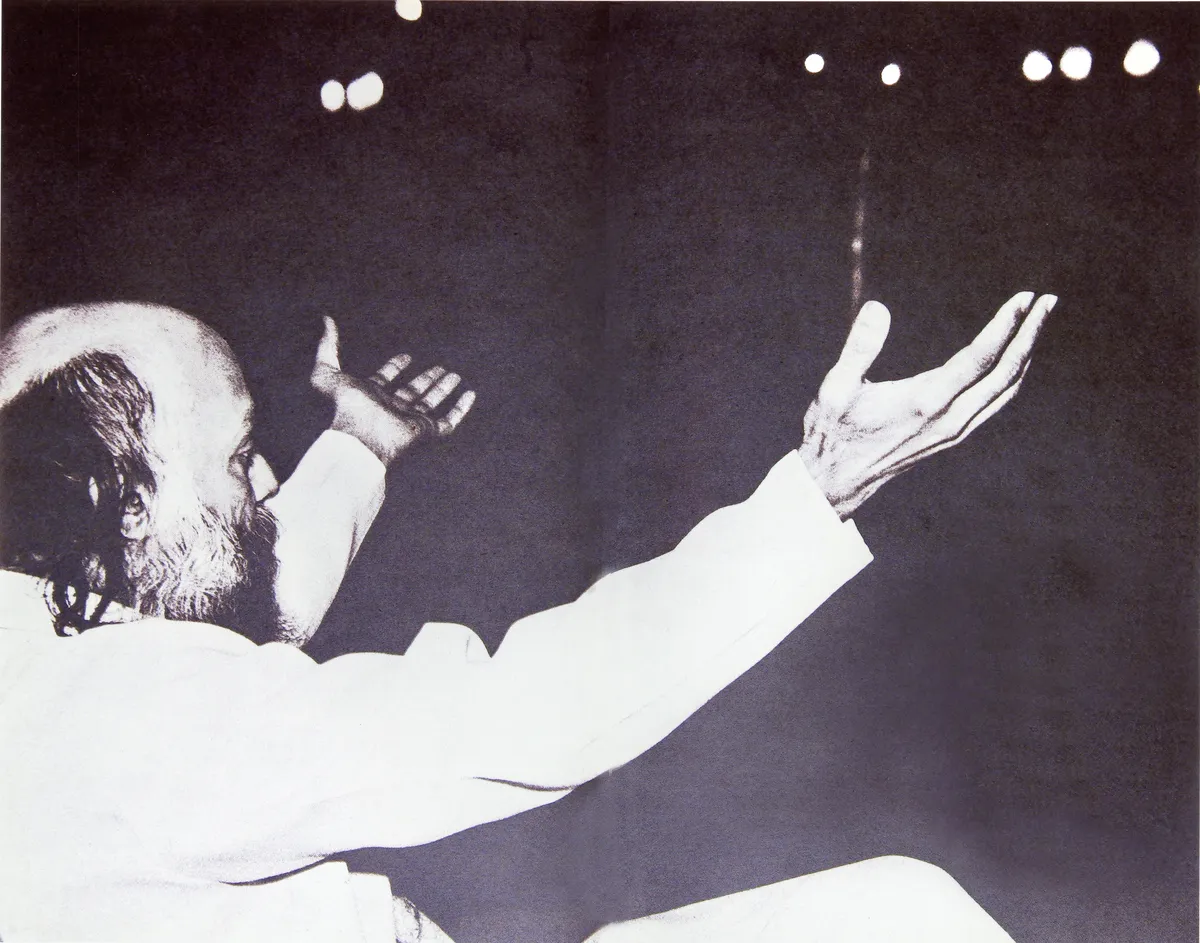
Osho's original Hindi beside Osho Live's English translation, matched passage by passage.
अब सूत्र:
‘प्रमाद को कर्म कहा है, अप्रमाद को अकर्म। जो प्रवृत्तियां प्रमादयुक्त हैं, वे कर्म-बंधन वाली हैं। जो प्रवृत्तियां प्रमादरहित हैं, वे कर्म-बंधन नहीं करतीं। प्रमाद के होने न होने से मनुष्य क्रमशः मूढ़ और प्रज्ञावान कहलाता है।’
Now, the aphorism: “Mahavira calls heedlessness karma, and awareness non-karma. Tendencies suffused with heedlessness bind; tendencies free of heedlessness do not bind. By the presence or absence of heedlessness, a man is called dull or wise.”
जो मैं कह रहा था, उससे जुड़ा हुआ सूत्र है। महावीर करने को कर्म नहीं कहते हैं, न करने को अकर्म नहीं कहते हैं। हम करते हैं तो कहते हैं कर्म, और नहीं करते हैं तो कहते हैं अकर्म। हमारा जानना बहुत ऊपरी है। आपने क्रोध नहीं किया तो आप कहते हैं कि मैंने क्रोध नहीं किया। आपने क्रोध किया तो आप कहते हैं मैंने क्रोध किया। जब आप कुछ करते हैं तो उसको कर्म कहते हैं, और कुछ नहीं करते हैं तो उसे अकर्म कहते हैं।
This connects with what I have been saying. Mahavira does not call doing ‘karma,’ nor not doing ‘non-karma.’ We call doing ‘karma,’ not doing ‘non-karma.’ Our knowing is very superficial. You did not get angry—you say, “I did not get angry.” You got angry—you say, “I got angry.” When we do something we call it karma; when we do nothing we call it non-karma.
महावीर प्रमाद को कर्म कहते हैं, करने को नहीं। महावीर कहते हैं, मूर्च्छा से किया हुआ हो तो कर्म, होशपूर्वक किया हो तो अकर्म। जरा जटिल है और थोड़ा गहन उतरना पड़ेगा।
Mahavira calls heedlessness karma—not doing. If something is done in stupor, it is karma; if done with awareness, it is non-karma. Subtle—and we have to go a little deep.
अगर आपने कोई भी काम बेहोशीपूर्वक किया हो, आपको करना पड़ा हो, आप अचेतन हो गए हों करते वक्त, आप अपने मालिक न रहे हों करते वक्त, आपको ऐसा लगा हो कि जैसे आप पजेस्ड हो गए हैं, किसी ने आपसे करवा लिया है, आप मुक्त नियंता न रहे हों, तो कर्म है।
If you do anything unconsciously—compelled, unaware while doing, not master of yourself—if you felt possessed, someone else did it through you, you were not the free controller—then it is karma.
अगर आप अपने कर्म के मालिक हों, नियंता हों, किसी ने करवा न लिया हो, आपने ही किया हो पूरी सचेतनता से, पूरे होश से, अप्रमाद से, तो महावीर कहते हैं; अकर्म।
If you are the master of your act, the controller—no one compelled you, you did it yourself with full awareness, with wakefulness, without heedlessness—then Mahavira says: it is non-karma.
इसे हम उदाहरण लेकर समझें।
Let us understand by example.
आपने क्रोध किया। क्या आप कह सकते हैं कि आपने क्रोध किया? या आपसे क्रोध करवा लिया गया? एक आदमी ने गाली दी, एक आदमी ने आपको धक्का मार दिया, एक आदमी ने आपके पैर पर पैर रख दिया, एक आदमी ने आपको इस ढंग से देखा, इस ढंग का व्यवहार किया कि क्रोध आप में हुआ, क्रोध आप में किसी से पैदा हुआ। यह आदमी गाली न देता, यह आदमी पैर पर पैर न रख देता, यह आदमी इस भद्दे ढंग से देखता नहीं तो क्रोध नहीं होता। क्रोध आपने नहीं किया, किसी और ने आपसे करवा लिया--पहली बात। मालिक कोई और है, मालिक आप नहीं हैं। इसको कर्म कहना ही फिजूल है, करने वाले ही जब आप नहीं हैं, तो इसे कर्म कहना फिजूल है। बटन हमने दबाई और पंखा चल पड़ा। पंखा नहीं कह सकता कि यह मेरा कर्म है। या कि कह सकता है? बटन बंद कर दी, पंखा चलना बंद हो गया। यह पंखे से करवाया गया। पंखा मालिक नहीं है, पंखा अपने वश में नहीं है। पंखा किसी और के वश में है।
You were angry. Can you really say you were angry? Or was anger done through you? Someone abused you; someone pushed you; someone stepped on your foot; someone looked at you in a particular insulting way. Anger arose in you—produced by another. Had he not abused, not stepped, not looked so crudely, anger would not have arisen. You did not do anger; someone else made you do it. First thing: the master is someone else, not you. To call it “my act” is futile. If you are not the doer, what sense is there in calling it karma? We press the button and the fan runs. The fan cannot say, “This is my act.” When the button is turned off, it stops. It was made to do. The fan is not the master; it is not in its own control; it is in someone else’s control.
और के वश में होने का मतलब होता है, बेहोश होना। जब आप क्रोध करते हैं तब आप होश में करते हैं? कभी आपने होश में क्रोध किया है? करके देखना चाहिए। पूरा होश सम्हाल कर कि मैं क्रोध कर रहा हूं, और तब आप अचानक पाएंगे कि पैर के नीचे से जमीन खिसक गई, क्रोध तिरोहित हो गया।
Being in someone else’s control is unawareness. When you get angry, do you do it in awareness? Have you ever been angry in awareness? Try it. Gather full awareness: “I am getting angry.” Suddenly you will find the ground slips from under your feet—anger vanishes.
होशपूर्वक आज तक क्रोध नहीं हो सका। और जब भी होगा तब बेहोशी में होगा। जब आप क्रोध करते हैं तब आप मौजूद नहीं होते, आप यंत्रवत हो जाते हैं। कोई बटन दबाता है, क्रोध हो जाता है। कोई बटन दबाता है, प्रेम हो जाता है। कोई बटन दबाता है, ईर्ष्या हो जाती है। कोई बटन दबाता है, यह हो जाता है, वह हो जाता है। आप हैं कि सिर्फ बटनों का एक जोड़ हैं, एक मशीन हैं जिसमें कई बटनें लगी हैं। यहां से दबाओ, ऐसा हो जाता है; वहां से दबाओ, वैसा हो जाता है।
Till today anger has never happened in awareness. When it happens, it happens in sleep. When you are angry you are not present; you become mechanical. Someone presses a button—anger occurs. Someone presses a button—love occurs. Someone presses a button—jealousy occurs. This happens; that happens. You are only a bundle of buttons, a machine with many buttons. Press here—this happens; press there—that happens.
एक आदमी मुस्कुराते हुए आकर कह देता है कुछ दो शब्द प्रशंसा के, भीतर कैसे गीत लहराने लगते हैं, वीणा बजने लगती है। और एक आदमी जरा तिरछी आंख से देख लेता है और एक तिरस्कार का भाव आंख से झलक जाता है। भीतर सब फूल मुरझा जाते हैं, सब धारा रुक जाती है गीत की। आग जलने लगती है, धुआं फैलने लगता है। आप हैं या सिर्फ चारों तरफ से आने वाली संवेदनाओं का आघात आपको चलायमान करता रहता है?
Someone comes smiling and says a few words of praise, and within, songs ripple, the veena begins to play. Someone looks with a slight slant of contempt—within, flowers wilt, the stream of song stops; fire burns, smoke spreads. Are you there? Or are you merely being set in motion by impacts from all around?
महावीर कहते हैं, मैं उसे ही कर्म कहता हूं, जो प्रमाद में किया गया हो। उसी से बंधन निर्मित होता है, इसलिए कर्म कहता हूं। जिसको आपने मूर्च्छा में किया है, उससे आप बंध जाएंगे। करने में ही बंध गए हैं, करने के पहले भी बंधे थे, इसीलिए किया है। वह बंधन है।
Mahavira says: I call only that karma which is done in heedlessness. That alone creates bondage; hence I call it karma. That which you have done in stupor will bind you. Indeed you were bound even before you did it; hence you did it. It is bondage.
अगर हम अपने कर्मों की जांच-पड़ताल करें तो हम पाएंगे, वे सभी ऐसे हैं। वे सब एक-दूसरे पर निर्भर हैं। उसमें हम कहीं भी मालिक नहीं हैं। हम केवल तंतुओं का एक जोड़ हैं और जगह-जगह से तंतु खींचे जाते हैं, और हमारे भीतर कुछ होता है। इसे महावीर कहते हैं, प्रमाद, मूर्च्छा, बेहोशी, अचेतना।
If we inspect our acts, we will find them all like this—interdependent. We are nowhere the masters. We are only a mesh of strings, and strings are pulled here and there, and within something happens. Mahavira calls this heedlessness, stupor, unconsciousness.
एक आदमी ने गाली दी, क्रोध हो गया। दोनों के बीच में जरा भी अंतराल नहीं है, जहां आप सजग हुए हों। और जहां आपने होशपूर्वक सुना हो कि गाली दी गई, और जहां आपने होशपूर्वक भीतर देखा हो कि कहां क्रोध पैदा हो रहा है, आप अगर दूर खड़े हो गए हों, गाली दी गई है, गाली सुनी गई है, गाली देने वाले के भीतर क्या हो रहा है, गाली सुनने वाले के भीतर क्या हो रहा है, अगर इन दोनों के पार खड़े होकर आपने देखा हो क्षण भर, तो उसका नाम होश है।
A man insults you; anger happens. Between the two there is not even a tiny interval where you became aware; where you heard in awareness; where you looked within to see where the anger is arising. If you stood apart—an insult is given, an insult is heard; what is happening within the insulter and within the insulted—if for a moment, standing beyond both, you saw—this is awareness.
कहां लगी गाली, कहां घाव किया उसने, कहां छू दिया कोई पुराना छिपा हुआ घाव, कहां हरा हो गया कोई दबा हुआ घाव, कहां पड़ी चोट, क्यों पड़ी चोट, कहां भीतर मवाद बहने लगी। इसको अगर आपने खड़े होकर निष्पक्ष भाव से देखा हो जैसे यह गाली किसी और को दी गई हो, और ने तो दी है, किसी और को दी गई हो, अगर यह भी आपने देखा हो तो आप होश के क्षण में हैं। तो अप्रमाद है। और फिर आपने निर्णय किया हो कि क्या करना, और यह निर्णय शुद्ध रूप से आपका हो। यह निर्णय आपसे करवा न लिया गया हो, यह निर्णय आपका हो।
Where did the insult land? Where did it wound? Which old hidden wound did it touch? Where did pus start to flow? If you saw this dispassionately—as if the insult was offered to someone else, and given by someone else—then you are in a moment of awareness. That is non-heedlessness. And then if you decided what to do, and the decision was purely yours—not done through you—that decision is yours.
बुद्ध को कोई गाली दे, महावीर को कोई पत्थर मारे, जीसस को कोई सूली लगाए, तो भी वे साक्षी बने रहते हैं। यह जो साक्षीभाव है, तो भी वे देखते रहते हैं। जीसस मरते वक्त भी प्रार्थना करते हैं: हे प्रभु, इन सबको माफ कर देना, क्योंकि ये नहीं जानते कि ये क्या कर रहे हैं!
If someone abuses Buddha, throws stones at Mahavira, crucifies Jesus—even then they remain a witness. This witnessing—that they still keep seeing. Jesus, even while dying, prays: “Father, forgive them; they know not what they do.”
यह वही आदमी कह सकता है जो अपने शरीर से भी दूर खड़ा हो। नहीं तो यह कैसे कह सकते हैं आप? आपको कोई सूली दे रहा हो, और आप यह कह सकते हैं कि इनको माफ कर देना?
Only one who stands even apart from his body can say this. How else could you say such a thing? If you are being crucified, how can you say, “Forgive them”?
जीसस के शिष्य नहीं सोच रहे थे ऐसा। जीसस के शिष्य सोच रहे थे, इस वक्त होगा चमत्कार। पृथ्वी फटेगी, आग बरसेगी आकाश से, महाप्रलय हो जाएगी। जीसस का एक इशारा और भगवान से यह कहना कि नष्ट कर दो इन सबको, अभी चमत्कार हो जाएगा।
Jesus’ disciples were not thinking so; they were expecting a miracle. The earth would split, fire would rain from the sky, there would be a great deluge. One gesture from Jesus, one word to God—destroy them all—and a miracle would occur.
लेकिन जीसस ने जो कहा वह असली चमत्कार है। अगर जीसस ने यह कहा होता कि नष्ट कर दो इन सबको, आग लगा दो, राख कर दो इस पूरी भूमि को, जिन्होंने मेरे साथ ऐसा व्यवहार किया। मैं जो ईश्र्वर का इकलौता बेटा हूं। हे पिता, नष्ट कर दे इन सबको, तो शिष्य समझते कि चमत्कार हुआ।
But what Jesus actually said is the real miracle. If he had said, “Destroy them all! Burn the earth! Reduce this land to ashes—those who treated me thus, God’s only son”—if he had said so, the disciples would have thought a miracle happened.
लेकिन यह चमत्कार नहीं था, यह तो आप भी करते। यह तो कोई भी कर सकता था। यह चमत्कार था ही नहीं, क्योंकि यह तो जिसको सूली लगती है वह करता ही है, हो या न हो यह दूसरी बात है। सूली तो बहुत दूर है, कांटा गड़ता है तो सारी दुनिया में आग लगवा देने की इच्छा होती है। जरा सा दांत में दर्द होता है तो लगता है, कोई ईश्र्वर वगैरह नहीं है। सब नरक है।
But that is no miracle; you would do the same. Anyone could do it. It is what anyone on a cross would desire; whether it happens or not is another matter. A cross is far away—even a thorn pricks and you wish to set the world on fire. A little toothache and you feel there is no God; all is hell.
यह तो सभी करते। आप थोड़ा सोचें, आप सूली पर लटके होते, क्या भाव उठता आपके भीतर? न तो पृथ्वी फटती आपके कहने से, क्योंकि ऐसे फटने लगे तो एक दिन भी बिना फटे नहीं रह सकती। एक क्षण नहीं रह सकती। न कोई सूरज आग बरसाता, न और कुछ होता। लेकिन इससे कोई फर्क नहीं पड़ता। आपका मन तो यही होता कि हो जाए ऐसा।
Everybody does that. Think a little: if you were hanging on a cross, what would arise in you? The earth would not split at your word—if it did every time, it could not last a single moment. The sun would not rain fire. But that does not matter—your mind would want it so.
मनोवैज्ञानिक कहते हैं कि ऐसा आदमी खोजना मुश्किल है जो जिंदगी में दस-पांच बार हत्याएं करने का विचार न करता हो। दस-पांच बार अपनी हत्या करने का विचार न करता हो। दस-पांच बार सारी दुनिया को नष्ट कर देने का जिसे खयाल न आ जाता हो, ऐसा आदमी खोजना मुश्किल है।
Psychologists say it is hard to find a person who has not entertained thoughts of killing a few people a handful of times in life; killing himself a handful of times; annihilating the whole world a handful of times.
जीसस ने यह जो कहा कि इनको माफ कर देना, क्योंकि ये नहीं जानते कि ये क्या कर रहे हैं, इसमें कई बातें निहित हैं।
“Forgive them; they know not what they do”—within this many things are implied.
पहली बात, ये जीसस के साथ कर रहे हैं, ऐसा जीसस को अगर लगता हो तो यह बात पैदा नहीं हो सकती। जिसके साथ ये कर रहे हैं वह जीसस से उतना ही दूर है जितना कि ये करने वाले लोग दूर हैं। यह चेतना भीतर अलग खड़ी है। एक तीसरा कोण मौजूद हो गया है।
First, if Jesus felt that they were doing it to him, then such a prayer could not arise. The one they are doing it to is as distant from Jesus as the doers are distant. Consciousness stands aside. A third angle has appeared.
साधारण आदमी की जिंदगी में दो कोण होते हैं--करने वाला, जिस पर किया जा रहा है, वह।
In an ordinary life there are two angles—the doer and the done-to.
होश वाले आदमी की जिंदगी में तीन कोण होते हैं--जो कर रहा है वह, जिस पर किया जा रहा है वह, और जो दोनों को देख रहा है वह।
In the life of awareness there are three—the one who does, the one to whom it is done, and the one who is seeing both.
यह जो थर्ड, यह जो तीसरा है, यह जो तीसरी आंख है, यह जो देखने का तीसरा स्थान है, इसे महावीर कहते हैं, अप्रमाद।
This third—the third eye, the third position of seeing—Mahavira calls non-heedlessness.
बड़ा मुश्किल है, सूली पर चढ़े हों, हाथ में कीलें ठोके जा रहे हों, होश बचाए रखना मुश्किल है। जरा सा एक आदमी धक्का देता है, होश खो जाता है। हमारा होश है ही कितना? किसी आदमी का होश मिटाना हो, जरा सी, कुछ भी करने की जरूरत नहीं है। जरा सा कुछ और सारा होश खो जाता है। होश जैसे है ही नहीं। एक झीनी पर्त है, झूठी पर्त है ऊपर-ऊपर। जरा सा कंपन, सब टूट जाता है।
It is very difficult—to be nailed to a cross and keep awareness. A slight shove and we lose awareness. How much awareness do we have anyway? To erase someone’s awareness, very little is needed. A little—and it is gone. As if there is none. A thin flimsy film on top; a slight tremor and it breaks.
किसी भी आदमी को पागल करने में कितनी देर लगती है। आप जरूर दूसरों के बाबत सोच रहे होंगे, जिन-जिन को आपने पागल किया है। अपने बाबत सोचिए। पत्नी एक शब्द बोल देती है, और आप पागल हो जाते हैं। पत्नी को भी तब तक राहत नहीं मिलती, जब तक आप पागल हो न जाएं। अगर न हों तो उसको लगता है, वश के बाहर हो गए।
How long does it take to drive anyone crazy? You must be thinking of others whom you have driven crazy. Think of yourself. Your wife says a word and you go crazy. The wife too does not get relief until you go mad. If not, she feels you have gone out of control.
एक मित्र मेरे पास आते हैं। पत्नी कर्कशा है, उपद्रवी है। वे मुझसे बार-बार कहते हैं, क्या करूं! सब सम्हाल कर घर जाता हूं, लेकिन उसका एक शब्द, और आग में घी का काम हो जाता है। बस उपद्रव शुरू हो जाता है।
A friend came to me. His wife was sharp-tongued, quarrelsome. He said again and again, “What shall I do? I go home holding myself together, but one word from her is like ghee poured on fire—an uproar begins.”
मैंने उनसे कहा कि एक दिन सम्हाल कर मत जाओ, क्योंकि सम्हाल कर तुम जो जाते हो वही तुम्हारे भीतर इकट्ठा हो जाता है। फिर पत्नी जरा सा घी छिड़क देती है तो आग तो तुम सम्हाल कर ला रहे हो। एक दिन तुम सम्हाल कर जाओ ही मत। गीत गुनगुनाते जाओ, नाचते जाओ, सम्हाल कर मत जाओ, कोई फिकर ही मत करो, जो होगा देखा जाएगा। और जब पत्नी कुछ करे, क्योंकि तुमने आज तक बहुत क्रोध पत्नी पर कर लिया, कोई परिणाम तो होता नहीं, कोई हल तो होता नहीं। एक नई तरकीब का उपयोग करो। जब पत्नी कुछ करे तो तुम मुस्कुराते रहना। कुछ नहीं करना है, ऐसा नहीं, कुछ नहीं करोगे तो मुश्किल पड़ेगी। तुम मुस्कुराते रहना। यह कुछ करना रहेगा, एक बहाना रहेगा। हंसते रहना।
I told him, “One day don’t hold yourself together. Because this holding together is what you are carrying within as fire. Then the wife adds a little ghee, and—you are already bringing the fire. One day go home unguarded. Hum a song, dance a little; don’t brace yourself at all. Don’t worry; whatever happens will be seen. And when your wife does something—you have already been angry at your wife enough; it never solves anything—use a new trick. When she does something, you keep smiling. It is not that you will do nothing—if you do nothing it will be hard; keep smiling. That will be something to do, a pretext to do—keep laughing.”
पांच-सात दिन बाद उनकी पत्नी ने आकर कहा कि मेरे पति को क्या हो गया है। बिलकुल हाथ के बाहर जाते हुए मालूम पड़ते हैं। उनका दिमाग तो ठीक है? पहले मैं कुछ कहती थी तो क्रोधित होते थे, वह समझ में आता था। अब मैं कुछ कहती हूं तो वे हंसते हैं। इसका मतलब क्या है? उनका दिमाग तो ठीक है! जब उनका दिमाग बिगड़ जाता था तब पत्नी मानती थी कि ठीक है, क्योंकि वह नार्मल था। अब ठीक हो रहा है तो पत्नी समझती है कि दिमाग कुछ खराब हो रहा है।
After five-seven days, his wife came and said, “What has happened to my husband? He seems to be slipping out of my hands. Is his mind alright? Earlier, if I said something he got angry—that I could understand. Now when I say something he laughs. What does that mean? Is his mind okay?” When his mind was off-balance—angry—she thought that was normal. Now that he was becoming okay, she thought his mind was going wrong.
स्वभावतः जब कोई गाली दे तो हंसना। तो अगर जीसस को सूली देने वाले लोगों को लगा हो कि यह आदमी पागल है, तो आश्र्चर्य नहीं है। क्योंकि यह एबनार्मल था, असाधारण थी यह बात। जो सूली दे रहे हैं उनके लिए प्रार्थना करनी कि हे प्रभु, इन्हें माफ कर देना।
Naturally—if someone abuses, and you laugh. If those who crucified Jesus thought he was mad, it is no wonder—because this was abnormal, extraordinary: praying for those who are crucifying you, “Father, forgive them.”
हम सब जीते हैं प्रमाद में, इसलिए प्रमाद में होना हमारी साधारण, नार्मल अवस्था हो गई है। हमारे बीच कोई जरा होश से जीए तो हमें अड़चन मालूम होती है। क्योंकि होश से जीने वाला हमारे बंधन के बाहर होने लगता है। होश से जीने वाला हमारे हाथ के बाहर खिसकने लगता है। क्योंकि होश से जीने वाले का अर्थ है कि हम बटन दबाते हैं, उसके भीतर क्रोध नहीं होता। हम बटन दबाते हैं, उसके भीतर आनंद नहीं होता, वह अपना मालिक होता जा रहा है। अब जब वह आनंदित होता है, होता है।
We all live in heedlessness; hence heedlessness is our normal state. If among us someone lives a little aware, it creates a disturbance for us—because the aware person slips out of our control. The one who is aware moves beyond our buttons. We press and he does not get angry; we press and he does not become pleased—he is becoming his own master. Now when he is joyous, he is joyous.
एक और ध्यान रखने की बात है कि आनंदित आप अकेले हो सकते हैं, लेकिन क्रोधित आप अकेले नहीं हो सकते। आनंद के लिए किसी की आपको अपेक्षा नहीं है कि कोई आपकी बटन दबाए। इसलिए हमने कहा है कि जब कोई व्यक्ति अपना परम मालिक हो जाता है तो परम आनंद को उपलब्ध हो जाता है।
Another thing to note: you can be blissful alone; you cannot be angry alone. For bliss you need no one to press your button. Hence we say: when a person becomes his ultimate master, he attains ultimate bliss.
कुछ चीजें हैं जो दूसरों पर निर्भर हैं। जो दूसरों पर निर्भर हैं वे प्रमाद में ही हो सकती हैं। कुछ चीजें हैं जो किसी पर निर्भर नहीं--स्वतंत्र हैं--वे अप्रमाद में हो सकती हैं।
Some things depend on others. Those that depend on others happen only in heedlessness. Some do not depend on anyone—independent—they happen in awareness.
इसलिए महावीर कहते हैं प्रमाद को कर्म, कर्म-बंधन के कारण। जब भी हम बेहोशी में कुछ कर रहे हैं, हम बंध रहे हैं। और यह कर्म-बंधन हमें लंबी यात्राओं में उलझा देगा, लंबे जाल में डाल देगा।
Therefore Mahavira calls heedlessness karma, because it binds. Whenever we do anything in sleep, we are binding ourselves. And this karmic bondage will tangle us in long journeys, long nets.
अप्रमाद को अकर्म, होश को अकर्म कहा है महावीर ने। अगर आप होशपूर्वक क्रोध कर सकते हैं तो महावीर कहते हैं कि आपको क्रोध का कोई बंधन नहीं होगा। लेकिन होशपूर्वक क्रोध होता ही नहीं। अगर आप होशपूर्वक चोरी कर सकते हैं, तो महावीर कहते हैं चोरी अकर्म है। इसमें फिर कोई कर्म-बंधन नहीं है। लेकिन होशपूर्वक चोरी होती ही नहीं। अगर आप होशपूर्वक हत्या कर सकते हैं, तो महावीर हिम्मतवर हैं, वे कहते हैं, इसमें कोई कर्म का बंधन नहीं है। आप होशपूर्वक हत्या करें। लेकिन होशपूर्वक हत्या होती ही नहीं। हत्या होती ही है अनिवार्य रूप से बेहोशी में।
Mahavira calls awareness non-karma. If you could be angry with awareness, Mahavira would say: you will incur no bondage from anger. But anger does not happen in awareness. If you could steal with awareness, Mahavira would say: stealing is non-karma—no bondage. But stealing does not happen in awareness. If you could murder with awareness—Mahavira is courageous—he would say: there is no karmic bondage in it. Murder does not happen in awareness. Murder necessarily happens in sleep.
तो महावीर कहते हैं कि एक ही है नियम, होशपूर्वक। एक ही है पुण्य, होशपूर्वक। एक ही है धर्म, होशपूर्वक। फिर सारी छूट है। होशपूर्वक जो भी करना हो करो। धर्म को इतना एसेंशियल, इतना सारभूत कम ही लोगों ने समझा और कहा है। इसलिए महावीर की सारी उपदेशना, उनकी सारी धर्मदेशना इस एक ही शब्द के आस-पास घूमती है--होश, विवेक, जागरूकता, अप्रमाद। इतना मूल्य दिया है उन्होंने तो सोचने जैसा है। नीति की दूसरी कोई आधारशिला नहीं रखी। यह करना बुरा है, यह करना अच्छा है, इस पर महावीर का जोर नहीं है, लेकिन तब बड़ी हैरानी होती है। महावीर को जिन्होंने पच्चीस सौ साल अनुगमन किया है, उनको होश की कोई फिकर नहीं है! उनको कर्मों की फिकर है। वे कहते हैं--यह कर्म ठीक, वह कर्म गलत।
So Mahavira says there is only one rule: awareness. Only one virtue: awareness. Only one religion: awareness. Everything else is granted: do what you will—but do it aware. Few have made religion so essential. Therefore Mahavira’s entire teaching revolves around this single word—awareness, discrimination, wakefulness, non-heedlessness. He gave it such value—and yet it is strange: those who followed him for twenty-five centuries have little concern for awareness! They care about acts. They say: this act is right, that act is wrong.
इस फर्क को समझ लें।
Understand this distinction.
जब मैं कहता हूं, यह कर्म ठीक, यह कर्म गलत, तो होश का कोई सवाल नहीं है। जब मैं कहता हूं, होश
ठीक, बेहोशी गलत, तो कर्म का कोई सवाल नहीं है। जिस कर्म के साथ भी मैं होश जोड़ लेता हूं वह ठीक हो जाता है। वह अकर्म हो जाता है, उसका कोई बंधन नहीं रह जाता। और जिस कर्म के साथ मैं होश नहीं जोड़ पाता हूं वह पाप है, वह बंधन है, वह अधर्म है, वह कर्म है।
When I say “this act is right, that act is wrong,” there is no question of awareness. When I say “awareness is right, sleep is wrong,” there is no question of the act. To whatever act I add awareness, it becomes right. It becomes non-karma—no bondage remains. And to whatever act I cannot add awareness—that is sin, bondage, irreligion, karma.
रहस्य यह है कि जो भी गलत है, उसके साथ होश नहीं जोड़ा जा सकता। गलत होने का मतलब ही यह है कि वह केवल बेहोशी में ही संभव है। गलत होने का एक ही गहरा मतलब है कि जो बेहोशी में ही संभव है। सही होने का एक ही मतलब है कि जो केवल होश में ही होता है, बेहोशी में कभी नहीं होता।
The secret is: whatever is wrong cannot be joined with awareness. Wrong means: that which is possible only in sleep. There is only one deep meaning of wrong—that which is possible only in unawareness. There is only one meaning of right—that which happens only in awareness, never in sleep.
इसका क्या मतलब हुआ?
What does this mean?
इसका मतलब हुआ कि आप अगर बेहोशी से दान करते हैं तो वह बंधन है।
It means: if you give charity in sleep, it is bondage.
एक आदमी रास्ते पर भीख मांगता हुआ खड़ा है। आप अकेले जा रहे हैं तो आप भीख मांगने वाले की फिकर नहीं करते। चार लोग आपके साथ हैं और भीख मांगने वाला हाथ फैला देता है तो आपको कुछ देना पड़ता है। यह भीख मांगने वाले को आप नहीं देते, अपनी इज्जत को, जो चार लोगों के सामने दांव पर लगी है। इसलिए भिखारी भी जानता है कि अकेले आदमी से उलझना ठीक नहीं। चार आदमियों के सामने हाथ फैला देता है, पैर पकड़ लेता है। उस वक्त सवाल यह नहीं है कि भिखारी को देना है, उस वक्त सवाल यह है कि लोग क्या कहेंगे कि दो पैसे न दे सके। आपका हाथ खीसे में जाता है। यह लोगों के लिए जा रहा है, जो मौजूद हैं। यह दान नहीं है, यह मूर्च्छा है। आप भिखारी को दे रहे हैं, लेकिन कहीं कोई दया-भाव नहीं है। यह मूर्च्छा है।
A beggar is standing on the road. You are walking alone—you ignore him. Four people are with you—he stretches out his hand, and you have to give him something. You are not giving to the beggar; you are protecting your prestige in front of the four. Beggars know this too—alone is not good to accost; in front of four he will cling. At that time it is not about the beggar; it is about what people will say—“He couldn’t give a few coins?” Your hand goes to the pocket. This is for the people present. This is not charity, it is stupor. You are giving to the beggar but there is no compassion; this is stupor.
आप दान करते हैं कि मंदिर पर मेरे नाम का पत्थर लग जाए। यह मूर्च्छा है। आप ही न बचे, मंदिर का पत्थर कितने दिन बचेगा? और जरा जाकर देखें पुराने मंदिरों पर जो पत्थर लगे हैं कौन उनको पढ़ रहा है। वह भी आप ही जैसे लोग लगवा गए हैं। आप भी लगवा जाएंगे।
You donate to have your name carved on the temple—stupor. You will not remain, nor will that stone remain long. Go look at old temples—who is reading those plaques? They were put up by people like you. You will also put one up.
अगर दान मूर्च्छा है तो कर्म-बंधन है। लेकिन दान मूर्च्छा से हो ही नहीं सकता। अगर हो रहा है तो उसका मतलब वह दान नहीं है। आप धोखे में हैं, वह कुछ और है। चार लोगों में प्रशंसा मिलेगी, यह दान नहीं है। हजारों साल तक नाम रहेगा, यह दान नहीं है। यह तो सौदा है, यह तो सीधा सौदा है। अगर अकेले भी हैं आप, कोई देखने वाला नहीं है और भिखारी हाथ फैलाता है, तब भी जरूरी नहीं है कि दान ही हो।
If giving is in stupor, it is bondage. But charity cannot happen in stupor; if it is happening, it means it is not charity—you are deceived; it is something else. Praise from others is not charity. A name for a thousand years is not charity. It is a bargain.
कई बार ऐसा होता है कि इनकार करना ज्यादा मंहगा और दे देना सस्ता होता है। एक-दो पैसे दे देने में ज्यादा सस्ता मालूम पड़ता है मामला, बजाय यह कहने में कि नहीं देंगे। यह नहीं देना ज्यादा मंहगा मालूम पड़ता है। आप दो पैसे दे देते हैं।
Even if you are alone and a beggar holds out his hand, still it is not necessarily charity. Often refusal is more expensive and giving is cheaper. A couple of coins feels cheaper than saying “no.” You give two coins.
भिखारियों को लोग अक्सर दान नहीं देते, सिर्फ टालने की रिश्र्वत देते हैं कि जाओ, आगे बढ़ो। वह रिश्र्वत है, और भिखारी भी अच्छी तरह जानते हैं कि ज्यादा शोरगुल मचाओ, डटे रहो।
People do not give charity to beggars; they bribe them to go away—“Go on, move along.” The beggar knows it too—make noise, stick around.
आप देखेंगे कि भिखारी डटा ही रहता है। वह भी जानता है कि एक सीमा है, वहां तक रुको। एक सीमा है, जहां यह आदमी रिश्र्वत देगा कि अब जाओ। भिखारी भी जानते हैं कि दान कोई नहीं देता, इसलिए भिखारी भी आप यह मत सोचना कि अनुगृहीत होते हैं। भिखारी भी जानते हैं, अच्छा बुद्धू बनाया। जब वे लेकर आपसे चले जाते हैं तो आप यह मत सोचना कि वे समझते हैं कि बड़ा दानी आदमी मिल गया था।
आप रिश्र्वत देते हैं। भिखारी भी जानता है कि यह रिश्र्वत है। इसलिए जानता है कि आपकी सहनशीलता की सीमा को तोड़ना जरूरी है, तब आपका हाथ खीसे में जाता है। कितनी सहनशीलता है, इस पर निर्भर करता है।
You will see beggars stick. They know there is a limit—hold until then. There is a point where your hand will go to your pocket; it depends on your tolerance.
अकेले में भी अगर आप देते हैं तो टालने के लिए, हटाने के लिए। तो फिर दान नहीं है, मूर्च्छा है। दान मूर्च्छा से हो ही नहीं सकता। अगर मूर्च्छा है, दान नहीं हो सकता।
Even alone, if you give to get rid of him, it is not charity; it is stupor. Charity cannot happen in stupor.
चोरी बिना मूर्च्छा के नहीं हो सकती। अगर आप होशपूर्वक चोरी करने जाएं, तो जा ही न सकेंगे। अगर आप होशपूर्वक किसी की चीज उठाना चाहें, उठा ही न सकेंगे। और अगर उठा लें तो जरा भीतर गौर करके देखना। जिस क्षण उठाएंगे, उस क्षण होश खो जाएगा, मोह पकड़ लेगा, लोभ पकड़ लेगा, तृष्णा पकड़ लेगी, होश खो जाएगा।
Stealing cannot happen without stupor. If you try to steal in awareness, you will not go. If you try to lift someone’s thing in awareness, you won’t be able to. And if you do, observe carefully—at the moment of lifting, awareness will be lost; delusion, greed will seize you.
एक बारीक संतुलन है भीतर होश और बेहोशी का। जो आदमी होशपूर्वक जी रहा है, उससे पाप नहीं होता। इसका मतलब यह नहीं है कि महावीर चलेंगे तो कोई चींटी कभी मरेगी ही नहीं, महावीर चलेंगे तो चींटी मर सकती है, मरेगी। फिर भी महावीर कहते हैं, उसमें पाप नहीं है, क्योंकि महावीर अपने तईं पूरे होशपूर्वक चल रहे हैं। अपने होश में कोई कमी नहीं है। अब अगर चींटी मरती है तो यह केवल प्रकृति की व्यवस्था है, महावीर का कोई हाथ नहीं है।
Within, there is a fine balance between awareness and sleep. From one who lives aware, sin does not happen. This does not mean that when Mahavira walks no ant will ever die. Ants may die. Even so, Mahavira says: there is no sin in it, because Mahavira is walking with full awareness. There is no lack of awareness. If an ant dies, that is nature’s arrangement; Mahavira has no hand in it.
और आप, आप भी चल रहे हैं उसी रास्ते पर, और चींटी मरती है तो आपको पाप लगेगा। यह जरा अजीब सा गणित मालूम पड़ता है। महावीर चलते हैं, पाप नहीं लगता। आप चलते हैं, पाप लगता है, चींटी वही मरती है। क्या फर्क है?
And you—you walk the same path; an ant dies—you incur sin. Strange arithmetic: Mahavira walks—no sin; you walk—sin; the same ant dies. What is the difference?
आप बेहोशी से चल रहे हैं। इसलिए प्रकृतिदत्त मरना नहीं है चींटी का, आपका हाथ है। आप अपनी तरफ से होश से चले होते, आपने मारने के लिए न जाने, न अनजाने कोई चेष्टा की होती, आपने सब भांति अपने होश को सम्हाल कर कदम उठाया होता, फिर चींटी मर जाती, वह चींटी जाने, प्रकृति जाने, आप जिम्मेवार नहीं थे। आप जो कर सकते थे, वह किया था।
You walk in sleep. Therefore this is not nature’s death; your hand is there. If you had walked aware—if you had made no effort to kill knowingly or unknowingly; if you had kept your awareness in every way as you placed your step—and still an ant died, then let the ant and nature decide; you are not responsible. You did what you could.
लेकिन आप बेहोशी से चल रहे हैं। आपको पता ही नहीं कि आप चल रहे हैं। आपको यह पता ही नहीं कि पैर आपका कहां पड़ रहा है, क्यों पड़ रहा है? आपका सिर कहीं आसमान में घूम रहा है, पैर जमीन पर चल रहे हैं। आप मौजूद यहां हैं शरीर से, मन कहीं और है।
But you walk in sleep. You don’t even know you are walking, where your foot falls and why. Your head is roaming in the sky, your feet walk on the earth. You are present here bodily, mind elsewhere.
यह जो बेहोश चलना है, इसमें जो चींटी मर रही है, उसमें आप जिम्मेवार हैं। वह जिम्मेवारी बेहोशी की जिम्मेवारी है, चींटी के मरने की नहीं। चींटी तो आपके होश में भी मर सकती है, लेकिन तब जिम्मेवारी आपकी नहीं है।
In this sleepwalking, if an ant dies, you are responsible—not for the ant’s death but for your sleep. The ant can die even in your awareness—but then responsibility is not yours.
महावीर चालीस साल जीए, और यह बड़ी गहन चिंतना का विषय रहा है, तत्व-दार्शनिकों को, तत्वज्ञों को, कि महावीर को ज्ञान हुआ, उसके बाद वह चालीस साल जिंदा थे। तो कर्म तो कुछ किया ही होगा। इन चालीस सालों में जो कर्म किया, उसका बंधन महावीर पर हुआ या नहीं? कितना ही कम किया हो, कुछ तो किया ही होगा, उठे होंगे, बैठे होंगे, नहीं उठे, नहीं बैठे, श्वास तो ली होगी। श्वास लेने में भी तो जीवाणु मर रहे हैं, लाखों मर रहे हैं। एक श्र्वास में कोई एक लाख जीवाणु मर जाते हैं। बहुत छोटे हैं, सूक्ष्म हैं।
Mahavira lived forty years after enlightenment. Philosophers have pondered: if he lived forty years after knowing, he must have done some karma. Whatever little, something he did—he rose, he sat; if not that, he at least breathed. With every breath, germs die—hundreds of thousands die—so tiny, so subtle.
और जब महावीर ने पहली दफे इनकी बात कही थी तो लोगों को भरोसा नहीं आया कि श्वास में कहां के जीवाणु। लेकिन अब तो विज्ञान कहता है कि वे हैं, और महावीर ने जितनी संख्या बताई थी, उससे ज्यादा संख्या है।
When Mahavira spoke of this, people did not believe that germs die in breath. Now science says they do—and in numbers higher than Mahavira mentioned.
आपके खयाल में नहीं है, आप एक चुंबन लेते हैं तो एक लाख जीवाणु मर जाते हैं। दो ओंठों के संस्पर्श के दबाव में एक लाख जीवाणु मर जाते हैं। यह वैज्ञानिक कहते हैं। महावीर ने तो बहुत पहले इशारा किया था कि श्र्वास लेते हैं तो भी जीवाणु मर जाते हैं।
You may be surprised: scientists say a hundred thousand germs die in a single kiss. Under the pressure of lips, a hundred thousand die. Mahavira had pointed long ago that even with breathing, germs die.
इसलिए आप जान कर हैरान होंगे कि महावीर ने प्राणायम जैसी क्रियाओं को जरा भी जगह नहीं दी। यह हैरानी की बात है। क्योंकि योग प्राणायाम पर इतना जोर देता हो, उसके कारण बिलकुल दूसरे हैं। लेकिन महावीर ने बिलकुल जोर नहीं दिया। क्योंकि इतने जोर से श्र्वास का लेना, छोड़ना, महावीर को लगा, अकारण हिंसा को बढ़ा देना हो जाएगा।
Therefore Mahavira gave no place to practices like pranayama—surprising, because yoga emphasizes breath so much, but for other reasons. Mahavira gave it no emphasis—so forceful breathing, he felt, would increase violence unnecessarily.
इसलिए महावीर उतनी ही श्र्वास लेते हैं जितने के बिना नहीं चल सकता, जितने के बिना नहीं चल सकता। श्र्वास लेने में भी महावीर होश में हैं, जिसके बिना नहीं चल सकता है। अनिवार्य है जो होने के लिए, बस उतनी ही श्र्वास, वह भी होश में हैं वह, इसलिए दौड़ते नहीं कि श्र्वास तेज न हो जाए। चिल्लाते नहीं कि श्र्वास तेज न हो जाए। उतना ही बोलते हैं जितना अपरिहार्य है। चुप रह जाते हैं। क्योंकि जब कुछ भी हम कर रहे हैं उसमें अगर बेहोशी है, तो हिंसा हो रही है।
Therefore Mahavira breathes only as much as is indispensable—only as much as he cannot do without. He breathes with awareness; he does not run lest breath become fast; he does not shout lest breath become fast; he speaks only as necessary; he falls silent. Because whatever we do, if there is sleep in it, there is violence.
पर फिर भी महावीर बोले, फिर भी महावीर चले। नहीं कुछ किया तो श्र्वास तो ली। रात जमीन पर लेटे तो, शरीर का वजन पड़ा होगा। जब एक चुंबन में एक लाख कीटाणु मर जाते हैं, तो जब आदमी जमीन पर लेटेगा, कितना ही साफ-सुथरा करके लेटे, करोड़ों कीटाणु मर जाएंगे, करोड़ों जीवाणु मर जाएंगे।
Even so, Mahavira spoke, Mahavira walked. If nothing else, he breathed. At night he lay on the ground—his body weight pressed down. If a kiss kills a hundred thousand germs, how many die when a man lies down—however clean the ground—millions.
महावीर रात करवट नहीं लेते हैं, फिर भी एक करवट तो लेनी ही पड़ेगी, सोते वक्त। एक बार तो पृथ्वी छूनी ही पड़ेगी।
महावीर रात में करवट नहीं बदलते कि बार-बार बहुत सी हिंसा अकारण है। एक करवट से काम चल जाता है तो बस एक करवट काफी है। एक ही करवट सोए रहते हैं। फिर भी एक करवट तो सोते ही हैं।
Mahavira does not turn in sleep, because repeated turning causes much violence unnecessarily. One posture is enough—so he sleeps in one posture. Still—he lies down once.
आप ज्यादा हिंसा करते होंगे, वे कम करते हैं, लेकिन नहीं करते हैं ऐसा तो दिखाई नहीं पड़ता। तो सवाल है कि महावीर ने चालीस साल में इतनी हिंसा की, उसका कर्म-बंधन अगर हुआ हो तो फिर वह मोक्ष कैसे जा सकते हैं? उनका पुनर्जन्म होगा। उतना बंधन, उतना संस्कार फिर जीवन में ले आएगा। लेकिन नहीं कोई कर्म-बंधन नहीं होता क्योंकि महावीर की कर्म की परिभाषा हम समझ लें।
You might do more violence; he does less. But he did not do nothing, visibly. So the question: in forty years, so much violence—if it created karmic bondage for Mahavira, how could he be liberated? He would be reborn; that much bondage, that much imprint would bring him again. But there is no karmic bondage—because we must understand Mahavira’s definition of action.
जो हम मूर्च्छापूर्वक करते हैं, तभी कर्म-बंधन होता है। जो हम होशपूर्वक करते हैं, कोई कर्म-बंधन नहीं होता। तो महावीर यह नहीं कहते, आप क्या करते हैं। महावीर यह कहते हैं कि आप कैसे करते हैं। क्या महत्वपूर्ण नहीं है, भीतर का होश महत्वपूर्ण है।
Only what we do in stupor binds. What we do in awareness does not bind. Mahavira is not concerned with what you do—he is concerned with how you do it. The “what” is not important; the inner awareness is important.
‘प्रमाद को कर्म, अप्रमाद को अकर्म कहा है, अर्थात जो प्रवृत्तियां प्रमादयुक्त हैं वे कर्म-बंधन करने वाली हैं और जो प्रवृत्तियां प्रमादरहित हैं, वे कर्म-बंधन नहीं करती हैं।’
“He calls heedlessness karma, awareness non-karma—tendencies with heedlessness bind, tendencies without heedlessness do not.”
इसलिए उन प्रवृत्तियों की खोज कर लेना जो मूर्च्छा के बिना नहीं हो सकतीं। उनको छोड़ना। उन प्रवृत्तियों की भी खोज कर लेना जो बेहोशी में हो ही नहीं सकतीं, सिर्फ होश में होती हैं, उनकी खोज करना, उनका अभ्यास करना। लेकिन यह अभ्यास बहिर्मुखी न हो, भीतरी हो, और होश से प्रारंभ होता हो। होश को बढ़ाना, ताकि वे प्रवृत्तियां बढ़ जाएं जीवन में, जो होश में ही होती हैं।
Therefore search for those tendencies that cannot happen without stupor—and drop them. Also search out those tendencies that cannot happen in sleep—only in awareness—and cultivate them. But let this practice not be external; let it be inner—and let it begin with awareness. Grow awareness, so that those tendencies that happen only in awareness may grow in your life.
जैसे मैंने कहा, प्रेम। अगर आप बेहोश हैं तो पहले तरह का प्रेम होगा। अगर थोड़े से होश में हैं और थोड़े से बेहोश में हैं तो दूसरे तरह का प्रेम होगा। अगर बिलकुल होश में हैं तो तीसरे तरह का प्रेम होगा। प्रेम करुणा बन जाएगी। अगर बेहोश हैं तो करुणा कामवासना बन जाती है। अगर दोनों के मध्य में हैं तो काम और करुणा के बीच में वह जो कवियों का प्रेम है, वह होता है।
As I said—love. If you are asleep, the first kind of love will be. If you are partly aware and partly asleep, the second kind of love will be. If you are wholly aware, the third kind will be—love becomes compassion. If you are asleep, compassion becomes lust. If you are midway, between lust and compassion lies the poet’s love.
प्रमाद के होने और न होने से; ज्ञान के होने या न होने से नहीं, प्रमाद के होने या न होने से, महावीर कहते हैं, मैं किसी को मूढ़ और किसी को ज्ञानी कहता हूं। वह कितना जानता है, इससे नहीं; कितना होशपूर्वक जीता है, इससे। उसकी जानकारी कितनी है, इससे मैं उसे ज्ञानी नहीं कहता हूं, और उसकी जानकारी बिलकुल नहीं है, इससे अज्ञानी भी नहीं कहता हूं। जानकारी का ढेर लगा हो और आदमी बेहोश जी रहा हो।
By the presence or absence of heedlessness—not by the presence or absence of knowledge—Mahavira says he calls one foolish and another wise. Not by how much he knows, but by how wakefully he lives. The heap of information does not make one wise; nor does lack of information make one ignorant. One may be loaded with information and live asleep.
मैंने सुना है एडिसन के बाबत। शायद इस सदी का बड़े से बड़ा जानकार आदमी था। एक हजार आविष्कार एडिसन ने किए हैं, कोई दूसरे आदमी ने किए नहीं। आपकी जिंदगी अधिकतर एडिसन से घिरी है। चाहे आप कहते कितने ही हों कि हम भारतीय हैं और हम महावीर और बुद्ध से घिरे हैं। भूल में मत रहना, महावीर और बुद्ध से आपके फासले अनंत हैं। घिरे आप किसी और से हैं। एडिसन से ज्यादा घिरे हैं, बजाय महावीर या बुद्ध के।
I have heard of Edison—perhaps this century’s most informed man. A thousand inventions are credited to him—no one else has done that. Your life is largely surrounded by Edison—not by Mahavira or Buddha. Do not be deluded. Your distance from Mahavira and Buddha is infinite. You are more surrounded by Edison than by Mahavira or Buddha.
बिजली का बटन दबाओ, तो एडिसन का आविष्कार है। रेडियो खोलो तो एडिसन का आविष्कार है। फोन उठाओ, तो एडिसन का आविष्कार है। हिलो-डुलो, सब तरफ एडिसन है। एक हजार आविष्कार हैं, जो हमारी जिंदगी के हिस्से बन गए हैं। इस आदमी के पास जानकारी का अंत नहीं था। बड़ा अदभुत जानकार आदमी था।
Flip the light switch—Edison’s invention. Turn on the radio—Edison’s invention. Pick up the phone—Edison’s invention. Move about—Edison everywhere. A thousand inventions became parts of our lives. His information had no end—an astonishingly informed man.
लेकिन एक दिन एडिसन का एक मित्र मिलने आया है। एडिसन सुबह-सुबह अपना नाश्ता करता है। नाश्ता रखा हुआ है। और एडिसन कि
सी सवाल को हल करने में लगा है। नौकर को आज्ञा नहीं है कि वह कहे, चुपचाप नाश्ता रख जाए। मित्र ने देखा, एडिसन उलझा है अपने काम में। नाश्ता तैयार है, उसने नाश्ता कर लिया। प्लेट साफ करके, ढांक कर रख दी। थोड़ी देर बाद जब एडिसन ने अपनी आंख उठाई कागज के ऊपर, देखा, मित्र आया है। कहा कि बड़ा अच्छा हुआ आए। नजर डाली खाली प्लेट पर। एडिसन ने कहा, जरा देर से आए। पहले आते तो तुम भी नाश्ता कर लेते। मैं नाश्ता कर चुका। खाली प्लेट।
One morning a friend visited Edison. Breakfast was laid out. Edison was engrossed in a problem. The servant was not permitted to interrupt; he quietly placed the tray. The friend saw Edison was absorbed. The breakfast was ready—so the friend ate it, cleaned the plate, covered it. After a while Edison looked up, saw the friend, said, “Good you came.” He glanced at the empty plate and said, “You are a little late—had you come earlier, you could have had breakfast too. I’ve finished.” Empty plate.
जानकारी अदभुत है इस आदमी की, लेकिन होश? होश बिलकुल नहीं है।
What information! But awareness? None at all.
होश और बात है, जानकारी और बात है। आप कितना जानते हैं, यह अंततः निर्णायक नहीं है धर्म की दृष्टि से। आप कितने हैं, कितने चेतन हैं, कितने जगे हुए हैं, इस पर निर्भर करेगा।
Awareness is one thing; information another. How much you know is not decisive in religion. How much you are—how conscious, how awake—that is decisive.
कबीर की जानकारी कुछ भी नहीं है, लेकिन होश अनूठा है। मोहम्मद की जानकारी बहुत ज्यादा नहीं है, लेकिन होश अनूठा है। जीसस की जानकारी क्या है? कुछ भी नहीं, एक बढ़ई के लड़के की जानकारी हो भी क्या सकती है? लेकिन होश अनूठा है।
Kabir’s information is meager; his awareness is incomparable. Mohammed’s information is not large; his awareness is incomparable. What information did Jesus have? Nothing much—a carpenter’s son. But awareness—unique.
एडिसन नाश्ते में भी बेहोश हो जाता है और जीसस सूली पर भी होश में हैं। इसलिए महावीर कहते हैं, प्रमाद को मैं कहता हूं, मूर्खता। अप्रमाद को मैं कहता हूं, पांडित्य, प्रज्ञा।
Edison loses awareness even at breakfast; Jesus is aware even on the cross. Therefore Mahavira says: I call heedlessness foolishness; awareness I call wisdom.
“He who has no delusion has no sorrow.”
‘जिसे मोह नहीं, उसे दुख नहीं।’
जो प्रज्ञावान है, उसको यह सूत्र खयाल में आ जाएगा जीवन की व्यवस्था का। जीवन की जो आंतरिक व्यवस्था है वह यह है, जिसे मोह नहीं, उसे दुख नहीं। अगर आपको दुख है, तो आप जानना कि मोह है। दुख हम सभी को है। कम-ज्यादा, और हर आदमी सोचता है, उससे ज्यादा दुखी आदमी संसार में दूसरा नहीं है। हर आदमी यह सोचता है, सारे दुख के हिमालय वही ढो रहा है।
A wise one grasps this formula of life’s inner arrangement: he who has no moha—infatuation, attachment—has no dukkha, sorrow. If you have sorrow, know there is moha. We all have sorrow—more or less—and each thinks no one is as sorrowful as he is; that he bears the Himalayas of sorrow.
‘जिसे मोह नहीं, उसे दुख नहीं।’
“He who has no moha has no sorrow.”
अगर आपको ऐसा लगता हो कि दुख के हिमालय ढो रहे हैं तो समझ लेना कि मोह के प्रशांत सागर भी आपके भीतर होंगे। मोह के बिना दुख होता ही नहीं। जब भी दुख होता है, मोह से होता है।
If it seems you are carrying mountains of sorrow, know the vast ocean of attachment is within. Without moha, sorrow does not happen. Whenever sorrow happens, it happens out of moha.
मोह का अर्थ है--ममत्व। मोह का अर्थ है--मेरा का भाव। मकान में आग लग गई, मेरा है तो दुख होता है। मेरा नहीं है तो दुख नहीं होता। मेरा नहीं है तो सहानुभूति दिखा सकते हैं आप, लेकिन उसमें भी एक रस होता है। मेरा है, तब दुख होता है। मकान वही है, लेकिन अगर इन्श्योर्ड है तो उतना दुख नहीं होता। बीमा कंपनी का जाता होगा, सरकार का जाता होगा; अपना क्या जाता है?
Moha means “mine.” Moha means the sense of “my-ness.” A house catches fire—if it is “mine,” sorrow arises. If it is not mine, there is no sorrow. You may show sympathy—but even in that there is a certain relish. If it is mine, sorrow. The same house—but if insured, the sorrow is less—“the insurance company will pay; what is mine is safe.”
अपना है, तो दुख होता है। आपका बेटा मर गया, छाती पीट रहे हैं। और तभी एक चिट्ठी आपके हाथ लग जाए, जिससे पता चले कि यह बेटा आपसे पैदा नहीं हुआ। पत्नी का किसी और से संबंध था, उससे पैदा हुआ। आंसू तिरोहित हो जाएंगे, दुख विलीन हो जाएगा। छुरी निकाल कर पत्नी की तलाश में लग जाएंगे कि पत्नी कहां है।
It is mine—that is why there is sorrow. Your son dies—you beat your chest. If at that very moment a letter falls into your hand revealing that the son was not born of you—that your wife had relations with someone else—tears will vanish, sorrow will dissolve; you will pull out a knife and look for your wife.
क्या हो गया?
What happened?
वही व्यक्ति मरा हुआ पड़ा है सामने। मरने में कोई कमी नहीं होती है, आपकी इस जानकारी से, इस पत्र से। मौत हो गई है, लेकिन मौत का दुख नहीं है, मेरे का दुख है। जो हमारा नहीं है उसे हम मारना भी चाहते हैं। जो हमारे विपरीत है, उसको हम नष्ट भी करना चाहते हैं। जो अपना है, उसे बचाना चाहते हैं।
The same person lies dead. Death is not altered by this letter. Death has happened—but the sorrow is not of death; it is of “mine.” What is not ours we even wish to kill. What is opposed to us, we wish to destroy. What is ours, we wish to save.
महावीर कहते हैं: ‘जिसे मोह नहीं, उसे दुख नहीं।’
Mahavira says: “He who has no moha has no sorrow.”
अगर दुख है, तो जानना कि मोह है।
If there is sorrow, know there is moha.
‘जिसे तृष्णा नहीं, उसे मोह नहीं।’
“He who has no craving has no moha.”
अगर मोह है, तो उसके भीतर तृष्णा होती है। ‘मेरा’ हम कहते ही क्यों हैं? क्योंकि बिना ‘मेरे’ के ‘मैं’ को खड़े होने की कोई जगह नहीं। जितना मेरे ‘मेरे’ का विस्तार होता है उतना बड़ा मेरा ‘मैं’ होता है। इसलिए ‘मैं’ की एक ही तृष्णा है, एक ही वासना है कि बड़ा, बड़ा हो जाऊं।
If there is moha, behind it lies craving—tṛṣṇā. Why do we say “my”? Because without “mine” there is no foothold for “I.” The more the extension of “mine,” the larger the “I.” So the “I” has only one craving: to become bigger and bigger.
जिसके पास बड़ा राज्य है, उसके पास बड़ा मैं है। एक राजा का राज्य छीन लो, राज्य ही नहीं छिनता उसका, मैं भी छिन जाता है, सिकुड़ जाता है। एक धनी का धन छीन लो, धन ही नहीं छिनता, धनी सिकुड़ जाता है।
He who owns a big kingdom has a big ego. Take away a king’s kingdom—his kingdom does not only go; his “I” shrinks. Take away a rich man’s wealth—not only wealth goes; he shrinks.
जो भी आपके पास है, वह आपका फैलाव है। मैं की एक ही तृष्णा है कि मैं ही बचूं। यह सारा ब्रह्मांड मेरे अहंकार की भूमि बन जाए। यह जो वासना है कि मैं फैलूं, मैं बचूं, सुरक्षित रहूं, सदा रहूं, अमरत्व को उपलब्ध हो जाऊं, मेरी कोई सीमा न हो, अनंत हो जाए मेरा साम्राज्य, तो यह है तृष्णा, यह है डिजायर।
Whatever you have is your spread. The “I” has one thirst—that I remain; this whole universe become the ground of my ego. The desire to expand, to survive, to be secure forever, to attain immortality, to have no boundary—to have an infinite empire—that is tṛṣṇā, craving.
महावीर कहते हैं: ‘जिसे तृष्णा नहीं, उसे मोह नहीं।’
Mahavira says: “He who has no tṛṣṇā has no moha.”
जिसको अपने ‘मैं’ को बढ़ाना ही नहीं है, वह ‘मेरे’ से क्यों जुड़ेगा?
One who does not wish to enlarge the “I,” why will he cling to “mine”?
छोटे झोपड़े में जब आप रहते हैं तो आपका मैं भी उतना ही छोटा रहता है, झोपड़े वाले का मैं। बड़े महल में रहते हैं तो बड़े महल वाले का मैं। मैं आपका खोज करता है, कितनी बड़ी जगह घेर ले, कितनी बड़ी जगह घेर ले। स्पेस चाहिए मैं को फैलने के लिए।
When you live in a tiny hut, your ego is also small—like a hut dweller’s. In a big palace, a big ego. The ego seeks to seize as much space as possible. It needs territory to expand.
इसलिए आप देखते हैं कि अगर एक नेता चल रहा हो भीड़ में, तो बिलकुल भीड़ के साथ नहीं चलता, थोड़ी स्पेस, थोड़ा आगे चलेगा, भीड़ थोड़ी पीछे चलेगी, जगह चाहिए। अगर भीड़ बिलकुल पास आ जाए तो नेता को तकलीफ शुरू हो जाती है। तकलीफ इसलिए शुरू हो जाती है कि उसका जो विस्तार था मैं का, वह छीना जा रहा है।
So notice: if a leader walks in a crowd, he does not walk with the crowd; he moves a little ahead—he needs space. If the crowd comes too close, he feels discomfort—the expansion of his ego is being taken away.
और कोई आदमियों के नेता की ही ऐसी बात नहीं, अगर बंदरों का झुंड चल रहा हो, तो जो नेता है, उसमें जो बॉस है, उसके आस-पास एक आदरपूर्ण स्थान होता है, जिसमें कोई प्रवेश नहीं कर सकता। बाकी बंदर की जो भीड़ है, वह थोड़ी दूर जगह पर बैठेगी।
And it isn’t only for leaders. Among monkeys, the boss also has a respectful space around him that no one may enter. The troop sits at a little distance.
अगर आप नेता से मिलने गए हैं तो बिलकुल पास नहीं बैठ सकते। अपने-अपने स्थान पर बैठना पड़ता है। एक जगह है, उसको वैज्ञानिक कहते हैं, टैरिटोरियल। एक अहंकार है जो प्रदेश घेरता है। फिर कितना बड़ा प्रदेश घेरता है? जितना बड़ा घेरता है उतना ‘मैं’ को मजा आता है। उतना लगता है कि अब मैं मजबूत हूं, शक्तिशाली हूं। इसलिए किसी सम्राट के कंधे पर हाथ जाकर मत रख देना।
If you go to meet a leader, you cannot sit too close. Each must sit in his place. There is a zone—scientists call it territorial. An ego that occupies territory. How big a territory? As big as it can—gives the ego pleasure, a sense of power. So don’t put your hand on a dictator’s shoulder.
कहा जाता है कि हिटलर की जिंदगी में कोई उसके कंधे पर हाथ नहीं रख सका। इतना फासला ही कभी मिटने नहीं दिया। गोबेल्स हो कि उसके और निकट के मित्र हों, वह भी एक फासले पर खड़े रहेंगे, दूर, कंधे पर कोई हाथ नहीं रख सकता।
It is said that in Hitler’s life no one could place a hand on his shoulder. The distance was never allowed to close. Goebbels or any close associate would stand at a distance; no one could touch his shoulder.
हिटलर का कोई मित्र नहीं था। मित्र बनाए नहीं जा सकते, क्योंकि मित्र का मतलब है कि वह जो जगह है अहंकार की, उसको आप दबाएंगे। छीनेंगे। राजनीतिज्ञ के आप अनुयायी हो सकते हैं, शत्रु हो सकते हैं, मित्र नहीं हो सकते।
Hitler had no friend. One cannot have friends—friendship means that territory of ego will be pressed upon. You can be a follower to a politician, or an enemy—but not a friend.
यह जो महावीर कहते हैं, जिसे मोह है, उसे तृष्णा है। अगर दुख है तो जानना कि मोह का सागर भरा है नीचे। अगर मोह है तो जानना कि तृष्णा की दौड़ है पीछे।
So Mahavira says: he who has moha has tṛṣṇā. If there is sorrow, know that beneath it is a sea of moha; if there is moha, know that behind it is the race of craving.
‘जिसे लोभ नहीं, उसे तृष्णा नहीं।’
“He who has no greed has no tṛṣṇā.”
और इसलिए लोभ गहरे से गहरा है। तृष्णा भी लोभ का विस्तार है, ग्रीड का। मैं ज्यादा हो जाऊं। ज्यादा होने की जो दौड़ है, वह तृष्णा है। ज्यादा होने की जो वृत्ति है, वह लोभ है।
Hence greed—lobha—is the deepest center. Tṛṣṇā is the expansion of lobha. “I must be more”—the momentum to be more is craving. The disposition to be more is greed.
तृष्णा परिधि है, लोभ केंद्र है। परिधि सफल हो जाए तो मोह निर्मित होता है। परिधि असफल निर्मित हो जाए, असफल हो जाए तो क्रोध निर्मित होता है। जितनी तृष्णा सफल होती जाए, मोह बनता जाता है, और जितनी सफल हो उतना दुख। असफल हो, तो दुख।
Tṛṣṇā is circumference; lobha is center. If the circumference succeeds, moha is formed. If it fails, anger is formed. The more tṛṣṇā succeeds, moha forms—and sorrow with it. If it fails, sorrow.
‘जिसे लोभ नहीं, उसे तृष्णा नहीं; और जो ममत्व से अपने पास कुछ भी नहीं रखता, उसका लोभ नष्ट हो जाता है।’
“He who has no greed has no tṛṣṇā; and he who, free of attachment, keeps nothing as ‘mine,’ his greed is destroyed.”
क्या है उपाय फिर?
What then is the method?
एक ही उपाय है--‘मेरे’ को क्षीण करते जाना। पत्नी होगी, पर मेरे का भाव क्षीण कर लें। बेटा होगा, पर मेरे का भाव क्षीण कर लें। मकान को रहने दें, मकान को गिराने से कुछ न गिरेगा। मेरे को हटा लें। मकान पर वह जो ‘मेरे’ को चिपका दिया है, वह जो आपके प्राण भी मकान के ईंट-गारे में समा गए हैं, उनको वापस हटा लें।
Only one: gradually diminish “mine.” Have a wife, but lessen the feeling of “mine.” Have a son, but diminish “mine.” Keep the house—but nothing falls by demolishing the house; remove the “mine.” You have pasted “mine” onto the bricks and mortar—your life-breaths are infused into it; withdraw them.
मेरे को हटाते जाएं, ममत्व को तोड़ते चले जाएं, और एक दिन ऐसी स्थिति आ जाए कि मकान तो दूर, यह जो और पास का मकान है--देह, शरीर--इससे भी पीछे हटा लें। ये हड्डियां भी मेरी नहीं; हैं भी नहीं। यह मांस भी मेरा नहीं, यह खून भी मेरा नहीं, यह चमड़ी भी मेरी नहीं। है भी नहीं। मैं नहीं था, तब ये हड्डियां किसी और की हड्डियां थीं, और मैं नहीं रहूंगा तब यह मांस किसी और का मांस हो जाएगा। यह खून किसी और की नसों में बहेगा। और यह चमड़ी किसी और के मकान का घेरा बनेगी। यह मेरा है नहीं। यह मेरे पहले भी था और मेरे बाद भी होगा। इससे भी अपने को हटा लें।
Remove “mine.” Break mamatā, possessiveness—until a day comes when not only the distant house, but the nearest house—this body—is also left behind. Even these bones are not mine; they are not. This flesh is not mine; this blood is not mine; this skin is not mine; it is not. I was not; these bones belonged to someone else. I will not be; this flesh will become someone else’s flesh. This blood will flow in someone else’s veins; this skin will become the encasing of someone else’s house. It is not mine. It was before me and will be after me. Withdraw even from this.
फिर और भीतर मैं का एक मकान है, मन का। कहते हैं, मेरे विचार। तो जरा गौर से देखें, कौन सा विचार आपका है? सब विचार पराए हैं। सब विचार पराए हैं। सब संग्रह हैं, सब स्मृति है। वहां से भी अपने को तोड़ लें। तोड़ते चले जाएं ममत्व से उस घड़ी तक, उस समय तक, जब तक कि मेरा कहने योग्य कुछ भी बचे। जब कुछ भी न बचे मेरा कहने योग्य, तब जो शेष रह जाता है, उसका नाम आत्मा है।
Then deeper within there is another house—the mind. We say “my thoughts.” Look closely: which thought is yours? All thoughts are borrowed—collections, memory. Withdraw from there, too. Keep withdrawing from mamatā until nothing remains that can be called “mine.” When nothing remains to say “mine” about, what remains is the soul.
लेकिन हम तो ऐसे हैं कि हम कहते हैं, मेरी आत्मा। मेरी आत्मा जैसी कोई चीज नहीं होती। जहां तक मेरा होता है, वहां तक आत्मा का कोई अनुभव नहीं होता।
But we are such that we even say, “my soul.” There is no such thing as “my soul.” Wherever “my” is, there is no experience of the soul.
इसलिए बुद्ध ने तो कह दिया कि आत्मा शब्द ही छोड़ दो, क्योंकि इससे मेरे का भाव पैदा होता है, यह शब्द ही मत उपयोग करो, क्योंकि इससे लगता है मेरा, आत्मा का मतलब ही होता है मेरा। यह छोड़ ही दो। तो बुद्ध ने कहा, यह शब्द ही छोड़ दो, ताकि यह मेरा पूरी तरह टूट जाए। कहीं मेरा न बचे, तब भी आप बचते हैं।
Therefore Buddha even dropped the word “soul,” lest the sense of “mine” arise—“don’t use that word,” he said, “because it immediately suggests ‘my.’” So Buddha said: drop the word, so that “mine” can be completely broken. Let no “mine” remain anywhere. Yet, even then you remain.
जब सब मेरा छूट जाता है तब जो बचता है, वही है आपका अस्तित्व, वही है आपकी चेतना, वही है आपकी आत्मा। वह जो शून्य निराकार, होना, बच रहता है, वही है आपकी मुक्ति, वही है आनंद।
When all “mine” is gone, what remains is your being, your consciousness, your soul. That shapeless, empty being that remains—that is your liberation, that is bliss.
आज इतना ही।
That’s all for today.
रुकें पांच मिनट, कीर्तन करें...!
Let us pause for five minutes and do kirtan…!
जिस प्रेम को हम जानते हैं, वह एक बंधन है, मुक्ति नहीं। और जो प्रेम बंधन है उसे प्रेम कहना भी व्यर्थ ही है। प्रेम का बंधन पैदा होता है अपेक्षा से। मैं किसी को प्रेम करूं तो मैं सिर्फ प्रेम करता नहीं, कुछ पाने को प्रेम करता हूं। प्रेम करना शायद साधन है, प्रेम पाना साध्य है। मैं प्रेम पाना चाहता हूं, इसलिए प्रेम करता हूं।
The love we know is a bondage, not a liberation. And it is almost pointless to call a bondage “love.” Love turns into bondage because of expectation. When I love someone, I do not merely love; I love in order to get something. Loving perhaps is the means; being loved is the end. I want to be loved; therefore I love.
मेरा प्रेम करना एक इनवेस्टमेंट है। उसके बिना प्रेम पाना असंभव है। इसलिए जब मैं प्रेम करता हूं प्रेम पाने के लिए, तब प्रेम करना केवल साधन है, साध्य नहीं। नजर मेरी पाने पर लगी है। देना गौण है, देना पाने के लिए ही है। अगर बिना दिए चल जाए तो मैं बिना दिए चला लूंगा। अगर झूठा धोखा देने से चल जाए कि मैं प्रेम दे रहा हूं, तो मैं धोखे से चला लूंगा, क्योंकि मेरी आकांक्षा देने की नहीं, पाने की है। मिलना चाहिए।
My loving is an investment. Without it I cannot be loved. So when I love in order to be loved, loving is only a means, not the goal. My eyes are fixed on getting; giving is secondary, giving is only for the sake of getting. If it would work without giving, I would avoid giving. If a sham of giving could do, I would settle for the sham, because my urge is not to give but to receive. I must get.
जब भी हम देते हैं कुछ पाने को, तो हम सौदा करते हैं। स्वभावतः सौदे में हम कम देना चाहेंगे और ज्यादा पाना चाहेंगे। इसलिए सभी सौदे के प्रेम व्यवसाय हो जाते हैं, और सभी व्यवसाय कलह को उत्पन्न करते हैं। क्योंकि सभी व्यवसाय के गहरे में लोभ है, छीनना है, झपटना है, लेना है। इसलिए हम इस पर तो ध्यान ही नहीं देते कि हमने कितना दिया। हम सदा इस पर ध्यान देते हैं कि कितना मिला। और दोनों ही व्यक्ति इसी पर ध्यान देते हैं कि कितना मिला। दोनों ही देने में उत्सुक नहीं हैं, पाने में उत्सुक हैं।
Whenever we give in order to get, we are bargaining. Naturally, in a bargain we want to give less and get more. That is why all such love becomes business, and business generates conflict. Deep down in every business there is greed—grabbing, snatching, taking. So we never really attend to how much we gave; we always attend to how much we got. And both persons are attending to what they got. Both are eager to receive, not to give.
वस्तुतः हम देना बंद ही कर देते हैं और पाने की आकांक्षा में पीड़ित होते रहते हैं। फिर प्रत्येक को यह खयाल होता है कि मैंने बहुत दिया और मिला कुछ भी नहीं।
In fact, we stop giving and languish in the craving to receive. Then everyone imagines, “I have given so much and got nothing.”
इसलिए हर प्रेमी सोचता है कि मैंने इतना दिया और पाया क्या? मां सोचती है, मैंने बेटे को इतना प्रेम दिया और मिला क्या? पत्नी सोचती है कि मैंने पति को इतना प्रेम दिया और मिला क्या? पति सोचता है, मैंने पत्नी के लिए सब-कुछ किया, मुझे मिला क्या?
So every lover thinks, “I gave so much; what did I get?” A mother thinks, “I gave my son so much love; what did I get?” A wife thinks, “I gave my husband so much love; what did I get?” The husband thinks, “I did everything for my wife; what did I get?”
जो आदमी भी आपको कहीं कहते मिले कि मैंने इतना किया और मुझे मिला क्या, आप समझ लेना, उसने प्रेम किया नहीं, सौदा किया। दृष्टि ही जब पाने पर लगी हो, तो प्रेम जन्मता ही नहीं। यही अपेक्षा से भरा हुआ प्रेम बंधन बन जाता है। और तब इस प्रेम से सिवाय दुख के, पीड़ा के, कलह के और जहर के कुछ भी पैदा नहीं होता।
If you hear anyone say, “I did so much; what did I get?” understand—he did not love, he bargained. When the gaze is riveted on getting, love never takes birth. This expectation-laden love turns into bondage. And from such love only sorrow, pain, quarrel, and poison are born—nothing else.
एक और प्रेम भी है जो व्यवसाय नहीं है, सौदा नहीं है। उस प्रेम में देना ही महत्वपूर्ण है, लेने का सवाल ही नहीं उठता। देने में ही बात पूरी हो जाती है, देना ही साध्य है। तब वैसा व्यक्ति प्रेम मिले, इसकी भाषा में नहीं सोचता, प्रेम दिया, इतना काफी है। मैं प्रेम दे सका, इतना काफी है। और जिसने मेरा प्रेम लिया उसका अनुग्रह है, क्योंकि लेने से भी इनकार किया जा सकता है।
There is another kind of love that is not business, not a deal. In that love, giving is all; receiving does not even arise. In giving itself the matter is complete; giving is the goal. Then such a person does not think in the language of “may I be loved.” “I loved—that is enough. That I could love is enough.” And whoever received my love, that is their grace too—because one can also decline to receive.
फर्क को समझ लें।
Understand the difference.
मैं अगर आपको प्रेम दूं और मेरी नजर लेने पर हो तो बंधन निर्मित होगा। और अगर मैं प्रेम दूं और मेरी नजर देने पर ही हो तो प्रेम मुक्ति बन जाएगा। और जब प्रेम मुक्ति होता है, तभी उसमें सुवास होती है। क्योंकि जब आगे कुछ मांग नहीं है तो पीड़ा का कोई कारण नहीं रह जाता। और जब प्रेम देना ही होता है, मात्र देना, तो जो ले लेता है उसके अनुग्रह के प्रति, उसकी दया के प्रति, उसने स्वीकार किया, इसके प्रति भी मन गहरे आभार से भर जाता है, अहोभाव से भर जाता है। जो मांगता है, वह सदा कहेगा कि मुझे कुछ मिला नहीं। जो देता है वह कहेगा कि इतने लोगों ने मेरा प्रेम स्वीकार किया, इतना स्वीकार किया, इतना मेरे प्रेम में कुछ था भी नहीं कि कोई स्वीकार करे।
If I give you love and my eyes are on receiving, bondage will be created. If I give you love and my eyes are only on giving, love becomes freedom. And when love is freedom, only then does its fragrance arise. Because when there is no demand ahead, there is no cause for hurt. And when love is only giving, purely giving, then toward the one who accepts, toward their kindness in accepting—since they could also refuse—one’s heart fills with deep gratitude, with ahobhaav, a sense of wonder. The asker will always say, “I did not get enough.” The giver will say, “So many accepted my love; my love had so little in it, and yet they accepted.”
जिसका जोर देने पर है, उसका अनुग्रह भाव बढ़ता जाएगा। जिसका जोर लेने पर है उसका भिक्षा भाव बढ़ता जाएगा। और भिखारी कभी भी धन्यवाद नहीं दे सकता, क्योंकि भिखारी की आकांक्षाएं बहुत हैं और जो मिलता है, वह हमेशा थोड़ा है। सम्राट धन्यवाद दे सकता है, क्योंकि देने की बात है, लेने की कोई बात नहीं है। ऐसा प्रेम बंधन मुक्त हो जाता है।
The more one’s emphasis is on giving, the more gratitude will grow. The more one’s emphasis is on receiving, the more a beggar’s attitude will grow. And a beggar can never truly be thankful, because a beggar’s expectations are many and what comes is always too little. An emperor can be thankful—because it is about giving, not about receiving. Such love becomes free of bondage.
इसमें और एक बात समझ लेनी जरूरी है जो बड़ी मजेदार है और जीवन के जो गहरे पैराडाक्से़ज, जीवन के जो गहरे विरोधाभास हैं, पहेलियां हैं, उनमें से एक है। जो मांगता है उसे मिलता नहीं और जो नहीं मांगता उसे बहुत मिल जाता है। जो देता है पाने के लिए उसके हाथ की पूंजी समाप्त हो जाती है, लौटता कुछ नहीं है। जो देता है पाने के लिए नहीं, दे देने के लिए, बहुत वर्षा हो जाती है उसके ऊपर; बहुत लौट आता है।
There is another point to understand here—delightful and among life’s deep paradoxes. The one who asks does not receive; the one who does not ask, receives much. The one who gives in order to get ends up with capital exhausted and nothing returns. The one who gives not to get but simply to give—over him great showers fall; much returns.
उसके कारण हैं।
There are reasons.
जब भी हम मांगते हैं तो दूसरे आदमी को देना मुश्किल हो जाता है। जब भी हम मांगते हैं तो दूसरे आदमी को लगता है कि उससे कुछ छीना जा रहा है। जब भी हम मांगते हैं तो दूसरे आदमी को लगता है, वह परतंत्र हो रहा है। जब हमारी मांग उसे चारों तरफ से घेर लेती है तो उसे लगता है कि कारागृह हो गया है यह। अगर वह देता भी है तो मजबूरी है, प्रसन्नता खो जाती है। और बिना प्रसन्नता के जो दिया गया है वह कुम्हलाया हुआ होता है, मरा हुआ होता है। अगर वह देता भी है तो कर्तव्य हो जाता है, एक भार हो जाता है कि देना पड़ेगा। और प्रेम इतनी कोमल, इतनी डेलिकेट, इतनी नाजुक चीज है कि कर्तव्य का खयाल आते ही मर जाती है।
When we ask, it becomes difficult for the other to give. When we ask, the other feels something is being snatched. When we ask, the other feels dependent. When our demand encircles them from all sides, they feel imprisoned. Even if they give, it is out of compulsion; joy disappears. And what is given without joy is withered, dead. Even if they give, it becomes a duty, a burden—“I must give.” And love is so tender, so delicate, that at the very notion of duty it dies.
जहां खयाल आ गया कि यह प्रेम मुझे करना ही पड़ेगा, यह मेरा पति है, यह मेरी पत्नी है, यह मेरा मित्र है, यह तो प्रेम करना ही पड़ेगा। जहां प्रेम करना पड़ेगा बन जाता है, कर्तव्य बन जाता है, वहीं वह प्राण तिरोहित हो गए जिससे पक्षी उड़ता था। अब मरा हुआ पक्षी है, जिसके पंख सजा कर रखे जा सकते हैं, लेकिन उड़ने के काम नहीं आ सकते। वह जो उड़ता था, वह थी स्वतंत्रता। कर्तव्य में कोई स्वतंत्रता नहीं है, एक बोझ है, एक ढोने का खयाल है।
The moment the thought arises, “I must love—he is my husband, she is my wife, he is my friend, so I must love”—the very life-breath that made the bird fly departs. What remains is a dead bird whose wings can be set in place but cannot fly. That which flew was freedom. Duty has no freedom; it is a load, a sense of hauling.
प्रेम इतना नाजुक है कि इतना सा बोझ भी नहीं सह सकता। प्रेम सूक्ष्मतम घटना है मनुष्य के मन में घटने वाली। जहां तक मन का संबंध है, प्रेम बारीक से बारीक घटना है। फिर प्रेम के बाद मन में और कोई बारीक घटना नहीं है। फिर तो जो घटता है वह मन के पार है, जिसको हम प्रार्थना कहते हैं। वह मन के भीतर नहीं है। लेकिन मन की आखिरी सीमा पर, मन का जो सूक्ष्मतम रूप घट सकता है, वह प्रेम है। शुद्धतम, मन की जो आत्यंतिक, अल्टीमेट पासिबिलिटी है, आखिरी संभावना है, वह प्रेम है। वह बहुत नाजुक है। हम उसके साथ पत्थर की तरह व्यवहार नहीं कर सकते।
Love is so delicate it cannot bear even such a small load. Love is the subtlest happening in the human mind. On the plane of mind, love is the most subtle event. Beyond love, whatever happens is beyond the mind, what we call prayer—it is not inside the mind. But at the farthest edge of mind, the subtlest state of mind is love. The purest, the ultimate possibility of mind is love. It is very delicate. We cannot handle it like a stone.
तो जो मांगता है, उसे मिलता नहीं। तब एक दुष्टचक्र पैदा होता है। जितना नहीं मिलता, उतना ज्यादा आदमी मांगता है क्योंकि वह कहता है कि नहीं मांगूगा तो मिलेगा कैसे? जितना ज्यादा मांगता है, उतना नहीं मिलता। और ज्यादा मांगता है, और भी नहीं मिलता। और जब पाता है कि बिलकुल नहीं मिल रहा है तो वह सिर्फ मांगने वाला एक भिखारी हो जाता है, जो मांगता ही चला जाता है। वह मांगता चला जाता है, मिलना उतना ही मुश्किल होता चला जाता है। वह अपने हाथों अपने को तोड़ रहा है।
So the one who asks does not receive. Then a vicious circle arises. The less one gets, the more one asks, thinking, “If I don’t ask, how will I get?” The more one asks, the less one gets. Ask more—get even less. And when he finds he is not getting at all, he becomes just a beggar who only asks. He keeps asking, and receiving becomes that much more difficult. He is breaking himself with his own hands.
जो नहीं मांगता, उसे बहुत मिलता है। तब एक शुभ-चक्र पैदा हो जाता है। जैसे ही यह समझ में आ जाता है कि नहीं मांगता हूं तो मिलता है, वैसे ही मांग समाप्त होती चली जाती है। जितनी मांग समाप्त होती है उतना प्रेम मिलता चला जाता है; जिस दिन कोई मांग नहीं रह जाती, उस दिन सारे जगत का प्रेम बरस पड़ता है।
The one who does not ask receives much. Then a virtuous circle begins. As soon as it is understood that not asking leads to getting, asking subsides. The more asking ends, the more love pours in; the day no demand remains, the love of the whole existence showers.
जो मांगता है, मांगने के कारण ही वंचित रह जाता है। जो नहीं मांगता, नहीं मांगने के कारण ही मालिक हो जाता है। मांगने वाला मालिक हो भी नहीं सकता, केवल देने वाला मालिक हो सकता है। इसलिए मैंने पीछे आपसे कहा, जो आप देते हैं, उसी के आप मालिक हैं। जो आप मांगते हैं, उसके आप मालिक नहीं हैं। मांगने से जो मिल जाए, उसके भी आप मालिक नहीं हैं। जो देने से चला जाए उसी के आप मालिक हैं।
The asker remains deprived through his very asking. The non-asker becomes a master through his very non-asking. The one who asks can never be a master; only the giver can be a master. Hence I said earlier: You are the master only of what you give. You are not the master of what you ask for. Even of what you get by asking, you are not the master. Only of what you gave away are you the master.
ऐसे प्रेम को हम कहेंगे, बंधनमुक्त, जो सिर्फ दान है, अपेक्षारहित, बेशर्त, अनकंडीशनल। धन्यवाद की भी अपेक्षा नहीं होनी चाहिए। लेकिन हम कहेंगे, यह तो बड़ा कठिन है। अगर हम धन्यवाद की भी अपेक्षा न करें, कुछ भी अपेक्षा न करें, तो हम प्रेम करेंगे ही क्यों?
Such love we will call unbound—pure donation, without expectation, unconditional. There should not be expectation even of thanks. But then we say, “This is too hard! If we should not even expect thanks, should expect nothing at all, then why will we love?”
हम सबको यह खयाल है कि हम प्रेम करते ही इसलिए हैं कि कुछ पाना है। तब आपको पता ही नही है। प्रेम का सारा आनंद करने में ही है। उसके बाहर कुछ भी नहीं है। करने में ही उसका सारा आनंद है, उसके पार कुछ भी नहीं है।
We all fancy that we love in order to get something. Then you do not know. All the joy of love is in the doing itself. Outside of this, nothing exists. In the doing lies its entire joy, beyond it there is nothing.
विनसेंट वानगॉग कोई तीन सौ चित्र छोड़ गया है। उसका एक भी चित्र बिका नहीं, जब वह जिंदा था। कोई पांच-दस रुपये में भी लेने को राजी नहीं था। आज उसके एक-एक चित्र की कीमत पांच लाख, दस लाख रुपया है। वानगॉग का भाई था, थियो उसका नाम था। वही भाई उसको कुछ पैसे देकर उसकी जिंदगी चलाता था। उसने कई बार विनसेंट वानगॉग को कहा कि बंद करो यह, इससे कुछ मिलता तो है ही नहीं। तुम चित्र बनाए चले जाते हो, मिलता तो कुछ भी नहीं। भूखे मरते हो। क्योंकि उसे जितना थियो देता था उससे सिर्फ उसकी रोटी का काम चल सकता था सात दिन। तो वह चार दिन खाना खाता था, तीन दिन उपवास करता था। ताकि तीन दिन में जो रोटी के पैसे बचें उनसे रंग और कैनवास खरीदा जा सके। उनसे वह चित्र बनाता था। इस तरह बहुत कम लोगों ने चित्र बनाए हैं, इसलिए जैसे चित्र वानगॉग ने बनाए हैं, वैसे चित्र किसी ने भी नहीं बनाए।
Vincent van Gogh left some three hundred paintings. Not one sold while he was alive. People were not willing to buy even for five or ten rupees. Today each of his paintings is worth five or ten lakhs. Van Gogh had a brother, Theo. He supported Vincent with a little money. He often told him, “Stop this; nothing ever comes of it. You keep painting and get nothing. You will starve.” Because the few rupees Theo gave could feed Vincent for only seven days, he would eat for four days and fast for three so that the money saved in those three days could buy colors and canvas. Then he would paint. Very few have painted this way; hence no one has painted as Van Gogh did.
लेकिन वानगॉग हंसता और वह कहता कि मिलना! जब मैं चित्र बनाता हूं तब मिल जाता है। जब बना रहा होता हूं, तब सब मिल जाता है। चित्र बनने के बाद कुछ मिलेगा, यह बात ही बेहूदी है। इसका बनाने से कोई संबंध ही नहीं है। जब मैं बनाता हूं, तभी मेरे प्राण उस बनाने में खिल जाते हैं। जब वहां रंग खिलने लगते हैं, तब मेरे भीतर भी रंग खिलने लगते हैं। जब वहां रूप निर्मित होने लगता है, तब मेरे भीतर भी रूप निर्मित होने लगता है। जब वहां सौंदर्य प्रकट हो जाता है, तो मेरे भीतर भी सौंदर्य प्रकट हो जाता है। वह चित्र में हुआ सूर्योदय, मेरे भीतर हो रहा भी सूर्योदय है, साथ ही साथ। उसके पार और कुछ मिलने का सवाल ही नहीं है, यह बात ही व्यवसायी की है। व्यवसायी सोचेगा चित्र बना कर, बिकेगा या नहीं।
But Van Gogh laughed. He said, “Get? When I paint, I get it—then and there. While painting, all is received. To imagine that after the painting something will come—that is absurd. It has nothing to do with the act of painting. While I paint, my very life blooms in the painting. As color flowers there, color blossoms within me. As form takes shape there, form is born within me. As beauty appears there, beauty manifests within me. The sunrise happening on the canvas is also a sunrise happening within me, simultaneously. Beyond this, the question of getting something is the thinking of a businessman. A businessman will ask whether the painting will sell.”
थियो ने एक बार सोचा कि बेचारा वानगॉग! जिंदगी भर बनाता हो गया, क्योंकि थियो सोच ही नहीं सकता, वह एक दुकानदार है। वह भी काम करता है चित्रों के बेचने का। वह एक दुकानदार है, वह चित्र बेचने का काम करता है। उसकी कल्पना के ही बाहर है, समझ के ही बाहर है कि चित्र बनाने में ही कोई बात हो सकती है, जब तक चित्र बिके न, तब तक बेमानी है। तब तक व्यर्थ गया श्रम।
Once Theo thought, “Poor Vincent! A lifetime of painting, and not one sold.” Theo was a dealer, a shopkeeper of paintings; his very imagination could not comprehend that there might be something in making itself—that until a painting sells, it is meaningless labor.
उसने सोचा कि यह वानगॉग जीवन भर हो गया बनाते-बनाते, इसका एक चित्र न बिका। कितना दुखी न होता होगा मन में! स्वभावतः व्यवसायी को लगेगा कि कितना दुखी न होता होगा मन में, कभी कुछ मिला नहीं। सारा जीवन व्यर्थ गया। तो उसने एक मित्र को कुछ पैसे दिए और कहा कि जाकर वानगॉग का एक चित्र खरीद लो, कम से कम एक चित्र तो उसका बिके। उसको लगे कि कुछ मेरा चित्र भी बिका।
वह मित्र गया। उसे तो खरीदना था, यह कर्तव्य था। उसे कोई चित्र से लेना-देना तो था नहीं। वानगॉग चित्र दिखा रहा है, वह चित्र वगैरह देखने में उतना उत्सुक नहीं है, वह एक चित्र देख कर कहता है कि यह मैं खरीदना चाहता हूं। देखने में उसने कोई रस न लिया, डूबा भी नहीं, चित्रों में उतरा भी नहीं, चित्रों से उसका कोई स्पर्श भी नहीं हुआ। वानगॉग खड़ा हो गया, उसकी आंख से आंसू गिरने लगे। उसने कहा कि मालूम होता है, मेरे भाई ने तुम्हें पैसे देकर भेजा। तुम बाहर निकल जाओ और कभी दुबारा लौट कर यहां मत आना। चित्र बेचा नहीं जा सकता।
He gave a friend some money and said, “Go buy one of Van Gogh’s paintings. At least one should sell. He will feel he sold one.”
The friend went. He had to buy—that was his duty. He was not interested in paintings. Van Gogh showed him paintings; he was not keen to look. He glanced at one and said, “I want to buy this.” He did not savor them, did not dive in. Van Gogh stood up, tears fell from his eyes. He said, “It seems my brother has sent you with money. Please leave, and never come back. A painting cannot be sold.”
वह आदमी तो हैरान हुआ। वानगॉग का भाई भी हैरान हुआ कि यह पता कैसे चला! जब उसने वानगॉग से पूछा तो वानगॉग ने कहा, इसमें भी कुछ पता चलने की बात थी! उस आदमी को मतलब ही न था चित्रों से। उसे खरीदना था। खरीदने में उसका कोई भाव नहीं था। मैं समझ गया कि तुमने ही भेजा होगा। जीवन भर जिसके चित्र नहीं बिके, हमें भी लगेगा, कितनी पीड़ा रही होगी, लेकिन वानगॉग पीड़ित नहीं था। आनंदित था। आनंदित था इसलिए कि वह बना पाया।
The man was stunned. Theo too was astonished—how did Vincent know? Van Gogh said, “What was there to know? The man had no feeling for the paintings. He had to buy. I understood that you sent him.” A man whose paintings never sold may seem pitiable to us, but Van Gogh was not pained; he was joyous—joyous because he could paint.
प्रेम भी ऐसा ही है। वह चित्र बनाना वानगॉग का प्रेम था। जब आप किसी को प्रेम करते हैं तो पीछे कुछ मिलेगा, ऐसा नहीं, जब आप प्रेम करते हैं तभी आपके प्राण फैलते हैं, विस्तृत होते हैं। जब आप प्रेम के क्षण में होते हैं तभी आपकी चेतना छलांग लगा कर ऊंचाइयों पर पहुंच जाती है। जब आप प्रेम के क्षण में होते हैं, जब आप प्रेम दे रहे होते हैं, तभी वह घटना घट जाती है जिसे आनंद कहते हैं। अगर आपको वह घटना नहीं घटी है तो आप समझना कि आप व्यवसायी हैं, प्रेम के काव्य को आपने जाना नहीं है।
Love is like that. Van Gogh’s painting was his love. When you love someone, it is not that something will be gotten afterward; when you love, your very being expands, widens. In the moment of love your consciousness leaps to heights. When you are in the moment of love, when you are giving love, the event called bliss happens. If that has not happened to you, understand—you are a businessman; you have not known the poetry of love.
अगर आप पूछते हैं कि मिलेगा क्या, तब फिर बहुत फर्क नहीं रह जाता, तब बहुत फर्क नहीं रह जाता। एक वेश्या भी प्रेम करती है, वह भी मिलने के लिए, क्या मिलेगा? इसमें उत्सुक है, प्रेम में उत्सुक नहीं है। एक पत्नी भी प्रेम करती है, वह भी क्या मिलेगा, इसमें उत्सुक है। प्रेम में उत्सुक नहीं है। मिलना सिक्कों में हो सकता है, साड़ियों में हो सकता है, मिलना गहनों में हो सकता है, मकान में हो सकता है, सुरक्षा में हो सकता है, इससे बहुत फर्क नहीं पड़ता। यह सब इकोनॉमिकली हैं, सभी आर्थिक मामले हैं, चाहे नगद रुपये हों, चाहे नगद साड़ियां हों, चाहे नगद गहने हों, चाहे नगद मकान हो, चाहे भविष्य की सुरक्षा हो, बुढ़ापे में सेवा की व्यवस्था हो, कुछ भी हो, यह सब पैसे का ही मामला है।
If you ask, “What will I get?” then there remains little difference; there remains very little difference. A prostitute also “loves”—for getting. “What will I get?” she is keen about; she is not keen about love. A wife also “loves”—she too is concerned with what she will get, not with love. The getting may be in coins, in saris, in jewelry, in a house, in security—it makes little difference. These are all economic matters—be it cash rupees, cash saris, cash jewelry, a cash house, future security, arrangements for service in old age—whatever it is, it is all a matter of money.
तो वेश्या में और फिर प्रेयसी में फर्क कहां है? इतना ही फर्क है कि वेश्या तत्काल इंतजाम कर रही है, प्रेयसी लंबा इंतजाम कर रही है, लांग टर्म प्लानिंग है। लेकिन फर्क कहां है? अगर मिलने पर ध्यान है तो कोई फर्क नहीं है। प्रेम वहां नहीं है, व्यवसाय है। फिर व्यवसाय कई ढंग के होते हैं--पत्नी के ढंग का भी होता है, वेश्या के ढंग का भी होता है।
So where is the basic difference between a prostitute and then a beloved? Only this: the prostitute arranges immediate payment, the beloved arranges long-term; it is long-term planning. But if the focus is on getting, there is no difference. Love is not there—business is. Businesses can be of many kinds—the wife’s kind, the prostitute’s kind.
यह वेश्या और पत्नी में कोई बुनियादी अंतर तब तक नहीं हो सकता, जब तक ध्यान मिलने पर लगा हुआ है। बुनियादी अंतर उस दिन पैदा होता है जिस दिन प्रेम अपने में पूरा है, उसके पार कुछ भी नहीं। इसका यह मतलब नहीं कि उसके पार कुछ घटित नहीं होगा, बहुत घटित होगा, लेकिन मन से उसका कोई लेना-देना नहीं है। उसकी कोई अपेक्षा नहीं है, उसकी कोई आयोजना नहीं है। क्षण काफी है, क्षण अनंत है। जो मौजूद है वह बहुत है।
There cannot be any fundamental difference between a prostitute and a wife so long as attention is on getting. The fundamental difference is born on the day love is complete in itself, beyond which there is nothing. This does not mean nothing will happen beyond it; much will happen—but not in relation to the mind. There is no expectation, no planning. The moment is enough; the moment is infinite. What is present is abundant.
इसलिए प्रेम में एक गहन संतृप्ति है, एक गहन संतोष है। एक इतनी गहन तृप्ति का भाव है, फुलफिलमेंट का, सब आप्तकाम मन हो जाता है। लेकिन हम प्रेमियों को देखें, वहां कोई फुलफिलमेंट नहीं है। वहां सिवाय दुख, छीना-झपटी, कलह, और ज्यादा, और ज्यादा मिलना चाहिए, उसकी दौड़, प्रतिस्पर्धा, ईर्ष्या--ऐसी हजार तरह की बीमारियां हैं, तृप्ति का कोई भी भाव नहीं है।
Hence in love there is a deep saturation, a deep contentment—a profound sense of fulfillment. The mind becomes satisfied. But look at our lovers: there is no fulfillment—only sorrow, snatching, quarrel, the race for more, more; competition, jealousy—thousands of diseases, not a trace of contentment.
जिस प्रेम में मांग है, वह बंधनयुक्त है। और जिस प्रेम में दान है, वह बंधनमुक्त है। यह जो मुक्त दान है प्रेम का, इसमें अगर काम की घटना घटती हो; यह जो दान है मुक्त प्रेम का... इसे ठीक से समझ लें।
Love with demand is bound. Love as pure giving is unbound. Now if, in this unbound giving called love, the event of sex occurs—understand this rightly.
जिसमें मांग है उसमें तो काम घटेगा ही। घटेगा नहीं, काम के लिए ही प्रेम होगा। सेक्स ही आधार होगा सारे प्रेम का जिसमें व्यवसाय है। वहां प्रेम तो बहाना होगा। वैज्ञानिक कहते हैं, वह जस्ट ए फोर प्ले--वह कामवासना में उतरने के पहले की थोड़ी क्रीड़ा।
Where there is demand, sex will certainly happen—indeed love will exist for sex. Sex will be the foundation of love-as-business. There love is only a pretext. Scientists say it is just foreplay—the little play before descending into sexuality.
इसलिए जब नया-नया संबंध होता है दो व्यक्तियों का, तो काफी काम-क्रीड़ा चलती है। पति-पत्नी की काम-क्रीड़ा बंद हो जाती है। सीधा काम ही हो जाता है। फोर प्ले, वह जो पहले का खेल है, वह सब बंद हो जाता है। उसकी कोई जरूरत नहीं रह जाती, लोग आश्र्वस्त हो जाते हैं।
That is why, when the relationship is new between two people, a lot of love-play goes on. Between husband and wife, love-play stops; it becomes straightforward sex. The foreplay, the preliminary play, ends—no need for it; people feel assured.
जिसमें लक्ष्य कुछ और है, कुछ पाना है, वहां यौन केंद्र होगा। जहां लक्ष्य कोई और नहीं है, प्रेम देना है, वहां भी यौन घटित हो सकता है, लेकिन गौण होगा। छाया की तरह होगा। यौन के लिए वहां प्रेम नहीं होगा, प्रेम की घटना में यौन भी घट सकता है। लेकिन तब वह यौन सेक्सुअल नहीं रह जाएगा। उसमें दृष्टि ही पूरी बदल जाएगी। वह प्रेम की विराट घटना के बीच घटती हुई एक घटना होगी। प्रेम यौन के लिए नहीं होगा, प्रेम में कहीं यौन समाविष्ट हो जाएगा।
Where the goal is something else—to get—there the center is sexual. Where there is no other goal, where love is to give, even there sex can occur—but it will be secondary, like a shadow. There love will not be for sex; within the vast happening of love, sex may also occur. But then it is no longer sexual. The very vision changes. It becomes an occurrence amidst the immensity of love. Love is not for sex; sex is incidentally included in love.
यह दूसरी स्थिति है, लेकिन यौन संभव है। इसकी शुद्धतम तीसरी स्थिति है जहां यौन तिरोहित हो जाता है। उसी को हम करुणा कहते हैं। जहां प्रेम बस प्रेम रह जाता है। न तो यौन लक्ष्य रहता, और न यौन, प्रेम के बीच में घटने वाली कोई चीज रहती है। सिर्फ प्रेम रह जाता है।
This is the second condition. Its purest third condition is where sex disappears altogether. This we call compassion—karuna. Where love remains just love—neither is sex the goal, nor does anything sexual happen within love. Only love remains.
जैसे हम दीया जलाएं, तो थोड़ा सा धुआं उठे। जैसे हम धुआं करें, तो थोड़ी सी लपट जले। एक आदमी धुआं करे तो थोड़ी सी लपट जल जाए। ऐसा है पहले ढंग का प्रेम। यौन, धुआं असली चीज है। अगर उस धुएं के करने में कहीं लपट जल जाती है प्रेम की, तो गौण है, बात अलग है। जल जाए तो ठीक, न जले तो ठीक। और जले भी तो उसके जलाने का मजा इतना ही है कि धुआं ठीक से दिखाई पड़ जाए। बाकी और कोई प्रयोजन नहीं है।
Like this: light a lamp and a little smoke rises. Or make only smoke and a little flame flickers—first-kind love. Sex; smoke is the real thing. If in making smoke the flame of love appears, it is incidental; if it appears, fine; if it does not, fine. And even if it appears, the only use of lighting it is so the smoke can be seen well; there is no other purpose.
दूसरी स्थिति, जहां हम दीये की ज्योति जलाते हैं। लक्ष्य ज्योति का जलाना है। थोड़ा धुआं भी पैदा हो जाता है। धुएं के लिए ज्योति नहीं जलाई है। ज्योति जलाते हैं तो थोड़ा धुआं पैदा हो जाता है। प्रेम जलाते हैं तो थोड़ा सा यौन सरक आता है।
Second condition: we light the lamp for the flame. The goal is the flame. Some smoke is also produced—not for the smoke we lit the lamp. When love is lit, a little sex slips in.
तीसरी अवस्था है, जहां सिर्फ शुद्ध ज्योति रह जाती है, कोई धुआं नहीं रहता--स्मोकलेस फ्लेम, धूम्ररहित ज्योति। उसका नाम करुणा है।
Third state: there remains only the pure flame, no smoke—a smokeless flame. That is compassion.
हम पहले प्रेम में जीते हैं। कभी-कभी कोई कवि, कोई चित्रकार, कोई संगीतज्ञ, कोई कलात्मक, एस्थेटिक बुद्धि की प्रज्ञा, दूसरे प्रेम को उपलब्ध होती है। लाखों में एक और कभी करोड़ों में एक व्यक्ति तीसरे प्रेम को उपलब्ध होता है--बुद्ध, महावीर, क्राइस्ट, कृष्ण, यह है शुद्ध प्रेम। यहां अब लेने का तो कोई सवाल ही नहीं है, यहां अब देने का भी भाव नहीं है।
We live first in the first love. Sometimes a poet, a painter, a musician, a person of aesthetic sensitivity attains the second love. One in millions—and sometimes in tens of millions—attains the third: Buddha, Mahavira, Christ, Krishna—this is pure love. Here there is no question of receiving; here there is not even the sense of giving.
इसको ठीक से समझ लें।
Understand this well.
यहां लेने का तो कोई सवाल ही नहीं है, यहां देने का भी कोई भाव नहीं है। यहां तो करुणा ऐसे ही बहती है जैसे फूल से गंध बहती है। राह निर्जन हो तो भी बहती है। कोई न निकले तो भी बहती है। जैसे दीये से रोशनी बहती है। कोई न हो देखने वाला तो भी बहती है।
Here there is no question of receiving; here there is not even the sense of giving. Here compassion flows as fragrance flows from a flower. The road may be deserted, yet the fragrance flows. No one may pass, yet it flows. As light flows from a lamp—whether or not anyone is there to see, it flows.
पहले तरह के प्रेम में कोई देने वाला हो, तो बहता है। दूसरे तरह के प्रेम में कोई लेने वाला हो, तो बहता है। तीसरे तरह के प्रेम में जिसको हमने करुणा कहा है, कोई भी न हो, न लेने वाला, न देने वाला, तो भी बहता है; स्वभाव है।
In first-kind love, only if there is someone to give to, it flows. In the second, if there is someone willing to receive, it flows. In the third, which we call compassion, even if there is no one—neither receiver nor giver—it still flows; it is nature.
बुद्ध अकेले बैठे हैं तो भी करुणापूर्ण हैं। कोई आ गया तो भी करुणापूर्ण हैं। कोई चला गया तो भी करुणापूर्ण हैं।
Buddha is alone, yet he is compassionate. Someone comes—compassion; someone goes—compassion.
पहला प्रेम मांग करता है कि मेरे अनुकूल जो है वह दो, तो मेरे प्रेम को मैं दूंगा। दूसरा प्रेम अनुकूल की मांग नहीं करता, लेकिन जहां प्रतिकूल होगा वहां से हट जाएगा। तीसरा प्रेम, प्रतिकूल हो, तो भी नहीं हटेगा।
First love demands, “Give me what suits me, then I shall give my love.” Second love does not demand the favorable, but where it is hostile, it withdraws. Third love, even in hostility, does not retreat.
मैं दूं पहले प्रेम में आप भी लौटाएं तो ही टिकेगा। दूसरे प्रेम में आप न लौटाएं, सिर्फ लेने को राजी हों तो भी टिकेगा। तीसरे प्रेम में आप द्वार भी बंद कर लें, लेने को भी राजी न हों, नाराज भी हो जाते हों, क्रोधित भी होते हों, तो भी बहेगा।
In first love: I give, and only if you return will it last. In second: even if you do not return, if you are only willing to receive, it will last. In third: even if you close your doors, are unwilling to receive, even become angry, enraged—it still flows.
तीसरा प्रेम अबाध है, उसे कोई बाधा नहीं रोक सकती। उसे लेने वाला भी नहीं रोक सकता। वह बहता ही रहेगा। वह अपने को लेने से रोक सकता है, लेकिन प्रेम की धारा को नहीं रोक सकता। उसको हमने करुणा कहा है।
Third love is unobstructed. No obstacle can stop it—not even the receiver. It will go on flowing. He can prevent himself from receiving it, but he cannot stop the stream of love. That we have called compassion.
करुणा प्रेम का परम रूप है।
Compassion is love’s ultimate form.
पहला प्रेम, शरीर से बंधा होता है। दूसरा प्रेम, मन के घेरे में होता है। तीसरा प्रेम, आत्मा के जीवन में प्रवेश कर जाता है। ये हमारे तीन घेरे हैं--शरीर का, मन का, आत्मा का।
First love is tied to the body. Second love is within the circle of the mind. Third love enters the life of the soul. These are our three circles—body, mind, soul.
शरीर से बंधा हुआ प्रेम यौन होता है मूलतः। प्रेम सिर्फ आस-पास चिपकाए हुए कागज के फूल होते हैं। दूसरा प्रेम मूलतः प्रेम होता है। उसके आस-पास शरीर की घटनाएं भी घटती हैं, क्योंकि मन शरीर के करीब है। तीसरे प्रेम में शरीर बहुत दूर हो जाता है, बीच में मन का विस्तार हो जाता है, शरीर से कोई संबंध नहीं रह जाता। तीसरा प्रेम शुद्ध आत्मिक है।
Body-bound love is fundamentally sex; love is only paper flowers pasted around it. The second love is fundamentally love; around it bodily events occur, because mind is close to body. In the third, the body is far away; the expanse of mind comes in between; there remains no relation to body. The third love is purely spiritual.
एक प्रेम है शारीरिक, बंधन वाला। दूसरा प्रेम है शुद्ध मानसिक, निर्बंध। तीसरा प्रेम है शुद्ध आत्मिक। न बंधन है, न अबंधन है। न लेने का भाव है, न देने का भाव है। तीसरा प्रेम है स्वभाव।
One love is physical—bound. Second love is purely mental—unbound. Third love is purely spiritual—neither bound nor unbound; neither the sense of taking nor of giving. Third love is nature itself.
बुद्ध से कोई पूछे, महावीर से कोई पूछे कि क्या आप हमें प्रेम करते हैं, तो वे कहेंगे कि नहीं। वे कहेंगे, हम प्रेम हैं, करते नहीं हैं। करते तो वे लोग हैं जो प्रेम नहीं हैं। उन्हें करना पड़ता है, बीच-बीच में करना पड़ता है। लेकिन जो प्रेम ही है, उसे करना नहीं पड़ता, करने का खयाल ही नहीं उठता। करना तो हमें उन्हीं चीजों को पड़ता है--जो हम नहीं हैं। ‘करना’ अभिनय है--‘होना’--तो डूइंग और बीइंग का, करने और होने का फर्क है। करते हम वह हैं, जो हम हैं नहीं। मां कहती है, मैं बेटे को प्रेम करती हूं, क्योंकि वह प्रेम है नहीं। पति कहता है, मैं पत्नी को प्रेम करता हूं, क्योंकि वह प्रेम है नहीं। बुद्ध नहीं कहते कि मैं प्रेम करता हूं, महावीर नहीं कहते हैं कि मैं प्रेम करता हूं, क्योंकि वे प्रेम हैं। प्रेम उनसे हो ही रहा है। करने के लिए कोई चेष्टा, कोई आयोजन, कोई विचार भी आवश्यक नहीं है।
If someone asks Buddha or Mahavira, “Do you love us?” they would say, “No.” They would say, “We are love; we do not ‘do’ love.” Doing is for those who are not love; they have to do it—now and then. But the one who is love does not have to do; the thought of doing does not arise. We only do those things which we are not. Doing is acting; being is different—the difference between doing and being. We do what we are not. A mother says, “I love my son,” because she is not love. A husband says, “I love my wife,” because he is not love. Buddha does not say, “I love,” Mahavira does not say, “I love,” because they are love. Love is happening through them. No effort, arrangement, or thought is needed.