
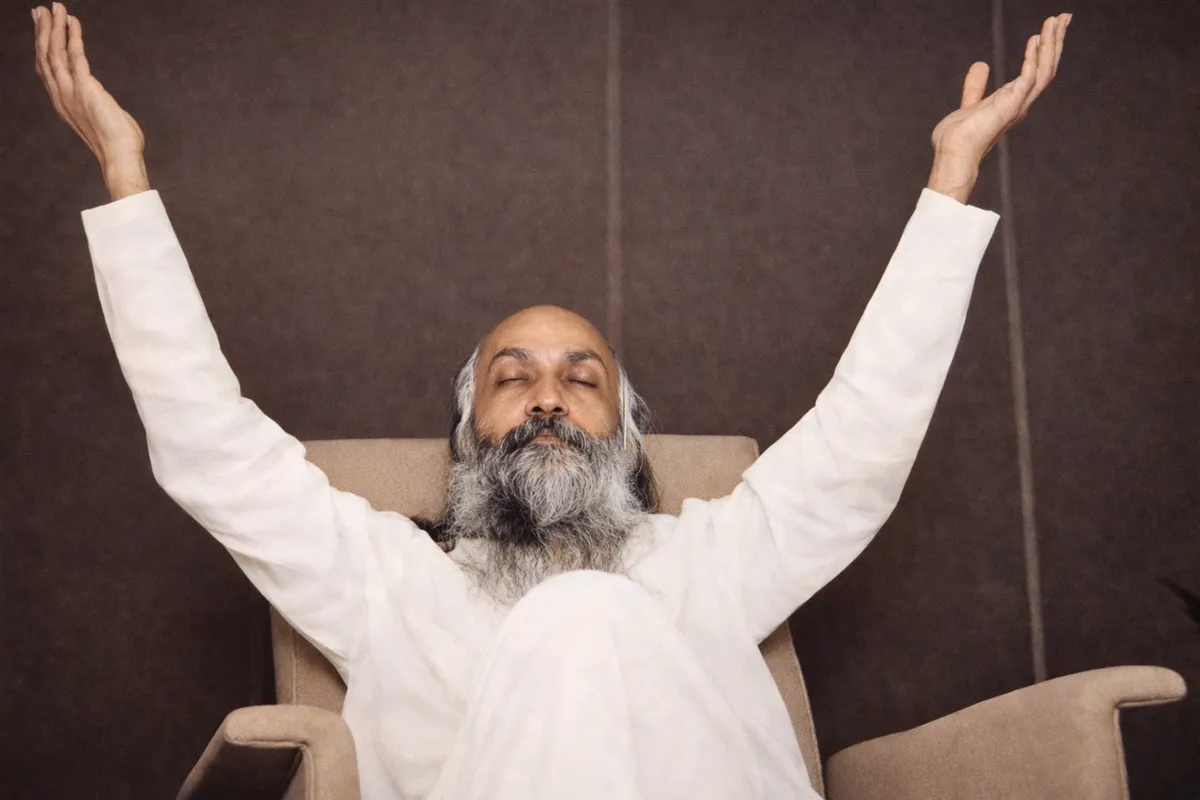
Osho's original Hindi beside Osho Live's English translation, matched passage by passage.
अब हम सूत्र लें:
Now let us take the sutras:
‘आशुप्रज्ञ पंडित पुरुष को मोहनिद्रा में सोए हुए संसारी मनुष्यों के बीच रह कर भी सब तरह से जागरूक रहना चाहिए और किसी
का विश्र्वास नहीं करना चाहिए।’
“A shuprajna pandit, even while living among worldly people sunk in moha-nidra, the sleep of delusion, must in every way remain alert and should trust no one.”
‘काल निर्दयी है, और शरीर दुर्बल, यह जान कर भारंड पक्षी की भांति अप्रमत्त-भाव से विचरना चाहिए।’
“Time is merciless, and the body is feeble. Knowing this, one should move about like the Bharanda bird, unremittingly vigilant.”
बहुत सी बातें समझने की हैं।
There are many things to be understood here.
महावीर अकेला पंडित नहीं कहते, आशुप्रज्ञ पंडित। तो पहले तो इस बात को हम समझ लें।
Mahavira does not merely say pandit; he says ashu-prajna pandit. First, let us understand this.
पंडित का अर्थ होता है, जानने वाला, जानकारी वाला, जिसके पास सूचनाओं का बहुत संग्रह है, लर्नेड। शास्त्र का जिसे पता है, सिद्धांत का जिसे पता है, प्राणियों का जिसे बोध है, तर्क में जो निष्णात है, ऐसा व्यक्ति पंडित है। जानकारियां जिसके पास हैं। आशुप्रज्ञ पंडित का अर्थ है, जानकारियां ही जिसके पास नहीं हैं, ज्ञान भी जिसके पास है। ‘आशुप्रज्ञ’ शब्द का अर्थ होता है, ऐसे प्रश्र्न का उत्तर भी जो दे सकेगा, जिस प्रश्र्न के उत्तर की कोई जानकारी उसके पास नहीं है।
Pandit means the one who knows—information-laden, the learned—who has an immense store of data, who knows the scriptures, who knows the doctrines, who has insight into beings, who is skilled in logic. Such a man is a pandit—the one with information. Ashu-prajna pandit means: not only information, but also the fire of knowing—prajna. The word ashu-prajna means: he can answer even that question for which no prior information resides in him.
इसे थोड़ा समझ लें।
Understand it a little.
हम उस व्यक्ति को आशु कवि कहते हैं जो कविता बना कर नहीं आया है; जिसकी कविता तत्क्षण बनेगी। जो कविता पहले बनाएगा नहीं, फिर गाएगा नहीं; जो गाएगा और गाने में ही कविता निर्मित होगी। उसको कहते हैं, आशु कवि। उसका गाना और बनाना साथ-साथ है। वह पहले बनाता और फिर गाता, ऐसा नहीं। वह गाता है, और कविता बनती चली जाती है।
We call that person an ashu-kavi, an extempore poet, who has not come with a prepared poem; whose poetry will arise in the instant. Who will not compose first and then sing; he will sing... and in the very singing the poem will be born. That one is called an ashu-kavi. His singing and his making happen together. He does not first make and then sing. He sings, and the poetry keeps flowing forth.
आशु कवि का अर्थ है, कविता उसके लिए कोई रचना नहीं है, उसका स्वभाव है। वह बोलेगा, तो कविता है। उसके बोलने में ही काव्य होगा। काव्य को उसे बाहर से लाकर आरोपित नहीं करना होता। वह उससे वैसे ही निकलता है, जैसे वृक्षों में पत्ते निकलते हैं। जैसे झरना बहता है ऐसा उसकी कविता बहती है, निष्प्रयोजन है, निष्चेष्ठित है। उसके लिए कोई प्रयास नहीं करना पड़ता। जितना छोटा कवि हो उतना ज्यादा प्रयास करना पड़ता है। जितना बड़ा कवि हो उतना कम प्रयास करना पड़ता है। आशु कवि हो तो प्रयास होता ही नहीं, कविता बहती है। तब कविता एक निर्माण नहीं है, कोई आयोजना, कोई व्यवस्था नहीं है। तब कविता वैसे ही है जैसे श्र्वास का चलना है। ऐसे व्यक्ति को हम कहते हैं, आशु कवि। आशुप्रज्ञ उसे कहते हैं, जिसका ज्ञान स्मृति नहीं है। आप उससे पूछते हैं।
Ashu-kavi means: for him poetry is not a fabrication, but a nature. When he speaks, it is poetry. Poetry is in his very utterance. He does not have to fetch poetry from outside and impose it. It emerges from him as leaves sprout from a tree. As a spring flows, so his poetry flows—purposeless, uncontrived. No effort is needed for him. The smaller the poet, the more effort; the greater the poet, the less effort. If he is an ashu-kavi there is no effort at all—the poem flows. Then poetry is no construction, no scheme, no arrangement. Then it is like the movement of breath. Such a person we call an ashu-kavi. Ashu-prajna is the one whose knowing is not memory. You ask him...
आप किसी से कुछ पूछते हैं तो दो तरह के उत्तर संभव हैं। एक सवाल आप मुझसे पूछें तो दो तरह के उत्तर संभव हैं। एक, आप सवाल पूछें, मैं तत्काल अपनी स्मृति के संग्रह में जाऊं और उत्तर खोज लाऊं। आप मुझसे कुछ पूछें, मैं तत्काल खोजूं अपने अतीत में, अपने मस्तिष्क में, अपनी स्मृति में, अपने कोश में, अपने संग्रह में--उत्तर, उत्तर खींच कर स्मृति से ले आऊं, उत्तर दे दूं। यह एक पंडित का उत्तर है।
When you ask someone something, two kinds of answers are possible. Ask me a question—two possibilities are there. One: you ask, and I immediately run into my storehouse of memory and fetch the answer. You ask me, and I at once search my past, my brain, my memory, my cache, my archive, and pull the answer out, and hand it to you. This is the answer of a pandit.
आप मुझसे प्रश्र्न पूछें, मैं अपने भीतर चला जाऊं, स्मृति में नहीं। आप मुझसे उत्तर पूछें, मैं उत्तर के सामने अपनी चेतना को खड़ा कर दूं, स्मृति को नहीं। आप उत्तर पूछें, मैं दर्पण की तरह आपके उत्तर के सामने खड़ा हो जाऊं, और मेरी यह चेतना प्रतिध्वनि दे, आपके प्रश्र्न का उत्तर दे। यह उत्तर स्मृति से न आए, इस क्षण की मेरी चेतना से आए, तो आशुप्रज्ञ। आशुप्रज्ञ का अर्थ है, अभी जिसकी चेतना से उत्तर आएगा, ताजा, सद्यःस्नात, अभी-अभी नहाया हुआ, बासा नहीं।
You ask me a question, and I go within—not into memory. You ask for an answer, and I place my consciousness before the question—not my memory. You ask, and I stand like a mirror before it, and this consciousness of mine resounds, gives a response to your question. Let the answer not come from memory, but from the awareness of this very moment—then it is ashu-prajna. Ashu-prajna means: the answer arrives now, from a fresh consciousness—just bathed, dew-fresh, not stale.
All our answers are stale. Whether you notice it or not, a stale answer consumes time. In ashu-prajna there is no time-lag.
हमारे सब उत्तर बासे होते हैं। बासे उत्तर में समय लगता है, पता चले या न चले। आशुप्रज्ञ में समय नहीं लगता।
आपसे कोई प्रश्र्न पूछे, समय लगता है। अगर ऐसा प्रश्र्न पूछे कि आपका नाम क्या है तो आपको लगता है, कोई समय नहीं लगता। कह देते हैं, राम। लेकिन इसमें भी समय लगता है। असल में आदत हो गई है। आपको पता है कि आपका नाम राम है, इसलिए समय लगता मालूम नहीं पड़ता, लेकिन इसमें भी समय जाता है। लेकिन कोई आपसे पूछे कि आपके पड़ोसी का नाम क्या है? तो आप कहते हैं, जबान पर रखा है, लेकिन याद नहीं आ रहा है।
Someone asks you a question; time intervenes. If he asks, “What is your name?” it seems no time is needed—you instantly say, “Ram.” Even here, though, time elapses. It’s only that habit is so ingrained that it feels instantaneous. But even here, time passes. If someone asks, “What is your neighbor’s name?”—you say, “It’s on the tip of my tongue, but I can’t recall.”
इसका क्या मतलब है? इसका मतलब है, स्मृति में है, लेकिन हम स्मृति तक पहुंच नहीं पा रहे, बीच में कुछ दूसरी चीजें अड़ गई हैं, कुछ दूसरी स्मृतियां अड़ गई हैं; इसलिए हम ठीक पहुंच नहीं पा रहे। मालूम भी है, लेकिन पकड़ नहीं पा रहे स्मृति में।
What does it mean? It means the memory holds it, but we cannot reach memory; some other things have come in the way, other memories obstruct; hence we cannot access it properly. We do know, but we cannot seize it in memory.
आपको जो याद है, उसको आप तत्काल उत्तर दे देते हैं। समय बीत जाता है तो भूल जाता है, फिर आप तत्काल उत्तर नहीं दे पाते। लेकिन अगर आपको थोड़ा समय मिले, सुविधा मिले, तो आप खोज ले सकते हैं उत्तर।
What you remember, you can answer at once. When time has passed and memory is dim, you cannot answer instantly; but if you are given a little time, a bit of ease, you can search and find the answer.
An answer from memory is of scholarship.
स्मृति से आया हुआ उत्तर पांडित्य का है।
आपसे किसी ने पूछा, ईश्र्वर है? तो आप जो भी उत्तर देंगे वह पांडित्य का हो जाएगा। लेकिन कोई महावीर से पूछे, तो वह उत्तर पांडित्य का नहीं होगा, वह महावीर के जानने से निकलेगा। वह महावीर की जानकारी से नहीं निकलेगा--जानने से निकलेगा। मेमोरी से नहीं, कांशसनेस से, चैतन्य से निकलेगा।
Someone asks you, “Is there God?”—whatever answer you give will be scholarly. But if someone asks Mahavira, his answer will not be of scholarship. It will spring from Mahavira’s knowing. It will not come from his information—it will come from his seeing. Not from memory, from consciousness, from chaitanya.
महावीर कोई बंधा हुआ उत्तर तैयार नहीं रखते हैं कि आप पूछेंगे, वे दे देंगे। उनके पास रेडीमेड कुछ भी नहीं है। पंडित के पास सब रेडीमेड है। आप पूछेंगे, वह वही उत्तर देगा जो तैयार है। इसलिए एक बड़ी कठिनाई खड़ी होती है। महावीर का आज का उत्तर जरूरी नहीं कि कल भी हो, परसों भी हो। पंडित का आज भी वही होगा, कल भी वही होगा, परसों भी वही होगा। क्योंकि पंडित के पास वस्तुतः कोई उत्तर नहीं है, केवल एक जानकारी है। महावीर का उत्तर रोज बदल जाएगा, रोज बदल सकता है, प्रतिपल बदल सकता है। क्योंकि वह कोई जानकारी नहीं है।
Mahavira keeps no ready-made answers that you can ask and he will deliver. He has nothing pre-fabricated. The pandit has everything ready-made. Ask him, and he will hand over the prepared answer. Hence a great difficulty arises: the answer Mahavira gives today may not be the one he gives tomorrow, or the day after. The pandit’s answer will be the same today, tomorrow, the day after. For the pandit, there is really no answer—only stored information. Mahavira’s answer can change daily, can change moment to moment—because it is not information.
महावीर की चेतना जो प्रतिध्वनि करेगी, इस प्रतिध्वनि में अंतर पड़ेगा, क्योंकि पूछने वाला रोज बदल जाएगा। और पूछने वाले पर निर्भर करेगा। इसे ऐसा समझें--एक फोटोग्राफ है, तो फोटोग्राफ आज भी वही शक्ल बताएगा, कल भी वही शक्ल बताएगा, परसों भी वही शक्ल बताएगा। किसी को दे दें देखने के लिए, इससे फर्क नहीं पड़ेगा। एक दर्पण है, दर्पण वही शक्ल नहीं बताएगा। जो देखेगा, उसकी ही शक्ल बताएगा। रोज बदल जाएगी शक्ल।
Mahavira’s consciousness reverberates like a mirror, and the resonance will differ because the questioner keeps changing. The answer depends on the one who asks. Understand it like this: a photograph shows the same face today, tomorrow, the day after. It does not matter who looks at it. But a mirror? It never shows the same face. Whoever stands before it—that is the face it reveals. The face changes every day.
पांडित्य फोटोग्राफ है। सब पक्का बंधा हुआ है। हम उसी आदमी को बड़ा पंडित कहते हैं जिसका फोटोग्राफ बिलकुल साफ है, एक-एक रेखा-रेखा साफ दिखाई पड़ती हो।
Scholarship is a photograph. Everything is fixed. We call him a great pandit whose photograph is absolutely sharp—each line distinct.
महावीर और बुद्ध जैसे लोग दर्पण की भांति हैं। आपकी ही शक्ल दिखाई पड़ेगी। इसलिए जब प्रश्र्न पूछने वाला बदल जाएगा तो उत्तर बदल जाएगा। पंडित का उत्तर कभी नहीं बदलेगा। आप सोते से उठा कर पूछ लो, कुछ भी करो, उसका उत्तर नहीं बदलेगा। उसका उत्तर वही रहेगा।
People like Mahavira and Buddha are like mirrors. Only your face appears. Therefore, when the questioner changes, the answer changes. The pandit’s answer never changes. Wake him from sleep, ask him anything—his answer will remain the same.
इससे एक बड़ी कठिनाई पैदा होती है। महावीर और बुद्ध के वचनों में बड़ी असंगतियां दिखाई पड़ती हैं, दिखाई पड़ेंगी। पंडित ही संगत हो सकता है। आशुप्रज्ञ संगत नहीं हो सकता। क्योंकि प्रतिपल परिस्थिति बदल जाती है, पूछने वाला बदल जाता है, संदर्भ बदल जाता है, उत्तर बदल जाता है, दर्पण का प्रतिबिम्ब बदल जाता है।
From this a difficulty has always arisen: in the words of Mahavira and Buddha you will find many seeming inconsistencies. Only a pandit can be strictly consistent. One who is ashu-prajna cannot be consistent—because each moment the situation changes, the questioner changes, the context shifts, the answer shifts, the mirror’s reflection shifts.
आप पर निर्भर करेगा कि महावीर का उत्तर क्या होगा। पूछने वाले पर निर्भर करेगा कि उत्तर क्या होगा। इसलिए महावीर कहते हैं, आशुप्रज्ञ पंडित, जिसकी प्रज्ञा प्रतिपल तैयार है उत्तर देने को। प्रज्ञा, जिसका ज्ञान, प्रतिपल तैयार है उत्तर देने को।
It will depend on you what Mahavira’s answer shall be. It will depend on the asker. Hence Mahavira says: ashu-prajna pandit—whose prajna, whose knowing, stands ready, moment to moment, to answer. Whose prajna—whose insight—is ever poised to respond.
‘आशुप्रज्ञ पंडित पुरुष को मोह-निद्रा में सोए हुए संसारी मनुष्यों के बीच रह कर भी सब तरह से जागरूक रहना चाहिए।’
“A shuprajna pandit, even while living among worldly people sunk in moha-nidra, the sleep of delusion, must in every way remain alert.”
महावीर कहते हैं कि जिसको भी ऐसी प्रज्ञा में थिर रहना है, ऐसे ज्ञान में थिर रहना है, ऐसे ज्ञान में गति करते जाना है, उसे संसारी सोए हुए मनुष्यों के बीच रह कर भी सब तरह से जागरूक रहना चाहिए। रहना तो पड़ेगा ही सोए हुए लोगों के बीच। क्योंकि वे ही हैं, और तो कोई है भी नहीं। भागने से कोई सार भी नहीं है। कहीं भी भाग जाओ, सोए हुए लोगों के बीच ही रहना पड़ेगा। यह जरा समझ लेने जैसा है।
Mahavira says: whoever wishes to abide in such prajna, to be rooted in such knowing—to keep moving in that dimension—must remain alert in every way, even while living among the sleeping worldly folk. You will have to live among the sleeping; for they are the ones who are—there are no others. There is no point in running away. Wherever you go you will remain among the sleeping. Understand this a little.
अक्सर लोग सोचते हैं कि शहर छोड़ कर गांव चला जाऊं। गांव में भी सोए हुए लोग ही हैं। कोई सोचता है, गांव छोड़ कर जंगल चला जाए। लेकिन आपको कभी खयाल न आया होगा कि जंगल के पौधे मनुष्य से ज्यादा सोए हुए हैं, इसलिए तो पौधे हैं। और जंगल के पशु-पक्षी मनुष्य से ज्यादा सोए हुए हैं, इसलिए तो पशु-पक्षी हैं। ये मनुष्य भी कभी पशु-पक्षी थे और पौधे थे। ये थोड़े-थोड़े जाग कर मनुष्य तक आ गए हैं।
People often think: leave the city and go to the village. But villages too are filled with the sleeping. Someone thinks: leave the village and go to the forest. But it may not have occurred to you that the plants of the forest are more asleep than man—therefore they are plants. And the animals and birds are more asleep than man—therefore they are animals. These same humans were once plants, once animals. They have awakened a little and reached the human stage.
अगर एक आदमी मनुष्यों को छोड़ कर जंगल जा रहा है तो वह और भी गहन, सोई हुई चेतनाओं के बीच जा रहा है। वहां उसे शांति मालूम पड़ सकती है। उसका कुल कारण इतना है कि वह इन सोए हुए प्राणियों की भाषा नहीं समझ रहा है।
If a man leaves humans for the jungle, he goes among even more deeply asleep consciousnesses. There he may feel a certain peace, but only because he does not understand the language of those sleeping creatures.
लेकिन सारा जंगल सोया हुआ है। ये सोए हुए वृक्ष, सोए हुए मनुष्य ही हैं। जो कभी मनुष्य हो जाएंगे। जागे हुए मनुष्य जो दिखाई पड़ रहे हैं, ये थोड़े से आगे बढ़ गए वृक्ष ही हैं जो कभी वृक्ष थे। पीछे लौटने में चूंकि भाषा का पता नहीं चलता, इसलिए आदमी सोचता है, जंगल में ठीक रहेगा। न कोई रहेगा आदमी, न कोई होगा उपद्रव। उपद्रव न होने का कुल कारण इतना है कि आदमी की भाषा जल्दी चोट करती है, और ज्यादा होश रखना पड़ता है, नहीं तो चोट से बचा नहीं जा सकता। आदमी गाली देगा तो क्रोध जल्दी आ जाएगा। पत्थर की चोट पैर में लगेगी तो उतनी जल्दी क्रोध नहीं आएगा क्योंकि हम सोचते हैं, पत्थर है। छोटे बच्चों को आ जाता है। क्योंकि अभी उनको पता नहीं है कि पत्थर और आदमी में फर्क करना है। वह पत्थर को भी गाली देंगे, डंडा उठा कर पत्थर को भी मारेंगे। कभी-कभी आप भी बचकाने होते हैं, तब वैसा कर लेते हैं। कलम ठीक से नहीं चलती तो गाली देकर फर्श पर पटक देते हैं।
The entire forest is asleep. These sleeping trees are nothing but sleeping humans, who will one day become human. And the awakened humans we see are just a little further along; they were once trees. When you go backward, because you don’t understand their language, you think: “The forest will be right for me. There will be no people, no disturbances.” The sole reason there is no disturbance is that human language wounds quickly; to avoid being hurt you need much more awareness. If a man abuses you, anger arises quickly. If a stone strikes your foot, anger does not arise as quickly because you think: “It’s just a stone.” Little children do get angry—because they have not yet learned to distinguish between stone and man. They will abuse the stone, even beat it with a stick. And sometimes you too become childish and do the same—when the pen won’t write, you curse it and bang it on the floor.
लेकिन चाहे कहीं भी चले जाओ, महावीर कहते हैं, संसार में तो रहना ही पड़ेगा। संसार का मतलब ही है, सोई हुई चेतनाओं की भीड़। यह भीड़ चाहे बदल लो, चाहे वृक्षों की हो, चाहे पशुओं की हो, चाहे मनुष्यों की हो, यह भीड़ तो मौजूद है। यह स्थिति है, इससे बचा नहीं जा सकता।
But wherever you go, Mahavira says, you will have to live in the world. And the meaning of samsara is: a crowd of sleeping consciousnesses. Change the crowd if you will—let it be of trees, of animals, or of humans—but the crowd is there. This is the condition; it cannot be avoided.
संसार अनिवार्य है, उससे तब तक बचा नहीं जा सकता, जब तक हम पूरी तरह जाग न जाएं। तो आशुप्रज्ञ पंडित को भी, जो इस जागने की चेष्टा में सतत संलग्न है, सोए हुए लोगों के बीच रहना पड़ेगा। तो उसे सदा जागरूक रहना चाहिए।
The world is unavoidable—until we are fully awake. So even the ashu-prajna pandit, who is continuously engaged in this endeavor to awaken, must live amid the sleeping—and thus he must remain alert, constantly.
क्यों?
Why?
क्योंकि नींद भी संक्रामक है, इनफैक्शस है। यहां इतने लोग बैठे हैं, हम सब संक्रामक रूप से जीते हैं। अभी एक आदमी खांस दे, तब पता चलेगा कि दस बीस लोग खांसने लगेंगे। क्या हो गया? अभी तक ये चुपचाप बैठे थे, इनके गले को क्या हो गया? अभी तक कोई गड़बड़ न थी। एक आदमी ने खांसना शुरू किया, दस बीस लोग खांसना शुरू कर देंगे। संक्रामक है। हम अनुकरण से जीते हैं। एक आदमी पेशाब करने चला जाए तो कई लोगों को खयाल हो जाएगा कि पेशाब करने जाना है। संक्रामक है। हम एक-दूसरे के हिसाब से जी रहे हैं।
Because sleep too is contagious, infectious. So many people are seated here; we all live contagiously. If one person coughs, soon ten or twenty will begin to cough. What happened? They were sitting silently—what has happened to their throats? One coughs, many begin to cough—contagion. We live by imitation. One man goes to urinate, several others suddenly feel like going. Contagion. We live by one another’s cues.
हिटलर अपनी सभाओं में अपने दस-पांच आदमियों को दस जगह बिठा रखता था। ठीक वक्त पर दस आदमी ताली बजाते, वह पूरा हाल तालियों से गूंज उठता था। समझ गया था कि ताली संक्रामक है। दस आदमी अपने हैं, वे ताली बजा देते हैं, फिर बाकी दस हजार लोग भी ताली बजा देते हैं। ये दस हजार लोगों को क्या हो गया? इनकी ताली को क्या हो गया?
Hitler would seat ten or fifteen of his own men at different spots in his rallies. At the precise moment they would clap—and the whole hall would erupt in applause. He had understood that clapping is contagious. Ten men are ours: they clap, then the other ten thousand also clap. What happened to the ten thousand? What happened to their hands?
हमारा मन आस-पास से एकदम प्रभावित होता रहता है। बीमारियां ही नहीं पकड़ती हमको, फ्लू ही नहीं पकड़ता हमको एक-दूसरे से, क्रोध भी पकड़ता है, मोह भी पकड़ता है, लोभ भी पकड़ता है, कामवासना भी पकड़ती है। शरीर ही नहीं पकड़ता जीवाणुओं को, मन भी पकड़ता है।
Our mind is immediately influenced by the surroundings. It is not only diseases like the flu we catch from each other—we catch anger, we catch delusion, we catch greed, we catch lust. Not only the body catches germs; the mind catches too.
इसलिए महावीर कहते हैं कि ऐसे व्यक्ति को सोए हुए लोगों के बीच जागरूक रहना चाहिए, क्योंकि वे चारों तरफ गहन निद्रा में सो रहे हैं। उनकी निद्रा की लहरें तुम्हें छुएंगी। वे चारों तरफ से तुम्हारे भीतर आएंगी। तुम अकेले ही अपनी नींद के लिए जिम्मेवार नहीं हो, तुम एक नींद के सागर में हो जहां चारों तरफ से नींद तुम्हें छुएगी। अगर तुमने बहुत चेष्टा न की तो वह नींद तुम्हें पकड़ लेगी। वह नींद तुम्हें डुबा देगी। कोई तुम्हें डुबाने की उसकी आकांक्षा नहीं है, यह कोई सचेतन प्रयास नहीं है, यह केवल स्थिति है।
Therefore Mahavira says: such a person must remain alert amidst sleepers, because all around they slumber in deep sleep. The waves of their sleep will touch you. From every side they will enter you. You alone are not responsible for your sleep; you are in an ocean of sleep, where, from all sides, slumber touches you. Unless you strive greatly, that sleep will seize you; it will drown you. No one intends to drown you—there is no conscious effort—it is simply the situation.
कभी आपने खयाल किया है, अगर दस लोग बैठे हैं और एक आदमी जम्हाई लेने लगे, फौरन दूसरे कुछ लोग जम्हाई लेना शुरू कर देंगे। एक आदमी सो जाए, दूसरे लोगों को नींद पकड़ने लगेगी।
Have you noticed? If ten people sit together and one begins to yawn, soon others begin to yawn. One lies down to sleep, the rest feel drowsy.
हम समूह का एक अंग हैं जब तक हम पूरे नहीं जाग गए। जब तक कोई व्यक्ति पूरा नहीं जागा, तब तक वह व्यक्ति नहीं है, भीड़ है। तब तक वह कितना ही समझे कि मैं अलग हूं, वह अलग है नहीं।
Until we are fully awake, we are part of the group. Until a man is utterly awakened he is not yet a person—he is the crowd. However much he may think, “I am separate,” he is not separate.
इसलिए बड़ी मजे की घटनाएं घटती हैं। दुनिया में बड़े पाप व्यक्ति से नहीं होते, भीड़ से होते हैं। क्योंकि भीड़ में संक्रमण हो जाता है। हजार लोगों की भीड़ मंदिर को जला रही है या मस्जिद में आग लगा रही है। इनमें से एक-एक आदमी को अलग करके पूछें कि मस्जिद में आग लगाना चाहते हो? मंदिर तोड़ना चाहते हो? क्या होगा? एक-एक आदमी को अलग पूछें, वह कहेगा कि नहीं, इससे कुछ होने वाला नहीं है, इसमें कोई सार भी नहीं है। फिर क्या कर रहे थे?
Hence curious events occur. The greatest sins in the world are not committed by individuals—they are committed by crowds. Because in a crowd contamination happens. A thousand people are burning a temple or setting a mosque ablaze. Take them one by one and ask: “Do you wish to burn a mosque? Do you want to break a temple?” Each one, taken aside, will say, “No—what would that achieve? There is no sense in it.” Then what were you doing?
लेकिन हजार आदमियों की भीड़ में वह आदमी था ही नहीं, वह सिर्फ भीड़ का एक हिस्सा था। इसलिए बड़ा पाप भीड़ करती है। छोटे पाप निजी होते हैं। बड़े पाप सामूहिक होते हैं। जितना बड़ा पाप करना हो, उतनी बड़ी भीड़ चाहिए। क्योंकि भीड़ में व्यक्ति को जो निज की जिम्मेवारी है वह खो जाती है। भीड़ में व्यक्ति अपने में नहीं रह जाता। भीड़ में उसे लगता है, एक सागर है जिसमें बहे चले जा रहे हैं। भीड़ में उसे ऐसा नहीं लगता है कि मैं कर रहा हूं, भीड़ कर रही है, मैं सिर्फ साथ हूं।
In the crowd, he was not himself—he was only a fragment of the crowd. Therefore great sins are committed by crowds; small sins by individuals. The bigger the sin, the bigger the crowd needed. In a crowd, personal responsibility gets lost. In a crowd, he is not in himself. He feels there is a vast ocean carrying him away. He does not feel, “I am doing it”; he feels, “The crowd is doing it; I am merely along.”
कभी आपने खयाल किया, अगर भीड़ तेजी से चल रही हो, आपके पैर भी तेज हो जाते हैं। हिटलर ने अपने सैनिकों को आदेश दे रखे थे कि जब भी तुम चलो तो एक-दूसरे के शरीर छूते रहें। अगर पचास आदमी चल रहे हों, और एक-दूसरे के शरीर छूते हैं और उनके कदम एक लय में पड़ते हैं, तो आप उस लय में फंस जाएंगे। जब उनका हाथ आपको छुएगा तो उनका जोश भी आपके भीतर चला जाएगा। और जब उनके कदम की चाप आपके सिर में पड़ेगी तो आपका कदम भी वैसा ही पड़ने लगेगा। पचास आदमियों की भीड़ में आप अकेले नहीं रह जाते, आप सिर्फ एक अंग हो जाते हैं, एक बड़ी चेतना का हिस्सा हो जाते हैं। और वह चेतना फिर आपको प्रवाहित कर लेती है। जैसे नदी की धार में कोई बहता हो और जब नदी वर्षा के पूर में आई हो जब कोई बहता हो, वैसा असहाय आदमी हो जाता है भीड़ में।
Have you noticed? If the crowd walks fast, your feet also hasten. Hitler ordered his soldiers: when you march, keep your bodies touching. When fifty men march, bodies touching, and their steps fall in one rhythm—you too will be caught in that rhythm. When their hands brush against you, their fervor will enter you; when the thud of their steps beats in your head, your step will fall in the same beat. In a crowd of fifty you are no longer alone; you become just a limb of a larger mind. And that mind then sweeps you along—like one swept in a flood when the river is in spate—so helpless does a man become in the crowd.
इसलिए सारे लोग भीड़ बना कर जीते हैं। राष्ट्र भीड़ों के नाम हैं। धर्म भीड़ों के नाम हैं--हिंदुओं की भीड़, मुसलमानों की भीड़, जैनों की भीड़। हिंदुस्तान, पाकिस्तान, चीन, रूस--ये सब भीड़ों के नाम हैं।
Therefore people live as crowds. Nations are the names of crowds. Religions are the names of crowds—crowds of Hindus, crowds of Muslims, crowds of Jains. Hindustan, Pakistan, China, Russia—these are names of crowds.
रूस खतरे में है, तो फिर सारा मामला खत्म हो गया। भारत खतरे में है, तो फिर आप व्यक्ति नहीं रह जाते। सिर्फ एक बड़ी भीड़ के हिस्से रह जाते हैं। फिर उसमें आप बहते हैं।
“Russia is in danger”—and the matter is settled. “India is in danger”—and you cease to be a person; you are only a portion of a large crowd. Then you are swept along.
राजनीति भीड़ों को संचालित करने की कला है। इसलिए जहां भी भीड़ है वहां राजनीति होगी। चाहे वह धर्म की भीड़ क्यों न हो, राजनीति आ जाएगी। इसलिए मैं आपसे कहता हूं, धर्म का संबंध है व्यक्ति से और राजनीति का संबंध है भीड़ से। जहां धर्म भी भीड़ से संबंधित होता है वहां राजनीति का रूप है। इसलिए हिंदुओं की भीड़, मुसलमानों की भीड़, ईसाइयों की भीड़, ये सब राजनीति के रूप हैं, इनका धर्म से कोई संबंध नहीं है। धर्म का संबंध है व्यक्ति से। धर्म की चेष्टा ही यही है कि व्यक्ति को हम भीड़ से कैसे मुक्त करें, वह भीड़ के उपद्रव से कैसे बाहर आए, भीड़ के प्रभाव से कैसे छूटे, यही तो धर्म की सारी चेष्टा है। लेकिन धर्म भी भीड़ बन जाता है, और जब धर्म भीड़ बन जाता है तो उससे मुश्किल हो जाती है, तब कठिनाई खड़ी होती है। युद्ध में सैनिक ही भीड़ में नहीं लड़ते, लोग मस्जिदों में, मंदिरों में, भीड़ में प्रार्थना भी करते हैं। बह जाएंगे आप। बह जाना निद्रा में भी हो जाएगा, महावीर कहते हैं।
Politics is the art of manipulating crowds. Wherever there is a crowd, there will be politics. Even if it is a religious crowd, politics will enter. That is why I tell you: religion pertains to the individual, politics to the crowd. Wherever religion attaches itself to a crowd, it becomes politics. Hence crowds of Hindus, of Muslims, of Christians—these are forms of politics; they have nothing to do with religion. Religion pertains to the individual. Religion’s whole endeavor is: how to free the individual from the crowd—how to bring him out of the crowd’s tumult, how to release him from crowd-influence. But religion too becomes a crowd—then difficulties arise. In war, soldiers are not the only ones fighting in crowds—people also pray in temples and mosques in crowds. You will be swept away. You will be swept even into sleep, Mahavira says.
इसलिए जागे हुए व्यक्ति को आस-पास पूरे वक्त सचेत रहना पड़ेगा। सब तरफ से नींद आ रही है, सब तरफ सोए हुए लोग हैं। क्रोध आएगा, लोभ आएगा, मोह आएगा, सब तरफ से बह रहा है, जैसे कि कोई आदमी सब तरफ से गंदी नालियां बह रही हों और उनके बीच में बैठा हो। उसको बहुत सचेत रहना पड़ेगा अन्यथा वे गंदी नालियां उसे भी गंदा कर जाएगी। उसकी सचेतना ही उसको पवित्र रख सकती है। इसलिए महावीर कहते हैं, सब तरह से जागरूक रहना चाहिए, सब तरह से। इसलिए बहुत अदभुत वचन उन्होंने कहा है।
Hence the awakened person must remain conscious all around, all the time. From every side sleep is approaching; from every side sleepers surround you. Anger will come, greed will come, delusion will come—flowing from every side—like a man seated amidst open sewers. He must remain very alert, otherwise those filthy drains will soil him too. Only his awareness can keep him pure. Therefore Mahavira says: one must remain alert, in every way. Therefore he speaks a most astonishing sentence:
‘और किसी का भी विश्र्वास नहीं करना चाहिए।’
“And trust no one.”
इसका यह मतलब नहीं है कि महावीर अविश्र्वास सिखा रहे हैं। महावीर कहते हैं कि तुमने किसी का विश्र्वास किया, सोए हुए आदमी का, तो तुम खुद सो जाओगे। तुमने अगर सोए हुए आदमी का विश्र्वास किया तो तुम सो जाओगे, क्योंकि विश्र्वास का मतलब यह है कि अब सचेतन रहने की कोई भी जरूरत नहीं है।
This does not mean Mahavira is teaching mistrust. He says: if you trust a sleeper, you will fall asleep yourself. If you trust a sleeping person, you will go to sleep—because trust means: now there is no need to be conscious.
इसे थोड़ा समझ लें।
Understand it a little.
जिसका हम विश्र्वास करते हैं, उससे हमें सचेतन नहीं रहना पड़ता। एक अजनबी आदमी आपके कमरे में ठहर जाए तो आप रात ठीक से सो न पाएंगे। क्यों?
अजनबी आदमी कमरे में है, पता नहीं क्या करे! नींद उखड़ी-उखड़ी रहेगी, रात में दो-चार दफा आप आंख खोल कर देख लेंगे कि कुछ कर तो नहीं रहा। आपकी पत्नी आपके कमरे में सो रही है, आप मजे से घोड़े बेच कर सो जाते हैं, क्योंकि अब अजनबी नहीं है, और जो भी कर सकती थी, कर चुकी। अब सब परिचित है। अब जो कुछ भी होगा, होगा। अब इसमें कुछ ऐसा नया कुछ होने वाला नहीं है। कोई भय नहीं है। आप चेतना खो सकते हैं। आपको चेतन रहने की कोई जरूरत नहीं है।
Whom we trust, with them we need not remain alert. Let an unknown stranger spend the night in your room—you will not sleep well. Why? Because a stranger is in the room; who knows what he may do? Your sleep will be fitful; in the night you will open your eyes two or three times to see that he is not up to anything. Your wife sleeps in your room—you sleep as if selling horses, utterly at ease; because now there is no stranger here, and whatever she could do, she has already done! Everything is familiar. Whatever will happen, will happen—nothing new is going to happen. There is no fear. You can drop awareness. There is no need to remain alert.
इसीलिए तो नये मकान में, नये कमरे में नींद नहीं आती। स्थिति नई है, आदतन नहीं है। नये बिस्तर पर नींद नहीं आती, नये लोगों के बीच नींद नहीं आती, क्योंकि स्थिति नई है और थोड़ा सा होश रखना पड़ता है। पूरा भरोसा नहीं किया जा सकता।
That is why in a new house, a new room, sleep does not come. The situation is new; habit has not formed. On a new bed sleep does not come; among new people sleep does not come—because the situation is new and you must keep a little watchfulness. You cannot trust it entirely.
महावीर कहते हैं, जीना जगत में जैसे अजनबियों के बीच ही हो सदा--स्ट्रैंजर्स...! है ही सच्चाई यह। पति और पत्नी चाहे बीस साल, चाहे चालीस साल साथ रहे हों, अजनबी हैं। कभी भी कोई पहचान हो नहीं पाती; स्ट्रैंजर्स हैं। मान लेते हैं बीस साल साथ रहने के कारण कि अब हम परिचित हो गए हैं। क्या खाक परिचित हो गए! कोई परिचित नहीं होते, कोई परिचित नहीं होता, सब आइलैंड बने रहते हैं, अपने-अपने में द्वीप बने रहते हैं। परिचय हो जाता है ऊपरी, नाम-धाम, ठिकाना, यह सब पता हो जाता है, शक्ल-सूरत, लेकिन भीतर क्या संभावनाएं छिपी हैं, उसका कुछ परिचय नहीं होता, कोई पहचान नहीं होती।
Mahavira says: live in the world as if among strangers—strangers...! This in fact is the truth. Husband and wife may live together twenty or forty years—they are strangers. There is never any true knowing. Strangers. We assume, because of years together, that we are now familiar. Familiar? Not in the least. No one becomes familiar; everyone remains an island—unto himself. Outer familiarity happens—name, address, whereabouts, the look of the face—but what possibilities are hidden within, there is no familiarity with that, no recognition.
महावीर कहते हैं, किसी का विश्र्वास मत करना। इसका क्या मतलब है? इसका मतलब यह नहीं है कि अविश्र्वासी हो जाना, अनट्रस्ंिटग हो जाना। इसका यह मतलब नहीं कि हर आदमी को समझना कि बेईमान है, हर आदमी को समझना कि चोर है। इससे कई लोगों को बड़ी प्रसन्नता होगी कि किसी का विश्र्वास मत करना। वे कहेंगे, यह तो हम कर ही रहे हैं, यह तो हमारी साधना ही है। किसी का विश्र्वास हम करते कहां हैं? अपना नहीं करते, दूसरे की तो बात ही दूसरी है।
Mahavira says: trust no one. What does it mean? It does not mean become mistrustful, untrusting. It does not mean think of every person as dishonest, consider everyone a thief. Some will be very happy to hear “Trust no one.” They will say: “We already do that—this is our very discipline! We trust no one; we don’t even trust ourselves, let alone others.”
कोई किसी का विश्र्वास नहीं कर रहा है, मगर वह अर्थ नहीं है महावीर का, इसे ठीक से समझ लें। हम अविश्र्वास करते हैं, लेकिन वह अविश्र्वास महावीर का प्रयोजन नहीं है। महावीर कहते हैं, किसी का विश्र्वास न करना इस कारण, ताकि तुम सो न जाओ। निकटतम भी तुम्हारे कोई हो तो भी इतना विश्र्वास मत करना कि अब होश रखने की कोई जरूरत नहीं है। होश तो तुम रखना ही, जागे तो तुम रहना ही। क्योंकि जो निकटतम हैं उन्हीं से बीमारियां आसानी से आती हैं। वे करीब हैं, उनका रोग जल्दी लगता है। होश तो रखना ही। अगर तुम होश खोकर अपनी पत्नी, या अपने पति, या अपने बेटे, या अपनी मां के पास भी बैठे हो, तो उसकी बीमारियां तुम्हारे भीतर प्रवेश कर रही हैं। तुम्हारा चित्त पहरेदार बना ही रहे और मन की कोई बीमारी तुममें प्रवेश न कर पाए।
No one trusts anyone—but this is not Mahavira’s meaning. Understand it rightly. Our mistrust is not what he intends. He says: trust no one for this reason—so that you do not fall asleep. Even with the nearest and dearest, do not trust so much that you feel there is no need to remain awake. You must stay aware; you must remain awake. For diseases come most easily from those closest to you. They are near; their sickness infects you quickly. Remain aware. If you sit beside your wife, or husband, or son, or mother, with your awareness gone—then their diseases are entering you. Keep your consciousness as a guard, so that no disease of the mind can enter you.
बुद्ध कहते थे: कि जिस मकान के बाहर पहरे पर कोई बैठा हो, चोर उसमें प्रवेश नहीं करते। जिस मकान का दीया जला हो और घर के बाहर रोशनी आ रही हो, चोर उस मकान से जरा दूर ही रहते हैं। ठीक ऐसे ही जिसके भीतर होश का दीया जला हो, ठीक ऐसे ही जिसने सावधानी को पहरे पर रखा हो, उसके भीतर मन की बीमारियां प्रवेश नहीं करतीं। जरा दूर ही रहती हैं।
Buddha used to say: where a guard sits outside the house, thieves do not enter. Where a lamp is lit and its glow falls outside, thieves keep away from that house. Just so, where the lamp of awareness burns within, just so, where watchfulness is kept on guard—diseases of the mind do not enter there. They stay a little away.
हम ऐसे जीते हैं कि न कोई पहरे पर है, न घर का दीया जला है, सब अंधकार है घना, चोरों के लिए निमंत्रण है, और चारों तरफ हमारे चोर मौजूद हैं। हम गड्ढा बन जाते हैं, वे हममें बह जाते हैं भीतर।
We live in such a way that no guard sits at the gate, no house-lamp is lit—dense darkness everywhere, an invitation to thieves—and thieves surround us on all sides. We become a pit into which they flow.
खयाल करें, एक उदास आदमी आपके घर आकर बैठ जाता है। कभी आपने खयाल किया है, थोड़ी देर में आप भी उदास हो जाते हैं! एक हंसता हुआ, मुस्कुराता हुआ आदमी आपके घर में आ जाता है। कभी आपने खयाल किया, आप भी मुस्कुराने लगते हैं, प्रसन्न हो जाते हैं। छोटे बच्चों को देख कर आपको इतना अच्छा क्यों लगता है? छोटे बच्चे उसका कारण नहीं हैं। छोटे बच्चे प्रसन्न हैं। उनकी प्रसन्नता संक्रामक हो जाती है। वे नाच रहे हैं, कूद रहे हैं, संसार का उन्हें अभी कोई पता नहीं, मुसीबतों का उन्हें अभी कोई बोध नहीं। अभी वे नये-नये खिले फूलों जैसे हैं। न उन्होंने तूफान देखे, न आंधियां देखीं, न अभी सूरज की तपती हुई आग देखी, अभी उन्हें कुछ भी पता नहीं।
Notice: a depressed man comes and sits in your house. Have you observed? Soon you too become depressed. A laughing, smiling person enters your home. Have you noticed? You begin to smile, you feel cheerful. Why do small children give you so much joy? It is not the children per se. The children are cheerful; their cheerfulness becomes contagious. They dance, they skip; they know nothing yet of the world, no sense yet of its troubles. They are like newly blossomed flowers—no storms seen, no gales, not yet the scorching fire of the sun; they know none of it yet.
उनको देख कर आप भी प्रसन्न हो जाते हैं। छोटे बच्चों के बीच भी अगर कोई उदास बैठा रहे तो समझो कि साधु है। मतलब यह कि उसे बहुत ही चेष्टा करके उदास रहना पड़े, वह बीमार है, पैथालॉजिकल है, रुग्ण है। छोटे बच्चों के बीच तो कोई प्रसन्न हो ही जाएगा।
Seeing them you become happy. If, even among small children, someone sits gloomy—know he is a sadhu of a sort, meaning: he must make a great effort to remain miserable there—he is pathological, sick. Among small children one is bound to feel joyful.
नेहरू को छोटे बच्चों से बहुत लगाव था। उसका कारण, छोटे बच्चे नहीं थे, राजनीति की बीमारी थी। बच्चों में जाकर वे दुष्टों को भूल पाते थे, जिनसे घिरे थे, जिनके बीच थे, जिस उपद्रव में पड़े थे। वह बच्चों के बीच जाकर हलका हो जाता था मन। जैसे कि कोई हॉलिडे पर पहाड़ चला गया, छुट्टी मना ली। छोटे बच्चों के बीच उनका होना इस बात का सूचक था कि नेहरू मन से राजनीतिज्ञ नहीं थे, इसलिए छोटे बच्चों की तलाश थी, ताकि इन आदमियों से बचें जो उनको घेरे हुए थे।
Nehru had a great fondness for small children. The reason was not the children; it was the sickness of politics. Going among children he could forget the rogues who surrounded him, the disturbance he lived in. Among children the mind would feel light—as if one has gone to the hills on a holiday. His being among children indicated that Nehru was not a politician by heart—therefore he sought children, to escape the men who crowded him.
नेहरू कम से कम राजनीतिज्ञ आदमी थे, नियति उनकी वह नहीं थी। नियति तो थी कि वह कवि होते। हिंदुस्तान ने एक बड़ा कवि खो दिया, और एक कमजोर राजनीतिज्ञ पाया। वे हो नहीं सकते थे। और कोई उपाय नहीं था। उनके लिए कोई वहां गति नहीं थी। इसलिए बचाव करते थे, बच्चों के साथ ही खिलते थे और प्रसन्न हो जाते थे। जैसे वहां उनको निकटता मालूम होती थी, सान्निध्य मालूम होता था।
Nehru was the least political of politicians; his destiny was not that. His destiny was to be a poet. India lost a great poet and found a weak politician. He could not be otherwise; there was no way. Thus he used to take refuge; with the children he blossomed and felt happy—there he felt intimacy, closeness.
जहां भी आप हैं, आप प्रभावित हो रहे हैं। कैसे लोगों के बीच आप हैं, आप वैसे हो जाएंगे।
Wherever you are, you are being affected. Whomever you live among, you start becoming like them.
तो महावीर कहते हैं: ‘किसी का विश्र्वास मत करना।’ इसका मतलब यह हुआ कि अगर कोई और हंसता है और आपको हंसी आ जाती है तो समझना कि आपकी हंसी झूठी है। कोई और रोता है और आपको रोना आ जाता है, तो समझना कि रोना झूठा है। न यह हंसी आपकी है, न यह रोना आपका है। यह सब उधार है।
Therefore Mahavira says: “Trust no one.” This means: if another laughs and you start laughing, know that your laughter is false. If another cries and you begin to weep, know that your tears are false. Neither that laughter is yours, nor those tears—everything is borrowed.
और हम सब उधारी में जीते हैं, हम बिलकुल उधारी में जीते हैं। एक फिल्म में आप देख लेते हैं कोई करुण दृश्य और आपकी आंखों में आंसू बहने लगते हैं। ये उधार हैं। कुछ भी वहां नहीं हो रहा है। पर्दे पर केवल धूप-छाया का खेल है, मगर आप रोने लगे। वह बता रहा है कि आप किस भांति बाहर से संक्रामित होते हैं। फिर थोड़ी देर में आप हंसने लगेंगे। आपकी हंसी भी बाहर से खींची जाती है और आपका रोना भी बाहर से खींचा जाता है। आपकी अपनी कोई आत्मा है? जिसका सब-कुछ बाहर से संचालित हो रहा है, उसके पास कोई आत्मा नहीं है।
And we all live on borrowed capital—we live wholly in borrowing. In a film, you see a tragic scene and tears start flowing. They are borrowed. Nothing is happening there—only light and shadow play upon the screen—and you begin to cry. It shows how easily you are infected from the outside. In a little while you start laughing. Your laughter is pulled from outside, and your weeping too. Do you have any self at all? One whose everything is operated from outside—he has no Atman.
महावीर कहते हैं: ‘जागरूक रहना, किसी का विश्र्वास मत करना।’
Mahavira says: “Remain aware. Trust no one.”
इसका मतलब यह है कि किसी को भी इस भांति मत स्वीकार करना कि वहां तुम्हें असावधान रहने की सुविधा मिले। तुम मान कर चलना
कि तुम एक अजनबी देश में हो, अजनबी लोगों के बीच, एक आउट साइडर हो, जहां कोई तुम्हारा अपना नहीं, जहां सब पराए हैं। सब अपने-अपने हैं, कोई किसी दूसरे का नहीं है।
It means: do not accept anyone in such a way that you are given the luxury of being unalert. Consider that you are in a foreign land, among strangers—an outsider—where none is yours, where all are others. Each is his own; no one belongs to another.
लेकिन हम सब धोखा देते हैं। पत्नी कहती कि मैं आपकी। पति कहता कि मैं तुम्हारा। बाप कहता है बेटे से कि मैं तुम्हारा। बेटा कहता मां से कि मैं तुम्हारा। सब अपने-अपने हैं। कोई यहां किसी का नहीं है। चारों तरफ हम इसे रोज देखते हैं, फिर भी एक-दूसरे को कहते रहते हैं, मैं तुम्हारा, मैं तुम्हारे बिना न जी सकूंगा, और सब सबके बिना जी लेते हैं। मगर यह कठोर है सत्य।
But we all deceive. The wife says, “I am yours.” The husband says, “I am yours.” The father says to the son, “I am yours.” The son says to the mother, “I am yours.” Each is his own. No one here belongs to anyone. Every day we see this all around, and yet we keep telling each other, “I am yours; without you I cannot live.” And yet all do live without all. But this is the harsh truth.
महावीर कहते हैं, कोई अपना नहीं। इसका यह मतलब नहीं है कि सब दुश्मन हैं। इसका कुल मतलब इतना है कि तुम होश रखना। जैसे कि कोई आदमी युद्ध के मैदान पर होश रखता है। एक क्षण भी चूकता नहीं, बेहोशी को आने नहीं देता, तलवार सजग रखता, धार पैनी रखता, आंख तेज रखता है, चारों तरफ चौकन्ना होता है। कभी भी, किसी भी क्षण जरा सी बेहोशी और खतरा हो जाएगा। ठीक वैसे जीना जैसे कि प्रतिपल कुरुक्षेत्र है, प्रतिपल युद्ध है, किसी का विश्र्वास न करना।
Mahavira says: none is one’s own. It does not mean all are enemies. It only means: remain alert. As a man on the battlefield remains alert—he does not miss even a moment; he does not allow unconsciousness to enter; he keeps the sword ready, the edge keen, the eye sharp—on guard on all sides. Any moment, any second—a tiny lapse and danger arises. Live just so—as if every moment is Kurukshetra, a war—trust no one.
‘काल निर्दयी है और शरीर दुर्बल।’
“Time is merciless, and the body is feeble.”
इन सत्यों को स्मरण रखना कि काल निर्दयी है। समय आपकी जरा भी चिंता नहीं करता। समय आपका विचार ही नहीं करता, बहा चला जाता है। समय को आपके होने का कोई पता ही नहीं है। समय आपको क्षमा नहीं करता। समय आपको सुविधा नहीं देता। समय लौट कर नहीं आता। समय से आप कितनी ही प्रार्थना करें, कोई प्रार्थना नहीं सुनी जाती। समय और आपके बीच कोई भी संबंध नहीं है। मौत आ जाए द्वार पर और आप कहें कि एक घड़ी भर ठहर जा, अभी मुझे लड़के की शादी करनी है, कि अभी तो कुछ काम पूरा हुआ नहीं, मकान अधूरा बना है।
Keep these truths in remembrance: time is merciless. Time has not the slightest concern for you. Time takes no thought of you; it flows on. Time has no awareness that you are. Time does not forgive you. Time offers no convenience. Time never returns. Pray as much as you wish—no prayer is heard. There is no relationship between time and you. Death comes to the door and you say, “Wait an hour; my son’s wedding is yet to be done; some tasks are unfinished—the house is half built.”
एक बूढ़ी महिला संन्यास लेना चाहती थी, दो महीने पहले। बड़ी उसकी आकांक्षा थी संन्यास ले लेने की। मगर उसके बेटे खिलाफ थे कि संन्यास नहीं लेने देंगे। मैंने उसके एक बेटे को बुला कर पूछा कि ठीक है, संन्यास मत लेने दो, क्योंकि बूढ़ी स्त्री है, तुम पर निर्भर है और इतना साहस भी उसका नहीं है। लेकिन कल अगर इसे मौत आ जाए तो तुम मौत से क्या कहोगे, कि नहीं मरने देंगे।
A woman came two months ago who wished to take sannyas. Her longing was great. But her sons were against it: “We will not allow it.” I called one son and said, “All right—do not let her take sannyas, for she is an old woman, dependent on you, and she has not the courage. But if death comes tomorrow, what will you say to death—that you will not allow her to die?”
जैसा कि कोई भी उत्तर देता, बेटे ने उत्तर दिया। कहा कि मौत कब आएगी, कब नहीं आएगी, देखा जाएगा। मगर संन्यास नहीं लेने देंगे। और अभी दो महीने भी नहीं हुए और वह स्त्री मर गई। जिस दिन वह मर गई, उसके बेटे की खबर आई कि क्या आप आज्ञा देंगे, हम उसे गैरिक वस्त्रों में माला पहना कर संन्यासी की तरह चिता पर चढ़ा दें!
As anyone would, the son replied: “When death comes, we’ll see. But we won’t allow sannyas.” Not even two months passed—the woman died. On the day she died, a message came from her son: “Will you permit that we place a mala and ochre robes on her body and consign her to the pyre as a sannyasin?”
‘काल निर्दयी है।’
“Time is merciless.”
लेकिन अब कोई अर्थ भी नहीं है, क्योंकि संन्यास कोई ऐसी बात नहीं है कि वह ऊपर से डाल दिया जाए। न जिंदा पर डाला जा सकता है, न मुर्दा पर डाला जा सकता है। संन्यास लिया जाता है, दिया नहीं जा सकता। मरा आदमी कैसे संन्यास लेगा? दिया जा सके तो मरे को भी दिया जा सकता है।
संन्यास दिया जा ही नहीं सकता, लिया जा सकता है। इंटेंशनल है, भीतर अभिप्राय है। वही कीमती है, बाहर की घटना का तो कोई मूल्य नहीं है। भीतर कोई लेना चाहता था। संसार से ऊबा था, संसार की व्यर्थता दिखाई पड़ी थी, किसी और आयाम में यात्रा करने की अभीप्सा जगी थी, वह थी बात। अब तो कोई अर्थ नहीं है, लेकिन अब ये बेटे अपने मन को समझा रहे हैं। मौत को तो न समझा पाए, अपने मन को समझा रहे हैं। मौत को तो नहीं रोक सकते कि रुको, अभी हम न जाने देंगे। मां को रोक सकते थे। मां भी रुक गई क्योंकि उसे भी मौत का साफ-साफ बोध नहीं था। नहीं तो रुकने का कोई कारण भी नहीं था। मां डरी कि बेटों के बिना कैसे जीएगी! और अब, अब बेटों के बिना ही जीना पड़ेगा। अब इस लंबे यात्रा-पथ पर बेटे दुबारा नहीं मिलेंगे। और मिल भी जाएं तो पहचानेंगे नहीं।
‘काल निर्दयी है।’
But now there is no meaning—because sannyas is not something to be put on from outside. It can be neither put on the living nor on the dead. Sannyas is taken, it cannot be given. It is intentional, from within—abhisandhi. That is what has value; the outward event has none. Within, someone wanted to take—as he was weary of the world, saw the futility of it, a longing arose to journey in another dimension—that was the matter. Now there is no meaning. But the sons console themselves thus. They could not persuade death; they persuade their own minds. Death they could not stop: “Wait; we shall not allow.” The mother they could stop. She too stopped because she had no clear sense of death. Otherwise, there was no reason to stop. She feared: “How will I live without my sons?” And now—now she must live without them. On this long path, the sons will not be met again; and if met, they will not recognize her.
उसका अर्थ यह है कि समय आपकी चिंता नहीं करता। इसलिए इस भरोसे मत बैठे रहना कि आज नहीं कल कर लेंगे, कल नहीं परसों कर लेंगे। पोस्टपोन मत करना, स्थगित मत करना। क्योंकि जिसके भरोसे स्थगित कर रहे हो, उसको जरा भी दया नहीं है। दया नहीं है, इसका यह मतलब नहीं कि वह आपका दुश्मन है। निरपेक्ष है, कोई संबंध ही नहीं है उसको आपसे।
“Time is merciless.”
It means: time does not care for you. So do not sit in the faith that today not—tomorrow; not tomorrow—the day after. Do not postpone, do not adjourn—because the very thing you are relying on has no mercy. That does not mean time is your enemy—only that it is indifferent; it has no relation with you.
आप होंगे कि नहीं होंगे, इससे क्या फर्क पड़ता है समय की धारा को? एक तिनका नदी में बह रहा है, नदी को क्या लेना-देना है कि तिनका बहेगा कि नहीं बहेगा, कि तिनके के सहारे नदी बह रही है। हालांकि तिनके यही सोचते हैं कि अगर हम न हुए, नदी कैसे बहेगी!
Whether you are or are not—what difference does it make to the river’s flow? A straw floats upon the river—what concern has the river whether the straw will float or sink—or that the river is flowing by virtue of the straw? Though straws fancy thus: “If we are not, how will the river flow?”
एक बूढ़ी औरत का मुर्गा बांग देता था एक गांव में। तो वह सोचती थी, सूरज उसी की वजह से उगता है। न मुर्गा बांग देगा, न सूरज उगेगा। अब यह बिलकुल तर्कयुक्त था। क्योंकि रोज जब मुर्गा बांग देता था तभी सूरज उगता। ऐसा कभी हुआ ही नहीं था कि सूरज बिना मुर्गे की बांग के उगा हो, इसलिए यह बात बिलकुल तर्क शुद्ध थी।
An old woman’s rooster crowed in a village; she thought the sun rose because of it. If the rooster did not crow, the sun would not rise. This was perfectly logical—for the sun had never risen without the rooster’s crow. So the reasoning was pure.
फिर एक दिन बुढ़िया गांव पर नाराज हो गई। किन्हीं लोगों ने उसे नाराज कर दिया, तो उसने कहा कि ठहरो। पछताओगे पीछे। चली जाऊंगी अपने मुर्गे को लेकर दूसरे गांव। तब रोओगे, छाती पीटोगे, जब सूरज नहीं उगेगा।
One day the old woman got angry with the village. Some people had offended her. She said, “Wait—you will repent. I will go, taking my rooster, to another village. Then you will weep and beat your chests when the sun fails to rise.”
नाराजगी में बुढ़िया अपने मुर्गे को लेकर दूसरे गांव चली गई। दूसरे गांव में मुर्गे ने बांग दी और सूरज उगा। बुढ़िया ने कहा, अब रो रहे होंगे। सूरज यहां उग रहा है, जहां मुर्गा बांग दे रहा है।
In anger she went off to another village with her rooster. There the rooster crowed, and the sun rose. The old woman said, “Now they must be weeping—the sun rises here where the rooster crows.”
तिनका भी सोचता है, मैं न होऊंगा तो नदी कैसे बहेगी। आप भी सोचते हैं, आप न होंगे तो संसार कैसे होगा! हर आदमी यही सोचता है। कब्रों में जाकर देखें, बहुत ऐसे सोचने वाले कब्रों में दबे पड़े हैं जो सोचते थे उनके बिना संसार कैसे होगा। और संसार बड़े मजे में है, संसार उनको बिलकुल भूल ही गया। संसार को कोई पता ही नहीं है।
The straw too thinks: “If I am not, how will the river flow?” You too think: “If I am not, what will become of the world?” Everyone thinks so. Go to the graveyards—you will find many such who thought, “Without us how will the world be?” And the world is doing very well; it has utterly forgotten them. The world has no idea.
हर आदमी के मरने पर हम कहते हैं कि अपूर्णीय क्षति हो गई, अब कभी भरी न जा सकेगी, और फिर बिलकुल भूल जाते हैं, फिर पता ही नहीं चलता कि किसकी अपूरणीय क्षति हुई। ऐसा लगता है, सब अंधकार हो गया। और कोई अंधकार नहीं होता। दीये जलते चले जाते हैं, फूल खिलते चले जाते हैं।
On every death we say: “An irreparable loss—never to be filled.” And then we forget entirely; it is not remembered whose irreparable loss it was. It seems all has gone dark—and yet no darkness comes. Lamps continue to be lit; flowers continue to bloom.
समय की धारा निरपेक्ष है। आपसे कुछ लेना-देना नहीं। समय से आप कुछ कर सकते हैं, समय का आप कोई उपयोग कर सकते हैं। तिनका नदी का उपयोग करके सागर भी पहुंच सकता है, किनारे पर भी अटक सकता है, डूब भी सकता है। लेकिन नदी को कोई प्रयोजन नहीं है।
The stream of time is indifferent. It has nothing to do with you. You can do something with time; you can make some use of it. The straw can use the river to reach the ocean—or get caught at the bank—or sink. But the river has no design.
समय की धारा बही जाती है। आप उसका कोई उपयोग कर सकते हैं। आप सिर्फ एक उपयोग करते हैं, स्थगित करने का। कल करेंगे, परसों करेंगे, छोड़ते चले जाते हैं इस भरोसे कि कल भी होगा! लेकिन कल कभी होता नहीं है।
Time’s stream flows on. You can make use of it. You make only one use: postponement. “We will do it tomorrow... the day after...” You keep deferring on the faith that “There will be a tomorrow!” But tomorrow never comes.
कल कभी भी नहीं होता है। जब भी हाथ में आता है, तो आता है आज। और उसको भी कल पर छोड़ देते हैं। जीते ही नहीं, स्थगित किए चले जाते हैं। कल जी लेंगे, परसों जी लेंगे। फिर एक दिन द्वार पर मौत खड़ी हो जाती है, वह क्षण भर का अवसर नहीं देती है और तब हम पछताते हैं। वह सब जो स्थगित किया हुआ जीवन है, सब आंख के सामने खड़ा हो जाता है कि क्या-क्या जी सकते थे, क्या हो सकता था, कितने अंकुर निकल सकते थे जीवन में, कितनी यात्रा हो सकती थी, वह कुछ भी न हो पाई।
Tomorrow never comes. Whenever it comes into your hand, it comes as today—and that too you push to “tomorrow.” You do not live; you keep postponing life. “We will live tomorrow; we will live the day after.” Then one day death stands at the door—gives not even a moment’s chance—and then we regret. All that postponed life stands before our eyes: what we could have lived, what could have happened, how many buds could have opened in our being, what journeys could have been made—none of it happened.
तब पीछे लौट कर देखते हैं तो कुछ तिजोरियों में रुपये दिखाई पड़ते हैं, जिनको भर लिया, जीवन के मूल्य पर। कुछ लड़के-बच्चे दिखाई पड़ते हैं, जिनको बड़ा कर लिया जीवन के मूल्य पर। वे चारों तरफ बैठे हैं खाट के और सोच रहे हैं कि चाबी किसके हाथ लगती है। रो रहे हैं, लेकिन ध्यान चाबी पर है। इनको बड़ा कर लिया जीवन के मूल्य पर। हिसाब-किताब, खाताबही, बैंक सब चलेगा। आप हट जाएंगे। आपका खाता किसी और के नाम हो जाएगा। आपका मकान किसी और का निवास स्थान बन जाएगा। आपकी आकांक्षाएं किन्हीं और के भूत बन जाएंगी, उन पर सवार हो जाएंगी और आप विदा हो जाएंगे। और आपने सारे जीवन, जो भी मूल्यवान था, उसको स्थगित किया।
Then, looking back, we find only the safes filled with money—filled at the price of life. Some grown-up sons and daughters—all raised at the price of life. They sit by the cot thinking who will get the keys. They weep, but their attention is on the keys. They were raised at the price of life. Accounts, ledgers, banks—everything will continue. You will be removed. Your account will be in someone else’s name. Your house will become someone else’s dwelling. Your desires will become ghosts and ride on others—and you will depart. And you postponed all that was precious in life.
हम धर्म को स्थगित करते हैं और अधर्म को जीते हैं। क्रोध हम अभी कर लेते हैं, ध्यान हम कहते हैं, कल कर लेंगे। प्रार्थना हम कहते हैं, कल कर लेंगे, बेईमानी हम अभी कर लेते हैं। धर्म को करते हैं स्थगित, अधर्म को अभी जी लेते हैं। लेकिन क्यों? हमको भी पता है कि जो कल पर स्थगित किया वह हो नहीं पाएगा; इसलिए जो हम करना चाहते हैं, वह आज कर लेते हैं। जो हम नहीं करना चाहते हैं, और केवल दिखाते हैं कि करना चाहते हैं वह हम कल पर छोड़ देते हैं। इसमें गणित है साफ। कोई महावीर को ही पता है, ऐसा नहीं, हमको भी पता है। हमको भी पता है, क्रोध करना हो, अभी कर लो। हम कभी नहीं कहते, कल क्रोध करेंगे।
We postpone dharma and live adharma. Anger we do now—meditation we say, “tomorrow.” Prayer—“tomorrow.” Dishonesty—we do now. We postpone religion, live irreligion now. Why? Because we too know: what is postponed will not happen. Therefore what we actually wish to do, we do today; what we do not wish to do—but pretend we wish—we leave for tomorrow. The arithmetic is clear. Not only Mahavira knows it—we know it too. We know: if you want to be angry, do it now. We never say, “I will be angry tomorrow.”
गुरजिएफ का पिता मरा, तो उसने बेटे के कान में कहा कि तू एक वचन मुझे दे दे। मेरे पास और कुछ तुझे देने को नहीं है। लेकिन जो मैंने जीवन में सर्वाधिक मूल्यवान पाया है वह मैं तुझसे कह देता हूं। वह नौ ही साल का था लड़का, समझ भी नहीं सकता था कि बाप क्या कह रहा है। लेकिन उसने कहा, इतना तू याद कर ले, कभी न कभी समझ जाएगा। जब भी तुझे क्रोध आए, तो चौबीस घंटे बाद करना। कोई गाली दे, सुन लेना, समझ लेना, क्या कह रहा है, उसको ठीक से देख लेना, क्या उसका मतलब है, उसकी पूरी स्थिति समझ लेना ताकि तू ठीक से क्रोध कर सके। और उससे कह आना कि अब मैं चौबीस घंटे बाद आकर उत्तर दूंगा।
Gurdjieff’s father was dying. He said into his child’s ear: “Give me one promise. I have nothing else to give you. But what I found most valuable in life, I will tell you.” The boy was only nine—he could not understand what his father said. But the father said, “Remember this—you will understand someday: Whenever anger arises, do it twenty-four hours later. If someone abuses you—listen, understand what he says, see his meaning, observe the whole situation, so you can be properly angry. And tell him, ‘I will come back twenty-four hours later to answer you.’”
गुरजिएफ बाद में कहता था, उस एक वाक्य ने मेरे पूरे जीवन को बदल डाला। वह एक वाक्य ही मुझे धार्मिक बना गया। क्योंकि चौबीस घंटे बाद क्रोध किया ही नहीं जा सका। वह उसी वक्त किया जा सकता था। जो भी किया जा सकता है, उसी वक्त किया जा सकता है। और जब क्रोध न किया जा सका, और बुराई न की जा सकी, तो जो शक्ति बच गई उसका क्या करना?
Later Gurdjieff would say: that one sentence changed my whole life—it made me religious. Because after twenty-four hours, anger could not be done. It can only be done in the moment. Whatever can be done, can be done then and there. And when anger could not be done, when evil could not be done—what to do with the energy saved?
तो गुरजिएफ ने ध्यान कर लिया आज और क्रोध किया कल। हम क्रोध करते हैं आज, और ध्यान करेंगे कल। शक्ति क्रोध में चुक जाएगी, ध्यान कभी होगा नहीं। गुरजिएफ की शक्ति ध्यान में बह गई, क्रोध कभी हुआ नहीं।
So Gurdjieff meditated today and did anger tomorrow. We do anger today and meditate tomorrow. Energy is spent in anger; meditation never happens. Gurdjieff’s energy flowed into meditation; anger never happened.
जो हम करना चाहते हैं, हम भी जानते हैं, आज कर लो। समय का कोई भरोसा नहीं। महावीर ही जानते हैं, ऐसा नहीं, हम भी जानते हैं। जो हम करना चाहते हैं, अभी कर लेते हैं। जो हम नहीं करना चाहते--हम बेईमान हैं, नहीं करना चाहते तो साफ कहना चाहिए, नहीं करना चाहते हैं--लेकिन हम होशियार हैं। अपने को धोखा देते हैं। हम कहते हैं, करना तो हम चाहते हैं, लेकिन अभी समय नहीं है। कल कर लेंगे।
What we truly want to do—we also know—do it today. Time is not to be trusted. Not only Mahavira knows this—we know it too. What we want to do, we do now. What we do not want to do—if we were honest we should say plainly, “We do not want to do it”—but we are clever; we deceive ourselves: “We do want to, but just now there is no time; we’ll do it tomorrow.”
इसे ठीक से समझ लें।
Understand this well:
जिसे आप कल पर छोड़ रहे हैं, जान लें, आप करना नहीं चाहते हैं। यह अच्छा होगा, ईमानदारी होगी अपने प्रति कि मैं करना ही नहीं चाहता। इसलिए तो शायद आपको चोट भी लगेगी कि क्या मैं ध्यान करना ही नहीं चाहता? क्या मैं शांत होना ही नहीं चाहता? क्या मैं अपने को जानना ही नहीं चाहता? क्या इस जीवन के रहस्य में मैं उतरना ही नहीं चाहता?
Whatever you are leaving for tomorrow—know it—you do not want to do it. It would be better—more honest—to say, “I do not want to do it.” Perhaps this will hurt you: “Do I not want to meditate? Do I not want to be silent? Do I not want to know myself? Do I not wish to enter the mystery of life?”
अगर आप ईमानदार हों तो आपको चोट लगेगी। शायद आपको खयाल आए कि मैं गलती कर रहा हूं। यह करने योग्य जो है, मैं छोड़ रहा हूं। होशियारी यह है कि हम कहते हैं, करना तो हम चाहते हैं। कौन मना कर रहा है?
मेरे पास लोग आते हैं, वे कहते हैं, साधना में तो हम जाना चाहते हैं। कौन मना कर रहा है? लेकिन अभी नहीं। यह है तरकीब। इस तरकीब में उनको यह नहीं दिखाई पड़ता कि जो हम नहीं करना चाहते, उसे हम भ्रम पाल रहे हैं कि हम करना चाहते हैं।
If you are honest it will sting you. Perhaps you will feel: “I am making a mistake. That which is worth doing—I am abandoning.” Our cleverness is to say, “But I do want to do it—who is forbidding? Only, not now. Tomorrow.” In this trick we fail to see that what we do not wish to do, we nourish the illusion that we do wish to do.
महावीर कहते हैं: ‘काल है निर्दयी और शरीर दुर्बल।’
Mahavira says: “Time is merciless—and the body is feeble.”
काल पर भरोसा नहीं किया जा सकता, उससे हमारा कोई संबंध नहीं है और शरीर है दुर्बल। शरीर पर हम बहुत भरोसा करते हैं। शरीर पर हम इतना भरोसा करते हैं जो कि आश्र्चर्यजनक है।
Time cannot be trusted; we have no relation with it—and the body is feeble. We rely greatly on the body—astonishingly so.
क्या है हमारे शरीर की क्षमता? क्या है शक्ति? 98 डिग्री गर्मी और 110 डिग्री गर्मी के बीच में 12 डिग्री गर्मी आपकी क्षमता है। इधर जरा नीचे उतर जाएं, 95 डिग्री हो जाए, फैसला हो गया। उधर जरा 110 के करीब पहुंचने लगे, फैसला हो गया। 12 डिग्री गर्मी आपके शरीर की क्षमता है।
What is the body’s capacity? What is its strength? Between 98 degrees of warmth and 110 degrees—twelve degrees is your capacity. Dip a little below—95—the verdict is sealed. Move a bit toward 110—the verdict is sealed. Twelve degrees is the body’s tolerance.
उम्र कितनी है आपकी? इस विराट अस्तित्व में जहां समय को नापने के लिए कोई उपाय नहीं है, वहां आप कितनी देर जीते हैं? सत्तर वर्ष, अस्सी वर्ष, कोई सौ वर्ष जी गया तो चत्मकार है। सौ वर्ष हमें बहुत लगते हैं। क्या है सौ वर्ष इस समय की धारा में? कुछ भी नहीं है। क्योंकि पीछे है अनंत धारा, जो कभी प्रारंभ नहीं हुई। और आगे है अनंत धारा, जो कभी अंत नहीं होगी। इस अनंत में सौ वर्ष का क्या है अर्थ? इस सौ वर्ष में भी क्या करेंगे? वैज्ञानिक हिसाब लगाते हैं तो आदमी आठ घंटे सोता है चौबीस घंटे में। चार घंटे खाना, पीना, स्नान, कपड़े बदलना, उसमें व्यय हो जाते हैं। आठ घंटे रोटी कमाना, घर से दफ्तर, दफ्तर से घर उसमें व्यय हो जाते हैं--बीस घंटे। जो चार घंटे बचते हैं उसमें रेडियो सुनना, फिल्म देखना, अखबार पढ़ना, सिगरेट पीना, दाढ़ी बनाना--ऐसा चौबीस घंटे व्यय हो जाते हैं। बचता क्या है सौ वर्ष में आपके पास? जिससे आप अपनी आत्मा को जान सकें, पा सकें।
What is your lifespan? In this vast existence where there is no way to measure time—how long do you live? Seventy years, eighty. If someone lives a hundred—it seems a miracle. A hundred years seem much to us. What are a hundred years in the river of time? Nothing. Behind, an infinite stream without beginning; ahead, an infinite stream without end. In such infinity what is the meaning of a hundred years? And in that hundred, what will you do? Scientists calculate: man sleeps eight hours out of twenty-four. Four hours go in eating, drinking, bathing, changing clothes. Eight hours in earning bread, commuting to and from—twenty hours. The four that remain are spent listening to radio, watching films, reading newspapers, smoking cigarettes, shaving—thus the twenty-four are consumed. What remains in a hundred years with which you might know your Atman?
अगर आदमी की कहानी हम ठीक से बांटें तो बड़ी फिजूल मालूम पड़ेगी, ए टेल टोल्ड बाई एन इडियट, फुल ऑफ फ्यूरी एंड नॉइ़ज, सिग्नीफाइंग नथिंग। एक मूर्ख द्वारा कही हुई कथा, शोरगुल बहुत, मतलब बिलकुल नहीं। शोरगुल बड़ा होता है। हर बच्चा बड़ा शोरगुल करता हुआ संसार में आता है कि तूफान आ रहा है और थोड़े दिन में ठंडे हो जाते हैं। लकड़ी टेक कर चलने लगते हैं। वह सब तूफान, वह सब शोरगुल, सब खो जाता है। आंखें धुंधली पड़ जाती हैं, हाथ-पैर कमजोर हो जाते हैं। बिस्तर पर लग जाते हैं।
If we divide man’s story rightly it appears utterly futile—“a tale told by an idiot, full of sound and fury, signifying nothing.” The clamor is great. Each child comes into the world making great noise—as if a storm has arrived—and within a few days he cools down, walks with a stick. That storm, that clamor—all is lost. Eyes grow dim, hands and feet weak. He is bed-ridden.
झूले से लेकर कब्र तक कहानी क्या है? सामर्थ्य क्या है शरीर की? बड़ा कमजोर है। जरा सा बैक्टीरिया घुस जाए बीमारी का, तब पता चल जाता है कि कितनी आपकी ताकत है। गामा लड़ते होंगे पहलवानों से, लेकिन क्षय रोग से नहीं लड़ पाते। गामा टी. बी. से मरा। और टी. बी. के कीटाणु कितनी छोटी चीज हैं। आंख से दिखाई भी नहीं पड़ते। बड़े पहलवानों से जीत लिए, छोटे पहलवानों से हार गए। शरीर की ताकत कितनी है? बड़ी-बड़ी बीमारियां छोड़ दीजिए, कामन कोल्ड से लड़ना मुश्किल होता है। साधारण सर्दी-जुकाम पकड़ ले तो उपाय नहीं, सब ताकत रखी रह जाती है।
From cradle to grave—what is the story? What is the body’s strength? Very frail. Let a little bacterium enter—and you learn how much strength you have. Gama may wrestle with giants, but he cannot wrestle with consumption. Gama died of TB—those germs so tiny they are invisible. He defeated great wrestlers and lost to the smallest. How strong is the body? Forget great diseases—even the common cold is hard to fight. Let ordinary cold catch you—no remedy helps; all strength is shelved.
इस शरीर को अगर हम भीतर गौर से देखें, इसकी क्षमता क्या है? हड्डी-मांस-मज्जा, इसका मूल्य कितना है? वैज्ञानिक कहते हैं, पांच रुपये से ज्यादा नहीं। वह भी मंहगाई की वजह से। आपकी वजह से नहीं। इतना अल्युमिनियम है, इतना लोहा है, इतना तांबा है, इतना फलां-ढिंका। सब निकाल कर रख लें, पांच रुपये का सामान, पांच रुपये के सामान पर इतने इतरा रहे हैं?
If we look within the body, what is its worth? Bone, flesh, marrow—what value? Scientists say: not more than a few rupees—due to inflation, not due to you. So much aluminum, so much iron, so much copper, and so on—extract it all and lay it out—five rupees’ worth. And we preen over this five-rupee stuff!
यह जो थोड़ा सा अवसर है जीवन का, उसमें शरीर की कोई क्षमता तो है नहीं। शरीर दुर्बल है, एकदम दुर्बल है। उधर सूरज ठंडा हो जाए, ये साढ़े तीन अरब लोग यहां एकदम ठंडे हो जाएंगे। क्या है क्षमता? जरा सा ताप बढ़ जाए, गिर जाए जमीन का, ठंडे हो जाएंगे। अभी ध्रुव की जमी हुई बर्फ पिघल जाए, सब डूब जाए। वैज्ञानिक कहते हैं, वह पिघलेगी किसी न किसी दिन। अगर ध्रुव प्रदेश में जमी हुई बर्फ किसी भी दिन पिघल गई तो सारे समुद्रों का पानी हजार फीट ऊंचा उठ जाएगा। सारी जमीन डूब जाएगी। वह किसी भी दिन पिघलेगी। और नहीं पिघलेगी तो रूसी या अमरीकी उसको पिघलाने का उपाय खोजते हैं। क्योंकि वे इसलिए खोजते हैं कि अगर कोई उपद्रव का, झगड़े का मौका हो तो दूसरे को मौका नहीं मिलना चाहिए दुनिया मिटाने का, हमको ही मिलना चाहिए। हालांकि हम भी उसमें मिटेंगे, लेकिन कहानी रह जाएगी, हालांकि कहानी कहने वाला कोई भी नहीं रहेगा।
And this little chance of life has no real bodily capacity. The body is weak—utterly. If the sun grows cool, these three-and-a-half billion people will be cool in an instant. What capacity? Let the earth’s temperature shift a little—we are finished. If the ice of the poles melts, all will drown. Scientists say it will melt some day. If the polar ice melts, the ocean waters will rise a thousand feet. All land will sink. It will melt someday. And if not by itself, Russians or Americans will find a way to melt it. They seek it because, if there is to be strife, another should not get the chance to destroy the world—we should get it. Though we too will perish, the story will remain—though no one will remain to tell it.
कहते हैं, रूसी वैज्ञानिकों ने तो तरकीबें खोज ली हैं कि किसी भी दिन, आने वाला अगर कोई तीसरा महायुद्ध हुआ, तो वह ध्रुव प्रदेश की, साइबेरिया की बर्फ को पिघला देंगे। कोई सात सेकेंड लगेंगे उनको पिघलाने में। एटामिक एक्सप्लोजन से पिघल जाएगी। तत्काल सारी जमीन बाढ़ में डूब जाएगी। वैसी बाढ़ पुराने ग्रंथों में एक दफा और आई है।
They say Russian scientists have found methods so that if a third world war occurs, they will melt the polar ice—Siberia’s ice—within about seven seconds. With atomic explosions it will melt. The lands will be flooded instantly. A flood like that once came before—our ancient texts say so.
ईसाई कहते हैं कि नोह ने अपनी नाव में लोगों को बचाया। सारी जमीन डूब गई। अध्यात्म की दिशा में जो गहरे काम करते हैं वे कहते हैं, पूरा महाद्वीप, एटलांटिस डूब गया। पूरा महाद्वीप, जो उस समय की शिखर सभ्यता पर था, जैसे आज अमरीका, वैसे एटलांटिस पूरा का पूरा डूब गया। अभी तक यह समझा नहीं जा सका। दुनिया के सभी धर्मों की कथाओं में उस महान बाढ़, ग्रेट फ्लड की बात है। भारतीय कथाओं में, मिस्री कथाओं में, यूनानी कथाओं में, सारी दुनिया की कथाओं में उस बाढ़ की बात है। वह बाढ़ जरूर हुई होगी। जब से वैज्ञानिकों को पता चला है कि ध्रुव की बर्फ पिघलाई जा सकती है, तब से यह संदेह है कि वह बाढ़ भी किसी युद्ध का परिणाम थी। वह अपने आप नहीं हो गई थी, किसी महायुद्ध में, किसी महासभ्यता ने बर्फ को पिघला डाला, सारी जमीन डूब गई। वह महाप्रलय थी। वह कल फिर हो सकती है। आदमी का वश कितना है?
Christians say Noah saved some in his ark; all land was submerged. Those who work in the inward dimension say: a whole continent, Atlantis, sank—an entire continent at the pinnacle of civilization, as America today—sank. To this day it is not understood. In the myths of all religions is the tale of the Great Flood—in Indian, Egyptian, Greek—all over the world. Surely it occurred. Since scientists discovered that polar ice can be melted, there is a suspicion: that flood too was the outcome of some war. It did not occur by itself—some super-civilization, in some great war, melted the ice; all land drowned. It was the Mahapralaya. It can happen again tomorrow. How much is man’s control?
हिरोशिमा पर बम गिरा, जो जहां था वहीं सूख गया, एक सेकेंड में। एक तस्वीर मेरे मित्र ने मुझे भेजी थी। एक बच्ची सीढ़ियां चढ़ कर अपना होमवर्क करने ऊपर जा रही है, रात नौ बजे वह अपनी किताब, बस्ता, बही के साथ सूख कर दीवाल से चिपक गई। राख हो गई। एक लाख बीस हजार आदमी सेकेंडों में राख हो गए। उनकी भी आकांक्षाएं आप ही जैसी थीं। उनकी भी योजनाएं आप ही जैसी थीं। उन्होंने भी समय का बड़ा भरोसा किया था। उन्होंने भी शरीर का बड़ा बल माना था। वह एक सेकेंड नहीं रुकता। अभी हम यहां बैठ कर बात कर रहे हैं, एक सेकेंड में सब रुक जा सकता है। और कोई उपाय नहीं है शिकायत का।
On Hiroshima, the bomb fell—whoever was wherever—turned to cinder in a second. A friend once sent me a photograph: a little girl climbing the stairs to do her homework at nine at night—she, with her books and bag, turned to ash and stuck to the wall. One hundred and twenty thousand people turned to ash in seconds. Their desires were just like yours; their plans were like yours. They too trusted time; they too thought the body strong. It does not wait even a second. Even now, as we sit here and speak—within a second, all can be stopped. There is no recourse for complaint.
महावीर कहते हैं: ‘शरीर है दुर्बल, काल है निर्दयी, यह जान कर भारंड पक्षी की तरह अप्रमत्त-भाव से विचरण करना चाहिए।’
Mahavira says: “The body is weak, time is merciless. Knowing this, one should move about like the Bharanda bird—unremittingly, without lapse—apramatta—alert.”
भारंड पक्षी एक मिथ, माइथोलॉजिक, पौराणिक पक्षी है, एक काल्पनिक कवि की कल्पना है कि भारंड पक्षी मृत्यु से, समय से, जीवन की क्षणभंगुरता से इतना ज्यादा भयभीत है कि वह सोता ही नहीं। वह उड़ता ही रहता है, जागता हुआ। कि सोए, और कहीं मौत न पकड़ ले, कि सोए और कहीं जीवन समाप्त न हो जाए, कि सोए और कहीं वापस न उठे। काल्पनिक पक्षी है।
The Bharanda bird is a mythic, mythological bird—a poet’s imagination—that is so frightened of death, of time, of life’s transience, that it does not sleep at all. It keeps flying, awake—lest if it sleeps, death catches it; lest if it sleeps, life ends; lest if it sleeps, it does not rise again. A poetic bird.
तो महावीर कहते हैं: भारंड पक्षी की तरह समय निर्दयी, शरीर दुर्बल, ऐसा जान कर अप्रमत्त-भाव से, बिना बेहोश हुए, होशपूर्वक, विद अवेयरनेस, जागरूकता से जीना ही प्राज्ञ व्यक्ति का, प्रज्ञावान व्यक्ति का लक्षण है।
Thus Mahavira says: like the Bharanda bird—knowing that time is merciless and the body weak—live without negligence, without unconsciousness—apramatta—live with awareness. This is the mark of the wise, of the prajnavan.
एक ही सूत्र है कृष्ण का, महावीर का, बुद्ध का, क्राइस्ट का। वह सूत्र है: अप्रमत्त-भाव, अवेयरनेस, होश। इसे हम आगे समझेंगे।
There is one single sutra—of Krishna, of Mahavira, of Buddha, of Christ: apramatta-bhava—awareness—wakefulness. We shall go further into it.
आज इतना ही।
Enough for today.
रुकें पांच मिनट, कीर्तन करें, और फिर जाएं...!
Let us pause for five minutes, do kirtan, and then disperse...!
जो मिला हुआ है, उसका बोध नहीं होता। जो नहीं मिला है, उसकी वासना होती है, इसलिए बोध होता है।
दांत आपका एक टूट जाए, तो ही पता चलता है कि था। फिर जीभ चौबीस घंटे वहीं-वहीं जाती है। दांत था तो कभी नहीं गई थी; अब नहीं है, खाली जगह है तो जाती है।
What is already given is not noticed. What is not attained is desired, and so we become aware of it. Let one of your teeth break—only then do you realize it was there. After that, the tongue goes to that spot all the time. While the tooth was there, the tongue never went; now there is an empty space, so it goes there.
जिसका अभाव हो जाता है, उसका हमें पता चलता है। जिसकी मौजूदगी होती है, उसका हमें पता नहीं चलता। मौजूदगी के हम आदी हो जाते हैं।
हृदय धड़कता है, पता नहीं चलता, श्र्वास चलती है, पता नहीं चलता। श्र्वास में कोई अड़चन आ जाए तो पता चलता है, हृदय रुग्ण हो जाए तो पता चलता है। हमें पता ही उस बात का चलता है जहां कोई वेदना, कोई दुख, कोई अभाव पैदा हो जाए। मनुष्यत्व का भी पता चलता है, हम आदमी थे, इसका भी पता चलता है जब आदमियत खो जाती है हमारी, मौत छीन लेती है हमसे। जब अवसर खो जाता है, तब हमें पता चलता है।
We come to know what is absent. What is present we do not notice. We become habituated to presence. The heart beats; we do not notice. The breath goes on; we do not notice. If the breath is obstructed, then we notice; if the heart is diseased, then we notice. We register only that in which some pain, some suffering, some lack appears. We also become aware of our humanity only when we lose it—when death snatches it from us. When the opportunity is lost, then we know.
इसलिए मौत की पीड़ा वस्तुतः मौत की पीड़ा नहीं है, बल्कि जो अवसर खो गया, उसकी पीड़ा है। अगर हम मरे आदमी से पूछ सकें कि अब तेरी पीड़ा क्या है तो वह यह नहीं कहेगा कि मैं मर गया, यह मेरी पीड़ा है। वह कहेगा कि जीवन मेरे पास था और यों ही खो गया, यह मेरी पीड़ा है।
So the pain of death is not really the pain of death at all; it is the pain of the opportunity that has been lost. If we could ask a dead man, “What is your pain now?” he would not say, “My pain is that I died.” He would say, “Life was with me, and it slipped away in vain—that is my pain.”
हमें पता ही तब चलता है जीवन का, जब मौत आ जाती है। इस विरोधाभास को ठीक से समझ लें।
आप किसी को प्रेम करते हैं। उसका आपको पता ही नहीं चलता, जब तक कि वह खो न जाए। आपके पास हाथ है, उसका पता नहीं चलता, कल टूट जाए तो पता चलता है। जो मौजूद है, हम उसके प्रति विस्मृत हो जाते हैं। खो जाए, न हो, तो हमें याद आती है। यही कारण है कि हम आदमी की तरह पैदा होते हैं तो हमें पता नहीं चलता कि कितना बड़ा अवसर हमारे हाथ में है। मछलियों को, कहते हैं, सागर का पता नहीं चलता। मछली को सागर के बाहर डाल दें रेत पर, तड़फे, तब उसे पता चलता है। जहां वह थी वह सागर था, जीवन था; जहां अब वह है, वहां मौत है।
We truly become aware of life only when death arrives. Understand this paradox well. You love someone. You don’t realize it while you have them; you realize it when they are lost. Your hand is with you; you don’t notice. If tomorrow it is broken, you notice. What is present we forget. When it is gone, we remember. That is why, born human, we do not realize what a great opportunity is in our hands. It is said that fish do not know the ocean. Throw a fish out onto the sand, let it writhe—then it knows. Where it was, there was the ocean, there was life; where it is now, there is death.
जिस मछली को सागर में पता चल जाए, वह संतत्व को उपलब्ध हो गई कि सागर है। जिस आदमी को आदमियत खोए बिना, अवसर खोए बिना, पता चल जाए, उसके जीवन में क्रांति घटनी शुरू हो जाती है। महावीर हैं, बुद्ध हैं, कृष्ण हैं--उनकी सारी चेष्टा यही है कि हमें पता चल जाए तभी, जब कि अवसर शेष है। तो शायद हम अवसर का उपयोग कर लें। तो शायद अवसर को हम स्वर्णिम बना लें। शायद अवसर हमारे जीवन को और वृहत्तर परम जीवन में ले जाने का मार्ग बन जाए। अगर पता भी उस दिन चला जब हाथ से सब छूट चुकता है तो उस पता चलने की कोई सार्थकता नहीं है, मगर यह मन का नियम है, मन को अभाव का पता चलता है।
A fish that comes to know the ocean while still in the ocean has attained saintliness. If a person realizes, without losing his humanity and without losing the opportunity, a revolution begins in his life. Mahavira, Buddha, Krishna—all their effort is only this: that we come to know while the opportunity is still there. Then perhaps we will use it; perhaps we will make it golden. Perhaps the opportunity will become a path that carries our small life into the vast Supreme Life. If realization comes only when everything has slipped from the hand, then that realization has no meaning. But this is the mind’s rule: the mind becomes aware of absence.
गरीब आदमी को पता चलता है धन का, अमीर आदमी को धन का पता नहीं चलता। जो नहीं है हमारे पास वह दिखाई पड़ता है, जो है वह हम भूल जाते हैं।
इसलिए जो-जो आपको मिलता चला जाता है, आप भूलते चले जाते हैं और जो नहीं मिला होता, उस पर आंख अटकी रहती है। यह सामान्य मन का लक्षण है। इस लक्षण को बदल लेना साधना है। जो है, उसका पता चले तो बड़ी क्रांति घटित होती है। अगर जो नहीं है, उसका पता चले तो आपके जीवन में सिर्फ असंतोष के अतिरिक्त कुछ भी न होगा। जो है, उसका पता चले तो जीवन में परम तृप्ति छा जाएगी। जो नहीं है, उसका ही पता चले तो अक्सर अवसर जब खो जाएगा तब आपको पता चलेगा। जो है, उसका पता चले तो जो अवसर अभी मौजूद है, उसका आपको पता चलेगा; और अवसर आने के पहले, अवसर आते ही बोध हो जाए, तो हम अवसर को जी लेते हैं, अन्यथा चूक जाते हैं।
The poor man knows the value of wealth; the rich man does not. What we lack is what we see; what we have we forget. Therefore, whatever you are given you go on forgetting, and whatever you do not have your eyes remain fixed upon. This is the ordinary mind’s trait. To change this trait is sadhana. If awareness turns toward what is, a great revolution occurs. If awareness turns toward what is not, your life will have nothing but discontent. If awareness turns toward what is, supreme contentment descends. If awareness turns only toward what is not, you will realize only when the opportunity is gone. If awareness turns toward what is, you will recognize the opportunity that is present now; and if awareness happens as the opportunity arrives, then we live it—otherwise we miss.
इसलिए ध्यान, जो है, उसको देखने की कला है। और मन, जो नहीं है, उसकी वासना करने की विधि है।
Therefore meditation is the art of seeing what is. And mind is the method of yearning for what is not.
श्रवण करने की कला क्या है? सुनने की कला क्या है? निश्र्चित ही कला है, और महावीर ने कहा है, धर्म-श्रवण, दुर्लभ चार चीजों में एक है। तो बहुत सोच कर कहा है। श्रवण की कला--सुनते तो हम सब हैं। कला की क्या बात है? हम तो पैदा ही होते हैं कान लिए हुए, सुनना हमें आता ही है।
What is the art of listening? Listening is indeed an art, and Mahavira has said that listening to the Dharma is one of the four rare things. He said it with great consideration. “Listening” — but we all listen; what art is there? We are born with ears; surely we already know how to listen?
नहीं; लेकिन हम सुनते नहीं हैं, सुनने के लिए कुछ अनिवार्य शर्तें हैं। पहली, जब आप सुन रहे हों तब आपके भीतर विचार न हों। अगर विचार की भीड़ भीतर है, तो जो आप सुनेंगे वह वही नहीं होगा जो कहा गया है। आपके विचार उसे बदल देंगे, रूपांतरित कर देंगे। उसकी शक्ल और हो जाएगी। विचार हट जाने चाहिए बीच से। मन खाली हो, शून्य हो और सुने, तभी जो कहा गया है, वह आप सुनेंगे। इसका यह अर्थ नहीं है कि आप उस पर विचार न करें। लेकिन विचार तो सुनने के बाद ही हो सकता है। सुनने के साथ ही विचार नहीं हो सकता। जो सुनने के साथ ही विचार कर रहा है, वह विचार ही कर रहा है, सुन नहीं रहा है।
No. We do not listen. There are indispensable conditions for listening. First: when you are listening, there should be no thoughts within. If there is a crowd of thoughts inside, what you hear will not be what is said. Your thoughts will change it, transform it; it will take on another form. Thoughts must step aside. The mind should be empty, a void, and then you will hear what is said. This does not mean you should not think. But thinking can only happen after listening. It cannot happen together with listening. One who “thinks” while listening is only thinking; he is not listening.
सुनते समय सुनें, सुन लें पूरा, समझ लें क्या कहा गया है, फिर खूब विचार कर लें। लेकिन विचार और सुनने को जो साथ में मिश्रित कर देता है, वह बहरा हो जाता है। वह फिर अपने ही विचारों की प्रतिध्वनि सुनता है। फिर वह नहीं सुनता जो कहा गया है, वही सुन लेता है, जो उसके विचार उसे सुनने देते हैं।
While listening, just listen—listen completely; understand what has been said; then think as much as you like. But if you mix thinking and listening together, you become deaf. You will hear only the echo of your own thoughts. You will not hear what is said; you will hear only what your thoughts allow you to hear.
अपने को अलग कर देना सुनने की कला है। जब सुन रहे हैं, तब सिर्फ सुनें। और जब विचार रहे हैं, तब सिर्फ विचारें। एक क्रिया को एक समय में करना ही उस क्रिया को शुद्ध करने कि विधि है। लेकिन हम हजार काम एक साथ करते रहते हैं। अगर मैं आपसे कुछ कह रहा हूं तो आप उसे सुन भी रहे हैं, आप उस पर सोच भी रहे हैं, उस संबंध में आपने जो पहले सुना है, उसके साथ तुलना भी कर रहे हैं। अगर आपको नहीं जंच रहा है, तो विरोध भी कर रहे हैं; अगर जंच रहा है, तो प्रशंसा भी कर रहे हैं। यह सब साथ चल रहा है। इतनी पर्तें अगर साथ चल रही हैं तो आप सुनने से चूक जाएंगे। फिर आपको राइट लिसनिंग, सम्यक श्रवण की कला नहीं आती।
To set yourself aside is the art of listening. When you are listening, only listen. When you are thinking, only think. Doing one act at one time is the way to purify that act. But we do a thousand things at once. If I am saying something to you, you are hearing it, you are also thinking about it, you are comparing it with what you have heard before. If it doesn’t suit you, you are opposing; if it suits you, you are praising. All this is going on together. With so many layers, you will miss listening. Then you do not know right listening, samyak shravana.
महावीर ने तो श्रवण की कला को इतना मूल्य दिया है कि अपने चार घाटों में, जिनसे व्यक्ति मोक्ष तक पहुंच सकता है, श्रावक को भी एक घाट कहा है। जो सुनना जानता है, उसे श्रावक कहा है। महावीर ने तो कहा है कि अगर कोई ठीक से सुन भी ले तो भी उस पार पहुंच जाएगा। क्योंकि सत्य अगर भीतर चला जाए तो फिर आप उससे बच नहीं सकते। सत्य अगर भीतर चला जाए तो वह काम करेगा ही। अगर उससे बचना है तो उसे भीतर ही मत जाने देना, तो सुनने में ही बाधा डाल देना। उसी समय अड़चन खड़ी कर देना। एक बार सत्य की किरण भीतर पहुंच जाए तो वह काम करेगी, फिर आप कुछ कर न पाएंगे।
इसलिए महावीर ने कहा है कि अगर कोई ठीक से सुन भी ले, तो भी पार हो सकता है। हमको हैरानी लगेगी कि ठीक से सुनने से कोई कैसे पार हो सकता है!
जीसस ने भी कहा है कि सत्य मुक्त करता है। अगर जान लिया जाए, तो फिर आप वही नहीं हो सकते जो आप उसके जानने के पहले थे। क्योंकि सत्य को जान लेना, सुन लेना भी, आपके भीतर एक नई घटना बन जाती है। फिर सारा पर्सपेक्टिव, सारा परिप्रेक्ष्य बदल जाता है। फिर उस सत्य का जुड़ गया आपसे संबंध, अब आप देखेंगे और ढंग से, उठेंगे और ढंग से। अब आप कुछ भी करेंगे, वह सत्य आपके साथ होगा। अब उससे बच कर भागने का कोई उपाय नहीं है।
Mahavira valued the art of listening so highly that, among the four fords by which a person can reach liberation, he even counted the listener, the shravaka, as a ford. Mahavira said that if someone only listens rightly, he can cross over. Because if truth enters within, you cannot escape it. If truth enters within, it will work. If you want to escape, do not let it enter—obstruct it at the very door of listening. If a ray of truth once reaches within, it will do its work; you will be able to do nothing against it.
इसलिए जो कुशल हैं भागने में, बचने में, वे सुनते ही नहीं। हमने सुना है कि लोग अपने कान बंद कर लेते हैं, विपरीत बात सुनाई न पड़ जाए, प्रतिकूल बात सुनाई न पड़ जाए। हाथों से कान बंद करने वाले मूढ़ तो बहुत कम हैं, लेकिन हम ज्यादा कुशल हैं। हम भी कान बंद रखते हैं। हाथों से नहीं रखते। हम भीतर विचारों की पर्त कान के आस-पास इकट्ठी कर देते हैं। बाहर से कान बंद नहीं करते, भीतर से विचार से कान बंद कर देते हैं। तब कान पर कोई बात सुनाई पड़ती है, वह विचार की पर्त जांच-पड़ताल कर लेती है। वह हमारा सैंसर है। वहां से पार हम होने देते हैं तभी, जब लगे हमारे अनुकूल है।
Therefore those who are skilled at running away do not listen at all. We have heard of people who close their ears with their hands lest something contrary be heard. Such fools are few. We are more skillful: we also keep our ears closed, not with the hands but by gathering layers of thought around the ears within. We do not close from the outside; we close from the inside. Then any statement that reaches the ear is examined by this layer of thought. It is our censor. We allow it to pass only if it seems agreeable to us.
और ध्यान रखना, सत्य आपके अनुकूल नहीं हो सकता, आपको ही सत्य के अनुकूल होना पड़ता है। अगर आप सोचते हैं, सत्य आपके अनुकूल हो, तभी गृहीत होगा, तो आप सदा असत्य में जीएंगे। आपको ही सत्य के अनुकूल होना पड़ेगा। इसलिए पहली बात तो ठीक से सुन लेना जरूरी है कि क्या कहा गया है। जरूरी नहीं कि उसे मान लें।
And remember, truth cannot be made to suit you; you have to become aligned with truth. If you think truth will be accepted only when it suits you, you will live in untruth forever. You will have to become suited to truth. So first, just hear clearly what is being said. It is not necessary to accept it.
सुनने का अर्थ मानना नहीं है। इससे लोगों को बड़ी भ्रांति होती है। कई को ऐसा लगता है कि अगर हमने सोचा-विचारा न, तो इसका मतलब हुआ कि हम बिना ही सोचे-विचारे मान लें! सुनने का अर्थ मानना नहीं है। सिर्फ सुन लें, अभी मानने न मानने की बात ही नहीं है। अभी तो ठीक तस्वीर सामने आ जाएगी कि क्या कहा गया है। फिर मानना न मानना पीछे कर लेना।
Listening does not mean believing. Many people are confused. They feel that if they do not immediately think and analyze, it would mean blind acceptance. No. Listening does not mean believing. Just listen. Acceptance or rejection is not the issue yet. First let a clear picture form of what has been said. Then acceptance or rejection can be decided later.
और एक बड़े मजे की बात है, अगर सत्य ठीक से सुन लिया जाए तो पीछे न मानना बहुत मुश्किल है; अगर सत्य है, तो पीछे न मानना बहुत मुश्किल है। अगर सत्य नहीं है तो पीछे मानना बहुत मुश्किल है। पर एक दफा शुद्ध प्रतिबिंब बन जाना चाहिए, फिर मानने न मानने की बात कठिन नहीं है। साफ हो जाएगी। सत्य मना ही लेता है। सत्य कनवर्शन है। फिर आप बच न सकेंगे। फिर तो आपको ही दिखाई पड़ने लगेगा कि मानने के सिवाय कोई उपाय नहीं है। फिर सोचें खूब, फिर कसौटी करें खूब। लेकिन सोचना और कसौटी भी निष्पक्ष होनी चाहिए।
And here is a delightful secret: if it is truth, once it is heard rightly, it becomes very difficult not to accept it; if it is not truth, it becomes very difficult to accept it. But first there must be a pure reflection; then acceptance or non-acceptance is not difficult. Truth itself persuades. Truth itself converts. You will not be able to escape. Then think thoroughly, test thoroughly—but your thinking and testing must be impartial.
हमारा सोचने का क्या अर्थ होता है?
हमारा सोचने का अर्थ होता है--पूर्वाग्रह। हमारी जो प्रिज्युडिस होती है, जो हमने पहले से मान रखा है उससे अनुकूल खाए, उससे अनुकूल हो तो सत्य है।
एक आदमी हिंदू घर में पैदा हुआ है, एक आदमी मुसलमान घर में, एक आदमी जैन घर में, तो जो उसने पहले से मान रखा है, वही, उससे मेल खा जाए, इसका नाम सोचना नहीं है। यह तो सोचने से बचना है, एस्केपिंग फ्रॉम थिंकिंग। आपने जो मान रखा है, अगर वही सत्य है तब तो आपको खोज ही नहीं करनी चाहिए। आपने जो मान रखा है, अगर उसको ही पकड़ कर कसौटी करनी है, तब तो आपकी सारी कसौटियां झूठी हो जाएंगी। जो आपने मान रखा है, उसको भी दूर रखिए; जो आपने सुना है उसको भी दूर रखिए। आप दोनों से अलग हो जाइए, किसी से अपने को जोड़िए मत। क्योंकि जिससे आप जोड़ रहे हैं, वहां पक्षपात हो जाएगा। दोनों को तराजू पर रखिए,आप दूर खड़े हो जाइए। आप निर्णायक रहिए, पक्षपाती नहीं।
What do we usually mean by thinking? We mean prejudice. We mean: what we have already assumed, what we already believe. If something conforms to that, it is “truth.” One man is born in a Hindu home, one in a Muslim home, one in a Jain home; and whatever matches what he has assumed, he calls “thinking.” That is not thinking; that is escaping from thinking. If what you have assumed is already truth, then there is no need to search. If you cling to your assumptions as the touchstone, then all your tests will be false. Keep aside what you have assumed; keep aside what you have heard just now. Separate yourself from both; otherwise there will be partisanship. Put both on the scales and stand apart. Be the judge, not the partisan.
हर बार जब नई बात सुनी जाए, तो पुरानी को अपना मान कर और नई को दूसरे की मान कर अगर तौलिएगा, तो आप कभी निष्पक्ष चिंतन नहीं कर सकते। अपनी पुरानी को भी दूर रखिए, इस नई को भी दूर रखिए, दोनों पराई हैं। सिर्फ फर्क इतना है कि एक बहुत पहले सुनी थी, एक अब सुनी है। समय भर का फासला है। कोई बात बीस साल पहले सुनी थी, कोई आज सुनी है। बीस साल पुरानी जो थी, वह आपकी नहीं हो गई है, वह भी पराई है। उसे भी दूर रखिए, इसे भी दूर रखिए। और स्वयं को पार, अलग रखिए, और तब दोनों को सोचिए। इस सोचने में पक्ष मत बनाइए, निष्पक्ष दृष्टि से देखिए तो निर्णय बहुत आसान होगा। और बड़ा मजा यह है कि इतना निष्पक्ष जो चित्त हो उसे सत्य दिखाई पड़ने लगता है, सोचना नहीं पड़ता।
Every time a new thing is heard, if you weigh it by holding the old as “mine” and the new as “the other,” you can never think impartially. Keep the old aside; keep the new aside; both are alien. The only difference is that one was heard long ago and one just now—a difference of time only. What you heard twenty years ago is not yours; it too is alien. Keep that aside; keep this aside. Stand beyond both, and then consider. Do not take sides; look with an impartial eye—then decision becomes very easy. And the great joy is that such an impartial mind begins to see truth; it need not think at all.
इसलिए हमने निरंतर इस मुल्क में कहा है कि सत्य सोच विचार से उपलब्ध नहीं होता, दर्शन से उपलब्ध होता है। यह निष्पक्ष चित्त दर्शन की स्थिति है, देखने में आप कुशल हो गए। अब आपको दिखाई पड़ेगा, कि क्या है सत्य और क्या है असत्य। अब आपकी आंख खुल गई। यह आंख देख लेगी कि क्या है सत्य, और क्या है असत्य। लेकिन अगर पक्षपात तय है, आप हिंदू हैं, मुसलमान हैं, जैन हैं। बंधे हैं अपने पक्षपात से, तो फिर आप कुछ भी न देख पाएंगे। वह पक्षपात आपकी आंख को बंद रखेगा।
Therefore in this land we have always said that truth is not attained by thought but by darshan—by direct seeing. This impartial mind is the state of darshan: you have become skillful in seeing. Now you will see what is true and what is false. Your eye has opened. That eye will see. But if partisanship is fixed—you are Hindu, Muslim, Jain—bound by bias, you will not see anything. That bias will keep your eyes closed.
जो पक्षपात से देखता है, वह अंधा है। जो निष्पक्ष होकर देखता है, वह आंख वाला है। सुनें, फिर आंख वाले का व्यवहार करें।
One who sees through bias is blind. One who sees impartially has eyes. Listen—and then behave as one who has eyes.
कलियुग, सतयुग मनोस्थितियां हैं, बुद्धत्व मनोस्थिति नहीं है। स्वर्ग-नरक मनोस्थितियां हैं, बुद्धत्व मनोस्िथति नहीं है, या जिनत्व मनोस्थिति नहीं है।
Kali Yuga and Satya Yuga are mental states; Buddhahood is not a mental state. Heaven and hell are mental states; Buddhahood is not, Jinahood is not.
इसे थोड़ा समझ लें।
हमारे भीतर तीन तल हैं। एक हमारे शरीर का तल है। सुविधाएं-असुविधाएं, कष्ट-अकष्ट शरीर की घटनाएं हैं। इसलिए अगर आपका ऑपरेशन करना है तो आपको एक इंजेक्शन लगा देते हैं। वह अंग शून्य हो जाता है। फिर ऑपरेशन हो सकता है, आपको कोई तकलीफ नहीं होती है। पैर कट रहा है, आपको कोई तकलीफ नहीं होती। क्योंकि पैर कट रहा है, इसकी खबर मन को होनी चाहिए। जब खबर होगी, तभी तकलीफ होगी।
मन की तकलीफ नहीं है, यह तकलीफ पैर की है। तो पैर और मन के बीच में जिनसे जोड़ है, जिन स्नायुओं से, उनको बेहोश कर दिया तो आप तक तकलीफ पहुंचती नहीं। तकलीफ पहुंचनी चाहिए तो ही!
कष्ट, असुविधाएं शरीर की घटनाएं हैं। इसलिए बड़े मजे की बात है, आपके पैर में तकलीफ हो रही है, इंजेक्शन लगा दिया जाए, आपको पता नहीं चलता। आप मजे से लेटे गपशप करते रहते हैं। इससे उलटा भी हो सकता है--पैर में तकलीफ नहीं हो रही, और आपके स्नायुओं को कंपित कर दिया जाए, जिनसे तकलीफ की खबर मिलती, तो आपको तकलीफ होगी। आप छाती पीट कर चिल्लाएंगे कि मैं मरा जा रहा हूं; और कहीं कोई तकलीफ नहीं हो रही।
Let me explain a bit. We have three levels within. One is the level of the body. Comfort and discomfort, pain and relief—these are bodily events. If you are to be operated on, an injection is given; that organ goes numb. Then the operation can be performed and you feel no pain. For pain to be felt, the mind must be informed. Only then will there be pain. Pain is not of the mind; it is of the organ. If the nerves that connect limb and mind are made unconscious, the pain does not reach you. Conversely, even if there is no pain in the limb, if the nerves that carry the news of pain are artificially stimulated, you will feel pain. You will beat your chest and cry that you are dying, and nowhere is there any injury.
तकलीफ से आपको जानने से रोका जा सकता है। तकलीफ की झूठी खबर मन को दी जा सकती है। मन के पास कोई उपाय नहीं है जांचने का कि सही क्या है, गलत क्या है। शरीर जो खबर दे देता है वह मन मान लेता है। ये शरीर की स्थितियां हैं, आपको भूख लगी है, प्यास लगी है, ये सब शरीर की स्थितियां हैं। इसके पीछे मन की स्थितियां हैं। आपको सुख हो रहा है, आपको दुख हो रहा है, ये मन की स्थितियां हैं।
You can be prevented from knowing pain. A false report of pain can be given to the mind. The mind has no means to verify what is true or false. Whatever report the body gives, the mind believes. These are bodily states—hunger, thirst, and so on. Behind these are mental states. Feeling happy or unhappy are mental states.
देखते हैं कि मित्र चला आ रहा है, चित्त प्रसन्न हो जाता है। सुखी हो गए। लेकिन पास आकर पता चलता है कि धोखा हो गया, मित्र नहीं है, कोई और है, सुख तिरोहित हो गया। यह मन की स्थिति है, इसका मित्र से कोई संबंध नहीं था। क्योंकि मित्र तो वहां था ही नहीं।
You see a friend approaching; the heart is gladdened—you feel happy. Then, as he comes near, you find it was a mistake; it is not your friend—it is someone else. The happiness vanishes. This is a mental state; it had nothing to do with the friend, for the friend was not there.
रात निकले हैं, और दिखता है कि अंधेरे में कोई खड़ा है, छाती धड़कने लगी, भय हो गया। पास जाते हैं, देखते हैं, कोई भी नहीं है, लकड़ी का ठूंठ है, वृक्ष कटा हुआ है, निश्चिंत हो गए। छाती की धड़कन ठीक हो गई। फिर गुनगुनाने लगे गीत और चलने लगे। यह मन की स्थिति है।
You go out at night and in the dark you see someone standing; your chest starts pounding—fear arises. You go closer and see no one is there; it is a stump, a cut tree. You relax; your heartbeat settles; you start humming and walk on. This is a mental state.
मन, सुख और दुख भोगता है। मन में सतयुग होता है, कलियुग होता है। मन में स्वर्ग होते हैं, नरक होते हैं। शरीर के भी जो पार उठ जाता है, मन के भी जो पार उठ जाता है। उस घड़ी को हम कहते हैं बुद्धत्व, जिनत्व। उस घड़ी को हमने कहा है, कृष्ण चेतना; उस घड़ी को हमने कहा है, क्राइस्ट हो जाना।
The mind experiences pleasure and pain. In the mind there is Satya Yuga and there is Kali Yuga. In the mind are heavens and hells. One who goes beyond the body, and also beyond the mind—that moment we call Buddhahood, Jinahood. That moment we have called Krishna consciousness; that moment we have called becoming a Christ.
जीसस का नाम तो जीसस है, क्राइस्ट नाम नहीं है। क्राइस्ट चित्त के पार होने का नाम है। बुद्ध का नाम तो गौतम सिद्धार्थ है, बुद्ध उनका नाम नहीं है। बुद्धत्व, उनकी चेतना का मन के पार चले जाना है। महावीर का नाम तो वर्धमान है, जिन उनका नाम नहीं है। जिन का अर्थ है, मन के पार चले जाना।
Jesus’ name is Jesus; Christ is not his personal name. “Christ” is the name for going beyond the mind. Buddha’s name is Gautama Siddhartha; “Buddha” is not his personal name. Buddhahood is the consciousness going beyond mind. Mahavira’s name is Vardhamana; “Jina” is not his personal name. Jina means one who has gone beyond mind.
क्राइस्ट के नाम में बड़ा मजा है। जो इतिहास की गहरी खोज करते हैं, वे कहते हैं, क्राइस्ट कृष्ण का अपभ्रंश है। जीसस उनका नाम है, जीसस दी कृष्णा, जीसस जो कृष्ण हो गया। कृष्ण का रूप है क्राइस्ट। बंगाली में अब भी कृष्ण को कहते हैं, क्रिस्टो। बंगाली रूप है, क्रिस्टो। अगर कृष्ण का बंगाली रूप क्रिस्टो हो सकता है, तो हिब्रू या अरैमेक में क्राइस्ट हो सकता है, कोई अड़चन नहीं है।
There is a delightful point in the name “Christ.” Those who research history say that “Christ” is a corruption of “Krishna.” Jesus is his personal name—“Jesus the Krishna,” Jesus who became Krishna. In Bengali even now, Krishna is called “Kristo.” If Krishna can be “Kristo” in Bengali, why not “Christ” in Hebrew or Aramaic? There is no obstacle.
यह जो, व्यक्ति जहां शरीर और मन, दोनों के पार हट जाता है, उन अवस्थाओं के नाम हैं। बुद्धत्व मनोस्थिति नहीं है, स्टेट ऑफ माइंड नहीं है। बुद्धत्व है स्टेट ऑफ नो-माइंड, अ-मन की स्थिति है, जहां मन नहीं है। बुद्ध के पास कोई मन नहीं है, इसलिए हम उनको बुद्ध कहते हैं। महावीर के पास कोई मन नहीं है, इसलिए हम उनको जिन कहते हैं।
These are the names of that state in which a person steps beyond both body and mind. Buddhahood is not a state of mind; it is a state of no-mind, where the mind is not. Buddha has no mind; hence we call him Buddha. Mahavira has no mind; hence we call him Jina.
मन का क्या अर्थ होता है? मन का अर्थ होता है: विचारों का संग्रह, कर्मों का संग्रह, संस्कारों का संग्रह, अनुभवों का संग्रह। मन का अर्थ होता है: पास्ट, अतीत, जो बीत गया है उसका संग्रह। मन है जोड़ अतीत अनुभव का। जो हमने जाना, जीया, अनुभव किया उन सबका जोड़ हमारा मन है। मन हमारा संग्रह है समस्त अनुभवों का।
हमारा मन बहुत बड़ा है। हम जानते नहीं। आप तो अपना मन उतना ही समझते हैं, जितना आप जानते हैं, वह तो कुछ भी नहीं है। उसके नीचे पर्त-पर्त गहरा मन है। फ्रायड ने खोज की है कि हमारा चेतन मन, उसके नीचे गहरा अचेतन मन है, अनकांशस है। फिर जुंग ने और खोज की कि उसके नीचे हमारा कलेक्टिव अनकांशस, सामूहिक अचेतन मन है। लेकिन ये खोजें अभी प्रारंभ हैं। बुद्ध और महावीर ने जो खोज की है, अभी उस अतल में उतरने की मनोविज्ञान की सामर्थ्य नहीं है। बुद्ध और महावीर तो कहते हैं, कि यह जो हमारा मन है, इसके नीचे बड़ी पर्तें हैं, आपके सारे जन्मों की, जो पशुओं में हुए हैं, उनकी पर्तें हैं। जो पौधों में हुए उनकी पर्तें हैं।
What is the meaning of mind? Mind means: a heap of thoughts, of actions, of impressions, of experiences. Mind means: the past, the sum total of what has gone by. Mind is the aggregate of past experience. Our mind is vast—far beyond what we know. You take your mind to be only what you are aware of—this is almost nothing. Underneath are layers upon layers. Freud discovered that beneath the conscious mind is a deep unconscious. Jung discovered a collective unconscious beneath that. But these discoveries are only a beginning. Buddha and Mahavira say there are still deeper strata: all your births in animals are there; all in plants are there.
अगर आप कभी एक पत्थर थे, तो उस पत्थर का अनुभव भी आपके मन की गहरी पर्त में दबा हुआ पड़ा है। कभी आप पौधे थे, तो उस पौधे का अनुभव और स्मृतियां भी आपके मन के पर्त में दबी पड़ी हैं। आप कभी पशु थे, वह भी दबा हुआ पड़ा है। इसलिए कई बार ऐसा होता है कि आपकी उन पर्तों में से कोई आवाज आ जाती है तो आप आदमी नहीं रह जाते। जब आप क्रोध में होते हैं तो आप आदमी नहीं होते। असल में क्रोध के क्षण में आप तत्काल अपने पशु मन से जुड़ जाते हैं और पशु मन प्रकट होने लगता है।
If you were ever a stone, the experiences of that stone-life lie buried in your deepest mind. If you were ever a plant, those experiences and memories are buried there. If you were ever an animal, that too lies buried. That is why it happens that a voice arises from those layers and you are no longer human. When you are in anger, you are not a man. In the moment of anger you instantly connect with your animal mind, and the animal mind begins to manifest.
इसलिए अक्सर क्रोध में आप कुछ कर लेते हैं और पीछे कहते हैं, मेरे बावजूद, इंस्पाइट ऑफ मी--मैं तो नहीं करना चाहता था, फिर भी हो गया। फिर किसने किया, आप नहीं करना चाहते थे तो! कभी आपने अपनी क्रोध की तस्वीर देखी है? कभी आईने के सामने खड़े होकर क्रोध करना, तब आप पाएंगे कि यह चेहरा आपका नहीं है। ये आंखें आपकी नहीं हैं। यह कोई और आपके भीतर आ गया। यह कौन है? यह आपका ही कोई पशु-संस्मरण है, कोई स्मृति है, कोई संस्कार; जब आप पशु थे, वह आपके भीतर काम कर रहा है। उसने आपको पकड़ लिया। जब आप अपने को ढीला छोड़ते हैं, तब आपके नीचे का मन आपको पकड़ लेता है।
Therefore, often in anger you do something and later say, “In spite of myself—I did not want to do it, yet it happened.” If you did not want to, then who did it? Have you ever seen your own face in anger? Stand before a mirror and get angry; you will find that the face is not yours, the eyes are not yours. Someone else has entered. Who is this? It is your own animal-memory, some impression, some conditioning—when you were an animal, it is now at work within you. It has seized you. When you loosen your vigilance, your lower mind seizes you.
कई बार कई आदमियों की आंखों में देख कर आपको लगेगा कि वह पथरा गई हैं। लोग कहते हैं, उसकी आंखें पथरा गई हैं। जब हम कहते हैं, किसी की आंखें पत्थर हो गईं, तो उसका क्या मतलब होता है? उसका मतलब है कि इस व्यक्ति के पत्थर जीवन के अनुभव इसकी आंखों को पकड़ रहे हैं आज भी। इसलिए इसकी आंखों में कोई संवेदना नहीं मालूम होती।
Sometimes, looking into certain people’s eyes, you feel they have turned to stone. We say, “His eyes have become stony”—meaning the stone-life experiences are still clutching his eyes; there is no sensitivity in them.
अनेक लोग बिलकुल मुर्दा मालूम पड़ते हैं। उनका शरीर लगता है, जैसे लाश है। वे चलते हैं तो ऐसा जैसे कि ढो रहे हैं अपने को। क्या हो गया है इनको?
Many people appear almost dead. Their body looks like a corpse. When they walk, it is as if they are merely dragging themselves. What has happened to them?
मन की बहुत पर्तें हैं। इस पर्त-पर्त मन का जो लंबा इतिहास है, वह अतीत है। रोज हम इस मन में जोड़ दिए चले जाते हैं। जो भी हम अनुभव करते हैं, वह उसमें जुड़ जाता है। मैं कुछ बोल रहा हूं, यह आपके मन में जुड़ जाएगा। आपका मन रोज बढ़ रहा है, बड़ा हो रहा है, फैलता जा रहा है।
There are many layers to the mind. This layered mind is a long history, the past. Every day we add to it. Whatever we experience is added to it. I am speaking; this will be added to your mind. Your mind keeps growing, spreading.
बुद्धत्व, जिनत्व, इस मन के अतीत के पार उठने की घटना है। जिस दिन कोई व्यक्ति अपने अतीत का त्याग कर देता है, अपने सारे मनों को छोड़ देता है, और अपनी चेतना को मन के पार खींच लेता है और कहता है--अब मैं न शरीर हूं, न अब मैं मन हूं, अब मैं केवल जानने वाला हूं, जो मन को भी जानता है, वह हूं। अब मैं ऑब्जेक्ट नहीं हूं, जाने-जानी वाली चीज नहीं हूं--ज्ञाता हूं, चिन्मय हूं, चैतन्य हूं।
Buddhahood, Jinahood, is the event of rising beyond this past mind. The day a person renounces his past, drops all his minds, draws his awareness beyond mind and knows: “I am neither body nor mind; I am only the knower—the one who even knows the mind. I am no object to be known; I am the knower, pure consciousness.”
कहने से नहीं--मन यह भी कह सकता है, यही बड़ा मजा है। मन यह भी कह सकता है कि मैं चैतन्य हूं, आत्मा हूं, परमात्मा हूं। लेकिन अगर यह मन कह रहा है, अगर यह आप सुनी हुई बात कह रहे हैं, तो इसका आत्मा से कोई संबंध नहीं है। यह आपका अनुभव बन जाए और आप मन के पार अपने को पहचान लें कि यह मैं मन से अलग हूं, तब बुद्धत्व है।
Not in mere words—the mind can say this too; that is the great trick. The mind can say, “I am consciousness, I am soul, I am the Supreme.” But if it is the mind speaking—if it is something you have heard—then it has nothing to do with the Self. When it becomes your own experience and you recognize yourself beyond mind—then there is Buddhahood.
बुद्ध से कोई पूछता है। बुद्ध एक वृक्ष के नीचे बैठे हैं। एक ज्योतिषी बड़ी मुश्किल में पड़ गया है। उसने बुद्ध के पैर देख लिए रेत पर बने हुए। वह काशी से लौट ही रहा था अपने पांडित्य की डिग्री लेकर। वह बड़ा ज्योतिषी था। उसने पोथे पंडित, अपनी सारी पोथियां लेकर चला आ रहा था। उसने देखे बुद्ध के चरण, गीली रेत पर, गीली मिट्टी पर पैर के चिह्न थे। वह चकित हो गया। यह आदमी सम्राट होना चाहिए ज्योतिष के हिसाब से। पैर के चिह्न सम्राट के चिह्न हैं। लेकिन कौन सम्राट, नंगे पैर इस साधारण से गरीब गांव की रेत में चलने आएगा!
Someone once asked Buddha. He was sitting under a tree. An astrologer fell into great difficulty. He had seen Buddha’s footprints in the wet sand. He was returning from Kashi with his scholarly degree—an accomplished astrologer, carrying his books. He saw the footprints in the wet earth and was astonished: “By astrology these are the marks of a universal emperor. But what emperor would walk barefoot in the dust of this poor village?”
वह बड़ी मुश्किल में पड़ गया। अभी लौटा ही है काशी से। उसने कहा कि अगर इस साधारण से गांव-देहात में सम्राट नंगे पैर रेत में चलते हों, सम्राट मिलते हों, तो यह पोथी वगैरह यहीं, इसी नदी में डुबा कर हाथ जोड़ लेना चाहिए। कोई मतलब नहीं है। इस आदमी को खोजना पड़ेगा।
He was perplexed. “If emperors are to be found walking barefoot in such a hamlet, then my books deserve to be drowned in this river. I must find this man.”
वह खोज करके पहुंचा, तो बुद्ध एक वृक्ष के नीचे बैठे हैं। बड़ी मुश्किल में पड़ गया ज्योतिषी। जिसको सम्राट होना चाहिए, वह भिक्षा पात्र लिए बैठा है! अगर यह आदमी सही है, तो ज्योतिष गलत है। अगर ज्योतिष सही है तो इस आदमी को यहां होना ही नहीं चाहिए इस वृक्ष के नीचे।
He searched and came to Buddha under a tree. Even greater confusion: one who, by all signs, should be an emperor, sits with a begging bowl! If this man is right, astrology is wrong. If astrology is right, this man cannot be under this tree.
उसने बुद्ध से जाकर पूछा कि कृपा करें, मैं बड़ी मुश्किल में पड़ गया हूं। ये पैर के लक्षण सम्राट के हैं, चक्रव्रती सम्राट के। और आप यहां भिखारी होकर बैठे हुए हैं। क्या करूं, पोथियों को डुबा दूं पानी में?
He asked Buddha, “Please help me; I am in great difficulty. These marks are of a universal emperor—and you sit here as a beggar. Shall I drown my books?”
बुद्ध ने कहा: पोथियों को डुबाने की जरूरत नहीं, क्योंकि मेरे जैसा आदमी दुबारा तुम्हें जल्दी नहीं मिलेगा। होना चाहिए था चक्रवती सम्राट ही। ज्योतिष तुम्हारा ठीक ही कहता है। लेकिन एक और जगत है अध्यात्म का, जो ज्योतिष के पार चला जाता है। पर तुम्हें ऐसा बार-बार नहीं होगा, तुम बहुत चिंता में मत पड़ो। ऐसा जल्दी फिर दुबारा नहीं होगा। चक्रवती सम्राट ही होने को पैदा हुआ था, लेकिन उससे और ज्यादा होने का द्वार खुल गया। तो भिखारी मैं नहीं हूं, सम्राट भी मैं नहीं हूं।
Buddha said, “No need to drown your books, for a man like me will not come your way often. I should indeed have been a universal emperor; your astrology speaks rightly. But there is another realm—the spiritual—that goes beyond astrology. Do not worry; this will not happen to you again soon. I was born to be an emperor, but a door opened to something far greater. So I am not a beggar, and I am not an emperor either.”
तब आश्र्वस्त हुआ ज्योतिषी। उसने गौर से--चिंता छोड़ी--बुद्ध के चेहरे को देखा। वहां जो आभा थी, वहां जो गरिमा थी, वहां जो प्रकाश की किरणें फूट रही थीं... उसने पूछा, क्या आप देवता हैं? मुझसे भूल हो गई, मुझे क्षमा कर दें।
The astrologer was reassured. He looked closely at Buddha’s face—the aura, the dignity, the rays of light. He asked, “Are you a god, then? I erred—forgive me.”
बुद्ध ने कहा: मैं देवता भी नहीं हूं।
तो ज्योतिषी पूछता जाता है कि आप यह हैं, आप यह हैं, आप यह हैं। बुद्ध कहते जाते हैं, मैं यह भी नहीं, मैं यह भी नहीं, मैं यह भी नहीं। तब ज्योतिषी पूछता है, फिर आप हैं क्या? न आप पशु हैं, न आप पक्षी हैं, न आप पौधा हैं, न आप मनुष्य हैं, न आप देवता हैं, तो आप हैं क्या?
Buddha said, “I am not a god.” The astrologer went on asking, “Are you this? Are you that?” Buddha kept saying, “I am not this, not that.” Finally the astrologer asked, “Then what are you? You are not animal, not bird, not plant, not man, not god—what are you?”
बुद्ध कहते हैं: मैं बुद्ध हूं।
तो वह ज्योतिषी पूछता है, बुद्ध होने का क्या अर्थ? तो बुद्ध कहते हैं, जो भी परिधियां हो सकती थीं आदमी की, देवता की, पशु की, वे सब मन के खेल थे। मैं उनके पार हूं। मैंने उसे पा लिया है जो उस मन के भीतर छिपा था। अब मैं मन नहीं हूं।
Buddha said, “I am Buddha.” “What does it mean to be Buddha?” he asked. Buddha replied, “Whatever peripheries there could be—of man, of god, of animal—were all plays of the mind. I am beyond them. I have found that which was hidden within the mind. Now I am not mind.”
पशु भी मन के कारण पशु है। और आदमी भी मन के कारण मनुष्य है। पौधा भी मन के कारण पौधा है।
आप जो भी हैं, अपने मन के कारण हैं। जिस दिन आप मन को छोड़ देंगे उस दिन आप वह हो जाएंगे जो आप अकारण हैं। वह अकारण होना ही हमारा ब्रह्मत्व है, वह अकारण होना ही हमारा परमात्म है।
कारण से हम संसार में हैं, अकारण से हम परमात्मा में हो जाते हैं। कारण से हमारी देह निर्मित होती है, मन निर्मित होता है। अकारण हमारा अस्तित्व है। वह है, उसका कोई कारण नहीं है।
Even an animal is animal because of mind. A man is man because of mind. A plant is plant because of mind. Whatever you are, you are because of your mind. The day you drop the mind, you become that which you are causelessly. That causelessness is our Brahmanhood; that causelessness is our divinity. By causes we are in the world; by the causeless we are in the Supreme. Cause constructs our body and our mind. The causeless is our very existence. It is—without cause.
बुद्धत्व अवस्था नहीं है, अवस्थाओं के पार हो जाना है।
Buddhahood is not a state; it is going beyond all states.