
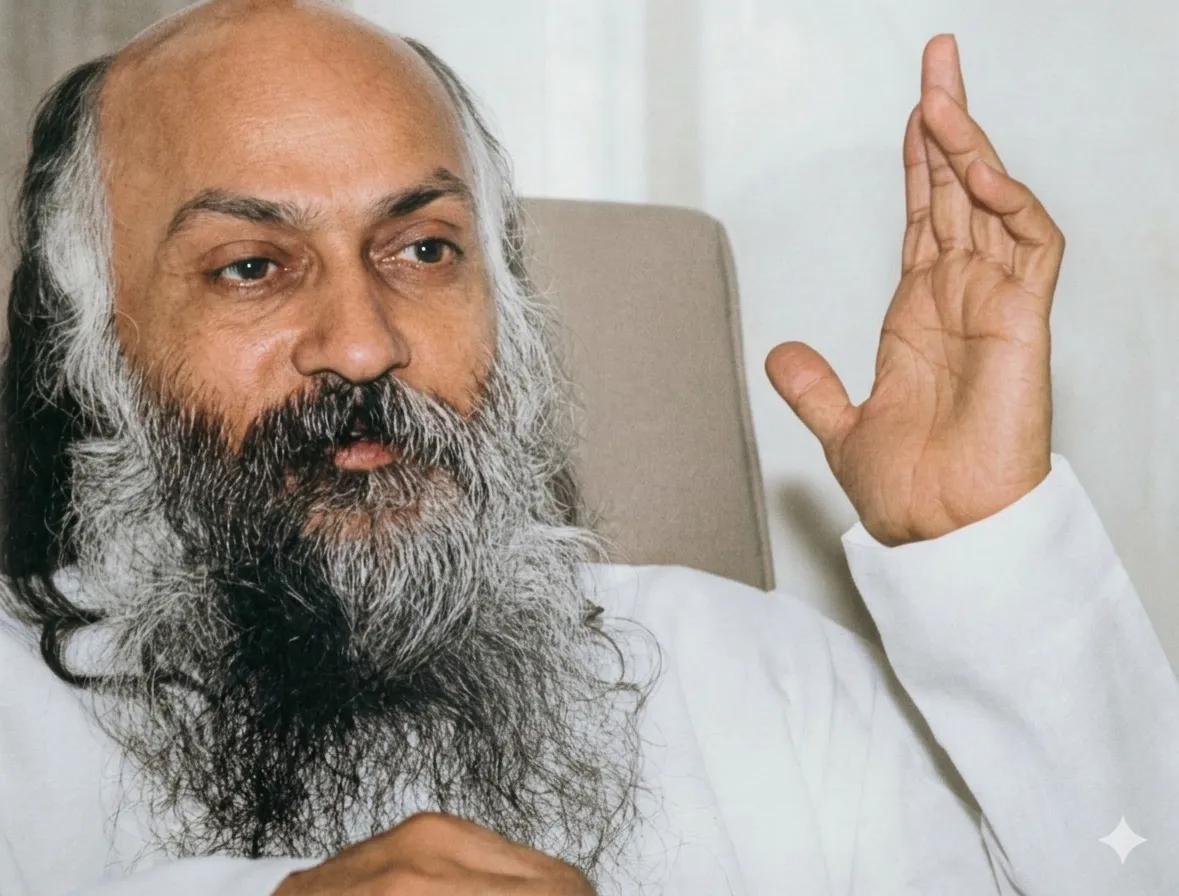
Osho's original Hindi beside Osho Live's English translation, matched passage by passage.
मेरे प्रिय आत्मन्!
My beloved Atman!
ऐसा लगता है कि कहीं कुछ भूल हो गई है। मैं कोई विचारक नहीं हूं। और ऐसा भी नहीं मैं मानता हूं कि विचारकों से जगत का कोई लाभ हुआ है। मनुष्य के जीवन में जितने झगड़े और उपद्रव हुए हैं, विचारक उसका कारण है। और मनुष्य के जीवन में जीवन को जीने की जो क्षमता कम हुई है, उसका कारण भी विचारक है। न मालूम इतिहास के किस दुर्भाग्य क्षण में आदमी को यह खयाल आ गया कि विचार के द्वारा जीवन जीया जा सकता है। जीवन में जो भी श्रेष्ठ है वह विचार से उपलब्ध नहीं होता--न सौंदर्य, न सत्य, न प्रेम। विचार एक धोखा है।
It seems somewhere a mistake has slipped in. I am not a thinker. Nor do I believe that thinkers have ever benefited the world. The quarrels and disturbances that have filled human life — the thinker is their cause. And the diminishing capacity to truly live life — that too is because of the thinker. Who knows in what unfortunate moment of history man imagined that life could be lived through thought? Whatever is supreme in life is never found through thinking — neither beauty, nor truth, nor love. Thought is a deception.
मैंने सुना है, रवींद्रनाथ एक रात एक बजरे में यात्रा कर रहे थे। पूर्णिमा की रात्रि थी और पूरा चांद आकाश में था। अपनी नाव के छोटे से झोपड़े में, एक छोटी सी मोमबत्ती को जला कर वे एक किताब पढ़ रहे थे। वह किताब ऐस्थेटिक्स पर थी, सौंदर्यशास्त्र पर थी। आधी रात तक वे किताब पढ़ते रहे--सौंदर्य क्या है? और फिर ऊब गए। और किताब को बंद कर दिया और मोमबत्ती को फूंक मार कर बुझा दिया। और तभी अचानक जैसे एक क्रांति घट गई--द्वार के, खिड़कियों के, बजरे के रंध्र-रंध्र से चांद की किरणें भीतर आ गईं! मोमबत्ती के धीमे से प्रकाश ने चांद को बाहर रोक रखा था।
I have heard: one night Rabindranath was traveling on a barge. It was a full-moon night, the whole moon was in the sky. In the little hut of his boat, he had lit a small candle and was reading a book — a book on aesthetics, on the science of beauty. Until midnight he went on reading — ‘What is beauty?’ Then he felt bored. He closed the book and blew out the candle. And just then, as if a revolution took place — from the door, the windows, from every crevice of the barge, moonbeams poured in! The faint glow of the candle had kept the moon outside.
रवींद्रनाथ नाचने लगे। और उन्होंने दूसरे दिन सुबह कहा, दूसरे दिन सुबह उन्होंने कहा, कैसा अभागा हूं मैं, सौंदर्य बाहर मौजूद था, सौंदर्य पूरे क्षण बाहर प्रतीक्षा करता था और मैं सौंदर्य पर एक किताब पढ़ता रहा! और जब मैंने मोमबत्ती बुझा दी और किताब बंद कर दी तो सौंदर्य मेरे कमरे के भीतर आकर नाचने लगा। वे बाहर आ गए, उन्होंने चांद को देखा, झील को देखा, उस रात के सन्नाटे को देखा, सौंदर्य वहां मौजूद था। लेकिन किताब में सिर्फ विचार मौजूद थे। किताब में सिर्फ विचार ही हो सकते हैं, सौंदर्य नहीं हो सकता।
Rabindranath began to dance. And in the morning he said, ‘How unfortunate I am! Beauty was present outside; beauty was waiting the whole time — and I went on reading a book about beauty! When I blew out the candle and closed the book, beauty entered my room and began to dance.’ He came out, he looked at the moon, he looked at the lake, he looked at the silence of that night — beauty was present there. But in the book only thoughts were present. In the book there can be only thoughts — beauty cannot be.
विचारक के पास भी सिर्फ विचार ही होते हैं, सत्य नहीं होता, न सौंदर्य होता, न प्रेम होता। और विचार, विचार सिवाय शब्दों के जोड़ के और कुछ भी नहीं हैं। सब विचार बासे हैं, सब विचार उधार हैं, कोई विचार मौलिक नहीं होता। कोई विचार मौलिक हो भी नहीं सकता। मौलिक होती है अनुभूति और अनुभूति होती है निर्विचार।
The thinker too has only thoughts — not truth, not beauty, not love. And thoughts are nothing but a stringing together of words. All thoughts are stale, all thoughts are borrowed; no thought is original. No thought can be original. What is original is experience — and experience is without thought.
लेकिन बड़ी पुरानी भूल है, उसी भूल में मुझे भी बुला लिया है। वह भूल यह है, हम महावीर को भी विचारक कहते हैं। महावीर विचारक नहीं हैं। महावीर जो कुछ भी हैं वह विचार को छोड़ कर हैं। बुद्ध को भी विचारक कहते हैं। बुद्ध भी विचारक नहीं हैं। बुद्ध जो कुछ भी हैं विचार के पार जाकर हैं। जिनको हम विचारक कहते हैं उनमें से बहुत से लोग विचारक नहीं हैं। जिन्होंने इस जगत को कुछ दिया है, उन्होंने विचार से नहीं दिया; विचार के पार से लाकर दिया है। विचार वाहन हो सकता है अभिव्यक्ति का, उपलब्धि का मार्ग नहीं है।
But the old mistake is ancient indeed — and in that mistake I too have been called. The mistake is this: we even call Mahavira a thinker. Mahavira is not a thinker. Whatever Mahavira is, he is that by dropping thought. We call Buddha a thinker. Buddha is not a thinker. Whatever Buddha is, he is that by going beyond thought. Many among those whom we call thinkers are not thinkers at all. Whoever has given something to this world has given it not through thought but from beyond thought. Thought can be a vehicle of expression, it is not the path of attainment.
लेकिन कुछ लोग सिर्फ विचारक हैं। उनके पास सिवाय शब्दों के संग्रह के कुछ भी नहीं है। और उन शब्दों के संग्रह को उन्होंने जीवन समझा हुआ है। इसलिए विचारक मरने के बहुत पहले मर जाता है, उसके पास शब्दों की लाशों के सिवाय कोई जीवन नहीं होता।
Yet there are some who are only thinkers — people who possess nothing but a hoard of words. And they have mistaken that hoard for life. Therefore the thinker dies long before death — he has nothing but the corpses of words, no life at all.
मैंने सुना है, एक फकीर था। और फकीर बहुत अदभुत आदमी था। उसने विचारकों पर बड़ा व्यंग्य किया है। लेकिन विचारक इतने कम समझदार होते हैं कि विचार के ऊपर किए गए व्यंग्य भी उनकी पकड़ में नहीं आते। वह फकीर एक दिन घर लौटता था, और किसी मित्र ने उसे कुछ मांस भेंट कर दिया। और साथ में एक किताब भी दे दी। किताब में मांस को बनाने की विधि लिखी हुई थी। वह एक बगल में किताब को दबा कर और हाथ में मांस को लेकर घर की तरफ भागा। एक चील ने झपट्टा मारा, वह उसके मांस को उठा कर ले गई। उस फकीर ने चील से कहा कि मूरख है तू! विधि बनाने की तो मेरे पास है, मांस का क्या करेगी?
I have heard of a fakir, a strange man. He made a great satire on thinkers. But thinkers are so uncomprehending that even a satire upon thought does not reach them. One day this fakir was returning home. A friend presented him with a piece of meat — and also gave him a book in which the method of cooking that meat was written. He tucked the book under one arm, held the meat in his hand, and hurried home. A kite swooped down and carried off the meat. The fakir called after the kite, ‘Fool! I have the method for cooking — what will you do with the meat?’
वह घर पहुंचा, उसने अपनी पत्नी को कहा, देखती हो, एक मूरख चील मेरे मांस को छीन कर ले गई है और किताब मेरे पास है जिसमें विधि लिखी है बनाने की, चील मांस का करेगी क्या?
He reached home and told his wife, ‘See, a foolish kite snatched away my meat, but the book is with me, the one that has the recipe. What will the kite do with the meat?’
उसकी पत्नी ने कहा कि तुम विचारक मालूम होते हो। चील को किताब से मतलब नहीं है, चील को मांस बनाने की विधि से मतलब नहीं है। तुम किताब बचा लाए और मांस छोड़ आए, अच्छा होता कि किताब चील को दे आते और मांस घर ले आते।
His wife said, ‘You seem to be a thinker. The kite has no use for a book or for a recipe. You saved the book and left the meat. It would have been better to hand the book to the kite and bring the meat home.’
लेकिन विचारक हजारों साल से किताब बचाता चला आ रहा है और जिंदगी को छोड़ता चला जा रहा है। इसलिए दुनिया में जितना विचार बढ़ गया है उतना जीवन कम और क्षीण हो गया है। दुनिया में जितना विचार रोज बढ़ता जा रहा है, आदमी उतना उदास, परेशान और हैरान होता चला जा रहा है। क्योंकि जिंदगी का सारा अर्थ खोता चला जा रहा है। जिंदगी का जो रस है, जिंदगी का जो भी अर्थ है, वह जीने से उपलब्ध होता है, विचार करने से नहीं। और यह सब्स्टीट्यूट बन जाता है कि हम जीने को छोड़ देते हैं और विचार करने को पकड़ लेते हैं।
But for thousands of years the thinker has been saving the book and letting life slip away. So as thought has increased in the world, life has diminished and withered. And as thought increases day by day, man grows more sad, more troubled, more bewildered — because the very meaning of life is being lost. The juice, the significance of life, is available only by living — not by thinking. And this becomes a substitute: we drop living and clutch at thinking.
मैं एक फूल के पास जाऊं और बैठ कर फूल के संबंध में सोचने लगूं, तो मैं एक विचारक हूं। लेकिन फूल के संबंध में जो बैठ कर सोच रहा है वह फूल को जानने से वंचित रह जाएगा। विचार की एक दीवाल खड़ी हो जाएगी। फूल उस पार होगा, मैं इस पार होऊंगा। सब विचारकों के आसपास विचारों की एक दीवाल बन जाती है--वाद की, शास्त्र की, आइडियालॉजी की। और वे अपनी ही दीवाल में बंद हो जाते हैं, बाहर की दुनिया से उनका जीवन से सारा संबंध टूट जाता है। वह जो फूल है वह बाहर पुकारता रहेगा कि आओ, लेकिन विचारक विचार करता रहेगा।
If I go to a flower and sit there and start thinking about the flower — then I am a thinker. But the one who sits thinking about the flower will remain deprived of knowing the flower. A wall of thought will arise — the flower will be on that side, I will be on this side. Around every thinker, a wall of thought forms — a wall of doctrine, scripture, ideology. And they become enclosed within their own wall; their connection with the outer world, with life, is severed. The flower will go on calling from outside: ‘Come!’ — but the thinker will go on thinking.
अगर फूल को जानना हो तो फूल के पास बैठ कर सोचने की जरूरत नहीं है। फूल के पास बैठ कर सोचना छोड़ देने की जरूरत है; ताकि फूल भीतर प्रवेश कर जाए। मेरी आत्मा और फूल की आत्मा किसी जगह पर मिल सकें। विचार कभी भी नहीं मिलने देता है। और इसलिए दुनिया में जितना विचार बढ़ता है उतना आदमी-आदमी अलग होते चले जाते हैं। दुनिया में जितने झगड़े हैं वे विचार के झगड़े हैं, क्योंकि सब दीवालें विचारों की दीवालें हैं।
If one is to know the flower, there is no need to sit by the flower and think. Sitting near the flower, one needs to drop thinking — so that the flower can enter within; so that somewhere my Atman and the flower’s Atman can meet. Thought never allows meeting. Therefore, the more thought increases in the world, the more men grow separate from men. The quarrels of the world are quarrels of thought — because all the walls are walls of thought.
एक आदमी कहता है, मैं मुसलमान हूं। एक आदमी कहता है, मैं हिंदू हूं। एक हिंदू और एक मुसलमान के बीच फर्क क्या है? खून का फर्क है? हड्डी का फर्क है? आत्मा का फर्क है? एक हिंदू और एक मुसलमान के बीच सिर्फ विचार का फर्क है। मुसलमान ने कुछ विचार पकड़ लिया है, हिंदू ने कुछ विचार पकड़ लिया है। और विचार की दीवाल है। और तब, तब विचार इतना महत्वपूर्ण हो सकता है कि हिंदू मुसलमान की हत्या कर दें, और मुसलमान हिंदू की हत्या कर दें। विचार इतना महत्वपूर्ण हो सकता है कि हम जीवन की हत्या कर दें और किताब को बचा लें, विचार को बचा लें। यही होता जा रहा है। जीवन रोज नष्ट हो रहा है और किताबें बचती चली जाती हैं। नये विचार नये झगड़े ले आते हैं। कम्युनिज्म नया विचार है। उसने नये झगड़े और नई दीवालें खड़ी कर दी हैं।
One man says, ‘I am a Muslim.’ Another says, ‘I am a Hindu.’ What is the difference between a Hindu and a Muslim? Is there any difference of blood? Of bones? Of the soul? Between a Hindu and a Muslim, there is only the difference of thought. The Muslim has grabbed hold of certain thoughts; the Hindu has grabbed hold of other thoughts. And between them there is a wall of thought. Then thought can become so important that Hindus kill Muslims and Muslims kill Hindus. Thought can become so important that we kill life and save the book, save the idea. This is what keeps happening. Life is being destroyed every day, and books are being saved. New ideas bring new quarrels. Communism is a new idea — it has raised new quarrels and built new walls.
क्या यह नहीं हो सकता कि आदमी अस्तित्व को जीए, विचारे न?
Is it not possible that man live existence — and not think it?
यह हो सकता है। समस्त जीवन की गहराइयां अस्तित्व में उतरने से उपलब्ध होती हैं। और जिसे अस्तित्व में उतरना है उसे विचार को छोड़ कर उतरना पड़ता है।
It is possible. All the depths of life become available by descending into existence. And whoever wishes to descend into existence has to leave thought behind.
मैंने सुना है, एक समुद्र के किनारे बहुत बड़ा मेला भरा हुआ था और तट पर बहुत लोग इकट्ठे थे। वे तट पर बैठ कर सोचने लगे कि समुद्र की गहराई कितनी है? वे बड़े विचारक लोग थे। उन्होंने तट के ऊपर बैठ कर विचार करना शुरू कर दिया, समुद्र की गहराई कितनी है?
I have heard: there was a great fair on the sea-shore; crowds had gathered on the beach. They sat on the shore and began to think, ‘How deep is the sea?’ They were great thinkers. They started thinking on the shore: ‘How deep is the sea?’
लेकिन तट के ऊपर बैठ कर कोई समुद्र की गहराई नहीं जान सकता। तट के ऊपर बैठ कर समुद्र की गहराई को जानने का कोई उपाय नहीं है। समुद्र की गहराई में ही जाना पड़ेगा। लेकिन विचार करने वाले सदा तट पर बैठे रह जाते हैं। वे तट पर बैठ कर बहुत विचार करते रहे, विवाद हो गया। समुद्र की गहराई का तो कोई पता न चला, लेकिन विवाद से ही पार्टियां और कई संप्रदाय और कई धर्म हो गए। किसी ने कहा, इतनी गहराई है। और किसी ने कहा, हमारी किताब में इतनी लिखी है। वे अपनी किताबें ले आए और बड़ा विवाद शुरू हो गया।
But sitting on the shore one cannot know the sea’s depth. There is no way to know it from the shore. One must go into the depth of the sea. But thinkers always remain seated on the shore. They thought and thought; then a dispute arose. No clue to the depth of the sea was found — but out of the dispute parties formed, sects arose, religions arose. Someone said, ‘It is so much.’ Another said, ‘In our book, it is written this much.’ They brought their books — and the quarrel began.
मैंने सुना है, उस मेले में दो नमक के पुतले भी भूल से पहुंच गए थे। उन्होंने यह सारा विवाद सुना, उन्होंने कहा कि पागल हो गए हो! अगर समुद्र की गहराई जाननी है तो विचार करने की क्या जरूरत है? समुद्र में कूद जाओ! लेकिन उन लोगों ने कहा, जब तक गहराई का पता न चले, हम कूदें कैसे? गहराई का पता चल जाए तब हम कूदें। गहराई का पक्का पता हो जाए तभी हम कूदेंगे।
I have heard, by mistake two dolls of salt also reached that fair. They listened to all this and said, ‘You have gone mad! If you want to know the depth of the sea, what is the need to think? Jump into the sea!’ But the thinkers said, ‘How can we jump until the depth is known? When the exact depth is determined, then we shall jump. Only when there is firm knowledge of the depth shall we jump.’
विचारक कहता है, जब ईश्वर का मैं पक्का पता लगा लूंगा विचार करके तब खोज पर निकलूंगा। विचारक कहता है, मैं प्रेम करने तब जाऊंगा जब मैं प्रेम की पूरी फिलासफी समझ लूं। विचारक कहता है, मैं जीवन में तब उतरूंगा जब मैं जान लूं कि जीवन क्या है। वह किनारे पर बैठा रह जाता है।
The thinker says, ‘When by thinking I have reached a firm conclusion about God, then I will begin the search.’ The thinker says, ‘I will go to love only when I have understood the entire philosophy of love.’ The thinker says, ‘I will enter life only when I know what life is.’ He remains seated on the shore.
और ध्यान रहे, उस नमक के पुतले ने कहा कि तो फिर ठहरो, मैं कूद जाता हूं, मैं पता लगा आता हूं। वह नमक का पुतला कूद गया। लेकिन नमक का पुतला समुद्र में कूदे.गहराई में तो जाने लगा, लेकिन जितना गहराई में जाने लगा उतना ही पिघलने लगा। गहराई में पहुंच गया, ठीक समुद्र के नीचे पहुंच गया, उसने गहराई जान ली, लेकिन जब तक उसने गहराई जानी तब तक वह खो गया, तब तक वह लौट कर बताने को नहीं था।
Remember: one of the salt dolls said, ‘Then wait. I will jump; I shall find out and return.’ The salt doll jumped. As it descended into the sea, it began to dissolve. It reached the depths, it arrived at the very bottom — and knew the depth; but by the time it knew, it was lost. There was no one left to return and tell.
यह बड़ी अदभुत बात है। इस जिंदगी का सबसे बड़ा पैराडॉक्स यही है कि जो विचार करते रहते हैं वे बताने में समर्थ हैं और जो अस्तित्व की गहराई में उतरते हैं वे खो जाते हैं, वे बताने में असमर्थ हो जाते हैं। सत्य को जो जानते हैं वे बता नहीं पाते और जो बिलकुल नहीं जानते हैं वे बताए चले जाते हैं। जो सत्य को बिलकुल नहीं जानते वे उस पर विचार करते रहते हैं; जो सत्य को जान लेते हैं वे खो जाते हैं।
This is a wondrous thing — the greatest paradox of life: those who go on thinking are capable of telling, and those who descend into the depths of existence are lost; they cannot tell. Those who know truth cannot say it, and those who do not know at all go on talking. Those who do not know truth go on thinking about it; those who know it are gone.
मेरी अपनी समझ में, विचारक का अहंकार मनुष्य के जीवन में सबसे बड़ा अहंकार है। कुछ लोग धन इकट्ठा कर लेते हैं, कुछ लोग विचार इकट्ठे कर लेते हैं। धन को इकट्ठा करने वाले को हम कहते हैं कि क्या संग्रह में लगे हुए हो! और विचार को इकट्ठा करने वाले को? विचार को इकट्ठा करने वाले को हम, विचार को इकट्ठा करने वाले को हम उस तरह से नहीं कहते कि क्या विचार के संग्रह में लगे हो? क्या होगा विचार के संग्रह कर लेने से? धन के संग्रह से कुछ नहीं होता, विचार के संग्रह से भी कुछ नहीं होता। लेकिन सब संग्रह अहंकार को मजबूत कर जाते हैं।
In my understanding, the ego of the thinker is the greatest ego in human life. Some people collect wealth, some people collect thoughts. The one who hoards money we question: ‘Why this collecting?’ But the one who hoards thoughts? We do not question him the same way: ‘Why are you busy collecting thoughts? What will you gain by gathering thoughts?’ Nothing comes of collecting wealth — nothing comes of collecting thoughts either. But every kind of hoarding strengthens the ego.
धन हो मेरे पास तो मुझमें एक अकड़ आ जाती है कि मेरे पास धन है। और विचार है मेरे पास तो भी मुझे एक अकड़ आ जाती है कि मेरे पास विचार है। और ज्ञान, पांडित्य और विचार की जो अकड़ है उससे बड़ी अकड़ और कोई भी नहीं हो सकती। वह जो अहंकार है उससे बड़ा अहंकार और कोई भी नहीं हो सकता। और ध्यान रहे, जितना बड़ा अहंकार है उतना ही गहरे में उतरने की क्षमता कम हो जाती है। क्योंकि गहरे में उतरने पर वह नमक का पुतला पिघला, ऐसे ही अहंकार भी पिघल जाता है। जिसे गहरे जाना है उसे अहंकार छोड़ कर जाना होगा। और जिसे अहंकार छोड़ना है उसे धन ही नहीं छोड़ना पड़ता, उसे विचार भी छोड़ना पड़ता है।
If I have money, a stiffness arises in me: I possess wealth. If I have ideas, a stiffness arises in me: I possess knowledge. And the stiffness that comes from knowledge, erudition, and thought — there is no greater stiffness than that. The ego that arises from it — there is no greater ego. And remember: the greater the ego, the less the capacity to go deep. For the moment one goes deep, the salt doll melts — just so, the ego melts. Whoever would go into the depths must leave the ego behind. And whoever would leave the ego has to leave not only wealth — he has to leave thoughts as well.
विचार की पर्त हमारी चेतना पर ऐसे ही है.अभी मैं एक गांव में ठहरा हुआ था। उस गांव की नदी को मैं देखने गया। वह सारी नदी काई से ढंक गई थी। पत्ते ही पत्ते और काई ही काई उस पूरी नदी पर छा गई थी। एक पत्ते को मैंने हटाया और नदी झांकने लगी। जो मित्र मुझे ले गए थे उन्होंने कहा, सारी नदी पत्तों से ढंक गई है। तो मैंने कहा, आदमी की भी सारी आत्मा विचार के पत्तों और काई से ढंक गई है। थोड़े विचार को हटाओ तो भीतर से आत्मा की नदी झांकनी शुरू हो जाती है।
A layer of thought is spread over our consciousness. Recently I stayed in a village. I went to see the river there. The whole river was covered with algae and leaves. I pushed aside one patch of leaves — and the river peeped through. The friend who had taken me there said, ‘The whole river is covered with leaves.’ I said, ‘Man’s entire soul too is covered with the leaves and scum of thought. Push a little thought aside, and the river of the soul begins to show from within.’
विचारक पत्तों से ढंका हुआ आदमी है। और विचार सब उधार हैं, बाहर से आए हुए हैं। ज्ञान भीतर से आता है और विचार बाहर से आते हैं। इसलिए विचारक को ज्ञानी समझ लेने की भूल में नहीं पड़ जाना चाहिए। विचार सदा बाहर से आते हैं--शास्त्रों से, शिक्षाओं से, सूचनाओं से; और ज्ञान सदा भीतर से आता है। और जिसे ज्ञान लाना हो, उसे विचार बाहर से लाने की यात्रा बंद करनी पड़ती है।
The thinker is a man covered with leaves. And all thoughts are borrowed — they come from outside. Knowing arises from within; thoughts come from without. So do not fall into the mistake of taking the thinker to be the knower. Thoughts always come from outside — from scriptures, teachings, information; and knowing always wells up from within. Whoever would bring knowing must end the journey of importing thoughts from outside.
एक छोटे से उदाहरण से समझाने की कोशिश करूं।
Let me try with a small example.
मैंने सुना है कि एक आदमी ने घर में एक कुआं खोदा और एक आदमी ने घर में एक हौज बनाई। अब हौज और कुआं बनाने के ढंग बिलकुल अलग होते हैं, हालांकि दोनों में पानी दिखाई पड़ता है। और जब हौज बन गई, कुआं बन गया, तो दोनों में पानी था--कुएं में भी पानी था, हौज में भी पानी था। लेकिन हौज में पानी उधार था, वह कहीं से मांगा गया था, वह कहीं से लाया गया था। कुएं के पास अपना पानी था, वह कहीं से मांगा नहीं गया था, वह कहीं से लाया नहीं गया था। हौज भर गई। लेकिन हौज और कुएं के बनाने का ढंग भी अलग है। कुएं को खोदना पड़ता है, कुएं की मिट्टी-पत्थर को निकाल कर बाहर फेंक देना पड़ता है। और अगर हौज बनानी हो तो मिट्टी-पत्थर खरीद कर लाने पड़ते हैं, दीवाल बनानी पड़ती है और हौज बनानी पड़ती है। और एक बड़े चमत्कार की बात, हौज बन जाए तो भी खाली होती है। कुआं बन जाए तो पानी से भर जाता है। हौज के पास दूसरे का पानी होता है।
I have heard: one man dug a well in his courtyard; another built a cistern. The ways of making a cistern and a well are entirely different — though in both, water appears. When the cistern was built and the well was dug, both contained water — the well too, the cistern too. But the cistern’s water was borrowed — it had been fetched from somewhere. The well had its own water — not begged, not brought from anywhere. The cistern is filled — but note, the methods differ: to make a well one digs, removing earth and stones, throwing them out; to make a cistern one brings earth and stones, builds walls, constructs the tank. And a great wonder: even when the cistern is completed, it is empty; when the well is completed, it fills with water. The cistern depends on others’ water.
जिसको हम विचारक कहते हैं उसके पास दूसरे का पानी होता है। उसके पास महावीर का पानी होगा, बुद्ध का पानी होगा, क्राइस्ट का पानी होगा, कृष्ण का पानी होगा, लेकिन उसके पास अपना पानी नहीं होता। उसके पास कुआं नहीं होता।
What we call a thinker has others’ water. He will have the water of Mahavira, of Buddha, of Christ, of Krishna — but he will have no water of his own. He will have no well.
और ध्यान रहे, जब कुआं बनता है तो कुआं बनने का एक नियम है कि खाली होना पड़ता है। जितना कुआं खाली हो जाता है उतना भर जाता है। जितना कुआं अपने भीतर से चीजों को बाहर फेंक देता है उतने जलस्रोत उपलब्ध हो जाते हैं। विचारक इकट्ठा करता है हौज की तरह, इकट्ठा करता जाता है। कभी हौज के पास जाकर कान लगा कर सुनना, तो हौज हमेशा कहती है, और लाओ! और लाओ! अगर हौज से पानी निकालो तो हौज कहती है, मत निकालो, कम हो जाएगा। कभी कुएं के पास कान लगा कर सुनना, कुआं कहता है, निकाल लो और निकाल लो। चूंकि जितना निकल जाता है उतना नया भीतर से और आ जाता है।
And remember: when a well is made, there is a law — it has to be emptied. The more the well is emptied, the more it fills. The more it throws out from within, the more springs open up. The thinker collects like a cistern — goes on collecting. Go and put your ear to a cistern — you will always hear it saying, ‘Bring more! Bring more!’ If you draw from it, it says, ‘Do not take; it will become less.’ Put your ear to a well — the well says, ‘Draw! Draw more!’ Because the more that is drawn, the more fresh water comes from within.
विचारक इकट्ठा करता है, विचार सिर्फ इकट्ठा करना है। और इसलिए विचारक बाहर से आई हुई पर्त में इतना खो जाता है कि कभी अपने को नहीं जान पाता। जिन्होंने अपने को जाना है, जिन्होंने सत्य को जाना है, उन्होंने निर्विचार होकर जाना है।
The thinker gathers; thinking is only gathering. And so he gets lost in the layer that has come from outside, and never comes to know himself. Whoever has known himself, whoever has known truth, has known it in no-mind.
महावीर विचारक नहीं हैं, बुद्ध विचारक नहीं हैं, कृष्ण विचारक नहीं हैं। और दुनिया में ऐसे लोगों की जरूरत है जो विचार के पार होकर देख सकें। इसलिए हम उनको द्रष्टा कहते हैं। इसलिए हम उस प्रक्रिया को जिससे ज्ञान उपलब्ध होता है दर्शन कहते हैं, उसको विचारणा नहीं कहते।
Mahavira is not a thinker; Buddha is not a thinker; Krishna is not a thinker. The world needs people who can see beyond thought. That is why we call them seers — drashta. That is why the process through which knowing is attained is called Darshan — seeing — not ‘thinking about.’
लेकिन अभी बड़ी भूल हुई है। भूल यह हो गई है कि हम पश्चिम से जो फिलासफी आई है, हम फिलासफी को भी अपने मुल्क में दर्शन से अनुवाद करने लगे हैं। दर्शन और फिलासफी पर्यायवाची शब्द नहीं हैं। दर्शन का मतलब है: देखना। और फिलासफी का अर्थ है: सोच-विचार। देखने और सोचने-विचारने में दुश्मनी है। जो आदमी देख सकता है, सोचता-विचारता नहीं। जो नहीं देख सकता वह सोचता-विचारता है।
But a big mistake has occurred: from the West we imported ‘philosophy’ and began translating it in our land as ‘Darshan.’ Darshan and philosophy are not synonyms. Darshan means: seeing. Philosophy means: thinking. Between seeing and thinking there is enmity. Whoever can see does not think; whoever cannot see goes on thinking.
मैं अगर अंधा हूं और मुझे इस कमरे के बाहर जाना हो, तो मैं सोचूंगा कि रास्ता कहां है? पूछूंगा: रास्ता कहां है? पूछूंगा: द्वार कहां है? कैसे जाऊं? कैसे निकलूं? और अगर मेरे पास आंखें हैं, तो मैं सोचूंगा नहीं, पूछूंगा नहीं; उठूंगा और निकल जाऊंगा।
If I am blind and I must go out of this room, then I will think, ‘Where is the way?’ I will ask, ‘Where is the door? How should I go? How to get out?’ But if I have eyes, I will not think, I will not ask — I will get up and go.
आंख चाहिए। दर्शन चाहिए; विचार नहीं। दृष्टि चाहिए। और दृष्टि सदा अपनी होती है। विचार सदा दूसरे के होते हैं। दूसरे की दृष्टि आपके पास नहीं होती। दूसरे की आंख से आप नहीं देख सकते। लेकिन दूसरे के विचार का संग्रह आप कर सकते हैं। इसलिए विचारक, मेरी दृष्टि में, सदा बारोड, सदा उधार आदमी होता है। उसके पास कुछ भी नहीं होता। विचारक से ज्यादा दरिद्र आदमी, दीन आदमी खोजना बहुत मुश्किल है।
Eyes are needed. Darshan is needed — not thought. Vision is needed. And vision is always one’s own; thoughts are always others’. Another’s vision cannot be yours; you cannot see through another’s eyes. But you can collect another’s thoughts. Therefore, in my view, the thinker is always borrowed — forever borrowed. He has nothing of his own. It is hard to find anyone more impoverished, more destitute, than the thinker.
लेकिन हमें लगता है कि विचारक के पास बहुत कुछ है, क्योंकि जो उसने इकट्ठा किया है वह हमारी आंखों को चौंकाता है। जो उसके पास हमें दिखाई पड़ता है उससे लगता है कि इसके पास बहुत कुछ है। जो उससे हम सुनते हैं, जो वह लिखता है, उससे हमें लगता है कि इसके पास बहुत कुछ है। और हम भी तब विचार इकट्ठा करने में लग जाते हैं। हमारी सारी शिक्षा विचार इकट्ठा करवाने की शिक्षा है। इसलिए हमारी शिक्षा ज्ञानी को पैदा नहीं कर पाती, क्योंकि वह दृष्टि और दर्शन पैदा करने के लिए कोई प्रयोग नहीं करती है।
Yet it appears that the thinker has much — because what he has collected dazzles our eyes. Seeing what lies with him, we feel he has much. Hearing him, reading what he writes, we feel he has much. Then we too begin to collect thoughts. All our education is an education in collecting thoughts. That is why our education cannot produce the knower — because it performs no experiment to awaken vision and Darshan.
इधर मैं एक छोटी सी बात अंत में कहना चाहूं और वह यह कि मनुष्य की चेतना में दो क्षमताएं हैं--एक विचार की और एक निर्विचार की; एक सोचने की और एक देखने की। सोचने में जो उलझ जाएगा वह देखने को भूल जाएगा। और जो देख लेगा उसे सोचने की फिर कोई जरूरत नहीं रह जाती, उसके पास आंखें उपलब्ध हो जाती हैं।
I would like to say a small thing in the end: in human consciousness there are two capacities — one of thought, and one of no-thought; one of thinking, and one of seeing. Whoever gets entangled in thinking will forget seeing. And whoever sees will have no need to think — he will have eyes.
बुद्ध के पास एक बार एक आदमी को कुछ लोग ले आए थे। वह आदमी अंधा था, उसके पास आंखें नहीं थीं। उसके मित्रों ने बुद्ध को आकर कहा कि यह आदमी अंधा है और हमारा मित्र है। हम इसे समझाते हैं कि प्रकाश है, हम समझाते हैं कि सूरज है, लेकिन यह मानने को तैयार नहीं होता। यह कहता है कि कैसे हो सकता है? हम इसे कहते हैं कि है, तर्क देते हैं। तो यह कहता है कि हम तुम्हारे प्रकाश को छूकर देखना चाहते हैं। जरा प्रकाश को ले आओ, हम छूकर देख लें। प्रकाश तो हम ले आते हैं, लेकिन यह छू नहीं पाता। यह कहता है, तुम अपने प्रकाश को थोड़ा बजाओ तो हम सुन लें। लेकिन हम प्रकाश को कैसे बजाएं? यह कहता है, प्रकाश को मेरे मुंह में दे दो, मैं थोड़ा चख लूं। लेकिन हम प्रकाश का स्वाद कैसे दिलवाएं? हमने सोचा कि एक बड़ा विचारक गांव में आया है, बुद्ध आए हैं, तो हम जाएं।
Once some people brought a man to Buddha. The man was blind; he had no eyes. His friends said to Buddha, ‘He is our friend. We tell him there is light; we tell him there is the sun; but he refuses to accept. He says, How can it be? We argue with him. He says, We want to touch your light — bring it near so we can feel it. We bring light, but he cannot touch it. He says, Make your light make a sound so we can hear it. But how to make light ring? He says, Put the light into my mouth so I can taste it. How can we give light a taste? We thought: a great thinker has come to the village — Buddha has come — let us go to him.’
बुद्ध ने कहा, तुम गलत आदमी के पास आ गए, मैं कोई विचारक नहीं हूं। और इस आदमी को तुम परेशान मत करो। अच्छा है कि यह नहीं मानता; क्योंकि जिसके पास आंख नहीं है वह माने क्यों? और अगर मान लेगा तो विचार में पड़ जाएगा। सब मान्यताएं विचार में ले जाती हैं। अगर एक अंधा आदमी मान ले कि प्रकाश है, तो प्रकाश का होना उसके लिए सिर्फ एक विचार होगा, अनुभव नहीं हो सकता। बुद्ध ने कहा, इसे तुम विचारकों के पास मत ले जाओ। अच्छा होगा किसी वैद्य के पास ले जाओ। विचारक क्या करेगा? विचार दे देगा। वैद्य के पास ले जाओ जो इसकी आंख की चिकित्सा कर सके।
Buddha said, ‘You have come to the wrong man: I am not a thinker. And do not harass this man. It is good that he does not believe — for why should one without eyes believe? And if he believes, he will be caught in thought. All beliefs lead into thought. If a blind man believes there is light, then for him the existence of light will only be an idea — it cannot be an experience. Do not take him to thinkers; take him to a physician. What will a thinker do? He will give thoughts. Take him to a vaidya who can treat his eyes.’
वे उसे वैद्य के पास ले गए। उस आदमी की आंख पर जाली थी। कुछ दिन के दवा के प्रयोग से वह जाली कट गई। और उस आदमी ने प्रकाश देखा और वह नाचने लगा। और वह खोजता हुआ बुद्ध के पास गया, उनके चरण पकड़ लिए। और उस आदमी ने कहा कि आपने बड़ी कृपा की। अन्यथा वे सब विचारक मुझे मिल कर मार डालते। वे मुझे समझाते थे कि है और मुझे दिखाई नहीं पड़ता था। अब मुझे दिखाई पड़ रहा है। और मैं जानता हूं कि जो देखने से जाना जा सकता है वह समझाने से नहीं जाना जा सकता। मैं कैसे समझता कि प्रकाश है? और अगर समझ लेता तो भी उस समझ का क्या मूल्य था?
They took him to a physician. There was a film over his eyes. After some days of treatment the film was cut away. The man saw light — and he began to dance. He ran to Buddha, fell at his feet and said, ‘You have shown great compassion — otherwise all those thinkers together would have killed me. They argued that light is, and I could not see it. Now I can see. And I know that what can be known by seeing cannot be known by explanation. How could I have understood that there is light? And even if I had understood, what value would that understanding have had?’
नहीं, विचार की इतनी जरूरत नहीं है जितनी दृष्टि और दर्शन की जरूरत है। और दृष्टि और दर्शन चाहिए हो तो चित्त ऐसा होना चाहिए जो विचारों को अलग करने में समर्थ हो जाए। थोड़ी देर को, थोड़े क्षणों को ही सही, अगर चौबीस घंटे में कोई व्यक्ति सारे विचारों से अपने को मुक्त कर ले और सिर्फ रह जाए--मात्र रह जाए, सोचे न, सिर्फ हो जाए, थिंकिंग नहीं, सिर्फ बीइंग--तो उसकी जिंदगी में वह सब उतर आएगा जो श्रेष्ठ है, जो सुंदर है, जो सत्य है।
No — thought is not needed as much as vision and Darshan are needed. And if vision and Darshan are to be, then the mind must become capable of putting thoughts aside. For a little while, for a few moments at least — if in twenty-four hours a person frees himself of all thoughts and simply remains — just remains, does not think; only is — not thinking, only being — then into his life will descend all that is supreme, all that is beautiful, all that is true.
एक अंतिम कहानी, और अपनी बात मैं पूरी करूंगा।
One last story, and I will complete my words.
मैंने सुना है, एक पहाड़ के ऊपर एक आदमी खड़ा था। सुबह-सुबह सूरज निकला है, और अभी रोशनी ने चारों तरफ वृक्षों पर जागरण ला दिया है और पक्षी गीत गाते हैं, और वह आदमी चुपचाप खड़ा है। कुछ लोग घूमने निकले हैं, तीन मित्र रास्ते से नीचे गुजर रहे हैं। उन्होंने उस आदमी को वहां खड़े देखा। और एक मित्र ने कहा, यह आदमी यहां क्या करता होगा?
I have heard: on a hilltop a man was standing. Morning had just dawned. Light had awakened the trees all around; birds were singing. The man stood silently. Three friends were out for a walk; they passed below and saw the man standing there. One said, ‘What do you think that man is doing there?’
अब सच तो यह है कि कोई जरूरत नहीं कि वह आदमी वहां क्या करता होगा, लेकिन विचार करने वाले लोग व्यर्थ का विचार करते रहते हैं। वे तीनों विचारक रहे होंगे। एक ने कहा कि वह आदमी वहां क्या करता है? दूसरे आदमी ने कहा कि जहां तक मैं समझता हूं, जहां तक मैं सोचता हूं, कभी-कभी उस फकीर की जो वहां ऊपर खड़ा है गाय खो जाती है, वह अपनी गाय को खोजने के लिए पहाड़ पर खड़े होकर देखता होगा कि गाय कहां है।
In truth there was no need to ask what that man was doing — but thinkers think unnecessarily. They must have been three thinkers. One said, ‘As far as I understand, sometimes that fakir’s cow is lost; he must be standing on the hill looking to see where the cow is.’
लेकिन पहले आदमी ने कहा, तुम्हारी बात ठीक नहीं मालूम पड़ती। विचारकों को कभी एक-दूसरे की बात ठीक मालूम पड़ती ही नहीं। उस आदमी ने कहा, तुम्हारी बात ठीक नहीं मालूम पड़ती। नहीं मालूम पड़ती इसलिए कि अगर वह गाय को खोजता होता तो चारों तरफ आंख भटकती उसकी, चारों तरफ देखता। वह तो चुपचाप एक ही तरफ देखता हुआ खड़ा है। खोजने वाला आदमी एक तरफ नहीं देखता, सब तरफ देखता है।
But the first said, ‘Your idea doesn’t seem right.’ Thinkers never find each other’s ideas right. ‘It doesn’t seem right — because if he were searching for the cow his eyes would wander all around; he would be looking here and there. He is standing quietly, looking in just one direction. A seeker does not look only in one direction — he looks in all directions.’
लेकिन तीसरे आदमी ने कहा, तुम्हारी बात मुझे ठीक मालूम नहीं पड़ती। बातों की दुनिया में कभी कुछ ठीक मालूम पड़ता ही नहीं। उस तीसरे आदमी ने कहा कि मैं जहां तक समझता हूं, कभी-कभी ऐसा होता है कि वह अपना मित्र साथ लाता है, मित्र पीछे छूट जाता है, तो वह खड़े होकर उसकी प्रतीक्षा करता होगा।
The third said, ‘Your idea doesn’t seem right to me.’ In the world of ideas nothing ever seems right. ‘As I understand it, sometimes he brings a friend along; the friend falls behind, so he stands and waits for him.’
उस पहले आदमी ने कहा, नहीं, यह ठीक नहीं है। क्योंकि अगर कोई किसी की प्रतीक्षा करता हो तो कभी-कभी पीछे लौट कर भी देखता है। वह पीछे लौट कर देख ही नहीं रहा है।
The first said, ‘No, that cannot be. If someone waits for a friend, he would sometimes look back. He is not looking back at all.’
तब उन दोनों ने पूछा कि तुम क्या कहते हो?
Then they asked the third, ‘What do you say?’
उस आदमी ने कहा, जहां तक मैं सोचता हूं.अब मजा यह है कि ये तीनों सोच ही सकते हैं। क्योंकि वह आदमी क्या कर रहा है यह वही जान सकता है। बाहर से तो सिर्फ सोचा ही जा सकता है।
उस तीसरे ने कहा, जहां तक मैं सोचता हूं, वह भगवान का स्मरण कर रहा है।
He said, ‘As far as I think…’ — the fun is that all three can only think, for only that man can know what he is doing — ‘as far as I think, he is remembering God.’
तो उन तीनों ने कहा, बड़ी मुश्किल हो गई। हम तीनों को पहाड़ पर चढ़ना पड़ेगा और उस आदमी से पूछना पड़ेगा कि वह कर क्या रहा है।
The three decided, ‘We must climb the hill and ask him what he is doing.’
अब बड़े मजे की बात है कि दूसरा आदमी कुछ भी कर रहा हो, तीन आदमियों को पहाड़ चढ़ने की कोई जरूरत नहीं है। लेकिन दूसरा क्या कर रहा है उसे जानने के लिए कोई भी एवरेस्ट चढ़ सकता है। हम खुद क्या कर रहे हैं उसे जानने की हमें कभी भी कोई चिंता नहीं है। दूसरा क्या कर रहा है!
Now the great joke is that whatever the other is doing, there is no need for three men to climb a hill to know it. But to know what the other is doing, a man can climb even Everest. What we ourselves are doing — we are never concerned. The other — what is he doing!
वे तीनों पहाड़ चढ़े, थक गए, पसीना उनके माथे पर आ गया, उस आदमी के पास पहुंचे। पहले आदमी ने जाकर कहा कि जहां तक महानुभाव, मैं सोचता हूं, आपकी गाय खो गई है, आप खोज रहे हैं।
They climbed, exhausted, sweating. They reached him. The first said, ‘As far as I think, your cow is lost and you are searching for her.’
उस आदमी ने आंख खोली। उसने कहा, मेरा कुछ है ही नहीं इस जगत में, खोएगा कैसे? और जब खोएगा ही नहीं तो खोजूंगा कैसे? माफ करो, मैं कुछ भी नहीं खोज रहा हूं।
The man opened his eyes. He said, ‘I own nothing in this world — how can it be lost? And if nothing can be lost, what shall I search for? Forgive me, I am not searching for anything.’
दूसरा आदमी हिम्मत से आगे आया। उसने कहा, जहां तक मैं सोचता हूं, आप खोज नहीं रहे हैं, लेकिन आपका मित्र पीछे छूट गया होगा, आप उसकी प्रतीक्षा कर रहे हैं। सही कह रहा हूं न मैं?
The second, with courage, stepped forward: ‘As far as I think, you are not searching; your friend must have fallen behind, and you are waiting for him. Am I right?’
उस आदमी ने कहा, न मेरा कोई मित्र है, न मेरा कोई शत्रु है। पीछे छूटेगा कौन? प्रतीक्षा किसकी करूंगा? मैं किसी की प्रतीक्षा नहीं कर रहा हूं।
The man said, ‘I have no friend, no enemy. Who would be left behind? For whom would I wait? I am not waiting for anyone.’
तब तो तीसरे आदमी ने कहा कि जीत मेरी निश्चित है। व
ह तीसरा आदमी आगे आया और उसने कहा कि मैं सोचता हूं कि आप परमात्मा का स्मरण कर रहे हैं।
Then the third said, ‘Now certainly I will win.’ He stepped up and said, ‘I think you are remembering the Paramatman.’
वह फकीर हंसने लगा, उसने कहा, मुझे परमात्मा का कोई पता नहीं। मुझे अभी अपना ही पता नहीं है, मैं परमात्मा का स्मरण कैसे करूंगा?
The fakir laughed. He said, ‘I have no knowledge of the Paramatman. I do not yet even know myself — how shall I remember the Paramatman?’
तो उन तीनों ने पूछा कि फिर आप कर क्या रहे हैं?
The three asked, ‘Then what are you doing?’
उस आदमी ने कहा, मैं कुछ भी नहीं कर रहा हूं--मैं सिर्फ हूं। उस आदमी ने कहा, मैं कुछ कर नहीं रहा हूं--मैं सिर्फ हूं। और उस आदमी ने कहा, होना इतना आनंद है--मात्र होना।
The man said, ‘I am doing nothing — I simply am. I am not doing anything — I simply am. And mere being is such bliss — mere being.’
जिन लोगों ने सत्य को जाना है--प्रेम को, परमात्मा को, कोई भी नाम दें; मुक्ति को, मोक्ष को--उन सबने उस क्षण में जाना है जब बाहर की भी सारी क्रिया खो गई है और भीतर भी विचार की सारी क्रिया खो गई है, जब क्रिया मात्र खो गई है और सब सन्नाटा हो गया है और सिर्फ होना मात्र रह गया है--जस्ट एक्झिस्टेंस, उस क्षण में हम जुड़ जाते हैं सब से, विराट से। और जब तक विचार की गतिविधि है, तब तक टूटे रहते हैं, नहीं जुड़ पाते हैं।
Those who have known truth — love, the divine, call it what you will: Mukti, Moksha — have all known it in that moment when all outer activity has fallen away, and within too the activity of thought has ceased; when activity as such is no more and only silence remains, and only being remains — just existence. In that moment we are joined with all, with the vast. As long as the activity of thought persists, we remain broken off, we cannot be joined.
तो मुझे गलती से बुला लिया। और इतना समय भी मैंने आपका लिया। उसके लिए माफी मांगने के सिवाय और कोई उपाय नहीं है। मैं कोई विचारक नहीं हूं और न चाहता हूं कि कोई विचारक हो। द्रष्टा चाहिए, दर्शन चाहिए, दृष्टि चाहिए, वह आंख चाहिए भीतर जिससे जीवन के परम सत्य का अनुभव होता है।
So I have been called here by mistake. And I have taken so much of your time — for that I can only ask forgiveness. I am not a thinker, nor do I wish anyone to be a thinker. What is needed is a seer — Darshan is needed, vision is needed, that inner eye through which the supreme truth of life is experienced.
मेरी बातों को इतने प्रेम और शांति से सुना, उससे अनुगृहीत हूं। और अंत में सबके भीतर बैठे परमात्मा को प्रणाम करता हूं, मेरे प्रणाम स्वीकार करें।
I am grateful that you listened to my words with such love and peace. And in the end, I bow to the Paramatman dwelling within all; please accept my pranam.