
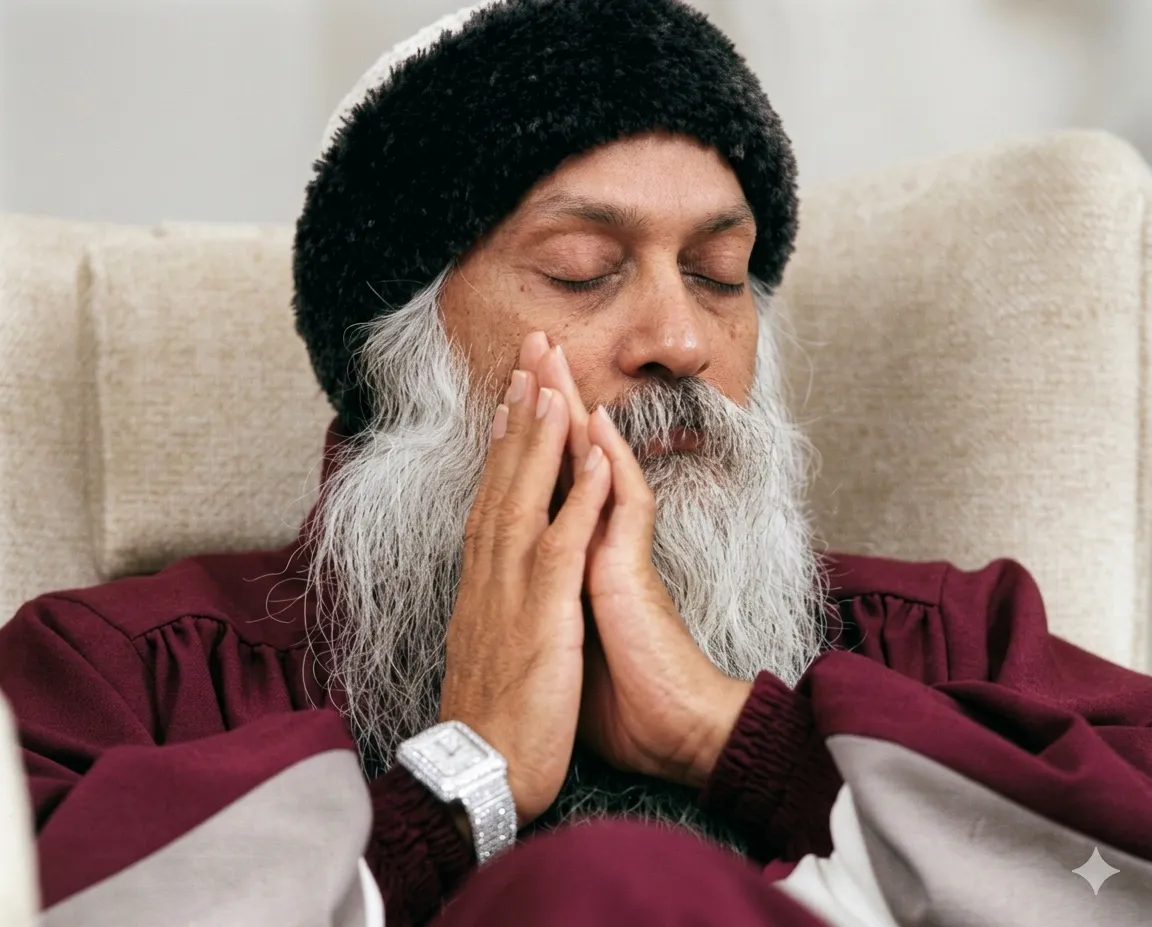
Osho's original Hindi beside Osho Live's English translation, matched passage by passage.
ज्ञानी की भाषा गणित की भाषा है। गणित की भाषा कठोर होगी। परमात्मा कठोर नहीं है। गणित की भाषा से देखोगे परमात्मा को तो कठोर दिखाई पड़ेगा। गणित की भाषा तुम्हारी आंख पर एक चश्मा है।
The jnani’s language is the language of mathematics. The language of mathematics will be austere. God is not austere; but if you look at God through the language of mathematics, he will appear austere. The language of mathematics is a lens on your eyes.
परमात्मा न तो कठोर है और न सदय है; न तो दयालु, न क्रोधी। द्वंद्व से भरे शब्दों में परमात्मा को बांटने का कोई उपाय नहीं है। परमात्मा है द्वंद्वातीत। लेकिन मनुष्य तो जब भी सोचेगा तो दो ही उपाय हैं उसके पास--या तो तर्क की भाषा, या प्रेम की भाषा; या तो गणित की भाषा, या काव्य की भाषा। ज्ञानी ने गणित की भाषा चुनी है। गणित की भाषा की कुछ खूबियां हैं और कुछ हानियां भी। खूबी--कि साफ-सुथरी होती है, स्पष्ट होती है। खतरा--क्योंकि स्पष्ट है, साफ सुथरी है, स्वयं नियमबद्ध है, इसलिए उसमें से देखा गया परमात्मा भी कठोर और नियमबद्ध मालूम होगा।
God is neither harsh nor tender; neither compassionate nor wrathful. There is no way to capture God in words soaked in duality. God is beyond dualities. But whenever man thinks, he has only two tools—either the language of logic or the language of love; either mathematics or poetry. The jnani has chosen the language of mathematics. That language has virtues and it has hazards. Its virtue is clarity—clean, precise. Its danger is this: because it is clear, clean, self-ruled, whatever you see through it—God included—will seem strict and ruled by law.
प्रेम की भाषा का भी अपना लाभ है, अपनी हानि है। लाभ है कि परमात्मा कठोर नहीं मालूम होगा--दयालु मालूम होगा, सदय मालूम होगा। तुम उसकी खोज पर सुगमता से निकल सकोगे। यात्रा बहुत दुर्गम न मालूम होगी। लेकिन हानि भी है। क्योंकि तुम अत्यंत भाव से भर कर परमात्मा की तरफ देखोगे, तुम्हें जीवन में, शीघ्रता से कुछ कर लेना है, इसकी प्रतीति कम होगी; आलस्य घेर लेगा, तमस घेर लेगा।
The language of love has its gain and its loss as well. The gain is that God will not seem stern; he will seem compassionate, kind. You will be able to set out to seek him with ease; the journey won’t feel so arduous. But there is a loss: because you look toward God filled with feeling, your sense of urgency in life may weaken; torpor and lethargy can creep in.
ज्ञानी का खतरा है कि वह सूखा हो जाता है। और भक्त का खतरा है कि वह आलसी हो जाता है--परमात्मा सदय है, जल्दी क्या है? उसकी कृपा अनंत है, मिल ही जाएगी। पुकारने की ही बात है।
The jnani’s danger is that he becomes dry. The bhakta’s danger is that he becomes lazy—“God is gracious; what’s the hurry? His grace is infinite; I’ll receive it. It’s only a matter of calling.”
ज्ञानी जीवन को बदलने में लग जाता है, क्योंकि डरा होता है। कठोर नियम हैं, चूका तो खतरा है। महानरक में पड़ना होगा। ज्ञानी जीवन को सुदृढ़ करने में लगता है, गढ़ता है, रंग देता है, आकार देता है, रूप देता है--और तीव्रता से देता है। जैसे छाती पर नंगी तलवार लिए कोई खड़ा है।
The jnani, afraid of strict laws and the peril of missing, sets about changing his life. He strengthens it, carves it, colors it, gives it form—and with intensity, as though a naked sword were poised at his chest.
भक्त सो जाता है। भक्त कहता है: जल्दी क्या है? उस प्यारे के हाथों में सब है। मेरे पापों की गिनती क्या है?
The bhakta falls asleep. He says, “What’s the hurry? Everything is in the Beloved’s hands. What are my sins against his mercy?”
ये लाभ हैं, हानियां भी जुड़ी हैं साथ-साथ। ज्ञानी परमात्मा को नियम की तरह देखता है, स्वयं भी सूख जाता है। तुम्हारा जैसा परमात्मा होगा, वैसे ही तुम हो जाओगे। उसके जीवन में एक गणित का सुथरापन तो होता है, लेकिन कोई काव्य नहीं जन्मता। उसके जीवन में कोई गीत नहीं गूंजता। उसके हृदय में कोई नृत्य नहीं होता, उत्सव नहीं होता। वह गंभीर हो जाता है, उदास हो जाता है, चिंतित हो जाता है। अब परमात्मा की तरफ चलने वाला आदमी चिंतित हो जाए, तो पहुंचेगा कैसे? भयभीत हो जाता है। और जहां भय है वहां मुक्ति कहां? जो भयभीत है, वह सिकुड़ जाता है, फैलना बंद हो जाता है। और फैलाव में ही उससे मिलन हो सकता है।
These are the gains, and the losses come along with them. The jnani sees God as law and dries up himself. You will become like the God you carry: as your God is, so will you be. In the jnani’s life there is a mathematical neatness, but no poetry is born. No song resounds. No dance, no celebration. He becomes grave, melancholy, worried. If one walking toward God becomes anxious, how will he arrive? He becomes afraid. And where there is fear, where is liberation? Fear makes one shrink, and it is only in expansion that union is possible.
वह फैलाव है। सारा अस्तित्व उसी का फैलाव है। जब हम भी फैलेंगे तो उससे मिलेंगे। उस जैसे होंगे तो उससे मिलेंगे।
He is expansion. The whole existence is his expansion. When we, too, expand, we meet him. Become like him, and you meet him.
तो ज्ञानी सिकुड़ जाता है, कठोर हो जाता है। अपने पर ही कठोर नहीं हो जाता, दूसरे पर भी कठोर हो जाता है। ज्ञानी के हाथ में पड़ जाओ तो तुम्हें सताने लगेगा।
तुम्हें इस तरह ढालने लगेगा कि तुम यंत्रवत हो जाओगे। खुद भी यंत्रवत हो जाता है, तुम्हें भी यंत्रवत कर देता है। यह खतरा है ज्ञान का।
The jnani shrinks, hardens. He is harsh not only with himself but with others. Fall into the hands of a jnani and he will begin to torment you—molding you until you become mechanical. He becomes mechanical and makes you mechanical too. This is knowledge’s danger.
भक्त सरल होता है, सहज होता है, आश्वस्त होता है, चिंतामुक्त होता है। भयभीत नहीं होता। जब उसका प्यारा ही सारे जगत के केंद्र में बैठा है तो भय कैसा? उसकी कल्पना में कोई नरक नहीं होते; नरकों में जलने वाली ज्वालाएं नहीं होतीं। फैलता है, आसानी से फैलता है। नाचता है, गाता है, उत्सव मनाता है। परमात्मा है तो उत्सव ही जीवन होना चाहिए। उसके भीतर से रसधार बहती है।
The bhakta is simple, spontaneous, assured, free of worry. He is not afraid. When his Beloved sits at the center of the universe, what fear can there be? In his imagination there are no hells; no flames of hellfire. He expands—easily expands. He dances, sings, celebrates. If there is God, then life should be a festival. A current of nectar flows within him.
ये तो लाभ हैं। लेकिन, नासमझ भी दुनिया में हैं, जो हर चीज में से हानि उठा लेते हैं। नासमझ हैं जो चादर ओढ़ कर सो जाते हैं। वे कहते हैं: जब वही है और उसकी करुणा अपार है, तो हम क्यों चिंता लें? हम क्यों फिकर करें?
These are the gains. But there are fools in the world who extract harm from everything. There are fools who pull a blanket over themselves and sleep. They say, “If he is all, and his compassion is boundless, why should we worry? Why take any care?”
ध्यान रखना, ये भाषाओं के भेद महंगे भी पड़ सकते हैं! सब तुम पर निर्भर है--तुम कैसे उपयोग करोगे? बुद्धिमान आदमी गलत स्थिति का भी ऐसा उपयोग कर लेता है कि ठीक परिणाम हों और बुद्धू ठीक स्थिति का भी ऐसा उपयोग करता है कि दुष्परिणाम हो जाते हैं। मगर ये भेद सिर्फ भाषा के हैं। इनके द्वारा परमात्मा के संबंध में कुछ पता नहीं चलता; इनके द्वारा परमात्मा की खोज पर निकले हुए आदमी के संबंध में पता चलता है।
Beware: these differences of language can cost you dearly! It all depends on you—how you use them. A wise person uses even a wrong situation so that the right result emerges, while a fool uses the right situation in such a way that it turns harmful. But these differences are only of language. They reveal nothing about God; they reveal the seeker who has set out to find God.
अगर महावीर के वचन सुनो तो साफ एक बात होती है कि महावीर शुद्ध गणित हैं। इससे महावीर के परमात्मा के संबंध में कुछ पता नहीं चलता, क्योंकि परमात्मा तो एक है; महावीर का हो कि मीरा का हो, कुछ फर्क नहीं पड़ता। लेकिन महावीर गणितज्ञ जैसे साफ-सुथरे हैं। जो लोग खोज-बीन करते हैं दर्शन के इतिहास की वे कहते हैं: जो बात अलबर्ट आइंस्टीन ने पच्चीस सौ साल बाद कही, वही बात महावीर ने पच्चीस सौ साल पहले कही थी--सापेक्षवाद का सिद्धांत--दि थइरी ऑफ रिलेटिविटी।
If you listen to Mahavira’s words one thing is clear: Mahavira is pure mathematics. This tells you nothing about God, because God is one; whether it is Mahavira’s God or Meera’s makes no difference. But Mahavira is as clean and exact as a mathematician. Students of the history of philosophy say: what Albert Einstein said twenty-five centuries later, Mahavira had said twenty-five centuries earlier—the theory of relativity.
महावीर और अलबर्ट आइंस्टीन में कुछ तालमेल है। दोनों के देखने का ढंग एक जैसा है--सुसंबद्ध, सुतर्कयुक्त। और महावीर ने उससे कोई हानि नहीं उठाई। महावीर न तो सूखे, न उदास हुए। उन जैसी मस्ती कहां! उन जैसा आनंद, अहोभाव कहां! कुछ हानि नहीं हुई महावीर की। महावीर सुसंबद्ध गणित का उपयोग करके भी सीढ़ी दर सीढ़ी परमात्मा तक पहुंच गए--परमात्मा हो गए।
There is a kinship between Mahavira and Albert Einstein—both see in a similar way: coherent, well-reasoned. And Mahavira suffered no loss on that account. He was neither dry nor sad. Where will you find such ecstasy! Such joy, such wonder! No harm came to Mahavira. Using the well-ordered rigor of mathematics, step by step he reached God—became God.
लेकिन फिर महावीर के पीछे चलने वाले, सेवड़े, वे कहीं पहुंचते मालूम नहीं होते। गणित उनके गले में फांसी की तरह लग गया है। बस वे हिसाब-किताब ही बिठा रहे हैं, खाते-बही ठीक कर रहे हैं, पाप-पुण्य का लेखा-जोखा कर रहे हैं। किस बात के करने से कितना पाप हो जाएगा और किस बात के करने से कितना पुण्य हो जाएगा, इसी में पड़े हुए हैं। सेवड़ों की जिंदगी में महावीर जैसा रस नहीं दिखाई पड़ता, न मस्ती दिखाई पड़ती है। वह महावीर की चाल, वह प्रसाद कहीं दिखाई नहीं पड़ता। यद्यपि महावीर नग्न हैं, लेकिन कृष्ण भी अपने सुंदरतम वस्त्रों में इतने सुंदर कहां थे? माना कि नहीं उन्होंने मोरमुकुट बांधा है, लेकिन बांधें क्यों? सौंदर्य नग्न भी सुंदर है। महावीर के सौंदर्य में कमी नहीं है। कहते हैं, महावीर जैसा सुंदर आदमी पृथ्वी पर दुबारा नहीं चला। शायद सुंदर इतने थे कि वस्त्रों की भी जरूरत न थी। यही कारण होगा कि नग्न हुए। सुंदर इतने थे कि देह पर कुछ भी और रखना देह को कुरूप करना होता।
But those who followed after him—his followers—do not seem to reach anywhere. Mathematics has become a noose round their necks. They only balance accounts, keep ledgers, tallying sin and merit. “How much sin accrues from this, how much merit from that”—this is all they are occupied with. In the lives of the followers the relish of Mahavira is missing; the ecstasy is missing. That gait of Mahavira, that grace—is nowhere to be seen. Although Mahavira was naked, even Krishna in his most splendid garments was not so beautiful. Granted, Mahavira wore no peacock-plume crown—but why wear one? Beauty is beautiful even naked. Mahavira’s beauty lacked nothing. It is said that never again has a man as beautiful as Mahavira walked the earth. Perhaps he was so beautiful that clothes were unnecessary. That must be why he was nude: so beautiful that to put anything upon that body would have been to mar it.
तुमने देखा, असुंदर स्त्रियां ज्यादा आभूषणों में रस लेती हैं। सुंदर स्त्रियां आभूषणों से मुक्त हो जाती हैं। जब भी कोई जाति कि स्त्रियां सुंदर होने लगती हैं, आभूषण विदा हो जाते हैं। आभूषण से लदी औरत सिर्फ अपनी कुरूपता की खबर देती है, और कुछ भी नहीं। आभूषणों के द्वारा वह अपनी कुरूपता को छिपाती है, आभूषणों के उधार सौंदर्य को अपने ऊपर आरोपित करती है। जिसके चेहरे में सौंदर्य नहीं है, उसकी नाक पर लगा हुआ हीरा, जड़ा हुआ हीरा, तुम्हें मोहित कर लेगा। कम से कम हीरा तो मोहित करेगा, हीरे की चमक तो मोहित करेगी! जिसके हाथ सुंदर नहीं हैं, उसके हाथ में बजती हुई चूड़ियों की खनकार शायद संगीत का अनुभव दे। जो स्वयं सुंदर नहीं हैं, वस्त्रों में आविष्ट, शायद सौंदर्य का भ्रम पैदा हो सके।
You’ve seen it: the less comely a woman, the more she delights in ornaments. A beautiful woman becomes free of ornaments. Whenever the women of a people grow in beauty, ornaments bid farewell. A woman laden with jewelry announces only her lack of beauty; she hides it with jewelry, imposes borrowed beauty upon herself. If a face lacks beauty, a diamond in the nose will charm you—at least the diamond will charm, its sparkle will charm! If the hands are not beautiful, the tinkle of bangles on them may give you a sense of music. Those who are not beautiful in themselves, wrapped in garments, may produce an illusion of beauty.
जितनी कुरूपता उतने आभूषण, उतना प्रसाधन, उतना इंतजाम। सुंदर स्त्री अपने में ही सुंदर है। आभूषण उसके सौंदर्य को खंडित करेंगे।
The more the ugliness, the more the ornaments, the cosmetics, the arrangements. A beautiful woman is beautiful in herself. Ornaments would fragment her beauty.
तो शायद यही कारण था कि महावीर नग्न खड़े हुए। अपूर्व सौंदर्य था उनका! अपूर्व प्रसाद था उनके व्यक्तित्व का! गणित की दृष्टि ने उन्हें मारा नहीं, उन्हें नुकसान नहीं पहुंचाया। बुद्धिमान आदमी को कोई चीज नुकसान नहीं पहुंचाती। वह जहर से भी औषधि बना लेता है। लेकिन उनके पीछे चलने वाले लोग सिर्फ गणित के हिसाब-किताब में लगे हैं। उनकी जिंदगी हिसाब-किताब में जा रही है। वे भूल ही गए मस्ती। मस्ती की फुर्सत कहां? नाचें कब? हिसाब ही पूरा नहीं बैठ पाता। गीत कब गाएं? वीणा कब बजाएं? बांसुरी कब उठाएं?
Perhaps that is why Mahavira stood naked—his beauty was unparalleled, the grace of his being unique. The mathematical vision did not kill him or harm him. Nothing harms a wise man; he can turn even poison into medicine. But those who came behind him are stuck with arithmetic. Their lives are being spent in bookkeeping. They have forgotten ecstasy. When is there leisure to dance? The accounts never quite balance. When to sing? When to play the veena? When to lift the flute?
और ध्यान रखना, बांसुरी बजाने के लिए बांसुरी ओंठों पर रखना अनिवार्य नहीं है। बांसुरी चुप्पी में भी बज सकती है। ऐसी ही महावीर की बजी थी। मगर बांसुरी निश्चित बज रही थी। एक अपूर्व आकर्षण था उस व्यक्तित्व में। बिना किसी आडंबर के आकर्षण था।
And remember, to play the flute it isn’t necessary to press one to the lips. The flute can play in silence. So it was with Mahavira. The flute was certainly playing. There was a rare magnetism in that person—attraction without any ostentation.
फिर मीरा है जो नाची, जो गाई, जिसने भाव से परमात्मा को देखा। उसके लिए परमात्मा नियम नहीं है। नियम अदालतों में होते हैं। परमात्मा उसके लिए न्यायाधीश नहीं है। न्यायाधीश से कोई प्रेम हो सकता है? न्यायाधीश तो कठोर। न्यायाधीश तो बिलकुल ऐसा होता है जैसे कि उसमें व्यक्तित्व होना ही नहीं चाहिए, तभी उसका न्याय पक्षपात-रहित होगा। अगर उसका जरा भी प्रेम-भाव है तो न्याय डांवाडोल हो जाएगा। अगर कोई सामने खड़ा है व्यक्ति, जिससे उसका लगाव है, प्रेम है, तो फिर शिथिलता हो जाएगी न्याय में। फिर न्याय पूरा नहीं हो पाएगा। या उसकी दुश्मनी है, विरोध है, तो भी न्याय गड़बड़ हो जाएगा। तब अतिशय कठोर हो जाएगा। न्यायाधीश को तो प्रेम से, लगाव से मुक्त होना चाहिए, निष्पक्ष होना चाहिए। कोई भावाविष्ट दशा नहीं होनी चाहिए।
Then there is Meera—who danced, who sang, who saw God through feeling. For her, God is not a law. Laws belong to courts. For her God is not a judge. Can anyone love a judge? A judge is stern. A judge should have no personality at all—only then will his justice be impartial. If even a trace of tenderness enters, justice will totter. If someone stands before him for whom he has attachment, love, justice will become lenient. Justice will not be fulfilled. Or if he has hostility, enmity, justice will go awry—become excessively harsh. A judge must be free of love and attachment, impartial. No emotional state should be present.
तुमने देखा, सारी दुनिया में न्यायाधीश के लिए हमने विशेष वस्त्र बना रखे हैं। वस्त्र ही नहीं, उसको सिर पर पहनने के लिए झूठे बाल भी तैयार करवा देते हैं, ताकि उसका व्यक्तित्व विदा हो जाए। आखिर आदमी आदमी है। उसकी पत्नी है, बच्चे हैं, मित्र हैं, शत्रु हैं--आदमी जैसा आदमी है। हम उसके सारे व्यक्तित्व को उससे छीन लेते हैं। हम उसे एक नकली आदमी बना कर बिठा देते हैं। हम उससे यह कह रहे हैं कि अब तुम भूल जाओ कि तुम समाज के हिस्से हो। तुम्हारा विग, तुम्हारे कपड़े, तुम्हारे बैठने का ढंग, वकील तुम्हें जिस तरह संबोधित करेंगे--माई लार्ड!. जैसे परमात्मा बैठा हो! अब वकील भी अच्छी तरह जानते हैं कि माई लार्ड जैसा कुछ भी नहीं है, लेकिन अब उदघोषणा ऐसी करनी है जैसी कि कठोर परमात्मा बैठा हुआ है--निष्पक्ष, दूर, जिससे हमारा कोई लेना-देना नहीं, जो शुद्ध नियम से चलेगा।
You have seen: everywhere in the world we have designed special robes for judges. Not only robes—we even provide false hair for their heads, so that their personality is dismissed. After all, a man is a man—he has a wife, children, friends, enemies—he is a human being. We strip his personality from him. We seat him as a fabricated person. We tell him: forget that you are part of society. Your wig, your clothes, your manner of sitting; the way lawyers will address you—“My Lord!” as if God himself were seated there. The lawyers know well there is no such “My Lord,” but the proclamation must be as though a stern God sits there—impartial, distant, with no connection to us, who will proceed by pure rule.
मीरा का परमात्मा न्यायाधीश नहीं है। मीरा का परमात्मा प्रेमी है। मीरा के साथ नाच रहा है। मीरा के साथ रास रचा रहा है। मीरा के हाथ में हाथ डाला है। मीरा उसकी ही धुन पर नाच रही है। मीरा अपनी धुन पर उसको नचा रही है। यह बड़े लगाव का, बड़े प्रेम का, बड़ा रससिक्त संबंध है। लेकिन मीरा में कुछ कमी नहीं है--महावीर से जरा भी कमी नहीं है। इतनी रससिक्त होकर, इतनी प्रीतिपूर्ण होकर, इतने भाव और प्राणों से परमात्मा को पुकारकर भी मीरा वहां ही पहुंच गई जहां महावीर अपने कठिन-कठोर नियम से पहुंचे। जहां महावीर तपश्चर्या से पहुंचे, वहां मीरा गीत गाते हुए पहुंच गई। जहां महावीर उपवास से पहुंचे हैं, वहां मीरा उत्सव से पहुंच गई है।
Meera’s God is not a judge. Meera’s God is the Beloved. He is dancing with Meera. He is playing the rasa with her. His hand is in hers. Meera is dancing to his tune; and Meera, on her own tune, makes him dance. This is a relationship of great attachment, great love, drenched in nectar. Yet there is no deficiency in Meera—she is in no way less than Mahavira. So drenched in rasa, so love-filled, calling God with such feeling and life-breath, Meera arrived at the same place where Mahavira arrived through his strict austerities. Where Mahavira reached through penance and fasting, Meera reached singing and celebrating.
लेकिन फिर बहुत भक्त हैं, भक्त के नाम से चलते हैं दुनिया में बहुत लोग, जो सिर्फ चादर ओढ़ कर सो रहे हैं; जो कहते हैं: ‘करना क्या है? वह प्यारा तो सबको देखने वाला है; वह तो सब करने वाला है। हमारा पाप भी क्या है, क्षमा कर देगा। जब मिलन होगा, झुक जाएंगे चरणों में, माफी मांग लेंगे। हमारे पाप ही छोटे-मोटे हैं, उसकी करुणा तो अपार है। हमारे पापों की गिनती क्या है? वह तो माफ कर देगा। हम क्यों परेशान हों?’ आलस्य पैदा हो रहा है। तमस पैदा हो रहा है।
But there are many devotees too—so-called devotees—who are only pulling a blanket over themselves and sleeping; who say, “What is there to do? The Beloved sees all; he does all. Our sins—what are they? He will forgive. When we meet, we will bow at his feet and ask forgiveness. Our sins are petty; his compassion is boundless. Why should we trouble ourselves?” Lethargy is being born. Tamas is being born.
भक्त की भूल अगर पैदा हो जाए तो तमस पैदा होता है। ज्ञानी की भूल अगर पैदा हो जाए तो उदासी, सूखापन, मरुस्थल--सब हरियाली विदा हो जाती है, सब फूल खिलने बंद हो जाते हैं। वसंत फिर नहीं आता।
If the bhakta errs, tamas is produced. If the jnani errs, sadness, dryness, desert—every greenery departs, flowers cease to bloom. Spring does not come again.
भूलों से बचना। कौन सी भाषा तुम चुनते हो, इसकी बहुत चिंता नहीं है। इतना ही खयाल रखना कि उससे कोई गलत परिणाम मत ले लेना। तो तुम किसी भी मार्ग से पहुंच सकते हो।
Avoid the errors. Which language you choose is not of great concern. Just take care not to draw wrong conclusions from it. Then you can arrive by any path.
ज्ञानी अपने संबंध में कह रहा है कि परमात्मा नियम है। सच तो यह है, हम जब भी परमात्मा के संबंध में कुछ कहते हैं तो अपने संबंध में कुछ कहते हैं। परमात्मा के संबंध में कुछ भी नहीं कहा जा सकता। अनिर्वचनीय है। अव्याख्य है। और, अगर परमात्मा के ही संबंध में कुछ कहना हो तो हमारे कोई शब्द काम नहीं आ सकते--न तो प्रेम, और न नियम। क्योंकि हमारे सारे शब्द हमारे हैं--छोटे-छोटे शब्द; जैसे हमारे छोटे-छोटे आंगन। इन छोटे-छोटे आंगन में कहां आकाश को समाओगे? और ऐसा भी नहीं है कि तुम्हारे आंगन में आकाश नहीं है--बस आकाश का एक अंशमात्र है, पूरा आकाश नहीं हो सकता है। ऐसे हमारे हर शब्द में परमात्मा का एक अंशमात्र हो सकता है, पूरा परमात्मा नहीं हो सकता।
The jnani, speaking about God, is speaking about himself. The truth is, whenever we say anything about God, we are saying something about ourselves. Nothing can be said about God. He is ineffable, indescribable. And if one must say something about God, none of our words will do—neither love nor law. Our words are ours—small words, like our small courtyards. How will you fit the sky into these little courtyards? And yet it is not that there is no sky in your courtyard—there is a fragment of sky, not the whole. In the same way, each of our words can hold only a fragment of God, never the whole.
लेकिन आदमी की भ्रांति, मतांधता ऐसी है कि जब वह दावा करता है तो अतिशयोक्तिपूर्ण कर देता है। फिर वह भूल ही जाता है कि यह छोटा आंगन, मैं इसको ही पूरा आकाश कहूं? तो भक्त भी वैसी भूल कर देता है कि अपने छोटे आंगन को पूरा आकाश कह देता है कि बस, परमात्मा ऐसा है, कि परमात्मा प्रेम है, और अन्यथा नहीं है। और ज्ञानी भी भूल कर देता है। कहता है: बस परमात्मा नियम है, अन्यथा नहीं।
But human delusion and dogmatism are such that when we assert, we exaggerate. We forget our courtyard is small and proceed to call it the whole sky. The bhakta makes this mistake: from his small courtyard he declares, “God is love—and nothing else.” The jnani makes the same mistake: “God is law—and nothing else.”
मैं तुमसे कहना चाहता हूं, परमात्मा के संबंध में जितनी बातें कही गई हैं, सब सच हैं। और जितनी बातें अभी नहीं कही गई हैं, कही जाएंगी कभी, वे भी सच हैं। और ऐसी भी बातें हैं जो न कही गई हैं और न कही जा सकेंगी, वे भी सच हैं। परमात्मा विराट है, अनंत है। हम कह-कह कर उसे चुकता न कर पाएंगे। हमारी सब भाषाएं छोटी पड़ जाएंगी। हमारे सब पैमाने छोटे पड़ जाएंगे। हमारी छोटी-छोटी प्यालियों में हम कितना उसे भरेंगे? सागर बड़ा है।
I want to tell you: everything that has been said about God is true. And everything that has not yet been said but will be said someday is also true. And there are things that neither have been nor can ever be said—those too are true. God is vast, infinite. We will never exhaust him by speaking. All our languages will prove small. All our measures will prove small. How much of him can we pour into our tiny cups? The ocean is vast.
अरिस्टोटल घूमता था सागर के तट पर, उसने एक आदमी को देखा। बड़ा पागल मालूम पड़ा वह आदमी। वह एक छोटी सी प्याली में, चाय पीने की प्याली में सागर से पानी भर कर लाता था और एक छोटा सा गड्ढा खोद रखा था उसने किनारे पर, उसमें डाल देता था। फिर भागा जाता, फिर डालता। फिर भागा जाता, फिर डालता। अरिस्टोटल घूमता रहा; घूमता रहा, बीच में बोलना नहीं है--किसी दूसरे आदमी के काम में क्यों बाधा डालनी? लेकिन फिर उसकी जिज्ञासा प्रबल हो उठी। नहीं रोक सका अपने को। कहा कि भई मुझे तुम्हारे काम में बाधा नहीं डालनी चाहिए, लेकिन मेरी समझ में नहीं आ रहा, तुम क्या कर रहे हो? तुम यह प्याली भर पानी भर कर लाते हो, इस रेत में खोदे गड्ढे में डालते हो, वह खो जाता है। फिर तुम भागे जाते हो, जब तक तुम लौटते हो, वह पहले वाला पानी तो रेत पी गई। तुम कर क्या रहे हो? इससे प्रयोजन क्या है?
Aristotle was walking along the seashore when he saw a man who seemed mad. With a tiny teacup he kept drawing water from the ocean and pouring it into a small pit he had dug in the sand. He would run, fill the cup, pour it, run again, pour again. Aristotle kept walking, and kept silent—why interfere in another’s work? But his curiosity grew strong. He could not restrain himself. He said, “I should not interfere, but I do not understand what you are doing. You bring a teacup of water and pour it into this hole in the sand—it vanishes. You run again; by the time you return, the earlier water has been drunk by the sand. What are you doing? To what purpose?”
उस आदमी ने कहा: मैंने तय किया है कि इस पूरे सागर को इस गड्ढे में उंड़ेलूंगा। अरिस्टोटल हंसने लगा। उसने कहा: तुम पागल हो। ऐसा सुन कर वह आदमी और भी जोर से हंसा। और उसने कहा: अगर मैं पागल हूं अरिस्टोटल, तो जरा अपने संबंध में विचार कर लेना। तुम क्या कर रहे हो? यह खोपड़ी आदमी की कोई चाय पीने की प्याली से ज्यादा बड़ी है? इसमें भर-भर कर तुम परमात्मा को चुकता करने की कोशिश कर रहे हो।
The man said, “I have decided to pour this entire ocean into this pit.” Aristotle began to laugh. “You are mad,” he said. Hearing this, the man laughed even more loudly. He said, “If I am mad, Aristotle, consider yourself. What are you doing? Is this skull of yours any larger than a teacup? Filling it again and again, you are trying to exhaust God.”
यही अरिस्टोटल कर रहा था जीवन भर। तर्कनिष्ठ आदमी था। तर्क का जन्मदाता था पश्चिम में। तर्क का पिता। उसका काम ही यही था कि सारा अस्तित्व तर्क की पद्धति से सुस्पष्ट हो जाए। उस आदमी ने अरस्तू को एक धक्का दे दिया। वह आदमी परमज्ञानी रहा होगा। रहा होगा कोई मस्त फकीर, जो अरिस्टोटल को जगाने आया था। उस दिन से अरिस्टोटल के जीवन में बड़ा फर्क पड़ा। पुरानी अकड़ न रही। जब भी सोचने बैठता, तभी उस आदमी की याद आती--वह प्याली, सागर का पानी भरना, गड्ढे में डालना।
This is exactly what Aristotle had been doing all his life. He was a man of logic—the father of logic in the West. His very work was to make the whole of existence transparent by the method of logic. That man gave Aristotle a jolt. He must have been a knower, a carefree fakir who came to awaken Aristotle. From that day a great change came into Aristotle’s life. The old stiffness was gone. Whenever he sat to think, he remembered that man—the teacup, the ocean water, the pit.
आदमी की बुद्धि और ज्यादा कर भी क्या सकती है! आदमी जो भी कहता है परमात्मा के संबंध में, अपने संबंध में कहता है। अपनी आंख के संबंध में कहता है। अपने देखने के ढंग के संबंध में कहता है। अपनी जीवन-शैली के संबंध में कहता है।
What more can human intellect do? Whatever man says about God, he says about himself—about his eyes, his way of seeing, his way of living.
तुम्हें जो रुच जाए, उसके अनुकूल चल पड़ना। पर इतना ही खयाल रखना, हर मार्ग के लाभ हैं, हर मार्ग की हानियां हैं। हानियों से सावधान रहना। ऐसा कोई भी मार्ग नहीं है जिसकी हानि न हो और जिस पर हानि की संभावना न हो। जितना लाभ हो उतनी ही हानि की संभावना है। जितना ज्यादा लाभ हो उतनी ही ज्यादा हानि की संभावना है। लाभ और हानि सदा अनुपात में होते हैं।
Choose what resonates with you, and move accordingly. But remember this much: every path has gains, every path has hazards. Beware of the hazards. There is no path without the possibility of harm. The greater the gain, the greater the possibility of harm. Gain and harm are always in proportion.
दूसरा प्रश्न भी पहले से कुछ संबंधित है।
दूसरा प्रश्न है:
The second question is also somewhat related to the first. The second question is:
खेल के नियम होते हैं, जरूर होते हैं। और खेल के भी नियम होते हैं, ऐसा नहीं; अगर ठीक से समझोगे तो खेल के ही नियम होते हैं। और प्रेम खेल नहीं है। और जब प्रेम खेल नहीं होता, तभी प्रार्थना का जन्म होता है।
Games have rules—of course they do. Not just “also games have rules”; rightly understood, only games have rules. And love is not a game. Only when love is not a game does prayer take birth.
तुम जिसे प्रेम समझ रहे हो, वह तो खेल है, उसके तो नियम हैं। पति-पत्नी के बीच नियम होते हैं। नहीं तो विवाह क्या है? सब नियम से खेल चल रहा है। बैंड-बाजा बजेगा। घोड़े पर सवार होगा दूल्हा, दुल्हन सजेगी, बरात निकलेगी। ये सब नियम हैं। इन नियमों के द्वारा एक बात गहराई जा रही है मन में, कि कोई बहुत महत्वपूर्ण कार्य हो रहा है? वैसे घोड़े पर कभी बैठे नहीं थे। अब घोड़े पर बैठे हैं। दूल्हें को कहते हैं--‘दूल्हा राजा!’ मोर बांधा हुआ है। कटार लटकाई हुई है। कटार--जिससे सब्जी भी न कटे! मगर अकड़ देने के लिए। वस्त्र पहनाए हुए हैं--विशिष्ट, जैसे अगर ऐसे ही पहन कर निकलो तो लोग भीड़ लगा कर देखें और कहें कि दिमाग खराब हो गया है या क्या बात है? एक विशिष्टता देने के लिए, ताकि तुम्हारे मन में यह छाप पड़ी रह जाए कि कुछ महत्वपूर्ण कार्य हुआ है।
What you are calling love is a game; therefore it has rules. Between husband and wife there are rules. Otherwise, what is marriage? The whole play is run by rules. The band will play, the groom will ride a horse, the bride will be decked out, the procession will go forth—these are all rules. Through these rules a suggestion is being driven deep into the mind that something very important is happening. He may never have sat on a horse in his life—but today he mounts one. They call the groom “king,” he wears a peacock plume, a dagger dangles at his side—a dagger that couldn’t cut even vegetables!—but it gives him a strut. He is dressed in such special garments that if he wore them on an ordinary day people would gather around and ask whether he had lost his mind. All this is to stamp your mind with the impression that something momentous has occurred.
फिर मंत्र-जाप है, पूजा-पाठ है, हवन है, फिर हवन के चारों तरफ सात फेरे हैं। पंडितों का संस्कृत का उच्चार, जो तुम्हें कुछ समझ में नहीं आता कि क्या कहा जा रहा है, क्यों कहा जा रहा है। न पंडित को पता है, न तुमको पता है।. कुछ विशिष्ट हो रहा है! एक विशिष्टता की हवा पैदा की जा रही है। सात चक्कर लगा दिए गए, एक गांठ बांध दी गई, कसम खिला दी गई--समाज के सामने, सारे लोग मौजूद हैं। समाज ने सील-मोहर लगा दी। ये सब खेल के नियम हैं।
Then there are mantras, worship and ritual, the sacred fire, seven circumambulations around it. The priests chant Sanskrit you do not understand—neither do they. Something “special” is happening! An aura of specialness is manufactured. Seven rounds are taken, a knot is tied, vows are administered before society, in the presence of all. Society seals it. These are the rules of the game.
एक सज्जन मेरे पास आते हैं, वे कहते हैं: बड़ा परेशान हूं। सालों बीत गए; इस स्त्री के साथ जिस दिन से मेरा विवाह हुआ है, शांति नहीं जानी। तो मैंने उनसे कहा कि कोई रास्ता नहीं बनता हो तो छूट जाओ, अलग हो जाओ। वे कहने लगे: कैसे छूट जाओ? सात फेरे पड़ चुके हैं। तो मैंने कहा: उलटे फेरे पाड़ लो, और क्या करोगे? आखिर फेरे ही पड़े हैं न, तो रास्ता तो है ही। फिर बैंड-बाजा बजवा दो, फिर बैठ जाओ घोड़े पर। अब की दफा उलटे बैठ जाना। फिर इकट्ठा कर लो लोगों को और उलटे चक्कर लगा लेना और गांठ खोल कर कहना कि नमस्कार।
A gentleman once came to me and said, “I am very troubled. Since the day I married this woman, I have not known peace.” I said, “If there is no way forward, then separate.” He replied, “How can we separate? We have taken seven rounds.” I said, “Then take seven rounds in reverse—what else will you do? After all, they were just rounds; there is a way out. Have the band play again, mount the horse again—this time sit backwards. Gather the people again, walk the reverse rounds, untie the knot and say, ‘Namaskar.’”
मगर हम इसीलिए सदियों तक तलाक का अवसर नहीं दिए थे, क्योंकि अगर तलाक का अवसर हो तो विवाह के खेल की गंभीरता नष्ट हो जाती है। फिर ऐसा लगता है, यह खेल तो तोड़ा भी जा सकता है। तो फिर लगने लगता है कि यह खेल ही है। जब तलाक हो सकता है तो विवाह खेल मालूम होने लगता है। तलाक हो ही नहीं सकता, तो फिर विवाह खेल नहीं है।
खेल के तो बाहर तुम आ सकते हो। ताश खेलने बैठे, नहीं खेलना तो उठ गए। खेल को तो कभी भी बंद किया जा सकता है। विवाह खेल नहीं है, ऐसी तुम्हारे मन में धारणा बिठाने के लिए, तलाक को रोका गया था। और जिन-जिन देशों में तलाक को सुविधा मिल गई है, उन-उन देशों में विवाह विदा हो रहा है। हो ही जाएगा, क्योंकि जब खेल ही है तो जब तक खेलना है खेलो, जब नहीं खेलना है तो समाप्त करो। कष्ट झेलने की कोई जरूरत नहीं है।
But precisely to keep divorce impossible for centuries, we denied that opportunity, because if divorce is possible, the seriousness of the marriage game collapses. It will begin to look like what it is: a game. If divorce can happen, marriage begins to appear as play. If divorce cannot happen, then marriage seems not to be a game. In a game you can step out. You sit to play cards; if you don’t wish to continue you get up. A game can be stopped at any time. To fix in your mind that marriage is not a game, divorce was blocked. And wherever divorce has become easy, there marriage is receding. It will recede—because when it is understood to be a game, play as long as you wish; when you don’t, end it. There is no need to suffer.
प्रेम--जिस प्रेम की बात सुंदरदास कर रहे हैं या मैं कर रहा हूं--खेल की बात नहीं है। खेल के पार उठने की बात है। इस जगत में एक ही चीज तो है जो खेल नहीं है, वह परमात्मा है। बाकी सब खेल है। परमात्मा से जुड़ने का नाम प्रेम है। वहां कैसे नियम? क्योंकि अगर वहां भी नियम हों तो नियम तोड़े जा सकते हैं। अगर नियम हों तो नियम बचाए जा सकते हैं। अगर नियम हों तो नियम से बचने की तरकीबें निकाली जा सकती हैं। हर नियम में से उपाय निकाला जा सकता है।
Love—the love Sundardas is speaking of, or I am speaking of—is not play. It is about rising beyond play. In this world, only one thing is not a game: the Divine. Everything else is play. The name of joining with the Divine is love. How could there be rules there? For if there are rules, they can be broken. If there are rules, they can be kept. If there are rules, tricks can be invented to dodge them. Every rule can be outwitted.
लेकिन परमात्मा और मनुष्य के बीच का संबंध नियम का संबंध नहीं है--निसर्ग का संबंध है। यह कोई नियम नहीं है कि आदमी परमात्मा से जुड़ा है। यह नियति है। ऐसी अस्तित्व की व्यवस्था है। यह कोई नियम नहीं है कि वृक्ष पृथ्वी से जुड़ा है। वृक्ष पृथ्वी का ही रूप है, पृथ्वी का ही रंग है। पृथ्वी ने ही अपने हरे रंग को वृक्ष में उंड़ेला है। और पृथ्वी ने अपने लाल रंग को वृक्ष में फूल बनाया है। और पृथ्वी में छिपी हुई सुगंध वृक्ष-वृक्ष में आकर प्रकट हुई है, वृक्ष पृथ्वी का ही फैला हुआ हाथ है आकाश की तरफ। यह पृथ्वी की आकांक्षा है चांद-तारों को छूने की। यह पृथ्वी के नाचने का भाव है। यह पृथ्वी मस्त होना चाहती है। यह वृक्ष किसी नियम के कारण पृथ्वी से नहीं जुड़ा है--यह पृथ्वी का ही हिस्सा है।
But the relationship between the Divine and man is not of rules—it is of nature. It isn’t a regulation that man is joined to God; it is destiny. It is the order of existence. It isn’t a rule that the tree is joined to the earth. The tree is the earth itself, its very hue. The earth has poured its green into the tree, its red into flowers. The fragrance hidden in the earth has blossomed through the trees; a tree is the earth’s outstretched hand toward the sky. It is the earth’s longing to touch the moon and stars, the earth’s urge to dance, to be intoxicated. The tree is not connected to the earth by some statute—it is a part of the earth.
जैसे वृक्ष पृथ्वी से एक है, ऐसे ही मनुष्य परमात्मा से एक है। मनुष्य परमात्मा का ही फैलाव है, उसी का विस्तार है। जिस दिन यह बात पहचान में आती है उस दिन प्रेम जगा। उस प्रेम का कोई नियम नहीं होता। वह स्वयं ही अपना नियम है।
As the tree is one with the earth, so man is one with the Divine—His unfolding, His expansion. The day this is recognized, love awakens. That love has no rules. It is itself its own law.
तुम पूछते हो: ‘कहते हैं खेल के भी नियम होते हैं।’
खेल के तो नियम होते ही हैं। सच तो यह है, खेल नियम पर ही निर्भर होता है। इसलिए खेल में लोग नियम को तोड़ते नहीं। नियम को तोड़ो तो खेल खत्म। कोई भी नियम तोड़ दो तो खेल खत्म।
You ask: “They say even games have rules.” Games do have rules. In truth, a game depends upon rules. That’s why in a game people do not break the rules. Break a rule and the game ends. Any rule you break—game over.
तुम ताश खेलने बैठे हो तो तुम्हें मानना पड़ता है कि यह राजा है, यह रानी है। और तुम भी जानते हो कि कागज का पत्ता है--न कोई राजा है, न कोई रानी है। अब तुम यह नहीं कह सकते खड़े होकर कि हम राजा-रानी में नहीं मानते, क्योंकि हम तो लोकतंत्र में मानते हैं। तो खेल खत्म। तो फिर बात बंद हो गई। अब क्या खेलोगे? राजा-रानी के बिना खेल नहीं चल सकेगा। हालांकि जिंदगी से विदा हो गए, लेकिन ताश के पत्तों में अभी हैं। ताश के पत्तों में रहेंगे।
You sit to play cards; you must agree that this is a king, this a queen. You also know it is a piece of paper—neither king nor queen. You cannot stand up and declare, “We do not accept kings and queens; we are democrats.” The game ends; then what will you play? Without king and queen the game won’t run. They have gone from life, but they remain in the deck—and there they will remain.
कहते हैं, आने वाली दुनिया में बस पांच ही राजा-रानी रहेंगे--चार ताश के पत्तों में और एक इंग्लैंड का। बाकी तो सब गए, क्योंकि इंग्लैंड का रानी हो या राजा, वह भी ताश के पत्तों जैसा है। उसमें कुछ बल नहीं है। सिर्फ नाममात्र है। खेल का एक हिस्सा है। तोड़ने की कोई जरूरत नहीं।
They say that in the world to come only five kings and queens will be left—four in the deck of cards and one in England. The rest are gone; and even the English one, king or queen, is like a card—no power, only a name, a part of the game. No need to overthrow it.
खेल तो नियम पर ही निर्भर होते हैं। तुम अपने नियम नहीं चला सकते। खेल में तो स्वीकृत नियम होता है। तुम अगर शतरंज खेल रहे हो तो तुम यह नहीं कह सकते हो कि हम अपनी ही चाल तय करेंगे--कि घोड़ा कैसे चले, ऊंट कैसे चले, वजीर कैसे चले। तुम यह नहीं कह सकते कि कोई अनिवार्यता थोड़े ही है कि वजीर ऐसा ही चले कि घोड़ा ऐसा ही चले; हम अपना नियम बनाएंगे। दूसरा आदमी अपना नियम बनाएगा, खेल खत्म हो गया।
Games depend upon rules. You cannot run your own rules. In play the rules are agreed. If you are playing chess you cannot say, “I will decide my own moves—how the knight moves, how the bishop moves, how the queen moves. There is no necessity that they move so; I will make my own.” The other will make his own—game finished.
खेल तो नियम पर निर्भर होता है। वह तो समझौता है। वह तो इस बात का राजीपन है कि हम दोनों राजी हैं नियम पर, तो ही खेल चलता है।
A game is a compromise. It runs only by mutual consent to the rules.
जिनकी जिंदगी नियम के अनुसार चलती है, उनकी जिंदगी ताश के पत्तों जैसा खेल है, शतरंज का खेल है। कुछ जिंदगी में खोजो जो नियम नहीं है। वही सत्य है। कुछ ऐसा खोजो, जिसके लिए तुमने कोई समझौता नहीं किया है। कुछ ऐसा खोजो कि तुम्हारे समझौता तोड़ने से टूट नहीं जाएगा। कुछ ऐसा खोजो जो तुम्हारा कांट्रेक्ट नहीं है। सब खेल कांट्रेक्ट है।
Those whose lives run by rules are living a game of cards, a chess game. Seek something in life that is not a rule—that alone is truth. Seek something for which you have made no agreement, which will not collapse when you stop agreeing, something that is not your contract. All games are contracts.
तो मैं तुमसे कहना चाहूंगा. पूछा तुमने: ‘कहते हैं खेल के भी नियम होते हैं।’ मैं कहना चाहता हूं कि खेल के ही नियम होते हैं। और अगर तुम्हारी जिंदगी में नियम ही नियम हैं तो तुम बस खेल ही खेल में पड़े हो। तुम्हें असलियत का कब पता चलेगा, कैसे चलेगा? कुछ खोजो, जो नियम के बाहर है, जो नियम में नहीं समाता। वहीं से द्वार मिलेगा। उसी को प्रेम कहा है सुंदरदास ने। और उसकी संभावना है।
So I say to you—you asked, “They say even games have rules.” I say only games have rules. And if your life is nothing but rules, you are caught in nothing but games. When will you ever know the real? How will you know it? Seek something beyond rules, which does not fit into rule. There you will find the door. Sundardas has called that love. And it is possible.
अड़चन यह आ रही है कि तुमने जिसे प्रेम समझ रखा है, वह खेल है। और तुम बड़े डूब कर खेलते हो, इसमें कोई संदेह नहीं। लोग शतरंज खेलने में तलवारें खींच लिए हैं। ताश के पत्तों में झगड़े हो गए हैं जो जिंदगी भर चले हैं। लोग बड़ी गंभीरता से खेलते हैं। खेल को गंभीरता से ही खेलना पड़ता है, नहीं तो तुम्हें दिख ही जाएगा कि खेल है, हम भी क्या कर रहे हैं? अगर तुम खेल को गंभीरता से नहीं लेते तो तुम्हें मूढ़ता मालूम पड़ेगी।
The obstacle is that what you have taken as love is a game. And you play it with great seriousness—no doubt about it. People have drawn swords over chess. Quarrels over cards have lasted a lifetime. People play very seriously. You have to play a game seriously; otherwise you will see that it is a game and wonder, “What are we doing?” If you don’t take it seriously, its foolishness becomes obvious.
जरा सोचो कि अंतरिक्ष से कोई यात्री उतरता है--उतरेगा जल्दी, क्योंकि उड़नतश्तरियां उड़ रही है--कोई अंतरिक्ष का यात्री उतरता है और तुम्हारे खेल देखे। समझो कि फुटबॉल खेल रहे हो, कि वालीबॉल खेल रहे हो। वह बड़ा हैरान होगा कि इनका दिमाग तो खराब नहीं हो गया? गेंद को इधर से उधर फेंकते, उधर से इधर फेंकते, इनका दिमाग तो खराब नहीं हो गया? और इनका तो हो गया सो हो गया और ये हजारों लोग देखने आए हैं, ये क्या देख रहे हैं? और बड़ा शोरगुल मचाते हैं, दंगे-फसाद हो जाते हैं। उनकी समझ में नहीं आएगा एकदम से कि यह हो क्या रहा है! यह कौन सी चीज हो रही है? यह किसलिए हो रही है? एक दफा गेंद को उधर फेंकना हो तो उधर फेंक दो, इधर फेंकना हो इधर फेंक दो। अपने घर जाओ। या ज्यादा ही दिक्कत हो तो दो गेंद रखो, अपनी-अपनी फेंकते रहो, मजा करो। मगर यह इतनी झंझट और इतनी झंझट इतने लोग देखने भी आए हैं, सार कहां है? अर्थ क्या है?
Imagine a traveler from space landing—soon they will; flying saucers are flitting about—he comes and watches your games: football, volleyball. He will be bewildered: “Have these people gone mad? They throw a ball here and there—are they crazy? And thousands watching them—what are they watching? Such noise, even riots!” He will not understand at first what is happening. What is this? What for? If the ball is to be thrown that way, throw it; if this way, throw it—then go home. Or if it’s such a problem, keep two balls—each side throws its own, enjoy yourselves. But so much fuss—and so many people to watch! Where is the essence? What is the meaning?
अर्थ तो कुछ भी नहीं है। खेल को हमने गंभीरता दी है। भारी गंभीरता दी है। खेल हमारी एक तरकीब है, जिससे हम वास्तविक हिंसा को बचाना चाहते हैं। खेल के द्वारा हम झूठी हिंसा करके हिंसा करने की तृप्ति पा लेते हैं--हरा दिया दूसरे को! अब यह जरा भद्दा लगता है कि उसकी छाती पर चढ़ कर बैठो और घूंसे मारो, यह जरा भद्दा लगता है। वह भी चलता है, मगर भद्दा लगता है, तो हमने कुछ तरकीबें निकाल ली हैं कि तुमको तो घूंसा नहीं मारेंगे, लेकिन तुम्हारी पिद्दी को पीट देंगे। वह प्रतीक है कि पीट दी पिद्दी, तुम पिट गए। ऐसी हमने तरकीब निकाल ली। सीधा घूंसा मारें किसी को, तो जरा असभ्य मालूम होता है। हमने बहाने निकाल लिए। होशियार है आदमी, कुशलता से बहाने निकाल लेता है।
There is no meaning. We have invested games with seriousness—heavy seriousness. Games are our device to avoid direct violence. Through games we enact fake violence and get the satisfaction of having defeated the other. It seems crude to sit on someone’s chest and pound him with your fists; it still happens, but it’s crude—so we devised techniques: “We won’t punch you; we’ll take it out on the ball.” The ball is the symbol: thrash the ball and you are thrashed. We find these devices. To punch someone directly looks uncivilized; we have invented excuses. Man is clever; he finds refined pretexts.
मैंने सुना है, अदालत में एक मुकदमा था। दो आदमियों में सिर-फोड़ हो गई। मजिस्ट्रेट उनसे पूछे कि बात क्या थी? और वे दोनों ही एक-दूसरे की तरफ देखें और कहें कि तू ही बता दे। आखिर मजिस्ट्रेट ने कहा: बोलते हो कि नहीं, नहीं तो दोनों की पिटाई करवाई जाएगी और कारागृह में डाल दिया जाएगा। बोलो, मामला क्या है? झगड़ा शुरू कैसे हुआ?
I have heard of a court case. Two men had cracked each other’s heads. The magistrate asked, “What happened?” Both looked at each other: “You tell him.” Finally the magistrate said, “Speak, or I’ll have both of you thrashed and jailed. How did the fight begin?”
उन्होंने कहा कि अब हम क्या बताएं आपको। हम दोनों दोस्त हैं। नदी के किनारे बैठे थे रेत में, गपशप कर रहे थे। इसने कहा कि यह आदमी एक भैंस खरीदने जा रहा है। मैंने इससे कहा: भैंस मत खरीद भाई, क्योंकि कभी मेरे खेत में घुस जाएगी। अपनी पुरानी दोस्ती है। झांसा-झगड़ा होगा। मैं बरदाश्त नहीं कर सकूंगा। मेरे खेत में मैं भैंस किसी की बरदाश्त कर ही नहीं सकता। मैं भैंस की पिटाई कर दूंगा। तू भी आदमी जिद्दी है, तू भी अपनी भैंस की पिटाई न देख सकेगा। नाहक पुरानी दोस्ती खराब हो जाएगी। तू भैंस मत खरीद। उस आदमी ने कहा: ‘कौन मुझे रोक सकता है दुनिया में भैंस खरीदने से? कल खरीदता था तो आज खरीदूंगा। और तू क्या है, तेरा खेत क्या है? और भैंस घुसेगी ऐसी कल्पना मत कर--घुसेगी ही! और कर लेना जो करना हो। देख लिए बहुत ऐसी बातें करने वाले। भौंकने वाले कुत्ते काटते नहीं हैं।’ और इसने बड़े तेजी पर बात चढ़ा दी। बात यहां तक बढ़ गई कि मैंने अपने हाथ से लकीर खींच दी रेत में कि यह रहा मेरा खेत, घुसा इसमें भैंस, और इसने एक लकीर हाथ से खींच कर कहा कि यह घुस गई मेरी भैंस, और कर ले कौन मेरा क्या करता है! बस उसी में माथा-फोड़ हो गया, एक-दूसरे का सिर खुल गया। अब हम आपसे क्या कहें? न इसने भैंस खरीदी है, न मेरा अभी खेत है। मैं भी खेत खरीदने की सोच रहा हूं।
They said, “What to tell you? We are friends. We were sitting on the riverbank, chatting in the sand. He said he was going to buy a buffalo. I told him, ‘Don’t buy a buffalo, brother, someday it will stray into my field. We have old friendship; there will be trouble. I cannot tolerate a buffalo in my field; I will beat it. You are stubborn; you won’t bear it either. Our friendship will be ruined for nothing. Don’t buy a buffalo.’ He said, ‘Who can stop me from buying a buffalo? If I wanted to buy it yesterday, I will buy it today. Who are you? What is your field? And don’t “imagine” it will enter—assume it will! Do whatever you like. I’ve seen many barkers like you—barking dogs don’t bite!’ He provoked it. I drew a line in the sand: ‘Here is my field; let your buffalo enter!’ He drew a line: ‘Here is my buffalo; let it enter! What can you do?’ And that’s how our heads got broken.” Now what could they say? He hadn’t bought a buffalo, nor did I yet have a field—I am only thinking of buying land.”
आदमी बहाने खोज लेता है, हिंसा सहारे लेकर निकल आती है। तुम्हारे खेलों में तुम्हारा जो रस है, उसके पीछे और कारण हैं। कहीं प्रतिस्पर्धा है, कहीं हीनता का भाव है, कहीं जिंदगी में पिट गए हैं। तो अब कहीं और.।
Man finds excuses; violence finds a support and breaks out. Your relish for games has other reasons: competition, inferiority, being beaten in life; so somewhere else…
तुम अगर जाओ विश्वविद्यालय में, तो तुम एक बात देख कर हैरान होओगे: वहां तुम्हें जितने अच्छे खिलाड़ी मिलेंगे, सब गधे हैं। वह कारण है। वे पिट गए हैं एक जगह--गणित में पिट गए, भाषा में पिट गए, विज्ञान में पिट गए--अब वे कहीं तो पीटें! आखिर उनको भी तो जिंदा रहना है। आखिर थोड़ा आत्म-सम्मान बचाना है। वे फुटबॉल पीट रहे हैं, हाकी चला रहे हैं। जितने छंटे हुए गधे विश्वविद्यालय में होते हैं.। मैं विश्वविद्यालय में बहुत दिन रहा हूं, इसलिए जानता हूं। जिनको प्रसिद्ध खिलाड़ी समझा जाता है, वे वही लोग होते हैं जो परीक्षाओं में कभी पास होते ही नहीं। मगर वे भी अपना रास्ता निकाल लेते हैं। और उनका भी बड़ा सम्मान होता है। यहां तक सम्मान होता है कि वे पास नहीं भी होते तो भी उनको पास किया जाता है, कि वे कहीं दूसरे विश्वविद्यालय या दूसरे कॉलेज में न चले जाएं, क्योंकि उन्हीं के साथ ट्राफी जुड़ी है। उन्हीं के साथ प्रतियोगिता जुड़ी है। कॉलेज का नाम भी उनके साथ जुड़ा है। उनको रोका जाता है, समझाया जाता है कि रुके रहो। उनकी फीस माफ की जाती है, स्कॉलरशिप दी जाती है। और स्कालर जैसा उनमें कुछ भी नहीं है, इसलिए वे खिलाड़ी हैं।
If you go to a university, you will be surprised: the star athletes there are all dunces. There is a reason. They got beaten in one area—mathematics, language, science—so they must beat something else! They too have to survive, maintain a little self-respect. They kick a football, wield a hockey stick. In universities—I lived long in them—I know: those who are celebrated athletes are precisely those who never pass exams. But they find a way; they command respect. So much respect that even if they don’t pass, they are passed—lest they transfer to another college or university, taking the trophies with them. Competitions, college prestige are tied to them. They are retained, coaxed to stay. Their fees are waived, scholarships granted. There is nothing “scholar” about them—that’s why they are sportsmen.
मगर हर आदमी अपना कोई रास्ता निकाल लेता है, कोई तरकीब निकाल लेता है। इस दुनिया में सब तरह के खेल चल रहे हैं, लेकिन खेलों के पीछे और छिपे खेल हैं। कोई एकाध चीज तो खोजो जो खेल न हो; जिसमें तुम्हारा अहंकार न जुड़ा हो; जिसमें तुम्हारी हिंसा न जुड़ी हो; हीनता का भाव न जुड़ा हो; ईर्ष्या, प्रतिस्पर्धा इत्यादि न जुड़ी हो। कोई एक चीज खोजो। उसको ही सुंदरदास प्रेम कहते हैं। उस प्रेम के कोई नियम नहीं। वह प्रेम पर्याप्त है। वह जिसके जीवन में उतर आता है, उसके जीवन में शेष सब अपने आप आ जाता है। उसके जीवन में एक सौंदर्य होता है, एक सत्य होता है--साधा हुआ नहीं। साधे हुए सत्य की तो कोई कीमत नहीं है। उसके जीवन में एक आचरण होता है--अभ्यास किया हुआ नहीं। क्योंकि अभ्यास किए हुए आचरण का तो कोई भी मूल्य नहीं है। वह तो पाखंड है। उसके भीतर एक सहजस्फूर्त आचरण होता है। जिसने परमात्मा को प्रेम किया, उसके जीवन में एक सहजस्फूर्त आभा होती है। वह परमात्मा के प्रेम के कारण ही हो जाती है। उसमें एक शालीनता होती है--एक दिव्यता, जो अभ्यास से की गई दिव्यता नहीं है, और न अभ्यास से किया गया किसी तरह का चरित्र है। चरित्र तो उसमें होता नहीं। जिसको तुम चरित्र कहते हो वैसा चरित्र नहीं होता उसमें। उसमें एक अनूठे ढंग का चरित्र होता है, जिसको कहने के लिए हमारे पास कोई शब्द नहीं है। एक ‘सहज’ शब्द है जो उसे प्रकट करता है। वैसा व्यक्ति सहजिया होता है। क्षण-क्षण जीता है, सहज भाव से जीता है।
Everyone finds some route, some trick. All kinds of games go on in this world, and behind them, more hidden games. Find at least one thing that is not a game—where your ego isn’t involved, your violence isn’t involved, your inferiority, jealousy, competitiveness aren’t involved. Find one thing. Sundardas calls that love. That love has no rules. That love is sufficient. When it descends into a life, everything else falls into place on its own. Such a life has a beauty, a truth—not cultivated. Cultivated truth has no value. Such a life has conduct—not practiced. Practiced conduct is worthless; it is hypocrisy. Within, a spontaneous conduct arises. One who has loved the Divine radiates a spontaneous aura. It happens because of that love. There is a grace, a divinity—not a divinity achieved by practice, nor a “character” achieved by effort. The kind of “character” you talk about is not there. There is a unique quality for which we lack a word. Only “sahaj”—natural, effortless—expresses it. Such a person is sahaj; he lives moment to moment, in naturalness.
सुकरात को जहर दिया जाने का दिन आया। सजा अदालत ने दी थी, उस दिन से उसके पैरों में और हाथों में जंजीरें डाल दी गई थीं। जब जहर देने का दिन आया, मारने का दिन आया, तो उस सुबह उसकी जंजीरें काट कर निकाल दी गईं, हाथ से, पैर से बेड़ियां अलग कर दी गईं। उसके एक शिष्य ने उसे एक खबर दी. शिष्य रोता हुआ आया कि मुझे खबर मिली है कि आज आपके पैर की बेड़ियां और हाथ की जंजीरें अलग कर दी जाएंगी, क्योंकि आज सांझ वे आपको मार डालने के लिए समय तय कर लिए हैं। वह रो रहा है कि सुकरात मारा जाएगा। और सुकरात ने कहा: भई तू रोता क्यों है? ये जंजीरें बड़ी भारी थीं। और पैर में मेरे घाव पड़ गए हैं। और बड़ा अच्छा हुआ।
The day came when Socrates was to be given poison. He had been sentenced by the court; from that day his hands and feet had been chained. On the day he was to be killed, that morning his chains were removed from hands and feet. A disciple came weeping: “I have news. Your chains will be removed today because by evening they have fixed the time to kill you.” He wept that Socrates would die. Socrates said, “Why are you crying? These chains were heavy; my ankles are wounded. How good that they’re coming off.”
और जब उसकी जंजीरें तोड़ी गईं तो वह बड़ा प्रसन्न था। उसके शिष्य रो रहे थे कि मौत करीब आ गई और वह प्रसन्न था। और उसने कहा: तुम रो क्यों रहे हो पागलो? जरा देखो तो मेरा आनंद! इन जंजीरों की वजह से चल भी नहीं सकता था। हाथ में गड्ढे पड़ गए हैं, पैर में घाव हो गए हैं। दर्द हो रहा था इन जंजीरों के कारण। दर्द मिटा, और तुम रो रहे हो!
When the shackles were cut, he was delighted. His disciples wept—the end was near—he rejoiced. He said, “Why are you crying, you fools? Look at my joy! Because of these chains I couldn’t walk; my hands and feet were full of sores. The pain was from the chains; the pain is gone—and you are crying!”
उनमें से किसी एक ने कहा: आप भी क्या बात कर रहे हैं? यह दर्द कुछ मामला नहीं है। सांझ जहर दिया जाएगा और मौत होगी।
One said, “What are you saying? This pain is nothing. By evening you will be given poison and you will die.”
सुकरात ने कहा: सांझ अभी बहुत दूर है। क्या मैंने तुम्हें जीवन भर नहीं कहा कि क्षण-क्षण जीओ। सांझ अभी बड़ी दूर है--आए न आए, कौन जाने! जब आएगी तब देखेंगे।
Socrates said, “Evening is far away. Have I not told you all your life—live moment to moment? Evening is far—who knows if it will come? When it comes, we will see.”
यह सहज जीवन है। इस क्षण में, जो सहजता से हो रहा है। सुकरात प्रफुल्लित है, क्योंकि बेड़ियां कट गईं। फिर सांझ को जहर देने का समय आया, सुकरात लेट गया है, प्रतीक्षा कर रहा है जहर की। बार-बार उठता है, जाकर खिड़की से झांकता है, बाहर जहर घोंटा जा रहा है। और वह पूछता है: भाई, कितनी देर और? आखिर उस जहर घोंटने वाले ने कहा कि मैंने बहुत लोगों को जहर घोंट कर दिया है, यही मेरा काम है जिंदगी भर से। अदालत जिनको भी मृत्यु का दंड देती है, मैं ही उनका जहर तैयार करता हूं। लेकिन तुम पहले आदमी हो जो बार-बार पूछ रहे हो, जैसे कि कोई बड़े सौभाग्य का क्षण हो रहा है। और मुझे तुमसे प्रेम है। मैंने तुम्हारी बातें सुनी हैं। और मैंने तुम्हारी बातों से बड़ा आनंद पाया है। तो मैं देर लगा रहा हूं कि इतनी देर तुम और जी लो। धीरे-धीरे घोंट रहा हूं जहर कि घड़ी-आधा-घड़ी सुकरात और जी ले। तुम्हें क्या जल्दी पड़ी है?
This is natural living: in this moment, whatever happens naturally. Socrates is jubilant because the chains are off. Then evening came. Socrates lay down, waiting for the poison. Again and again he got up and looked out the window; the poison was being prepared. He asked, “Brother, how much longer?” The poisoner said, “I have prepared poison for many; it’s my life’s work. Whoever the court condemns, I prepare the dose. But you are the first to ask again and again, as if some great fortune is arriving. And I have love for you. I have heard your words and found great joy in them. So I am delaying, so you may live a little longer. I am grinding the poison slowly—an extra quarter hour of life for Socrates. Why are you in such a hurry?”
सुकरात ने कहा: जल्दी यही कि जिंदगी तो खूब देखी, अब मौत को देखना है। जिंदगी तो खूब जी, अब मौत को जीना है। यह मौत क्या है! इसे देखने को मैं आतुर हूं। यह मेरी जिज्ञासा है।
Socrates said, “Because I have seen much of life; now I want to see death. I have lived life fully; now I want to live death. What is death? I am eager to see it. It is my inquiry.”
यह एक आचरण है, जो अपूर्व है।
This is an unparalleled conduct.
फिर जहर दिया गया सुकरात को। उसके शिष्य रो रहे हैं। और वह उनसे कहता है: रोओ मत। मैं मर जाऊंगा, फिर तुम खूब रो लेना, फिर काफी समय होगा। अभी तो मेरे साथ रह लो, अभी तो थोड़ी मेरी श्वास है, अभी तो जहर के चढ़ने में समय लगेगा, जहर का परिणाम होने में समय लगेगा। इतनी देर तुम मेरे साथ और हो लो। किसी को कुछ पूछना हो तो पूछ लो। फिर रोने के लिए तो जिंदगी पड़ी है, तुम रो लेना, मैं तो चला जाऊंगा। कम से कम मेरे सामने तो मत रोओ। जिंदगी भर मैंने सिखाया है कि हंसो, नाचो, गाओ, और तुम रो रहे हो!
Then the poison was given. His disciples wept. He said, “Do not weep. I will die; then you may weep as much as you like—you’ll have plenty of time. For now, be with me. My breath is still here; the poison will take time to spread, to take effect. Be with me till then. If anyone wishes to ask anything, ask now. Later you’ll have your whole life to cry; I will be gone. At least do not cry in front of me. All my life I have taught you to laugh, to dance, to sing—and you are crying!”
चुप होकर शिष्य बैठ गए--किसी तरह छाती में आंसुओं को सम्हाल कर। और सुकरात उनसे कहने लगा: अब मेरे घुटनों तक जहर आ गया, मेरे घुटने ठंडे पड़ गए हैं तो इतना हिस्सा मर गया। लेकिन मैं एक बात तुमसे कहता हूं, मुझे भीतर अभी जरा भी नहीं लग रहा है कि मैं मर गया हूं। अब मेरी कमर तक शरीर मर गया।
The disciples held their tears in their chests and sat quietly. Socrates said, “Now the poison has reached my knees; my knees are cold—so that part has died. But within I do not feel even a little that I have died. Now my body is dead up to my waist.”
च्यूंटी ले-ले कर देखता है अपने को, पता नहीं चलता। वह कहता है: बड़े आश्चर्य की बात है, कमर तक मैं मर चुका हूं, लेकिन मैं अपने भीतर अनुभव कर रहा हूं--मैं उतना का उतना हूं, कुछ कम नहीं हुआ। और अब मेरे हाथ भी ठंडे पड़ गए। और अब मेरे हृदय की धड़कन ठंडी पड़ने लगी। अब मेरी जीभ लड़खड़ा रही है।
He pinched himself here and there—no sensation. He said, “How astonishing—half my body is dead, yet I experience myself within as whole, not diminished. Now my hands too are cold. Now the beat of my heart is slowing. Now my tongue is beginning to falter.”
आखिरी बात, जो सुकरात ने कही, वह यह कि अब मेरी जीभ लड़खड़ा रही है, शायद मैं दूसरे शब्द आगे नहीं बोल सकूंगा; लेकिन यह वसीयत रहे कि मैं तुमसे कहता हूं, मैं भीतर अब भी अपने का पूरा का पूरा अनुभव कर रहा हूं, जरा भी कमी नहीं हुई है। तो अगर इतना देह के मर जाने के बाद भी मैं हूं तो शायद पूरी देह के मर जाने के बाद भी मैं रहूंगा। मेरी पूर्णता अखंडित है।
His last words were: “Now my tongue is faltering; perhaps I will not be able to speak another word. But let this be my testament: I tell you, I still experience myself within as entire, not the least diminished. If so much of the body can die and yet I am, then perhaps when the whole body dies I will still be. My fullness is unbroken.”
सुकरात ने कभी घोषणा नहीं कि थी कि आत्मा अमर है, क्योंकि वह कहता था: मैंने मर कर नहीं देखा तो कैसे कहूं? सुकरात ने आत्मा की अमरता का सिद्धांत प्रतिपादित नहीं किया। लेकिन इससे सुंदर और कोई अभिव्यक्ति होगी आत्मा की अमरता की?
Socrates never proclaimed that the soul is immortal, because he said, “I have not died—how can I say so?” He did not propound a doctrine of immortality. But could there be a more beautiful expression of it than this?
यह सहज उदघोषणा है, यह कोई सिद्धांत नहीं है। यह कोई तर्क के द्वारा लिया गया निष्कर्ष नहीं है--जीवंत अनुभव है।
This is a spontaneous proclamation, not a doctrine, not a logical conclusion— a living experience.
तो जिस व्यक्ति ने परमात्मा से अपना संबंध जोड़ लिया उसके जीवन में अनुभव होने शुरू होते हैं। वे अनुभव सब बदल जाते हैं। पुराना कूड़ा-करकट अपने से बह जाता है, जैसे बाढ़ जब आती है तो नदी के किनारों पर इकट्ठा हुआ सारा कूड़ा, सारी गंदगी बहा ले जाती है। ऐसे ही उसके प्रेम की बाढ़ जब आती है तो सब बहा ले जाती है। तुम्हें अपने चरित्र को ठीक-ठाक नहीं करना पड़ता। तुम तो ठीक-ठाक करोगे भी तो गलत ही रहेगा, करने वाले ही तुम रहोगे। तुम ही गलत हो। तुम जो भी करोगे उसमें गड़बड़ होगी। तुम धोखेबाज हो। तुमने औरों को धोखा दिया है, तुम अपने को भी धोखा दे लोगे। तुम बेईमान हो। तुम अपने साथ भी बेईमानी करने से बचोगे नहीं। तुम पर भरोसा नहीं किया जा सकता। उस पर भरोसा है।
When a person joins himself to the Divine, experiences begin to arise in his life; all experiences change. The old rubbish floats away, as when a flood comes the riverbank’s gathered filth is washed off. When the flood of love comes, it carries all away. You do not have to straighten your character. If you try, you will still get it wrong—because the doer is you. You are the mistake. Whatever you do will be flawed. You are a deceiver; you have deceived others and you will deceive yourself. You are dishonest; you will not spare yourself either. You are not to be trusted. He is to be trusted.
भक्तों का भरोसा उस पर है। हम उसकी तरफ अपने को खोल दें--आए उसकी किरण, आए उसकी लहर और हमें बदल जाए! बदल जाती है। कोई नियम की आवश्यकता नहीं होती। प्रेम महा नियम है।
Devotees trust Him. We open ourselves to Him—let His ray come, His wave come—and let it transform us! It does. No rules are needed. Love is the great law.
लेकिन एक तुम्हारा प्रेम है; उस प्रेम से तुम सुंदरदास के प्रेम के भेद को समझ लेना।
But there is your “love”—by that understand the difference from the love Sundardas speaks of.
तीसरा प्रश्न भी संबंधित है, उसे भी साथ ही ले लें।
तीसरा प्रश्न है:
The third question is also related; let us take it along. The third question is:
अच्छा ही हुआ, इससे परेशानी न लो। उस स्त्री ने तुम पर बड़ी दया की। आमतौर से स्त्रियां इतनी दया करती नहीं। कोई दयावान देवी मिल गई होगी, जिसने कहा; क्यों बेचारे को उलझाओ!
Good that it happened—don’t be troubled by it. That woman showed you great compassion. Usually women aren’t so compassionate. You must have found some compassionate goddess who said, “Why entangle the poor fellow!”
मैंने सुना है,
विवाह से पूर्व
पिताजी ने कहा था
बेटा!
विवाह कर तो रहे हो
लेकिन विवाह के बाद
घर में शांति का
I have heard: Before the wedding the father said, “Son! You are getting married, but after the wedding there should be a reign of Peace in the house.” After the wedding the son followed his father’s command to the letter and named his wife Shanti (Peace).
साम्राज्य रहना चाहिए।
विवाह के उपरांत
पुत्र ने उनके आदेश का
अक्षरशः पालन किया
और
अपनी पत्नी का नाम
शांति रख दिया।
और क्या करोगे?. शांति का साम्राज्य हो गया! और फिर आगे और उलझने बढ़ती हैं, कुछ कम नहीं होतीं।
What else will you do? The empire of Peace is established! And then the entanglements only increase; they don’t lessen.
दूसरी बात भी मैंने सुनी है--
गणित की किताब खोलते हुए
दसवें पुत्र ने
अपने पिता से
नम्रतापूर्वक पूछा--
एक और एक मिलकर
होते हैं कितने?
पहले दो, फिर ग्यारह!
बाप ने फरमाया।
पहले दो हो जाते हैं, फिर ग्यारह। फिर और फंसते मुश्किल में, फिर पूरा संसार खड़ा हो जाता है।
I’ve heard another too— Opening his math book, the tenth son asked his father, humbly: “One and one together make how many?” “First two, then eleven!” the father replied. First two happen, then eleven. Then you get even more stuck; the whole world piles up on you.
जान बची और लाखों पाए, लौट कर बुद्धू घर को आए। तुम काहे के लिए परेशान हो रहे हो?
“Saved his life and gained millions; the simpleton returned home.” Why are you worrying?
अब तुम पूछने बैठे हो कि ‘प्रेम स्वीकार न हो तो.?’
तब उस प्रेम की तलाश करो जो सदा स्वीकार होता है--जो स्वीकार ही है! अब जरा आकाश की तरफ आंखें उठाओ। जमीन पर बहुत रेंग लिए। कितनी बार तो प्रेम स्वीकार भी हो चुका है, पाया क्या? न स्वीकार करने वालों को कुछ मिला है, न जिनका स्वीकार हुआ उन्हें कुछ मिला है। न जिनका स्वीकार नहीं हुआ, उन्हें कुछ मिला है। यहां मिलने को कुछ है ही नहीं। इस संसार में मिलने जैसी कोई चीज ही नहीं है। यहां सिर्फ मिलने के भ्रम हैं। उस प्रेम को तलाशो, जो सदा स्वीकृत है। सिर्फ तुम्हारी तलाश की जरूरत है। उस तरफ हाथ उठाओ, उस तरफ दामन फैलाओ--जहां से संपदा बरसने को आतुर है।
And now you ask, “What if love is not accepted?” Then seek the love that is always accepted—that is acceptance itself! Now lift your eyes to the sky. You’ve crawled on the earth long enough. How many times has your love even been accepted—and what did you gain? Those who weren’t accepted gained nothing, and those who were accepted gained nothing. Here there is nothing to be gained. In this world there is no such thing as “getting”; there are only the illusions of getting. Seek that love which is forever approved. Only your seeking is needed. Raise your hands in that direction, spread your hem in that direction—from where the treasure is eager to pour.
लेकिन नहीं, मालिक की तरफ तो आंखें भी नहीं उठाते। यहीं एक-दूसरे भिखमंगे से मांगते हो। उसके पास ही होता प्रेम, जिससे तुमने मांगा, तो भी ठीक था, उसके पास भी कहां है? वह किसी और से मांगती होगी। ऐसे भिखमंगे भिखमंगों से मांग रहे हैं। किसी की झोली भरती दिखाई नहीं पड़ती।
But no—you don’t even lift your eyes toward the Lord. Here you beg from another beggar. Even if the one you asked actually had love, it would be something—but does she have it? She is begging from someone else. Beggars begging from beggars. No one’s bowl seems to fill.
जिनका प्रेम स्वीकृत हो गया है, जरा उनके पास जाकर उनकी दशा भी तो देखो!--दुर्दशा! और ऐसा नहीं है कि सिर्फ पुरुषों की दुर्दशा होती है, स्त्रियों की उतनी ही दुर्दशा हो रही है। यह स्त्री-पुरुष का सवाल नहीं है। तुम जिसे प्रेम कहते हो वह एक तरह की भ्रामकता है। तुम नकली को असली मान कर चल पड़ते हो। फिर आज नहीं कल, कल नहीं परसों, भ्रम भंग होगा।
Go to those whose love was accepted and look at their state—wretched! And it isn’t that only men are wretched; women are just as wretched. This is not a man–woman issue. What you call love is a kind of delusion. You take the counterfeit for the real. Then—if not today, then tomorrow—the illusion breaks.
एक पागलखाने में ऐसा हुआ, एक राजनेता देखने आया, निरीक्षण के लिए आया। एक कोठरी में सामने ही एक आदमी बंद था और एक पुरानी, फटी सी तस्वीर हाथ में लिए था, छाती से लगा रहा था, और रो रहा था और छाती पीट रहा था। उसने पूछा: इसे क्या हो गया है? तो सुपरिन्टेंडेंट ने कहा कि हाथ में तस्वीर देखते हैं, यह स्त्री के प्रेम में था--इसी स्त्री के प्रेम में था। उसने इसका प्रेम स्वीकार नहीं किया। सो यह पागल हो गया।
It happened in a madhouse: a politician came for an inspection. In one cell a man sat with an old, torn photograph clutched to his chest, crying and beating his chest. “What happened to him?” the politician asked. The superintendent said, “See the photo? He was in love with this woman. She didn’t accept his love. He went mad.”
आगे बढ़े, दूसरी कोठरी में एक आदमी सीखचों से सिर मार रहा था, दीवाल तोड़ देने की कोशिशें कर रहा था। भयंकर दीवाना था, भयंकर पागल था। खतरनाक था। हाथ-पैर में जंजीरें भी पड़ी थीं और उस पर पहरा भी लगा था। उस राजनेता ने पूछा: और इस बेचारे का क्या हुआ? उस सुपरिन्टेंडेंट ने कहा: अब आप यह न ही पूछें तो अच्छा है। उस स्त्री ने इससे प्रेम कर लिया और इससे विवाह भी कर लिया।
They went on. In the next cell a man was smashing his head against the bars, trying to break the wall—violently insane, dangerous. Chains on his hands and feet, and a guard posted. “And what happened to this poor fellow?” “Better not ask,” said the superintendent. “That woman fell in love with him—and married him.”
पहला तड़प रहा है, क्योंकि उसे स्त्री मिली नहीं और यह दूसरा तड़प रहा है, क्योंकि इसको वही स्त्री मिली।
यहां मिलने वाले तड़फते हैं, यहां न मिलने वाले तड़फते हैं।
The first writhes because he didn’t get the woman; the second writhes because he got the same woman. Here, those who get it suffer; those who don’t get it suffer.
तुम उलझन से बच गए, हालांकि मैं सोचता हूं कि तुम किसी और उलझन में जरूर पड़ गए होओगे। क्योंकि कोई इतनी जल्दी थोड़े ही बचता है। एक जाल से बचे तो किसी दूसरे जाल को तलाश लिया होगा। और शायद इसीलिए भी पहले जाल की याद बार-बार आती है, कि यह दूसरा तो जाल सिद्ध हुआ, मुक्ति पहले में थी।
You have escaped one entanglement, though I think you must already have fallen into another. No one gets free so quickly. You escaped one net and found another—and perhaps that’s why the first net returns again and again to your memory: this second has proved to be a net, so you imagine liberation lay in the first.
मुक्ति कहीं भी नहीं है। मुक्ति जाल में होती ही नहीं है। इस जगत के किसी संबंध में मुक्ति नहीं हो सकती। इस जगत का संबंध ही स्वभावतः बंधन में ले जाता है।
Liberation lies nowhere in that. Liberation never happens in a net. In this world, no relationship can give liberation. The very nature of worldly relationship leads to bondage.
और मैं तुमसे यह नहीं कह रहा हूं कि अगर तुम्हारी पत्नी है तो छोड़ कर भाग जाना, या तुम्हारा पति है तो छोड़ कर भाग जाना। इतना ही समझ लेना कि अब आंखें ऊपर उठाने का समय आ गया। तुम भी आंख ऊपर उठाओ, पत्नी को भी आंख ऊपर उठाने दो। अब दोनों बहुत कर चुके एक-दूसरे से प्रेम और सता चुके एक-दूसरे को काफी। अब जरा आंखें ऊपर उठाओ। अब दोनों उससे प्रेम करो। और तुम चकित होओगे, अगर तुम दोनों प्रार्थनापूर्ण हो जाओ, अगर तुम दोनों परमात्मा के प्रेम में पड़ जाओ, तो तुम दोनों के बीच भी प्रेम की एक धारा बहने लगेगी, जो कभी नहीं बही थी। वह परमात्मा के साथ जुड़ने का आनुषांगिक अंग है।
And I am not saying that if you have a wife or husband you should run away. Just understand this: the time has come to lift your eyes upward. You lift your eyes—and let your wife lift hers too. You have both loved each other and tormented each other enough. Now lift your eyes upward. Now both of you love That. And you will be amazed: if both of you become prayerful, if both of you fall in love with God, then between you a stream of love will begin to flow that never flowed before. It is an ancillary flowering of being connected to the Divine.
तूने जिस दौलत के बल पर इश्क की यलगार की
आज उस दौलत के जोबन पर बुढ़ापा आ गया
तूने जिस मलबूस से ढांपे इमारत के जुजाम
हादसों का हाथ उस मलबूस को उलटा गया
तूने जिन महलों में देखे हिज्र के रंगीन ख्वाब
वक्त का भूचाल उन महलों के गुंबद ढा गया
जम चुका है खून अब तेरे दिले बेसब्र में
On the wealth whose strength fueled your siege of love, today the bloom of that wealth has grown old. With the garment by which you veiled your edifice’s sores, the hand of mishap turned the garment inside out. In the palaces where you dreamt colorful dreams of separation, time’s earthquake brought the domes down. The blood has now congealed in your impatient heart; you are to be buried now in the grave of your longings.
दफ्न होना है तुझे अब, हसरतों की कब्र में
यहां इसके सिवाय कुछ भी नहीं होता। तुम्हारे सब सपनों के महल गिर जाते हैं और तुम्हारी सब आशाएं ही तुम्हारा कफन बनती हैं। और तुमने जो-जो आशाएं संजोई थीं, वे ही तुम्हारे डूबने का कारण हो जाती हैं। जो जितने जल्दी जाग जाए उतना शुभ है।
Here, nothing else happens. All your dream-palaces collapse, and all your hopes become your shroud. The very hopes you cherished become the cause of your drowning. The sooner you wake up, the better.
इसलिए मैं कहता हूं: प्रेम स्वीकार नहीं हुआ, अच्छा हुआ। धन्यवाद दो उस स्त्री को। अनुगृहीत होओ उस स्त्री के। और अब परमात्मा की तरफ आंखें उठाओ। जरा पृथ्वी से ऊपर तो देखो--चांद-तारों से भरा आकाश है। जरा देह के पार तो उठो, वहां अमृत का वास है। यहां तो अहंकार और अहंकार के खेल हैं। इतना ही बहुत है कि यहां ज्यादा झंझट न हो। बस ज्यादा से ज्यादा तुम आकांक्षा यही कर सकते हो कि ज्यादा झंझट न हो। जिंदगी सुविधा से गुजर जाए। ऐसे ही लोगों को हम कहते हैं: अच्छे दंपति। कोई सुख तो मिलता नहीं, बस एक-दूसरे को ज्यादा दुख न दें, इतना ही लक्ष्य है। इतना ही काफी है। उनको ही हम अच्छे दंपति कहते हैं--एक-दूसरे को ज्यादा दुख नहीं दे रहे। बस, चल रहा है काम। गाड़ी चले जाती है। ज्यादा उपद्रव नहीं है। किसी तरह समायोजन बिठा लिया है।
So I say: your love wasn’t accepted—good. Thank that woman. Be grateful to her. And now lift your eyes toward God. Look a little above the earth—the sky is filled with moon and stars. Rise a little beyond the body—there dwells the nectar. Here there are only the games of ego. At most, you can hope there won’t be too much hassle. Life should pass with some convenience. Such people we call a “good couple.” No real joy is found; the only aim is not to give each other too much pain. That’s all. We call them a good couple—they don’t hurt each other much. The work goes on, the cart keeps rolling, not too much disturbance. Some sort of adjustment has been arranged.
मगर पहुंचोगे कहां? यह गाड़ी कब्र में गिरेगी। सुविधा से जी लिए कि असुविधा से, क्या फर्क पड़ता है? आगे मौत आती है। मौत के पहले अमृत को खोज लेना जरूरी है। अमृत से प्रेम करो।
But where will you arrive? That cart will fall into the grave. Whether you lived with convenience or inconvenience—what difference does it make? Ahead lies death. Before death, it is necessary to find the nectar. Love the nectar.
संसार का स्वभाव। स्वप्न का स्वभाव। स्वप्न यथार्थ नहीं है। इसलिए स्वप्न में कोई सफलता नहीं हो सकती।
The nature of the world. The nature of dream. A dream is not real; therefore there can be no success in a dream.
तुम ऐसा प्रश्न पूछ रहे हो, जैसे कोई आदमी कागज पर लिखे हुए भोजन को ‘भोजन’ समझ ले; पाकशास्त्र की किताब से पन्ने फाड़ ले और चबा जाए, और कहे कि पाकशास्त्र में तो सभी तरह के भोजन लिखे हैं, फिर पाकशास्त्र के पन्ने चबाने से तृप्ति क्यों नहीं होती?
You are asking a question like someone who mistakes the word “food” written on paper for actual food; he tears pages from a cookbook, chews them, and says, “The cookbook contains every kind of dish—then why doesn’t chewing its pages satisfy me?”
कागज पर लिखा हुआ ‘भोजन’ भोजन नहीं है। सपने में मिला हुआ धन धन नहीं है। संसार में जो भी मिलता है, मिलता नहीं, बस मिलता मालूम पड़ता है। क्योंकि तुम सोए हुए हो--तुम्हारे सोए हुए होने का नाम संसार है।
“Food” written on paper is not food. Money found in a dream is not money. Whatever is obtained in the world is not truly obtained—only seems so. Because you are asleep—and your being asleep is what is called the world.
संसार का क्या अर्थ है? ये वृक्ष, ये चांद, ये तारे, ये सूरज, ये लोग--यह संसार है? तो तुम गलत समझ गए। संसार का मतलब है तुम्हारी आकांक्षाओं का जोड़; तुम्हारे सपनों का जोड़। संसार तुम्हारे भीतर है, बाहर नहीं। तुम्हारी निद्रा, तुम्हारी घनीभूत मूर्च्छा का नाम संसार है। मूर्च्छा में तुम जो भी कर रहे हो उससे कोई तृप्ति नहीं होगी। मूर्च्छा में तुम्हें होश ही नहीं कि तुम क्या कर रहे हो। तुम बेहोशी में चले जा रहे हो। तुम्हारी हालत एक शराबी जैसी है।
What does “world” mean? These trees, this moon, these stars, this sun, these people—is this the world? Then you have misunderstood. The world means the sum total of your desires; the total of your dreams. The world is inside you, not outside. Your sleep, your condensed unconsciousness—that is what is called the world. In unconsciousness, whatever you do cannot bring fulfillment. In unconsciousness you don’t even know what you are doing. You are moving in a stupor. You are like a drunk.
मुल्ला नसरुद्दीन एक रात ज्यादा पीकर घर आया। रास्ते में कई जगह गिरा, बिजली के खंभे से टकरा गया, चेहरे पर कई जगह चोट आ गई, खरोंच लग गई। आधी रात घर पहुंचा, सोचा पत्नी सुबह परेशान करेगी, कि तुम ज्यादा पीए। और प्रमाण साफ है, कि चोटें लगी हैं, खरोंचें लगी हैं चेहरे पर, चमड़ी छिल गई है। तो उसने सोचा कि कुछ इंतजाम कर लें। तो वह गया बाथरूम में, बेलाडोना की पट्टी उसने लगाई सब चेहरे पर कि सुबह तक कुछ तो राहत हो जाएगी। और इतना तो मैं सिद्ध कर ही सकूंगा कि अगर मैं ज्यादा पीए होता तो बेलाडोना लगाने की याद रहती? गिर पड़ा था रास्ते पर, पैर फिसल गया छिलके पर। घर आकर मैंने मलहम-पट्टी कर ली।
One night Mulla Nasruddin came home very drunk. On the way he fell several times, banged into an electric pole, his face got bruised and scratched. He reached home at midnight and thought, “My wife will make a fuss in the morning: ‘You drank too much.’ And the proof is plain—wounds, scratches, skin peeled off the face. I must make some arrangement.” So he went to the bathroom and stuck belladonna plasters all over his face—by morning there should be some relief. “And at least I’ll prove that if I had been very drunk, would I have remembered to put on belladonna? I simply slipped on a banana peel on the way. When I reached home I tended to my wounds.”
बड़ा प्रसन्न सोया। सुबह पत्नी ने कहा कि यह हालत चेहरे की कैसे हुई? उसने कहा: मैं गिर गया था, एक केले के छिलके पर पैर फिसल गया। और देख, खयाल रखना, मैं कोई ज्यादा वगैरह नहीं पीए था। प्रमाण है साफ कि मैंने सारे चेहरे की मलहम-पट्टी की।
He slept delighted. In the morning his wife said, “What happened to your face?” He said, “I fell down; my foot slipped on a banana peel. And listen, I wasn’t especially drunk. The proof is clear: I put on ointment and bandages over my whole face.”
उसने कहा: हां, प्रमाण है, आओ मेरे साथ। आईने पर की थी उसने मलहम-पट्टी। चेहरा तो आईने में दिखाई पड़ रहा था। प्रमाण हैं--उसकी पत्नी ने कहा--मलहम-पट्टी तुमने जरूर की है, पूरा आईना खराब कर दिया है। अब दिन भर मुझे सफाई में लगेगा।
She said, “Yes, there is proof. Come with me.” He had put the plasters on the mirror. The face was only showing in the mirror. “The evidence is there,” said his wife, “you certainly did the bandaging—you’ve ruined the entire mirror. Now I’ll be busy all day cleaning it.”
बेहोश आदमी जो करेगा, उसका क्या भरोसा! कुछ न कुछ भूल होगी ही।
What can you trust a senseless man to do? Something or the other will surely be wrong.
संसार तुम्हारी बेहोशी का नाम है। और इसलिए अनिवार्य है असफलता।
The world is the name of your unconsciousness. That is why failure is inevitable.
एक और रात मुल्ला नसरुद्दीन ज्यादा पीकर आ गया। जो ज्यादा पीकर आते हैं, उनको बेचारों को घर आकर कुछ इंतजाम करना पड़ता है। सरकता हुआ किसी तरह कमरे में घुस गया। आवाज न हो, लेकिन फिर भी आवाज हो गई। पत्नी ने पूछा: क्या कर रहे हो? उसने कहा: कुरान पढ़ रहा हूं। अब ऐसी अच्छी बात कोई कर रहा हो, आधी रात में भी करे तो रोक तो नहीं सकते। धार्मिक कृत्य तो रोका ही नहीं जा सकता। पत्नी उठी और उसने सोचा कि कुरान और आधी रात, और कभी कुरान इसे पढ़ते देखा नहीं! जाकर देखी, सिर हिला रहा है और सामने सूटकेस खोले रखे है।
Another night Nasruddin came home very drunk. Poor fellows who come home drunk have to make some arrangements. He slid into the room somehow, trying not to make a sound—but a sound happened anyway. His wife asked, “What are you doing?” He said, “Reading the Qur’an.” If one is doing such a good thing, even at midnight, how can you stop him? A religious act cannot be stopped. The wife got up and thought, “The Qur’an? At midnight? And I’ve never seen him read it!” She went and saw him nodding his head with an open suitcase before him.
‘कुरान कहां है?’
“Where is the Qur’an?”
उसने कहा: सामने रखी है।
He said, “Right there in front.”
आदमी बेहोशी में जो भी करेगा, गलत होगा।
Whatever a man does in a stupor will be wrong.
तुम पूछते हो: ‘संसार में असफलता अनिवार्य क्यों है?’
You ask, “Why is failure inevitable in the world?”
क्योंकि संसार तुम्हारी बेहोशी का नाम है। फिर बेहोशियां कई तरह की हैं। कोई शराब की ही बेहोशी नहीं होती। शराब की बेहोशी तो सबसे कम बेहोशी है। असली बेहोशियां तो बड़ी गहरी हैं। जैसे पद की बेहोशी होती है, पद की शराब होती है--पद-मद। जो आदमी पद पर बैठ जाता है, उसको देखो, उसके पैर फिर जमीन पर नहीं लगते। कोई हो गया प्रधानमंत्री, कोई हो गया राष्ट्रपति, फिर वह जमीन पर नहीं चलता, उसको पंख लग जाते हैं। पद-मद! किसी को धन मिल गया तो धन का मद। ये असली शराबें हैं। शराब तो कुछ भी नहीं इनके मुकाबले। पीओगे, घड़ी दो घड़ी में उतर जाएगा नशा। ये नशे ऐसे हैं कि टिकते हैं, जिंदगी भर पीछा करते हैं। चढ़े ही रहते हैं।
Because the world is the name of your unconsciousness. And there are many kinds of unconsciousness. Not only the stupor of alcohol. The stupor of alcohol is actually the least. The real stupors are far deeper: the intoxication of position—office-drunkenness. Watch a man who attains office: his feet no longer touch the ground. Someone becomes prime minister, someone becomes president—he no longer walks on the earth, he sprouts wings. Office-intoxication! Someone gets wealth—wealth-intoxication. These are the real liquors. Compared to them, alcohol is nothing. You drink and in an hour or two the effect wears off. But these intoxications stick, they hound you all your life. They stay on.
बहुत नशे हैं। और जिसे जागना हो उसे प्रत्येक नशे से सावधान होना पड़ता है। जागने के दो ही उपाय हैं--या तो ध्यान की तलवार लेकर अपने सारे नशों की जड़ें काट दो; या परमात्मा के प्रेम से अपनी आंखें भर लो। शेष नशे अपने आप भाग जाएंगे। उसकी मौजूदगी में नहीं टिकते हैं। या तो परमात्मा के प्रेम से भर जाओ, या आत्मा के ध्यान से भर जाओ। ये दो ही उपाय हैं। संसार के बाहर जाने के ये दो ही द्वार हैं। तुम्हें जो रुच जाए।
There are many intoxications. And one who wishes to awaken must be watchful of every intoxication. There are only two ways to awaken—either take the sword of meditation and cut the roots of all your intoxications; or fill your eyes with the love of God. The remaining intoxications will run away on their own—they cannot remain in his presence. Either be filled with the love of God, or be filled with the meditation of the Self. These are the only two ways. These are the two gates out of the world. Choose the one that suits you.
तुम पूछते हो: ‘संसार में असफलता अनिवार्य क्यों है?’
You ask, “Why is failure inevitable in the world?”
संसार का स्वभाव ऐसा।
Because that is the world’s nature.
उम्र गंवा कर हमको इतनी आज हुई पहचान।
चढ़ी नदी और उतर गई, पर घर हो गए वीरान।।
Having wasted our years, only today do we recognize: The river rose and then receded, and the homes were left desolate.
जिंदगी आती है, चली जाती है।
चढ़ी नदी और उतर गई, पर घर हो गए वीरान।
जिंदगी आती है और चली जाती है, तुम वीरान हो जाते हो, तुम खंडहर हो जाते हो। जिंदगी तुम्हें कुछ दे नहीं जाती, तुमसे कुछ ले जाती है। तुम्हारी क्षमता ले जाती है। तुम्हारे अवसर ले जाती है। जिन अवसरों पर परमात्मा से मिलन हो सकता था, वे तुमने दो कौड़ी में बेच डाले। तुमसे तुम्हारी आत्मा ले जाती है।
Life comes and goes. The river rose and then receded, and the homes were left desolate. Life comes and goes; you are left desolate, you become a ruin. Life leaves you nothing; it takes things from you. It takes your capability. It takes your opportunities—the very opportunities by which you could have met the divine, you sold for a pittance. It takes your soul from you.
तह में भी है हाल वही, जो तह के ऊपर हाल।
मछली बच कर जाए कहां, जब सारा जल ही जाल।।
Below the surface it’s the same as above the surface. Where can the fish escape, when the whole water is a net?
यहां सारा जल ही जाल है। मछली बच कर जाए कहां? यह खोज ही धर्म है। यहां बचो कैसे? इस तरफ जाओ तो जाल, उस तरफ जाओ तो जाल। पूरब जाओ तो जाल, पश्चिम जाओ तो जाल। धन में जाओ, पद में जाओ, प्रतिष्ठा में जाओ--जाल ही जाल हैं। नीचे-ऊपर सब तरफ जाल हैं। मगर एक जगह है जहां जाल नहीं है। अपने भीतर जाओ!
Here the whole water is a net. Where can the fish escape? To find that way out is religion itself. How to be free here? This way is a net, that way is a net. Go east—it’s a net. Go west—it’s a net. Enter wealth, enter position, enter prestige—nothing but nets. Above and below—nets everywhere. But there is one place where there is no net: go within!
ग्यारह दिशाएं हैं; दस दिशाओं में जाल हैं, ग्यारहवीं दिशा में जाल नहीं है। और जो ग्यारहवीं दिशा में जाता है, उसका ही परमात्मा से मिलन होता है।
There are eleven directions; in ten directions there are nets; in the eleventh direction there is no net. And only the one who goes into the eleventh direction meets the divine.
परमात्मा ग्यारहवीं दिशा में है।
God is in the eleventh direction.
अगर जीवन को समझोगे तो एक बात तुम्हें दिखाई पड़ने में ज्यादा देर न लगेगी--
If you understand life, one thing won’t take long to see—
आ गया रास शिकस्तों का शुमार आखिरकार।
छुप गए याद के फूलों में उमीदों के मजार।।
At last we’ve grown accustomed to the tally of defeats; The graves of our hopes lie hidden among the flowers of memory.
सूरज उभरा है कि डूबा है कि गहनाया है।
या फकत अपने लहू से हुई धरती गुलनार।।
Did the sun rise, or set, or thicken into gloom— Or is the earth flushed crimson only with our blood?
इतनी अर्जां तो न थी दर्द की दौलत पहले।
जिस तरफ जाईए जख्मों के लगे हैं बाजार।।
Never was the wealth of pain so lavish before; Wherever one goes, markets of wounds are set up.
आदमी लाख बढ़े, फासले घटते ही नहीं।
हटता जाता है मगर, छट नहीं पाता है गुबार।।
A man may advance by the hundred, the distances never shrink; He keeps pushing it away, yet cannot disperse the haze.
ऐसी अवस्था है। जहां देखो वहां जख्म ही जख्मों के बाजार लगे हैं। जरा चारों तरफ आंख तो उठा कर देखो! संसार एक बड़ा अस्पताल है, जहां हर आदमी बीमार है। कभी मुश्किल से, कभी-कभार कोई स्वस्थ आदमी मिलता है--कोई बुद्ध, कोई कृष्ण, कोई कबीर। कभी-कभार कोई मिल जाए दादू, कोई रज्जब, कोई सुंदरदास। इस पूरी अस्पताल में सब बीमार हैं। कोई इस तरह बीमार, कोई उस तरह बीमार--बीमारियों के हजार नाम हैं। अलग-अलग तरह की बीमारियां हैं; लोगों ने आरोपित कर ली हैं।
Such is the state. Wherever you look, bazaars of wounds. Just raise your eyes and look around! The world is a vast hospital where every person is ill. Only rarely, once in a great while, does one find a healthy person—some Buddha, some Krishna, some Kabir. Once in a while you may meet a Dadu, a Rajjab, a Sundardas. In this entire hospital all are sick. Some in this way, some in that—the diseases have a thousand names. People have appropriated different kinds of illnesses.
और मजा ऐसा है कि बीमार सिर्फ बीमार नहीं हैं, बीमार पागल भी हैं। क्योंकि बीमारों के पागलपन का सबूत यह है कि वे अपनी बीमारी को बीमारी नहीं मानते। वे अपनी बीमारी को अपना सौभाग्य मान रहे हैं। वे अपनी बीमारी को अपना आभूषण मान रहे हैं। वे अपनी बीमारी का बचाव कर रहे हैं, रक्षा कर रहे हैं।
And the strange thing is, the sick are not merely sick—they are mad as well. The proof of the lunacy of the sick is that they don’t admit their illness is an illness. They regard their disease as their good fortune, as their ornament. They defend it; they protect it.
इधर इन बीस वर्षों में न मालूम हजारों लोगों की बीमारियां देखने का मुझे मौका आया। और हर बार मैं यह अनुभव करता हूं कि आदमी अपनी बीमारियों की रक्षा करता है। अगर उसे उपाय बताया जाए बीमारी से मुक्त होने का, तो नहीं करता। अपनी बीमारी को छिपाता है, बचाता है, बहाने खोजता है, तरकीबें खोजता है, दवा के खिलाफ हर तरह के आयोजन करता है।
In these twenty years I have had the chance to see the illnesses of thousands. And each time I discover that a man protects his illnesses. If he is told a way to be free of them, he won’t do it. He hides his illness, defends it, finds excuses and tricks, makes every arrangement against the medicine.
इतनी अर्जां तो न थी दर्द की दौलत पहले।
जिस तरफ जाइए जख्मों के लगे हैं बाजार।
Never before was the wealth of pain so lavish; Wherever you go, bazaars of wounds stand.
जरा गौर से देखो उठा कर आंख, सब तरफ तुम छातियां जख्मों से भरी पाओगे। सब आंखें आंसुओं से भरी हैं। सब पैर कंप रहे हैं। क्योंकि मौत आ रही है, आ रही है--आ ही गई है! हम सब मौत के बीच खड़े हैं। हमारी नाव डूबने को ही है! एक बात सुनिश्चित है कि यह नाव डूबेगी जिसमें हम बैठे हैं; और कुछ सुनिश्चित नहीं है। जन्म के बाद मौत के अतिरिक्त और कोई चीज सुनिश्चित नहीं है। और सब अनिश्चित है, मगर मौत निश्चित है।
Look closely, lift your eyes—everywhere chests full of wounds. All eyes filled with tears. All feet trembling—because death is coming, coming—it has already come! We are all standing amidst death. Our boat is about to sink. One thing is certain: this boat we sit in will sink; nothing else is certain. After birth, besides death, nothing at all is certain. All is uncertain—only death is certain.
इस मौत से भरी दुनिया में जख्म न होंगे तो और क्या होगा?
In such a death-filled world, what else can there be but wounds?
आदमी लाख बढ़े, फासले घटते ही नहीं।
हटता जाता है मगर छट नहीं पाता है गुबार।
A man may advance by the hundred, the distances never shrink. He keeps pushing it away, yet cannot disperse the haze.
और यहां कभी कुछ परिवर्तन नहीं होता। जैसे तुम क्षितिज को छूने चलो, दिखता है यह रहा, यह रहा, पास ही तो है। थोड़े कदम और, जरा और दौड़ लें--और पहुंच जाएंगे। लेकिन क्षितिज पर तुम कभी पहुंच नहीं पाते, क्योंकि क्षितिज है नहीं, सिर्फ भ्रांति है। दिखाई पड़ता है, है नहीं। तुम जितने बढ़ते हो क्षितिज की तरफ उतना ही क्षितिज तुमसे दूर हटता जाता है। तुम्हारे और क्षितिज के बीच फासला बराबर वही रहता है।
And here nothing ever truly changes. It’s like walking to touch the horizon. It seems right there, so near—just a few steps more, a little more running—and you’ll reach. But you never reach the horizon, because the horizon is not—only an illusion. It appears, but it is not. The more you move toward it, the more it moves away. The distance between you and the horizon remains exactly the same.
आदमी लाख बढ़े, फासले घटते ही नहीं! यह संसार है। तुम बढ़ते रहते हो, फासला उतना का उतना बना रहता है। तुम्हारे पास दस हजार रुपये थे, बीस हजार की आकांक्षा थी! अब बीस हजार हैं, अब चालीस हजार की आकांक्षा है--फासला उतना का उतना है। कल चालीस हजार भी हो जाएंगे, और अस्सी हजार की आकांक्षा ले आएंगे। बस फासला उतना का ही उतना। दुगुना। तुम दुगना चाहते हो तो दुगुना ही चाहते रहोगे। तुम दुगुना चाहते पैदा हुए, तुम दुगुना चाहते मर जाओगे।
A man may advance by the hundred; the distances don’t shrink. This is the world. You keep advancing, and the gap remains the same. You had ten thousand rupees, and you desired twenty thousand. Now you have twenty thousand—and now you desire forty thousand; the gap is the same. Tomorrow forty will come, and you will bring a desire for eighty; the gap the same—doubled. You wanted “double,” so you will keep wanting double. You were born wanting double; you will die wanting double.
और इस दुगुने की दौड़ में तुमने क्या गंवाया, तुम्हें पता भी नहीं। तुमने परमात्मा गंवाया। इस दुगने की दौड़ में तुमने क्या खोया, उसका तुम्हें हिसाब भी नहीं, क्योंकि तुम्हें यही पता नहीं है क्या मिल सकता था, यह जीवन कैसा अपूर्व अवसर था! राम मिलेगा तब तुम जानोगे। जिनको मिल गया है, उन्हें तुम पर करुणा आती है। वे तुम्हारे लिए रोते हैं, क्योंकि उनको लगता है कि तुम्हें भी मिल सकता है। तुम भी मालिक हो पाने के। मगर तुम सुनते ही नहीं। संत पुकारे जाते हैं, तुम सुनते कहां? वे तुम्हें झकझोरे जाते हैं; सुनने की तो बात दूर, तुम उलटे नाराज हो जाते हो। तुम उनके विरोध में हो जाते हो। तुम कहते हो: हमें शांति से सोने नहीं देते। तुम कहते हो कि हमारा पीछा छोड़ो, हमें जिंदगी जी लेने दो हमारे मन से।
And in this chase for doubling, you don’t even know what you have lost. You have lost God. You don’t even have an account of what this chase cost you, because you don’t know what could have been gained—what a rare opportunity this life was! When you meet Ram, then you will know. Those who have found become compassionate toward you. They weep for you, because they feel you can find it too. You too are eligible to be the master. But you do not listen. The saints call out—you don’t listen. Far from listening, you get annoyed. You oppose them. You say, “They won’t let us sleep in peace. Let us live our life our way.”
तुम गड्ढे में गिर रहे हो। जिसे गड्ढा दिखाई पड़ता है वह अगर न पुकारे तो क्या करे? वह पुकारता है: गड्ढा है; तुम कहते हो: चुप रहो, क्योंकि मुझे वहां सोने की खदान दिखाई पड़ रही है।
You are falling into a pit. If someone sees the pit and does not call out, what should he do? He calls, “There is a pit!” And you say, “Be quiet, because I can see a gold mine there.”
वह कहता है: मैं जा चुका हूं, देख चुका हूं, सोने की वहां कोई खदान नहीं है, दूर से चमकता है सब। दूर के ढोल सुहावने! तुम व्यर्थ दौड़ो मत।
He says, “I have gone there, I have seen—there is no gold mine there; it shines only from afar. Distant drums sound sweet. Don’t run in vain.”
मगर तुम कहते हो कि आप चुप रहो। आप मेरी आशाओं पर पानी मत फेरो। अगर मैं तुमसे कहूं--जैसे अभी इसके पहले प्रश्न के उत्तर में मैंने कहा: अच्छा हुआ कि तुम्हारा प्रेम स्वीकार नहीं हुआ--तुम सोचते हो जिससे मैंने कहा वह प्रसन्न होगा? वह मुझ पर नाराज होगा। वह कहेगा कि हम आए थे औषधि लेने, हम आए थे कोई तरकीब मांगने, हम आए थे आशीर्वाद लेने कि आपका आशीर्वाद हो जाए तो घट जाए बात।
But you say, “Keep quiet. Don’t pour water on my hopes.” If I tell you—as I did while answering the previous question—“It is good your love was not accepted,” do you think the person will be pleased? He will be angry with me. He will say, “We came for a remedy; we came to ask for a technique; we came for a blessing so that by your blessing the matter may be settled.”
एक और सज्जन ने भी ऐसा ही प्रश्न लिखा है कि मेरी पत्नी भी है, मगर मैं एक दूसरी लड़की के ‘सच्चे प्रेम’ में पड़ गया हूं! आप ऐसा आशीर्वाद दें कि मेरा ‘सच्चा प्रेम’, मेरा हृदय से आया हुआ प्रेम, उसके हृदय में भी मेरे प्रति प्रेम पैदा कर दे!
Another gentleman has written a similar question: “I have a wife, but I have fallen into ‘true love’ with another girl. Please bless me so that my ‘true love,’ my love from the heart, may create love for me in her heart as well.”
अब इन सज्जन को मैं क्या कहूं? कौन सा आशीर्वाद दूं?
Now what should I tell this gentleman? What blessing should I give?
सच्चा प्रेम!--और एक लड़की से हो गया है! तो फिर सुंदरदास को जो हुआ था, वह झूठा प्रेम था? फिर रज्जब को जो हुआ, वह झूठा प्रेम था? फिर मीरा को जो हुआ, वह झूठा प्रेम था?
“True love!”—and it has happened with one girl? Then was the love that happened to Sundardas false? Was what happened to Rajjab false? Was what happened to Meera false?
और इतना ही नहीं कि उन्हें सच्चा प्रेम हो गया है; अब उनके सच्चे प्रेम के बल पर उस स्त्री को भी सच्चा प्रेम इनके प्रति होना चाहिए!
And not only has he fallen into true love; on the strength of his true love, that woman must also feel true love toward him!
सत्याग्रह करो! जाकर उसके घर के सामने बिस्तर लगा कर लेट जाओ। और गांव में लफंगे तो बहुत हैं ही, वे आ जाएंगे। अखबारों में खबर भी छप जाएगी। ऐसी ही अखबारों में तो खबरें छपती ही हैं। सत्याग्रह कर दो सच्चे प्रेम के लिए, कि जब तक इस स्त्री का प्रेम मुझसे नहीं होगा, भोजन ग्रहण नहीं करेंगे; जब तक यह स्त्री मौसंबी का रस लेकर खुद ही नहीं आएगी।. तो तुम्हारा नाम भी जग-जाहिर हो जाएगा, बड़े नेताओं में भी गिनती हो जाएगी, और मौका लगा तो कभी कोई प्रधानमंत्री भी हो सकते हो। ऐसे ही तो लोग प्रधानमंत्री हो जाते हैं। सत्याग्रह करो, चुको मत।
Go on a satyagraha! Spread your bed in front of her house and lie down. And there are loafers enough in every village—they’ll come. The news will get into the newspapers. Such are the items that get printed. Launch a satyagraha for true love: “Until this woman loves me, I will not eat. Until she herself brings me a glass of sweet-lime juice, I will not move.” Then your name will become widely known; you’ll be counted among great leaders; and if fortune favors, you might someday become a prime minister too. This is how people become prime ministers. Do satyagraha—don’t miss the chance.
ऐसा हुआ एक गांव में। हो चुका है, इसलिए कह रहा हूं। एक सज्जन को ऐसा ही सच्चा प्रेम हो गया था जैसा तुम्हें हुआ है। ऐसे दुर्भाग्य कइयों को घटते हैं। ऐसी मुसीबतें सभी को आती हैं। पहुंच गया किसी राजनैतिक नेता से सलाह लेने कि अब क्या करूं, आप ही बताओ, कि आप तो हर चीज का उपाय निकाल लेते हो। और राजनेता क्या जाने, उसने कहा: सत्याग्रह के सिवाय और कोई उपाय नहीं! और अगर प्रेम सच्चा है तो सत्याग्रह करना ही चाहिए। तुम बिस्तर लगा दो उसके सामने, डट कर बैठ जाओ और दस-पांच लोगों को इकट्ठा कर लो जो शोरगुल पीटें और गांव में खबर करें कि सत्याग्रह हो रहा है। और जब तक वह स्त्री विवाह के लिए राजी नहीं होगी, सत्याग्रह जारी रखो। बदनामी से घबड़ाएगा बाप, मां, और यह भी डर लगेगा कि अब यह सारे गांव में खबर हो गई, अब दूसरे किसी और से विवाह करना भी मुश्किल हो जाएगा। मुसीबत खड़ी कर दो। और बिलकुल पड़ रहना आंखें बंद करके कि मर ही जाओगे।
This happened in one village. I say it because it has happened. A gentleman fell into the same kind of true love as you. Such misfortunes befall many; such troubles come to all. He went to a political leader for advice: “What shall I do? You always find a way.” And what would a politician know of love? He said, “There is no way but satyagraha! And if the love is true, then satyagraha must be done. Spread your bed in front of her house; sit firm; gather ten or five men to shout slogans and spread the news that a satyagraha is on. Until she agrees to marry you, keep the satyagraha going. Her father and mother will fear disgrace, and they will worry that now the whole village knows—marrying her elsewhere will be difficult. Create a crisis. And lie there with your eyes closed, ready to die if need be.”
उस आदमी ने यही किया। बाप घबड़ाया, भीड़भाड़ इकट्ठी होने लगी, और लोग नारे लगाने लगे कि सच्चे प्रेम की जीत होनी चाहिए!. जो सच्चा प्रेम हो तो जीत होनी ही चाहिए। बेचारे बाप की कौन सुने! उस स्त्री की कौन सुने! यह प्रेमी बिलकुल मर रहा है। जब भी कोई आदमी मरने लगे तो फिर लोग इसकी फिकर नहीं करते कि क्या है सही, क्या है गलत--मरने वाले की सुनते हैं। यही तो सत्याग्रह की कुंजी है। मरने वाले एकदम ठीक हो जाता है। जब दांव पर लगा रहा है अपनी पूरी जिंदगी, तो इसकी बात ठीक होगी ही। देखो तो बेचारा! मजनू और फरिहाद ने भी जो नहीं किया, यह आधुनिक मजनू कर रहा है। मजनू, फरिहाद को सत्याग्रह का पता नहीं था। गांधी बाबा तब तक हुए नहीं थे।
The man did just that. The father panicked, a crowd began to gather, people raised slogans: “True love must triumph!” If the love is true, it must triumph! Who will listen to the poor father? Who will listen to the girl? The lover is virtually dying. When someone begins to die, people stop caring what is right or wrong—they listen to the dying. This is the key to satyagraha: the one ready to die becomes absolutely right. “He has staked his whole life—his demand must be just. Look at him, poor fellow! Majnu and Farhad did not do what this modern Majnu is doing.” Majnu and Farhad did not know satyagraha—Gandhi had not appeared yet.
बाप बहुत घबड़ाया। उसने कहा: अब करना क्या है? अपने मित्रों से पूछा: अब मैं करूं क्या? अखबारों में खबरें छपने लगीं, दबाव पड़ने लगा, फोन आने लगे और घर के चारों तरफ लोग घेरा डालने लगे, कि यह तो अब सत्याग्रह तो पूरा करना ही पड़ेगा, आदमी की जान का सवाल है। उसने पूछा कि इसको सलाह किसने दी है? पता चला, फलां राजनेता ने, तो उसने. उसके विरोधी के पास जाकर सलाह ले लेनी चाहिए कि अब क्या करना? क्योंकि राजनेताओं को पता होता है एक-दूसरे की तरकीबें। उसके विरोधी ने कहा: कुछ फिकर मत कर। एक वेश्या को मैं जानता हूं। बस मरने के करीब ही है वह। मर भी गई तो कुछ हर्जा नहीं। और वेश्या है, सड़ चुकी है। उसको ले आ, दस-पांच रुपये का खर्चा है। उसका भी बिस्तर लगवा दे। और यह आदमी पूछे कि भई, माई, तू यहां बिस्तर क्यों लगा रही है, तो उससे कहना कि मुझे तुझसे सच्चा प्रेम हो गया है। तू भी सत्याग्रह करवा दे, अब इसके सिवाय कोई उपाय नहीं है और। यह आदमी भाग जाएगा रात में ही, क्योंकि अगर दो सत्याग्रह हो जाएं तो बड़ा मुश्किल हो जाता है।
The father got very worried. “What should I do?” He asked his friends. Newspapers carried the story, pressure mounted, the telephone rang nonstop, people encircled the house: “This satyagraha must end now—it’s a matter of a man’s life.” He asked, “Who advised him this?” It turned out to be such-and-such politician. “Then I should go to his rival for advice—politicians know each other’s tricks.” The rival said, “Don’t worry. I know a courtesan. She’s almost on her deathbed. Even if she dies, no harm done. She’s putrid. Bring her, costs five or ten rupees. Have her spread her bed there too. If that fellow asks, ‘Mother, why are you doing this?’ she should say, ‘I have fallen in true love with you.’ Start her satyagraha—there is no other way now. The man will run away that very night, because if there are two satyagrahas, it becomes very difficult.”
यही हुआ। जब माई ने आकर बिस्तर लगा दिया, उस आदमी ने पूछा कि माई तू यह क्या कर रही है? उसने कहा कि मुझे तुझसे प्रेम हो गया है। तेरे सत्याग्रह की खबर मैंने क्या सुनी, सच्चा प्रेम मेरे हृदय में जग गया।
That is exactly what happened. When the woman came and spread her bedding, the man asked, “Mother, what are you doing?” She said, “I have fallen in love with you. The moment I heard of your satyagraha, true love arose in my heart.”
उसने कहा: तेरे में तो मैं प्रेम जगाना भी नहीं चाहता था। यह तो तीर कुछ गलत जगह लग गया।
He said, “You were not the one I wanted to awaken love in. This arrow has missed the mark.”
पर उस स्त्री ने कहा कि जब तक तुम मुसंबी का रस न पिलाओगे, तब तक मैं अब हटने वाली नहीं, चाहे मर ही जाऊं। वह तो मरने के करीब थी ही। रात को बोरिया-बिस्तर बांध कर वह युवक भाग गया। उस गांव से ही भाग गया, क्योंकि अब वह सारा पासा पलट गया।
But the woman said, “Until you serve me a glass of sweet-lime juice, I am not leaving—even if I die.” She was near death anyway. That night the young man packed his bed and ran away—left the village altogether, for the entire game had turned.
तुम पूछ रहे हो कि तुम्हारा सच्चा प्रेम किसी स्त्री से हो गया है।. सत्याग्रह करो भाई! तुम्हें मेरी बात अच्छी नहीं लगेगी। तुम अपनी बीमारियों से छूटना ही नहीं चाहते। तुम तो अपनी बीमारियों को अच्छे-अच्छे नाम देते हो।
You ask that you have fallen into true love with some woman—then do satyagraha, brother! You won’t like what I say. You don’t want to be free of your illnesses. You give your illnesses pretty names.
तुम्हारा प्रेम कितना प्रेम है? तुम्हारे प्रेम की गहराई क्या, सच्चाई क्या? आज है, कल हवा हो जाता है। कपूर की तरह उड़ जाता है। क्षणभंगुर है। पानी का बबूला है। बड़े-बड़े प्रेम यहां मिट्टी में पड़े सड़ गए हैं। सच्चा ही प्रेम अगर हो तो प्रार्थना बनता है। और कोई दूसरा उपाय नहीं है।
How much love is your love? What depth, what truth? Today it is; tomorrow it evaporates. It vanishes like camphor. Momentary. A bubble on water. Great loves here have rotted into the dust. If love is truly true, it becomes prayer. There is no other way.
ऐसे प्रेम में तो असफलता होगी, ऐसे मोह में असफलता होगी। मगर मन मानता नहीं--मन कहता है: औरों को हुई होगी; मुझे भी हो, यह जरूरी क्या? मन सदा एक तरकीब का उपयोग करता है--मन तुमसे कहता है कि तुम अपवाद हो, तुम विशिष्ट हो।
Such love will meet failure; such attachment will meet failure. But the mind does not accept—it says, “Others may fail; why must I?” The mind always uses one trick: it tells you that you are the exception, you are special.
एक आदमी सत्ता में पहुंच जाता है। सत्ता के पहले जो दूसरे लोग सत्ता में थे, वह चिल्लाता था कि सत्ता ने इन्हें भ्रष्ट कर दिया। लेकिन वह स्वयं के बाबत यह सोचता है कि सत्ता मुझे भ्रष्ट नहीं कर पाएगी। सत्ता सभी को भ्रष्ट करती है। सच तो यह है, जो भ्रष्ट होना चाहते हैं वही सत्ता में उत्सुक होते हैं। जो भ्रष्ट नहीं होना चाहता वह सत्ता में उत्सुक क्यों होगा? भ्रष्ट होने की आतुरता, भ्रष्ट होने की सुविधा ही सत्ता की तलाश है।
A man reaches power. Before power, when others were in power, he shouted, “Power has corrupted them.” But regarding himself he thinks, “Power will not corrupt me.” Power corrupts everyone. The truth is, only those who wish to be corrupt are eager for power. One who does not wish to be corrupt—why would he be eager for power? The very eagerness for corruption, the convenience of being corrupt—that is what the pursuit of power is.
हर आदमी सोचता है कि दूसरों से चूक हो रही है; दूसरे गलती पर हैं, मैं गलती पर नहीं हूं। और सबसे बड़ी गलती यही है। सबसे बड़ी गलती है कि मैं अपवाद हूं। यहां कोई भी अपवाद नहीं है। यहां सब प्रेम झूठे हैं, सब मोह झूठे हैं। यहां सब नाते-रिश्ते झूठे हैं। निरपवाद मैं कह रहा हूं--सब। इसमें तुम यह मत सोच लेना कि मैं औरों से कह रहा हूं, तुमसे नहीं कह रहा हूं; तुम्हारी तो बात ही और है। किसी की बात और नहीं है। इस संसार में हम जो भी बनाते हैं, सब झूठा है। हमारा बनाया हुआ सब झूठा है। परमात्मा का बनाया हुआ सब सच है। उसका बनाया सच, हमारा बनाया झूठा। उससे ही जुड़ जाओ तो संसार विदा हो जाता है। उससे ही जुड़ जाओ तो असफलता समाप्त हो जाती है। फिर सफलता ही सफलता है। उसके साथ कभी कोई हार नहीं। अकेले-अकेले बस हार ही हार है।
Everyone thinks others are erring, others are at fault; I am not. And the greatest fault is precisely this. The greatest fault is: “I am the exception.” Here no one is an exception. Here all loves are false, all attachments are false. I say this without exception—all. Don’t think I am saying it to others and not to you; that you are of a different order. No one is of a different order. In this world, whatever we construct is false. What he—the divine—has made is true; what we have made is false. Connect with what he has made and the world bids farewell. Connect with him and failure comes to an end—then there is only success. With him there is never a defeat. Alone, there is nothing but defeat.
Day and night you light lamps, foolish girl—yet you find only deep darkness. Who will now call you obstinate? This is your end.
निस दिन दीप जलाए पगली पाए घोर अंधेरा
कौन कहे अब इसे हठीली, अंत यही है तेरा
रैन की गोदी खाली करके चांद-सितारे भागे,
अंधियारे में पीछे-पीछे ज्योति आगे-आगे
होते होते नैनवा से ओझल हुआ सवेरा
छाया घोर अंधेरा
Emptying the lap of night, moon and stars fled, In the darkness behind them, light went on ahead— And little by little, morning slipped from the eyes, A dense darkness fell— This is your end.
अंत यही है तेरा
दूर-दूर तक एक उदासी, सड़ी-बुसी इक छाया
धरती से आकाश तक उड़कर आशा ने क्या पाया
चारों खूंट चली अंधियारी, चिंताओं ने घेरा
छाया घोर अंधेरा
अंत यही है तेरा
A desolation as far as the eye can see, a rancid shadow, What has hope gained flying from earth to sky? Darkness advanced on all four sides, worries encircled— A dense darkness fell— This is your end.
कौन चुने अब टूटे तारे, जोत कहां से आए?
कौन गगन पर सेज बिछाए? फूल तो हैं मुर्झाए
कौन है इस नगरी में अब आकर करे बसेरा?
निस दिन दीप जलाए पगली पाए घोर अंधेरा
कौन कहे अब इसे हठीली, अंत यही है तेरा
Who will gather the broken stars; from where will flame arise? Who will spread a bed on the sky? The flowers have withered. Who in this city will now come and make a home? Day and night you light lamps, foolish girl—yet you find only deep darkness. Who will now call you obstinate? This is your end.
यहां तो सब दीये बुझेंगे। यहां तो सब फूल कुम्हलाएंगे। तुम लाख करो उपाय, अन्यथा नहीं हो सकता। जहां तुम्हें ही मिट जाना है और मर जाना है, वहां तुम्हारे प्रेम का क्या ठिकाना है? जब तुम ही न बचोगे तो तुम्हारे कृत्य क्या बचेंगे? जब तुम ही यहां क्षण भर को हो, तो तुम्हारे संबंध कैसे शाश्वत हो सकते हैं?
Here all lamps will go out. Here all flowers will wither. Try as you may, it cannot be otherwise. Where you yourself must vanish and die, what standing can your love have? If you yourself will not remain, how will your acts remain? When you are here only for a moment, how can your relationships be eternal?
थोड़ा सोचो तो, सीधा-सीधा गणित है। दो क्षणभंगुर लहरों का संबंध शाश्वत कैसे हो सकता है? दोनों ही गिर जाने को, मिट जाने को। जोड़ना ही हो नाता तो उससे जोड़ लो जो कभी नहीं मिटता है। सागर से जोड़ो नाता। और मजा ऐसा है कि जो सागर से नाता जोड़ता है, उसका सब लहरों से नाता अपने आप जुड़ जाता है। और जो लहरों से नाता जोड़ना चाहता है, लहर से ही नहीं जुड़ पाता, सागर से तो कैसे जुड़ेगा?
Think a little; it is simple arithmetic: how can the relationship of two momentary waves be eternal? Both are bound to fall, to vanish. If you must tie a bond, tie it with that which never perishes. Tie it to the ocean. And the wonder is this: one who ties himself to the ocean finds his bond with all waves forming on its own; and one who tries to tie himself to a wave cannot even tie himself to that wave—how will he ever be tied to the ocean?
इस रहस्य को समझो। इस रहस्य की समझ जीवन में बड़ी क्रांति ले आती है।
Understand this secret. Understanding this secret brings a great revolution to life.
पाप में भी अहंकार--महापापी! छोटे-मोटे से काम न चलेगा?
Ego even in sin—“a great sinner”! Will small-time sin not do?
आदमी का अहंकार ऐसा है कि अगर पाप की भी बात करे तो भी अपने को महापापी मानना चाहता है। अगर कोई दूसरा तुम्हें मिल जाए और कहे मैं तुमसे भी बड़ा पापी हूं, तो झगड़ा हो जाएगा--कि तू है किस खेत की मूली? तूने अपने को समझा क्या है? मुझसे बड़ा और पापी तू, मुझसे बड़ा पापी कोई भी नहीं है।
Man’s ego is such that even if he speaks of sin, he wants to see himself as a great sinner. If someone else comes along and says, “I’m a bigger sinner than you,” a quarrel will start—“Who do you think you are? What do you take yourself for? Bigger and more sinful than me? No one is a bigger sinner than I am.”
आदमी को बड़ा होना ही चाहिए, जहां भी हो। धन हो तो सबसे बड़ा धनी होना चाहिए। पद हो तो सबसे बड़ा पद होना चाहिए। और अगर पाप हो तो भी चलेगा। लेकिन एक बात तो होनी ही चाहिए--महापापी!
Man must be great—wherever he is. If it’s wealth, he must be the wealthiest. If it’s position, he must hold the highest office. And if it’s sin, that will also do. But one thing must be there—“great”!
क्या पाप किया है तुमने? किसी की जेब काट ली होगी? कहीं डाका डाल दिया होगा। किसी की हत्या कर दी होगी।. महापाप! क्या महापाप किया होगा? सब छोटे-छोटे कृत्य हैं। सब क्षुद्र हैं।
What sin have you committed? Picked a pocket? Robbed somewhere? Killed someone? “Great sin!” What great sin could it be? All small acts, all petty.
एक बात स्मरण करो, अहंकार हर चीज के पीछे खड़ा होकर अपना पोषण कर लेता है। त्याग के पीछे खड़ा हो जाता है और कहता है: मैं महात्यागी! पुण्य के पीछे खड़ा हो जाता है, कहता है: मैं महापुण्यात्मा! और ज्ञान के पीछे खड़ा हो जाता है और कहता है कि मैं महाज्ञानी! जरा देखो, अब वह पाप के पीछे खड़ा हो गया है! वह कहता है: मैं महापापी!
Remember this: the ego stands behind anything and feeds itself. It stands behind renunciation and says, “I am a great renunciate!” It stands behind virtue and says, “I am supremely virtuous!” It stands behind knowledge and says, “I am supremely wise!” Look—now it’s standing behind sin and saying, “I am a great sinner!”
एक बात अहंकार चाहता है कि मैं अद्वितीय, मैं विशिष्ट, मैं खास!
One thing the ego wants: I must be unique, special, extraordinary!
इस जड़ को काटो! यही सारे पापों की जड़ है।
Cut this root—this is the root of all sin.
तो पहली तो बात मैं तुमसे यह कहना चाहता हूं कि यह ‘महा’ शब्द छोड़ो। इसके गिरते ही बड़ा फर्क होगा। यह ‘महा’ का भवन गिर जाए, खंडहर रह जाए, तो निन्यानबे प्रतिशत क्रांति तो हो ही गई। क्योंकि आदमी पाप भी करता है तो इसी अहंकार के कारण करता है।
So first I want to say to you: drop the word “great.” The moment this “great” falls, a big shift happens. Let the mansion of “great” collapse—if only the ruins remain, ninety-nine percent of the revolution has already happened. Because even the sins man commits are born of this very ego.
बुद्ध के समय में अंगुलीमाल हुआ। वह दुनिया का सबसे बड़ा हत्यारा अपने को सिद्ध करना चाहता था। उसने तय कर रखा था कि एक हजार लोगों को काट कर उनकी अंगुलियों की माला पहनूंगा। इसलिए उसका नाम ‘अंगुलीमाल’ पड़ गया। उसका असली नाम तो भूल ही गया है। सबसे बड़ा पापी होना चाहता था।
In Buddha’s time there was Angulimala. He wanted to prove himself the greatest murderer in the world. He had vowed to kill a thousand people and string their fingers into a garland. Hence the name “Angulimala”—his real name is forgotten. He wanted to be the greatest sinner.
मैंने सुना है, नादिरशाह जब अपनी विजय-यात्राओं से वापस लौट रहा था तो एक गांव में एक रात उत्सव मनाया गया। उसका जन्म-दिन था। और पास के चार-छह गांव फासले दूर से कुछ सुंदर वेश्याएं नृत्य करने आईं। जब आधी रात वे वेश्याएं वापस लौटने लगीं, तो वे थोड़ी डरी थीं। रास्ता अंधेरा था, रात अंधेरी थी, अमावस की रात थी। तो नादिरशाह ने कहा: तुम भयभीत क्यों हो रही हो? घबड़ाओ मत! अपने सैनिकों को कहा कि इनके रास्ते में जितने गांव पड़ते हैं, सबमें आग लगा दो, ताकि रोशनी हो जाए।
I have heard: when Nadir Shah was returning from his victorious campaigns, a village held a celebration. It was his birthday. From four or six neighboring villages some beautiful courtesans came to dance. At midnight, when they started back, they were a little afraid. The road was dark, it was an Amavas night. Nadir Shah said, “Why are you afraid? Don’t worry!” He told his soldiers, “Set fire to every village along their way so there will be light.”
सैनिक भी थोड़े सहमे कि यह कोई बात हुई? न मालूम कितने बच्चे मर जाएंगे, औरतें मर जाएंगी, लोग मर जाएंगे, खेत जल जाएंगे! लेकिन नादिरशाह ने कहा: रुकने की जरूरत नहीं। यह याद रहे आने वाले लोगों को कि नादिरशाह के दरबार में नाची हुई वेश्याएं भी जब लौटती थीं, तो अंधेरी रात में भी उनके रास्ते रोशन कर दिए जाते थे! आखिर आग लगवा देनी पड़ी। कोई छह गांव में आग लगवा दी गई। सारे खेत जला दिए गए।
Even the soldiers hesitated. “What kind of order is this? Who knows how many children will die, how many women, how many people? The fields will burn!” But Nadir Shah said, “Don’t delay. Let it be remembered by those to come that even the courtesans who danced in Nadir Shah’s court, when they returned on a moonless night, their path was lit.” In the end, fires were set. Some six villages were burned down. The fields were all aflame.
यह. आदमी के भीतर यह रस--यह गंदा रस--कैसे पैदा होता है? नादिरशाह यह कहना चाहता है कि मुझसे बड़ा हत्यारा कभी कोई नहीं हुआ। मैं महापापी हूं!
How does this taste—this filthy relish—arise within a man? Nadir Shah wants to declare: no one greater than me in slaughter. I am a great sinner!
पापी सही, मगर ‘पापी’ से मन नहीं भरता, ‘महान’ से मन भरता है।
“Sinner,” fine—but the mind is not satisfied with “sinner”; it is satisfied with “great.”
‘महा’ से बचो। सामान्य होना पर्याप्त है। और सामान्य जो होने को राजी है, उसको ही मैं धार्मिक कहता हूं।
Beware of “great.” To be ordinary is enough. And the one willing to be ordinary—I call that one religious.
दूसरी बात: तुम्हारे धर्मों ने तुम्हें सिखाया है कि हर चीज पाप है--स्वाद पाप, प्रेम पाप, हर चीज पाप है। हर चीज निंदित कर दी गई है। इसलिए तुम जी नहीं पा रहे हो, सिकुड़ गए हो। मैं तुमसे कहता हूं: यहां सब खेल है, पाप इत्यादि कुछ भी नहीं है। न कुछ पाप है, न पुण्य है। खेल खेल की बात है। पुण्य जरा अच्छा खेल है। उसमें दूसरों को कम तकलीफ होती है। पाप जरा बुरा खेल है; इसमें दूसरों को तकलीफ होती है। खेल ही खेलना हो तो पुण्य का खेल खेलना; मगर ध्यान रखना--है खेल ही। यहां के पाप भी झूठे, यहां के पुण्य भी झूठे।
Second: your religions have taught you that everything is sin—taste is sin, love is sin, everything is sin. Everything has been condemned. So you cannot live, you have shriveled up. I tell you: this is all play; there is no such thing as sin or virtue here. Neither sins here are real nor the virtues. It’s a play of play. Virtue is a somewhat better play—in it, others suffer less. Sin is a somewhat worse play—in it, others suffer. If you must play, play the game of virtue; but remember—it is only a game. The sins here are false, the virtues here are false.
ऐसे ही समझो कि एक रात तुमने सपना देखा कि तुम हत्यारे हो गए और तुमने न मालूम कितने लोग मार डाले। और सुबह जाग कर पाया कि अरे, सब सपना था--न कोई मरा, न कोई मारा गया। या तुमने एक रात सपना देखा कि तुम बुद्ध हो गए--भिक्षापात्र लिए, राजमहल छोड़ दिया स्वर्ण जैसा! सुंदर पत्नी छोड़ दी, बच्चा छोड़ दिया, ध्यान लगाए रहे, बोधिवृक्ष के तले बैठे ध्यान लगाए। सुबह हुई, नींद खुली, पता चला--न तो महल था, न कोई पत्नी थी, न तुम बुद्ध हुए, न बोधिवृक्ष था, न कोई ध्यान लगाया। क्या इन दोनों सपनों में तुम कोई फर्क करते हो? सपने तो दोनों सपने हैं। जागे हुए आदमी के दृष्टिकोण से तो कोई भी फर्क नहीं है, लेकिन सोए हुए आदमी के दृष्टिकोण से फर्क है।
Consider it like this: one night you dreamt you became a murderer and killed countless people. In the morning you woke and found, “Ah, it was all a dream—no one died, no one was killed.” Or you dreamt one night that you became a Buddha—begging bowl in hand, leaving a palace like gold, leaving your beautiful wife, leaving your child, meditating under the bodhi tree. Morning came, you woke, and discovered—there was no palace, no wife, you did not become a Buddha, there was no bodhi tree, no meditation. Do you really make a difference between these two dreams? Both are dreams. From the perspective of one who is awake, there is no difference. From the perspective of one who sleeps, there is.
तो मैं तुमसे कहता हूं: सपना देखना हो तो पुण्य का सपना देख लेना। मगर फर्क सपने ही सपने का है, कोई बहुत बड़ा बुनियादी फर्क नहीं है। सपना ही देख रहे हो तो अच्छा सपना देखो। हत्या का सपना देखोगे तो परेशान खुद भी रहोगे। किसी की हत्या करोगे, तो कुछ आसानी से तो नहीं हो जाती हत्या किसी की। सपने में भी करोगे तो घबड़ाहट लगेगी, दुश्मन पीछा करेंगे, अपनी छाती बचा कर रखनी पड़ेगी। हमेशा भय पकड़ा रहेगा। दुख-स्वप्न है। सपना ही देख रहे हो तो अच्छा सपना देखो।
So I say to you: if you must dream, then dream a virtuous dream. But the difference is only the difference between dreams; there is no fundamental difference. If you must dream, dream a good dream. If you dream of murder, you will be disturbed yourself. Even in a dream, murder is not easy. Panic will rise; enemies will chase you; you will have to guard your own chest. Fear will always cling. It’s a dream of sorrow. If you must dream, dream a good dream.
बस इतना ही फर्क है मेरी दृष्टि में पाप और पुण्य में--अच्छे और बुरे सपने का। और मैं कह रहा हूं: अच्छा ही सपना देखना अगर देखना ही है, सपना ही देखना है। लेकिन असली बात तो यह है कि सपने से जागना है, दोनों सपनों से जागना है--पापी पाप से जागे, पुण्यात्मा पुण्य से जागे। पापी पाप के बाहर आए, पुण्यात्मा पुण्य के बाहर आए। तभी धर्म की शुरुआत होती है।
That, in my view, is the only difference between sin and virtue—a good dream versus a bad dream. And I am saying: if you must dream, dream the good one. But the real thing is to awaken from the dream—from both dreams: the sinner wakes from sin, the virtuous from virtue. The sinner comes out of sin; the virtuous comes out of virtue. Only then does religion begin.
तुम्हारे पाप का जो द्रष्टा है, तुम्हारे पुण्य का जो द्रष्टा है--तुम्हारे भीतर छिपा है, उसको खोज लो। सपने में बहुत मत उलझो। सपने के ब्यौरे में मत जाओ कि मैंने क्या किया, क्या नहीं किया, अच्छा था कि बुरा था, ऐसा करना था, वैसा करना था। इस ब्यौरे में उलझ गए तो पार न पाओगे।
The witness of your sin, the witness of your virtue—he is hidden within you. Find him. Don’t get entangled in dreams. Don’t get lost in their details: “What did I do, what did I not do, was it good, was it bad, should I have done this, should I have done that?” If you get tangled in details, you will never cross.
हर स्थिति में निम्न से निम्न स्थिति में और ऊंची से ऊंची स्थिति में--एक का ही वास है।
At every level—the lowest of the low and the highest of the high—only the One abides.
गत में चंदन-बास का झोंका, तोड़ में कुंदन रूप।
In the slow gait a waft of sandalwood; in the flourish, the gleam of pure gold.
नीचे सुर में छांव भरी है, ऊंचे सुर में धूप।।
In the lower note there is shade; in the higher note, sun.
उसी का सब खेल है। उसी की धूप, उसी की छांव।
It’s all his play—his sun, his shade.
नीचे सुर में छांव भरी है, ऊंचे सुर में धूप।
In the lower note there is shade; in the higher note, sun.
सब उसका है, और तुम्हें छांव से भी मुक्त होना है, धूप से भी मुक्त होना है। तुम्हें जानना है कि मैं द्रष्टा हूं, मैं साक्षी हूं--मैंने धूप देखी, मैंने छांव देखी। मैं दोनों से अलग, पृथक हूं।
All is his. And you must be free of shade and free of sun. You must know: I am the seer, the witness—I have seen the sun, I have seen the shade. I am separate from both.
और फिर तुम्हारा कसूर क्या? तुम्हें परमात्मा ने जैसा बनाया वैसे तुम हो। जैसे सपने देखने को दिए, वैसे सपने तुमने देखे। यह सारा कृत्य उसका है, तुम इसमें कर्ता न बनो। यह सारा का सारा उस पर छोड़ दो। यह भक्ति का मार्ग है।
And then what is your fault? As God made you, so you are. As the dreams were given, so you dreamt. This entire doing is his; do not become the doer in it. Leave it all to him. This is the path of devotion.
होशियारी मत करना कि बुरा-बुरा उस पर छोड़ दो और अच्छा-अच्छा अपना बचा लो। अक्सर लोग यही कर देते हैं। अगर सफल हो गए तो वे कहते हैं: मैं सफल हुआ। अगर हार गए तो वे कहते हैं: किस्मत। अगर हार गए तो क्या करें, विधि का लेखा! अगर हार गए तो भगवान ने साथ नहीं दिया। अगर जीत गए तो भगवान की याद ही नहीं आती। तब तुम जीतते हो। भक्त दोनों ही उस पर छोड़ देता है। अच्छा-बुरा, सब तेरा। ऐसे निश्चिंत हो जाता है।
Do not be clever—dump the bad on him and keep the good for yourself. People often do exactly this. If they succeed, they say, “I succeeded.” If they fail, they say, “Fate.” If they fail: what to do—destiny wrote it so! If they fail: God did not support us. If they win, God is not remembered at all—then you are the one who wins. The devotee leaves both to him: the good and the bad, all yours. In that way he becomes carefree.
यही तो कृष्ण ने अर्जुन को गीता में कहा: सब उस पर छोड़ दे। सब मुझ पर छोड़ दे--माम् एकम् शरणम् ब्रज! अच्छे-बुरे की तू फिकर मत कर। जो परमात्मा कराए, कर। जो परमात्मा दिखाए, देख। तू निमित्त मात्र हो।
This is what Krishna told Arjuna in the Gita: leave everything to That. Surrender everything to me—“mam ekam sharanam vraja!” Don’t fret about good and bad. Do what God has you do; see what God shows you. You are merely an instrument.
ये वचन सुनो--
Listen to these lines—
ये कायनात अगर तेरे बस का रोग नहीं
If this universe is not a malady within your power to cure,
तो कायनात बनाई थी किसलिए तूने
then why did you create the universe?
इसे बसा के अगर यूं उजाड़ देना था
If, having settled it, you were to lay it waste like this,
तो अंजूमन ये सजाई थी किसलिए तूने
then why did you arrange this gathering?
ये आदमी के गुनाह की सजा सही लेकिन
Granted man bears the punishment for his sin—but
इसे गुनाह का एहसास क्यों दिया तूने
why did you give him the very sense of sin?
बनाके बरतरो--आला तमाम चीजों से
Having made man superior—above all things,
बशर को माइले पैकार क्यों किया तूने
why incline him to strife?
खता मुआफ बशर का कोई कुसूर नहीं
Forgive the fault—man has no real blame;
तेरे इताब ने नाहक बशर को घेरा है
your wrath has besieged him needlessly.
सबूते-जुर्म नहीं है तो फिर सजा कैसी
If there is no proof of crime, then why the punishment?
The sin is yours, the fault is yours.
गुनाह तूने किया है, कुसूर तेरा है
यह पद सुंदर, यह वचन ठीक--गुनाह तूने किया है, कसूर तेरा है। मगर दूसरी बात भी याद रखना; जिंदगी में जब कुछ शुभ हो, सुंदर हो, आनंद की वर्षा हो, तब भी याद रखना कि करुणा उसने की है। पाप भी उसके, पुण्य भी उसके, अच्छा उसका, बुरा उसका--सब उसका। ऐसी भाव-दशा का नाम भक्ति। और उस भक्ति से बड़ी क्रांति घटित होती है। भक्ति का कीमिया तुम्हें नहला जाएगा, धुला जाएगा, नया कर जाएगा।
These lines are beautiful, the words apt—the sin is yours, the fault is yours. But remember the other side too: when something auspicious, beautiful, and joyous showers in life, remember then as well—it is his compassion. His are the sins, his are the virtues; his the good, his the bad—everything is his. Such a mood is called devotion. And from devotion, the greatest revolution happens. The alchemy of devotion will bathe you, wash you clean, make you new.
तो मत अपने को महापापी समझो, और न अपने को महापुण्यात्मा समझना। न महापापी, न महात्मा--सिर्फ द्रष्टा, सिर्फ साक्षी, केवल चैतन्य--शांत, सामान्य, चैतन्य। कर्ता वही। सब बोझ उसके कंधों पर दे दो। निर्भार हो जाओ। और फिर देखो, जिंदगी कितनी प्यारी है! और फिर देखो, जिंदगी कैसा उत्सव है!
So do not think of yourself as a great sinner, and do not think of yourself as supremely virtuous either. Neither great sinner nor great soul—only the seer, only the witness, pure consciousness—silent, ordinary, aware. He is the doer. Put all the burden on his shoulders. Become weightless. And then see how lovely life is! And then see—what a celebration life is!
आज इतना ही।
That’s all for today.