
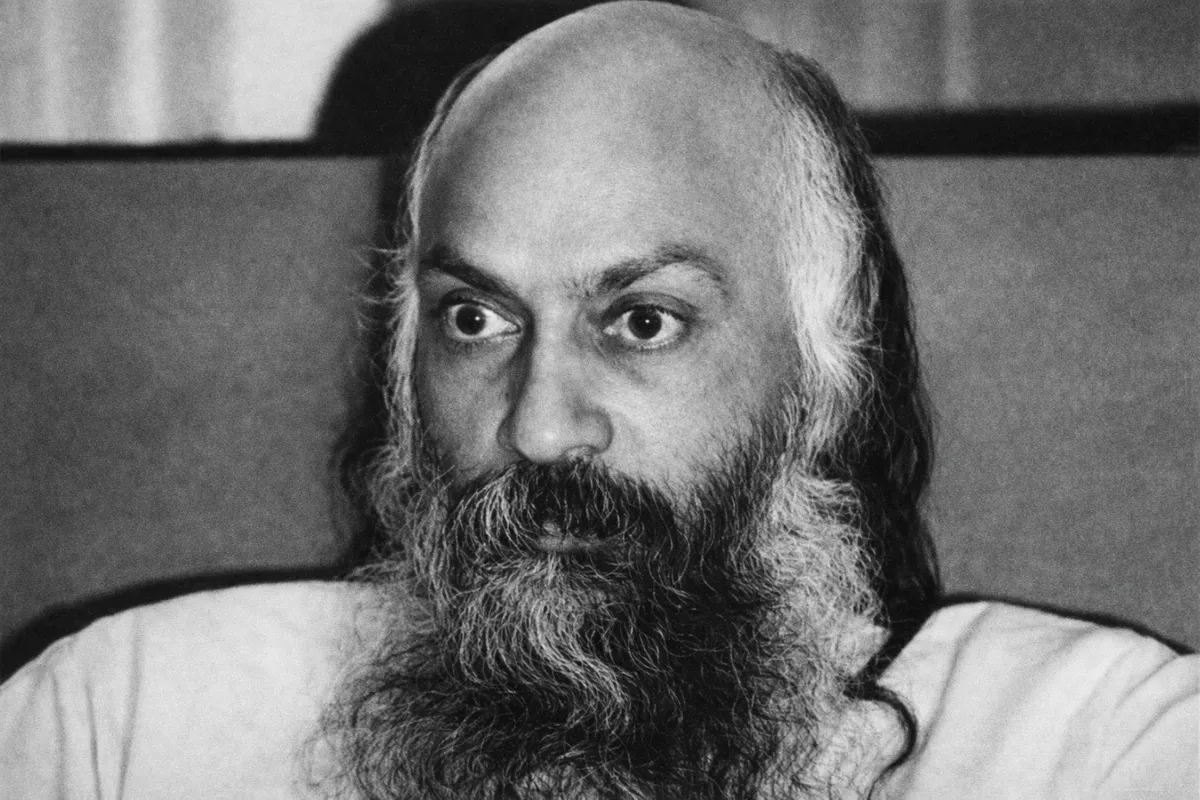
Osho's original Hindi beside Osho Live's English translation, matched passage by passage.
पानी बहता चलता है
कुछ दुख सहता चलता है
लहरें हैं कुछ मैली-मैली
मौजें हैं कुछ फैली-फैली
तारे झुक-झुक पड़ते हैं
पत्ते चुप-चुप झड़ते हैं
अब्र के टुकड़े उड़ते हैं
कटते हैं फिर जुड़ते हैं
तारे झिम-झिम होते हैं
तायरे चुपके सोते हैं
शाखें सर-व-गरेबां हैं
बिलकुल चुप और हैरां हैं
चांद भी है कुछ खोया-सा
कुछ जागा कुछ सोया-सा
शबनम टप-टप रोती है
जो आंसू है वह मोती है
हर पत्ते में खामोशी है
हर कोंपल में बेहोशी है
हर जर्रा चुप, हर कतरा चुप
अफलाक का एक-एक तारा चुप
सब गुलहाए रीहां चुप
चंपा की सब कलियां चुप
दरिया की सब मौजें चुप हैं
बलखाती सब लहरें चुप हैं
यारब! ये सब मंजर क्या है!
सहरा क्या है, घर-दर क्या है!
ऐसी स्थिति है आज मनुष्य की। एक गहन सन्नाटा छा गया है। अंतरात्मा की पोर-पोर में न कोई स्वर बजता है, न कोई संगीत उठता है। गीत मर गए हैं, उत्सव मर गया है। आदमी जी रहा है रीता-रीता, खाली-खाली। जिस मटकी में अमृत होना था, उसमें विष भी नहीं है। जिस मटकी में सोना होना था, उसमें राख भी नहीं है। संभावना तो लेकर आए थे न मालूम कितने-कितने फूलों की, कांटे भी दुर्लभ हो गए हैं।
Water keeps flowing on, enduring a few sorrows as it goes. The waves are a little murky, the surges spread a little far. The stars bend down and down, leaves fall in a hush. Fragments of cloud fly, are cut apart and join again. The stars flicker faintly, birds sleep in secret. Branches, head-in-hand and collar-torn, absolutely silent, astonished. Even the moon seems somewhat lost— somewhat awake, somewhat asleep. Dew drops drip… weeping; its tears are pearls. Silence in every leaf, stupefaction in every bud. Every speck mute, every drop mute, each star of the firmament mute. All the wind-blown blossoms silent, all the champa buds silent. Every surge of the river is silent, all the twisting waves are silent. Yarab! What is this panorama! What is the desert, and what is the door of home!
Such is the condition of man today. A deep hush has spread. In every pore of the inner being no note resounds, no music arises. Songs have died, celebration has died. Man lives drained, empty. The pitcher that was to be filled with nectar—there is not even poison in it. The pitcher that was to hold gold—there is not even ash in it. We had come carrying the promise of who knows how many flowers—now even thorns have become rare.
ऐसा कभी न हुआ था। मनुष्य-जाति के इतिहास में आदमी इतना हताश, इतना निराश, इतना रिक्त, इतना अर्थहीन, कभी भी न था। किस कारण यह दुर्घटना घटी है? घर भी वीरान मालूम होता है।
Never was it so. In the history of the human race man has never been so dejected, so despairing, so vacant, so meaningless. What has caused this catastrophe? Even the home feels deserted.
सब चल रहा है--धन की दौड़ चल रही है, पद की दौड़ चल रही है और भीतर प्राणों को कोई जैसे काटता जाता है। काम सब चल रहा है, रुका कुछ भी नहीं है। लेकिन करने वाले में कोई उमंग नहीं रह गई है, उत्साह नहीं रह गया है। पैरों में नृत्य नहीं है--चलते हैं क्योंकि चलना है। एक कर्तव्यवश करते हैं क्योंकि करना है। एक कर्तव्यवश, लेकिन आह्लाद नहीं है।
All is running—there is the race for wealth, the race for position; and within, someone seems to be cutting at the roots of your life-breath. Work goes on, nothing has stopped; but in the doer no thrill remains, no zest remains. There is no dance in the feet—we walk because we must. We perform out of duty—because it must be done. Out of duty; but there is no delight.
और जहां आह्लाद नहीं है, वहां धर्म कैसे होगा? और जहां जीवन में उत्सव नहीं है, वहां मंदिर कैसे बनेंगे? और जहां जीवन गीतों से रिक्त है, वहां तीर्थो के होने का कोई उपाय नहीं है। काबा खाली है, काशी खाली है क्योंकि तुम खाली हो। मंदिर खाली हैं, मस्जिद खाली हैं क्योंकि तुम खाली हो।
And where there is no delight, how will Dharma be? And where life lacks celebration, how will temples be raised? And where life is empty of song, how can there be any pilgrimage? Kaaba is empty, Kashi is empty—because you are empty. Temples are empty, mosques are empty—because you are empty.
दौड़-धूप बहुत है, आपा-धापी बहुत है। इससे भ्रम में मत पड़ जाना। आपा-धापी और दौड़-धूप इसीलिए बहुत है कि किसी तरह अपने भीतर का खालीपन दिखाई न पड़े। उलझे रहें, उलझाए रहें। कहीं भी उलझे रहें, कहीं भी उलझाए रहें। कौड़ियों को गिनते रहें कि भीतर न देखना पड़े। लड़ते-झगड़ते रहें, व्यर्थ की बातें करते रहें--कि रेडियो सुनें, कि टेलीविजन देखें, कि सिनेमा हो आएं, कि क्लब-घर में बैठ कर ताश खेलें।
There is much running and turmoil. Do not be deceived by it. There is so much hustle and bustle precisely so that somehow the inner emptiness does not become visible. Remain entangled, keep yourself entangled. Be entangled anywhere, anyhow. Keep counting cowries so that you need not look within. Keep fighting and quarreling, keep talking of trifles—listen to the radio, watch television, go to the cinema, sit in the club and play cards.
पूछो लोगों से क्या कर रहे हो? कहते हैं: समय काट रहे हैं। समय--जो मिलना इतना मुश्किल! एक क्षण जो हाथ से चला गया वापस नहीं लौटता है।
Ask people: what are you doing? They say, we are killing time. Time—so hard to come by! A single moment that slips from your hand never returns.
कोई उपाय उसे वापस लौटाने का नहीं है। उस समय को काट रहे हैं जो मांगे-मांगे न मिलेगा, जो खोजे-खोजे न मिलेगा। ताश के राजा-रानी बना लिए हैं, कि लकड़ी के हाथी-घोड़े बना लिए हैं। बच्चे तो बच्चे हैं ही, बूढ़े भी यहां बच्चे हैं। शतरंजें बिछा ली हैं।
There is no way to bring it back. And you are killing that time which will not be obtained even if you beg for it, which will not be found even if you search. Kings and queens have been made of playing cards, wooden elephants and horses fashioned. Children are children—but here even the old are children. Chessboards have been spread.
जिनको तुम समझदार कहो, वे भी बड़े नासमझदार हैं! कैसी दौड़-धूप है पदों के लिए! छोटे-छोटे बच्चे कुर्सियों पर खड़े हो जाएं और चिल्लाएं कि हमसे ऊपर कोई भी नहीं, समझ में आता है; मगर दिल्ली में बूढ़ों को क्या हुआ है? वही खेल है।
Those whom you call wise—how unwise they are! What a race for chairs! If small children stand on chairs and shout, “No one is above us,” it is understandable; but what has happened to the elders in Delhi? The same game.
लेकिन इस खेल के पीछे कारण समझने जैसा है। ये सब अपने को उलझाए रखने के उपाय हैं। यह सब एक तरह की मानसिक शराब है। शराबबंदी के पक्ष में हैं लोग और तरह-तरह की शराबें हैं। पद की शराब है--पद-मद। धन की शराब है--धन-मद। असली शराबें वे हैं। जो मधुशालाओं में बिकती हैं उनकी तो कोई कीमत नहीं--सुबह पीओगे, सांझ उतर जाएगी; सांझ पीओगे, सुबह उतर जाएगी। लेकिन पद का मद ऐसा है कि जीवन भर नहीं उतरता। और जिन कुर्सियों पर तुम कब्जा कर लेते हो वे तुमसे पहले भी थीं। तुम विदा हो जाओगे, वे कुर्सियां बनी रहेंगी, और दूसरे उन पर लड़ते रहेंगे। जिस धन पर तुमने कब्जा कर लिया है, वह तुम्हारा नहीं है--तुम्हारे पहले भी था, तुम्हारे बाद में भी होगा। तुम आए और गए और तुम व्यर्थ उसमें उलझ गए जो तुम्हारा नहीं था।
But there is a reason worth understanding behind this game. These are all devices to keep oneself entangled. This is a kind of mental alcohol. People may be in favor of prohibition, and yet there are all kinds of intoxicants. The intoxication of position—pride of position. The intoxication of wealth—pride of wealth. Those are the real liquors. What is sold in taverns is of no account—drink it in the morning, and by evening it is gone; drink it in the evening, and by morning it has evaporated. But the pride of office is such that it does not fade a lifetime. And the chairs you occupy—they were here before you. You will depart; those chairs will remain, and others will go on fighting for them. The wealth you seized is not yours—it was here before you, it will be here after you. You came and went—and you got lost in what was never yours.
एक ट्रेन में बहुत भीड़ थी। बहुत तलाश करने पर एक सीट खाली दिखी, तो एक सज्जन वहां बैठ गए। थोड़ी देर बाद एक महाराज आए और सज्जन से बोले: यहां से उठिए, यह मेरी सीट है।
There was great crowding in a train. After much searching a man found an empty seat and sat down. A little later a maharaj came and said to him, “Get up—this is my seat.”
क्या सबूत है?
“What proof?”
मैं यहां अपना रूमाल बिछा गया था।
“I had spread my handkerchief here.”
कल को आप प्रधानमंत्री की कुर्सी पर रूमाल बिछा देंगे तो क्या वह आपकी हो जाएगी? उत्तर मिला।
“Tomorrow you will spread a handkerchief on the Prime Minister’s chair—will it become yours?” came the reply.
मगर रूमाल बिछाने के सिवाय और कोई कर भी क्या रहा है! प्रधानमंत्री भी क्या कर रहे हैं? रूमाल ही बिछा रहे हैं। राष्ट्रपति भी क्या कर रहे हैं? रूमाल ही बिछा रहे हैं। कुर्सी तो किसी की भी नहीं है।
But in truth, what else is anyone doing except spreading handkerchiefs! What is the Prime Minister doing? Spreading a handkerchief. What is the President doing? Spreading a handkerchief. The chair belongs to no one.
अपना यहां कुछ भी नहीं है और सबने दावा किया है। और जिसने भी दावा किया है वह चोर है। परिग्रह चोरी का लक्षण है। रहो, खेलो, दावा मत करना। जियो, कुर्सियों पर बैठो मौका आए तो, धन को उपयोग करो मौका आए तो, मगर दावा मत करना। यहां कोई भी चीज किसी की नहीं है।
Nothing here is ours—yet everyone has staked a claim. And whoever has claimed is a thief. Possessiveness is the mark of theft. Live, play, but do not claim. Live; if a chance comes, sit on a chair. If a chance comes, use wealth. But do not claim. Nothing here belongs to anyone.
मुल्ला नसरुद्दीन अपने विवाह की पांचवीं वर्षगांठ पर पार्टी दिया था। मेजें सज चुकी थीं, थालियां लगाई जा चुकी थीं। तभी मुल्ला की पत्नी ने कहा: मुल्ला, अंदर जाइए, आपकी संदूक में जो चांदी के चम्मच पड़े हैं उन्हें ले आइए।
Mulla Nasruddin gave a party on his fifth wedding anniversary. Tables were set, plates laid. Then Mulla’s wife said, “Mulla, go inside and bring the silver spoons that are in your chest.”
मुल्ला ने कहा: मैं उन्हें नहीं लाऊंगा--चाहे कुछ भी हो जाए मैं उन्हें नहीं लाऊंगा। दूसरे चम्मचों से काम चलाओ।
Mulla said, “I will not bring them—come what may, I will not bring them. Make do with other spoons.”
पत्नी बोली: क्या आप अपने मित्रों का भरोसा नहीं करते? क्या उनको इतना नीच समझते हैं कि वे चांदी के चम्मच चुरा लेंगे?
She said, “Do you not trust your friends? Do you consider them so low that they will steal silver spoons?”
मुल्ला ने कहा: चुरा कर तो नहीं ले जाएंगे, मगर पहचान जरूर जाएंगे।
Mulla said, “They will not steal them—but they will surely recognize them.”
यहां अपना कुछ भी नहीं है । यहां अपना कुछ हो भी नहीं सकता। यहां हम खाली हाथ आते हैं और खाली हाथ जाते हैं। न कुछ लाते हैं, न कुछ ले जाते हैं। मगर बीच में कितना शोरगुल मचाते हैं, कितनी पताकाएं फहराते हैं, कितने उपद्रव, कितनी झंझटें--अकारण। और यह सब हो रहा है सिर्फ एक आधार पर कि अगर यह न करें तो क्या करें? अगर ताश न खेलें तो प्राणों का खालीपन काटता है। अगर शतरंज की मोहरें न बिछाएं तो भीतर की रिक्तता का साक्षात करना होता है। अगर बाहर न उलझाए रखें अपने को तो भीतर मुड़ कर देखना ही पड़ेगा, देखना ही पड़ेगा--और भीतर सब खाली है। और भीतर तब तक खाली रहेगा जब तक राम का अवतरण न हो।
Nothing here is ours. Nothing here can be ours. We come empty-handed and we go empty-handed. We bring nothing, we take nothing. Yet how much noise we make in between—how many flags we fly; how many disturbances, how many hassles—without cause. And all this goes on only on one basis: that if we do not do this, what will we do? If we do not play cards, the inner emptiness bites. If we do not spread the chess pieces, we have to face the inner void directly. If we do not keep ourselves entangled outside, we will have to turn within, we will have to look—and within all is empty. And within it will remain empty until Ram descends.
भीखा कहते हैं: को लखि सकै राम को नाम।
किसने पहचाना है राम को? किसने जाना है नाम को? कौन है जिसने परमात्मा से प्रीति लगाई हो, पहचान बांधी हो? बस वही जिंदा है, बस वही सार्थक है। और शेष सब? शेष सबका जीवन हराम है। राम नहीं तो जीवन हराम है।
Bhikha says: Who has perceived the Name of Ram? Who has recognized Ram? Who has known the Name? Who has bound love with the Supreme? Only that one lives, only that one is meaningful. And the rest? For the rest life is haram—illicit, wasted. Without Ram life is haram.
को लखि सकै राम को नाम।
देइ करि कौल करार बिसारो, जियना बिनु भजन हराम।।
Who has perceived the Name of Ram? Having given the pledge and promise, you forgot; to live without bhajan is haram.
और राम का यह जो नाम है, यह बुद्धि की बात नहीं है, वह विचार की बात नहीं है। कोई बुद्धि से चलेगा सोचने-समझने तो उसके हाथ कुछ भी न लगेगा। उसकी मुट्ठी खाली रह जाएगी। ऐसे तो राम को नहीं लखा जा सकता। यह तो हार्दिक अनुभूति है। तुम जबान से जपते रहो राम-राम, राम-राम, राम-राम जीवन-भर, अगले जन्म में तोते की तरह पैदा होओगे। किसी पिंजड़े में बंद होओगे और राम-राम जपोगे। तुम तोते की तरह जन्म लेने का अभ्यास कर रहे हो अगर जबान से ही राम-राम जप रहे हो। और अगर तुम्हारी खोपड़ी में भी राम-राम गूंजता रहे तो क्या होगा?
And this Name of Ram—this is not the business of intellect, not the domain of thought. Whoever goes by thinking and reasoning will grasp nothing; the fist will remain empty. Ram cannot be perceived that way. This is a heart-born experience. If you go on chanting Ram-Ram, Ram-Ram with the tongue all your life—you will be born as a parrot in the next birth. You will be caged, and you will chant Ram-Ram. You are rehearsing the birth of a parrot if you chant only with the tongue. And if your skull too reverberates with Ram-Ram, what will happen?
खोपड़ी में तो कचरे के सिवाय और कुछ भी नहीं होता। खोपड़ी तो बिल्कुल कचरा है--कूड़ा-करकट। थोथे शब्द! नहीं; जब तक तुम्हारा हृदय राम के भाव से आह्लादित न हो उठे; जब तक तुम्हारे हृदय में तरंगें न उठने लगें भावावेश की; जब तक तुम भावित न हो उठो; जब तक तुम मस्त न हो उठो; ऐसी मस्ती न छा जाए जो फिर कभी नहीं उतरती; जब तक ऐसा भावावेश न पैदा हो जाए--तब तक राम से कोई परिचय नहीं होता है।
In the skull there is nothing but trash. The skull is rubbish—junk. Hollow words! No—until your heart is exhilarated with the feeling of Ram; until waves begin to rise in the heart, waves of devotional ecstasy; until you are imbued with feeling; until you become intoxicated—such an intoxication that never fades; until such a rapture is born—there is no acquaintance with Ram.
राम से परिचय का स्थल मस्तिष्क नहीं है, हृदय है। राम से संबंध विचार से नहीं जुड़ता, भाव से जुड़ता है। तर्क से नहीं जुड़ता, प्रीति से जुड़ता है। चिंतन मनन-अध्ययन से नहीं कोई संबंध है राम का। लाख पढ़ो वेद और लाख पढ़ो कुरान, कुछ हाथ न लगेगा। पंडित हो जाओगे, प्रज्ञावान नहीं। प्रकाश के संबंध में बहुत कुछ जान लोगे लेकिन आंख नहीं खुलेगी, प्रकाश को न जान पाओगे।
The place of acquaintance with Ram is not the head, it is the heart. Connection with Ram is not joined through thought, but through feeling. Not through logic, but through love. Ram has no relation to study and contemplation. Read a hundred Vedas, read a hundred Qur’ans—you will gain nothing. You will become a pundit, not a sage. You will know much about light, but your eyes will not open; you will not know light itself.
और सदा ध्यान रखो, प्रकाश के संबंध में जानना, प्रकाश को जानना नहीं है। यही दर्शनशास्त्र और धर्म का भेद है। दर्शनशास्त्र प्रकाश के संबंध में जानता है और धर्म आंख खोलता है और प्रकाश को जानता है। धर्म स्वाद है। धर्म है पीना और पचाना। धर्म है राम को अपनी हड्डी-मांस-मज्जा बना लेना। धर्म है राम को अपने रोएं-रोएं में समा लेना। उठते-बैठते, सोते-जागते--उसी में उठना, उसी में बैठना, उसी में सोना, उसी में जागना। वही हो जाए तुम्हारे भीतर और कोई शेष रह जाए। वही भर जाए कि और कुछ रखने की जगह न रह जाए। तब कोई लख सका है। और जो राम को लख सका है, वह भर गया। वह भरा-पूरा हो गया। वह तृप्त हुआ है। उसने जाना है जीवन का अर्थ । उसने जानी है जीवन की गरिमा, गौरव। वह जीवन के अपूर्व आनंद से मंडित हुआ है। वह धन्यभागी है।
धूप को बांधा किसी ने
ज्यों
छांह की रेशमी-सी
डोर से;
रात बीते स्वप्न की
Always remember: to know about light is not to know light. This is the difference between philosophy and religion. Philosophy knows about light; religion opens the eyes and knows light. Religion is taste. Religion is to drink and to digest. Religion is to make Ram your bone, flesh, marrow. Religion is for Ram to pervade your every pore. Sitting and standing, sleeping and waking—to rise in Him, to sit in Him, to sleep in Him, to awaken in Him. Let Him be within you, and let nothing else remain. Let Him fill you so completely that there is no room for anything else. Then someone has perceived. And one who perceives Ram becomes full. He is filled to the brim. He is content. He has known the meaning of life. He has known life’s dignity, its glory. He is adorned with the unparalleled bliss of life. He is blessed.
ज्यों याद स्वर्णिम
दीप्त मन में
भोर से;
कमल जैसे खिल रहा हो
सांझ को...
तरम्बुज काटा किसी ने
ज्यों
बीच से, और रख कर गया सहसा कहीं--
यह उसी की लालिमा...
यह न तेरा रूप
तैरता है दीप नदिया में
सहज उर्वर कर गया हो कोई जैसे
बांझ को!
राम उतरे तो ऐसे--
Someone has tied sunlight, as if with a silky thread of shade. Like a dream of the night remembered, golden-bright in the mind at dawn— like a lotus flowering at twilight… Someone cut a watermelon right through the middle, set it down somewhere and went— this very redness… This—your form? No— in the river of lamps your radiance floats. As if someone has made the barren fertile. When Ram descends, He descends like this— like a lotus flowering at twilight… As if someone has made the barren fertile.
कमल जैसे खिल रहा हो
सांझ को...
सहज उर्वर कर गया हो कोई जैसे
बांझ को।
राम के बिना तो आदमी बांझ है: उसमें कुछ भी नहीं उगता--अनुर्वर, मरुस्थल है। राम के आते ही उपवन हो जाता है, मरूद्यान हो जाता है। झरने फूट पड़ते हैं शीतल जल के, हरियाली उमग आती है, फूल खिलने लगते हैं, दीये जलने लगते हैं। एक ही साथ होली और दीवाली हो जाती है!
Without Ram man is barren: nothing grows in him—infertile, a desert. With the coming of Ram, an orchard appears, an oasis arises. Springs of cool water burst forth, greenery surges, flowers begin to bloom, lamps are lit. At once both Holi and Diwali happen!
लेकिन यह राम हम तो बिसार कर बैठे हैं। हम तो भुला कर बैठे हैं।
But this Ram—we have let Him slip from memory. We have forgotten.
Having given the pledge and promise, you forgot…
देइ करि कौल करार बिसारो,...
और याद रखना, आए थे जब उस लोक से तो आश्वासन देकर आए थे कि बिसारोगे नहीं।
And remember—when we came from that realm, we came giving an assurance that we would not forget.
देइ करि कौल करार बिसारो! कौल किया था, करार किया था, आश्वासन दिया था कि भूल नहीं जाओगे और भूल गए, और भटक गए। प्रत्येक चैतन्य जब उतरता है अनंत से जगत में तो इसी आश्वासन को देकर उतरता है कि भूलूंगा नहीं, याद रखूंगा। मगर हमारी याद रखने की क्षमता बड़ी छोटी है। और हम जल्दी ही भूल जाते हैं। कंकड़-पत्थर बीनने लगते हैं--रंग-बिरंगे। घर की याद ही भूल जाती है।
Having given the pledge and promise, you forgot! You made a pledge, you made a promise, you assured that you would not forget—and you forgot, and you went astray. Every consciousness that descends from the Infinite into the world descends on this very assurance—that it will not forget, it will remember. But our capacity to remember is small, and we forget soon. We begin gathering colored pebbles—the memory of home itself is lost.
हम उन छोटे बच्चों की भांति हैं जो मेलों में खो गए हैं और जिन्हें याद ही नहीं आ रही है घर की। और सांझ होने लगी है। मगर रंग-बिरंगे खिलौने, झूले और न मालूम क्या-क्या मदारियों के चमत्कार, और बच्चा एक झंझट से दूसरी झंझट में पड़ता जा रहा है। मदारियों के डमरू बज रहे हैं, झूले घूम रहे हैं, खिलौने बिक रहे हैं, बांसुरियां बज रही हैं। रंग-बिरंगे लोग, ढंग-ढंग के लोग...मेला भरा है। बच्चा भूल ही गया है कि घर भी लौटना है, कि सांझ होने लगी, कि दीये जलने लगे, कि मेले के उजड़ने का वक्त आ गया है, और अंधेरे में भटक जाएगा। घर लौटना मुश्किल हो जाएगा। बच्चा भूल ही गया है कि जिनके साथ आया था उनसे कब का साथ छूट गया है। ऐसी हमारी दशा है--मेले में भटके हुए एक बच्चे की भांति।
We are like those little children who get lost in fairs—and who no longer remember home. And evening is falling. But the colorful toys, swings and the jugglers’ tricks—one distraction after another. The drums of the snake-charmers beat, swings whirl, toys are sold, flutes play. Colorful crowds, people of many kinds…the fair is full. The child has forgotten that he has to return home, that evening draws near, that lamps are being lit, that the time for the fair to be dismantled has come—and in the darkness he will wander. It will be hard to return home. The child has forgotten that those with whom he had come have long been lost. Such is our condition—like a child, lost in a fair.
देइ करि कौल करार बिसारो,...
और ऐसा नहीं है कि अगर हम याद करें तो हमें यह कौल-करार, यह आश्वासन याद न आ जाए। जो भी थोड़े शांत होकर बैठते हैं उन्हें तत्क्षण स्मरण आ जाता है। एक विस्फोट की भांति भीतर यह बात स्पष्ट हो जाती है कि मैं कहां से आया हूं, क्यों आया हूं, क्या प्रयोजन है यहां आने का? सब भूल बैठा हूं। जिस मालिक ने भेजा है उसे भूल बैठा हूं। जिस काम के लिए भेजा है वह काम भी भूल बैठा हूं। कुछ और ही करने लगा हूं। आए थे हरि भजन को ओटन लगे कपास! यहां तुम सब हरि को ही भजने आए थे। यहां तुम हरि की ही तलाश में आए थे।
Having given the pledge and promise, you forgot…
And it is not that if we sit quietly and remember we will not recall that pledge and promise. Whoever sits a little silently—immediately the remembrance returns. Like an explosion, clarity dawns within: from where have I come? why have I come? what is the purpose of coming here? I have forgotten everything. I have forgotten the Master who sent me. I have forgotten the work for which I was sent. I have begun doing something else. We had come to sing Hari’s praise—and we began carding cotton! You all have come to worship Hari. You have come in search of Hari alone.
यह कसौटी है जगत, एक परीक्षा है--कि इतने उपद्रव में भी तुम ईश्वर को याद रख सकोगे या नहीं। आए थे यहां एक परीक्षा में उतरने, उत्तीर्ण होने और भूल ही गए। भूल ही गए कहां से आए, कहां जाना है! कुछ भी पता नहीं है। कहां से आए, कहां जाना है तो दूर--यह भी पता नहीं कि मैं कौन हूं! मैं हूं भी या नहीं, यह भी पक्का नहीं है। ऐसी दयनीय दशा है!
This world is a touchstone, a test—to see whether in the midst of such commotion you will remember God or not. You had come to take an exam, to pass—and you forgot. You forgot from where you came, where you have to go. You know nothing. From where you came, where you must go—far from that, you do not even know who you are! Whether you even are—is not certain. Such is the pitiable state!
...जियना बिनु भजन हराम।
…To live without bhajan is haram.
इसलिए भीखा ठीक कहते हैं: यह तुम जिस ढंग से जी रहे हो, यह जीना हराम है क्योंकि इसमें राम नहीं है। क्योंकि इसमें अपने दिए गए आश्वासन को भी पूरा करने की सामर्थ्य नहीं है। यह जीना बांझ है। इसमें न कुछ उगता है, न फलता है, न फूलता है। तुम एक अमावस की रात हो जिसमें एक दीया भी नहीं जलता। और फिर तुम परेशान होते हो कि दुखी क्यों हूं? फिर तुम चिंतित होते हो कि क्या कारण है कि जीवन में कुछ खोया-खोया लगता है। कुछ अधूरा-अधूरा! नहीं लगेगा तो क्या होगा?
Therefore Bhikha speaks rightly: the way you are living—this living is haram, because there is no Ram in it. Because even the power to fulfill your own given promise is not in it. This living is barren. Nothing grows, nothing fruits, nothing flowers. You are an amavas night in which not even a single lamp is lit. And then you fret: why am I unhappy? You worry: why does life feel lost, incomplete? If it did not, what would happen?
जिसमें सरूरे-दर्दे-गमे-आशिकी नहीं
वोह जिंदगी, तो मौत है, वोह जिंदगी नहीं
“In which there is not the rapture, the pain, the sorrow of love— that ‘life’ is but death; it is not life.”
जिसे तुम जिंदगी कह रहे हो उसे क्या खाक जिंदगी कहें! उसे तो मौत ही कहना चाहिए। एक लम्बा सिलसिला मरने का, जो जन्म से शुरू होता है और मौत पर अंत होता है। सत्तर साल की एक लंबी मरने की कथा और व्यथा!
What you call life—how can we call it life? It should be called death. A long sequence of dying, which begins at birth and ends at death. A seventy-year-long tale and wail of dying!
जिसमें सरूरे-दर्दे-गमे-आशिकी नहीं
वोह जिंदगी, तो मौत है, वोह जिंदगी नहीं
“In which there is not the rapture, the pain, the sorrow of love— that ‘life’ is but death; it is not life.”
जिसमें प्रेम का नशा न हो,...किस प्रेम का? परम प्रेम का, प्रभु प्रेम का। जिसमें प्रेम का नशा न हो, जिसमें प्रेम की मीठी पीड़ा न हो, उसे जिंदगी मत कहना, वह तो मौत है; धीमी-धीमी है इसलिए पता नहीं चलता। हमें धीमे-धीमे घटने वाली चीजों का पता नहीं चलता, इसे याद रखना। तुम रोज मर रहे हो, प्रतिपल मर रहे हो। एक दिन बीता तो चौबीस घंटे और मर गए।
In which there is no intoxication of love—what love? The supreme love, the love of the Lord. In which there is no intoxication of love, in which there is no sweet ache of love—do not call it life; it is death. It is slow—so you do not notice. Remember: we do not notice things that happen gradually. You die every day, every moment. One day passes—you are twenty-four hours more dead.
लेकिन हम उलटे लोग हैं। हम जन्म-दिन मनाते हैं। हम कहते हैं कि यह हमारा तीसवां जन्म-दिन है। यह तीसवां जन्म-दिन नहीं है, यह मौत का तीसवां पड़ाव है। यह जन्म-दिन नहीं है, यह मृत्यु-दिवस है। मौत और करीब आ गई, और सरक आई, और नजदीक आ गई। तुम क्यू में खड़े हो। आगे क्यू छोटा होता जा रहा है। लोग हटते जा रहे हैं, तुम्हारा नंबर करीब आता जा रहा है। किस क्षण तुम्हारा नाम पुकार लिया जाएगा कहना मुश्किल है।
But we are upside-down people. We celebrate birthdays. We say: this is my thirtieth birthday. This is not a thirtieth birthday—this is the thirtieth milestone of death. Not a birthday; a death-day. Death has come nearer, has drawn closer. You stand in a queue. The queue ahead grows shorter. People are stepping out; your number is drawing near. In which moment your name will be called—it is hard to say.
लेकिन यह एक मनोवैज्ञानिक सत्य है कि धीमे-धीमे घटने वाली चीजों का पता नहीं चलता। एक मनोवैज्ञानिक प्रयोग कर रहा था कि क्यों, क्या होगा कारण इसका? बच्चा धीमे-धीमे बढ़ता है, तुम्हें पता नहीं चलता--कब बच्चा था और कब जवान हो गया। जवान धीरे-धीरे बूढ़ा होता है, पता नहीं चलता--कब जवान था, कब बूढ़ा हो गया। इतने धीमे घटती है बात, पत्ते-पत्ते निकलते हैं, पता नहीं चलता कि कब वृक्ष सघन हो गया। कब पत्ते गिर गए...पत्ते-पत्ते गिरते हैं और पत्ते-पत्ते उगते हैं।
But there is a psychological truth: things that happen slowly are not noticed. A psychologist wondered why. A child grows slowly—you do not notice when he was a child and when he became a youth. A youth ages slowly—you do not notice when he was young and when he became old. Things happen so slowly—leaf by leaf unfolds, and you do not notice when the tree has become dense. When leaves fall…leaves fall one by one, and sprout likewise.
इस जगत में कोई भी चीज आकस्मिक नहीं होती है। बहुत धीमे और आहिस्ता होती है क्योंकि अनंत काल है। जल्दी नहीं है कोई। यह कोई आदमी की जिंदगी नहीं है कि भागा-दौड़ी हो कि जल्दी करो। यह तो अनंत, शाश्वत है, यहां कोई जल्दी नहीं है।
Nothing in this world happens suddenly. It happens very slowly and softly—for there is eternity. There is no hurry. This is not a human life that there should be a rush, that one must do things quickly. This is the Infinite, the Eternal—there is no haste here.
वह मनोवैज्ञानिक एक प्रयोग किया। उसने एक मेढक को उबलते हुए पानी में फेंका। उबलता हुआ पानी, मेढक तत्क्षण छलांग लगा कर बाहर हो गया। आग थी, पानी नहीं था, मेढक उसमें रुकता कैसे? मारी लंबी छलांग जितनी जिंदगी में कभी भी न मारी होगी और एकदम बाहर हो गया। फिर उसी मनोवैज्ञानिक ने उसी मेढक को ठंडे पानी में रखा और फिर ठंडे पानी को बहुत धीरे-धीरे गरम करना शुरू किया। धीरे-धीरे कुनकुना, कुनकुना, कुनकुना...और ठीक पानी उबलने लगा और मेढक फिर छलांग लगा कर बाहर नहीं निकला; मर गया वहीं। क्या हुआ? इतने धीमे-धीमे पानी गरम हुआ कि मेढक को कभी पता ही नहीं चला कि अब पानी ठंडा नहीं है, उबल रहा है।
That psychologist performed an experiment. He threw a frog into boiling water. Boiling water—the frog instantly leapt out. It was fire, not water—how could he remain in it? He made a long leap, a leap perhaps never made in his life—and was out at once. Then the same psychologist put the same frog into cold water and slowly began to heat it. Slowly—lukewarm, warmer, warmer…until the water began to boil—and this time the frog did not leap out; he died there. What happened? The water warmed so slowly that the frog never realized when it ceased to be cold and came to a boil.
ऐसी ही आदमी की अवस्था है। तुम्हें अगर मौत एकदम से आ जाए तो तुम राम को याद कर लो। महात्मा गांधी को गोली मारी गई तो जो अंतिम शब्द निकले, वे थे ‘हे राम!’ यह आकस्मिक थी, यह घटना इतनी आकस्मिक थी कि राम का स्मरण बिलकुल स्वाभाविक है। लेकिन गांधी खाट पर घिस-घिस कर मरते, आहिस्ता-आहिस्ता मरते तो शायद ‘हे राम’ शब्द भी न निकलता। यह ‘हे राम’ निकला आकस्मिकता से।
Such is man’s state. If death came upon you suddenly—you would remember Ram. When Mahatma Gandhi was shot, the last words that arose were “He Ram!” It was sudden; the remembrance of Ram was natural. But if Gandhi had worn away on a cot, dying slowly, perhaps even the words “He Ram” would not have come. That “He Ram” came of suddenness.
तुम धीरे-धीरे मर रहे हो। तुम इतने आहिस्ता मारे जा रहे हो, जहर इतने धीमे-धीमे पिलाया जा रहा है कि पता ही नहीं चलता।
You are dying slowly. You are being killed so gently; the poison is being administered so slowly that you do not notice.
जिसमें सरूरे-दर्दे-गमे-आशिकी नहीं
वोह जिंदगी, तो मौत है, वोह जिंदगी नहीं
जिसमें बराए-रास्त हो उनसे मुआमला
“In which there is not the rapture, the pain, the sorrow of love— that ‘life’ is but death; it is not life.”
वल्लाह! ऐन होश है, वोह बेखुदी नहीं
“In which one deals with Him directly— by God! that is true sobriety; it is not intoxication.”
इक खूने-अंदलीब के दम से थी सब बहार
फूलों में अब वोह रंग नहीं, दिलकशी नहीं
“All the spring was from the blood of one nightingale; now flowers bear neither hue nor charm.”
अल्लाह रे हिज्र-यार की हैरततराजियां
निकला हुआ है चांद, मगर रोशनी नहीं
“Wondrous astonishments of separation from the Beloved— The moon has risen, yet there is no light.”
उनकी तरफ उठाऊं मैं अब क्या निगाहे-शौक
अपनी तजल्लियों ही से फुर्सत अभी नहीं
“How shall I lift my longing gaze toward Him now? Even from my own theophanies I have no leisure.”
यूं दिन गुजारती हूं किसी के फिराक में
जिंदा बराए नाम हूं और जिंदगी नहीं
“Thus I pass my days in someone’s yearning— alive in name only; yet there is no life.”
एक बार अपने जीवन पर विचार करो। एक बार सरसरी नजर डालो अपनी जिंदगी पर। जिंदा बराए नाम हूं और जिंदगी नहीं, यही तुम पाओगे। यही तुम्हारी निष्पत्ति भी होगी--नाममात्र को जिंदा हूं, जिंदगी कहां? और तुम भी जाने-अनजाने किसी के इंतजार में हो। होश न हो तुम्हें इस बात का। उसी होश के लिए गुरु-परताप साध की संगति! तुम किसी की प्रतीक्षा कर रहे हो, यह भी भूल गए किसकी प्रतीक्षा कर रहे हो।
Once, reflect on your life. Cast a glance over it. “Alive in name only; yet there is no life”—this is what you will find. This will be your verdict too—I am alive only nominally; where is life? And you too—knowingly or unknowingly—are waiting for Someone. You may lack awareness of it. For that awareness—Guru’s grace, the company of the wise! You are waiting for Someone—and have even forgotten for Whom you wait.
मुल्ला नसरुद्दीन को उसकी पत्नी ने बाजार भेजा था, कुछ सामान खरीद लाने को। कहीं भूल न जाए, क्योंकि रास्ते में जो भी मिल गया उसी से गपशप...घंटों लग जाने वाले हैं। तो उसने कहा कि तुम ऐसा करो कुर्ते में गांठ बांध लो, याद रही आएगी कि सामान लाना है। तो मुल्ला कुर्ते में गांठ बांध कर बाजार गया। सुबह का निकला सांझ घर लौटा। पत्नी ने कहा: सामान लाए? उसने कहा कि नहीं, मैं यह पूछने आया हूं कि यह गांठ किसलिए बांधी थी?
Mulla Nasruddin’s wife sent him to the bazaar to buy some things. Lest he forget—because whoever he meets on the way, he will gossip, and hours will pass—she said, “Tie a knot in your shirt; you will remember to bring the goods.” So Mulla went to the market with a knot in his shirt. He left in the morning, returned at dusk. “Did you bring the goods?” she asked. He said, “No. I have come to ask: what was this knot for?”
गांठ ही बांध लेने से कुछ भी न होगा। हम सबको भी बहुत गांठें बांध कर भेजा गया है इस संसार में । हमारे अचेतन में सारा अस्तित्व का राज छिपा हुआ है, कुंजियां छिपी हुई हैं। मगर हमें यह भी भूल गया है कि हमारे पास कोई अचेतन है। हम तो अपने मकान के पोर्च में ही जीते हैं, भीतर जाते ही नहीं। हमें तो यह भी याद नहीं कि भीतर भी कुछ है, हम तो इसी को मकान समझते हैं! महल है हमारे पास लेकिन उसमें ऐसे कक्ष हैं जिनमें हम कभी गए नहीं हैं। जिनके द्वार-दरवाजे हमने कभी खोले नहीं।
Merely tying a knot will not do. We too have been sent into this world with many knots tied. The whole secret of existence is hidden in our unconscious—the keys lie there. But we have forgotten even that we have an unconscious. We live only in the porch of our house—never entering within. We do not even remember there is an inner—this very porch we take to be the house! We have a palace, but there are chambers in which we have never stepped—whose doors we have never opened.
इक खूने-अंदलीब के दम से थी सब बहार
फूलों में अब वोह रंग नहीं, दिलकशी नहीं
अल्लाह रे हिज्र-यार की हैरततराजियां
निकला हुआ है चांद, मगर रोशनी नहीं
यूं दिन गुजारती हूं किसी के फिराक में
जिंदा बराए नाम हूं और जिंदगी नहीं
“All the spring was from the blood of one nightingale; now flowers bear neither hue nor charm. Wondrous astonishments of separation from the Beloved— The moon has risen, yet there is no light. Thus I pass my days in someone’s yearning— alive in name only; yet there is no life.”
बराए नाम ही जिंदा रहना है या जिंदा होना है? जिंदा होने का एक ही ढंग है, वह है राम को जीना। वह है राम को अपने में जीने देना। जिंदा होने का एक ही ढंग है कि तुम्हारे शून्य में परमात्मा पूर्ण उतरे, कि तुम्हारी अंधेरी रात में उसका सूरज उतरे, कि तुम्हारे अंतस में, अंतस के सिंहासन पर राम विराजमान हो, तो तुम जीओगे। राम के बिना कोई जिंदगी नहीं है।
Is it to live only nominally—or to be alive? There is only one way to be alive: to live Ram. To let Ram live in you. There is only one way to be alive: that into your emptiness the Supreme descend; that into your dark night His sun rise; that in your within, upon the throne of the within, Ram be enthroned—then you will live. Without Ram there is no life.
देइ करि कौल करार बिसारो, जियना बिनु भजन हराम।।
बरनत बेद बेदांत चहूं जुग, नहिं अस्थिर पावत बिसराम।
Having given the pledge and promise, you forgot; to live without bhajan is haram.
और वेद कहते रहते हैं, वेदांत दोहराता रहता है इन्हीं सत्यों को; और तुमने सुने भी हैं ये सत्य; और तुमने याद भी कर लिए हैं ये सत्य। मगर इससे कुछ लाभ नहीं है। पढ़ो वेद कि कुरान कि बाइबिल, इससे कुछ बहुत लाभ नहीं। पढ़ोगे तो वेद मगर पढ़ोगे ही न! वेद का अर्थ खुलेगा नहीं क्योंकि वेद का अर्थ तो तुम्हारे हृदय में छिपा है। वहां है गांठ, वहां खोलनी है गांठ। जब तुम्हारे हृदय की गांठ खुलेगी और हृदय में पड़े हीरे तुम्हें दिखाई पड़ेंगे तो उनकी ही रोशनी में वेद का अर्थ खुलेगा अन्यथा वेद का अर्थ नहीं खुलेगा। वेद कुछ व्याकरण नहीं, भाषा नहीं। वेद तो तुम्हारा स्वानुभव है। वेद-वेदांत चारों युगों से वर्णन कर रहे हैं उसका। पुकार दे रहे हैं तुम्हें। नहिं अस्थिर पावत बिसराम! लेकिन तुम्हारे चंचल चित्त ने, तुम्हारी भाग-दौड़ ने अभी तक विश्राम नहीं पाया है।
The Vedas and Vedanta describe this through all the four ages; yet you do not find stable rest. You have heard these truths; you have even memorized them. But there is little benefit in that. Read the Veda or the Qur’an or the Bible—there is little gain. You will read the Veda, but you will not read it! Its meaning will not open, because the meaning of the Veda is hidden in your heart. There is the knot; there it must be untied. When the knot of your heart opens, and the diamonds hidden in the heart become visible—then, by their very light, the meaning of the Veda opens; otherwise, not. The Veda is not grammar, not language; the Veda is your own experience. The Vedas and Vedanta have been describing That through all ages, calling you—but your restless mind, your racing about, has not yet found repose.
राम को पाओ तो विश्राम मिले। राम ही विश्राम है। राम के बिना कहां विश्राम? दौड़-धूप रहेगी जारी तब तक अंतिम मंजिल न मिल जाए तब तक पड़ाव हैं, रात-भर रुक जाओ, सुबह फिर चलना होगा। तब तक चलते ही जाना होगा। और अगर कहीं तुम जिद करके किसी पड़ाव को ही मंजिल समझ कर रुक भी गए तो भी तुम्हारे प्राण तड़फते रहेंगे। राम से बिना मिले कोई उपाय नहीं है।
बरनत बेद बेदांत चहूं जुग, नहिं अस्थिर पावत बिसराम।
Find Ram—and you will find rest. Ram is rest. Without Ram, where is rest? The race continues until the final destination is found. These are but halts—stay for the night; in the morning you must walk again. Keep walking until then. And if, stubbornly, you mistake a halt for the destination and stop—still your life-breath will keep fluttering. There is no way without meeting Ram.
जोग जज्ञ तप दान नेम व्रत, भटकत फिरत भोर अरु साम।।
और ऐसा भी नहीं है कि तुमने कुछ किया न हो। तुमने योग भी किया, यज्ञ भी किए, तप भी किया, दान भी किया, नियम भी पाले, व्रत भी किए मगर फिर भी सुबह से सांझ तक सिर्फ भटकाव हो रहा है। क्योंकि यह सब तुमने किया तो, मगर इस करने में राम का प्रेम नहीं था। इस करने में स्वर्ग पाने का लोभ होगा। इस करने में मृत्यु के पार भी व्यवस्था कर लूं अभी से, बीमा कर लूं अभी से, इसकी आकांक्षा होगी। इस सब में नरक का भय होगा। इस सब में पंडितों ने तुम्हें जो भय और प्रलोभन दिए हैं उनका हाथ होगा, राम का प्रेम नहीं। इसमें भी शायद धन, पद, प्रतिष्ठा पा लेने की आकांक्षा होगी। मंदिरों में भी जाकर तुम क्या मांगते हो?
The Vedas and Vedanta describe it through all the four ages; yet you do not find stable rest.
Yoga, sacrifice, austerity, charity, disciplines, vows— still you wander from dawn to dusk.
And it is not that you have done nothing. You have done yoga, performed sacrifices, undergone austerities, given charity, kept disciplines and vows—yet from morning till evening there is only wandering. Because you did all this—but in that doing there was no love of Ram. In that doing there was the greed to attain heaven. In that doing the desire to arrange for the beyond even now—to insure it now. In all that, there was the fear of hell. In all that was the hand of the fears and lures given you by pundits—not the love of Ram. In that too, perhaps, the desire to gain wealth, position, prestige. Even when you go to temples—what do you ask?
एक धनी आया और सूफी फकीर जुन्नैद के सामने उसने हजार सोने की अशर्फियां रख दीं। कहा कि इन्हें स्वीकार कर लें, बड़ी कृपा होगी।
A rich man came and placed a thousand gold coins before the Sufi mystic Junnaid. “Accept these—it will be great grace.”
जुन्नैद ने उस आदमी के भीतर झांका और कहा कि पहले कुछ सवाल। पहला सवाल यह कि तेरे पास और अशर्फियां हैं?
Junnaid peered into the man and said, “First a few questions. Do you have more coins?”
उस आदमी ने कहा: हां हैं, बहुत हैं।
“Yes—many.”
“Do you desire even more coins?”
जुन्नैद ने फूछा: और तू और भी अशर्फियां चाहता है या नहीं। उसने कहा: हां जरूर चाहता हूं; असल में ये जो हजार अशर्फियां आपके चरणों में चढ़ाई हैं, इसी आशा से कि सुना है मैंने कि आपके चरणों में एक चढ़ाओ और करोड़ गुना मिलता है। जुन्नैद ने कहा: तो ले जा ये अशर्फियां वापस क्योंकि तू गलत कारण से ले आया है। तेरे मन में प्रेम का उदय नहीं हुआ है, तू लोभ से ही आया है। यह दान नहीं है, यह तो सौदा है। फिर तू गरीब आदमी है, तुझे अभी और अशर्फियों की जरूरत है। हम अमीर हैं, हमें और अशर्फियों की जरूरत नहीं है। तू ले जा। गरीब आदमी से क्या लेना! लेंगे किसी अमीर से।
“Of course I do. In fact, these thousand coins I offer at your feet—in the hope that, as I have heard—offer one at your feet and you receive a crore-fold in return.”
Junnaid said, “Then take them back—you have come for the wrong reason. Love has not arisen in you; you have come out of greed. This is not charity; it is a bargain. And you are a poor man—you still need more coins. We are rich—we need no more coins. Take them away. Why take from the poor! We will take from some rich one.”
जुन्नैद ने लौटा दिया उस आदमी को अशर्फियों के साथ। वह आदमी बहुत गिड़गिड़ाया कि नहीं आप ले लो। जुन्नैद ने कहा: नहीं, ये अशर्फियां पाप हैं क्योंकि इनमें दान नहीं, प्रेम नहीं। मुझसे कुछ संबंध नहीं, तू तो अपना सौदा कर रहा है। तू तो जुआ खेल रहा है। तू तो दांव लगा रहा है। मैं कोई जुआ नहीं हूं, मैं कोई तेरा दांव नहीं बनने वाला। यह कोई सौदा नहीं है, यह कोई दुकान नहीं है। ले जा यहां से, भाग जा यहां से और दुबारा कभी यहां मत आना। और जिन्होंने तुझसे कहा है कि एक दो जुन्नैद को तो करोड़ मिलता है, गलत कहा होगा। बेईमान होंगे वे। जब तक मैं जिंदा हूं तब तक तो ऐसी झूठी बात मत करो। मेरे मरने के बाद जरूर ये ही लोग इकट्ठे हो जाएंगे, जुन्नैद ने कहा, और यही प्रलोभन।
He returned the man his coins. The man pleaded, “No, please take them.” Junnaid said, “No—these coins are sin, for in them there is no charity, no love. I have no connection with you—you are merely making a deal. You are gambling; placing a stake. I am not your gamble; I will not become your wager. This is no bargain, no shop. Take them—run from here, and never come again. And those who told you that if you give one to Junnaid you receive a crore—they spoke falsely. They must be dishonest. As long as I am alive, do not spread such lies. After I am dead, surely these very people will gather,” said Junnaid, “and this very lure…”
तुम करते हो योग भी, व्रत भी, तप भी, दान भी, नियम भी, व्रत भी लेकिन क्या तुम्हारी आत्मा के आनंद से इनका जन्म होता है? क्या तुम प्रफुल्लता से करते हो? या कोई प्रलोभन? अगर प्रलोभन है तो भटकते रहोगे सुबह से सांझ तक, जन्म से मृत्यु तक।
You do yoga, vows, austerities, charity, disciplines—but are they born from the joy of your soul? Do you do them in elation? Or from some lure? If there is lure—you will keep wandering from morning to evening, from birth to death.
“Gods, men, and so-called sages— were cooked and defeated; by much discourse they did not find the end.”
सुर नर मुनिगन पचि पचि हारे,...
इसीलिए तो देवता भी, मनुष्य भी और जिनको हम तथाकथित मुनि कहते हैं वे भी--पचि-पचि हारे--पच गए, हार गए, बुरी तरह हारे हैं क्योंकि शुरुआत गलत थी। बीज ही गलत बो दिया था, बीज नीम का बो दिया था और आम की प्रतीक्षा करते रहे। पचि-पचि हारे! हारते न तो और क्या होता? नीम के बीज से आम का पौधा होने वाला नहीं है। लाख तुम उपाय करो, लाख जोग, यज्ञ, तप, दान, नियम, व्रत, जो भी करना हो करो--नीम का बीज बोया है तो नीम का ही वृक्ष पैदा होगा। और साधारण आदमियों की तो बात छोड़ दो, तुम्हारे तथाकथित मुनि, साधु, महात्मा जरा भी भिन्न नहीं हैं तुमसे। इंच भर का फासला नहीं है उनमें और तुममें। तुम्हारा गणित, उनका गणित एक।
Even gods, men, and those we call sages—were cooked, were defeated—defeated badly; because the beginning was wrong. The seed sown was wrong—neem was sown, and mangoes awaited. Defeated—what else could happen? From neem seed a mango plant will never sprout. Do whatever you will—yoga, sacrifice, austerity, charity, disciplines, vows—if neem is sown, neem alone will grow. Leave aside ordinary people—even your so-called monks and saints are no different from you. Not an inch of distance lies between them and you. Their arithmetic and yours are the same.
और शायद इसीलिए तो वे तुम्हें प्रभावित करते हैं। क्योंकि उनकी भाषा और तुम्हारी भाषा एक। शायद इसीलिए तो तुम उनके आस-पास इकट्ठे होते हो, क्योंकि वे वही कहते हैं जो तुम सुनना चाहते हो। वे वही कह सकते हैं जो तुम सुनना चाहते हो। उनके पास कुछ और है भी नहीं। कोई क्रांति नहीं है जीवन की। कोई नव का उद्घोष नहीं है। पुरानी पिटी-पिटाई बातों को दोहरा रहे हैं। तुमने भी सुनी हैं वे बातें। इतनी बार कही गई हैं वे बातें, इतनी बार दोहराई गई हैं वे बातें, कि तुम्हारे खून में मिल गई हैं। और जब असत्य भी बहुत बार दोहराए जाते हैं तो सत्य जैसे मालूम होने लगते हैं।
And perhaps that is why they impress you—for their language and yours are the same. Perhaps that is why you gather around them—for they say what you wish to hear. They can only say what you wish to hear. They have nothing else. There is no revolution in their lives. No proclamation of the new. The old, hackneyed words they repeat. You too have heard those words. They have been said so often, repeated so often, that they have entered your blood. And when untruths are repeated many times, they begin to seem like truth.
इसीलिए तो विज्ञापनदाता असत्यों को दोहराए जाते हैं। वे इसकी फिकर ही नहीं करते कि तुम मानोगे कि नहीं मानोगे--वे दोहराए जाते हैं, दोहराए जाते हैं, दोहराए जाते हैं। एक सीमा है, उसके बाद तुम मानने लगते हो।
That is why advertisers repeat untruths. They do not worry whether you will accept or not—they repeat, repeat, repeat. There is a limit—beyond which you begin to believe.
अगर सुबह से सांझ तक तुम्हें एक ही बात सुनने को मिले--अखबार में, रेडियो पर, टेलीविजन पर, फिल्म में, बाजार में, सड़कों पर लगे पोस्टरों पर, तुम चाहे सचेतन रूप से ध्यान दो या न दो, तुम चाहे ख्याल करो या न करो कि लक्स टायलेट साबुन ही सर्वश्रेष्ठ साबुन है। तुमने शायद ध्यान से इसे पढ़ा भी नहीं मगर रास्ते से गुजरे तो दिखाई तो पड़ गया। और अब तो बिजली के माध्यम से विज्ञापन होता है। तो पहले तो जो विज्ञापन बनते थे बिजली के माध्यम से वे थिर रहते थे। फिर मनोवैज्ञानिकों ने कहा कि थिर रखना ठीक नहीं। लक्स टायलेट साबुन ही सर्वश्रेष्ठ साबुन है, अगर यह थिर रहा प्रकाश तो आदमी एक ही बार पढ़ता है, इसको बुझाओ, जलाओ; बुझाओ, जलाओ। तो जितनी बार बुझाओगे-जलाओगे उतनी बार पढ़ना पड़ता है। तो जितनी पुनरुक्ति होगी, उतना यह अचेतन में बैठता चला जाता है।
If from morning to evening you hear the same line—in the newspaper, on radio, on television, in films, in the market, on posters on the street—whether you consciously attend or not, whether you take note or not—that Lux toilet soap is the best soap. Perhaps you did not even read it carefully—but passing, it did cross your vision. And now advertisements with electricity—earlier they were static, fixed. Then psychologists said: do not keep the light fixed. If “Lux toilet soap is the best soap” stays lit, a person reads it once; extinguish it, light it; extinguish it, light it. The more you extinguish and light, the more times it must be read. The more the repetition, the deeper it sinks into the unconscious.
अखबार में भी वही, रेडियो पर भी वही, फिल्म में भी वही...और इनके साथ-साथ वे सब तत्व जोड़ दो जिनसे लोग प्रभावित होते हैं। अब लक्स टायलेट साबुन की डिबिया को, टिकिया को देखने में तो कोई उत्सुक नहीं है लेकिन हेमामालिनी को साथ में खड़ा कर दो। कहो कि हेमामालिनी कहती है कि लक्स टायलेट साबुन ही सर्वश्रेष्ठ साबुन है। हेमामालिनी को तो देखना ही पड़ेगा। उसी के साथ देखने में लक्स टायलेट साबुन की टिकिया भी देखनी पड़ेगी। और जब हेमामालिनी कहती है तो समझो वेद कहता है। असत्य तो हो ही नहीं सकता।
In the newspaper the same, on radio the same, in films the same…and add to it those elements that influence people. No one is eager to look at a box of Lux soap—but place Hema Malini beside it. Say, Hema Malini says Lux toilet soap is the best. You will have to look at Hema Malini. Along with her, you will have to see the cake of Lux. And when Hema Malini says it—it is as if the Vedas say it. How can it be false!
एक दिन बाजार तुम जाते हो, दुकानदार पूछता है कौन सा साबुन? और तुम कहते हो लक्स टायलेट। और तुम सोचते हो तुम सोचकर कह रहे हो। तुम सोचते हो कि तुम विचार कर कह रहे हो। ये भ्रांतियां हैं तुम्हारी। सोच-विचार साधारण आदमी का लक्षण नहीं है।
One day you go to the market. The shopkeeper asks, which soap? And you say, Lux toilet. You think you are saying it after thinking. You think you are saying it with deliberation. These are your delusions. Deliberation is not the mark of the ordinary man.
अरस्तू की परिभाषा कि मनुष्य विचारशील प्राणी है, सबसे झूठी परिभाषा है। मनुष्यों में कभी-कभी कोई विचारशील हुआ है लेकिन उससे मनुष्यों की परिभाषा नहीं बनती। तुम अपवाद से परिभाषा नहीं बना सकते। कोई बुद्ध, कोई कृष्ण, कोई कबीर, कोई भीखा--कुछ इने-गिने लोग विचारशील हुए हैं, उनसे तुम सभी मनुष्यों की परिभाषा मत करने बैठ जाना। वे अपवाद हैं। अपवाद नियम को सिद्ध करता है। उससे सिर्फ इतना ही साफ होता है कि कभी कुछ अदभुत लोग अविचार के घेरे से मुक्त हो गए हैं। निर्विचार के चैतन्य को उपलब्ध हो गए हैं। और जो निर्विचार के चैतन्य को उपलब्ध हैं उसी की क्षमता विचार है। तुम क्या विचार करोगे, तुम तो सोए हो। सपने देख सकते हो।
Aristotle’s definition—that man is a rational animal—is the falsest definition. Among men, occasionally someone has been rational; but from that, the definition of mankind does not arise. You cannot define by exceptions. A Buddha, a Krishna, a Kabir, a Bhikha—a few rare ones have become free of the circle of unthinking. They have attained the consciousness of no-thought. And only he who has attained the consciousness of no-thought has the capacity for thought. What will you think—you are asleep. You can dream.
और सपने बाहर से पैदा करवाए जा सकते हैं। वही किया जा रहा है। विज्ञापन से तुम्हारे चारों तरफ हवा पैदा की जाती है। तुम जान कर हैरान होओगे कि रात सपना तक बाहर से पैदा करवाया जा सकता है। तुम सोए हो रात, तुम्हें कुछ पता नहीं, एक तकिया तुम्हारी छाती पर रख दिया जाए। बस तुम्हारे भीतर एक सपना पैदा होगा कि एक राक्षस छाती पर चढ़ा बैठा है। तकिया है मगर तुम्हें नींद में पता चलेगा कि राक्षस है; कि तुम्हारे पैरों को थोड़ी सी ठंडी हवा दी जाए और तुम सपना देखोगे कि तुम एक बर्फीले पहाड़ पर चढ़ रहे हो और पैर ठंडे होते जा रहे हैं। अब तो तुम्हारे सपने भी प्रभावित किए जा सकते हैं। इस पर बहुत प्रयोग चल रहे हैं कि आदमी को सोने भी क्यों शांति से दिया जाए! उसके सपनों में भी काम जारी रखो। धीरे-धीरे जब इसकी कला विकसित हो जाएगी तो तुम्हारे सपने में भी हेमामालिनी खड़ी है, वही लक्स टायलेट साबुन लिए हुए, कि लक्स टायलेट साबुन सबसे बेहतर साबुन है।
And dreams can be induced from outside. That is what is being done. Through advertisement, an atmosphere is created around you. You will be amazed to know—even your night-dreams can be induced from outside. You are asleep at night; you know nothing. A pillow is placed on your chest—immediately a dream arises: a demon sits on your chest. It is a pillow—but in sleep you will feel a demon. A little cool air is directed at your feet—and you dream you are climbing an icy mountain, your feet growing cold. Now even your dreams can be influenced. Many experiments are underway: why let a man sleep in peace? Keep working even in his dreams. Slowly as this art develops, even in your dreams Hema Malini will be standing, holding that Lux soap: Lux is the best soap.
अभी विज्ञापनकर्ताओं ने एक अदभुत खोज की है जो बड़ी खतरनाक है। तुम फिल्म देखने जाते हो तो फिल्म तो बड़ी तेजी से घूमती है। तेजी से घूमने के कारण ही तुम्हें फिल्म में गति मालूम होती है। एक आदमी चल रहा है, तो तुम सोचते हो चलते हुए आदमी की कोई फिल्म होती है? चलते हुए आदमी की कोई फिल्म नहीं है, लेकिन उस आदमी ने एक कदम उठाया, दूसरा उठाया, तीसरा उठाया...हजारों चित्र हैं इसके। पैर जरा सा उठा एक चित्र, फिर जरा सा उठा दूसरा चित्र, फिर तीसरा...वे सभी चित्र एक साथ बड़ी तेजी से जा रहे हैं। वे इतनी तेजी से जा रहे हैं कि तुम्हें पैर उठता हुआ मालूम पड़ता है। तुम कभी फिल्म को देखना जाकर तो तुमको लगेगा एक से हजारों चित्र। इन्हीं चित्रों के बीच में एक चित्र डाल देते हैं--जस्ट, बस एक छोटा सा चित्र--लक्स टायलेट साबुन। वह दिखाई भी नहीं पड़ेगा, वह एक ही चित्र है। तुम तो देखने में कुछ और लगे हो वह दिखाई भी नहीं पड़ेगा। तुम्हारी आंखों की पकड़ में भी नहीं आएगा। तुम्हें सुनाई भी नहीं पड़ेगा--लक्स टायलेट साबुन, फिर भी तुम्हारा अचेतन मन उसको ग्रहण कर लेगा।
Advertisers have made a strange discovery—dangerous. When you go to see a film, the film spins rapidly. Because of the speed you see motion. A man is walking—you imagine there is a film of a walking man? There is no film of a walking man. The man lifts one foot, then the other, then the third—there are thousands of frames. The foot rises a little—one frame; a little more—second frame; third…all these frames pass rapidly. So rapidly you see the foot lift. If you go look closely—you will find one to thousands of frames. Among these frames they insert one—just a tiny frame—Lux toilet soap. It will not even be visible—it is a single frame. You are watching something else—it will not be caught by your eyes. You will not hear “Lux toilet soap”—yet your unconscious will receive it.
इस पर अभी अमरीका में, रूस में प्रयोग हुए हैं और बड़े अदभुत नतीजे निकले हैं। जैसे कि रोज कोई आइस्क्रीम कितनी बिकती है इसका महीने भर तक औसत निकाला गया; कि समझो, हजार रुपये की बिकती है हर रात सिनेमा में। फिर यह विज्ञापन किया गया सिनेमा में--जो दिखाई भी नहीं पड़ता और सुनाई भी नहीं पड़ता; जो सिर्फ अचेतन मन पकड़ता है, चेतन मन को पता ही नहीं चलता। उस दिन एकदम दो हजार रुपये का आइस्क्रीम बिका। इस पर बहुत प्रयोग किए गए और पाया गया कि चेतन को पता ही नहीं चलता और अचेतन पकड़ लेता है, और आदमी बाहर जाकर वही आइस्क्रीम खरीद लेता है जिस आइसक्रीम को अचेतन को पकड़ा दिया गया है।
Experiments in America and Russia have yielded astonishing results. For instance, how much ice cream is sold on average each evening at a cinema was noted for a month—say, a thousand rupees. Then this subliminal ad was shown—neither seen nor heard; only the unconscious catches it. That night suddenly two thousand rupees worth of ice cream sold. Many experiments were done—and it was found that while the conscious knows nothing, the unconscious picks it up; and then a man goes out and buys exactly that ice cream that was planted in the unconscious.
यह तो बड़ी खतरनाक खोज है। इस खोज का उपयोग राजनेता करेंगे ही। मोरार जी भाई देसाई को ही वोट देना; यह दिखाई भी न पड़े, यह सुनाई भी न पड़े, और यह तुम्हारे अचेतन में बैठ जाए...तुम चले वोट देने...। और तुम सोचोगे कि स्वतंत्रता का उपयोग कर रहे हो, मताधिकार का उपयोग कर रहे हो। यह कोई मताधिकार का उपयोग नहीं है, न कोई स्वतंत्रता का उपयोग है। तुम गुलाम की तरह, सोए आदमी की तरह, मोरार जी भाई की पेटी में वोट डाल आओगे, और इसी भ्रांति में कि तुम एक विचारशील व्यक्ति हो, तुमने सोच-समझ कर वोट दिया है।
This is a dangerous discovery. Politicians will use it. “Vote only for Morarji Desai”—it will not be seen, it will not be heard, and it will lodge in your unconscious…you go to vote…And you imagine you are exercising freedom, exercising your franchise. This is no franchise, no freedom. Like a slave, like a sleeper—you will drop your ballot in Morarji Bhai’s box, and still remain in the illusion that you are a thoughtful person and have voted with deliberation.
यह तो आज की बात है, लेकिन सदियों से यह हो रहा है--इसी तरह तुम हिंदू बनाए गए हो; इसी तरह तुम मुसलमान बनाए गए हो। बाहर से ठोक-ठोक कर, विज्ञापन कर-कर के, समझा-समझा कर, कि जीसस ही एकमात्र ईश्वर के इकलौते बेटे हैं। जीसस ही सही हैं। जो जीसस को मानेगा, वही पहुंचेगा। यह इतना ठोस ठोक-ठोक कर तुम्हारे भीतर डाल दिया गया है कि तुम सोच भी नहीं सकते कि चर्च से कैसे अलग हो जाओ, कि कोई समझा रहा है महावीर, कि कोई समझा रहा है बुद्ध, कि कोई समझा रहा है मोहम्मद, मगर वही बात है, वही प्रचार है, वही व्यवसाय है।
This is today’s tale—but for centuries this has been happening—likewise you were made Hindu; likewise you were made Muslim. Pounded from outside, advertised, explained and explained—that Jesus is the only-begotten son of God. Jesus alone is right. Whoever accepts Jesus will arrive. This has been hammered so solidly into you that you cannot think how to separate from the Church; someone explains Mahavira, someone Buddha, someone Mohammed—but it is the same story, the same propaganda, the same business.
तो इस तरह के प्रचार के माध्यम से तुम कुछ करने भी लगोगे लेकिन उस करने में तुम्हारे प्राणों का कोई सहयोग नहीं होगा।
Through such propaganda you may even begin to do things—but in that doing there is no cooperation of your life-breath.
सुर नर मुनिगन पचि पचि हारे, अंत न मिलत बहुत सो लाम।
“Gods, men, and sages were cooked and defeated; by much discourse they did not find the end.”
अंत का पता ही नहीं चला उन्हें। अंतिम मंजिल का कोई पता ही नहीं चला उन्हें। राम उन्हें मिला ही नहीं। और ऐसा भी नहीं है कि उनको राम के दर्शन न हुए हों। अनेकों को तो राम के दर्शन हुए धनुषबाण लिए; सीता मैया के साथ खड़े हैं; हनुमान जी पास में ही अपनी पूंछ मोड़े बैठे हुए हैं--इसका दर्शन भी हुआ है। मगर जब तक तुम्हें इस तरह के दर्शन हो रहे हैं तब तक तुम समझना कि सपने चल रहे हैं। यह सब सपना है।
They could not find the end. The final destination never came into view. Ram did not come to them. And it is not that they did not have visions of Ram. Many do have visions—Ram with bow and arrow; Mother Sita by His side; Hanuman sitting nearby, tail coiled—this vision too occurs. But as long as such visions occur—know that dreams are afoot. This is all dream.
राम कोई चित्र की तरह प्रकट नहीं होंगे कि धनुषबाण लिए खड़े हैं। राम कोई चित्र की भांति प्रकट होने वाले नहीं हैं। राम तो स्वानुभव हैं--दृश्य की तरह नहीं, द्रष्टा की तरह अनुभव होगा। मैं राम हूं, ऐसा अनुभव होगा। अहं ब्रह्मास्मि, ऐसा अनुभव होगा। जब तक तुम्हें राम बाहर दिखाई पड़ें तब तक समझना ये प्रचारित राम हैं, ये विज्ञापित राम हैं। यह दूसरों ने जो तुम्हें समझाया है सदियों-सदियों तक, उसकी छाया है, उसकी छाप है। तब तक यह कल्पना जाल है।
Ram will not appear like a picture, standing with bow and arrow. Ram will not appear like an image. Ram is self-experience—not as the seen, but as the seer. “I am Ram”—thus it will be experienced. Aham Brahmasmi—thus it will be experienced. As long as Ram appears outside you—know that these are the publicized Rams, the advertised Rams. The shadow, the stamp of what others have explained to you for centuries. Until then, this is the net of imagination.
“Sahib is unseen and indescribable—yet very near; light in every vessel—the abode of Brahman.”
साहब अलख अलेख निकट हीं,...
और जिसको तुम खोज रहे हो वह बहुत निकट है। साहब अलख...यद्यपि देखने में नहीं आता, पढ़ने में नहीं आता, उसकी कोई व्याख्या नहीं है, उसका कोई निर्वचन नहीं होता, फिर भी वह बहुत निकट है, निकट से भी निकट है। निकट कहना भी ठीक नहीं क्योंकि वही तुम्हारा अंतरतम है।
Whom you seek is very near. Sahib—unseen, unreadable; there is no commentary for Him, no exposition—and yet very near; nearer than near. Even to say “near” is not right, for He is your inmost.
साहब अलख अलेख निकट हीं, घट-घट नूर ब्रह्म को धाम।
Sahib is unseen and indescribable—yet very near; light in every vessel—the abode of Brahman.
कहां खोज रहे हो--किस धनुर्धारी राम में, किस बांसुरी बजाने वाले कृष्ण में, किस नग्न खड़े महावीर में--कहां खोज रहे हो? वह तुम्हारे भीतर खड़ा है, वह तुम्हारे भीतर विराजमान है। और जैसा तुम्हारे भीतर विराजमान है, ऐसा ही प्रत्येक के भीतर विराजमान है, लेकिन पहली पहचान अपने भीतर होती है।
Where are you searching—in which archer Ram, in which flute-playing Krishna, in which naked-standing Mahavira—where? He stands within you; He abides within you. And as He abides within you, so within everyone—but the first recognition is within oneself.
फिर तो--घट-घट नूर ब्रह्म को धाम--जिसने अपने भीतर देखा उसने सबके भीतर देखा। जिसने एक बूंद में पा लिया उसने सारे सागरों में पा लिया। जिसको अपने भीतर पहचान हो गई, बस बात हो गई, मौलिक बात हो गई। फिर मनुष्यों में ही नहीं, वृक्षों में भी, चट्टानों में भी वही दिखाई पड़ेगा। चट्टान में वह चट्टान है, वृक्ष में वह वृक्ष है, पशु में पशु, पक्षी में पक्षी, मनुष्य में मनुष्य--ये सारे रूप उसके हैं, ये सारे रंग उसके हैं। परमात्मा बड़ा रंग-बिरंगा है। परमात्मा बड़ा सतरंगा है। परमात्मा पूरा का पूरा इंद्रधनुष है। परमात्मा संगीत के सातों स्वर है। परमात्मा एक आयामी नहीं है, बहुआयामी है। पूरा सरगम है--सा रे ग म प ध नी...पूरा! कुछ बचता नहीं है उससे, पर पहली पहचान भीतर।
Then—light in every vessel—the abode of Brahman—who has seen within has seen in all. Who has found Him in a drop has found Him in the oceans. Who has recognized Him within—there the essential thing is done. Then not only in humans—you will see Him in trees, in rocks. In rock He is rock, in tree He is tree, in animal He is animal, in bird He is bird, in man He is man—these are all His forms, all His hues. The Divine is very colorful. The Divine is seven-hued. The Divine is the whole rainbow. The Divine is all seven notes of music. The Divine is not one-dimensional—He is multidimensional. The full scale—sa re ga ma pa dha ni…complete! Nothing remains outside Him. But first recognition—within.
जो उसे बाहर खोजने चलेगा, चूकता रहेगा। बाहर उसे जान ही कैसे सकते हो, जब भीतर नहीं जान सके। निकट जो था वहां नहीं पहचान सके, दूर को कैसे पहचान सकोगे? जिसने मधु का स्वाद लिया, जाना मिठास, अब दूसरे को मधु पीते देखेगा तो जानेगा कि क्या घट रहा है। लेकिन जिसने मधु का स्वयं स्वाद नहीं लिया, वह दूसरे को कितना ही मधु पीता देखे, उसे कुछ भी पता नहीं चलेगा। प्यास लगी और तुमने जल पीआ; फिर तुम किसी को भी जल पीते देखोगे तो तुम जानोगे कि प्यास की तृप्ति क्या है! धूप पड़ी और तुम छाया में बैठे तो तुम जानोगे छाया में बैठे हुए आदमी का अनुभव क्या है! लेकिन तुमने कभी धूप का अनुभव नहीं किया, तुमने कभी छाया नहीं जानी, तुमने प्यास नहीं जानी, तुमने तृप्ति नहीं जानी, तुमने मधु का कभी स्वाद नहीं लिया--तुम कैसे समझोगे? तुम कैसे पहचानोगे?
Who goes seeking Him outside will keep missing. How can you know Him outside when you do not know Him within? What was near—you could not recognize—how will you recognize the far? One who has tasted honey—knows sweetness; now seeing another drink honey, he knows what is happening. But one who has never tasted—however he may see another drinking—nothing will be known. Thirst burned you and you drank water—now, whenever you see someone drink, you will know the quenching of thirst. You sat in shade from the sun—you know the experience of one who sits in shade. But if you have never known sun or shade, never known thirst or quenching, never tasted honey—how will you understand? How will you recognize?
दूसरे को देख कर तुम कुछ भी नहीं पहचान सकते हो जब तक कि पहले पहचान अपने भीतर न बन गई हो, अपने भीतर न रच गई हो, न पच गई हो।
By observing another you can recognize nothing until first recognition is forged within, created and digested within.
साहब अलख अलेख निकट हीं, घट घट नूर ब्रह्म को धाम।।
अपने हर तारे-नजर में गो इन्हें पाती हूं मैं
Sahib is unseen and indescribable—yet very near; light in every vessel—the abode of Brahman.
फिर भी दिल की उलझनों में हाय खो जाती हूं मैं
लज्जते-गम मेरी राहत, सोजे-दिल मेरा सकून
तल्खिए-नाकामयाबी में मजा पाती हूं मैं
वक्ते-रुखसत उनकी नजरों ने जो सौंपी थी कभी
आज तक वह याद सीने में निहां पाती हूं मैं
इक तरफ उनकी उम्मीदें, इक तरफ मायूसियां
“In every star that meets my gaze, I find Him— yet in the tangles of my heart, alas, I lose my way. The pleasure of grief is my solace; the burning of the heart, my peace. In the bitterness of failure I find a strange delight. The glance they once bequeathed me at the hour of parting— I still find that memory hidden in my breast. On one side their expectations, on the other, disappointments— thus I pass along the road of life. I meet them thus in the privacy of my heart— as if I had found some long-lost thing. I look at the moon, the stars, the rose, the garden’s buds— and then I grow desolate again. So much flavor comes now in the sweetness of pain— I begin to forget life’s comforts. What their glances did, secretly I know not— my heart will not be consoled, though I try a hundred times.”
जिंदगी की रहगुजर से यूं गुजर जाती हूं मैं
उनसे यूं मिलती हूं अपने दिल की खिलवत गाह में
जैसे कोई गुमुशुदा-सी चीज पा जाती हूं मैं
चांद को, तारों को, गुल को, गुंचहाए-बाग को
देखती हूं और फिर मायूस हो जाती हूं मैं
दर्द की लज्जत में इतना लुत्फ अब आने लगा
जिंदगी की इशरतों को भूलती जाती हूं मैं
उनकी नजरों ने न जाने चुपके-चुपके क्या किया
दिल बहलता ही नहीं गो लाख बहलाती हूं मैं
एक बार तुम्हें झलक मिले, एक बार तुम्हारी आंख राम से भरे, कि फिर सारा जगत, जैसा तुमने कल तक उसे जाना था, विलीन हो जाता है और एक नये जगत का आविर्भाव होता है। कल तक तुमने जो जाना था, वह झूठा था, माया था; अब जो प्रकट होता है सत्य है।
Once you get a glimpse—once your eyes fill with Ram—then the whole world, as you knew it yesterday, dissolves; and a new world arises. What you knew till yesterday was false, Maya; what now appears is Truth.
अपने हर तारे-नजर में गो इन्हें पाती हूं मैं
फिर भी दिल की उलझनों में हाय खो जाती हूं मैं
“In every star that meets my gaze, I find Him— yet in the tangles of my heart, alas, I lose my way.”
लेकिन झलक पा-पा कर भी पहले कई बार झलक खो जाएगी। मिलेगी झलक, एक क्षण को टिकेगी और विदा हो जाएगी। मगर इसी तरह धीरे-धीरे थिरता आएगी। झलकें और झलकें और झलकें...और एक दिन अचानक सब ठहर जाएगा--झलक झलक न रह जाएगी, झलक तुम्हारा स्वभाव है, ऐसी अनुभूति स्पष्ट हो जाएगी--तब समाधि! जब तक झलक मिलें तब तक ध्यान, जब झलक थिर हो जाए तो समाधि।
But even after glimpses, at first, the glimpse will be lost many times. It comes, stays for a moment, and departs. But slowly stability comes. Glimpses upon glimpses upon glimpses…until one day suddenly all becomes still—the glimpse no longer remains a glimpse; it becomes your nature. Then—Samadhi! Until glimpses come, it is dhyana; when the glimpse becomes steady, it is Samadhi.
“Narads and Saraswatis search in such and such ways— thus the days and nights slip by.”
खोजत नारद सारद अस अस, जातु है समय दिवस अरु जाम।
खोज रहे हैं लोग--कोई इस तरह, कोई उस तरह; लेकिन समय व्यतीत हो रहा है। जो खोज रहा है, वह समय गंवा रहा है क्योंकि खोज का मतलब ही है बाहर खोजना; खोज का मतलब ही है यह मान लिया कहीं और है। खोजने वाले में छिपा है, तो खोज कैसे होगी? सब खोज छोड़नी होगी।
People search—this way, that way; but time is being spent. The one who searches—the very search wastes time, because search means searching outside; search means you have assumed it lies elsewhere. Hidden in the searcher is the Sought—so how will there be searching? All searching must be dropped.
इसे फिर से दोहरा दूं--राम को वे ही पाते हैं जो सब खोज कर चुप बैठ जाते हैं। सन्नाटे में पाया जाता है, मौन में पाया जाता है, अत्यंत निष्क्रिय चित्त की शांत अवस्था में पाया जाता है। दौड़-दौड़ कर नहीं मिलता, बैठ कर मिलता है। इस संसार में सब दौड़ कर मिलता है सिर्फ परमात्मा को छोड़ कर, परमात्मा बैठ कर मिलता है। सब चीजें दौड़ कर मिलती हैं, परमात्मा रुक कर मिलता है क्योंकि परमात्मा तुम्हारे भीतर है, दौड़ते रहोगे, दौड़ में उलझे रहोगे। बैठक लग जाए...बैठक कहां लगे? गुरु-परताप साध की संगति! किसी बैठे हुए के पास बैठक लग जाएगी, कोई स्वयं जो थिर हो गया है, उसके पास बैठोगे, संक्रामक हो जाएगी थिरता।
Let me repeat—Ram is found only by those who, having searched, sit silently. He is found in hush, in silence, in a mind utterly inactive and quiet. He is not found by running—He is found by sitting. In this world, everything else is found by running—except the Divine; the Divine is found by stopping. All things are obtained by haste; the Divine is found by repose—because He is within you. If you keep running, you will remain entangled in the run. Fix a sitting…Where to sit? Guru-pratap—through the company of the realized! Sit by one who is sitting; someone who has become still—sit by him; stillness will become contagious.
“An easy device for union— Bhikha says, this work is through the Satguru.”
सुगम उपाय जुक्ति मिलबे की,...
इसलिए भीखा कहते हैं: मैं तुम्हें सुगम उपाय बताए देता हूं--न जोग, न जज्ञ, न तप, न दान, न नेम, न व्रत--सुगम उपाय जुक्ति मिलबे की, भीखा इह सतगुरु से काम! एक सदगुरु को पा लो...सदगुरु का काम ही यही है कुल जमा खुद बैठ गया, तुम्हें बैठना सिखा दे; खुद रुक गया, तुम्हें रुकना सिखा दे। किसी शांत व्यक्ति के पास बैठोगे शांत होने लगोगे। और ऐसा तुम्हें अनुभव नहीं होता ऐसा भी नहीं है। कभी-कभी तुमने देखा, उदास बैठे थे और चार हंसते हुए मित्र आ गए, और तुम उदासी भूल गए और हंसने लगे। और तुमने देखा, तुम हंसते थे, प्रसन्न थे, और चार उदास लोग आ गए और तुम्हारी हंसी खो गई और तुम भी उदास हो गए।
Therefore Bhikha says: I will tell you an easy device—not yoga, not sacrifice, not austerity, not charity, not disciplines, not vows—an easy device for union: Bhikha says, this work is through the Satguru. Find a true master…the master’s simple work is this: he himself has sat, and he teaches you to sit; he himself has stopped, and he teaches you to stop. Sit near one who is peaceful—you will begin to be peaceful. You have experienced it—sometimes you are sad, and four laughing friends arrive; you forget sadness and begin to laugh. And you have seen—you were laughing, joyous; four desolate people arrive; your laughter is lost and you become sorrowful.
हम अलग-थलग नहीं हैं, हम एक-दूसरे में प्रवेश करते हैं; हमारी तरंगें एक-दूसरे को आंदोलित करती है; हमारी ऊर्जा का आदान-प्रदान हो रहा है; जैसे श्वास जो अभी मेरे भीतर है, क्षण भर बाद तुम्हारे भीतर होगी और जो तुम्हारे भीतर है, मेरे भीतर होगी। जैसे श्वास का आदान-प्रदान हो रहा है...यहां हम इतने लोग बैठे हैं, हमारी श्वासें एक से दूसरे में प्रवेश कर रही हैं। ठीक ऐसी ही हमारी जीवन-ऊर्जा भी रोएं-रोएं से एक-दूसरे में प्रवेश कर रही है।
We are not isolated—we enter each other. Our waves stir each other. Our energies are exchanged. The breath now in me will be in you in a moment; yours will be in me. As breath is exchanged—so too the life-energy enters one another through every pore.
सत्संग का अर्थ है: किसी ऐसे व्यक्ति के पास बैठ जाना जो परमात्मा के पास बैठ गया हो। उसके रोएं-रोएं से, उसकी लहर में उसकी तरंग में बहना, उसके साथ हो लेना, उसके हाथ में हाथ दे देना। और जो बड़े-बड़े उपायों से नहीं हो पाता जिसके लिए--खोजत नारद सारद अस-अस--ऐसे बड़े-बड़े खोजी खोजते रहे और खोजते-खोजते समाप्त हो गए, वह अपूर्व बिना प्रयास के घट जाता है, प्रसाद से घट जाता है--गुरु-परताप साध की संगति--वह गुरु के प्रसाद से घट जाता है! सुगम उपाय जुक्ति मिलबे की, भीखा इह सतगुरु से काम।
Satsang means: to sit by one who sits by the Divine. To bathe in his waves, in his current; to be with him; to place your hand in his. And what cannot be achieved by great devices, for which—“Narads and Saraswatis searched”—such great searchers sought and expired in searching…that incomparable thing happens without effort, as grace—Guru-pratap, through the company of the sage. It happens through the Master’s prasad! An easy device for union—Bhikha says, this work is through the Satguru.
तूफां उठा-उठा दिए हैं
जब इश्क ने हौसले किए हैं
किस-किस की नजर बचा-बचा कर
आंसू गमे-जीस्त ने पीए हैं
तारीक थीं जिंदगी की राहें
यादों के दीये जला लिए हैं
ऐ हाले-तबाह! ओ कल्बे महजूं!
कुछ हो न सका तो हंस दिए हैं
मत पूछो निगहे-फित्नए-सामां
किस आस पै आज तक जीए हैं
तकमीले-रसूमे-गम हुई है
जब चाक जुनूंने सी लिए हैं
ऐ हुस्ने-सलूक-ओ-लुत्फे-एहसां!
किस नाज से उसने गम दिए हैं
दिल जान रहा है, हाल अपना
कहने को बहुत लिए-दिए हैं
हां बज्मे-सुखन के हमसफीरो
कुछ सोच के ओंठ सी लिए हैं
तूफां उठा-उठा दिए हैं
जब इश्क ने हौसले किए हैं
गुरु के पास बैठना इश्क का हौसला है, वह प्रेम का साहस है, दुस्साहस है। क्योंकि गुरु के पास बैठने का एक ही अर्थ है--मिटने की तैयारी, अपने हाथ मिटने की तैयारी, अपने हाथ गलने की तैयारी। जो गुरु के पास बैठ कर गल जाए और बह जाए, उसी को सत्संग मिला। और जिस क्षण तुम गल जाते हो और बह जाते हो उसी क्षण परमात्मा तुम में प्रवेश करता है। जब तुम नहीं हो, तब परमात्मा है। जब तक तुम, तब तक राम नहीं; जब तुम नहीं, तब राम। हारे को हरिनाम! जब तुम बिलकुल हार गए, बिलकुल हार गए, ऐसे हार गए कि बचे ही नहीं, बस तब, उसी क्षण, एक आह्लाद तुम्हारे भीतर से उठता है, सारे जगत में व्याप्त हो जाता है।
“Storms have been raised and raised again whenever love has dared. Whose glances have we saved our eyes from? What tears the sorrow of life has drunk! Dark were the roads of life— we lit lamps of remembrance. O ruined state! O grieving heart! When nothing else could be done—we laughed. Do not ask of that mischief-making glance— on what hope we have lived till today. The rites of grief have been perfected— when madness stitched up the torn seams. O beauty of conduct, O grace of kindness! With what pride has she gifted grief! The heart knows its state— though I have much to say and give. O companions of the poetic gathering— we have sealed our lips, thinking a little. Storms have been raised and raised again whenever love has dared.”
To sit by the Guru is love’s daring, the courage—the audacity—of love. Because to sit by the Guru means only one thing—preparing to melt; preparing to dissolve. Whoever sits by the Guru and melts and flows—that one has found satsang. And the very moment you melt and flow—in that moment the Divine enters you. When you are not—then He is. As long as you are—there is no Ram; when you are not—there is Ram. For the defeated—the Name of Hari! When you are utterly defeated—so defeated that you are no more—just then, in that very moment, a bliss rises from within you and spreads through the whole world.
साधो, सब महं निज पहिचानी,...तब तुम पहचान सकोगे सबमें निज को।...जग पूरन चारिउ खानी! मनुष्यों में ही नहीं, अंडज, स्वेदज, पिंडज और उद्भिज सब चारों योनियों में तुम उसी को पहचान सकोगे। फिर तो तुम पाओगे जग उसी से भरा है--जग पूरन चारिउ खानी--उसी से पूर्ण है।
“Sadhos, recognize the Self in all— then you will see the world filled in all four kinds.”
Then you will recognize yourself in all. Not only in humans—in oviparous, sweat-born, womb-born, and sprout-born—across all four classes you will see Him. Then you will find the world filled with Him—“the world full in all four kinds”—filled with That.
अविगत अलख अखंड अमूरति, कोउ देखे गुरु ज्ञानी।।
“The Unfathomable, Unseen, Undivided, Formless— only a Guru-knower sees.”
अज्ञेय है वह, अलख है वह, अखंड है वह, अमूर्त है वह, सो इन आंखों से, इन फूटी आंखों से, तो देखने का उपाय नहीं है। चर्म-चक्षुओं से तो वह नहीं देखा जा सकता; ये तो फूटी आखें हैं, इनसे तो बस वस्तुएं देखी जा सकती हैं, ऊपर-ऊपर की बातें देखी जा सकती हैं। वह अंतरतम जगत का इनसे न देखा जा सकेगा, उसे देखने के लिए तो ज्ञान की आंख चाहिए, ध्यान की आंख चाहिए। कोउ देखे गुरु ज्ञानी! कोई जिसने अपने भीतर का अंधकार दूर कर दिया है--गुरु; कोई जिसने ध्यान को जगा लिया है और ज्ञान को उपलब्ध हो गया है, ऐसा प्रज्ञावान उसे देख पाता है। मगर तुम्हारी भी यह क्षमता है और तुम्हारा भी यह अधिकार है।
ता पद जाय कोउ-कोउ पहुंचे, जोग-जुक्ति करि ध्यानी।।
He is unknowable; unseen; undivided; formless—He cannot be seen by these eyes, these broken eyes. With the fleshly eyes only objects can be seen—surface things. The inner world cannot be seen with them. For that, the eye of knowing is needed—the eye of dhyana. Only one who has dispelled inner darkness—a Guru; one who has awakened dhyana and attained knowing—a sage—can see Him. But this capacity is yours too; this right is yours as well.
कभी-कभी, कोई-कोई, बहुत मुश्किल से वहां पहुंच पाया है, कोई ध्यान करने वाला। ध्यान का अर्थ होता है: निर्विचार चित्त। ध्यान का अर्थ होता हैः निष्क्रिय चित्त। ध्यान का अर्थ होता है: निर्विकल्प चित्त--जागरण तो पूरा लेकिन विचार बिलकुल नहीं।
“To that state, only a few rarely arrive— by the device of yoga, the meditator.”
Sometimes, rarely, a few reach there—some meditator. Dhyana means: a thoughtless mind. Dhyana means: an inactive mind. Dhyana means: a choiceless awareness—full wakefulness, but absolutely no thought.
आदमी दो अवस्थाएं जानता है, तीसरी से अपरिचित है। एक अवस्था--विचार तो बहुत, जागरण बिलकुल नहीं। यह हमारा...जिसको हम जागरण कहते हैं, यह बड़ा उलटा शब्द हम उपयोग करते हैं, जिसको हम जागरण कहते हैं उसमें जागरण बिलकुल नहीं है, विचार ही विचार हैं। सुबह तुम जागते ही से करते क्या हो दिन भर फिर--विचार और विचार...भीड़ चली आ रही है, विचारों की, एक तारतम्य बंधा रहता है, अखंड धारा बहती रहती है। इन्हीं विचारों में तुम अटके रहते हो, इन्हीं विचारों में तुम दबे रहते हो, जैसे दर्पण पर धूल जमी हो, ऐसे ही ये विचार तुम्हारी चेतना पर जमे हैं। एक तो यह हमारी अवस्था है, जिसको हम जागरण कहते हैं, जोकि जागरण बिलकुल नहीं है, जोकि नींद का ही दूसरा रूप है--आंख खुली नींद।
Man knows two states; he is unfamiliar with the third. One—the day so-called ‘waking’: there are many thoughts, and no awareness. What we call waking is a reversed term—there is no wakefulness in it; only thoughts upon thoughts. From the moment you get up—what do you do? All day—thoughts and thoughts…the crowd of thoughts keeps coming; a sequence remains tied; an unbroken current flows. In these thoughts you are stuck; in these you are weighed down. As dust settles on a mirror, so these thoughts settle on your consciousness. One state is this—our so-called waking—which is not waking at all; it is another form of sleep—sleep with open eyes.
और एक दूसरी अवस्था है, जब विचार चले जाते हैं। गहरी...गहरी रात्रि में, गहन निद्रा में जब स्वप्न भी नहीं होते, विचार चले जाते हैं मगर तब जागरण भी नहीं होता, तब हम गहरी निद्रा में खो जाते हैं।
The second state: when thoughts go. In the deep night, in deep sleep when there are no dreams, thoughts are gone—but then wakefulness is not there either; you have sunk into deep slumber.
तो एक तो अवस्था है सुषुप्ति की, तब नींद इतनी गहरी होती है कि दर्पण ही नहीं बचता धूल भी नहीं होती। और दिन में जब दर्पण होता है तो धूल बहुत होती है। दोनों अवस्था में हम चूकते हैं। एक तीसरी अवस्था है, इन दोनों के मध्य में--धूल तो न हो और दर्पण हो। एक ऐसी अवस्था पैदा करनी है जो नींद जैसी शांत हो, शून्य हो और जागरण जैसी जाग्रत हो--उस अवस्था का नाम ध्यान है; उस कला का नाम ध्यान है। ध्यानी सोया होता है एक अर्थों में क्योंकि तुम जितने गहरी नींद में शांत होते हो, उतना वह जागा हुआ शांत होता है। और एक अर्थ में जागा होता है, ऐसा जैसा तुम कभी नहीं जागे। और जिसको यह अनुभूति मिल गई वह जागते में भी जागा है, सोने में भी जागा है; उसका दर्पण निरंतर खाली है--न विचार उठते, न स्वप्न उठते। इस खाली दर्पण में सारा राज छिपा है, सारे धर्मो का राज छिपा है।
So one state is sushupti—sleep so deep that there is no mirror, no dust. In the day there is a mirror—but a lot of dust. In both states we miss. A third state lies between the two—no dust, and the mirror is there. A state must be created that is as silent as sleep, void; and as alert as waking—that state is called dhyana; the art is called dhyana. A meditator is asleep in one sense, because as quiet as you are in deep sleep, that quiet he is in wakefulness. And in another sense he is awake in a way you never are. One who attains this is awake while awake, and awake even while asleep. His mirror remains empty—no thoughts arise, no dreams arise. In this empty mirror the whole secret lies— the secret of all religions.
ता पद जाय कोउ-कोउ पहुंचे, जोग-जुक्ति करि ध्यानी।।
भीखा धन जो हरि-रंग-राते, सोई हैं साधु पुरानी।।
“To that state a few rarely arrive— by the device of yoga, the meditator. Bhikha—blessed are those dyed in Hari’s hue— those are the ancient sages.”
और जिनको ऐसा ध्यान मिल गया, उनके मजे की भीखा कहता है क्या बात कहें, कैसे बात कहें, किन शब्दों में कहें?
And those who have found such dhyana—Bhikha says, how shall we speak of their joy, in what words?
भीखा धन जो हरि-रंग-राते,...
इतना ही कह सकते हैं कि धन्यभागी हैं, वे, बड़भागी हैं वे जो परमात्मा की शराब पीकर मस्त हो रहे हैं। ध्यान में घटती है यह घटना--एक मधुशाला खुलती है अनंत की, शाश्वत की।
Bhikha—blessed are those dyed in Hari’s hue… We can only say they are blessed—greatly fortunate—who drink the wine of the Divine and are intoxicated. This happens in meditation— a tavern of the Infinite opens.
भीखा धन जो हरि-रंग-राते,...
जो हरि के रंग में रंग गए, जो ऐसे हरि के रंग में रंग गए कि दीवाने हो गए--रंग-राते--पागल हो गए, मदमस्त हो गए, जो भूल ही गए और सब, जिनके लिए हरि ही बस एकमात्र रहा...।
Bhikha—blessed are those dyed in Hari’s hue… Those who are so dyed in the hue of Hari that they go mad—ranga-rate—ecstatic, intoxicated; who forget all else, for whom Hari remains the one and only…
हरि शब्द बड़ा प्यारा है; उसका अर्थ होता है: चोर! दुनिया की किसी भाषा में परमात्मा के लिए ऐसा प्यारा शब्द नहीं है। हरि का अर्थ होता है: जो हरण कर ले, चुरा ले, झपट ले। जिस क्षण तुम ध्यान में पहुंचोगे, हरि झपट लेगा, चुरा लेगा सब, छोड़ेगा ही नहीं, पीछे कुछ, तुम्हें पूरा का पूरा ले लेगा अपने में, पूरा डुबा लेगा जैसे नदी सागर में डूब जाती है, ऐसे हरि तुम्हें चुरा लेगा। हरि चोर है!
भीखा धन जो हरि-रंग-राते, सोइ हैं साधु पुरानी।।
Hari is a very dear word; it means: thief! In any language of the world there is no such sweet word for the Divine. Hari means: the One who takes away, who steals, who snatches. The moment you reach meditation—Hari will snatch, steal everything; He will leave nothing behind. He will take you wholly into Himself; drown you as the river is drowned in the ocean—Hari will steal you. Hari is a thief!
और उनको ही कहो असली साधु, उनको ही कहो शाश्वत साधु, उन्हीं को कहो जन्मों-जन्मों के साधु, पुराने साधु, प्राचीन साधु, सदियों-सदियों से जो साधुता में उतरे हैं--जो हरि के रंग में मस्त हो जाते हैं।
Bhikha—blessed are those dyed in Hari’s hue— those are the ancient sages.
Call them the true sadhus—the eternal sadhus—those who have been sadhus birth after birth—the ancient ones—who are intoxicated in Hari’s hue.
रहता है बस खयाल ही तेरा तेरे बगैर
जीने का इक यही है सहारा तेरे बगैर
अब वह जमाले-शाम निशाते-सहर कहां
दुनिया से कर लिया है, किनारा तेरे बगैर
तू रूठ कर चला मगर इतना मुझे बता
किससे करूंगी मैं शिकवा तेरे बगैर
“Only the thought of you remains—without you. This alone is my support for living—without you. Where now that beauty of evening, that delight of dawn? I have turned from the world—without you. You grew angry and went—but tell me this: with whom shall I lodge my complaint, without you? Both worlds’ spring is lightless to my gaze— a trick now is every scene—without you. Come, and come take even the soul of life— what will I do, living alone, without you?”
बेनूर है बहारे-दो आलम निगाह में
धोका है अब हर-एक नजारा तेरे बगैर
आ और आके छीन ले रूहे-हयात भी
मैं क्या करूंगी जी के भी तन्हा तेरे बगैर
आ और आके छीन ले रूहे-हयात भी...इस जीवन को भी छीन ले, इस अस्तित्व को भी ले ले, अपने में मिला ले!
Come—and come take even the soul of life—take this life too, take this existence—absorb me into Yourself!
आ और आके छीन ले रूहे-हयात भी
मैं क्या करूंगी जी के भी तन्हा तेरे बगैर
Come, and come take even the soul of life— what will I do, living alone, without you?
तेरे बगैर जीने का कोई अर्थ ही नहीं है। जियना बिनु भजन हराम...तेरे बिना व्यर्थ है जीना, तेरे बिना नाहक का बोझ ढोना है, तेरे बिना मरना बेहतर। तू हो तो जीने का अर्थ है, तू न हो तो जीने का कोई अर्थ नहीं है।
प्रीति की यह रीति बखानौ।।
Without you there is no meaning in living. To live without bhajan is haram…Without you life is futile; without you it is to carry a needless burden; without you—better to die. If You are—life has meaning. If You are not—life has no meaning.
भीखा कहते हैं: यह प्रीति की रीति है--मिटने की तैयारी, अपने को पूरा का पूरा दे देने की तैयारी; यह निमंत्रण परमात्मा को कि आओ और ले चलो मुझे पूरा, रत्ती भर बचाऊंगा नहीं अपने को। जरा बचाया कि बस चूके--या तो पूरा-पूरा दो या जरा भी नहीं दे पाओगे। परमात्मा के जगत में सौदा नहीं होता, समझौता नहीं होता; खंड-खंड नहीं दिया जा सकता, अखंड देना होता है। प्रीति की यह रीति बखानौ!...यह प्रीति की रीति है, यह मैं तुमसे कहता हूं।
“This is the rite of love I proclaim.”
Bhikha says: this is the rite of love—the readiness to disappear, to give oneself wholly; this is the invitation to the Divine: come, take me whole; I will not save even a grain of myself. Save a little—and you miss. Either give wholly—or you will not be able to give at all. In the realm of the Divine there is no bargain, no compromise; it cannot be given in fragments—it must be given whole. This is the rite of love—I tell you this.
कितनौ दुख-सुख परै देह पर, चरन-कमल कर ध्यानो।।
“Whatever joy or sorrow befall the body— keep the lotus-feet in meditation.”
और कितना ही सुख हो, कितना ही दुख हो, अब उसकी चिंता नहीं है, अब तो चिंता एक ही है कि तुम्हारे चरण-कमलों पर ध्यान लगा रहे। अब तो एक ही चिंता है कि भीतर चेतना का कमल खिला रहे। अब तो बस एक ही बात है--सुबह से सांझ, सांझ से सुबह, हर पल, हर घड़ी--एक ही...निर्विचार चित्त जमा रहे, धूल न जमे दर्पण पर।
कितनौ दुख-सुख परै देह पर, चरन-कमल कर ध्यानो।।
हो चैतन्य बिचारि तजो भ्रम, खांड धूरि जनि सानौ।।
Whatever joy, whatever sorrow befall—now they no longer matter. Only one care remains—that your mind remain fixed at His lotus feet. Only one care remains—that the lotus of consciousness blossom within. Only one thing remains—morning to evening, evening to morning, every moment, every hour—one thing…that the thoughtless mind be established; that dust not settle on the mirror.
इस जिंदगी में हालत बड़ी विकृत है। यह जिंदगी ऐसी हो गई है जैसे शक्कर में किसी ने धूल मिला दी हो; इसे छांटना बड़ा मुश्किल हो गया है। हमने इतना तादात्म्य कर लिया है व्यर्थ के साथ कि सार्थक क्या है, व्यर्थ क्या है; सार क्या है, असार क्या है, छांटना मुश्किल हो गया है। खांड धूरि जनि सानौ! अपने ही हाथों हमने शक्कर और धूल को मिला लिया है, अब छांटना मुश्किल हुआ जा रहा है। लेकिन यह भी छंट जाता है, इसके छंट जाने की विधि है: हो चैतन्य बिचारि तजो भ्रम--अगर तुम चैतन्य हो जाओ, अगर तुम अपने भीतर बोध को, स्मरण को जगा लो, अगर तुम होश से उठो, होश से बैठो, होश से चलो। तुम जो भी करो उसमें होश का गुण कायम रहे--ओंठ भी हिले, विचार भी जरा सा तरंग मारे, तो होश के बिना न हो--प्रत्येक कृत्य होशपूर्ण हो जाए। जैसे अभी सन्नाटे में तुम चुप बैठे हो, होशपूर्वक...यह सन्नाटा ऐसे ही न गुजर जाए...जाग्रत...पक्षियों की आवाज सुनाई पड़ने लगती है, राह से कोई गुजरेगा, दूर कोई पनचक्की चल पड़ी--सब तुम्हारा चैतन्य अनुभव करने लगा। छोटी-छोटी बात...एक झींगुर भी बोलेगा तो तुम्हारे होश में आ जाएगा।
“Whatever joy or sorrow befall the body— keep the lotus-feet in meditation. Become conscious; give up delusion by discernment— do not mix sugar with dust.”
In this life the condition has become distorted. It is as if someone mixed dust into sugar; it has become very hard to sift. We have so identified with the futile that to separate essence from non-essence has become difficult. Do not mix sugar with dust! With our own hands we have mixed sugar and dust—now sifting is hard. But it can be sifted; there is a method: become conscious, give up delusion by discernment—if you become conscious, if you awaken awareness, if you rise, sit, walk in awareness—whatever you do, let the quality of awareness be maintained. Even if the lips move, even if a little ripple of thought arises—let it not be without awareness. Let every act be full of awareness. As you sit in hush now—mindfully—let this silence not pass meaninglessly. Awake—the birds’ sounds begin to be heard; someone will pass on the road; a watermill whirs far away—your awareness begins to experience all. Even a cricket chirps—and it comes into your consciousness.
चैतन्य को जगाने की एक ही प्रक्रिया है: अपने प्रत्येक कृत्य में होश--चलो तो होशपूर्वक, भोजन करो तो होशपूर्वक, स्नान करो तो होशपूर्वक। चैतन्य को बढ़ाए चलो। जितना-जितना होशपूर्वक काम करोगे उतना चैतन्य सघन होगा। और फिर एक घड़ी आती है जब चैतन्य की सघनता ऐसी होती है कि तुम जो देखोगे वही सत्य होगा, या तुम सत्य ही देखोगे और कुछ देख ही न सकोगे।
There is only one process for awakening awareness: mindfulness in every act—walk mindfully, eat mindfully, bathe mindfully. Keep enlarging awareness. The more mindfully you act, the denser awareness becomes. And then a moment comes when awareness is so dense that whatever you see—that is the True; or, you see only the True and nothing else.
Become conscious; give up delusion by discernment— do not mix sugar with dust.
हो चैतन्य बिचारि तजो भ्रम, खांड धूरि जनि सानौ।।
और उस क्षण में धूल अलग हो जाएगी, शक्कर अलग हो जाएगी। उस क्षण में देह अलग हो जाएगी, आत्मा अलग हो जाएगी। उस क्षण में पदार्थ अलग हो जाएगा, परमात्मा अलग हो जाएगा। उस क्षण में तुम जानोगे घर क्या है, घर का मालिक कौन है। उस क्षण में पुराना तादात्म्य सदियों-सदियों का टूट जाएगा।
In that moment dust separates, sugar separates. In that moment body separates, Atman separates. In that moment matter separates, the Divine separates. In that moment you will know what is the house and who is the Owner of the house. In that moment the ancient identification of centuries will break.
जैसे चात्रिक स्वांति बुंद बिनु, प्रान-समरपन ठानौ।।
“Like the chaatak without the Swati drop— fix your vow to surrender life.”
जैसे चातक सब लगा देता है दांव पर, वह कहता है: पीऊंगा तो स्वाति की बूंद ही पीऊंगा। ऐसा प्राण को समर्पित करने का प्रण ठान कर बैठ जाता है, ऐसा गहन संकल्प कि बस टकटकी लगा कर देखता रहता है चांद को कि कब टपके स्वाति की बूंद...नहीं पीऊंगा और जल, स्वाति की बूंद ही पीऊंगा। बहुत जल पीकर देख लिए, प्यास बुझती कहां है! थोड़ी देर के लिए भ्रम होता है। फिर प्यास वापस लौट आती है, अब तो स्वाति की बूंद पीना है और स्वाति की बूंद सदा को तृप्त कर जाए।
Like the chaatak bird, which stakes everything—it says: I will drink only the Swati drop. It vows its life to surrender—fixes such a deep resolve and sits, with eyes fixed on the moon, awaiting the Swati drop. I will not drink any other water—only the Swati drop. Much water has been drunk—does thirst ever end? For a little while there is the illusion; then thirst returns. Now, only the Swati drop will be drunk—and the Swati drop quenches forever.
ऐसे ही भक्त, ऐसे ही ध्यानी, एक दृढ़ संकल्प करके बैठता है कि बस परमात्मा को ही पीऊंगा; और सब पीकर तो देख लिया। और सब शराबें देख लीं, अब परमात्मा की शराब पीऊंगा। अंगूर से ढली तो बहुत पी, अब आत्मा से ढली पीऊंगा। और धन तो बहुत देखे, अब परम धन को देखूंगा। और पदों को तो बहुत पाया, अब परम पद पाकर रहूंगा।
Thus the devotee, thus the meditator—fixes a firm resolve: I will drink the Divine alone. I have drunk all else. I have known all other wines—now I will drink the wine of the Divine. Much distilled from grapes have I drunk—now I will drink what is distilled from the soul. I have seen much wealth—now I will see the supreme wealth. I have attained many positions—now I will attain the Supreme Position.
ऐसी चातक की तरह आंख चांद पर अटक जाए, प्राण बस एक ही अभीप्सा से भर जाएं, तो क्रांति निश्चित ही घटित होती है। यही पात्रता है प्रभु को पाने की।
जैसे चात्रिक स्वांति बुंद बिनु, प्रान-समरपन ठानौ।।
When like the chaatak your eyes are fixed on the moon; when life is filled with a single longing—then revolution certainly happens. This is the eligibility to attain the Lord.
“Like the chaatak without the Swati drop— fix your vow to surrender life. Bhikha—one whose body has no Ram-bhajan— know him to be death itself.”
भीखा जेहि तन राम भजन नहिं, कालरूप तेहिं जानौ।।
जिसके जीवन में रामभजन नहीं है--भीखा कहते हैं--उसे समझ लेना चाहिए उसकी जिंदगी सिवाय मृत्यु के और कुछ भी नहीं है। बार-बार कहते हैं कि तुम्हारी जिंदगी मृत्यु है अभी! घर खाली है, घर का मालिक सोया हुआ है। मंदिर तो बन गया है, मंदिर की प्रतिमा कहां है ? यह कैसा वृक्ष है जिसमें न फल लगते हैं, न फूल, न सुगंध उड़ती है! तुम कैसे पक्षी हो--न पंख फैलाते, न आकाश में उड़ते, न चांद-तारों की तरफ यात्रा करते--पिजड़े में बंद हो। और पिंजड़े को जोर से पकड़ लिया है, पिंजड़े को सुरक्षा समझ लिया है!
One in whose life there is no Ram-bhajan—Bhikha says—he should understand: his life is nothing but death. Again and again, he says: your life is presently death! The house is empty; the Owner of the house is asleep. The temple has been built—the idol where is it? What kind of tree is this—bearing neither fruit nor flower, no fragrance rising! What kind of bird are you—that neither spreads its wings, nor flies the sky, nor journeys toward the moon and stars—caged. And you have gripped the cage tightly; you take the cage to be security!
यह देह तो पिंजड़ा है, इसको इतने जोर से मत पकड़ो--रहो इसमें, इसका उपयोग करो, परमात्मा की भेंट है, इसका सम्मान करो मगर इसको जोर से मत पकड़ो, इसके साथ तादात्म्य मत करो, मत कहो कि मैं देह ही हूं। जीओ जग में, भीखा यह नहीं कह रहे हैं कि भाग जाओ संसार से छोड़ कर। अगर आंख न बदली और संसार को छोड़ कर भी भाग गए तो क्या फायदा होगा?
This body is a cage—do not grip it so tightly. Live in it, use it—it is the gift of the Divine; respect it. But do not clutch it; do not identify with it; do not say, I am the body. Live in the world—Bhikha does not say abandon the world. If the eye does not change, and you flee the world—what gain will there be?
Yoga, sacrifice, austerity, charity, disciplines, vows— still you wander from dawn to dusk.
जोग जज्ञ तप दान नेम व्रत, भटकत फिरत भोर अरु साम।।
भटकते रहोगे सुबह से सांझ तक, कुछ पाओगे नहीं। असली सवाल दृष्टि का रूपांतरण है, परिप्रेक्ष्य बदलना चाहिए, तुम्हारे देखने की शैली बदलनी चाहिए, तुम्हें देखने का एक नया गणित, जीवन का एक नया समीकरण आना चाहिए।
You will wander from morning to evening; you will gain nothing. The real question is transformation of vision; the perspective must change; your style of seeing must change; a new arithmetic, a new equation of life must come.
वह समीकरण क्या है, कैसे आएगा? विचार को छोड़ो, चैतन्य को पकड़ो; नींद को छोड़ो, होश को सम्हालो; बुद्धि से उतरो और हृदय को जगाओ। शब्दों और शास्त्रों में ही मत भटके रहो। शब्दों और शास्त्रों में भटकते-भटकते तो जन्म-जन्म हो गए। तुम्हें वेद कंठस्थ हैं, तुम्हें गीता याद है; तुम्हें कुरान का पता है, तुमने बाइबिल पढ़ी है--मगर हुआ क्या? आग कहां जली? दीये की कितनी ही चर्चा करो इससे कुछ दीया नहीं जलता।
What is that equation, how will it come? Drop thought, hold awareness; drop sleep, guard wakefulness; descend from the intellect and awaken the heart. Do not wander in words and scriptures alone. Wandering in words and scriptures—you have done that for births on births. The Veda is on your tongue, the Gita is in memory; you know the Qur’an, you have read the Bible—what happened then? Where is the fire lit? No lamp lights by discussing lamps.
गुरजिएफ एक कहानी कहा करता था। एक जंगल में एक सम्राट का आना हुआ; शिकार को आया था। फिर दस्तरखान बिछा, भोजन का वक्त हुआ। बड़े-बड़े बहुमूल्य पकवान बना कर लाए गए थे। थालियां सजीं। बड़ा आयोजन होने लगा। कुछ चींटियों को बास लगी, चींटियां गईं--जो संदेशवाहक चींटियां थीं जो खबर लेने जाती थीं। ऐसा भोजन तो उन्होंने कभी देखा ही नहीं था--ऐसा रंग-बिरंगा भोजन, ऐसी सुवास...जैसे स्वर्ग उतर आया पृथ्वी पर। नाचती हुई लौटीं, मग्न हुई लौटीं। खबर दी और चींटियों को। चींटियों में तो एकदम तूफान आ गया। चींटियां एकदम विक्षिप्त होने लगीं--बातें सुन-सुन कर मूर्च्छित होने लगीं। ऐसा भोजन, इतनी-इतनी थालियां, ऐसी गंध...बात ही ऐसी कि जाने की तो सुध किसको रही!
Gurdjieff used to tell a story. In a forest a king came to hunt. The tablecloth was spread—it was time to eat. Exquisite dishes were brought; plates were set; a great arrangement began. Some ants got the scent—messenger ants that go to gather news. Such food they had never seen—such colorful dishes, such fragrance—as if heaven had descended to earth. They danced back, intoxicated, gave the news to the ants. Among the ants a storm arose—they became utterly delirious—hearing the talk, some fell unconscious. Such food, so many plates, such fragrance…The talk was so thrilling that who would remember to go!
एक-दूसरे को बताने में ऐसी उत्तेजना फैली कि चींटियों का जो राजा था वह बहुत परेशान हुआ। उसने कहा: ये तो पगला जाएंगी। उसने कहा: तुम रुको, पहले मैं अपने वजीरों को लेकर जाता हूं, पक्का पता लगा कर आता हूं।
So much excitement spread in telling each other that the ants’ king grew very troubled. He said: they will go mad. “Wait,” he said, “first I will take my ministers and go, get certain knowledge.”
वजीरों को लेकर गया। देखा कि हालत तो ठीक ही थी, जो खबर दी गई है। मगर बात सुन कर जब चींटियों की यह हालत हुई जा रही है कि लड़खड़ा कर गिर रही हैं, बेहोश हो रही हैं, तो इस भोजन के पास आकर उनकी क्या गति होगी? अपने वजीरों से कहा: हम क्या करें?
He went with his ministers. He saw—matters were as reported. But hearing the talk, when the ants were already reeling and fainting—what would be their fate if they came near such food? He asked his ministers, “What shall we do?”
तो बूढ़े बड़े वजीर ने कहा: जो आदमी करते हैं वही हम भी करें। मजबूरी में हमें आदमी की नकल करनी पड़ेगी क्योंकि चींटियों के इतिहास में इस तरह की घटना पहले कभी घटी नहीं, आदमियों के इतिहास में घटती रही है।
The old wise minister said, “We shall do what men do. In compulsion we must imitate men, because in the history of the ants such an event has never occurred before; in the history of men it has.”
सम्राट ने कहा: मैं कुछ समझा नहीं। चींटियों के सम्राट ने कहा: मैं कुछ समझा नहीं।
“I do not understand,” said the king of ants.
उन्होंने कहा कि हम एक नक्शा बनाएं, नक्शे में थालियां बनाएं, थालियों में रंग-बिरंगे भोजन भरें और नक्शे को ले चलें, और नक्शे को बिछा दें और चींटियों से कहें देखो--ऐसे-ऐसे भोजन, ऐसी-ऐसी थालियां...वे नक्शे में ही मस्त हो जाएंगी, न यहां तक आएंगी न झंझट होगी।
“We shall draw a map,” they said. “On the map we shall draw plates, fill them with colorful foods. We shall take the map, spread it out, and say to the ants—look, such foods, such plates…They will be intoxicated with the map itself; they will neither come here, nor any fuss.”
और यही हुआ। नक्शा बनाया गया, नक्शा लाया गया और चींटियों का तो कहना क्या--बैंड-बाजे बजे, नाच-कूद हुआ, स्वागत-समारोह हुआ। रात भर चींटियां सोई ही नहीं--नक्शे पर घूम रही हैं, इधर से उधर जा रही हैं; यह रंग, वह रंग। होशियार वजीरों ने थोड़ी सी सुगंध भी छिड़क दी थी नक्शे पर। नासापुट चींटियों के भर गए। चींटियां भूल ही गईं भोजन की बात।
And so it happened. The map was made and brought; and what to say of the ants! Bands played, there was dancing and welcome. All night the ants did not sleep—they wandered over the map, here and there—this color, that color. The clever ministers had even sprinkled a little fragrance on the map. The ants’ nostrils filled. The ants forgot the very matter of food.
गुरजिएफ कहता था चींटियां अभी भी नक्शे से उलझी हैं, नक्शे से चिपकी हैं, नक्शे का ही मजा ले रही हैं। और चींटियों के वजीर ने ठीक कहा था कि हमें आदमियों की नकल करनी पड़ेगी।
Gurdjieff said: the ants are still entangled in the map—stuck to the map, enjoying the map. And the minister was right: we must imitate men.
ऐसे ही वेद हैं, एक नक्शा; ऐसे ही कुरान है, दूसरा नक्शा; ऐसे ही बाइबिल है, तीसरा नक्शा। और लोग चींटियों की तरह नक्शों से उलझे हैं--कोई वेद से चिपका है, कोई कुरान से, कोई बाइबिल से। आंखें फूटी जा रही हैं उनकी वेद पढ़-पढ़ कर, मस्तिष्क भरमा जा रहा है। लोग गीता ही पढ़-पढ़ कर डोल रहे हैं। वही चींटियों की हालत है। कुरान पढ़-पढ़ कर आनंदित हो रहे हैं, मोहम्मद होने की फिकर ही न रही। महावीर होने की चिंता किसको है? बुद्ध किसको होना है? चैतन्य की समाधि को किसे पाना है? समाधि शब्द ही काफी है। लोग उसी पर शोध कर रहे हैं। पतंजलि के योग-सूत्रों पर ग्रंथों पर ग्रंथ लिखे जा रहे हैं। ब्रह्मसूत्र पर बादरायण के टीकाओं पर टीकाएं लिखी जा रही हैं। नक्शों के नक्शे और नक्शों के भी नक्शे बनाए जा रहे हैं।
Thus are the Vedas a map; the Qur’an, another map; the Bible, a third map. And people, like ants, are entangled with maps—some stuck to the Veda, some to the Qur’an, some to the Bible. Their eyes are ruined reading the Vedas; their minds are bewildered. People sway reading only the Gita—the same condition as the ants. They are delighted reading the Qur’an—who cares to become Mohammed! Who worries to become Mahavira? Who is to become Buddha? Who is to attain the Samadhi of Chaitanya? The word samadhi is enough. People are researching the word. On Patanjali’s Yoga Sutras, book upon book is being written; on Badarayana’s Brahma Sutras, commentaries upon commentaries. Maps upon maps, and maps of maps are being made.
यह सिलसिला लंबा चल रहा है। भीखा कहते हैं: इससे जागो, इससे कुछ भी न होगा।
This has gone on long. Bhikha says: awaken from this—nothing will happen this way.
जो भी जागे हैं वे सभी यही कहते हैं: इससे कुछ भी न होगा, असली यात्रा करनी होगी। और असली यात्रा बाहर की तरफ नहीं है, भीतर की तरफ है। असली आंख चाहिए और असली आंख यह चमड़े की आंख नहीं है, ध्यान की आंख है। ध्यान-चक्षु को खोलो, फिर अपूर्व है आनंद, फिर सच्चिदानंद है।
Whoever has awakened says the same: nothing will happen this way; the real journey must be taken. And the real journey is not outward—but inward. A real eye is needed—and this leather eye is not it; it is the eye of meditation. Open the eye of dhyana—then there is the incomparable bliss—the Sat-Chit-Ananda.
और यह हो सके यहां तुम्हारे जीवन में इसकी संभावना है। यह हो सकता है। अगर न हो तो तुम्हारे सिवाय कोई और जिम्मेवार न होगा। द्वार खोले जा रहे हैं-- तुम अगर पीठ ही किए खड़े रहो, तुम्हारी मर्जी। मैं नक्शा नहीं दे रहा हूं, मैं तो तुम्हें असली भोजन की तरफ पुकार दे रहा हूं। इसलिए नक्शों के मालिक और नक्शों के ठेकेदार मुझसे बहुत नाराज हैं। होंगे ही, क्योंकि उनके नक्शों का क्या होगा? अगर लोगों ने मेरी बात सुनी और लोग अगर समाधि की तरफ चलने लगे तो जो पतंजलि के सूत्रों पर किताबें लिख रहे हैं उनका क्या होगा? लोगों ने अगर मेरी बात सुनी और उनके भीतर भगवदगीता उतरने लगी तो भगवदगीता पर जो हजारों-हजारों टीकाएं लिखी गई हैं, उनका क्या होगा? वे जो पंडित शोधकार्य कर रहे हैं विश्वविद्यालयों में बैठे हुए, जिन्होंने जिंदगी शोधकार्य में बिता दी है...क्या खाक शोधकार्य हो रहा है! अपनी शुद्धि नहीं हो रही है, किताबों में शोधकार्य हो रहा है!...उनका क्या होगा? स्वभावतः वे मुझ पर नाराज होंगे। उनकी नाराजगी समझी जा सकती है।
And this can happen here, in your life—there is possibility. It can happen. If it does not, no one but you will be responsible. Doors are being opened—if you stand with your back turned, that is your wish. I am not giving you a map—I am calling you to the real food. Therefore the owners and contractors of maps are very angry with me. They must be—what will become of their maps? If people listen to me and begin to move toward Samadhi—what will become of those writing books on Patanjali’s sutras? If people listen to me and the Bhagavad Gita begins to descend within them—what will become of the thousands of commentaries on the Gita? Those pundits doing research in universities, who have spent their lives in research—what research is there! Not their own purification—research in books! What will become of them? Naturally they will be angry with me. Their anger can be understood.
लेकिन उनकी नाराजगी की चिंता भी नहीं है; चिंता तो मुझे तुम्हारी है कि कहीं ऐसा न हो कि तुम इतने पास आकर, इतने पास आकर चूक जाओ। कभी-कभी ऐसा हो जाता है कि नदी के किनारे आकर भी लोग प्यासे लौट गए हैं। और घोड़े को नदी तक लाया जा सकता है जबरदस्ती पानी तो पिलाया नहीं जा सकता।
But I do not worry about their anger; I worry for you—lest it happen that you, having come so near, miss. Sometimes it happens that even at the river’s edge, people go back thirsty. A horse can be brought to the river by force—but he cannot be made to drink by force.
गुरु-परताप साध की संगति!
Guru-pratap—through the company of the realized!
आज इतना ही।
Enough for today.