
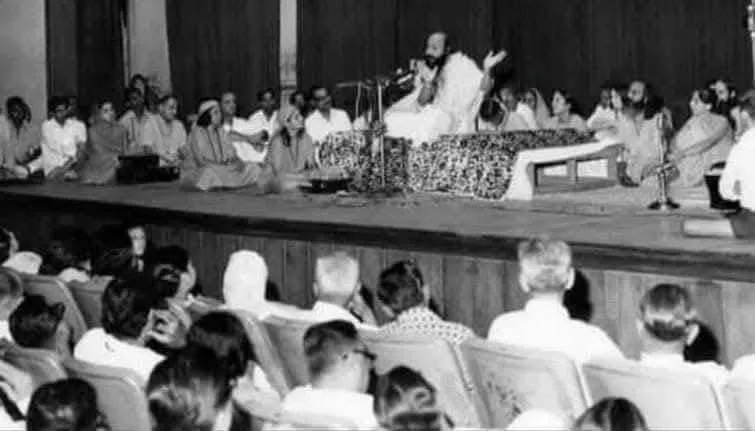
Osho's original Hindi beside Osho Live's English translation, matched passage by passage.
एक ओंकार सतनाम। किसी भी मार्ग से एक को खोज लेना है। एक को खोजते ही यात्रा पूरी हो जाती है। क्योंकि एक को खो कर ही संसार प्रारंभ हुआ है। बहुत उपाय हो सकते हैं एक को खोजने के। क्योंकि बहुत प्रकार से एक खंडित हुआ है। जैसे सूर्य की किरण गुजरती है कांच के एक टुकड़े से, सात टुकड़ों में टूट जाती है। इंद्रधनुष पैदा होता है। ऐसे ही जीवन बहुत से खंडों में टूट गया है। एक किरण सात रंगों में टूट जाती है। जब रंग जुड़े होते हैं तब श्वेत रंग बनता है। जब टूट जाते हैं तब भिन्न-भिन्न रंगों का निर्माण होता है।
One Omkar, the True Name. By whatever path, the One is to be found. The moment the One is found, the journey is complete—because it was by losing the One that the world began. There are many ways to find the One because the One has shattered into many ways. As a sunbeam passes through a shard of glass and breaks into seven colors—the rainbow appears. In the same way, life has been broken into many fragments. One ray breaks into seven hues. When all colors are joined, they are white; when they separate, they appear as different colors.
संसार बहुत रंगीला है, परमात्मा शुभ्र है। एक का कोई रंग नहीं है। रंग तो अनेक के हैं। समस्त साधनाएं पुनः खंडों में अखंड को खोजने की प्रक्रियाएं हैं। हिंदू कहते हैं, एक दो में टूट गया है--चेतना और पदार्थ, पुरुष और प्रकृति। इन दोनों में अगर तुम उसे खोज लो, एक की झलक, यात्रा पूरी हो जाएगी।
The world is multicolored; the Divine is pure white. The One has no color. Color belongs to the many. All spiritual practices are processes of finding the indivisible within division. Hindus say the One has split into two—consciousness and matter, purusha and prakriti. If you can glimpse the One in these two, your journey will be complete.
एक दूसरा मार्ग कहता है, एक तीन में टूट गया है--सत्यम्, शिवम्, सुंदरम्। तुम सत्य में सुंदर को देख लो, सुंदर में सत्य को देख लो, शिवम् में सुंदर दिखायी पड़े, सत्य में शिवम् दिखायी पड़े; इन तीनों के बीच तुम्हें एक की झलक आने लगे; सत्यम्, शिवम्, सुंदरम् खो जाए और एक ही बचे, एक ओंकार सतनाम, तो तुम्हारी यात्रा पूरी हो गयी।
Another path says the One has split into three—satyam, shivam, sundaram: Truth, Goodness, Beauty. See beauty in truth, truth in beauty; let the auspicious be seen in the beautiful and the true in the auspicious. As you glimpse the One among the three, when satyam, shivam, sundaram fall away and only the One remains—One Omkar, the True Name—your journey is done.
नानक कहते हैं, एक पांच में टूट गया है, पांच इंद्रियों के कारण; अगर इन पांचों में तुम एक को खोज लो, तो उपलब्धि हो गयी। तुम सिद्ध हो गए।
Nanak says the One has split into five—through the five senses. If within these five you find the One, you have attained. You are accomplished.
यह बात महत्वपूर्ण नहीं है कि तुम कितने खंडों में तोड़ कर देखते हो। अनंत खंड हो गए हैं। महत्वपूर्ण बात यह है कि खंडों के बीच अखंड को कैसे खोज लिया जाए!
It is not important into how many parts you divide. They can be infinite. What matters is: how to find the whole within the fragments!
पांच इंद्रियां हैं, लेकिन पांचों इंद्रियों के बीच में एक ध्यान है। इंद्रियां पांच हैं, ध्यान एक है। इसे थोड़ा समझें, तो पांचों इंद्रियों के बीच एक का सूत्र हाथ में आ जाएगा। मनके कोई गिनता रहे माला के, कुछ अर्थ नहीं, सब मनके जिस एक सूत्र में पिरोए हैं उसे जो पकड़ ले, उसने परमात्मा की शरण ले ली। मनके गिनना संसार है, मध्य में पिरोए सूत को पकड़ लेना परमात्मा की उपलब्धि है।
There are five senses, but there is one attention among them. The senses are five; attention is one. Understand this a little, and you will have the thread of the One that runs through the five. Counting beads on a rosary is of no meaning; if one grasps the single thread on which all the beads are strung, one has taken refuge in the Divine. Counting beads is the world; seizing the string in the middle is the attainment of God.
पांच इंद्रियां हैं। उनके बीच कौन है एक? जब तुम आंख से देखते हो तो कौन देखता है? जब तुम कान से सुनते हो तो कौन सुनता है? जब तुम हाथ से स्पर्श करते हो तो कौन स्पर्श करता है? जब तुम नाक से गंध लेते हो तो किसे गंध आती है? जब तुम स्वाद लेते हो तो किसे स्वाद आता है?
Five senses—who is the One among them? When you see with the eyes, who sees? When you hear with the ears, who hears? When you touch with the hand, who touches? When you smell with the nose, who receives the scent? When you taste, who tastes?
वह एक है। उसे नानक कहते हैं, वही ध्यान है। इसलिए अक्सर ऐसा हो जाता है कि तुम भोजन कर रहे हो...।
That is the One. Nanak calls it attention. Therefore it often happens that you are eating...
बड़ी पुरानी कथा है। एक संन्यासी एक सम्राट के द्वार आया। उसके गुरु ने उसे भेजा था। और कहा था, जो मैं तुझे नहीं समझा पाया वह शायद सम्राट समझा दे। भरोसा तो नहीं आया शिष्य को कि जो मैं गुरु से नहीं सीख सका, वह सम्राट से सीखूंगा? लेकिन गुरु ने कहा तो आज्ञा मानी।
There is an old story. A sannyasin came to an emperor’s gate. His master had sent him, saying, “What I could not make you understand, perhaps the emperor will.” The disciple did not feel convinced—“What I could not learn from my master, will I learn from a king?”—but he obeyed.
वह जब सम्राट के द्वार पर पहुंचा तो वहां रागरंग चलता था। शराब पी जा रही थी। नर्तकियां नाच रही थीं। तो वह बड़ा दुखी हुआ कि कहां गलत जगह आ गया! उसने सम्राट से कहा भी कि मैं वापस लौट जाऊं! क्योंकि मैं तो कुछ जिज्ञासा ले कर आया था। यहां तो आप खुद ही खोए हुए हैं। कौन मेरी जिज्ञासा को पूरी करेगा?
When he reached the palace, there was revelry—wine flowing, dancers dancing. He was distressed: “What a wrong place I’ve come to!” He told the emperor, “I should return. I’ve come with a deep inquiry, but here you yourself seem lost. Who will answer me?”
सम्राट ने कहा कि मैं खोया हुआ नहीं हूं। लेकिन थोड़ी देर रुको तो ही तुम्हारी समझ में आ सके। ऊपर से देख गए तो व्यर्थ ही लौट जाओगे। भीतर देखोगे तो शायद सूत्र मिल जाए। गुरु ने सोच कर ही भेजा है। सूत्र तो भीतर है, इंद्रियों में तो सूत्र नहीं है। इंद्रियों के भीतर जो छिपा है वहां सूत्र है।
The emperor said, “I am not lost. But stay a little; only then will you understand. If you look from the outside, you will go back in vain. If you look within, you may find the thread. Your master sent you well. The thread is within—not in the senses but behind them.”
लेकिन, सम्राट ने कहा, अब आ गए हो तो रात रुक जाओ। रात बड़े सुंदर बिस्तर पर सुलाया संन्यासी को, श्रेष्ठतम जो भवन का कक्ष था। लेकिन एक नंगी तलवार सूत के धागे से ऊपर लटका दी। रात भर संन्यासी सो न सका। जागा ही रहा, नींद आए ही न। करवट बदले, लेकिन ध्यान तलवार पर अटका रहा। और कब टूट जाए! कच्चे धागे में लटकी तलवार, कब छाती में छिद जाए! यह सम्राट ने भी खूब मजाक किया! इतना अच्छा इंतजाम किया सोने का और ऊपर तलवार लटका दी।
He added, “Now that you are here, stay the night.” The sannyasin was given the most beautiful bed in the finest chamber. But above him a naked sword was hung by a silk thread. The sannyasin could not sleep all night. He remained awake, turning sides, his attention snagged by the sword. When might it snap? A sword hanging by a flimsy strand—when might it pierce the chest? “What a cruel joke by the king! Such fine arrangements for sleep—and a sword above!”
सुबह सम्राट ने पूछा कि ठीक से सोए? संन्यासी ने कहा, इंतजाम तो सब सोने का ठीक था, इससे अच्छा इंतजाम हो नहीं सकता, लेकिन यह क्या मजाक की कि ऊपर तलवार लटका दी? मैं सो न सका। ध्यान तो वहीं लगा रहा।
In the morning the emperor asked, “Did you sleep well?” The sannyasin said, “Everything was perfect—none better. But why the joke of a sword above me? I could not sleep; all my attention was there.”
सम्राट ने कहा, ऐसे ही मौत की तलवार मेरे ऊपर लटक रही है। मेरा ध्यान वहां लगा है। नर्तकी नाचती है, मैं नृत्य में नहीं हूं। शराब ढाली जा रही है, मैं शराब में नहीं हूं। सुस्वादु भोजन कर रहा हूं, मैं स्वाद में नहीं हूं। क्योंकि मेरे ऊपर मौत की तलवार लटकी है, मेरा ध्यान वहां है।
The emperor said, “So it is with me—the sword of death hangs above. My attention is there. The dancer dances, but I am not in the dance. Wine is poured, but I am not in the wine. Delicious food is served, but I am not in the taste. Because the sword of death hangs over me, my attention remains there.”
पांच इंद्रियां तुम्हारे जीवन का द्वार हैं। उनसे तुम जीवन में प्रवेश करते हो। उनके बिना तुम्हारा जीवन से संबंध न हो सकेगा। लेकिन जितने तुम उनके भीतर से प्रवेश करते हो उतने ही अपने से दूर निकल जाते हो। और हर इंद्रिय के भीतर छिपा हुआ ध्यान है। क्योंकि इंद्रिय जब बाहर जाती है, तो तुम्हारा ध्यान बाहर जाता है। वह ध्यान के बाहर जाने का मार्ग है।
The five senses are the gates of your life—through them you enter the world. Without them you would have no connection to life. Yet the more you go out through them, the farther you drift from yourself. Within every sense a hidden attention resides; when a sense goes outward, your attention goes outward. The senses are the paths through which attention flows out.
इसलिए अक्सर ऐसा हो जाएगा कि अगर तुम्हारा ध्यान एक इंद्रिय से उतर गया हो, तो दूसरी इंद्रियों का तुम्हें पता न चलेगा। क्योंकि पता इंद्रियों से नहीं चलता, ध्यान से चलता है। बोधमात्र ध्यान का है। समझो कि तुम्हारे पैर में कांटा गड़ा है। और बहुत पीड़ा हो रही है। और तुम सुस्वादु भोजन कर रहे हो, लेकिन स्वाद का पता न चलेगा। क्योंकि पीड़ा इतनी है कि ध्यान वहीं बह रहा है।
Thus, if your attention is absorbed by one sense, the others may not register. Not the senses, but attention registers. Awareness belongs to attention alone. A thorn is stuck in your foot; pain is intense. Even if you are eating a sumptuous meal, you won’t taste it—the pain draws all your attention.
तुम रास्ते से चले आ रहे हो, चारों तरफ सुंदर स्त्री-पुरुष गुजर रहे हैं, लेकिन आज तुम्हें कोई सौंदर्य दिखायी नहीं पड़ता। क्योंकि अभी-अभी खबर मिली है कि घर में आग लग गयी। तुम भागे चले आ रहे हो। कोई नमस्कार करता है, सुनायी नहीं पड़ता। किसी को धक्का लग जाता है, माफी मांगने की याद नहीं आती। कौन गुजर रहा है? दुकानों पर क्या बिक रहा है? लोग क्या चर्चा कर रहे हैं? आज कोई उत्सुकता नहीं है। मकान में आग लगी है, तुम्हारा ध्यान उस तरफ है। कान सुनेंगे, फिर भी सुनेंगे नहीं। हाथ किसी को छू लेगा, फिर भी छुएगा नहीं। और ऐसे समय कोई सुस्वादु से सुस्वादु भोजन तुम्हें दे दे तो भी स्वाद न आएगा।
You are walking down a street—beautiful men and women pass by—but today nothing appears beautiful. You just heard your house is on fire. You hurry headlong. Someone greets you; you don’t hear. You bump into someone; apology doesn’t arise. Who is passing? What are the shops selling? What are people discussing? No curiosity. Your house is on fire—your attention is there. The ears hear, and yet they don’t. The hand touches, and yet it doesn’t. Even the most delicious meal will be tasteless.
क्योंकि इंद्रियां बिना ध्यान के कुछ भी अनुभव नहीं कर सकतीं। इंद्रिय का सारा अनुभव तो ध्यान पर निर्भर है। तुम हर इंद्रिय में ध्यान को डालते हो, तभी इंद्रिय सक्रिय हो कर सक्षम हो पाती है। अगर इन पांचों इंद्रियों से अपने ध्यान को तुम खींच लो, तो पांच खो जाएंगे और एक बचेगा। और वही एक की तलाश है। तो नानक इस सूत्र में इन पांच से कैसे एक पर हट जाया जाए, इसकी प्रक्रिया का उल्लेख कर रहे हैं।
Without attention, the senses cannot experience anything. All sensory experience depends on attention. Only when you pour attention into a sense does it become capable and alive. If you draw your attention back from the five senses, the five fall away and one remains—and that is the One you seek. Nanak’s sutra shows the process of shifting from the five to the One.
अब इस सूत्र को समझने की कोशिश करें।
Now try to understand this sutra.
‘पंच प्रमाण होते हैं और पंच ही प्रधान होते हैं। पंच का ही उसके द्वार पर सम्मान होता है। पंच ही राजा के दरबार में शोभा पाते हैं। पंच का एक ध्यान ही गुरु होता है।’
“Five are the authorities, and five are the eminences. At His gate the five are honored. The five shine in the court of the King. The guru of the five is the one attention.”
पंच परमाण पंच परधान। पंचे पावहि दरगहि मानु।।
पंचे सोहहि दरि राजानु। पंचा का गुरु एकु धिआनु।।
‘पांच का एक गुरु है और वह ध्यान है।’
Panch parmaan, panch pardhaan. Panche paavahi dargah maan. Panche soheh dar rajan. Pancha ka guru ek dhiaan.
“The five have one guru—and that guru is attention.”
अगर तुम पांच में बिखरे रहे तो भटक जाओगे। अगर तुमने एक को पकड़ लिया तो तुम उपलब्ध हो जाओगे।
If you remain scattered among the five, you will wander. If you grasp the One, you will arrive.
कबीर ने एक पद कहा है। राह से चलते, एक स्त्री को चक्की पीसते कबीर ने देखा और कहा कि दो पाटन के बीच में साबित बचा न कोय। ये दो जो पाट हैं, इन के बीच जो भी पड़ गया, वह पिस गया। कबीर अपने शिष्यों को कह रहे थे कि ऐसे ही द्वैत की चक्की के बीच जो पड़ गया, वह पिस गया, वह बच न सका।
Kabir once passed a woman grinding grain on a mill. He said, “Between the two grinding stones nothing whole survives.” Whatever falls between duality’s millstones is ground to dust.
कबीर के बेटे ने कहा, लेकिन इस चक्की में एक चीज और है। इसमें बीच में एक कील है। जिसने उसका सहारा ले लिया, उसके संबंध में भी कुछ कहें। तो कबीर ने दूसरे पद में कील का स्मरण किया है। कहा है कि दो पाटों के बीच में जो पड़ गया, वह तो नहीं बचा; लेकिन जिसने दो के बीच उस एक का सहारा ले लिया, उसे फिर कोई न मिटा सका। चक्की में भी जो गेहूं का दाना कील का सहारा ले लेता है फिर दो पाट उसे पीस नहीं पाते।
Kabir’s son replied, “But there is one more thing in that mill—a peg in the center. Speak also of the one who takes hold of that.” In another song Kabir remembered the peg: “Whoever falls between the two stones is crushed; but whoever takes support of the one peg between the two—none can destroy him. Even a grain of wheat that leans on the peg cannot be ground.”
तो चाहे दो कहो, चाहे तीन कहो, चाहे पांच कहो, चाहे नौ कहो, चाहे अनंत-अनेक कहो। भटकाव के बहुत नाम हो सकते हैं, पहुंचने का नाम एक है। फिर तुम जो भी भटकाव चुनोगे, उससे गुजरने की प्रक्रियाएं अलग-अलग हो जाएंगी। अगर नानक की इस प्रक्रिया को समझना हो तो इसका अर्थ हुआ कि जब तुम भोजन करो, तब ध्यान पर ध्यान देना। भोजन भीतर जा रहा है, स्वाद निर्मित हो रहा है, तुम ध्यानपूर्वक इस स्वाद को लेना। अगर तुमने ध्यानपूर्वक यह स्वाद लिया तो तुम थोड़ी ही देर में पाओगे कि स्वाद तो खो गया, ध्यान हाथ में रह गया। क्योंकि ध्यान बड़ी प्रज्वलित अग्नि है। स्वाद तो जल कर राख हो जाएगा, ध्यान हाथ में रह जाएगा।
Call it two, three, five, nine, or numberless—wandering has many names; arriving has only one. The process will differ depending on which wandering you choose to cross. To understand Nanak’s process: when you eat, give attention to attention. Food goes in, taste arises—receive that taste attentively. Soon you will find the taste is gone and attention remains. Attention is a blazing fire; tastes burn to ash—attention remains.
तुम एक सुंदर फूल को देख रहे हो, ध्यानपूर्वक देखना। थोड़ी ही देर में तुम पाओगे, फूल तो खो गया, ध्यान हाथ में रह गया। क्योंकि फूल तो सपने जैसा है, ध्यान शाश्वत है। अगर तुमने गौर से एक सुंदर स्त्री को देखा और गौर से देखते रहे और ध्यान दिया, भटक न गए विचारों में, तो तुम पाओगे स्त्री तो खो गयी--जैसे पानी पर बनी एक लहर--ध्यान हाथ में रह गया। हर इंद्रिय में अगर तुमने सावधानी बरती, तो तुम पाओगे इंद्रिय के रूप तो खो जाते हैं, निरूप, अरूप ध्यान हाथ में रह जाता है। और उस ध्यान को जिसने पकड़ लिया, फिर उसे मिटाने वाला कोई भी नहीं।
You gaze at a beautiful flower—look attentively. Soon the flower is gone and attention remains. The flower is dreamlike; attention is eternal. Look at a beautiful woman with care—don’t drift into thought—and you will find she has vanished like a ripple on water; attention remains. In every sense, if you are vigilant, the forms dissolve; the formless attention remains. Whoever catches hold of that attention—none can destroy him.
तो नानक कहते हैं, इन पंच इंद्रियों का एक ही गुरु है और वह ध्यान है। और उसी एक ध्यान में पांचों इंद्रियां अपने जल को डालती हैं।
So Nanak says: these five senses have only one guru—and that is attention. All five pour their streams into this one attention.
इसीलिए तो एक बहुत महत्वपूर्ण घटना है--मनस्विद अध्ययन करते हैं--और वह यह कि आंख देखती है, कान सुनते हैं, हाथ छूता है, नाक गंध लेती है; न तो आंख सुन सकती है, न कान देख सकते हैं, फिर इन सबको जोड़ता कौन है?
This is why a very important fact—established by the mind-sciences—is that eyes see, ears hear, hands touch, the nose smells; the eye cannot hear and the ear cannot see. Who joins them?
मैं बोल रहा हूं। तुम मुझे देख भी रहे हो, तुम मुझे सुन भी रहे हो। कान से तुम सुन रहे हो, आंख से तुम देख रहे हो। लेकिन ऐसा तुम कैसे पक्का कर सकते हो कि जिस व्यक्ति को तुम देख रहे हो वही बोल भी रहा है? आंख और कान तो अलग-अलग हैं। एक खबर देता है कि आवाज आ रही है, एक खबर देता है कि कोई दिखायी पड़ रहा है। लेकिन तुम दोनों को जोड़ कैसे लेते हो? कौन जोड़ता है दोनों को कि जिसको हम देख रहे हैं वही बोल रहा है?
I am speaking. You are both seeing me and hearing me. With the ear you hear; with the eye you see. But how do you make sure the one you are seeing is the same one you are hearing? Eyes and ears are separate. One reports sound, the other a sight. Who puts the two together—“the one we see is the one speaking”?
जरूर तुम्हारी दोनों इंद्रियों के पीछे कोई एक जगह होनी चाहिए, जहां सभी इंद्रियां अपने अनुभव को संगृहीत करती हैं। आंख भी वहीं डाल देती है दृश्य को, कान भी वहीं डाल देता है शब्द को, नाक वहीं डाल देती है गंध को, हाथ वहीं डाल देते हैं स्पर्श को। एक बिंदु पर सभी इंद्रियां अपने-अपने अनुभव डाल देती हैं। वही बिंदु ध्यान है। वहीं सब चीजें संगृहीत हो जाती हैं और तुम अनुभव कर पाते हो।
There must be one place behind your senses where all their impressions are gathered. The eye deposits the visual there; the ear deposits the sound; the nose deposits scent; the skin deposits touch. At a single point the senses place their experiences. That point is attention. There everything is integrated, and thus you can experience.
नहीं तो जीवन बड़ा विक्षिप्त हो जाए। तुम्हें पता ही न चले कि तुम जिसे देख रहे हो वही बोल रहा है, कि जिसे तुम सुन रहे हो उसी के शरीर की गंध भी आ रही है, तुम खंडित हो जाओेगे। पांचों को जोड़ने वाला कोई चाहिए। ये पांचों मार्ग किसी एक जगह पर जा कर मिलते हैं। और इन पांचों का अनुभव संगृहीत हो जाता है। उस जगह का नाम ध्यान है।
Otherwise life would be demented. You would not know that the one you see is the one speaking, the one you hear has that particular fragrance; you would be split apart. There must be something that joins the five. These five paths converge at one place; their experiences are assembled there. That place is called attention.
नानक कहते हैं, ध्यान पांच का गुरु है। पंच का एक ध्यान ही गुरु होता है।
Nanak says: attention is the guru of the five. The one attention alone is the guru of the five.
ये पांचों तो शिष्य हैं। लेकिन तुमने शिष्यों को गुरु बना लिया है। और गुरु को तुम बिलकुल भूल गए हो। तुमने नौकर-चाकरों को मालिक बना लिया है, मालिक का तुम्हें स्मरण न रहा। तुम इंद्रियों की मान कर चलते हो, ध्यान से तुम पूछते ही नहीं। तुम्हें इस बात का खयाल ही भूल गया है कि इंद्रियां तो ऊपर-ऊपर हैं, गहरे में कौन छिपा है? इंद्रियां तो ध्यान के ही फैलाव हैं। इंद्रियों के माध्यम से ध्यान ही जगत में जा रहा है।
The five are disciples. But you have made the disciples your guru, and forgotten the master. You have made the servants your lord, and forgotten the owner. You obey the senses; you do not consult attention. You forget that the senses are superficial—who is hidden in the depths? The senses are expansions of attention. Through the senses, attention goes outward.
अगर तुम्हें इस जीवन को सुचारु रूप से चलाना हो तो इंद्रियों की मत सुनना। क्योंकि इंद्रियां तो अधूरी हैं। आंख को आंख का पता है। कान का कान को पता है। मुंह का मुंह को पता है। तुम उनकी मान कर चलोगे तो मुश्किल में पड़ जाओगे। और अक्सर तुम पाओगे कि लोगों ने इंद्रियों की मान ली है। और तुम हर आदमी में किसी न किसी एक इंद्रिय की प्रधानता पाओगे जिसकी उसने गुलामी कर ली है। कोई है जो स्वाद का दीवाना है। बस उसे भोजन, और भोजन, और भोजन सब कुछ है। उसे कुछ और सूझता नहीं। वह खाए चला जाता है।
If you want to steer life rightly, don’t listen to the senses. They are partial. The eye knows only its own domain; the ear knows only its own; the mouth knows only its own. If you follow them, you land in trouble. Often you will see that people enslave themselves to one dominant sense. One is mad about taste—food, food, food, nothing else. He keeps eating.
सम्राट हुआ नीरो; उसने चिकित्सक रख छोड़े थे। क्योंकि एक दफा खाने में उसका मन न भरता। दिन में दो दफा खाने में मन न भरता। तीन भी तृप्ति न होती, चार भी तृप्ति न होती, वह चाहता कि चौबीस घंटे भोजन ही करता रहे। बस, स्वाद ही सब कुछ हो गया। तो उसने चिकित्सक रख छोड़े थे। वह खाना खाए, वे उसे उलटी करवा दें। उलटी कर के वह फिर खाने पर जुट जाए। जैसे ही खाना पूरा हो, चिकित्सक उसको दवा दे कर फिर उलटी करवा दें। वह फिर खाने पर जुट जाए।
Emperor Nero kept physicians at hand because he was never satisfied—twice a day was not enough; three times, four times not enough. He wanted to eat around the clock. He had doctors induce vomiting after each meal so he could eat again.
तुम कहोगे, वह आदमी पागल था। लेकिन तुम पाओगे इसी तरह का पागलपन कम-ज्यादा मात्रा में लोगों के जीवन में है। किसी को आंख का नशा है। बस, वह सौंदर्य की तलाश में घूम रहा है। दर-दर, द्वार-द्वार ठोकर खा रहा है कि कोई सुंदर चेहरा, कोई सुंदर शरीर दिख जाए। आंख की मान कर चल रहा है। आंख की अगर मान कर चले, तो भी अंधे रहोगे। क्योंकि आंख असली देखने वाला तत्व नहीं है। आंख तो सिर्फ झरोखा है, खिड़की है। उससे जो झांकता है, वह कोई और है। खिड़की से मत पूछो, झांकने वाले से पूछो। इंद्रियां तो झरोखे हैं। कोई संगीत में दीवाना है। बस, उसको धुन का नशा चढ़ा हुआ है। कोई शरीर की साज-सज्जा में लगा है। कोई स्पर्श का दीवाना है, कोई गंध का दीवाना है।
You will say he was insane. Yet you will find the same insanity in lesser degrees in people’s lives. Some are drunk on the eyes—forever hunting beauty from door to door. Follow the eyes and you remain blind—the eye is not the real seer. It is only a window; the one who looks through is other. Don’t ask the window; ask the one peering through. The senses are windows. Another is mad for music; another absorbed in adorning the body; another enslaved to touch or to fragrance.
लेकिन सभी इंद्रियों के दीवाने हैं और नौकरों की मान कर चल रहे हैं। मालिक से पूछो। मालिक कौन है सारी इंद्रियों का, जिसके हटते ही इंद्रियां व्यर्थ हो जाती हैं?
All are sense-mad, obeying servants. Ask the owner. Who is master of all the senses—without whom they are useless?
ऐसा हुआ कि उन्नीस सौ दस में काशी के नरेश का आपरेशन हुआ अपेंडिक्स का। तो उन्होंने कहा कि मैंने कसम ले रखी है कि बेहोशी की कोई दवा कभी न लूंगा। कभी कोई नशा न करूंगा। तो कोई इनस्थेशिया मैं नहीं ले सकता हूं। आप आपरेशन कर दें, लेकिन बिना किसी बेहोशी की दवा के। होश मैं न गंवाऊंगा। डाक्टरों ने कहा, यह कैसे हो सकेगा? यह कोई छोटा-मोटा कांटा निकालना नहीं है। यह तो पूरा पेट चीरा-फाड़ा जाएगा, हड्डी काटी जाएगी, घंटों लगेंगे। लेकिन काशी-नरेश ने कहा, आप उसकी फिक्र न करें। सिर्फ मुझे मेरी गीता पढ़ने दें। मैं अपनी गीता पढ़ता रहूंगा, आप अपना आपरेशन कर लें।
In 1910 the Maharaja of Kashi underwent an appendectomy. He had vowed never to take any intoxicant, any anesthesia. “I cannot be anesthetized,” he said. “Operate, but without putting me to sleep.” The doctors protested—“How can this be? This is no splinter to be pulled; we will cut the abdomen, saw bone; it will take hours.” The Maharaja said, “Don’t worry about me. Let me read my Gita; you do your operation.”
कोई और उपाय न था। और अगर आपरेशन न किया जाए, तो भी मृत्यु होनी निश्चित थी। तो फिर यह खतरा लिया गया, कि मृत्यु तो होनी ही है, एक संभावना है, शायद--शायद यह आदमी बच जाए। काशी-नरेश गीता का पाठ करते रहे और आपरेशन जारी रहा।
There was no other way—without surgery he would die. They took the risk. The Maharaja recited the Gita while the surgery went on.
आपरेशन पूरा हो गया। चिकित्सक चकित हुए कि यह कैसे संभव है? इतनी पीड़ा हुई होगी! लेकिन काशी-नरेश ने कहा, मुझे पता न चला, क्योंकि मेरा ध्यान तो गीता पर लगा था।
The operation completed. The doctors were astonished—“How is it possible? The pain must have been intense.” The Maharaja said, “I did not notice; my attention was on the Gita.”
पता तो ध्यान से चलता है। अगर तुम्हारा ध्यान बदल जाए, तुम्हें जो-जो पता चलता है वह बदल जाएगा। पता ध्यान से चलता है, तुम्हें वही दिखायी पड़ता है जिस तरफ तुम ध्यान देना चाहते हो। जिस तरफ तुम ध्यान नहीं देना चाहते, वह तुम्हें पता ही नहीं चलता। तुम उसी बाजार से गुजर जाओगे, लेकिन पता तुम्हें उन्हीं चीजों का चलेगा जिन पर तुम ध्यान देना चाहते हो। चमार गुजरेगा, जूतों पर नजर रहेगी। जौहरी गुजरेगा, हीरों पर नजर रहेगी। तुम्हारी नजर वहां रहेगी जहां तुम्हारा ध्यान है। तुम वही देख लोगे जहां तुम्हारा ध्यान बह रहा है।
Everything is known through attention. Change your attention and what you know changes. You only see where you intend to place your attention. What you don’t attend, you don’t even notice. You will pass through the same market and only notice what you attend to. The cobbler notices shoes, the jeweler diamonds. Your gaze rests where your attention is. You see precisely where attention is flowing.
इसलिए सारे जीवन की गहनतम कला ध्यान की मालकियत को उपलब्ध कर लेना है। फिर अगर तुम परमात्मा की तरफ बह रहे हो, संसार खो जाएगा। इसलिए तो ज्ञानी कहते हैं, संसार माया है। माया का यह मतलब तो नहीं है कि नहीं है। है तो पूरी तरह। लेकिन ज्ञानी कहते हैं, संसार माया है। और उन्होंने जाना है कि माया है। जानने का कारण यह है कि जब पूरा ध्यान परमात्मा की तरफ बहता है, संसार खो जाता है। क्योंकि जिस तरफ ध्यान नहीं है, उसके होने न होने में कोई अंतर नहीं रह जाता है। जिस तरफ ध्यान है, उस तरफ हम जीवन देते हैं। जहां ध्यान है, वहां अस्तित्व पैदा हो जाता है। जहां से ध्यान हट गया, वहां से अस्तित्व खो जाता है।
The deepest art of life is to reclaim the sovereignty of attention. Then if your attention flows toward the Divine, the world fades. Thus the wise call the world maya. Not that it doesn’t exist—it exists fully. But when attention flows entirely toward the Divine, the world is lost. Where attention is absent, being and nonbeing are indistinguishable. Where attention flows, life is bestowed. Where attention departs, existence evaporates.
ज्ञानी कहते हैं, परमात्मा सत्य है, संसार असत्य। क्या इसका यह अर्थ है कि यह जो संसार दिखायी पड़ रहा है, वह नहीं है? यह पूरी तरह है, लेकिन ज्ञानी का ध्यान हट गया। अगर तुम्हारे मन में लोभ है तो धन सत्य है। अगर लोभ खो गया तो धन मिट्टी। धन अपने कारण धन नहीं है, तुम्हारे ध्यान के कारण धन है। वासना है तो शरीर बड़ा महत्वपूर्ण है, वासना खो गयी तो शरीर गौण हो गया।
The wise say: God is true, the world untrue. This does not mean the visible world is nonexistent. It means their attention has withdrawn. If your mind is greedy, money is truth. When greed dissolves, money is dust. Money is money not by itself, but by your attention. If lust is alive, the body is paramount; when lust falls, the body becomes secondary.
जहां से ध्यान हटेगा, वहां से अस्तित्व हट जाता है। जिस तरफ ध्यान जाएगा, वहां अस्तित्व प्रगट हो जाता है। और जिस दिन तुम यह समझ लोगे, उस दिन तुम अपने मालिक हो जाओगे। क्योंकि तुम्हें अपने भीतर के मालिक का पता चल गया। अब तुम नौकरों की नहीं सुनते। अब तुम गुलामों की मान कर नहीं चलते। अब तुम शिष्यों से नहीं पूछते। उनसे क्या पूछना है जिन्हें खुद ही पता नहीं है! अब तुम गुरु से पूछते हो।
Where attention leaves, existence leaves. Where attention goes, existence appears. The day you understand this, you become your own master. You have found the master within. You no longer obey servants, or follow slaves, or consult disciples—what is the point of asking those who themselves do not know? You ask the guru.
नानक कहते हैं, ‘पंच का एक ध्यान ही गुरु है। जो कोई उसके संबंध में कहे, वह विचारपूर्वक कहे। क्योंकि उससे गहन, गंभीर और कोई बात नहीं।’ बहुत सोच कर कहे। ऐसे ही न कह दे। ऐसे बातचीत में न कह दे। क्योंकि उससे मूल्यवान कुछ भी नहीं है। उससे ज्यादा सारपूर्ण कुछ भी नहीं है।
Nanak says: “The one attention of the five is the guru. Whoever speaks of it, let him speak thoughtfully—for nothing is more deep or grave.” Speak with care. Don’t toss the words about. There is nothing more precious, nothing more essential.
लेकिन लोग ध्यान के संबंध में भी बिना जाने बात करते रहते हैं। ऐसे लोगों ने जगत को बड़ी उलझन में डाल दिया है। क्योंकि उन्हें कुछ पता ही नहीं है। लोगों को बिना पता भी कहने में रस आता है।
Yet people talk about meditation without knowing—and have thrown the world into confusion. They enjoy speaking even when they know nothing.
मेरे पास लोग आते हैं। सैकड़ों तरह की ध्यान की पद्धतियों पर हम प्रयोग कर रहे हैं। लोग आते हैं और कहते हैं, फलां आदमी ने कह दिया, यह तुम क्या कर रहे हो? यह भी कोई ध्यान है? मैं उनसे पूछता हूं कि तुम उस आदमी को जा कर पूछो कि उसने कभी ध्यान किया है? वह ध्यान को जानता है? अगर ध्यान को जानता है तो उससे सीख लो। क्योंकि सवाल यह नहीं है कि मुझ से सीखा कि किससे सीखा। सवाल यह है कि ध्यान सीखा। वह जा कर उस आदमी को वापस पूछते हैं। वह कहते हैं, ध्यान? ध्यान का मुझे पता नहीं, न मैंने कभी किया।
People come to me. We are experimenting with hundreds of meditation methods. Someone arrives and says, “So-and-so told me—what you are doing is not meditation!” I ask, “Go ask him: has he ever meditated? Does he know it? If he does, learn from him. The question isn’t from whom you learned, but whether you learned meditation.” They go back and ask, and the fellow says, “Meditation? I don’t know, and I’ve never done it.”
लेकिन कौन सी चीज ध्यान नहीं है, यह कहने में वह तैयार हैं! जिसे ध्यान का कोई भी पता नहीं है वह भी ध्यान के संबंध में मंतव्य दे देगा।
Yet he is ready to declare what is not meditation! Even those who know nothing hold forth.
नानक कहते हैं कि सोच-विचार कर कहना। होश से कहना। जानते हो, तो ही कहना।
Nanak says: speak with thought. Speak with awareness. Only if you know—then speak.
दुनिया अज्ञानियों के कारण नहीं भटक रही है, दुनिया उन ज्ञानियों के कारण भटक रही है, जो ज्ञानी नहीं हैं। अज्ञानी क्या भटकाएगा? लेकिन ऐसे बहुत से लोग हैं, जिन्हें बताने का रस है। जिन्हें खुद भी पता नहीं है। जिन्हें ठीक-ठीक कुछ भी होश नहीं है कि वे क्या कह रहे हैं! क्यों कह रहे हैं! किन कारणों से कह रहे हैं! लेकिन लोग कहे चले जाते हैं।
The world is not misled by the ignorant, but by those posing as the knowledgeable who are not. The truly ignorant cannot mislead. But there are many who relish instructing; they have no idea what they are saying or why—and still they go on speaking.
और इस संसार में नासमझ खोज लेना कठिन नहीं है। अगर तुम बोलना शुरू कर दो--कुछ भी कहने लगो, अनर्गल भी बको--तो भी तुम थोड़े दिन में पाओगे कि कुछ शिष्य तुमने इकट्ठे कर लिए। तुम से भी बड़े मूढ़ जगत में हैं। तो शिष्य को खोज लेना कोई अड़चन की बात नहीं है। तुम में भर थोड़ी सी विक्षिप्तता हो, दंभ हो, जोर से चिल्ला कर कहने की कोई आदत हो, लोग इकट्ठे हो जाएंगे। कोई न कोई तुम्हारे पीछे चलने लगेगा। तुम्हारे आसपास घटनाएं घटने लगेंगी। लोग बिलकुल अंधेरे में हैं। उन्होंने प्रकाश को कभी जाना ही नहीं है। तो तुम्हारी चर्चा में भी फंस जाते हैं। तुम अगर प्रकाश की चर्चा भी शुरू कर दो, तो भी उन्हें खयाल होने लगता है कि जरूर कोई बात होगी।
It is not hard to find fools in this world. Start talking—anything, even nonsense—and soon you will gather disciples. There are always greater fools than you. To collect followers is no obstacle; a little craziness, a little pretension, a habit of shouting loudly—and people will gather. Events assemble around you. People live in darkness; they have never known light. They even get entangled in your talk of light. If you begin to talk about illumination, they imagine there must be something there.
फिर लोग बड़े कल्पनाशील हैं। जिसको वे सोच लेते हैं कि होगी, उसकी वे कल्पना करने लगते हैं। और जब कल्पना शुरू हो जाती है, तो स्वप्न दिखाई पड़ने शुरू हो जाते हैं। किसी की कुंडलिनी जगने लगेगी, किसी को प्रकाश दिखायी पड़ने लगेगा, किसी को रंग-बिरंगे दृश्य आने लगेंगे। और जब ये घटनाएं घटेंगी, तो वह जो आदमी बीच में गुरु बन कर बैठ गया है, उसका भरोसा और बढ़ जाएगा। इसलिए तो इतने गुरु हैं।
People are wildly imaginative. What they believe might be, they begin to imagine into being. Then dreams appear—someone’s kundalini begins to rise, someone sees inner lights and colorful visions. As these “events” occur, the man posing as a guru gains more confidence. Hence so many gurus.
मैं ऐसे लोगों को जानता हूं, जिनको ध्यान का कोई भी पता नहीं है, जिन्होंने कभी उसका स्वाद ही नहीं लिया। लेकिन जिनके सैकड़ों शिष्य हैं। और जब वे गुरु मुझसे एकांत में मिलते हैं, तो वे भी यही पूछते हैं कि ध्यान कैसे करें? ध्यान क्या है?
I know people who know nothing of meditation, have never tasted it—yet they have hundreds of disciples. And when these gurus meet me in private, they ask, “How to meditate? What is meditation?”
नानक कहते हैं, ध्यान के संबंध में सोच-विचार कर कहना। क्योंकि यह आग से खेलना है। यह सूक्ष्मतम बात है। इससे सूक्ष्म कुछ और नहीं है। और न इससे कोई और ज्यादा मूल्यवान है। संसार से परमात्मा तक जाने का जो रास्ता है, उससे महीन, बारीक और कुछ हो भी नहीं सकता। इस संबंध में बहुत सोच-विचार कर कहना।
Nanak says: speak thoughtfully about attention. It is playing with fire—the subtlest thing; nothing is subtler or more valuable. The path from the world to God cannot be finer. Speak with great care.
जे को कहे करै वीचारू।
पहले तो यह विचार कर लेना कि मैं जानता हूं? मुझे पता है?
Je ko kahe, karai veechaaru. First ask: Do I know? Am I sure?
अगर इस संसार में हर व्यक्ति एक बात तय कर ले कि मैं वही कहूंगा जो मुझे पता है, तो इस दुनिया का भटकाव मिट जाए। सिर्फ इतनी सी बात तय कर ले कि मैं वही कहूंगा, जो मुझे पता है। मैं अनाधिकार बात न कहूंगा। जो मुझे पता नहीं है, मैं स्वीकार कर लूंगा, मुझे पता नहीं है। अगर इतने पर भी मनुष्य राजी हो जाए, तो इस दुनिया से भटकाव मिट जाए। और सत्य को खोज लेना कठिन न हो।
If every person made just one resolve—“I will speak only what I know”—the world’s confusion would end. Resolve simply this much: I will not speak beyond my right. If I don’t know, I will admit I don’t know. Even that much would end the wandering; truth would not be hard to find.
लेकिन इतना असत्य है चारों तरफ, इतने व्यर्थ के जाल हैं, इतना झूठा गुरुत्व है कि तुम ठीक गुरु को खोज भी न पाओगे। नानक को खोजना मुश्किल हो जाएगा। क्योंकि चारों तरफ न मालूम कितने लोग दावेदार हैं! तुम कैसे पता लगाओगे, कौन सही है? कौन झूठ है? कोई कसौटी भी नहीं है।
But there is so much falsehood, so many useless webs, so much counterfeit “gurudom” that you cannot find a true master. Finding Nanak becomes difficult—so many claimants all around! How will you tell the genuine from the false? There is no ready touchstone.
इसलिए नानक कहते हैं, बहुत विचार कर ही कोई कहे, जान लिया हो तो ही कहे, पहचान लिया हो तो ही कहे। क्योंकि तुम जीवन से खिलवाड़ न करना। तुम जब दूसरे को सलाह दे रहे हो, तब तुम दूसरे के जीवन के साथ खिलवाड़ कर रहे हो। अगर तुम्हें पता नहीं है, तुम भटका दोगे। तुम्हें भला गुरु होने का मजा आ जाए! लेकिन इससे बड़ा कोई पाप नहीं हो सकता कि तुमने किसी को ज्ञान के मार्ग से भटका दिया। हत्या भी इससे कम पाप है। चोरी कुछ भी नहीं है। बेईमानी, धोखाधड़ी कुछ भी नहीं है। क्योंकि चोरी में तुम क्या करोगे? किसी की जेब से रुपया निकाल लोगे। रुपए का मूल्य कितना है? हत्या में तुम क्या करोगे? किसी का शरीर काट डालोगे। नया शरीर उपलब्ध हो जाएगा, क्योंकि जीवन का कोई अंत नहीं है। तुम किसी को मार सकते नहीं। हिंसा ऊपर-ऊपर है, भीतर हो नहीं सकती। कपड़े ही छीन सकते हो, आत्मा तो न छीन लोगे। तुम किसी को धोखा दोगे, क्या धोखा दोगे? कुछ क्षुद्र सी चीज पा लोगे।
Thus Nanak says: only speak after deep consideration—only if you have known and recognized. Do not play with life. When you advise another, you are gambling with their life. If you don’t know, you will mislead. You may enjoy being a guru; but no sin is greater than turning someone astray from the path of wisdom. Murder is a lesser sin; theft is nothing; dishonesty and cheating are trivial by comparison. Theft? You take money—what is its worth? Murder? You destroy a body; another will be available, for life has no end. You cannot kill the soul. At most you snatch garments; you cannot snatch the self. If you deceive, you gain some petty thing.
लेकिन अगर तुमने गुरु होने का भ्रांत भाव पैदा करवा दिया, और तुमने वे बातें बतायीं जिनका तुम्हें पता नहीं, तो तुम व्यक्ति को जन्मों-जन्मों तक भटका दे सकते हो। इससे बड़ा और कोई धोखा नहीं हो सकता। और इससे बड़ा कोई पाप नहीं हो सकता। अज्ञानी गुरु जैसा महापाप करता है, वैसा महापाप कोई भी नहीं कर सकता।
But if you cultivate the delusion of being a guru and you expound what you do not know, you can mislead a person for lifetimes. No deception is greater; no sin, worse. A false guru commits the supreme crime.
और ध्यान रखना, जब एक व्यक्ति बहुत से गलत गुरुओं के पास भटक लेता है, तो उसकी आस्था खो जाती है, उसका भरोसा टूट जाता है, उसकी आशा मिट जाती है। और धीरे-धीरे उसे ऐसा लगने लगता है कि सब पाखंड है। जब निन्यानबे के पास पाखंड है तो एक के पास कैसे सत्य होगा? और जो निन्यानबे के पास पाखंड से गुजरा है, वह अगर एक के पास भी आ जाए, नानक के पास भी आ जाए, तो भी अपने को सम्हाल कर ही रखेगा। कि निन्यानबे जगह धोखा खाया, पता नहीं यहां भी धोखा हो!
And remember: one who has wandered among many false teachers loses faith. His trust breaks, hope withers. Slowly he concludes everything is hypocrisy. When ninety-nine are fake, how can one be true? And if after those ninety-nine he does come to the one—to Nanak—he still holds himself back: “I was cheated ninety-nine times; who knows, maybe here too!”
इस संसार में इतनी नास्तिकता है, उस नास्तिकता का कारण गलत गुरु हैं। लोगों की आस्था खो गयी है। नास्तिकता विज्ञान के कारण नहीं है। और न नास्तिकता नास्तिक दार्शनिकों के कारण है। नास्तिकता का मौलिक कारण पाखंडी गुरु हैं। क्योंकि इतना भरोसा तोड़ दिया है कि अब यह भरोसा ही करना संभव नहीं है कि कोई गुरु है। और यह भी भरोसा करना संभव नहीं है कि कोई परमात्मा है। क्योंकि जब गुरु ही नहीं तो परमात्मा कैसे होगा। ये गुरु, परमात्मा, और यह सब जाल, लोगों के शोषण की विधियां हैं। ऐसी लोगों की प्रतीति हो गयी है। भले लोग इतने भटकाए गए हैं।
The atheism that pervades today is due to false gurus. People have lost trust. It is not because of science, nor because of atheistic philosophy. The fundamental cause is hypocritical gurus, who so destroyed faith that it seems impossible to believe there could be a true guru or a God—“These are all devices for exploitation.” People have been misled so much.
इसलिए नानक कहते हैं, जो भी इस संबंध में कुछ कहे, वह बहुत विचार कर कहे। आग से खेलना है। दूसरों को जीवन दांव पर लगाने की बात कहनी है। सोच कर कहे, अन्यथा चुप रहे।
Therefore Nanak says: whoever speaks on this subject should speak with great care. It is playing with fire. You are inviting others to stake their lives. Think, otherwise remain silent.
नानक कहते हैं, करतै कै करणे नाही सुमारू।
और परमात्मा के संबंध में कुछ भी तो नहीं कहा जा सकता है। क्योंकि न तो उसका कोई अंत है, न कोई सीमा है। उसके संबंध में तो चुप ही रहा जा सकता है। क्या कहोगे? ध्यान के संबंध में कुछ कहा जा सकता है, लेकिन वह विचार कर कहना। और परमात्मा के संबंध में तो कुछ कहा ही नहीं जा सकता, इसलिए उस संबंध में तो कुछ कहना ही मत।
Nanak says: Kartai kai karne naahee sumaaru. About the Creator nothing can be said. He has no end, no boundary. One can only be silent. What will you say? Of attention, something can be said—speak thoughtfully. Of God—nothing can be said; so don’t say anything.
इसे थोड़ा समझ लो। ध्यान का अर्थ होता है विधि, मेथड; और परमात्मा का अर्थ होता है अनुभूति, निष्पत्ति। मार्ग के संबंध में कुछ कहा जा सकता है, अगर तुम चले हो मार्ग पर तो। मंजिल के संबंध में कुछ भी नहीं कहा जा सकता। क्योंकि मार्ग की तो सीमा है। मार्ग की तो दिशा है। मंजिल की तो कोई सीमा नहीं और कोई दिशा नहीं। मैं तुमसे यह तो नहीं कह सकता कि परमात्मा क्या है, लेकिन यह कह सकता हूं कि कैसे वहां तक मैं पहुंचा हूं। मार्ग के संबंध में बताया जा सकता है।
Understand this. Attention means method; God means realization. Something can be said of the path—if you have walked it. Of the goal—nothing can be said. The path has limits and a direction; the goal is limitless, directionless. I cannot tell you what God is, but I can tell you how I arrived. The method can be described.
इसलिए बुद्ध कहते हैं कि बुद्ध-पुरुष केवल इशारा करते हैं। बुद्ध कहते हैं कि बुद्ध-पुरुष विधि बताते हैं। नानक ने तो बार-बार कहा है कि मैं तो एक वैद्य हूं, जो औषधि बताता हूं। स्वास्थ्य के संबंध में कुछ नहीं कहा जा सकता है। औषधि के संबंध में कुछ कहा जा सकता है कि यह औषधि तुम्हारी बीमारी को काट देगी। फिर जो बच रहेगा, जो शेष रहेगा, बीमारी के हट जाने पर जिस आनंद, अहोभाव से तुम भर जाओगे, वही स्वास्थ्य है। उस संबंध में कुछ भी नहीं कहा जा सकता।
Hence the Buddhas say: the awakened only point. They show the method. Nanak says again and again: I am a physician—prescribing medicine. Of health itself nothing can be said. Of medicine, yes: “This will remove your illness.” What remains when illness is gone—the joy, the ah!—that is health; nothing can be said of it.
परमात्मा के संबंध में जो भी कहा जाए वह नकारात्मक होगा। हम यही कह सकते हैं कि वह यह नहीं है, वह यह नहीं है, वह यह नहीं है। हम यह नहीं कह सकते कि वह यह है। ऐसा सीधा इशारा तो उसे सीमित कर देगा। सीमित को हम अंगुली से बता सकते हैं कि यह रहा। असीम को हम कैसे बताएंगे? तो नानक कहते हैं कि परमात्मा के संबंध में तो कुछ कहा ही नहीं जा सकता; तो तुम चुप रहना।
Whatever we say of God must be negative—“not this, not this.” We cannot say, “It is this,” for that would limit it. The limited can be pointed to with a finger; the unlimited—how? Nanak says: of God, do not speak; be silent. Of attention, speak with care.
लेकिन परमात्मा के संबंध में भी लोग बहुत बात करते हैं। जितनी बात परमात्मा के संबंध में करते हैं, किसी और संबंध में नहीं करते। बड़ा विवाद, बड़ी किताबें, बड़ी चर्चाएं चलती हैं। प्रमाण जुटाते हैं, सिद्ध करते हैं कि है परमात्मा या नहीं। और कोई भी इसकी फिक्र नहीं करता कि परमात्मा को सिद्ध नहीं किया जा सकता और न असिद्ध किया जा सकता है। परमात्मा को जाना जा सकता है, जीया जा सकता है। परमात्मा हुआ जा सकता है। लेकिन न तो सिद्ध किया जा सकता है, न असिद्ध किया जा सकता है।
Yet people talk endlessly of God. No topic receives more words. Debates, books, arguments—marshal proofs, establish whether God is or is not. No one seems to care that God can be neither proved nor disproved. God can be known, lived, become—but not proven or refuted.
तुम कैसे सिद्ध करोगे कि परमात्मा है? तुम जो भी कहोगे वह असंगत होगा। तुम कैसे सिद्ध करोगे कि नहीं है? तुम जो भी कहोगे वह भी असंगत होगा। क्योंकि परमात्मा का अर्थ ही है, यह समस्त, टोटेलिटी। यह जो विराट सब तरफ फैला हुआ है, इसका इकट्ठा एक नाम परमात्मा है।
How will you prove God? Whatever you say will be inadequate. How will you disprove? Likewise inadequate. God means the totality—the Vast that spreads everywhere, for which “God” is a gathered name.
परमात्मा कोई व्यक्ति तो नहीं है कि कहीं बैठा है आकाश में! परमात्मा तो एक अनुभव है निमज्जन का, विलीन होने का। परमात्मा तो एक ऐसी परमदशा है, जब तुम मिट भी जाते हो और मिटते भी नहीं। होते भी हो और नहीं भी हो जाते हो। एक ऐसा विरोधाभास है, जहां एक तरफ से तुम बिलकुल शून्य हो जाते हो, दूसरी तरफ से बिलकुल पूर्ण हो जाते हो।
God is not a person sitting in the sky. God is an experience of immersion, of dissolution—a supreme state in which you vanish and yet are. A paradox: from one side you are utterly empty; from the other, utterly full.
तो परमात्मा न तो कोई व्यक्ति है, न कोई सिद्धांत है, न कोई हाइपोथीसिस है। परमात्मा एक अनुभूति है, और आखिरी अनुभूति है। और ऐसी अनुभूति है कि उसमें तुम खो जाते हो। इसलिए लौट कर कहने को कोई बचता भी नहीं।
So God is neither person, nor proposition, nor hypothesis. God is experience—the final one. So total that you are lost in it. There is no one left to return and speak.
तो नानक कहते हैं कि उसके संबंध में तो कुछ कहा नहीं जा सकता। ध्यान के संबंध में कुछ कहा जा सकता है। बहुत सोच कर कहना। जाना हो तो कहना, अन्यथा चुप रह जाना।
Thus Nanak says: of That, nothing can be said. Of attention—something can be said. Speak only if you have known; otherwise remain silent.
इसे तुम अपने जीवन में तो एक नियम बना लो। छोड़ो संसार को, अपने संबंध में तुम एक नियम बना लो। यह छोटा-सा नियम तुम्हारे सारे जीवन को रूपांतरित कर देगा। जो तुमने जाना हो, वही कहना। इंच भर ज्यादा नहीं।
Make this a rule in your life. Forget the world—for yourself, make one small rule that will transform your life: speak only what you have known. Not an inch more.
अतिशयोक्ति करने का मन होता है। इंच भर जानते हो, मील भर कहने की तबियत होती है। रत्ती भर पता चलता है, पहाड़ की चर्चा शुरू हो जाती है। मन की स्थिति अतिशय की है। क्योंकि अतिशय से अहंकार को रस आता है।
The mind loves exaggeration. You know an inch; you feel like proclaiming a mile. You sense a grain; you speak of mountains. The mind delights in excess—ego gets its juice there.
मुल्ला नसरुद्दीन एक दिन सड़क पर गिर पड़ा। बेहोश, उसे ले जाया गया अस्पताल। और जब उसे सर्जरी के टेबल पर रखा गया तो उसके खीसे में बंधा हुआ एक कागज का पुर्जा मिला। जिस पर उसने बड़े-बड़े अक्षरों में लिखा था: डाक्टरों के लिए विशेष सूचना। मुझे मिर्गी का दौरा पड़ा है, यह कोई अपेंडिक्स की बीमारी नहीं। अपेंडिक्स तो मेरी पहले ही अनेक बार निकाली जा चुकी है। ‘अनेक बार!’
Mulla Nasruddin once fell on the road, unconscious. Taken to the hospital, as they laid him on the surgery table they found a note in his pocket: “Special instruction for doctors: I have had an epileptic seizure; this is not appendicitis. My appendix has already been removed many times.” “Many times!”
मन तत्क्षण अतिशय करता है। क्योंकि बड़ा कर के देखने में मजा आता है। तुम्हें जरा सा पता चला नहीं कि तुम उसे फैला लोगे। तुम उसमें बहुत मिर्च-मसाला मिला लोगे। तुम उसे बहुत से रंग दे दोगे। और जितने तुम रंग दे रहे हो, उतना ही तुमने जो जाना है वह झूठ हुआ जा रहा है। धीरे-धीरे रंग ही रंग रह जाएगा, असली चीज खो जाएगी।
The mind immediately overdoes it. A little knowing and you inflate it—add spices, paint colors. The more colors you add, the more the truth of what you knew is lost. Soon only colors remain; the real is gone.
अतिशय से बचना। जितना जाना हो, इंचभर कम कहना, चलेगा। इंचभर ज्यादा मत कहना। थोड़ा कम बताना, चलेगा; उससे कोई किसी का हर्जा नहीं है। थोड़ा ज्यादा कर के मत बताना। और न केवल परमात्मा, ध्यान के संबंध में; जीवन के अनुभव के संबंध में भी आग्रह मत करना कि मैं जानता हूं। जीवन बड़ा है, तुमने जो जाना है, वह उसका बड़ा एक छोटा सा हिस्सा है। उससे नतीजे नहीं लिए जा सकते।
Avoid exaggeration. Say an inch less—it’s fine. But not an inch more. Saying a little less harms no one; saying too much does. Not only about God or attention—do not insist you “know” in any field of life. Life is vast; what you have known is tiny. Conclusions cannot be drawn from such a fragment.
तुम एक दुकानदार रहे हो, तुमने दुकानदारी जानी है। जिंदगी बहुत बड़ी है। उसमें अनंत होने के ढंग हैं। तुमने सारी जिंदगी नहीं जान ली है। तुम इतना ही कहना कि मैं एक दुकानदार रहा। और दुकानें भी हजार तरह की हैं। मैंने एक तरह की दुकान की। और एक दुकान पर भी करोड़ों तरह के ग्राहक आ सकते थे, वे सब नहीं आए, थोड़े से ग्राहक आए। थोड़ा सा मेरा अनुभव हुआ है, एक रत्ती भर।
You may have been a shopkeeper; you know shopkeeping. Life is immense, with infinite ways of being. You have not known the whole. Say only: “I was a shopkeeper.” Even shops are of many kinds; you did only one. And at even that shop, millions of customers could have come; only a few did. Your experience is a grain.
न्यूटन ने कहा है कि लोग सोचते हैं कि मैं बहुत जानता हूं। और मेरी दशा वैसी है जैसे सागर के किनारे मैंने रेत का एक कण हाथ में ले लिया हो। और रेत का एक कण मेरा ज्ञान है। और मेरा अज्ञान इतना बड़ा है, जितने कण अभी बाकी हैं।
Newton said: people think I know a lot. My state is like standing on the shore and picking up a single grain of sand—that grain is my knowledge; my ignorance is the rest of the shore.
ध्यान सदा अज्ञान पर देना कि कितना जानने को बाकी है! उससे तुम विनम्र हो जाओगे। जो तुमने जाना है, उस पर बहुत ज्यादा ध्यान मत देना, उससे तुम अकड़ जाओगे। उससे अस्मिता जगेगी। उससे अहंकार पकड़ेगा। हमेशा खयाल रखना, कितना जानने को शेष है! कितना अनुभव करने को शेष है! अपार बाकी है। तब तुम पाओगे कि जो जाना है, उसका हिसाब ही क्या रखना! कुछ भी तो नहीं जाना है।
Keep attention on how much remains unknown—this makes you humble. If you focus too much on what you know, you become stiff; ego grows. Remember always how much remains to know, to experience—boundless. Then what you know is hardly worth accounting.
Thus Socrates says: when the wise attain supreme knowing, one knowing remains—that “I have known nothing.” The sign of the wise is: “I know nothing.”
इसलिए सुकरात कहता है, ज्ञानी जब परम ज्ञान को उपलब्ध होता है, तब एक ही जानने को बच रहता है कि मैंने कुछ भी नहीं जाना। ज्ञानी का लक्षण है कि कुछ भी नहीं जाना।
इसलिए नानक कहते हैं, सीमा रखना, सरलता रखना, विनम्रता रखना। उतना ही कहना, जितना जानते हो। और उस परमात्मा के संबंध में तो कुछ भी मत कहना। क्या तुम कहोगे? तुम जो कहोगे सब छोटे मुंह बड़ी बात होगी। सिद्ध करोगे तो, असिद्ध करोगे तो। तुम हो कौन? तुम निर्णायक हो? तुम्हारे तर्कों पर उसका होना निर्भर है? तुम्हारे तर्क तो तोड़े जा सकते हैं। तब क्या वह टूट जाएगा?
Therefore Nanak says: keep limits, simplicity, humility. Say only what you know. Of the Supreme—say nothing. Who are you to judge? Will His being depend on your arguments? Your arguments can be broken; will He break?
रामकृष्ण के पास केशवचंद्र आए। तो केशवचंद्र ने बड़े तर्क दिए कि परमात्मा नहीं है। तो रामकृष्ण सुनते रहे। और बड़े प्रफुल्लित हुए, बड़े आनंदित हुए। छाती से लगा लिया केशवचंद्र को। कहा कि बड़ी कृपा की कि तुम आए। मैं तो गांव का ग्रामीण हूं। तो बुद्धि का ऐसा वैभव मैंने कभी नहीं देखा। तुम्हें देख कर ही सिद्ध हो गया कि परमात्मा है। क्योंकि तुम जैसा फूल कैसे खिलेगा बिना उसके?
Keshab Chandra came to Ramakrishna with strong arguments that God does not exist. Ramakrishna listened, delighted, embraced him: “Great grace that you came. I am a villager; I have not seen such splendor of intellect. Seeing you, my last doubt vanished—that there is God. How else could such a flower bloom without Him?”
वे सिद्ध करने आए थे कि परमात्मा नहीं है। और उन्होंने बड़े स्पष्ट तर्क दिए थे। केशवचंद्र बहुत तार्किक व्यक्ति थे। बड़े प्रतिभाशाली व्यक्ति थे। कभी हजारों साल में वैसी प्रतिभा का आदमी होता है। बारीक तर्क दिए थे, जिनका उत्तर मुश्किल था।
Keshab had come to refute God and offered subtle arguments. He was a rare genius; his arguments were hard to answer.
लेकिन रामकृष्ण उनका उत्तर दिए ही नहीं। रामकृष्ण तो ऐसे प्रफुल्लित हुए, कि तुम्हें देख कर थोड़ा प्रमाण बाकी था वह भी मिल गया। तुम हो सकते हो, तो संसार पदार्थ नहीं है। जब चेतना की ऐसी प्रक्रिया हो सकती है, कि तर्क की ऐसी बारीकी हो सकती है, तो संसार पदार्थ-पत्थर नहीं है, यहां चेतना छिपी है। तुम मेरे लिए परमात्मा के प्रमाण हो गए।
Ramakrishna did not answer. He rejoiced: “Seeing you, the final proof arrived. If you can exist, the world is not mere matter. When such delicacy of reasoning is possible, this world is not just stone; consciousness is hidden here. You have become proof of God to me.”
केशवचंद्र लौटे हारे हुए। रात अपनी डायरी में लिखा कि यह आदमी जीत गया। इसको हराना मुश्किल है।
Keshab returned defeated. He wrote in his diary, “This man cannot be defeated.”
धार्मिक आदमी को हराना मुश्किल है। क्योंकि धार्मिक आदमी तर्क देता ही नहीं। हरा सकते हो उसे, जो तर्क देता हो। क्योंकि तर्क तोड़े जा सकते हैं। तर्क के तोड़ने में थोड़े और बड़े तार्किक होने की जरूरत है, और तो कुछ भी नहीं। थोड़ी और कुशलता चाहिए।
A religious man is hard to defeat—he offers no arguments. You can only defeat one who argues; arguments can be broken by subtler ones. A little more skill, and you win.
धार्मिक आदमी को तुम हरा न सकोगे, क्योंकि वह तर्क देता ही नहीं। वह उपाय ही नहीं देता कि तुम उस पर हमला कर सको। वह मार्ग ही नहीं देता जिससे तुम प्रवेश कर सको। इसलिए तो धार्मिक व्यक्ति कहता है कि मेरी श्रद्धा है परमात्मा, मेरा निष्कर्ष नहीं। मेरा भाव है परमात्मा, मेरा विचार नहीं। मेरा हृदय है परमात्मा, मेरी बुद्धि नहीं। इसलिए हृदय तो मौन है। और धार्मिक व्यक्ति परमात्मा के संबंध में मौन रहेगा। हां, ध्यान के संबंध में बोलेगा। लेकिन उतना ही, जितना उसने जाना है। जहां तक वह गया है, बस उतना!
You cannot defeat the religious, for he gives you no entry point. He says: my God is my trust, not my conclusion; my feeling, not my thought; my heart, not my head. The heart is silent. So the religious remain silent about God. Yes—about attention they speak, but only as far as they have gone. No more.
बड़े ईमानदार लोग पुराने दिनों में थे। बुद्ध यात्रा पर निकले सत्य की खोज के लिए, तो छह वर्ष तक वे अनेक गुरुओं के पास गए। बड़ी मीठी कहानी है। जिस गुरु के पास गए, उसने उन्हें जो जानता था, वह सिखाया। फिर एक घड़ी आ गयी कि बुद्ध ने वह सब जान लिया जो गुरु जानता था! फिर उन्होंने गुरु को कहा कि अब? तो गुरु ने कहा कि जितना मैं जानता था उतना मैंने बता दिया, इससे आगे मुझे पता नहीं है। अब तुम्हें कोई और गुरु खोजना पड़ेगा।
In the old days there was great honesty. Buddha set out in search of truth and for six years went to many masters. Sweet is the story. Each master taught what he knew. Then a moment came when Buddha knew all that the master knew. Buddha asked, “Now what?” The master said, “I have told you all I know; beyond this I do not. You must seek another teacher.”
आखिरी गुरु था अलारकालाम नाम का व्यक्ति। महीनों तक बुद्ध उसके पास रहे। जो उसने कहा, वह किया। आखिर एक दिन वह घड़ी आ गयी, जहां बुद्ध वहां पहुंच गए जहां अलारकालाम था। बुद्ध ने कहा, अब मैं क्या करूं? अभी भी मेरी तृप्ति नहीं हुई। कालाम ने कहा, तब तुम्हें कोई और गुरु खोजना पड़ेगा। क्योंकि जहां तक मैं जानता था, मैंने बता दिया। और अगर तुम्हें आगे कुछ पता चले तो मुझे भूल मत जाना। मुझे खबर करना।
The last was Alara Kalama. Buddha stayed months with him, did whatever he said. In time Buddha reached where Alara was. “Now what?” Buddha asked. “I am not yet fulfilled.” Kalama said, “Then you must seek another master. I have told you what I know. And if you discover more, do not forget me—come and tell me.”
ये ईमानदार लोग थे। इंच भर आगे की बात...जितना पता था उतना बता दिया, बात खतम हो गयी। इससे ज्यादा मुझे ही पता नहीं है। तो तुम्हें अगर पता चल जाए तो तुम मुझे खबर कर देना। इसलिए अतीत में इतने लोग प्रज्ञावान हुए, क्योंकि एक ईमानदारी थी।
Honest men! Not an inch beyond what they knew. “If you find more, bring me word.” Thus the past yielded so many enlightened ones—there was integrity.
आज ईमानदारी का कोई सवाल ही नहीं है। आज तुम्हें पता हो या न पता हो, तुम अगर ठीक से दावा कर सको और प्रचार कर सको तो तुम शिष्य जुटा लोगे। अब तो जैसे हम बाजार की चीजों के लिए एडवरटाइज करते हैं, वैसा तुम अपने लिए ठीक से एडवरटाइज करो, लोग आ जाएंगे। और अगर तुमने ठीक से विज्ञापन किया, और लोगों की वासना को जगाया, और लोगों के लोभ को उकसाया, तो वे तुम्हें गुरु बना लेंगे।
Today integrity is hardly a concern. Whether you know or not, if you can assert and advertise, you will gather disciples. Market yourself as we market goods, tickle people’s lust and greed, and they will make you a guru.
इसलिए नानक कहते हैं, बहुत विचार कर कहना ध्यान के संबंध में।
So Nanak says—speak about attention with great care.
‘धर्म ही पृथ्वी को धारण करने वाला है।’
“Dharma alone upholds the earth.”
इसलिए जो व्यक्ति धर्म के संबंध में थोड़ा भी गलत-सही कह देता है, वह जीवन को डांवाडोल कर देता है। धर्म ही तुम्हें धारण किए हुए है। तुम्हें ही नहीं, सारा अस्तित्व धर्म धारण किए हुए है। इसलिए धर्म के संबंध में पता हो तो ही कहना, अन्यथा चुप रह जाना। क्योंकि धर्म के संबंध में थोड़ी सी भी गलत बात, और जन्मों-जन्मों तक जीवन अस्तव्यस्त हो जाता है। यह कोई छोटा काम नहीं है। यह कोई छोटा कलपुर्जा नहीं है कि जिसको फिर आसानी से बदला जा सके। जीवन का संतुलन डांवाडोल हो जाता है। एक दफा तुम्हें धर्म के संबंध में कुछ गलत दृष्टि हो गयी कि तुम्हारे आधार खो जाते हैं।
He who speaks lightly about dharma shakes life at its roots. Dharma holds you—and not only you; dharma upholds the whole existence. Therefore speak of dharma only if you know; otherwise, be silent. A small mistake about dharma, and life is thrown out of balance for lifetimes. This is no small device that can be easily replaced. The very balance of life is disturbed. Once you take a wrong view of dharma, your foundations are lost.
‘धर्म पृथ्वी को धारण किए है। वह दया का पुत्र है। उसमें संतोष की स्थापना कर संतुलन बनाएं।’
“Dharma sustains the earth; it is the child of compassion. Establish contentment in it and balance is maintained.”
ये तीनों वचन हृदय में बहुत गहरे में उतर जाने दो।
Let these three sentences sink to the heart’s depths.
धौलु धरमु दइआ का पूतु। संतोष थापि रखिया जिनि सूति।।
जे को बूझै होवै सचिआरू।
Dhaul dharam daiya ka put. Santosh thapi rakhia jin soot. Je ko bujhai hovai sachiaru.
धर्म आधार है जीवन का, अस्तित्व का। आधार का अर्थ होता है, जिसके बिना अस्तित्व बिखर जाए। जिसके बिना अस्तित्व का भवन गिर जाए--बुनियाद है। शेष सब चीजें भवन की सजावट हैं। दीवालें हैं, ईंटें हैं, उनसे भवन बना है। लेकिन धर्म आधार है। धर्म का अर्थ ही होता है, स्वभाव की जो आत्यंतिकता है, स्वभाव का जो आखिरी सूत्र है।
Dharma is the foundation of life, of existence. Foundation means that without it, existence falls apart; the building collapses. The rest is decoration—walls, bricks—by which a house is made. Dharma is the base. Dharma means the ultimate law of one’s nature, the last thread of swabhava.
जैसे आग का गरम होना स्वभाव है। आग ठंडी हो जाए तो आग ही न रही। सूरज का प्रकाश देना स्वभाव है। सूरज प्रकाश न दे तो सूरज ही न रहा। प्रकाशहीन सूरज को क्या सूरज कहिएगा! उसने धर्म खो दिया, अपना गुण खो दिया।
Fire’s nature is heat; if fire becomes cold, it is no longer fire. The sun’s nature is to give light; without light, it is not a sun. A sun without light—what would you call it? It has lost its dharma.
जीसस बहुत बार कहते हैं कि नमक अगर अपना नमकीनपन खो दे, तो फिर तुम उसे कैसे नमकीन बनाओगे? अगर नमक ही अपना नमकपन खो दे, तो फिर नमकीन बनाने का कोई उपाय न रहा।
Jesus often said: if salt loses its saltiness, how will you make it salty again? If salt itself loses its salt, how will anything be salted?
स्वभाव से कोई भी चीज च्युत हो जाए, तो फिर वह वही न रही, जो थी। क्योंकि जो भी वह थी, स्वभाव के कारण थी। सूरज सूरज है, प्रकाश के कारण। आग आग है, उत्तप्तता के कारण। मनुष्य मनुष्य है, ध्यान के कारण। वह उसका स्वभाव है। और जो मनुष्य ध्यान खो दे, वह नाम मात्र को मनुष्य है। वह सिर्फ दिखायी पड़ता है कि मनुष्य है, है नहीं। होगा तो वह पशु। जीएगा तो जानवर की तरह।
When anything falls from its nature, it is no longer what it was, for it was that by virtue of its nature. The sun is the sun by light; fire is fire by heat; man is man by attention. That is his nature. One who loses attention is man in name only—he appears to be man, but is not. At best he is an animal; he lives like an animal.
हम जानवर की कभी निंदा नहीं करते। क्योंकि जानवर अपने स्वभाव में जी रहा है। इसलिए हम यह नहीं कहते हैं कि क्या कुत्ते की तरह व्यवहार कर रहे हो? कुत्ते से हम यह कभी नहीं कहते हैं। कहने का कोई मतलब ही नहीं है। कुत्ता जैसा व्यवहार कर रहा है, उसका स्वभाव है। आदमी से हम कभी-कभी कहते हैं, क्या कुत्ते की तरह व्यवहार कर रहे हो? क्या गधे की तरह व्यवहार कर रहे हो?
आदमी से हम यह कह सकते हैं। क्योंकि आदमी तभी आदमी की तरह व्यवहार करता है, जब वह ठीक ध्यानस्थ होता है, जब वह अपने स्वभाव में होता है। कोई बुद्ध, कोई नानक, कोई कबीर, ठीक स्वभाव में होते हैं।
We never condemn animals; they live in their nature. So we never say to a dog, “Why behave like a dog?” We say it only to a man: “Why behave like a dog? Like a donkey?” We can say it to man because he is man only when he abides in attention, in his nature. A Buddha, a Nanak, a Kabir are settled in their nature.
मगर हमारी भीड़ इस बुरी तरह स्वभाव से गिर गयी है कि हम नानक को, बुद्ध को, कबीर को, कृष्ण को, अवतार कहते हैं, मनुष्य नहीं। क्योंकि अगर उनको हम मनुष्य कहें तो हम अपने को क्या कहेंगे? हमारी तकलीफ है। अगर हम बुद्ध को मनुष्य कहें, तो फिर हम अपने को क्या कहेंगे? तो फिर हमें अपने को मनुष्य से कुछ नीचे रखना पड़े। अपने को मनुष्य कहना जारी रखना है, इसलिए बुद्ध को हम कहते हैं अवतार। इससे हम एक और सीढ़ी ऊपर उनके लिए बना देते हैं। उससे हमारी झंझट मिटती है। उससे हम कम से कम मनुष्य बने रहते हैं। लेकिन हम मनुष्य नहीं हैं।
But the crowd has fallen so far from nature that we call a Buddha, Nanak, Kabir, Krishna “avatars,” not humans. For if we call them “man,” what will we call ourselves? If we admit they are men, we must call ourselves something less. To keep calling ourselves human, we elevate them a rung as “incarnations.” That relieves us. At least we remain “human.” But we are not.
मनुष्य शब्द को ठीक से समझना। जब कोई व्यक्ति गहन मनन को उपलब्ध होता है, तभी मनुष्य होता है। जब कोई व्यक्ति गहन ध्यान में ठहर जाता है, तभी मनुष्य होता है। चैतन्य मनुष्य का स्वभाव है। और तुम अपने स्वभाव को पाओगे, तो वही द्वार है तुम्हारा, समस्त के स्वभाव में उतरने का। तो परमात्मा के पास जाने का एक ही मार्ग है मनुष्य को कि वह अपने भीतर अपने स्वभाव की गहरी से गहरी बुनियाद खोज ले।
Understand “man” rightly. Only one who is given to deep contemplation and settled in deep attention is man. Awareness is man’s nature. And finding your own nature is the very door to the nature of the Whole. There is only one way to God for man: discover the deepest foundation of your own nature.
नानक कहते हैं कि धर्म धारण कर रहा है। वह स्वभाव है, वह आधार है। और दया का पुत्र है। उसमें संतोष की स्थापना कर संतुलन बनाएं।
Nanak says: dharma upholds. It is swabhava, foundation. And it is the son of compassion. Establish contentment in it to create balance.
दया और संतोष, दो शब्द बड़े मूल्यवान हैं। और पूरा जीवन इन दो में समा सकता है साधक का। दया बाहर, संतोष भीतर। ये दो पलड़े हैं। अपने पर दया कभी नहीं, दूसरे पर संतोष कभी नहीं। अपने पर सदा संतोष, दूसरे पर सदा दया।
Compassion and contentment—two precious words. The seeker’s entire life can be contained in these two. Compassion outward; contentment inward. Two pans of the scale. Never show compassion to yourself; never be content with others. Keep contentment for yourself; compassion for others.
इसे थोड़ा समझ लें। क्योंकि इससे उलटा हम करते हैं। एक आदमी भूखा मर रहा है; हम कहते हैं, ठीक है। एक आदमी सड़क पर बीमार पड़ा है; हम कहते हैं, ठीक है। संतोष तो सिखाया है सदा। अब जैसा है, सब ठीक है।
Understand this, for we do the reverse. A man dies hungry—we say, “It is all right.” A man lies sick on the road—we say, “It is all right.” We have been taught contentment always—“As it is, it’s fine.”
दूसरे पर दया, अपने पर संतोष। मैं जहां हूं, ठीक हूं। इस संबंध में जरा भी कुछ करने की जरूरत नहीं है। जो मुझे मिला है, पर्याप्त है। जो मैं हूं, मैं तृप्त हूं। जो व्यक्ति अपने पर संतोष करेगा, वह परम शांति को उपलब्ध हो जाएगा। क्योंकि अशांति पैदा होती है असंतोष से। पहले असंतोष आता है, फिर अशांति आती है। हमें लगता है कि जो होना चाहिए वह नहीं हो रहा है। जैसा मैं होना चाहिए था वैसा मैं नहीं हूं। जो मुझे मिलना था, नहीं मिला। जो मेरा अधिकार था, वह नहीं हो रहा है। परमात्मा मुझ पर नाराज है। मेरे साथ न्याय नहीं हो रहा है। मेरी योग्यता के अनुकूल मुझे प्रतिष्ठा नहीं मिल रही है। मेरी समझ के अनुकूल मुझे धन नहीं मिल रहा है। लोग समझ ही नहीं पा रहे कि मैं कौन हूं!
Compassion for the other; contentment for oneself. Wherever I am is fine; no need to clamor. What I have is enough. Who has contentment toward himself attains supreme peace, for unrest is born of discontent. First discontent, then disturbance. “What should be is not happening. I am not as I ought to be. What I should have has not come. My rights are denied. God is displeased with me. I am not getting honor befitting my worth; not getting wealth befitting my cleverness. People don’t know who I am!”
जैसे ही तुम्हारे पास असंतोष के शब्द इकट्ठे हुए, जल्दी ही अशांति शुरू हो जाएगी। क्योंकि असंतोष में अभाव दिखायी पड़ेगा। क्या-क्या नहीं, वह दिखायी पड़ेगा। असंतोष ढंग है अभाव को खोजने का। अपने प्रति संतोष। तब तुम्हें वह दिखायी पड़ेगा जो है। और जैसे ही वह दिखायी पड़ेगा जो है, तुम धन्यवाद से भर जाओगे। आभार, अहोभाव आ जाएगा। तुम परमात्मा को धन्यवाद दे सकोगे कि तुमने जरूरत से ज्यादा मुझे दिया है।
When the words of discontent gather, agitation begins. Discontent sees lack—what is missing. It is a way of seeking absence. Contentment toward oneself reveals what is present—and gratitude arises. You can thank the Divine—“You have given me more than I need.”
अपने प्रति संतोष, दूसरे के प्रति दया। दूसरे के लिए जो भी तुम से बन सके करना। उसके जीवन में जितना सुख, जितनी शांति तुम दे सको, देने की कोशिश करना। मिल पाए, न मिल पाए, इस संबंध में संतोष रखना। क्योंकि वह भीतरी बात है। तुमने कोशिश की, फिर भी तुम नहीं दे पाए; तो संतोष रखना।
Contentment inward; compassion outward. Do whatever you can for the other—bring comfort and peace. Whether it happens or not—be content about the result, for that is inner. You make the effort; if you still can’t, be content.
दूसरे के संबंध में संतोष और अपने संबंध में दया; हमने ऐसा कर लिया है। तो अपने पर तो हम बड़ी दया करते हैं। अपने पर बड़ी दया करते हैं कि सब होना चाहिए। दूसरे पर बड़ा संतोष रखते हैं कि जो है, सब ठीक है।
We have reversed it—compassion toward self, contentment toward others. We show great pity for ourselves: “Everything should be for me.” Great contentment about the plight of others: “Whatever is, is fine.”
इसलिए तो भारत की ऐसी दुर्गति हुई। भारत की दुर्गति में यह हाथ है कि हमने संतोष कर लिया सब के प्रति, अपने प्रति नहीं। इसलिए भारत गरीब है, दीन है, बीमार है, सब ठीक है। जो उसकी मर्जी, हम कहते हैं। जहां खुद का सवाल आता है, वहां उसकी मर्जी हम नहीं मानते। वहां हम पूरा संघर्ष करते हैं। और हमारे संघर्ष के कारण और मुल्क दीन-दरिद्र होता जाता है। तो हम संतोष रखते हैं कि यह सब परमात्मा की मर्जी है। जो जिसके भाग्य में लिखा है, वह होगा। उसने अमीर को अमीर बनाया, गरीब को गरीब बनाया। हमें अमीर बनाया, उसको गरीब बनाया। हमें मालिक बनाया, उसे गुलाम बनाया। हम बिलकुल संतुष्ट हैं। गुलाम की जिंदगी को बदलने, गरीब की जिंदगी को बदलने के लिए हमारे भीतर कोई दया नहीं। दया सब हम अपने ही ऊपर अपनी खर्च कर देते हैं।
Thus India has suffered. We felt content about others—“All is God’s will.” But where ourselves are concerned, we do not accept His will; we struggle. Our struggle makes others poorer; then we say, “This too is God’s will.” He made the rich rich and the poor poor; us masters and them slaves—we are satisfied. No compassion for changing the lives of the poor and enslaved; we spend all our compassion on ourselves.
देखो, शब्द दोनों बड़े बहुमूल्यवान हैं। लेकिन उनका रुख अगर तुम बदल दो, तो खतरा होता है। अगर हम अपने प्रति संतोष रख सकें तो जीवन में परम शांति होगी। भरे-पूरे होंगे हम। और दूसरे पर दया रख सकें तो दीनता और दरिद्रता मिटेगी। दूसरे पर दया रख सकें तो सेवा का जन्म होगा। दूसरे पर दया रख सकें तो जीवन में पुण्य और जीवन में प्रार्थना और आराधना होगी। दूसरे पर दया रख सकें तो वही हमारा परमात्मा की तरफ जाने का मार्ग बन जाएगा।
See—the words are precious, but reverse them and danger follows. If you can be content with yourself, you will be at peace, overflowing. If you can be compassionate toward others, poverty and misery will diminish; service will be born; merit, prayer, and worship will flower. Compassion for others becomes the path to God.
अगर सिर्फ दूसरे पर दया रखी और अपने पर संतोष न रखा, तो तुम एक समाज-सुधारक हो सकते हो, लेकिन धार्मिक न हो पाओगे। सिर्फ अपने पर संतोष रखा और दूसरे पर दया न रखी, तो तुम एक मुर्दा साधु हो जाओगे। लेकिन तुम्हारा जीवन खो जाएगा।
If you have only compassion for others without contentment within, you may be a social reformer, but not religious. If you have only contentment within without compassion outward, you become a dead ascetic—your life is lost.
बहुत से लोग हैं, जंगलों में भाग गए हैं। बिलकुल संतुष्ट हैं। लेकिन दया उनमें बिलकुल नहीं है। दया का भाव ही नहीं है। तो अपना सुख तो उन्होंने खोज लिया, लेकिन बड़े गहन स्वार्थी मालूम पड़ते हैं। दूसरे पर कोई दया का भाव नहीं। और दूसरे पर उनकी नजर बड़ी कठोर है।
Many have fled to forests—utterly content, but without compassion. They have found their comfort but seem deeply selfish. No feeling for others; their gaze is harsh.
पूछो एक जैन मुनि को। तो वह संतोष तो साध रहा है, लेकिन दया? दया, वह कहेगा, अपने-अपने कर्मों का फल लोग भोग रहे हैं, इसमें मैं क्या कर सकता हूं? संतोष वह साध रहा है अपने लिए। अधूरी बात है, संतुलन नहीं है। पूछो ईसाई मिशनरी को। वह दया तो साध रहा है--जंगलों में पड़ा है, बीमारी झेलता है, दीन-दरिद्र की, आदिवासी की सेवा करता है, अस्पताल है, रोगी हैं, कोढ़ है, सब तरह की चिंता लेता है--लेकिन उसके भीतर कोई संतोष नहीं है।
Ask a Jain muni—he practices contentment, but compassion? He says, “Everyone suffers the fruit of his karma—what can I do?” Contentment he cultivates—for himself. It is incomplete; the balance is missing. Ask a Christian missionary—he cultivates compassion: in the jungles, bearing disease, serving the poor and tribal, hospitals, the leprous—he takes up every burden. But inside, no contentment.
ये अधूरे-अधूरे लोग हैं। ईसाई मिशनरी में दया है, जैन मुनि में संतोष है, लेकिन संतुलन नहीं है। और एक पलड़ा बहुत भारी हो और दूसरा बिलकुल ऊपर उठ जाए, तो जीवन का जो परम संगीत है वह नहीं बज पाता।
These are half-men. The missionary has compassion; the Jain monk has contentment—but no balance. When one pan is heavy and the other rises, the supreme music of life cannot play.
इसलिए नानक कहते हैं, ‘धर्म दया का पुत्र है। और उसमें संतोष की स्थापना कर संतुलन बनाएं।’
Thus Nanak says: “Dharma is the child of compassion; establish contentment in it and balance is maintained.”
जिस व्यक्ति ने भी दया और संतोष को साध लिया ठीक मात्रा में, ठीक दिशा में, उस व्यक्ति को जीवन का परम आधार मिल जाएगा। वह पा लेगा कि धर्म क्या है।
Whoever cultivates compassion and contentment in right measure and direction finds life’s ultimate foundation. He discovers what dharma is.
‘जो कोई इसको समझता है वह सत्यस्वरूप हो जाता है।’
“Whoever understands this becomes true.”
भीतर संतोष, बाहर दया; भीतर ध्यान, बाहर करुणा।
Contentment within, compassion without; attention within, compassion without.
बुद्ध का सूत्र भी वही है। बुद्ध ने जो शब्द उपयोग किए हैं, वह करुणा और प्रज्ञा। भीतर ज्ञान, बाहर करुणा। भीतर ध्यान, बाहर करुणा। और जब तक दोनों न हों, तो बुद्ध ने कहा है, ज्ञान सच्चा नहीं। अगर बाहर करुणा न हो तो ज्ञान अधूरा है। अगर बाहर करुणा हो और भीतर ध्यान न हो, तो भी ज्ञान अधूरा है। क्योंकि दूसरे पर दया कर-कर के ही तुम कहीं न पहुंच पाओगे। तुम्हें भीतर भी कुछ करना पड़ेगा। तुम कितने ही पैर दबाओ मरीजों के, और कितने ही अस्पताल खोलो और धर्मशालाएं चलाओ, अगर तुमने भीतर स्मृति को न साधा, और ध्यान को न जगाया, और पांचों इंद्रियों के बीच एक को न खोजा, तो तुम कहीं न पहुंच पाओगे। तुम खुद ही मरीज हो। तुम दूसरों की सेवा कर के कहां पहुंचोगे?
Buddha’s formula is the same—karuna and prajna: compassion and wisdom. Wisdom within; compassion without. Until both are there, knowledge is not true. Without outward compassion, inner knowing is incomplete. With compassion outward but no inner attention—still incomplete. By serving others alone you will not arrive; you must work within, too. Press the feet of the sick, open hospitals and shelters—but if you have not cultivated remembrance inside, awakened attention, found the One among the five—you will not arrive. You are a patient yourself; how will you arrive by serving others?
जीवन जैसे दो पैरों से चलता है, जैसे पक्षी दो पंखों से उड़ता है, जैसे तुम दो आंखों से देखते हो तब जीवन की तस्वीर पूरी दिखायी पड़ती है, ठीक वैसे ही दो पंख हैं उस अंतिम यात्रा के भी। नानक का नाम है--दया, संतोष।
Life walks on two legs, the bird flies with two wings, you see with two eyes—so the last journey too has two wings. Nanak names them: compassion and contentment.
‘वही जानता है कि धर्म पर कितना भार है। पृथ्वी अनेक हैं। उनसे परे भी और पृथ्वियां हैं।’
“He alone knows how much weight rests on dharma. There are many earths—and beyond them still more.”
अब वैज्ञानिक भी इसे स्वीकार करते हैं कि कम से कम पचास हजार पृथ्वियां हैं। और यह भी अभी हमारी जानकारी की सीमा बताती है। इससे पार भी होंगी। जीवन इस अकेली पृथ्वी पर नहीं है, कम से कम पचास हजार पृथ्वियों पर जीवन है, वैज्ञानिक गण
ना से। धार्मिक हिसाब से तो अनंत पृथ्वियों पर जीवन है। विराट फैलाव है। इस विराट फैलाव को तुम छोटे से मन से न देख पाओगे। तुम्हें अपने छोटे मन को हटा ही देना पड़ेगा।
Even scientists now accept that there are at least fifty thousand earth-like worlds. That figure only marks our present limits; there must be more. Life is not confined to this planet; by scientific estimate, at least fifty thousand planets host life. By the religious account, life is on infinite worlds. Vastness spreads. You cannot see such immensity with a small mind; you must lay the small mind aside.
और जैसे ही मन के विचार शांत हो जाते हैं, झरोखा टूट जाता है। तुम खुले आकाश के नीचे आते हो, तुम्हें भी दिखायी पड़ना शुरू हो जाएगा कि कितना अनंत जीवन है! और कितनी महिमा है इस अनंत की, और मैं कैसी क्षुद्रताओं में खो रहा था! कैसी छोटी-छोटी बातों में उलझा था! किसी ने गाली दे दी, किसी ने अपमान कर दिया, कहीं कांटा चुभ गया, कहीं सिरदर्द हो गया, यही तुम्हारी जिंदगी की कथा है। जहां इतना विराट प्रतिपल घटित हो रहा था, वहां तुम क्षुद्र में ही लगे रहे। वहां तुमने हिसाब व्यर्थ का किया। जहां अनंत धन बरस रहा था, वहां तुम कौड़ियां बीनते रहे।
As thoughts fall silent, the little window breaks. You stand under the open sky and begin to see the endlessness of life. What grandeur—and how you were lost in petty things! What tiny knots—someone insulted you; someone pricked you; a headache—that is your life’s story. While the Vast was happening every moment, you were busy with trifles—balancing silly accounts. While infinite wealth was showering, you were picking up pebbles.
नानक कहते हैं, ‘पृथ्वी अनेक हैं, उनसे परे भी और पृथ्वियां हैं। उनके भार के नीचे कौन सी शक्ति है? जितने जीव हैं, जातियां हैं, रंग हैं, सबके नाम उसकी आज्ञा की कलम से लिखे गए। कोई-कोई ही इस लेखा को लिखना जानता है। यदि लिखा जाए तो कितना बड़ा होगा! कितनी उसकी शक्ति है! कितना सुंदर उसका रूप है! उसके दान कितने हैं! यह कौन जान सकता है? और कौन अनुमान लगा सकता है? उसके एक शब्द से कितना प्रसार हुआ। उसी से सृष्टि की लाखों नद-नदियां उत्पन्न हुईं। कुदरत का किस प्रकार विचार करें, उस पर बार-बार निछावर जाऊं तो भी कम है। जो तुझे भावे वही भला है। तू सदा सलामत और निरंकार है।’
Nanak says, “There are many earths—and beyond them still more. What power bears their burden? How many beings, races, colors—all their names written by His pen of command. Few can write such an account. If one were to write it, how vast would it be! How great His power! How beautiful His form! How countless His gifts! Who can know? Who can estimate? From a single Word how immense a spread! From that Word, millions of streams of creation flowed. How can one contemplate such Nature? Even if I offer myself again and again, it is not enough. What pleases You alone is good. You are ever-secure and formless.”
जैसे ही तुम अपने क्षुद्र हिसाब से थोड़े बाहर हटोगे, तुम्हारी हालत वैसी ही है...जैसे बाहर हीरे-जवाहरातों की वर्षा हो रही है, और तुम अपने कंकड़-पत्थर छाती से लगाए बैठे हो। इस डर में कि कहीं कोई छीन न ले। इस डर में कि कहीं मुट्ठी खोली तो कंकड़-पत्थर गिर न जाएं।
As you step beyond petty accounting, your condition is like this: outside, jewels and diamonds are raining, while you clutch pebbles to your chest—fearful someone may snatch them, fearful that if you open your fist, they may fall.
तुम किस चीज के पास रुके हो? क्या तुम्हारा हिसाब है? तुम किन बातों को निरंतर सोचते रहते हो? तुम्हारे भीतर कौन सा ऊहापोह चलता है? अगर तुम हिसाब लगाओगे तो पाओगे बड़ा क्षुद्र है। बड़ा क्षुद्र है! उसको क्षुद्र कहना भी ठीक नहीं, क्षुद्रतम है। हिसाब योग्य ही नहीं है। पर उसी में तुम जीवन गंवा रहे हो।
What are you holding to? What are you accounting? What do you think about constantly? What inner turmoil churns? If you tally it, you’ll see how petty—pettiest, not even worthy of accounting—and yet you spend life on it.
और नानक कहते हैं, जब यह सब हटता है और तुम निर्विचार होते हो, जब ओंकार की ध्वनि गूंजती है और तुम देखते हो जीवन की विराट महिमा को, अनंत-अनंत जीवन, अमृत का अनंत पारावार, सौंदर्य असीम, शक्ति की कोई सीमा नहीं, तब तुम उसके दरबार में प्रविष्ट हुए। और जब तुम उसके दरबार में प्रविष्ट होते हो, तब तुम अनुमान भी नहीं लगा सकते कि कितना विराट अस्तित्व है! कितना सौंदर्य है इसका! कितना रस है इसमें! और हम व्यर्थ ही इसको गंवाए जा रहे थे।
When all this falls away and you become thought-free—when the sound of Om resounds—and you see the vast glory of life, endless life, immeasurable nectar, infinite beauty, boundless power—then you have entered His court. Entering there, you cannot even estimate the immensity, the beauty, the flavor—how foolishly we were wasting it.
नानक कहते हैं, कैसे विचार करूं? सब विचार ठिठक कर रुक जाता है। विचार अवाक हो जाता है। अचरज, आश्चर्य से आंखें भर जाती हैं।
Nanak says: How can I think upon it? All thought stops, is stunned; wonder fills the eyes.
आंख उठाओगे, आश्चर्य से भर जाओगे। आंख ही जमीन पर गड़ा रखी है। वहां जमीन में गड़े कंकड़-पत्थर दिखायी पड़ते हैं।
‘कुदरत का किस प्रकार विचार करें? उस पर बार-बार निछावर जाऊं तो भी कम है।’
Raise your eyes—and you are filled with wonder. Keep them nailed to the ground—and you see only pebbles buried in the dust.
और जो अपरिसीम घटित हो रहा है, जो अनंत आनंद बरस रहा है, उसे कैसे चुकाऊं? उस पर हजार बार निछावर जाऊं तो भी कम है, ऐसे अहोभाव का जन्म होता है। ऐसा अहोभाव ही प्रार्थना है। इस प्रार्थना में जो शब्द नानक ने कहे हैं, वे बड़े कीमती हैं।
“How can I contemplate such Nature? Even if I offer myself again and again, it is not enough.”
When the immeasurable is happening, when infinite bliss rains—how shall I repay? Even a thousand self-offerings are not enough. Such ah! arises—and that ah! is prayer. In that prayer, Nanak’s words are precious:
“What pleases You alone is good.”
‘जो तुझे भावे वही भला है।’
जो तेरी मर्जी, वही हो। ऐसी घड़ी में तुम अपनी मर्जी को बिलकुल छोड़ दोगे। तुम एक ही प्रार्थना करोगे कि मेरी मर्जी भर पूरी मत करना। जो तेरी मर्जी हो, वही पूरी हो। क्योंकि मैं तो जो मांगूंगा वह छोटा ही होगा। बच्चे खिलौने ही मांगेंगे। नासमझ नासमझियां मांगेंगे। तू मेरी मर्जी पूरी मत होने देना। और जो तेरी मर्जी, वही भला है। अब मैं सोचने वाला भी नहीं हूं कि क्या ठीक, क्या गलत! जो तू करता है वही ठीक। जो तू नहीं करता है वही गैर-ठीक। एक ही कसौटी बच जाती है--
Jo tudh bhavai, sai bhali kar. Let Your will be done. In such a moment you drop your will. There is only one prayer left: “Do not fulfill my will. Let Yours be done.” For whatever I ask will be small—children ask for toys, the unwise for foolish things. Do not let my will be fulfilled. What pleases You is good. I will no longer decide what is right or wrong. What You do is right; what You do not is wrong. Only one touchstone remains—
“What pleases You is good. You are ever-safe and formless.”
‘जो तुझे भावे वही भला। तू सदा सलामत और निरंकार है।’
और तू सदा है। मैं कभी होता हूं और कभी खो जाता हूं। मेरा होना तो पानी पर बने एक बबूले की तरह है। तू सागर है, मैं लहर हूं। और लहर की क्या मांग? और लहर की मांग कैसे ठीक हो सकती है? क्षण भर का जिसका होना है, उसकी वासना में कैसा सत्य हो सकता है?
Tu sada salamat, nirankar. You are ever—while I sometimes am and sometimes vanish. My being is like a bubble on water; You are the ocean, I the wave. What can a wave ask? How can its asking be right? How can truth be in the desires of what lives for a moment?
जीसस ने आखिरी समय सूली पर जो वचन कहे हैं, वे ये ही हैं--जो तुझे भावे वही भला है।
The last words Jesus spoke on the cross are these: “What pleases You is good.”
जो तुधु भावै साई भलीकार। तू सदा सलामति निरंकार।
जीसस को एक क्षण को संदेह उठ आया था। सूली लगी, सूली पर हाथ खीलियों से ठोक दिए गए, लहू बहने लगा, तब एक क्षण को--वह क्षण भी कीमती है। क्योंकि उससे पता चलता है, आदमी कितना कमजोर है! उस क्षण में जीसस में हमारी पूरी मनुष्यता अपनी पूरी असहाय अवस्था में प्रकट हो गयी। उस क्षण जीसस ने कहा, यह तू क्या दिखा रहा है? यह तू क्या कर रहा है मेरे साथ?
प्रश्न उठ आया। प्रश्न संदेह से भरा भी नहीं है। लेकिन फिर भी संदेह की कोई रेखा तो है ही। प्रश्न बड़ा आत्मीय है कि यह तू क्या दिखा रहा है मुझे? यह तू क्या कर रहा है? लेकिन शिकायत तो है ही। इतनी बात तो जाहिर है कि जो हो रहा है, जीसस उसे पसंद नहीं कर पा रहे हैं। यह जो सूली का लगना है, इसके लिए राजी नहीं हो पा रहे हैं। कुछ बुरा हो रहा है। कुछ जो नहीं होना था, हो रहा है। तो शिकायत हो गयी। हमारी सारी मनुष्यता जीसस की इस शिकायत में प्रकट हो गयी।
Jo tudh bhavai, sai bhali kar. Tu sada salamat, nirankar. A moment of doubt did arise. Nailed to the cross, blood flowing—one moment showed how weak a man can be. In that moment Jesus spoke the question of our shared humanity: “What are You showing me? What are You doing to me?” The question is intimate, not a doubt laden with skepticism—but still a line of doubt is there. He is not able to like what is happening. “This should not be.” Our whole humanity appears in that complaint.
तुम्हारे जीवन में भी क्षण आएंगे, जब तुम्हारी सारी आस्था डगमगा जाएगी। तुम्हारे मन में भी यह पुकार उठेगी कि यह क्या हो रहा है? यह तू क्या कर रहा है? तुझ पर इतना भरोसा किया और यह फल? लेकिन यह बात ही बताती है कि भरोसा पूरा नहीं किया। नहीं तो फल जो भी मिल रहा है, तुम खुशी से राजी होते। नाखुश भी राजी हुए, तो राजी होना पूरा नहीं। शिकायत से राजी हुए, तो स्वीकार अधूरा है। श्रद्धा परिपूर्ण नहीं है।
In your life too, such moments will come—your faith will shake: “What is this? What are You doing? I trusted You—and this is the fruit?” That shows the trust was not complete—for if it were, whatever came would be accepted with joy. If you accept with complaint, acceptance is incomplete; faith is not full.
लेकिन जीसस सम्हल गए। सारी मनुष्यता जीसस में उस क्षण कंपी। लेकिन एक क्षण में वे सम्हल गए। और उन्होंने आकाश की तरफ सिर उठाया और कहा, नहीं, जो तेरी मर्जी हो, पूरी हो। तेरी मर्जी मेरी मर्जी है।
But Jesus gathered himself. Humanity trembled in him, and within a moment he looked up and said, “No—let Your will be done. Your will is my will.”
उसी क्षण मनुष्यता विलीन हो गयी, क्राइस्ट का जन्म हुआ। जीसस खो गए, क्राइस्ट का जन्म हो गया। बस, इतना ही क्षण भर का फासला है जीसस और क्राइस्ट में, अज्ञान में और ज्ञान में, इतना ही फासला है तुममें और बुद्ध में, तुममें और नानक में।
In that moment, humanity dissolved and the Christ was born. Jesus vanished; Christ arose. Precisely such a moment separates ignorance from knowing, you from Buddha, you from Nanak.
तुम कितनी ही ऊंचाई पर उठ जाओ, लेकिन एक संदेह मन में बना ही रहता है कि मेरी मर्जी पूरी हो रही है या नहीं। भक्त भी देखता रहता है भगवान की तरफ कि तू मेरी मान कर चल रहा है कि नहीं। अगर तू मेरी नहीं मान रहा है तो शिकायत है। शिकायत कितने ही मधुर शब्दों में कही जाए, शिकायत शिकायत है। और शिकायत का कांटा तो चुभेगा।
You may rise high, yet one subtle doubt remains—Is my will being fulfilled? Even a devotee keeps an eye on God—“Are You obeying me?” If not, he complains, sweetly perhaps, but a thorn is a thorn.
परम भक्त की कोई शिकायत नहीं। क्योंकि परम भक्त का एक ही उदघोष है, ‘जो तुझे भावे वही भला है।’
The supreme devotee has no complaint, for his only cry is: “What pleases You is good.”
जो तुधु भावै साई भलीकार।
‘तू सदा सलामत, शाश्वत और निरंकार है।’
Jo tudh bhavai, sai bhali kar. “You are ever-safe, eternal and formless.”
मैं तो लहर हूं, मेरी मर्जी का क्या सवाल? तेरी मर्जी पूरी हो, दाई विल बी डन। तू जो चाहे वही हो। तेरी चाह और मेरी चाह में कोई फासला न रह जाए। तेरी चाह ही मेरी चाह है। लहर की चाह वही है जो सागर की चाह है। पत्ते की चाह वही है जो वृक्ष की चाह है। अंग की चाह वही है जो अंगी की चाह है। हम अपने को ऐसा बूंद की तरह सागर में छोड़ दें।
I am a wave—what place is there for my will? Let Your will be done—Thy will be done. Let there be no distance between Your desire and mine. Your desire is my desire. The wave desires what the ocean desires; the leaf what the tree desires; the limb what the body desires. Let us abandon ourselves like a drop into the ocean.
पर यह छोड़ना तभी संभव हो पाएगा, जब तुम पांच के बीच से एक को खोज लो। अभी तो तुम हो ही नहीं, खोओगे किसको? अभी तो तुम इतने बंटे हो कि भीड़ हो। अभी तुम एक व्यक्ति भी नहीं हो, इसलिए तुम छलांग कैसे लगाओगे? अभी तो कोई बाएं जा रहा है तुम्हारे भीतर, कोई दाएं जा रहा है तुम्हारे भीतर। एक हिस्सा तुम्हारा इस दिशा में जा रहा है, दूसरा हिस्सा उस दिशा में जा रहा है। अभी तो तुम बंटे-बंटे हो। अभी तुम हो ही नहीं। अभी तुम्हारे होने का कोई भी अर्थ नहीं है।
But such surrender is possible only after you have found the One among the five. As you are now, you are not; what will you surrender? You are so divided—an inner crowd. One part pulls left, another right. In such division who can leap? You have no authentic being yet.
तो पहला काम तो नानक कहते हैं, तुम पांच के बीच एक को खोज लो--ध्यान को।
So first, Nanak says: among the five, find the One—attention.
और दूसरा काम नानक कहते हैं, जैसे ही यह ध्यान सघन हो, भीतर संतोष, बाहर दया। जैसे-जैसे दया पकेगी, संतोष गहन होगा, वैसे-वैसे यह अहोभाव तुम्हारे जीवन में अपने आप उतर आएगा--जो तुझे भावे वही भला है। यही परिपूर्णता है।
Second, as attention deepens—contentment within, compassion without. As compassion ripens, contentment deepens; and then this prayer descends of itself into your life: “What pleases You is good.” This is fulfillment.
आज इतना ही।
That is all for today.