
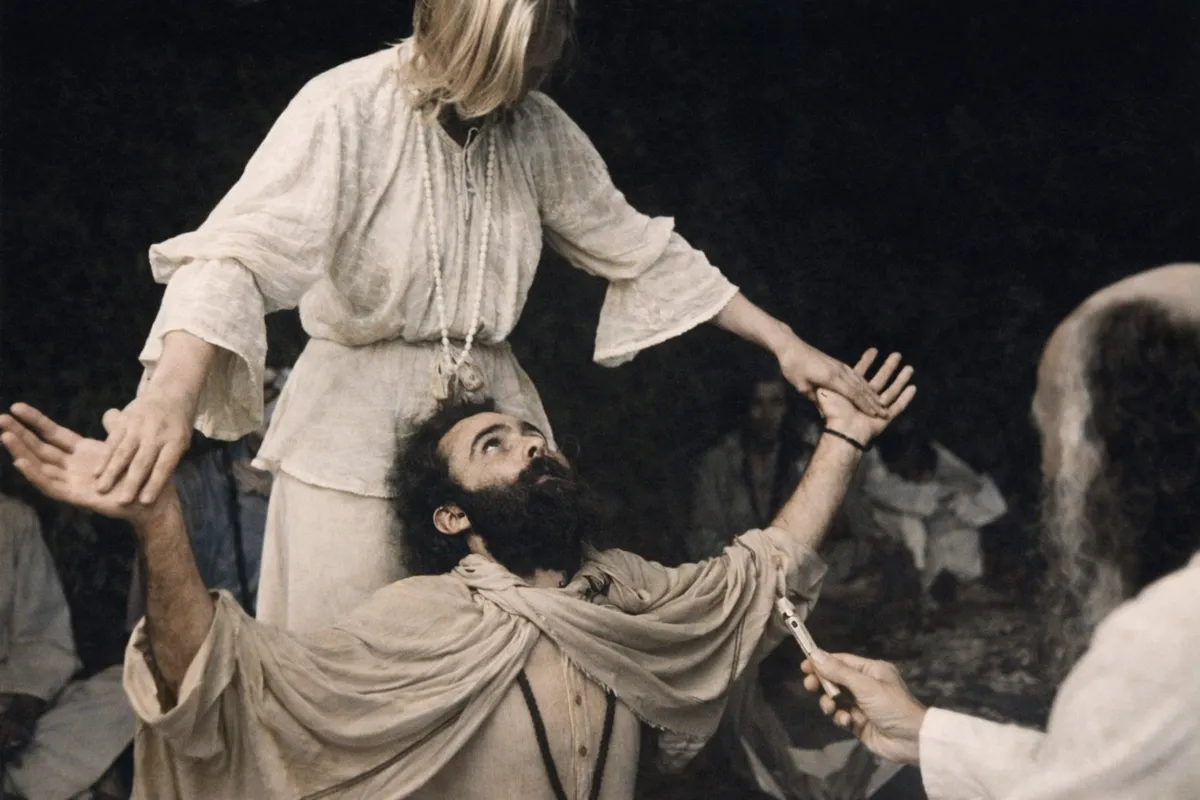
Osho's original Hindi beside Osho Live's English translation, matched passage by passage.
मनुष्य असहाय है। लेकिन तभी तक, जब तक परमात्मा से दूर है। मनुष्य दुर्बल है, दरिद्र है, दीन है, लेकिन तभी तक, जब तक परमात्मा से दूर है। उससे हमारी दूरी ही हमारी दरिद्रता है। और जितने हम उससे दूर होते जाते हैं, उतना ही जीवन अर्थहीन होता जाता है।
Man is helpless—yet only so long as he is far from the Divine. Man is weak, poor, abject—yet only so long as he is far from the Divine. Our distance from That is our poverty. And the farther we drift from it, the more meaningless life becomes.
पश्चिम में इस सदी में बहुत से विचारक हुए, जिनकी ऐसी प्रतीति है कि जीवन में न कोई अर्थ है, न कोई प्रयोजन है, न कोई नियति है। जीवन एक व्यर्थ की कथा है। ए टेल टोल्ड बाई एन ईडियट, फुल आफ फ्यूरी एंड न्वायज सिग्नीफाइंग नथिंग--जैसे कोई मूढ़ कहे एक कहानी, शोरगुल बहुत मचाए लेकिन अर्थ उसमें बिलकुल न हो।
ऐसा लगेगा ही। ऐसी प्रतीति होगी। तुम अपने ही जीवन को देखो, शोरगुल बहुत है। बड़े काम में तुम संलग्न हो। चल ही नहीं रहे, दौड़ रहे हो। लेकिन कभी पूछा अपने से, कहां पहुंच रहे हो? दौड़-दौड़ कर भी वहीं खड़े हो जहां जन्म के बाद तुमने अपने को पाया था। रत्ती भर तो उपलब्धि नहीं हुई। पाया क्या है? अगर हाथ देखोगे तो खाली है। तिजोड़ी भर गयी हो भला। लेकिन तिजोड़ी यहीं पड़ी रह जाएगी। तुम खाली हो। और तुम जितने भी भरेपन के सपने देख रहे हो, उनमें सच्चाई जरा भी नहीं है।
In the West, thinkers of this century have concluded that life has no meaning, no purpose, no destiny. Life is a futile tale, a tale told by an idiot, full of sound and fury, signifying nothing. How could it not feel that way? It will feel that way. Look at your own life—so much noise! You are deeply engrossed in “big work.” You are not merely walking, you are running. But have you ever asked yourself where you are arriving? After all that running, you stand where you were when you were born. Not an iota of attainment. What have you found? If you look into your hands, they are empty. Your safe may well be full, but the safe will stay behind. You will be empty. And all the dreams of fullness you cherish have not a shred of truth in them.
तुम कितना ही इकट्ठा कर लो संसार का, लेकिन मरते क्षण संसार छूट जाएगा। और जो छूट ही जाना है, वह तुम्हारा हो कर भी तुम्हारा नहीं हो पाता। जिन्होंने इस जगत की संपदा को अपना आधार बनाया उन्होंने रेत पर महल खड़े किए हैं, वे गिरेंगे। और तुम कितनी देर अपने को धोखा दे पाओगे? कभी तो जागोगे, कभी तो होश आएगा, कभी तो तुम विचार करोगे कि चला इतना, पहुंचा कहीं भी नहीं। तुम्हारी अवस्था कोल्हू के बैल जैसी है। चलता बहुत है। चलता ही रहता है। दिन-भर शोरगुल भी बहुत होता है उसके आसपास। क्योंकि तेल पिरता है, घानी चलती है। पहुंचता कहां है? सांझ वहीं पाता है जहां सुबह अपने को पाया था। फिर कल सुबह वहीं से यात्रा होगी।
Amass as much of the world as you like, at the moment of death it will all fall away. What must fall away can never truly be yours. Those who built their foundations on worldly wealth have raised palaces on sand—they will collapse. How long can you deceive yourself? Some day you will awaken; some day awareness will dawn; some day you will take stock: “I walked so far and arrived nowhere.” Your condition is like the oil-press bullock. It walks endlessly. There is much clamor around it all day because the press is turning and oil is being crushed. But where does it arrive? At dusk it stands exactly where it stood in the morning. Tomorrow its journey will begin from the same place.
तुम्हारा जीवन भी कोल्हू के बैल जैसा है। तुम कितना ही सजाओ, तुम कितना ही छिपाओ, तुम कितने ही ऊपर से रंग-रोगन करो, भीतर तुम्हें भी पता है कि भिखारी का पात्र है तुम्हारा हृदय। मांगता है और खाली है। और भरता कभी भी नहीं। जितना दूर आदमी होता जाता है परमात्मा से, उतना ही दरिद्र होता जाता है। स्वामित्व तो उसके साथ है।
Your life too is like the oil-press bullock. Decorate it as much as you like, hide it as much as you like, paint and polish it from the outside as much as you like—inside you know your heart is a beggar’s bowl. It begs, and it is empty. And it never fills. The farther one is from God, the poorer one becomes. Ownership belongs to That.
और हम केवल दूर ही होते तो भी ठीक था, हम उसके विपरीत हैं। दूर होना भी इतना बुरा नहीं जितना विपरीत होना है। हम जो भी कर रहे हैं, उससे विपरीत है। दूर हो कर भी अगर हम उसके साथ हों, तो तत्क्षण क्रांति हो जाए।
It would be one thing if we were only distant; worse, we are opposed. To be distant is not as bad as to be contrary. Whatever we do is contrary to That. If, even in our distance, we were aligned with That, revolution would happen this very instant.
जैसे कोई आदमी नदी में उलटी धार में बह रहा हो, स्रोत की तरफ तैरने की कोशिश कर रहा हो--लड़ रहा है; नदी से दूर ही नहीं है, दुश्मन है। और मजा यह है कि तुम जितना लड़ोगे, उतना ही तुम पाओगे कि नदी तुम्हारी दुश्मन है। नदी को क्या लेना-देना? तुम पहुंचो या न पहुंचो, नदी को क्या प्रयोजन है? नदी दुश्मन नहीं है। नदी तो अपनी धार में बही जा रही है, अपनी मस्ती में। उसे अपना सागर खोजना है। तुम उससे उलटे बह रहे हो। तुम्हारे कारण ही नदी तुम्हें दुश्मन मालूम होती है। तुम्हारे कारण ही तुम्हें संसार में सब तरफ शत्रु दिखायी पड़ते हैं। और जीने का मौका कहां मिले? शत्रुओं से सुरक्षा करने में ही समय व्यतीत हो जाता है। कैसे अपने को बचाएं, इसी में अवसर खो जाता है।
Like a man in a river who struggles upstream against the current—he fights; he is not only distant from the river, he is its enemy. Here is the irony: the more you fight, the more you feel the river is your enemy. What does the river care whether you arrive or not? The river is not your enemy. It flows in its own current, in its own joy, seeking its ocean. You are moving in the opposite direction. Because of you, the river appears hostile. Because of you, enemies appear everywhere in the world. Then where is the chance to live? Time is wasted in defending yourself from enemies. How to protect yourself—that alone consumes your life.
परमात्मा से दूर तो जीवन अर्थहीन होगा ही। परमात्मा से विपरीत न केवल अर्थहीन होगा, बल्कि एक दुःस्वप्न भी होगा। दूर, सपना होगा; विपरीत, दुख का सपना हो जाएगा। और तुम जिसे जीवन कहते हो, वह एक नाइटमेयर है, एक दुःस्वप्न है।
Far from God, life will certainly be meaningless. Opposed to God, it will not only be meaningless; it will be a nightmare. Distance—dream. Opposition—dream of anguish. And what you call life is a nightmare.
तुमने कभी दुःस्वप्न का विचार किया? दुःस्वप्न का अर्थ होता है, तुम जागना चाहते हो, जाग नहीं सकते। दुःस्वप्न का अर्थ होता है, छाती पर कोई चढ़ा है। तुम हटाना चाहते हो, लेकिन हाथ नहीं हिलते। तुम उसे हटाना चाहते हो, लेकिन कोई शक्ति नहीं है। सब शक्ति खो गई। तुम पाते हो कि कोई तुम्हें पहाड़ों से गिरा रहा है। लेकिन तुम्हारे पास कुछ भी उपाय नहीं कि तुम अपने को बचा सको। तुम आंख खोलना चाहते हो और आंख नहीं खुलती है। तुम हाथ हिलाना चाहते हो कि रोक दो, लेकिन हाथ नहीं उठता है। तुम चीखना चाहते हो और कंठ से आवाज नहीं निकलती है। ऐसी जो स्वप्न की दशा है, वह दुःस्वप्न है, नाइटमेयर है।
Have you ever considered what a nightmare is? In a nightmare you want to wake up, but you cannot. It feels as though someone is sitting on your chest; you try to push them off, but your hands won’t move. You try to open your eyes, but they won’t open. You try to cry out, but no sound comes. This state of dream is a nightmare.
परमात्मा से दूर जो है, वह सपने में है; विपरीत जो है, वह दुख के सपने में है। तुम अपने जीवन को देखोगे, तो ऐसा ही पाओगे। न आंख खोले खुलती है, न हाथ हिलाए हिलता है, न छाती से वजन हटता है। और फिर भी जी रहे हो। तो फिर तुम्हारा जीवन सिवाय संताप के और कुछ भी नहीं हो सकता।
He who is distant from God is in a dream; he who is opposed is in a sorrowful dream. Look at your life—you will find the same. Eyes that won’t open, hands that won’t move, a weight that won’t lift from the chest. Yet you go on living. What can your life be but anguish?
कीर्कगार्ड, सार्त्र, मार्सेल, हायडेगर, पश्चिम के बड़े विचारक कहते हैं कि जीवन संताप है, एंग्विश है। इसमें चिंता से मुक्ति का कोई उपाय नहीं है। उनकी बात बहुत दूर तक सच है। जैसा तुम्हारा जीवन है, अगर उसका ही अध्ययन किया जाए तो जीवन एक संताप है।
Kierkegaard, Sartre, Marcel, Heidegger—great Western thinkers—say life is anguish. There is no way out of anxiety. Their statement is true for a long stretch. If one only studies life as you live it, life is anguish.
लेकिन एक और जीवन भी हमने जाना है, नानक का, कबीर का, बुद्ध का, कृष्ण का, क्राइस्ट का। हमसे बिलकुल विपरीत। जहां हम संताप से दबे हैं, वहां उनके जीवन में एक नृत्य है। और जहां हमारे भीतर सिवाय दुख के और कुछ भी नहीं गूंजता, वहां उनके जीवन में एक संगीत है, एक नाद है। जहां हम ऐसे चलते हैं जैसे पैरों में भयंकर भारी जंजीरें बंधी हों, वहां उनके पैरों में नृत्य है और पुलक है। जहां हमें देख कर ऐसा लगता है कि होना एक महापाप का फल है, वहां उन्हें देख कर लगता है कि होना एक आशीर्वाद है।
But there is another kind of life—Nanak’s, Kabir’s, Buddha’s, Krishna’s, Christ’s—utterly different from ours. Where we are crushed by anguish, their life dances. Where within us nothing resounds but sorrow, in them there is music, a deep soundless sound. Where we move as though heavy chains are fastened to our feet, their steps are dance and delight. Where seeing us it seems that to be is the outcome of a great sin, seeing them it seems that to be is a blessing.
एक और भी ढंग है जीने का। उस ढंग की कुंजी है, ईश्वर से दूर नहीं, ईश्वर के पास। और ईश्वर के विपरीत नहीं, ईश्वर के अनुकूल। जो धर्म के अनुकूल बहने लगता है, उसके जीवन में रूपांतरण हो जाता है। जरूरत भी नहीं है कि तुम विपरीत लड़ो। लेकिन अहंकार लड़ाता है। क्योंकि अहंकार मानता है, जितना तुम जीतोगे उतने ही तुम बड़े हो जाओगे।
There is another way to live. Its key is: not far from God, but near; not opposed to God, but aligned. Whoever begins to flow in tune with Dharma undergoes transformation. No need to fight the opposite. But the ego compels us to fight—because the ego believes the more you conquer, the greater you become.
और मजा यही है कि हो उलटा रहा है। जितने तुम जीतते हो उतने तुम छोटे होते जाते हो। गरीब आदमी के पास तुम बड़ा हृदय भी पा लो, अमीर आदमी के पास उतना बड़ा हृदय भी नहीं रह जाता। और छोटा हो गया है। दरिद्र दान भी दे दे, अमीर की देने की हिम्मत ही खो जाती है। गरीब थोड़ा प्रेम भी कर ले, अमीरों के जीवन से प्रेम की धुन भी खो जाती है। प्रार्थना तो बहुत दूर, परमात्मा तो बहुत दूर, साधारण प्राकृतिक प्रेम की धुन भी खो जाती है।
The irony is just the opposite. The more you conquer, the smaller you become. In a poor man you may find a great heart; in the rich, the heart shrivels. The poor man may still give; the rich man loses the courage to give. The poor can still love a little; from the lives of the rich even the melody of ordinary human love disappears. Prayer is far away, God is far away; even the simple rhythm of love is lost.
जितना तुम इस संसार में इकट्ठा करते हो, लगता है उतने ही सिकुड़ते जाते हो, छोटे होते जाते हो। यह बड़ा विरोधाभास है। जितना तुम्हारे पास होता है, उतने ही तुम छोटे होते हो। तुम्हारे भीतर का आकाश सिकुड़ जाता है। और जो तुम्हारे पास है, तुम उसी के लिए डरे होते हो। तुम उसी से परेशान होते हो।
The more you accumulate in this world, the more you shrink. It is a deep paradox. The more you have, the smaller you become; the sky within contracts. And what you have, for that very thing you are afraid and troubled.
नानक कहते हैं कि शक्ति का सूत्र है, उसकी कृपा। और उसकी कृपा तब उपलब्ध होती है, जब तुम अपने को बिलकुल असहाय समझ लेते हो। बिलकुल! टोटल! रत्ती भर भी चालाकी वहां न चलेगी। तुम ऐसा ऊपर-ऊपर से कहो कि मैं असहाय हूं, इससे कुछ न होगा।
Nanak says the source of strength is His grace. And His grace becomes available when you realize you are utterly helpless. Utterly! Total! Not a shred of cleverness will work there. If you say superficially, “I am helpless,” nothing will happen.
यह प्रतीति गहरे में प्रविष्ट हो जाए। यह प्रतीति तुम्हारे हृदय के गहनतम में पहुंच जाए। यह प्रतीति तुम्हारे रोएं-रोएं में गूंजे। यह ओंठों की प्रार्थना न हो, यह कंठ का उदगार न हो, यह हृदय की प्रतीति हो। यह तुम्हारे आंसुओं से जाहिर हो। यह तुम्हारे शब्द-शब्द में समा जाए, यह तुम्हारे निःशब्द में भी गूंजती रहे। तुम उठो, बैठो, और तुम ऐसे जैसे कि तुम परम असहाय हो।
This realization must penetrate deep. It must reach the innermost core of your heart. It must resound in every cell. It should not be prayer of the lips, nor an outpouring of the throat—it must be the heart’s realization. It should be evident in your tears. It should saturate your every word and keep echoing even in your silences. Whether you stand or sit, you are such that you are utterly helpless.
तुम कर क्या सकते हो? तुम्हारा किया कुछ भी तो नहीं होता। तुम्हारे किए अनकिया ही होता है। तुम जो करते हो, उससे जो नहीं घटना चाहिए, वही घटता है। तुम्हारे किए कुछ भी नहीं होता।
What can you do? Nothing you do ever happens. From what you do, the undone is what happens. Whatever you attempt, the thing that should not occur is exactly what occurs. Nothing of your doing happens.
बड़ी प्रसिद्ध कहावत है। और उस तरह की कहावतें सारी दुनिया की अलग-अलग भाषाओं में हैं। लोग कहते हैं, मैन प्रपोजेज एंड गाड डिस्पोजेज। इससे गलत कोई कहावत नहीं हो सकती कि मनुष्य प्रस्तावना करता है और ईश्वर इनकार कर देता है। हालत बिलकुल उलटी है। गाड प्रपोजेज एंड मैन डिस्पोजेज। परमात्मा प्रस्ताव करता है और आदमी इनकार करता रहता है। परमात्मा तुम्हें सभी कुछ दे डालना चाहता है।
There is a famous saying, found in many languages: “Man proposes and God disposes.” Nothing could be more false. The situation is just the reverse: “God proposes and man disposes.” The Divine proposes, and man keeps refusing. Existence wants to give you everything.
यह अस्तित्व लुट जाना चाहता है तुम्हारे लिए। लेकिन तुम्हारे द्वार बंद हैं। यह अस्तित्व तुम पर बरसना चाहता है। लेकिन तुम्हारा घड़ा उलटा रखा है। यह अस्तित्व सब तरफ से तुम्हारे भीतर आना चाहता है। लेकिन भय के कारण तुमने संध भी नहीं छोड़ी कि कोई भीतर प्रवेश कर सके। और भीतर तुमने इतना कूड़ा-करकट और कबाड़ इकट्ठा कर रखा है कि वहां भी जगह नहीं है कि कोई प्रवेश भी करे तो बैठ सके। परमात्मा के बैठने लायक स्थान भी तुम्हारे भीतर नहीं।
Existence wants to be squandered upon you. But your doors are closed. It wants to shower upon you, but your pitcher is turned upside down. It wants to enter you from every side, but out of fear you have not left even a crack for anything to enter. And inside you have piled so much junk and clutter that there is no place left even to sit—no space fit for God to abide.
उसकी कृपा तो तब उपलब्ध होती है जब तुम बिलकुल असहाय हो जाते हो। और असहाय अवस्था की परिपूर्ण प्रतीति ही लज्जा है। तब तुम शर्माते हो। तुम मैं कहने तक में शर्माते हो। तुम कहते हो, किस आधार पर कहूं कि मैं हूं? किस बुनियाद पर कहूं कि मेरे किए कुछ होता है?
His grace becomes available when you become utterly helpless. The perfect realization of helplessness is humility, is shame in Nanak’s sense—lajja. Then you blush. You are ashamed even to say “I.” You say, On what basis shall I say “I am”? On what grounds shall I say anything happens by me?
सारा जीवन तो उलटी ही बात कह रहा है। तुमने जो किया सब असफल हुआ। तुमने जो किया सब हार गया, सब मिट गया। तुम्हारे बनाए सब महल गिर गए। फिर भी तुम चेतते नहीं, फिर भी तुम कर्ता को पकड़े चले जाते हो। फिर भी तुम कहते हो, मैं करने वाला हूं। जब तक तुम कहते हो, मैं करने वाला हूं, तब तक तुम लज्जा से न भरोगे। और नानक कहते हैं, लज्जा प्रार्थना है। तुम कहते हो, मैं जानने वाला हूं, तब तक तुम झुकोगे नहीं। पंडित कहीं झुक सकता है? उसका माथा झुक नहीं सकता। शरीर को भला ही झुका ले, माथा अकड़ कर खड़ा रहता है।
Your whole life speaks the reverse. Whatever you did failed. Whatever you did was defeated and dissolved. The palaces you built fell. Still you do not awaken—you go on clinging to the doer. You still say, I am the doer. As long as you say, I am the doer, you will not be filled with humility. And Nanak says, humility is prayer. As long as you say, I am the knower, you will not bow. Can a pundit bow? He can bend his body, but his head remains stiff.
बड़ी प्रसिद्ध घटना है। सूफी उस कहानी का उपयोग किए हैं। कि दो मित्र एक स्कूल में साथ ही साथ पढ़े और बड़े हुए। फिर संयोग और भाग्य, और जीवन की यात्रा उन्हें अलग-अलग ले गयी। एक तो बड़ा सम्राट हो गया और दूसरा एक बड़ा फकीर हो गया। सम्राट राजमहल में रहने लगा और फकीर नग्न गांव-गांव भटकने लगा। सम्राट की भी बड़ी ख्याति थी, फकीर की भी कुछ कम न थी। आखिर एक बार फकीर राजधानी आया तो सम्राट ने बड़ा आयोजन किया। उसने गांव भर को दीयों से सजा दिया, फूल बरसा दिए। उसका मित्र आ रहा है!
There is a famous story in Sufi lore. Two friends studied together in school and grew up. Fate and life’s journey took them in different directions. One became a great emperor, the other a great fakir. The emperor lived in a palace; the fakir wandered naked from village to village. Both became famous. When the fakir came to the capital, the emperor planned a grand welcome. The whole town was illumined with lamps and showered with flowers. “My friend is coming!”
फकीर जब आ रहा था, तो रास्ते में कुछ यात्रियों ने उससे कहा कि तुम्हें कुछ पता है? वह सम्राट अपना वैभव दिखाना चाहता है; अहंकारी है। उसने सारे रास्ते फूलों से भर दिए हैं। घर-घर पर, इंच-इंच पर दीए लगा दिए हैं। सारा गांव दीवाली मना रहा है। वह तुम्हें दिखाना चाहता है। जिन सीढ़ियों से तुम महल में जाओगे, उन सीढ़ियों को उसने स्वर्ण से मढ़ दिया है। और उन पर बहुमूल्य हीरे-जवाहरात जड़ दिए हैं। वह अपनी अकड़ दिखाना चाहता है। वह तुम्हें दिखाना चाहता है कि देखो तुम क्या हो? एक नंगे फकीर! और मैं क्या हूं! उस फकीर ने कहा, देख लेंगे उसकी अकड़।
On the road, some travelers told the fakir, “Do you know? The emperor wants to show off his splendor. He is arrogant. He has strewn flowers all along the way. Every house is lit inch by inch with lamps. The whole town is celebrating Diwali. He wants to show you who he is—and what you are—a naked fakir! The steps to the palace are plated with gold and studded with jewels. He wants to flaunt his pride.” The fakir said, “We’ll see to his pride.”
फिर दिन आया, फकीर गांव में पहुंचा। सारी राजधानी उसे लेने पहुंची। लेकिन सम्राट चकित हुआ। वर्षा के दिन नहीं हैं, और फकीर के घुटने तक कीचड़ लगी है! यहां तो पूछना अशोभन मालूम होता है, इतने लोगों के सामने। जब वे सीढ़ियां पार करके महल के एकांत में पहुंच गए, और जो बहुमूल्य गद्दे-गलीचे बिछाए गए थे वे सब उस फकीर ने अपने पैर की कीचड़ से गंदे कर दिए, तब सम्राट ने पूछा कि मैं बहुत हैरान हूं! क्योंकि वर्षा का कोई समय नहीं, रास्ते सूखे पड़े हैं। और तुम्हारे पैर में इतनी कीचड़ कैसे लग गयी? क्या हुआ? उस फकीर ने कहा कि अगर तुम अपनी अकड़ दिखाना चाहते हो, तो हम भी अपनी फकीरी दिखाना चाहते हैं।
When the day came, the whole capital turned out to receive him. The emperor was astonished: it wasn’t the rainy season, yet the fakir’s legs were caked with mud up to the knees. In public it seemed improper to ask. After they had climbed the steps and reached a private chamber—and the priceless carpets and cushions had all been soiled by the fakir’s muddy feet—the emperor asked, “I am puzzled! It hasn’t rained, the roads are dry—how did you get so muddy?” The fakir said, “If you want to show your pride, I also want to show my fakiri.”
तो सम्राट खिलखिला कर हंसने लगा और उसने कहा कि फिर आओ हम गले लग जाएं। क्योंकि न मैं कहीं पहुंचा, न तुम कहीं पहुंचे। हम दोनों वहीं के वहीं हैं, जैसे हम स्कूल से विदा हुए थे। मैं भी कहीं नहीं पहुंचा, तुम भी कहीं नहीं पहुंचे।
The emperor burst out laughing and said, “Come, let us embrace. Neither of us has arrived anywhere. We are just as we were when we parted from school. I have not arrived; you have not arrived.”
और ध्यान रखो, यह सम्राट तो कहीं पहुंच जाएगा किसी दिन, इस फकीर का पहुंचना बहुत मुश्किल है। क्योंकि सम्राट को यह साफ हो रहा है कि मैं कहीं नहीं पहुंचा।
And remember: the emperor may yet arrive one day; for the fakir it is more difficult—because it is becoming clear to the emperor that he has not arrived.
You get puffed up with wealth; you get puffed up even with renunciation. Pride itself is the obstacle. When pride melts, that melting is humility.
तुम धन से भी अकड़ से भरते हो। तुम त्याग से भी अकड़ से भर जाते हो। और अकड़ ही बाधा है। अकड़ मिट जाए, उसका नाम लज्जा है।
तो नानक कहते हैं, जो लज्जा से भर गया उस पर परमात्मा की अनुकंपा बरसने लगती है। लज्जा पात्रता है। जब तक तुम अकड़ से भरे हो तब तक तुम्हें परमात्मा की जरूरत ही नहीं। और जिसकी तुम्हें जरूरत नहीं, वह तुम्हें कैसे मिल सकेगा? उसे कभी तुमने बुलाया नहीं, तुमने कभी उसे मांगा नहीं, तुमने कभी उसे चाहा नहीं। और कभी तुमने उसे बुलाया भी तो कुछ और चाहने के लिए--कि बच्चा बीमार है, कि अदालत में मुकदमा है। तुमने उसे कभी नहीं मांगा, कि हम तुझे ही चाहते हैं। न अदालत, न बाजार, न दूकान, न बीमारी, न शरीर, हम किसी और कारण से नहीं चाहते, हम तुझे ही चाहते हैं।
Nanak says: whomever is filled with humility becomes the recipient of the Divine’s compassion. Humility is eligibility. As long as you are full of pride, you have no need of God. And that which you do not need, how will you receive it? You never truly called Him, never truly asked for Him, never desired Him. And if ever you did call, it was for something else—for your child’s illness, for a court case. You have never asked for Him for His own sake. Not for court, not for market, not for shop, not for illness, not for body—no other reason: “We want You alone.”
जब तक तुम उसे ही न पुकारोगे, सिर्फ उसके लिए ही, तब तक तुम्हारी प्रार्थना झूठी है। तुम्हारी प्रार्थना भी संसार के लिए है। उस प्रार्थना का दिव्यता से कोई लेना-देना नहीं है। तुम कुछ मांग रहे हो, जो संसार का है। शायद परमात्मा से मिल जाए।
Until you call only for Him, your prayer is false. Your prayer too is for the world; it has nothing to do with the Divine. You are asking for something worldly—maybe, if asked of God, it will be obtained.
एक अमीर आदमी मर रहा था। जैसा उसका जिंदगी भर का गणित था कि हर चीज धन से मिल जाती है, तो उसने अपने पुरोहित को बुलाया और कहा कि मैं अगर दस करोड़ रुपए तुम्हारे मंदिर को दान दूं तो क्या मुझे स्वर्ग में प्रवेश मिल सकेगा?
A rich man was dying. His lifelong arithmetic had been that everything can be bought with money. He called his priest and asked, “If I donate a hundred million rupees to your temple, will I gain entry to heaven?”
उस पुरोहित ने कहा, चेष्टा कर लेने में कुछ हर्ज नहीं है, लेकिन भरोसा मैं नहीं दिला सकता। क्योंकि मैंने कभी सुना नहीं कि कोई धन से स्वर्ग में प्रवेश पा सका हो। लेकिन कोशिश कर लेने में कुछ हर्ज नहीं है। धन तो छूट ही जाएगा। एक आखिरी कोशिश कर के देख लो।
The priest said, “There is no harm in trying, but I cannot promise. I have never heard of anyone buying entry to heaven with money. But there is no harm in trying. The money will be left behind anyway. Make one last attempt.”
तुमने अगर धन से सब पाया है, तो तुम कहीं न कहीं मन में यह भाव संजोए ही बैठे होओगे कि प्रार्थना भी, पूजा भी, ध्यान भी उसी से पा लेंगे। धन तो अहंकार से मिलता है। वह तो महत्वाकांक्षा से मिलता है। और पूजा, प्रार्थना, ध्यान लज्जा से मिलता है। वह मिलता है जहां सब महत्वाकांक्षाएं गिर गयीं, और जहां तुमने अपने को सब भांति व्यर्थ पाया, जहां तुम्हारा किया कुछ भी नहीं होता, जहां तुम बिलकुल असहाय हो, जहां तुम पाते हो कि मैं क्या कर पाऊंगा! बस, उसी क्षण।
If you have obtained everything through money, somewhere within you you will harbor the feeling that prayer, worship, meditation can also be obtained thereby. Money is obtained through ego, through ambition. But worship, prayer, meditation are obtained through humility. They are found where all ambition has fallen away; where you have found yourself utterly futile; where nothing you do bears fruit; where you are absolutely helpless; where you see, “What can I do?”—right there.
और करने का ही अहंकार नहीं, जानने का अहंकार भी गिर जाना चाहिए। तुम वेद के ज्ञाता हो, तुम चतुर्वेदी हो, तुम चारों वेद जानते हो, कि तुम कुरान को कंठस्थ किए हो, कि बाइबिल का तुमसे बड़ा कोई ज्ञाता नहीं! नहीं, इस ज्ञान से भी तुम उसे न पा सकोगे। क्योंकि ज्ञान भी सूक्ष्म कर्ता का ही भाव है--मैं जानता हूं। न तुम्हारा जानना, न तुम्हारा कृत्य। वे दोनों ही तुम्हारे अहंकार के पहलू हैं। जहां दोनों गिर जाते हैं...।
Not only the pride of doing, the pride of knowing must fall. You are learned in the Vedas, a chaturvedi, you know the four Vedas; you have the Quran by heart; you are the greatest knower of the Bible—no, not through such knowledge will you find Him. Knowledge too is a subtle posture of the doer: “I know.” Neither your knowing nor your doing—both are faces of the same ego. Where both fall…
क्या जानते हो तुम? कभी तुमने इसे बहुत होशपूर्वक पूछा कि क्या जानता हूं मैं? द्वार पर पड़े पत्थर को भी तुम ठीक से नहीं पहचानते और दूर परमात्मा को जानने का तुम दावा करते हो। एक फूल को भी कोई जान नहीं सका है अब तक।
What do you know? Have you ever asked with full awareness: What do I know? You do not know the stone lying at your door—and you claim to know God! No one has yet fully known even a flower.
अंग्रेज कवि टेनीसन ने बहुत महत्वपूर्ण बात कही है। उसने कहा है कि अगर मैं एक छोटे से फूल को पूरा जान लूं, तो जानने को शेष क्या बचता है? सभी कुछ जान लिया। एक फूल के खिलने को तुमने जान लिया, तो तुमने इस पूरे अस्तित्व की खिलावट पहचान ली। एक फूल के सौंदर्य को तुमने पहचान लिया, तो तुमने इस सारे जगत के सौंदर्य को पहचान लिया। एक फूल के सत्य में तुम उतर गए, तो बचता क्या है? जिसने बूंद जान ली, उसने सागर जान लिया। क्योंकि गुणधर्म तो दोनों का एक ही है। बूंद में सब कुछ तो समाया हुआ है। वह सागर का ही तो संक्षिप्त संस्करण है। जिसने एक अणु जान लिया, उसने सब जान लिया।
The English poet Tennyson said something very significant: “If I could know even one small flower completely, what would be left unknown? All would be known.” If you know the blossoming of one flower, you have recognized the blossoming of existence. If you have recognized the beauty of one flower, you have recognized the beauty of the whole cosmos. If you have entered the truth of one flower, what remains? Whoever knows the drop has known the ocean—for their properties are one. The drop contains all; it is the ocean’s condensed version. Whoever has known one atom has known all.
लेकिन हम जानते क्या हैं? हमारी जानकारी क्या है? उधार है, बासी है, परायी है। हजारों हाथों से चल कर आयी है। अगर कोई हजारों लोग जूतों को पहन चुके हों तो तुम उन जूतों में पैर डालने को राजी न होओगे। लेकिन तुम्हारा ज्ञान ऐसा ही है। पैर ही नहीं डाले हैं तुमने, उसमें तुमने सिर डाल दिया है। उधार है, बासा है। किन्हीं ने जाना होगा कि नहीं जाना होगा, तुम्हें कुछ पक्का पता नहीं है। बस, तुम किताब से पढ़ते हो। तुम शास्त्र से पढ़ते हो। तुम किसी से सुन लेते हो। जिसने सुना है, उसका भी तुम्हें पक्का पता नहीं है कि वह जान कर कह रहा है, कि उसने खुद जाना है। वह भी हो न हो, उसने भी किसी से सुना हो।
But what do we know? Our “knowledge” is borrowed, stale, second-hand. It has passed through a thousand hands. If a thousand people had already worn a pair of shoes, you wouldn’t consent to put your feet in them. But your knowledge is exactly like that. Not only have you put your feet in them—you have put your head in them. Borrowed, stale. Whether anyone ever truly knew or not, you have no certainty. You read from books, from scriptures; you hear from someone. And you don’t even know whether the one you heard from knows, whether he himself has known. More likely he also heard from someone else.
एक फिल्म अभिनेत्री के बाबत मैंने सुना है कि रात जब वह अपने गहने उतार कर रखती--तो बड़ी होशियार थी, चालाक थी--एक चिट गहनों के पास रख देती, कि ये गहने नकली हैं। असली गहने तो बैंक में हैं। लेकिन एक सुबह जागी तो पाया कि गहने नदारद हैं। और टेबिल पर एक दूसरी चिट रखी है, जिस पर लिखा है कि मुझे नकली ही गहनों की जरूरत है। क्योंकि मैं नकली चोर हूं। असली तो जेल में है।
I heard of a film actress. At night, after taking off her jewelry—very clever, very cunning—she would leave a note beside it: “These jewels are fake. The real ones are in the bank.” One morning she woke to find the jewels gone. On the table lay another note: “I only need fake jewels—because I am a fake thief. The real one is in jail.”
तुम जिससे सुन रहे हो, तुम जिससे समझ रहे हो, तुम जिसके शब्दों को उधार ले रहे हो, वह भी असली है? तुम्हारे पास कोई भी तो उपाय नहीं जानने का। कोई भी तो कसौटी नहीं जिससे तुम परख लो कि कौन असली है। और कसौटी तो तभी होगी जब तुम्हारा अनुभव होगा। लेकिन जब अनुभव होगा तब तो तुम्हें किसी से सुनने की जरूरत भी न रह जाएगी।
From whom you hear, from whom you understand, whose words you borrow—are they genuine? You have no way to know. You have no touchstone to test who is real. The touchstone will be your own experience. And when experience comes, you won’t need to hear from anyone.
यही तो मुसीबत है। जब हाथ में सोना होता है तो कसौटी नहीं, जब कसौटी आती है तब सोने के कसने की कोई जरूरत ही नहीं रह जाती है। जब तुम्हारे पास अनुभव होता है जिस पर तुम कस सको, तब कोई जरूरत नहीं रह जाती। और जब तक तुम कस नहीं सकते तब तक बड़ी गहन जरूरत है। और तुम अपने अज्ञान को उधार ज्ञान से ढांकते रहते हो। फिर इससे अकड़ पैदा होती है कि मैं जानता हूं। वही अकड़ बाधा है।
That’s the trouble: when the gold is in your hand, you don’t need a touchstone; when you have the touchstone, the gold is unnecessary. When you have the direct experience by which to test, you no longer need to test. And until you can test, you have a great need—but you keep covering your ignorance with borrowed knowledge. From that comes the pride of “I know.” That pride is the obstacle.
ज्ञान भी नहीं, कर्तृत्व भी नहीं; तुम मिट गए। तुम्हारे दोनों आधार गिर गए। भवन भूमिसात हो गया। इस भूमिसात अवस्था को नानक कहते हैं, लज्जा। और जब लज्जा सघन हो जाती है तो उसकी कृपा की वर्षा शुरू हो जाती है। तुम्हारी लज्जा में ही उसकी अनुकंपा उतरेगी। तुम्हारी लज्जा ही उसकी अनुकंपा से मिल सकेगी। उन दोनों का ताल-मेल है। लज्जा गड्ढे की भांति है और उसकी अनुकंपा वर्षा की भांति। वर्षा तो पहाड़ों पर भी होती है लेकिन पहाड़ खाली रह जाते हैं। गड्ढों में पानी भर जाता है। झीलें बन जाती हैं। वर्षा तो सभी पर हो रही है। उसकी वर्षा में कोई भेद-भाव नहीं।
Neither knowledge nor doership—when you disappear, when both props fall, when the edifice collapses into dust—Nanak calls that fallen state “lajja,” humility. And when humility becomes dense, His grace begins to pour. Only in your humility will His compassion descend. It meets only its counterpart. Humility is like a hollow; grace is like rain. Rain falls on both hills and hollows, but the hills remain empty while hollows fill into lakes. The rain falls on all without discrimination.
नानक कहते हैं, उसके लिए न कोई नीच है, न कोई ऊंच है। न कोई पात्र है, न अपात्र है। वह तो बरस रहा है सभी पर। लेकिन कुछ गड्ढों की भांति हैं, वे भर जाते हैं। कुछ पहाड़ों के शिखरों की भांति हैं, वे खुद अपने से इतने भरे हैं कि जगह कहां?
Nanak says: For Him there is neither low nor high; neither deserving nor undeserving. He showers on all. But some are like hollows—they fill. Some are like mountain peaks—they are so full of themselves there is no space.
तुम गड्ढे की भांति हो जाओ तो नानक की लज्जा को उपलब्ध हुए। इधर लज्जा बनी, गड्ढा तैयार हुआ, वर्षा तो हो ही रही थी। तुम झील बन जाओगे। तुम जानने की झील बन जाओगे, तुम चैतन्य की झील बन जाओगे। तुम्हारे होने का सारा ढंग बदल जाएगा। तुम रहोगे नहीं। गड्ढे का मतलब है तुम मिट गए। तुम्हारे भीतर परमात्मा हो गया। तब तुम असहाय नहीं हो। तब तुमसे ज्यादा शक्तिशाली कोई भी नहीं।
Become like the hollow—then Nanak’s humility is attained. The hollow is ready; the rain was already falling. You will become a lake—a lake of knowing, a lake of consciousness. Your whole way of being will change. “You” will no longer be. A hollow means you are gone. Within you, God has become. Then you are not helpless. Then none is more powerful than you.
“The speech of the Realm of Grace is power.”
‘कृपा-खंड की वाणी शक्ति है।’
करम खंड की वाणी जोरु। तिथै होरु न कोई होरु।।
तिथै जोध महाबल सूर। तिन महि राम रहिआ भरपूर।।
‘कृपा का जो खंड है, वहां की वाणी शक्ति है। इसको छोड़ कर उसमें दूसरा कुछ भी नहीं है। उसमें महाबली शूरवीर हैं, जिन सब में राम ही भरपूर समाया हुआ है।’
“Within the Realm of Karam the speech is power; there is nothing else there. There dwell warriors, great in might; in them Ram pervades, overflowing.”
जैसे ही कोई व्यक्ति लज्जा को उपलब्ध हुआ, कृपा शुरू हुई बरसनी, भरनी। दीन जो था वह सम्राट हो जाता है। संतों ने कहा है, उसकी कृपा से लंगड़े पहाड़ पार कर गए। उसकी कृपा से अंधों ने देखा। ये साधारण अंधों और लंगड़ों की बातें नहीं हैं। ये तुम्हारे संबंध में बातें हैं। बहरे सुनने लगे।
“Just as one becomes filled with humility, grace begins to pour and fill. The destitute becomes a sovereign. The saints have said: by His grace the lame cross mountains; by His grace the blind begin to see.” These are not about the physically lame or blind—they are about you. The deaf begin to hear.
जब तक तुम अपने अहंकार से भरे हो, तुम्हारे कान बहरे रहेंगे, आंखें अंधी रहेंगी, तुम्हारा हृदय पथरीला रहेगा--पाषाण। उसमें कुछ भी प्रतीति न होगी। उसमें कोई संवेदना न होगी। तब तक तुम करीब-करीब मृत रहोगे। तुम्हारा जीवन ऐसा रहेगा जैसे दीया बुझा-बुझा जलता हो। आखिरी तेल चुका जाता हो। तुम भभक कर न जीओगे। तुम्हारा जीवन ऐसा न होगा कि जिसमें एक त्वरा हो, जिसमें एक सघनता हो, जिसमें संवेदना की एक गहराई हो। जिसमें हृदय ऐसे मुर्दे की भांति न धड़कता हो। जहां जीवन में एक बाढ़ हो। तुम न केवल भरे-पूरे हो, बल्कि बांट भी सको इतना तुम्हारे पास हो। तुम्हारे भीतर एक आंतरिक वैभव हो, एक सुगंध हो, जो तुम कितना ही बांटो और चुके न। और तुम कितना ही दो, बढ़ती जाए। तुम्हारे पास एक जीवन का अनंत स्रोत हो।
As long as you are full of ego, your ears will remain deaf, your eyes blind, your heart stone—rock-like. There will be no sensitivity, no perception. You will remain almost dead. Your life will be like a lamp flickering to die; the last oil nearly spent. You will not blaze into life. Your life will lack urgency, density, depth of feeling. Your heart will throb like a corpse. Life will not be a flood. You will not only be full—you will have so much you can share. Within you will be an inner splendor, a fragrance that never runs out however much you give. A source of life inexhaustible.
This happens with grace. It’s a great reversal, a paradox. Hence the saints’ words sound mysterious—simple, yet arcane. They say, “Die—so you can be.” They say, “Lose yourself—so you become worthy to receive. Die—so immortal life may be yours.”
कृपा के साथ यह घटित होता है। यह बड़ी उलटी पहेली है। यह बड़ी उलटबांसी है। और इसलिए संतों के वचन बड़े रहस्यपूर्ण मालूम पड़ते हैं। सीधे-सादे, पर रहस्यपूर्ण। क्योंकि बड़ी उलटी बातें कहते मालूम पड़ते हैं। वे कहते हैं, मिटो! ताकि हो सको। वे कहते हैं, खो दो अपने को! ताकि तुम पाने के हकदार हो जाओ। मर जाओ! ताकि तुम्हें अमृत जीवन उपलब्ध हो सके।
तुम बचाते हो, इसीलिए तुम नहीं हो। तुम जितना अपने को पकड़ते हो, उतने ही दीन, दरिद्र, उतने ही अर्थहीन। तुम जितना अपने को संभालोगे उतने ही भटकोगे। बड़ी उलटी बातें हैं। एकदम से पकड़ में नहीं आतीं। क्योंकि हमारे तर्क के बिलकुल विपरीत हैं। हमारा तर्क कहता है, बचना है तो अपने को बचाओ। संतों का तर्क कहता है, बचना है? अपने को खो दो। बचाने वाला कभी अपने को बचा पाया है? हमारा तर्क कहता है, कहीं मौत न आ जाए। इसलिए हम जीवन को जोर से पकड़े हैं। और संत कहते हैं, जिन्होंने जोर से पकड़ा, उनकी मौत तो पहले आ गयी। और भी पहले आ गयी। और जिन्होंने मरने को खुद अपनी स्वीकृति दे दी, जो खुद मौत से मिलने चले गए हैं, उन्होंने अमृत को जाना। उन्होंने पाया, मौत तो केवल चेहरा था, पीछे तो अमृत छिपा है। भय के मारे भागते थे, मौत से भागते थे, अमृत से वंचित रह जाते थे। मौत से जा कर गले मिल गए, अमृत से मिलन हो गया।
You keep saving yourself—therefore you do not exist. The more you clutch at yourself, the more poor, the more meaningless you become. The more you try to hold yourself together, the more you wander. Upside-down teachings—immediately they don’t make sense, because they are the very opposite of our logic. Our logic says: if you want to be saved, protect yourself. The saints’ logic says: want to be saved? Lose yourself. Has anyone ever saved themselves by clutching? Our logic says: beware of death; grip life tightly. The saints say: those who gripped, died sooner; even before their time. Those who went to meet death of their own accord knew the nectar. They found that death is only a face—behind it immortality hides. Out of fear you fled death and missed the nectar. You went to embrace death, and met the immortal.
कृपा, अनुकंपा का जो जीवन में हिस्सा है, वहां शक्ति लक्षण है।
In the realm of grace, the hallmark is power.
कार्लोस केस्टिनेडा की चौथी पुस्तक मैं पढ़ रहा हूं। पुस्तक का नाम है, टेल्स आफ पावर। वह इसी चौथे खंड के संबंध में लिखी गयी पुस्तक है। जैसे ही तुम्हारे जीवन में प्रभु की किरण उतरती है, तुम अनंत शक्तिशाली हो जाते हो। तुम्हारे ऊपर अपरंपार शक्ति की क्षमता आ जाती है। तुम मिट्टी छुओ, सोना होने लगता है।
I am reading Carlos Castaneda’s fourth book, Tales of Power. It pertains to this fourth realm. As soon as a ray of the Divine descends into your life, you become infinitely powerful. An immense capacity arrives. You touch clay and it turns to gold.
पहले ठीक उलटा था। तुम सोना छूते थे और मिट्टी हो जाता था। क्योंकि तुम थे। अब तुम जिस तरफ देखो, वहीं स्वर्ग नजर आता है। पहले बिलकुल उलटा था। तुम्हारी नजर जहां जाती थी, वहीं नर्क हो जाता था। जहां तुम्हारे पैर पड़ जाते थे, वहीं अपशगुन हो जाते थे। जो तुम करते थे, वहीं विषाद हाथ में आता था। तुम प्रेम भी करने जाते थे, तो घृणा हो जाती थी। तुम मित्र बनाने जाते थे और शत्रु निर्मित हो जाते थे। तुम जो भी करते थे, क्योंकि तुम गलत थे, इसलिए विपरीत परिणाम होते थे। और तुम परमात्मा के विपरीत चल रहे थे। वहीं शक्ति का स्रोत है। तुम उसकी तरफ पीठ किए थे। तुम्हारे कारण कुछ भी नहीं हो पा रहा था। अब तुम नहीं हो। अब सब हो सकता है। अब तुम्हारी छाया में जादू होगा। तुम्हारी आंख जिस तरफ पड़ेगी वहां स्वर्ग के द्वार खुल जाएंगे। तुम जहां जाओगे, तुम जहां उठोगे-बैठोगे, वहां की सुवास बदल जाएगी। तुम्हारे संग-साथ जो खड़ा हो जाएगा वह भी तुम्हारी महिमा से मंडित हो जाएगा। वह भी थोड़ी सुगंध तुमसे ले जाएगा।
Before, it was the reverse—you touched gold and it turned to clay, because “you” were there. Now wherever your gaze falls, heaven appears. Before, wherever your gaze fell, hell appeared. Wherever your feet stepped, inauspiciousness followed. Whatever you did turned to melancholy. You went to love and it became hatred. You went to make friends and enemies were born. Whatever you did—because you were wrong—produced the opposite. You were moving contrary to God—the source of power. You had your back to Him. Because of you, nothing could happen. Now “you” are gone; now all is possible. Now a magic enters your shadow. Wherever your eyes fall, heaven’s gate opens. Wherever you sit or stand, the fragrance changes. Whoever stands in your company becomes anointed by your glory; a little fragrance clings to him.
इसलिए तो नानक कहते हैं, साध-संगत। वे कहते हैं, साधुओं के संग रहो। जिनको शक्ति का स्रोत मिल गया है उनके साथ रहो, उनके पास बैठो। उनका सत्संग महिमावान है। क्योंकि उनके पास बैठने से ही...।
That is why Nanak says: Sadh-sangat—company of the holy. Live near those who have found the source of power. Sit with them. Their satsang is blessed. Because just by sitting near them…
शक्ति संक्रामक है। स्वास्थ्य संक्रामक है। बीमारी ही नहीं पकड़ती, ध्यान रखना, स्वास्थ्य भी पकड़ता है। बुराई ही नहीं पकड़ती दूसरे से, भलाई भी अवतरित होती है तुममें और बह जाती है। ताजे आदमी के पास तुम भी ताजगी अनुभव करते हो। बासे, उदास, मुर्दा आदमी के पास थोड़ी देर में तुम भी मुर्दा होने लगते हो। दस-पच्चीस लंबी शकल वाले लोग उदास बैठे हों, उनके पास जरा जा कर बैठो। थोड़ी देर में ही तुम पाओगे कि तुम आए कुछ और थे, तुम हो कुछ और गए। तुम भी उदास हो। तुम भी रो रहे हो। जहां लोग हंस रहे हों, जहां लोग खिल रहे हों, उनके पास थोड़ी देर बैठो। तुम शायद उदास आए हो, रोते हुए आए हो, आंसू सूख जाएंगे--मुस्कुराहट आ जाएगी।
Power is contagious. Health is contagious. Not only disease catches—remember this—health also spreads. Not only evil infects; goodness too descends and flows through you. Near a fresh person you feel fresh. Near a stale, depressed, dead person, soon you begin to feel dead. Sit with a group of long faces sunk in gloom; in a short while you will find you came one way and you leave another—you too are sad, you too weep. Sit for a while where people smile and blossom; you may have come weeping, but your tears will dry and a smile will appear.
आदमी इतना अलग-अलग थोड़े ही है! हम सब भीतर से जुड़े हैं। और हम सब भीतर से एक-दूसरे में बह रहे हैं।
Man is not so separate as he thinks. Deep within we are connected, we flow into one another.
साध-संगत पर नानक का बड़ा जोर है। वे कहते हैं, तुम्हारे किए क्या होगा? तुम उनके पास रहो जिन्होंने उसका सहारा पा लिया है। उनके माध्यम से उस परमात्मा का हाथ तुमको भी छुएगा। उनके माध्यम से उसकी हवाएं तुम्हारे हृदय तक भी पहुंच जाएंगी। फूल के बगीचे से कोई ऐसे भी गुजर जाए तो भी थोड़ी सी सुगंध उसके वस्त्रों में समा जाती है। बुद्धों के पास से कोई ऐसे भी गुजर जाए, अकारण भी, संयोगवशात भी, तो भी बुद्धत्व की सुगंध कपड़ों को पकड़ जाती है। वह आदमी वही नहीं, कुछ बदल जाता है।
Nanak presses greatly upon sadh-sangat. What can happen by your doing? Stay near those who have found His support. Through them, His hand will touch you. Through them, His breezes will reach your heart. Even if someone just passes by a garden, a little fragrance clings to his clothes. Even one who passes by a Buddha—without cause, by sheer coincidence—Buddhahood’s fragrance clings to his garment. He is no longer the same; something is changed.
साध-संगत बड़ी कीमती है। परमात्मा से संबंध जोड़ना तो आज मुश्किल है। मुश्किल इसलिए है कि तुम्हें उसका कुछ भी तो पता ठिकाना मालूम नहीं। संत उसके प्रतीक हैं। उनका तुम्हें पता-ठिकाना मालूम हो सकता है। तुम उन्हें आसानी से खोज ले सकते हो। परमात्मा को तुम कहां खोजोगे? और संत का अर्थ है, जिसमें परमात्मा सघन है। जहां परमात्मा की किरणें सघन हो कर पड़ रही हैं। जहां ताप गहन है। संत ने अपने व्यक्तित्व में परमात्मा को इस तरह इकट्ठा किया है, जैसे कांच के एक टुकड़े में से तुम किरणों को पार करो और वे इकट्ठी हो जाएं, एकाग्र हो जाएं।
Sadh-sangat is precious. To connect directly with God today is difficult—because you do not know His whereabouts. The saint is His symbol, His sign. You can find the saint. Where will you look for God? The saint is one in whom God has become dense—where His rays converge. The saint has gathered the Divine into his person as a lens gathers the sun’s rays into a point.
परमात्मा तुममें भी है, लेकिन विरल है। उससे आग पैदा नहीं होती। बस, कुनकुनापन--तुम किसी तरह जी लेते हो। संत में आग है। वह अग्नि है। उसके पास तुम्हें भी ताप लगेगा। उसके पास तुम्हारे भीतर भी कुछ जलेगा और मिटेगा।
God is in you too, but diffused. It does not ignite fire—just a lukewarmness by which you somehow live. In the saint there is fire. He is fire. Near him you too will feel the heat. Near him something in you will burn and be consumed.
जिस दिन उसकी कृपा मिलनी शुरू होती है उसी दिन तुम शक्तिशाली हो जाते हो। लेकिन ध्यान रखना, वह शक्ति तुम्हारी नहीं है। अगर तुम्हें यह अकड़ आ गयी कि वह शक्ति तुम्हारी है, तो मिली हुई कृपा भी खो जाती है।
The day His grace begins to fall, you become powerful. But take heed—this power is not yours. If the pride arises that it is yours, even the grace that has come will be lost.
और अंत तक गिरने का डर है। क्योंकि अंत तक सूक्ष्म अहंकार पीछा करता है। वह आखिरी चीज है, जो मनुष्य का छुटकारा होता है जिससे, वह आखिरी है, अंतिम है। वह छाया की तरह तुम्हारे पीछे आता है। न तो उसकी पग-ध्वनि सुनायी पड़ती है। न कोई आवाज होती है। और वह तुम्हारे पीछे होता है इसलिए तुम्हें दिखायी भी नहीं पड़ता। वह छाया की भांति तुम्हारे पीछे चल रहा है।
जैसे शरीर की छाया है, ऐसे ही चेतना की छाया अहंकार है। इसलिए तुमने सुनी होगी यह बात कि जो व्यक्ति परमात्मा को पा लेता है उसकी छाया नहीं बनती। इससे तुम यह मत समझना कि जब वह जमीन पर चलता है और सूरज उगा होता है तो जमीन पर उसकी छाया नहीं बनती। वह छाया तो बनती है, क्योंकि शरीर की छाया बनेगी। लेकिन उसके भीतर की छाया खो जाती है। वह चलता है, उठता है, बैठता है, करता है, बोलता है, सब जीवन की क्रिया चलती रहती है, लेकिन अब कोई छाया नहीं बनती। अब चेतना पारदर्शी हो गयी। अब वह है ही नहीं।
Till the end there is danger—because till the end a subtle ego follows. It is the last thing from which man is freed. It follows like a shadow—not a footfall, not a sound; it walks behind, so you cannot see it. Like the body’s shadow, the ego is the shadow of consciousness. That is why it is said that one who attains God casts no shadow. Do not take this to mean that his body casts no shadow in sunlight. That shadow still appears. But the inner shadow disappears. He walks, sits, speaks—life goes on—but no shadow forms. His consciousness has become transparent. He is no more.
ध्यान रखना, तुम यह मत सोचना कि तुम शक्तिशाली हो जाओगे। उसकी अनुकंपा गिरेगी, बरसेगी--तुम तो होओगे ही नहीं। वही होगा तुम्हारे द्वारा शक्तिशाली। तुम निमित्त हो जाओगे। यह निमित्त शब्द बड़ा महत्वपूर्ण है। जैसे बांसुरी से स्वर निकलता है किसी गायक का; बांसुरी केवल निमित्त है। स्वर बांसुरी का नहीं है। स्वर तो गायक का है। और बांसुरी की खूबी क्या है, कभी तुमने खयाल किया? बांसुरी की खूबी इतनी है कि वह पोली है। उसका पोलापन, उसकी शून्यता ही उसकी खूबी है। उसी खूबी के कारण स्वर प्रवाहित होता है। जिस दिन भी परमात्मा की अनुकंपा तुम पर बरसती है, तुम बांसुरी की भांति हो जाते हो।
Do not imagine that “you” will become powerful. His compassion will fall and pour—and you will not be there. He will be powerful through you. You will be an instrument. This word “instrument” is vital. As a flute gives voice to the player’s song—the flute is only an instrument. The song is not the flute’s. The song is the player’s. And what is the flute’s excellence? Have you noticed? It is hollow. Its hollowness, its emptiness, is its excellence. Because of that, the song flows through. The day compassion pours over you, you become like the flute.
कबीर ने कहा है कि मैं तो बांस की पोंगरी हूं। गीत सब उसके हैं। वही गाता है। मैं तो केवल माध्यम हूं, वाहन हूं। और वाहन की भी खूबी इतनी कि मैं पोला--पोली बांस की पोंगरी हूं।
Kabir said, “I am only a bamboo reed. All the songs are His. He sings. I am only the medium, the vehicle. And my only excellence is that I am hollow—a hollow bamboo.”
‘कृपा-खंड की वाणी शक्ति है। वहां शक्ति बोलती है।’
“In the Realm of Grace, the speech is power.”
वहां परम-ऊर्जा बोलती है। एक बड़ा सघन मैग्नेटिज्म जिस व्यक्ति को उसकी अनुकंपा मिली है, उसको उपलब्ध हो जाता है। तुम उसकी तरफ खींचे जाते हो। तुम अपने को रोको तो भी नहीं रुक पाते हो। तुम उससे बचना चाहो तो बचा नहीं पाते हो। तुम खींचे जाते हो। कोई अलौकिक आकर्षण तुम्हें उस व्यक्ति की तरफ बांधे रखता है। तुम अपनी सारी चेष्टाओं के बावजूद भी पाते हो कि तुम खींचे जाते हो।
There, supreme energy speaks. A dense magnetism envelops one upon whom compassion descends. You are drawn. If you try to resist, you cannot. If you try to escape, you fail. You are pulled. A mysterious attraction binds you to that person. Despite all your efforts you find yourself drawn.
शक्ति के बोलने का, शक्ति के वाणी होने का यही अर्थ है।
This is what it means that in that realm, power speaks—power is the very language.
‘इसको छोड़ कर उसमें दूसरा कुछ भी नहीं है।’
परमात्मा की शक्ति को छोड़ कर उसमें दूसरा कुछ भी नहीं है।
“There is nothing else there but that.” Nothing but God’s power abides there.
‘उसमें महाबली शूरवीर हैं, जिन सबमें राम ही भरपूर समाया हुआ है।’
“In that realm dwell mighty heroes, great warriors—in them Ram is present, overflowing.”
जैसे ही इस घड़ी को कोई उपलब्ध होता है, वह महावीर हो जाता है। वह महायोद्धा हो जाता है। अपने सहारे हम दीन-हीन थे, परमात्मा के सहारे हम महावीर हो जाते हैं। लेकिन वह सारी ऊर्जा उसकी है। वह सभी कुछ उसका है। हम बीच से बिलकुल हट जाते हैं। हम मार्ग दे देते हैं।
As soon as one attains this, he becomes a mahavir—a great warrior. On our own we were destitute; with God’s support we become great warriors. But all the energy is His. All belongs to Him. We step aside, we give way.
‘जिन सब में राम ही भरपूर समाया हुआ है।’
“In them Ram resides, brimming.”
तिथै जोध महाबल सूर। तिन महि राम रहिआ भरपूर।।
‘उसमें, उसकी महिमा में सीता ही सीता समायी है।’
तिथै सीतो सीता महिमा माहि। ताके रूप न कथने जाहि।।
“There, within His glory, Sita alone abides.” “In that glory Sita is present.” “Her form cannot be described.”
इस वचन को गहनता से समझना जरूरी है। क्योंकि वैसा व्यक्ति जिसमें उसकी शक्ति उतरती है, एक दोहरी ऊर्जा से आप्लावित हो जाता है, आविष्ट हो जाता है--दोहरी ऊर्जा से। उसमें सिर्फ राम ही नहीं उतर आता, उसमें सीता भी उतर आती है।
This must be understood deeply. One into whom His power descends becomes filled with a double energy—both masculine and feminine. Not only Ram descends; Sita descends too.
ये तो प्रतीक हैं--राम और सीता। लेकिन ये प्रतीक बड़े गहन हैं। क्योंकि अगर सिर्फ राम ही उतरे तो व्यक्ति अधूरा होगा। आधा होगा। तो उसमें पुरुष की शक्ति तो आ जाएगी, लेकिन पुरुष की शक्ति अधूरी हो कर विध्वंसक है। उसमें स्त्री की महिमा न उतरेगी। और स्त्री का सौम्य रूप न उतरेगा। राम अकेले बिलकुल अधूरे हैं। राम की मूर्ति को अकेली खड़े करके देखना, बहुत अधूरे लगेंगे। राम को सीता के साथ खड़े कर के देखना, तभी वे पूरे लगेंगे।
Ram and Sita are symbols, but profound ones. If only Ram descends, the person remains incomplete—half. Masculine power will come, but alone it is destructive. Without the descent of the feminine—the grace, the gentleness—the figure is incomplete. Look at a statue of Ram alone—how incomplete he seems. Place Sita at his side—only then is he complete.
क्यों? क्योंकि स्त्रैण शक्ति एक दूसरा आयाम है शक्ति का, जो संतुलन देता है। पुरुष की शक्ति अकेली हो तो हिटलर पैदा होगा, जिससे विध्वंस होगा। क्योंकि उसे संतुलित करने के लिए विपरीत शक्ति मौजूद नहीं है। सीता मौजूद नहीं है। स्त्री सृजनात्मक शक्ति है। वह मां है, वह जन्मदात्री है। वह जीवन के मूल स्रोत से जुड़ी है और सौम्य है। उसकी शक्ति करुणा है। उसकी शक्ति ममता है। उसकी शक्ति सूरज जैसी नहीं है। उसकी शक्ति चांद जैसी है, शीतल है। शक्ति है, फिर भी शीतल है। और जहां सूरज और चांद दोनों मिल जाते हैं, जहां प्रगाढ़ता और सौम्यता दोनों मिलते हैं, जहां प्रचंडता और विनम्रता दोनों मिल जाते हैं, वहां राम और सीता हैं।
Why? Because the feminine is a second dimension of power that brings balance. Masculine energy alone births a Hitler—destruction—because no opposite force balances it. The feminine—Sita—is not present. The feminine is creative; she is mother, giver of life, linked to the source of life, gentle. Her power is compassion, tenderness; her energy is not like the sun, but like the moon—cool. Power, yet cool. Where sun and moon meet, where intensity and gentleness, fierceness and humility meet—there are Ram and Sita.
यह बड़ी हिंदू-विचार की गहन खोज है और बहुतों की समझ में नहीं आयी है। ईसाई, मुसलमान, जैन, बौद्ध सभी इस हिंदू-विचार की गहनता को समझने में असमर्थ रहे हैं। जैन तो इसीलिए राम को भगवान नहीं मान सकता क्योंकि सीता खड़ी है। ये कैसे भगवान हैं, जिनके पास स्त्री खड़ी है? उसका तर्क है कि भगवान को अनासक्त होना चाहिए, वीतराग होना चाहिए। तो महावीर तो भगवान हैं, क्योंकि वीतराग हैं। कोई स्त्री आसपास नहीं है, दूर-दूर तक।
This is a deep Hindu insight, little understood. Christians, Muslims, Jains, Buddhists have not grasped it. The Jains cannot accept Ram as God because Sita stands beside him. “What God is this who has a woman at his side?” Their logic: God must be unattached, dispassionate. Mahavira is God, because he is dispassionate—no woman anywhere near.
यह मामला यहां तक खींचा जैनों ने कि उन्होंने यह भी इनकार कर दिया कि महावीर की कभी कोई पत्नी थी। उन्होंने यह भी इनकार कर दिया कि कभी उनको बच्चे पैदा हुए थे, कि उनका लड़का था, या लड़की थी--सब इनकार कर दिया। उन्होंने इतिहास भी बदल डाला।
महावीर की पत्नी थी। उनको एक लड़की भी हुई। जैन शास्त्रों में उसका उल्लेख भी है। उस लड़की का विवाह भी हुआ। महावीर का दामाद भी था। लेकिन सब पोंछ डाला। सबको इनकार कर दिया। क्योंकि यह बात ही उनके सोचने के बाहर हो गयी कि महावीर और कैसे स्त्री के साथ! कैसे उनको बच्चा पैदा हो! महावीर और संभोग करते हुए! यह सोचना ही कठिन हुआ। कहानी को ही बदल डाला। महावीर को निपट अकेला खड़ा कर दिया।
The Jains went so far as to deny that Mahavira ever had a wife, a child. They even changed history. Mahavira had a wife, and a daughter—mentioned in Jain scriptures. She married; Mahavira had a son-in-law. They erased it all—because they could not bear the idea that Mahavira had a wife, had a child, that Mahavira engaged in intercourse. Unthinkable. So they changed the story, left Mahavira utterly alone.
तो महावीर में प्रचंडता तो मालूम होती है। लेकिन अकेले सौम्यता नहीं हो सकती। जीवन का एक छोर कम है। इसलिए जैन-विचार बहुत दूरगामी न हो सका। और जैन-विचार के माध्यम से कोई संस्कृति खड़ी न हो सकी। सिर्फ एक आइडियालॉजी रही। एक कल्चर खड़ा नहीं हुआ। अगर जैनों से कहो कि तुम एक गांव बसा कर बता दो--सिर्फ जैनों का, तो वे नहीं बसा सकते। क्योंकि कौन चमार का काम करेगा? कौन भंगी का काम करेगा? कौन सड़क साफ करेगा? कौन नाई का काम करेगा? संस्कृति नहीं है। एक गांव नहीं बसा सकते अपना। किस तरह की संस्कृति है? दूसरों पर निर्भर रहना पड़ता है। सिर्फ आइडियालॉजी है, एक विचार है। पंगु है।
In Mahavira there is intensity, but without gentleness. One pole is missing. Therefore Jain thought could not become far-reaching. No civilization arose from it—only an ideology. If you ask the Jains to build a village of only Jains, they cannot—who will do the cobbler’s work, the sweeper’s work, clean the streets, cut hair? It is not a culture; it is a thought—crippled.
और वह पंगुता का गहन से गहनतम कारण यह है कि स्त्री अस्वीकार है। उससे पंगुता पैदा हुई है। स्त्री को जैन-विधान में मोक्ष जाने की सुविधा नहीं है। उसे पहले पुरुष होना पड़ेगा एक जन्म में, तब वह स्वर्ग जा सकती है। पहले पुरुष का पर्याय लेना पड़ेगा। स्त्री को समानता नहीं है जैन विचार में, हो नहीं सकती। पुरुष ही पा सकता है।
Its deep cause is the rejection of woman. From that, crippling arises. In Jain doctrine, a woman cannot gain liberation; she must first be born a man. There is no equality for woman. Only the man can attain.
और तुम हैरान होओगे अगर खोजने जाओगे, तो कारण क्या है? क्योंकि कारण यह है कि पुरुष तो ब्रह्मचर्य को उपलब्ध हो जाता है, लेकिन स्त्री का मासिक-धर्म तो रोका नहीं जा सकता। तो वह ब्रह्मचारिणी भी हो जाए, तो भी मासिक-धर्म तो नहीं रुक सकता। और जब तक संपूर्ण रूप से ब्रह्मचर्य उपलब्ध न हो जाए, तब तक कोई कैसे मुक्त हो सकता है?
जैन समझ ही न पाए। राम को समझना मुश्किल है, कृष्ण को तो समझना बिलकुल असंभव है। बौद्ध न समझ पाए। फिर इस्लाम और ईसाइयत तो बहुत दूर है। उनको भी पहचान न हो सकी।
You will be surprised at the reason: a man can attain celibacy; a woman’s menstruation cannot be stopped. Even if she becomes celibate, menstruation cannot cease. Until celibacy is total, how can one be free? The Jains never understood. Ram is hard for them to understand; Krishna is impossible. Buddhists did not understand. Islam and Christianity are far away.
लेकिन हिंदू-विचार की बड़ी गहनता है। हिंदू-विचार यह कह रहा है, शक्ति के दो रूप हैं। एक रूप स्त्री की तरह प्रकट होता है, एक रूप पुरुष की तरह। स्त्री और पुरुष महत्वपूर्ण नहीं हैं, शक्ति के दो रूप हैं, जो एक-दूसरे का संतुलन करते हैं। पुरुष में प्रचंडता है, सौम्यता नहीं है। इसलिए सभी सौम्य गुण स्त्रैण हैं। शब्द भी स्त्रैण हैं--करुणा, ममता, दया--शब्द भी स्त्रैण हैं। होना भी चाहिए।
But the Hindu insight is profound: power has two faces—one appears as woman, the other as man. Woman and man themselves are not the point—they are two modes of Shakti that balance one another. In man there is intensity without gentleness; hence all gentle qualities are feminine—compassion, tenderness, mercy—feminine words, as they should be.
इसलिए जब कोई व्यक्ति ठीक परम स्थिति को उपलब्ध होता है, तब उसमें स्त्री और पुरुष दोनों का मिलन हो जाता है। वह प्रचंड होता है। सौम्य भी होता है। वहां सूर्य और चांद दोनों मिल जाते हैं। वहां उत्ताप भी होता है और बड़ी गहन शीतलता भी होती है। और जब ये दोनों रूप संगृहीत हो जाते हैं, एक हो जाते हैं, इंटिग्रेटेड हो जाते हैं, तो परम पुरुष का जन्म होता है। वह परम जो अवस्था है, स्त्री-पुरुष के पार है। क्योंकि उन दोनों की ऊर्जा का मिलन है। वहां एक पैदा होता है, लेकिन जब दो बड़े गहन मिलन में डूब जाते हैं।
Hence when someone attains the ultimate, within him the masculine and feminine unite. He is fierce—and gentle. Sun and moon both are there. There is heat—and a deep coolness. When these two are integrated, the Supreme Person is born. That state is beyond male and female, because it is their union. One arises where two have merged in a profound embrace.
इसलिए सूत्र नानक का कहता है कि राम ही अकेले काफी नहीं। राम भरपूर समाया हुआ है उसमें। उसकी महिमा में सीता भी समायी हुई हैं।
तिन महि राम रहिआ भरपूर।।
Thus Nanak’s sutra says: Ram alone is not enough. Ram is present, overflowing—and within that glory Sita is present too.
“In them Ram abides, overflowing. There, within that glory, Sita is; Her form cannot be described.”
तिथै सीतो सीता महिमा माहि। ताके रूप न कथने जाहि।।
और फिर उसका रूप कहना असंभव है। क्योंकि तुम स्त्री के रूप की चर्चा कर सकते हो, पुरुष के रूप की चर्चा कर सकते हो, लेकिन जहां राम और सीता का मिलन हो गया, वहां चर्चा मुश्किल हो जाती है। क्योंकि विपरीत गुण मिल गए। अब तुम यह कहो, तो उससे विपरीत भी मौजूद है। तुम वह कहो, उसका भी विपरीत मौजूद है।
And then, “Her form cannot be described.” You can discuss the form of woman or man; but where Ram and Sita are one, description becomes difficult. Opposites have merged. Whatever you say, the opposite is also present.
जापान में एक मूर्ति है, जिसका आधा चेहरा बुद्ध का है। और उस चेहरे के पास जो हाथ है, उस हाथ में एक जलता हुआ दीया है। उस दीए की रोशनी बुद्ध के आधे चेहरे पर पड़ती है। वह बड़ा सौम्य चेहरा है--स्त्रैण। दूसरे हाथ में एक तलवार है। और उस तलवार की चमक चेहरे पर पड़ती है। चेहरा वही है, लेकिन वह ऐसा है, जैसा अर्जुन का चेहरा रहा हो--योद्धा का।
In Japan there is a statue—half face of Buddha. In the hand on that side, a lamp—the light falls on Buddha’s half-face, which is soft, feminine. In the other hand a sword—the gleam falls on the same face, making it seem like Arjuna’s, a warrior’s.
और इसको जापान में समुराई पूजते हैं। समुराई वहां के योद्धाओं का वर्ग है। वहां के क्षत्रियों का वर्ग है। वे इस मूर्ति को पूजते हैं। आधी बुद्ध की, आधी अर्जुन की। स्त्रैण, पुरुष दोनों मिल रहे हैं।
The samurai—Japan’s warrior class—worship this image; half Buddha, half Arjuna. Feminine and masculine together.
नीत्से ने आलोचना की है बुद्ध की कि बुद्ध स्त्रैण हैं। उसकी आलोचना में थोड़ी सचाई है। क्योंकि बुद्ध में सारी स्त्री का समग्र रूप प्रकट हुआ है। लेकिन बुद्ध में वह जो पुरुष की ऊर्जा है, उसके लक्षण नहीं मिलते हैं। बिलकुल शांत हो गए हैं। करुणापूर्ण हैं। चांद हो गए हैं। बड़े शीतल हैं। लेकिन सूर्य खो गया है।
Nietzsche criticized Buddha as effeminate. There is some truth—Buddha embodies the feminine entirely. The masculine streak is not visible—utterly calm, compassion-full, a moon, cool; the sun is lost.
हिंदू, राम और सीता को साथ खड़ा करता है। कृष्ण और राधा को साथ खड़ा करता है। न केवल साथ, बल्कि जब भी वह नाम लेता है, पहले सीता को कहता है--सीताराम। राधाकृष्ण। क्योंकि स्त्री जननी है। वह प्रथम है। पुरुष द्वितीय है, प्रचंडता द्वितीय है। करुणा प्रथम है। और जब करुणा में आविष्टित प्रचंडता होती है तब उसका सौंदर्य अपरंपार है। और जब ममता में छिपी हुई ऊर्जा होती है तब कैसे उसका वर्णन करें? जैसे ठंडी आग हो, कैसे उसका वर्णन करें? विपरीत जहां मिल जाते हों वहां वर्णन असमर्थ हो जाता है।
The Hindu places Ram and Sita together, Krishna and Radha together—not only together, but always taking the woman’s name first: Sita-Ram, Radha-Krishna. Because the woman is the mother, the first. Man is second—intensity is second. Compassion is first. And when ferocity is suffused with compassion, its beauty is infinite. When energy is hidden in tenderness—how to describe it? Like cool fire—how to describe it? Where opposites meet, words fail.
इसलिए नानक कहते हैं, ताके रूप न कथने जाहि।
Hence Nanak: “Her form cannot be described.”
‘उसके रूप का वर्णन नहीं हो सकता। जिनके मन में राम बसते हैं, न वे मरते हैं और न ठगे जाते हैं। वहां अनेक लोकों के भक्त बसते हैं। सच्चे नाम को मन में बसाए हुए वे आनंद मनाते हैं।’
न ओहि मरहि न ठागे जाहि। जिनकै राम बसै मन माहि।।
तिथै भगत वसहि के लोअ। करहि अनंदु सचा मनि सोइ।।
“Those in whose hearts Ram abides—neither do they die, nor are they deceived. There dwell the devotees of countless worlds. Carrying the True Name in their hearts, they rejoice.”
जिनके मन में राम बस गया, जिनके मन में परमात्मा आ गया, और जिनका हृदय आपूर भर गया उससे, उसकी कोई मृत्यु नहीं है।
Those in whose hearts God abides, who are filled within by Him—such have no death.
इसे थोड़ा समझ लें। तुम्हारी मृत्यु है। परमात्मा की कोई मृत्यु नहीं। लहरें बनती हैं, मिटती हैं। सागर सदा है। जब तक तुम लहर के साथ अपना तादात्म्य किए हो तब तक मरोगे। इसलिए तो हम इतने भयभीत हैं मृत्यु से। क्योंकि लहर से अपने को एक माने हुए हैं। मृत्यु सुनिश्चित है। लहर तो मरेगी, तुम्हारा तादात्म्य मरेगा, तुम्हारी आइडेंटिटी मरेगी। तुमने गलत संबंध जोड़ रखा है।
Understand this a little. You have death. God has no death. Waves arise and fall; the ocean remains. As long as you identify with the wave, you will die—that is why we are so afraid. Identification with the wave makes death certain. The wave will die; the identity you have taken will die. You have made the wrong connection.
लेकिन अगर तुम राम से जुड़ गए, तुम परमात्मा से जुड़ गए, फिर कैसी मौत? इसलिए ज्ञानी मरने के पहले मर जाता है। वह अपना संबंध खुद ही तोड़ लेता है। वह तादात्म्य को अलग कर लेता है। वह जान लेता है कि न मैं शरीर हूं, न मैं मन हूं। ये दोनों मरेंगे। न मैं अहंकार हूं। वह भी मरेगा। वह मरणधर्मा है। वह तो छोटा सा लहरों में उठा हुआ रूप है। और लहर कितनी ही सुंदर मालूम पड़े और कितनी ही ऊंची उठ जाए, एक क्षण में आकाश को छूने का दंभ भरे, दूसरे ही क्षण विघटन शुरू हो जाता है। जवानी में सभी लहरें आकाश को छूने का दंभ भरती हैं। बुढ़ापे में उन्हीं से पूछो।
But if you are connected with Ram, with the Divine—what death? The wise man dies before dying. He breaks his false identification himself. He knows: I am not the body, not the mind—both will die. I am not the ego—it will die too. It is a tiny upsurge of waves. No matter how beautiful a wave seems, how high it rises—one moment it boasts of touching the sky; the next its dissolution begins. Ask the old what becomes of those youthful boasts.
मैंने सुना है कि एक लोमड़ी सुबह-सुबह उठी। सुबह के नाश्ते की तलाश में निकली। सूरज पीछे उग रहा था। बड़ी लंबी छाया पड़ी। उस लोमड़ी ने अपनी छाया देखी और उसने कहा कि आज तो नाश्ते में कम से कम एक ऊंट की जरूरत पड़ेगी। इतनी लंबी छाया! तो जितनी लंबी छाया, उतना बड़ा मैं। और लोमड़ी के पास और कोई उपाय भी तो अपने को जानने का नहीं है। छाया ही दर्पण है। कि इतना बड़ा मेरा शरीर, एक ऊंट चाहिए नाश्ते में!
खोजती रही। दोपहर हो गयी, सूरज सिर पर आ गया। छाया सिकुड़ कर छोटी हो गयी। बिलकुल न के बराबर हो गयी। दोपहर तक ऊंट को न खोज पायी। खोजती भी कैसे? लोमड़ी ऊंट को पाती भी कैसे? और पा भी लेती तो कैसे नाश्ता करती? भूख बढ़ गयी। नीचे झुक कर देखा, छाया बड़ी छोटी हो गयी है। उसने कहा कि अब तो एक चींटी भी मिल जाए तो भी काम चल जाएगा।
I have heard: a fox went out at dawn seeking breakfast. The sun rose behind her; her shadow grew long. Seeing her long shadow she said, “Today I will need at least a camel for breakfast! Such a long shadow—how big I must be!” What else did she have to measure herself? Her shadow was her mirror. “I will need a camel!” She searched and searched. By noon the sun was overhead; the shadow shrank to almost nothing. She could not find a camel—how could a fox find a camel? And if she did, how would she eat it? Hunger increased. Looking down, she saw her tiny shadow and said, “Now even an ant will suffice.”
जवानी में लहर बड़ी ऊपर होती है। इसलिए तो जवानी मूढ़ है। इसलिए पूर्व ने जवानी पर कभी भरोसा नहीं किया। पश्चिम ने भरोसा किया है। तो मुसीबत है। मुसीबत रोज बढ़ती जाती है। पूर्व ने जवानी पर कभी भरोसा नहीं किया। और जवानी को कोई बहुत महत्वपूर्ण स्थान नहीं दिया। क्या मूढ़ता को स्थान देना है? वह तो लहर की ऊंचाई है। छाया बड़ी पड़ती है उस समय। उस छाया के बड़े पड़ने में बड़े-बड़े सपने उठते हैं। हर आदमी क्या-क्या नहीं होना चाहता है! पूर्व ने बुढ़ापे को आदर दिया है, जब छाया बिलकुल सिकुड़ जाती है। और अगर बुढ़ापे में भी तुम न जागे अहंकार से, तो फिर तुम कब जागोगे? जवानी में जाग जाओ, तुम महिमाशाली हो। बुढ़ापे में न जागो, तो तुम महामूढ़ हो। जवानी में क्षम्य है न जाग सको, बुढ़ापे में क्षमा भी नहीं की जा सकती।
In youth, the wave stands high—hence youth is foolish. The East has never trusted youth. The West does—and the trouble grows. The East never gave youth a high place—why honor foolishness? It is the wave’s height. In that big shadow, big dreams arise. Everyone wants to be this and that. The East honored old age—when the shadow shrinks to nothing. And if even in old age you do not awaken from ego, when will you awaken? In youth, if you awaken, you are glorious; if not in old age, you are utterly foolish. Youth’s failure may be forgiven; old age’s cannot.
जैसे ही कोई जाग कर जीवन को देखना शुरू करता है, वैसे ही पाता है कि मैंने गलत से संबंध जोड़ रखा है--शरीर से। अगर तुम शरीर को देखो तो हर सात साल में बदल जाता है--पूरा का पूरा। तुम तो फिर भी रहते हो। एक दिन मां के पेट में इतना छोटा था कि बड़ी खुर्दबीन से देखते तो ही देख पाते, वह भी तुम्हारा शरीर था। फिर एक दिन जब तुम मर जाओगे, राख की छोटी सी पोटली ले कर तुम्हारे परिवार के लोग गंगा जाएंगे फूल चढ़ाने, वह भी तुम्हारा ही शरीर होगा। फिर बीच में कितने उतार-चढ़ाव देखे! इस शरीर के साथ तुम अपने को एक कर लोगे तो मृत्यु से कंपोगे, डरोगे, भयभीत रहोगे। इसलिए ज्ञानी मरने के पहले मर जाता है। वह खुद ही अपने हाथ मर जाता है।
As soon as one begins to look at life awake, he sees he has tied himself to the wrong—body. If you look at the body, it changes completely every seven years, yet you remain. In your mother’s womb you were so small a microscope would be needed to see you—that was your body. When you die, your family will carry a small pot of ash to the Ganga with flowers—that too will be your body. Between, how many ups and downs! If you identify with body, you will tremble before death. Therefore the wise die before dying; by their own hand they die.
नानक के जीवन में ऐसा उल्लेख है कि एक रात वे घर से उठे और मरघट पहुंच गए। खोजते हुए घर के लोग पहुंचे। उन्होंने कहा, यह कोई जगह है? अगर ध्यान ही करना हो तो घर में, मंदिर जाते। मरघट आए! नानक ने कहा कि मैंने सोचा, जहां आखिर में जाना है, किसी के कंधे पर चढ़ कर क्या जाना! अपने हाथ ही चला आया। और जहां अंत में पहुंचना है, उसको पहले ही ठीक से देख लेना चाहिए। यहीं ध्यान करूंगा। क्योंकि मौत ही ध्यान है। और क्या ध्यान है?
It is said that one night Nanak rose from home and went to the cremation ground. His family searched and found him there. “Is this a place?” they said. “If you wanted to meditate, meditate at home or in a temple. Why at the burning ground?” Nanak said, “I thought: where I must go in the end, why go on someone’s shoulders? I came on my own. And where I will reach at last, I should first see well. Here I will meditate—because meditation is dying. What else is meditation?”
अगर तुम मृत्यु पर ध्यान कर लो तो धीरे-धीरे मृत्यु हट जाती है। जैसे-जैसे तुम्हारा ध्यान गहरा घुसता है, वैसे-वैसे मृत्यु की ऊपरी पर्त हट जाती है। भीतर तुम अमृत को छिपा हुआ पाते हो। लहर खो जाती है, सागर मिलता है।
If you meditate on death, slowly death recedes. As your meditation deepens, the outer husk of death peels away. Within, you find the immortal. The wave dissolves; the ocean is found.
बुद्ध अपने भिक्षुओं को मरघट भेजते थे कि वहां चले जाओ अगर बुद्धत्व पाना है। जलते हुए देखना लोगों को। हड्डियों को राख होते देखना। चमड़ी से धुआं उठते, लपटें उठते देखना। देखना, अपने ही सगे-संबंधी आ कर सिर फोड़ जाते हैं। देखना, जिन पर इतना भरोसा किया था, मरते ही एक क्षण देर नहीं करते। जल्दी अरथी उठाते हैं और भागते हैं। क्योंकि कौन घर में रखेगा मुर्दे को? जिन्होंने कहा था, सदा-सदा साथ रहेंगे, वे भी चार दिन के बाद ऊब जाते हैं, रोने से ऊब जाते हैं। वे फिर अपने काम में संलग्न हो जाते हैं। और जब सब छोड़ कर चले जाएं किसी मुर्दे को, तो तुम शांत उस मुर्दे को जलते हुए देखना। यही तुम्हारी भी स्थिति होगी। आज नहीं कल, समय का फासला है। बुद्ध पहले भिक्षुओं को भेज देते कि पहले तुम मरघट से गुजर जाओ। वे इसलिए भेजते कि पहले तुम मर कर आ जाओ, तो काम एकदम आसान हो जाए।
Buddha would send his monks to cremation grounds: “If you want Buddhahood, go there. Watch bodies burn; watch bones turn to ash; watch skin smoke and flame. Watch your kinsmen beat their heads in grief. Those whom you trusted, as soon as you die won’t keep you a moment—how quickly they lift the bier and rush. Those who swore to be with you forever tire of crying in four days and return to their business. When all leave the corpse, sit quietly watching it burn. Such will be your condition—today or tomorrow; it is only a matter of time.” Buddha would first send them to pass through death; then the work became easy.
एक तीन महीने भिक्षु मरघट पर दिन और रात देखता मौत--और मौत--और मौत! मौत सघन हो जाती चारों तरफ। सब तरफ से मौत दिखायी पड़ने लगती। हर चीज जलती हुई मालूम पड़ती। फिर भी वह पाता कि भीतर कोई सजगता है, जिसके जलने का कोई उपाय नहीं। जो जल नहीं सकती। आग चैतन्य को छू भी तो नहीं सकती। चेतना और अग्नि का कोई लेना-देना भी तो नहीं हो सकता। कहीं रास्ता भी तो एक-दूसरे का नहीं कटता। वह ज्यादा सचेतन हो कर लौटता है। वह अपने पुराने तादात्म्य को तोड़ देता है। तब बुद्ध कहते हैं, अब आसान है।
For three months, a monk would watch death, day and night—death dense on all sides; everything seems to burn. Yet he finds a certain awareness within which cannot be burned. Fire cannot touch consciousness. Awareness and fire never meet. He returns more conscious, and breaks his old identifications. Then Buddha says, “Now it is easy.”
इब्राहिम एक सूफी फकीर हुआ। वह पहले सम्राट था। फिर जब फकीर हो गया, तो गांव के बाहर ही रहता था अपनी राजधानी के। अक्सर यात्री वहां से आते-जाते पूछते उससे कि बस्ती का रास्ता कहां है? तो वह कहता, बाएं चले जाओ, भूल कर दाएं मत जाना। कई लोग दाएं जा कर भटक जाते हैं। बाएं बस्ती है, दाएं मरघट है। लोग जाते बाएं, उसका मान कर। दो-चार मील चल कर पाते कि मरघट में पहुंच गए। बड़े नाराज हो कर वापस लौटते कि तुम्हारा दिमाग तो ठीक है? फिर जब दाएं जाते तो बस्ती पाते।
तो इब्राहिम उनसे कहता कि मैं भी उस बस्ती में था। लेकिन यह मुझे समझ में आ गया कि यह मरघट है। यहां सभी मरने की प्रतीक्षा कर रहे हैं। जहां लोग मरने की प्रतीक्षा कर रहे हों, जो मृत्यु का प्रतीक्षालय हो, उसको बस्ती क्या कहना! जहां सभी उजड़ेंगे, आज नहीं कल, उसको बस्ती क्या कहना! और जहां मरघट है, जहां लोग मरघट कहते हैं, वहां बसा हुआ फिर कभी भी नहीं उजड़ता। वहां जो बस गया, बस गया। उसको मैं बस्ती कहता हूं।
Ibrahim was a Sufi fakir, once an emperor. After becoming a fakir he lived outside his capital. Travelers passing by would ask for the way to town. He would say, “Go to the left; never go right.” Many went right and got lost, then returned angry: “Are you crazy?” When they went right, they found the town. Ibrahim would tell them, “I too lived in that town. But I realized it is a cremation ground. Everyone there is waiting to die. What kind of town is a waiting room for death? And where the cremation ground is—what you call cremation ground—whoever settles there never again gets uprooted. Whoever is settled there is settled. That I call a true town.”
हमारी बस्तियां मरघट हैं, हमारे मरघट आखिरी बस्तियां हैं। ज्ञानी मरने के पहले मर जाता है। और अज्ञानी मरते-मरते तक आखिरी चेष्टा करता है--बचा रहूं, बचा रहूं, बचा रहूं। ज्ञानी एक ही बार मरता है। अज्ञानी लाखों बार मरता है। क्योंकि जितना तुम बचाते हो, फिर मरना पड़ता है। फिर-फिर मरना पड़ता है। जब तक तुम यह पाठ सीख ही न लो तब तक तुम्हें बार-बार मरना पड़ेगा।
Our towns are cremation grounds; our cremation ground is the final town. The wise die before death. The ignorant, even at the last breath, keep trying: “Let me survive, let me survive.” The wise die once; the ignorant dies a thousand times. The more you cling, the more you must die—again and again—until you learn.
मृत्यु एक शिक्षण है। जैसे कोई बच्चा स्कूल जाए और एक ही क्लास में बार-बार अनुत्तीर्ण होता रहे, फेल होता रहे, तो बार-बार उसी क्लास में भेज दिया जाता है। वैसे मृत्यु एक महाशिक्षण है। उसके द्वारा जब तक तुम अमृत को न पहचान लोगे, तब तक बार-बार लौटते रहोगे।
Death is a schooling. Like a child failing the same class and being sent back again and again. Death is a great schooling—until through it you recognize the immortal, you will return again and again.
एक संगीतज्ञ गीत गा रहा था। हाल बार-बार कहता, फिर से! वन्स मोर! सारी भीड़ जोर से कहती, फिर से! वह फिर गाता। ऐसा होते-होते आठवीं बार आ गयी। उसका गला तक रुंधने लगा, थक गया। उसने कहा, भाइयो, बहुत-बहुत धन्यवाद कि तुमने इतनी बार मेरे गीत की मांग की। लेकिन अब मैं थक गया हूं। आखिरी बार गाए देता हूं। फिर मत कहना। फिर और दुबारा मत कहना वन्स मोर! एक आदमी ने खड़े हो कर कहा कि कौन तुम्हारे गीत के लिए कह रहा है वन्स मोर। जब तक तुम ठीक से न गाओगे तब तक हम कहते ही रहेंगे। तुम बिलकुल गलत गा रहे हो। और जब तक तुम रास्ते पर न आओगे तब तक हम बार-बार मांग करते रहेंगे।
A singer was performing. The hall cried, “Once more! Once more!” The crowd kept demanding. Eight times already, his throat was hoarse, he was tired. He said, “Friends, thank you for asking so many times. But now I am tired. I will sing one last time, then do not ask—no more ‘once more’.” A man stood up and said, “Who is asking ‘once more’ for your song? Until you sing it right, we’ll keep asking. You are singing all wrong. Until you get it right, we will demand again and again.”
आवागमन परमात्मा की बार-बार तुमसे मांग है कि ठीक से गाओ। वह प्रशिक्षण का हिस्सा है। उससे गुजरना जरूरी है। जो समझ जाता है, वह मृत्यु से अपना तादात्म्य तोड़ लेता है।
Coming and going is God’s repeated demand that you sing rightly. It is part of training; it must be passed through. Once understood, you break the identification with death.
नानक कहते हैं, ‘जिनके मन में राम बस गया, न वे मरते हैं और न ठगे जाते हैं।’
Nanak says: “Those in whose hearts Ram abides—neither do they die, nor are they deceived.”
मरते नहीं। ठगे भी नहीं जाते हैं। और तुम कितनी ही होशियारी करो, तुम कितनी ही कुशलता करो, तुम ठगे ही जाओगे। क्योंकि कोई दूसरा थोड़े ही तुम्हें ठग रहा है! तुम खुद ही ठग रहे हो। कोई दूसरा थोड़े ही तुम्हें लूट रहा है। कोई दूसरा तुम्हें लूट ही नहीं सकता। तुम गलत से अपने को जोड़े हो, इसलिए दूसरा लूट पाता है। और तुम्हारी दृष्टि ऐसी भ्रांति से भरी है कि उस भ्रांति के कारण तुम्हें चारों तरफ दुश्मन दिखायी पड़ते हैं। हर एक तुम्हें लूटने को तैयार है।
They do not die, nor are they deceived. No matter how clever or skillful you are, you will be deceived. Not because another deceives you—but because you deceive yourself. No one else can rob you. Your wrong connection is what allows it. Because your vision is distorted, enemies seem everywhere; everyone seems ready to rob you.
रामकृष्ण कहते थे कि एक चील एक मांस के टुकड़े को ले कर उड़ी। बहुत सी चीलों ने उसका पीछा किया। चीलें उसे चोंच मारने लगीं। उस पर झपट्टे मारने लगीं। वह भी अपने मांस के टुकड़े को बचाने के लिए बड़ी कोशिश करने लगी। लेकिन चीलों की बड़ी भीड़ थी। पंख उसके लहूलुहान हो गए। और सभी उसके मांस को छीन लेने की कोशिश में थीं। अंततः उसने मांस का टुकड़ा छोड़ दिया। मांस का टुकड़ा छोड़ते ही सारी चीलें उसे छोड़ कर चली गयीं। वह अपने वृक्ष पर बैठ कर विश्राम करने लगी। रामकृष्ण कहते थे, जिस दिन मैंने उसे देखा, मैंने भी मांस का टुकड़ा छोड़ दिया। फिर मेरा कोई दुश्मन न रहा। दुश्मन मेरा कोई था नहीं। वह मांस का टुकड़ा ही उपद्रव था।
Ramakrishna told of a kite that flew off with a piece of meat. Many kites chased it, pecking and attacking. To protect its meat, it struggled hard; but the flock was large, its wings were bloodied. At last it let go. As soon as it dropped the meat, all the other kites left it alone. It settled on a tree to rest. Ramakrishna said, “The day I saw that, I too dropped the piece of meat. Then I had no enemies. None was ever my enemy. The piece of meat was the mischief.”
तुम जब तक धन को पकड़े हो, तब तक कोई दुश्मन होगा। जब तक तुम पद को पकड़े हो, तब तक कोई दुश्मन होगा। दुश्मन नहीं है असली में, तुम्हारी पकड़ में कहीं भूल है। और जब तक तुम कुछ पकड़े हो, तुम्हें हर एक--मित्र भी--दुश्मन जैसा दिखायी पड़ेगा।
As long as you clutch wealth, there will be enemies. As long as you clutch position, there will be enemies. There are no enemies—the error is in your clutching. As long as you clutch something, even friends will look like enemies.
मुल्ला नसरुद्दीन की पत्नी बहुत नाराज थी। और अनर्गल बक रही थी। मुल्ला सीधा-सादा, अपने पैंट के दोनों खीसों में हाथ डाले खड़ा था, जैसा कि अक्सर पति खड़े रहते हैं! पत्नी ने अंततः काफी गाली-गलौज करने के बाद कहा कि बंद करो यह! क्यों अपने खीसे में मुट्ठियां ताने मेरी तरफ खड़े हो?
Mulla Nasruddin’s wife was very angry—ranting senselessly. Mulla stood simple and quiet, hands in his trouser pockets, as husbands often do. After much abuse she cried, “Stop it! Why are you standing there with your fists clenched at me in your pockets?”
खीसे में मुट्ठियां ताने? वह बेचारा सिर्फ अपने बचाव के लिए चुपचाप खड़ा है। लेकिन अगर तुम नाराज हो तो सभी मुट्ठियां तनी हुई मालूम पड़ती हैं। खीसे में पड़े हुए हाथ भी मुट्ठियों जैसे दिखायी पड़ते हैं। तुम्हारी दृष्टि ही तुम्हारी सृष्टि बनती है। तुम जैसा देखते हो...और मांस का टुकड़ा तुम पकड़े हो, तो तुम ठगे जाओगे। मांस का टुकड़ा यानी शरीर। जब तक तुम शरीर को पकड़े हो, तब तक ठगे जाओगे। तब तक बचने का कोई उपाय नहीं। कितनी ही कुशलता करो।
Fists clenched in pockets? The poor fellow is standing in self-defense. But when you are angry, all hands seem like fists. Even hands in pockets look like fists. Your vision creates your world. And as long as you clutch the piece of meat—your body—you will be deceived. No skill will save you.
कबीर कहते हैं, काहे की कुशलात, कर दीपक कुंभे पड़े।
तुम्हारी कुशलता का कोई भी मूल्य नहीं। दो कौड़ी की तुम्हारी कुशलता नहीं है। क्योंकि तुम कहते हो हाथ में दीया है, फिर भी कुएं में गिरते हो। कर दीपक कुंभे पड़े--कैसी तुम्हारी कुशलता है कि चेतना का दीपक है, गिरते कुएं में हो?
Kabir says, “What is your cleverness worth, when with a lamp in your hand you fall into the well?”
Your cleverness is worth two pennies. You say you have the lamp of consciousness—yet you fall into the well.
नहीं, ठगे ही जाओगे। क्योंकि तुम ठगे जाने की ही तैयारी कर रहे हो। तुम गलत से संबंध जोड़ते हो। जिसने गलत से संबंध जोड़ा, उसने अपना ही रास्ता बना दिया कि ठगा जाए। मांस के टुकड़े को पकड़ते हो, फिर चीलें झपटेंगी।
You will be deceived because you are preparing to be deceived—you have joined yourself to the false. Whoever joins the false has paved his own way to be cheated. Clutch the meat, and the kites will swoop.
‘जिसके मन में राम बसे हैं, न वह मरता न ठगा जाता। यह जो लोक है--कृपा का लोक--कृपा का खंड, वहां अनेक लोकों के भक्त बसते हैं। सच्चे नाम को मन में बसाए हुए वे आनंद मनाते हैं।’
सच खंडि वसै निरंकारु। करि करि वेखै नदरि निहाल।।
“Those in whose hearts Ram abides neither die nor are deceived. In that realm dwell the devotees of countless worlds. Carrying the True Name in their hearts, they rejoice.”
“Sach Khand abides the Formless One. Creating creation, He gazes upon it and showers grace. There are regions, universes, and galaxies—whoever describes them reaches no end. There are worlds upon worlds of forms—according to His command, so do they act. Gazing and contemplating, He is delighted. Nanak says: to speak of this is to chew iron.”
तिथै खंड मंडल बरमंड। जे को कथै त अंत न अंत।।
तिथै लोअ लोअ आकार। जिव जिव हुकमु तिवै तिव कार।।
वेखै विगसे करि वीचारु। नानक कथना करड़ा सारु।।
ये चार खंड यात्रा के, मार्ग के। धर्म--प्रकृति। ज्ञान--होश, जागरण उस प्रकृति का। जो है, उसके प्रति जागना। लज्जा--अपनी स्थिति समझ कर विनम्र हो जाना, असहाय, शून्य। और कृपा--उसकी अनुकंपा को अपने भीतर उतरने देना। बाधा न खड़ी करना। ये चार यात्रा के खंड, पांचवां मंजिल है। वह है सत्य।
These are the four realms of the path: dharma—nature; gyan—awareness of that nature; saram—lajja, humility born of understanding one’s state; and karam—grace—allowing His compassion to descend, not erecting obstacles. Four realms of the journey; the fifth is the goal: Truth.
‘सत्य-खंड में निराकार परमात्मा का निवास है।’
“In the Realm of Truth abides the Formless One.”
This is the destination.
वह मंजिल है।
‘वह सृष्टि रचना कर उसको अपनी दृष्टि से निहाल करता रहता है।’
“He creates and, with His glance, blesses.”
उसे मार्ग के खंडों में बांटने की कोई जरूरत नहीं है। यहां मार्ग समाप्त हो जाता है। जब अनुकंपा तुममें उसकी पूरी भर जाती है, तुम पूरे धुल जाते हो, तुम्हारे पास अपनी कुछ भी स्थिति नहीं बचती। तुम बह ही जाते हो पूरे। तुम खोजते हो और पाते नहीं कि मैं कहां हूं। तुम्हें कुछ पता नहीं चलता कि मैं कहां खो गया हूं। तुम्हें अपना ही कोई भान नहीं होता है कि मैं कहां हूं। बोध पूरा होता है और अपना कोई पता नहीं चलता है। खोजते हो, खोजते हो, और पाते हो कि वही है, मैं नहीं हूं। ऐसी प्रतीति जहां समग्र हो जाती है। जहां तुम निमित्त मात्र भी नहीं रह जाते। अनुकंपा के खंड में तुम निमित्त मात्र रहोगे--बांसुरी। गीत उसके। अब बांसुरी भी नहीं रह जाती है। अब तुम बिलकुल नहीं हो, वही है। अब यह कहने वाला भी कोई नहीं बचता है कि तू ही है। क्योंकि जब तक तुम कहते हो तू ही है, तब तक थोड़े-बहुत तुम बचे हो। अन्यथा कौन कहेगा?
Here the need to speak of realms ends. When His compassion fills you completely, when you are wholly washed, nothing of yourself remains—you flow utterly. You seek and cannot find yourself. You do not know where you have gone. There is no sense of “I.” Awareness is complete—but there is no sense of “me.” You search and find only Him; there is no “I.” Where such realization is absolute—there you do not remain even as an instrument. In the realm of grace you remain an instrument—a flute; the song is His. Now even the flute is gone. Now you are not; only He is. Now not even one remains to say “Thou alone art,” because as long as you say “Thou,” some trace of “I” remains—who will say it otherwise?
‘यह सत्य-खंड है। यहां निराकार परमात्मा का निवास है। वह सृष्टि रचना कर उसको अपनी दृष्टि से निहाल करता है। उसमें खंड, मंडल और ब्रह्मांड हैं, जिनके वर्णन का अंत नहीं है। वहां लोक के बाद लोक हैं। सृष्टि के बाद सृष्टियां हैं। उसका जो हुक्म है, उसके अनुसार सारा काम चलता है। उसका विचार कर वह देखता है और प्रसन्न होता है। नानक कहते हैं, उसका वर्णन करना लोहे के चने चबाने जैसा है।’
“This is the Realm of Truth. Here the Formless abides. He creates and blesses. There are regions, universes and galaxies without end. There are worlds upon worlds of forms; as His command, so their doing. Gazing and contemplating, He delights. Nanak says: to describe it is to chew iron.”
एक अति महत्वपूर्ण बात; उसे गांठ बांध कर रख लेना। नानक उस पर बार-बार जोर देते हैं। और वह यह है कि परमात्मा सृष्टि को बना कर पृथक नहीं हो गया है। परमात्मा सृष्टि को बना कर विमुख नहीं हो गया है। परमात्मा सृष्टि को बना कर विश्राम में नहीं चला गया है। परमात्मा सृष्टि को बना कर भूल नहीं गया है। परमात्मा सृष्टि को प्रतिपल बना रहा है। बनाने की घटना कभी घटी और बंद नहीं हो गयी है, सृजन शाश्वत चल रहा है। असल में सृजन परमात्मा के होने का ढंग है। वह प्रतिपल बना रहा है। वह बनाता ही चला जा रहा है। और वह दूर नहीं हो गया है। वह जो बनाता है, उसमें उसका रस है।
One supremely important point—bind it to your heart. Nanak emphasizes it again and again: God did not create the world and then stand apart from it. He did not turn His back, nor retire, nor forget. He is creating at every moment. Creation did not happen once and cease; creation is eternal, ongoing. In truth, creating is God’s way of being. He is making, moment to moment; He goes on making. And He is not far—He delights in what He makes.
अब यह बड़ी महत्वपूर्ण बात है। साधक को हम कहते हैं, तुम अनासक्त हो जाओ तो परमात्मा मिलेगा। लेकिन परमात्मा स्वयं अनासक्त नहीं है। अनासक्त हो तो सृष्टि का क्रम टूट जाए। सब रुक जाए। क्यों जीवन चले? हम साधक को कहते हैं, तुम अनासक्त हो जाओ। क्योंकि जब तक तुम आसक्त हो, तुम परमात्मा को न जान सकोगे। जैसे ही तुम परमात्मा के साथ एक हो जाते हो, तब एक नयी आसक्ति, एक नए रस का उदय होता है। जहां विराग और राग में कोई भेद नहीं है। जहां अनासक्ति और आसक्ति में कोई भेद नहीं है, जहां सारे भेद गिर जाते हैं।
This is crucial. We tell the seeker, become detached, and you will find God. But God Himself is not detached. Were He detached, creation would break and stop. Why should life continue? We tell the seeker to be detached—because as long as you are attached, you cannot know God. When you become one with God, a new attachment, a new rasa arises—where dispassion and passion are not two; where detachment and attachment are not two; where all dualities fall.
परमात्मा बनाता है। परिपूर्ण आसक्त, फिर भी अनासक्त। इसे तुम कैसे समझोगे? क्योंकि यह कठिन है। इसलिए नानक कहते हैं, लोहे के चने चबाने जैसा है। परमात्मा बना रहा है, इसलिए उसका लगाव तो है ही। लेकिन उस लगाव में वैसा अंधापन नहीं है जैसा हमारे लगाव में होता है। उस लगाव में पजेसिवनेस नहीं है। उस लगाव में मालकियत का दावा नहीं है। वह बनाता है और तुम्हें स्वतंत्र छोड़ता है। इसलिए तो तुम भटक सकते हो, पाप कर सकते हो, बुराई की तरफ जा सकते हो। वह तुम्हें खींच नहीं लेता बुराई की तरफ से। उसका लगाव है, लेकिन तुम्हारी स्वतंत्रता में वह बाधा नहीं डालता है। तुम परम स्वतंत्र हो। ऐसा भी नहीं है कि वह तुम्हारी तरफ विमुख है। यही जरा कठिनाई है।
God creates—fully attached, yet detached. How will you understand? It is difficult. Hence Nanak says: it is like chewing iron. He is creating—so there is love, involvement. But it is not blind attachment like ours—not possessiveness, not ownership. He creates and leaves you free. That is why you can wander, sin, go towards evil. He does not drag you away. He loves you, yet does not hinder your freedom. You are utterly free. And yet He is not indifferent. This is the subtlety.
समझो! एक मां है जो अपने बेटे में लगाव रखती है। लगाव रखती है तो स्वतंत्रता को मार डालती है। क्योंकि वह कहती है, वहां मत जाओ, यह मत करो, ऐसे उठो, ऐसे बैठो, क्योंकि उसका लगाव है। वह उसकी गर्दन दबाती जाएगी। प्रेम में वह उसको मिटा डालेगी। वह उसे इतनी भी स्वतंत्रता न देगी कि वह अपने पैरों पर खड़ा होना सीख जाए। वह इसे इतने भी दूर न जाने देगी जहां वह जीवन का खुद अनुभव ले सके। वह उस बच्चे को पंगु कर देगी। इस मां के रहते वह युवक कभी भी प्रौढ़ न हो पाएगा। और अगर यह मां चली भी जाए दुनिया से, तो भी उस युवक की प्रौढ़ता में बड़ी कठिनाइयां होंगी। वह किसी दूसरी स्त्री के प्रेम में न गिर पाएगा। कठिन होगा। क्योंकि मां उसको पीछे से खींचेगी। वह मां के अतिरिक्त किसी को भी प्रेम करने में अपराध अनुभव करेगा।
Understand it. There is one mother attached to her son—she kills his freedom. “Don’t go there, don’t do that, sit like this, stand like that”—out of attachment she will throttle him. In love she destroys him, not allowing him even enough freedom to stand on his own feet, to gather his own experience. She cripples him. With such a mother, the youth will never mature. Even after she dies, he will struggle to become an adult. He will find it difficult to fall in love with another woman—the mother will pull him from behind. He will feel guilty loving anyone other than his mother.
इस मां में लगाव तो था, लेकिन लगाव अंधा था, आंख वाला न था। क्योंकि आंख वाला लगाव तुम्हारी सुरक्षा भी करता है, लेकिन तुम्हारी स्वतंत्रता का अंत नहीं करेगा। सुरक्षा ही इसलिए करता है ताकि तुम स्वतंत्र हो सको। और ये दोनों बड़ी विपरीत बातें हैं। तुम्हें रोकता भी इसलिए है ताकि तुम जाने के योग्य हो सको। तुम्हें मजबूत करता है। तुम्हें धीरे-धीरे सहारा देता है। लेकिन सहारा इसीलिए देता है ताकि कल तुम अपने सहारे खड़े हो सको। सहारे को पंगुता नहीं बनाता।
This mother’s attachment was blind. A seeing love protects you but does not terminate your freedom; it protects you so that you can be free. It restrains you so that you may become capable of going. It strengthens you, supports you—but only so that you may stand on your own. The support does not become paralysis.
फिर एक दूसरी मां है। जिसको अगर हम समझाएं कि यह तो खतरनाक है तुम्हारा लगाव, तो वह लगाव अलग कर लेती है। लेकिन लगाव अलग करते ही वह स्वच्छंदता दे देती है। स्वतंत्रता नहीं, स्वच्छंदता। अब लड़का जहां जाए, जो करे। शराब पीए तो क्या कर सकते हैं? स्वतंत्रता देनी है। वेश्या के घर जाए, तो स्वतंत्रता देनी है। जुआ खेले, चोरी करे, हत्या करे; स्वतंत्रता देनी है। यह मां विमुख हो गयी। इसने पीठ फेर ली। पहले लगाव था, वह अंधा था। अब उपेक्षा है, जो अंधी है। और संतुलन दोनों के बीच में है।
Then there is another mother. If we explain that her attachment is dangerous, she removes it and gives license, not freedom. Now the boy may go anywhere, do anything—drink, visit prostitutes, gamble, steal, kill—“What can we do? We must give freedom.” This mother has turned her back. First there was blind attachment; now there is blind indifference. Balance is between these two.
वही संतुलन परमात्मा का स्वभाव है। उसकी सृष्टि की तरफ वही उसकी दृष्टि है। तुम्हारी सुरक्षा करता है ताकि तुम स्वतंत्र हो सको। तुम्हें स्वतंत्रता देता है ताकि तुम एक दिन समर्पण कर सको। ये बड़ी विपरीत बातें हैं। तुम्हें मौका देता है ताकि तुम दूर जाओ। क्योंकि तुम दूर न जाओगे तो तुम पास कैसे आ सकोगे? तुम्हें मौका देता है ताकि तुम थोड़ा भटको। क्योंकि तुम भटकोगे नहीं तो तुम प्रौढ़ कैसे होओगे? तुम्हें मौका देता है ताकि तुम गिरो। क्योंकि तुम गिरोगे नहीं तो तुम सम्हलोगे कैसे?
That very balance is God’s nature—His way of regarding creation. He protects you so that you can be free. He gives you freedom so that one day you can surrender. Opposites meet here. He gives you the chance to go far—if you do not go far, how will you come near? He gives you the chance to err—if you do not err, how will you mature? He gives you the chance to fall—if you do not fall, how will you learn to stand?
और फिर भी तुम्हारी सुरक्षा करता है। और फिर भी तुम्हारा पीछा करता है। सब तरफ उसकी नजर है। सब तरफ उसकी छाया है। सब तरफ से वह तुम्हें घेरे हुए है। तुम कितने ही दूर चले जाओ तो भी वह तुम्हारे पास बना रहता है। ताकि जब भी तुम्हें जरूरत हो, तुम मुड़ो, और तुम उसे उपलब्ध कर लो। जब जरा गर्दन झुकाई...जब भी तुमको जरा सी गर्दन झुकाने की याद आ जाए, तभी तुम उसे देख ले सकते हो।
And yet He protects you. He follows you. His eye is everywhere; His shadow is everywhere; He surrounds you from all sides. However far you go, He remains near—so that whenever you need, you can turn and find Him. The moment you bow your head a little… whenever you just remember to bow, you can see Him.
दिल के आईने में है तस्वीरे-यार
जब जरा गर्दन झुकाई देख ली।
“In the mirror of the heart is the Beloved’s image—when I merely inclined my head a little, I saw.”
तुम कितने ही दूर जाओ, वह तुम्हारे पीछे-पीछे चलता है। तुम्हें बाधा भी नहीं डालता, तुम्हें रोकता भी नहीं। तुमसे कहता भी नहीं कि यह गलत है, यहां मत जाओ। तुम्हें गलत तक होने देता है। फिर भी अपनी ऊर्जा को तुमसे खींच नहीं लेता। और प्रतीक्षा करता है, और बाट जोहता है, कि तुम लौट आओगे। जब तुम लौट आते हो, तब प्रसन्न होता है।
However far you go, He walks behind. He does not obstruct you; He does not say, “This is wrong.” He lets you even be wrong. Yet He does not withdraw His energy, and He waits—eagerly—for you to return. When you return, He rejoices.
नानक कहते हैं, ‘उसका विचार कर वह देखता है और प्रसन्न होता है। उसका वर्णन करना लोहे के चने चबाने जैसा है।’
निश्चित ही! क्योंकि वहां सभी विपरीत विश्राम पाते हैं। वहां सभी कंट्राडिक्शंस एक हो जाते हैं। हम एक में से कुछ भी कर सकते हैं। मैंने बहुत लोगों के जीवन को अध्ययन कर के नतीजा पाया कि हम कोई भी एक अति कर सकते हैं। और हर अति खतरनाक है।
Nanak says, “Gazing and contemplating, He delights.” It is truly hard to say, because there all opposites come to rest, contradictions unite. We can always choose one extreme. Every extreme is dangerous.
एक पति है; वह अतिशय पजेसिव है। अपनी पत्नी के पीछे वह छाया की तरह नहीं, भूत-प्रेत की तरह लगे हैं। पत्नी किससे बोलती है? हंसती तो नहीं है किसी से? कहीं जाती तो नहीं? दफ्तर में भी वह यही सोच रहे हैं। बीच-बीच में घर आ जाते हैं। पत्नी अगर किसी के साथ हंस भी ले, तो उनके लिए भारी कष्ट हो जाता है। वह यह सोच ही नहीं सकते कि मेरी पत्नी और मेरे बिना कैसे हंस सकती है? यह असंभव है। वह तो मान कर यही चलते हैं--जैसे कालिदास वर्णन करते हैं--अगर वे गए पंद्रह दिन के लिए बाहर, पत्नी को सूख कर हड्डी हो जाना चाहिए उनकी याद में। और मेघों से संदेश भिजवाना चाहिए।
उनका पत्नी के चारों तरफ यह जो घेराव है, इस घेराव ने पत्नी को उनके प्रेम से नहीं भरा है, बल्कि बड़ी तीव्र ऊब और सूक्ष्म घृणा से भर दिया है। और पत्नी उनके प्रेम में थी। लेकिन प्रेम मर जाता है, जब स्वतंत्रता मरती है। उन दोनों का प्रेम-विवाह हुआ था। मैं उन्हें भलीभांति अध्ययन करता रहा हूं। दोनों बड़े प्रेम में थे एक-दूसरे के। लेकिन जब प्रेम पति का इतना अतिशय हो गया कि गले का हार न रहा और फंदा बनने लगा। कभी भी हार फंदा बन सकता है, ध्यान रखना। हीरे-जवाहरात का हार भी फंदा बन सकता है, फांसी लग सकती है। जब फंदा सिकुड़ कर फांसी बनने लगा, तो पत्नी का प्रेम शून्य होता गया। पत्नी स्वतंत्र होने की आकांक्षा करने लगी। जितनी पत्नी ने स्वतंत्र होने की आकांक्षा की, पति उतना पागल हो कर चारों तरफ से घेरे बांधने लगा।
A husband is excessively possessive—haunts his wife like a ghost. Whom does she speak to? Does she laugh with anyone? He frets even at the office, runs home frequently. If she smiles at someone, he suffers. He cannot conceive how she can laugh without him. In Kalidasa’s style—if he is away for fifteen days, then in his imagination his wife should become skin and bone with longing, sending messages via clouds. His encirclement does not fill her with love, but with boredom and subtle disgust. Once full of love, her love dies—because where freedom dies, love dies. The garland of love becomes a noose. Even a diamond necklace can become a rope for hanging. As it tightens, the wife’s love empties; she longs to be free. The more she seeks freedom, the more the husband tightens the circle like a madman.
मैंने पति को बहुत समझाया कि यह पागलपन है। तुम प्रेम को मार ही डाल रहे हो। प्रेम को भी स्वतंत्रता चाहिए, श्वास लेने का मौका चाहिए। प्रेम को भी थोड़ी दूरी चाहिए। थोड़ा अकेलापन चाहिए। प्रेम को भी थोड़ी निजता चाहिए। तुम इतने ज्यादा पीछे मत पड़ो। तुम अपने ही हाथ से आत्मघात कर रहे हो।
I explained to him that this is madness. You are killing love. Love too needs breath, needs a little distance, a little aloneness, privacy. Don’t hound. You are committing suicide with your own hands.
बहुत समझाने से समझ में आया। जब से उनकी समझ में आया, तब से उन्होंने उपेक्षा शुरू कर दी। अब पत्नी अगर किसी दूसरे पुरुष के साथ सो भी रही है, तो उन्हें मतलब नहीं। अब वे कहते हैं कि मैंने पजेसन का भाव ही छोड़ दिया। अब मुझे कुछ लेना-देना नहीं है। अब जो उसे करना हो, करे। अब मेरा कोई नाता ही नहीं है उससे। वे एक ही नाता जानते हैं--फंदे का।
After much explaining, he “understood”—and began neglect. Now even if the wife sleeps with another man, he says it doesn’t matter: “I have dropped possessiveness. I have nothing to do with it. Whatever she wants, she can do. I have no relation.” He knows only one bond—the noose.
स्वाभाविक है मनुष्य के लिए यही। या तो हम पूरी स्वतंत्रता दे देते हैं, जो स्वच्छंदता बन जाए; जैसा पश्चिम में हो रहा है। या हम पूरी परतंत्रता खड़ी कर देते हैं, जो कि मौत बन जाए; जैसा कि पूर्व में हुआ है।
This is typical of man: either total license, as in the West; or total bondage, as in the East—both extremes deadly.
परमात्मा के संबंध में कहना लोहे के चने चबाने जैसा ही कठिन है। क्योंकि वह दोनों है। वह तुम्हें पूरी स्वतंत्रता देता है। और प्रेम इस स्वतंत्रता के कारण रत्ती भर कम नहीं होता। वह तुम्हें मुक्त करता है। और प्रेम वही, जो मुक्त करे। उसके प्रेम में और उसकी स्वतंत्रता में, तुम्हें स्वतंत्रता देने के भाव में, कहीं कोई विरोधाभास नहीं है। वह तुम्हें रोकता भी नहीं। तुम बुरे की तरफ जाते हो तब भी वह प्रतीक्षा करता है कि तुम लौट आओगे। जब तुम लौट आते हो, तब वह प्रसन्न होता है।
To speak of God is indeed to chew iron—because He is both. He gives you absolute freedom—and His love is not less by a shred because of that freedom. He frees you. And love, if true, frees. In His love and in His granting of freedom there is no contradiction. He does not restrain—not even when you go towards evil. He waits for your return, and when you return, He rejoices.
नानक कहते हैं, वेखै विगसे करि वीचारु।
“He gazes, and, contemplating, He is delighted.”
वह तुम्हारे संबंध में चिंता करता है। तुम्हारे संबंध में विचार करता है। वह तुम्हारे जीवन में जब फूल खिलते हैं तो प्रसन्न होता है। वह निरपेक्ष नहीं खड़ा है। उसकी अनासक्ति उसके बड़े गहरे आसक्त-रस से भरी है। वह दूर है और फिर भी पास है। उसने तुम्हें छोड़ा है स्वतंत्रता के लिए, फिर भी कभी छोड़ा नहीं है। फिर भी वह सदा साथ खड़ा है। तुम्हारा दुख, तुम्हारी पीड़ा, उसे छूती है। तुम्हारी प्रसन्नता, तुम्हारा आनंद भी उसे आह्लादित करता है। तुम इस जगत में अजनबी नहीं हो। यह तुम्हारा घर है। इस जगत में तुम अकेले नहीं हो। परमात्मा तुम्हारे साथ है।
He cares about you, thinks of you. When flowers bloom in your life, He rejoices. He is not standing indifferent. His non-attachment is filled with deep rasa of attachment. He is far and yet near. He has “left” you for freedom, yet He has never left. He stands with you always. Your sorrow touches Him; your joy delights Him. You are not a stranger in this world. This is your home. You are not alone. God is with you.
भक्त के लिए यह आश्वासन बड़ा गहरा है। नहीं तो कुछ भी तो पता नहीं चलता। अगर तुम परमात्मा के खयाल को छोड़ दो, तो जगत तटस्थ हो जाता है। तुम क्या करते हो, जगत को कुछ लेना-देना नहीं। जिंदा हो कि मरते हो, कुछ मतलब नहीं। तूफान आए, मिट जाओ, कुछ मतलब नहीं। कोई है ही नहीं वहां। तो तुम एक संयोग हो।
For the devotee, this assurance is profound. Otherwise, nothing matters. If you drop the idea of God, the world becomes indifferent. It does not care what you do, whether you live or die. Storms may come and erase you—no matter. There is no one there. You are a coincidence.
लेकिन भक्त के लिए बड़ा आश्वासन है। वह संयोग नहीं है। परमात्मा प्रसन्न होगा। घर लौट कर कोई है, जो उसकी प्रतीक्षा करता है। घर को खाली नहीं पाया जाएगा। जब तुम लौटोगे स्वभाव में, तो तुम परमात्मा को वहां प्रतीक्षा करते पाओगे। न केवल प्रतीक्षा करते, बल्कि तुम्हारे लौट आने से समारोह, उत्सव होगा।
But for the devotee there is assurance: He is no accident. God will rejoice. There is someone at home waiting. The house will not be empty. When you return to your nature, you will find God waiting—not only waiting, but celebrating your return.
जीसस की कहानी समझ लेने जैसी है। जीसस ने बार-बार कहानी दोहराई है कि एक धनी बाप के दो बेटे थे। एक बेटा बिगड़ गया। जवान हुआ, तो उसने अपनी आधी संपत्ति मांग ली। संपत्ति ले कर वह शहर चला गया। क्योंकि गांव में खर्च करने के उपाय भी न थे। न जुआघर थे, न शराबगृह था, न वेश्याएं थीं। शहर में उसने सब बरबाद कर दिया। सड़क का भिखारी हो गया। बाप को खबर मिलती रही। बाप दुखी और पीड़ित भी हुआ, क्योंकि यह नहीं सोचा था। लेकिन बाप जानता था कि जबर्दस्ती तो की भी नहीं जा सकती। जब वह समझेगा तब लौट आएगा। उसकी समझ ही लौटा सकती है। बाप प्रतीक्षा कर सकता है, आग्रह नहीं कर सकता है। आग्रह खतरनाक है। आग्रह और दूर ले जाएगा।
Jesus tells a story again and again: A rich father had two sons. One went astray. When he came of age, he demanded his share, left for the city—there were no casinos or brothels in a village. In the city he squandered everything—became a beggar. The father heard, grieved and suffered; but he knew he could not force—only wait. Only understanding can bring him back; insistence is dangerous and will drive him farther.
बड़ा बेटा घर पर रहा। जो संपत्ति उसे मिली थी उसने दुगुनी कर दी। वह खेत में काम करता, बगीचों में अंगूर लगाता, बड़ी मेहनत करता। सुबह से सांझ तक जुटा रहता।
The elder son stayed, doubled his wealth, labored in fields and vineyards from dawn till dusk.
फिर एक दिन भिखारी बेटे को खयाल आया कि ऐसे तो मैं भीख मांग-मांग कर मर जाऊंगा। मैं घर लौट सकता हूं। मेरा पिता अभी भी जिंदा है। और पिता के प्रेम पर मैं भरोसा कर सकता हूं। और जिसने मुझे इतनी स्वतंत्रता दी, और जिसने कभी यह भी न कहा, यह गलत है मत करो; जिसने मुझे मौका दिया ताकि मैं खुद ही जान लूं कि क्या गलत है, उसकी करुणा मुझे इनकार न करेगी, स्वीकार कर लेगी। उसे अपने बाप पर भरोसा है।
उसने एक दिन खबर दी कि मैं वापस आ रहा हूं। बाप ने समारोह आयोजन किया। जो स्वस्थ से स्वस्थ भेड़ें थीं, उसने कटवायीं। सुंदर सुस्वादु भोजन बनवाए। बेटा घर आ रहा है! गांव में फूल-वंदनवार लगवाए। सारे गांव के मित्रों को आमंत्रित किया कि मेरा बेटा घर आ रहा है।
One day the beggar son thought: “Begging I will die. I can return. My father lives—and I trust his love. He who gave me such freedom, who never even told me ‘this is wrong,’ who let me learn for myself—his compassion will not reject me.” He trusted his father. He sent word: “I am coming home.” The father arranged a celebration, had the finest sheep slaughtered, prepared delicacies. The son is coming! The village was adorned; friends were invited.
बड़े बेटे को खेत में खबर लगी। किसी ने बताया कि हद हो गयी। तुम तो जीवन भर इस बूढ़े की सेवा करते रहे, कभी उसके विपरीत न गए, कभी तुमने उसकी आज्ञा का उल्लंघन न किया, धन को तुमने दुगुना कर दिया, लेकिन तुम्हारे स्वागत में कभी भी कोई समारोह न हुआ। कभी भेड़ें न काटी गयीं, कभी सुस्वादु भोजन न बने, कभी गांव निमंत्रित न किया गया। और आज वह भ्रष्ट लड़का वापस लौट रहा है, जिसने सब बरबाद कर दिया वेश्याओं में, शराबगृह में, जुआघरों में, उसके स्वागत का आयोजन हो रहा है! यह अन्याय है।
The elder son heard in the fields: “This is too much! You have served this old man your whole life, never disobeyed, doubled his wealth—yet never has there been a celebration for you. But now this corrupt fellow comes back—who squandered everything in brothels, taverns and gambling—and there is a feast! Injustice!”
बड़े बेटे को भी लगा कि यह अन्याय है। वह उदास और दुखी घर वापस लौटा। यह स्वागत-समारोह देख कर, जलते दीए देख कर, फूल लगे देख कर, उसकी छाती पर बड़ा भारी बोझ हो गया। वह जा कर अपने बाप के पास पहुंचा। और उसने कहा, यह अन्याय है। मैं तुम्हारी सेवा कर रहा हूं। मेरे लिए कभी कोई वंदनवार न लगे, बैंड-बाजे न बजे। और वह भ्रष्ट वापस लौट रहा है, उसके स्वागत की ये तैयारियां हैं! मैं अपनी आंखों पर भरोसा नहीं कर सकता।
बाप ने कहा, तुम मेरे पास ही हो। तुम कभी बिगड़े ही न। तुम कभी गलत रास्ते पर न गए। तुम्हारे स्वागत का कोई सवाल नहीं उठता। तुम मेरे पास ही हो। हर घड़ी तुम्हारा स्वागत है। तुम मेरे हृदय के करीब हो। लेकिन जो बिगड़ गया, भ्रष्ट हो गया, जिसके लिए मैंने बहुत चिंताएं कीं--तुम्हारे लिए कभी चिंता का कोई कारण न रहा, तुमसे मैं सदा प्रसन्न हूं, इसलिए अतिरिक्त प्रसन्नता की कोई भी जरूरत नहीं है--और जिसके लिए मैं चिंतित हुआ, रात सो न सका, वह वापस लौट रहा है। उसको स्वागत की जरूरत है।
The elder also felt it was unjust. He returned home sad and heavy seeing the lights and flowers. He went to his father and said, “This is unjust. I serve you, and never was there a celebration for me. He returns, and there’s all this?” The father said, “You have always been with me; you never went astray. The question of welcoming you does not arise—you are always welcome. You are close to my heart. But for the one who went astray, for whom I suffered—never for you—there is a need for celebration.”
जब भूला-भटका वापस आता है तो समारोह की जरूरत होती है। जीसस कहते थे, पुण्यात्मा, साधु और संत बड़े बेटे की भांति हैं। जो भटक गए हैं, दूर निकल गए हैं, पापी हैं, अपराधी हैं, वे छोटे बेटे की तरह। और जीसस ने एक बड़ा अदभुत सूत्रपात किया। और यहीं यहूदी धर्म से उनका विरोध हो गया। क्योंकि यहूदी मानते थे, जिसने गलती की है, परमात्मा उसे दंड देगा। और जीसस ने कहा, वह उसका स्वागत करेगा, क्योंकि उसका प्रेम है। तुम कितना ही गलत करो, तुम उसके प्रेम को नष्ट नहीं कर सकते हो। तुम कितने ही दूर जाओ, तुम उसके हृदय से दूर नहीं जा सकते हो। तुम पीठ कर सकते हो, वह पीठ नहीं करेगा। वह पिता है।
When the lost returns, there is need for ceremony. Jesus said: the virtuous, the saint, are like the elder son. The sinners are like the younger. Jesus introduced a radical insight—here he clashed with Judaism. The Jews believed: whoever errs, God will punish. Jesus said: God will welcome—because He is love. You cannot destroy His love by your wrong-doing. However far you go, you cannot go far from His heart. You can turn your back—but He will not. He is Father.
अस्तित्व से हमारा एक गहन संबंध है। और अस्तित्व प्रसन्न होगा। हिंदू इस बात को बहुत प्राचीन समय से जानते रहे। हमने तो कहा है, जब बुद्धत्व को कोई उपलब्ध होता है, तो असमय में फूल खिल जाते हैं। जहां से बुद्ध निकलते हैं, वहां असमय में--अभी फूल खिलने का मौका न था--और फूल खिल जाते हैं। क्योंकि अस्तित्व प्रसन्न होता है।
We have a deep relationship with existence—and existence rejoices. The Hindus have known this for ages: when one attains Buddhahood, flowers bloom out of season. Where a Buddha walks, out-of-season flowers bloom—because existence rejoices.
नानक वही कह रहे हैं, वेखै विगसे करि वीचारु।
Nanak says the same: “He gazes and delights.”
और बड़ा प्रसन्न होता है परमात्मा, जब कोई लौटता है। स्वतंत्रता और प्रेम का संयोग! तुम कुछ भी करो, तुम उसे नाराज न कर सकोगे। उसका लगाव तुम्हारे सब करने से गहरा है। लेकिन उसकी आसक्ति हमारी आसक्ति नहीं है, कि तुम्हारी गर्दन को पकड़ ले, कि तुम्हारे लिए बंधन बन जाए। परमात्मा कारागृह नहीं है, परमात्मा प्रेम है। प्रेम+स्वतंत्रता। बड़ी कठिन बात है कहनी, क्योंकि दोनों विपरीत बातें हैं। या तो तुम प्रेम करते हो तो तुम स्वतंत्रता छीन लेते हो, तुम स्वतंत्रता देते हो तो तुम प्रेम को विदा कर देते हो। आसक्त और अनासक्त दोनों; राग और विराग दोनों; जहां सभी विपरीत संयुक्त हो जाते हैं, वह महासंगम है।
And God is very happy when someone returns. Freedom and love together! Whatever you do, you cannot make Him angry. His love is deeper than all your doings. But His love is not our attachment that seizes your neck and becomes bondage. God is not a prison—God is love. Love plus freedom. Hard to say—because these are opposites. Either you love and you steal freedom, or you grant freedom and dismiss love. Attached and unattached; raga and viraga—where the opposites unite, there is the great confluence.
इसलिए नानक कहते हैं, नानक कथना करड़ा सारु।
‘उसके संबंध में कुछ भी कहना लोहे के चने चबाने जैसा है।’
Therefore Nanak says: “To speak of Him is to chew iron.”
आज इतना ही।
Enough for today.