
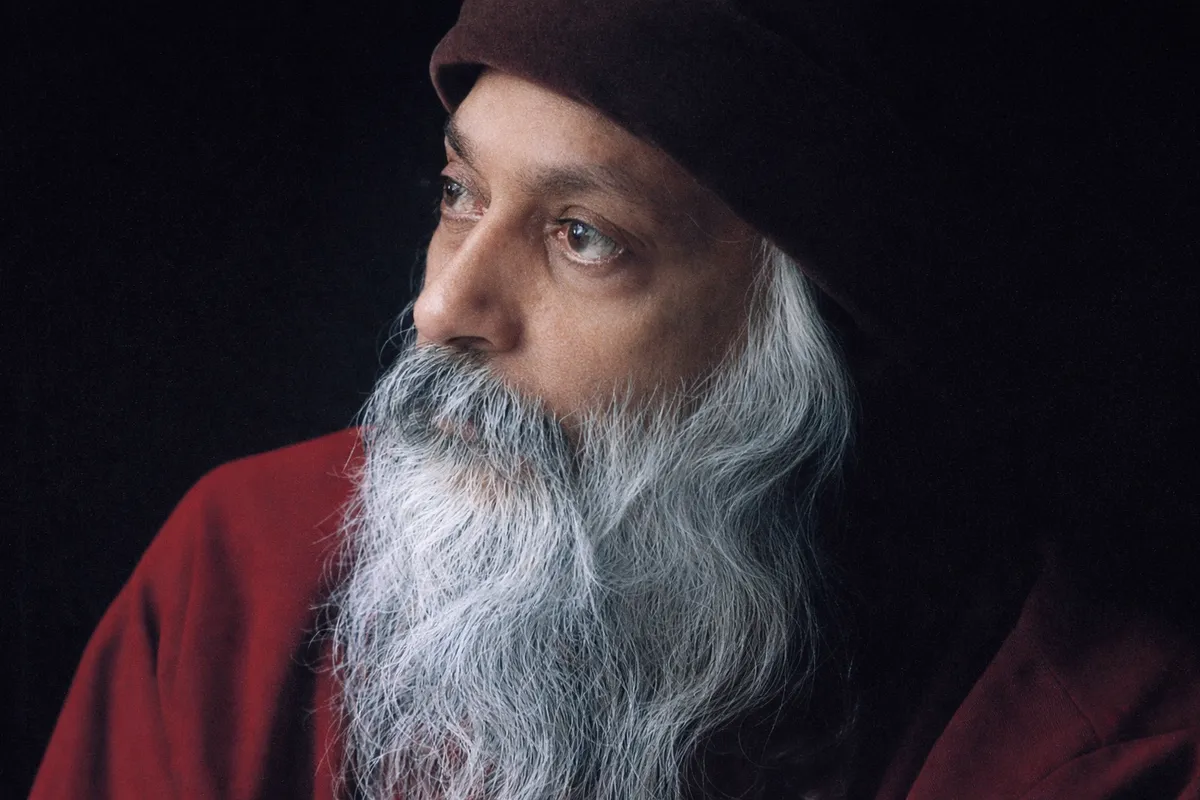
Osho's original Hindi beside Osho Live's English translation, matched passage by passage.
एक सूफी कहानी है। एक सम्राट अपने वजीर पर नाराज हो गया। और उसने वजीर को आकाश-छूती एक मीनार में कैद कर दिया। वहां से कूद कर भागने का कोई उपाय न था। कूद कर भागता तो प्राण ही खो जाते। लेकिन वजीर जब कैद किया जा रहा था, तब उसने अपनी पत्नी के कानों में कुछ कहा।
There is a Sufi story. An emperor became angry with his vizier and imprisoned him in a tower that scraped the sky. There was no way to escape by jumping; a leap would have meant death. But as the vizier was being taken away, he whispered something into his wife’s ear.
पहली ही रात पत्नी मीनार के करीब गयी। उसने एक साधारण-सा कीड़ा दीवार पर छोड़ा। और उस कीड़े की मूंछों पर थोड़ा-सा मधु लगा दिया। कीड़े को मधु की गंध आयी। मधु को पाने के लिए कीड़ा मीनार की तरफ, ऊपर की तरफ सरकने लगा। मूंछ पर लगा था मधु, तो गंध तो आती ही रही। और कीड़ा मधु की तलाश में सरकता गया। उस कीड़े की पूंछ से एक पतला से पतला रेशम का धागा पत्नी ने बांधा हुआ था। सरकता-सरकता कीड़ा उस तीन सौ फीट ऊंची मीनार के आखिरी हिस्से पर पहुंच गया। वजीर वहां प्रतीक्षा कर रहा था। कीड़े को उठा लिया, पीछे बंधा हुआ रेशम का धागा पहुंच गया। रेशम के धागे में एक पतली-सी सुतली बांधी। सुतली में एक मोटा रस्सा बांधा था। और वजीर रस्से के सहारे उतर कर कैद से मुक्त हो गया।
That very night, his wife came close to the tower. She placed a tiny, ordinary insect on the wall and smeared a little honey on its whiskers. The insect caught the scent. To get the honey, it began to climb upwards toward the tower. The honey was right on its whiskers, so the fragrance kept drawing it on—and in its search for honey it kept crawling up. Tied to the insect’s tail was the thinnest silk thread. Crawling and crawling, the insect reached the top of that three-hundred-foot tower where the vizier was waiting. He picked up the insect; with it came the fine silk thread. He tied a slightly thicker twine to the silk, then a stout rope to the twine, and, holding the rope, he climbed down to freedom.
कहानी कहती है कि वजीर न केवल इस कैद से मुक्त हुआ, बल्कि उसे उस मुक्त होने के ढंग में जीवन की आखिरी कैद से भी मुक्त होने का सूत्र मिल गया।
The story says the vizier not only freed himself from that prison, he also discovered, in the very method of his escape, the key to liberation from life’s final captivity.
पतला-सा धागा भी पकड़ में आ जाए तो छुटकारे में कोई बाधा नहीं है। पतले से पतला धागा भी मुक्ति का मार्ग बन सकता है। लेकिन धागा पकड़ में आ जाए! एक छोटी-सी किरण पहचान में आ जाए, तो उसी किरण के सहारे हम सूरज तक पहुंच सकते हैं।
If even a slender thread falls into your hands, nothing can obstruct your release. The thinnest thread can become a path to freedom—provided you catch hold of it. If even a small ray is recognized, by that very ray you can reach the sun.
सभी धर्म, सभी गुरु किसी पतले से धागे को पकड़ कर परमात्मा तक पहुंचे हैं। वे धागे अनेक हो सकते हैं। अनेक तरह के कीड़ों पर धागा बांधा जा सकता है। और जरूरी नहीं कि कीड़े की मूंछों पर मधु ही लगाया जाए, कुछ और भी लगाया जा सकता है। वे गौण बातें हैं। असली बात यह है कि धागा कैदी तक पहुंच जाए। धागा ही फिर सेतु बन जाता है मुक्ति तक।
All religions, all masters, have taken hold of some slender thread and reached the Divine. The threads can be many; many kinds of “insects” can bear a thread. It isn’t necessary that honey be applied to an insect’s whiskers; something else may do. These are secondary matters. The real thing is that the thread reach the prisoner. That very thread becomes a bridge to liberation.
नानक ने जो धागा पकड़ा है, वह धागा है बड़ा साफ और बहुत स्पष्ट। लेकिन चूंकि हम अंधे और बहरे हैं, इसलिए हमें सुनायी नहीं पड़ा।
The thread Nanak grasped is very clean and utterly clear. But since we are blind and deaf, we have not heard it.
जीवन को अगर तुम गौर से देखोगे तो अस्तित्व में जो सबसे ज्यादा प्रकट बात दिखायी पड़ती है, वह है गीत। पक्षी अभी भी गा रहे हैं। सुबह होते ही गीत पक्षियों का शुरू हो जाता है। हवाओं के झोंके वृक्षों से टकराते हैं और गाते हैं। पहाड़ों से झरने गिरते हैं और नाद उत्पन्न होता है। आकाश में बादल आते हैं और तुमुल-उदघोष होता है। नदियां बहती हैं। सागर की तरंगें तटों से टकराती हैं। अगर जीवन को चारों तरफ गौर से तुम देखो और सुनो, तो तुम्हें पूरा अस्तित्व गाता हुआ मालूम पड़ेगा।
If you look closely at life, the most manifest thing in existence is song. Even now the birds are singing. As soon as morning breaks, the birds’ music begins. Gusts of wind strike the trees and sing. Waterfalls descend from the mountains and a tone is born. Clouds gather in the sky and a tumultuous proclamation resounds. Rivers flow. The sea’s waves crash against the shore. If you look and listen all around, you will find the whole of existence singing.
गीत से ज्यादा स्पष्ट अस्तित्व में और कोई बात नहीं है। सिर्फ जब जीवन शांत हो जाता है, मृत हो जाता है, तभी गीत बंद होता है। जब कोई मर जाता है, तभी ध्वनि खोती है। अन्यथा जीवन में तो ध्वनि है। लेकिन आदमी बहरा है। इसलिए साफ धागा हाथ में होते हुए भी पकड़ में नहीं आता।
Nothing in existence is clearer than song. Only when life falls silent—when it dies—does the singing cease. Only when someone dies does sound vanish. Otherwise, life is sound. But man is deaf. So even with a clean thread right in his hand, he fails to grasp it.
अगर जीवन इतना गीत से भरा है, तो इस गीत के पीछे परमात्मा का हाथ होगा। और इस गीत में छिपा हुआ कहीं न कहीं परमात्मा है। अगर हम भी गा सकें, अगर हम भी इस गीत में लीन हो सकें, तो धागा हाथ में आ जाएगा। गीत में लीन होना धागा है। फिर इस संसार की कैद से परमात्मा के मोक्ष तक जाने में देर नहीं।
If life is so full of song, then the hand of God must be behind this music. And God is hidden somewhere within it. If we too can sing, if we too can dissolve into this song, the thread will fall into our hands. To be absorbed in song is the thread. Then it is not long from the prison of this world to the liberation of the Divine.
नानक ने गीत को साधना का माध्यम बनाया है। तुम्हें भी, जब कभी तुम गाते हो, तब एक मस्ती पकड़ने लगती है। तब एक नशा छाने लगता है। लेकिन लोग गाने से डर गए हैं। कोई पक्षी इसकी चिंता नहीं करता है कि उसकी ध्वनि मधुर है या नहीं; आदमी बहुत भयातुर हो गया है। थोड़े-से लोग गा सकते हैं, जिनकी ध्वनि बहुत मधुर हो। बाकी लोग ज्यादा से ज्यादा स्नानगृह में थोड़ा गुनगुनाते हैं। वह भी डरे-डरे! स्नानगृह में गुनगुनाते हैं, क्योंकि कोई देखने वाला नहीं, कोई सुनने वाला नहीं। और ध्यान रखना, स्नान से भी तुम्हें उतनी ताजगी नहीं मिलती, जितनी गुनगुनाने से मिलती है। क्योंकि स्नान तो शरीर को ऊपर-ऊपर ही छूता है, गुनगुनाहट भीतर उतर जाती है। और जो आदमी गुनगुनाना नहीं जानता, उस आदमी के सभी संबंध परमात्मा से टूट गए। वह अस्तित्व से दूर हो गया, वह जीते जी मुर्दा है।
Nanak made song the vehicle of his sadhana. You too, whenever you sing, begin to catch a certain ecstasy, a certain intoxication. But people have grown afraid of singing. No bird worries whether its voice is sweet or not; man has become terribly fearful. Only a few dare sing—those with very sweet voices. The rest, at most, hum a little in the bathroom, and even there, timidly. They hum in the bathroom because no one is watching, no one is listening. And remember, even a bath won’t refresh you as much as humming will. A bath touches only the body from the outside; humming sinks within. Whoever does not know how to hum has severed all ties with God. He is far from existence; living, he is a corpse.
कबीर ने कहा है, ई मुर्दन के गांव।
Kabir said, “These are villages of the dead.”
हमारे गांव के लिए कहा कि ये मुर्दों के गांव हैं। जिंदगी का गीत यहां गूंजता ही नहीं। न कोई नाचता है अहोभाव में, न कोई गाता है आपूर हृदय से, न कोई डूब जाता है अपने गीत में।
He said this of our villages: villages of the dead. The song of life does not resound here. No one dances in wonder, no one sings from a fulfilled heart, no one loses himself in his own song.
यह सवाल नहीं है कि स्वर मधुर है या नहीं। क्योंकि गीत कोई बाजार में बेचने के लिए नहीं है, गीत तो अहोभाव के लिए है। और गीत की असली सार्थकता उसके माधुर्य में नहीं, उसकी लीनता में है। तुम उसमें लीन हो सकते हो। तुम उसमें इतने लीन हो सकते हो कि तुम बिलकुल मिट ही जाओ। तुम बचो ही न और गीत ही बचे। गुनगुनाहट रह जाए और कर्ता खो जाए। गीत ही बचे और गायक समाप्त हो जाए। यह हो सकता है। और यह सरलतम है। इससे ज्यादा सरल धागा तुम न पा सकोगे। पक्षी गा लेते हैं, पौधे गुनगुनाते हैं, झरने गाते हैं। तुम इतने असमर्थ हो क्या कि झरनों का मुकाबला भी न कर सको? कि पक्षियों का मुकाबला भी न कर सको? कि वृक्षों से भी होड़ न ले सको?
The question is not whether the note is sweet or not—because song is not for sale in the marketplace. Song is for wonder. The true meaning of song is not its sweetness but your absorption in it. You can be absorbed. You can be so absorbed you utterly disappear. You remain not, only the song remains. The humming remains and the doer is lost. Only the song remains and the singer dissolves. This can happen—and it’s the simplest thing. You will not find a simpler thread. Birds can sing, plants hum, streams sing. Are you so incapable that you cannot even match streams? Cannot even match birds? Cannot even vie with trees?
लेकिन तुम डर गए हो। और तुमने गीत को बाजार में खड़ा कर दिया है। तुम गीत को बेचते हो। और फिर एक मजेदार घटना घटी है कि जब गीत बिकता है, तो सभी नहीं गा सकते। क्योंकि तब गीत जीवन का सहज कृत्य नहीं रह जाता। बाजार की सामग्री हो गयी। फिर तुम सोचोगे कि ध्वनि योग्य है या नहीं! शिक्षण हुआ या नहीं! तुमने संगीत सीखा है या नहीं!
But you have become afraid. And you have put song up for sale in the market. You sell it. Then an odd thing happens: when song is for sale, not everyone can sing. Song is no longer a natural act of life; it has become a commodity. Then you start wondering whether your voice is adequate—whether you have had training—whether you have learned music.
कोई पक्षी संगीत सीखने नहीं जाता। कोई झरना संगीत सीखने नहीं जाता। संगीत तो जीवन की सहज सरिता है। सीखने का कोई सवाल नहीं। संगीत तो वहां अनसीखा मौजूद है। सिर्फ थोड़ी हिम्मत जुटाने की जरूरत है। थोड़े पागल होने की हिम्मत चाहिए और संगीत फूट पड़ेगा। और जब पक्षी विश्वविद्यालय में नहीं जाते, तो तुम्हें जाने की क्या जरूरत है? लेकिन पक्षियों को चिंता नहीं है कि कौन क्या कहता है? पक्षियों को विचार नहीं है कि बाजार में बिकेगा यह गीत या नहीं? पक्षी आनंद से गाते हैं।
No bird goes to learn music. No stream goes to learn music. Music is life’s spontaneous river. There is no question of learning. It is unlearned, already there. Only a little courage is needed. The courage to be a little mad—and music will burst forth. And if birds don’t go to universities, why should you? Birds don’t care what anyone says, whether their song will sell in the market. Birds sing from delight.
चूंकि हम बेचते हैं गीत को, धीरे-धीरे एक दूसरी दुर्घटना घटती है। और वह यह कि फिर हम गा तो नहीं सकते, हम सिर्फ सुन सकते हैं। तब पैसिविटी पैदा होती है। तब कोई गाता है और हम सुनते हैं, कोई नाचता है और हम देखते हैं। तुम सोचो जरा, यह बड़ी दीनता है। किसी दिन ऐसा जरूर आ जाएगा, जब कोई प्रसन्न होगा, हम देखेंगे।
Because we sell song, slowly another misfortune befalls us: we can no longer sing; we can only listen. Passivity is born. Someone sings and we listen; someone dances and we watch. Consider it—what poverty! A day may come when someone is happy and we will merely watch.
तुम फर्क समझते हो? कोई प्रसन्न होता है, तुम देखते हो--इसमें, और तुम प्रसन्न होते हो--अंतर दिखायी नहीं पड़ता? कोई प्रेम कर रहा है और तुम देखते हो--इसमें, और तुम प्रेम करते हो--इसमें तुम्हें भेद नहीं मालूम पड़ता? देखने से कभी कोई प्रेम को जान सकेगा? प्रेम तो करके ही जाना जा सकेगा।
Do you see the difference? Someone is happy and you watch—and you are happy—can’t you see the gap? Someone loves and you watch—and you love—can’t you grasp the distinction? Will anyone ever know love by watching it? Love can only be known by loving.
दूसरा गा रहा हो, कोकिल-कंठ हो, बड़ा संगीतज्ञ हो, लेकिन सुन कर तुम संगीत को न जान सकोगे। यह तो उधार हो गया। कोई दूसरा गा रहा है, तुम मुर्दे की भांति बैठे सुन रहे हो। इससे संगीत से तुम्हारा संबंध न जुड़ेगा। संगीत में उतरने के लिए तुम्हें सक्रिय होना पड़ेगा। नाच कर ही नाच जाना जा सकता है, देख कर नहीं। देखना तो सबस्टीट्यूट है, वह तो परिपूरक है। वह तो झूठा है। असली नहीं है, प्रामाणिक नहीं है।
Another may sing with a cuckoo’s throat, a great musician—but by listening you will not know music. That is borrowed. Someone else sings and you sit like a corpse, listening. This will not connect you to music. To enter music, you must be active. Only by dancing can dance be known; watching will not do. Watching is a substitute, a supplement; it is false, not authentic.
और आदमी धीरे-धीरे, धीरे-धीरे सभी चीजें दूसरों पर छोड़ दिया है। दूसरे करते हैं, तुम देख लेते हो। कोई खेलता है, लाखों लोग देखते हैं। कोई नाचता है, हजारों लोग देखते हैं। कोई गाता है, हजारों लोग सुनते हैं। न तुम गाते हो, न तुम खेलते हो, न तुम नाचते हो। तुम्हारे जिंदा रहने का प्रयोजन क्या है? तुम जिंदा क्यों हो? सभी काम विशेषज्ञ पूरा कर देते!
And slowly, slowly, we have left everything to others. Others do; you watch. Someone plays; millions watch. Someone dances; thousands watch. Someone sings; thousands listen. You neither sing nor play nor dance. What is the point of your being alive? Why live at all? The specialists will do everything!
और मजे की बात यह है कि देखने वाले को भी उपलब्धि नहीं हो पाती; और वह जो कर रहा है, उसे भी नहीं हो पाती। क्योंकि उसकी नजर भी पैसे कमाने पर है। वह भी नाच आत्मा का नहीं है। और वह भी नाच सिर्फ ऊपर की कुशलता का है। उसे कोई प्रयोजन नहीं है। वह नाच रहा ही नहीं। उसके भीतर भी नाच इतना गहन तक नहीं उतरता कि उसमें डूब जाए। क्योंकि उसकी नजर पैसे पर लगी है।
And the amusing thing is that the watcher attains nothing—and the performer doesn’t either, because his eyes are on the money. His dance is not of the soul; it is a display of outer skill. It has no purpose. He is not truly dancing. The dance does not sink deep enough within him for him to be lost in it, for his gaze is fixed on the reward.
ऐसा हुआ कि अकबर ने तानसेन को पूछा कि तुम्हारे गुरु को मैं मिलना चाहता हूं। क्योंकि कल रात जब तुम गा कर विदा हुए, तो मेरे मन में ऐसा भाव था कि तुमसे श्रेष्ठ न तो गायक कभी हुआ है, और न होगा। तुम परम हो। तुम आखिरी हो। लेकिन जब मैं यह सोच रहा था, तभी मुझे खयाल आया कि तुमने भी किसी से सीखा होगा! कोई होगा तुम्हारा गुरु! तो मेरे मन में एक जिज्ञासा उठ गयी कि कौन जाने तुम्हारा गुरु तुम से आगे हो। तो मैं तुम्हारे गुरु को मिलना चाहूंगा। मैं तुम्हारे गुरु को भी सुनना चाहूंगा।
It happened that Akbar asked Tansen, “I want to meet your master. For when you left last night after singing, I felt that no singer has ever been greater than you—nor will there be. You are the ultimate, the last. But as I was thinking this, it occurred to me that you must have learned from someone. You must have a guru. A curiosity arose in me—who knows, perhaps your master is beyond you. I wish to meet him. I wish to hear him.”
तानसेन ने कहा, यह जरा कठिन है। गुरु मेरे हैं। और अभी जीवित हैं। सुनना भी हो सकता है, लेकिन बड़ी कठिनाई है। उन्हें दरबार में नहीं बुलाया जा सकता। फरमाइश पर वे नहीं गाते। उनका गान तो पक्षियों जैसा है। तुम कोयल से कितनी ही प्रार्थना करो कि गाओ। तुम्हारी प्रार्थना की वजह से ही, कोयल गा रही होगी तो चुप हो जाएगी, कि क्या मामला है? वे जब गाते हैं तभी सुना जा सकता है। तो अगर आप उनको सुनना चाहते हैं, तो हमें ही उनके झोपड़े के पास चलना पड़ेगा। और वह भी छिप कर ही सुना जा सकता है। क्योंकि हम पहुंचेंगे तो वे शायद रुक जाएं। तो मैं पता लगाऊंगा कि अभी कब गाते हैं वे! क्योंकि जब वे गाते हैं, तो हम छिपे रहेंगे।
Tansen said, “That is a little difficult. My master is alive. Hearing him may be possible, but it is hard. He cannot be summoned to court. He does not sing upon request. His singing is like the birds’. Beg the cuckoo as you like to sing—because of your entreaty, even if she was singing, she may fall silent: ‘What is this?’ He can be heard only when he sings. If you want to hear him, we will have to go to his hut. And even then, we will have to listen from hiding. For if we appear, he may stop. I will find out when he sings these days. When he sings, we will hide and listen.”
पता चला कि वे तीन बजे रात उठते हैं। वे तो फकीर थे। हरिदास उनका नाम था। वे तीन बजे उठते हैं। यमुना के तट पर उनका झोपड़ा है। अब वहीं वे अपने झोपड़े में गाते हैं। अपनी मस्ती में गाते हैं। वही गीत पक्षियों का है। उस गीत का किसी से कुछ लेना-देना नहीं है।
They learned he rises at three in the morning. He was a fakir—his name, Haridas. He rises at three. His hut is on the bank of the Yamuna. There he sings in his hut, singing in his own ecstasy—song like the birds’. That song has nothing to do with anyone.
अकबर और तानसेन रात दो बजे जा कर झोपड़े के पास छिप गए। तीन बजे संगीत शुरू हुआ। अकबर मूर्ति की तरह ठगा रह गया। आंख से झर-झर आंसू की धार लग गयी। जब वापस लौटे अपने रथ में, तो रास्ते भर तानसेन से कुछ बोल न सका। ऐसा भावविभोर हो गया। भूल ही गया तानसेन को। महल में उतरते वक्त उसने इतना ही कहा कि अब तक मैं सोचता था कि तेरा कोई मुकाबला नहीं है। और आज मैं सोचता हूं कि तेरे गुरु के सामने तू तो कुछ भी नहीं है। मैं यह पूछना चाहता हूं कि इतना फर्क क्यों?
Akbar and Tansen arrived at two in the night and hid near the hut. At three the music began. Akbar stood like a statue, stunned. Tears streamed from his eyes. On the way back in the chariot he could not speak to Tansen at all—he was so overwhelmed, he even forgot Tansen. As he entered the palace he said only this: “Until today I thought you had no equal. Today I think, before your master you are nothing. Tell me why there is so much difference.”
तानसेन ने कहा, फर्क भी पूछने की जरूरत है क्या? मैं आपके लिए गाता हूं, मेरे गुरु परमात्मा के लिए गाते हैं। और जब मैं गाता हूं तो मेरी नजर लगी है पुरस्कार पर कि क्या मिलेगा? मैं गाता हूं, ताकि कुछ मिले। मेरा गाना व्यवसाय है। मेरे गुरु कुछ पाने के लिए नहीं गाते हैं। ठीक स्थिति उलटी है। मेरे गुरु तभी गाते हैं, जब उन्हें कुछ मिला होता है। जब वे इतने भरे होते हैं परमात्मा के भाव से, जब उन्हें कुछ मिला होता है, जब उनका कंठ भरा होता है, जब उनके हृदय में लहरें उठ रही होती हैं, जब वे आपूर होते हैं उसके दान से, तब बहते हैं। उन्हें जब कुछ मिला होता है, तब वे गाते हैं। गाना उनकी छाया की तरह है। मिलना पहले है, गीत बाद में है। और मैं गाता हूं, मिलना पीछे है। तो कर्म-फल पर मेरी नजर लगी है। और इसलिए मैं क्षुद्र हूं। आप ठीक कहते हैं। मेरे गुरु से मेरा क्या मुकाबला? मैं कितना ही कुशल हो जाऊं, मेरे हाथ कितने ही सध जाएं, मेरा गला कितना ही प्रवीण हो जाए, लेकिन आत्मा उसमें प्रवेश न पा सकेगी। मैं विशेषज्ञ रहूंगा और मेरे गुरु कोई विशेषज्ञ नहीं हैं। उनका गीत एक पक्षी का गीत है।
Tansen said, “Do you really need to ask? I sing for you; my master sings for God. And when I sing, my eyes are on the prize: what will I get? I sing so that I may receive. My singing is a profession. My master does not sing to get anything. The situation is precisely the reverse. My master sings only when he has received. When he is so filled with the feeling of God, when he has received something, when his throat brims, when waves rise in his heart, when he is overflowing with His gift—then he flows. When he has received, then he sings. Singing is his shadow. Receiving comes first; song follows. I sing first and hope to receive later; my eyes are on the fruits of action—therefore I am petty. You are right. How can I be compared with my master? However skillful I become, however trained my hands, however accomplished my throat—still the soul will not enter. I will remain a specialist, and my master is no specialist at all. His song is the song of a bird.”
तो तुम जिन्हें सुनते हो उनका गीतव्यवसाय है। सुनने वाला खाली, व्यर्थ बैठा है। निष्क्रिय है। गाने वाला व्यवसायी है। तुम परमात्मा के गीत से बिलकुल दूर ही चले गए। जो चित्रपट पर प्रेम का प्रदर्शन कर रहा है, उसके लिए प्रेम धंधा है। वह उस प्रेम में जो भी कर रहा है, वह अभिनय है। और देखने वाला निष्क्रिय बैठा है, अपनी कुर्सी में बंधा हुआ।
Those you listen to—most of their singing is a business. The listener sits empty, idle, passive. The singer is a businessman. You have drifted far away from the Divine Song. The one who displays love on the screen—love is his trade. Whatever he does in that love is acting; and the watcher sits passive, strapped to his chair.
जीवन के सत्य सक्रियता से जाने जाते हैं। जीवन के सत्यों में तुम्हें उतरना पड़ेगा। कोई दूसरा तैरेगा तो तैरने का आनंद तुम कैसे ले पाओगे? थोड़ा सोचो! जब देखने से इतना सुख मिलता है, तो हो जाने से कितना सुख न मिलता होगा! गाओ, नाचो, भूल जाओ सारे जगत को। उसकी याद ही तो तुम्हें नाचने नहीं देती और गाने नहीं देती। और तब तुम परमात्मा के द्वार पर खड़े हो।
Life’s truths are known through activity. You must enter them. If someone else swims, how will you taste the joy of swimming? Think a little. If mere watching gives so much pleasure, how much more joy must there be in becoming! Sing, dance; forget the whole world. It is only the memory of it that keeps you from singing and dancing. Then you stand at the door of God.
नानक बड़े मधुर शब्दों में यह बात कहते हैं। वे कहते हैं--
Nanak says this in exquisitely sweet words. He says—
सो दरु केहा सो घरु केहा जितु बहि सरब समाले।
वह द्वार कहां है, वह घर कहां है, जहां बैठ कर तू सबकी सम्हाल कर रहा है? तेरे घर का द्वार कहां खोजूं? जिसके भीतर छिपा, तू सबको सम्हाले हुए है। और उत्तर देते हैं--
बाजे नाद अनेक असंखा केते वावणहारे।।
केते राग परी सिउ कहीअनि केते गावणहारे।
वह द्वार कहां, वह घर कहां, जहां बैठ कर तू सबकी सम्हाल करता है?
यह प्रश्न है। और उत्तर देते हैं--
So dar keha, so ghar keha jit bahi sarab samale? Where is that Door, where is that House, where You sit and care for all? Where shall I seek the Door of Your House within which, hidden, You sustain everything? And he answers—
अनेक नाद बज रहे हैं, और कितने असंख्य बजाने वाले हैं। असंख्य गायक हैं, अनंत राग-रागिनियां हैं। पानी और अग्नि और पवन यश गा रहे हैं। धर्मराज तेरे द्वार पर बैठ कर गीत गा रहे हैं। चित्रगुप्त भी, शिव, ब्रह्मा, देवी सभी तेरा गान कर रहे हैं। इंद्रासन पर बैठे इंद्र गाते हैं। देवता तेरे द्वारों पर बैठे गाते हैं। समाधि में बैठ कर सिद्ध और ध्यान में बैठ कर साधु गाते हैं।
Baje nad anek asankha, kete vavan hare. Kete rag pari siu kahi-an, kete gavan hare. Countless tones resound; numberless are the players. Endless are the ragas and ragini-s; countless are the singers.
Where is that Door, where is that House where You sit and care for all?
This is the question. And he answers—
Countless tones resound; numberless are the players.
नानक पूछते हैं, कहां तेरा द्वार? कहां तेरा घर? और तत्क्षण कहते हैं, अनेक नाद बज रहे हैं, कितने असंख्य बजाने वाले हैं।
नानक कह रहे हैं, नाद तेरा द्वार है। नाद में छिपा ही तू सारे जगत को सम्हाले हुए है। ओंकार तेरा द्वार। उसी में छिपा हुआ तू सारे जगत को सम्हाले हुए है। और अगर गीत की एक कड़ी तुम्हें पकड़ जाए, तो उस धागे को पकड़ कर तुम उस परमात्मा के द्वार तक जा सकोगे। नाद जब तुम्हारे भीतर बजेगा, जब तुम नाद में लीन हो जाओगे, उसी क्षण द्वार के सामने अपने को पाओगे।
Nanak is saying: nad—sound—is Your Door. Hidden in the nad, You hold the whole world together. Omkar is Your Door. Hidden in it, You sustain all. And if even one link of the song comes into your hand, holding that thread you can reach the Gate of God. When nad resounds within you, when you are absorbed in nad, in that very moment you will find yourself before the Door.
सो दरु केहा सो घरु केहा जितु बहि सरब समाले।
बाजे नाद अनेक असंखा केते वावणहारे।।
केते राग परी सिउ कहीअनि केते गावणहारे।
So dar keha, so ghar keha jit bahi sarab samale? Baje nad anek asankha, kete vavan hare. Kete rag pari siu kahi-an, kete gavan hare.
कितने राग, कितनी रागिनियां, कितने नाद, कितने गायक! यही तेरा द्वार है। सुबह से सांझ तक, सांझ से सुबह तक असंख्य राग बज रहे हैं।
How many ragas, how many raginis, how many tones, how many singers! This is His Door. From morning to evening, evening to morning, countless melodies are playing.
तुम जीवन में उन रागों को पहचानना शुरू करो। मनुष्य का सारा संगीत अस्तित्व के रागों से पैदा हुआ है। मनुष्य के सारे वाद्य अस्तित्व की नकल से पैदा हुए हैं। पक्षी गाते हैं, झरने गाते हैं, हवाएं गाती हैं, आकाश में बादल गरजते हैं, इन्हीं सबसे नाद पैदा हुए मनुष्य के। सारी राग-रागिनियां पैदा हुईं। इनसे ही सारे वाद्य निर्मित हुए।
Begin to recognize those melodies in life. All human music is born of the ragas of existence. All instruments are fashioned in imitation of existence. Birds sing, streams sing, winds sing, clouds thunder—the nad in man arose from all these. From this arose the ragas and raginis. From this all instruments were made.
अस्तित्व में राग को पहचानने की कोशिश करो। सुबह उठ कर पहला ध्यान चारों तरफ हो रही ध्वनियों पर डालना। और अगर तुम्हें ध्वनियां सुनायी पड़ने लगें, तो तुम पाओगे कि वे दिनभर तुम्हें सुनायी पड़ती रहेंगी। क्योंकि वे सदा जारी हैं। सिर्फ तुम बहरे हो।
Try to recognize the melody in existence. On waking, let your first awareness fall upon the sounds all around. And if you begin to hear them, you will find they keep sounding for you all day long—because they are always there. Only you are deaf.
रात के सन्नाटे में बैठ जाना और सुनना सन्नाटे को। सन्नाटे का नाद बहुत निकट है ओंकार के। इसलिए जब भी तुम्हारे भीतर ओंकार बजेगा, तो पहले तो तुम्हें सन्नाटे का नाद ही सुनायी पड़ेगा। सन्नाटे की झांई; जैसे झींगुर बोलते हों और रात बिलकुल चुप हो, वैसी झांई तुम्हें पूरे वक्त सुनायी पड़ने लगेगी--चौबीस घंटे! बाजार में, दुकान पर, दफ्तर में तुम पाओगे कि वह झांई बजती ही जाती है। क्योंकि वह बज ही रही है। बाजार के शोरगुल में दब जाती है, बजना बंद नहीं होता। उपद्रव में खो जाती है, समाप्त नहीं होती। और तुम्हें पकड़ में आ जाए, तो तुम उसे कभी भी पहचान लोगे। और जैसे-जैसे तुम्हारी पकड़ साफ होती जाएगी और पहचान निखरेगी, वैसे-वैसे तुम पाओगे चौबीस घंटे, अहर्निश उसके द्वार पर राग-रागिनियों का मेला लगा हुआ है।
Sit in the silence of night and listen to the silence. The sound of silence is very close to Omkar. Whenever Omkar resounds within you, at first you will hear the sound of silence. A soft sibilant hum—like crickets chirping in the utterly quiet night—will begin to be heard in you, twenty-four hours a day. In the marketplace, at the shop, in the office—you will find that hum goes on sounding. For it is sounding. The market’s noise only drowns it; it does not cease. The uproar hides it; it does not end. Once it falls into your hands, you will recognize it at any time. And as your grip grows surer and recognition clearer, you will discover that day and night there is a fair of ragas and raginis at His Door.
ध्यान रखो, जिन्होंने भी उसे जाना है, उन्होंने उसे सच्चिदानंद कहा है। जब भी कोई आनंद से भर जाता है, तो गीत से भर जाता है। गीत और आनंद में बड़ा नैकट्य है। बड़ी समीपता है। दुख में कोई नहीं गाता, सिवाय फिल्मों को छोड़ कर! दुख में आदमी रोता है, गाता नहीं है। दुख में आंसू बहते हैं, गीत नहीं। जब कोई आह्लादित होता है, आनंदित होता है, तब गाता है। और तब अगर आंसू भी बहें, तो भी उन आंसुओं में गीत होता है। आनंद के क्षण में तुम जो भी करोगे उसमें गीत होगा; उसमें गीत की भनक होगी। तुम्हारे उठने-बैठने में गीत होगा। तुम्हारे चलने-फिरने में गीत होगा। तुम्हारे श्वास लेने और छोड़ने में गीत होगा। तुम्हारे हृदय की धड़कन में नाद होगा। जैसे-जैसे तुम आनंद के करीब पहुंचते हो, वैसे-वैसे गीत के करीब पहुंचते हो। निश्चित ही गीत उसका द्वार है। क्योंकि भीतर परमानंद है।
Remember: whoever has known Him has called Him sat-chit-anand—truth, consciousness, bliss. Whenever anyone overflows with joy, he overflows with song. Song and bliss are very near—very intimate. No one sings in sorrow, except in the movies! In sorrow one weeps, one does not sing. Tears flow in sorrow, not songs. When someone is delighted—blissful—he sings. And even if tears flow then, those tears have song in them. In the moment of joy, whatever you do will have a note of song; a hint of melody will be there. There will be song in your rising and sitting. There will be song in your walking and moving. There will be song in your breathing in and out. There will be nad in the beating of your heart. As you come closer to joy, you come closer to song. Surely song is His Door—for within is supreme bliss.
ऐसी भी घड़ी आती है जब गीत भी बंद हो जाता है। क्योंकि गीत द्वार है। जब तुम द्वार के भीतर प्रविष्ट हो जाते हो, तो गीत भी खो जाता है। क्योंकि ऐसी घड़ी भी आती है जब गीत भी बाधा मालूम पड़ता है। तब उसका ही गीत चलता है, तुम्हारा गीत बिलकुल खो जाता है। तब तुममें अनंत ध्वनियां गूंजती हैं। तुम्हारी अपनी कोई ध्वनि नहीं होती। तुम सूने घर हो जाते हो।
There comes a moment when even song ceases—for song is the Door. When you enter within the Door, even song is lost. There comes a moment when even song feels like a hindrance. Then only His Song moves; yours disappears. Infinite sounds resonate in you; you have no sound of your own. You become an empty house.
हमने मंदिर इस ढंग से बनाए थे कि उनमें आवाज गूंजे। आवाज गूंजने को ध्यान में रखा था। मंदिर का पूरा स्थापत्य, उसका पूरा आर्किटेक्चर आवाज को गुंजाने को ध्यान में रख कर बनाया गया था। वह इस खबर को देने के लिए कि एक तो मंदिर खाली है। उसमें हम कुछ रखते नहीं। वह खाली होना ही चाहिए। क्योंकि वह हमारी आखिरी खाली अवस्था का प्रतीक है। जहां हम बिलकुल खाली हो जाएंगे और जहां नाद गूंजेगा। मंदिर के द्वार पर ही हमने घंटा लटका रखा था। जो भी आए, पहले घंटे को बजाए, क्योंकि द्वार पर नाद है।
We built temples in such a way that sound would echo. The architecture was designed for resonance—to convey a message: first, the temple is empty; we keep nothing in it. It must be empty, symbol of our ultimate inner emptiness, where we will be utterly vacant and where nad will resound. At the door of the temple we hung a bell. Whoever comes should first ring the bell—for at the Door there is nad.
ये सब प्रतीक हैं उस परमद्वार के। बिना घंटा बजाए कोई मंदिर में प्र्रवेश न करे! क्योंकि नाद में ही प्रवेश है। और घंटे की यह खूबी है कि तुम बजा दो, तो भी वह गूंजता रहता है। और जब तुम प्रवेश करते हो मंदिर के द्वार में तब घंटे का नाद गूंजता रहता है। उस नाद में ही मंदिर के द्वार में प्रवेश करने की व्यवस्था है। बिना बजाए कोई प्रवेश न करे! क्योंकि वैसे ही नाद में, तुम परमात्मा में भी प्रवेश करोगे।
These are all symbols of that Supreme Door. No one should enter a temple without ringing the bell—for entrance is through nad. And the beauty of a bell is, once you strike it, it keeps resonating. As you enter through the Door, the bell’s nad still resounds. Entrance is arranged through that nad. Without ringing, do not enter—for it is in that very nad that you will enter the Divine as well.
परमात्मा का घर है यह मंदिर, उसका प्रतीक घर है। वहां तुम्हें घंटा न बजाना पड़ेगा, वहां नाद बज ही रहा है। लेकिन हमने प्रतीक में भी व्यवस्था की थी। फिर जब तुम वापस मंदिर से लौटो द्वार पर, फिर घंटा बजाना। गूंजते नाद में ही वापस लौटना। पूजा है, प्रार्थना है, वह घंट-नाद से ही शुरू होती है।
The temple is the house of God—a symbol of His house. There, you will not need to ring; the nad is already sounding. But even in the symbol, we made the arrangement. And when you return from the temple, ring the bell again—return within the echoing nad. Worship and prayer begin with the bell’s tone.
नानक कहते हैं, अनेक नाद बज रहे हैं। कितने असंख्य बजाने वाले हैं।
Nanak says: countless tones are sounding; numberless are the players.
और नानक ऐसे नहीं कह रहे हैं, जैसे कहीं दूर से वर्णन कर रहे हों; जैसे द्वार पर खड़े हैं। इसलिए जो शब्द उन्होंने उपयोग किए हैं, वे सीधे हैं।
He is not describing something far away; he stands at the Door. Hence the directness of his words.
वह द्वार कहां? वह घर कैसा? जहां बैठ कर तू सबकी सम्हाल कर रहा है। अनेक नाद बज रहे हैं, कितने असंख्य बजाने वाले हैं।
Where is that Door, where is that House, where You sit and care for all? Countless tones are sounding, numberless are the players.
जैसे यह सब नानक की आंख के सामने है।
As if all this stands before Nanak’s eyes.
असंख्य गायक, अनंत राग-रागिनियां, पवन, पानी, अग्नि तेरा यश गाते हैं। धर्मराज भी तेरे द्वार पर बैठ कर गाते हैं।
Countless singers, endless ragas and raginis—wind, water, fire sing Your praise. Even Dharmaraj sits at Your gate and sings.
थोड़ा समझें। क्योंकि धर्मराज का तो काम ही धर्म और अधर्म का भेद करना है। धर्मराज का अर्थ है, नीति की पराकाष्ठा। वे नीति के देवता हैं। क्या शुभ है, क्या अशुभ है, उसकी ही बारीक खोज करना; शुभ-अशुभ का निर्णय ही धर्मराज की व्यवस्था है। नानक कहते हैं, उनको भी मैं देख रहा हूं कि वे भी तेरे द्वार पर बैठे गीत गा रहे हैं।
Understand a little. Dharmaraj’s task is to discern dharma and adharma—right and wrong. Dharmaraj means the pinnacle of law, the deity of righteousness. What is auspicious, what inauspicious—that fine discrimination is his work. Nanak says: I even see him sitting at Your gate, singing.
क्योंकि धर्मराज से ज्यादा गंभीर आदमी तो खोजा नहीं जा सकता। धर्मराज का अर्थ ही यह है, बहुत गंभीर होगा। इंच-इंच सोचेगा कि क्या ठीक, क्या गलत; क्या करूं, क्या न करूं; क्या करने योग्य, क्या न करने योग्य! उनको भी देखता हूं कि वे भी मस्ती में गीत गा रहे हैं। तेरे द्वार पर धर्मराज तक गीत गा रहे हैं। चित्रगुप्त भी गीत गा रहे हैं, जिनका कि सारा काम ही पाप-पुण्य लिखना है। पाप-पुण्य का जो हिसाब-किताब रखता हो, वह क्या गीत गाएगा!
For there can be no one more serious than Dharmaraj. He measures, inch by inch: what is right, what is wrong; what to do, what not to do; what is worthy, what is unworthy—and yet, I see even him singing in ecstasy at Your Door. Chitragupta sings too, whose entire work is to record sin and virtue. One who keeps accounts of merit and demerit—how will he sing?
अदालत में देखते हैं, मजिस्ट्रेट कैसा बैठा होता है! ये छोटे-मोटे चित्रगुप्त हैं! अकड़ कर बैठा रहता है। कपड़े भी उसके हम इस तरह से बनाते हैं--काले--कि गंभीरता की, मौत की खबर दें। पुरानी व्यवस्था तो यही थी कि मजिस्ट्रेट अदालत में जब बैठे, तो वह सफेद बालों का विग पहने। काले कपड़े, सफेद बाल, वह भी विग--सब झूठा। और चेहरे पर गंभीरता; वह हंसे न। अदालत में हंसना तो अदालत की तौहीन है। सजा दी जा सकती है, अगर कोई अदालत में हंसे। वहां गान कैसा! गीत कैसा! और चित्रगुप्त यानी आखिरी अदालत।
Look at a courtroom—how does the magistrate sit? These are little Chitraguptas—stiff-backed. Even his clothes are designed to announce seriousness—black—signs of gravity, of death. The old arrangement demanded that when a magistrate sits in court, he should wear a white wig—black clothes, white hair, a wig—all false. And a grave face—he must not laugh. Laughter in court is contempt; one can be punished for it. What place for song there? And Chitragupta is the last court.
नानक कहते हैं कि देखता हूं कि चित्रगुप्त भी गीत गा रहे हैं! जैसे सारी गंभीरता मिट गयी तेरे द्वार पर। तेरा द्वार उत्सव का द्वार है।
Nanak says: I see even Chitragupta singing—as if all seriousness dissolves at Your Door. Your Door is a Door of celebration.
इसे थोड़ा समझ लेना। क्योंकि कहीं ऐसा न हो कि जीवन के पाप-पुण्य का हिसाब लगाते-लगाते तुम बहुत गंभीर हो जाओ। जो गंभीर हुआ, उसने खोया। कहीं जीवन में क्या ठीक है, क्या गलत है, इसी में उलझे-उलझे तुम सिकुड़ मत जाना, सूख मत जाना। क्योंकि उसके द्वार पर सूख गए, जड़ हो गए, गंभीर हो गए लोगों का प्रवेश नहीं है। उदासी का वहां प्रवेश नहीं है। वहां तो नाचते हुए की गति है। वहां तो गीत गाता ही प्रवेश पा सकेगा। इसलिए अक्सर ऐसा हो जाता है कि तुम्हारे तथाकथित साधु उससे सदा दूर रह जाते हैं। क्योंकि वे अति-गंभीर हो गए हैं।
Understand this, lest you become so serious, weighing sin and virtue, that you wither. Whoever becomes serious—loses. Do not shrivel up, do not dry out, in the tangle of what is right and what is wrong. For at His Door, the withered, the inert, the grave have no entry. Gloom has no entry there. Only those who dance may move there. Only those who sing may gain entrance. Hence it often happens that your so-called sadhus remain forever far. They have become hyper-serious.
एक बात समझ लें, गंभीरता हमेशा अहंकार का हिस्सा है। गंभीर आदमी और निरहंकारी न हो सकेगा। गंभीर आदमी तो अहंकारी होगा ही। और अहंकारी आदमी भी गंभीर होगा, अकड़ा हुआ होगा। छोटे बच्चे जैसी सरलता वहां न होगी।
Understand: seriousness is always part of the ego. A serious man cannot be egoless. The serious man will be egotistical; the egotistical will be stiff. There will be no childlike simplicity.
और नानक का तो नाम ही निरंकारी था। नानक निरंकारी उनका पूरा नाम है। और मरदाना सदा तैयार है वाद्य को छेड़ देने को। और नानक बोलते नहीं, गाते हैं। तुम कितना ही गंभीर प्रश्न पूछो, उनका उत्तर प्रसन्नता है। तुम कितनी ही गहरी बात पूछो, उनका उत्तर उत्सव है। वे गाकर ही उत्तर देते हैं। मरदाना वाद्य छेड़ देता है। और नानक गाना शुरू कर देते हैं। किसी विशेष कारण से उन्होंने यह विधि चुनी। क्योंकि उसके द्वार पर वाद्य बज रहा है, नाद बज रहा है।
And Nanak’s very name was Nirankari—egoless. Maradana is ever ready to strike the strings, and Nanak does not speak—he sings. Ask him the most serious question, his answer is joy. Ask him the deepest question, his answer is celebration. He answers by singing. Maradana touches the strings—and Nanak begins to sing. He chose this method for a very particular reason: for at His Door instruments are playing, nad is sounding.
उत्सव धार्मिक आदमी का लक्षण है। लेकिन तुम साधारणतः धार्मिक आदमी को देखो, तो तुम उन्हें उत्सव से बिलकुल विपरीत पाओगे। तुम उन्हें बिलकुल अकड़ा हुआ पाओगे। और तुम उनकी आंखों में गीत नहीं देखोगे, क्योंकि उनकी आंखों में निंदा है। बुरे और भले का विचार करते-करते वे जड़ हो गए हैं। वे इसी सोच-सोच में मरे जा रहे हैं--गीत की फुर्सत किसे? कि क्या ठीक है और क्या गलत! यह खाना खाएं या न खाएं? इतने बजे उठें या न उठें? यह कपड़ा पहनना कि नहीं पहनना? उनका जीवन चौबीस घंटे अनुशासन की जड़ता में जकड़ा हुआ है।
Celebration is the mark of the religious man. But generally, when you look at a “religious” person, you find the very opposite of celebration—stiffness. You will not see song in his eyes, for in his eyes is condemnation. Brooding over good and evil, he has gone numb. He is dying in this thinking—who has time for song? Should I eat this or not? Shall I rise at this hour or not? Wear these clothes or not? His life is shackled, twenty-four hours a day, in the rigidity of imposed discipline.
निश्चित ही उत्सव का भी एक अनुशासन है, लेकिन वह अनुशासन ऊपर से थोपा हुआ नहीं है। उत्सव का भी एक अनुशासन है, लेकिन वह भीतर से जन्मता है। वह एक इनर डिसिप्लिन है। उदासी का भी एक अनुशासन है, जो ऊपर से थोपा जाता है। भीतर कुछ भी हो, लेकिन चेहरे को तुम गंभीर करके बैठ जाते हो। शरीर को तुम मुर्दा कर लेते हो। ये धार्मिक आदमी के लक्षण नहीं हैं। सच तो यह है कि ये बहुत भयभीत आदमी के लक्षण हैं। यह आदमी इतना डरा हुआ है कि हंस भी नहीं सकता। क्योंकि हंसा तो इसे डर है, यह किसी पाप में उतर जाएगा। हंसी पाप हो गयी है। और उदासी और लंबे चेहरे पुण्य के प्रतीक हो गए हैं।
Certainly celebration has a discipline—but not one imposed from outside. Celebration has a discipline that arises from within—an inner discipline. Gloom also has a discipline—but it is imposed. Whatever is within, you sit with a grave face. You make the body corpse-like. These are not the marks of a religious person; they are the marks of the terribly frightened. He is so scared he cannot even laugh. If he laughs, he fears he will fall into sin. Laughter has become sin. Gloom and a long face have become signs of virtue.
नानक की विधि में उत्सव है, संगीत है। और इसी उत्सव के सूत्र को पकड़ कर उसके द्वार पर कोई प्रवेश कर सकता है।
In Nanak’s way there is celebration, there is music. And holding this thread of celebration, anyone can enter His Door.
कहते हैं, समाधि में बैठ कर सिद्ध और ध्यान में बैठ कर साधु गा रहे हैं। यती, सती, संतोषी, महान शूरवीर गा रहे हैं। पंडित, विद्वान, ऋषीश्वर और उनके वेद युग-युग से तुझे ही गाते हैं। मन को मोहने वाली स्वर्ग की अप्सराएं तेरा गुणगान करती हैं। और पाताल की मछलियां भी तेरे ही गीत गा रही हैं। स्वर्ग से ले कर पाताल तक तेरे गीत के अतिरिक्त और कोई धुन नहीं है। तेरे उत्पन्न किए चौदह रत्न गाते हैं, अड़सठ तीर्थ गाते हैं, योद्धा, महाबली, शूरवीर गाते हैं। चार योनियों के जीव गाते हैं। जो तेरे द्वारा उत्पन्न और धारण किए गए हैं, वे खंड, मंडल और ब्रह्मांड तेरा ही गीत गाते हैं। जो तुझे भाते हैं और तुझमें अनुरक्त हैं, ऐसे रसिक भक्त तेरा यशोगान करते हैं।
He says: in samadhi the siddhas sit and sing; in meditation the sadhus sing. The renunciates, the chaste, the contented, the great warriors sing. Pandits, scholars, the rishis and their Vedas sing of You through the ages. The enchanting apsaras of heaven sing Your praise—and the fish in the netherworlds sing Your song. From heaven to the netherworlds there is no other tune but Yours. The fourteen jewels You produced sing; the sixty-eight sacred places sing; heroes, strongmen, champions sing. Beings of the four species sing. The continents, spheres, and universes You created and uphold—these too sing Your song. Those who are dear to You, who are in love with You—such rasik devotees sing Your glory.
नानक थकते नहीं कहते कि तेरा गीत चल रहा है समस्त में। सब तरफ से अस्तित्व एक सेलीब्रेशन है, एक उत्सव है। और परमात्मा हंस रहा है, रो नहीं रहा है। रोती शक्लें उसे भाती ही नहीं। उदासी का अस्तित्व से क्या लेना-देना? उदास होने का अर्थ ही यह है कि तुम अस्तित्व से कहीं टूट गए। कहीं परमात्मा के विपरीत पड़ गए।
Nanak never tires of saying that your song pervades all. From every side, existence is a celebration. God is laughing, not weeping. Weeping faces do not please Him. What has existence to do with gloom? To be gloomy means you have slipped out of tune with existence, fallen against God.
जब तुम्हारे जीवन में उदासी छा जाए, तो जानना कि तुमने कोई कदम गलत लिया। जब तुम दुख से भर जाओ, तो जानना कि तुम कहीं भटके। दुख तो केवल सूचक है। दुख को तुम जीवन की विधि मत बना लेना। दुख को जीवन की शैली मत बना लेना। आत्मपीड़क मत बन जाना। क्योंकि आत्मपीड़क होना तो एक रोग है। मनोवैज्ञानिक उसको एक खास नाम देते हैं। वे कहते हैं, मेसोचिजम। ऐसे लोग हैं, जो खुद को दुख देने के रोग से पीड़ित हैं।
Whenever gloom descends upon your life, know you have taken a wrong step. When you overflow with sorrow, know you have gone astray. Sorrow is only an indicator. Do not make sorrow your manner of living. Do not make sorrow your style. Do not become a self-tormentor. That is a disease. Psychologists have a name for it: masochism. There are those who suffer from the disease of inflicting pain upon themselves.
मैसोच एक लेखक हुआ, जिसके नाम पर मेसोचिजम रोग पैदा हुआ। मैसोच खुद को ही मारता था। कोड़ों से मारता था, कांटे चुभाता था, लहू निकाल लेता था। मैसोच ने घाव बना रखे थे अपने हाथ में, पैरों में। अपने जूतों में उसने खीले लगा रखे थे अंदर की तरफ। वह चलता तो घाव में चुभते रहते।
There was a writer named Masoch—from whose name the term masochism is derived. He used to beat himself with whips, prick himself with thorns, draw blood. He kept wounds on his hands and feet. He fixed nails inside his shoes; when he walked, they pressed into his sores.
ऐसे मैसोचिस्ट तुम सब जगह पाओगे। काशी में तुम उन्हें कांटों पर लेटा हुआ पाओगे। ये आत्मपीड़क हैं। ये बीमार हैं। तुम इन्हें उपवास करते हुए, सड़ते-गलते हुए पाओगे। जगह-जगह मठों में, मंदिरों में इस तरह के रुग्ण लोग बैठे हुए हैं। और लोग उनकी पूजा भी करेंगे।
You will find such masochists everywhere. In Kashi you will find them lying on thorns. They are self-tormentors—sick people. You will find them fasting, rotting away. In monasteries and temples, such pathological people sit—and people worship them too.
क्यों? क्योंकि एक दूसरी बीमारी है। जिसको मनोवैज्ञानिक सैडिजम कहते हैं। दूसरे को दुख में देखने में कुछ लोगों को रस आता है। इन दोनों का बड़ा मेल बैठ जाता है। दुख देने वाले लोग हैं, और दूसरे को दुख मिले इसमें रस लेने वाले लोग हैं। तो तुम ध्यान रखना। जब तुम किसी दुखी, उदास और अपने को सताने वाले आदमी को आदर देते हो, तो तुम भी बीमार हो। वह बीमार है एक बीमारी से, और तुम्हारी बीमारी दूसरी बीमारी है। लेकिन दोनों बीमारियां एक-दूसरे से मेल खाती हैं। इसलिए तुम इन दुष्टों के पास जो अपने को सता रहे हैं, दूसरे तरह के दुष्टों की जमात पाओगे, जो इनको सताने में मजा ले रहे हैं। वे कहेंगे, आहा! कैसी तपश्चर्या है! धन्य, कि आप कांटों पर लेटे हैं। और इस तरह वे उनके अहंकार को फुसला रहे हैं। और उनको सहारा दे रहे हैं।
Why? Because there is another sickness—what psychologists call sadism. Some people take pleasure in seeing others in pain. These two illnesses fit together nicely. There are people who like to inflict pain, and people who enjoy seeing others suffer. So beware: when you honor someone who is sad and self-tormenting, you too are sick. He is sick with one disease; you are sick with the other. But the two pathologies match. Hence around these wicked ones who torture themselves, you will find another fraternity of wicked ones who enjoy seeing them tortured. They say, “Ah! What austerity! Blessed are you, lying on thorns!” Thus they flatter the ascetic’s ego and encourage him.
ध्यान रखना, कभी किसी आदमी को दुख में देख कर कोई सहारा मत देना। क्योंकि दूसरे को दुख में सहारा देना पाप है। वह दूसरे को दुख देने के बराबर है। वह बड़ी सूक्ष्म तरकीब है। मैं तुम्हारी छाती में छुरा भोंकना चाहता हूं, यह पाप है। लेकिन तुम खुद छाती में छुरा भोंक लो तो मैं कहता हूं, बड़ी कुर्बानी की, तुम शहीद हो गए, यह भी पाप है। क्योंकि मैं भी उसमें भागीदार हूं।
Remember: never offer support when you see someone in pain. To support another in pain is a sin—it is equivalent to causing pain. It is a subtle trick. If I stab a dagger into your chest, it is a sin. If you stab yourself and I say, “What sacrifice! You are a martyr,” that too is a sin, for I become a partner in it.
जो आदमी कांटों पर लेटा पड़ा है, वह खुद तो भागीदार है ही। वे सब लोग भी, जो उसके पैरों में पैसे चढ़ा जाते हैं और फूल रख जाते हैं, वे भी पाप के भागीदार हैं। क्योंकि वे सब इस आदमी को सहारा दे रहे हैं कि तुम पड़े रहो। वे कह रहे हैं कि तुम बड़े महात्मा हो।
The one lying on thorns is a partner in sin—and so are all those who lay money and flowers at his feet. They encourage him to continue. They tell him, “You are a great saint.”
दो तरह के रुग्ण लोग हैं जगत में। खुद को सताने वाले, और दूसरों को सताने वाले। ये दोनों ही चित्त की अस्वस्थ, परवर्टेड, विकृत स्थितियां हैं। इनसे सावधान रहना।
There are two kinds of pathological people in the world: those who torture themselves and those who torture others. Both are diseased, perverted states of mind. Beware of them.
स्वस्थ आदमी न तो दूसरे को सताता है, और न अपने को सताता है। स्वस्थ आदमी सताता ही नहीं। जैसे-जैसे स्वस्थ होता है, वैसे-वैसे आनंदित होता है। वह अपना आनंद बांटता है। और उसका आदर हमेशा आनंद के लिए होगा।
A healthy person tortures neither others nor himself. A healthy person does not torture at all. The healthier he becomes, the more blissful he becomes. He shares his joy. He is honored always for his joy.
जब तुम किसी आदमी को नाचते देखो, तब उसके पैर में फूल चढ़ा आना। लेकिन यह तुमने कभी नहीं किया है। नहीं तो दुनिया के आश्रम भिन्न होते। मठ भिन्न होते। वहां उत्सव होता, वहां गीत होते, वहां नृत्य होता। लेकिन वहां रुग्ण, बीमार आदमी भरे हैं, जिनको पागलखानों में होना चाहिए। और जिनकी मानसिक-चिकित्सा की जरूरत है, वे भरे हुए हैं। तुम्हारे कारण! क्योंकि तुमने उनको आदर दिया, उनके अहंकार को फुसलाया, बड़ा किया। तुमने कभी प्रसन्न आदमी को आदर दिया है?
When you see someone dancing, lay flowers at his feet—but you have never done this. Otherwise the ashrams of the world would be different; the monasteries different. There would be celebration there—songs and dances. But there they are filled with the sick, who ought to be in madhouses and need psychotherapy—but there they sit because of you, because you honored them, flattered their egos, inflated them. Have you ever honored a joyous person?
कल ही एक संन्यासिनी ने मुझे सांझ आ कर कहा कि एक बड़ी हैरानी की घटना घट रही है। और वह यह कि जैसे-जैसे ध्यान गहरा हो रहा है, मैं बहुत आनंदित अनुभव करती हूं। लेकिन आनंद के अनुभव के साथ ऐसा लगता है कि कोई गलती हो रही है, अपराध हो रहा है। जैसे कुछ गलत रास्ते पर जा रही हूं। आनंद के भाव के साथ ऐसा प्रतीत होता है।
Only yesterday a sannyasin came at dusk and said, “A strange thing is happening: as meditation deepens I feel a great bliss. But along with the feeling of bliss, it seems I am making a mistake, committing a crime—as if I am going down a wrong path. The feeling of joy brings with it this sense.”
ऐसा सभी को होगा। क्योंकि बचपन से ही तुम्हें दुखी होने के लिए तैयार किया गया है, आनंदित होने के लिए नहीं। बच्चा अगर उदास बैठा है एक कोने में, तो मां-बाप कहते हैं, बिलकुल ठीक! राजा बेटा। और बच्चा अगर नाच रहा है, प्रफुल्लित हो रहा है, तो सारा घर उसका दुश्मन है कि चुप रहो, शांत बैठो, यह क्या कर रहे हो? बंद करो आवाज! जब भी बच्चा आनंदित है, तब कोई न कोई कहने वाला मिल जाता है कि बंद करो, यह गलत है। और आंखें और भी ज्यादा कहती हैं, जो शब्द नहीं कह पाते। हर जगह बच्चा पाता है कि जब भी वह प्रसन्न होता है, तभी कहीं कोई गलती हो जाती है। जब उदास होता है, तब बिलकुल सब ठीक चलता है। धीरे-धीरे यह बात अचेतन में बैठ जाती है कि प्रसन्न होना कुछ भूल है। दुखी होने में कुछ बड़ा गुण-गौरव है।
This will happen to everyone, for from childhood you have been prepared to be sorrowful, not joyous. If a child sits gloomy in a corner, the parents say, “Very good—our princeling.” But if the child dances, bubbles with joy, the whole house becomes his enemy: “Be quiet! Sit still! What are you doing? Stop that noise!” Whenever the child is joyous, someone arrives to say, “Stop—that’s wrong.” Even eyes say more than words; wherever the child goes he finds that whenever he is happy, somehow he is at fault. When he is sad, everything is fine. Slowly this sinks into the unconscious: to be happy is a mistake; there is some great merit in being unhappy.
तो जब ध्यान में कोई गहरा उतरता है तो उलटी प्रक्रिया शुरू होती है। क्योंकि ध्यान में जैसे-जैसे कोई जाता है तो प्रसन्नता और गीत, और परमात्मा के द्वार की तरफ बढ़ा, उत्सव पास आता है। जैसे-जैसे उत्सव पास आता है, दबी हुई वृत्तियां सदा की, और दूसरों की आंखें, और निंदा, और निंदा का भाव बीच में खड़ा हो जाता है। वह कहता है, आनंदित हो रहे हो? वह हजार तरह की तरकीबें खोजता है। वह दमन का भाव है।
So when someone goes deep in meditation, the reverse process begins. For as one moves into meditation, joy, song, and the gate of God draw near; celebration approaches. As celebration approaches, repressed tendencies, others’ eyes, condemnation, the fear of condemnation—stand in the way. They say, “You are becoming happy?” They find a thousand tricks to repress you.
एक मित्र ने मुझे आ कर कहा कि ध्यान तो ठीक लग रहा है। लेकिन एक खयाल आता है कि जब सारी दुनिया दुखी है तो अपने को आनंदित करना क्या स्वार्थ नहीं?
A friend came and said, “Meditation feels fine. But a thought arises: when the whole world is suffering, to make myself happy—is that not selfish?”
अब उन्होंने बड़ी बौद्धिक तरकीब खोजी। वे अपने आनंद से भयभीत हैं। छह महीने पहले आए थे, तब वे यही कहते आए थे कि मैं दुखी हूं, किसी तरह आनंद चाहिए। तब उन्हें दुनिया से मतलब न था। अब जब आनंद के करीब आने लगे, और पहला सुराख खुला, और पहली धुन बजने लगी, तब वे भयभीत हो गए। उन्होंने जल्दी से अपने मन को बंद कर लिया।
He found a very intellectual trick. He is afraid of his own joy. Six months ago he came saying, “I am unhappy—by any means I need joy.” He had no concern with the world then. Now as he draws near joy, as the first crack opens and the first note sounds, he is frightened and quickly closes his mind.
मुझसे बोले कि मैंने तो ध्यान वगैरह बंद कर दिया है। क्योंकि यह तो बड़ा स्वार्थ मालूम होता है। तो मैंने कहा, दुखी होओ खूब! उससे बड़ी सेवा होगी। रोओ, छाती पीटो, अपने को सताओ, आत्महत्या कर लो, उससे जगत का बड़ा उद्धार होगा!
He told me, “I have stopped meditation—it feels like great selfishness.” I said, “Then be miserable! That will be a great service. Weep, beat your chest, torture yourself, kill yourself—that will truly uplift the world!”
तुम्हारे दुखी होने से कैसे दूसरे का उद्धार होगा? तुम्हारे दुखी होने से दूसरे का दुख बढ़ेगा। तुम दुखी हो, तो तुम इस जगत के दुख की मात्रा बढ़ा रहे हो। तुम अगर सुखी हो, तो तुम इस जगत के दुख की मात्रा कम कर रहे हो। और एक भी आदमी अगर सुखी हो, तो उससे ऐसी तरंगें उत्पन्न होनी शुरू हो जाती हैं, जो दूसरे को भी सुखी होने में सक्षम बनाती हैं।
How will your misery redeem anyone? Your misery will only add to the world’s misery. If you are unhappy, you increase the amount of suffering in the world. If you are happy, you decrease it. And even one happy person begins to radiate waves that enable others to be happy too.
एक घर में भी दीया जल रहा हो, तो एक तो पड़ोसियों को अपने अंधेरे का पता चलता है। और जब एक दीया जल रहा हो, तो जले हुए दीए से बुझे हुए दीए को जला लेने में कितनी दूरी है? कितनी कठिनाई है? एक दीया सारे संसार के दीए जला सकता है।
If in one house a lamp is lit, first the neighbors become aware of their own darkness. And once a lamp is lit, how far is it from a burning lamp to light an unlit one? How much difficulty is there? One lamp can light all the lamps in the world.
लेकिन मन दुख के लिए राजी किया गया है। और सारा जगत दो तरह के दुखी लोगों में विभक्त है। एक, जो चाहते हैं दुखी किए जाएं। और दूसरे, जो चाहते हैं कि कोई मिले जिसको वे सताएं और दुख दें। इन दोनों से धर्म का कोई संबंध नहीं। क्योंकि इन दोनों में से किसी को भी गीत सुनायी नहीं पड़ेगा। यह तो एक ही दुख के सिक्के के दो पहलू हैं। और दुख से परमात्मा का कोई नाता नहीं।
But the mind has been conditioned for sorrow. The whole world is divided into two kinds of unhappy people—those who want to be made unhappy, and those who want someone to make unhappy. Religion has nothing to do with either, for neither will ever hear the Song. These are two sides of the same coin of suffering, and suffering has no relationship with God.
तुम्हारा जब नाता टूटता है, तभी तुम दुखी होते हो। बीमारी का अर्थ है कि इस प्रकृति से तुम्हारा नाता टूटा। दुख का अर्थ है कि परमात्मा से तुम्हारा नाता टूटा। शरीर जब प्रकृति से विपरीत चलता है, तो बीमारी; और जब चेतना परमात्मा के विपरीत चलने लगती है, तो दुख। जब शरीर प्रकृति के अनुकूल चलता है और साथ-साथ बहता है, तो स्वास्थ्य। और जब आत्मा परमात्मा के साथ-साथ चलती है, अनुकूल बहती है, तो आनंद।
You are unhappy when your connection breaks. Illness means your body’s link with nature has broken. Sorrow means your consciousness has fallen out of step with God. When the body moves in tune with nature, there is health. When the soul moves in tune with God, there is bliss.
नानक कहते हैं कि गीत उसके द्वार पर हैं। गीत ही उसका द्वार है। उत्सव उसकी साधना है। यह सारा अस्तित्व नानक कहते हैं, उसके गीत से भरा है। बहरे हो तुम। दिखायी नहीं पड़ता, सुनायी नहीं पड़ता। एक-एक पत्ती पर, एक-एक फूल पर वही लिखा है। इतने रंग उसने लिए हैं। इन सभी रंगों में, इन इंद्रधनुषी रंगों में उसी का तो गान है। उसी का उत्सव है।
Nanak says: songs stand at His Door. Song itself is His Door. This whole existence, he says, is filled with His song. You are deaf—so you neither see nor hear. On every leaf, on every flower, that is what is written. With so many colors He has painted—these rainbow colors are His song, His celebration.
जो तुझे भाते हैं और तुझ में अनुरक्त हैं, ऐसे रसिक भक्त तेरा यशोगान करते हैं।
Those who delight You, who are in love with You—such rasik devotees sing Your glory.
नानक के शब्द प्यारे हैं--
Nanak’s words are sweet—
गावहि तुहनो पउणु पाणी वैसंतरु गावे राजा धरम दुआरे।।
गावहि चितगुपतु लिखि जाणहि लिखि लिखि धरमु वीचारे।
गावहि ईसरु बरमा देवी सोहनि सदा सवारे।।
गावहि इंद इंदासणि बैठे देवतिया दरि नाले।
गावहि सिध समाधी अंदरि गावनि साध विचारे।।
गावनि जती सती संतोखी गावहि वीर करारे।
गावनि पंडित पड़नि रखीसर जुगु जुगु वेदा नाले।।
गावनि मोहणीआ मनु मोहनि सुरगा मछ पइआले।
गावनि रतनि उपाए तेरे अठसठि तीरथ नाले।।
गावहि जोध महाबल सूरा गावहि खाणी चारे।
गावहि खंड मंडल वरमंडा करि करि रखे धारे।।
Air, water, and fire sing of You; the King of Dharma sings at Your portal. Chitragupta sings, who records and judges what is written, and Dharma judges again. Shiva, Brahma, the goddesses sing, ever adorned and beautiful. Indra sings seated upon his throne; gods sing at Your gates. Siddhas sing in samadhi; sages sing in contemplation. Renunciates, the chaste, the contented sing; warriors of mighty valor sing. Pandits, learned scholars, singers of the Vedas through the ages sing. Enchantresses who bewitch the mind sing; in heaven and in the netherworlds, the fish sing. The jewels You created sing; the sixty-eight sacred places sing. Heroes, men of great strength, champions sing; beings of the four species sing. The continents, spheres, universes sing—You have created and uphold them all. Those sing who delight You, dyed in Your love—Your rasik bhaktas. How many others sing—I cannot bring them to mind, says Nanak; what can this poor one say?
सेई तुधनो गावनि जो तुधु भावनि रते तेरे भगत रसाले।
होरि केते गावनि से मैं चिति न आवनि नानकु किया विचारे।।
नानक कहते हैं कि और कितने तेरा गुणगान करते हैं, इसका अनुमान मैं नहीं लगा सकता। मैं क्या विचार करूं? वही और वही सच्चा साहब है, वही सत्य है, वही सत्य नाम है। वह है, और वह सदा होगा। वह न जाता है, न जाएगा।
Nanak says: I cannot even estimate how many sing Your praise. What can I think or say? Only He is the true Master, only He is Truth, only His Name is True. He is, and ever will be; He neither departs nor will He depart.
सोई सोई सदा सचु साहिबु साचा साची नाई।
है भी होसी जाई न जासी रचना जिनि रचाई।।
वह परमात्मा एकमात्र सत्य है, और शेष सब उस सत्य का उत्सव है।
He alone, forever, is the True Master; true is His True Name. He is, He will be; He does not go nor will He go—He who created this creation.
God alone is the one Truth—and all else is that Truth’s celebration.
नानक, माया में जो दंश है, उसे अलग कर लेते हैं। माया में जो निंदा का भाव है, उसे अलग कर लेते हैं। और जिस रहस्य को शंकर नहीं खोल पाते, उसे नानक खोल लेते हैं। शंकर के लिए बड़ी कठिनाई है। क्योंकि शंकर बहुत तकर्र्निष्ठ चिंतक हैं। और उनकी पूरी आकांक्षा यह है कि जगत की पूरी व्यवस्था को तार्किक ढंग से समझाया जा सके, गणित के ढंग से समझाया जा सके। वह बड़ी कठिनाई में हैं।
Nanak separates out the sting within maya—the flavor of condemnation—and he opens the secret that Shankara could not. Shankara’s difficulty is great. He is a rigorous, logical thinker. His aim is to explain the entire order of the world logically, mathematically. He is in a bind.
माया और ब्रह्म...एक तरफ तो शंकर जानते हैं कि माया नहीं है। क्योंकि जो नहीं है, उसी का नाम माया है। जो दिखायी पड़ती है और नहीं है, उसी का नाम माया है। और ब्रह्म, जो दिखायी नहीं पड़ता और है। माया सदा परिवर्तनशील है, सपने की भांति। ब्रह्म सदा सत्य है, शाश्वत है।
Maya and Brahman: on one hand, Shankara says maya does not exist—for what does not exist is called maya: that which appears and is not. Brahman is that which does not appear and yet is. Maya is always changing, like a dream. Brahman is ever true, eternal.
शंकर के सामने सवाल है, पूरे अद्वैत-वेदांत के सामने सवाल है, कि माया पैदा कैसे होती? क्यों होती? अगर बिलकुल नहीं है, तब तो सवाल ही क्या है! तब तो किसी को यह भी कहना कि क्यों माया में उलझे हो? नासमझी है। क्योंकि जो है ही नहीं, उसमें कोई कैसे उलझेगा? तब यह कहना कि छोड़ो माया, व्यर्थ की बकवास है। क्योंकि जो है ही नहीं, उसे कोई छोड़ेगा कैसे? और जो है ही नहीं, उसे कोई पकड़ेगा कैसे? तो माया है तो! तभी छोड़ना है, तभी पकड़ना है।
The question before Shankara—and before all Advaita Vedanta—is: how does maya arise? Why should it? If it does not exist at all, then what is there to ask? To say to someone, “Why are you entangled in maya?” is foolish—how can one be entangled in what is not? To say “Drop maya” is nonsense—how can one drop what is not? And how can one grasp what is not? Then maya must be. Only then can one drop it or grasp it.
और अगर माया है तो बिना परमात्मा के कैसे होगी? उसका सहारा तो होने के लिए चाहिए। सपना भी होगा, तो वह सपना देखता है इसलिए है। तो बड़ी कठिनाई है अद्वैत-वेदांत के सामने कि कैसे हल करो इस बात को? अगर परमात्मा ही पैदा कर रहा है माया, तो ये महात्मागण जो लोगों को समझा रहे हैं, छोड़ो माया; ये परमात्मा के दुश्मन मालूम पड़ते हैं। और अगर परमात्मा ही पकड़ा रहा है, तो हम कैसे छोड़ सकेंगे? हमारा क्या बस? और जब उसकी ही मर्जी है, तो उसकी मर्जी ठीक है।
And if maya is, how could it be without God? It needs a ground to be. Even a dream is because someone is dreaming. So the difficulty is acute: if God Himself creates maya, these great saints telling people to “drop maya” seem to be enemies of God. If God Himself imposes it, how can we drop it? What power do we have? And if it is His will, then His will must be right.
माया आती कहां से है? अगर ब्रह्म से ही पैदा होती है, तो जो सत्य से पैदा होती है, वह असत्य कैसे होगी? सत्य से तो सत्य ही पैदा होगा। या अगर माया असत्य है, तो जिस ब्रह्म से पैदा होती है, वह असत्य होगा। दोनों एक गुणधर्म के होंगे; या तो दोनों सत्य, या तो दोनों असत्य।
Whence comes maya? If it arises from Brahman, how can that which arises from Truth be untrue? From Truth only truth should arise. Or if maya is untrue, then the Brahman from whom it arises must be untrue as well. They must share one quality—either both true or both untrue.
शंकर सुलझा नहीं पाते। लेकिन नानक सुलझा लेते हैं। दार्शनिक जिसको नहीं सुलझा पाते, उसको भक्त सुलझा लेते हैं। क्योंकि नानक के लिए माया, ये जो अनंत रूप-रंग हैं चारों तरफ, उसका उत्सव है। ये जो राग-रागिनियां बज रही हैं इतनी, यह उसके द्वार पर चल रहा अहर्निश नाद है। ये जो इतने रंग हैं तितलियों के, फूलों के, वृक्षों के, पत्तों के, यह उसका आनंद-भाव है। वह इतने-इतने रूपों में प्रकट हो रहा है। वह इतने-इतने रूपों में प्रसन्न हो रहा है। इतने-इतने रंगों में, इतने-इतने फूलों में खिल रहा है। यह उसकी परम-ऊर्जा का फैलाव है। तो माया और ब्रह्म विपरीत नहीं हैं। माया उत्सव है, वह ब्रह्म का नृत्य है, या ब्रह्म का गीत है!
Shankara cannot untie this knot. Nanak does. What the philosopher cannot solve, the devotee can. For Nanak, maya—this boundless play of forms and colors—is celebration. These countless ragas sounding are the day-and-night nad at His Door. The many colors of butterflies, flowers, trees, leaves—this is His mood of joy. He is appearing in uncountable forms, rejoicing in uncountable ways, blooming in uncountable flowers. This is the outpouring of His supreme energy. So maya and Brahman are not opposites. Maya is celebration—Brahman’s dance, Brahman’s song.
शंकर का ब्रह्म बिलकुल रूखा-सूखा है। क्योंकि माया तो बिलकुल कट जाती है। वह तो गणित के सिद्धांत की तरह है। उसमें कोई राग नहीं, रंग नहीं; उसमें कोई दुख नहीं, कोई खुशी नहीं; उसमें कुछ भी नहीं है। वह एक शून्य की भांति है। उससे तुम क्या प्रेम करोगे? शंकर के ब्रह्म से प्रेम करना मुश्किल है। कैसे प्रेम करोगे? कहीं तर्क के सिद्धांतों से प्रेम होता है? गणित के सिद्धांतों से कहीं प्रेम होता है? दो और दो चार होते हैं, यह ठीक है। सिद्धांत साफ है। लेकिन इससे क्या प्रेम करोगे? शंकर का ब्रह्म बिलकुल रूखा-सूखा है। गाणितिक है, मैथामेटिकल है।
Shankara’s Brahman is dry as dust, for maya is entirely cut away. It is like a mathematical axiom: no raga, no color, no sorrow, no joy—nothing. It is like a zero. How will you love that? It is hard to love Shankara’s Brahman. How can you love a theorem? Two plus two makes four—good, clear—but how to love it? Shankara’s Brahman is mathematical.
नानक का ब्रह्म बिलकुल भिन्न है। वह एक गणितज्ञ की धारणा नहीं है। बल्कि एक सौंदर्य-प्रेमी की, एक कवि की धारणा है। नानक कवि हैं। दार्शनिक नहीं हैं। और दार्शनिक जो हल नहीं कर पाता, वह कवि हल कर लेता है। क्योंकि दार्शनिक को तो तर्क बिठाना होता है। कवि को तर्क की कोई चिंता नहीं। वह अतर्क हो सकता है। वह जोड़ लेता है। जो नहीं जुड़ता, वह जुड़ जाता है कवि की धारणा में, उसके प्रेम में, उसकी भक्ति में।
Nanak’s Brahman is wholly different. It is not the conception of a mathematician but of a lover of beauty, a poet. Nanak is a poet, not a philosopher. What the philosopher cannot resolve, the poet can; the philosopher must square logic, the poet need not. He can be beyond logic. He can join what refuses to join in logic—in his love, in his devotion.
इसे खयाल रखना कि नानक के लिए माया उसका उत्सव है। इसलिए नानक ने अपने शिष्यों को, सिक्खों को संसार छोड़ने को नहीं कहा। छोड़ना कहां है? छोड़ना क्या है? जो उसका ही है, उसको छोड़ कर भागना क्या? इसलिए नानक ने अपने शिष्यों को कहा कि तुम संसार में ही रह कर उसे खोजना, क्योंकि संसार भी उसी का है। और तुम संसार में से ही उसकी तरफ यात्रा-पथ खोजना। माया से भागना मत, डरना मत। वह उसी का खेल है।
Remember: for Nanak, maya is His celebration. Hence Nanak never told his disciples, the Sikhs, to renounce the world. Where is there to renounce? What to renounce? That which is His—why flee from it? Nanak said: live in the world and seek Him there, for the world is His. Find your path to Him through the world. Do not run from maya; do not fear it. It is His play.
इतना पक्का है कि तुम खेल में ही मत खो जाना, खेलने वाले पर ध्यान रखना; वह सुरति है। नृत्य में ही मत खो जाना, नृत्य जिसका चल रहा है उसका स्मरण रखना। वृक्षों को देखना, पक्षियों के गीत सुनना, उनमें इतना मत खो जाना कि तुम यह भूल जाओ कि उस गीत के पीछे कौन छिपा है! माया यानी प्रकट ब्रह्म है। तुम प्रकट के भीतर अप्रकट को खोजते रहना। दृश्य के भीतर अदृश्य को देखते रहना।
Only this is certain: do not be lost in the play—remember the Player. Do not be lost in the dance—remember the Dancer. Look at the trees, listen to the birds’ song—but do not be so lost that you forget who is hidden behind the song. Maya is Brahman made manifest. In the manifest, keep seeking the unmanifest. In the visible, keep seeing the invisible.
नानक कहते हैं, और कितने तेरा गुणगान करते हैं, इसका मैं अनुमान भी नहीं लगा सकता। मैं क्या विचार करूं? वही और वही सच्चा साहिब है। वही सत्य है। वही सत्य नाम है। वह है, वह सदा होगा, वह न जाता है, न जाएगा। उसने ही यह सारी रचना रची है।
Nanak says: I cannot even estimate how many sing Your praise. What can I think? He alone is the true Master, the Truth, the True Name. He is, and ever will be. He neither departs nor will He depart. He created this creation.
रचना जिनि रचाई।
उसने ही यह सारी रचना रची है। उसने अनेक रंग, भाव और प्रकार की माया की वस्तुएं उत्पन्न की हैं। वह रच-रच कर अपनी रचना को देखता है। उसकी देखभाल करता है। और उसे बड़प्पन देता है।
सोई सोई सदा सचु साहिबु साचा साची नाई।
है भी होसी जाई न जासी रचना जिनि रचाई।।
रंगी रंगी भाती करि करि जिनसी माइआ जिनि उपाई।
He who created this creation— He made things of many colors, kinds, and moods; He brought maya into being. Making and remaking, He looks upon His creation, And thus bestows greatness upon what He has made.
करि करि वेखै कीता आपणा जिव तिस दी बडिआई।।
जो तिसु भावै सोई करसी हुकमु न करणा जाई।
Whatever pleases Him, that He does; His Command no one can oppose.
बड़ी अदभुत बात नानक कह रहे हैं। वे यह कह रहे हैं कि परमात्मा बनाता है, बना-बना कर अपनी सृष्टि को देखता है।
A very wondrous thing Nanak is saying: God creates—and having created, He looks upon His creation.
जैसे कोई चित्रकार अपना चित्र बनाए। तुमने अगर कभी चित्रकार को बनाते देखा है चित्र, तो वह बनाएगा, फिर चार कदम पीछे हटेगा फिर गौर से देखेगा, फिर बाएं खड़ा होगा, फिर दाएं जाएगा, फिर खिड़की के पास से, फिर दरवाजे के पास से, फिर चित्र को प्रकाश में रखेगा, फिर छाया में रखेगा। हजार तरह से देखेगा। मूर्तिकार मूर्ति को बनाएगा, देखेगा सब दिशाओं से।
Like a painter with his painting. If you have seen a painter at work, he paints, then steps back four paces and looks closely; he stands to the left, then to the right; looks from the window, from the door; places the canvas in light, then in shadow. He looks in a thousand ways. The sculptor fashions a form and views it from every angle.
नानक कहते हैं, वह बना-बना कर अपने कृत्य को देखता है। और इस भांति जिसे उसने बनाया है, उसे बड़प्पन देता है।
Nanak says: He makes—and keeps looking upon His handiwork. And by thus looking at what He has made, He bestows greatness upon it.
तो परमात्मा संसार के विपरीत नहीं है, नहीं तो बनाए ही क्यों? और परमात्मा माया का शत्रु नहीं है, अन्यथा माया हो ही क्यों? तर्क के लिए जो कठिनाई थी, प्रेम के लिए कठिनाई नहीं है। नानक कहते हैं, न केवल वह बनाता है, बल्कि बना-बना कर देखता है। और बनाए हुए को बड़प्पन देता है।
So God is not opposed to the world—why otherwise would He create it? Nor is God the enemy of maya—why otherwise would there be maya? What is a difficulty for logic is not for love. Nanak says: He not only makes, He keeps looking—and bestows honor on what He has made.
ध्यान रखना, अगर तुम्हें यह समझ में आ जाए कि तुम्हें परमात्मा ने बनाया है; और तुम्हें बना-बना कर चारों तरफ से देखा है और देखता चला जा रहा है; और तुम्हें बड़प्पन और महिमा दे रहा है, क्योंकि तुम कृत्य उसके हो; अगर यह तुम्हें स्मरण आ जाए, तो तुम्हारे जीवन से पाप अपने आप विसर्जित हो जाएगा। क्योंकि तब तुम उस तरह उठोगे और चलोगे, जिसको परमात्मा ने बनाया है। तुम उस तरह बोलोगे, उस तरह व्यवहार करोगे, जिसको परमात्मा ने बनाया है। और न केवल परमात्मा ने बनाया है, परमात्मा जिसे बचा रहा है। बहुमूल्य साज-संवार कर रहा है। और बार-बार देख रहा है, निरख रहा है। परमात्मा तुमसे प्रसन्न है। और तुम कितने ही भटक जाओ, तो भी उसकी आंख तुम्हें देखती रहेगी। और वह तुम से उदास नहीं है और निराश नहीं है। अन्यथा तुम्हें अभी मिटा दे। तुम कितने ही बुरे हो जाओ, तो भी उसकी आशा का दीया नहीं बुझता। तुम कितने ही दूर चले जाओ, तुम बिलकुल उसकी तरफ पीठ कर लो, तुम उसे बिलकुल विस्मरण कर दो, तो भी वह तुम्हें देख रहा है। और जानता है कि आज नहीं कल, तुम वापस लौट आओगे। जो दूर गया है, वह वापस लौटेगा। लौटना सुनिश्चित है। देर-अबेर और बात! क्योंकि जितने तुम दूर जाओगे, उतने तुम दुखी होओगे। उतने तुम भटकोगे। जैसे छोटा-सा बच्चा घर से भाग जाए...।
Remember: if you understand that God has made you, and keeps viewing you from all sides—keeps looking—and gives you dignity and glory because you are His creation, if you remember this, sin will drop of itself from your life. You will rise and walk in a manner fitting one whom God has made. You will speak and behave in a way fitting one whom God has made—and not only made, but keeps protecting, carefully adorning, repeatedly looking upon, gazing at. God is pleased with you. However far you wander, His eye is on you still. He is not saddened or disappointed in you—otherwise He would erase you at once. However bad you become, the lamp of His hope does not go out. However far you go, even if you turn your back completely and forget Him altogether, still He is watching. He knows that today or tomorrow you will return. Whoever goes far must come back. Return is certain; only sooner or later. For the farther you go, the more miserable you become, the more lost.
एक छोटा बच्चा, ज्यादा नहीं चार साल की उम्र रही होगी; एक छोटा-सा बिस्तर और पोटली बांधे हुए सड़क पर एक कोने से दूसरे कोने आ-जा रहा है। पुलिस वाले ने उससे पूछा, मामला क्या है? बहुत बार--कहां जा रहे हो? उसने कहा, घर से भाग रहा हूं। लेकिन मां ने मना किया है कि चौरस्ते के उस तरफ मत जाना। और न सड़क के उस तरफ जाना। और घर से भाग खड़ा हुआ हूं। इसीलिए चौरस्ते और घर के बीच आ-जा रहा हूं। उस तरफ जा भी नहीं सकता, क्योंकि मां ने मना किया है।
Like a little child who runs away from home...
A little boy—no more than four—carrying a tiny bedroll, a bundle, walking up and down on one corner of the road. A policeman asks, “What’s the matter? Where are you going?” He says, “I’m running away from home. But Mother has forbidden me to cross that crossroads or to go to the other side of the road. So I’m running away from home—between the crossroads and home I keep going back and forth. I cannot go that way—Mother forbade it.”
छोटा बच्चा--घर से भागेगा भी कितनी दूर! और मां से नाराज भी हो जाए, तो भी मां ने मना किया है। उस सीमा का उल्लंघन कैसे करेगा?
A little child—how far can he run away from home? And even if angry with Mother, how can he cross the limits she set?
तुम परमात्मा से कितने दूर जाओगे? चौरस्ते और घर के बीच में ही घूमोगे। जा भी कितने दूर सकते हो? जाओगे भी कहां? क्योंकि जहां भी जाओगे, वह उसकी ही सीमा है। जहां भी होओगे, उसमें ही होओगे। तुम्हारी नाराजगी छोटे बच्चे की नाराजगी है, जो कि प्रेम का हिस्सा है। तुम्हारी नाराजगी से परमात्मा नाराज नहीं हो जाता।
How far can you go from God? You will wander only between the crossroads and home. Where can you go? Wherever you go, it is within His boundary. Wherever you are, you are in Him. Your anger is a child’s anger—part of love. God is not angered by your anger.
नानक कहते हैं, वह बनाता है।
Nanak says: He makes—
करि करि वेखै कीता आपणा जिव तिस दी बडिआई।
और बड़ाई देता है और महिमा देता है। जो उसने बनाया है, वह उसको देखता है। जो कुछ उसे भाता है, वह वही करता है। उसके हुक्म में कोई दखल नहीं दे सकता है। वह बादशाहों का बादशाह है। नानक कहते हैं, उसकी मर्जी के भीतर ही रहना।
Making and remaking, He looks upon His creation—and bestows greatness upon it. Whatever pleases Him, that He does; His Command no one can oppose. He is the King of kings. Nanak says: abide in His will.
हुकमु न करणा जाई।
सो पातिसाहु साहा पातिसाहिबु नानक रहणु रजाई।।
Hukam na karna jai. So patshah, shahan patshahib—Nanak, remain in His raja-i.
उसकी जो रजा है, उसकी जो आज्ञा है, उसका जो हुक्म है, उसके भीतर रहना। बाहर चले जाने से वह नाराज नहीं हो जाएगा; बाहर चले जाने से तुम अकारण दुख पाओगे। दुख पाना उसके द्वारा दिया गया दंड नहीं है। दुख पाना उससे विपरीत जाने का सहज फल है। जैसे तुम दीवाल से निकलने की कोशिश करो और सिर टूट जाए, तो दीवाल तुम्हारे सिर को तोड़ नहीं रही है। तुम दीवाल से निकलने की कोशिश कर रहे हो। तुम खुद ही अपना सिर तोड़ रहे हो, जब कि दरवाजा उपलब्ध है।
Abide in His raja—His pleasure, His command, His hukam. Stay within it. He will not be angry if you step outside—but you will suffer without cause. Suffering is not a punishment given by Him; suffering is the natural result of going against Him. If you try to pass through a wall and break your head, the wall is not breaking your head—you are. You are trying to pass through a wall—when the door is available.
नानक रहणु रजाई।
वह दरवाजा उसकी रजाई है। जब दरवाजा उपलब्ध है तो तुम दीवाल से क्यों निकलना चाह रहे हो? निकलोगे तो सिर टूटेगा। और ध्यान रखना कि परमात्मा नाराज हो कर सिर नहीं तोड़ रहा है। तुम अपनी ही नासमझी से सिर तोड़ रहे हो। और जब तुम सिर तोड़ रहे हो, तब भी अस्तित्व तुम्हारे लिए अनुभव करता करुणा का। इसलिए तुम कितना ही सिर तोड़ो, अस्तित्व बार-बार तुम्हारे सिर को ठीक करता रहता है। तुम कितने ही भटको, हाथ-पैर तोड़ लो, फिर ठीक हो जाते हो। अस्तित्व तुम्हें सम्हालता है अनंत तक। न मालूम तुम कितने-कितने जन्मों से दीवार से सिर टकरा रहे हो! फिर भी तुम हो। और अभी भी साजे हो, पूरे हो। अभी भी कुछ टूट नहीं गया है। आत्मा खंडित नहीं होती। पर व्यर्थ दुख झेलने का अपने हाथ से उपाय हो जाता है।
Nanak rahan rajai. That Door is His raja—His will. When the door is available, why try the wall? Try it and you will smash your head. And understand: God does not smash your head in anger—you smash it yourself in ignorance. And when you smash your head, existence feels only compassion for you. However much you smash your head, existence keeps repairing it. However much you wander and break your limbs, they heal again. Existence tends you without end. Who knows for how many births you have been banging your head against the wall! Yet here you are—whole still. The soul is not fractured. But you create needless suffering with your own hands.
इसलिए नानक कहते हैं, नानक रहणु रजाई। उसकी आज्ञा में रहना, उसके हुक्म में रहना।
Therefore Nanak says: Nanak rahan rajai—remain in His will, His hukam.
कैसे जानो कि उसका हुक्म क्या है? कैसे पक्का करोगे कि क्या है उसकी रजाई? बड़े-बड़े चिंतक यहां जा कर अटक गए हैं। क्योंकि यह तो ठीक है, मान लिया, उसकी आज्ञा में रहना। क्या है उसकी आज्ञा? कैसे तुम निश्चित करोगे, यही उसकी आज्ञा है? उसकी आवाज उसकी ही है, तुम्हारी नहीं, किसी और की नहीं, कैसे पहचानोगे? इन हजारों आवाजों के मेले में तुम कैसे पकड़ पाओगे?
How to know what His hukam is? How to be sure? Great thinkers have stumbled here. It is fine to say “remain in His command”—but what is His command? How will you be certain it is His voice—and not yours, not someone else’s? Amidst the fair of a thousand inner voices, how will you grasp it?
रास्ता है। रास्ता विचार से नहीं खुलता। विचार से तुम कभी तय न कर पाओगे कि उसकी आज्ञा क्या है। रास्ता खुलता है, जैसे-जैसे तुम उसकी धुन में डूबते हो, जैसे-जैसे तुम्हारा अहंकार खोता है, जैसे-जैसे तुम लीन होते हो ध्यान में, समाधि में--तत्क्षण उसकी आवाज सुनायी पड़ने लगती है। तुम्हारा अहंकार भीतर शोरगुल मचा रहा है, इसलिए तुम आवाज नहीं सुन पा रहे हो। तुम्हारा अहंकार शांत हो जाए, विचारों का उपद्रव भीतर न रहे, तत्क्षण उसकी आवाज सुनायी पड़ेगी। वह आवाज सदा दे रहा है। एक क्षण को भी आवाज से तुम टूटे नहीं।
There is a way. It does not open through thought. Through thinking you will never decide what His command is. The way opens as you sink into His tune, as your ego dissolves, as you are absorbed in meditation and samadhi—suddenly His voice is heard. Your ego creates a clamor within; that is why you cannot hear. Let your ego fall silent, let thoughts cease their nuisance—at once His voice will be heard. He is always calling. Not for one instant are you severed from it.
मनुष्य के भीतर अंतःकरण है। जैसे आंख से तुम देखते हो, कान से तुम सुनते हो, ऐसा अंतःकरण तुम्हारे भीतर एक यंत्र है, जो परमात्मा की आवाज को पकड़ता है। आंख रोशनी को पकड़ती है। अभी तक वैज्ञानिक समझ नहीं पाए कि कैसे पकड़ती है? अभी तक वैज्ञानिक हल नहीं कर पाए कि आंख से कैसे खबर जाती है मस्तिष्क तक कि बाहर एक सुंदर स्त्री खड़ी है, या फूल खिला है, या सूरज निकला है? आंख कैसे रोशनी को ले जाती है भीतर? और कैसे रोशनी से चित्र बनाती है? अभी तक रहस्य खुल नहीं सका है। अभी तक रहस्य है और बड़ा तिलिस्म जैसा है।
Within man there is an inner organ. As you see with the eyes, as you hear with the ears, so within you there is an instrument that catches the voice of God. The eyes catch light. Scientists still do not understand how. How does the eye send the news to the brain that a beautiful woman stands outside, or a flower has blossomed, or the sun has risen? How does the eye bring light within? How does it make a picture from light? The secret is not yet known.
हाथ छूते हैं। जब तुम किसी को छूते हो तो हाथ तो छू रहा है, लेकिन मन को पता चलता है छूने का, कि चमड़ी खुरदरी है, या चिकनी है, या मुलायम है, या कोमल है, या मखमली है। यह सारी घटना तो अंगुली की चमड़ी पर घट रही है। लेकिन यह सारी सूचना कैसे पहुंच जाती है तुम्हारे मन तक? क्षण भी नहीं लगता।
The hands touch. When you touch someone, it is the hand that touches—but the mind knows the touch: that the skin is rough or smooth, soft or delicate, velvet-like. The whole event takes place on the skin of your fingertips—how does the entire message reach the mind instantly?
जैसे ये पांच इंद्रियां हैं इस जगत से संबंधित होने की; एक छठवीं इंद्रिय है, जिसको हमने अंतःकरण कहा है, कान्सियन्स। वह छठवीं इंद्रिय भी तुम्हारे भीतर है और प्रतिपल काम कर रही है। लेकिन तुम दूसरी चीजों में उलझे हो। तुम विचार में उलझे हो और उसकी धीमी आवाज सुनायी नहीं पड़ती। जब तुम्हारे भीतर सब सन्नाटा हो जाता है, अचानक तुम पाते हो कि उसकी आवाज सदा मिलती रही है।
Just as there are five senses for relating to this world, there is a sixth—what we have called the antahkaran, the conscience. That sixth sense is also within you, working at every moment. But you are entangled in other things. You are entangled in thought, and its soft voice is not heard. When all becomes silent within, suddenly you discover His voice has been coming all along.
नानक कह रहे हैं, नानक रहणु रजाई--उसकी आज्ञा में रहना।
Nanak says: Nanak rahan rajai—remain in His command.
लेकिन उसकी आज्ञा को पहले खोजना पड़ेगा। और उस आज्ञा को खोजना कठिन नहीं है। तुम्हारे सोचने से कोई संबंध नहीं है कि क्या ठीक है, क्या गलत है! तुम्हारा सोचना बंद होना चाहिए। जैसे ही सोचना बंद हुआ; क्या ठीक है, वह सुनायी पड़ने लगता है। और तब तुम्हारी सारी चिंता खो जाती है, सारा दायित्व खो जाता है। उसकी जो मर्जी, वही तुम करते हो।
But first find that command. It is not hard. It has nothing to do with your thinking of what is right or wrong. Your thinking must stop. As soon as thinking stops, what is right begins to be heard. Then all your worry vanishes, all burden drops. Whatever is His will—that is what you do.
उसकी मर्जी, नानक का मार्ग है। इसलिए उन्होंने जीवन के परम-सूत्र को हुक्म कहा है--उसकी मर्जी। और उससे जुड़ने का तुम्हारे पास उपाय है। वह उपाय जन्म के साथ तुम ले कर पैदा हुए हो। लेकिन तुमने अब तक उसका उपयोग नहीं किया है। ध्यान तुम्हें अंतःकरण तक ले जाएगा, बस! और अंतःकरण तुम्हें परमात्मा से जुड़ाए हुए है। वह जो अंतस में जुड़ा हुआ तार है, वह प्रतिपल कह रहा है क्या करो, क्या न करो।
His will—this is Nanak’s path. He called the supreme principle of life hukam—His will. And you have the means to connect with it. You were born with it—but you have not used it yet. Meditation will take you to the antahkaran, that’s all. And the antahkaran is linked to God. That inner wire, joined within, is telling you at every moment what to do and what not to do.
नानक कहते हैं, जब वह तुम्हें सुनायी पड़ने लगे, तो बस, उसकी सीमा में रहना। फिर तुम्हारे जीवन में कोई दुख नहीं है। फिर तुम्हारे जीवन में उत्सव की घनी वर्षा होगी।
Nanak says: once you begin to hear it, remain within its bounds. Then there is no sorrow in your life. Then there will be a dense shower of celebration in your life.
उसी क्षण में कबीर ने कहा है, गरजे गगन बरसे अमी! आनंद का जन्म हुआ है। आकाश गरज रहा है। पानी नहीं बरस रहा है, अमृत बरस रहा है।
In that very instant, Kabir has said, the heavens thunder and nectar rains down—anand is born. The sky thunders; not water but amrit pours.
अंतःकरण से जुड़ते ही तुम्हारे और परमात्मा के बीच सीधा संबंध हो गया। वह अभी भी है। परमात्मा की तरफ से अभी भी है। तुम्हारी तरफ से अभी नहीं है। चुप होने की कला अंतःकरण से जुड़ जाने का उपाय है। मौन मार्ग है।
The moment you connect to the antahkaran, a direct link is formed between you and God. On God’s side, it is already there. On your side, not yet. The art of becoming silent is the means of joining the antahkaran. Silence is the path.
आज इतना ही।
Enough for today.