
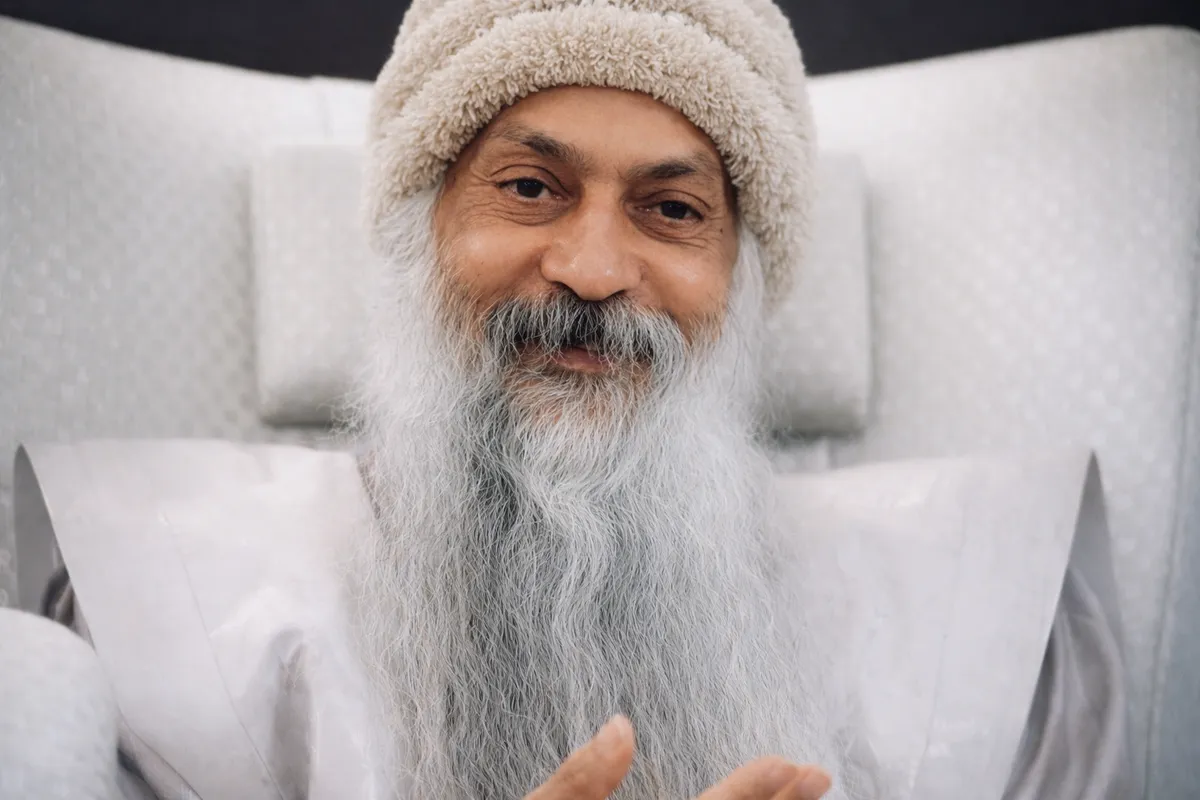
Osho's original Hindi beside Osho Live's English translation, matched passage by passage.
पउड़ी: 1
सोचे सोचि न होवई जे सोची लख बार।
चुपै चुप न होवई जे लाइ रहा लिवतार।
भुखिया भुख न उतरी जे बंना पुरीआं भार।
सहस सियाणपा लख होहि, त इक न चले नालि।
किव सचियारा होइए, किव कूड़ै तुटै पालि।
Pauri: 1 Thinking, He is not found, even if you think a hundred thousand times. By keeping silence, the Silence does not come, even if you sit utterly absorbed. The hunger of the hungry is not appeased, even if they pile up mountains of sweet breads. Hundreds of clevernesses, thousands of wits— not one goes with you. How then are we made true, how is the veil of falsehood torn? By walking in accord with His Command, says Nanak; it is written along with us.
हुकमि रजाई चलणा ‘नानक’ लिखिआ नालि।
एक अंधेरी रात। भादों की अमावस। बादलों की गड़गड़ाहट। बीच-बीच में बिजली का चमकना। वर्षा के झोंके। गांव पूरा सोया हुआ। बस, नानक के गीत की गूंज।
A dark night. The new moon of Bhadon. Thunderheads rumbling. Lightning flashing now and then. Squalls of rain. The village fast asleep. Only Nanak’s song echoing.
रात देर तक वे गाते रहे। नानक की मां डरी। आधी रात से ज्यादा बीत गई। कोई तीन बजने को हुए। नानक के कमरे का दीया जलता है। बीच-बीच में गीत की आवाज आती है। नानक के द्वार पर नानक की मां ने दस्तक दी और कहा, बेटे! अब सो भी जाओ। रात करीब-करीब जाने को हो गई।
He sang late into the night. Nanak’s mother grew afraid. Past midnight. Near three in the morning. A lamp still burned in Nanak’s room. Now and then his voice drifted out in song. At his door, his mother knocked and said, Son, now sleep. The night is almost spent.
नानक चुप हुए। और तभी रात के अंधेरे में एक पपीहे ने जोर से कहा, पियू-पियू।
Nanak fell silent. And just then, from the night’s darkness, a papiha cried out loud: piyu-piyu.
नानक ने कहा, सुनो मां! अभी पपीहा भी चुप नहीं हुआ। अपने प्यारे की पुकार कर रहा है, तो मैं कैसे चुप हो जाऊं? इस पपीहे से मेरी होड़ लगी है। जब तक यह गाता रहेगा, पुकारता रहेगा, मैं भी पुकारता रहूंगा। और इसका प्यारा तो बहुत पास है, मेरा प्यारा बहुत दूर है। जन्मों-जन्मों गाता रहूं तो ही उस तक पहुंच सकूंगा। रात और दिन का हिसाब नहीं रखा जा सकता है। नानक ने फिर गाना शुरू कर दिया।
Nanak said, Listen, Mother! Even the papiha has not fallen silent. It calls out to its Beloved—how can I fall silent? I am in a contest with this bird. As long as it sings, as long as it calls, I too will call. And its Beloved is very near, while mine is very far. If I sing through births upon births, only then I may reach. Night and day cannot be accounted for. Nanak began to sing again.
नानक ने परमात्मा को गा-गा कर पाया। गीतों से पटा है मार्ग नानक का। इसलिए नानक की खोज बड़ी भिन्न है। पहली बात समझ लेनी जरूरी है कि नानक ने योग नहीं किया, तप नहीं किया, ध्यान नहीं किया। नानक ने सिर्फ गाया। और गा कर ही पा लिया। लेकिन गाया उन्होंने इतने पूरे प्राण से कि गीत ही ध्यान हो गया, गीत ही योग बन गया, गीत ही तप हो गया।
Nanak found the Divine by singing. He paved his path with songs. That is why his quest is so different. Understand first: Nanak did not practice yoga, nor austerity, nor formal meditation. Nanak simply sang. And by singing, he arrived. But he sang with such total being that the song itself became meditation, the song became yoga, the song became tapas.
जब भी कोई समग्र प्राण से किसी भी कृत्य को करता है, वही कृत्य मार्ग बन जाता है। तुम ध्यान भी करो अधूरा-अधूरा, तो भी न पहुंच पाओगे। तुम पूरा-पूरा, पूरे हृदय से, तुम्हारी सारी समग्रता से, एक गीत भी गा दो, एक नृत्य भी कर लो, तो भी तुम पहुंच जाओगे। क्या तुम करते हो, यह सवाल नहीं। पूरी समग्रता से करते हो या अधूरे-अधूरे, यही सवाल है।
Whenever one does anything with one’s whole being, that very act becomes the path. Do meditation half-heartedly, and you will not arrive. Sing a single song or dance a single dance with your entire heart, your entire wholeness—and you will arrive. What you do is not the question. Whether you do it with totality or in fragments—that is the question.
परमात्मा के रास्ते पर नानक के लिए गीत और फूल ही बिछे हैं। इसलिए उन्होंने जो भी कहा है, गा कर कहा है। बहुत मधुर है उनका मार्ग; रससिक्त! कल हम कबीर की बात कर रहे थे:
सुरत कलारी भई मतवारी, मधवा पी गई बिन तौले।
नानक वही हैं, जो मधवा को बिना तौले पी गए हैं। फिर जीवन भर गाते रहे। ये गीत साधारण गायक के नहीं हैं। ये गीत उसके हैं जिसने जाना है। इन गीतों में सत्य की भनक, इन गीतों में परमात्मा का प्रतिबिंब है।
On Nanak’s Way to the Divine only songs and flowers are strewn. Therefore whatever he spoke, he sang. His path is very sweet, dripping with rasa. Yesterday we spoke of Kabir: Surat kalari bhai matwari, madhava pi gai bin taule. Awareness became a tavern, intoxicated; she drank the Beloved’s wine without measuring. Nanak is one who drank the Beloved without measuring—and then sang all his life. These are not the songs of a mere singer. These are the songs of one who has known. There is the ring of Truth in them, the reflection of the Divine.
दूसरी बात, जपुजी के जन्म के संबंध में। जिस भादों की रात की मैंने बात कही--तब नानक की उम्र रही होगी कोई सोलह-सत्रह। जपुजी का जन्म हुआ तब उनकी उम्र थी, छत्तीस वर्ष, छह माह, पंद्रह दिन। जिस घटना का मैंने उल्लेख किया, उस भादों की रात वे साधक थे औैर तलाश में थे। प्यारे की पुकार चल रही थी, पियू-पियू। अभी पपीहा रट लगा रहा था। अभी मिलन न हुआ था।
Second, about the birth of Japji. That Bhadon night I mentioned—Nanak was about sixteen or seventeen then. Japji was born when he was thirty-six years, six months, and fifteen days old. On that Bhadon night, he was a seeker, still searching. The papiha’s call sounded—piyu-piyu. The mantra of yearning continued. Union had not yet happened.
जपुजी का जब जन्म हुआ--यह मिलन के बाद उनका पहला उदघोष है। पपीहा ने पा लिया अपने प्यारे को। पियू-पियू की रटन पूरी हुई। मिलन हो गया। उस मिलन से जो पहला उदघोष हुआ है, वह जपुजी है। इसलिए नानक की वाणी में जो मूल्य जपुजी का है वह किसी और बात का नहीं। जपुजी ताजी से ताजी खबर है उस लोक की। वहां से लौट कर उन्होंने जो पहली बात कही, वह यही है। उस जगत से इस जगत में आ कर, जो पहले शब्द निर्मित हुए वही जपुजी है।
When Japji was born—it was his first proclamation after union. The papiha found its Beloved. The refrain piyu-piyu came to fulfillment. Union occurred. The first proclamation from that union is Japji. Hence the value of Japji in Nanak’s words is unlike anything else. Japji is the freshest of fresh news from That realm. Returning from there, the first thing he said is this. Coming from that world into this one, the first words he uttered became Japji.
उस घटना को भी समझ लेना है।
Understand that event too.
नदी के किनारे रात के अंधेरे में, अपने साथी और सेवक मरदाना के साथ वे नदी तट पर बैठे थे। अचानक उन्होंने वस्त्र उतार दिए। बिना कुछ कहे वे नदी में उतर गए। मरदाना पूछता भी रहा, क्या करते हैं? रात ठंडी है, अंधेरी है! दूर नदी में वे चले गए। मरदाना पीछे-पीछे गया। नानक ने डुबकी लगाई। मरदाना सोचता था कि क्षण-दो क्षण में बाहर आ जाएंगे। फिर वे बाहर नहीं आए।
At night, by the riverbank, in darkness, with his companion and attendant Mardana, they sat by the water. Suddenly Nanak took off his clothes. Without a word, he stepped into the river. Mardana kept asking, What are you doing? The night is cold, it is dark! He went far into the river. Mardana followed. Nanak dove under. Mardana thought he’d surface in a moment or two. But he did not appear.
दस-पांच मिनट तो मरदाना ने राह देखी, फिर वह खोजने लग गया कि वे कहां खो गए। फिर वह चिल्लाने लगा। फिर वह किनारे-किनारे दौड़ने लगा कि कहां हो? बोलो, आवाज दो! ऐसा उसे लगा कि नदी की लहर-लहर से एक आवाज आने लगी, धीरज रखो, धीरज रखो। पर नानक की कोई खबर नहीं। वह भागा गांव गया, आधी रात लोगों को जगा दिया। भीड़ इकट्ठी हो गई।
For five or ten minutes Mardana waited, then began to search—where had he gone? Then he started shouting. Then he ran along the banks crying out, Where are you? Speak! It seemed as if a voice came from every ripple of the river, Be patient, be patient. But no sign of Nanak. He ran to the village and woke people at midnight. A crowd gathered.
नानक को सभी लोग प्यार करते थे। सभी को नानक में दिखाई पड़ती थी कुछ होने की संभावना। नानक की मौजूदगी में सभी को सुगंध प्रतीत होती थी। फूल अभी खिला नहीं था, पर कली भी तो गंध देती है! सारा गांव रोने लगा, भीड़ इकट्ठी हो गई। सारी नदी तलाश डाली। इस कोने से उस कोने लोग भागने-दौड़ने लगे। लेकिन कोई पता न चला। तीन दिन बीत गए। लोगों ने मान ही लिया कि नानक को कोई जानवर खा गया। डूब गए, बह गए, किसी खाई-खड्ड में उलझ गए। मान ही लिया कि मर गए। रोना-पीटना हो गया। घर के लोगों ने भी समझ लिया कि अब लौटने का कोई उपाय न रहा।
All loved Nanak. In him everyone sensed the possibility of something happening. In his presence a fragrance was felt. The flower had not yet bloomed, but even a bud gives off scent. The whole village wept; the crowd thickened. They searched the river end to end, people running everywhere. But no trace. Three days passed. People assumed some animal had devoured him. He had drowned, been swept away, fallen into some chasm. They concluded he was dead. The lamenting began. Even his family felt there was no hope of return.
और तीसरे दिन रात अचानक नानक नदी से प्रकट हो गए। जब वे नदी से प्रकट हुए तो जपुजी उनका पहला वचन है। यह घोषणा उन्होंने की।
On the third night, suddenly Nanak appeared from the river. When he emerged, Japji was his first utterance. This was his declaration.
कहानी ऐसी है--कहता हूं, कहानी। कहानी का मतलब होता है, जो सच भी है, और सच नहीं भी। सच इसलिए है कि वह खबर देती है सचाई की; और सच इसलिए नहीं है कि वह कहानी है और प्रतीकों में खबर देती है। और जितनी गहरी बात कहनी हो, उतनी ही प्रतीकों की खोज करनी पड़ती है।
It is told as a story—yes, a story. A story is both true and not true. True, because it gives news of the Truth; not true, because it is a story and speaks in symbols. The deeper the matter, the deeper the symbols needed.
नानक जब तीन दिन के लिए खो गए नदी में तो कहानी है कि वे प्रकट हुए परमात्मा के द्वार में। ईश्वर का उन्हें अनुभव हुआ। जाना आंखों के सामने प्यारे को, जिसके लिए पुकारते थे। जिसके लिए गीत गाते थे, जो उनके हृदय की धड़कन-धड़कन में प्यास बना था। उसे सामने पाया। तृप्त हुए। और परमात्मा ने उन्हें कहा, अब तू जा। और जो मैंने तुझे दिया है, वह लोगों को बांट। जपुजी उनकी पहली भेंट है--परमात्मा से लौट कर।
When Nanak disappeared in the river for three days, the story says he appeared at the Door of the Divine. He experienced God. He beheld, before his eyes, the Beloved for whom he had called, for whom he had sung, who had been the thirst in every heartbeat. He beheld Him. He was fulfilled. And the Divine said to him, Now go. And what I have given you, distribute among people. Japji is his first gift—returning from the Divine.
यह कहानी है। इसके प्रतीकों को समझ लें। एक, कि जब तक तुम न खो जाओ, जब तक तुम न मर जाओ तब तक परमात्मा से कोई साक्षात्कार न होगा। नदी में खोओ कि पहाड़ में, इससे कोई फर्क नहीं पड़ता। लेकिन तुम नहीं बचने चाहिए। तुम्हारा खो जाना ही उसका होना है। तुम जब तक हो तभी तक वह न हो पाएगा। तुम ही अड़चन हो। तुम ही दीवाल हो। तो यह जो नदी में खो जाने की कहानी है--तुम्हें भी खो जाना पड़ेगा; तुम्हें भी डूब जाना पड़ेगा। तीन दिन लगते हैं। इसलिए तो हम, जब आदमी मर जाता है, तो तीसरा मनाते हैं। तीसरा हम इसलिए मनाते हैं कि मरने की घटना पूरी होने में तीन दिन लग जाते हैं। उतना समय जरूरी है। अहंकार मरता है, एकदम से नहीं। कम से कम समय तीन दिन लेता है। इसलिए कहानी में तीन दिन हैं, कि नानक तीन दिन नदी में खोए रहे। अहंकार पूरा गल गया, मर गया। और पास-पड़ोस, मित्रों, प्रियजनों, परिवार के लोगों को तो अहंकार ही दिखाई पड़ता है, तुम्हारी आत्मा तो दिखाई पड़ती नहीं, इसलिए उन्होंने तो समझा कि नानक मर गए।
Understand the symbols. First: until you are lost, until you die, there is no encounter with the Divine. Whether you lose yourself in a river or on a mountain makes no difference. What matters is that you must not remain. Your vanishing is His appearing. As long as you are, He cannot be. You are the obstruction, the wall. Thus, this story of disappearing in the river— you too will have to disappear; you too will have to drown. It takes three days. That is why, when a person dies, we observe the “third day.” We mark it because it takes three days for the event of dying to be complete. The ego does not die all at once. At a minimum, it takes three days. Hence three days in the story: Nanak remained lost in the river three days. The ego melted, died. And for neighbors, friends, loved ones—the ego is all they can see; the soul they do not see. So they concluded Nanak had died.
जब भी कोई संन्यासी होता है, घर के लोग समझ लेते हैं, मर गया। जब भी कोई उसकी खोज में जाता है, घर के लोग मान लेते हैं, खत्म हुआ। क्योंकि अब यह वही तो न रहा। टूट गई पुरानी श्रृंखला। अतीत मिटा, अब नया हुआ। बीच में तीन दिन की खाई है। इसलिए तीन दिन का प्रतीक है। तीन दिन बाद नानक लौट आए।
Whenever someone becomes a sannyasin, the family assumes he is dead. Whenever someone sets out in search, the family believes he is finished. For he is no longer the same. The old chain breaks. The past is erased; now there is a new one. Between them is the chasm of three days. Hence the symbol. After three days, Nanak returned.
जो भी खोता है वह लौट आता है, लेकिन नया हो कर लौटता है। जो भी जाता है उस मार्ग पर, वापस आता है। लेकिन जा रहा था तब प्यासा था, आता है तब दानी हो कर आता है। जाता था तब भिखारी था, आता है तब सम्राट हो कर आता है। जो भी परमात्मा में लीन होता है, जाते समय भिक्षापात्र होता है, लौटते समय अपरंपार संपदा होती है बांटने को।
Whoever is lost returns—but returns new. Whoever travels that Path comes back—but when he went, he was thirsty; when he comes, he is a giver. He went a beggar; he returns a sovereign. Whoever dissolves into God goes with a begging bowl and returns with inexhaustible treasure to distribute.
जपुजी पहली भेंट है।
Japji is the first gift.
परमात्मा के सामने प्रकट होना, प्यारे को पा लेना, इन्हें तुम बिलकुल प्रतीक को, भाषागत रूप से सच मत समझ लेना। क्योंकि कहीं कोई परमात्मा बैठा हुआ नहीं है, जिसके सामने तुम प्रकट हो जाओगे। लेकिन कहना हो बात, तो और कुछ कहने का उपाय भी नहीं है। जब तुम मिटते हो तो जो भी आंख के सामने होता है वही परमात्मा है। परमात्मा कोई व्यक्ति नहीं है; परमात्मा निराकार शक्ति है।
Appearing before God, finding the Beloved—do not take these linguistically, literally. There is no deity sitting somewhere before whom you will appear. Yet how else to say it? When you vanish, whatever is before your eyes is the Divine. God is not a person; God is formless energy.
तुम उसके सामने कैसे हो सकोगे? जहां तुम देखोगे, वहीं वह है। जो तुम देखोगे, वही वह है। जिस दिन आंख खुलेगी, सभी वह है। बस तुम मिट जाओ, आंख खुल जाए।
How could you stand before Him? Wherever you see, He is there. Whatever you see, that is He. The day the eye opens, all is He. Let yourself vanish; let the eye open.
अहंकार तुम्हारी आंख में पड़ी हुई कंकड़ी है। उसके हटते ही परमात्मा प्रकट हो जाता है। परमात्मा प्रकट ही था, तुम मौजूद न थे। नानक मिटे, परमात्मा प्रकट हो गया। जैसे ही परमात्मा प्रकट हो जाता है, तुम भी परमात्मा हो गए। क्योंकि उसके अतिरिक्त और कुछ भी नहीं है।
Ego is the grit in the eye. When it is removed, the Divine appears. The Divine was always apparent; you were not. Nanak vanished, the Divine appeared. And as the Divine appears, you too are Divine—for other than That, nothing is.
नानक लौटे; परमात्मा हो कर लौटे। फिर उन्होंने जो भी कहा है, एक-एक शब्द बहुमूल्य है। फिर उस एक-एक शब्द को हम कोई भी कीमत दें तो भी कीमत छोटी पड़ेगी। फिर एक-एक शब्द वेद-वचन हैं।
Nanak returned—he returned as the Divine. Then whatever he spoke, each word is priceless. Whatever price you pay for a single word will be too little. Each word is Veda.
अब हम जपुजी को समझने की कोशिश करें।
Now let us try to understand Japji.
इक ओंकार सतिनाम
करता पुरखु निरभउ निरवैर।
अकाल मूरति अजूनी सैभं गुरु प्रसादि।।
‘वह एक है, ओंकार स्वरूप है, सत नाम है, कर्ता पुरुष है, भय से रहित है, वैर से रहित है, कालातीत-मूर्ति है, अयोनि है, स्वयंभू है, गुरु की कृपा से प्राप्त होता है।’
Ik Onkar Satnam Karta Purakh Nirbhau Nirvair. Akal Murat Ajuni Saibhang Gur Prasad. “One is He, of the nature of Omkar, whose Name is Truth, the Creative Being, beyond fear, beyond enmity, the Timeless Form, unborn, self-existent, realized by the Guru’s grace.”
एक है--इक ओंकार सतिनाम।
“One”—Ik Onkar Satnam.
जो भी हमें दिखाई पड़ता है वह अनेक है। जहां भी तुम देखते हो, भेद दिखाई पड़ता है। जहां तुम्हारी आंख पड़ती है, अनेक दिखाई पड़ता है। सागर के किनारे जाते हो, लहरें दिखाई पड़ती हैं। सागर दिखाई नहीं पड़ता। हालांकि सागर ही है। लहरें तो ऊपर-ऊपर हैं।
Whatever appears to us, appears as many. Wherever you look, you see difference. Where your eye falls, you see multiplicity. You go to the ocean’s shore and see waves. You do not see the ocean—though it is the ocean. Waves are only on the surface.
पर जो ऊपर-ऊपर है वही दिखाई पड़ता है, क्योंकि ऊपर की ही आंख हमारे पास है। भीतर को देखने के लिए तो भीतर की आंख चाहिए। जैसी होगी आंख, वैसा ही होगा दर्शन। आंख से गहरा तो दर्शन नहीं हो सकता। तुम्हारे पास आंख ही ऊपर की है। तो लहरों को देख कर लौट आओगे। और लोगों से कहोगे कि सागर हो आया। सागर में जाने का यह ढंग नहीं है। किनारे से तो दिखाई पड़ेंगी लहरें। सागर में हो तो डूबना ही पड़े। इसलिए तो कहानी है कि नानक नदी में डूब गए। लहरों में नहीं है वह, नदी में है। लहरों में नहीं है, सागर में है। ऊपर-ऊपर तो लहरें होंगी। तट से तुम देख कर लौट आओगे, तो तुम जो खबर दोगे वह गलत होगी। तुम कहोगे कि सागर हो आया। सागर तक तुम गए नहीं। तट पर तो सागर नहीं है, वहां से तो लहरें दिखाई पड़ सकती हैं। लहरों का जोड़ भी सागर नहीं है। जोड़ से भी ज्यादा है सागर। और जो मौलिक भेद है वह यह है कि लहर अभी है, क्षण भर बाद नहीं होगी, क्षण भर पहले नहीं थी।
And what is on the surface is all we see, because we have only a surface-eye. To see within, an inner eye is needed. As the eye, so the vision. Vision cannot go deeper than the eye. Your eye is outward. So, seeing waves, you return and tell people you saw the ocean. That is not the way to the ocean. From the shore you can only see waves. To be in the ocean is to drown. That is why the story says Nanak drowned in the river. He is not in the waves; He is in the river. Not in the waves; in the sea. From the shore there are only waves. Even the sum of waves is not the sea. The sea is more than the sum. And the essential difference is that the wave is now, and a moment later is gone; a moment earlier it was not.
एक सूफी फकीर हुआ जुन्नैद। बहुत प्रेम करता था अपने बेटे को। फिर बेटा अचानक मर गया किसी दुर्घटना में, तो दफना आया। पत्नी थोड़ी हैरान हुई। पत्नी सोचती थी कि बेटा मरेगा तो जुन्नैद पागल हो जाएगा; इतना प्रेम करता था बेटे को। लेकिन जैसे जुन्नैद को कुछ हुआ ही नहीं। जैसे बेटा मरा ही नहीं। जैसे कोई बात ही नहीं हुई, जुन्नैद वैसा ही रहा। आखिर सांझ होते-होते जब लोग विदा हो गए सहानुभूति प्रगट करके, तो पत्नी ने पूछा कि कुछ दुख नहीं हुआ तुम्हें? मैं तो सोचती थी तुम टूट जाओगे। इस बेटे से तुम्हें इतना प्रेम था। जुन्नैद ने कहा कि एक क्षण को धक्का लगा था, फिर मुझे याद आया, जब यह बेटा नहीं था तब भी मैं था और खुश था। जब यह बेटा नहीं था तब भी मैं था और खुश था; अब यह बेटा नहीं है तो दुख होने का क्या कारण है? फिर वैसे ही हो गया, जैसे पहले था। बेटा बीच में आया और गया। न पहले दुखी था तो अब दुखी होने का क्या कारण? बिना बेटे के मजे में था। अब फिर बिना बेटे के हूं। फर्क क्या है? बीच का एक सपना टूट गया।
A Sufi, Junnaid, loved his son dearly. Suddenly the boy died in an accident. Junnaid buried him. His wife was puzzled. She had thought if the boy died, Junnaid would go mad; he loved him so. Yet he looked as if nothing had happened—as if the boy had not died. When, by evening, all the condolers had left, she asked, Are you not grieved? I thought you would break. You loved him so. Junnaid said, For a moment I was shaken, then I remembered: when this boy was not, I was, and I was happy. When this boy was not, I was, and I was happy; now he is not—what reason for sorrow? It is again as it was before. The boy came in between and went. Since I was not sad before, why be sad now? Without the boy I was fine; again without the boy, what is the difference? A dream came and broke.
जो बनता है और मिट जाता है, वह सपना है। जो आता है और चला जाता है, वह सपना है । लहरें सपना हैं, सागर सच है। अनेक लहरें हैं, एक सागर है। हमें अनेक दिखाई पड़ता है। और जब तक एक न दिखाई पड़ जाए, तब तक हम भटकते रहेंगे। क्योंकि एक ही सच है।
Whatever is born and dies is a dream. Whatever comes and goes is a dream. Waves are dream; the sea is real. Many waves, one sea. We see the many. Until the One is seen, we wander. For the One alone is true.
इक ओंकार सतिनाम।
Ik Onkar Satnam.
और नानक कहते हैं कि उस एक का जो नाम है, वही ओंकार है। और सब नाम तो आदमी के दिए हैं। राम कहो, कृष्ण कहो, अल्लाह कहो, ये नाम आदमी के दिए हैं। ये हमने बनाए हैं। सांकेतिक हैं। लेकिन एक उसका नाम है जो हमने नहीं दिया; वह ओंकार है, वह ॐ है।
And Nanak says, the One’s only true Name is Omkar. All other names are given by humans—Ram, Krishna, Allah—these are our signs and symbols. But there is one Name we have not given: Om, Omkar.
क्यों ओंकार उसका नाम है? क्योंकि जब सब शब्द खो जाते हैं और चित्त शून्य हो जाता है और जब लहरें पीछे छूट जाती हैं और सागर में आदमी लीन हो जाता है तब भी ओंकार की धुन सुनाई पड़ती रहती है। वह हमारी की हुई धुन नहीं है। वह अस्तित्व की धुन है। वह अस्तित्व की ही लय है। अस्तित्व के होने का ढंग ओंकार है। वह किसी आदमी का दिया हुआ नाम नहीं है। इसलिए ॐ का कोई भी अर्थ नहीं होता। ॐ कोई शब्द नहीं है। ॐ ध्वनि है और ध्वनि भी अनूठी है। कोई उसका स्रोत नहीं है। कोई उसे पैदा नहीं करता। अस्तित्व के होने में ही छिपी है। अस्तित्व के होने की ध्वनि है।
Why is Omkar His Name? Because when all words fall away, the mind becomes empty, and waves are left behind, when one is absorbed in the sea, even then a hum, a resonance, is heard—the sound of Om. It is not a sound we make. It is the hum of Existence. It is the very rhythm of Being. Omkar is the manner in which Existence is. It is no man-given name. Hence Om has no meaning. Om is not a word; it is a sound—and a unique sound. No one produces it. It is inherent in the Being of the Whole— the sound of Being.
जैसे कि जलप्रपात है; तुम उसके पास बैठो तो प्रपात की एक ध्वनि है। लेकिन वह ध्वनि पानी और चट्टान की टक्कर से पैदा होती है। नदी के पास बैठो, कल-कल का नाद होता है। लेकिन वह कल-कल का नाद नदी और तट की टक्कर से होता है। हवा का झोंका निकलता है, वृक्ष से सरसराहट होती है। लेकिन वह सरसराहट हवा और वृक्ष की टक्कर से होती है। हम बोलते हैं, संगीतज्ञ गीत गाता है, वीणा का कोई तार छेड़ता है, लेकिन सभी चीज संघर्ष से पैदा होती है। संघर्ष के लिए दो जरूरी हैं। तार चाहिए वीणा का, हाथ चाहिए छेड़नेवाला। जितनी ध्वनियां द्वैत से पैदा होती हैं, वे उसके नाम नहीं हैं। उसका नाम तो वही है, जब सब द्वैत खो जाता है, फिर भी एक ध्वनि गूंजती रहती है।
Sit by a waterfall; there is a sound—but it comes from the collision of water and rock. Sit by a river; there is a murmur—but it arises from the touch of current and bank. Wind passes through a tree; there is a rustle—but it comes from wind with leaves. We speak, a musician plucks a veena’s string—every ordinary sound is born of friction. For friction, two are needed: the string, and the hand to pluck. All sounds born of duality are not His Name. His Name is the sound that remains when all duality is gone.
इस संबंध में कुछ बातें समझ लेनी जरूरी हैं। विज्ञान कहता है कि सारे अस्तित्व को अगर हम तोड़ते चले जाएं, और गहराई में विश्लेषण करें, तो अंत में हमें विद्युत-ऊर्जा, इलेक्ट्रीसिटी मिलती है। इसलिए जो आखिरी खोज है विज्ञान की, वह इलेक्ट्रान है, विद्युतकण। सारा अस्तित्व विद्युत से बना है। अगर हम विज्ञान से पूछें कि ध्वनि किससे बनी है? तो विज्ञान कहता है, वह भी विद्युत से बनी है। ध्वनि भी विद्युत का एक आकार है, एक रूप है। लेकिन मूल विद्युत है।
A few things to understand. Science says if you keep breaking existence down, analyzing deeper and deeper, you arrive at electricity—energy. Hence the final discovery: the electron. The whole is made of electricity. Ask science, what is sound made of? It answers, of electricity too. Sound is a form of energy.
इस संबंध में समस्त ज्ञानियों की विज्ञान से सहमति है, थोड़े से भेद के साथ। वह भेद बड़ा नहीं, वह भेद भाषा का है। समस्त ज्ञानियों ने पाया कि अस्तित्व बना है ध्वनि से और ध्वनि का ही एक रूप विद्युत है। विज्ञान कहता है, विद्युत का एक रूप ध्वनि है; और धर्म कहता है कि विद्युत ध्वनि का एक रूप है। इतना ही फासला है।
In this, sages agree with science—with a slight difference, more of language. Sages found that existence is made of sound, and electricity is a form of that sound. Science says sound is a form of electricity; religion says electricity is a form of sound. The distance is like calling a glass half full or half empty.
मगर यह फासला ऐसा ही दिखाई पड़ता है जैसे ग्लास आधा भरा हो; कोई कहे आधा भरा है, कोई कहे आधा खाली है। विज्ञान की पहुंच का द्वार अलग है। विज्ञान ने पदार्थ को तोड़-तोड़ कर विद्युत को खोजा है। ज्ञानियों की पहुंच का मार्ग अलग है। उन्होंने अपने को जोड़-जोड़ कर--तोड़ कर नहीं; अपने को जोड़-जोड़ कर अखंड को पाया है। और उस अखंड में एक ध्वनि पाई है। जब कोई व्यक्ति समाधिस्थ हो जाता है तो ओंकार की ध्वनि गूंजती है। वह अपने भीतर उसे गूंजते पाता है, अपने बाहर गूंजते पाता है। सब, सारे लोक उससे व्याप्त मालूम होते हैं।
Science’s entry point is different: breaking matter, it found energy. The sages took another route: not breaking, but joining themselves—integrating— they found the undivided. And in that Unbroken they found a sound. When someone is in samadhi, Om resounds. He hears it within and without. The worlds seem permeated with it.
चकित हो जाता है पहली बार, जब घटता है। क्योंकि वह देखता है कि मैं तो बोल नहीं रहा, मैं तो कुछ कर नहीं रहा, यह ध्वनि कहां से आ रही है? तब वह अनुभव करता है कि यह होने की ध्वनि है, यह किसी टक्कर से पैदा नहीं हो रही है। यह आहत ध्वनि नहीं है, यह अनाहत नाद है।
One is astonished when it happens for the first time—“I am not speaking, I am not doing anything; from where does this sound arise?” He experiences it as the sound of Being, not born of any collision. It is an unstruck sound.
नानक कहते हैं, वही एक उसका नाम है--ओंकार। नानक बहुत बार नाम शब्द का प्रयोग करेंगे। इसे स्मरण रखना कि जब भी वे कहते हैं, उसका नाम; और उसका नाम ही मार्ग है, और उसके नाम की रटन में जो डूब जाएगा, उसके नाम में जो डूब जाएगा वह उसे पा लेगा; तो ध्यान रखना, नाम जब भी नानक कहते हैं, तब उनका इशारा ओंकार की तरफ है। क्योंकि वही एक उसका नाम है जो हमने नहीं दिया, जो उसका ही है। हमारे दिए हुए नाम बहुत दूर न जा सकेंगे। और अगर थोड़े-बहुत जाते भी हैं, तो इसलिए जाते हैं कि हमारे नामों में भी उसके नाम की थोड़ी-सी झलक होती है।
Nanak says, the One’s true Name is Omkar. Nanak will often use the word “Name.” Remember: whenever he says, “His Name”—that His Name alone is the path, that one who becomes absorbed in His Name will find Him—his indication is toward Omkar. For that is the one Name not given by us; it is His own. Our given names cannot go very far. If they do carry us a little, it is because even within our names there is a faint reflection of His Name.
जैसे समझो कि राम। अगर कोई राम, राम, राम, की रटन लगा दे भीतर, तो उसमें ओंकार की थोड़ी-सी झलक है। वह जो म है वह ॐ का है। इसलिए राम शब्द से भी थोड़ी दूर तक जा सकेंगे हम। लेकिन अगर तुम धुन को करते ही गए, तो तुम एक दिन अचानक पाओगे कि राम की ध्वनि ओंकार में बदल गई। अगर तुम करते ही जाओगे तो जैसे ही मन शांत होगा, वैसे ही ॐ तुम्हारे राम में प्रविष्ट हो जाएगा। और तुम धीरे-धीरे पाओगे कि राम तो खो गया, ॐ आ गया। समस्त ज्ञानियों का यह अनुभव है कि उन्होंने किसी भी नाम से शुरू किया हो, लेकिन आखिरी में ॐ आ जाता है। जैसे ही तुम शांत होने लगते हो, वैसे ही ॐ आने लगता है। ॐ सदा मौजूद है, बस, तुम्हारे शांत होने की जरूरत है।
For example, “Ram.” If someone repeats Ram, Ram, Ram within, there is a little glimpse of Omkar in it; the “m” of Ram belongs to Om. Thus, with “Ram,” we can go a little distance. But if you keep going, one day suddenly you will find the sound of “Ram” is changing into Omkar. As the mind becomes quiet, Om enters into your “Ram.” Gradually “Ram” disappears; Om arrives. All sages, no matter what name they began with, find Om at the end. Om is always present—only your quiet is needed.
नानक कहते हैं, इक ओंकार सतिनाम।
Nanak says, Ik Onkar Satnam.
यह सत शब्द भी समझ लेने जैसा है। संस्कृत में दो शब्द हैं। एक सत और एक सत्य। सत का अर्थ होता है एक्झिस्टेंस, अस्तित्व। और सत्य का अर्थ होता है ट्रुथ। दोनों में बड़ा फर्क है। दोनों की मूल धातु तो एक है। सच, सत्य, सत, सब की मूल धातु एक है। लेकिन थोड़े से फर्क हैं, वे समझ लेने जरूरी हैं। सत्य तो दार्शनिक की खोज है। वह खोजता है कि सत्य क्या है? व्हाट इज़ ट्रूथ? जैसे, दो और दो मिल कर चार होते हैं, यह सत्य है। कि दो और दो मिल कर पांच नहीं होते; दो और दो मिल कर तीन नहीं होते; दो और दो मिल कर चार होते हैं। यह गणित का सूत्र सत्य है, लेकिन सत नहीं है। क्योंकि यह मनुष्य का ही हिसाब है। दिस इज़ ट्रू, बट नॉट एक्झिस्टेंशियल। दो और दो मिल कर चार होते हैं, यह मनुष्य की ही ईजाद है। यह सत्य तो है, सच नहीं है। सत नहीं है।
Understand this word sat as well. Sanskrit has two related words, sat and satya. Sat means Existence; satya means Truth. The root is one, yet there is a subtle difference. Satya is the philosopher’s search: What is true? Two and two make four—that is satya, a truth of mathematics. But it is not sat, not existential, because it is a human calculation: true, but not real.
तुम सपना देखते हो रात। सपना सत तो है, सत्य नहीं है। सपना है तो! नहीं तो देखोगे कैसे? होना तो है, लेकिन तुम यह नहीं कह सकते कि सत्य है। क्योंकि सुबह तुम पाते हो कि न होने के बराबर है। लेकिन हुआ जरूर! सपना घटा।
At night you dream. The dream is sat—existent—yet not satya. It is; otherwise how did you see it? It occurs, but in the morning you discover it is as if it never was. Yet it did happen.
तो दुनिया में ऐसी घटनाएं हैं, जो सत्य हैं और सत नहीं। और ऐसी भी घटनाएं हैं, जो सत हैं लेकिन सत्य नहीं। गणित सत्य है, सत नहीं। गणित का एक निष्कर्ष सत्य हो सकता है, सत नहीं। सपना है; सपना सत है, सत्य नहीं।
There are happenings that are satya but not sat, and happenings that are sat but not satya. Mathematics yields satya, not sat. Dreams are sat, not satya.
परमात्मा दोनों है--सत भी, सत्य भी। और इसलिए न तो उसे गणित से पाया जा सकता-- विज्ञान से उसे नहीं पाया जा सकता, क्योंकि विज्ञान खोजता है सत्य को; और न उसे काव्य, कला, आर्ट्स से पाया जा सकता है, क्योंकि कला खोजती है सत को। परमात्मा दोनों है, सत+सत्य। इसलिए न तो कला उसे पूरा खोज सकती है और न विज्ञान। दोनों अधूरे हैं।
God is both—sat and satya. Hence He cannot be found by science (which seeks satya), nor by art alone (which seeks sat). He is sat+satya. Therefore neither art nor science can reach Him fully; both are partial.
और इसीलिए धर्म की खोज दोनों से पृथक है। धर्म उसकी तलाश है, जो दोनों है, एक साथ है। जो इतना सत्य है जितना कि गणित का कोई भी फार्मूला और जो इतना सत है जितनी काव्य की कोई भी धारणा। वह दोनों है, और दोनों नहीं है। अगर तुम आधे से देखोगे तो चूक जाओगे। अगर तुम दोनों को मिला कर देखोगे तो ही उसे पा सकोगे।
Religion’s search is distinct from both: it seeks that which is both at once—as exact as any mathematical formula and as existential as any poem; sweet as a dream, and precise as arithmetic; as much heart’s feeling as mind’s knowing.
तो जब नानक कहते हैं, एक ओंकार सतिनाम; तो इस सत में दोनों हैं--सत्य और सत। उस परम अस्तित्व का नाम--जो गणित की तरह सच है, और जो काव्य की तरह भी सत है; जो स्वप्न की तरह मधुर, और गणित की तरह ठीक-ठीक सही है; जो हृदय की भावना की तरह भी है, और मस्तिष्क की प्रतीति की भांति भी है।
जहां मस्तिष्क और हृदय मिलते हैं, वहीं धर्म शुरू होता है। अगर मस्तिष्क अकेला रहे, हृदय को दबा दे, तो विज्ञान पैदा होता है। अगर हृदय अकेला रहे, मस्तिष्क को हटा दे, तो कल्पना का जगत, काव्य, संगीत, चित्र, कला पैदा होती है। और अगर मस्तिष्क और हृदय दोनों मिल जाएं, दोनों का संयोग हो जाए, तो हम ओंकार में प्रवेश करते हैं।
Where head and heart meet, religion begins. If the head alone dominates, suppressing the heart, science is born. If the heart alone remains, dismissing the head, imagination, poetry, music, art are born. When both join, we enter Omkar.
धार्मिक व्यक्ति वैज्ञानिक से बड़ा वैज्ञानिक, कलाकार से बड़ा कलाकार है, क्योंकि उसकी खोज संयुक्त है। विज्ञान और कला द्वंद्व है। धर्म समन्वय है, सिन्थेसिस है।
The religious person is a greater scientist than the scientist, a greater artist than the artist, for his search is integrated. Science and art are in duality; religion is synthesis.
नानक कहते हैं, इक ओंकार सतिनाम।
Nanak says, Ik Onkar Satnam.
‘वह एक ओंकार स्वरूप, वह सत नाम, कर्ता पुरुष...।’
“One Omkar-Being, whose Name is Truth, the Creative Presence...”
ये जो शब्द हैं, इन्हें ऊपर से समझोगे तो भ्रांतियां होंगी।
If you take these words only on the surface, confusions arise.
ज्ञानियों की एक अड़चन है कि शब्द तो उन्हें तुम्हारे ही उपयोग करने पड़ते हैं। तुमसे बात करनी है, तुम्हारी ही भाषा बोलनी पड़ेगी। और जो वे कहना चाहते हैं, वह भाषा के पार है। जो वे कहना चाहते हैं, वह तुम्हारी भाषा में आ नहीं सकता। तुम्हारी भाषा बहुत संकीर्ण, वह बहुत विराट। जैसे कोई अपने घर में पूरे आकाश को समा लेना चाहे। जैसे कोई अपनी मुट्ठी में सारे प्रकाश को बांध लेना चाहे, ऐसी असमर्थता है। तो तुम्हारे ही शब्द उपयोग करने पड़ते हैं।
Sages are constrained to use your language. To speak to you, they must use your words. And what they wish to say lies beyond language. Trying to fit the vast into the narrow is like trying to hold the sky in your room, or bind all light in your fist. So they must use the words available.
और तुम्हारे शब्दों के कारण ही इतने संप्रदाय पैदा हो जाते हैं। क्योंकि बुद्ध नानक से दो हजार साल पहले हुए। तो बुद्ध दूसरी भाषा का उपयोग करते हैं, जो प्रचलित थी, जो लोग समझते थे। कृष्ण और दो हजार साल पहले बुद्ध से हुए। वे और दूसरी भाषा का उपयोग करते हैं, जो लोग समझते थे। मुहम्मद और दूसरी भाषा का उपयोग करते हैं, क्योंकि दूसरी हवा, दूसरा मुल्क, दूसरे ढंग के लोग। महावीर अलग, जीसस अलग।
And it is because of words that so many sects are born. Buddha lived two thousand years before Nanak—he used the language of his day. Krishna, another two thousand earlier, used another language. Muhammad, in a different land and air, used yet another. Mahavira different, Jesus different.
भाषाओं के भेद हैं। भाषा तुम्हारी वजह से अलग है, अन्यथा ज्ञानियों में कोई भी भेद नहीं। नानक जो भाषा का उपयोग कर रहे हैं, वह नानक के समय समझी जा सकती थी।
Languages differ, because of you. Among the enlightened there is no difference. Nanak spoke in a tongue people of his time could understand.
तो नानक कहते हैं, कर्ता पुरुष। वही बनाने वाला। लेकिन तत्क्षण हमें खयाल आता है कि अगर वही बनाने वाला है, और हम बनाए गए हैं, तो द्वैत हो गया। और नानक तो शुरू में ही इनकार कर दिए हैं कि वह एक है। अगर वह बनाने वाला और स्रष्टा है, और सृष्टि अलग है जिसको उसने बनाया, तो द्वैत शुरू हो गया।
So Nanak says, Karta Purakh—the Creative Person. Instantly we think: if He is the Creator and we are the created, duality begins. Yet Nanak has just denied duality by declaring the One. If He is the Maker and the made stands separate, then there are two.
हमारी भाषा से अड़चन शुरू होती है। जैसे-जैसे नानक आगे बढ़ेंगे वैसे-वैसे अड़चन शुरू होगी। जो उन्होंने पहला शब्द बोला है समाधि के बाद, वह है--इक ओंकार सतिनाम।
The trouble begins with language. As Nanak goes further, the challenge grows. The first word after his samadhi is, Ik Onkar Satnam.
सच तो यह है कि पूरा सिक्ख धर्म इन तीन शब्दों में समाप्त हो जाता है। इसके आगे तो तुम्हें समझाने की कोशिश है, अन्यथा बात पूरी हो गयी। तुम नहीं समझोगे इससे, इससे आगे फिर विस्तार करना पड़ता है। विस्तार तुम्हारे कारण है, अन्यथा मंत्र तो पूरा हो गया। बात तो पूरी हो गई। इक ओंकार सतिनाम--सब कह दिया। लेकिन तुम्हारे लिए तो अभी कुछ भी नहीं कहा गया। इन तीन शब्दों से क्या हल होगा? कुछ हल नहीं होता। तब तुम्हारी भाषा की शुरुआत होती है।
In truth, the entire Sikh dharma is contained in these three words. The rest is an effort to explain; otherwise the saying is complete. But for you, these three words yield nothing clear. Then the expansion begins—for your sake. The mantra is complete; the statement is done. Ik Onkar Satnam—everything is said. But for you, nothing is said. So your language must begin.
‘कर्ता पुरुष--वह बनाने वाला है।’
“Karta Purakh—the Maker.”
लेकिन ध्यान रखना, जो उसने बनाया है वह उससे अलग नहीं है। बनाने वाला, बनायी हुई सृष्टि में छिपा है। कर्ता कृत्य में छिपा है। स्रष्टा सृष्टि में लीन है।
Keep in mind: what He has made is not separate from Him. The Maker is hidden in the making. The Creator is absorbed in the creation.
इसलिए नानक ने गृहस्थ को और संन्यासी को अलग नहीं किया। क्योंकि अगर कर्ता परमेश्वर अलग है सृष्टि से, तो फिर तुम्हें सृष्टि के काम-धंधे से अलग हो जाना चाहिए। जब तुम्हें कर्ता पुरुष को खोजना है तो कृत्य से दूर हो जाना चाहिए, कर्म से दूर हो जाना चाहिए। फिर बाजार है, दूकान है, काम-धंधा है, उससे अलग हो जाना चाहिए।
Therefore Nanak never separated householder and renunciate. If the Creator is separate from creation, you should leave the works of the world. If you seek the Creator, you should leave the created—avoid the marketplace, the shop, the trade.
नानक आखिर तक अलग नहीं हुए। यात्राओं पर जाते थे; और जब भी वापस लौटते तो फिर अपनी खेती-बाड़ी में लग जाते। फिर उठा लेते हल-बक्खर। पूरे जीवन, जब भी वापस लौटते घर, तब अपना कामधाम शुरू कर देते। जिस गांव में वे आखिर में बस गए थे, उस गांव का नाम उन्होंने करतारपुर रख लिया था--कर्ता का गांव।
Nanak never left. He traveled; and whenever he returned, he worked his land. He took up the plough again. All his life, whenever back home, he resumed his chores. The village where he finally settled he named Kartarpur—the village of the Creator.
अगर परमात्मा कर्ता है, तो तुम यह मत समझना कि वह दूर हो गया है कृत्य से। एक आदमी मूर्ति बनाता है। जब मूर्ति बन जाती है तो मूर्तिकार अलग हो जाता है, मूर्ति अलग हो जाती है। दो हो गए। मूर्तिकार के मरने से मूर्ति नहीं मरेगी। मूर्तिकार मर जाए, मूर्ति रहेगी। मूर्ति के टूटने से मूर्तिकार नहीं मरेगा। मूर्ति टूट जाए, मूर्तिकार बचेगा। दोनों अलग हो गए। परमात्मा और उसकी सृष्टि में ऐसा फासला नहीं है।
If God is the Maker, do not think He is far from the making. A man sculpts an idol; once finished, sculptor and statue are separate. If the sculptor dies, the statue remains; if the statue breaks, the sculptor lives. Two are apart. Between God and His creation there is no such distance.
फिर परमात्मा और उसकी सृष्टि में कैसा संबंध है? वह ऐसा है जैसे नर्तक का। एक आदमी नाच रहा है, तो नृत्य है, लेकिन क्या तुम नृत्य को और नृत्यकार को अलग कर सकोगे? नृत्यकार घर चला जाए, नृत्य तुम्हारे पास छोड़ जा सकेगा? नृत्यकार मरेगा, नृत्य मर जाएगा। नृत्य रुकेगा, फिर वह आदमी नर्तक न रहा। दोनों संयुक्त हैं। इसलिए हिंदुओं ने बड़े प्राचीन समय से, परमात्मा को नर्तक की दृष्टि से देखा--नटराज! क्योंकि नटराज के प्रतीक में नर्तक और नृत्य अलग नहीं होते।
What, then, is the relation? Like dancer and dance. A man is dancing: there is dance. Can you separate the dance from the dancer? If the dancer goes home, can he leave the dance with you? If the dancer dies, the dance is gone. If the dance stops, he is a dancer no more. The two are one. Hence Hindus from ancient times envisioned God as the Cosmic Dancer—Nataraj. In this symbol, dancer and dance are not separate.
कवि भी कविता बनाए तो कविता से अलग हो जाता है। मूर्तिकार मूर्ति बनाए, मूर्ति से अलग हो जाता है। मां बेटे को जन्म दे, जन्म देते ही अलग हो जाती है। पिता बेटे से अलग है। लेकिन परमात्मा सृष्टि से अलग नहीं है। सृष्टि में समाया हुआ है। अगर ठीक-ठीक, तुम्हारी भाषा का उपयोग न किया जाए, तो कहना होगा--द क्रियेटर इज द क्रियेशन, वह जो स्रष्टा है, सृष्टि है। और भी अगर ठीक कहना हो तो, द क्रियेटर इज नथिंग बट द क्रियेटीविटी, स्रष्टा सृजन की प्रक्रिया है। वह स्वयं सृजन है।
A poet creates a poem and is apart from it. A sculptor from his statue. A mother bears a son and is separate. A father is apart. But God is not apart from creation. He is immersed in it. To say it more precisely: the Creator is the creation. Still more precisely: the Creator is nothing but Creativity. He is the very process of creation.
इसलिए नानक कहते हैं, कुछ छोड़ कर कहीं भागना नहीं है। जहां तुम हो, वहीं वह छिपा है। इसलिए नानक ने एक अनूठे धर्म को जन्म दिया है, जिसमें गृहस्थ और संन्यासी एक है। और वही आदमी अपने को सिक्ख कहने का हकदार है, जो गृहस्थ होते हुए संन्यासी हो; संन्यासी होते हुए गृहस्थ हो। सिर के बाल बढ़ा लेने से, पगड़ी बांध लेने से कोई सिक्ख नहीं होता। सिक्ख होना बड़ा कठिन है। गृहस्थ होना आसान है। संन्यासी होना आसान है; छोड़ दो, भाग जाओ जंगल। सिक्ख होना कठिन है। क्योंकि सिक्ख का अर्थ है--संन्यासी, गृहस्थ एक साथ। रहना घर में और ऐसे रहना जैसे नहीं हो। रहना घर में और ऐसे रहना जैसे हिमालय पर हो। करना दूकान, लेकिन याद परमात्मा की रखना। गिनना रुपए, नाम उसका लेना।
Hence Nanak says, do not leave anything and run anywhere. Right where you are, He is hidden. Thus he gave birth to a unique religion where householder and renunciate are one. Only one who is a householder yet a renunciate, a renunciate yet a householder, deserves to call himself a Sikh. Growing hair and tying a turban do not make a Sikh. To be a Sikh is arduous. Being a householder is easy. Being a renunciate is easy—drop it all and flee to the forest. Being a Sikh is difficult: it means householder and renunciate together. Live in the home as if you were not there. Live at home as if you were on the Himalayas. Run the shop but keep remembrance of the Divine. Count coins while taking His Name.
नानक को जो पहली झलक मिली परमात्मा की, जिसको सतोरी कहें...इस नदी में तीन दिन डूब कर तो जो घटना घटी, वह समाधि की है, उसके बाद तो वे परम पुरुष हो गए। पर उसके पहले अनेक छोटी-छोटी झलकें मिलीं।
जो पहली झलक नानक को मिली, वह मिली एक दूकान पर; जहां वे तराजू से गेहूं और अनाज तौल रहे थे। अनाज तौल कर किसी को दे रहे थे। तराजू में भरते और डालते। कहते--एक, दो, तीन... दस, ग्यारह, बारह...फिर पहुंचे वे, तेरा। पंजाबी में तेरह का जो रूप है, वह तेरा। उन्हें याद आ गई परमात्मा की। तेरा, दाईन, दाऊ--धुन बन गई। फिर वे तौलते गए लेकिन संख्या तेरा से आगे न बढ़ी। भरते तराजू में, डालते और कहते, तेरा। भरते तराजू में और डालते, और कहते, तेरा। क्योंकि आखिरी पड़ाव आ गया। तेरा के आगे कोई संख्या है? मंजिल आ गई। तेरा पर सब समाप्त हो गया। लोग समझे कि पागल हो गए। लोगों ने रोकना भी चाहा, लेकिन वे तो किसी और लोक में हैं। वे तो कहे जाते हैं, तेरा। डाले जाते हैं तराजू से, तौले जाते हैं और तेरा से आगे नहीं बढ़ते। तेरा से आगे बढ़ने को जगह भी कहां है?
Nanak’s first glimpse of the Divine—what Zen would call satori—came at a shop as he weighed grain. He would fill the scale and pour it out, counting: one, two, three... ten, eleven, twelve... then he came to thirteen. In Punjabi, the word for thirteen is tera—and it also means “Yours.” He remembered the Beloved. Tera—Thine— the refrain took over. He kept weighing, but the count no longer moved beyond tera. He filled the scales and poured, saying, Tera. Again, Tera. The last stop had been reached. Is there any number beyond Tera—Thine? The destination had arrived. People thought he had gone mad and tried to stop him, but he was in another realm. He repeated, Tera. He weighed and poured, and nothing moved beyond Tera. Where is there to go beyond Thine?
दो ही तो पड़ाव हैं, या तो मैं या तू। मैं से शुरुआत है, तू पर समाप्ति है।
There are only two stations: I or Thou. The beginning is I; the end is Thou.
नानक संसार के विरोध में नहीं हैं। नानक संसार के प्रेम में हैं। क्योंकि वे कहते हैं कि संसार और उसका बनाने वाला दो नहीं। तुम इसे भी प्रेम करो, तुम इसी में से उसको प्रेम करो। तुम इसी में से उसको खोजो।
Nanak is not against the world. He is in love with it. Because he says the world and its Maker are not two. Love this too; through this, love That. Through this, seek Him.
तो नानक जब युवा हुए और घर के लोगों ने कहा शादी कर लो, तो उन्होंने नहीं न कहा। सोचते तो रहे होंगे घर के लोग कि यह नहीं कहेगा, क्योंकि बचपन से ही इसके ढंग, ढंग के नहीं थे। नानक के बाप तो परेशान ही रहे। उनको कभी समझ में न आया कि क्या मामला है। भजन में, कीर्तन में, साधु-संगत में...।
When he came of age and the family said, Marry—he did not refuse. His family might have expected a no, since from childhood his ways were not like others. His father was perpetually troubled, unable to understand. Bhajans, kirtans, sadhus...
भेजा बेटे को सामान खरीदने दूसरे गांव। बीस रुपए दिए थे। सामान तो खरीदा, लेकिन रास्ते में साधु मिल गए, वे भूखे थे। बाप ने चलते वक्त कहा था, सस्ती चीज खरीद लाना और इस गांव में आ कर महंगे बेच देना। यही धंधे का गुर है। दूसरे गांव से सस्ते में खरीदना, यहां आ कर महंगे में बेच देना। यहां जो चीज सस्ती हो खरीदना, दूसरे गांव में महंगे में बेच देना। यही लाभ का रास्ता है। तो कोई ऐसी चीज खरीद कर लाना जिसमें लाभ हो। नानक लौटते थे खरीद कर, मिल गई साधुओं की एक जमात, वे पांच दिन से भूखे थे। नानक ने पूछा कि भूखे बैठे हो! उठो, कुछ करो। जाते क्यों नहीं गांव में? उन्होंने कहा, यही हमारा व्रत है। कि जब उसकी मर्जी होगी, वह देगा। तो हम आनंदित हैं। भूख से कोई अंतर नहीं पड़ता।
He sent his son to a nearby village with twenty rupees to buy goods cheaply and sell dearly—“This is the art of trade.” On the way Nanak met a band of ascetics who had been hungry for five days. He asked, Why sit hungry? Go to the village. They said, Our vow is to receive only when He wills; hunger makes no difference.
तो नानक ने सोचा कि इससे ज्यादा लाभ की बात क्या होगी कि इन परम साधुओं को यह भोजन बांट दिया जाए जो मैं खरीद लाया हूं! बाप ने यही तो कहा था कि कुछ काम लाभ का करो।
Nanak thought, What greater profit than to distribute to these great sadhus the food I have bought! His father had said, “Do something profitable.”
बांट दिया। साथी था साथ में, मित्र था साथ में, उसका नाम बाला था। उसने कहा, क्या करते हो, दिमाग खराब हुआ है? नानक ने कहा, यही तो कहा था पिता ने कि कुछ लाभ का काम करना। इससे ज्यादा लाभ क्या होगा? बांट कर बड़े प्रसन्न घर लौट आए।
He distributed it all. His companion Bala protested, Have you gone mad? Nanak said, This is what my father asked—do something profitable. What greater gain than this? He returned home delighted.
इसलिए कहता हूं, ढंग के न थे। बाप ने कहा कि मूरख! ऐसे कहीं धंधा हुआ है? तू बरबाद कर देगा। और नानक ने कहा कि आप नहीं सोचते कि इससे ज्यादा लाभ की और क्या बात होगी? लाभ कमा कर लौटा हूं।
So I say, he was not “of the usual ways.” His father said, Fool! Is this how business is done? You will ruin us. Nanak said, Do you not see the profit? I have returned with gain.
लेकिन यह लाभ किसी को दिखाई नहीं पड़ता था। नानक के पिता कालू मेहता को तो बिलकुल दिखाई नहीं पड़ता था। उनको तो लगता था, लड़का बिगड़ गया। साधु-संगत में बिगड़ा। होश में नहीं है। सोचा कि शायद स्त्री से बांधने से कुछ राहत मिल जाएगी।
But such profit none could see. His father Kalu Mehta not at all. He thought, The boy is spoiled. Corrupted by sadhus. Out of his senses. He thought perhaps marriage would bind him.
अक्सर ऐसा लोग सोचते हैं। सोचने का कारण है। क्योंकि संन्यासी स्त्री को छोड़ कर भागते हैं। तो अगर किसी को गृहस्थ बनाना हो, तो स्त्री से बांध दो। पर नानक पर यह तरकीब काम न आयी। क्योंकि यह आदमी किसी चीज के विरोध में न था।
People often think so—since renunciates leave women, perhaps a woman will tether him to the home. But this trick did not work on Nanak. For he was against nothing.
बाप ने कहा, शादी कर लो। नानक ने कहा, अच्छा। शादी हो गई। लेकिन इसके ढंग में कोई फर्क न पड़ा। बच्चे हो गए, लेकिन इसके ढंग में कोई फर्क न पड़ा।
His father said, Marry. Nanak said, Fine. He married. His ways did not change. Children were born. His ways did not change.
इस आदमी को बिगाड़ने का उपाय ही न था, क्योंकि संसार और परमात्मा में इसे कोई भेद न था। तुम बिगाड़ोगे कैसे? जो आदमी धन छोड़ कर संन्यासी हो गया, बिगाड़ सकते हो, धन दे दो। जो आदमी स्त्री छोड़ कर संन्यासी हो गया, एक सुंदर स्त्री को उसके पास पहुंचा दो, बिगाड़ सकते हो। लेकिन जो कुछ छोड़ कर ही नहीं गया, उसको तुम कैसे बिगाड़ोगे? उसके पतन का कोई रास्ता नहीं है। नानक को भ्रष्ट नहीं किया जा सकता।
There was no way to “corrupt” him, for he saw no division between the world and God. How will you corrupt one who left nothing? A renunciate who left wealth can be corrupted with wealth. One who left woman can be corrupted by a beautiful woman. But one who has never left at all—how will you corrupt him? There is no path for his fall. Nanak cannot be corrupted.
इसलिए मैं भी पक्ष में हूं कि संन्यासी तो नानक के ही होने चाहिए। क्योंकि संन्यासी वही परम है, जिसको भ्रष्ट न किया जा सके। भ्रष्ट तुम उसी को न कर सकोगे जो ठीक तुम्हारे संसार में बैठा है, और फिर भी वहां नहीं है। तुम उसे कैसे भ्रष्ट करोगे? उसने सब उपाय तोड़ दिए।
I too am in favor that renunciates should be of Nanak’s kind. Only such a renunciate is ultimate—one whom you cannot corrupt. How will you corrupt a man who sits in the world yet is not there? He has broken every handle.
वह परमात्मा, जिसे नानक कहते हैं, कर्ता पुरुष, भय से रहित है।
That God, says Nanak, the Creative Being, is beyond fear.
क्योंकि भय तो वहीं होता है जहां दूसरा हो।
Fear exists only where the other exists.
पश्चिम में ज्यां पाल सार्त्र का एक वचन बहुत प्रसिद्ध हो गया। वह वचन है: द अदर इज हेल, दूसरा नरक है। तुम्हारा भी अनुभव यही है। कितनी बार तुम नहीं चाहते हो कि अकेला छूट जाऊं! दूसरा उपद्रव है। मित्र हो तो थोड़ा कम उपद्रव है, शत्रु हो तो थोड़ा ज्यादा उपद्रव है। अपना हो तो थोड़ा कम उपद्रव है, पराया हो तो थोड़ा ज्यादा उपद्रव है। लेकिन दूसरा उपद्रव है।
In the West, Jean-Paul Sartre’s saying has become famous: The other is hell. Your experience is the same. How often you wish to be left alone! The other is trouble. Friend, a little less trouble; enemy, a little more. One’s own, a little less; stranger, more. But the other is trouble.
भय क्या है? दूसरे का भय है। कोई छीन न ले। कोई सुरक्षा न तोड़ दे। फिर मौत आ रही है, वह भी दूसरी है। बीमारी आ रही है, वह भी दूसरी है। भय क्या है? तुम दूसरे से घिरे हो, यही तुम्हारा नर्क है। द अदर इज हेल, दूसरा नर्क है।
What is fear? Fear of the other—someone may snatch, may break your security. Death approaches—another. Illness—another. You are surrounded by others: this is your hell. The other is hell.
लेकिन तुम दूसरे से बचोगे कैसे? हिमालय पर भी जा कर बैठ जाओ तो भी तुम अकेले न हो पाओगे। बैठोगे वृक्ष के नीचे, कौवा बीट कर देगा। गुस्सा कौवे पर आ जाएगा। बैठोगे, वर्षा आ जाएगी, धूप आ जाएगी। दूसरे से तुम भागोगे कहां? तुम जहां भी जाओगे, तुम दूसरे को पाओगे। क्योंकि दूसरे से बचने का तो एक ही उपाय है कि तुम उस एक को खोज लो जहां कोई दूसरा नहीं रह जाता। फिर सब भय गिर जाता है। फिर मौत है ही नहीं। फिर बीमारी है ही नहीं। फिर असुविधा है ही नहीं। क्योंकि दूसरा ही न रहा, तुम ही हो। कोई अंतर नहीं है। भय तब तक रहेगा जब तक तुम्हें दूसरे दूसरे दिखाई पड़ते हैं।
But how will you escape the other? Sit on the Himalayas and you will not be alone. Sit beneath a tree; a crow will drop its dung; you get angry. Sit and rain will come; sun will blaze. Where will you flee the other? Wherever you go, the other will be. To escape the other there is only one way: find the One where no other remains. Then fear falls. Then there is no death, no disease, no inconvenience. For there is no other—you alone are. No separation.
इक ओंकार सतिनाम।
Ik Onkar Satnam.
जिसके मन में यह छा गया, उसे कैसा भय? परमात्मा को भय नहीं हो सकता। किसका भय होगा? वही है अकेला। उससे अन्यथा कोई भी नहीं है।
When this pervades one’s mind, what fear? God cannot fear—of whom? He alone is.
‘अकाल भय से रहित, वैर से रहित, कालातीत, अकाल मूरति।’
“Akal—beyond fear, beyond enmity; Akal Murat—beyond time.”
कालातीत मूर्ति है। समय के पार है--बियांड टाइम।
इसे थोड़ा समझ लो। समय का अर्थ ही होता है परिवर्तन। अगर कोई चीज परिवर्तित न हो तो तुम्हें समय का पता ही न चलेगा। घड़ी में भी समय का पता चलता है क्योंकि कांटा घूमता है। अगर कांटा न घूमे तो समय का पता न चलेगा। चीजें बदल रही हैं। सूरज उगा, दोपहर हो गई, सांझ हो गई। बच्चा था जवान हो गया, जवान था बूढ़ा हो गया, स्वस्थ बीमार हो गया, बीमार स्वस्थ हो गया। गरीब अमीर हो गया, अमीर का दिवाला निकल गया, परिवर्तन है। सब चीजें बदल रही हैं। नदी बही जाती है। इस परिवर्तन में ही समय है। समय का अर्थ ही होता है, दो परिवर्तन के बीच का फासला।
Beyond time. Understand this a little. Time means change. If nothing changed, you would not know time. The clock tells time because the hands move. If the hands did not move, there would be no time. Things change: sunrise, noon, evening. Child to youth, youth to old age; health to sickness, sickness to health; poor to rich, rich to bankrupt. The river flows. In this flux is time. Time is the measure between changes.
थोड़ा सोचो, अगर आज सुबह तुम उठो और सांझ तक कुछ भी घटना न घटे, कोई परिवर्तन न हो। सूरज खड़ा रहे, जहां था। तुम्हारी उम्र उतनी ही बनी रहे जितनी थी। घड़ी का कांटा न हिले, वृक्ष बूढ़े न हों, पत्ते कुम्हलाएं न। सब ठहर जाए। तो तुम्हें समय का कैसे पता चलेगा? समय होगा ही नहीं।
Imagine a day when nothing at all happens—no change. The sun stands still. Your age remains as it was. The clock’s hands do not move. Trees do not age. Leaves do not wither. All is still. How would you know time? There would be none.
तुम्हारे लिए समय का पता चलता है, क्योंकि तुम परिवर्तन से घिरे हो। परमात्मा के लिए कोई समय नहीं, क्योंकि वह सनातन है, शाश्वत है, सदा है। उसके लिए कुछ भी परिवर्तित नहीं हो रहा है। उसके लिए सब ठहरा हुआ है। परिवर्तन अंधी आंख का अनुभव है। परिवर्तन ऐसे है क्योंकि हमें पूरा नहीं दिखाई पड़ रहा है। अगर हमें पूरा दिखाई पड़ जाए तो हमें परिवर्तन समाप्त हो जाएगा। परिवर्तन के समाप्त होते ही समय खो जाता है। समय परिवर्तन को नापने का माध्यम है। परमात्मा के लिए सब वैसा का वैसा है। कुछ बदलता नहीं। सब ठहरा हुआ है।
You know time because you are surrounded by change. For the Divine, there is no time—He is eternal. For Him, nothing changes. All is as it is. Change is the experience of a partial eye. If we could see the Whole, change would vanish. With change gone, time is gone. Time is the instrument to measure change. For the Divine, all is the same.
‘कालातीत, अकाल मूरति, अयोनि, स्वयंभू।’
“Akal Murat, Ajuni, Saibhang.”
वह किसी योनि से पैदा नहीं होता। परमात्मा का न कोई पिता है न कोई मां। और जो भी योनि से पैदा होता है, वह परिवर्तन की दुनिया में प्रवेश कर जाता है। तुम्हें भी अपने भीतर उसी को खोजना है, जो अयोनिज है। यह शरीर तो पैदा हुआ है, मरेगा। यह शरीर तो दो शरीरों के जोड़ से बना है, बिखरेगा। जब वे दो शरीर ही बिखर गए तो यह शरीर कैसे बचेगा जो उनसे मिल कर बना है? लेकिन इसके भीतर अयोनिज भी है, जो गर्भ में आया, जो गर्भ के पहले था, और जो अभी छोड़ दे तो शरीर मुरदे की भांति पड़ा रह जाएगा। इस शरीर के भीतर कालातीत प्रवेश किया है। अकाल पुरुष इस शरीर के भीतर भी मौजूद है। यह शरीर जैसे उसका सिर्फ वस्त्र मात्र है। एक घर है, जिसमें ठहर गया है।
He is not born of any womb. God has neither mother nor father. Whatever is born of a womb enters the realm of change. You too must find within you that which is unborn. This body is born and will die. This body is formed by the union of two bodies; it will fall apart. When those two themselves fall apart, how can this composite remain? Yet within this, the unborn abides—the one who entered the womb, who existed before, and whose departure leaves this body a corpse. Within this body the timeless has come. The Akal Purush abides within. This body is but His garment, a house wherein He lodges.
लेकिन तुम जब इसे अपने भीतर पाओगे तभी तुम नानक की वाणी समझ पाओगे। तुम्हें अपने भीतर उसको खोजना है, जो न तो परिवर्तित होता है, न बदलता है।
Only when you find Him within will you understand Nanak’s words. Seek within that which neither changes nor shifts.
अगर तुमने कभी थोड़ा भी आंख बंद कर के बैठने का अभ्यास किया है, तो तुम्हें एक बात खयाल में आयी होगी कि भीतर कोई उम्र नहीं है। तुम चालीस साल के हो कि पचास साल के, भीतर कुछ पता नहीं चलेगा। तुम जब पांच साल के थे तब भी आंख बंद करते तो भीतर तुम अपने को वैसा ही पाते, जैसा तुम पचास साल के हो कर पाओगे। जैसे भीतर के लिए समय बीता ही नहीं। आंख बंद कर के भीतर देखो, तुम पाओगे वहां कुछ बदलता ही नहीं।
If you have even once sat with closed eyes, you will have noticed there is no age within. Whether forty or fifty, inwardly it does not register. When you were five and closed your eyes, you found yourself the same as at fifty. As if time has not passed within. Close your eyes and look: nothing changes there.
और यह जो भीतर अनबदला है, यह किसी योनि से पैदा नहीं हुआ है। तुम मां-बाप से आए हो, उनसे पैदा नहीं हुए हो। वे तुम्हारे आने के मार्ग हैं, लेकिन वे तुम्हारे जन्मदाता नहीं हैं। तुम उनसे गुजरे हो, क्योंकि तुम्हारे शरीर को बनाने की व्यवस्था उनके भीतर थी। लेकिन जो उस शरीर के भीतर प्रविष्ट किया है, वह पार से आया है। अपने भीतर जिस दिन तुम अयोनिज को पाओगे, उसी दिन तुम समझोगे कि परमात्मा की कोई योनि नहीं है। हो भी नहीं सकती। क्योंकि परमात्मा का अर्थ है, समष्टि। परमात्मा का अर्थ है, द टोटेलिटी। यह पूरा का पूरा किससे पैदा होगा? पूरे के पार कुछ बचता ही नहीं, जो इसकी मां और पिता बन सके।
And this unchanging inner one is not born of any womb. You have come through your parents, but not from them. They were the passage, not the source. You passed through them; the arrangements to make your body were within them. But what entered that body came from beyond. The day you glimpse this unborn within, you will understand that God has no womb. He cannot. God means the Totality. The Whole—what could it be born from? Beyond the Whole, nothing remains to be its mother or father.
इसलिए अयोनि है, स्वयंभू है, अपने आप है। स्वयंभू का अर्थ है, अपने आप है। कोई सहारा नहीं है। किसी कारण से नहीं है। कोई आधार नहीं है। अपना ही आधार है। तुम भी जिस दिन अपने भीतर इस बात की थोड़ी सी झलक पाओगे उसी दिन मुक्त होओगे चिंता से।
Therefore He is unborn, self-arising—Saibhang. Without support. Without cause. No basis. His own basis. The day a hint of this dawns within you, you will be free of worry.
तुम्हारी चिंता क्या है? चिंता यही है कि हर चीज का आधार है। और हर चीज का आधार छीना जा सकता है। छीनने से चिंता है। छीनने के खयाल से चिंता है। आज धन है, कल न होगा। फिर तुम क्या करोगे? धन के कारण अमीर हो, अपने कारण अमीर नहीं हो।
What is your worry? That everything has a support—and supports can be taken away. The thought of loss breeds worry. Today there is wealth; tomorrow, not. What then? You are rich because of wealth, not rich in yourself.
संन्यासी अपने कारण अमीर है। उससे तुम छीन नहीं सकते। बुद्ध से तुम क्या छीनोगे? नानक से तुम क्या छीनोगे? कुछ भी छीन कर तुम नानक को कम न कर पाओगे। कुछ दे कर ज्यादा न कर पाओगे। कुछ जोड़ नहीं सकते। कुछ घटा नहीं सकते। नानक जो भी हैं, उस परम सहारे के साथ हैं। तुम्हारा कोई सहारा नहीं।
A sannyasin is rich in himself. You cannot rob him. What can you take from Buddha? From Nanak? Take whatever, you cannot diminish them. Give whatever, you cannot add. Nanak is with that supreme support. You have none.
और वह परम सहारा अलग नहीं है। परमात्मा निराधार है। तुम भी निराधार
हो। और जिस दिन तुम निराधार होने को राजी हो जाओगे, उसी दिन परमात्मा और तुम्हारा मिलन हो जाएगा।
And that supreme support is not separate from you. God is unsupported. You too are unsupported. The day you consent to be unsupported, that day God and you meet.
यह जो परमात्मा की व्याख्या है, यह व्याख्या दार्शनिक की व्याख्या नहीं है। यह व्याख्या साधक के लिए है; ताकि तुम समझ जाओ कि परमात्मा के ये-ये लक्षण हैं। अगर तुम्हें परमात्मा को पाना है, तो इन्हीं-इन्हीं लक्षणों को तुम्हें अपनी साधना बना लेना है। छोटे रूप में तुम्हें परमात्मा होने की कोशिश में लग जाना है। जैसे-जैसे तुम उसके समान होने लगोगे, वैसे-वैसे तालमेल बैठने लगेगा। दोनों के बीच धुन बजने लगेगी।
This exposition of God is not a philosopher’s definition. It is for the seeker—so that you may see the signs of God. If you would find Him, make these very signs your practice. In a small way begin to be God-like. As you become like Him, harmony begins. The note between you begins to hum.
‘अयोनि, स्वयंभू है, वह गुरु कृपा से प्राप्त होता है।’
“Unborn, self-existent—attained through the Guru’s grace.”
क्यों कहते हैं गुरु कृपा से? क्या मनुष्य का अपना श्रम काफी नहीं है? इस संबंध में एक सूक्ष्म बात समझ लेनी जरूरी है। क्योंकि नानक गुरु पर बहुत जोर देंगे। गुरु के बिना तो मिल ही नहीं सकता परमात्मा, वे कहेंगे। क्या कारण है? अगर परमात्मा मौजूद है, तो सीधा-सीधा मैं उससे मिल क्यों नहीं सकता? गुरु को बीच में लेने की जरूरत क्या है?
Why “Guru’s grace”? Is human effort not enough? Understand a subtle point. Nanak will lay great emphasis on the Guru. He will say, Without the Guru, the Divine cannot be found. Why? If God is present, why not meet Him directly? Why bring a Guru in?
कृष्णमूर्ति कहते हैं, गुरु की कोई जरूरत नहीं। बुद्धि को, तर्क को ठीक भी मालूम पड़ता है। क्या जरूरत? जब परमात्मा मौजूद है, मैं भी परमात्मा से पैदा हुआ हूं, गुरु भी परमात्मा से पैदा हुआ है, तो गुरु को बीच में क्यों खड़ा करना? क्या आवश्यकता है? मन तो यह चाहता भी है कि गुरु बीच में खड़ा न किया जाए। इसलिए कृष्णमूर्ति के आसपास अहंकारी लोगों की जमात इकट्ठी हो गई है। कृष्णमूर्ति बिलकुल ठीक कहते हैं, गुरु की जरूरत नहीं है, अगर तुम अपने अहंकार को खुद ही गिराने में समर्थ हो जाओ।
Krishnamurti says, there is no need for a guru. Reason concurs. Why? If God is, and I am of Him, and the guru is of Him, why place a guru between? The mind would prefer to avoid the guru. Hence around Krishnamurti a congregation of the proud has gathered. Krishnamurti is right—no guru is needed—if you can drop your ego by yourself.
लेकिन अपने अहंकार को गिराना वैसा ही कठिन है, जैसे अपने ही जूते के बंध को पकड़ कर खुद को उठाना। अपने अहंकार को गिराना वैसे ही मुश्किल है, जैसे कुत्ता अपनी ही पूंछ को पकड़ने की कोशिश करे। जितने जोर से छलांग लगाता है उतनी जोर से पूंछ भी छलांग लगाती है। अपने अहंकार को तुम गिराओगे कैसे? अगर गिरा सकते हो तो कृष्णमूर्ति ठीक कहते हैं। बिलकुल ठीक कहते हैं। कोई भी जरूरत नहीं है किसी गुरु की।
लेकिन वहीं सारी उलझन है। अगर तुम अपने अहंकार को गिराने में समर्थ भी हो जाओ और यह कहो कि मैंने अपना अहंकार गिरा दिया, तो यह नया अहंकार पैदा हो गया। यह पुराने से ज्यादा खतरनाक है। गुरु की इसीलिए जरूरत है कि यह दूसरा अहंकार पैदा न हो सके। तुम कहोगे, गुरु प्रसाद से। नहीं तो तुम यह अहंकार बना लोगे कि मैं कितना विनम्र! मुझ जैसा कोई भी विनम्र नहीं है। अब यह मैं ने नए रास्ते पकड़े। यह अहंकार ने नयी तरकीबें खोजीं। कल कहता था मुझ से धनी कोई भी नहीं; अकड़! आज कहता है मुझ से विनम्र कोई भी नहीं; अकड़ वही है। रस्सी जल गई, अकड़ रह गई। अकड़ को कौन मिटाएगा? इसलिए नानक का जोर है।
But dropping one’s ego is like lifting yourself by your own shoelaces, or a dog trying to catch its own tail. The harder he leaps, the tail leaps with him. If you say, I have dropped my ego, a new ego is born—more dangerous than the first. The guru is needed so that this second ego cannot arise. You will say, “By the Guru’s grace.” Otherwise you will boast, “See how humble I am—no one as humble as me!” Yesterday the ego said, “No one as wealthy as me.” Today it says, “No one as humble as me.” The same stiffness remains. Who will dissolve it? Hence Nanak’s emphasis.
परमात्मा को पाने में तो कोई अड़चन नहीं, सीधे ही पाया जा सकता है। क्योंकि वह सामने ही मौजूद है। तुम्हारी नाक के बिलकुल सीध में। जहां तुम जाते हो, सब तरफ वह मौजूद है। लेकिन एक अड़चन है। और वह अड़चन यह है कि तुम भीतर खड़े हो। इसे तुम कैसे गिराओगे?
There is no obstacle to finding God; He is right here, in front of your nose—wherever you turn. There is only one obstacle: you. How will you remove it?
इसलिए गुरु प्रसाद से। साधक श्रम करेगा, लेकिन धारणा यही रखेगा: होगा गुरु की कृपा से। यह जो गुरुकृपा की धारणा है, यह तुम्हारे अहंकार को बनने न देगी। पुराने को गिरा देगी, नए को बनने न देगी। अन्यथा एक बीमारी जाती है, दूसरी उसकी जगह खड़ी हो जाती है।
Therefore, “by the Guru’s grace.” The seeker will labor, but hold this inner posture: it happens by the Guru’s compassion. This dissolves the ego—brings down the old and prevents the new. Otherwise one disease goes, another takes its place.
और इसलिए एक बड़े मजे की घटना घटी है। कृष्णमूर्ति के पास अहंकारियों की जमात इकट्ठी हो गयी है। वह जमात उन लोगों की है जो किसी के सामने झुकना नहीं चाहते। उनको बिलकुल राहत मिल गई। किसी के चरण नहीं छूना चाहते। उनको बड़ा सहारा मिल गया। उन्होंने कहा, गुरु की कोई जरूरत ही नहीं, हम खुद ही पा लेंगे। और यही अड़चन है।
Thus a strange thing has happened. Around Krishnamurti gather those who most need a guru—people who do not wish to bow to anyone. They feel relieved: “No need to touch anyone’s feet. We will achieve it ourselves.” And that is the obstacle.
अगर नानक जैसा व्यक्ति कृष्णमूर्ति के पास हो, रामकृष्ण जैसा व्यक्ति कृष्णमूर्ति के पास हो, तो कोई अड़चन नहीं है। लेकिन जो लोग इकट्ठे होते हैं वे वे ही लोग हैं जो अहंकार गिराने में असमर्थ हैं। इनको गुरु की जरूरत है।
If someone like Nanak or Ramakrishna sits with Krishnamurti, there is no problem. But those who gather are precisely the ones unable to drop ego. They need a guru.
यह बड़े मजे की घटना है। कृष्णमूर्ति के पास जितने लोग हैं उनको गुरु की जरूरत है। नानक के पास जितने लोग थे, बिना गुरु के भी पा सकते थे। तुम कहोगे कि मैं पहेली खड़ी कर रहा हूं। नानक के पास जो लोग थे, बिना गुरु के पा सकते थे, क्योंकि वे तैयार थे गुरुप्रसाद को स्वीकार करने को। वे तैयार थे अपने को छोड़ने को। पाया तो बिना गुरु के ही जाता है, लेकिन गुरु की धारणा तुम्हारे अहंकार को गिराने में सहयोगी हो जाती है। तुम अकड़ से नहीं भरते। नहीं तो तुम कहोगे, शीर्षासन करता हूं तीन घंटे। सुबह ध्यान करता हूं।
Paradoxically, those around Nanak were people who could have found even without a guru—because they were ready to accept grace. They were ready to let go. In truth, finding happens without the guru, but the figure of the guru helps melt the ego. Otherwise you will trumpet, “I stand on my head for three hours every morning, I meditate...”
एक पत्नी मेरे पास आयी और उसने कहा कि मेरे पति आपके पास आते हैं, उन्हें कुछ समझाइए। अब हद हो गई। सिक्ख हैं पति।
A wife once came to me. “My husband comes to you. Please explain something to him. It’s beyond limits.” He was a Sikh.
क्या हुआ?
What happened?
उसने कहा, वे रात दो बजे से उठ आते हैं और जपुजी का पाठ शुरू कर देते हैं। तो घर में सोना मुश्किल हो गया है। न बच्चे सो सकते हैं, न मैं सो सकती हूं। और उनसे कुछ कहो तो वे कहते हैं कि तुम सब उठ कर पाठ करो। तो क्या करना?
“He gets up at two at night and starts reciting Japji. No one in the house can sleep; neither the children nor I. If we say anything, he says, ‘You all should get up and recite.’ What should we do?”
मैंने पति को बुलाया, वे मेरे पास आते थे। मैंने उनसे पूछा कि कब उठ कर पाठ करते हो? उन्होंने कहा कि बस सुबह प्रभातकाल में। बस, दो बजे सुबह उठ आता हूं।
I called the husband. “When do you recite?” “At dawn,” he said. “Two in the morning.”
उनके लिए दो बजे सुबह है! तो मैंने कहा कि तुम्हारी जो सुबह है, दूसरों के लिए बहुत खतरनाक हो गई।
वे बोले, वह उनकी गलती है। उनको सबको उठना चाहिए। आलसी हैं, काहिल हैं, सुस्त हैं। और मैं तो सबकी सेवा ही कर रहा हूं। जोर से जपुजी का पाठ करता हूं। मुहल्ले-पड़ोस के लोगों के कान में भी पड़ जाती है आवाज।
मैंने उनसे कहा कि तुम ऐसा करो, थोड़ी कम सेवा करो मुहल्ले-पड़ोस की। तुम चार बजे...।
For him, two was dawn. I said, “Your dawn is dangerous for others. Perhaps recite at four...”
धीरे-धीरे लाना उचित है। अन्यथा जो चढ़े हुए लोग हैं उनको उतारना बड़ा कठिन हो जाता है। उन्होंने कहा कि ऐसा कभी नहीं हो सकता। आप क्या मुझसे मेरा धर्म छीनना चाहते हैं?
One must lower such people gently; the intoxicated are hard to bring down. He said, “Never! Are you trying to snatch my religion?”
अब यही उनकी अकड़ है कि उन जैसा पाठ करने वाला कोई नहीं। और वही अकड़ बाधा है। जीवन भर दोहराते रहो जपुजी को। असली सवाल तो अकड़ का मिटना है।
There was his pride: no one recites as he does. The same pride is the obstacle. Recite Japji for a lifetime; the real question is the dissolution of pride.
इसलिए नानक बार-बार कहेंगे कि क्या तुम करते हो उससे कुछ भी न होगा, जब तक कि तुम न मिट जाओ। यह गुरु की धारणा स्वयं को मिटाने की बड़ी कीमिया है। क्योंकि करो तुम कुछ, कहते तुम हो, गुरु प्रसाद से। उसकी कृपा से हो रहा है।
मैं कर रहा हूं--बस! अड़चन खड़ी हो जाएगी। अगर तुम अपने मैं को बिना किसी के सहारे के गिरा दो, तो गुरु की कोई जरूरत नहीं है। लेकिन करोड़ में कभी कोई एक व्यक्ति बिना गुरु के गिरा पाता है। इसलिए वह अपवाद है। उसको हमें गिनती में लेना नहीं चाहिए। उससे कारण नियम नहीं बनाना चाहिए।
Hence Nanak will repeat: whatever you do will not help unless you vanish. The idea of the Guru is an alchemy for self-effacement. You do, but say, “By the Guru’s grace.” Without this, “I do” becomes the obstacle. If you can melt the “I” without any support, no guru is needed. But one in millions can do this; he is the exception, not the rule.
कभी-कभी ऐसा हो जाता है कि कोई व्यक्ति बिना गुरु के गिरा देता है। पर उसके लिए बड़ी गहरी समझ चाहिए, जो तुम्हारे पास नहीं है। उसके लिए इतनी गहरी समझ चाहिए कि वह अहंकार को आंख के सामने खड़ा करके देख ले। और सिर्फ देखने से अहंकार गिर जाए। उसके लिए वैसी आंख चाहिए जैसी शिव के पास है, कि कामदेव को देख लिया और कामदेव भस्म हो गए। इतनी अवेयरनेस, इतना होश चाहिए। कोई बुद्ध, कोई कृष्णमूर्ति कभी इतनी त्वरा से देख लेता है कि उसके देखने की उस तीव्रता में ही सब गिर जाता है। फिर दूसरा भाव पैदा नहीं होता। क्योंकि सब राख ही गिर गई। उसे खयाल ही नहीं होता कि मैंने कुछ किया है...हुआ!
Sometimes a person without a guru can dissolve the “I”—but he needs a blazing awareness, like Shiva’s eye that saw Kama and reduced him to ash. A Buddha or a Krishnamurti may see so intensely that in that very seeing everything falls. No second thought arises—the ashes are still warm; there is no chance to think, “I did.” It happened.
लेकिन तुम तो कुछ भी करोगे, तो भीतर एक धुन बजती रहती है, मैंने किया है। भजन करो तो मैंने किया है, ध्यान करो तो मैंने किया है, पूजा करो तो मैंने की है, तुम्हारा मैं तो हर तरफ से बनता है।
But you—whatever you do, a hum remains within: “I did.” You do bhajan, “I did.” You meditate, “I did.” You worship, “I did.” Your “I” builds from every side.
उस एक को हम छोड़ दें। क्योंकि उस एक को बीच में लाने की कोई जरूरत भी नहीं है। वह पा लेगा। लेकिन वे जो करोड़ों लोग हैं, उन करोड़ों लोगों के लिए पाने का एक ही उपाय है कि वे जो भी करें साधना, भाव यही रखें कि गुरु की कृपा से हो रहा है।
Let that one be; he will find. For the millions, the only way is: whatever you do, hold the feeling, “By the Guru’s grace.”
भारत में बड़ी पुरानी लोकोक्ति है कि जब सतयुग था तब गुरु की इतनी जरूरत न थी, लेकिन कलियुग में गुरु की बड़ी जरूरत होगी। क्या कारण है! हिंदू किस हिसाब से बांटते हैं संसार को? सतयुग वे कहते हैं उस समय को जब लोग बड़े सचेत थे, बड़े सावधान थे। और कलियुग कहते हैं उस युग को, जब लोग बड़े सोए हुए हैं, मूर्च्छित हैं।
There is an old proverb in India: in the Satya Yuga, the guru was not so necessary; in the Kali Yuga, the guru is essential. Why? Satya Yuga is when people are more alert, more conscious; Kali Yuga is when people are benumbed, asleep.
इसलिए बुद्ध का या महावीर का धर्म उतने काम का नहीं है आज, जितना नानक का धर्म। नानक का धर्म नवीनतम धर्म है। हालांकि उसको भी पांच सौ साल हो गए। वह भी काफी पुराना हो गया है। और नया चाहिए। क्योंकि बुद्ध और महावीर जिनसे बात कर रहे थे वे हमसे ज्यादा सचेत लोग थे। वे हमसे ज्यादा प्रबुद्ध लोग थे। वे हमसे ज्यादा सरल लोग थे। फिर कृष्ण जिनसे बात कर रहे थे वे और भी सरल लोग थे। जैसे हम पीछे जाते हैं, वैसे सरलता है। जैसे एक आदमी अपने पीछे जाए तो बचपन में सरल होता है, जवानी में थोड़ा कठिन हो जाता है, बुढ़ापे में तो बिलकुल जटिल हो जाता है। बूढ़े आदमी से तो पार पाना ही मुश्किल है। उसे कुछ भी पता नहीं, लेकिन वह समझता है सब मुझे पता है। जिंदगी की टक्करें खायी हैं, इधर-उधर गिरा है, कहता है अनुभव बहुत है। ठीकरे इकट्ठे किए हैं, लेकिन वह सोचता है बड़े अनुभव से ज्ञान इकट्ठा कर लिया है।
Hence the dharma of Buddha or Mahavira is less useful now than Nanak’s. Nanak’s is the newest—though even it is five centuries old, and a new articulation is needed. Buddha and Mahavira spoke to more awake, more simple people. Krishna’s listeners were even simpler. As we go backward, simplicity increases. In an individual life too: the child is simple; the young man more complicated; the old, utterly entangled—he knows nothing yet believes he knows all. He has gathered shards and calls it wisdom.
बच्चा सरल, वह सतयुग है। बूढ़ा बहुत जटिल, वह कलियुग है। और बूढ़े की मूर्च्छा बढ़ती ही जाती है। बढ़नी ही चाहिए क्योंकि मौत करीब आ रही है। बच्चे का होश ताजा होता है क्योंकि अभी जीवन का स्रोत बहुत करीब है। बच्चा अभी परमात्मा से निकली लहर की भांति है। बूढ़ा धूल से भर गया, परमात्मा में गिरने के करीब है। बच्चा ताजा फूल है, बूढ़ा मुरझा गया, जाने के करीब है, जीवन ऊर्जा क्षीण हो रही है।
The child is Satya Yuga; the old man, Kali Yuga. And the old man’s stupor grows—death approaches. The child’s awareness is fresh; the source of life is near. The child is a wave newly from the Divine. The old man, dust-laden, about to fall back. The child a fresh blossom; the old man withered, life ebbing.
कलियुग का अर्थ है ऐसा समय, जब अंत करीब आ रहा है। जिंदगी बूढ़ी हो गयी। उस कलियुग में तो गुरु के बिना बिलकुल न हो सकेगा, क्योंकि तुम हर हालत में अपने अहंकार से भर जाओगे।
Kali Yuga means a time near the end. In such a time, without the guru it is impossible, for you will swell with ego in every endeavor.
जब तुम छोटे-छोटे काम करके अहंकार से भर जाते हो, तो तुम साधना करके कैसे न भरोगे। तुमने एक छोटा सा मकान बना लिया है, तुम अकड़े फिरते हो; कि तुमने एक तिजोड़ी भर ली, तुम अकड़े फिरते हो। जब तुम परम धन की खोज में जाओगे तो तुम्हारी अकड़ तो बहुत हो जाएगी।
तो जो आदमी मंदिर जाता है, मस्जिद जाता है, उसकी अकड़ देखो। वह सबकी तरफ देखता है कि तुम सब नरक में पड़ोगे, सड़ोगे। मैं मंदिर जाता हूं रोज। तुम सब भ्रष्ट, पापी। जो आदमी राम नाम ले लेता है, वह समझता है कि बस! स्वर्ग का द्वार उसके लिए निश्चित हो गया। और शेष सब नरक में पड़ने वाले हैं।
You puff up doing small things; how will you not swell when you undertake the highest? Build a small house—you strut. Fill a small safe—you strut. Seeking the supreme treasure, how will you not swell? See the pride of temple-goers: “All of you will rot in hell; I go daily.” Once someone chants “Ram,” he feels the gates of heaven assured—while others are damned.
मूर्च्छा जितनी होगी, उतनी गुरु की जरूरत है। इसको तुम ऐसा समझ लो जितनी तुम्हारे जीवन में निद्रा हो, उतना गुरु जरूरी। जितनी तुम्हारे जीवन में जागृति हो, उतना गुरु कम जरूरी। अगर तुम परिपूर्ण जागरूक हो, गुरु की बिलकुल जरूरत नहीं। अगर तुम बिलकुल सोए हो तो तुम अपने आप जागोगे कैसे? कोई तुम्हें हिलाएगा, तो ही तुम जग सकते हो। तब भी डर है कि तुम करवट ले कर सो जाओगे।
The deeper the stupor, the more the need for a guru. As much sleep as there is in your life, that much the guru is needed. As much wakefulness, that much less. If you are perfectly awake, no guru is needed. If you are fast asleep, how will you wake yourself? Someone must shake you—and even then you may turn over and sleep again.
‘वह गुरु की कृपा से प्राप्त होता है।’
“He is attained by the Guru’s grace.”
आदि सचु जुगादि सचु।
है भी सचु नानक होसी भी सचु।।
‘वह आदि में सत्य है, युगों के आरंभ में सत्य है, अभी सत्य है। नानक कहते हैं, वह सदा सत्य है। भविष्य में भी सत्य है।’
Aadi sach, jugaad sach, hai bhi sach, Nanak hosi bhi sach. “He was true in the primal beginning, true through the ages. He is true now, Nanak says, He shall forever be true.”
सत्य और असत्य की यही परिभाषा है। असत्य वह जो कभी नहीं था, अब है, और कभी फिर नहीं हो जाएगा। असत्य का अर्थ है दो छोरों पर जो नहीं, और बीच में है! सपना...सुबह तुम उठे तब खो गया, रात तुम जब सोए तब नहीं था। इसलिए तो सुबह तुम कहते हो सपना झूठा था, सच नहीं; क्योंकि सांझ नहीं था, सुबह फिर नहीं है। तुम्हारा यह शरीर एक दिन नहीं था। एक दिन फिर नहीं हो जाएगा। यह शरीर झूठा है। क्रोध आया; एक क्षण पहले नहीं था, और घड़ी भर बाद फिर चला जाएगा। यह क्रोध सपना है, यह सच नहीं है। जो सदा है, वही सत्य है। और अगर तुम इस धारणा को गहरे ले जाओ तो तुम्हारे जीवन में रूपांतरण हो जाएगा। उससे बहुत ज्यादा ग्रसित मत होना जो बदलता है। तुम उसी की तलाश करना जो अबदला है; सदा स्थायी और थिर है।
This is the definition of true and false. False is that which once was not, now is, and will not be again. A dream—last night you slept; morning it broke; at dusk it was not there, at dawn it is gone. Your body once was not; one day it will not be. This body is false. Anger comes; a moment ago it was not, a moment later it will not be. Anger is a dream, not Truth. That which is always, is Truth. If you take this deeply, your life will transform. Do not be obsessed with the changing; seek the unchanging, the ever-stable.
Who within you never changes? Seek that. It must be there—for all change unfolds upon it. Like the potter’s wheel spins around a still axle. Remove the peg and the wheel collapses. Change occurs upon the changeless. The peg is the still soul; the body’s wheel spins. As soon as the peg is withdrawn, the wheel falls.
कौन है तुम्हारे भीतर जो कभी नहीं बदलता? उसको ही खोजो। जरूर वह तुम्हारे भीतर है। क्योंकि सब बदलाहट उसी पर होती है। जैसे गाड़ी का चाक चलता है। तो एक कील पर चलता है, जो ठहरी रहती है। चाक चलता रहता है, कील ठहरी रहती है। तुम कील को अलग कर लो, चाक फौरन गिर जाएगा। जो परिवर्तन हो रहा है वह भी शाश्वत के ऊपर हो रहा है। कील आत्मा की ठहरी हुई है, शरीर का चक्र घूम रहा है। जैसे ही कील अलग हुई, चाक गिर जाता है।
नानक कहते हैं--
आदि सचु जुगादि सचु।
है भी सचु नानक होसी भी सचु।।
वही सत्य है। वही एक; क्योंकि वह पहले भी था, अभी भी है, कल भी होगा, सदा रहेगा। और शेष सब सपना है। यह एक वचन अगर तुम्हारे मन में गहरा बैठ जाए...जब क्रोध आए, तब दोहराना अपने मन में--
आदि सचु जुगादि सचु।
Nanak says— Aadi sach, jugaad sach, hai bhi sach, Nanak hosi bhi sach. He alone is Truth. The One—because He was, He is, He shall be. All else is dream. Let this line sink deep. When anger arises, repeat within: Aadi sach, jugaad sach, hai bhi sach, Nanak hosi bhi sach. When hatred arises, greed arises, repeat. Remember: what was not, and now is—that is dream. It will pass. Do not be seized by it. Be a witness. Slowly you will see the futile falling away by itself as your connection breaks with it, and the essential arising. The eternal ascends; the worldly dissolves.
है भी सचु नानक होसी भी सचु।।
घृणा आए, लोभ आए, दोहराना। और ध्यान रखना कि जो अभी नहीं था, अभी हुआ, सपना है। खो जाएगा। इसमें ज्यादा ग्रसित होने की जरूरत नहीं है। साक्षीभाव रखना। धीरे-धीरे तुम पाओगे कि व्यर्थ अपने आप गिरने लगा, क्योंकि तुम्हारे उससे संबंध टूट गए और सार्थक का जन्म होने लगा। शाश्वत उठने लगा, संसार खोने लगा।
सोचे सोचि न होवई जे सोची लख बार।
चुपै चुप न होवई जे लाइ रहा लिवतार।
भुखिया भुख न उतरी जे बंना पुरीआं भार।
सहस सियाणपा लख होहि, त इक न चले नालि।
Thinking, He is not found, even if you think a hundred thousand times. By keeping silence, the Silence does not come, even if you sit utterly absorbed. The hunger of the hungry is not appeased, even if they pile up mountains of sweet breads. Hundreds of clevernesses, thousands of wits— not one goes with you. How then are we made true, how is the veil of falsehood torn? By walking in accord with His Command, says Nanak; it is written along with us. This is a precious, priceless sutra—the very essence of Nanak.
किव सचियारा होइए, किव कूड़ै तुटै पालि।
हुकमि रजाई चलणा नानक लिखिआ नालि।
यह बड़ा कीमती, बहुमूल्य सूत्र है। नानक का सब सार।
‘सोच-सोच कर भी हम उसे सोच नहीं सकते। यद्यपि हम लाखों बार सोच सकते हैं।’
“By thinking, thinking, one cannot think Him—though one think a hundred thousand times.”
सोच-सोच कर उसे कभी किसी ने पाया नहीं। सोच-सोच कर ही तो हमने उसे गंवाया है। जितना हम सोचते हैं उतने ही तो विचारों में हम खो जाते हैं। परमात्मा कोई विचार नहीं है। वह कोई तर्क की निष्पत्ति नहीं है। वह कोई मस्तिष्क का निष्कर्ष नहीं है। परमात्मा तो सत्य है। तुम्हें सोचने का सवाल नहीं, देखना है। सोचने से क्या होगा? सोचने में तो और भटक जाओगे। आंख खोलनी है।
None has found Him by thinking. By thinking we lose Him. The more we think, the more we wander in thoughts. God is not a thought, not a conclusion of logic, not a product of the mind. He is Truth. You are not to think; you are to see. Thinking will lead you astray. Open your eyes.
और अगर आंखें विचारों से भरी हैं, तो तुम्हारी आंखें अंधी रहेंगी। आंख निर्विचार चाहिए, तभी दर्शन उपलब्ध होता है। जिसको झेन फकीर कहते हैं, नो माइंड। जिसको कबीर कहते हैं, उन्मनी दशा। जिसको बुद्ध कहते हैं, चित्त का खो जाना। जिसको पतंजलि ने कहा है, निर्विकल्प समाधि। सब विकल्प और विचार जहां खो गए, वही नानक कह रहे हैं।
‘सोच-सोच कर भी हम उसे सोच नहीं सकते, यद्यपि हम लाखों बार सोचते रहें। चुप होने से भी उस मौन को उपलब्ध नहीं हुआ जा सकता, यद्यपि हम लगातार ध्यान में रह सकते हैं।’
If the eyes are full of thoughts, they remain blind. Only when the eye is without thought is vision available. What Zen calls “no-mind.” What Kabir calls unmani, beyond mind. What Buddha calls disappearance of chitta. What Patanjali names nirvikalpa samadhi. Where options and thoughts are gone—this is what Nanak says.
“By keeping silence, the Silence does not come, though one sit immersed in meditation.”
क्यों? सोच-सोच कर उसे पाया नहीं जा सकता; चेष्टा कर-कर के मौन साधा नहीं जा सकता। क्यों? क्योंकि जितनी तुम चेष्टा करोगे, उतना ही तुम पाओगे, मौन असंभव हो जाता है। कुछ चीजें हैं, जो चेष्टा से नहीं घटतीं। जैसे नींद नहीं आती किसी को, तो कितनी ही चेष्टा करे नींद नहीं आएगी। सच तो यह है जितनी चेष्टा करेगा उतनी नींद मुश्किल हो जाएगी, क्योंकि नींद का अर्थ ही यह है कि तुम सब चेष्टा छोड़ दो, तभी आएगी। तुम कोशिश जारी रखोगे, कोशिश तुम्हें जगाए रखेगी। जागने से कहीं नींद आयी है? कोई उपाय नींद लाने का नहीं। क्योंकि नींद आती तब है, जब तुम निरुपाय हो जाते हो। जब तुम कोई उपाय नहीं करते हो। पड़े हो बिस्तर पर निरुपाय, तभी नींद आ जाती है।
Why? Because you cannot achieve silence by effort. The more you try, the more impossible silence becomes. Some things do not yield to effort. If sleep will not come, you can try all you like; it will not come. In fact, the more you try, the harder it gets. Sleep comes when you surrender effort. You lie down helpless; then sleep arrives.
तुम अपने को जबर्दस्ती कैसे मौन करोगे? तुम बैठ सकते हो। शरीर को साध सकते हो पत्थर की मूर्ति की तरह; भीतर मन उबलता रहेगा।
How will you force silence? You can sit, train the body into statue-like stillness; inside, the mind will boil.
नानक एक मुसलमान नवाब के घर मेहमान थे। नानक को क्या हिंदू क्या मुसलमान! जो ज्ञानी है, उसके लिए कोई संप्रदाय की सीमा नहीं। उस नवाब ने नानक को कहा कि अगर तुम सच ही कहते हो कि न कोई हिंदू न कोई मुसलमान, तो आज शुक्रवार का दिन है, हमारे साथ नमाज पढ़ने चलो। नानक राजी हो गए। पर उन्होंने कहा कि अगर तुम नमाज पढ़ोगे तो हम भी पढ़ेंगे। नवाब ने कहा, यह भी कोई शर्त की बात हुई? हम पढ़ने जा ही रहे हैं।
Once Nanak was a guest at a Muslim nawab’s house. For the knower, Hindu or Muslim makes no difference. The nawab said, If you truly say there is no Hindu and no Muslim, come read namaz with us—it is Friday. Nanak agreed: Provided you read, I will read. The nawab said, What kind of condition is that? Of course we are going to read.
पूरा गांव इकट्ठा हो गया। मुसलमान-हिंदू सब इकट्ठे हो गए। हिंदुओं में तहलका मच गया। नानक के घर के लोग भी पहुंच गए कि यह क्या कर रहे हो? लोगों को लगा कि नानक मुसलमान होने जा रहे हैं। लोग अपने भय से ही दूसरों को भी तौलते हैं।
The whole town gathered. Hindus and Muslims came. Among Hindus, panic—Nanak’s relatives rushed: What are you doing? People feared Nanak was becoming Muslim—people measure others by their own fears.
नानक मस्जिद गए। नमाज पढ़ी गई। नवाब बहुत नाराज हुआ। बीच-बीच में लौट-लौट कर देखता था कि नानक न तो झुके, न नमाज पढ़ी। बस खड़े हैं। जल्दी-जल्दी नमाज पूरी की, क्योंकि क्रोध में कहीं नमाज हो सकती है! करके किसी तरह पूरी, नानक पर लोग टूट पड़े। और उन्होंने कहा, तुम धोखेबाज हो। कैसे साधु, कैसे संत! तुमने वचन दिया नमाज पढ़ने का और तुमने की नहीं।
At the mosque, namaz was read. The nawab grew angry—again and again he glanced back: Nanak neither bowed nor prayed; he simply stood. They hurried through, for can one pray in rage? When done, they pounced: You deceiver! What kind of saint? You vowed to read namaz and you did not.
नानक ने कहा, वचन दिया था, शर्त आप भूल गए। कहा था कि अगर आप नमाज पढ़ोगे तो मैं पढूंगा। आपने नहीं पढ़ी तो मैं कैसे पढ़ता?
Nanak said, I made a condition—you forgot. If you read, I would. You did not; how could I?
नवाब ने कहा, क्या कह रहे हो? होश में हो? इतने लोग गवाह हैं कि हम नमाज पढ़ रहे थे।
The nawab said, What are you saying? Have you lost your senses? So many witnessed us praying.
नानक ने कहा, इनकी गवाही मैं नहीं मानता, क्योंकि मैं आपको देख रहा था भीतर क्या चल रहा है। आप काबुल में घोड़े खरीद रहे थे।
Nanak said, I do not accept their testimony. I saw within what was happening. You were buying horses in Kabul.
नवाब थोड़ा हैरान हुआ; क्योंकि खरीद वह घोड़े ही रहा था। उसका अच्छे से अच्छा घोड़ा मर गया था उसी दिन सुबह। वह उसी की पीड़ा से भरा था। नमाज क्या खाक! वह यही सोच रहा था कि कैसे काबुल जाऊं, कैसे बढ़िया घोड़ा खरीदूं, क्योंकि वह घोड़ा बड़ी शान थी, इज्जत थी।
और नानक ने कहा, यह जो मौलवी है तुम्हारा, जो पढ़वा रहा था नमाज, यह खेत में अपनी फसल काट रहा था।
The nawab was shocked—he had indeed been mourning his prized horse that died that morning, planning his trip to buy another. And Nanak said, This mullah reading your namaz—he was harvesting his fields.
और यह बात सच थी। मौलवी ने भी कहा कि बात तो यह सच है। फसल पक गयी है और काटने का दिन आ गया है, गांव में मजदूर नहीं मिल रहे हैं और चिंता मन पर सवार है।
The mullah confessed—his crop was ripe; no laborers available; worry gripped him.
तो नानक ने कहा, अब तुम बोलो, तुमने नमाज पढ़ी जो मैं साथ दूं?
Nanak said, Now tell me—did you pray, that I should join?
तुम जबर्दस्ती नमाज पढ़ लो, तुम जबर्दस्ती ध्यान कर लो, तुम जबर्दस्ती पूजा-प्रार्थना कर लो, क्या तुम कर रहे हो इसका कोई मूल्य नहीं है। क्या तुम्हारे भीतर चल रहा है? तुम पत्थर की मूर्ति की तरह बैठ जाओ, इससे क्या होगा? शरीर को साध लोगे, इससे क्या मन सधेगा? मन में तो वही चलता रहेगा जो चल रहा था। और भी जोर से चलेगा। क्योंकि जब शरीर काम में लगा था तो शक्ति बंटी थी। अब शरीर बिलकुल निष्क्रिय है, सारी शक्ति मन को मिल गई। अब मन में और जोर से विचार उठेंगे।
You can force namaz, force meditation, force worship—but what is happening within is all that counts. Sit like a statue—what of it? You may master the body; will the mind obey? Inside, what was happening will happen—louder. When the body worked, energy was divided; now the body is still, all energy rushes to the mind. Thoughts rise more fiercely.
इसलिए लोग जब भी ध्यान करने बैठते हैं तब ज्यादा विचार उठते हैं। पूजा करने बैठते हैं तब बाजार का बहुत खयाल आता है। जब भी बैठते हैं, घंटी वगैरह बजाते हैं मंदिर में जा कर, तभी पाते हैं कि भीतर न मालूम क्या खराबी है! ऐसे सब ठीक चलता है। सिनेमा में बैठ जाएं, मौन आ जाता है। थोड़ी शांति हो जाती है। लेकिन मंदिर-मस्जिद में, गुरुद्वारे में बिलकुल शांति नहीं। बात क्या है?
सिनेमा तुम्हारी वासनाओं से संगत है, वहां वही जगाया जा रहा है, जो तुम हो। वहां वही उभारा जा रहा है, जो तुम्हारे भीतर भरा है। वही कूड़ा-करकट, वही कचरा! तुमसे तालमेल बैठ जाता है। मंदिर में कुछ ऐसी पुकार की जा रही है, जिससे तुम्हारा कोई तालमेल नहीं है। वहां सब गड़बड़ हो जाती है।
Thus when people sit to meditate, more thoughts come. In the temple they think of the market. Why? Because cinema hall stirs up your passions and matches your habits, so it soothes you. The temple invokes something you do not yet harmonize with—so all goes awry.
नानक कहते हैं, चुप होने से भी कुछ न होगा। उस मौन को नहीं पाया जा सकता। यद्यपि हम लगातार ध्यान में रह सकते हैं। बैठे रहो दिनरात! कुछ भी न होगा।
Nanak says, mere silence won’t do; that Silence is not attained even if you sit forever. Sit day and night—nothing will happen.
‘भूखों की भूख नहीं जाएगी, यद्यपि हम पूड़ियों के पहाड़ ही क्यों न जमा कर लें।’
“The hunger of hunger is not sated, even if you heap mountains of puris.”
क्योंकि यह भूख पूड़ियों से भरने वाली नहीं है। यह जो ध्यान की भूख है, यह जो परमात्मा की भूख है, यह कोई साधारण भूख नहीं है। इस संसार की कोई भी चीज इसे बुझा न सकेगी। यह तृषा अनूठी है। और परमात्मा ही उतरे धार बन कर तो ही बुझ सकती है।
Because this hunger is not for puris. The hunger for meditation, for the Divine, is no ordinary hunger. Nothing of this world can fill it. Only when the Divine descends as a flow will it be quenched.
‘किस भांति हम सच्चे बनें? किस भांति झूठ के परदे का नाश हो?’
“How then are we made true—how is the veil of falsehood torn?”
नानक कहते हैं कि उसके हुक्म, और उसकी मर्जी के अनुसार। जैसा उसने नियत कर रखा है, लिख रखा है, उसके अनुसार चलने से ही यह हो सकता है।
Nanak says: by His Hukam—His Command—and His Raza—His Will. By moving as He has ordained, as He has written.
यह वचन अति-ध्यानपूर्वक समझने का है।
Attend closely.
हुकमि रजाई चलणा नानक लिखिया नालि।
नहीं, तुम्हारे करने से कुछ भी न होगा। तुम जो भी करोगे, तुम ही करोगे। तुम सच भी बोलोगे तो तुम्हारे झूठे व्यक्तित्व से ही सच निकलेगा। वह सच भी झूठा हो जाएगा। तुम सच लाओगे कहां से? तुम बिलकुल झूठे हो। इससे कोई फर्क न पड़ेगा।
Hukmi razai chalna, Nanak likhia nal. No, nothing will come from your doing. Whatever you do—you will do. Even your truth, issuing from your false personality, will be tainted. Where will you fetch truth from? You are wholly false. It makes no difference.
नानक एक गांव में ठहरे थे। गांव में जो प्रधान था गांव का, उसने निमंत्रण दिया था सारे गांव को भोज का। कोई यज्ञ चल रहा था। नानक को भी बुलाया था। नानक गए नहीं। और एक गरीब आदमी के घर में ठहरे थे। उसका नाम था लालू। गरीब बढ़ई था। उसकी कोई हैसियत न थी। रूखी-सूखी रोटियां थीं। और गांव के अमीर ने निमंत्रण दिया था। अनेक बार आदमी आए बुलाने। नहीं जब माना, अमीर खुद आया। नानक को ले कर गया। नानक ने कहा, तुम चाहते हो तो चलूंगा।
उसने पूछा महल में ले जा कर कि मेरे शुद्धतम भोजन को इंकार करते हो? और उस गरीब का अशुद्ध भोजन--वह ब्राह्मण भी नहीं है! यह शुद्ध ब्राह्मणों ने स्नान करके गंगा जल से इस सबको तैयार किया है। पवित्रतम! और तुम इसे इंकार करते हो?
Nanak once stayed in a village. Its chief had invited the whole village to a feast—a yajna. Nanak too was invited. He did not go. He stayed at the home of a poor man named Lalo, a carpenter. Dry, simple bread. The rich man came himself to fetch Nanak. “How dare you reject my purest food and eat with that poor, impure man! Brahmins, bathed and sanctified with Ganga water, have prepared my dishes purest of the pure. You refuse them?”
नानक ने कहा कि तुम अब जिद ही करते हो तो कहूं। थोड़ा भोजन तुम्हारा ले आओ। लालू भी पीछे-पीछे चला आया था। उससे कहा, तू भी अपनी रूखी रोटी ले आ।
Nanak said, If you insist on hearing, bring me a morsel of yours. Lalo, you bring your dry roti.
कहते हैं--प्रतीक कहानी है--कि नानक ने एक हाथ में लालू की रोटी और एक हाथ में हलवा-पूड़ी उस धनपति की ले कर निचोड़ी। तो लालू की सूखी रोटी से तो दूध की धार बही और दूसरे हाथ से लहू की बूंदें टपकीं। नानक ने कहा, तुम अशुद्ध हो तो तुम ब्राह्मणों से भोजन बनवाओ, कि गंगा के पानी को बुलवाओ, कि एक-एक गेहूं को धो कर साफ कर के बनवाओ, इससे कोई फर्क न पड़ेगा। तुम्हारा सारा जीवन शोषण, बेईमानी, चोरी, झूठ का है। तुम्हारी हर रोटी में खून छिपा है।
It is told—symbolically—that Nanak squeezed Lalo’s dry bread in one hand, and the halwa-puri of the rich man in the other. From Lalo’s bread streamed milk; from the other dripped blood. Nanak said, “You can have Brahmins cook and bathe the wheat in Ganga water; it will not help. Your whole life is exploitation, deceit, theft, lie. In every roti of yours blood is hidden.”
खून निकला या नहीं, यह सवाल महत्वपूर्ण नहीं है, लेकिन बात तो सच है। तुम कैसे सच्चे होओगे? तुम ही तो सच्चे होओगे न! कौन उपाय करेगा?
Whether blood flowed or not is not the point; the truth is. How will you become true? You will do it—so what will it be?
तो नानक कहते हैं, तुम्हारे किए कुछ भी न होगा। तुम बेईमान हो, तो तुम्हारी सचाई में भी बेईमानी घुस जाएगी। तुम सच भी ऐसा बोलोगे कि जब तुम्हारी बेईमानी को उससे फायदा होता हो। तुम सच भी इस ढंग से बोलोगे कि दूसरे को दुख पहुंचे। तुम ऐसे सच की तलाश करोगे जिससे दूसरे के हृदय में छुरा लग जाए। तुम झूठ से लोगों को नुकसान पहुंचाते थे, तुम सच से भी नुकसान पहुंचाओगे। तुम जो भी करोगे वह गलत होगा, क्योंकि तुम गलत हो।
Nanak says: from your doing, nothing. If you are dishonest, dishonesty will creep into even your truth. You will speak truth only when it profits your dishonesty. You will speak truth so as to wound others. You will use truth like a knife. You harmed with lies; you will harm with truth. Whatever you do will be wrong—because you are wrong.
उपाय क्या है? तो नानक कहते हैं, उपाय एक ही है कि उसके हुक्म और उसकी मर्जी के अनुसार सब उस पर छोड़ दो। जैसा वह जिलाए, जीयो। जैसा वह कराए, करो। जहां वह ले जाए, जाओ। उसका हुक्म तुम्हारी एक मात्र साधना हो जाए। तुम अपनी मर्जी हटाओ। उसकी मर्जी को आने दो। तुम स्वीकार कर लो जीवन जैसा हो। परमात्मा ने दिया है, वही जाने। तुम इंकार मत करो। दुख आए तो दुख को भी स्वीकार कर लो कि उसकी मर्जी। और अहोभाव रखो, धन्यभाव रखो कि अगर उसने दुख दिया है तो जरूर कोई राज होगा, कोई अर्थ होगा, कोई रहस्य होगा। तुम शिकायत मत करो। तुम धन्यवाद से ही भरे रहो। वह तुम्हें जैसा रखे। गरीब, तो गरीब। अमीर, तो अमीर। सुख में, तो सुख में। दुख में, तो दुख में। एक बात तुम्हारे भीतर सतत बनी रहे कि मैं राजी हूं। तेरा हुक्म मेरा जीवन है।
What then? There is one way: surrender to His Hukam and Raza. Leave all to Him. Live as He keeps you. Do as He makes you do. Go where He takes you. Make His command your only practice. Remove your will; let His Will in. Accept life as it is. What God gives, He knows. Do not refuse. If sorrow comes, accept it as His Will. Hold gratitude: if He has sent sorrow, there must be some secret, some meaning. Do not complain. Be filled with thankfulness. As He keeps you—poor, then poor; rich, then rich; in pleasure, in pain—let one thing remain constant within: I consent. Thy Will is my life.
और तब तुम अचानक पाओगे कि तुम शांत होने लगे। जो लाख ध्यान में बैठ कर नहीं होता था वह उसकी मर्जी पर सब छोड़ देने से होने लगा। हो ही जाएगा। क्योंकि चिंता का कोई कारण न रहा। चिंता क्या है? चिंता यह है कि जैसा हो रहा है उससे अन्यथा होना चाहिए। बेटा मर गया, नहीं मरना था; यह चिंता है। दिवाला निकल गया, नहीं निकलना था; यह चिंता है। जैसा हुआ, वैसा नहीं होना था; और जैसा हो रहा है, वैसा नहीं होना चाहिए। तुम अपनी मर्जी को थोपने की कोशिश कर रहे हो जीवन पर। यही तुम्हारी चिंता है। फिर इससे तुम परेशान हो। फिर इस परेशानी को भीतर ढोते हुए तुम ध्यान करने बैठते हो। तब तुम खेत में फसल काटोगे, काबुल में घोड़ा खरीदोगे। वह चिंता तुम्हारी जो थी, पीछे रहेगी। वह तुम्हारे ध्यान को भी विकृत कर देगी। तब तुम कैसे शांत हो सकोगे?
Then suddenly you will find yourself becoming peaceful. What did not happen through years of meditation happens by leaving all to His Will. It must— because there is no basis left for anxiety. What is anxiety? The insistence that what is should be otherwise. The son died—he should not have died; this is anxiety. Bankruptcy—should not have happened; anxiety. “What is” should not be; “what is happening” should not happen. You try to impose your will upon life. This is your worry. You sit to meditate carrying this fever; you will reap harvests in Kabul and cut crops in your mind. Your worry will deform your meditation. How could you be quiet?
शांति का एक ही गुर है। और अगर यह सूत्र तुम्हें ठीक से समझ में आ जाए, तो पूरब की सारी खोज समझ में आ सकती है। पूरब की सारी खोज यह है, लाओत्से से ले कर नानक तक, कि जो हो रहा है उसे स्वीकार कर लो। टोटल एक्सेप्टिबिलिटी।
There is one key to peace. If you grasp it, the whole Eastern search—from Lao Tzu to Nanak—becomes clear: agree to whatever happens. Total acceptability.
इसका पुराना नाम भाग्य है। वह शब्द बिगड़ गया। सब शब्द बहुत दिन उपयोग करने से बिगड़ जाते हैं। क्योंकि गलत लोग उपयोग करते हैं, गलत अर्थ जुड़ जाते हैं। अब तो किसी की निंदा करनी हो तो कह दो कि भाग्यवादी है। लेकिन भाग्य...यही तो अर्थ है भाग्य का।
Its old name is “fate.” The word has been spoiled by misuse, as all words are. Now to insult someone, call him fatalist. But this is the very meaning.
नानक कहते हैं, हुकमि रजाई चलणा नानक लिखिआ नालि।
जो लिखा है वह होगा। जो उसने लिख रखा है वही होगा। अपनी तरफ से कुछ भी करने का उपाय नहीं है। कोई परिवर्तन नहीं हो सकता। फिर चिंता किसको? फिर बोझ किसको? जब तुम बदलना ही नहीं चाहते कुछ, जब तुम उससे राजी हो, उसकी मर्जी में राजी हो, जब तुम्हारी अपनी कोई मर्जी नहीं, तब कैसी बेचैनी! तब कैसा विचार! तब सब हलका हो जाता है। पंख लग जाते हैं। तुम उड़ सकते हो उस आकाश में, जिस आकाश का नाम है--इक ओंकार सतनाम। नानक की एक ही विधि है। और वह विधि है, परमात्मा की मर्जी। वह जैसा करवाए। वह जैसा रखे।
Nanak says, Hukmi razai chalna, Nanak likhia nal. What is written will happen. What He has inscribed will be. There is nothing you can do. No change is possible. For whom then is worry? For whom the burden? If you do not want to change anything, if you are happy with His Will, if you have no will of your own—what restlessness remains? What thoughts? Everything becomes light; wings grow. You can fly into that sky whose name is Ik Onkar Satnam. Nanak has one method: His Will. However He makes you, however He keeps you.
ऐसा हुआ कि बल्ख का एक नवाब था, इब्राहीम। उसने बाजार में एक गुलाम खरीदा। गुलाम बड़ा स्वस्थ, तेजस्वी था। इब्राहीम उसे घर लाया। इब्राहीम उसके प्रेम में ही पड़ गया। आदमी बड़ा प्रभावशाली था। इब्राहीम ने पूछा कि तू कैसे रहना पसंद करेगा? तो उस गुलाम ने मुस्कुरा कर कहा, मालिक की जो मर्जी। मेरा कैसा, मेरे होने का क्या अर्थ? आप जैसा रखेंगे वैसा रहूंगा। इब्राहीम ने पूछा, तू क्या पहनना, क्या खाना पसंद करता है? उसने कहा, मेरी क्या पसंद? मालिक जैसा पहनाए, पहनूंगा। मालिक जो खिलाए, खाऊंगा। इब्राहीम ने पूछा कि तेरा नाम क्या है? हम क्या नाम ले कर तुझे पुकारें? उसने कहा, मालिक की जो मर्जी। मेरा क्या नाम? दास का कोई नाम होता है? जो नाम आप दे दें।
It so happened that Ibrahim, a nawab of Balkh, bought a slave in the market—healthy, radiant. Ibrahim brought him home and fell in love with him. He asked, How would you like to live? The slave smiled, As the master wills. What is my “liking”? I am nothing. However you keep me, I will live. What do you like to wear, to eat? What is my liking? Whatever the master dresses me in, I will wear; whatever he feeds me, I will eat. What is your name, how shall we call you? Whatever the master wills. What is my name? Does a slave have a name? Whatever you give me.
कहते हैं, इब्राहीम के जीवन में क्रांति घट गई। उठ कर उसने पैर छुए इस गुलाम के और कहा कि तूने मुझे राज बता दिया जिसकी मैं तलाश में था। अब यही मेरा और मेरे मालिक का नाता। तू मेरा गुरु है। तब से इब्राहीम शांत हो गया। जो बहुत दिनों के ध्यान से न हुआ था, जो बहुत दिन नमाज पढ़ने से न हुआ था, वह इस गुलाम के सूत्र से मिल गया।
They say a revolution happened in Ibrahim’s life. He rose and touched the slave’s feet: You have revealed to me the secret I was seeking. From now on, this is my relation to my Master. You are my guru. From that day, Ibrahim was at peace. What namaz could not bring in years, this single sutra from a slave gave him.
हुकमि रजाई चलणा नानक लिखिआ नालि।
Hukmi razai chalna, Nanak likhia nal.
सोचो, थोड़ा प्रयोग करो। जैसा रखे, रहो। अपनी तरफ से तुमने बहुत कोशिश करके भी देख ली, क्या हुआ? तुम वैसे के वैसे हो। जैसा उसने भेजा था उससे विकृत भला हो गए हो, उससे सुकृत नहीं हुए हो। जैसे आए थे बचपन में भोले-भाले, उतना भी नहीं बचा हाथ में। स्लेट गंदी हो गई है, तुमने सब लिख डाला। पाया क्या है? सिवाय दुख, तनाव, संताप के क्या तुम्हारे हाथ लगा है? थोड़े दिन नानक की सुन कर देखो। छोड़ दो उस पर।
Try it a little. Live as He keeps you. You have tried long to have it your way—what has happened? You remain the same. Worse than when you came—bent and distorted. As a child you came pure; even that much is not left. The slate is smudged; you have scribbled on it. What have you gained? Except sorrow, tension, torment—what have you in hand? For a few days, try Nanak. Leave it to Him.
इसलिए नानक कहते हैं, न जप, न तप, न ध्यान, न धारणा। एक ही साधना है--उसकी मर्जी। जैसे ही तुम्हें खयाल आएगा उसकी मर्जी का, तुम पाओगे भीतर सब हलका हो जाता है। एक गहन शांति, एक वर्षा होने लगती है भीतर, जहां कोई तनाव नहीं, कोई चिंता नहीं।
Therefore Nanak says, neither japa nor tapas nor meditation nor concentration. Only one sadhana—His Will. The moment you recall His Will, everything inside becomes light. A deep calm, a gentle rain begins within—no tension, no worry.
पश्चिम में इतना तनाव और चिंता है। पूरब से बहुत ज्यादा। हालांकि पूरब बहुत गरीब है, दुखी है, बीमार है, रुग्ण है; भोजन नहीं, कपड़े नहीं, छप्पर नहीं। पश्चिम में सब है, फिर भी चिंता, तनाव! इतना तनाव है कि करीब-करीब चार आदमी में तीन आदमी विक्षिप्त हालत में हो गए हैं।
In the West, so much tension and anxiety—far more than in the East. The East is poor, diseased, ragged, without food, clothes, shelter. The West has everything, yet tension. Three out of four are near derangement.
क्या कारण है? क्योंकि पश्चिम ने अपनी मर्जी चलाने की कोशिश की है। आदमी को पश्चिम में भरोसा है, हम सब कर लेंगे। भगवान के कोई सहारे की जरूरत नहीं। भगवान है ही नहीं। आदमी सब कर लेगा। तो उसने बहुत कुछ कर भी लिया है। लेकिन आदमी बिलकुल खो गया है, पागल हुआ जा रहा है। बाहर बहुत कुछ कर लिया, भीतर सब रुग्ण हो गया। अगर तुम्हारे जीवन में यह सूत्र उतर जाए तो कुछ करने को नहीं बचता। जैसा हो रहा है होने दो।
Why? Because the West has tried to impose its will. “Man will do everything. No need of God—perhaps no God at all.” They have done much outwardly, but man is lost, going mad. The outer has been conquered; the inner is sick. If this sutra settles in your life, nothing remains to do. Let what is happening happen.
तुम तैरो मत, बहो। नदी से लड़ो मत। नदी दुश्मन नहीं है, मित्र है। तुम बहो। लड़ने से दुश्मनी पैदा होती है। और जब तुम उलटी धार तैरने लगते हो तो नदी तुमसे संघर्ष करने लगती है। तुम सोचते हो नदी मुझ से दुश्मनी ले रही है। नदी को क्या दुश्मनी? नदी को तुम्हारा पता भी नहीं है। तुम अपने ही हाथ उलटी धारा बह रहे हो। तुम्हारी मर्जी, यानी उलटी धारा। अहंकार, यानी उलटी धारा।
उसकी मर्जी--तुम धारा के साथ एक हो गए। अब नदी जहां ले जाए वही मंजिल है। जहां लगा दे वही किनारा है। डुबा दे, तो वह भी मंजिल है। फिर कैसी चिंता! फिर कैसा दुख! तुमने दुख की जड़ काट दी।
Do not swim; float. Do not fight the river. It is no foe—your friend. When you fight the current, you create enmity. You think the river fights you. The river knows nothing of you; you are unknown to it. You are the one swimming upstream—your will, your ego. His Will means becoming one with the flow. Wherever the river takes you, that is the destination. Whatever shore it lands you on, that is the shore. If it drowns you— that too is the destination. What anxiety then? What sorrow? You have cut the root of sorrow.
बड़ा कीमती यह सूत्र है! नानक कहते हैं, उसके हुक्म और उसकी मर्जी के अनुसार। जैसा उसने नियत कर रखा है, लिख रखा है, उसके अनुसार चलने से ही यह हो सकता है।
A priceless sutra! Nanak says: in accord with His command, His Will. Walk as He has written.
तो नानक ने अहंकार के सब द्वार बंद कर दिए। पहले तो, गुरुप्रसाद। कि तुम जो भी करो, जो भी उपलब्धि हो, वह गुरु की कृपा। और फिर जो भी हो, जीवन की धारा वह जहां ले जाए, उसका हुक्म। फिर कुछ और करने को बचता नहीं।
Thus Nanak closes every door of ego. First: Guru-prasad—whatever you do, whatever happens, is by the Guru’s grace. Then: Hukam—wherever the current of life takes you. Nothing remains to be done.
और तब ज्यादा देर न लगेगी कि तुम्हें भी पता चल जाए--
And then, it will not be long before you too know—
इक ओंकार सतिनाम
करता पुरखु निरभउ निरवैर।
अकाल मूरति अजूनी सैभं गुरु प्रसादि।।
आदि सचु जुगादि सचु।
है भी सचु नानक होसी भी सचु।।
सोचे सोचि न होवई जे सोची लख बार।
Ik Onkar Satnam Karta Purakh Nirbhau Nirvair. Akal Murat Ajuni Saibhang Gur Prasad. Aadi sach, jugaad sach, hai bhi sach, Nanak hosi bhi sach. Thinking, He is not found, even if you think a hundred thousand times. By keeping silence, the Silence does not come, even if you sit utterly absorbed. The hunger of the hungry is not appeased, even if they pile up mountains of sweet breads. Hundreds of clevernesses, thousands of wits— not one goes with you. How then are we made true, how is the veil of falsehood torn? By walking in accord with His Command, says Nanak; it is written along with us.
चुपै चुप न होवई जे लाइ रहा लिवतार।
भुखिया भुख न उतरी जे बंना पुरीआं भार।
सहस सियाणपा लख होहि, त इक न चले नालि।
किव सचियारा होइए, किव कूड़ै तुटै पालि।
हुकमि रजाई चलणा नानक लिखिआ नालि।
आज इतना ही।
Enough for today.