
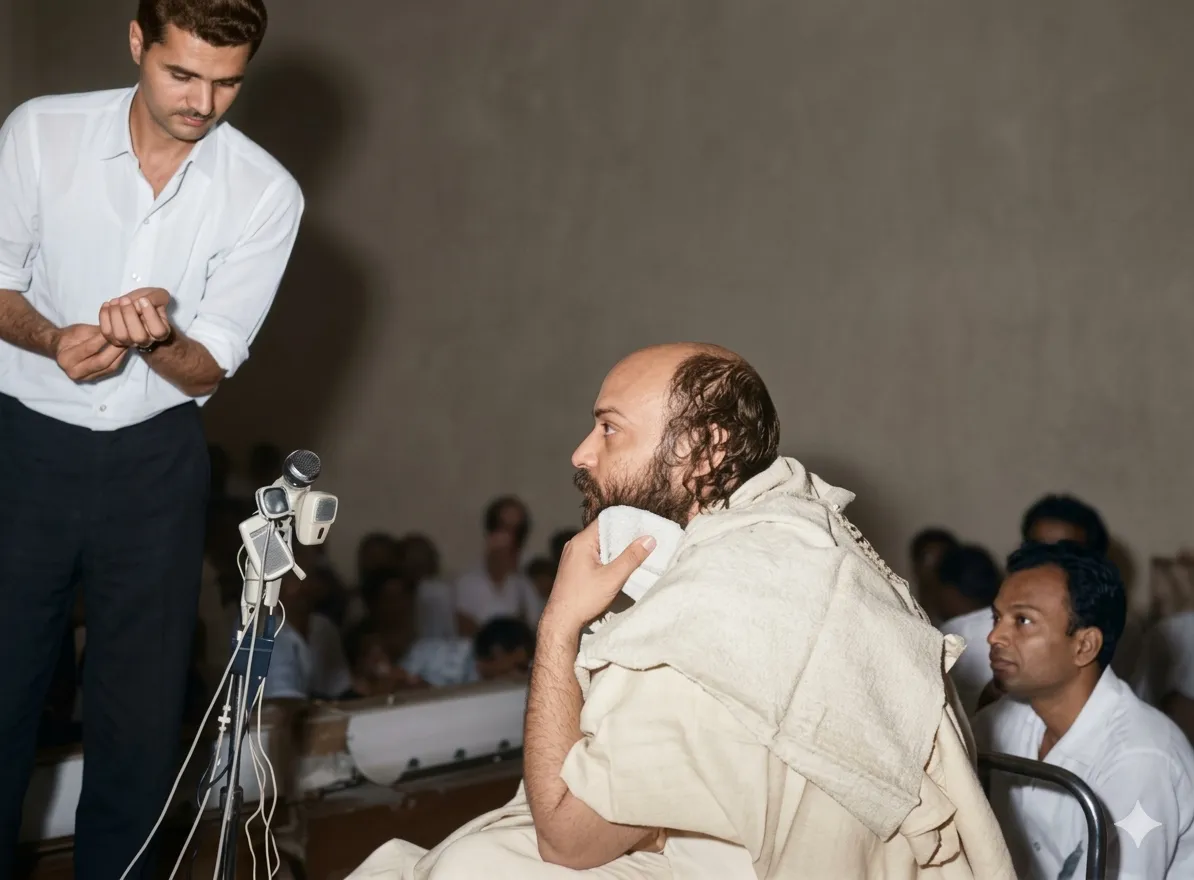
Osho's original Hindi beside Osho Live's English translation, matched passage by passage.
इस संबंध में तीन बातें खयाल में लेनी चाहिए। एक तो ध्यान में जैसे ही गहराई बढ़ेगी, शरीर तिरोहित हो जाएगा। या कभी-कभी बहुत विशाल हो जाएगा। या कभी ऐसा भी हो सकता है कि बहुत क्षुद्र, बहुत छोटा भी हो जाएगा; जितना है उससे भी छोटा मालूम पड़ेगा। शरीर की प्रतीति मन पर निर्भर है। यदि मन बहुत फैल जाता है तो शरीर फैला हुआ मालूम पड़ने लगता है। मन अगर बहुत सिकुड़ जाता है तो छोटा मालूम पड़ने लगता है। शरीर की सीमा वस्तुतः मन की सीमा से ही प्रतीत होती है। यह अनुभव सिद्ध है। और अहंकार की लीला नहीं है, ध्यान का परिणाम है।
Three things should be kept in mind in this regard. First, as meditation deepens, the body will disappear; or sometimes it will become very vast; or sometimes it may feel very minute, very small—smaller than it “is.” The body’s appearance depends on the mind. If the mind expands greatly, the body seems expanded; if the mind contracts, the body seems small. In fact, the boundary of the body is perceived through the boundary of the mind. This is confirmed by experience. And it is not the play of the ego; it is the outcome of meditation.
लेकिन ध्यान के बाद स्वाभाविक है कि फिर शरीर जितना था उतना ही मालूम पड़ने लगे। इसमें चिंतित होने की कोई भी बात नहीं है। जिन मित्रों को ऐसा हो रहा हो, दिन में जब भी उन्हें सुविधा मिले, एक-दो क्षण को भी, तो आंख बंद कर लें और पुनः शरीर के विराट होने को अनुभव करते रहें। दिन में दो-चार बार अनुभव करें। रात सोते समय पुनः अनुभव कर लें। सुबह उठते वक्त पुनः दो क्षण। जिसको भी ऐसा अनुभव हो रहा है, वह आंख बंद करते ही पुनः अनुभव कर सकेगा।
After meditation it is natural that the body again appears as it ordinarily is. There is nothing to worry about in this. For friends to whom this is happening, whenever during the day they have the opportunity—even for a moment or two—close your eyes and again keep experiencing the body’s vastness. Do this two or four times a day. Before sleep at night, again; on waking in the morning, again for a couple of moments. Whoever is having this experience will be able to re-enter it as soon as the eyes are closed.
इसका परिणाम यह होगा कि धीरे-धीरे आपको यह पता चलेगा कि शरीर मन का ही खेल है। उसका छोटा होना, बड़ा होना, जवान होना, बूढ़ा होना, जन्मना, मरना, सब मन का ही खेल है। और जब शरीर इतने रूप बदल सकेगा आपके समक्ष, तो शरीर के साथ जो तादात्म्य है, आइडेंटिटी है, वह टूट जाएगी। तब आप अपने को शरीर न मान सकेंगे। जो शरीर इस भांति, स्वप्न की भांति छोटा और बड़ा, मिटता और बन जाता है, उस शरीर के साथ आप अपने को एक न मान सकेंगे। बल्कि शरीर की जो फिक्स्ड फॉर्म है, शरीर का जो सुनिश्चित रूप हमने बना रखा है, वह धीरे-धीरे डगमगा जाएगा। और आपके ऊपर से फिक्सेशन, बॉडी फिक्सेशन, जो शरीर का ठोस रूप बैठ गया है, वह पिघल कर गिर जाएगा। और धीरे-धीरे आप अपने को अशरीरी अनुभव करने लगेंगे। अशरीरी अनुभव करने के पहले शरीर के बहुत रूपों का अनुभव बहुत सहयोगी है।
The result will be that gradually you will come to know that the body is a play of the mind. Its becoming small or big, young or old, being born and dying—this is all the mind’s play. And when the body can change so many forms before you, the identification with the body will break. You will no longer be able to take yourself as the body. A body that, like a dream, becomes small and big, disappears and reappears—you will not be able to remain one with such a body. Rather, the body’s fixed form, the definite image we have maintained, will slowly begin to wobble. The fixation—the body-fixation, the solid image that has settled upon you—will melt and fall away. And gradually you will begin to experience yourself as bodiless. Before the bodiless experience, the experience of many forms of the body is very helpful.
अभी आप शरीर के एक ही रूप को जानते हैं, जो आपके भौतिक शरीर की रूप-रेखा है। उससे आपने अपने को एक कर रखा है। यदि दिन में आपको दस-पांच बार ऐसा होता रहे कि शरीर छोटा हो जाता, बड़ा हो जाता, विराट हो जाता, कभी होता है, कभी खो जाता है, तो आप धीरे-धीरे शरीर की इस धारा, परिवर्तित धारा, रूपों के इस परिवर्तन के बीच साक्षी अपने आप बन जाएंगे। तब आप अनुभव करेंगे कि मैं वह हूं जो शरीर के छोटे होने को भी देखता है, बड़े होने को भी देखता है, खो जाने को भी देखता है, बन जाने को भी देखता है। मैं शरीर नहीं हूं, शरीरों का द्रष्टा हूं।
For now you know only one form of the body, the outline of your physical frame, and you have made yourself one with it. If during the day it keeps happening five or ten times that the body becomes small, becomes big, becomes vast—sometimes present, sometimes gone—then slowly, in the midst of this stream of the body, this changing flow of forms, the witness will arise by itself. Then you will experience: I am that which sees the body becoming small, sees it becoming big, sees it disappearing, sees it appearing. I am not the body; I am the seer of bodies.
तो जिसको भी ऐसा अनुभव हो रहा हो, वह दिन में दो-चार बार उस अनुभव में पुनः उतर जाए। यह मन के फैलने-सिकुड़ने का खेल है। यह अहंकार की लीला नहीं है, लेकिन यह अहंकार की लीला बन सकती है। यदि आप इस बात से बड़े गौरवान्वित हो जाएं कि मैंने बड़ी उपलब्धि कर ली कि मेरा शरीर बड़ा हो जाता है, ऐसा मैं अनुभव कर लेता हूं और मेरा शरीर छोटा हो जाता है, ऐसा मैं अनुभव कर लेता हूं। या आपने इसमें किसी तरह का अहंकार का रस लिया कि मैंने कुछ पा लिया जो दूसरों को नहीं मिला है, तो अहंकार की लीला शुरू हो जाएगी। और अहंकार अपने को ध्यान की प्राथमिक अनुभूतियों से भी सुदृढ़ कर सकता है। और अक्सर जहां अहंकार शुरू हुआ, वहीं ध्यान रुक जाता है। इसलिए इसको कोई विशेष बात मत मानना कि कोई बहुत बड़ी घटना घट रही है। समझना कि ध्यान का साधारण परिणाम है। इसमें कुछ गौरवान्वित होने का या दूसरों से अपने को ऊंचा मानने का या भिन्न मानने का कोई भी कारण नहीं है।
So whoever is having such an experience should enter it again two or four times a day. This is the play of the mind’s expansion and contraction. It is not the play of the ego—but it can become the play of the ego if you become very proud that a great attainment has happened: that you can experience the body becoming big or small. If you take any egoic relish in this—that I have gained something others have not—then the play of the ego will begin. And the ego can strengthen itself even through the preliminary experiences of meditation. And often, wherever the ego begins, meditation stops. Therefore do not take this as anything special, as if some great event is happening. Understand it as a natural result of meditation. There is no reason here to become proud, or to feel yourself higher or different from others.
और ध्यान में जो भी साधक प्रवेश कर रहे हैं उन सभी के लिए यह सूचना उपयोगी है कि उन्हें कुछ भी हो, कोई भी अनुभव हो, उस अनुभव को अहंकार का भोजन मत बनने देना। उससे अपने को कुछ विशिष्ट मानने का कारण नहीं है। जैसे ही हमने माना कि मैं कुछ विशिष्ट हो गया--क्योंकि मुझे प्रकाश दिखाई पड़ा, क्योंकि मुझे ऊर्जा ऊपर की तरफ जाती हुई मालूम पड़ी, क्योंकि मैंने प्रभु की सन्निधि अनुभव की--जैसे ही हमने माना कि मुझे कुछ हो गया है जो विशेष है, तो अहंकार को भोजन हमने देना शुरू कर दिया। और जिस क्षण कोई भी उपलब्धि अहंकार से जुड़ जाती है, उसी क्षण उपलब्धि की आगे की यात्रा अवरुद्ध हो जाती है। और जब कोई चीज अवरुद्ध होती है, तो आप उसी जगह रुके नहीं रह सकते, बहुत जल्दी आप वापस नीचे गिर जाएंगे।
And this information is useful for all seekers entering meditation: whatever happens, whatever experience arises, do not let that experience become food for the ego. It is no reason to regard yourself as special. The moment we accept, “I have become someone special—because I saw light, because I felt energy moving upward, because I experienced the presence of the divine”—the moment we accept that something special has happened to me, we have begun to feed the ego. And the moment any attainment gets linked with the ego, that very moment the further journey of attainment is blocked. And when something is blocked, you cannot remain standing at that point; very soon you will fall back down.
वह नहीं होगा। क्योंकि पहले दिन जो अनुभव हुआ वह अहंकार का हिस्सा बन गया। माना कि बहुत गहरा अनुभव मुझे हुआ है। अब यह अहंकार दूसरे दिन से प्रतीक्षा करेगा कि मुझे तो होना ही चाहिए, क्योंकि मुझे हो चुका है। अब नहीं होगा तो फ्रस्ट्रेशन, विषाद मन को पकड़ेगा।
It will not. Because the experience of the first day has already become a part of the ego. Suppose a very deep experience happened to me. From the second day the ego will wait for it: it must happen to me, because it has happened before. If it does not, frustration and melancholy will seize the mind.
और ध्यान रखें, जहां अहंकार ने रस लिया, जहां अहंकार ने श्वास ली, वहीं प्रक्रिया रुक जाती है। तो अगर आपको गहरा अनुभव हो, हो जाने दें। फिर उसे भूल जाएं कृपा करके। उसे स्मृति का हिस्सा बनाने की जरूरत नहीं। और दूसरे दिन उसकी प्रतीक्षा करने की भी जरूरत नहीं। अपेक्षा करने की भी जरूरत नहीं। क्योंकि पहले दिन इसीलिए हुआ था कि आपके अहंकार को कोई भी पता नहीं था कि हो सकता है। तो अहंकार मौन था। अब दूसरे दिन नहीं होगा। क्योंकि अहंकार भीतर खड़ा है, वह कह रहा है कि कब हो, अब होना चाहिए। क्योंकि मुझे हुआ है, तो अब होना चाहिए। अब आप आक्रामक हो गए। उस अनुभव के लिए अब आप एग्रेसिव हैं। अब आप पैसिव नहीं हैं। अब आप प्रतीक्षा नहीं कर रहे हैं, अपेक्षा कर रहे हैं। पहले दिन आपको कुछ भी पता न था।
And remember: wherever the ego has tasted, wherever the ego has breathed, the process stops. So if a deep experience happens to you, let it happen. Then please forget it. There is no need to make it a part of memory. And there is no need to wait for it the next day. No need to expect it either. On the first day it happened precisely because your ego had no idea it could happen; the ego was silent. Now, on the second day, it will not happen, because the ego is standing within, saying, When will it happen? Now it should happen. Because it happened to me, now it should happen again. Now you have become aggressive toward that experience. You are no longer passive. You are no longer waiting; you are expecting. On the first day you knew nothing.
इसलिए अक्सर यह होता है कि जब आपको कुछ भी पता नहीं होता, बल्कि आप जानते हैं कि आपको क्या होगा, तब हो जाता है। क्योंकि अहंकार बीच में नहीं होता। जब हो जाता है, तब अड़चन शुरू होती है, क्योंकि अहंकार खड़ा हो जाता है। वह कहता है, ठीक, अब तो मुझे होना ही चाहिए। फिर होना बंद हो जाता है।
Therefore it often happens that when you know nothing—indeed, when you “know” that nothing will happen—then it happens, because the ego is not in between. Once it happens, the trouble begins, because the ego stands up. It says, All right—now it must happen to me. And then it stops happening.
इस अंतर्यात्रा में ‘होना ही चाहिए’ जैसे शब्द को बिलकुल भूल जाना। यहां कोई शर्तें नहीं हैं। जो हुआ है, अगर आपने बहुत जोर से पकड़ा, तो दुबारा कभी नहीं होगा। और अक्सर ऐसा होता है कि साधना की प्रक्रिया में जब कभी कोई गहन अनुभूति पहली दफे उतरती है, तो साधक इस बुरी तरह उससे चिपट जाता है कि उस जन्म में दुबारा उसे नहीं उपलब्ध कर पाता। फिर दूसरे जन्म तक प्रतीक्षा करनी पड़ती है, जब तक कि स्मृति बिलकुल दब न जाए और भूल न जाए।
In this inner journey, forget words like “it must happen.” There are no conditions here. If you clutch at what has happened too tightly, it may never happen again. And it often happens in the process of sadhana that when some profound realization descends for the first time, the seeker clings to it so badly that he cannot attain it again in that lifetime. Then one has to wait for another birth, until the memory is completely pressed down and forgotten.
तो ध्यान रखना, न होने से भी कभी-कभी होना खतरनाक सिद्ध हो सकता है, अगर अहंकार ने उसमें रस लिया। अगर आपको हो भी तो उसे आप ऐसा मत समझना कि मुझे हुआ है, ऐसा ही समझना कि प्रभु की अनुकंपा है।
So be alert: sometimes even happening can prove more dangerous than not happening, if the ego has savored it. Even if it does happen to you, do not take it as “I attained”; take it as the Lord’s compassion.
इन दोनों में फर्क है। इसलिए ध्यान के बाद मैं निरंतर आपको कहता हूं कि प्रभु का अनुग्रह स्वीकार कर लें। वह इसी कारण ताकि आपको खयाल बना रहे कि यह उसका प्रसाद है, मेरी उपलब्धि नहीं। यह मैंने नहीं पाया, उसने दिया है। अगर मैंने पाया है, तो मैं कल फिर पाने की कोशिश करूंगा। और अगर उसने दिया है, तो मैं प्रतीक्षा करूंगा। दे उसकी मर्जी, न दे उसकी मर्जी।
There is a difference. That is why, after meditation, I keep telling you to accept the Lord’s grace—so that you remember it is his benediction, not my achievement. I did not get it; he gave it. If I attained it, I will try to attain it again tomorrow. But if he gave it, I will wait. To give is his will; not to give is his will.
और ध्यान रहे, आप सभी से कहता हूं कि उसे धन्यवाद दें। उनसे भी जिन्हें कुछ हो रहा है और उनसे भी जिन्हें कुछ नहीं हो रहा है। क्योंकि अगर आप देते समय ही धन्यवाद दें और उसके न देते समय धन्यवाद न दें, तो आपका धन्यवाद भी अहंकार का हिस्सा बन जाएगा। जब न हो तब भी अनुग्रह होना चाहिए।
And remember—I say to all of you—give thanks, both when something is happening and when nothing is happening. Because if you thank only when he is giving and do not thank when he is not, your thanksgiving will also become part of the ego. When nothing happens, there too there should be gratitude.
क्यों? क्योंकि हो तब तो अनुग्रह समझ में आता है कि मुझे कुछ हुआ, तो मैं धन्यवाद दूं। न हो तब तो अनुग्रह और धन्यवाद की कोई बात समझ में नहीं आती। लेकिन अनुग्रह का राज यही है कि जो न हो तब भी धन्यवाद दे पाए, तभी जब हो तो दिया गया धन्यवाद अनुग्रह होगा। अन्यथा वह भी अहंकार हो जाएगा।
Why? Because when it happens, grace is easy to understand: something happened to me, so I give thanks. When it does not happen, grace and gratitude do not seem to make sense. But this is the secret of grace: only if you can give thanks even when nothing happens will your thanks, when it does happen, be gratitude; otherwise that too will be ego.
लेकिन कैसे? जब न हो तो हम धन्यवाद किसलिए दें?
तब हमें इसलिए धन्यवाद देना चाहिए कि शायद मेरी अभी तैयारी न हो, शायद मैं अभी इस योग्य नहीं, शायद मैं अभी पात्र नहीं, शायद अभी मुझे अनुभव हो जाए तो नुकसान पहुंचे, इसलिए उसकी कृपा है कि अभी उसने मुझे नहीं दिया।
But how? When nothing happens, what should we thank for? Then we should thank for this: perhaps I am not yet prepared, perhaps I am not yet worthy, perhaps I am not yet a fit vessel. Perhaps if the experience happens now, it may harm me. Therefore it is his kindness that he has not given it yet.
दो बातें हैं, फर्क समझ लें। अहंकार कहेगा, जब होगा तो अहंकार कहेगा, मैं पात्र हूं, योग्य हूं, कुशल हूं, साधक हूं, इसलिए मुझे हुआ है। जब नहीं होगा, तो अहंकार दुख अनुभव करेगा। और धन्यवाद देने की जगह भीतर कहीं क्रोध की रेखा सरकेगी।
Two points—understand the difference. The ego will say: when it happens, I am deserving, I am qualified, skillful, a true seeker—therefore it happened to me. And when it does not happen, the ego will feel hurt; instead of thankfulness, somewhere within a line of anger will move. This is dangerous. The seeker needs the opposite stance.
यह खतरनाक है। इससे विपरीत स्थिति चाहिए साधक की। जब हो, तब मानना चाहिए कि मैं तो योग्य नहीं था, पात्र नहीं था, क्षमता मेरी नहीं थी, सब तरह से अयोग्य था, फिर भी प्रभु की अनुकंपा है इसलिए हुआ है। जब न हो, तब जानना चाहिए कि यह भी उसकी अनुकंपा है। शायद यह अनुभव अभी मुझे हो जाए तो अकल्याणकारी हो, अमंगलकारी हो, इसलिए उसने रोका है। अन्यथा उसकी करुणा का कोई पार नहीं है। इस भाव से जो साधक चलेगा तो अहंकार अपना खेल नहीं दिखा पाता है। अन्यथा बाहर के जगत से भी भीतर के जगत की उपलब्धियां अहंकार के लिए ज्यादा रसपूर्ण हैं। और अकड़ भीतर पैदा होती है। उससे सावधान होना उपयोगी है।
When it happens, you should take it that I was not worthy, not qualified; it was not my capacity—yet by the Lord’s compassion it happened. And when it does not happen, you should know that this too is his compassion. Perhaps if this experience were to happen now, it would be unwholesome, inauspicious for me; therefore he has held it back. Otherwise, there is no limit to his compassion. A seeker who moves with this attitude does not allow the ego to play its games. Otherwise, compared to the outer world, the achievements of the inner world are even more tasty to the ego, and a stiffness, an arrogance, arises within. It is useful to be wary of that.
यह कहना थोड़ा मुश्किल है, क्योंकि यह बहुत सी बातों पर निर्भर करता है। यदि वे अपने शरीर को भूल कर परमात्मा को ही स्मरण रखें, तो कभी भी नुकसानदायक नहीं हो सकता है। लेकिन परमात्मा को स्मरण ही न रखें, हृदय की दुर्बलता को ही स्मरण रखें, तो बहुत नुकसानदायक हो सकता है। इट डिपेंड्स। आपका ध्यान क्या है? अगर आप अपने शरीर को भूल गए हैं, तो कोई भी नुकसान कभी नहीं हो सकता। और अगर नुकसान भी हो जाए, तो वह भी लाभ है।
It’s a little difficult to say, because it depends on many things. If he forgets the body and keeps only the divine in remembrance, then it can never be harmful. But if he does not remember the divine and keeps remembering the heart’s weakness, then it can be very harmful. It depends. Where is your attention? If you have forgotten your body, then no harm can ever befall you. And even if harm does occur, that too is a gain.
पहले तो नुकसान नहीं हो सकता, क्योंकि कोई कारण नहीं है। जिसने अपने शरीर को पूरा परमात्मा के लिए छोड़ दिया, उसके हृदय वगैरह को धड़काने का जिम्मा अब उसके ऊपर नहीं रहा, अब वह परमात्मा के ऊपर है। और जिस परमात्मा की सहज मौजूदगी से इतना बड़ा जगत चलता है, उसकी सहज मौजूदगी से आपके हृदय की धड़कन न चलेगी, ऐसा मानने का कोई भी कारण नहीं है। और अगर उसके स्मरण से भरे हुए इस क्षण में यदि धड़कन बंद भी हो जाए, तो अनुगृहीत होना चाहिए। क्योंकि धड़कन कभी तो बंद होगी ही, लेकिन पता नहीं उस समय यह स्मरण का क्षण साथ होगा या नहीं होगा।
To begin with, no harm can happen, because there is no reason. One who has surrendered his body wholly to the divine—his heart and its beating are no longer his responsibility; they are in the divine’s hands. And the same divine whose effortless presence keeps such a vast universe moving—there is no reason to think your heartbeat would not move by that very effortless presence. And if, in a moment suffused with remembrance, the heartbeat were to stop, one should feel blessed. For the heartbeat will stop someday anyway; who knows whether, at that time, this moment of remembrance will be with you or not.
एक तो नुकसान होगा नहीं, लेकिन जिसे हम नुकसान कहते हैं वह अगर हो भी जाए परमात्मा के स्मरण में, तो उससे शुभ घड़ी दूसरी नहीं है, वही काल-क्षण है, जिसमें गया हुआ व्यक्ति वापस नहीं लौटता है।
First, there will be no harm; but even what we call harm—if it happens in the remembrance of the divine—there is no more auspicious moment than that. That is the very moment, the very juncture, from which the one who goes does not return.
लेकिन अगर आप इसी डर से भयभीत--कि कहीं हृदय को कुछ गड़बड़ न हो जाए--हृदय के ही खयाल से भरे हुए नाचेंगे-कूदेंगे, तो निश्चित ही नुकसान हो जाने वाला है। तो यह आप पर निर्भर करता है।
But if, out of this very fear—that something might go wrong with the heart—you dance and jump while filled with thoughts of the heart, then harm is certain to happen. So it depends on you.
और आप समझ लें। और अगर हृदय के ही खयाल में डूबे हुए हैं, तो मत करें। तो मत करें। लेकिन एक बात ध्यान रखें कि हृदय की धड़कन बंद होकर ही रहेगी! उसे कब तक सम्हाले रहिएगा? और सम्हाल कर भी क्या पा सकेंगे? सिर्फ धड़का लेंगे। क्या है उसकी उपलब्धि? शरीर थोड़े दिन और चल जाए, उसकी उपलब्धि क्या है?
Understand this well. And if you are immersed only in thoughts of the heart, then don’t do it. Don’t do it. But keep one thing in mind: the heartbeat is bound to stop! How long will you keep managing it? And even by managing it, what will you gain? You will only keep being scared. What is the attainment in that? If the body goes on a few days more, what is the attainment in that?
शरीर का प्रयोजन ही यह है कि हम अशरीरी को जान लें। अगर अशरीरी को जानने में ही शरीर बाधा बन रहा हो, तो उस शरीर को रखने का अब कोई कारण नहीं, कोई अर्थ नहीं। इतना साहस हो तो मजे से नाचें और कूदें। जीएं तो भी ठीक है, उसमें मिट जाएं तो भी ठीक है। इतना साहस न हो तो अपने को सम्हाले रखें, फिर उस प्रक्रिया में मत उतरें।
The very purpose of the body is that we may come to know the bodiless. If, in knowing the bodiless, the body itself becomes an obstacle, then there is no reason, no meaning, in holding on to that body. If you have that much courage, then dance and jump with joy. If you live, it’s fine; if you dissolve in it, that too is fine. If you don’t have that much courage, then take care of yourself and don’t enter into that process.
ध्यान तो हो सकता है। ध्यान तो बिना कुछ किए हो सकता है। लेकिन जिन्होंने पूछा है उनको नहीं हो सकेगा। ध्यान तो बिना कुछ किए हो सकता है। जरा से कंपन के बिना हो सकता है। ध्यान का मतलब ही यह है कि जहां कोई मूवमेंट न हो, जहां सब कंपन रुक जाएं। लेकिन जो नाचने से भयभीत है, या सोचता है कि इससे बच जाएं, उसे नहीं हो सकेगा। और वह हर चीज से भयभीत हो जाएगा।
मैं तो ध्यान की न मालूम कितनी प्रक्रियाओं का उपयोग किया हूं। जिस प्रक्रिया का उपयोग करता हूं, लोग उसी में पूछते हैं कि इसके बिना नहीं हो सकेगा? अगर उनको कहो कि डीप ब्रीदिंग करो। तो लोग आ जाते हैं पूछने कि ऐसी कोई तरकीब नहीं है कि डीप ब्रीदिंग न करनी पड़े, यह गहरी श्वास न लेनी पड़े?
Meditation can happen. It can happen without doing anything. But it will not happen for those who have asked. Meditation can happen without the slightest tremor. Meditation means a state where there is no movement, where all vibrations have stilled. But for the one who is afraid of dancing, or thinks he can avoid it, it will not happen. And then he will become afraid of everything. I have used I don’t know how many methods of meditation. Whichever method I use, people immediately ask, “Can’t it be done without this?” If I tell them, “Do deep breathing,” they come and ask, “Isn’t there some trick so we don’t have to do deep breathing, so we don’t have to take these deep breaths?”
मैंने लोगों को कहा कि शांत होकर लेट जाओ। तो वे आकर कहते हैं कि शांत होकर लेटने से तो कुछ भी नहीं होता। उनको मैंने कहा, कुछ मत करो, सिर्फ मौन रहो। वे कहते हैं, मौन तो हम रह जाते हैं, लेकिन भीतर विचार चलते रहते हैं। कोई और रास्ता बताइए।
I tell people, “Lie down quietly.” They come back and say, “Nothing happens by lying down quietly.” I say, “Do nothing, just remain in silence.” They say, “We do fall silent, but thoughts go on inside. Please tell us another way.”
जिस मन से आप यह सलाह ले रहे हैं, जो कहता है कि कोई और रास्ता बताइए, वह निरंतर कहता रहेगा--जो भी ध्यान की प्रक्रिया होगी उसी में कहेगा--कोई और रास्ता बताइए। क्योंकि वह डरता है मरने से। वह मन डरता है मरने से। और ध्यान है मन की मृत्यु। वह हर तरफ से आपको रोकेगा।
The very mind from which you are taking this advice—the mind that keeps saying, “Tell us another way”—will go on saying it, whatever the meditation method is. Because it is afraid of dying. That mind is afraid of dying. And meditation is the death of the mind. From every side it will try to stop you.
तो आप इसकी चिंता छोड़िए कि कोई और तरकीब हो सकती है।
नहीं! क्योंकि वह इस तरकीब में बाधा उठा रहा है, हर तरकीब में बाधा उठाएगा। हर तरकीब में वह कहेगा कि इसकी क्या जरूरत है?
So drop this worry that there could be some other trick. No! Because the mind that is raising obstacles in this method will raise obstacles in every method. For every method it will say, “What is the need of this?”
एक मित्र आए, वे कहते हैं कि संन्यास तो मुझे लेना है, लेकिन गेरुए कपड़े में नहीं लेना है। गेरुए कपड़े की क्या जरूरत है?
तो मैंने उनसे कहा, संन्यास की ही क्या जरूरत है? यह खयाल ही छोड़ो!
A friend came; he said, “I do want to take sannyas, but not in ochre robes. What is the need for ochre robes?” I said to him, “Then what is the need for sannyas at all? Drop that idea!”
नहीं, संन्यास तो मुझे लेना है।
“No, I do want to take sannyas.”
तो मैंने कहा, जिन कपड़ों में तुम रह रहे हो, इनकी भी क्या जरूरत है? और इनमें तुम रह लिए पचास साल, तुम्हें क्या मिल गया है? तो फिर इनको बदलने में इतनी घबड़ाहट क्या है?
So I said, “What is the need for the clothes you are already wearing? You’ve worn them for fifty years—what have you gained? Then why this panic about changing them?”
नहीं, वे कहते हैं, गेरुए कपड़े से क्या होगा?
“No,” he said, “what will ochre robes do?”
तो मैंने उनसे कहा कि अगर कुछ भी नहीं होगा, तो बदल लो, फिर दिक्कत क्या है? जब बदलने में डर लगता है, तो जरूर कुछ होगा। जो आदमी सहज तैयार हो जाता है मेरे पास आकर कि ठीक है, गेरुआ पहना दें, या काला कपड़ा पहना दें, या मुझे नग्न कहें तो मैं नग्न हो जाऊं। उससे मैं नहीं कहूंगा कि तू कपड़े बदल। उसको कोई फायदा नहीं होगा। उसको मैं कहूंगा, तू जैसा है ठीक है, चलेगा।
I told him, “If they will do nothing, then change them—what’s the problem? If changing makes you afraid, then certainly something will happen.” The person who comes to me ready, saying, “All right, put ochre on me, or put black on me, or tell me to be naked and I’ll be naked”—to him I will not say, “Change your clothes.” He will gain nothing from that. I will say, “As you are is fine; proceed.”
लेकिन जो आदमी कहता है कि नहीं; यह जरा दिक्कत देगा। उसको तो फायदा होने वाला है। वह दिक्कत जिस मन से हो रही है, उस मन को ही तोड़ने के लिए तो सवाल है। लेकिन मजा यह है कि जिसको कोई फर्क नहीं पड़ेगा, वह बाधा नहीं डालता, वह कहता है, मैं राजी हूं। और जिसको फर्क पड़ सकता है, वह बाधा डालता है। असल में बाधा ही वही डालता है जिसको फर्क पड़ सकता है। जिसको कपड़े बदलने से फर्क पड़ सकता है, वही बाधा लेकर आता है।
जिन मित्र ने पूछा है कि नाचने के अलावा कोई उपाय नहीं है, अगर वे लंगड़े हों, तो समझ में आ सकता है, अगर बिस्तर पर पड़े हों, पैरालाइज्ड हों, तो उनके लिए मैं कोई रास्ता बताऊं। लेकिन अगर पैर ठीक हों, लकवा न मार गया हो, और नाच सकते हों, तो नाचें, उनको नाच से ही होगा।
नाच का जो भय है, वह भय ही अगर नाच से टूट जाए, तो भीतर बड़ी गति हो जाए। भय ही हमारा उपद्रव है। हर चीज से भयभीत हैं। माला ले लेते हैं लोग मुझसे, फिर उसको कमीज के भीतर छिपा कर चलते हैं।
उसका प्रयोजन खत्म हो गया। उसको कमीज के भीतर छिपानी थी, तो नहीं थी तो क्या हर्ज था! बराबर हो गई बात। उसमें कोई अर्थ न रहा। इसका भी डर है कि कोई यह न पूछ ले कि यह माला क्यों पहनी? जैसे कि आप जिम्मेवार हैं सारी दुनिया को बताने के लिए कि मैं क्या पहनता हूं, क्या नहीं पहनता हूं। किसी को हक ही क्या है पूछने का? लेकिन इतनी भी हिम्मत नहीं है कहने की कि मेरा गला मेरा है, इसमें मुझे माला डालनी है तो आप क्यों परेशान हैं? कम से कम इतनी स्वतंत्रता तो मुझे दो कि मैं अपने गले में कुछ डालना चाहूं तो डाल-उतार सकूं।
But the person who says, “No; this will be a bit troublesome”—he is the one who is going to be benefited. The trouble is arising in the very mind we intend to break. The irony is that the one for whom it would make no difference does not obstruct; he says, “I agree.” And the one for whom it could make a difference, he raises the obstruction. In fact, only the one for whom changing clothes could make a difference brings the obstacle. The one for whom changing clothes could make a difference is exactly the one who brings the obstacle. The friend who has asked whether there is no method other than dancing—if he were lame, one could understand; if bedridden, paralyzed, then I would show him a way. But if the legs are fine, no paralysis, and he can dance, then let him dance; for him, it will happen through dance. The fear you have of dancing—if that very fear breaks through dance, then inside a great movement will begin. Fear itself is our disturbance. We are afraid of everything. People take the mala from me, then walk with it hidden under their shirts. Its very purpose is finished. If it had to be hidden inside the shirt, then what was the harm if it were not there at all? It amounts to the same thing. There is no meaning left. There is even the fear that someone may ask, “Why are you wearing this mala?” As if you are responsible to tell the whole world what I wear and what I don’t. What right does anyone have to ask? And yet there isn’t even enough courage to say, “My neck is mine; if I want to put a mala around it, why are you troubled? At least give me this much freedom—that if I want to put something around my own neck, I can put it on or take it off.”
जो आदमी अपने गले में माला भी नहीं डाल सकता, वह ठीक से समझ ले कि समाज ने उसके गले में फांसी लगा रखी है। और वह राजी है फांसी के लिए। अपना गला इतना नहीं कि माला डाल सकें, तो और क्या आपका अपना होगा? और अपना शरीर इतना नहीं कि उस पर हम कपड़े गेरुआ डालना चाहें तो डाल सकें, तो आपके पास और अपनी आत्मा होगी?
One who cannot even put a mala around his own neck should understand clearly that society has put a noose around his neck—and he agrees to the hanging. If even your neck is not yours enough that you can wear a mala, then what else will be yours? And if your body is not yours enough that, if you wish, you can wear saffron clothes, will you have your own soul?
अपना शरीर भी नहीं है, तो अपनी आत्मा बहुत दूर की बात है। आपके पास अपना कुछ भी नहीं है। आप सिर्फ एक सोशल प्रोडक्ट हो, एक सामाजिक उत्पत्ति हो। आप हो ही नहीं असल में, समाज की एक बनावट हो। समाज जो चाहता है वह पहनो। समाज जो कहता है वैसे उठो। समाज जो कहता है वैसे बैठो। आप नहीं हो।
If even your body is not yours, then the soul is a faraway matter. You have nothing of your own. You are only a social product, a social fabrication. In truth you are not; you are society’s construct. Wear what society wants. Rise as society says. Sit as society says. You are not.
तो नाच से भय क्या है--कि कोई क्या कहेगा?
कोई क्या कहेगा, जरा कहने दें!
So what is the fear of dancing?—that someone may say something? Let them say it!
एक सूफी फकीर था हसन। उसके पास जब भी कोई आता, वह संन्यास में दीक्षा के पहले कहता कि नग्न हो जाओ और गांव का एक चक्कर लगाओ, फिर मैं दीक्षा दे दूंगा।
वह आदमी कहता, आप भी कैसी बातें कर रहे हैं? मैं संन्यास लेने आया, इस नग्न होकर चक्कर लगाने से क्या होगा?
तो हसन कहता कि होगा कि नहीं होगा, वह मैं जानता हूं। तुम चक्कर लगाओ, मैं बिना चक्कर के संन्यास नहीं देता। क्योंकि जो आदमी दूसरों के हंसने को नहीं सह सकता, वह आदमी भीतर नहीं जा सकता। जो आदमी दूसरों की आंखों में पागल होने का साहस नहीं रखता, वह किसी बड़ी गहरी खोज पर जाने का उपाय नहीं खोज पाएगा।
There was a Sufi fakir, Hasan. Whenever anyone came to him, before initiating him into sannyas he would say, “Get naked and take one round of the village; then I will initiate you.” The man would say, “What are you saying? I’ve come to take sannyas—what will happen by going naked around the village?” Hasan would say, “Whether something happens or not, I know. You take the round; without it I don’t initiate. Because the person who cannot endure others’ laughter cannot go within. One who does not have the courage to appear mad in others’ eyes will not find the means to go on any deep search.”
इस जगत में जो लोग भी किसी चीज में गहरे जाते हैं, चाहे वे वैज्ञानिक हों और पदार्थ की खोज में गहरे जा रहे हों, उनको भी पागल होने की तैयारी दिखानी पड़ती है। चाहे वे कवि हों और सौंदर्य के अनुभव में गहरे उतर रहे हों, उनको भी पागल होने की तैयारी दिखानी पड़ती है। और चाहे वे संत हों और परम रहस्य में जा रहे हों, उनको भी पागल होने की तैयारी दिखानी पड़ती है।
Whoever goes deep into anything in this world—whether scientists going deep into matter, they too must show a readiness to be called mad; or poets going deep into the experience of beauty, they too must show a readiness to be called mad; and saints going into the ultimate mystery, they too must show a readiness to be called mad.
बुद्ध हों कि महावीर और क्राइस्ट हों कि मोहम्मद या कृष्ण, अपने समय में लोग प्रथम रूप से उनको बड़ी शक और बड़ी संदेह की दृष्टि से देखते हैं। पहले तो वे पागल ही मालूम पड़ते हैं। यह तो हजारों साल लग जाते हैं जब हम उनको बुद्धिमान मान पाते हैं। हजारों साल, तब कहीं हम उनको बुद्धिमान मान पाते हैं। अन्यथा हम उनको बुद्धिमान नहीं मान पाते। वे तो मैड मैन हैं ही।
Whether Buddha or Mahavira, Christ or Mohammed or Krishna—people of their own times first look at them with great suspicion and doubt. At first they simply appear mad. It takes thousands of years before we are able to consider them wise. Thousands of years—only then do we accept them as wise. Otherwise we do not accept them as wise; they are just madmen.
आइंस्टीन को लोग पागल ही समझते रहे उन्नीस सौ उन्नीस तक। जब तक उसको नोबल प्राइज की घोषणा न हो गई, तब तक वह पागल आदमी था।
एक होटल में गया है, थोड़ा जल्दी में है और थका-मांदा है। बैरा ने मेनू लाकर उसके सामने रखा, तो उसने बैरा से कहा कि तुम ही देख लो और जो ठीक बना हो वह जल्दी ले आओ।
बैरा ने खाना लाकर दिया। आइंस्टीन ने धन्यवाद दिया, तो बैरा ने चलते वक्त कहा कि आप जैसे जो गैर पढ़े-लिखे लोग हों आपके मित्रों में, उनको भी भेजना, उनकी भी मैं सेवा करूंगा।
आइंस्टीन ने कहा, गैर पढ़े-लिखे लोग? तब उसे खयाल आया कि मेनू उसने पढ़ा नहीं। तो उसने बैरा से पूछा कि तुम्हें मुझे देख कर कैसे खयाल आया कि गैर पढ़े-लिखे लोग?
उसने कहा, खयाल तो मुझे बहुत दूसरा आ रहा है, शिष्टाचार की वजह से मैं कहता नहीं। लग तो रहे हो तुम पागल। तुम्हारे ये फैले हुए बाल, तुम्हारी ये बड़ी-बड़ी खुली आंखें। तुम लग तो रहे हो पागल। तुम्हारे माथे पर ये सिकुड़न। और तुम जब खाना खा रहे थे, तब मैंने अनुभव किया कि तुम खाने की टेबल पर मौजूद ही नहीं थे, तुम कहीं और थे। तो ऐसे तो तुम पागल लग रहे हो, मगर शिष्टाचारवश मैं कहता हूं कि तुम्हारे जैसे गैर पढ़े-लिखे लोग अगर आना चाहें तो भेज देना, उनकी सेवा करने को मैं सदा तत्पर हूं।
Einstein was taken to be mad until 1919. Until the announcement of the Nobel Prize, he was a madman. He once went to a hotel—he was a little hurried and tired. The waiter brought the menu and placed it before him. Einstein said to the waiter, “You see what’s there and bring whatever is suitable, quickly.” The waiter brought the food. Einstein thanked him. As he turned to go, the waiter said, “Send your friends who, like you, are uneducated—I will serve them too.” Einstein said, “Uneducated?” Then he remembered he hadn’t read the menu. He asked the waiter, “Seeing me, how did you think I was uneducated?” The waiter said, “Another thought came to me, but out of courtesy I didn’t say it. You look mad. Your wild hair, your big, wide-open eyes—you look mad. Those furrows on your forehead. And when you were eating, I felt you were not present at the table at all, you were somewhere else. So you look mad; but out of courtesy I said: if uneducated people like you want to come, send them—I will always be ready to serve them.”
जो भी व्यक्ति कहीं गहरी खोज में जा रहा है, उसे पागल होने की हिम्मत चाहिए। पागल होने की हिम्मत का कुल मतलब इतना है कि लोग हंसते हों तो उन्हें हंसने का एक अवसर देना चाहिए। और इसमें कुछ भी हर्ज नहीं है। आपका कुछ हर्ज नहीं और उनको भी हंसी थोड़ा लाभ पहुंचाएगी। चिकित्सक कहते हैं कि हंसी बड़ा टॉनिक है। अगर आपकी वजह से चार लोग हंस लेते हैं, तो आपने समाज-सेवा की। इसकी चिंता छोड़ दें।
Whoever goes into a deep search needs the courage to be mad. The whole meaning of the courage to be mad is simply this: if people laugh, give them an opportunity to laugh. There is no harm in it. Nothing of yours is harmed, and they too will benefit a little from their laughter. Physicians say laughter is a great tonic. If because of you four people laugh, you have done social service. Drop this worry.
अब हम ध्यान में जाएं, पागल होने की तैयारी करें।
Now let us go into meditation; prepare to be mad.
जो लोग देखने आ गए हों, वे कृपा करके कुर्सियों पर चले जाएं। एक भी व्यक्ति देखने वाला भीतर न हो। और जिनको करना हो, वे कुर्सियां छोड़ कर मैदान में आ जाएं। दूर-दूर फैल जाएं फासले पर ताकि आप ठीक से नाच सकें।
दूर-दूर फैल जाएं, बात न करें। और जो लोग देखने आ गए हैं वे शांत बैठेंगे, इतनी उनसे प्रार्थना है। जब ध्यान चलेगा तो आप बात न करें, चुपचाप देखते रहें। अगर आपकी मौज हो तो बैठ कर आप कीर्तन में सम्मिलित हो सकते हैं, लेकिन चुपचाप। ताली बजा सकते हैं, कीर्तन बोल सकते हैं, लेकिन आपस में बातचीत नहीं करेंगे। और बैठ जाएं कृपा करके, खड़े-खड़े आप थक जाएंगे घंटे भर, बैठ जाएं कुर्सियों पर। और जो लोग ध्यान के लिए खड़े हैं, दूर-दूर फैलें। महिलाएं थोड़ा फासला बना लें, अन्यथा फिर नाचना नहीं हो सकेगा।
Those who have only come to watch, please kindly go to the chairs. Not a single onlooker should remain inside. And those who want to participate, leave the chairs and come into the open space. Spread out at a distance from one another so that you can dance properly. Spread out, keep distance, don’t talk. And those who have come to watch, please sit quietly—that is my one request. While the meditation is on, do not talk; just watch silently. If you feel like it, sitting there you may join the kirtan, but silently. You may clap, you may sing the kirtan, but you will not converse among yourselves. And please be seated; if you keep standing you will get tired in an hour—please sit on the chairs. And those who are standing for the meditation, spread out at a distance. Women, please keep a little space, otherwise you won’t be able to dance.
दूर-दूर फैल जाएं, दूर-दूर फैल जाएं। और पूरी शक्ति लगाएं। और पूरे भाव और आनंद से डूबें।
Spread out, spread out. And put in your whole energy. And be immersed with full feeling and joy.
(पहले चरण में पंद्रह मिनट संगीत की धुन के साथ कीर्तन चलता रहता है।)
गोविंद बोलो, हरि गोपाल बोलो
गोविंद बोलो, हरि गोपाल बोलो
गोविंद बोलो, हरि गोपाल बोलो...
राधा रमण हरि गोपाल बोलो
राधा रमण हरि गोपाल बोलो
(In the first stage, for fifteen minutes, kirtan continues to the beat of music.) Govind bolo, Hari Gopal bolo Govind bolo, Hari Gopal bolo Govind bolo, Hari Gopal bolo... Radha Raman Hari Gopal bolo Radha Raman Hari Gopal bolo Radha Raman Hari Gopal bolo...
राधा रमण हरि गोपाल बोलो...
(दूसरे चरण में पंद्रह मिनट सिर्फ धुन चलती रहती है और भावों की तीव्र अभिव्यक्ति में रोना, हंसना, नाचना, चिल्लाना आदि चलता रहता है। तीस मिनट के बाद तीसरे चरण में ओशो पुनः सुझाव देना प्रारंभ करते हैं।)
(In the second stage, for fifteen minutes only the rhythm continues, and in the intense expression of feeling, crying, laughing, dancing, shouting and so on go on. After thirty minutes, in the third stage Osho again begins to give suggestions.)
बस, अब आंख बंद कर लें और सारी शक्ति को भीतर रोक लें। अब न नाचें, न डोलें, न आवाज करें। आंख एकदम से बंद कर लें और सारी शक्ति को भीतर रोक लें।
नहीं, अब आवाज न करें...रोकें, रोकें, आवाज रोक लें...नाचना-कूदना बंद कर दें, शरीर का हिलना-डुलना बंद कर दें...बिलकुल रुक जाएं, शक्ति भीतर ही रह जाए...आंख बंद कर लें, शक्ति को भीतर रुक जाने दें, जो शक्ति जग गई है वह भीतर रह जाए...आंख बंद कर लें, सब इंद्रियों को शिथिल छोड़ दें, आंख बंद कर लें, शरीर को मुर्दे की भांति छोड़ दें...शक्ति भीतर ऊपर उठनी शुरू हो जाएगी...शक्ति का भीतर काम शुरू हो जाएगा...
Enough. Now close your eyes and hold all your energy within. Now neither dance nor sway, make no sound. Close the eyes completely and gather all energy inward. No—now make no sound… stop, stop—stop the sound… stop the dancing and jumping, stop all movement of the body… become absolutely still, let the energy remain within… close your eyes, let the energy settle inside; the energy that has been awakened should remain within… close your eyes, let all the senses relax, leave the body like a corpse… the energy will begin to rise within… the work of energy within will begin…
अब अपने दाएं हाथ की हथेली को माथे पर रख लें, दोनों आंखों के बीच के हिस्से पर, दोनों भौंहों के बीच में और आहिस्ता से हाथ को ऊपर-नीचे और दोनों ओर रगड़ें। नाउ पुट योर राइट हैंड पाम ऑन दि फोरहेड बिट्वीन दि आइब्रोज एंड रब इट स्लोली अपसाइड डाउन एंड साइडवेज...एंड जस्ट बाइ रबिंग समथिंग ओपन्स इनसाइड, समथिंग बिगिन्स टु हैपन, ए डोर सडनली ओपन्स...
Now place the palm of your right hand on your forehead, on the spot between the two eyes, between the two eyebrows, and slowly rub the spot up and down and sideways. Now put your right hand palm on the forehead between the eyebrows and rub it slowly up and down and sideways… and just by rubbing, something opens inside, something begins to happen, a door suddenly opens…
रगड़ें, रगड़ें, भीतर कुछ होना शुरू हो जाएगा, जैसे एक द्वार अचानक खुल जाए और एक दूसरी दुनिया में प्रवेश हो जाए...रगड़ते-रगड़ते भीतर प्रकाश ही प्रकाश फैल जाएगा, भीतर प्रकाश ही प्रकाश फैल जाएगा...
Rub, rub—something will begin to happen within, as if a door suddenly opens and you enter another world… as you rub, light spreads within—only light spreads within…
अब रगड़ना रोक दें और उस प्रकाश के साथ एक हो जाएं...नाउ स्टॉप रबिंग, दि डोर इज़ ओपन, नाउ बी वन विद दि लाइट...रुक जाएं, भीतर प्रकाश फैल गया, उसके साथ एक हो जाएं, उसमें डूब जाएं। प्रकाश ही प्रकाश है, अनंत प्रकाश है...प्रकाश ही प्रकाश है, अनंत प्रकाश है...प्रकाश के सागर में खो गए, एक हो गए, प्रकाश के साथ एक हो गए...प्रकाश ही प्रकाश, जैसे हजारों सूर्य एक साथ निकल आएं...प्रकाश ही प्रकाश...प्रकाश को अनुभव करें...स्वयं को भूल जाएं, प्रकाश को अनुभव करें...
Now stop rubbing and become one with that light… Now stop rubbing—the door is open—now be one with the light… Stop; the light has spread within—become one with it, drown in it. There is only light, infinite light… only light, infinite light… lost in the ocean of light, one with it, one with the light… only light, as if thousands of suns have risen together… only light… experience the light… forget yourself, experience the light…
नाउ फॉरगेट योरसेल्फ, जस्ट बी ए विटनेस टु दि लाइट...रिमेंबर ओनली दि लाइट, फॉरगेट योरसेल्फ...भूल जाएं अपने को, प्रकाश को ही स्मरण रखें...प्रकाश, प्रकाश, प्रकाश...प्रकाश के एक सागर में खो गए, जैसे मछली सागर में हो, ऐसे प्रकाश के सागर में एक हो गए...
Now forget yourself; just be a witness to the light… remember only the light, forget yourself… forget yourself, remember only the light… light, light, light… lost in an ocean of light—like a fish is in the sea, so are you one in the ocean of light…
यह पहला चरण है। टु फील दिस लाइट इज़ दि फर्स्ट स्टेप। अपने को रोकें न, अनुभव करें, प्रकाश ही प्रकाश...डू नॉट विदहोल्ड, फील, एक्सपीरिएंस दि लाइट...
This is the first step. To feel this light is the first step. Do not withhold; feel, experience the light…
जिन्हें अनुभव न होता हो, प्रकाश का खयाल न आता हो, वे अपने दोनों हाथों की हथेलियों को आंख पर रख लें और आहिस्ता से आंखों को दबाएं।
दोज हू आर नॉट एबल टु फील दिस लाइट, दे शुड पुट देयर बोथ पाम्स ऑन दि आइज, एंड देन प्रेस योर पाम्स ऑन दि आइज...डोंट रब, जस्ट प्रेस...रगड़ें नहीं, सिर्फ दबाएं आहिस्ता से...जस्ट प्रेस, डोंट रब...
Those who are not able to experience it, to whom the idea of light does not come, place both palms over the eyes and gently press the eyes. Those who are not able to feel this light, they should put both palms over the eyes, and then press your palms on the eyes… don’t rub, just press… don’t rub, just press gently…
प्रकाश ही प्रकाश, अनंत प्रकाश, जैसे हजारों सूर्य निकल आएं...लाइट, मोर लाइट, इनफिनिट लाइट...नाउ फील इट, नाउ बी वन विद इट...
Only light, infinite light, as if thousands of suns have risen… light, more light, infinite light… now feel it, now be one with it…
एक हो जाएं, एक हो जाएं, एक हो जाएं, प्रकाश के साथ एक हो जाएं...भूल जाएं अपने को, प्रकाश को ही स्मरण करें...भूल जाएं अपने को, प्रकाश को ही स्मरण करें...छोड़ दें अपने को, प्रकाश को ही स्मरण करें...प्रकाश, प्रकाश, अनंत प्रकाश...डूब गए प्रकाश के सागर में, जैसे बूंद सागर में गिर जाए...
Become one, become one, become one—be one with the light… forget yourself, remember only the light… forget yourself, remember only the light… let yourself go, remember only the light… light, light, infinite light… drowned in the ocean of light, like a drop falling into the ocean…
फॉरगेट योरसेल्फ, फॉरगेट टोटली, ओनली रिमेंबर दि लाइट आल अराउंड...यू आर नॉट, ओनली दि लाइट रिमेन्स...फॉरगेट योरसेल्फ, रिमेंबर दि लाइट, फील दि लाइट...भूलें, भूलें अपने को...छोड़ें अपने को, छोड़ें...स्मरण करें, प्रकाश ही प्रकाश, चारों ओर प्रकाश ही प्रकाश...प्रकाश के एक सागर में खो गए...अनुभव करें, अनुभव करें...
Forget yourself, forget totally—only remember the light all around… you are not; only the light remains… forget yourself, remember the light, feel the light… forget, forget yourself… let go of yourself, let go… remember: only light, light all around… lost in an ocean of light… experience, experience…
पहला कदम नहीं उठे तो दूसरे कदम में प्रवेश मुश्किल है...टेक दि फर्स्ट स्टेप, इफ दि फर्स्ट इज़ नॉट टेकन, दि सेकेंड बिकम्स इंपासिबल...
If the first step is not taken, entry into the second becomes difficult… take the first step; if the first is not taken, the second becomes impossible…
प्रकाश, प्रकाश, प्रकाश, प्रकाश, प्रकाश...प्रकाश के पीछे-पीछे ही आता है आनंद...प्रकाश के पीछे-पीछे ही आता है आनंद...वस्तुतः प्रकाश ही सघन होकर बन जाता है आनंद...प्रकाश को अनुभव करें और उसके पीछे से आती आनंद की धार को अनुभव करें...भीतर आनंद ही आनंद फैल जाता है...
नाउ टेक दि सेकेंड स्टेप...फील ब्लिस...रियली टु फील लाइट डीपली एंड इनटेंसली इज़ टु फील ब्लिस...एंड लाइट इटसेल्फ कनसनट्रेटेड बिकम्स ब्लिस...
Light, light, light, light, light… Following light comes bliss… following light comes bliss… in truth, light condensed becomes bliss… experience the light and the stream of bliss that follows from behind… within, only bliss spreads…
अनुभव करें, प्रकाश ही घना होकर, सघन होकर आनंद बन जाता है। दूसरे कदम में छलांग लें, आनंद को अनुभव करें...रोआं-रोआं पुलकित हो रहा आनंद से...हृदय की धड़कन-धड़कन आनंद से नाच रही...तन-मन आनंद से भर गए...जैसे कोई खाली घड़ा आकाश के नीचे रखा हो वर्षा में और बूंद-बूंद जल उसमें भर जाए, ऐसे आपके हृदय में आनंद भरता चला जाता है...आनंद, आनंद, आनंद...
Now take the second step… feel bliss… truly, to feel light deeply and intensely is to feel bliss… and light itself, concentrated, becomes bliss…
Experience it—light, becoming dense, condensed, turns into bliss. Take the leap into the second step—experience bliss… every pore tingles with bliss… every heartbeat dances with bliss… body-mind are filled with bliss… like an empty pitcher placed under the sky in the rain fills drop by drop, so bliss goes on filling your heart… bliss, bliss, bliss…
Now you are not—you have become just a vessel, just an emptiness… and bliss descends… and bliss fills you… be filled with it… be filled with it…
नाउ यू आर नॉट, यू हैव बिकम जस्ट ए वेसल, जस्ट एन एंप्टीनेस...एंड ब्लिस डिसेंड्स...एंड ब्लिस फिल्स यू...बी फिल्ड विद इट...बी फिल्ड विद इट...
अनुभव करें, अनुभव करें, आनंद को अनुभव करें...रोएं-रोएं को अनुभव में डूब जाने दें...हृदय की धड़कन-धड़कन सराबोर हो जाए...आनंद ही आनंद शेष रह जाए, प्राण-तन-मन सब आनंद से भर जाएं...अनुभव करें, अनुभव करें, अनुभव करें... आनंद, आनंद, आनंद...भर जाएं, भर जाएं, बिलकुल भर जाएं...कोई जगह भीतर खाली न रह जाए, आनंद से भर जाएं...एक ही स्वर रह जाए श्वासों में--आनंद का। एक ही धड़कन रह जाए धड़कनों में--आनंद की। आनंदित हों, आनंदित हों, आनंदित हों...नाउ बी ब्लिसफुल, नाउ बी ब्लिसफुल...आनंदित हों, आनंदित हों...नाउ बी ब्लिसफुल, नाउ बी ब्लिस...
Experience, experience—experience bliss… let every pore be immersed in the experience… let every heartbeat be drenched… only bliss remains; life-breath, body, mind all become full of bliss… experience, experience, experience… bliss, bliss, bliss… be filled, be filled, be utterly filled… let no place within remain empty—be filled with bliss… let there remain only one note in the breath—the note of bliss. Let there remain only one throb in the heart—the throb of bliss. Be blissful, be blissful, be blissful… now be blissful, now be blissful… be blissful, be blissful… now be blissful, now be bliss…
आनंद के पीछे-पीछे ही प्रभु की उपस्थिति अनुभव होती है। आनंद ही सघन होकर प्रभु की उपस्थिति बन जाता है। नाउ टेक दि थर्ड स्टेप, दि अल्टीमेट, एंड फील डिवाइन प्रेजेंस...नाउ फील डिवाइन प्रेजेंस आल अराउंड...अनुभव करें, प्रभु की उपस्थिति... चारों ओर वही है...हम खो गए, हम नहीं हैं, वही है...सब ओर वही है, बाहर-भीतर वही है...आती श्वास में, जाती श्वास में वही है...अनुभव करें, अनुभव करें, अनुभव करें...मिट जाएं और प्रभु को अनुभव करें...
Following bliss, the presence of the Divine is experienced. Bliss condensed becomes the presence of the Divine. Now take the third step, the ultimate, and feel the Divine Presence… now feel the Divine Presence all around… experience it—the presence of the Divine—only That is all around… we are lost, we are not—only That is… everywhere That alone is—inside and out That alone is… in the incoming breath, in the outgoing breath That alone is… experience, experience, experience… dissolve, and experience the Divine…
वही घेरे हुए है, वही घेरे हुए है...उसकी ही अनुकंपा चारों ओर बरस रही...वही घेरे हुए है...खो जाएं, पिघल जाएं, बह जाएं...चारों ओर प्रभु मौजूद है, एक हो जाएं, उसके साथ एक हो जाएं, उसके साथ एक हो जाएं...वही है, वही है, चारों ओर वही है, उसकी ही बांहें सब ओर से घेरे हुए हैं...वही है मौजूद, उसका ही आलिंगन सब ओर से है...वही है हवाओं में, वही सूरज की किरणों में, वही छाया में, वही धूप में, सब ओर वही है...जाती श्वास में, आती श्वास में वही है...धड़कन-धड़कन में वही है...छोड़ें अपने को, खो दें अपने को...परमात्मा के अतिरिक्त और कुछ भी नहीं है...
नाउ ओनली दि डिवाइन इज़...नाउ ओनली दि डिवाइन इज़...रिलैक्स योरसेल्फ, डिजाल्व योरसेल्फ...नाउ ओनली दि डिवाइन इज़...
That alone surrounds you, that alone surrounds you… His grace is showering all around… That alone surrounds you… be lost, melt, flow… the Divine is present all around—become one, become one with That, become one with That… That alone is, That alone is—everywhere That alone is; His arms surround you from all sides… That alone is present—His embrace is all around… He is in the winds, He in the rays of the sun, He in the shade, He in the sunshine—everywhere He alone is… in the outgoing breath, in the incoming breath He alone is… in every heartbeat He alone is… let go of yourself, lose yourself… other than the Supreme, there is nothing at all…
Now only the Divine is… now only the Divine is… relax yourself, dissolve yourself… now only the Divine is…
वही छू रहा, वही स्पर्श कर रहा...अनुभव करें, अनुभव करें...एक्सपीरिएंस दि डिवाइन आल अराउंड--इनसाइड, आउट, आल अराउंड...फील दि डिवाइन, फील दि डिवाइन...खो जाएं, मिट जाएं, एक हो जाएं...
He alone is touching, He alone is caressing… experience, experience… experience the Divine all around—inside, outside, all around… feel the Divine, feel the Divine… be lost, be dissolved, become one…
और अब ध्यान का अंतिम अनुभव: वह मौजूद ही नहीं, वही है। हम भी वही हैं। आखिरी सूत्र: मैं स्वयं परमात्मा हूं। अनुभव करें, अनुभव करें: मैं स्वयं परमात्मा हूं, मैं स्वयं परमात्मा हूं। नाउ फील, नॉट ओनली दि प्रेजेंस, बट योर ओन डिविनिटी...नाउ आई एम दि डिवाइन, नाउ आई एम दि डिवाइन...अनुभव करें: अहं-ब्रह्मास्मि! अनुभव करें: मैं ही ब्रह्म हूं, मैं ही ब्रह्म हूं, मैं ही ब्रह्म हूं...
And now the final experience of meditation: He is not merely present—He alone is. We too are That. The last sutra: I myself am the Divine. Experience it, experience it: I myself am the Divine, I myself am the Divine. Now feel, not only the Presence, but your own divinity… now I am the Divine, now I am the Divine… experience it: Aham Brahmasmi! Experience it: I am Brahman, I am Brahman, I am Brahman…
अब फिर एक बार अपने दाएं हाथ की हथेली को माथे पर रख लें दोनों भौंहों के बीच में और आहिस्ता से रगड़ें। बहुत कुछ भीतर घटित होगा। जो भी घटित हो उसे होने दें। नाउ पुट योर राइट हैंड पाम अगेन ऑन दि फोरहेड बिट्वीन दि आइब्रोज एंड रब इट। एंड व्हाट सो एवर हैपन्स, लेट इट हैपन इनसाइड।
सडनली ए बैरियर ब्रेक्स, सडनली ए डोर ओपन्स, सडनली यू आर ट्रांसफार्म इनटु समथिंग एल्स...कुछ और हो जाते हैं आप...रगड़ें, भीतर कोई द्वार खुलता, कोई बाधा गिर जाती...और भीतर जो भी हो, होने दें...रब दि फोरहेड, दि थर्ड आई स्पॉट, रब अपसाइड डाउन एंड साइडवेज सो दैट दि थर्ड आई स्पॉट इज़ रब्ड...रब इट, एंड लेट इट हैपन व्हाट सो एवर हैपन्स इनसाइड...
Now once again place the palm of your right hand on your forehead between the eyebrows and rub gently. Much will happen within. Whatever happens, let it happen. Now put your right hand palm again on the forehead between the eyebrows and rub it. And whatsoever happens, let it happen inside. Suddenly a barrier breaks, suddenly a door opens, suddenly you are transformed into something else… you become something else… rub, within some door opens, some obstacle falls away… and whatever happens within, let it happen… rub the forehead, the third-eye spot—rub up and down and sideways so that the third-eye spot is rubbed… rub it, and let whatever happens within, happen…
अब दोनों हाथ आकाश की तरफ ऊपर उठा लें, आंखें खोलें आकाश की तरफ। नाउ रेज़ योर बोथ हैंड्स टुवर्ड्स दि स्काई एंड ओपन योर आइज, सी दि स्काई एंड लेट दि स्काई सी अनटु यू, इनटु यू...
Now raise both hands toward the sky, open your eyes toward the sky. Now raise your both hands toward the sky and open your eyes—see the sky and let the sky see into you, into you…
देखें आकाश को और आकाश को देखने दें आपके भीतर। दोनों हाथ आकाश की तरफ उठा लें, आंखें आकाश में खोलें, झांकने दें आकाश को आपके भीतर और आप झांकें आकाश में। लेट देयर बी ए कम्यूनियन बिट्वीन यू एंड दि स्काई। लेट देयर बी ए कम्यूनिकेशन बिट्वीन यू एंड दि स्काई...
Look at the sky, and let the sky look within you. Raise both hands toward the sky, open your eyes into the sky, let the sky peer into your depths and you peer into the sky. Let there be a communion between you and the sky. Let there be a communication between you and the sky…
एक संवाद, एक अंतर्संवाद, एक मौन-मिलन...आकाश की तरफ आंखें खोलें, दोनों हाथ उठा दें...एक मौन-संवाद आकाश और आपके हृदय के बीच...दोनों हाथ आकाश की तरफ फैले हुए आलिंगन में, आंखें खुली हुई, आकाश को झांकने दें गहरे में आपके...लेट दि स्काई गो डीप इनसाइड यू, लेट देयर बी ए कम्यूनियन...
A dialogue, an inner dialogue, a silent meeting… open your eyes toward the sky, both hands lifted… a silent communion between the sky and your heart… both hands stretched toward the sky in an embrace, eyes open—let the sky look deep within you… let the sky go deep inside you, let there be a communion…
और अब जो भी हृदय में भाव हो उसे संपूर्णता से प्रकट कर दें...अब जो भी हृदय में भाव हो उसे संपूर्णता से प्रकट करें...नाउ एक्सप्रेस व्हाट सो एवर इज़ इनसाइड, एक्सप्रेस इट कंप्लीटली, नाउ बी मैड इन एक्सप्रेसिंग इट कंप्लीटली...बिलकुल पागल हो जाएं, जो भी भीतर है उसे प्रकट कर दें...जो भी है भीतर--चिल्लाना हो चिल्लाएं, हंसना हो हंस लें, रोना हो रो लें, नाचना हो नाच उठें--जो भी भीतर है उसे प्रकट कर दें...इफ दि इनसाइड ऑफ यू वांट्स टु लॉफ, लॉफ...इफ दि इनसाइड वांट्स टु क्राइ, क्राइ...इफ दि इनसाइड वांट्स टु डांस, डांस...बट एक्सप्रेस इट कंप्लीटली...
And now, whatever feeling is in the heart, express it totally… now whatever feeling is in the heart, express it totally… now express whatsoever is inside—express it completely; now be mad in expressing it completely… become utterly mad—whatever is within, let it be expressed… whatever is within—if you feel like shouting, shout; if you feel like laughing, laugh; if you feel like crying, cry; if you feel like dancing, dance—whatever is within, express it completely… if the inside of you wants to laugh, laugh… if the inside wants to cry, cry… if the inside wants to dance, dance… but express it completely…
ठीक है, अब दोनों हाथ जोड़ लें और सिर परमात्मा के चरणों में झुका दें। नाउ पुट योर बोथ पाम्स इन ए नमस्कार पोस्चर एंड पुट योर हेड इन दि फीट ऑफ दि डिवाइन। अनुग्रह स्वीकार कर लें। आदमी अकेला काफी नहीं, आदमी बहुत कमजोर है, बहुत असहाय; परमात्मा की सहायता के बिना कुछ भी न होगा। उसका प्रसाद ही सब कुछ है। मैन अलोन इज़ नॉट इनफ। मैन इज़ वीक एंड हेल्पलेस, टोटली हेल्पलेस। एंड विदाउट हिज़ ग्रेस नथिंग कैन हैपन। विदाउट हिज़ ग्रेस देयर इज़ नो पासिबिलिटी। विदाउट हिज़ ग्रेस मैन इज़ इंपासिबल।
All right. Now join both hands and bow your head at the feet of the Divine. Now put your both palms in a namaskar posture and put your head at the feet of the Divine. Accept grace. Man alone is not enough; man is very weak, very helpless; without the Divine’s help nothing will happen. His grace is everything. Man alone is not enough. Man is weak and helpless, totally helpless. And without His grace nothing can happen. Without His grace there is no possibility. Without His grace man is impossible.
अनुग्रह स्वीकार कर लें। कहें, हृदय की गहराई से भीतर: प्रभु की अनुकंपा अपार है, प्रभु की अनुकंपा अपार है, प्रभु की अनुकंपा अपार है।
लेट दाइ डेप्थ से: दाइ ग्रेस इज़ इनफिनिट, दाइ ग्रेस इज़ इनफिनिट, दाइ ग्रेस इज़ इनफिनिट। प्रभु की अनुकंपा अपार है, प्रभु की अनुकंपा अपार है, प्रभु की अनुकंपा अपार है।
Accept grace. Say, from the depths of the heart within: The Divine’s grace is infinite, the Divine’s grace is infinite, the Divine’s grace is infinite. Let the depths say: Thy grace is infinite, Thy grace is infinite, Thy grace is infinite. The Divine’s grace is infinite, the Divine’s grace is infinite, the Divine’s grace is infinite.
अब धीरे-धीरे दो-चार गहरी श्वास ले लें और ध्यान से वापस आ जाएं। हमारी सुबह की बैठक पूरी हो गई। दो-चार गहरी श्वास ले लें और आहिस्ता से ध्यान से वापस लौट आएं। हमारी सुबह की बैठक पूरी हो गई।
Now slowly take two or four deep breaths and come back from the meditation. Our morning sitting is complete. Take two or four deep breaths and gently return from meditation. Our morning sitting is complete.