
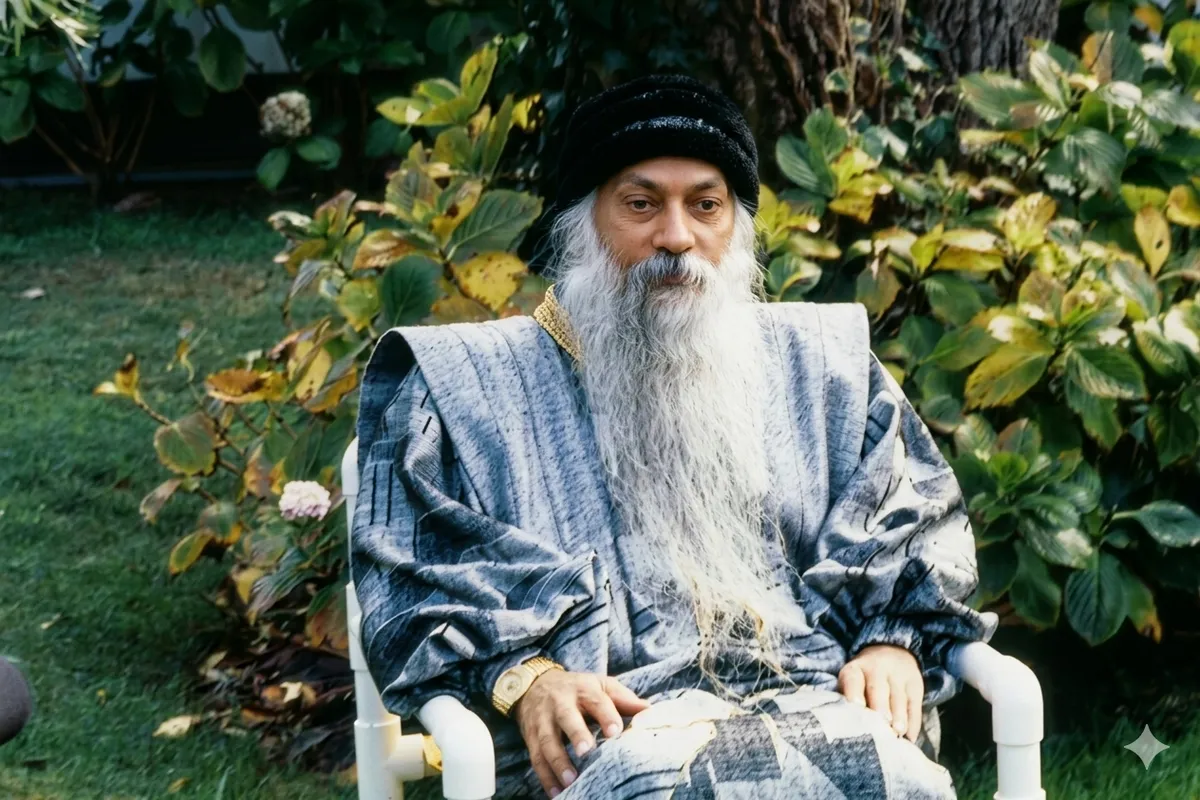
Osho's original Hindi beside Osho Live's English translation, matched passage by passage.
सहजानंद! यह सूत्र उन थोड़े से सूत्रों में से एक है, जिनमें अमृत भरा है। जितना पीओ, उतना थोड़ा।
नायं आत्मा प्रवचनेन लभ्यो
Sahajanand! This is one of those few sutras that are filled with nectar. The more you drink, the less it seems.
यह आत्मा शब्दों से उपलब्ध नहीं। वे शब्द फिर वेद के हों कि कुरान के हों कि बाइबिल के, इससे कुछ भेद नहीं पड़ता। यह आत्मा सुन कर उपलब्ध नहीं। फिर चाहे वे वचन बुद्ध के हों, महावीर के, लाओत्सु के, इससे कुछ भेद नहीं पड़ता। क्यों? क्यों आत्मा प्रवचन सुन कर उपलब्ध नहीं हो सकता? क्योंकि आत्मा बाहर की कोई वस्तु नहीं, अंतर्तम का अनुभव है। आत्मा अमृत का स्वाद है। जैसे अंधे को कोई लाख समझाए प्रकाश के संबंध में, अंधा कैसे समझेगा? उसने प्रकाश देखा नहीं; उसकी कोई प्रतीति नहीं, कोई साक्षात्कार नहीं। कुछ का कुछ समझ लेगा।
“Nāyam ātmā pravacanena labhyo...” This Self is not available through words. Whether those words are from the Vedas, the Quran, or the Bible—there is no difference. The Self is not attained by listening. Whether the sayings are of Buddha, Mahavira, or Lao Tzu—no difference. Why? Why can the Self not be attained by hearing discourses? Because the Self is not an external object; it is an innermost experience. The Self is the taste of immortality. Explain light as much as you like to a blind person—how will he understand? He has never seen light; he has no impression, no encounter. He will get it all wrong.
रामकृष्ण निरंतर यह प्यारी कथा कहते थे--कि एक अंधे मित्र को उसके साथियों ने भोजन पर आमंत्रित किया। गरीब था अंधा। खीर परोसी। उस अंधे ने अपने पास में बैठे हुए मित्र को पूछा, बड़ी स्वादिष्ट है, यह क्या है? मित्र ने कहा: यह खीर है। दूध की बनी है। एक मिष्ठान्न है। अंधा पूछने लगा, दूध कैसा होता है? मित्र ने कहा: दूध कैसा होता है! शुभ्र होता है, श्र्वेत होता है। अंधे ने पूछा, उलझाओ मत पहेली को और। बात बनती नहीं, बिगड़ती चली जाती है। मुझे खीर का पता नहीं, तुमने दूध की बात कही। मुझे दूध का पता नहीं, तुमने श्र्वेत की बात कही। मुझे श्र्वेत का भी कुछ पता नहीं। यह श्र्वेत क्या?
Ramakrishna used to tell a sweet story: A blind friend, poor and blind, was invited to a meal. Kheer (sweet rice pudding) was served. He asked the friend sitting by him, “It’s delicious—what is it?” The friend said, “It’s kheer—made of milk, a dessert.” The blind man asked, “What is milk like?” “Milk? It’s white, pure white.” “Don’t confuse me with riddles,” said the blind man. “You mention kheer—I don’t know what that is. Then milk—I don’t know that either. Now you say white—I know nothing of white. What is white?”
मित्र ने कहा, तुम समझे नहीं? अरे, कभी बगुला देखा है? जैसे बगुला होता है, शुभ्र, श्र्वेत।...पुरानी कहानी है, नहीं तो मित्र कहता, नेता देखा है? सफेद, शुद्ध खद्दर। और बगुले और नेता में ऐसे भी बहुत संबंध है। बगुले ही नेता होते हैं। और बगुला पुराना नेता है, बड़ा अभ्यासी नेता है। बगुले को कभी खड़ा देखा है, सरोवर के तट पर, एक टांग पर? ऐसा आसन साधता है! पुराना योगी, तपस्वी है। एक ही टांग पर खड़ा रहता है--बिना हिले, बिना डुले। एकाग्रचित्त से। क्योंकि हिले-डुले तो पानी हिल-डुल जाए। पानी हिल-डुल जाए तो मछलियां सजग हो जाएं। फिर उसके पास न आएं। यूं खड़ा रहता है कि जैसे है ही नहीं। तभी मछलियां फंसती हैं। यूं ही नेता भी खड़ा रहता है, तभी मछलियां फंसती हैं। वह धंधा एक ही है। मगर कहानी पुरानी है, रामकृष्ण के समय में अभी यह गांधीवादी नेता आया नहीं था। अब थोड़ी रद्दोबदल कर लेनी चाहिए कहानी में; थोड़ा आधुनिक बना लेना चाहिए।...उस मित्र ने कहा कि बगुले को देखा है? जैसा बगुला होता है।
The friend said, “Haven’t you seen a heron? Like a heron—white.” (It’s an old story; today the friend might have said, “Have you seen a politician in pristine white khadi?” And there is much kinship between herons and leaders anyway. Herons are the original politicians. See a heron standing on one leg at the lake’s edge? What an ascetic! An old yogi, a great practitioner—stands on one leg without moving, so the water won’t ripple and alert the fish. He stands as if he isn’t there—only then do fish get caught. So too politicians stand—only then do fish get caught. Same business! But the story is old; in Ramakrishna’s time the Gandhian leader hadn’t arrived. We should update the story a bit...) “Have you seen a heron? White like that.”
मित्र भी पंडित रहा होगा। पंडित यानी अंधे से भी गया-गुजरा। नहीं तो अंधे को कोई समझाने बैठे रंग की बात! अंधे को जो रंग की बात समझाने बैठे, वह महा अंधा होना ही चाहिए। अंधे ने कहा: अब मैं कुछ और पूछूं, ठीक नहीं, क्योंकि बात दूर से दूर हुई चली जाती है। मैंने बगुला कभी देखा नहीं। कुछ इस ढंग से कहो कि मेरी समझ में आ सके। मैं अंधा हूं, यह देख कर कहो। तब उसे होश आया। उसने कहा: तो फिर ऐसा करो, यह मेरा हाथ है, मेरे हाथ पर हाथ फेरो। उसने अपने हाथ को इस ढंग से मोड़ा जैसे बगुले की गर्दन हो। अंधे ने हाथ पर हाथ फेरा और उसने कहा, देखते हो, इस तरह बगुले की गर्दन होती है। वह अंधा प्रसन्न हो गया, आह्लादित हो गया, उसने कहा: धन्यवाद! तुम्हारे कष्ट के लिए बहुत अनुगृहीत हूं। अब समझा कि खीर कैसी होती है। मुड़े हुए हाथ जैसी!
The friend must have been a pundit—a scholar worse off than the blind. Who else would explain color to a blind man! The blind man said, “If I ask more, we’ll only go farther astray. I’ve never seen a heron. Say something I can grasp. Speak to my blindness.” Then the friend woke up. He said, “Here, feel my hand.” He bent his arm to mimic a heron’s neck. The blind man ran his hand over it: “You see—this is what a heron’s neck is like.” The blind man was delighted: “Thank you! Now I understand what kheer is like—like a bent arm!”
स्वाभाविक। अंधे पर हंसना उचित नहीं। अंधे की मजबूरी समझो। और जहां तक आत्मा का संबंध है, करीब-करीब सभी अंधे हैं। क्योंकि भीतर की आंख तो खुली नहीं है। तो जो भी आत्मा के संबंध में कहा जाएगा, वह गलत समझा जाएगा। तुम तक पहुंचते-पहुंचते बुद्धों के वचन कुछ के कुछ हो जाते हैं। बुद्ध कहते एक बात, तुम सुनते दूसरी बात। और यह स्वाभाविक है। क्योंकि बुद्ध जो कहते हैं, वही समझने के लिए तुम्हें भी प्रबुद्ध होना होगा। उसी जीवन तल पर होना होगा। उसी चैतन्य की कोटि में होना होगा। वही बोध, वही समाधि, वही ध्यान। वही अंतराकाश--ज्योतिर्मय। वही आह्लाद। वही शून्यता। वही मौन। तभी तो बुद्ध अपने स्वाद को तुम तक पहुंचा सकेंगे। मगर जिसको ऐसी अवस्था हो गई हो, उसे समझने को ही कुछ नहीं बचा।
Naturally. Don’t laugh at the blind; understand his compulsion. And with regard to the Self, almost everyone is blind, for the inner eye has not opened. Whatever is said about the Self will be misunderstood. By the time the words of the awakened reach you, they become something else. Buddha says one thing; you hear another. And this is natural. To understand what Buddha says, you must be awakened yourself, live on the same plane, in the same intensity of consciousness—the same awareness, the same samadhi, the same meditation, the same inner sky of light, the same rapture, the same emptiness, the same silence. Only then can the Buddha convey his taste to you. But one who has come to such a state has nothing left to understand.
एक बुद्ध को दूसरे बुद्ध से तो बोलने की कोई जरूरत नहीं होती। बिन बोले बात समझ में आ जाती है। क्योंकि दोनों ही एक जगह खड़े होते हैं, एक ही चैतन्य की अवस्था में। दो होते ही नहीं। जहां दो बुद्ध मिलते हैं, वहां एक ही रह जाता है। हजार बुद्ध भी मिलें तो वहां बुद्धत्व तो एक ही होता है। जैसे हजार नदियां गिर जाएं सागर में, क्या फर्क पड़ता है! सब जाकर सागर के साथ एक हो जाती हैं। सब खारी हो जाती हैं। सबका स्वाद सागर का स्वाद हो जाता है। हजार बुद्ध इकट्ठे हों तो वहां हजार बुद्ध नहीं होते। जैसे हजार दीये तुम जला दो तो रोशनी एक होती है--दीये हजार होंगे। हजार देहों में बुद्धत्व का दीया जलेगा, मगर रोशनी एक होगी। और सबकी रोशनी एक है। किससे कहना? क्या कहना? दो बुद्धों के पास एक-दूसरे से कहने को कुछ भी नहीं होता।
Between two Buddhas, words are unnecessary; everything is understood without speaking, for both stand in the same place, in the same state of consciousness—there are not two. Where two Buddhas meet, only one remains. Let a thousand rivers fall into the ocean—what difference does it make? They all become one with the ocean; all become salty; all take on the ocean’s taste. Let a thousand Buddhas gather—there are not a thousand Buddhas there. Light a thousand lamps—the light is one, though the lamps are many. In a thousand bodies the lamp of Buddhahood may burn, but the radiance is one. And all radiance is one. What is there to say? To whom?
जो बोल सकते थे, जो एक दूसरे को समझ सकते थे, वे बोलते नहीं--बोलने को कुछ नहीं बचता। और दो बुद्धुओं के पास बहुत बोलने को होता है, मगर समझने को कोई भी नहीं होता वहां। दोनों बुद्धू हैं, समझने वाला वहां कौन? इस दुनिया में कितनी बकवास चलती है! जानें चली जाती हैं, तलवारें खिंच जाती हैं। दो बुद्धू बहुत बोलते हैं, समझ में किसी के कुछ नहीं आता। दो बुद्ध बोलते नहीं, समझ में सब आ जाता है।
Those who could understand each other do not speak—there is nothing to say. Those who speak a lot are “buddhus” (fools)—and there is no one there to understand. This world runs on such chatter! Lives are lost, swords drawn. Two fools speak much and no one understands. Two Buddhas do not speak and all is understood.
तो न तो बुद्धों के बीच संवाद होता है और न बुद्धुओं के बीच संवाद होता है। बुद्धुओं के बीच विवाद होता है, बुद्धों के बीच मौन होता है।
So there is no dialogue between Buddhas, and none between buddhus. Between buddhus there is dispute; between Buddhas, silence.
फिर बोलना कहां सार्थक है? जब कोई बुद्धपुरुष अबुद्धों से बोलता है, बस वहीं केवल बोलने की कोई सार्थकता है; थोड़ी-बहुत; वह भी बहुत ज्यादा नहीं। क्योंकि यह सूत्र बहुत स्पष्ट है।
नायं आत्मा प्रवचनेन लभ्यो
Where then is speech meaningful? Only when an awakened one speaks to the unawakened—there there is some modest utility; not much. For this sutra is very clear:
नहीं मिलेगी यह आत्मा प्रवचन से। फिर बुद्ध क्यों बोलते हैं? फिर उपनिषद का यह ऋषि भी क्यों बोला? इतना भी कहने की क्या बात थी? बुद्ध बोलते हैं इस आशा में--इस आशा में नहीं कि तुम समझ पाओगे वरन इस आशा में कि शायद तुम्हारे भीतर जानने की प्यास जग जाए, अभीप्सा पैदा हो जाए। तुम्हारे भीतर सोई पड़ी है अभीप्सा। आग दबी पड़ी है, जरा उकसाने की बात है। जरा राख झाड़ देने की बात है और ज्योति प्रज्वलित हो सकती है।
“Nāyam ātmā pravacanena labhyo...” The Self will not be found through discourses.
Then why do Buddhas speak? Why did this Rishi of the Upanishad speak at all? Why say even this much? Buddhas speak not in the hope that you will understand, but in the hope that perhaps a thirst will be kindled in you, a longing will arise. The longing is asleep in you; the fire is hidden. A little prodding is needed, a little ash brushed away—and the flame can blaze.
बुद्ध इसलिए नहीं बोलते तुमसे, इस आशा में नहीं बोलते कि तुम समझ लोगे, इस आशा में बोलते हैं कि शायद समझने की यात्रा पर निकल जाओ; शायद तुम्हारे जीवन में खोज पैदा हो जाए; एक अभीप्सा जग जाए जानने की कि यह क्या है? क्या है आत्मा? क्या है हमारे जीवन का सत्य? हम कौन हैं, कहां से हैं, कहां जा रहे हैं? यह कौन है जो हमारे भीतर बोलता है, देखता है, सुनता है, जीता है? यह जीवन क्या है?
They do not speak expecting you to grasp, but hoping you may set out on the journey to understanding; that a search may be born; a longing to know: What is this? What is the Self? What is the truth of our life? Who are we, from where, and where are we going? Who is it within us that speaks, sees, hears, lives? What is this life?
देखना भी तो उन्हें दूर से देखा करना
देखना भी तो उन्हें दूर से देखा करना
शेवए इश्क नहीं हुस्न को रुसवा करना
देखना भी तो...
To even look at them—look from afar, It is not the lover’s way to disgrace beauty. To even look...
उनको यां वादे पे आ लेने दे ऐ अब्रे बहार
ऐे अब्रे बहार...
उनको यां वादे पे आ लेने दे ऐ अब्रे बहार
जिस तरह चाहना फिर बाद में बरसा करना
जिस तरह चाहना फिर बाद में बरसा करना
देखना भी तो उन्हें दूर से देखा करना
Let them come here upon their promise, O cloud of spring, O cloud of spring... Let them come here upon their promise, O cloud of spring— Then rain as you please afterwards. Then rain as you please afterwards. To even look at them—look from afar, It is not the lover’s way to disgrace beauty. To even look...
शेवए इश्क नहीं हुस्न को रुसवा करना
देखना भी तो...
शाम हो या कि सहर याद उन्हीं की रखनी
याद उन्हीं की रखनी...
शाम हो या कि सहर याद उन्हीं की रखनी
दिन हो या रात में हमें जिक्र उन्हीं का करना
Whether it is evening or dawn—keep only their remembrance, Keep only their remembrance... Whether it is evening or dawn—keep only their remembrance, By day or by night—let our talk be only of them. By day or by night—let our talk be only of them. To even look at them—look from afar, It is not the lover’s way to disgrace beauty. To even look...
दिन हो या रात में हमें जिक्र उन्हीं का करना
देखना भी तो उन्हें दूर से देखा करना
शेवए इश्क नहीं हुस्न को रुसवा करना
देखना भी तो...
कुछ समझ में नहीं आता कि ये क्या है हसरत
ये क्या है...ये क्या है हसरत
कुछ समझ में नहीं आता कि ये क्या है हसरत
उनसे मिल कर भी न इजहारे तमन्ना करना
I cannot understand, Hasrat, what this is— What this is... what this longing is: I cannot understand, Hasrat, what this longing is— That even after meeting them, do not declare your desire. That even after meeting them, do not declare your desire. To even look at them—look from afar, It is not the lover’s way to disgrace beauty. To even look...
उनसे मिल कर भी न इजहारे तमन्ना करना
देखना भी तो उन्हें दूर से देखा करना
शेवए इश्क नहीं हुस्न को रुसवा करना
देखना भी तो...
बुद्ध बोलते हैं इसलिए कि तुम्हारे भीतर पड़ी कोई सोई याद जग जाए। अभी तो दूर से ही देखोगे। जैसे कोई आकाश मेघाच्छादित न हो और सैकड़ों मील दूर से हिमालय के उत्तुंग शिखरों को देखे। उन शिखरों पर जमी हुई कुंवारी बर्फ को देखे। देखना भी तो उन्हें दूर से देखा करना।
Buddhas speak so that a sleeping memory in you may awaken. For now you will only see from afar—like one who, when the sky is clear, sees from hundreds of miles away the towering peaks of the Himalayas, the virgin snow upon them. To even look at them—look from afar.
शाम हो या कि सहर याद उन्हीं की रखनी
दिन हो या रात हमें जिक्र उन्हीं का करना
देखना भी तो...
Whether it is evening or dawn—keep only their remembrance, By day or by night—let our talk be only of them. To even look...
बुद्धों के बोलने का प्रयोजन यह नहीं है कि तुमने सुन लिए शब्द और तुम्हें ज्ञान हो जाएगा। इतना ही है कि शायद शब्द तुम्हारे भीतर किसी भूली-बिसरी प्यास को जगा दें। शायद बुद्धों की मौजूदगी तुम्हारे भीतर कुतूहल बने, जिज्ञासा बने, मुमुक्षा बने। वे बोलते हैं इसलिए कि शायद उनके वचनों की चोट तुम्हारे हृदय की वीणा को छेड़ दे। नहीं कि तुम सत्य को जान लोगे, लेकिन सत्य को जानना है, इतना स्मरण आ जाए तो बहुत। बस, इतना ही स्मरण आ सकता है। जागे हुए व्यक्तियों ने सिर्फ इसीलिए बात की है गैर-जागे हुए व्यक्तियों से कि देखो, हम जाग गए; देखो, हमारे दुख मिट गए; देखो, हमारा संताप झड़ गया; देखो, हमारे जीवन में फूल खिल गए; देखो ये सुगंध, यह तुम्हारी भी सुगंध है! यह तुम्हारे भी भीतर छिपा हुआ खजाना है। यह तुम्हारी भी संपदा है। जरा खोदो और पा लोगे।
The purpose of the Buddhas’ words is not that you hear the words and knowledge happens. Only this: perhaps their words may awaken some forgotten thirst; their presence may spark curiosity, inquiry, mumuksha. They speak so their words may strike the strings of your heart. Not that you will know the Truth—but that you will remember: Truth is to be known. Even this much is enough. Awakened ones have spoken only to say: Look, we have awakened; our misery has vanished; our torment has fallen away; flowers have blossomed in our life; smell this fragrance—it is yours too! This treasure lies within you as well. Dig a little and you will find it.
लेकिन जो मूढ़ हैं, वे केवल शब्दों को पकड़ कर बैठ जाते हैं। जैसे तोते राम-राम दोहराते रहते हैं, ऐसे ही वे भी वेदों को दोहराते हैं, उपनिषदों को दोहराते हैं। अब यह बड़े मजे की बात है, मुंडकोपनिषद में यह श्लोक है, और मैं ऐसे लोगों को जानता हूं जो जीवन भर से मुंडकोपनिषद पढ़ रहे हैं, जिनको उसका शब्द-शब्द याद है और जिनको जरा भी बेचैनी नहीं होती इस श्लोक को उद्धरण करने में और जिन्होंने जाना नहीं और जिनकी आंखें खुली नहीं।
But the stupid catch only the words—like parrots repeating “Ram, Ram”—they recite the Vedas and the Upanishads. The irony is that this very verse is in the Mundaka Upanishad, and I know people who have been reading it all their lives, know it word for word, and feel not the least unease quoting this shloka—though they have not known, their eyes have not opened.
नायं आत्मा प्रवचनेन लभ्यो।
थोड़े से शब्दों में कितनी बात कह दी। बूंद में जैसे सागर को समा दिया। नहीं, प्रवचन से यह उपलब्ध नहीं है। सुनना जरूर उनको जो जानते हैं, लेकिन उनके शब्दों को मत पकड़ लेना। बुद्ध ने कहा है: मैं जो कहता हूं, उस पर ज्यादा ध्यान मत दो, मैं जो हूं, उस पर ध्यान दो। मैं जो कहता हूं, वह उतना महत्वपूर्ण नहीं, मैं जहां से कहता हूं, वह स्रोत महत्वपूर्ण है। और, मैं कहूं, इसलिए मत मानना। मैं कहूं, इसलिए तो केवल प्रयोग करना जानने का। हां, जिस दिन जान लो, उस दिन मानना।
“Nāyam ātmā pravacanena labhyo.” How much is said in so few words—an ocean condensed into a drop! No, it is not available through discourse. Yes, listen to those who know—but don’t cling to their words. Buddha said: Do not pay too much attention to what I say; attend to what I am. What I say is not so important; the source from which I say it is important. And don’t believe me because I say it; believe only when you know. Till then, experiment.
न मेधया न बहुना श्रुतेन।
न तो बड़ी मेधा से, प्रतिभा से, तर्क से, बुद्धि से यह आत्मा मिलती है। तर्क के हाथ बहुत छोटे हैं। आकाश के तारों को तर्क से नहीं छुआ जा सकता। तर्क के लिए तो आत्मा वैसे ही है जैसे तुमने ईसप की कहानी में पढ़ा है कि लोमड़ी उछली, कूदी, अंगूरों तक पहुंची नहीं। फिर चारों तरफ उसने देखा कि कोई देखता तो नहीं है। और फिर यह कहती हुई कि अगर किसी ने देख भी लिया हो तो सुन ले कि अभी अंगूर कच्चे हैं, अभी अंगूर खट्टे हैं, चल पड़ी। एक खरगोश छिपा यह देख रहा था झाड़ी में; उसने कहा, चाची, आप पहुंच नहीं पाईं। लेकिन लोमड़ी ने कहा: चुप, बदतमीज, पहुंच कर करूंगी क्या, अभी अंगूर कच्चे हैं, अभी अंगूर खट्टे हैं। पक जाने दे, फिर पहुंचूंगी, अभी तोड़ने से सार क्या है! उछल कर मैंने देख लिया कि अंगूर अभी कच्चे हैं और खट्टे हैं। अभी चखा नहीं, छुआ भी नहीं और जान लिया कि अंगूर खट्टे हैं!
तर्क की छलांग बहुत छोटी है। इतनी छोटी। लेकिन तर्क का अहंकार बहुत बड़ा है। तो तर्क के पास एक ही उपाय है कि वह कह दे, आत्मा होती ही नहीं। अंगूर कच्चे, अंगूर खट्टे। तर्क की पकड़ में नहीं आती आत्मा तो आत्मा हो कैसे सकती है; इसलिए नहीं है। ऐसा इनकार करके तर्क अपने अहंकार को बचा लेता है।
“Na medhayā na bahunā śrutena.” Not by great intellect, talent, argument, or cleverness is the Self attained. Reason’s arms are very short. You cannot touch the stars with logic. For logic the Self is like in Aesop’s fable: the fox leapt for the grapes, couldn’t reach. After checking no one was watching, she muttered, “Anyway, the grapes are unripe—sour,” and walked off. A rabbit hidden in the bushes cried, “Auntie, you couldn’t reach them!” The fox snapped, “Silence, brat! If I could reach, then what? They’re unripe—sour. Let them ripen; then I’ll reach. By jumping I’ve seen they’re sour!” Without tasting, without touching—she “knew” they were sour!
जरूर तर्क के हाथ कुछ चीजों तक पहुंचते हैं--विज्ञान में सार्थक है तर्क, क्योंकि वस्तुओं को पकड़ लेता है, खोज लेता है। लेकिन आत्मा कोई वस्तु नहीं। आत्मा तो तर्क के पीछे है, तर्कातीत है। तर्क के आगे जो है, उसको तर्क छू सकता है, लेकिन तर्क के पीछे जो है, उसके लिए तर्क क्या करे! दर्पण के सामने जो है, वह दर्पण में दिखाई पड़ जाएगा, लेकिन दर्पण के पीछे जो है, वह दर्पण में कैसे दिखाई पड़ेगा। लेकिन अगर दर्पण का भी अहंकार हो तो दर्पण भी कहेगा कि जो मेरे पीछे है, वह है ही नहीं। अगर होता तो दिखाई पड़ता। जो मुझमें दिखाई न पड़े वह है ही नहीं।
Reason’s leap is that short. But its ego is huge. So it has one device: declare the soul does not exist. “Sour grapes.” If the Self eludes logic’s grasp, then the Self cannot be; thus, it isn’t. With such denial, logic saves its ego.
Reason does reach certain things—hence it is valid in science, for it grasps objects, investigates them. But the Self is not an object. The Self stands behind logic—trans-logical. Logic can touch what is in front of it; what is behind it—what can logic do? What is before the mirror is reflected; what is behind the mirror—how will it be seen? If the mirror had an ego, it would also declare, “What is behind me does not exist—if it did, it would appear in me.”
तर्क के सामने संसार है और पीछे तुम हो। और तुम्हारा होना आत्मा है। तर्क में तुम्हारा कोई प्रतिफलन नहीं बनता। इसलिए तर्क निश्र्चित रूप से नास्तिक होता है।
Before logic stands the world; behind it are you. And your being is the Self. Reason yields no reflection of you. Hence reason is inevitably atheistic.
‘न मेधया।’ बुद्धि से नहीं पाया जा सकता। और बुद्धि है क्या? विचार की श्रृंखला। और विचार से कभी किसी ने अज्ञेय को जाना है? विचार की तो सीमा है, ज्ञात। जो जाना है, विचार उसी की जुगाली करता है। तुमने भैंसों को जुगाली करते देखा? बस, विचार उतना ही करता है, जुगाली करता है। जो जाना है, जो सुना है, जो पढ़ा है, उसी की जुगाली करता है। लेकिन आत्मा को न तो जाना जा सकता है, न सुना जा सकता है, न पढ़ा जा सकता है, उसकी जुगाली कैसे करोगे? उसके लिए तर्कातीत होना जरूरी है। आत्मा को जानने के लिए विचार के पार जाना जरूरी है। निर्विचार होना जरूरी है। तर्क है विकल्प, यह ठीक या वह ठीक। और आत्मा को जानना हो तो निर्विकल्प होना जरूरी है। यही तो समाधि की परिभाषा है, निर्विचार, निर्विकल्प, मनातीत। वह जो मनातीत अवस्था है समाधि की, उसमें ही जाना जाता है आत्मा को।
“Na medhayā”—not by intellect. What is intellect? A chain of thoughts. Has anyone ever known the Unknowable through thought? Thought’s domain is the known; it only chews cud. Have you seen buffaloes chewing cud? Thought does the same. It masticates what has been heard, read, known. But the Self can neither be read, heard, nor known beforehand—what cud will you chew? For the Self one must go beyond thinking—into no-thought. Logic decides between alternatives—this or that. To know the Self one must be beyond alternatives—nirvikalpa. This is the definition of samadhi: beyond thought, beyond options, beyond mind. Only there is the Self known.
न मेधया न बहुना श्रुतेन।
और बहुत सुन लोगे तुम, बहुत जानकारी भी इकट्ठी कर लोगे, सारे शास्त्र तुम्हें कंठस्थ हो जाएं, तो भी तुम्हारे अनुभव में कुछ न आएगा। गीता कंठस्थ है लोगों को लेकिन इससे वे कृष्ण नहीं हो गए हैं। धम्मपद कंठस्थ है लोगों को, इससे वे बुद्ध नहीं हो गए हैं। कितने लोग कुरान की आयातों को दोहराते हैं, मगर इससे वह मोहम्मद नहीं हो गए हैं। काश, इतना आसान होता! कि हम शास्त्रों को दोहरा देते यंत्रवत और शास्त्रों में जो छिपा पड़ा है, वह हमारी संपदा हो जाता। तब तो हम विश्र्वविद्यालयों में धर्म सिखा सकते थे।
“Na medhayā na bahunā śrutena.” You may listen much, gather heaps of information, commit all the scriptures to memory—yet nothing will enter your experience. Many have the Gita by heart—does that make them Krishna? Many recite the Dhammapada—are they Buddhas? Many repeat verses of the Quran—does that make them Muhammad? If only it were so easy! We could mechanically repeat the scriptures and inherit their treasures. Then universities could teach religion.
मैं तुमसे कहता हूं, धर्म की कोई शिक्षा नहीं हो सकती। लेकिन मैं हैरान होता हूं, जो लोग मुंडकोपनिषद के इस सूत्र को उद्धरण देते हैं, वे भी धार्मिक शिक्षा की बात करते हैं। तब मैं देखता हूं कि चूक गए वे, यह सूत्र भी उनकी पकड़ में नहीं आया। आत्मा तो बहुत दूर, आत्मा के संबंध में यह सूत्र भी उनकी समझ में नहीं आया। धार्मिक शिक्षा होनी चाहिए! पंडित, पुरोहित, मौलवी, पादरी, सबकी एक इच्छा है; संत, महात्मा, मुनि, सबकी एक इच्छा है: धार्मिक शिक्षा होनी चाहिए। धर्म की शिक्षा हो सकती है--सवाल यह है!
I tell you: religion cannot be taught. I am amazed that people who quote this very sutra of the Mundaka still talk of “religious education.” Then I see they missed it; even this sutra has not entered their grasp—let alone the Self. “There should be religious education!” Pundits, priests, mullahs, pastors, monks—all have one desire: religious education. Can religion be taught—that is the question!
मैं विश्र्वविद्यालय में जब प्रोफेसर था तो दिल्ली में शिक्षा मंत्रालय ने भारत से कोई बीस प्रोफेसरों को आमंत्रित किया था--धार्मिक शिक्षा के ऊपर एक संगोष्ठी आयोजित थी--भूल-चूक से वे मुझे भी बुला बैठे। भूल-चूक से ही कहूंगा, क्योंकि उन्होंने आशा की होगी कि मैं धार्मिक शिक्षा के संबंध में कुछ सुझाव दूंगा कि कैसे धार्मिक शिक्षा दी जाए और मैंने मुंडकोपनिषद का यह सूत्र ही कहा--
When I was a professor at the university, India’s Education Ministry invited about twenty professors to Delhi for a symposium on religious education—by some mistake they invited me too. They must have hoped I would suggest how to impart religious education. I simply quoted the Mundaka:
नायं आत्मा प्रवचनेन लभ्यो
न मेधया न बहुना श्रुतेन।
धर्म की शिक्षा हो ही नहीं सकती। और जिसकी शिक्षा हो सकती है, वह धर्म नहीं है। इसलिए कोई विश्र्वविद्यालय कभी धर्म की शिक्षा नहीं दे सकेगा। धर्म के संबंध में शिक्षा दे सकता है, कि हिंदू क्या कहते हैं, मुसलमान क्या कहते हैं, ईसाई क्या कहते हैं, लेकिन कोई विश्र्वविद्यालय जीसस को, महावीर को, जरथुस्त्र को पैदा नहीं कर सकेगा। हां, गणित की शिक्षा हो सकती है। विज्ञान की शिक्षा हो सकती है, भूगोल की, इतिहास की शिक्षा हो सकती है, लेकिन धर्म की कोई शिक्षा नहीं हो सकती है। धर्म के संबंध में शिक्षा हो सकती है, लेकिन स्मरण रखना भेद को: प्रेम के संबंध में जानना प्रेम को जानना नहीं है। प्रेम के संबंध में तो वह भी जान सकता है जिसने कभी प्रेम नहीं किया। पुस्तकालयों में हजारों किताबें हैं। और ईश्र्वर के संबंध में जानना ईश्र्वर को जानना नहीं है। ईश्र्वर के संबंध में तो कोई भी जान सकता है। लाखों किताबें हैं। लेकिन संबंध में जानना और सत्य को जानना दो भिन्न बातें हैं। खतरा यही है कि कहीं सूचनाओं में ही न भटक जाना, कहीं सूचनाओं में ही न अटक जाना। बहुत लोग अटके हैं। जिनको तुम पंडित कहते हो, वे इसी तरह के अटके हुए लोग हैं।
“Nāyam ātmā pravacanena labhyo, na medhayā na bahunā śrutena.” Religion cannot be taught. And whatever can be taught is not religion. A university can teach about religion—what Hindus say, what Muslims, what Christians—but no university can produce a Jesus, a Mahavira, a Zarathustra. Mathematics can be taught. Science, geography, history can be taught. But religion cannot be taught. About religion can be taught—but remember the difference: knowing about love is not knowing love. One who has never loved can know about love. Libraries are full of books. Knowing about God is not knowing God. Anyone can know about God—there are countless books. But knowing “about” and knowing Truth are two different things. The danger is that you may get lost in information, stuck in it. Many are stuck—that’s what you call “pundits.”
न मेधया न बहुना श्रुतेन।
कितना ही श्रुति को पढ़ो, कितना ही स्मृतियों को पढ़ो, कितने ही सुंदर-सुंदर शब्दों के संग्रह बना लो, कितने ही सुभाषित कंठस्थ कर लो, इससे कुछ भी न होगा। तुम जितने अज्ञानी थे, उतने ही रहोगे। हां, एक खतरा है कि तुम्हें यह भ्रांति पैदा हो सकती है कि तुम ज्ञानी हो गए। और यह सबसे बड़ा खतरा है। अज्ञानी को भ्रांति हो जाए कि ज्ञानी हो गया, अब इसकी जीवन-स्थिति बड़ी दयनीय हो गई। अब इसके सुधार का उपाय भी न रहा।
“Na medhayā na bahunā śrutena.” Read the Sruti and Smritis as much as you like, collect beautiful sayings, memorize noble aphorisms—nothing will happen. You will remain as ignorant as before. A greater danger arises: the illusion that you have become knowledgeable. And that is the greatest danger. When the ignorant believe they know, their condition becomes pitiable; there is hardly a remedy left.
सदगुरु तुम्हें यह नहीं सिखाता कि आत्मा क्या है, सदगुरु तुम्हें यह नहीं बताता कि परमात्मा क्या है। सदगुरु तुम्हें ज्ञान नहीं देता, सदगुरु तुम्हें ध्यान देता है। और ध्यान का अर्थ है: निर्विचार होना, निर्विकल्प होना; शास्त्र से मुक्त होना, शब्द से मुक्त होना, सिद्धांत से मुक्त होना, सूचना से मुक्त होना। ध्यान का पहला अर्थ है: अपने अज्ञान को स्वीकार करना, अंगीकार करना। सुकरात सही है। सुकरात कहता है, मैं बस इतना ही जानता हूं कि कुछ भी नहीं जानता। यह ज्ञान की तरफ पहला कदम है। और जिसको यह भ्रांति है मैं जानता हूं--और भ्रांति पैदा हो जाती है सुंदर वचनों से--वह तो भटक गया। ज्ञान जितने लोगों को डुबाता है, अज्ञान नहीं डुबाता। अज्ञान से ज्ञान ज्यादा खतरनाक है। उपनिषद का प्रसिद्ध वचन है कि अज्ञानी तो अंधेरे में भटकते ही हैं, ज्ञानी महा अंधकार में भटक जाते हैं। मगर मजा यह है, इस सूत्र को भी पंडित याद कर लेते हैं। इस सूत्र का भी तोतों की तरह उद्धरण देते हैं
A true master does not teach you what the Self is, nor what God is. A master does not give you knowledge; he gives you meditation. Meditation means: no-thought, no-choice; freedom from scriptures, words, doctrines, information. The first meaning of meditation is to accept your ignorance. Socrates is right: “I know only this much—that I know nothing.” This is the first step toward wisdom. Those who fancy they know—an illusion born of fine words—are lost. Knowledge drowns more people than ignorance does. The Upanishads say: the ignorant wander in darkness; the “learned” wander in a great darkness. The irony is—pundits memorize even this verse and parrot it!
यं एवैष वृणुते तेन लभ्यस्
यह आत्मा तो जिसका वरण करता है, उसीको मिलता है। यह महत्वपूर्ण सूचना है, मगर इसके बड़े गलत अर्थ किए गए हैं--होने ही थे गलत अर्थ। जितनी महत्वपूर्ण बात हो उतने गलत अर्थ होंगे। क्योंकि जितनी महत्वपूर्ण बात हो, तुम्हारे अनुभव से उतनी ही दूर हो जाती है। तुम्हारे और उसके बीच फासला बड़ा होता जाता है। तुम्हें वे ही बातें समझ में आती हैं जो तुम्हारे अनुभव के करीब पड़ती हैं। और सत्य तो बहुत दूर। तुम्हारे और उसके बीच तो कोई नाता ही नहीं रहा है। जन्मों से कोई नाता नहीं है। फासला बढ़ता ही गया है।
“Yam evaisha vṛṇute tena labhyaḥ...” This Self is attained by the one whom It chooses. This is a significant statement—but it has been gravely misinterpreted, and inevitably so. The more significant the statement, the more wrong the meanings people will give, because it lies far from their experience. You understand only what lies near your experience; Truth is far—no relationship for lifetimes; the distance has only grown.
इस सूत्र का यह अर्थ किया गया है अब तक और मैं तुमसे कहना चाहता हूं, वह अर्थ बुनियादी रूप से गलत है। अर्थ किया गया है कि यह तो परमात्मा की जिस पर कृपा होती है, उसको आत्मा का बोध होता है। न तो प्रवचन से मिलती, न बुद्धि से मिलती, न जानकारी से मिलती। तो फिर कैसे मिलती है? परमात्मा की जिस पर कृपा होती है। यह सरल अर्थ निकाल लिया लोगों ने। तो करना क्या है? फिर करने को कुछ बचा नहीं। फिर तो परमात्मा की जब कृपा होगी तब होगी। इस देश की काहिलता इसी तरह के अर्थों पर निर्भर है। इस देश की सुस्ती, मुर्दगी, इस देश का मरा-मरा होना, इस देश की दयनीयता, दीनता, इस देश की बाईस सौ वर्ष पुरानी गुलामी इसी तरह के अर्थों पर आधारित है। इसी तरह की हमने बेवकूफियां कर ली हैं। जब पत्ता भी उसकी मर्जी के बिना नहीं हिलता तो गुलामी कैसे आ जाएगी। और जब उसकी ही मर्जी है, तो हम क्या कर सकते हैं? इसलिए अब गुलाम होना ही ठीक है। उसकी मर्जी से राजी होना ही ठीक है।
People have taken it to mean: “The one upon whom God bestows His grace—only he realizes the Self.” Not through discourse, nor intellect, nor information—then how? “When God’s grace descends.” Easy! Then what is there to do? Nothing remains to be done—only wait for His grace. This is the root of this country’s laziness, lethargy, deadness, misery, the long slavery of twenty-two centuries. With such meanings we have turned nectar into poison. “Not a leaf stirs without His will”—then how could slavery happen? And if all is His will, what can we do? Then it’s best to accept bondage—it is His wish. If not a leaf stirs without Him, how will disease arise? Then accept disease. Drag along somehow; rot; do nothing—what can we do? “When He wishes...”
उसकी बिना मर्जी के पत्ता नहीं हिलता तो बीमारी कैसे हो जाएगी? तो अब क्या कर सकते हैं? इसलिए बीमारी को अंगीकार कर लेना ठीक है। घसीटते रहो बीमारियों को। जीते रहो किसी तरह, सड़ते रहो, कुछ करो मत-क्या कर सकते हैं हम! जब उसकी इच्छा होगी।
यं एवैष वृणुते तेन लभ्यस्
आत्मा को भी हम तो पा नहीं सकते--शास्त्र में है नहीं, वचनों में है नहीं, ज्ञान में है नहीं, बुद्धि में है नहीं; अब क्या करें? अब तो प्रतीक्षा के सिवाय कोई रास्ता न रहा। अब तो जब उसकी कृपा होगी!
“Yam evaisha vṛṇute tena labhyaḥ...” We cannot attain the Self; it isn’t in scriptures, words, knowledge, intellect—what to do? Only wait for His grace. Which also implies: He graces some and not others. Most are ungraced; once in a while, someone is favored—Buddha, Mahavira, Yajnavalkya, Kabir. Fine! What can the rest do? Wait for lifetimes till grace falls. If it doesn’t—keep dragging, rotting, dying.
इसका तो यह भी मतलब हुआ कि किसी पर उसकी कृपा होती है और किसी पर उसकी कृपा नहीं होती। ज्यादातर पर तो कृपा होती ही नहीं; कभी किसी पर हो जाती है कृपा। मतलब यह हुआ कि परमात्मा की तरफ से भी बड़ा अन्याय चल रहा है। किसी बुद्ध पर हो गई कृपा, किसी महावीर पर हो गई कृपा, किसी याज्ञवल्क्य पर हो गई कृपा, किसी कबीर पर हो गई कृपा, ठीक! बाकी लोग क्या कर सकते हैं! वे राह देखेंगे, जब जन्मों-जन्मों में कभी उन पर भी कृपा होगी, कभी उन पर भी नजर पड़ेगी, तो ठीक। और नहीं पड़ी तो यूं ही घसीटना है। यूं ही मरना है, यूं ही गलना है।
नहीं, ऐसा इसका अर्थ नहीं है। ये भाग्यवादी अर्थ इस पर थोप दिया गया। मगर अज्ञानियों के हाथ में अमृत भी पड़ जाए तो जहर हो जाता है। इस सूत्र का बड़ा और अर्थ है: यह तो जिसका वरण करता है, उसीको मिलता है। लेकिन किसका वरण करता है? परमात्मा की कृपा तो सभी पर बराबर बरसती है--बरसनी ही चाहिए। अगर परमात्मा भी भेदभाव करता हो कि किसी पर थोड़ा ज्यादा बरसे और किसी पर थोड़ा कम बरसे; ब्राह्मण पर थोड़ा ज्यादा और शूद्र पर थोड़ा कम; जनेऊ पहन लो तो थोड़ा ज्यादा और जनेऊ न पहनो तो थोड़ा कम; चुटैया बढ़ा लो तो थोड़ा ज्यादा और चुटैया कटा लो तो थोड़ा कम; अगर ऐसी मूढ़ताएं ईश्र्वर को भी हों--उपवास कर लो तो थोड़ा ज्यादा और भरे पेट होओ तो थोड़ा कम; सिर के बल खड़े हो जाओ तो थोड़ा ज्यादा और पैर पर चलो, आदमी की तरह, भले आदमी की तरह तो कम। यह क्या पागलपन हुआ कि मंदिरों में घंटियां बजाओ तो थोड़ा ज्यादा और घंटियां न बजाओ तो बस, नाराज हो गए! परमात्मा की कृपा तो सभी पर बराबर बरसती है। लेकिन कुछ पात्र हैं जो उलटे रखे हैं। वर्षा तो होती रहती है अमृत की लेकिन पात्र खाली के खाली रह जाते हैं।
No—this is not the meaning. Fatalistic meanings have been imposed. In the hands of the ignorant, even nectar becomes poison. The greater meaning is: “It is attained by the one whom It chooses.” But whom does It choose? God’s grace showers equally on all—it must. If God were partial—on some more, on others less; on Brahmins more, Shudras less; wear the sacred thread—more; don’t wear it—less; grow a tuft—more; cut it—less; fast—more; with a full belly—less; stand on your head—more; walk on your feet like a sane person—less; ring temple bells—more; don’t ring—He’s displeased! What madness to attribute such foolishness to God! His grace rains equally on all. But some vessels are upside down. The rain of nectar falls, yet the vessels remain empty.
वर्षा में कुछ भेद नहीं। तुम देखो रख कर, एक मटके को उलटा रख दो, वर्षा हो रही हो, धुआंधार वर्षा हो रही हो, मूसलाधार वर्षा हो रही हो और बर्तन को उलटा रख दो, कैसे भरेगा! वर्षा क्या करे! वर्षा की तरफ से कोई कंजूसी नहीं है, मगर पात्र तो सीधा होना चाहिए! फिर पात्र भी सीधा हो, लेकिन फूटा हो, तो भरता हुआ मालूम पड़ेगा लेकिन भर कभी पाएगा नहीं। इधर भरेगा उधर खाली हो जाएगा। फिर यूं समझो कि पात्र सीधा भी हो, छिद्र वाला भी न हो, लेकिन जमाने भर की गंदगी से भरा हो, तो वर्षा तो हो भी जाए, भर भी जाए मगर वह जल पीने योग्य नहीं होगा। वह तुम्हारी तृषा को मिटा न सकेगा।
See it in a rainstorm: put a pot upside down—even in a torrential downpour, how will it fill? There is no stinginess in the rain; the vessel must be upright. Or, the vessel is upright but cracked—then it seems to fill, yet never holds. Or the vessel is upright and sound, but already full of filth—then even if it fills, the water is undrinkable, it won’t quench your thirst.
तो ये तीन बातें खयाल रखनी जरूरी हैं।
So, remember three things:
पहली बात, पात्र सीधा हो। पात्र सीधा हो, इसका अर्थ है: तुम्हारा हृदय अंगीकार करने को राजी हो। इसी को श्रद्धा कहा है। श्रद्धा का अर्थ है: अंगीकार करने की तत्परता। स्वागत, अभिनंदन, वंदनवार। जैसे कोई मेहमान आता है और तुम द्वार पर खड़े होकर पलक-पांवड़े बिछाए प्रतीक्षा करते हो, राह देखते हो। दरवाजा बंद करके नहीं बैठते, दरवाजा खुला रखते हो कि कहीं मेहमान लौट न जाए। द्वार पर ही खड़े रहते हो कि आए तो स्वागत की आरती उतारनी है। श्रद्धा का इतना ही अर्थ है कि तुम आओगे तो मेरे द्वार बंद न पाओगे।
पात्र सीधा हो।
1) The vessel must be upright. This means: your heart must be ready to receive—this is shraddha (trust). Shraddha means readiness to welcome. Like waiting at your doorway for a guest—door open, eyes on the path, lamp lit, wreath in hand. “When you come, you will not find my door closed.”
संदेह से भरा हुआ व्यक्ति उलटा पात्र है। बंद अंगीकार करने को राजी नहीं, इनकार करने को तत्पर।
The doubter is an upside-down vessel—ready to reject, not to receive.
फिर, छिद्र नहीं होने चाहिए। पात्र सीधा हो और छिद्र न हों। तुम्हारे जीवन में कितने छिद्र हैं! तुम्हारी ऊर्जा कितने छेदों से बही जा रही है! क्रोध से तुम कितनी ऊर्जा को बहाते हो! पाते क्या हो? पाते कुछ भी नहीं, गंवाते बहुत हो। कमाते क्या हो? क्रोध करके कभी किसी ने कुछ कमाया है? हजार तरह की वासनाएं तुम्हारे छिद्र हैं। कोई धन के पीछे दौड़ रहा है, कोई पद के पीछे दौड़ रहा है, सभी मृग-मरीचिकाओं के पीछे दौड़ रहे हैं, लेकिन दौड़ने में ऊर्जा समाप्त होती है। दौड़ने में तुम्हारी शक्ति क्षीण होती है। और जिन चीजों के पीछे भाग रहे हो वहां कुछ पाने को नहीं; सिर्फ मौत मिलेगी। हर आदमी अपनी कब्र में गिर जाता है जाकर। कहीं से जाओ, किसी दिशा में भागो--पद चाहो कि यश चाहो कि धन चाहो--एक दिन पहुंच जाओगे कब्र में। और कहीं तो पहुंचने को नहीं है।
2) There must be no holes. Your life has so many leaks! How much energy you spill in anger—what do you gain? Nothing; you lose much. A thousand desires are leaks. Someone chases money, someone status—everyone chases mirages. Running drains energy; and all roads end in the grave. Whatever direction you run—wealth, fame, power—one day you arrive at the grave, and nowhere else.
इसके पहले कि कब्र तुम्हें अपने में समा ले, इन छिद्रों को बंद करो। ये आपाधापी छोड़ो। किसने धन को पाकर पाया है? बड़े से बड़े धनी से भी पूछो तो वह निर्धन है। भीतर अभी रो रहा है। बाहर तो अंबार लग गया धन का, लेकिन भीतर? भीतर तो सब खाली का खाली है। बाहर का धन भीतर के खालीपन को नहीं भर सकता। और बाहर का धन तो मौत छीन लेगी। तुम खाली हाथ आए और खाली हाथ जाओगे। आए थे तब कम से कम मुट्ठी बंधी थी, जाओगे तब मुट्ठी भी खुल जाएगी।...बच्चे आते हैं तो मुट्ठी बंधी होती है, और बूढ़े मरते हैं तो मुट्ठी भी खुल गई होती है। और भद्द हो गई होती है! मुट्ठी कम से कम बंद होती है तो पता तो लगता है कि कुछ होगा भीतर। हो या न हो। बंधी मुट्ठी लाख की--समझदार लोग कहते हैं--खुली तो खाक की। बच्चा कम से कम आशाएं लेकर तो आता है, संभावनाएं लेकर आता है, इसलिए मुट्ठी बंद होती है। अभी जिंदगी में हीरे बरस सकते हैं, इसलिए मुट्ठी बंद होती है। बूढ़ा तो सब गंवा कर जाता है, कुछ बरसा नहीं; कुछ हाथ न लगा; उसके हाथ खाली होते हैं; उसके हाथ उसके जीवन की कथा कहते हैं, उसके जीवन की व्यथा कहते हैं।
Before the grave swallows you, seal the leaks. Drop this frenzy. Who ever truly “had” by having wealth? Ask the wealthiest—inside he is a beggar, weeping. Outside heaps of money; inside empty. Outer wealth cannot fill inner emptiness. And death will snatch the outer. You came empty-handed, you will go empty-handed. When you came, your fist was at least closed; when you go, even the fist opens. Children are born with closed fists—possibilities clutched; old people die with open hands—emptiness displayed. The hands tell the tale and the woe of a life.
छिद्र नहीं होने चाहिए। वासनाएं छिद्र हैं।
और फिर छिद्र भी न हों और भीतर अगर गंदगी भरी हो--घड़ा खाली होना चाहिए; घड़ा पहले ही से भरा हो, कूड़ा-कर्कट से भरा हो, तो भी फिर जलधार बरसती रहेगी मगर तुम खाली के खाली रह जाओगे। और तुम्हारे भीतर कितना कूड़ा-कर्कट भरा है!--कभी सोचो तो, कभी विचारो तो, कभी एकांत में बैठ कर एक खाली कागज लेकर सिर्फ लिखते चले जाओ जो भी तुम्हारे मन में उठ रहा हो--जो भी। किसी को बताना तो है नहीं, दरवाजा बंद कर देना, ताला लगा देना, कि कोई झांक न ले; किसी को बताना नहीं है, इसलिए ईमानदारी बरतना; ईमान से लिख डालना, और फिर आग लगा कर जला देना ताकि किसी को पता भी न चले, मगर तुम्हें तो कम से कम साफ हो जाएगा; दस मिनट लिखने बैठोगे और तुम चकित हो जाओगे कि कौन सा कचरा तुम्हारी खोपड़ी में भरा हुआ है। क्या-क्या चल रहा है! और कहां-कहां से चला आ रहा है! संगत-असंगत, प्रासंगिक-अप्रासंगिक; एक कड़ी भजन की आती है, दूसरी कड़ी किसी फिल्मी गीत की आ जाती है; पड़ोस में कुत्ता भौंकता है, उसके भौंकने को सुन कर तुम्हें अपनी प्रेयसी की याद आ जाती है जिसके पास एक कुत्ता था। अब चले! और प्रेयसी की याद आती है तो पत्नी की याद आ जाती है, कि इसी दुष्ट ने तो सब गड़बड़ करवा दिया! अब लगे कोसने अपने को कि किस दुर्दिन में...
Desires are holes.
3) And if there are no holes, yet the inside is filthy—the pot should be empty. If it is already full of trash, the rain may fall, the pot may fill, but you will remain thirsty.
Just sit sometime, think—how much rubbish is crammed inside! Sit alone with a blank page and write whatever arises in the mind—whatever. You needn’t show anyone; lock the door so no one peeks. Be honest; then burn the paper. At least you will see clearly. Write for ten minutes—you will be shocked at the garbage in your skull: what-all is going on, from where it flows—relevant, irrelevant. One moment a devotional line, the next a film song. A dog barks next door and you remember your beloved—she had a dog. Off you go! Remember the beloved, then the wife: “That wretch ruined everything!” Then you begin cursing your fate, “On what evil day...”
मैंने मुल्ला नसरुद्दीन से पूछा कि स्त्रियां आपको नमस्कार करती हैं, आप जवाब क्यों नहीं देते? उन्होंने कहा: बीस साल पहले एक स्त्री को जवाब दिया था, उसका फल तो अभी तक भोग रहा हूं। अब नहीं! अब जवाब नहीं देता! एक दफा भूल कर ली, वही बहुत है! अब उससे तो किसी तरह बच जाऊं तो काफी है! दिखती नहीं, कोई आशा नहीं! यह मेरी पत्नी मुझे मार कर ही मरेगी!
स्त्रियां जीती भी पुरुषों से पांच साल ज्यादा हैं। उनकी औसत उम्र ज्यादा है--सारी दुनिया में। परमात्मा ने भी क्या इंतजाम किया है! कि तुम आशा ही करते रहो, आशा ही करते रहो!
I asked Mulla Nasruddin, “Women greet you, but you never return the greeting—why?” He said, “Twenty years ago I did greet one—still paying for it! No more. One mistake is enough—I just want to survive it! I see no escape; this wife of mine will kill me!” Women live, on average, five years longer than men—worldwide. God’s arrangement—so you keep hoping and hoping!
मुल्ला नसरुद्दीन रास्ते पर कोई भी ट्रक देखता, बस देखता, एकदम कंपने लगता। पसीना-पसीना हो जाता, चाहे सर्द सुबह ही क्यों न हो! मैंने उससे पूछा कि क्या बात है, कुछ दिन से तुम जब भी कोई बस निकलती है या ट्रक निकलता है, एकदम पसीना-पसीना हो जाते हो, तुम्हें घबड़ाहट किस बात की होती है? तुम अपने रास्ते चल रहे हो, ट्रक बीच में जा रहा है--अलग, तुमसे इतने दूर। तुम्हें क्या घबड़ाहट है! उसने कहा घबड़ाहट की बात यह है कि मेरी पत्नी एक ट्रक ड्राइवर के साथ भाग गई है, तो मुझे डर गलता है कहीं लौट न आ रही हो! बस, ट्रक देखता हूं कि बस, फिर मैं होश में नहीं रह जाता, हे प्रभु, कहीं फिर न आ जाए! आती ही होगी!
Mulla would see any bus or truck on the road and start trembling, sweating—even on a cold morning. I asked, “What’s the matter? Lately whenever a bus or truck passes, you break into a sweat—why the panic? You’re on your way; it’s on its way, far from you.” He said, “The panic is this: my wife ran away with a truck driver. I’m afraid she might be coming back! I see a truck and lose my wits—O Lord, may she not return! She’s bound to!”
जरा बैठो दस मिनट और तुम्हारे मन में क्या-क्या आएगा, उसे लिखते जाना। और जैसा आए वैसा ही लिखना, सुधारना मत! बनावट न लाना, पाखंड मत करना! नहीं तो बैठ कर अच्छे-अच्छे सूत्र लिखने लगो! यदा यदा हि धर्मस्य...! क्योंकि लोग दूसरों को ही धोखा नहीं देते, अपने को भी धोखा देते हैं। अल्लाह ईश्र्वर तेरे नाम, सबको सन्मति दे भगवान--ऐसे कुछ सूत्र मत लिखने लगना! जो सच्चा-सच्चा आए, वही लिखना। जैसा आए वैसा ही लिखना, भेद ही न करना। और तब तुम देखोगे कि भीतर कैसा कचरा भरा है! क्या-क्या उपद्रव भीतर चल रहा है!
Sit for ten minutes and write whatever comes—as it comes. Don’t edit, don’t prettify. Don’t start writing noble verses—“yadā yadā hi dharmasya...” People not only deceive others; they deceive themselves. “Allah-Ishwar, in Your name, grant wisdom to all”—don’t write that! Write what actually arises—without discrimination. Then you will see the rubbish within, the mischief playing inside.
इस कचरे से भरे हुए मन में तुम चाहते हो, परमात्मा का प्रवेश हो जाए, उसका अमृत आ जाए! तुम किस आशा पर बैठे हो? इस सारे कचरे को बाहर फेंक देना जरूरी है। इसको बाहर फेंकने की प्रक्रिया, इसको उलीचने की प्रक्रिया का नाम ही ध्यान है। मगर ध्यान के नाम से लोग और कचरा भरते हैं। कोई नमोकार मंत्र पढ़ रहा है, कोई गायत्री मंत्र पढ़ रहा है--ध्यान के नाम से!--कोई जय जगदीश हरे घोंटे चला जा रहा है! कोई हनुमान चालीसा ही दोहरा रहा है। इससे कुछ भी न होगा। कचरा वैसे ही काफी है, उसमें और कचरा बढ़ा रहे हो--धार्मिक कचरा सही! मगर कचरा कचरा है, धार्मिक हो कि गैर-धार्मिक, इससे कुछ भेद नहीं पड़ता। खाली करना है। ध्यान है: रिक्त होना। सब कचरा बाहर फेंक दो।
And with such a cluttered mind you want God to enter—that His nectar should pour in! On what hope? This garbage must be thrown out. The process of scooping it out is meditation. But in the name of meditation people add more garbage—chanting the Navkar mantra, the Gayatri, “Jai Jagdish Hare,” Hanuman Chalisa. Nothing will happen that way. The trash is enough already; don’t add “religious” trash. Trash is trash—religious or secular. You must empty out. Meditation is emptiness—becoming a void. Throw it all out.
बाहर फेंकने की प्रक्रिया सुगम है, सरल है--साक्षीभाव। जो भी भीतर कचरा चल रहा है, उसको देखते रहो। मात्र देखते रहो। तादात्म्य तोड़ लो। मेरा है, यह भाव छोड़ दो। मैं तो द्रष्टा हूं और जो भी मेरे आमने-सामने आ-जा रहा है, वह सब दृश्य है। मैं दृश्य नहीं हूं। बस, इस भाव में अपने को थिर करते जाओ और तुम धीरे-धीरे पाओगे, कचरा अपने से जा चुका। जिस दिन तुम बिलकुल खाली हो जाओगे, उस क्षण--
The method is simple: witnessing. Whatever inner garbage arises—just watch it. Merely watch. Break identification. Drop the “mine.” I am the seer; whatever comes and goes before me is the seen. I am not the seen. Abide in this understanding, and slowly you will find the garbage gone of its own accord. The day you are utterly empty, in that very moment—
यं एवैष वृणुते तेन लभ्यस्
--उसी क्षण तुम वर लिए गए; वरण कर लिए गए। परमात्मा तुम्हारा आलिंगन कर लेगा। आत्मा का अनुभव तुम्हारे भीतर सुलग उठेगा।
“Yam evaisha vṛṇute tena labhyaḥ...” —you are chosen. God embraces you. The experience of the Self will kindle within.
तस्यैष आत्मा विवृणुते स्वाम्।।
और तभी तुम जान सकोगे आत्मा के रहस्य; उदघाटित होंगे वे सारे रहस्य। जान सकोगे आत्मा का स्वरूप।
“Tasyaisha ātmā vivṛṇute svām.” And only then will you know the mysteries of the Self; they will be unveiled. You will know its nature.
यह सूत्र प्यारा है। विचारना ही मत, इसे जीने की कोशिश करना। सहजानंद! ऐसे प्यारे-प्यारे सूत्र बिखरे पड़े हैं! हीरे-जवाहरात इनके सामने कुछ भी नहीं! मगर गलत लोगों के हाथ में तो हीरे-जवाहरात भी पड़ जाएं तो क्या होगा? क्या करेंगे वे? कैसे पहचानेंगे? वे तो इन सूत्रों पर भी अपनी धारणाएं थोप देते हैं। जो सूत्र उनके लिए मुक्तिदायी हो सकते थे, वे उनसे भी अपने लिए नई जंजीरें खड़ी कर लेते हैं। ऐसी ही जंजीरों में तो हिंदू बंधे हैं, मुसलमान बंधे हैं, ईसाई बंधे हैं, जैन बंधे हैं। अगर इनमें से किसी ने भी अपने ही सूत्रों को समझा होता, तो उसे दूसरों के सूत्र भी समझ में आ गए होते।
This sutra is precious. Do not merely think about it—try to live it. Sahajanand! Such lovely sutras lie scattered! Diamonds and jewels are nothing before them. But in the wrong hands even diamonds and jewels—what will happen? How will they be recognized? People impose their notions on these sutras. That which could have liberated them becomes a new chain. In such chains Hindus are bound, Muslims are bound, Christians are bound, Jains are bound. Had any of them understood their own foundational sutras, they would have understood everyone else’s too.
मैं तुम्हें अनुभव से अपने कह रहा हूं कि जिसने भी किसी एक धर्म की मूल आधारशिला को समझ लिया, उसने सारे धर्मों की मूल आधारशिला को समझ लिया। क्योंकि वह आधारशिला एक ही है, अलग हो ही नहीं सकती। इसलिए जो सच में हिंदू है, वह हिंदू नहीं रह जाएगा। जो झूठा है, वही हिंदू रहेगा। जो सच में मुसलमान है, मुसलमान नहीं रह जाएगा। कैसे मुसलमान रहेगा? जो सच में जैन है, जैन नहीं रह जाएगा! जो झूठे हैं, थोथे हैं, पाखंडी हैं, वे ही जैन होंगे। जिसने सच में महावीर या बुद्ध या कृष्ण को पी लिया, एक को तुमने क्या पीया--किस घाट से पीया, क्या फर्क पड़ता है--तुम्हें स्वाद मिल गया! और स्वाद तो सारे सागर का एक है। बुद्ध ने कहा है, तुम सागर को कहीं से भी चखो, उसका स्वाद एक है। किस घाट से चखते हो, कुछ फर्क नहीं पड़ता है। कुछ घाटों के कारण सागर का स्वाद नहीं बदलता है।
From my experience I tell you: whoever has understood the foundational stone of any one religion has understood the foundation of all, for that foundation is one; it cannot be different. Therefore one who is truly a Hindu will not remain a Hindu. The false will remain Hindu. One who is truly a Muslim will not remain a Muslim. One who is truly a Jain will not remain a Jain. The false, the hollow, the hypocrites—only they will remain Jain. Whoever has truly drunk Mahavira or Buddha or Krishna—what does it matter from which ghat you drank? The taste is the same. Buddha said: Taste the ocean from anywhere—its taste is one. The ghat does not change the ocean.
धार्मिक व्यक्ति तो सिर्फ धार्मिक होगा, न हिंदू होगा, न मुसलमान, न ईसाई, न बौद्ध, न सिक्ख, न पारसी। सिर्फ धार्मिक होगा। और मैं उसी धार्मिक व्यक्ति की तलाश में हूं। उसी धार्मिक व्यक्ति को यहां आमंत्रित कर रहा हूं। इसलिए मुझसे हिंदू नाराज होंगे, ईसाई नाराज होंगे, जैन नाराज होंगे, मुसलमान नाराज होंगे। स्वभावतः। उनकी नाराजगी मैं समझ सकता हूं। लेकिन जिनको सच में धर्म की प्यास है, वे आह्लादित होंगे। वे यहां आकर मस्त होंगे, सराबोर होंगे। वे यहां आकर गीले हो उठेंगे। उनकी आंखें आनंद के आंसुओं से भर जाएंगी; उनके प्राणों में गीत उठेंगे, गंध उठेगी; उनका जीवन एक तीर्थ; काबा और कैलाश फीके पड़ जाएंगे उनके जीवन के सामने। वे जहां बैठेंगे वहां काबा है, जहां उठेंगे वहां कैलाश है। जहां चलेंगे वहां तीर्थ बन जाएंगे।
A religious person will be simply religious—not Hindu, not Muslim, not Christian, not Buddhist, not Sikh, not Parsi—just religious. And I am in search of that religious person. I invite only such here. So Hindus will be annoyed with me, Christians, Jains, Muslims—naturally. I understand their annoyance. But those truly thirsty for religion will rejoice. They will come here and be intoxicated, drenched. Tears of bliss will fill their eyes; songs and fragrance will arise in their being. Their life will become a pilgrimage; Kaaba and Kailash will pale before it. Wherever they sit—there is Kaaba; wherever they stand—there is Kailash. Wherever they walk—there a shrine is born.
स्वभावतः बहुत अधिक लोग मेरे पास नहीं आ सकते हैं। क्योंकि लोग तो पिटी-पिटाई धारणाओं में बंधे हुए हैं। और मैं तुम्हें सारी धारणाओं से मुक्त करना चाहता हूं। सारे शास्त्रों से।
Naturally, very many cannot come to me; people are bound in well-worn beliefs. And I want to free you from all beliefs—from all scriptures.
रामानंद अग्निहोत्री! कोई देश धर्मप्राण नहीं है! न भारत, न चीन, न जापान, न ईरान, न पाकिस्तान--कोई देश धर्मप्राण नहीं है। देश धर्मप्राण हो ही नहीं सकते। देश तो राजनैतिक इकाइयां हैं, इनका क्या धर्मप्राण होने से संबंध हो सकता है! देश के पास कोई प्राण होते हैं! जब प्राण ही नहीं होते तो धर्मप्राण कैसे हो जाएगा।
Ramanand Agnihotri! No country has religion as its life-breath! Not India, not China, not Japan, not Iran, not Pakistan—no country. Countries cannot be religion-breathed. Countries are political units; what could they possibly have to do with being religion-breathed! Do countries have any prana—any life-breath at all? If there is no life-breath, how will there be religion-breath?
व्यक्ति धर्मप्राण होते हैं, देश नहीं। जातियां नहीं, समूह नहीं, संगठन नहीं, सिर्फ व्यक्ति। यह तो व्यक्ति की ही गरिमा है। तुमको कभी विचार नहीं उठा कि पहले प्राण तो होने ही चाहिए। कम से कम प्राण तो हों, धार्मिक हों, अधार्मिक हों मगर प्राण तो हों। देशों के पास कोई प्राण होते हैं! ये तो राजनैतिक झूठ हैं। ये तो राजनीति की चालें हैं।
Individuals are religious, not countries. Not castes, not communities, not organizations—only individuals. That is the dignity of the individual. Did it never occur to you that first there must be life-breath? At the very least, there should be life—religious or irreligious—but life. Do countries have any life-breath? These are political fictions, political tricks.
पाकिस्तान कुछ दिन पहले, उन्नीस सौ सैंतालीस के पहले भारत था, अब भारत नहीं है। क्या कहते तुम? अब पाकिस्तान धर्मप्राण है या नहीं? उन्नीस सौ सैंतालीस के पहले था। अब? अब धर्मप्राण नहीं है। बंगलादेश पहले धर्मप्राण था, क्योंकि भारत का हिस्सा था, अब धर्मप्राण नहीं है।
Just a while back, before 1947, Pakistan was India; now it is not. What will you say? Is Pakistan now religion-breathed or not? Before 1947 it was; now? Now it is not. Bangladesh earlier was religion-breathed because it was part of India; now it is not.
ये तो नक्शे पर खींची गई लकीरें हैं। ये तो राजनेताओं की चालबाजियां हैं। ये तो राजनीति चलाए रखने के नुस्खे हैं। क्योंकि दुनिया से राष्ट्र मिट जाएं तो राजनीति मिट जाए। दुनिया अगर एक हो जाए तो राजनेताओं की क्या जगह बचती है! न झगड़ा होगा, न फसाद होगा, तो ये राजनैतिक गुंडे और दादाओं की क्या जरूरत रह जाएगी! इनकी कौन कीमत रह जाएगी? इनकी कीमत इसीलिए है कि हमेशा खतरा है--ये हमेशा खतरा बनाए रखते हैं युद्ध का। ये कभी तुम्हें शांति से नहीं बैठने देंगे, क्योंकि तुम शांति से अगर बैठ गए तो इनकी मौत हो जाएगी। ये तुमको भड़काए ही रखते हैं। कभी हिंदू-मुस्लिम दंगा है, कभी गुजराती और मराठी लड़ रहे हैं और कभी हिंदी बोलने वाले और गैर-हिंदी बोलने वाले लड़ रहे हैं। ये तुम्हें लड़ाए ही रखेंगे। लड़ाने पर इनकी सारी दारोमदार है। भारत को पाकिस्तान से लड़ाए रखेंगे; ईराक को ईरान से लड़ा कर रखेंगे;...अब दोनों मुसलमान देश हैं--दोनों धर्मप्राण देश हैं--क्या हो गया इनको! राजनीति इस सबकी फिकर नहीं करती। राजनीति तो एक फिकर रखती है कि किसी तरह दुनिया में झगड़े बने रहें। झगड़े न मिट जाएं।
They are lines drawn on a map, politicians’ jugglery. These are devices to keep politics going. If nations disappeared, politics would disappear. If the world became one, what place would be left for politicians! If there were no quarrels, no conflicts, what need would remain for these political goons and strongmen! What value would they have! They have value only because there is always danger—they maintain a permanent threat of war. They will never let you sit in peace, because if you sit in peace, they die. They keep you inflamed. At one time it is a Hindu–Muslim riot; at another, Gujaratis and Marathis are fighting; and at yet another, Hindi speakers and non-Hindi speakers. They will keep you fighting. Their whole game depends on conflict. They will keep India pitted against Pakistan; Iraq pitted against Iran… and both are Muslim countries—both supposedly religion-breathed—what has happened to them! Politics does not care about any of this. Politics cares only for one thing: that somehow conflicts continue in the world. They must not end.
तुम कहते हो: भारत धर्मप्राण देश है।
इस भ्रांति को छोड़ो! कोई देश धर्मप्राण नहीं है। न कभी था, न कभी होगा। हो ही नहीं सकता। व्यक्ति धर्मप्राण होते हैं। और उसी के कारण हमको भ्रांति हो जाती है। हम व्यक्तियों की आभा में सोचने लगते हैं कि हमारी आभा है।
You say: India is a land whose very life-breath is religion. Drop this delusion! No country is religion-breathed. Never was, never will be. It cannot be. Individuals are religious. And because of individuals we fall into confusion; basking in their glow, we start thinking the glow is ours.
सूफियों की एक कहानी है।
एक सूफी फकीर रात के अंधेरे में लालटेन लिए चल रहा है। रास्ते पर किसी और आदमी से उसका मिलना हो गया, दोनों एक ही तरफ जा रहे हैं तो दोनों साथ हो लिए। जो आदमी साथ चलने लगा, वह यह भूल गया कि मेरे हाथ में लालटेन नहीं है। क्योंकि जिसके हाथ में लालटेन थी, उसकी रोशनी दोनों को काम दे रही थी। दो मील तक दोनों साथ चले, फिर वह जगह आ गई जहां उनको अलग-अलग हो जाना था; चौराहा आ गया, जहां सूफी फकीर को एक रास्ते पर जाना था और दूसरे को दूसरे रास्ते पर। जैसे ही रास्ते मुड़े वैसे ही उस आदमी को पता चला कि अरे, एकदम अंधकार हो गया! तब उसे याद आया कि मेरे हाथ में तो लालटेन है ही नहीं। वह तो लालटेन दूसरे की थी। उसकी उधार ज्योति को मैं अपनी समझता रहा। यह दो मील तक तो मैं भूल ही गया था कि अमावस की रात है।
There is a Sufi story. A Sufi fakir was walking at night carrying a lantern. On the road he met another man; both were going the same way, so they walked together. The companion forgot that the lantern was not in his hand—because the light served them both. For two miles they walked together. Then they came to a crossroads where they had to part. The moment they turned onto separate paths, the other man suddenly found himself in darkness. Then he remembered: the lantern was never in his hand. It belonged to the other. For two miles he had taken the borrowed light to be his own—he had even forgotten that it was the new moon night.
यह उधार ज्योति से भ्रांति में मत पड़ो! हां, बुद्ध धार्मिक थे, महावीर धार्मिक थे, कृष्ण धार्मिक थे, कबीर धार्मिक थे, नानक धार्मिक थे, मीरा धार्मिक थी, सहजो धार्मिक थी--कुछ धार्मिक लोग हुए इस देश में! और ऐसे धार्मिक लोग हर देश में हुए। यह अहंकार भी मत पालो कि तुम्हारे ही देश में हुए। ऐसा कोई देश नहीं है जहां कुछ धार्मिक लोग नहीं हुए। बस, उनकी गिनती लेकिन अंगुलियों पर की जा सकती है। लेकिन कठिनाई क्या है कि तुम्हें अपने देश में हुए धार्मिक व्यक्तियों के नाम तो पता होते हैं और दूसरे देशों में पैदा हुए धार्मिक व्यक्तियों के नाम पता नहीं होते। जैसे चीन में तुम किसी से पूछो दादू के संबंध में, रैदास के संबंध में, गोरा कुम्हार के संबंध में, किसी को कुछ पता नहीं होगा। वे कहेंगे, किनकी बातें कर रहे हो! या तुमसे कोई पूछे, लीहत्जु, कोसुआन, तो तुम भी चौंकोगे कि यह कौन की बातें कर रहे हैं आप! तुमसे कोई पूछे, रिंझाई, बोकोजू, तो तुम कहोगे--किसकी बातें कर रहे हैं आप? ये जापानी नाम तुम्हें पहचाने हुए नहीं हैं। ये चीनी नाम तुम्हारे पहचाने हुए नहीं हैं। मगर यही हालत चीन में हैं। चीन को अपने नाम पता हैं, तुमको अपने नाम पता हैं, जापानियों को अपने नाम पता हैं। दुनिया में ऐसा कोई देश नहीं हुआ जहां कुछ धार्मिक लोग न हुए हों। और दुनिया में कोई ऐसा देश नहीं है जिसको यह भ्रांति न हो कि हम श्रेष्ठ हैं। फिर वह भ्रांति किसी ढंग से भी पाली जाए। सभी यह सोचते हैं कि हमसे ज्यादा पवित्र और कोई भी नहीं; हमसे ज्यादा महान और कोई भी नहीं।
Do not fall into delusion because of borrowed light! Yes, Buddha was religious, Mahavira was religious, Krishna was religious, Kabir was religious, Nanak was religious, Meera was religious, Sahajo was religious—some religious people did happen in this land! And such people have happened in every land. Do not nourish the ego that they happened only in your country. There is no country where some religious people have not happened. Only, their numbers can be counted on the fingers. The difficulty is that you know the names of the religious people of your own country, and you do not know the names of those born in other lands. Ask someone in China about Dadu, about Raidas, about Gora Kumbhar—no one will know. They will say, whom are you talking about? Or if someone asks you about Lieh Tzu, Ko Hsuan, you too will be startled: what are you talking about! If someone asks you about Rinzai, Bokuju, you will say—who are you talking about? These Japanese names are unfamiliar to you; those Chinese names are unfamiliar to you. But the same is true in China. The Chinese know their names; you know yours; the Japanese know theirs. There isn’t a single country in the world in which some religious people have not happened. And there is no country that does not harbor the delusion that “we are the best.” And that delusion is nourished in every conceivable way. Everyone thinks: none is holier than we are; none is greater than we are.
यह सिर्फ भारतीय अहंकार है कि भारत धर्मप्राण देश है। ऐसा कुछ भी नहीं है। कभी कोई एकाध, आदमी धार्मिक होता है, उसके कारण तुम अपने को धार्मिक मत समझ लो। क्योंकि तुमने अगर ऐसे अपने को धार्मिक समझ लिया तो फिर तुम कभी धार्मिक हो न पाओगे। धार्मिक होना हो तो पहली तो बात समझ लो कि तुम धार्मिक नहीं हो। मैं भारत का सबसे बड़ा दुर्भाग्य यही पाता हूं कि भारत को यह भ्रांति ऐसी गहन हो गई है धार्मिक होने की कि अब किसी को धार्मिक होने की जरूरत ही नहीं रही है। करना ही क्या है जब हम धार्मिक हैं ही--हम तो पैदाइश से ही धार्मिक हैं। हमारा तो खून-हड्डी-मांस-मज्जा धार्मिक है।
It is simply Indian arrogance to say India is a land whose very life-breath is religion. There is nothing of the sort. Occasionally a person here and there is religious; because of him, do not imagine yourself religious. If you take yourself to be religious on that basis, you will never become religious. If you want to be religious, first understand this much: you are not religious. India’s greatest misfortune, I find, is precisely this deep delusion of being religious; because of it no one feels the need to become religious. What is there to do when we are already religious—we are religious by birth! Our very blood, bones, flesh, marrow are religious.
और तुम्हारी धार्मिकता क्या है! किस आधार पर तुम धार्मिक हो! मैं तो कोई कारण नहीं देखता तुम्हारे धार्मिक होने का। धन पर तुम्हारी वैसी ही पकड़ है जैसी किसी और की होगी। सच पूछो तो ज्यादा पकड़ है। होनी भी चाहिए ज्यादा। क्योंकि जब धन है ही नहीं, तो पकड़ बहुत होती है।
And what is your religiosity! On what basis are you religious! I see no reason at all to call you religious. Your grip on money is as tight as anyone’s. In fact, to tell the truth, it is tighter. It has to be tighter. When there is no money, the clutch is strongest.
खयाल रखना, जिसका अभाव होता है, उसी को हम पकड़ते हैं। अमरीका की धन पर सबसे कम पकड़ है, क्योंकि धन बहुत है; पकड़ हो क्यों; पकड़ की क्या जरूरत है! पकड़ का कोई कारण नहीं है। यहां एक-एक पैसे की पकड़ है। और बातें धर्म की हैं! और बातें हैं अपरिग्रह की, अलोभ की। मगर तुमसे ज्यादा लोभी और कोई भी नहीं है। यह और बात है कि तुम्हारे पास परिग्रह करने योग्य कुछ नहीं है। इससे अंगूर खट्टे वाली कहानी में मत पड़ जाना। यह मत समझ लेना कि तुम अपरिग्रही हो। तुम सिर्फ गरीब हो। गरीब होने से कोई अपरिग्रही नहीं होता। अपरिग्रही होने के लिए कुछ परिग्रह तो हो! यह मत सोच लेना कि तुम त्यागी हो, तुम व्रती हो। त्याग करने के लिए भी तो कुछ होना चाहिए। वह भी नहीं है। तो फिर हम भ्रांतियां पालने लगते हैं।
Remember, we clutch at what we lack. In America there is the least clutching at money because there is plenty; why clutch? What is the need! There is no reason. Here there is a clutch on every single coin. And the talk is of religion! The talk is of non-possession, of non-greed. But none is greedier than you. It’s another matter that you have nothing worth possessing. Do not fall into the story of the sour grapes. Do not think you are non-possessive. You are merely poor. Poverty does not make one non-possessive. To be non-possessive you must first have something to possess! Do not think you are renunciates, that you are vow-takers. Even to renounce, something must be there. That too is not. So then we foster delusions.
अजीब-अजीब भ्रांतियां हैं इस देश में। इस देश में लोगों को खयाल है कि लोग बड़े ब्रह्मचर्य, संयम इत्यादि को पालते हैं। सरासर झूठी बकवास है। यहां भारतीय मित्र आते हैं, तो यहां पश्र्चिम से आई हुई संन्यासिनियों की रोज मुझे शिकायत होती है कि भारतीयों को यहां भीतर न आने दिया जाए। क्योंकि वे धक्के मारते हैं; च्यूंटी ले देते हैं। और ऐसा नहीं कि गैर-पढ़े-लिखे लोग...
There are strange delusions in this country. People think they practice great celibacy and restraint. Utter nonsense. When Indian friends come here, the sannyasins who have come from the West complain to me almost daily that Indians should not be allowed inside—because they push, they pinch. And it’s not as if only the uneducated…
अभी बंबई की एंबेसेडर होटल के तीन मैनेजर आश्रम देखने आए। और उनका जो खास मैनेजर था, उसने पदमा को, जो आश्रम की वस्त्रों की डिजाइन करती है, वह अपने कमरे में बैठी डिजाइन कर रही थी, उसकी डिजाइन दिखाने ले जाया गया था तीनों को, जब डिजाइन वह दिखा चुकी तो दो तो बाहर हो गए, तीसरा धीरे-धीरे बाहर निकलता था, दो तो बाहर हो गए और जैसे ही उसने पाया कि पदमा अकेली है, तत्क्षण उसके स्तन पकड़ लिए। और यही आदमी आकर पहली बात आश्रम में यही पूछा कि यहां भारतीय लोग कम क्यों दिखाई पड़ते हैं? फिर उसको पकड़ा गया और शीला से, जिससे उसने पूछा था कि यहां भारतीय लोग कम क्यों दिखाई पड़ते हैं, उसने कहा, अब कहिए? समझे आप कि भारतीय लोग यहां क्यों कम दिखाई पड़ते हैं? अब हमें मजबूरी में आपको बाहर फेंकना पड़ रहा है। तब सिर झुका कर खड़ा हो गया।
Just now three managers from Bombay’s Ambassador Hotel came to see the ashram. Their chief manager was taken to see Padma, who designs the ashram clothes. She was in her room working on designs. When she had shown the designs, two stepped out; the third ambled out slowly, and the moment he saw Padma alone, he immediately grabbed her breasts. And this is the same man who came and first asked in the ashram why so few Indians are visible here. He was caught, and Sheela—whom he had asked, “Why are there so few Indians here?”—said, Now tell me? Do you understand why there are so few Indians here? Now we are compelled to throw you out. Then he stood with his head bowed.
एक पुलिस अफसर ने, जिनसे आशा की जानी चाहिए कि वह लोगों के जीवन की रक्षा करेंगे, एक लड़की, सोलह साल की लड़की को, वह अपना पासपोर्ट बदलवाने गई थी, उसके साथ बलात्कार करने की कोशिश की। रंगे हाथ वे पकड़े गए।
A police officer—whom one might expect to protect people’s lives—tried to rape a sixteen-year-old girl. She had gone to get her passport changed. He was caught red-handed.
एक एस.डी.ओ. आश्रम को देखने आया था। उसको जो महिला आश्रम दिखाने ले गई, एकांत पाकर बस उसने जल्दी से उसके शरीर को दबोच लिया।
An S.D.O. had come to see the ashram. The woman who was showing him around—finding a secluded spot he suddenly pounced and grabbed her body.
बंबई के एक उद्योगपति, रंजन उन्हें आश्रम दिखा कर लौटने लगी, तो उससे उन्होंने कहा, एक ‘किस’ चाहिए। रंजन ने कहा: क्या? तो बिचारे एकदम घबड़ा गए, बोले, एक कैसेट चाहिए। सो रंजन ने उन्हें एक कैसेट बेच दिया। मैंने कहा: तू खयाल रखना, जब भी ‘किस’ कहे, फौरन पूछना--क्या? और एक कैसेट बेचना। यह तो तूने कैसेट बेचने की तरकीब खोज ली।
A Bombay industrialist: when Ranjan was seeing him out after the tour, he said, “I want a kiss.” Ranjan said: What? The poor fellow was startled and stammered, “A cassette—I want a cassette.” So Ranjan sold him a cassette. I told her: Keep this in mind—whenever anyone says “kiss,” immediately ask, “What?” and sell him a cassette. You’ve found a way to sell cassettes.
और तुम कहते हो: यह बड़ा धर्मप्राण देश है!
And you say: this is a land whose very life-breath is religion!
जितने बलात्कार यहां होते हैं, जितनी आगजनी यहां होती है, जितने उपद्रव यहां होते हैं, कहीं दुनिया के किसी देश में होते हैं! हरिजनों के साथ तुम क्या कर रहे हो पांच हजार सालों से? और फिर भी शर्म नहीं आती यह कहते हुए कि तुम धर्मप्राण हो! स्त्रियों के साथ तुमने क्या किया है हजारों साल से? और फिर भी संकोच नहीं लगता यह कहते कि तुम धर्मप्राण हो!
Where else in the world do you have so many rapes, so much arson, so much disorder! What have you been doing to the Harijans for five thousand years? And still you feel no shame saying you are religion-breathed! What have you done to women for thousands of years? And still you feel no hesitation saying you are religion-breathed!
रामानंद अग्निहोत्री, यह देश धर्मप्राण नहीं है।
Ramanand Agnihotri, this country is not religion-breathed.
और तुम पूछते हो: ‘इसका सबूत यह है कि यहां के अदना गुरु भी अपनी शिष्य-संख्या लाख के नीचे नहीं रखते हैं।’
And you ask: “One proof is that even the most insignificant gurus here do not keep their number of disciples below a hundred thousand.”
अगर लाखों में संख्या चाहिए हो शिष्यों की, तो अदना होना बिलकुल जरूरी है। अदना गुरुओं की ही लाखों में संख्या हो सकती है शिष्यों की। क्योंकि अदना गुरु तुम्हारी अपेक्षा के अनुसार होता है। मुक्तानंद, अखंडानंद, साईंबाबा, इनकी संख्या लाखों में होगी। क्योंकि ये तुम्हारे अनुकूल हैं।
If you want the number of disciples in the hundreds of thousands, then being insignificant is essential. Only insignificant gurus can have disciples in the hundreds of thousands—because the insignificant guru fits your expectations. Muktananda, Akhandananda, Sai Baba—their numbers will be in the hundreds of thousands, because they suit you.
मेरे पास सैकड़ों पत्र आते हैं, किसी को कैंसर है, किसी को टी.बी. है, किसी को कोई और बीमारी है, किसी की आंखें खराब हो गई हैं, आप ठीक कर दें। मैं कोई डाक्टर नहीं हूं! मैं भीतर की आंख ठीक कर सकता हूं, बाहर की आंख ठीक करने का मेरा कोई ठेका नहीं है, न कोई जिम्मा है। न मैं बाहर की आंख के संबंध में कुछ जानता हूं। बाहर की तो मेरी भी आंख बिगड़ जाए तो मुझे आंख के चिकित्सक को ही पूछना होगा।
I receive hundreds of letters: someone has cancer, someone has TB, someone else some other disease, someone’s eyesight has failed—please cure it. I am not a doctor! I can heal the inner eye; curing the outer eye is neither my contract nor my responsibility. Nor do I know anything about the outer eye. If my outer eye goes bad, I too will have to consult an eye physician.
लेकिन इस तरह के लोग कैसे मेरे पास आएं? जब उनको यह जवाब मिलता है कि चिकित्सक को दिखाओ! यह तुम्हारी शारीरिक बीमारी है, इसके लिए तुम मेरे पास किसलिए आना चाहते हो? अगर तुम्हारी कोई आत्मिक परेशानी हो तो जरूर मेरे पास आओ।
How will such people come to me? When they get the answer: See a doctor! This is your physical illness; why do you want to come to me for that? If you have some inner distress, come to me.
लेकिन इस देश में किसी की आत्मिक परेशानी तो है ही नहीं, आत्मा को तो सभी जानते हैं, सवाल है शारीरिक परेशानियों का। तो सत्य साईंबाबा के पास भीड़ इकट्ठी हो सकती है। इसलिए भीड़ इकट्ठी हो सकती है कि यह भ्रांति पैदा की जा रही है, मदारीगिरी से, कि हाथ से राख झाड़ कर दिखा दी--जो कि कोई भी मदारी, सड़क छाप मदारी कर देता है, जिसमें कोई कीमत की बात नहीं है--मगर मूढ़ों को यह बात जंचती है कि जो आदमी हाथ से राख निकाल देता है, स्विस मेड घड़ियां निकालता है, जरूर इस आदमी के पास कुछ ताकत है! और यह चाहेगा तो हमारा कैंसर भी ठीक हो जाएगा। और हमारी टी.बी. भी ठीक हो जाएगी।
But in this country no one has inner distress; everyone knows the soul. The concern is bodily troubles. So crowds can gather around Sathya Sai Baba. This crowd gathers because a delusion is being created—by street-magic—that ash shaken out of the hand, which any roadside magician can do (there is nothing of value in it), impresses the stupid: a man who can produce ash from his hand, who produces Swiss-made watches, must have some power! If he wills it, he will also cure my cancer. He will cure my TB.
न इनका कैंसर ठीक होता है, न इनकी टी.बी. ठीक होती है, ये सड़ते हैं, मरते हैं। इलाज से शायद कुछ हो भी सकताथा। मैं तो सत्य साईंबाबा जैसे लोगों को महान अपराधी मानता हूं, क्योंकि इन्होंने इन लोगों को इलाज करवाने से वंचित करवा दिया। शायद इलाज से इनको कुछ लाभ भी हो सकता, लेकिन ये राख के भरोसे बैठे हैं! और सत्य साईंबाबा बीमार पड़ते हैं तो अपेंडिक्स का आपरेशन करवाने के लिए चोरी से गोवा के अस्पताल में भर्ती होते हैं। मुक्तानंद बीमार पड़ते हैं तो बंबई के एक चोरी-छिपे अस्पताल में भर्ती होते हैं। और किसी को पता लग जाता है तो वह वहां पहुंचता है, तो उनके शिष्य कहते हैं कि देश पर एक बड़ी मुसीबत आ रही थी, बाबा ने उसे अपने ऊपर ले लिया। तो देश की मुसीबत टालने के लिए बाबा कष्ट झेल रहे हैं।
Neither do their cancers get cured, nor their TB. They rot, they die. Proper treatment might have helped. I regard people like Sathya Sai Baba as great criminals because they have kept people from getting treatment. Perhaps treatment could have benefited them; instead they sit trusting ash. And when Sathya Sai Baba falls ill, he secretly gets admitted to a hospital in Goa for an appendectomy. When Muktananda falls ill, he gets admitted, hiding, in a Bombay hospital. And if someone finds out and lands there, their disciples say: A great calamity was coming upon the country; Baba took it upon himself. To spare the country’s misfortune Baba is suffering.
क्या-क्या बेईमानियां हैं!
What dishonesties!
मगर ये बेईमानियां तुम्हारी बुद्धि के अनुकूल पड़ती हैं; ये बातें तुम्हें जंचती हैं कि वाह, अहा, क्या धर्मप्राण देश है! और अकाल पड़ते हैं और बाबा कुछ नहीं करते; और भूकंप आते हैं, बाबा कुछ नहीं करते; और बाढ़ आती है तब बाबा कुछ नहीं करते। एक-एक बाबा एक-एक बाढ़ भी बचा कर मर जाए तो झंझट मिटे! बाढ़ भी जाए, बाबा भी जाएं! तब यह किसी काम नहीं आते।
But these dishonesties suit your mind. You like this stuff: Ah, what a religion-breathed land! Famines come and the baba does nothing; earthquakes come and the baba does nothing; floods come and the baba does nothing. If each baba would save just one flood, even at the cost of his life, it would solve the problem—both the flood would go and the baba too! They are of no use.
ये पहले खुद की बीमारियां तो ठीक कर लें! और बीमारियां ठीक करने के लिए तो अब पूरा विज्ञान मौजूद है, क्या जरूरत है इन मूढ़ताओं में पड़ने की? लेकिन भारत इन्हीं मूढ़ताओं में जीता है।
Let them cure their own illnesses first! And to cure illnesses, a complete science exists now—what need is there to get lost in such stupidities! But India lives in these stupidities.
मेरे पास कैसे लोग इकट्ठे हो सकते हैं! मैं तुम्हारी किसी मूढ़ता को अंगीकार नहीं करता। मैं तो जितनी गहरी चोट कर सकता हूं, करता हूं। लोग तिलमिला जाते हैं। मेरे पास तो केवल वे ही लोग इकट्ठे हो सकते हैं--चाहे भारत के हों, चाहे भारत के बाहर के हों--जिनमें इतना साहस है समझने का, चिंतन का, मनन का; जिनमें सुनने की क्षमता है; जिनके पास छाती है सत्य को अंगीकार करने की--और सत्य कड़वा होगा। क्योंकि तुम झूठ की मिठाइयां खाते-खाते ऐसे आदी हो गए हो कि सत्य कड़वा होगा। और सत्य की कड़वाहट झेलने की क्षमता सभी की नहीं होती।
How can people like that gather around me! I do not endorse any of your stupidities. I strike as deep a blow as I can. People writhe. Only those can gather around me—whether from India or outside India—who have the courage to understand, to reflect, to contemplate; who have the capacity to listen; who have a heart strong enough to accept truth—and truth will be bitter. Because you have become habituated to eating the sweets of lies, truth will taste bitter. Not everyone has the capacity to bear its bitterness.
मेरे पास तो सिर्फ प्रतिभाशाली लोगों का ही जमघट हो सकता है। यहां भीड़-भाड़ इकट्ठी नहीं हो सकती। भेड़चाल चलने वाले लोगों की यहां कोई जगह नहीं है। मेरी शिष्य-संख्या भारत में लाखों नहीं हो सकती। सारी दुनिया में लाखों होगी, मगर भारत में लाखों नहीं हो सकती। भारत तो प्रतिभा की दृष्टि से बहुत दयनीय हो गया है। और कारण हैं तुम्हारे धार्मिक गुरु। वे ही गुरु जिनकी शिष्य-संख्या लाखों में है। क्योंकि वे तुम्हें ऐसी-ऐसी मूढ़तापूर्ण बातें सिखा रहे हैं कि जिसका चुकता परिणाम तुम भोग रहे हो मगर फिर भी बोध नहीं है। तुम्हें उन्होंने सिखाया है कि भाग्य से सब होता है। इसलिए पुरुषार्थ क्या करना; प्रारब्ध असली चीज है! हवन करो, यज्ञ करो, ताकि प्रारब्ध कटे।
Only a gathering of the talented can form around me. There cannot be a crowd, a rabble, here. Those who move with the herd have no place here. My number of disciples in India cannot be in the hundreds of thousands. Across the whole world it will be in the hundreds of thousands, but not in India. India has become very pitiable in terms of talent. And the reason is your religious gurus—the very gurus whose disciples number in the hundreds of thousands. They teach you such foolishness that you are suffering the full consequences, and still there is no awakening. They have taught you that everything happens by fate. So why exert yourself; prarabdha is the real thing! Do havan, do yajna, so that prarabdha gets cut.
बीसवीं सदी और लोग हवन में लाखों रुपये फूंक रहे हैं! करोड़ों रुपये फूंक रहे हैं! कि वायुमंडल शुद्ध हो जाएगा। वर्षा हो जाएगी। न वर्षा होती है--या होती है तो इतनी होती है कि बाढ़ आती है। लगता है हवन कुछ ज्यादा हो गया! जंतर-मंतर कुछ ज्यादा हो गए! कि पुरोहितों ने कुछ जोर से पुकार मचा दी और परमात्मा ने एकदम से घबड़ाहट में ज्यादा पानी गिरा दिया।
Twentieth century—and people are burning lakhs of rupees in havans! Crores of rupees! To purify the atmosphere, to bring rain. The rain doesn’t come—or if it comes, it comes so much there are floods. It seems the havan was overdone! The charms and incantations were too many! The priests shouted too loudly, and in the panic God dumped too much water.
और तुम कितनी सदियों से यज्ञ-हवन कर रहे हो!
And you have been doing yajnas and havans for centuries!
यहां कोई यज्ञ नहीं हो रहा है, कोई हवन नहीं हो रहा है।...अब तुम्हारा तो नाम ही अग्निहोत्री है!
Here no yajna is happening, no havan is happening… and your very name is Agnihotri!
ब्राह्मणों का एक जाल है इस देश पर। खूब चूसा है उन्होंने इस देश को। धर्म के नाम पर इस देश की मिट्टी पलीद कर दी है। तो मुझसे तो वे कैसे...न ब्राह्मण राजी हो सकते, न साधु-महात्मा राजी हो सकते, न जैन मुनि राजी हो सकते; वे तो सब मुझसे घबड़ाएंगे, परेशान होंगे। उनकी सारी धारणाओं पर मैं चोट कर रहा हूं। अगर मैं सच हूं तो वे सब गलत हैं।
A net of Brahmins lies over this country. They have sucked it dry. In the name of religion they have defiled this land. How could they be pleased with me—neither Brahmins, nor sadhus and mahatmas, nor Jain monks. They will all be frightened of me, disturbed. I am striking at the very root of all their beliefs. If I am true, then they are all false.
मेरे पास तो सिर्फ प्रतिभाशाली लोग आ सकते हैं। मगर उनकी ही जरूरत है। क्योंकि वे ही नमक हैं। अगर उनको बदला जा सका तो हम सारे मुल्क के मूल आधार बदलने में सफल हो जाएंगे। और मुल्क पर ही मेरी दृष्टि नहीं है, मेरी दृष्टि पूरी मनुष्यता पर है। क्योंकि मैं कोई भारतीय नहीं हूं। यह संयोग की बात है कि यहां पैदा हुआ। यह संयोग की बात होती कि यूनान में पैदा होता। यूनान में पैदा होता तो यूनानी नहीं होता। और रूस में पैदा होता तो रूसी नहीं होता। भारत में पैदा हुआ हूं इसलिए भारतीय नहीं हूं। यह सारी पृथ्वी मेरी है। मैं कोई राजनैतिक सीमा नहीं मानता। मैं चाहता हूं सारी पृथ्वी एक हो, सारी मनुष्यता एक हो।
Only the talented can come to me. But they are the ones needed, for they are the salt. If they can be transformed, we shall succeed in transforming the very foundations of the whole country. And my gaze is not on the country alone; my gaze is on all humanity. Because I am not an Indian. It is merely an accident that I was born here. It could have been an accident that I was born in Greece. If I had been born in Greece, I still would not have been a Greek. If in Russia, I would not have been Russian. I was born in India, therefore I am not Indian. This entire earth is mine. I do not recognize political boundaries. I want the whole earth to be one, all humanity to be one.
इसलिए न पंडित मुझसे राजी होगा, न पुरोहित, न राजनेता।
Therefore neither the pandit will be pleased with me, nor the priest, nor the politician.
तुम कहते हो: अदना गुरु भी अपनी शिष्य-संख्या लाख से नीचे नहीं रखते।
करोड़ भी रख सकते हैं। कोई अड़चन नहीं है। जितना मूढ़ गुरु होगा इस देश में, उतनी ही भीड़-भाड़ उसके पास इकट्ठी होगी। मूढ़ों की भीड़ को मूढ़ों की भाषा समझ में आती है। उनके बीच तालमेल बैठ जाता है।
You say: even an insignificant guru does not keep his disciples below a hundred thousand. They can keep crores too. There is no obstacle. The more foolish the guru in this country, the larger the crowd around him. The crowd of fools understands the language of fools. There is a natural harmony between them.
और, इस देश में प्रत्येक की अपनी अपेक्षा है। वह अपेक्षा पूरी होनी चाहिए। जैसे अगर कोई जैन स्थानकवासी या तेरापंथी यहां आए, तो उसकी अपेक्षा है कि मेरे मुंह पर मुंहपट्टी होनी चाहिए। अगर मुंहपट्टी नहीं तो मैं संत नहीं। उसकी अपेक्षा मैं पूरी करूं तो जरूर उसके लिए संत हूं। फिर वह मेरे चरण छूने को राजी है। फिर दूसरे लोग हैं, उन सबकी अपनी अपेक्षाएं हैं। अगर दिगंबर जैन आए, तो मुझे नग्न होना चाहिए। अगर नग्न हूं, तो, तो ही मुझे ज्ञान हुआ।
And everyone here has his own expectation, and it must be fulfilled. If a Jain Sthanakvasi or Terapanthi comes here, he expects a cloth over my mouth. If there is no mouth-cloth, I am not a saint. If I fulfill his expectation, then certainly I am a saint—for him. He is ready to touch my feet. Others have their own expectations. If a Digambara Jain comes, I should be naked. Only then have I attained.
मैं चांदा में एक घर में मेहमान था। एक वृद्धजन, कोई अस्सी वर्ष की उम्र, जैन, वे मुझे मिलने आए। उन्होंने मेरी एक किताब ‘साधना-पथ’ पढ़ी थी। और बहुत प्रभावित थे। और मुझसे कहने लगे कि आप तो ऐसे हैं जैसे बीसवीं सदी के तीर्थंकर। यूं बात चलती रही, तभी घर की गृहिणी ने आकर कहा कि अब आप भोजन कर लें, सांझ का वक्त हो गया। मैंने कहा कि ये वृद्ध दूर से चल कर आए हैं, पहले इनसे बात कर लूं, भोजन पीछे हो जाएगा। सूरज डूब रहा था। वृद्ध ने कहा, पीछे हो जाएगा! अरे, सूर्यास्त हो रहा है! क्या आप सूरज के डूबने के बाद भोजन करेंगे? मैंने कहा कि यह ज्यादा महत्वपूर्ण है कि आप कोई बीस मील से चल कर आए हैं, वृद्ध हैं, और मुझे पता है कि आप वर्षों से कहीं नहीं गए, मुझे मिलने आए हैं, तो पहले आपसे बात हो ले, भोजन का क्या है, घंटे भर बाद हो जाएगा। और फिर बिजली की रोशनी में क्या चिंता है? और यह जो घर में मैं ठहरा हुआ हूं, पूरा एअरकंडीशंड है, न यहां कोई मक्खी है, न कोई मच्छर है; तो आप चिंता न करें, न मक्खी मरेगी, न मच्छर मरेगा।
I was a guest in a home in Chanda. An elderly Jain gentleman, around eighty, came to meet me. He had read my book Sadhana-Path and was deeply impressed. He said to me, You are like a tirthankara of the twentieth century. We were talking when the lady of the house came and said it was time for the evening meal. I said, This gentleman has come from far away; let me finish talking with him, dinner can wait. The sun was setting. The old man said, Wait! The sun is setting! Will you eat after sunset? I said, It is more important that you have walked twenty miles, you are elderly, and I know you have not gone anywhere for years; you have come to meet me—let me speak with you first. What does it matter if I eat an hour later? And with electric light, what is there to worry about? And this home is fully air-conditioned—there are no flies, no mosquitoes here. Don’t worry; neither a fly nor a mosquito will die.
बस, वह तो उठ कर खड़े हो गए। कहा, तो फिर मुझे क्षमा करें। तो मैंने जो शब्द आपसे कहे कि आप तीर्थंकर जैसे हैं, मैं वापस लेता हूं। अरे, आपको अभी इतना भी बोध नहीं कि रात्रि-भोजन नहीं करना चाहिए। मैंने कहा, अच्छा ही हुआ कि बात साफ हो गई। नहीं तो आप इस भ्रांति में रहते कि मैं तीर्थंकर हूं। मैं तीर्थंकर नहीं हूं, मैं तो रात्रि भोजन करता हूं।
He stood up at once. He said, Then forgive me. The words I spoke—that you are like a tirthankara—I take back. You don’t even know this much, that one shouldn’t eat at night. I said, Good that it became clear. Otherwise you would have remained in the delusion that I am a tirthankara. I am not—I eat at night.
वे तो फिर मुझसे बात ही नहीं किए। एकदम भन्नाए और वापस चले गए।
He would not speak to me further—he stormed out and left.
अपेक्षा उनकी पूरी होनी चाहिए थी, तो मैं तीर्थंकर था। जरा सी में बात खतम हो गई, जरा सी बात में तीर्थंकर गैर-तीर्थंकर हो गया! घंटे भर के फासले में। सूरज की रोशनी में भोजन कर लेता तो तीर्थंकर था। और यह मैंने जान कर कहा उस गृहिणी को कि रुक जा, जल्दी मत कर। इन सज्जन को याद दिलानी थी कि तुम भ्रांति में न पड़ो, मैं कोई तीर्थंकर नहीं हूं; तुम मेरे ऊपर कोई अपेक्षाएं न लादो।
His expectation had to be met for me to be a tirthankara. In a tiny matter the whole thing ended; in the space of an hour the tirthankara became a non-tirthankara! Had I eaten in daylight, I was a tirthankara. I deliberately told the lady of the house to wait, not to hurry. I needed to remind that gentleman: do not fall into delusion; I am no tirthankara. Do not load your expectations onto me.
मैं किसी की अपेक्षाएं पूरी नहीं करूंगा। मैं अपने ढंग से जीऊंगा। जो मेरे साथ राजी होने को है राजी, बस, वही मेरे साथ हो सकता है। मैं किसी की अपेक्षाएं पूरी करके किसी को साथ करना नहीं चाहता। और इस देश में हर एक की अपेक्षाएं हैं। इस देश में ऐसा आदमी खोजना मुश्किल है जिसकी अपेक्षाएं न हों।
I will not fulfill anyone’s expectations. I will live in my own way. Whoever is ready to be in tune with me—only he can be with me. I do not want to keep anyone with me by fulfilling their expectations. And in this country, everyone has expectations. It is difficult to find a person without expectations.
कल ही एक मित्र ने पत्र लिखा कि मध्यप्रदेश के भूतपूर्व मुख्यमंत्री गोविंद नारायण सिंह से मैं मिला, तो उन्होंने कहा कि तुम अपने गुरु को भगवान कहते हो, शास्त्रों में भगवान के छह लक्षण हैं, क्या वे छह लक्षण पूरे करते हैं? तो उन मित्र ने कहा कि मुझे पता नहीं कौन से छह लक्षण हैं, और मुझे पता नहीं कि शास्त्र क्या कहते हैं, लेकिन मैं छह हजार लक्षण गिना सकता हूं--शास्त्र में हों या न हों। उन्होंने कहा: छह हजार का सवाल नहीं है, छह लक्षण होने चाहिए। जब तक छह लक्षण न हों, कोई भगवान नहीं।
Just yesterday a friend wrote that he met Govind Narayan Singh, former Chief Minister of Madhya Pradesh. He said to him, You call your master “Bhagwan.” The scriptures give six defining marks of a Bhagwan—does he fulfill them? My friend said, I don’t know what those six are, nor what the scriptures say, but I can count six thousand—whether or not they are in the scriptures. He replied, It’s not a question of six thousand; six marks must be there. Without them, no one is Bhagwan.
उनके छह लक्षण मैं पूरे कर दूं तो वे भगवान मानने को राजी हैं। मगर किसको पड़ी है कि तुम मुझे भगवान मानो! गोविंद नारायण सिंह को भगवान मनवा कर मैं करूंगा भी क्या? बुद्धुओं की भीड़ मुझे यहां इकट्ठी खड़ी करनी नहीं।
If I fulfill his six marks, he is ready to accept me as God. But who cares whether you accept me as God! What will I do by making Govind Narayan Singh accept me as God? I am not standing here to assemble a crowd of fools.
फिर मैं किस-किस की अपेक्षाएं पूरी करूं? उनके छह लक्षण तो पूरे हो जाएं, तो जैन नाराज हो जाएं। अगर जैनों के तीर्थंकर के लक्षण पूरे कर दूं तो बौद्ध नाराज हो जाएं। अगर बुद्ध के लक्षण पूरे कर दूं तो मुसलमान नाराज हो जाएं।
Then whose expectations shall I fulfill? If I fulfill his six marks, the Jains will be upset. If I fulfill the Jains’ tirthankara marks, the Buddhists will be upset. If I fulfill the marks of a Buddha, the Muslims will be upset.
और मैं क्यों किसी के लक्षण पूरे करूं? मुझे किसी का वोट लेना है, मत लेना है! मैं अपनी सहजता से जी रहा हूं, अगर तुम्हारे शास्त्र से मेल खा जाए मेरी सहजता तो तुम्हारे शास्त्र का सौभाग्य, न खाए तो तुम्हारे शास्त्र की बदकिस्मती, मैं क्या कर सकता हूं!
And why should I fulfill anyone’s marks? Do I have to solicit votes! I am living in my spontaneity; if my spontaneity matches your scripture, it is your scripture’s good fortune; if it doesn’t, it is your scripture’s misfortune. What can I do!
इसलिए मेरे पास भीड़ नहीं हो सकती। मेरे पास तो बस चुनिंदा लोग हो सकते हैं। और धर्म सदा से चुनिंदा लोगों की बात है, भीड़ की बात नहीं। भीड़ क्या खाक धार्मिक होगी!
That is why a crowd cannot gather around me. Only a select few can. Religion has always been the affair of the select, not the crowd. How can the crowd be religious!
और क्या करूंगा इकट्ठा करके इन लोगों को जो गणेश जी के जुलूस में लाखों की तरह इकट्ठे होते हैं--इनको इकट्ठा करके करूंगा क्या? मैं कोई गणेश जी हूं! ये जो हनुमान के मंदिर में बैठ कर आरती उतारते हैं, इनको यहां करूंगा क्या! मैं कोई हनुमान जी हूं! किस-किस की अपेक्षाएं यहां पूरी करोगे? मैं इनमें से कोई भी नहीं हूं। मैं तो मैं ही हूं।
And what will I do by gathering the sort of people who gather hundreds of thousands strong in Ganesh processions—what will I do with them here? I am not some Ganesh! Those who sit in Hanuman temples and perform aarti—what will I do with them here! I am not some Hanuman! Whose expectations shall I fulfill? I am none of these. I am simply myself.
और मेरी यह अनुभूति है कि प्रत्येक व्यक्ति को स्वयं होना है, किसी की अनुकृति नहीं। जो अनुकृति होता है, वह कार्बनकापी है, उसने अपनी आत्मा को गंवा दिया, बेच दिया, सस्ते में बेच दिया। मैं अपनी आत्मा को किसी कीमत पर बेचने को राजी नहीं हूं। एक भी भारतीय यहां न हो तो चलेगा। मेरा क्या बिगड़ता है! लेकिन जो थोड़े से लोग यहां होंगे, उनके जीवन में धन्यता आ सकती है।
And my realization is that each person has to be himself, not an imitation of anyone. Whoever becomes an imitation is a carbon copy; he has bartered away his soul—sold it cheaply. I am not willing to sell my soul at any price. Even if not a single Indian is here, it is fine. What do I lose! But for the few who are here, blessedness can descend into their lives.
मेरे पास जिन्हें आना हो वे यह सोच कर आएं कि मेरे साथ उन्हें राजी होना है, मैं उनके साथ राजी नहीं होऊंगा। और जो तुम्हारे साथ राजी हो रहे हैं वे क्या खाक तुम्हारा मार्गदर्शन करेंगे! तुम्हीं उनका मार्गदर्शन कर रहे हो। तुम्हीं उनको बताते हो, कैसे उठो, कैसे बैठो। मैंने धीरे-धीरे उन सारे लोगों का साथ छोड़ दिया है। वे शायद यही सोचते हैं कि उन्होंने मेरा साथ छोड़ दिया। वे गलती में हैं। वे भ्रांति में हैं। मैं इस ढंग से साथ छोड़ता हूं कि तुम्हें यह भी पता नहीं चलता कि मैं साथ छोड़ रहा हूं या तुम साथ छोड़ रहे हो। तुम्हें मैं यही भ्रांति रहने देता हूं कि तुम्हीं साथ छोड़ रहे हो। क्योंकि तुम्हें क्या कष्ट देना! मारे को क्या मारना! तुम जाओ! मगर मैं इस तरकीब से तुम्हें विदा कर देता हूं। मैं तुम्हारी अपेक्षा पूरी नहीं करता।
Whoever wishes to come to me should come with this understanding: they have to be in tune with me; I will not be in tune with them. And those who are in tune with you—how will they guide you! You are guiding them. You tell them how to stand, how to sit. I have gradually let go of all such people. They perhaps think that they have left me. They are mistaken. They are deluded. I part in such a way that you cannot even tell whether I am letting go or you are leaving. I leave you with the delusion that you are the one leaving. Why cause you pain! Why beat the beaten! Go! But I see you off by this device. I do not fulfill your expectations.
जिन्होंने भी मुझे कभी सलाह दी है, उनसे मेरा साथ तत्क्षण छूट गया। क्योंकि दो बातों में से एक तय हो जाना चाहिए कि तुम मुझसे यहां कुछ सीखने आए हो या मुझे कुछ सिखाने आए हो। अगर तुम मुझे कुछ सिखाने आए हो तो व्यर्थ समय खराब न करो। मुझे कुछ सीखना नहीं है। मेरा काम पूरा हो चुका। जो मुझे सीखना था सीख लिया, जो जानना था जान लिया। मुझे यहां दुबारा लौट कर नहीं आना है, मेरा मामला पूरा हो गया। यह पाठ पूरा हो गया। मुझे सिखाने की फिकिर न करो। हां जो मुझे सलाह देने आएगा, वह गलती में पड़ रहा है। उस तरह के लोगों को मैंने छांट दिय
Whoever has tried to advise me—my association with him ended instantly. For one of two things must be decided: have you come here to learn from me, or to teach me? If you have come to teach me, do not waste your time. I have nothing to learn. My work is complete. What I had to learn I have learned; what I had to know I have known. I am not coming back here again; my matter is complete. This lesson is over. Do not be concerned with teaching me. Whoever comes to advise me goes astray. I have filtered out such people.
ा है।
ऐसे-ऐसे लोग हैं वे मुझे सलाह देते हैं: आप क्या बोलें, क्या न बोलें! किस तरह बोलें कि किसी को चोट न लग जाए। इस बात को तो आप न ही कहते तो अच्छा था। क्योंकि इससे उपद्रव खड़ा हो जाएगा। वे समझते हैं कि मेरे बड़े हिताकांक्षी हैं। मगर तुम अपने अज्ञान में, अपनी मूढ़ता में, अपनी बेहोशी में क्या मेरी हिताकांक्षा करोगे!
Such people advise: what you should say and what you should not; how you should speak so that no one is hurt. It would have been better, they say, if you had not said this—because it will create trouble. They think they are my well-wishers. But in your ignorance, your stupidity, your unconsciousness—how will you wish me well!
अगर जीसस ने इन लोगों की बातें मान ली होती तो सूली न लगती, यह पक्का था। क्योंकि उन्होंने कुछ बात न कही होती जिनकी वजह से खतरा पैदा हुआ। मगर बिना सूली के जीसस के जीवन में कुछ अधूरा रह जाता। कुछ कमी रह जाती। जो इन दो कौड़ी के लोगों की बात मान लेते, उनके जीवन में क्या सार हो सकता था! जरूर इन्होंने अगर बुद्ध को समझाया होता और बुद्ध ने इनकी बात मान ली होती, तो शायद भीड़-भाड़ उनके पास इकट्ठी होती। लेकिन उन्होंने नहीं माना। नहीं माना, अच्छा किया। बुद्ध-धर्म भारत से उखड़ गया, कोई हर्ज नहीं, लेकिन बुद्ध को जैसे जीना था वैसे जीए, जो कहना था वह कहा। इससे सारे जगत की प्रतिभा को रोशनी मिली।
Had Jesus listened to such people, he would not have been crucified—that is certain. Because he would not have said those things that created danger. But without the cross, something would have remained incomplete in Jesus’ life—something missing. The one who would have listened to these two-penny advisers—what substance could there have been in his life! Surely these people must have advised Buddha too; had Buddha listened, perhaps crowds would have gathered around him. But he did not. He did well not to. Buddhism was uprooted from India—no harm. But Buddha lived as he had to live; he said what he had to say. Through that, light has come to the intelligence of the whole world.
तुम यह खयाल रखना कि तुम्हारे राम, तुम्हारे कृष्ण, तुम्हारे परशुराम, तुम्हारे और जितने ईश्र्वर के अवतार हैं, दुनिया की नजरों में बुद्ध के मुकाबले उनमें से किसी की कोई कीमत नहीं है। तुमने भले बुद्ध को उखाड़ फेंका हो क्योंकि तुम्हारी अपेक्षाएं बुद्ध ने पूरी नहीं की, लेकिन बुद्ध के कारण ही सारे जगत में एक रोशनी है। और बुद्ध ने तुम्हारी बात नहीं मानी, अच्छा किया। तुम्हारी बात मानता ही वह है जो तुमसे भी गया-बीता है। जिससे तुम अपनी बात मनवा लेते हो, जाहिर है कि उसकी कोई आकांक्षा है तुमसे पूरा करवा लेने की। यह सौदा है। मैं कोई सौदा करने को राजी नहीं।
Keep in mind: your Ram, your Krishna, your Parashurama, and all your divine incarnations—before the eyes of the world, none of them has the worth that Buddha has. You may have thrown Buddha out because he did not fulfill your expectations; but it is because of Buddha that there is a light in the whole world. He did well not to heed you. The one who obeys you is always worse than you. Whoever allows you to impose your terms must have some ambition to get fulfilled through you. It is a bargain. I am not ready for any bargain.
इसलिए यहां तो भारतीय लोगों की भीड़ नहीं हो सकती--किसी की भीड़ नहीं हो सकती। यहां दुनिया के सारे देशों से लोग इकट्ठे हैं, किसी देश की भीड़ नहीं है। और जरूर भारत में वे लोग जिनको जीवन में क्रांति का आनंद लेना है, आ रहे हैं।
Therefore no Indian crowd can gather here—no crowd at all can. People from all countries are here; there is no crowd from any one country. And certainly, in India, those who want the joy of revolution in life are coming.
और भीड़-भाड़ इकट्ठी करके काम खराब करना है! यह जीवन का नाजुक से नाजुक काम है--ध्यान--इससे नाजुक कोई सर्जरी नहीं, इससे ज्यादा कीमती और बहुमूल्य कोई अन्वेषण नहीं, यहां तमाशा करना है! यहां भीड़ इकट्ठी करनी है--काहिलों की, सुस्तों की, आलसियों की! क्या करेंगे? यहां कोई कुंभ का मेला भरना है!
And gathering crowds would only spoil the work! Meditation is the most delicate of all work—there is no surgery more subtle, no exploration more precious and valuable. Is this a place for spectacle! To gather a crowd of the idle, the sluggish, the lazy—what will we do! Is this some Kumbh mela!
मुझे कोई उत्सुकता नहीं है लाखों में। मुझे तो गिनती के लोगों में उत्सुकता है, जिनमें प्रखर प्रतिभा हो और जिनमें क्षमता हो चुनौती स्वीकार करने की। सत्य का निमंत्रण जो लेने को तैयार हैं, बस उनमें मेरी उत्सुकता है। वे भारतीय हों, अभारतीय हों, हिंदू हों, मुसलमान हों, ईसाई हों, मुझे कुछ भेद नहीं पड़ता। मैं तो एक ही तरह के आदमी में रस लेता हूं--जिसको परमात्मा की तलाश है।
I have no eagerness for crowds in the millions. I am interested in a counted few—those of sharp intelligence and the capacity to accept a challenge. Those who are ready to receive the invitation of truth—only in them am I interested. Whether they are Indian or non-Indian, Hindu, Muslim, Christian—it makes no difference to me. I relish only one kind of person: the one who is in search of the divine.
Dinesh Bharti! The taverns will indeed empty out! Because the real drinkers are gathering here. This is the tavern. Here wine is being drunk—but not the ordinary kind.
दिनेश भारती! मयकदे तो खाली हो जाएंगे! क्योंकि असली पियक्कड़ यहां इकट्ठे हो रहे हैं। यह मयकदा है। यहां शराब ही पी जा रही है। मगर साधारण शराब नहीं।
रात को पी दिन को तोबा कर ली
रिन्द के रिन्द रहे हाथ से जन्नत न गई
मैंने नजरों से पी, पी नहीं जाम से
ये नशा वो नहीं जो उतर जाएगा
आज नजरों से नजरें अगर न मिलीं
At night I drank, by day I repented— the rake remained a rake; paradise did not slip from his hands. I drank with the eyes, not from the cup; this is not the kind of intoxication that will wear off. If today our eyes do not meet, your lover will die at your doorway. I drank with the eyes, not from the cup; this is not the kind of intoxication that will wear off.
तेरा आशिक तेरे दर पै मर जाएगा
मैंने नजरों से पी, पी नहीं जाम से
ये नशा वो नहीं जो उतर जाएगा
केश उलझा के आओ जरा बाम पर
जान-ओ-सर भी कुर्बां हैं इस जाम पर
रूखे महताब की इक झलक देख लूं
Come with your hair in tangles, come up to the roof; life and head both are offered up for this cup. Let me catch a glimpse of the austere moon— the time that remains will pass in rapture. I drank with the eyes, not from the cup; this is not the kind of intoxication that will wear off.
बखत बाकी नशे में गुजर जाएगा
मैंने नजरों से पी, पी नहीं जाम से
ये नशा वो नहीं जो उतर जाएगा
तोबा की, फिर तोबा की, फिर तोबा की, फिर तोड़ दी
मेरी तोबा पर तो तोबा, तोबा तोबा कर उठी
ये वो मय है जिसमें कुदूरत नहीं
और मय की रही अब जुरूरत नहीं
इक नजर देख तेरा बिगड़ता है क्या
मेरा बिगड़ा मुकद्दर सम्हल जाएगा
मैंने नजरों से पी, पी नहीं जाम से
I vowed, then vowed again, and again, and then I broke it. At my repentance even Repentance itself cried out, “Repent, repent!” This is that wine in which there is no taint, and after it there remains no need for any other wine. Cast one glance—what will it cost you? My ruined destiny will be set right. I drank with the eyes, not from the cup; this is not the kind of intoxication that will wear off.
ये नशा वो नहीं जो उतर जाएगा
सर पै साइल खड़ा कर रहा है सदा
कुछ तो खैरात दे दे सलामते खुदा
मयकदा तेरा साकी सलामत रहे
नाम लेगा ये दीवाना जिधर जाएगा
मैंने नजरों से पी, पी नहीं जाम से
A supplicant stands at my head, calling out: at least give some alms, for God’s sake. May your tavern, O cupbearer, remain ever safe— wherever he goes, this madman will take your name. I drank with the eyes, not from the cup; this is not the kind of intoxication that will wear off.
ये नशा वो नहीं जो उतर जाएगा
जो पीनेवाले हैं आते हैं होश में पीकर...
जो पीनेवाले हैं आते हैं होश में पीकर
मय हराम नहीं सब कुसूर अपना है
तेरे गम में अगर हम हो जाएं खतम
साथ मेरे दर्दे-जिगर जाएगा
आज नजरों से नजरें अगर न मिलीं
तेरा आशिक तेरे दर पै मर जाएगा
मैंने नजरों से पी, पी नहीं जाम से
ये नशा वो नहीं जो उतर जाएगा
Those who are true drinkers come to their senses by drinking... Those who are true drinkers come to their senses by drinking. It is not the wine that is forbidden; the fault is all our own. If, in your sorrow, we are finished, my heart’s ache will depart along with me. If today our eyes do not meet, your lover will die at your doorway. I drank with the eyes, not from the cup; this is not the kind of intoxication that will wear off.
जरूर यहां भी पीना और पिलाना चल रहा है। मयकदे खाली हो ही जाने चाहिए। मयकदों के साकियों को रोना ही होगा। जब कोई भीतर की शराब पीने लगता है तो बाहर की शराब अपने से व्यर्थ हो जाती है। यह मेरा अनेक-अनेक लोगों के निरीक्षण से लिया गया निष्कर्ष है।
Indeed, drinking and serving are going on here too. The taverns should empty. The taverns’ cupbearers will have to weep. When someone begins to drink the inner wine, the outer wine becomes pointless of its own accord. This is the conclusion I have drawn from observing many, many people.
मेरे पास शराबी आ जाते हैं और वे बिचारे संकोच करते हैं। वे कहते हैं कि हम शराबी हैं, क्या हम भी संन्यास के पात्र हैं? मैं कहता हूं, फिकिर छोड़ो! शराब ही किसलिए पीते हो? वह भी संन्यास की ही कोई छिपी हुई आकांक्षा है। अपने को भूल जाना चाहते हो। संन्यास अपने को मिटा देना है। यह और एक कदम आगे की बात है। भूलने से कोई भूला है? फिर याद आएगी। अरे, मिटा ही दो! बात ही खतम कर दो! न रहेगा बांस न बजेगी बांसुरी।
Alcoholics come to me, and they are shy. They say, “We are drinkers; are we eligible for sannyas?” I say, drop your worry! Why do you drink in the first place? That too is a hidden longing for sannyas. You want to forget yourself. Sannyas is to efface yourself—that is a step further. Has anyone ever truly forgotten by forgetting? The memory returns. Ah, erase it altogether! End the matter! If there is no bamboo, there will be no flute.
ऋग्वेद से लेकर आज तक लाख उपाय किए गए हैं कि दुनिया में शराब बंद हो जाए, नशे बंद हो जाएं, लेकिन बंद नहीं हो सके--बंद नहीं होंगे, जब तक कि जिस शराब की मैं बात कर रहा हूं, अधिकतम लोग उसे न पीने लगें। क्योंकि शराब की तलाश वस्तुतः अहंकार से छुटकारे के लिए ही है। अहंकार इतना भारी हो जाता है, मस्तिष्क इतना बोझिल हो जाता है, व्यर्थ की धारणाएं चित्त को इस तरह चिंतित करने लगती हैं--मथ डालती हैं--कि आदमी चाहता है थोड़ी देर के लिए छुटकारा हो जाए। थोड़ी देर के लिए ही सही कम से कम आज तो विश्राम मिल जाए, कल की कल देखेंगे। मगर कल आता है, फिर वही चिंताएं हैं, फिर वही संताप हैं--और भी ज्यादा बड़े होकर। क्योंकि तुम जब शराब पीए पड़े रहे तब चिंताएं बड़ी होती रहीं, बढ़ती रहीं। जैसे पौधे बढ़ते हैं ऐसे चिंताएं बढ़ती हैं। तुम तो सोते रहे, इससे कुछ चिंताएं कम नहीं हो जाएंगी! दूसरे दिन फिर चिंताएं खड़ी हैं।
From the Rigveda till today, countless measures have been tried to ban wine and intoxication in the world, but they have not succeeded—and they will not—until most people begin to drink the wine I am speaking of. Because the search for wine is, in truth, a search for relief from the ego. The ego becomes so heavy, the head so burdened, empty notions agitate the mind—churn it—so a person wants to be free for a little while. Even if only briefly, at least today let there be rest; tomorrow will take care of itself. But tomorrow comes, and the same worries return—the same anguish, grown even bigger. While you lay drunk, the worries kept growing; like plants, worries grow. You were asleep—how would any worry be reduced by that? The next day they stand there again.
चिंताओं से मुक्त होने का उपाय एक है और वह है: ऐसी शराब पीओ कि जिसे पीकर होश आ जाए।
There is one way to be free of worries, and it is this: drink such a wine that, by drinking, awareness arises.
जो पीने वाले हैं आते हैं होश में पीकर...
Those who are true drinkers come to their senses by drinking...
ऐसी शराब ही तुम्हें पिला रहा हूं। और जहां होश आया, वहां अहंकार गया। जहां होश आया वहां मन गया। और जहां मन नहीं है, वहां कैसी चिंता! भुलाने को ही कुछ नहीं बचता।
It is such a wine that I am serving you. And where awareness comes, the ego goes. Where awareness comes, the mind goes. And where there is no mind, what worry can remain? There is nothing left that needs to be forgotten.
तो मैं शराबियों को भी संन्यास देता हूं। और उनसे कहता हूं, बेफिकरी से लो! पंडितों से तो तुम बेहतर हो। कम से कम विनम्र तो हो। कम से कम यह तो पूछते हो सिर झुका कर कि क्या मैं भी पात्र हूं? क्या मेरी भी योग्यता है? क्या आप मुझे भी अंगीकार करेंगे? वह जो तिलकधारी पंडित है, वह सिर नहीं झुकाता, वह अकड़ कर खड़ा है। वह तो पात्र है ही! वह तो सुपात्र है! वह तो ब्राह्मण घर में पैदा हुआ है! वह तो जन्म से ही ब्रह्म को जानता पैदा हुआ है!
So I give sannyas to alcoholics too. And I tell them, take it without anxiety! You are better than the pundits—at least you are humble. At least you ask, with your head bowed, “Am I also eligible? Do I too have the worth? Will you accept me?” That pundit with the tilak does not bow his head; he stands stiff with pride. He is worthy already! He is a “fit vessel”! He was born in a Brahmin home! He was born knowing Brahman!
शराबी उससे लाख दर्जा बेहतर है। कम से कम सिर तो झुकाए है, विनम्र तो है। अपनी पात्रता का दावा तो नहीं कर रहा है। अहंकार तो नहीं है, अस्मिता तो नहीं है। मैं उसे अंगीकार करता हूं। और यह मेरे अनुभव में आया है कि जैसे ही व्यक्ति ध्यान में उतरना शुरू करता है, शराब छूटनी शुरू हो जाती है।
The drunkard is a hundred thousand times better than that. At least his head is bowed; he is humble. He makes no claim to worthiness. There is no ego, no self-importance. I accept him. And it has been my experience that as soon as a person begins to descend into meditation, alcohol begins to drop away.
मैं शराबबंदी का पक्षपाती नहीं हूं। मैं तो चाहता हूं कि लोगों को असली शराब पिलाई जाए तो वे अपने आप झूठी शराब पीना बंद कर देंगे। ऐसी शराब पिलाई जाए कि एक दफा पी ली तो पी ली, फिर जिसका नशा उतरता नहीं।
I am not an advocate of prohibition. I want people to be served the real wine, so they will stop drinking the false wine on their own. Let such wine be served that, once drunk, its intoxication never wears off.
और यह रोज-रोज हो रहा है। आनंद स्वभाव ने लिखा है:
अजां हो चुकी है, पिला जल्द साकी
अजां हो रही है, पिला जल्द साकी
इबादत करूंगा मैं आज मखमूर होकर
And this is happening day after day. Anand Swabhav has written: The call to prayer has sounded—pour quickly, O cupbearer! The call is sounding—pour quickly, O cupbearer! Today I will worship, drunk with ecstasy.
और स्वामी अक्षय विवेक ने लिखा है:
चलते-चलते मुस्कुरा कर थम गए।
होशमंदो लो सम्हालो हम गए।
तुमने दी जो बख्शीशों की शुक्रिया
मेरे सर से वो जहां के गम गए।
बेखबर मुझको न जाने क्या हुआ
मुस्कुराते आए थे पर जम गए।
आह! तूने कैसी नजरें डाल दीं।
दोनों आलम चलते-चलते थम गए।
And Swami Akshay Vivek has written: Walking along, with a smile, we stopped in our tracks. O sober ones, here—take charge; we are gone. Thanks for the bounties you bestowed: the world’s sorrows lifted from my head. Unaware, I don’t know what happened to me— I had come smiling, but I stood transfixed. Ah! What glances you cast— both worlds, mid-motion, came to a halt.
और आनंद ऊषा ने लिखा है:
तेरी मय वो मय-जिसने मैं को भुला दिया
तेरी निगाहों में डूब कर खुद को पा लिया
है क्या गजब की निगाह तेरी कि कब्र में दिल हिला दिया
चैन से सो रही थी मैं तुमने मुझे जगा दिया।
And Anand Usha has written: Your wine is that wine—the one that made me forget the “I.” Drowning in your gaze, I found myself. What a wondrous gaze is yours—it shook a heart in the grave. I was sleeping peacefully; you woke me.
और स्वामी आनंद मोहम्मद ने लिखा है:
मौत से यारी न थी
जिंदगी से बेजारी न थी
उस सफर पर चल दिए हम,
जिसकी तैयारी न थी।
अब तो यूं लगता है
सदियों की तनाबें खिंच गईं
इससे पहले तो ये
वक्त की तेज रफ्तारी न थी।
अब शिकस्ता दिल है
And Swami Anand Mohammad has written: I had no friendship with death, no aversion to life; yet I set forth on the journey for which there’d been no preparation. Now it feels as if the tautness of centuries has been released; before this, time did not race so swiftly. Now the heart is shattered— and by this very shattering it finds its solace. Before this, such a state had never come over me; before this, such a state had never come over me.
बाइसे तस्कीने दिल
इससे पहले तो ये
कैफियत तारी न थी
इससे पहले तो ये
कैफियत तारी न थी
यह बेहोशी, यह अदभुत बेहोशी इसके पहले तो नहीं थी। तारी शब्द बड़ा महत्वपूर्ण है। यह उस बेहोशी का नाम है जो परमात्मा को पीकर ही उपलब्ध होती है। तारी लग जाती है। तार जुड़ जाते हैं। फिर टूटते ही नहीं। फिर एक अनाहत संगीत भीतर बजने लगता है। यह वह शराब नहीं है जो अंगूरों से ढलती है, यह वह शराब है जो आत्मा में ढलती है। उस आत्मा में, जिसको पाने के लिए:
This stupor, this wondrous stupor—it was never like this before. The word tari is very significant. It names that divine swoon that comes only by drinking God. Tari takes hold; the strings are joined. Then they never break. Then an unstruck music begins to play within. This is not the wine that is pressed from grapes; this is the wine that is distilled in the soul. In that soul of which it is said:
नायं आत्मा प्रवचनेन लभ्यो
जिसे पाने के लिए प्रवचन किसी काम नहीं आते।
न मेधया न बहुन श्रुतेन।
और न बुद्धि काम आती, न शास्त्र काम आते।
यं एवैष वृणुते तेन लभ्यस्
उन्हें मिलती है यह, जिन्हें परमात्मा वरण करता है।
तस्यैष आत्मा विवृणुते स्वाम्।।
और यह आत्मा अपने रहस्य उनके सामने खोल देती है।
Na ayam atma pravachanena labhyo— This Self is not attained by discourse, na medhaya na bahuna shrutena— nor by intellect, nor by much learning. yam evaisa vrnute tena labhyah— It is attained by the one whom That chooses; tasyaisha atma vivrnute svam— to such a one the Self reveals its own mystery.
मगर परमात्मा किसको वरण करता है? पियक्कड़ों को, रिन्दों को।
But whom does the Divine choose? The drinkers, the revelers.
तोड़ दो तोबा और जी भर कर पीओ।
Break your repentance, and drink to your heart’s content.
आज इतना ही।
That’s all for today.