
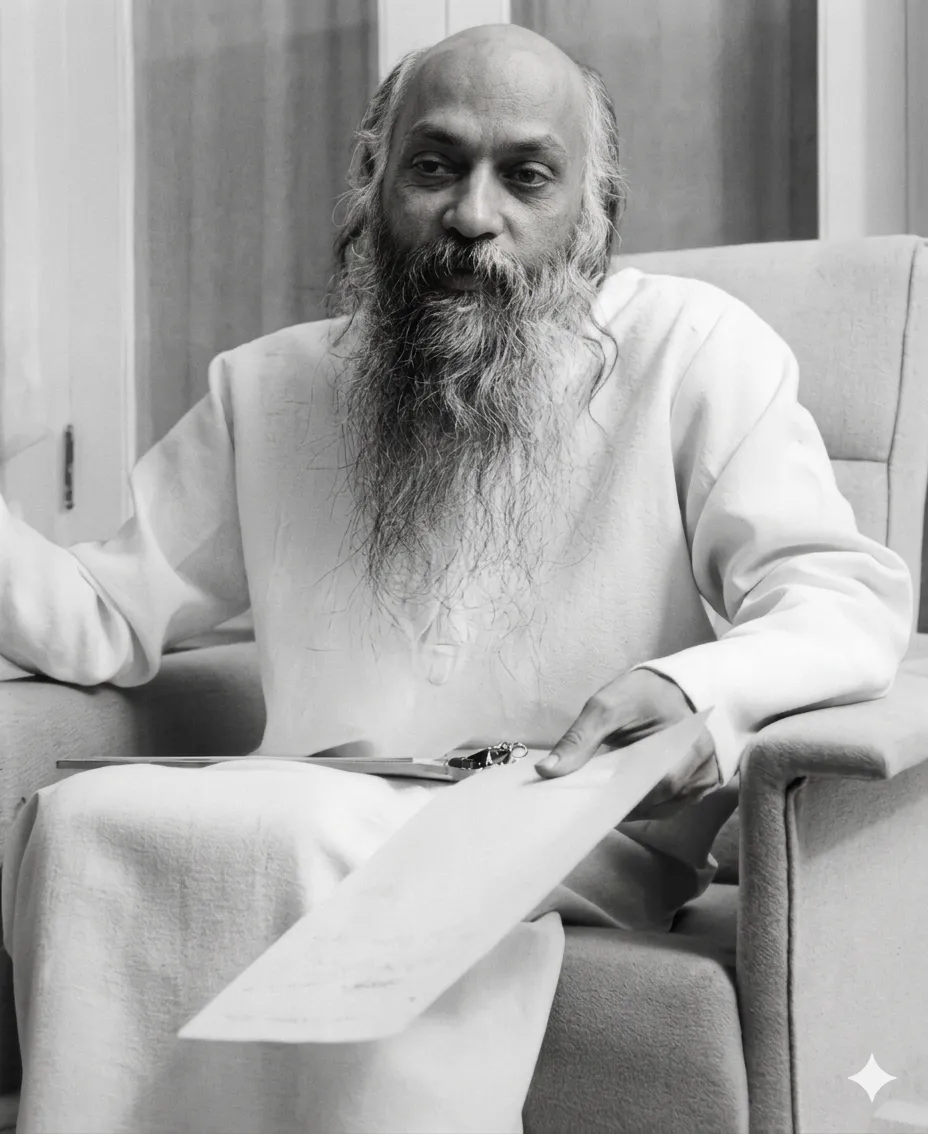
Osho's original Hindi beside Osho Live's English translation, matched passage by passage.
कवि है बीज; भूमि के अंधेरे गर्भ में राह खोजता, टटोलता, गिरता-उठता। पहुंचेगा, नहीं पहुंचेगा, अभी सब संदिग्ध है। उठ सकेगा अंधेरे के पार, होगा मिलन सूरज से, अभी सब सपना है। पहुंचना हो भी सकता है। अभीप्सा है, गहन प्यास है। चूकना भी हो सकता है; क्योंकि सभी बीज वृक्ष नहीं बनते। और जो बीज वृक्ष बन जाते हैं, वे भी सभी फलों और फूलों को उपलब्ध नहीं होते। न मालूम कितनी कठिनाइयों को पार कर के कोई बीज फूल बन पाता है, कोई संभावना वास्तविक हो पाती है।
The poet is a seed; in the dark womb of the earth he feels his way, groping, stumbling, falling and getting up again. Whether he will arrive or not is still uncertain. Will he rise beyond the darkness and meet the sun? For now it is all a dream. He may reach; there is a deep longing, an intense thirst. He may also miss—because not every seed becomes a tree. And those seeds that do become trees do not all come to flower and fruit. Who knows how many difficulties must be crossed before a seed becomes a flower, before a possibility becomes real.
कवि को प्रकाश की प्यास तो है। और शायद सपनों के किन्हीं तलों पर प्रकाश की थोड़ी छाया भी पड़ती है। पर अभी प्रकाश का कोई अनुभव नहीं है। आंख अभी खुली नहीं। अधजागा-अधजागा है। जैसे भोर हो गई, पक्षी गीत गाने लगे, सूरज ऊग आया, और तुमने और एक करवट ले ली, कंबल को खींच कर और सो रहे, ऐसे कुछ-कुछ सुबह की भनक भी पड़ने लगी कान में--राह चलने लगी, दूध वाले ने द्वार पर दस्तक दी, बच्चे स्कूल जाने की तैयारी करने लगे, तुम्हारी पत्नी ने चाय बनाने का उपक्रम शुरू कर दिया, चाय की गंध भी नासापुटों में आने लगी, यह सब होने लगा मगर अभी तुम जागे नहीं हो। तुम सोए भी नहीं हो, तुम जागे भी नहीं हो, तुम किसी मध्य की अवस्था में हो। वही मध्य की अवस्था कवि की अवस्था है, इसलिए कवि सोए हुए लोगों और जागे हुए लोगों के बीच अक्सर सेतु बन जाता है।
The poet thirsts for light. And perhaps, on some plane of dreams, a faint shadow of light falls too. But there is no direct experience of light yet. The eyes have not yet opened. He is half-awake. As at dawn—birds have begun to sing, the sun has risen—and you pull the blanket over yourself and take another turn in sleep; on the edge of your hearing there is a hint of morning, footsteps in the lane, the milkman knocks at the door, children are getting ready for school, your wife has begun to make tea, the fragrance has already reached your nostrils—yet you have not woken. You are not asleep either; you are in-between. That middle state is the poet’s state; that is why the poet so often becomes a bridge between the sleeping and the awakened.
कवि जीता है पृथ्वी पर, ऋषि उड़ता है आकाश में। हां, कभी-कभी कवि भी आकाश की तरफ आंखें उठा कर देखता है और यह भी सही है कि कभी-कभी ऋषि भी आंखें झुका कर पृथ्वी की ओर देखता है, लेकिन उनके परिप्रेक्ष्य भिन्न हैं, उनके दर्शन के बिंदुकोण भिन्न हैं। कवि पृथ्वी का पुत्र है, मिट्टी का पुतला है। कवि जब आंखें उठाता है और तारों भरे आकाश को देखता है, तो क्षण भर को भूल जाता है अपने मर्त्यभाव को, मृत्यु को, देह को। ऋषि अमृत का पुत्र है। उसने जान लिया कि जीवन शाश्वत है। और जब वह पृथ्वी पर भी देखता है तो भी क्षण भर को यह बात भूलती नहीं। पृथ्वी पर भटकते, राह खोजते लोगों पर उसके हृदय में महाकरुणा उत्पन्न होती है, वह बरस पड़ना चाहता है, वह लोगों के मार्ग पर दीये बन जाना चाहता है, उनके हाथों में मशाल बन जाना चाहता है!
The poet lives upon the earth; the rishi flies in the sky. Yes, sometimes the poet too lifts his eyes toward the heavens, and it is also true that sometimes the rishi lowers his eyes and looks toward the earth. But their perspectives differ, their angles of vision differ. The poet is a son of the soil, a figure of clay. When he lifts his eyes to the star-filled sky, for a moment he forgets his mortality, the body, death. The rishi is a son of the deathless; he has known life as eternal. And even when he looks at the earth, for a single moment he does not forget that. Seeing people wandering on the earth, searching for the path, great compassion arises in his heart; he wants to pour himself down like rain, to become lamps along their way, torches in their hands.
कवि भी गाता है, ऋषि भी गाता है। मगर गान-गान में बहुत भेद है। कवि का गीत सांत्वना से ज्यादा नहीं। मधुर है, मीठा है, सुस्वादु है, क्षण भर को जीवन की चिंताओं से मुक्त करने में सहयोगी है, मादक है, शामक है। पर ऋषि का गीत कुछ और। ऋषि जगाता है, झकझोरता है। ऋषि का वक्तव्य क्रांति का वक्तव्य है। ऋषि का वक्तव्य आग्नेय है, तीर की तरह चुभता है। सांत्वना नहीं है ऋषि के वचनों में, सत्य की अग्नि है। कवि के वचन मूर्च्छा लाने में सहयोगी हो सकते हैं, ऋषि के वचन, जागरण, ध्यान, उस परम अनुभूति की तरफ ले चलते हैं, जहां प्रभु से साक्षात होता है। ऋषि द्रष्टा है, कवि केवल स्वप्न भोगी।
The poet sings, the rishi sings too. But between song and song there is a great difference. The poet’s song is no more than a consolation—sweet, melodious, tasteful—helpful for a moment in freeing you from life’s anxieties, intoxicating, soothing. But the rishi’s song is something else: he awakens, he shakes you awake. The rishi’s utterance is a declaration of revolution. It is fiery, piercing like an arrow. In the rishi’s words there is no consolation; there is the fire of truth. The poet’s words can aid a swoon; the rishi’s words lead toward awakening, toward meditation, toward that supreme realization where one meets the divine face-to-face. The rishi is a seer; the poet only a dream-enjoyer.
पर कभी-कभी कवि के स्वप्नों में ऋषि के दर्शन की छाया पड़ती है। और कभी-कभी कवि जाने-अनजाने ऋषि की अमृत बूंदों को भी अपने शब्दों में बांध पाता है।
Yet sometimes, in the poet’s dreams, a shadow of the rishi’s vision falls. And sometimes, knowingly or unknowingly, the poet manages to bind a drop of the rishi’s nectar into his words.
कवि के लिए कभी-कभी झरोखा खुलता है, ऋषि की वही सम्यक दशा हो गई है। कवि में द्वंद्व है सदा, एक संघर्ष है। कवि अपने से लड़ रहा है। कवि बंटा है। बाहर कुछ, भीतर कुछ। तो ऐसा भी हो सकता है कि कवि की सुंदर गीतमालाओं को पढ़ कर, सुन कर, गुनगुना कर तुम कवि को देखने की आकांक्षा से भर सकते हो। मगर भूल कर भी ऐसी भूल न करना। क्योंकि कवि को तुम अतिसाधारण पाओगे। वे जो असाधारण वक्तव्य थे उसके, उनमें जो तुम्हें गरिमा अनुभव हुई थी, कवि को देख कर वह भी खो जाएगी। कवि को तुम अति साधारण पाओगे; तुम जैसा ही; शायद तुम से भी ज्यादा साधारण। क्योंकि कवि को कभी-कभी छलांग लगती है, किन्हीं अनजाने क्षणों में अनायास वह देख लेता है बहुत दूर के दृश्य, पर वे खो जाते हैं; बांध भी लेता है उनको शब्दों में, लेकिन वे खो जाते हैं।
For the poet a window opens sometimes; for the rishi that is his very state. The poet is ever in conflict, a struggle. He is fighting with himself—split within, something outside, something else within. It can happen that, reading and hearing and humming a poet’s beautiful garlands of songs, you are filled with a longing to see the poet. But do not, even by mistake, make that mistake—because you will find the poet utterly ordinary. Those extraordinary statements of his, that grandeur you felt in them, will fade when you see the poet. You will find him ordinary—just like you, perhaps more ordinary than you. For sometimes he makes a leap; in some unknown, unplanned moment he sees faraway vistas—but they are lost. He even binds them into words, but they are lost.
कूलरिज से किसी ने पूछा कि आपकी एक कविता मैं पढ़ता हूं, प्रीतिकर है, पर अर्थ पकड़ में नहीं आता। आपकी कविता को पढ़ाने वाले बड़े-बड़े विद्वज्जनों से भी मैंने अर्थ पूछा है, वे भी अर्थ साफ नहीं कर पाए। तो मैं आपसे ही पूछने आया हूं। कूलरिज ने कहा: जरा देर हो गई। जब मैंने लिखी थी, तो दो व्यक्तियों को इस कविता का अर्थ मालूम था, अब केवल एक को ही मालूम है। उस व्यक्ति ने कहा: तो निश्चित ही वह एक व्यक्ति तो आप ही होंगे न! समझा दें मुझे। कूलरिज ने कहा: तुम भूल करते हो। जब मैंने यह कविता लिखी, तो मैं भी अर्थ जानता था और परमात्मा भी अर्थ जानता था। अब केवल परमात्मा ही अर्थ जानता है। मुझे कुछ अर्थ का पता नहीं है। एक क्षण को जैसे झरोखा खुल गया था, एक हवा का झोंका आ गया था, धूल उड़ गई थी, आंखें ताजी हो गई थीं, कुछ दिखा था; फिर वापस गिर गए अपने अंधकार में, फिर सरकने लगे उन्हीं अंधेरे गृहों में, आकाश छूट गया, आकाश के तारे छूट गए, फिर अर्थ कहां?
Someone asked Coleridge, “I read one of your poems; I like it, but I cannot grasp its meaning. I asked great scholars who teach your poetry, and even they could not make the meaning clear. So I have come to ask you.” Coleridge said, “You are a little late. When I wrote it, two people knew the meaning; now only one knows.” The man said, “Then surely the one is you! Please explain it to me.” Coleridge replied, “You are mistaken. When I wrote that poem, both I and God knew its meaning. Now only God knows. I have no idea of the meaning.” For a moment a window had opened, a gust of wind had come, the dust had been blown away, the eyes had been made fresh, something had been seen; and then I fell back into my own darkness, began again to slide through the same dark rooms; the sky was gone, the stars of the sky were gone—then where is the meaning?
कवि से उसकी कविता का अर्थ मत पूछना। हां, उसे कभी मालूम होता है जब कविता का जन्म होता है--बस उसी प्रसव के क्षण में--फिर चूक जाता है।
Do not ask a poet the meaning of his poem. Yes, he sometimes knows it—at the very moment the poem is born, in that instant of birth—and then he misses it.
कवि एक द्वंद्व है। इसीलिए दुनिया में अधिकतर कवि विक्षिप्त मालूम होते हैं। अधिकतर कवि विक्षिप्त हो जाते हैं। अधिकतर कवि आत्मघात कर लेते हैं। अधिकतर कवि शराब और ऐसे मादक द्रव्यों में डूब जाते हैं। अधिक कवियों का जीवन शुभ जीवन नहीं होता। ऐसा क्यों है? उनके गीत तो बड़े प्यारे होते हैं, उनके गीतों में तो बड़े पंख होते हैं--कि सवार हो जाओ तो दूर तक की यात्रा पर ले जाएं--मगर कवि स्वयं क्यों उन पंखों पर सवार नहीं हो पाता? उसके भीतर एक द्वंद्व है। निन्यानबे प्रतिशत तो वह मिट्टी है, एक प्रतिशत स्वर्ग की किरण है। वह एक प्रतिशत किरण निन्यानबे प्रतिशत मिट्टी को लेकर उड़ नहीं सकती। उसके भीतर सतत संघर्ष है। वह दो जीवन जीता है।
The poet is a duality. That is why, in the world, most poets seem deranged; many go mad; many commit suicide; many drown themselves in wine and other intoxicants. The lives of most poets are not auspicious. Why? Their songs are so lovely; their songs have great wings—if you ride them, they can take you on a far journey—yet why can the poet himself not ride those wings? There is a conflict within him: ninety-nine percent earth, one percent a ray of heaven. That one percent light cannot carry the ninety-nine percent earth into the sky. He is in constant struggle. He lives two lives.
एक जो उसके गीतों का जीवन है। वहां वह ठीक ऋषियों जैसा मालूम होता है। और एक, जो उसका सामान्य जीवन है। वहां वह सामान्य व्यक्ति से भी गया-बीता मालूम होता है। कवि एक दुविधा है, एक द्वैत है, एक दुई है, खंड-खंड है। ऋषि अखंड है, निर्द्वंद्व है, अद्वैत है। जो बोलता है, वही जीता है। जो जीता है, वही बोलता है। उसके बोलने में और उसके जीने में एक तारतम्य है, एक लयबद्धता है। उसके भीतर दो स्वर नहीं हैं। उसके भीतर इकतारा बज रहा है। हो सकता है, कवि गीत तो प्रेम के गाता हो और प्रेम का उसने कभी अनुभव न किया हो।
अक्सर यही होता है।
One is the life of his songs—there he seems almost like a rishi. The other is his ordinary life—there he seems worse than an ordinary man. The poet is a dilemma, a duality, a division, fragmented. The rishi is whole, without inner conflict, non-dual. What he speaks, he lives; what he lives, he speaks. Between his speaking and his living there is a harmony, a rhythm. Within him there are not two notes; within him a single-stringed lute is sounding. It can be that a poet sings songs of love and has never known love. This happens often.
अक्सर प्रेम के गीत वे ही लोग गाते हैं, जो प्रेम से वंचित रह गए हैं। मन को समझाते हैं ऐसे। उनके प्रेम के गीत उनके प्रेम के अनुभव की कमी को पूरा करने के उपाय हैं, परिपूरक हैं। नहीं जो अनुभव हुआ है, गीत गा-गाकर अपने को भुलाते हैं।
Often, those who sing of love are precisely those who have been deprived of love. They are persuading their own minds. Their songs of love are devices to fill the lack of love in their experience. Not that they have known; by singing they forget themselves.
ऋषि जब प्रेम के गीत गाता है, तो वह उसकी आत्मा से बहती हुई सरिता है। वह उसका अनुभव है। कवि भी परमात्मा की बात करते हैं, लेकिन वह परमात्मा ऐसा ही है जैसे कभी तुम्हारा दांत टूट गया हो एक और जीभ बार-बार उसी जगह जाती है जहां दांत टूट गया है। जब तक दांत था, कभी जीभ वहां न जाती थी। अब दांत नहीं है, खाली जगह है, खाली जगह अखरती है, जीभ वहीं-वहीं बार-बार जाती है। ऐसे ही कवि का ईश्वर है। टूटा हुआ दांत है, खाली जगह है, जीभ बार-बार वहां जाती है। एक रिक्त स्थान है, जो मांग करता है कि मुझे भरो। एक गड्ढा है, जो भर जाना चाहता है। मगर कवि के पास कोई उपाय उसे भरने का नहीं है। हां, ईश्वर के गीत लिख सकता है, प्यारे गीत लिख सकता है, मगर वे प्यारे गीत बस शब्दों में ही प्यारे होंगे, उनमें अर्थ नहीं होगा, आत्मा नहीं होगी। देह तो होगी, सुंदर देह होगी, बड़े प्रीतिकर आभूषणों में लदा हुआ रूप होगा, मगर जैसे ही घूंघट उठाओगे, भीतर कुछ भी न पाओगे।
When a rishi sings of love, it is a river flowing from his soul. It is his lived experience. Poets too speak of God, but their God is like the way your tongue keeps going to the place where a tooth once was. While the tooth was there, the tongue never went there. Now the tooth is gone, there is an empty space; the emptiness annoys, and the tongue goes there again and again. Such is the poet’s God—a broken tooth, an empty place to which the tongue keeps returning. There is a vacant spot demanding to be filled, a hollow that wants to be full—but the poet has no way to fill it. Yes, he can write songs to God, very lovely songs—but they will be lovely only in words; they will have no meaning, no soul. The body will be there, a beautiful body, decked in precious ornaments; but the moment you lift the veil you will find nothing within.
अक्सर कविताओं के भीतर कोई आत्मा नहीं होती। कविताएं, अक्सर ऐसी होती हैं जैसे खेत में तुम झूठे आदमी को खड़ा कर देते हो न! पशु-पक्षियों को डराने के काम आ जाता है। लेकिन खेत का झूठा आदमी! हंडी भी रख दो डंडे पर--सिर जैसी मालूम पड़ती है--गांधी टोपी भी लगा दो--तो अंधेरे में भी डरवाए--चूड़ीदार पाजामा पहना दो, अचकन पहना दो--तो ऐसा लगे कि नेता जी हैं--मगर बस पशु-पक्षियों को डरा लें तो बहुत।
Often, poems have no soul within. They are like the scarecrow you stand in the field to frighten birds and animals. A pot placed on a stick looks like a head; put a Gandhi cap on it so that even in the dark it scares; dress it in tight pajamas and an achkan so it seems like a leader—but it is only good enough to scare birds.
कवियों की कविताएं अक्सर खेत के झूठे आदमी हैं। आदमियों जैसे मालूम होते हैं, लेकिन भीतर कोई आत्मा नहीं, कोई हृदय धड़कता नहीं, श्वास चलती नहीं। ऋषि आत्मवान है। उसके शब्द चाहे बहुत सुघड़ न हों, उसके शब्द शायद बहुत भाषा, व्याकरण और छंद में, मात्राओं में आबद्ध न हों, लेकिन उसके शब्दों में जीवन है--और वही तो असली छंद है। उसके शब्दों में उसके अपने अनुभव की छाप है। वही तो अर्थपूर्ण है, वही तो आत्मा है। शब्द कितने ही सुंदर हों--लाश को तुम कितना ही सुंदर सजा दो, हीरे-जवाहरात के आभूषण पहना दो, चेहरे को पाउडर और रंग से रंग डालो, लेकिन लाश, लाश है। और कितने ही बहुमूल्य हीरे-जवाहरातों से लदी लाश हो, एक जिंदा आदमी के सामने--जिसके चाहे शरीर पर चीथड़े भी न हों--दो कौड़ी की है।
Poets’ poems are often scarecrows—manlike, but within them there is no soul, no heart beating, no breath moving. The rishi is soul-full. His words may not be very polished; they may not be bound in the strict rules of language, grammar, meter and measure; but there is life in them—and that alone is the real meter. In his words there is the imprint of his own experience; that is what gives meaning; that is the soul. No matter how beautiful the words—no matter how you adorn a corpse, adorning it with jewels and diamonds, powdering and painting the face—a corpse is a corpse; and however richly laden with jewels it may be, in front of a living man—even if he wears rags—it is worth two pennies.
दुनिया की किसी भाषा में ऋषि और कवि के बीच ऐसा भेद नहीं किया गया है। सिर्फ हमारे पास दो शब्द हैं। और कारण हैं हमारे पास दो शब्द होने के। हमने ऋषि की ऊंचाइयां जानी हैं। उपनिषद के कवियों को कवि नहीं कहा जा सकता। कालिदास कवि हैं, भवभूति कवि हैं, शेक्सपियर कवि हैं, मिल्टन कवि हैं, लेकिन उपनिषद के कवियों को कवि नहीं कहां जा सकता--कहना उचित न होगा--वे द्रष्टा हैं, वे ऋषि हैं। उन्होंने देखा है, उन्होंने जीआ है; उन्होंने जाना है, सिर्फ गाया नहीं। गाना गौण है, जानना प्रमुख है। जानने की छाया की तरह गीत भी आए हैं, छंद भी आए हैं।
वे ख्वाब जिनको तराशा था मेरी आंखों ने
तसव्वुरात के नूर आफरी धुंदलकों में
In no language of the world has such a distinction been made between rishi and poet. Only we have two words. And there are reasons that we have them: we have known the heights of the rishi. The composers of the Upanishads cannot be called poets. Kalidasa is a poet, Bhavabhuti is a poet, Shakespeare is a poet, Milton is a poet—but the composers of the Upanishads should not be called poets; it would not be right. They are seers, rishis. They have seen; they have lived; they have known—not merely sung. Song is secondary; knowing is primary. Song and meter came as the shadow of knowing.
सुलगते, कांपते खामोश आंसुओं की तरह
झलक रहे हैं मेरी जिंदगी की पलकों में
इन आंसुओं को भी देकर जीया-ओ ताबानी
तुम्हारी रूह की मेहराब में जलाता हूं
मैं जख्म-जख्म हूं बेशक, मगर तुम्हारे लिए
लहकते-झूलते फूलों के गीत लाता हूं
तुम्हारी खुश्क निगाहों के आबगीनों में
Those dreams which my eyes had carved in the light-bestowing mists of imaginings— like smoldering, trembling, silent tears they gleam upon the lashes of my life. Giving even these tears a polish and a sheen, I light them in the arch of your soul. I am wounds upon wounds, no doubt—but for you I bring the songs of swaying, blazing flowers. Into the glassy goblets of your parched gazes I squeeze the colors of the rainbow; by pouring the blood of my own radiant flames, I burnish your lovely ecstasies. In the soft waves of the melodies of my instrument I drown the desolation on your face; but upon the longings of my own youth, after you go, I weep alone in secret. This art of mine that is kohl for your hearts is the funeral bier of the passions of my youth.
निचोड़ता हूं मैं कौसे-कजा के रंगों को
पिला के अपने दरख्शंदा वलावलों का लहू
निखारता हूं तुम्हारी हसीं उमंगों को
मैं अपने साज के नग्मों की नर्म लहरों में
तुम्हारे चेहरे की अफसुर्दगी डुबोता हूं
मगर खुद अपनी जवानी की आर्जूओं पर
तुम्हारे बाद अकेला ही छुप के रोता हूं
यह मेरा फन जो तुम्हारे दिलों का गाजा है
मेरे शबाब के जज्बात का जनाजा है
कवि तो हंसता है, ऊपर-ऊपर, भीतर रोता है।
The poet laughs on the surface and weeps within.
वे ख्वाब जिनको तराशा था मेरी आंखों ने
तसव्वुरात के नूर आफरी धुंदलकों में
Those dreams which my eyes had carved in the light-bestowing mists of imaginings—
उसके स्वप्न अंधेरे में पैदा होते हैं। वह अपने सपने अंधेरे में ही तराशता है। रोशनी तो उसके पास नहीं।
His dreams are born in darkness; he carves them in the dark. He has no light of his own.
वे ख्वाब जिनको तराशा था मेरी आंखों ने
तसव्वुरात के नूर आफरी धुंदलकों में
सुलगते, कांपते खामोश आंसुओं की तरह
झलक रहे हैं मेरी जिंदगी की पलकों में
Those dreams which my eyes had carved in the light-bestowing mists of imaginings— like smoldering, trembling, silent tears they gleam upon the lashes of my life.
अगर तुम कवि की आंखों में गौर से देखो तो गीत कम, आंसू ज्यादा दिखाई पड़ेंगे। आनंद कम, विषाद ज्यादा दिखाई पड़ेगा। संतोष जरा भी नहीं, संताप सागर की तरह उत्तुंग लहरें लेता हुआ दिखाई पड़ेगा।
If you look closely into a poet’s eyes, you will see less song and more tears. Less joy, more sorrow. No contentment at all—torment surging like waves of the sea.
सुलगते, कांपते, खामोश आंसुओं की तरह
झलक रहे हैं मेरी जिंदगी की पलकों में
इन आंसुओं को भी देकर जीया-ओ-ताबानी
Like smoldering, trembling, silent tears they gleam upon the lashes of my life. Giving even these tears a polish and a sheen—
कवि आंसुओं को भी रोशनी देता है, चमक देता है, निखार देता है। आंसुओं को भी मोती की तरह पेश करता है।
The poet gives even tears a sheen, a sparkle; he presents tears as pearls.
इन आंसुओं को भी देकर जीया-ओ-ताबानी
तुम्हारी रूह की मेहराब में जलाता हूं
Giving even these tears a polish and a sheen, I light them in the arch of your soul—
और तुम्हारी आत्माओं के आलों में, अंधेरों में तराशे गए इन सपनों को, आंसुओं में डाली गई झूठी इन चमकों को दीयों की तरह तुम्हारी आत्माओं के आलों में जलाता हूं।
And in the niches of your souls, in your dark alcoves, these dreams carved in darkness, these false sparkles pressed into tears, he lights like little lamps.
इन आंसुओं को भी देकर जीया-ओ-ताबानी
तुम्हारी रूह की मेहराब में जलाता हूं
मैं जख्म-जख्म हूं बेशक, मगर तुम्हारे लिए
लहकते-झूलते फूलों के गीत लाता हूं
Giving even these tears a polish and a sheen, I light them in the arch of your soul. I am wounds upon wounds, no doubt—but for you I bring the songs of swaying, blazing flowers.
कवि तो जख्मों से भरा है। लेकिन तुम्हारे लिए गीत लाता है। गीत बेचता है। कवि गीतफरोश है। गीत बेचना उसका धंधा है। आंसू तो कौन लेगा?--आंसू तो लोगों के पास वैसे ही बहुत हैं--आंसू तो कौन चाहेगा? लोग मोतियों की मांग कर रहे हैं। तो वह आंसुओं को मोतियों की तरह बेचता है। जख्मों की तो किसको जरूरत है? जख्म तो सभी के पास जरूरत से ज्यादा हैं। जख्म ही जख्म तो हैं। आत्मा जख्मों का एक सिलसिला हो गई है। तो वह अपने जख्मों को फूल बना कर बेचता है; फूलमालाएं बना कर बेचता है।
The poet is full of wounds. But he brings songs for you. He sells songs. He is a song-seller; selling songs is his trade. Who will take tears? People already have plenty of tears. Who would want wounds? Everyone already has more than enough. So he makes his wounds into flowers and sells them—sells garlands made of them.
मैं जख्म-जख्म हूं बेशक, मगर तुम्हारे लिए
लहकते-झूलते फूलों के गीत लाता हूं
I am wounds upon wounds, no doubt—but for you I bring the songs of swaying, blazing flowers.
तुम कवियों के गीतों से धोखे में मत पड़ जाना। गीत उनका व्यवसाय है। ऋषि का गीत व्यवसाय नहीं है; उसका अहोभाव है। मीरा नाची, नर्तकी नहीं है, उसका नृत्य अहोभाव है। किसी के लिए नहीं नाची, नाचने से न रुक सकी, इसलिए नाची। कवि किसी के लिए गाता है। ऋषि गाता है--कोई सुन ले तो ठीक, कोई न सुने तो ठीक। ऋषि के गीत ऐसे हैं जैसे पक्षियों की सुबह-सुबह होती ये पुकारें। ये किसी के लिए निवेदित नहीं हैं। यह ऊग आया सूरज, यह हो गई सुबह, यह छा गई मस्ती प्राणों में, यह मस्ती बहने लगी अपने आप। ऋषि के गीत वृक्षों में लगे फूलों की तरह हैं। कोई तोड़े ठीक, फूलमालाएं बनें तो ठीक, कोई पास से गुजरे तो ठीक, कोई गंध का आस्वाद ले तो ठीक, कोई न निकले तो ठीक। गंध लुटती रहेगी। शून्य आकाश में बिखरती रहेगी। हवाओं के पंखों पर चढ़ कर दूर की यात्राओं पर जाती रहेगी। कोई नासापुट कभी उसे पहचानेंगे, परिचित होंगे या नहीं, यह निष्प्रयोजन है। हों तो ठीक, न हों तो ठीक।
Do not be deceived by the poets’ songs; song is their business. A rishi’s song is not a business; it is his overflowing. Meera danced—not as a performer, but out of sheer overflow. She danced for no one; she could not help but dance—so she danced. The poet sings for someone. The rishi sings—if someone hears, fine; if no one hears, fine. A rishi’s songs are like the birds’ calls at dawn: they are not addressed to anyone. The sun has risen, morning has come, a rapture has filled the breath—and it flows by itself. A rishi’s songs are like flowers upon trees. If someone plucks them, fine; if they become garlands, fine; if someone passes by, fine; if someone savors the fragrance, fine; if no one comes, fine. The fragrance will go on being squandered; it will keep dissolving into empty sky; riding on the wings of the wind it will travel far. Whether some nostrils ever recognize it or not is beside the point. If they do, fine; if not, fine.
ऋषि स्वांतः सुखाय गाता है। दूसरा निष्प्रयोजन है। दूसरा है या नहीं, यह बात गौण है। ऋषि अपनी मस्ती में गाता है। लेकिन कवि तो गीतफरोश है, गीत बेचता है। जैसे माली फूल बेचता है।
तुम्हारी खुश्क निगाहों के आबगीनों में
A rishi sings svantah sukhaya—for his own joy. The other is irrelevant. Whether the other is there or not is secondary. The rishi sings in his own ecstasy. But the poet is a song-seller, like a gardener who sells flowers.
तुम्हारी आंखें तो सूखी हैं, मरुस्थल जैसी हैं, तुम भी चाहते हो कि इनमें थोड़ी आर्द्रता आए, तुम भी चाहते हो थोड़ा स्नेह तुम्हारी आंखों में भी झलके।
Into the glassy goblets of your parched gazes—
Your eyes are dry, desert-like; you too long for a little moisture, for a little tenderness to glisten in your eyes.
तुम्हारी खुश्क निगाहों के आबगीनों में
तुम्हारी सूखी आंखों के पात्रों में
निचोड़ता हूं मैं कौसे-कजा के रंगों को
Into the glassy goblets of your parched gazes I squeeze the colors of the rainbow—
तो कवि कहता है कि मैं इंद्रधनुषों के रंगों को निचोड़ता हूं तुम्हारी सूखी आंखों में कि तुम भी थोड़ा इंद्रधनुषों से परिचित हो लो, कि तुम्हारे भीतर भी थोड़े इंद्रधनुष ऊगें, कि मैं लाता हूं तितलियों के पंखों के रंग--कि तुम बड़े बेरंग हो--कि मैं लाता हूं मधुमास की थोड़ी खबर--कि तुम्हारी जिंदगी पतझड़ों का एक सिलसिला है।
The poet says, “I squeeze the colors of the rainbow into your dry eyes—so that you too may become acquainted with rainbows; so that a few rainbows may sprout within you; so that I may bring the colors of butterflies—because you are drab; that I may bring a little news of spring—because your life is a chain of autumns.”
तुम्हारी खुश्क निगाहों के आबगीनों में
निचोड़ता हूं मैं कौसे-कजा के रंगों को
पिला के अपने दरख्शंदा वलावलों का लहू
निखारता हूं तुम्हारी हसीं उमंगों को
Into the glassy goblets of your parched gazes I squeeze the colors of the rainbow; by pouring the blood of my own radiant flames, I burnish your lovely ecstasies—
और मुस्कुराता हूं कि तुम्हारे भीतर भी मुस्कुराहट की प्रतिध्वनि पैदा हो जाए।
And I smile, that echoes of a smile may arise within you.
मैं अपने साज के नग्मों की नर्म लहरों में
तुम्हारे चेहरे की अफसुर्दगी डुबोता हूं
In the soft waves of the melodies of my instrument I drown the desolation on your face—
तुम्हारा मुर्झाया चेहरा मैं अपने गीतों में, अपने नग्मों में डुबोता हूं कि थोड़ी कोमलता तुम्हारे जीवन को भी उपलब्ध हो; तुम भी जान पाओ थोड़ा सा रस।
I dip your withered face into my songs, my melodies, so that a little gentleness may come to your life too; so that you may taste a little rasa.
मैं अपने साज के नग्मों की नर्म लहरों में
तुम्हारे चेहरे की अफसुर्दगी डुबोता हूं
मगर खुद अपनी जवानी की आर्जूओं पर
तुम्हारे बाद अकेला ही छुप के रोता हूं
In the soft waves of the melodies of my instrument I drown the desolation on your face; but upon the longings of my own youth, after you go, I weep alone in secret—
लेकिन मेरी बातों का भरोसा मत कर लेना। वे सिर्फ दिखावे हैं। अकेले में, एकांत में मैं ऐसा ही रोता हूं जैसे तुम रोते हो। मेरी आंखें भी मोतियों से नहीं, आंसुओं से भरी हैं। और मेरे प्राणों में भी अंधकार है और दीये नहीं हैं। और मुझे भी कोई पहचान नहीं है इंद्रधनुषों की। और मैंने भी तितलियों के रंग नहीं देखे हैं। और मेरे हृदय में भी अभी आकाश से संबंध नहीं जुड़ा है। मैं वहीं घसिट रहा हूं जहां तुम घसिट रहे हो।
But do not take my words at face value. They are a show. In solitude, in privacy, I weep just as you weep. My eyes too are filled not with pearls but with tears. Darkness is in my life too, not lamps. I too have no real acquaintance with rainbows. I too have not truly seen the colors of butterflies. My heart too has not yet connected with the sky. I drag myself along where you drag yourselves.
लेकिन जैसे अंधेरी रात में, किसी अंधेरी गली में गुजरते वक्त तुम जोर-जोर से गीत गाने लगते हो, अपने ही गीत की आवाज सुन कर हिम्मत आ जाती है कि अकेले नहीं हैं, अपने ही गीत की आवाज सुन कर भय मिट जाता है, एकांत मिट जाता है, ऐसे ही तुम्हारे कवियों के गीत हैं--तुम्हारे अकेलेपन को भर देते हैं।
Just as, in a dark lane at night, you begin to sing loudly; hearing the sound of your own song, courage arises—‘I am not alone’—fear and loneliness fade; so are the poets’ songs—they fill the emptiness of your aloneness.
मगर खुद अपनी जवानी की आर्जूओं पर
तुम्हारे बाद अकेला ही छुप के रोता हूं
यह मेरा फन जो तुम्हारे दिलों का गाजा है
मेरे शबाब के जज्बात का जनाजा है
But upon the longings of my own youth, after you go, I weep alone in secret. This art of mine that is kohl for your hearts is the funeral bier of the passions of my youth—
यह मेरा होना, यह मेरी कला, यह मेरा फन, जो तुम्हारे दिलों का गाजा है, जो तुम्हारे दिलों को रंगता है रंगों में, सुंदर करता है, जो तुम्हारे दिलों को खूबसूरती देता है, हसीन बनाता है...
This being of mine, this art of mine, which is a cosmetic for your hearts—coloring them, beautifying them, making them lovely—
This art of mine that is kohl for your hearts is the funeral bier of the passions of my youth—
यह मेरा फन जो तुम्हारे दिलों का गाजा है
मेरे शबाब के जज्बात का जनाजा है
लेकिन अगर तुम मुझसे पूछो तो यह मेरी जवानी की अरथी है; यह मेरे प्राणों की अरथी है।
But if you ask me, it is the bier of my youth, the bier of my very life-breath.
कवि का जीवन द्वंद्वग्रस्त है। बाहर कुछ, भीतर कुछ। उसकी मुस्कुराहटों में खोदोगे तो आंसू पाओगे। और उसके गीतों में जरा गहरे उतरोगे, थोड़ी सीढ़ियां पार करोगे तो बड़े अंधेरे पाओगे। ऋषि का जीवन एक लयबद्ध होता है। तुम जितना खोदोगे, उतना वही-वही है, और-और। ऋषि का जीवन बाहर और भीतर तालबद्ध होता है, ऋषि का स्वाद एक है, कहीं से चखो। ऋषि के हर शब्द का संदेश एक है, पुकार एक है, आह्वान एक है।
A poet’s life is conflict-ridden: one thing outside, another within. If you dig into his smiles you will find tears. If you go a little deep into his songs, descend a few steps, you will find great darkness. A rishi’s life is one continuous rhythm. The deeper you go, the more it is the same, and yet more. A rishi’s life is attuned within and without; his taste is one, from wherever you taste it. In each of his words the message is one, the call one, the invitation one.
कवि और ऋषि में बड़ा भेद है। यद्यपि ध्यान रखना, कभी-कभी कवि ऋषियों की झलक ले आते हैं। अंधे को अंधेरे में बड़ी दूर की सूझी। कभी-कभी सूझ हो जाती है। मगर ऋषि उस शाश्वत प्रकाश के लोक में जीते हैं।
There is a great difference between poet and rishi. Yet remember: sometimes poets bring glimpses of the rishis; sometimes, to a blind man in the dark, faraway things are sensed. But the rishi lives in the realm of eternal light.
तीन चीजों का खयाल करो। एक तो है विज्ञान, जो पदार्थ पर सीमित है। एक है धर्म जो पदार्थ के अतीत है, परमात्मा जिसकी तलाश है। और दोनों के बीच में हैं, कला, काव्य। एक पैर कला का पृथ्वी पर है और एक पैर परमात्मा में है। इसलिए कलाकार बहुत दुविधाग्रस्त होता है। न तो वैज्ञानिक इतनी दुविधा से भरा होता है--होने का कोई कारण नहीं। उसने मान ही लिया कि ईश्वर नहीं है। दूसरा है ही नहीं, बस पदार्थ है। इसलिए वैज्ञानिक में तुम एक तरह की सुसंगति पाओगे, तर्कबद्धता पाओगे। और संत में भी एक सुसंगति, एक तर्कबद्धता: क्योंकि ईश्वर ही है, शेष कुछ भी नहीं।
Consider three things. One is science, confined to matter. Another is religion, which is beyond matter, seeking the divine. And in between is art, poetry. One foot of art stands on earth, the other in the divine. Hence the artist is greatly torn. The scientist is not so torn—there is no need; he has assumed there is no God. There is no ‘other,’ only matter. Therefore you will find in the scientist a kind of consistency, a logic. And in the saint too, a consistency, a logic—because only God is, and nothing else.
वैज्ञानिक कहता है: ईश्वर झूठ, संसार सच--जगत सत्य, ब्रह्म मिथ्या--और संत कहता है: ब्रह्म सत्य, जगत मिथ्या। दोनों ने एक के साथ अपनी भांवर डाल ली है। दोनों के बीच में त्रिशंकु की भांति है कलाकार की स्थिति। चित्रकार, मूर्तिकार, संगीतज्ञ, कवि। वे सभी कविता के रूप हैं। कोई ध्वनि से कविता पैदा करता है, तो उसको हम संगीतज्ञ कहते हैं। कोई मुद्राओं से कविता पैदा करता है, तो उसको हम नर्तक कहते हैं। कोई रंगों से कविता पैदा करता है, तो उसे हम चित्रकार कहते हैं। कोई पत्थरों में कविता खोदता है, तो उसे हम मूर्तिकार कहते हैं। वे सब काव्य के ही रूप हैं। माध्यम अलग होंगे। कवि इन दोनों के बीच में है। कवि कहता है: जगत भी सत्य, ब्रह्म भी सत्य। इसलिए कवि बड़े तनाव में जीता है। कभी इधर, कभी उधर। कभी निम्नतम पर उतर आता है, कभी श्रेष्ठतम पर उड़ानें लेने लगता है।
The scientist says: God is false, the world true—jagat satya, brahma mithya. And the saint says: brahma satya, jagat mithya. Each has married himself to the one. Between them, like Trishanku suspended in midair, is the artist: painter, sculptor, musician, poet. They are all forms of poetry. One creates poetry out of sound—we call him a musician. One creates poetry out of gestures—we call him a dancer. One creates poetry out of colors—we call him a painter. One carves poetry into stone—we call him a sculptor. They are all forms of kavi. The media differ. The poet stands between the two. He says: the world is true, and the divine is true. Therefore he lives in great tension—now here, now there; sometimes descending to the lowest, sometimes soaring to the highest.
काव्य का थोड़ा रुझान हो, तो खयाल रखना, उस रुझान को शुद्ध करना है। सीढ़ी दर सीढ़ी, सोपान पर सोपान चढ़ने हैं। कवि को ऋषि तक पहुंचाना है। और जब तुम्हारे भीतर का कवि ऋषि तक पहुंच जाता है तो जीवन की परम संपदा उपलब्ध होती है। फिर तुम्हारे भीतर से कुरान उठती है, उपनिषद पैदा होते हैं, गीता का जन्म होता है। ये कविताएं नहीं हैं। ये ऋषियों के वक्तव्य हैं। यही तो इनकी महिमा है। कोई लाख कितना ही गाए, कुरान का सौंदर्य नहीं आता सो नहीं आता। कोई लाख सुंदर-सुंदर शब्दों को जमाए, लेकिन उपनिषदों के वक्तव्यों की ऊंचाई नहीं आती सो नहीं आती। गीत रचो कितने ही, मगर भगवद्गीता के चरणों तक भी पहुंचना नहीं हो पाता। सबके भीतर तीनों संभावनाएं हैं। क्योंकि तुम तीन के जोड़ हो। तुम्हारी देह तो बनी है मिट्टी से, पदार्थ से। अगर तुम देह पर ही अटके रहे तो विज्ञान में भटके रहोगे। तुम्हारा मन है दोनों के बीच। अगर तुम मन में ही उलझे रहे तो तुम कवि ही रह जाओगे। दुविधाग्रस्त, द्वंद्वग्रस्त, खंड-खंड, दो नावों पर सवार। तुम्हारे भीतर आत्मा का भी वास है। काश, तुम आत्मा में डुबकी ले लो, तो ऋषि का तुम्हारे भीतर भी जन्म हो। ऋषि से कम होने पर राजी नहीं होना है। प्रत्येक व्यक्ति का यह स्वरूपसिद्ध अधिकार है कि उसके भीतर से भगवद्गीता पैदा होनी ही चाहिए।
If you have a leaning toward poetry, be alert: you must purify that leaning. Climb step by step, rung by rung. The poet must be brought to the rishi. And when the poet within you reaches the rishi, the supreme wealth of life becomes available. Then from within you the Quran rises, the Upanishads are born, the Gita takes birth. These are not poems; they are the utterances of seers. That is their glory. However much one may sing, the beauty of the Quran does not come; however one may array beautiful words, the height of the Upanishadic utterances does not come; compose as many songs as you like—you cannot reach even the feet of the Bhagavadgita. Within everyone the three possibilities are present, because you are a sum of three. Your body is made of earth, of matter. If you remain stuck at the body, you will wander in science. Your mind stands between the two. If you remain entangled in mind, you will remain a poet—torn, conflicted, split, riding two boats. Within you also dwells the soul. If only you take a dip in the soul, the rishi will be born within you. Do not be content with anything less than the rishi. It is everyone’s inherent right that a Bhagavadgita should arise from within him.
ठाकुर राणा! इस संसार में प्यास पैदा हो सकती है, बुझ नहीं सकती। इस संसार में प्यास को बुझाने वाले जलस्रोत नहीं। इस संसार का प्रयोजन प्यास को जन्माना है, प्यास को बुझाना नहीं। प्यास तो बुझती है जब परमात्मा को पीओगे तब। संसार का प्रयोजन है कि प्यास को ऐसा जगाए, ऐसा जगाए कि तुम्हें परमात्मा खोजना ही पड़े, कि तुम विवश हो जाओ खोजने को, कि तुम सब छोड़-छाड़ कर परमात्मा की खोज में लग जाओ।
Thakur Rana! In this world, thirst can arise, it cannot be quenched. In this world there are no springs that extinguish thirst. The very purpose of the world is to give birth to thirst, not to quench it. Thirst is quenched only when you drink the Divine. The function of the world is to awaken the thirst so deeply, so insistently, that you have to seek the Divine—that you become compelled to search, that you drop everything and set out in search of God.
संसार तो उत्तप्त मरुस्थल है। इस मरुस्थल में प्यास का जग आना बिलकुल आवश्यक है, स्वाभाविक है, होना ही चाहिए। आश्चर्य तो तब होता है जब इस संसार में कुछ लोग दिखाई पड़ते हैं जिनकी कोई प्यास नहीं, जिन्हें परमात्मा की प्यास का खयाल ही नहीं आया है। चमत्कार हैं वे लोग। मरुस्थल में हैं, उत्तप्त आग बरस रही है, मगर न मालूम कैसे अपनी प्यास को छिपाए बैठे हैं? उनकी हालत वैसी है--मैंने सुना है कि मुल्ला नसरुद्दीन हज की यात्रा को गया था, मरुस्थल में भटक गया। थका-मांदा दो-चार दिन बाद जब बस्ती में वापस आया, तो लोगों ने पूछा कि जिंदा आ गए, भगवान का शुक्र करो! कैसे कटे दिन? इतनी भयंकर आग बरस रही है, मरुस्थल में छाया का कोई स्थान भी नहीं है, तुम जल-भुन नहीं गए? नसरुद्दीन ने कहा: क्या तुमने मुझे इतना मूढ़ समझ रखा है? मैं अपनी ही छाया में बैठ जाता था।
The world is a burning desert. In this desert, the arising of thirst is absolutely necessary, natural, inevitable. The real surprise is when in this world we see people who have no thirst, to whom the thirst for God has never even occurred. They are the marvels. They are in the desert, the scorching fire is raining down, and yet somehow—who knows how?—they sit there hiding their thirst. Their condition is like this—I have heard that Mulla Nasruddin went on the pilgrimage to Mecca and lost his way in the desert. Exhausted, two or three days later, when he returned to a village, people said, “You’ve come back alive—thank God! How did you pass those days? Such terrible heat was blazing, and there was not a patch of shade anywhere in the desert. Didn’t you get roasted?” Nasruddin said, “Do you take me for such a fool? I would sit in my own shadow.”
अपनी ही छाया में! अपनी ही छाया में कोई बैठ सकता है? मगर नसरुद्दीन की यह कहानी बड़ी सार्थक है। इस दुनिया में जितने लोग तुम्हें तृप्त दिखाई पड़ रहे हैं, अपनी ही छाया में बैठे हुए हैं। खूब धोखा खा रहे हैं। यहां का धन धन नहीं, यहां का पद पद नहीं, यहां की ख्याति ख्याति नहीं--अपनी ही छाया में बैठे हो।
In one’s own shadow! Can anyone sit in his own shadow? Yet this tale of Nasruddin is full of meaning. All the people who appear satisfied to you in this world are sitting in their own shadow. They are thoroughly deceived. The wealth here is not real wealth, the position here is not real position, the fame here is not real fame—you are just sitting in your own shadow.
अच्छा हुआ, ठाकुर राणा! कि तुम कहते हो: कैसी यह प्यास? सब तरफ से तृप्त होने पर भी ऐसा लगा रहता है कि कुछ कमी है। धन्यभागी हो! यह कमी लगनी ही चाहिए! जिनको नहीं लगती, वे अभागे हैं। परमात्मा ने जैसे उनकी तरफ पीठ कर ली है। जैसे उनकी किस्मत में फूलों का खिलना बदा ही नहीं। जैसे वे भाग्य से ही जलस्रोतों से वंचित हैं। प्यास है तो सरोवर की खोज शुरू होती है। प्यास है तो प्रार्थना। प्रार्थना है तो परमात्मा। प्यास बड़ा सौभाग्य है। यद्यपि जब पहली दफा लगती है तो पीड़ा मालूम पड़ती है। मगर पीड़ाओं में छिपे हुए बड़े आशीष होते हैं। और सभी अभिशाप अभिशाप नहीं होते, खोजोगे तो उनमें वरदान पा लोगे। कांटों में भी फूल छिपे होते हैं। और यह ऐसी ही प्यास है। यह प्यास लगती ही तब है जब तुम्हारे पास संसार का सब-कुछ होता है।
Good, Thakur Rana, that you say: What is this thirst? Even after being fulfilled from all sides it still feels that something is missing. Blessed are you! You should feel this lack. Those who don’t are unfortunate. It is as if God has turned His back on them, as if blossoms were never destined to bloom for them, as if, by fate, they are deprived of the springs. When there is thirst, then the search for the lake begins. Where there is thirst, there is prayer. Where there is prayer, there is God. Thirst is a great fortune—though the first time it strikes, it feels like pain. But great blessings are hidden within pains. And not all that seems a curse is a curse—if you search, you will find benedictions concealed in them. Even among thorns flowers are hidden. And this is that kind of thirst. Such thirst arises only when you already have everything of the world.
इसलिए तुम ठीक कहते हो कि संसार की कोई चीज ऐसी नहीं जो मैंने न पाई हो, फिर भी यह प्यास क्यों है? यह प्यास होती ही तभी है। जिन्हें अभी संसार की चीजें नहीं मिलीं, वे तो सोचते हैं कि संसार की चीजें मिल जाएंगी तो प्यास तृप्त हो जाएगी। एक थोड़ा अच्छा मकान बन जाएगा, थोड़ा धन और बैंक में जमा हो जाएगा, अगले चुनाव में जीत जाएंगे, कुछ हो जाएगा। तो अभी उनकी प्यास तो संसार में ही टटोल रही है।
So you are right to say: There is nothing in the world I have not gained—yet why this thirst? Precisely then this thirst arises. Those who have not yet obtained worldly things still think that if they do, the thirst will be satisfied: a slightly better house, some more money in the bank, winning the next election—something or other. So their thirst is still groping in the world.
और यह भी स्वाभाविक है। जिसने अभी संसार का ही कुछ नहीं जाना उसकी प्यास परमात्मा को छूने की तरफ उठे कैसे? अभी तो ऐसा ही लगता है कि थोड़ा धन हो, पद हो, प्रतिष्ठा हो, तो सब ठीक हो जाए। जब ये सब चीजें पूरी हो जाती हैं, तब भ्रांति टूटती है। तब पता चलता है, धन भी है, पद भी है, प्रतिष्ठा भी है, मगर प्यास तो वहीं की वहीं, वहीं की वहीं ही नहीं और भी गहन हो गई है, और भी सघन हो गई है। जब चारों तरफ धन के ढेर लग जाते हैं, तो भीतर निर्धनता का बहुत प्रगाढ़ता से पता चलता है। निर्धनता को देखने के लिए धन के ढेर जरूरी हैं। गरीब आदमी को गरीबी का पता नहीं चल सकता है। कैसे चले? पता तो हमेशा विपरीत से चलता है। इसीलिए तो हम सफेद खड़िया से लिखते हैं काले ब्लैक-बोर्ड पर। सफेद बोर्ड पर क्यों नहीं लिखते, सफेद बोर्ड पर लिखेंगे तो लिखा तो जाएगा, मगर दिखाई नहीं पड़ेगा। काला होना चाहिए बोर्ड। तो फिर सफेद खड़िया से लिख सकते हो। और अगर सफेद बोर्ड हो, तो फिर काली खड़िया से लिखना होगा, फिर कोयले से लिखना होगा। विपरीत ही दिखाई पड़ता है।
And that too is natural. One who has not yet known anything of the world—how will his thirst turn toward touching the Divine? For now it feels as if a little money, status, prestige—and everything will be fine. When all these are attained, then the illusion breaks. Then it is seen: there is money, there is position, there is prestige—and yet the thirst remains exactly where it was; not only where it was—it has deepened, become more intense. When piles of wealth are stacked all around, then within, poverty is discovered with great poignancy. To see poverty, heaps of wealth are necessary. A poor man cannot truly know poverty—how would he? We always come to know through the opposite. That’s why we write with white chalk on a blackboard. Why not on a white board? You could write on a white board, but it would not be visible. The board must be black, and then you can write with white chalk. And if the board is white, then you must write with black chalk, with coal—the opposite alone is seen.
गरीब आदमी को तो पता ही नहीं चलता कि मैं गरीब हूं। अमीर को ही पता चलता है। स्वस्थ आदमी को तो पता ही नहीं चलता कि मैं स्वस्थ हूं। बीमारी चाहिए तो पता चलता है। विपरीत जब घटता है तो बोध होता है।
A poor man does not come to know he is poor. Only the rich come to know. A healthy person does not come to know he is healthy; illness is needed to know. When the opposite happens, awareness dawns.
ठाकुर राणा, तुम कहते: ‘संसार की ऐसी कोई चीज नहीं जो मैंने नहीं पाई, फिर यह प्यास क्यों है?’
इसीलिए यह प्यास है। अब परमात्मा को पाना होगा। अब संसार में तुम्हें अर्थ नहीं रहा। जानने योग्य जान लिया, देखने योग्य देख लिया। अब आंखें बंद करके भीतर देखने की घड़ी आ गई। अब जमीन से सिर आकाश की तरफ उठाने का क्षण आ गया। बहुत कंकड़-पत्थर बीन लिए, अब हीरे-जवाहरातों से झोली भरो।
Thakur Rana, you say: “There is nothing in the world that I have not attained—then why this thirst?” Precisely for that reason this thirst is here. Now the Divine must be attained. Now the world holds no more meaning for you. What was to be known has been known, what was to be seen has been seen. Now the hour has come to close the eyes and look within. Now the moment has come to lift your head from the earth and turn it toward the sky. You have gathered enough pebbles and stones—now fill your bag with diamonds and jewels.
निश्वासों का नीड़, निशा का
बन जाता जब शयनागार,
लुट जाते अभिराम छिन्न
मुक्तावलियों के बंदनवार,
तब बुझते तारों के नीरव नयनों का यह हाहाकार,
आंसू से लिख-लिख जाता है कितना अस्थिर है संसार।
When the nest of sighs, of night, turns into a bridal bed, and the lovely, torn festoons of pearl garlands lie plundered, then the dumb eyes of the fading stars burst into this wail: written and rewritten in tears— how unstable is this world.
हंस देता जब प्रातः, सुनहरे
अंचल में बिखरा रोली,
लहरों की बिछलन पर जब
मचली पड़तीं किरणें भोली,
तब कलियां चुपचाप उठाकर पल्लव के घूंघट सुकुमार,
छलकी पलकों से कहती हैं, कितना मादक है संसार।
When morning smiles, vermillion scattered in its golden veil, when innocent rays quiver on the slippery waves, then buds, quietly lifting the tender veil of leaves, with brimming lids whisper: how intoxicating is this world.
देकर सौरभ-दान पवन से
कहते जब मुरझाए फूल
जिसके पथ में बिछे वही
क्यों भरता इन आंखों में धूल?
अब इन में क्या सार? मधुर जब गाती भौंरों की गुंजार,
मर्मर का रोदन कहता है, कितना निष्ठुर है संसार!
Having gifted fragrance to the breeze, when the withered flowers say, “We, who lay down on his path— why does he fill our eyes with dust? What essence remains in us now?” While the bees sing their sweet hum, the sobbing of the marble murmurs: how merciless is this world!
स्वर्ण-वर्ण से दिन लिख जाता
जब अपने जीवन की हार,
गोधूलि नभ के आंगन में
देती अगणित दीपक वार,
हंस कर तब उस पार तिमिर का कहता बढ़-बढ़ पारावार,
बीते युग, पर बना हुआ है अब तक मतवाला संसार।
In shades of gold the day inscribes the defeat of its own life; in the courtyard of the dusk-lit sky countless lamps make their offerings; and laughing, the darkness beyond says, “Onward, beyond, ever beyond”; ages have passed—yet even now the world stays intoxicated.
स्वप्नलोक के फूलों से कर
अपने जीवन का निर्माण,
अमर हमारा राज्य सोचते
हैं जब मेरे पागल प्राण,
आ कर तब अज्ञात देश से जाने किस की मृदु झंकार,
गा जाती है करुण स्वरों में, कितना पागल है संसार!
Building life with flowers from dreamland, when my mad heart believes, “Our kingdom is immortal,” then from some unknown realm a soft, delicate chime arrives and sings in plaintive notes: how crazy is this world!
जरा आंख खोल कर देखो। जिसे तुम तलाशते थे, उसे यहां पाया ही नहीं जाता। जो तुम्हें तृप्त करेगा, जिससे तुम्हारी क्षुधा मिटेगी, प्यास मिटेगी, जिससे प्राणों का यह सतत चल रहा हाहाकार समाप्त होगा, जिससे ये भीतर के आंसू थमेंगे, जिससे आत्मा की रिक्तता भरेगी, तुम भरपूर हो उठोगे--वह यहां है ही नहीं। ऐसा नहीं है कि कहीं भी नहीं है। किसी और आयाम में उसे खोजना पड़ता है।
Open your eyes a little. What you were seeking cannot be found here. That which will satisfy you, that which will end your hunger and your thirst, that which will stop this ceaseless inner cry, that which will still these inner tears, that which will fill the emptiness of the soul so you overflow—it is simply not here. It is not that it is nowhere; it must be sought in another dimension.
एक दौड़ है बाहर की तरफ; वहां सब मिलेगा, तृप्ति नहीं मिलेगी। एक दौड़ है भीतर की तरफ, वहां कुछ और न मिलेगा, मगर तृप्ति मिलेगी। एक दौड़ है पर की तरफ; वहां संबंध मिलेंगे, नाते-रिश्ते मिलेंगे; भाई बंधु, पति-पत्नी, बेटे-बेटियां, सब-कुछ मिलेगा, मगर तुम नहीं मिलोगे। एक यात्रा है स्व की तरफ; वहां न पिता हैं, न मां हैं, न भाई, न बहिन, न पत्नी, न पति, वहां तुम हो। और जिसने स्वयं को जाना, वही तृप्त हुआ। क्योंकि जिसने स्वयं को पाया, उसने सब पा लिया। तुम्हारे भीतर अनंत संपदा है। मगर तुम भिखारी बने बाहर खोज रहे हो!
There is a race outward—there you will get everything, except contentment. There is a race inward—there you will get nothing else, but you will get contentment. There is a journey toward the other—there you will find relationships: kin and clan, husband and wife, sons and daughters—everything—but you will not find yourself. There is a journey toward the Self—there is no father, no mother, no brother, no sister, no wife, no husband—there, you are. And one who has known oneself alone is fulfilled. For one who has found himself has found all. Within you is infinite wealth—and you go on begging outside!
निश्वासों का नीड़, निशा का
बन जाता जब शयनागार,
लुट जाते अभिराम छिन्न
मुक्तावलियों के बंदनवार,
तब बुझते तारों के नीरव नयनों का यह हाहाकार,
आंसू से लिख-लिख जाता है, कितना अस्थिर है संसार!
When the nest of sighs, of night, turns into a bridal bed, and the lovely, torn festoons of pearl garlands lie plundered, then the dumb eyes of the fading stars burst into this wail: written and rewritten in tears— how unstable is this world!
आ गई घड़ी, ठाकुर राणा! सुनो चारों तरफ से उठती गूंज!
The hour has come, Thakur Rana! Hear the echo rising from all sides:
तब बुझते तारों के नीरव नयनों का यह हाहाकार,
आंसू से लिख-लिख जाता है, कितना अस्थिर है संसार!
Then the dumb eyes of the fading stars burst into this wail: written and rewritten in tears— how unstable is this world!
यहां सब क्षणभंगुर है। पानी के बबूले हैं। रेत पर घर न बनाओ। कागज की नावें न तैराओ।
Here everything is momentary. Soap bubbles on water. Do not build houses on sand. Do not float paper boats.
स्वप्नलोक के फूलों से कर
अपने जीवन का निर्माण,
अमर हमारा राज्य सोचते
हैं जब मेरे पागल प्राण,
आ कर तब अज्ञात देश से जाने किस की मृदु झंकार,
गा जाती है करुण स्वरों में, कितना पागल है संसार!
Building life with flowers from dreamland, when my mad heart believes, “Our kingdom is immortal,” then from some unknown realm a soft, delicate chime arrives and sings in plaintive notes: how crazy is this world!
अब देखो, चारों ओर देखो, पागलों की भीड़ है। जो भी अपने को छोड़ कर कुछ और खोज रहा है, वह पागल है। जो भी भीतर न जाकर और दौड़ा जा रहा है, दौड़ा जा रहा है बाहर की तरफ, वह पागल है; वह मृग-मरीचिकाओं में जी रहा है; वह भ्रांतियों में जी रहा है; वह विक्षिप्त है; वह गिरेगा, टूटेगा, बहुत पछताएगा। और समय बीत जाए तो फिर पछताने से भी कुछ नहीं होता। अब पछताए होत का, जब चिड़िया चुग गई खेत। अक्सर ऐसा होता कि जब मौत द्वार पर दस्तक देती है तब होश आता है--कि चूक गए! कि अवसर मिला था लेकिन उपयोग न कर पाए! उससे पहले जो जाग जाए, वही बुद्धिमान है।
Now look—look all around—there is a crowd of madmen. Whoever seeks anything other than himself is mad. Whoever keeps running outward and does not go within is mad; he is living in mirages, in delusions; he is deranged; he will fall, he will break, he will repent deeply. And when time has passed, repentance is of no use. “What’s the point of regret when the birds have eaten the field?” Most often, awareness comes only when death knocks at the door—“We missed! The opportunity was given but we could not use it!” Blessed is he who awakens before that.
ठाकुर राणा, वह घड़ी आ गई! इस प्यास को सौभाग्य समझो! परमात्मा की देन समझो, प्रसाद समझो!
Thakur Rana, that hour has arrived! Take this thirst as a blessing! Take it as God’s gift, as prasad!
कैसी यह प्यास है? यह प्यास प्रार्थना की शुरुआत है। यह प्यास प्रार्थना का पहला आघात है। इसी प्यास को सघन करने से प्रार्थना बनेगी। इसी प्यास को निखारो, धार धरो, प्रार्थना बनेगी। कैसी है यह प्यास? और तुम इसे प्रार्थना बना लो तो परमात्मा बहुत दूर नहीं। प्यास और परमात्मा के बीच प्रार्थना का सेतु बन जाए, फिर जरा भी दूरी नहीं।
What is this thirst? This thirst is the beginning of prayer. This thirst is the first blow of prayer. By making this thirst more intense, prayer will be born. Refine this thirst, sharpen it—prayer will be born. What is this thirst? If you turn it into prayer, the Divine is not far. Between thirst and God let the bridge of prayer be built—then there is no distance at all.
पूछते हो: ‘इस मानस-प्यास का क्या करूं?’
भड़काओ! बढ़ाओ! जगाओ! प्रज्वलित करो! मैं यहां बुझाने को नहीं हूं तुम्हारी प्यास, जलाने को हूं। और भी ईंधन डालूंगा--वही रोज करता हूं, सुबह-सांझ। तुम्हारी प्यास में ईंधन डालना है। कहीं बुझ न जाए। बुझाने के बहुत आयोजन चल रहे हैं। संसार में जगह-जगह तुम्हारी प्यास को बुझाने वाले लोग बैठे हैं। और तुम भी तत्पर होते हो कि कोई प्यास बुझा दे, क्योंकि प्यास पीड़ा देती है; प्यास परेशान करती, बेचैनी लाती। तुम भी चाहते हो कोई सांत्वना के दो शब्द कह दे, मलहम-पट्टी कर दे, घाव को भर दे। नहीं, अगर तुम ऐसा कुछ चाहते हो तो तुम गलत आदमी के पास आ गए। मैं तुम्हारे घाव को और उघाडूंगा, और कुरेदूंगा। मैं तुम्हारी पीड़ा को और भी गहन करूंगा। मैं तुम्हारी प्यास को जलती हुई लपट बना दूंगा। ऐसी लपट कि तुम उसमें राख ही हो जाओ। तुम्हारी प्यास शमा बन जाए और तुम परवाने बन जाओ, तो प्रार्थना पूरी हो जाती है और उसी घड़ी, उस अपूर्व घड़ी में परमात्मा से मिलन है।
You ask: “What should I do with this thirst of the mind?” Fan it! Enlarge it! Awaken it! Inflame it! I am not here to quench your thirst—I am here to set it on fire. I will add more fuel to it—that is what I do every day, morning and evening: add fuel to your thirst. Lest it be extinguished. There are many arrangements in the world to douse your thirst—people everywhere are sitting to quench it. And you too are eager that someone should quench it—because thirst hurts; it troubles, brings restlessness. You too want someone to utter a few consoling words, to put balm and bandage on the wound, to heal it. No—if you want something like that, you have come to the wrong man. I will open your wound more, probe it deeper. I will make your pain more intense. I will turn your thirst into a blazing flame—such a flame that you are reduced to ashes in it. When your thirst becomes the lamp and you the moth, prayer is fulfilled—and in that very moment, that unparalleled moment, there is union with the Divine.
मत पूछो मुझसे कि इस स्थिति को स्पष्ट करने की अनुकंपा करें। इस स्थिति को स्पष्ट नहीं करना है। स्पष्ट करने की आकांक्षा में, व्याख्या में, समझने की कोशिश में हमारा गहरा प्रयोजन एक ही होता है कि किसी तरह समझ में आ जाए तो झंझट मिटे। हम समझना ही उन चीजों को चाहते हैं जिनसे हम झंझट मिटा लेना चाहते हैं। समझना झंझट मिटाने का एक उपाय है। यह प्यास अव्याख्य है, अनिर्वचनीय है। इसे समझना नहीं है, इसमें डुबकी मारनी है। यह रहस्य है। इस प्यास को प्रश्न न बनाओ, इस प्यास को रहस्य समझो। इसके घूंघट उठाओ, उतरो इसके अज्ञात लोक में; जलो, तड़पो, पुकारो, रोओ; यह प्यास आंसू बने, उत्तर नहीं, प्रश्न नहीं, व्याख्या नहीं, विवेचन नहीं। मैं तुम्हें प्यास समझा नहीं सकता हूं।
Do not ask me to kindly clarify this state. It is not to be clarified. In the desire to clarify, in analysis, in the attempt to understand, our deep intention is only this: somehow, if it can be understood, the trouble will end. We want to understand only those things from which we want to be rid. Understanding is a strategy to get rid of the bother. This thirst is inexplicable, inexpressible. It is not to be understood, but to be dived into. It is a mystery. Do not turn this thirst into a question—take it as a mystery. Lift its veils, enter its unknown realm; burn, yearn, call out, weep—let this thirst become tears, not an answer, not a question, not an explanation, not a discourse. I cannot make you understand thirst.
प्यास कहीं समझने की बात होती है? अब जैसे किसी आदमी को प्यास लगी है, क्या समझाओगे? इतना ही कह सकते हो कि प्यास भाई प्यास है। अगर प्यास के लिए कुछ करना हो तो यह रही जलधार, झुको, भरो अंजुलि, पीओ! लेकिन वह आदमी कहे कि प्यास समझाइए! फिर जल समझाइए कि जल क्या है? जल को क्या समझाओगे? क्या एच. टू. ओ. कह देने से काम हल हो जाएगा? कि पानी उदजन और ऑक्सीजन से मिल कर बनता है। कि दो हिस्से उद्जन के और एक हिस्सा ऑक्सीजन का, इन तीन से मिल कर पानी बन जाता है। या कि उस आदमी को कहोगे कि एक किताब ले लो और उस पर लिखते रहो एच. टू. ओ., एच. टू. ओ., एच. टू. ओ., जैसे कुछ लोग लिखते हैं: राम-राम, राम-राम; ऐसे तुम एच. टू. ओ., एच. टू. ओ. लिखते रहो किताब पर--माला ले लो हाथ में और हर मनके साथ कहो: एच. टू. ओ.। इससे क्या प्यास बुझेगी, कि प्यास समझ में आएगी?
Is thirst something to be understood? If a man is thirsty, what will you explain? At most you can say: Brother, thirst is thirst. If anything is to be done about it—here is the stream; bend down, cup your hands, drink. But if the man says, “Explain thirst! Then explain water—what is water?” What can you explain? Will it help to say H2O? That water is made of hydrogen and oxygen—two parts hydrogen and one part oxygen make water? Or will you tell him to take a notebook and keep writing H2O, H2O, H2O—as some people write “Ram, Ram, Ram”—you too keep writing H2O, H2O; take a rosary in your hand and with each bead say H2O. Will your thirst be quenched that way? Will thirst be understood that way?
न तो राम-राम जपने से प्यास बुझती, न एच. टू. ओ. जपने से प्यास बुझेगी। न राम-राम लिखने से किताब में तुम कहीं पहुंचोगे, न एच. टू. ओ. लिखने से तुम कहीं पहुंचोगे। किताब जरूर खराब हो जाएगी। पीना पड़ेगा, परमात्मा को पीना पड़ेगा। पीओगे, तो जानोगे। ये बातें स्वाद की हैं, अनुभव की हैं।
Neither does chanting “Ram, Ram” quench thirst, nor will chanting H2O. Neither by writing “Ram, Ram” in a notebook will you reach anywhere, nor by writing H2O. You will only spoil the notebook. You will have to drink—you will have to drink God. By drinking, you will know. These are matters of taste, of experience.
मगर इतना मैं तुमसे कहूं: अच्छा हो रहा है! मंदिर के द्वार पर आ रहे हो! मंदिर पास है! जल्दी से प्यास को समझा-बुझाकर भाग मत खड़े होना। ऐसा ही प्यासा व्यक्ति संन्यास के अनिर्वचनीय लोक में प्रवेश करता है।
But this much I will tell you: it is going well! You are reaching the gates of the temple! Do not quickly pacify and placate the thirst and run away. It is precisely such a thirsty one who enters the inexpressible realm of sannyas.
अगेह! धर्म का किसको कब पता चला? ध्यान को कब कौन समझा? बेबूझ बातें हैं, अनबूझ बातें हैं। अनुभव होता है, समझ नहीं आती। समझ तो छोटी चीजों की आती है, समझ तो बाजारू होती है। जितना गहन होगा तत्व, उतना ही समझ से दूर होता है। समझ तो खोपड़ी में घटती है। प्रेम-प्रार्थना, ध्यान-धर्म, सब हृदय में घटते हैं। सिर हृदय को समझने में असमर्थ है। इसलिए सिर तो हृदय को पागल मानता है, प्रेमी को पागल मानता है, भक्त को पागल मानता है। हृदय की बात मस्तिष्क को समझ में नहीं आती। उनके गणित अलग हैं। हृदय की दुनिया में कोई और ही गणित लागू है--कोई महागणित। मस्तिष्क में एक और एक मिलकर दो होते हैं, हृदय में एक और एक मिल कर एक ही होता है। वहां कुछ मामला ही और है! मस्तिष्क के जगत में, मस्तिष्क के अर्थशास्त्र में चीजें बचाओ तो बचती हैं, लुटाओ तो समाप्त हो जाती हैं। हृदय के अर्थ शास्त्र में बचाओ तो समाप्त हो जाती हैं, लुटाओ तो बचती हैं। मस्तिष्क कंजूस है, कृपण है। हृदय लुटाता है: दोई हाथ उलीचिए, यही संतन को काम। और मजा ऐसा है कि मस्तिष्क बचा-बचा कर भी कुछ बचा नहीं पाता। कूड़ा-करकट हाथ रह जाता है। और हृदय लुटा-लुटाकर भी सब बचा लेता है। इन दोनों की दुनियाएं अलग हैं, आयाम अलग हैं।
Ageh! Who has ever known religion? Who has ever understood meditation? These are unsayable things, unfathomable things. They are experienced, not understood. Understanding belongs to small things; understanding is marketplace stuff. The deeper the essence, the farther it is from understanding. Understanding happens in the skull. Love-prayer, meditation-religion, all happen in the heart. The head is incapable of understanding the heart. Hence the head takes the heart to be mad—considers the lover mad, the devotee mad. The talk of the heart does not make sense to the mind. Their mathematics are different. In the world of the heart some other mathematics applies—a great mathematics. In the mind one and one make two; in the heart one and one make only one. There the whole affair is utterly different! In the mind’s world, in the mind’s economics, if you save, things are saved; if you give away, they are lost. In the heart’s economics, if you hoard, they die; if you pour out, they are preserved. The mind is a miser, stingy. The heart lavishes: “Pour out with both hands—that is the saints’ way.” And the irony is that, even hoarding, the mind cannot save anything—only trash remains in its hands. And the heart, even after giving and giving, saves everything. The two worlds are different; their dimensions are different.
तुम पूछते हो: ‘हमें धर्म-ध्यान का कुछ पता नहीं।’
किसको पता है? धर्मशास्त्रों में तुम सोचते हो धर्म लिखा है? अगर धर्म लिखा हुआ होता तो बात बड़ी आसान हो जाती। फिर तो जैसे गणित हम पढ़ाते हैं स्कूल में, और भूगोल पढ़ाते हैं, और इतिहास पढ़ाते हैं, वैसे ही धर्म भी पढ़ा देते। लेकिन धर्म पढ़ाया ही नहीं जा सकता। धर्म सिखाया ही नहीं जा सकता। और चूंकि हम सिखाने के झूठे आयोजन करते हैं, हम लोगों को झूठे धार्मिक बना देते हैं--कोई हिंदू, कोई ईसाई, कोई मुसलमान, कोई जैन, कोई बौद्ध। सच्चा धार्मिक आदमी कैसे हिंदू हो सकता है, कैसे ईसाई हो सकता है, कैसे मुसलमान हो सकता है? एक ही परमात्मा है, तो एक ही प्रार्थना है। और एक ही सत्य है, तो अनेक संप्रदाय कैसे हो सकते हैं? साधारण जीवन के सत्य भी अलग-अलग नहीं होते। हिंदुस्तान में पानी गर्म करो तो भी सौ डिग्री पर भाप बनता है, और तिब्बत में करो तो भी सौ डिग्री पर भाप बनता है। तिब्बत का पानी यह नहीं कह सकता कि यह बौद्ध मुल्क है, यहां हिंदू देश की बातें न चलेंगी। पानी को तो कहीं भी गर्म करो, सौ डिग्री पर भाप बनता है। प्रकृति के नियम तक शाश्वत हैं, तो परमात्मा के नियम शाश्वत न होंगे! वे भी शाश्वत हैं। मगर हम लोगों पर धर्म थोप देते हैं। हम धर्म के नाम पर धर्म के सिद्धांत थोप देते हैं। और उन्हीं थोपे हुए सिद्धांतों को ढोते हुए लोग जिंदगी भर जीते हैं। उनका ईश्वर से कभी कोई संबंध न होगा, न हो सकता है। पहले तो छोड़नी पड़ती है यह सारी की सारी सिखावन, खाली और कोरा करना पड़ता है हृदय, तब कोई जान पाता है। तुम कहते हो: हमें धर्म-ध्यान का कुछ पता नहीं। अच्छा है! पता होता तो मेरे पास आ भी नहीं सकते थे। पता होता तो पंडित हो गए होते। पता होता तो तोतों की तरह दोहराते। मेरे पास नहीं आ सकते थे। जिनको पता है, वे तो यहां आते ही नहीं।
You ask: “We know nothing of religion and meditation.” Who knows? Do you think religion is written in the scriptures? If religion could be written, the matter would be very easy. Then, just as we teach mathematics in school, and geography, and history, we would teach religion too. But religion cannot be taught. It cannot be handed down as instruction. And because we set up false arrangements to teach it, we turn people into false religious ones—some Hindu, some Christian, some Muslim, some Jain, some Buddhist. How can a truly religious person be a Hindu, be a Christian, be a Muslim? If there is one God, there is one prayer. And if there is one Truth, how can there be many sects? Even the truths of ordinary life are not different. Heat water in India: at a hundred degrees it becomes steam. Heat it in Tibet: at a hundred degrees it becomes steam. Tibet’s water cannot say, “This is a Buddhist land; the things of a Hindu country will not be allowed here.” Wherever you heat water, at a hundred degrees it becomes steam. If the laws of nature are eternal, will the laws of God not be eternal? They too are eternal. But religion is imposed upon people. In the name of religion we impose doctrines—and people spend their whole lives carrying those imposed doctrines. They will never have any relationship with God; it cannot happen. First all that instruction has to be dropped; the heart has to be emptied, made clean and bare; only then does anyone come to know. You say: we know nothing of religion and meditation. Good! If you did, you could not have come to me. If you did, you would have become pundits. If you did, you would be repeating like parrots. You could not have come to me. Those who “know” do not come here.
कल एक किताब मेरे हाथ लगी है, दिल्ली में किसी ने छापी है, किसी आर्यसमाजी ने छापी है। आर्यसमाजी ही इस तरह की मूढ़ता की किताबें छाप सकते हैं। उस किताब में लिखा है कि मेरी बातों को सुनना महापाप, मेरी किताबों को पढ़ना महापाप, मेरे सन्निधि में आना महापाप। तब मैं जरा हैरान हुआ कि इस आदमी ने मेरी किताबें भी पढ़ी होंगी। इस बेचारे ने कितना महापाप किया! यह महानरक में पड़ेगा! उस आदमी पर मुझे बड़ी दया आने लगी। पाप पर पाप कर गुजरा। लोगों ने धर्म के नाम पर तुम्हें बोध नहीं दिया, न साहस दिया। तुम्हें कमजोरी दी और नपुंसकता दी।
Yesterday a book fell into my hands, printed in Delhi by some Arya Samaji. Only an Arya Samaji could print such foolishness. In that book it is written that listening to my talks is a great sin, reading my books is a great sin, coming into my presence is a great sin. Then I wondered a little: this man must himself have read my books. How much great sin the poor fellow has committed! He will land in the grandest hell! I felt great compassion for him—sin upon sin he has piled up. In the name of religion, people have not given you awareness, nor courage. They have given you weakness and impotence.
अब ये नपुंसकता की बातें हैं कि मेरी बात सुनना महापाप। यह घबड़ाहट है। इसमें डर है कि अगर मेरी बात सुनी गई, तो सत्य को तुम कितनी देर तक इनकार करोगे? अगर सुना, तो आज नहीं कल मस्तिष्क चाहे इनकार करे, हृदय स्वीकार कर लेगा। फिर क्या होगा? इसलिए सुनो ही मत। इसलिए कानों में घंटे बांध लो और बजाते रहो, ताकि कोई आवाज तुम्हें सुनाई न पड़ जाए। इसलिए तुम्हारे तथाकथित धार्मिक सब अपने कानों में घंटा बांधे हैं--सब घंटाकर्ण हैं। जोर से बजाते रहते हैं कि कोई नाम सुनाई न पड़ जाए, कोई बात सुनाई न पड़ जाए। सबने आंखें बंद कर ली हैं। कोल्हू के बैल हो गए हैं कि आंख खोली तो कहीं सत्य दिखाई न पड़ जाए। यह धार्मिक होने के लक्षण हुए? धार्मिक आदमी तो खुली आंख वाला होगा, पक्षपातरहित होगा, पहले से ही कोई पूर्वाग्रह निश्चित नहीं करेगा, आग्रही नहीं होगा, राजी होगा हर अनुभव में गुजरने को, प्रयोग करने को। निष्कर्ष लेकर पहले से ही जो चलेगा, वह धार्मिक नहीं है। और तुम सब निष्कर्ष लेकर चल रहे हो, यही अड़चन है। कोई पहले से ही हिंदू है, तो उसने तय कर रखा है कि ऐसा होना ही चाहिए। अब तुमने सत्य को प्रकट होने का मौका ही नहीं दिया।
Now these are the words of impotence—that listening to my words is a great sin. This is panic. It is fear that, if my words are heard, how long will you be able to deny the Truth? If you hear, then—if not today, then tomorrow—even if the mind denies, the heart will accept. Then what will happen? So do not listen at all. Tie bells to your ears and keep ringing them so that no sound reaches you. That is why your so-called religious people have bells tied to their ears—all are bell-eared! They keep ringing loudly so that no name may be heard, no word may reach them. They have all closed their eyes. They have become oxen at the oil-press: if they open their eyes, they might see the Truth somewhere. Are these the signs of being religious? A religious person will have open eyes, will be without bias, will not decide in advance with any prejudice, will not be dogmatic, will be willing to pass through every experience, to experiment. One who moves with conclusions already in hand is not religious. And you all move with conclusions—that is the obstacle. Someone is already a Hindu—he has decided in advance that “this alone must be so.” You have not given Truth any opportunity to reveal itself.
अच्छा है, अगेह, कि तुम कहते हो: ‘धर्म-ध्यान का हमें कुछ पता नहीं।’
यही सौभाग्य तुम्हें मेरे पास ले आया। पता होता, तो तुम आ ही नहीं सकते--यहां आना महापाप होता। यहां आ सके हो खुले हृदय से, मुक्तभाव से, सुनने को आतुर, समझने को आतुर, अनुभव करने को आतुर, इसीलिए आ सके हो कि तुम्हें धर्म-ध्यान का कुछ पता नहीं है। जिन्हें पता है, वे तो अपेक्षाएं लेकर आते हैं। उनकी अपेक्षाओं से जरा भिन्न कुछ हो रहा हो कि बस गलत हो रहा है। उन्हें जैसे पता ही है कि ठीक क्या है। कुछ भी उन्हें पता नहीं है। क्योंकि यहां प्रत्येक व्यक्ति के जीवन में धर्म का अनुभव अनूठा घटता है, अद्वितीय घटता है। उसके संबंध में कोई पूर्व धारणाएं काम नहीं आतीं।
It is good, Ageh, that you say: “We know nothing of religion and meditation.” This very good fortune has brought you to me. Had you “known,” you could not have come—coming here would have been a great sin. You have been able to come with an open heart, in freedom—eager to listen, eager to understand, eager to experience—only because you know nothing of religion and meditation. Those who “know” come with expectations. If something happens even slightly different from their expectations, immediately they say it is wrong—as if they already know what is right. In fact, they know nothing. Because here, in each person’s life, the experience of religion happens in a unique, unrepeatable way. No prior notions are of any use regarding it.
समझो, जिसने महावीर को ध्यान करते देखा हो, नग्न, वृक्ष के नीचे पत्थर की मूर्ति की तरह खड़े हुए और उसने धारणा बना ली हो कि यही ध्यान है। फिर उसने मीरा को नाचते देखा हो, इकतारा लिए, पैरों में घूंघर बांधे, आंखों से आनंद के आंसुओं की धार, मस्त होकर, लोकलाज खोकर नाचती, वस्त्रों का पता नहीं कि साड़ी का पल्लू कब सरक कर नीचे गिर गया है--किसे होश? ऐसी मस्ती में छोटी बातों का किसको पता? अगर इस आदमी ने जिसने महावीर के ध्यान को ध्यान मानने की बात पक्की कर ली हो, मीरा को देखा होता तो वह कहता: यह कैसा ध्यान? यह तो अशोभन है। यह ध्यान नहीं है।
लेकिन महावीर को महावीर की तरह से घटा, मीरा को मीरा की तरह से घटा। मीरा का भी ध्यान है, महावीर का भी ध्यान है। ध्यान तो ऐसा है जैसे जल। जिस पात्र में रख दो, उसी पात्र का रूप ले लेता है। सुराही में रख दो, सुराही का रूप ले लेता है। थाली में रख दो, थाली का रूप ले लेता है। ध्यान तो तरल चैतन्य की अवस्था है। और चूंकि व्यक्ति भिन्न-भिन्न हैं, इसलिए ध्यान की अभिव्यक्ति भिन्न-भिन्न हैं। जिसने मीरा को देखा है और मान लिया कि यही ध्यान है, वह फिर बुद्ध को देखता अगर वृक्ष के नीचे बैठे, आंख बंद किए, पत्थर की मूर्ति बने, तो वह कहते: यह क्या कर रहे सज्जन? यह कोई ध्यान है! अरे, इकतारा कहां है? पैर में घूंघर बांधो, कृष्ण को पुकारो--पग घुंघरू बांध मीरा नाची रे--तुम क्या कर रहे हो बैठे-बैठे यहां? क्यों समय खराब कर रहे हो? वह भी गलत होता। जब भी हम धारणा बनाते हैं, गलती हो जाती है, क्योंकि धारणा एक व्यक्ति पर निर्भर होती है और परमात्मा दो व्यक्ति एक जैसे बनाता ही नहीं। परमात्मा हर व्यक्ति अनूठा बनाता है, अद्वितीय बनाता है। इससे बड़ी अड़चनें पैदा होती हैं।
Understand: someone who has seen Mahavira meditating—naked, standing under a tree like a stone statue—and who has formed the idea that this is meditation; and then he sees Meera dancing, with an ektara in hand, bells tied to her feet, streams of tears of joy in her eyes, intoxicated, forgetting the world’s opinion, dancing—who knows when the end of her sari slipped down—who has any awareness for such small things in such ecstasy? If this man, who has fixed his belief that Mahavira’s meditation is meditation, were to see Meera, he would say: “What kind of meditation is this? It is indecorous. This is not meditation.” But Mahavira happened as Mahavira; Meera happened as Meera. Meera’s is meditation; Mahavira’s too is meditation. Meditation is like water: whatever vessel you pour it into, it takes the form of that vessel. Pour it into a flask, it takes the flask’s form. Pour it into a plate, it takes the plate’s form. Meditation is a state of fluid consciousness. And since individuals are different, the expressions of meditation are different. One who has seen Meera and decided that this alone is meditation, if he were then to see Buddha sitting under a tree, eyes closed, like a stone statue, he would say: “Sir, what are you doing? Is this any meditation? Where is the ektara? Tie bells to your feet, call to Krishna—‘With anklets on her feet Meera danced!’ What are you doing sitting here? Why are you wasting time?” That too would be wrong. Whenever we form an idea, we go wrong, because an idea depends on a person, and God never makes two people alike. God makes each person unique, unrepeatable. From this arise great obstacles.
एक ईसाई मिशनरी ने आकर मुझे कहा कि आप बुद्ध और महावीर की इतनी चर्चा करते हैं, लेकिन उन्होंने किया क्या मनुष्य-जाति के लिए? जीसस ने तो अपने को सूली पर लटकवा दिया! अपने प्राण दे दिए! वे हैं मनुष्य के बचावनहार! महावीर ने क्या किया? कृष्ण ने क्या किया? बुद्ध ने क्या किया? कुर्बानी कहां है? एक धारणा बना ली, कि जब तक कोई सूली पर न लटके, तब तक वह ज्ञान को उपलब्ध नहीं। तब तक वह कैसा बुद्ध! सूली पर लटकना ही चाहिए।
मैंने उनसे कहा कि तुम्हें पता है जैन क्या कहते हैं? जैन मुझसे आकर कहते हैं कि आप महावीर के साथ जीसस का नाम न लिया करें। मिशनरी थोड़ा चौंका, उसने कहा: क्यों? तो मैंने कहा: वे यह कहते हैं कि प्रत्येक कृत्य की श्रृंखला होती है, कांटा भी अकारण नहीं लगता। जब पैर में कांटा लगता है तो उसका अर्थ है: पिछले जन्म में कोई पाप किया होगा। जीसस को सूली लगी--कांटा नहीं सूली--कोई महापाप किया होगा! कर्म का सिद्धांत साफ है। कोई बहुत बड़ा पाप किया होगा, इसलिए जीसस को सूली लगी। महावीर के पैर में तो कांटा भी नहीं चुभा। कहानी कहती है जैनियों की कि महावीर जब रास्ते पर चलते हैं--तो वे कोई जूते इत्यादि तो पहनते नहीं थे; और कांटा भी नहीं लगा जिंदगी भर--तो कहानी यह कहती है कि कांटा लग ही नहीं सकता था, क्योंकि उन्होंने कोई पापकर्म कभी किया नहीं था पिछले जन्म में। वे पिछले जन्म से बिलकुल शुद्ध होकर आए थे। तो रास्ते पर चलते वक्त अगर कभी कोई कांटा बीच में पड़ा होता, तो वह जल्दी से उलटा हो जाता था--कांटा--कि महावीर आ रहे हैं, कहीं लग न जाऊं!
अब जिनकी यह धारणा हो कि कांटे भी महावीर को देख कर जल्दी से उलटे हो जाते हैं कि कहीं चुभ न जाएं, वे जीसस की सूली को मूल्य दे सकते हैं? असंभव! बिलकुल असंभव।
A Christian missionary came and said to me, “You speak so much of Buddha and Mahavira, but what did they do for mankind? Jesus had himself nailed to the cross! He gave his very life! He is the savior of man! What did Mahavira do? What did Krishna do? What did Buddha do? Where is the sacrifice?” He had made an idea that unless someone is crucified, he has not attained to enlightenment—how could he be a Buddha? He must be crucified. I said to him, “Do you know what the Jains say? Jains come to me and tell me not to take Jesus’ name alongside Mahavira.” The missionary was a little startled. He asked, “Why?” I said, “They say every act has its chain of causation: even a thorn does not prick without reason. If a thorn pricks the foot, it means that in a past life some sin was committed. Jesus was nailed to a cross—not a thorn, a cross—surely he must have committed some great sin! The law of karma is clear: a very great sin must have been done, therefore Jesus was crucified. Mahavira’s foot, they say, was not pierced even by a thorn. The Jaina story says that when Mahavira walked along the path—he wore no shoes—and yet never once in life was he pricked by a thorn—the story says a thorn could not possibly pierce him, because in his past lives he had committed no sinful acts. He had come perfectly pure from his previous births. So, if ever a thorn happened to lie on the path as he came walking, it would quickly turn itself upside down—the thorn—saying, ‘Mahavira is coming; I might prick him!’” Now, those whose notion is that, on seeing Mahavira, even thorns hurry to flip themselves over so they may not prick him—can they possibly value Jesus’ cross? Impossible! Utterly impossible.
धारणाओं में ग्रस्त व्यक्ति धार्मिक नहीं होता। धारणा-मुक्त व्यक्ति धार्मिक होता है। सिद्धांत-शून्य व्यक्ति धार्मिक होता है। निष्कर्षरहित चित्त से जो प्रवेश करता है, प्रयोग करता है, वही धार्मिक होता है।
A person obsessed with notions is not religious. A person free of notions is religious. A person without doctrines is religious. One who enters with a conclusionless mind and experiments—that alone is religious.
अगेह! अच्छा है कि तुम्हें धर्म और ध्यान का कुछ पता नहीं। इसीलिए तो मेरे साथ प्रयोग करना आसान हुआ। मेरे साथ तो जुड़ ही वे सकते हैं, जिनमें इतना साहस है कि सारे पक्षपात तोड़ कर फेंक दें।
Ageh! It is good that you know nothing of religion and meditation. That is why it has been easy to experiment with me. Only those can be joined with me who have the courage to break and throw away all prejudices.
और फिर तुम कहते हो कि ‘हमें तो आपसे प्यार हो गया!’ यही प्यार ध्यान है। यही प्यार निखरेगा, निखरता जाएगा। इसी प्यार से धीरे-धीरे तुम्हारे भीतर उस ज्योति का जन्म हो जाएगा। प्रेम से बड़ा और ध्यान क्या है? प्रीति से बड़ी और प्रार्थना क्या है?
And then you say, “We have fallen in love with you!” That very love is meditation. That very love will be refined, and keep being refined. From this very love, slowly, slowly, the flame of that light will be born within you. What is there greater than love as meditation? What prayer is greater than love?
जो होना था, हो रहा है।
What had to be, is happening.
जो तुम आ जाते एक बार!
कितनी करुणा कितने संदेश
पथ में बिछ जाते बन पराग,
गाता प्राणों का तार-तार
अनुराग-भरा उन्माद-राग,
आंसू लेते वे पद पखार!
जो तुम आ जाते एक बार!
If only you would come once! How much compassion, how many messages would be strewn like pollen upon the path, the strings of the life-breath would sing, a rapture-mad melody of love, tears would bathe those feet! If only you would come once!
हंस उठते पल में आर्द्र नयन
धुल जाता ओंठों से विषाद,
छा जाता जीवन में वसंत
लुट जाता चिरसंचित विराग;
आंखें देतीं सर्वस्व वार!
जो तुम आ जाते एक बार!
In a moment moist eyes would laugh, sorrow would be washed from the lips, spring would descend upon life, age-old renunciation would be spent like coins; the eyes would offer up everything! If only you would come once!
प्रेम पुकार है परमात्मा के लिए। तुम मेरे प्रेम में हो, यह तो शुरुआत है। यह तो पहला कदम है। यही प्रेम धीरे-धीरे-धीरे गहरा होता जाएगा। मैं मिट जाऊंगा मैं तुम्हारी नजर से ओझल हो जाऊंगा और यह प्रेम गहन होते-होते परमात्मा का प्रेम बन जाएगा। यही सदगुरु का अर्थ है। जो प्रेम जगा दे, प्रेम के जगाने का निमित्त हो जाए, बहाना हो जाए, और जब प्रेम जग जाए तो चुपचाप तुम्हें पता भी न चले और तुम्हारे और तुम्हारे परमात्मा के बीच खड़ा न रह जाए। मिथ्या गुरु वह, जो तुम्हारे और तुम्हारे परमात्मा के बीच दीवाल बन जाए। सदगुरु वह, जो बहाना तो बने प्रेम के जगने का, लेकिन जैसे ही प्रेम जगे, चुपचाप हट जाए। तुम्हें पता भी न चलने दे कि कब हट गया। कब उसने तुम्हारा हाथ परमात्मा के हाथ में दे दिया।
Love is a call to God. That you are in love with me is just the beginning—the first step. This love will deepen, deepen, deepen. I will disappear; I will pass out of your sight, and as this love deepens it will become love for God. That is the meaning of the true Master: one who awakens love, becomes the occasion for love to awaken—and when love has arisen, quietly steps aside, without even letting you know, and does not remain standing between you and your God. The false guru is the one who becomes a wall between you and your God. The true Master is the one who serves as the pretext for love to awaken, but the moment love arises, quietly withdraws—does not even let you notice when he withdrew, when he placed your hand into God’s hand.
और परमात्मा दूर नहीं है। सिर्फ जरा उसके हाथ में हाथ दिए जाने की बात है। जरा अदृश्य को पकड़ने की कला आने की बात है।
And God is not far away. It is only a matter of placing your hand in his hand—a matter of learning just a little the art of holding the Invisible.
कुमुद-दल से वेदना के दाग को
पोंछतीं जब आंसुओं से रश्मियां,
चौंक उठतीं अनिल के निश्वास छू
तारिकाएं चकित सी अनजान सी,
तब बुला जाता मुझे उस पार जो
दूर के संगीत सा वह कौन है?
When, from the lotus-leaf of pain, the rays wipe the stains with tears, startled, touched by the wind’s breath, the stars, amazed and unknowing rise— then the one who calls me across, like music from afar—who is he?
शून्य नभ पर उमड़ जब दुख भार सी
नैश तम में सघन छा जाती घटा,
बिखर जाती जुगनुओं की पांति भी
जब सुनहले आंसुओं के हार सी,
तब चमक जो लोचनों को मूंदता
तड़ित की मुस्कान में वह कौन है?
When, like a mountain of sorrow, clouds mass upon the void night-sky, and even the rows of fireflies scatter like garlands of golden tears, then the one whose flash closes my eyes, in the smile of lightning—who is he?
अवनि-अंबर की रुपहली सीप में
तरल मोती सा जलधि जब कांपता ,
तैरते घन मृदुल हिम के पुंज से
ज्योत्सना के रजत-पारावार में;
सुरभि बन जो थपकियां देता मुझे
नींद के उच्छवास सा, वह कौन है?
In the silver shell of earth and sky, when the ocean trembles like a liquid pearl, from the floating, soft heaps of dark cloud upon the argent ocean of moonlight; as fragrance, the one who pats me to sleep, like the sigh of slumber—who is he?
जब कपोल-गुलाब, पर शिशु प्रात के
सूखते नक्षत्र-जल के बिंदु से,
रश्मियों की कनक-धारा में नहा
मुकुल हंसते मोतियों का अर्घ्य दे,
स्वप्न-शाला में यवनिका डाल जो
तब दृगों को खोलता वह कौन है?
When on the rose of a baby’s morning-cheeks the drops of star-dew are drying, bathed in the golden stream of rays, buds laugh, offering pearls in worship; in the school of dreams, the one who drops the curtain and then opens my eyes—who is he?
सब तरफ से उसने तुम्हें घेरा है।
From every side he has surrounded you.
तब बुला जाता मुझे उस पार जो
दूर के संगीत सा वह कौन है?
तब चमक जो लोचनों को मूंदता
तड़ित की मुस्कान में वह कौन है?
सुरभि बन जो थपकियां देता मुझे
नींद के उच्छवास सा, वह कौन है?
स्वप्न-शाला में यवनिका डाल जो
Then the one who calls me across, like music from afar—who is he? Then the one whose flash closes my eyes, in the smile of lightning—who is he? As fragrance, the one who pats me to sleep, like the sigh of slumber—who is he? In the school of dreams, the one who drops the curtain and then opens my eyes—who is he?
तब दृगों को खोलता वह कौन है?
परमात्मा दूर नहीं है, सिर्फ तुम्हें उसकी प्रत्यभिज्ञा नहीं, पहचान नहीं। हीरा सामने पड़ा है और तुम इधर-उधर देख रहे। सदगुरु का इतना ही तो कृत्य है कि तुम्हें हीरे को दिखा दे और फिर चुपचाप हट जाए। उसकी पगध्वनि भी सुनाई न पड़े, ऐसा चुपचाप हट जाए! कहीं ऐसा न हो कि तुम उसके मोह में पड़ जाओ। प्रीति तो ठीक है, मोह ठीक नहीं। प्रेम तो ठीक है, आसक्ति ठीक नहीं।
God is not far; only you lack recognition, remembrance. The diamond lies before you and you are looking elsewhere. The Master’s sole function is to show you the diamond and then quietly step aside—so quietly that even the sound of his footsteps is not heard as he withdraws—lest you become attached to him. Love is fine; infatuation is not. Love is fine; attachment is not.
अगेह, प्रेम तो करो मुझसे, मोह मत करना। प्रीति तो जगाओ, मगर प्रीति को प्रार्थना के पथ पर लगाना है; उसे आसक्ति नहीं बनाना।
Ageh, love me, but do not be infatuated. Let love be kindled, but set it upon the path of prayer; do not let it become attachment.
तुम कहते: ‘इसलिए हम संन्यासी भी हैं और अब तेरे चरणों में बैठ कर, तुझे सुन कर आनंदित हैं, अनुगृहीत हैं।’
संन्यास का लक्ष्य ही इतना है कि तुम आनंदित होओ, अनुगृहीत होओ। परमात्मा ने इतना दिया है और तुम धन्यवाद भी न दोगे! परमात्मा ने अपार दिया है और तुम आनंद के दो आंसू भी न बहाओगे! उसने सब दिया है--जो तुम सोच भी नहीं सकते थे, स्वप्न भी नहीं देख सकते थे, वह सब दिया है, और तुम उसके चरणों में सिर भी न झुकाओगे।
You say: “Therefore we have become sannyasins, and now, sitting at your feet, listening to you, we are delighted, we feel blessed.” The very aim of sannyas is that you become delighted, feel blessed. God has given so much—and will you not even give thanks? God has given immeasurably—and will you not even shed two tears of joy? He has given everything—more than you could ever have thought, more than you could ever have dreamed—and will you not even bow your head at his feet?
संन्यास का अर्थ इतना ही है: झुक जाना, समर्पित हो जाना।
The meaning of sannyas is only this: to bow down, to surrender.
सत्य वीरेंद्र! प्रश्न सब व्यर्थ हैं। प्रश्न मात्र व्यर्थ है। क्योंकि प्रश्न उठता है संदेह से। प्रश्न उठता ही है भीतर के संशय से। प्रश्न मन की ही गुत्थियां हैं, उलझाव हैं, भटकाने के उपाय हैं। तुम ठीक कहते हो: क्या पूछूं, यह समझ में नहीं आता। यह अच्छा हुआ कि क्या पूछूं, यह समझ में नहीं आता है। यह समझ की पहली किरण आई।
Satya Virendra! All questions are futile. Questioning as such is futile—because a question arises out of doubt. It springs from inner skepticism. Questions are the mind’s knots, its tangles, its strategies for keeping you wandering. You say rightly: I don’t know what to ask. Good! That you don’t know what to ask is the first ray of understanding.
पूछना छूट जाए, तो समझ दूर नहीं है। पूछने के ही कारण समझ नहीं खुल पा रही है। पूछने में ही उलझते चले जाते हो। और हर उत्तर जो दिया जाएगा, उसमें से भी दस नये प्रश्न खड़े हो जाएंगे। प्रश्न खड़े करने वाला मन जब तक भीतर मौजूद है, कोई उत्तर उत्तर नहीं हो सकता। जो भी उत्तर दिया जाएगा, उस पर प्रश्न खड़े हो जाएंगे। एक उत्तर दस प्रश्न बनाएगा। कोई पूछता है: संसार को किसने बनाया? तोतों जैसे पंडित भरे हैं सारे देश में, सारी दुनिया में, वे तत्क्षण कहेंगे: ईश्वर ने। तब प्रश्न उठता है, ईश्वर ने क्यों बनाया? हल क्या हुआ? बात जहां की तहां रही। अब तुम कुछ कारण बताओ कि ईश्वर ने क्यों बनाया? कारण बताने वाले नासमझ भी हैं। वे कहते हैं: इसलिए ताकि मनुष्य को मुक्त किया जा सके। प्रश्न उठता है कि जब मनुष्य था ही नहीं, तो पहले उसको बनाना, बंधन में डालना, फिर मुक्त करना--यह कौन सी बुद्धिमानी है?
When asking drops, understanding is not far. It is only because of asking that understanding doesn’t open. You go on getting entangled in the very act of asking. And every answer that is given will give birth to ten new questions. As long as the mind that raises questions remains within, no answer can truly be an answer. Whatever is said will be questioned; one answer will create ten more questions. Someone asks: Who created the world? Parrot-like pundits fill this land and the whole world; they will promptly declare: God did. Then the question arises: Why did God create it? What has been solved? We are exactly where we began. Now propose some reason for why God created. Those who offer reasons don’t understand. They say: So that man may be liberated. Then the question arises: when man did not even exist, what wisdom is it to first create him, then bind him, and then liberate him?
या प्रश्न उठता है कि वह तो सर्वज्ञाता है, सर्वज्ञ है, सर्वशक्तिमान है, इतना मनुष्य को परेशान करने की क्या जरूरत? जैसा उसने शुरू में कहा था: हो जा प्रकाश! और हो गया प्रकाश। वैसा ही क्यों नहीं कह देता: हो जा मोक्ष! और हो गया मोक्ष। जब प्रकाश हो सकता है तो मोक्ष होने में क्या बाधा पड़ रही है? शक होता है कि तुम्हारा ईश्वर लोगों को सताने में कुछ मजा ले रहा है, कुछ रस ले रहा है। जैसे छोटे-छोटे बच्चे चींटों को सताते हैं, कि तितली के पंख तोड़ देते हैं, कि कुत्ते की पूंछ खींचते हैं!
Or the question arises: if he is omniscient, all-knowing, all-powerful, what need is there to trouble man so much? As he said in the beginning, “Let there be light!” and there was light—why not simply say, “Let there be liberation!” and there is liberation? If light can happen, what obstacle is there to moksha happening? One starts to suspect that your God is taking some pleasure in tormenting people, savoring it a bit—like little children who tease ants, tear the wings off butterflies, or pull a dog’s tail.
एक छोटा बच्चा बिल्ली को परेशान कर रहा था। उसकी मां चिल्लाई कि तू उस बिल्ली की पूंछ क्यों खींच रहा है? उस बच्चे ने कहा कि मैं पूंछ नहीं खींच रहा मैं तो सिर्फ पूंछ पर खड़ा हुआ हूं। बिल्ली ही पूंछ खींच रही है! इसमें मेरा कोई हाथ नहीं है।
A little boy was harassing a cat. His mother shouted, “Why are you pulling the cat’s tail?” The boy said, “I’m not pulling the tail—I’m only standing on it. The cat is pulling the tail! I’ve got nothing to do with it.”
मगर यह परमात्मा क्यों लोगों की पूंछों पर खड़ा हुआ है? मनुष्य को वासना से मुक्त करना है। लेकिन वासना दी क्यों? किसने मांगी थी? वासना तुमने दी, पाप मनुष्य भोगेगा? अगर दुनिया में कोई भी कसूरवार है तो परमात्मा के सिवाय और कोई कसूरवार नहीं हो सकता। अगर नरक किसी को मिलना चाहिए तो सिर्फ परमात्मा को मिलना चाहिए। एक-एक आदमी की वासना के कारण नरक मिले, इसकी बजाय मूल को ही नहीं पकड़ते? अनंत-अनंत लोगों के चित्त को वासनाग्रस्त किया, यह कोई शिष्टाचार है, यह कोई सभ्यता है?
But why is this God standing on people’s tails? You say man must be freed from desire—then why give desire in the first place? Who asked for it? You bestowed desire, and man must suffer sin? If anyone in the world is guilty, no one but God could be guilty. If anyone deserves hell, only God deserves hell. Instead of sending each person to hell for his desires, why not catch hold of the root? To have infected the minds of endless multitudes with craving—is that courtesy, is that civilization?
प्रश्न एक, उत्तर दो कि हजार प्रश्न खड़े होते चले जाएंगे। और उनका कोई अंत नहीं हो सकता। प्रश्नों का अंत सिर्फ एक ढंग से होता है: प्रश्नों की व्यर्थता देखने से। जिस दिन सारे प्रश्नों की व्यर्थता दिखाई पड़ती है, उस क्षण एक अपूर्व शांति, एक अपूर्व सन्नाटा खिंच जाता है।
One question answered gives rise to a thousand more, and there is no end to it. Questions end in only one way: by seeing the futility of questions. The day the futility of all questions becomes visible, in that very instant a unique peace, an extraordinary silence descends.
वीरेंद्र, ऐसे सन्नाटे को अनुभव करो। कहते हो: क्या पूछूं, यह समझ में नहीं आता है। अच्छा है! कुछ पूछो ही न! पूछने को क्या है? जीने को है। और मजा ऐसा है, जो पूछता है, उसे उत्तर नहीं मिलता, और जो सारे पूछने को छोड़ देता है, वह पाता है कि उत्तर सदा से भीतर मौजूद है। किसी प्रश्न का उत्तर नहीं है वह। जीवन स्वयं अपना उत्तर है। जीवन स्वयं अपनी समाधि है, अपना समाधान है।
Virendra, taste such a silence. You say: I don’t know what to ask. Good! Then ask nothing. What is there to ask? There is living to be lived. And the strange thing is: the one who asks does not receive the answer, while the one who drops all asking discovers that the answer has always been present within. It is not an answer to any particular question. Life itself is its own answer. Life is its own samadhi, its own solution.
तुम कहते हो: ‘फिर भी कोई उत्तर पाना चाहता हूं!’
You say: “And yet I still want to receive some answer!”
यह बात सुंदर है। प्रश्न पूछने को नहीं है, यह बात सुंदर है, फिर भी उत्तर पाना चाहते हो, यह बात और भी सुंदर है। ठीक दिशा में चल पड़ी तुम्हारी यात्रा। प्रश्नों को जाने दो, उत्तर आएगा, अपने से आएगा, उत्तर तुम्हारे भीतर है, तुम उत्तर हो। प्रश्न गिर जाएं और उत्तर प्रकट हो जाए। प्रश्न ऐसे हैं जैसे अंगारे पर राख। राख झड़ जाए, अंगारा प्रकट हो जाए।
This is beautiful. That there is nothing to ask is beautiful; and that, even so, you want the answer—this is even more beautiful. Your journey has begun in the right direction. Let the questions go; the answer will come—it will come on its own; the answer is within you; you are the answer. Let the questions fall away and the answer will be revealed. Questions are like ash upon a live coal. When the ash is shaken off, the ember shows.
उत्तर बाहर से नहीं आते। प्रश्न सब बाहर से आते हैं। तुम्हारे पास ऐसा एक भी प्रश्न नहीं है जो तुम्हारा है। तुमने सीखे हैं। इसलिए मेरे पास जब अलग-अलग धर्मों के लोग आते हैं तो अलग-अलग प्रश्न पूछते हैं। एक से ही प्रश्न तो पूछ ही नहीं सकते। क्योंकि उनको देने वाले लोग अलग-अलग हैं। जैसे कोई ईसाई आता है तो वह पुनर्जन्म के संबंध में नहीं पूछता--कभी नहीं पूछता। उसको सिखाया ही नहीं गया कि पुनर्जन्म है, इसलिए प्रश्न क्यों उठे? मुसलमान आता है, वह नहीं पूछता कि मैं पिछले जन्म में कौन था? पिछला जन्म ही नहीं था, कौन का सवाल नहीं है। प्रश्न सिखाया नहीं गया है तो पूछता नहीं है। लेकिन जैन आता है तो वह कहता है: जाति-स्मरण कैसे हो? मुझे पिछले जन्मों का स्मरण करना है, वह कैसे हो? तुम सोचते हो यह इसका प्रश्न है? यह इसके पंडितों ने इसे सिखा दिया; कि अनंत-अनंत जन्म हो चुके हैं। चौरासी कोटि योनियों में भटक-भटक कर तू यहां तक आया है। जरा सोचो भी तो, चौरासी कोटि योनियों में भटकना! कैसी-कैसी योनियां! कभी बिच्छू, कभी सांप, कभी कुत्ता, कभी बिल्ली, कभी केंचुआ, कभी मछली, जरा सोचो भी तो पूरी चौरासी कोटि योनियां! ऐसी घबड़ाहट होगी कि हे भगवान, कभी मैं केंचुआ भी था! तुम्हें कुछ और न सूझा? बिच्छू भी, सांप भी! लेकिन सुना है बचपन से तो प्रश्न बन जाता है।
Answers do not come from outside. All questions come from outside. You don’t possess even a single question that is truly yours; you learned them. That is why when people of different religions come to me, they ask different questions. They cannot all ask the same questions, because the suppliers have been different. A Christian comes; he never asks about rebirth—never. He has never been taught that there is rebirth, so why would that question arise? A Muslim comes; he does not ask, “Who was I in my past life?”—there was no past life, so what is there to ask? The question hasn’t been taught, so it isn’t asked. But a Jain comes and asks: How can I attain jati-smarana, the recollection of past lives? You think it is his question? His pundits have taught him: you have wandered through countless births, through 8.4 million wombs. Just imagine, wandering through 8.4 million forms! What kinds of births—now a scorpion, now a snake, now a dog, now a cat, now a worm, now a fish—imagine all 8.4 million! Such a panic arises: My God, was I once a worm too? Couldn’t you think of anything else—also a scorpion, a snake! But what is heard from childhood becomes a question.
जो सुना है, वही तुम पूछने लगते हो। तुम्हारे प्रश्न सब उधार हैं। सब बाहर से आए हैं। और मजे की बात यह है कि उत्तर बाहर से आने वाला नहीं है! प्रश्न बाहर से आए हैं और जितने उत्तर बाहर से आएंगे, वे फिर नये प्रश्न बनेंगे और कुछ भी न होगा। उत्तर तुम्हारे भीतर है। उत्तर तुम हो। अहं ब्रह्मास्मि, वहां है उत्तर। अनलहक, वहां है उत्तर। तुम परमात्मा हो, वहां है उत्तर। उस अनुभव में उत्तर है। वही तुम मुझसे सुनना चाहते हो, मगर मैं कहूंगा तो बाहर की बात हो जाएगी।
What you have heard is what you begin to ask. Your questions are all borrowed. All from outside. And the irony is that the answer does not come from outside! Questions come from outside, and any answers that also come from outside will become new questions—and nothing will happen. The answer is within you. You are the answer. Aham Brahmasmi—that is the answer. Ana’l-Haqq—that is the answer. You are the Divine—that is the answer. The answer lies in that experience. That is what you want to hear from me, but if I say it, it becomes something from outside.
मेरी सलाह मानो, मुझसे भी न पूछो। प्रश्नों को गिर जाने दो और सन्नाटे में भीतर बैठ कर भीतर ही पूछो कि मैं कौन हूं? बस एक ही उत्तर आना चाहिए। इसी एक बात को प्रगाढ़ करो, इसी अभीप्सा को प्रगाढ़ करो कि मैं कौन हूं, मैं कौन हूं? और मैं यह नहीं कह रहा हूं कि शब्दों में दोहराओ कि मैं कौन हूं। शब्दों में दोहराने की जरूरत नहीं है। जैसे तुम्हें जब सिरदर्द होता है तो तुम थोड़े ही ऐसा कहते रहते हो: सिरदर्द, सिरदर्द, सिरदर्द; ऐसा कहोगे तो सिरदर्द ही भूल जाएगा। जब सिरदर्द होता है तो सिरदर्द कहना थोड़े ही होता है, अनुभव होता है सिरदर्द, शब्द नहीं बनाने पड़ते। ऐसे ही मैं कौन हूं--इसको प्रश्नों में मत दोहराना, यह सिरदर्द की भांति हो, यह एक पीड़ा हो, एक सघन पीड़ा हो: मैं कौन हूं--शब्दों में नहीं--एक तीर की तरह चुभता जाए: मैं कौन हूं? और तुम्हारे भीतर ही वह झरना फूटेगा कि उत्तर आएगा। वही उत्तर सार्थक है। कुछ हो रहा है, कुछ ठीक-ठीक दिशा में नजर पड़ने लगी, पैर सम्हलने लगे।
Take my advice: don’t ask even me. Let the questions fall, and in the silence sit within and ask only this within: Who am I? Let only one answer come. Deepen this one inquiry, intensify this one aspiration: Who am I, who am I? And I am not saying to repeat it in words—there is no need to chant, “Who am I.” When you have a headache, do you go on saying, “Headache, headache, headache”? If you do, you will forget the headache itself. When there is a headache, there is no need to say it; you experience it—no words are required. In the same way with “Who am I?”—do not repeat it verbally. Let it be like a headache, a pain, a dense ache: Who am I?—not in words—let it pierce like an arrow: Who am I? And within you that spring will burst forth, and the answer will come. That alone is meaningful. Something is happening; a sense of direction is appearing; your steps are finding their ground.
मेरे चिर-निद्रित सपने क्यों आज पड़े हैं जाग?
किसने फूंक दिए कानों में, भूले-बिसरे राग?
किसने आग लगा दी तन में,
Why have my long-slumbering dreams awakened today? Who breathed forgotten melodies into my ears? Who set fire in my body, and in my mind, like ashes, who kindled a flame in my life, rekindled the fire buried deep in oblivion? Why have my long-slumbering dreams awakened today?
राख सरीखे मेरे मन में,
ज्वाला सुलगा दी जीवन में,
विस्मृति में जो दबी हुई थी धधका दी फिर आग!
मेरे चिर-निद्रित सपने क्यों आज पड़े हैं जाग?
नभ के प्रांगण में उमड़ी वह, मस्त घटा घनघोर!
खग तज नीड़ हर्ष से पागल मत्त मचाएं शोर!
मन कहता सब बंधन तोड़ें,
मस्ती में बस्ती को छोड़ें,
नाता अलमस्ती से जोड़ें,
तोड़-फोड़ दें रीतें सारी, रस्मों को दें त्याग!
In the courtyard of the sky there swelled that intoxicated, thunderous, dense monsoon cloud! Birds left their nests, mad with joy, and raised a rapturous clamor! The mind says: break all bonds, leave the town in ecstasy, tie your thread to the ecstasy beyond, shatter all the old ways, renounce the rituals! Why have my long-slumbering dreams awakened today?
मेरे चिर-निद्रित सपने क्यों आज पड़े हैं जाग?
जी भर आज लुटा दें, इतने दिन का संचित प्यार!
अरमानों के विहग गा उठें, युग युग के उदगार!
शशि की सुंदर तरी सजा कर,
किरणों की पतवार बना कर,
अंबर के सागर में जाकर--
नये जगत की खोज करें हम, इस जड़ जग को त्याग!
Let us pour out today, to the full, the love saved for so long! Let the birds of longing sing forth the utterances of ages! Deck a fair craft of the moon, make oars of rays, and, sailing the ocean of the sky, let us seek a new world, abandoning this inert one! Why have my long-slumbering dreams awakened today?
मेरे चिर-निद्रित सपने क्यों आज पड़े हैं जाग?
वर्तमान के पट पर आंकें, भूला हुआ अतीत!
एक बार फिर गूंजे उर में, गत यौवन का गीत!
आंखों में छा जाय खुमारी,
दुनिया बदल जाए फिर सारी,
भूल जाएं हम दुनियादारी
नई आग हो, नव यौवन हो, नव मद, नव अनुराग!
On the curtain of the present let us trace the forgotten past! Let the song of spent youth resound once more in the heart! Let intoxication flood the eyes, let the whole world change again, let us forget worldliness, let there be new fire, new youth, new pride, new love! Why have my long-slumbering dreams awakened today?
मेरे चिर-निद्रित सपने क्यों आज पड़े हैं जाग?
जीर्ण-शीर्ण तन में यौवन की स्मृति का क्षणिक उभार,
जाने कैसे उठा रहा है पागलपन का ज्वार!
रस आया फिर हृदय विरस में,
कोयल कूक उठी मानस में,
आज रहे जी कैसे बस में?
शिथिल हुआ तन, बुझ न सकी है, पर अंतर की आग!
मेरे चिर-निद्रित सपने क्यों आज पड़े हैं जाग?
In this worn and battered body, a fleeting surge of youth’s memory— who knows how it raises a tide of madness! Flavor returns to the tasteless heart, the cuckoo coos within the mind, how today can this life be kept in check? The body is slack, yet the inner fire will not be quenched! Why have my long-slumbering dreams awakened today?
सदियों-सदियों, जन्मों-जन्मों सोई हुई कोई अभीप्सा अंकुरित हो रही है।
For centuries upon centuries, through births upon births, a long-sleeping longing is sprouting.
रस आया फिर हृदय विरस में,
कोयल कूक उठी मानस में,
आज रहे जी कैसे बस में?
शिथिल हुआ तन, बुझ न सकी है, पर अंतर की आग!
मेरे चिर-निद्रित सपने क्यों आज पड़े हैं जाग?
Flavor returns to the tasteless heart, the cuckoo coos within the mind, how today can this life be kept in check? The body is slack, yet the inner fire will not be quenched! Why have my long-slumbering dreams awakened today?
एक अपूर्व अभीप्सा का जन्म हो रहा है। वीरेंद्र, स्वागत करो उसका। बंदनवार सजाओ! दीपमालाएं जलाओ!
A unique longing is being born. Virendra, welcome it. Hang festoons! Light garlands of lamps!
नभ के प्रांगण में उमड़ी वह, मस्त घटा घनघोर!
खग तज नीड़ हर्ष से पागल मत्त मचाएं शोर!
मन कहता सब बंधन तोड़ें,
मस्ती में बस्ती को छोड़ें,
नाता अलमस्ती से जोड़ें,
तोड़-फोड़ दें रीतें सारी, रस्मों को दें त्याग!
मेरे चिर-निद्रित सपने क्यों आज पड़े हैं जाग?
In the courtyard of the sky there swelled that intoxicated, thunderous, dense monsoon cloud! Birds left their nests, mad with joy, and raised a rapturous clamor! The mind says: break all bonds, leave the town in ecstasy, tie your thread to the ecstasy beyond, shatter all the old ways, renounce the rituals! Why have my long-slumbering dreams awakened today?
एक अलमस्त घटा ने तुम्हें पुकारा। एक आंधी आने के करीब है। एक अंधड़, जो तुम्हें स्वच्छ कर जाएगा। एक बाढ़ जो तुम्हें नहला जाएगी, धुला जाएगी। अब तुम प्रश्न पूछना ही मत। अब तो तुम अपने भीतर अभीप्सा जगाओ: मैं कौन हूं? और उत्तर आएगा। और उत्तर मैं नहीं दूंगा, उत्तर तुम्हारे भीतर ही आएगा, तुम्हारा ही होगा। और जब उत्तर अपना होता है तभी उत्तर होता है। ऐसे तो कोई भी कह दे, मैं कह दूं कि तुम आत्मा हो, इससे क्या होगा? कि मैं कह दूं कि तुम परमात्मा हो, इससे क्या होगा? सुन लोगे शब्द, कान में पड़ जाएगी ध्वनि, एक कान से पड़ेगी, दूसरे से निकल जाएगी। कहीं अटकेगी नहीं।
A carefree, intoxicated cloud has called you. A storm is near. A gale that will make you clean. A flood that will bathe you, wash you. Now don’t ask questions at all. Awaken within only the longing: Who am I? And the answer will come. And I will not give the answer; it will arise within you; it will be yours. And only when the answer is your own does it truly answer. Anyone can say it—if I say, “You are the soul,” what will happen? If I say, “You are the Divine,” what will happen? You will hear the words, the sound will enter one ear and leave the other—nowhere will it stick.
यह तो तुमने सुन ली हैं बातें बहुत। ब्रह्मज्ञान तो यहां गांव-गांव चल रहा है। हर चौपाल में ब्रह्मज्ञान की ही चर्चा हो रही है। हर बैठकखाने में ब्रह्मज्ञान का उदघोष हो रहा है। यह बकवास तो तुम बहुत सुन चुके हो। इससे कुछ हल नहीं है। हल तो अब एक ही बात से हो सकता है कि तुम्हारा द्वार खुले, कि तुम्हारे भीतर किरण फूटे, कि तुम्हारा सूरज ऊगे। बाहर तो ऊग चुके सूरज बहुत, डूब चुके सूरज बहुत, अब जरूरत है तुम्हारे अंतर-आकाश में सूरज के ऊगने की है। वह घट सकता है।
You have heard enough of such talk. Brahma-knowledge is hawked in every village. Every meeting-place proclaims it. Every living room resounds with it. You have heard this chatter long enough. It solves nothing. Now there is only one way: your door must open, a ray must break forth within, your sun must rise. Many suns have risen and set outside; what is needed now is for the sun to rise in your inner sky. It can happen.
संन्यास की तुमने हिम्मत की है, मेरे पास उठने-बैठने का साहस किया है, मुझसे नाता जोड़ा है--तुमने अपनी तरफ से तैयारी दिखाई, तुमने अपनी झोली फैला दी--घबड़ाओ मत, फूलों से भर जाएगी! लेकिन जैसे प्रश्न छोड़ दिए, वैसे अब यह भी आकांक्षा छोड़ दो कि मैं तुम्हें उत्तर दूं। प्रश्न-उत्तर, दोनों जाने दो। निष्प्रश्न, निरुत्तर तुम हो जाओ, वही समाधि है।
बेजाने, न जाने किस द्वार से,
कौन से प्रकार से,
मेरे गृहकक्ष में,
--दुस्तर तिमिरदुर्ग दुर्गम विपक्ष में--
उज्ज्वल प्रभामयी
एकाएक कोमल किरण एक आ गई।
बीच से अंधेरे के हुए दो टूक;
विस्मय-विमुग्ध
मेरा मन
You had the courage to take sannyas, the courage to sit with me, to link your being with mine—you have shown your readiness, you have held out your bowl. Do not be afraid—it will be filled with flowers! But just as you have dropped questions, now drop even the desire that I should give you an answer. Let both question and answer go. Become without-question and without-answer—that is samadhi.
पा गया अनंत धन।
रश्मि वह सूक्ष्माकार
कज्जल के कूट में उसी प्रकार,
जौलों रही उज्ज्वल बनी रही;
ओंठों पर हास रहा हंसता हुआ वही।
किंतु उसी हास-सी,
वीचि के विलास सी,
विद्युत-प्रवाहमयी
जैसी वह आई बस वैसी ही चली गई।
एक ही निमेष में
मेरे मरुदेश में
आकर सुधा की धार अमृत पिला गई,
और फिर देखते ही देखते बिला गई।
कोई दिव्य देवी दया दीप लिए जाती थी
मार्ग में सुवर्ण-रश्मि-राशि बरसाती थी।
उस में से एक यह रश्मि आ पड़ी थी यहां,
किंतु वह रहती भला कहां--
मेरा घर सूना था,
अगम अरण्य का नमूना था।
रोकता उसे मैं यहां हाय! किस मुख से,
बांधता उसे मैं किस भांति भव-दुख से?
आई वह, है क्या यही बात कम;
एक ही निमेष वह मेरे एक जन्म-सम
Unbidden—who knows from what door, by what means— into the chamber of my house, through a fortress of hard darkness, with hostile, rugged walls— luminous, full of radiance, all at once a tender ray entered. The darkness split clean in two from the middle; astonished, wonderstruck, my mind found infinite treasure. That subtle-bodied beam, amid heaps of kohl-like blackness, went on burning, bright it remained; on my lips the same smile laughed and played. Yet like that smile, like the sport of ripples, like a flow of lightning— just as she came, so she departed. In a single instant, into my desert-land she came, poured a stream of nectar, gave me amrit to drink, and then, even as I watched, she vanished away. Some divine goddess, bearing a lamp of compassion, was passing by, showering the road with golden rays. From her one such ray had fallen here; but how could she remain— my house was empty, a sample of the unfathomable forest. Alas, with what face could I have stopped her here? By what means could I have bound her to the sorrows of becoming? She came—is that not enough? That single instant is equal to a whole birth of mine; upon the swing of my mind’s oscillations she will rock for eternity; like good fortune, she will never let me forget. Unbidden—who knows from what door, by what means— into the chamber of my house, through a fortress of hard darkness, with hostile, rugged walls— luminous, full of radiance, all at once a tender ray entered.
मेरे मनोदोल पै अनंतकाल झूलेगा;
सुकृति समान वह मुझ को न भूलेगा।
बेजाने, न जाने किस द्वार से,
कौन से प्रकार से,
मेरे गृहकक्ष में,
--दुस्तर तिमिरदुर्ग दुर्गम विपक्ष में--
उज्जवल प्रभामयी
एकाएक कोमल किरण एक आ गई।
आ जाती है अगर तुम चुप होओ, किरण, कोमल किरण। चुप्पी का अर्थ है: न प्रश्न, न उत्तर। न पूछना है कुछ, न जानना है कुछ। बस बैठे हो। हो, मात्र हो। कोई तरंग नहीं चिंतन की, मनन की, विचार की। निस्तरंग हो। निर्बीज हो, निर्विकल्प हो। बस उसी घड़ी--
If you are silent, that ray—the tender ray—arrives. Silence means: neither question nor answer. Nothing to ask, nothing to know. Just sitting. Simply being. No ripple of thought, of reflection, of ideation. Waveless. Seedless. Thought-free. In that very moment—
एकाएक कोमल किरण एक आ गई।
बीच से अंधेरे के हुए दो टूक;
विस्मयविमुग्ध
मेरा मन
पा गया अनंत-धन।
all at once a tender ray entered. The darkness split clean in two from the middle; astonished, wonderstruck, my mind found infinite treasure.
शुरू-शुरू में किरण आएगी और जाएगी। स्वाभाविक है। लेकिन धीरे-धीरे किरण तुम्हें राजी करेगी, निर्मल करेगी, पात्र बनाएगी, ज्यादा देर रुकेगी, और-और रुकेगी। धीरे-धीरे तुम और किरण दो न रह जाओगे, एक ही हो जाओगे। तुम और प्रकाश दो न रह जाओगे, एक ही हो जाओगे। वह एकता ही उत्तर है। प्रकाश से एक हो जाने में उत्तर है। परमात्मा से एक हो जाने में उत्तर है।
In the beginning the ray will come and go. Naturally. But slowly, slowly, the ray will befriend you, purify you, make you a vessel; it will linger longer, and longer still. Gradually, you and the ray will no longer be two—you will become one. You and the light will no longer be two—you will become one. That oneness is the answer. In becoming one with light is the answer. In becoming one with the Divine is the answer.
भक्ति का अर्थ ही इतना है कि भगवान है! फिर बचता क्या? तप नहीं बचता, तपश्चर्या नहीं बचती! भगवान है! उत्सव ही बचता है--उपवास नहीं, उत्सव। तपश्चर्या करता है वह जो भगवान को खोज रहा है, जिसे भगवान का भरोसा नहीं, जिसमें श्रद्धा नहीं उमगी। वह व्रत करता, उपवास करता, जप-तप करता, यज्ञ-हवन करता, विधि-विधान करता। भक्त का अर्थ है: जिसे प्रतीति हो रही है कि परमात्मा है। यह सहज श्रद्धा ही भक्ति है। फिर भक्त को क्या बचता? भक्त क्या करे? धूनी रमाए? भक्त क्या करे? सिर के बल खड़ा हो जाए? भक्त क्या करे? शरीर को कोड़े लगाए? भक्त क्या करे? भगवान है! ऐसी प्रतीति के उतरते ही नृत्य अपने आप फलित होता है। भक्त को नाचना थोड़े ही पड़ता है। भक्त पाता है अपने को नाचता हुआ, गाता हुआ, उत्सव मनाता हुआ।
Bhakti means only this much: that God is! Then what remains? No austerity remains, no ascetic exertion remains! God is! Only celebration remains—not fasting, celebration. Austerities are for one who is searching for God, who has no trust, in whom reverence has not yet sprouted. He takes vows, fasts, does japa and tapas, sacrifices and offerings, rites and rituals. A bhakt means one to whom the presence of the Divine is becoming evident. This natural trust itself is devotion. Then what is left for the devotee? What should the devotee do? Tend a sacred fire? What should the devotee do? Stand on his head? What should the devotee do? Lash the body? What should the devotee do? God is! The very moment this recognition descends, dance flowers of itself. The devotee does not have to force himself to dance. He finds himself dancing, singing, celebrating.
वसंत आ जाए तो क्या करें वृक्ष? न हो जाएं हरे तो क्या करें? न खिल जाएं फूल तो क्या करें? चांदी और सोना न बरसने लगे वृक्षों पर तो क्या करें? आ जाए वसंत तो क्या करोगे? भक्त ऐसा है जिसका वसंत आ गया।
If spring arrives, what are the trees to do? If they do not turn green, what are they to do? If flowers do not bloom, what are they to do? If silver and gold do not shower upon the trees, what then? When spring comes, what will you do? The devotee is one for whom spring has come.
भक्ति कोई साधना नहीं है। भक्ति आराधना है। भक्ति कोई पाने का प्रयास नहीं है, मिल गए प्रसाद के लिए धन्यवाद है। इसलिए तुमसे कहता हूं: नाचो, गाओ, उत्सव मनाओ--वसंत आ गया है। जिनका वसंत न आया हो, जिन्हें परमात्मा के होने की प्रतीति न हो, वे करें जप-तप, व्रत-नियम, जो उन्हें करना हो, करें। लेकिन जिन्हें यह सहज भाव-दशा बन रही है कि परमात्मा है--और बननी ही चाहिए! तुम देखते नहीं वृक्ष, वृक्ष हरा है, किरण, किरण ताजी है! आकाश में तारों का सौंदर्य नहीं देखते! यह जो अहर्निश अखंड महोत्सव चल रहा है विराट का, यह तुम्हें दिखाई नहीं पड़ता? यह जो रास रचा है, जरूर कहीं कोई कृष्ण की बांसुरी बज रही है! तुम्हें यह प्रतीति होने लगे, हल्की सी प्रतीति, जरा धीमी सी झलक आने लगे कि तुम्हारे पैरों में भी घुंघरू बांधने का क्षण आ जाएगा। आ गया वसंत!
Bhakti is not a discipline. Bhakti is adoration. Bhakti is not an effort to attain; it is gratitude for the grace already received. Therefore I say to you: dance, sing, celebrate—the spring has come. Those whose spring has not come, to whom the sense of the Divine’s being has not arisen, let them do japa and tapas, vows and observances—whatever they need to do, let them do. But for those in whom this natural mood is dawning that the Divine is—and it ought to dawn! Do you not see the trees? The tree is green; each ray is fresh! Do you not see the beauty of the stars in the sky? This unbroken, day-and-night great festival of the Vast—does it not strike your eyes? This raas that has been staged—surely somewhere Krishna’s flute is playing! If this recognition begins in you, even faintly, a soft glimmer, the moment will come to tie ankle-bells to your feet. Spring has arrived!
धीरे-धीरे उतर क्षितिज से आ वसंत-रजनी!
तारकमय नव-वेणी-बंधन,
शीश-फूल कर शशि का नूतन,
रश्मि-वलय सित घन-अवगुंठन,
मुक्ताहल अभिराम बिछा दे चितवन से अपनी!
पुलकती आ वसंत-रजनी!
Slowly, slowly descend from the horizon, O spring-night! With star-braided, newly bound tresses, with the moon as a fresh flower in your hair, rings of rays, veiled in silver-cloud, strew charming pearls with the glance of your eyes! Come, tingling, O spring-night!
मर्मर की सुमधुर, नूपुर-ध्वनि,
अलि-गुंजित पद्मों की किंकिणि,
भर पद-गति में अलस-तरंगिणि,
तरल रजत की धार बहा दे, मृदुस्मित से सजनी!
विहंसती आ वसंत-रजनी!
With the soft murmur of anklets, the tiny chimes of bee-hummed lotuses, fill each step with languid ripples, let a stream of liquid silver flow, adorned with a gentle smile, O beloved! Come, laughing, O spring-night!
पुलकित स्वप्नों की रोमावलि,
कर में हो स्मृतियों की अंजलि,
मलयानिल का चल-दुकूल अलि!
घिर छाया सी श्याम, विश्व को आ अभिसार बनी!
सकुचती आ वसंत-रजनी!
सिहर-सिहर उठता सरिता-उर,
With the gooseflesh of thrilled dreams, a handful of memories in your palm, the moving scarf of the Malaya breeze, O bee! Encircle the world, dusky as gathering shadow—come as the Beloved’s tryst! Come, shyly, O spring-night!
खुल-खुल पड़ते सुमन सुधा-भर,
मचल-मचल आते पल फिर-फिर,
सुन प्रिय की पद-चाप हो गई पुलकित यह अवनी!
सिहरती आ वसंत-रजनी!
The river’s heart quivers and quivers, flowers open wide, brimming with nectar, moments surge, restless, again and again— hearing the Beloved’s footfall, this earth is thrilled! Come, shivering, O spring-night!
नरेंद्र, जब तुम्हें प्रभु के पदचाप सुनाई पड़ जाएं, तो करो क्या?
Narendra, when the footfalls of the Lord become audible to you, then what to do?
सुन प्रिय की पद-चाप हो गई पुलकित यह अवनी!
यह सारी पृथ्वी नाच उठेगी। यह नाच ही रही है। सिवाय तुम्हारे सब-कुछ नाच रहा है। सिवाय मस्तिष्कों में भरे हुए लोगों के अतिरिक्त सारा अस्तित्व नाच रहा है।
Hearing the Beloved’s footfall, this earth is thrilled! This whole earth will start dancing. It is already dancing. Except for you, everything is dancing. Except for those who are crammed with mind, the whole of existence is dancing.
सुन प्रिय की पद-चाप हो गई पुलकित यह अवनी!
सिहरती आ वसंत-रजनी!
Hearing the Beloved’s footfall, this earth is thrilled! Come, shivering, O spring-night!
बुलाओ वसंत को, पुकारो वसंत को, पहचानो वसंत को! भक्ति आनंद-उत्सव है। उपलब्धि का समारोह है। भक्ति पाने की चेष्टा नहीं है। पा लिया है जिसे, उसके चरणों में अनुग्रह की गीतांजलि है!
Call to the spring, invoke the spring, recognize the spring! Bhakti is a festival of bliss. It is the ceremony of attainment. Bhakti is not a striving to acquire; it is an offering of songs of gratitude at the feet of the One who has been found!
आज इतना ही।
Enough for today.