
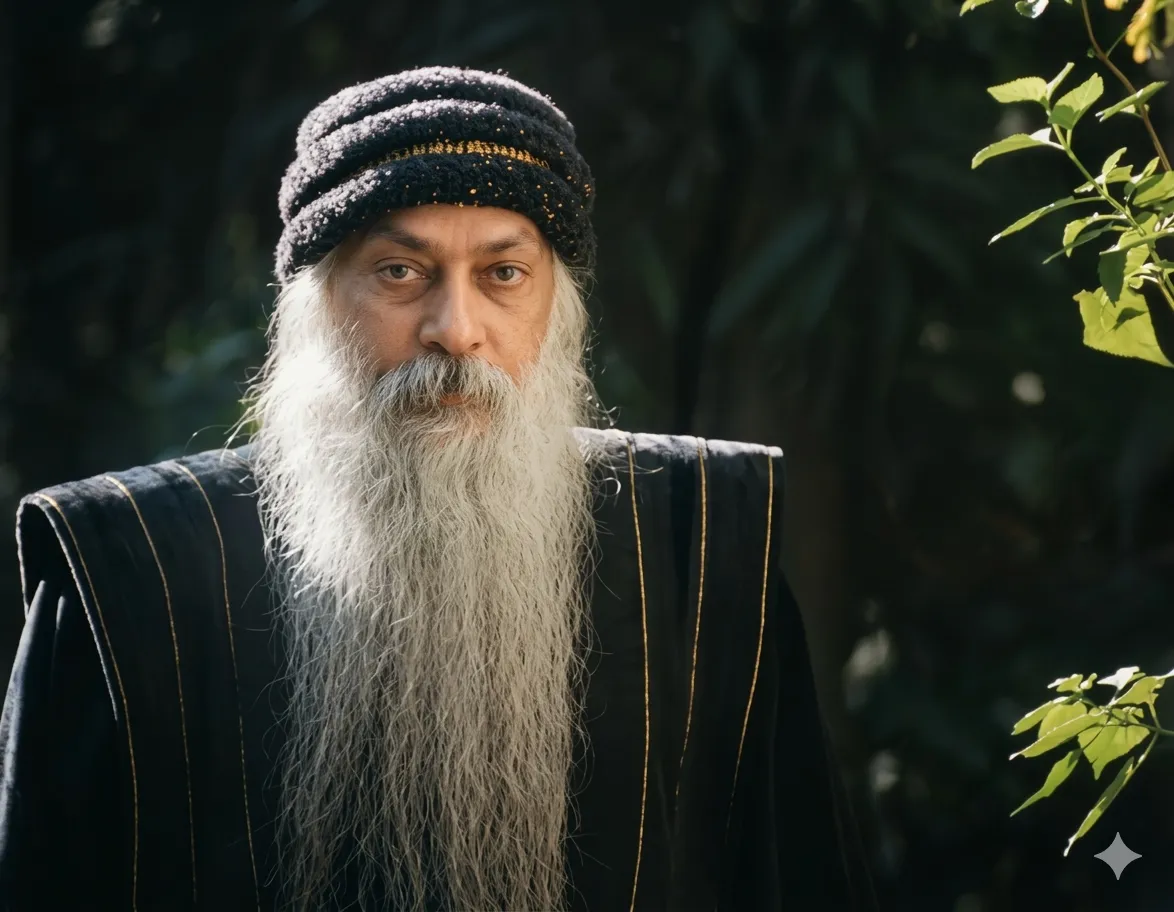
Osho's original Hindi beside Osho Live's English translation, matched passage by passage.
सहर तक शमए-महफिल! मैंने जल-बुझने की ठानी है
हमें ये देखना है, खाक हो जाते हैं हम कब तक
Till dawn, O candle of the gathering! I have resolved to burn out. We must see how long it takes before we turn to ash.
परमात्मा की जो खोज पर निकले हैं, उन्हें खाक हो जाने की तैयारी रखनी होती है। मिटो, तो ही उसे पा सकोगे। जरा से भी बच गए, तो उतना ही फासला शेष रह जाता है। तुम्हारा मिटना ही उसका होना है। तुम्हारा मिटना ही उससे मिलना है। इसलिए जिसे यह बात साफ नहीं है, वह जन्मों-जन्मों तक भटकता रहे, खोजता रहे, पाएगा नहीं।
Those who set out in search of the Divine must be ready to become ash. Only if you vanish can you attain him. If even a trace of you remains, that very measure of distance still remains. Your disappearing is his appearing. Your vanishing is your meeting with him. Whoever does not see this clearly will wander on for lifetimes, searching and searching—and never find.
सहर तक शमए-महफिल! मैंने जल-बुझने की ठानी है
हमें ये देखना है, खाक हो जाते हैं हम कब तक
Till dawn, O candle of the gathering! I have resolved to burn out. We must see how long it takes before we turn to ash.
मिटने की तैयारी ही उसकी एकमात्र साधना है। ‘मैं’ विदा हो जाए, समग्ररूपेण विदा हो जाए, तो द्वार खुल जाता है। मैं के अतिरिक्त और कोई ताला नहीं है उसके द्वार पर। तुम ही बाधा हो।
Readiness to vanish is the only discipline there is. If the “I” departs, wholly departs, the door swings open. There is no lock upon his door except the “I.” You are the obstacle.
लोग सोचते हैं, कोई और बाधा है। लोग सोचते हैं, अज्ञानी हूं, थोड़ा ज्ञान हो जाएगा तो बाधा मिट जाएगी। पापी हूं, थोड़ा पुण्य कर लूंगा तो बाधा मिट जाएगी। नहीं, न तो पुण्य से बाधा मिटेगी, न ज्ञान से बाधा मिटेगी। जब तक तुम हो, बाधा रहेगी। अज्ञानी होकर रहो तो बाधा रहेगी, ज्ञानी होकर रहो तो बाधा रहेगी; पापी होकर रहो तो बाधा रहेगी, पुण्यात्मा होकर रहो तो बाधा रहेगी। फिर ताला लोहे का है कि सोने का, फर्क नहीं पड़ता। ताला ताला है। दरवाजा नहीं खुलेगा सो नहीं खुलेगा। मिटना होगा। खाक हो जाना होगा। जैसे दीया बुझ जाता है!
People imagine the obstacle is something else. They think, “I am ignorant; with a little knowledge the hindrance will be gone. I am sinful; with a little virtue the hindrance will be gone.” No—neither virtue nor knowledge removes it. So long as you are, the obstacle remains: ignorant, it remains; learned, it remains; sinful, it remains; saintly, it remains. Whether the lock is iron or gold makes no difference: a lock is a lock. The door will not open. You must vanish. You must turn to ash—like a lamp going out.
इसलिए बुद्ध ने उस परम अवस्था को निर्वाण कहा। निर्वाण का अर्थ है: दीये का बुझ जाना। जैसे दीया बुझ जाता है ऐसे तुम बुझ जाओ, तो सूरज प्रकट हो जाए। तुम्हारे दीये की टिमटिमाती लौ ने ही सूरज को छिपा रखा है। जरा सी किरकिरी आंख में पड़ जाती है, पहाड़ ओझल हो जाते हैं। ऐसी जरा सी ही किरकिरी है अहंकार की, पर उसी की आड़ में, उसी की ओट में सब-कुछ छिप गया है।
That is why Buddha called the supreme state nirvana. Nirvana means the going out of the flame. When the little lamp goes out, the sun appears. It is the flicker of your tiny lamp that hides the sun. A speck of grit in the eye and the mountain disappears. Ego is just such a speck—tiny, yet behind its screen everything is concealed.
किसे यकीन कि तुम देखने को आओगे,
आखिरी वक्त मगर इंतजार और सही।
Who can be sure you will come to behold me? Yet till the final moment—let me wait a little more.
अंत तक, ठीक अंत तक भी उसका आगमन नहीं होता--अंत हो जाने के बाद ही होता है। जरा से भी बच गए हो, तो उतनी ही बाधा शेष रह गई है।
Until the very end—even to the very end—he does not arrive. Only after the end is he there. If you preserve even a little, that little is the remaining barrier.
सिद्ध कौन है? जो शून्य है। जो परिपूर्ण शून्य है। जो है ही नहीं। जिसके भीतर जाओ तो रिक्तता है। कोरा आकाश! न विचार के बादल रह गए हैं, न अहंकार की गांठ रह गई है। फिर घटना घटती है। फिर आ जाती सुहाग की घड़ी। होली का परम क्षण आ जाता है!
उनको बुलाके और पशेमां हुए जिगर
ये क्या खबर थी होश में आया न जाएगा
Who is accomplished? The one who is a void. One who is utterly empty—who simply is not. Enter within and there is spaciousness—bare sky! No more clouds of thought, no knot of ego. Then the happening happens. Then the hour of bridal joy descends. Holi’s supreme moment arrives!
फिर बेहोशी और मस्ती का क्षण आता है। फिर जीवन में नृत्य है--फिर जीवन नृत्य है! फिर जीवन में रंग है--फिर जीवन रंग है! उसके पहले बेरंग है जीवन। उसके पहले नाममात्र को ही जीवन है, जीवन कहां? श्वास के लेने का नाम ही तो जीवन नहीं है। श्वास तो पशु भी ले लेते हैं। हृदय के धड़कने का नाम तो जीवन नहीं। पशु-पक्षियों के भी हृदय धड़क रहे हैं। जिसने श्वास और हृदय के धड़कन को ही जीवन समझ लिया, उसने यात्रा शुरू ही नहीं की, उसने पहला कदम भी नहीं उठाया।
We called them in—and were left abashed at heart; Who knew that once he came, we’d never regain our senses?
Then comes the instant of ecstasy and blessed intoxication. Then there is dance in life—indeed, life itself becomes dance. Then there is color in life—life itself becomes color. Before that, life is colorless. Before that it is life in name only. Breathing is not life—animals breathe as well. A heartbeat is not life—beasts and birds have hearts that beat. Whoever takes breath and heartbeat to be life has not even begun the journey, not taken the very first step.
जीवन तो तब है जब परम जीवन का अनुभव हो, शाश्वत जीवन का अनुभव हो। ये श्वासें तो टूट जाएंगी, असली श्वास कब लोगे, जो टूटती नहीं? यह धड़कन तो बंद हो जाएगी। यह हृदय असली हृदय नहीं है। उस हृदय को कब धड़काओगे, जो एक बार धड़कता है तो शाश्वत तक धड़कता है, फिर उसका कोई अंत नहीं आता। अमृत को कब पीओगे? यह जीवन तो मृत्यु है। इस जीवन के पीछे तो मौत खड़ी ही है, हर घड़ी खड़ी है; कब आ जाए, कुछ पता नहीं। यह जीवन तो मौत के पास ही सरकते जाने का एक नाम है। मरघट के करीब रोज जा रहे हो। अर्थी रोज कसी जा रही है। आज नहीं कल, कल नहीं परसों, मौत घेर लेगी, अंधकार आ जाएगा। यह रोशनी का दिखावा थोड़ी देर का है। यह चहल-पहल चार घड़ी की है। और इस चहल-पहल में सिर्फ चहल-पहल ही है, हाथ कुछ लगता नहीं, हाथ खाली के खाली रह जाते हैं। न कुछ लेकर आते हो, न कुछ लेकर जाते हो। खाली आते, खाली चले जाते हो।
Life truly is when the Eternal Life is tasted. These breaths will break—when will you breathe the breath that does not break? This heartbeat will falter. This heart is not the real heart. When will you set beating that heart which, once it beats, beats forever, without end? When will you drink the nectar? This life is death. Death stands just behind it—every moment behind it; who knows when it will arrive. This life is merely the name for sliding toward death. Every day you move closer to the cremation ground. Every day the bier is being fitted. Today or tomorrow—or the day after—death will surround you and darkness will fall. This show of light is brief. This bustle lasts four short hours. And for all this bustle, your hands grasp nothing; your hands remain empty. You bring nothing, you take nothing. You come empty, you go empty.
जागो! इस शोरगुल में बहुत मत उलझ जाओ! एक और सन्नाटा है भीतर जिससे पहचान करनी है। एक और हृदय है, जिसकी कुंजी तलाशनी है। तुम्हारे भीतर ही छिपा हुआ एक और राज है, जिसके पर्दे उघाड़ने हैं, जिसका घूंघट उठाना है। जिस दिन वह पर्दा उठता है, उस दिन ही पता चलता है कि हम क्या थे और क्या होकर रह गए थे! कमल थे और कीचड़ ही होकर रह गए थे। कमल की संभावना थी और हमने कीचड़ को ही अपना होना मान रखा था। राम थे और काम ही होकर रह गए थे। विराट थे और बड़े क्षुद्र में अपने को बांध लिया था। सारा आकाश थे, मुक्त आकाश थे, और कितने छोटे-छोटे इरछे-तिरछे आंगनों में आबद्ध हो गए थे!
Awaken! Don’t get so ensnared in this clamor. There is another silence within you to be recognized. There is another heart whose key must be found. Another secret is hidden within you; its curtain must be drawn aside, its veil lifted. The day that veil is raised, you will see what you were—and what you had let yourself become. You were a lotus, yet you made yourself mud. You had the possibility of the lotus, yet you took the mud to be your very being. You were Ram—and shrank into mere lust. You were the vastness—and bound yourself into petty, crooked courtyards. You were the whole sky, the free sky—and jailed yourself in tiny, slanted enclosures.
जो खोजने चलता है, उसे यह दिखाई पड़ना शुरू हो जाता है कि यह जीवन तो असली जीवन नहीं। इस जीवन से तो उसका चित्त निराश हो जाता है। इस जीवन से तो हताश हो जाते हैं उसके प्राण। और जिसने असार को असार की तरह जान लिया, अब ज्यादा देर नहीं है सार को सार की तरह देखने में। व्यर्थ को व्यर्थ की तरह पहचान लिया तो सार्थक के बहुत करीब आ गए। झूठ को झूठ की तरह पहचान लेना, सत्य को सत्य की तरह पहचान लेने की अनिवार्य मंजिल है।
The seeker begins to see this life is not the real life. His heart is disenchanted with it; his very life-force grows weary. And when the insubstantial is known as insubstantial, it is not long before the substantial is seen as substantial. Recognize the futile as futile, and you have come close to the meaningful. To see the false as false is the necessary milestone to seeing the true as true.
रंगि-रंगि चंदन चढ़ावहु, साईं के लिलार रे।
Offer sandal-paste of many hues to the Beloved’s brow.
और जो खोजने निकलता है और इतनी कीमत चुकाने को राजी है कि खाक होना पड़े तो खाक हो जाए; जो सूली पर चढ़ने को राजी है, उसे सिंहासन मिलता है। आ जाती है वह अमृत-घड़ी!
And the one who sets out to seek, ready to pay the price—even to become ash—he, who is ready to mount the cross, receives the throne. The hour of nectar arrives.
रंगि-रंगि चंदन चढ़ावहु, साईं के लिलार रे।
--कि उस प्यारे के ललाट पर चंदन का टीका लगाने का मौका आ जाता है!
मन तें पुहुप माल गूंथिकै, सो लैकै पहिरावहु रे।
Offer sandal-paste of many hues to the Beloved’s brow— the chance comes to place the tilak of sandal on the Beloved’s forehead!
और जब तुम शून्य हो जाते हो, तो जहां तुमने केवल विचारों की भीड़ देखी थी, जिस मन में तुमने सिवाय वासनाओं के, विचारों के, कल्पनाओं के, व्यर्थ के ऊहापोह के और कभी कुछ भी न पाया था; जिस मन में तुमने सिर्फ हाट भरी देखी थी वासनाओं, इच्छाओं, ऐषणाओं की, उसी मन में एक फूल खिलता है--चैतन्य का! यही मन, जो बाहर उलझा रहता है तो विक्षिप्तता लाता है, यही मन बाहर से मुक्त हो जाता है तो विमुक्तता लाता है। यही सीढ़ी है बाहर जाने की, यही सीढ़ी है भीतर आने की। उसी द्वार से तो बाहर जाते हो, जिस द्वार से भीतर आते हो। जिस सीढ़ी से नीचे उतरते हो, उसी से तो ऊपर भी जाते हो। सीढ़ी को दोष मत देना, दिशा का सवाल है।
Weave a garland of blossoms out of the mind, and bring it to adorn him.
And when you become empty, then—where you once saw only a crowd of thoughts, where your mind had yielded nothing but cravings and ideas and phantasies and hollow agitation, where you had found only a bazaar of desires, longings, ambitions—in that very mind a flower blooms: the flower of awareness. This same mind, entangled outwardly, brings derangement; freed from the outer, it brings liberation. It is the staircase outward and the staircase inward. The same door through which you go out is the door through which you come in; the stairs you descend are the stairs you ascend. Don’t blame the stairs; it is a matter of direction.
यही मन संसार से जोड़ देता है, यही मन परमात्मा से जोड़ देता है। जब तक संसार से जोड़ता है, तब तक इस मन में कांटे ही कांटे उगते हैं क्योंकि संसार में सिवाय कांटों के और कुछ भी नहीं है--कांटों का जंगल है! और जब यही मन तुम्हें परमात्मा से जोड़ देता है, अंतरात्मा से जोड़ देता है, तो फूल खिल आते हैं। और वे ही फूल चढ़ाने योग्य हैं।
This same mind ties you to the world; this same mind joins you to the Divine. So long as it binds you to the world, thorn upon thorn sprout in it, for the world is nothing but a thicket of thorns. And when this same mind links you with the Divine—with your inner self—flowers bloom; and only such flowers are worthy to be offered.
वृक्षों के फूल तोड़ कर जाकर मंदिर की मूर्तियों पर चढ़ा देते हो! न मूर्तियां सच्ची तुम्हारी, न फूल अपने। इस झूठ को तुम पूजा कहते हो? फूल पौधौं के--और चढ़े ही थे, पौधौं पर चढ़े ही तो चढ़े थे परमात्मा को। जिंदा तो थे! रस बह रहा था। चांद-तारों से बातें कर रहे थे। हवाओं में गंध बिखेर रहे थे। ये परमात्मा के ही चरणों पर चढ़े थे। और जीवंत थे और तुम्हारी पूजा बड़ी अनूठी है! इन जिंदाओं को तुमने तोड़ डाला, मार डाला, काट लिया! और चढ़ा कहां आए? जीवन को मुर्दा कर दिया और अपनी ही बनाई हुई मूर्तियों पर, पत्थर की मूर्तियों पर चढ़ा आए!
You pluck flowers from trees to lay upon idols in the temple! Neither the idols are truly yours, nor the flowers your own. And you call this worship? Those flowers belonged to the trees—and in being on the trees, they were already offered to the Divine. They were alive—sap flowing in them—speaking with moon and stars—spreading fragrance on the winds. They were laid at the Divine’s feet already, in their living. Your strange worship murders the living: you snap them, kill them, cut them—and carry the dead to your own carved stones!
तुम्हारी बनाई मूर्तियां तुम्हारी प्रतिछवियां हैं। तुम्हारी ही तस्वीरें हैं। तुम्हारी बनाई मूर्तियां तुम्हारी ही कल्पनाएं हैं। तुम्हारे हाथ से परमात्मा गढ़ा जाए, यह संभव कैसे? तुम्हें परमात्मा ने गढ़ा है। तुम गढ़ने वाले को गढ़ लेते हो, किसको धोखा देते हो? बजाय इसके कि समझो कि वह स्रष्टा है, तुम उसके स्रष्टा बन जाते हो। और तुमने रंग-रंग, ढंग-ढंग के परमात्मा बना रखे हैं। तुम्हारी मौज! मगर धोखा दे रहे हो और धोखा खुद ही खा रहे हो--किसको दोगे और?
The idols you make are your own reflections, your pictures, your imaginings. How could the Creator be shaped by your hands? He has shaped you. You carve the shaper—whom do you deceive? Instead of seeing that he is the Creator, you become his creator. You have made God in every color and every fashion—your whim! But you deceive, and are yourself deceived—who else could you deceive?
नहीं, एक और घड़ी है--वास्तविक परमात्मा के साक्षात्कार की, जब जीवन का अनुभव होता है, जब अमृत की वर्षा होती है। तब भी फूल चढ़ाए जाते हैं लेकिन वे फूल वृक्षों से नहीं लिए जाते, उधार नहीं होते, अपने ही प्राणों के होते हैं; अपने ही मन में खिले होते हैं। मनुष्य भी एक वृक्ष है और उसमें भी फूल खिलते हैं--चैतन्य के, प्रज्ञा के, ध्यान के, सुरति के। उन्हीं फूलों को चढ़ाना। उन्हीं फूलों को खिलाओ, ताकि चढ़ा सको। उनसे कम में कुछ काम नहीं चलेगा। इस मन को फूल बनाओ। यह वचन प्यारा है: मन तें पुहुप माल गूंथिकै! मन से ही गूंथ लिए फूल, मन से ही तोड़ लिए फूल...सो लैकै पहिरावहु रे! और इसकी ही माला उसे पहनाई।
No—there is another hour: the hour of true encounter with the Divine, when Life is experienced, when the rain of nectar descends. Then, too, flowers are offered, but not borrowed from trees; they bloom from your own life, in your own mind. Man is also a tree in which blossoms come—flowers of awareness, of wisdom, of meditation, of remembrance. Offer only those. Grow those flowers, so you can offer them. Anything less will not do. Make this mind into a flower. The line is sweet: weave the garland with the mind itself! From the mind pluck the blossoms...and with that garland adorn him!
रंगि-रंगि चंदन चढ़ावहु,...
Offer sandal-paste of many hues...
निश्चित ही यह चंदन भी बाहर का नहीं हो सकता। जब फूल भीतर के हैं तो चंदन भी भीतर का होगा। तुम्हारी चेतना में ही जो सुवास उठती है, उसी का नाम चंदन है। तुम्हारी चेतना की सुवास का नाम चंदन है। तुम्हारे भीतर छिपी है वास और तुम बाहर तलाश रहे हो। देखते न, कस्तूरा, कस्तूरी मृग भागता फिरता, भागता फिरता--इस तलाश में कि कहां से आ रही है यह सुवास? और सुवास उसकी ही नाभि से आती है। कस्तूरी कुंडल बसै!
Surely this sandalwood paste cannot be outer either. If the flowers are within, the sandal must be within as well. It is the fragrance that rises in your consciousness—that is sandal. The sweet scent of your own awareness is sandal. Your own aroma is hidden within, and you seek it outside. Don’t you see the musk-deer running in search of that fragrance which arises from its own navel? The musk rests in its own navel.
तुम्हारे भीतर बड़ी सुवास के खजाने पड़े हैं। मगर तुम बाहर की गंध में ऐसे उलझे हो कि अपनी गंध का पता ही नहीं चलता। तुम्हारे नासापुट बाहर की गंधों से ही भरे हैं। तुम समय ही नहीं देते, सुविधा ही नहीं देते कि तुम्हारी आंखें भीतर देख सकें, कि तुम्हारे कान भीतर सुन सकें, कि तुम्हारे नासापुट भीतर की गंध ले सकें, कि तुम्हारी जीभ भीतर का स्वाद ले सके, कि तुम्हें भीतर का स्पर्श हो सके, दरस-परस हो सके--मौका ही नहीं देते। बाहर इतने उलझे हो; तुम्हारी सारी इंद्रियों को तुमने बाहर उलझा रखा है, और फिर इंद्रियों को गाली देते हो। उलझाया तुमने है। इंद्रियां तो भीतर भी ले जा सकती हैं, इंद्रियां बाहर भी ले जा सकती हैं। इंद्रियां तो द्वार हैं।
Great treasure-houses of fragrance lie within you. But you are so entangled with smells outside that your own scent is unknown. Your nostrils are filled with outward odors. You give no chance—no space—for your eyes to turn within, for your ears to hear within, for your nostrils to take in the inner scent, for your tongue to taste the inner flavor, for your skin to feel the inner touch—for the meeting to be. You have given no chance. So lost are you outwardly; you have bound all your senses outward—and then you abuse the senses. It is you who entangled them. The senses can lead you inward as well as outward. They are doors.
जिस दरवाजे पर एक तरफ से लिखा होता है एंट्रेंस, प्रवेश, उसी दरवाजे पर दूसरी तरफ से लिखा होता है--एक्झिट, निकास। दरवाजा एक ही है। यह आंख बाहर ही अगर देखती होती तो मनुष्य परमात्मा को कभी भी नहीं देख सकता था। यह आंख भीतर भी देखती है--यह मुड़ कर भी देखती है। यह आंख दुधारी तलवार है। और ऐसी ही तुम्हारी सारी इंद्रियां हैं। बाहर चाहो बाहर देखो, भीतर चाहो भीतर देखो। बाहर देखोगे तो संसार है, भीतर देखोगे तो निर्वाण है। और जो तुमने संसार में देखा है सब तुम्हें भीतर मिल जाएगा--और अनंत-अनंत गुना और अनंत-अनंत गहरा।
On one side of a door it reads “Entrance,” on the other “Exit.” The door is one and the same. If the eye could only see outward, man could never see the Divine. This eye can also turn and see within. It is a double-edged sword. So are all your senses. Look outside if you wish—there is the world. Look within—there is nirvana. And whatever you have seen in the world, you will find it all within—immeasurably more, immeasurably deeper.
गंधें तुमने बाहर भी देखी हैं, मगर कुछ भी नहीं! बाहर की गंधें तो केवल दुर्गंधों को छिपाने के उपाय हैं। बाहर की गंधें तो ऐसे ही हैं जैसे किसी को घाव हुआ हो, मवाद पड़ गई हो और उसके ऊपर एक गुलाब का फूल रख ले। गुलाब का फूल रख लो घाव पर, इससे घाव मिटेगा नहीं, छिप भला जाए। किसे धोखा दे रहे हो? घाव बढ़ता रहेगा। और गुलाब की ओट में हो जाएगा तो और सुविधा से बढ़ेगा, क्योंकि दिखाई भी नहीं पड़ेगा।
You have known fragrances outside—yet they are nothing. External scents are but ways to mask stench. They are as if someone, having a festering wound, places a rose upon it. The rose will not heal the wound—only hide it. Whom are you deceiving? The wound grows. Hidden behind the rose, it grows all the more easily, for it is no longer seen.
अपनी दुर्गंध को छिपाने के लिए लोग सुगंध छिड़क लेते हैं। वह सिर्फ उपाय है भ्रांति पैदा करने का। अपनी कुरूपता को छिपाने के लिए लोग कितने सौंदर्य के आयोजन करते हैं। वस्त्रों से, परिधान से, परिवेष्ठन से, अलंकारों से, आभूषणों से, कितने-कितने उपाय करते हैं! यह सिर्फ कुरूपता को छिपाने के उपाय हैं। बाहर से कोई सुंदर नहीं हो सकता। सौंदर्य का तो अंतस्तल में आविर्भाव होता है।
To hide their stench, people spray perfume. It is only a device to create illusion. To hide their ugliness, they arrange outer beauty: garments, costumes, adornments, ornaments—so many devices! They only veil the ugly. No one can become beautiful from the outside. Beauty arises from the innermost.
तुमने बाहर भी रंग देखे हैं, मगर वे रंग कुछ भी नहीं हैं उन रंगों के मुकाबले जो तुम्हारे भीतर भरे हैं। और तुमने बाहर भी इंद्रधनुष देखे हैं, मगर जब भीतर के इंद्रधनुष देखोगे तब पता चलेगा कि बाहर के इंद्रधनुष तो सब फीके थे; सब छायामात्र थे। बाहर तो केवल प्रतिध्वनियां हैं, मूल तो भीतर है। बाहर तो ऐसा समझो कि जैसे तुम पहाड़ों में गए हो और तुमने जोर से आवाज लगाई और पहाड़ी घाटियों में आवाज गूंजी और तुम पर लौट आई। और तुम चौंकते हो और लगता है, शायद पहाड़ों ने तुम्हें पुकारा!
You have seen colors outside—but they are nothing compared to the colors within you. You have seen rainbows outside—but when you behold the inner rainbows, you will know the outer ones were pale shadows. Outside, there are only echoes; the source is within. It is like going into the mountains, calling out, and hearing your voice resound from the valleys—and you are startled, as if the mountains themselves called to you.
बाहर प्रतिध्वनि हो रही है। गूंज का असली मूल तुम्हारे भीतर है। वहां चंदन के रंग भी हैं, चंदन की सुवास भी। वहां फूल भी खिलते हैं। वहां सहस्रार का परम फूल भी खिलता है! और उसी को परमात्मा के चरणों में चढ़ाया जा सकता है, उसी की माला बनाई जा सकती है।
Outside is the echo; the true resonance springs from within. There are the hues of sandalwood there, and its fragrance. There, too, flowers bloom—the supreme thousand-petaled lotus blossoms! That alone can be laid at the Divine’s feet; that alone can be strung into a garland.
बिना नैन तें निरखु देखु छवि,...
Without eyes, behold the Beloved’s beauty...
और जब आंख भीतर मुड़ती है तो आंख में एक रूपांतरण हो जाता है, एक क्रांति हो जाती है। जब आंख बाहर देखती है तो देखने वाला और दिखाई पड़नेवाली चीज अलग-अलग होती हैं, द्रष्टा और दृश्य का भेद होता है। जब आंख भीतर मुड़ती है, तो देखने वाला भी वही होता है, दिखाई पड़ने वाला भी वही होता है। वहां दृश्य और द्रष्टा एक हो जाते हैं। वहां तो दो कैसे होंगे? वहां जानने वाला और जो जाना गया है, एक होता है। वहां भक्त और भगवान एक होता है। वहां सब द्वैत मिट जाते हैं। वही असली दर्शन है जहां दृश्य और दृष्टा दोनों एक में ही खो जाएं।
When the eye turns inward, a transformation occurs, a revolution. Looking outward, the seer and the seen are separate. Looking within, the one who sees is the one who is seen. There, seer and seen are one. How could there be two? The knower and the known are one. The devotee and the Divine are one. All dualities vanish. This is true seeing: where seen and seer dissolve into one.
बिना नैन तें निरखु देखु छवि,...
Without eyes, behold the Beloved’s beauty...
देखने वाला तो बचता ही नहीं वहां। तब बड़ा चमत्कार अनुभव होता है, बड़े रहस्य का जन्म होता है। चौंक पड़ता है मनुष्य, अवाक रह जाता है!
बिना नैन तें निरखु देखु छवि, बिन कर सीस नवावहु रे।
There, the one who sees does not remain at all. A great wonder is tasted; a deep mystery is born. One is stunned—speechless.
और वहां तो कोई सिर नहीं है, वहां तो कोई हाथ भी नहीं है--भीतर--मगर बिना हाथ के भी हाथ जुड़ते हैं और बिना सीस के भी सीस झुकता है। और वही असली झुकना है। बाहर का सीस तो तुमने बहुत बार झुकाया मगर झुकता कहां है? झुक-झुक कर अकड़ जाता है। सीस तो झुक जाता है, तुम नहीं झुकते। मंदिरों में खड़े लोगों को देख लो, सीस झुका है मगर खुद अकड़ कर खड़े हैं! खुद का अहंकार तो पूरी तरह मजबूत है, जरा नहीं झुकता, रंच भर नहीं झुकता।
Without eyes behold his beauty; without hands, bow your head.
Within there is no head, no hands—yet without hands the hands join, and without a head the head bows. That is the real bowing. Outwardly you have bowed many times—but where have you bowed? Bowing and bowing, you only stiffen. Your head bends, you do not bend. Watch those standing in temples: the head is lowered, but they stand rigid; the ego remains intact, unbending—by even a hair.
सीस को झुकाने से अहंकार नहीं झुकता। लेकिन जब भीतर सीस झुकता है, बिना सीस के सीस झुकता है तो अहंकार विदा हो जाता है। और फिर एक बार जो भीतर दिखाई पड़ जाए, भीतर सुनाई पड़ जाए, तो फिर सब तरफ उसकी झलक दिखाई पड़ने लगती है।
Bending the head does not bow the ego. But when within the head bows—when without a head, the head bows—ego departs. And once you have seen within, once you have heard within, then his glimpse flashes everywhere.
पासे-अदब से छुप न सका राजे-हुस्नो-इश्क
जिस जा तुम्हारा नाम सुना सर झुका दिया
From the place of courtesy neither the secret of beauty nor of love could be hid: Wherever your name was heard, we bowed our heads.
फिर तो कोई नाम ही ले दे कहीं, याद आ जाती है उसकी!
Then, if anywhere anyone speaks his Name, he is remembered!
रामकृष्ण को रास्तों तक पर ले जाने में मुश्किल हो जाती थी। उनके शिष्यों को बड़े सम्हाल कर ले जाना पड़ता था। कोई रास्ते में ‘जयरामजी’ ही कर दे, बस उतना काफी था, कि वे मस्त हो जाते, कि वे भाव-दशा में आ जाते, कि चौरस्ते पर खड़े हो जाते, आंखें बंद हो जातीं, आंसू झर-झर बहने लगते, आनंदमग्न हो नाचने लगते। भूल ही जाते कि चौराहा है, कि रास्ता चल रहा है, कि गाड़ियां गुजर रही हैं, कि भीड़ लग गई, कि पुलिसवाला भीड़ छांटने आ गया है। उन्हें फिर कुछ भी याद न रहती। नाम भी कोई ले देता!
It was hard even to escort Ramakrishna down the street. Disciples had to guide him carefully. If anyone along the way cried “Hail Ram!” that was enough for him to be swept into ecstasy—lost to the world, standing at a crossroad, eyes closed, tears streaming, dancing in bliss. He would forget it was an intersection, that traffic was passing, crowds gathering, even the policeman arriving to clear the way. A mere utterance of the Name!
एक शिष्य के घर विवाह था, उसकी बेटी का विवाह था, उसने बहुत प्रार्थना की रामकृष्ण को कि आप आएं। उन्होंने कहा: मैं आऊंगा। दूसरे शिष्यों ने कहा: बेहतर है न ले जाओ। कोई झंझट हो गई तो दूल्हा और दुल्हन तो एक तरफ रह जाएंगे...! मगर भक्त नहीं माना तो रामकृष्ण गए। और जो होना था वही हुआ। दूल्हे को सजे देख कर घोड़े पर उन्हें असली दूल्हे की याद आ गई। सबको सम्हाल दिया था कि कोई जयरामजी इत्यादि मत करना, परमात्मा का नाम मत लेना, मगर यह किसी ने सोचा न था कि घोड़े पर बैठे दूल्हे को देख कर...उनके मन में वैसा ही हो गया होगा जैसा कबीर ने कहा है: मैं तो राम की दुल्हनियां! वे तो एकदम नाचने लगे। वे नाचने लगे तो बस सब फीका पड़ गया। रामकृष्ण नाचें तो फिर और क्या रह जाए! जो होना था--विवाह का क्रियाकांड--वह तो एक तरफ पड़ गया, वह तो भूलभाल गए लोग, सब रामकृष्ण के पास इकट्ठे हो गए। भक्त बड़े हैरान हुए! क्योंकि किसी ने न जयरामजी की, न हरिनाम लिया, न कुछ सवाल उठा, यह आज मामला कैसे हुआ?
जब होश आया तीन घंटे बाद, रामकृष्ण से पूछा कि किसी ने तो कुछ कहा ही नहीं, आप एकदम से कैसे हो गए? उन्होंने कहा: किसी के कहने का क्या सवाल था, देखा नहीं घोड़े पर राम जी को! क्या सवार थे! याद आ गई! असली वर की याद आ गई! मेरी भी तो गांठ बंध गई ऐसे ही। ऐसे ही मेरी भी तो भांवर पड़ गई! फिर न सम्हाल सका।
Once a disciple’s daughter was to be wed. He begged Ramakrishna to come. Ramakrishna agreed. Other disciples advised, “Better not take him. If anything happens, the bride and groom...” But the devotee insisted, and Ramakrishna went. And what had to happen, happened. Seeing the groom adorned on horseback, he remembered the True Bridegroom. They had cautioned everyone: “Do not say ‘Hail Ram’; do not utter the Name.” But who could guess that the sight of the groom on a horse would be enough? His heart did what Kabir had sung: “I am the Bride of Ram.” He began to dance. When Ramakrishna dances, all else pales. The marriage rites were forgotten. All gathered around him. The devotee was perplexed, for no one had uttered the Name. Later, when after three hours he returned to his senses, they asked, “No one said anything—how did it happen?” He replied, “Who needed to say it? Did you not see Ram mounted there? What a Rider! I remembered. I remembered the true Bridegroom. My knot too was tied like that. My vows were taken like that. Then how could I hold back?”
भीतर झुक जाओ, फिर तो बाहर भी झुकोगे। फिर मैं तुमसे कहता हूं: पत्थर की मूर्ति के सामने भी झुक जाओगे तो तुम उसी के सामने झुक रहे हो! मगर तब तक नहीं, जब तक भीतर की पहचान नहीं है। फिर तो वृक्ष के सामने झुकोगे तो भी उसी के सामने झुक रहे हो, क्योंकि उसी की हरियाली है वहां। फिर तो तुम किसी के भी सामने झुक जाओगे। झुकना तुम्हारे जीवन का ढंग हो जाएगा। तुम झुके ही जीने लगोगे। तुम्हारे भीतर झुकाव एक शैली बन जाएगी। एक सहज भाव-दशा!
Bow within—and then you will bow without as well. Then I tell you: even before a stone image, bowing, you will be bowing to him—though not until the inner recognition has dawned. Then you will bow before the tree and bow to him, for it is his greenness there. Then you will bow before anyone. Bowing becomes your way of being. You live bowed. A leaning of the heart becomes your natural posture, a simple state of devotion.
ठेस लग जाए न उनकी हसरते-दीदार को
ऐ हुजूमे-गम संभलने दे जरा बीमार को
फिक्र है जाहिद को हूरो-कौसरो-तसनीम की
Do not wound his desire to be seen: O crowd of sorrows, let the frail one gather himself a little.
और हम जन्नत समझते हैं तिरे दीदार को
भक्त तो कहते हैं कि हमें बस इतना काफी है कि तेरा दीदार हो जाए, कि तू दिखाई पड़ जाए।
फिक्र है जाहिद को हूरो-कौसरो-तसनीम की
The pious fret for houris of paradise, for the Cup of Kausar and Tasnim; We, instead, take paradise to be a glimpse of your face.
लेकिन वे जो तपस्वी हैं तथाकथित, विरागी हैं तथाकथित, उनको बड़ी आकांक्षाएं हैं। उनको आकांक्षाएं हैं कि स्वर्ग मिले, स्वर्ग में स्वर्ण-महल मिलें, सुंदर अप्सराएं मिलें, उर्वशियां उनके पैर दाबें और गंधर्व उनके आस-पास वीणा बजाएं, और शराब के चश्मे बहें और कल्पवृक्ष हों, और उनके नीचे बैठ कर वे जो मर्जी हो पूरा करें! ये कोई भक्त के लक्षण नहीं, न धार्मिक के लक्षण हैं। ये तो वही आकांक्षाएं, वही संसार। तुमने फिर नये पर्दे पर वही चित्र बना लिए। फिर तुमने नई दिशा में वही आकांक्षाएं आरोपित कर लीं। फिर तुम अपना बाजार वापस ले आए।
The devotee says: enough for me that I behold you, that you appear.
The pious fret for houris of paradise, for the Cup of Kausar and Tasnim...
But so-called ascetics and renouncers have great ambitions: heaven with palaces of gold, lovely nymphs pressing their feet, gandharvas playing the lute, fountains of wine, wish-fulfilling trees beneath which any desire is fulfilled. These are not the marks of a devotee—or of the truly religious. These are the same old longings, the same worldly market—only painted on a new screen. You have projected your desires in another direction; you have brought your bazaar back again.
पुराणों में जो स्वर्गों की कथाएं हैं, स्वर्गों के जो वर्णन हैं, अगर गौर से समझोगे, तुम्हारे चित्त के वर्णन हैं, स्वर्गों के नहीं। तुम्हारी वासनाओं के वर्णन हैं, स्वर्गों के नहीं। स्वर्ग कोई स्थान नहीं है। स्वर्ग तो उसके दीदार में मिट जाने का नाम है। स्वर्ग तो उसके दर्शन में तिरोहित हो जाने का नाम है। स्वर्ग तो उसके दरस-परस का ही नाम है। कोई स्थान नहीं कि जहां कल्पवृक्ष लगे हैं, जिनके नीचे तुम बैठोगे। कल्पवृक्ष की कल्पना ही यह बताती है कि तुम्हारे मन में अधूरी रह गई हैं वासनाएं। यहां पूरी नहीं कर पाए तो वहां पूरा करोगे। और वहां पूरा करने के लिए यहां तुम वासनाओं को दबा रहे हो, उनसे लड़ रहे हो--जरा पागलपन देखो, जरा तुम्हारा गणित समझो!
The puranas’ tales of heaven, if understood carefully, are descriptions of your mind—not of heaven. They narrate your cravings—not heaven. Heaven is not a place; it is the name of vanishing in his vision, dissolving in his presence. Heaven is his touch. No place where wish-fulfilling trees grow beneath which you sit and demand. The very idea of such a tree betrays the unfulfilled desires within you. Failed here, you will fulfill them there—and to fulfill them there, you are repressing them here and fighting them here. See the madness? See the arithmetic?
अगर वासनाएं गलत हैं, तो यहां भी गलत हैं, वहां भी गलत होंगी। अगर शराब गलत है, तो यहां भी गलत है, वहां भी गलत होगी। मगर मजा देखो--यहां तो जरा से कुल्हड़ में शराब पीना पाप है और वहां झरने बह रहे हैं, कि पीओ दिल भर कर, कि डुबकी मारो! यहां तुम्हारे साधु-संत तुमसे कहे जाते हैं, सावधान, स्त्री से सावधान! और वहां सुंदर स्त्रियां मिलेंगी--इसी सावधानी के परिणाम में! यह गणित कैसा है? यह तो बड़ी चालबाजी हो गई, यह तो बड़ा लोभ और लालच हो गया! यह तो ऐसा हुआ कि यहां की साधारण स्त्रियां छोड़ीं वहां की असाधारण स्त्रियों को पाने के लिए। वहां की स्त्रियां असाधारण हैं। मनुष्य के मन ने कैसी कल्पनाएं की हैं, कि वहां की स्त्रियों की उम्र नहीं बढ़ती। बस सोलह साल पर रुकी है सो रुकी है। उर्वशी अभी भी सोलह ही साल की है! हजारों साल बीत गए, ऋषि-मुनि आते रहे, जाते रहे, उर्वशी सोलह साल की है सो सोलह ही साल की है! वहां कोई बूढ़े नहीं होते।
If desires are wrong, they are wrong here and wrong there. If wine is wrong, it is wrong here and wrong there. But see the joke: here a small earthen cup of wine is sin, and there streams flow—drink to your heart’s content, dive in! Here saints warn you, “Beware of woman!” and there, in reward, beautiful women await—result of your caution! What arithmetic is this? A cunning bargain: you leave ordinary women here to gain extraordinary ones there—whose age never increases, forever sixteen. Urvashi is still sixteen! Sages have come and gone for thousands of years, she remains sixteen. No one grows old there.
यह तुम्हारी आकांक्षा है। यह तुम्हारी मनोवासना है। तुम यहां भी नहीं चाहते कि बुढ़ापा आए। मगर यहां तुम विवश हो। आता है; क्या करोगे? बहुत छिपाते हो, बहुत रोकते हो, बहुत सम्हालते हो, आ-आ जाता है। मगर कम से कम स्वर्ग की कल्पना में ही मन को रमाते हो। वहां भी तुम यही भोग कल्पना कर रहे हो। यह कोई त्याग नहीं है।
This is your desire. You do not want to grow old here either—but you are helpless. Age creeps in—what will you do? You hide it, fight it, manage it—but at least you savor the fantasy of heaven. Yet even there you imagine only enjoyment—not renunciation.
फिर असली त्यागी कौन है?
So who is the true renouncer?
असली त्यागी वही है जो कहता है: परमात्मा का दर्शन हो गया, सब मिल गया।
और हम जन्नत समझते हैं तिरे दीदार को
Only he who says, “Having seen the Divine, all is attained.”
इससे ज्यादा की मांग संसार की मांग है। फिर तुमने परमात्मा से भी ऊपर कोई चीजें अभी रखी हैं।
We take paradise to be a glimpse of your face.
To ask for more than this is to return to worldly asking—to put something even above God.
तुम जरा सोचो, अगर तुमसे कोई कहे कि परमात्मा से तुम्हारा मिलन हो जाएगा, तो तुम कौन सी तीन चीजें मांगोगे? तत्क्षण तुम्हारा चित्त फेहरिस्त बनाने लगेगा। कभी बैठ कर एक क्षण को सोचना कि परमात्मा से मिलना हो जाए तो तैयार तो कर लो फेहरिस्त, मांगोगे क्या? कम से कम तीन चीजें तो तय कर लो। क्योंकि कहानियां हैं, जिनमें कभी-कभी परमात्मा से मिलना हो गया है लोगों का और उन्होंने फेहरिस्त तैयार नहीं की थी और बड़ी झंझट में पड़े। क्योंकि जो मांगा, उससे मुसीबत हो गई। गलत-सलत मांग लिया। बिना सोच-समझ कर मांग लिया। ऐसी बहुत कहानियां हैं।
Just imagine: if someone told you that you will meet the Divine, which three things would you ask for? At once your mind will start making a list. Sit for a moment and consider it: if the meeting comes, be ready—what will you ask? At least choose three. Stories abound where people met God unexpectedly and had no list ready—and got into trouble. For what they asked brought misfortune. They asked without thought. There are many such tales.
एक आदमी को इष्टदेवता के दर्शन हो गए। और देवता जैसा पूछते हैं कहानियों में, उन्होंने पूछा, कि मांग ले, तीन वरदान मांग ले। वह आदमी अपनी पत्नी से परेशान था--जैसे सभी आदमी परेशान हैं। तो उसने कहा कि ठीक, यह मेरी पत्नी मर जाए। तत्क्षण पत्नी गिर पड़ी और मर गई। और जैसा पत्नी के मरने पर होगा, तब घबड़ाया। क्योंकि पत्नी के बिना कैसे चलेगा! न साथ चलता है, न बिना चलता है। पत्नी से दूर होते ही से पता चलता है कि बिना उसके चल ही नहीं सकता। तब उसे होश आया कि खाना कौन पकाएगा, बिस्तर कौन लगाएगा, बच्चों की कौन फिकर करेगा। मारे गए! मुश्किल में पड़ गए! जल्दी से प्रार्थना की कि पत्नी को जिंदा करो। उसमें दूसरा वरदान भी खत्म हो गया--बात वहीं की वहीं है--पत्नी जिंदा हो गई। इष्टदेवता ने कहा: अब जल्दी करो, तीसरा मांग लो। उसने कहा: अब रुको! अब एक ही बचा, अब मुझे सोचने दो।
A man saw his chosen deity. As in the stories, the deity asked, “Ask for three boons.” The man was tormented by his wife—as all men are. He said, “Let my wife die.” Instantly she fell and died. And as happens when a wife dies, he panicked—for how will one live without a wife? Neither with, nor without. As soon as she was gone, he saw: who will cook, make the bed, care for the children? We are ruined! In a hurry he begged, “Bring my wife back to life.” The second boon was spent—and he was back where he started. The deity said, “Now be quick—ask the third.” He said, “Wait! Only one remains. Let me think.”
और मैंने सुना है, वह अभी भी सोच रहा है। अब एक ही वरदान मांगना हो, इतनी दुनिया की वासनाएं, इतनी कामनाएं, कैसे चुनाव कर पाओगे? पागल हो गया होगा बेचारा! यह मांगो तो वह छूटता है, वह मांगो तो यह छूटता है। इतनी चीजें हैं संसार में मांगने को।
And I have heard he is still thinking. With only one boon left and countless desires, how will he choose? The poor fellow must have gone mad. Ask for this and that is left out; ask for that and this is lost. So many things to ask for.
तो तुम फेहरिस्त बनाना। कम से कम तीन की तो तैयार ही रखना, क्योंकि पुरानी आदत देवताओं की, वे कहते हैं: तीन मांग लो। न दो, न चार। तुम तीन की फेहरिस्त बनाना, तुम भी चकित हो जाओगे। अपनी फेहरिस्त देख कर चकित हो जाओगे। एक कागज पर लिखना। डरना मत। झूठी फेहरिस्त मत बना लेना। किसी को दिखाने के लिए नहीं बनाना है, तुम्हीं को जानने के लिए बनाना है। दिखाने के लिए बनाओगे तो झूठी हो जाएगी। जो आता है मन में, वही लिखना। तब तुम्हें पता चलेगा: परमात्मा भी सामने खड़ा हो तो तुम क्षुद्र बातें मांगोगे। बड़ी क्षुद्र बातें मांगोगे! धन मांगोगे, पद मांगोगे, प्रतिष्ठा मांगोगे। भोग की कोई यात्रा पर निकलना चाहोगे। मांगोगे क्या और? और तुम्हारा त्यागी-व्रती यही कर रहा है।
So make your list. At least get three in order, for old-time gods have the habit: they say, “Ask for three”—not two, not four. Make your list of three. You will be astonished at your own list. On a piece of paper—don’t be afraid. Don’t make a pious list to show others. Make it only for yourself. If you make it to show, it will be false. Write exactly what arises. Then you will see: even if the Divine stood before you, you would ask for petty things—wealth, position, prestige, a journey into enjoyment. What else would you ask for? The ascetic who boasts of renunciation is doing exactly this.
No—the devotee has no such ambition. He says, “Your glimpse—enough!”
नहीं, भक्त की ऐसी कोई आकांक्षा नहीं। भक्त कहता है, तेरा दीदार, बस काफी!
बिना नैन तें निरखु देखु छवि, बिन कर सीस नवावहु रे।।
दुइ कर जोरिकै बिनती करिकै, नाम कै मंगल गावहु रे।
Without eyes behold his beauty; without hands, bow your head. With both hands joined in prayer, sing the auspicious Name.
दोनों हाथ जोड़ कर विनती करूंगा, तेरे नाम का मंगल गाऊंगा। और क्या करने को बचता है! जिसे परमात्मा का दर्शन हुआ, उसके पास सिवाय उत्सव के और कुछ भी नहीं है अब। स्वर्ग उत्सव है। भोग नहीं, उत्सव। मांग नहीं, उत्सव--धन्यवाद, आभार-प्रदर्शन।
With both hands joined, I will beseech you; I will sing the auspiciousness of your Name. What else remains to do? For one who has seen the Divine, nothing remains but celebration. Heaven is celebration—not indulgence, not demand—only gratitude, only thanksgiving.
इसलिए मैं अपने संन्यासियों को कहता हूं: प्रत्येक ध्यान के बाद थोड़ी देर के लिए उत्सव की घड़ी जरूर लाना, उत्सव मना लेना। हर ध्यान के बाद। क्योंकि अंततः परम ध्यान के बाद उत्सव ही घटने वाला है, उसकी तैयारी करो। उसके लिए धीरे-धीरे, धीरे-धीरे अपने को निष्णात करो। समाधि के बाद सिर्फ उत्सव ही रह जाता है और सब खो जाता है। समाधिस्थ पुरुष के जीवन में सिवाय नृत्य के, गीत के और क्या है? और गीत भी उसके अपने नहीं हैं अब।
That is why I tell my sannyasins: after each meditation, let there be a few moments of celebration. After every meditation. For in the end, after the supreme meditation, only celebration happens. Prepare for it. Practice it—slowly, slowly. After samadhi, nothing remains but dance and song—and even those no longer “yours.”
प्रिय, तुमने ही तो गाए थे
मैंने ये जितने गीत लिखे!
अंबर की लाली को उस दिन
तुमने ही था अनुराग दिया,
तुमने ऊषा को अपनी छवि,
कलरव को अपना राग दिया,
Beloved, it was you who sang whatever songs I wrote. It was you who gave crimson to the sky that day, you mirrored yourself in the dawn, you lent your raga to birdsong, your light to the sun’s rays, your fragrance to the southern breeze, and to the trembling lotus you gave your sweet pollen of delight.
अपना प्रकाश रवि-किरणों को,
अपना सौरभ मलयानिल को,
पुलकित शतदल को तुमने ही
प्रिय, अपना मधुर पराग दिया!
फिर भक्त तो बचा ही नहीं, भगवान ही भक्त में नाचता है। अनूठा रास! आनंद-उत्सव, महोत्सव! फूल पर फूल खिलते हैं। बीन पर बीन बजती है। नये-नये पर्दे उठते जाते रहस्य के। चारों तरफ दीये ही दीये जल जाते हैं। दीवाली भी आ गई और होली भी आ गई--सब साथ हो जाता है।
The devotee is no more—the Lord himself dances in the devotee. A unique rasa! A festival of joy, a great celebration! Flowers upon flowers bloom; reed upon reed plays; ever-new curtains of mystery rise; lamps flare everywhere. Diwali has come—and Holi too—both at once.
जगजीवन बिनती करि मांगै, कबहुं नहीं बिसरावहु रे।
बस एक ही प्रार्थना रह जाती है करने की, कि कभी भूलूं न, कभी फिर न भूल जाऊं! ध्यान करना इस बात पर, और कुछ नहीं मांगते जगजीवन, इतना ही मांगते हैं कि यह दर्शन जो हो गया है, यह मेरी पात्रता से तो नहीं हुआ है, मैं तो अपात्र ही हूं, मैं तो जैसा हूं वैसा ही हूं, मैंने कोई बहुत बड़ा अर्जन नहीं कर लिया है, मैंने कोई बहुत बड़ा त्याग नहीं कर दिया है--मेरे त्याग में भी क्या रखा है; मेरा त्याग मेरे ही जैसा होगा! दो कौड़ी की मेरी स्थिति है, दो कौड़ी का मेरा त्याग होगा। न मेरा ज्ञान है, न मेरा ध्यान है, और तुम आ गए! अनायास तुम आ गए हो, अतिथि बन कर तुम मौजूद हो गए हो, तुमने द्वार पर दस्तक दे दी है, यह दस्तक देते रहना! और मुझे याद दिलाते रहना। मैं तो नासमझ हूं, भूल भी सकता हूं, पा-पा कर भी चूक सकता हूं। तुम्हें देख लिया, फिर भी विस्मरण कर सकता हूं।
Jagjivan beseeches and asks only this: let me never forget.
Only one prayer remains: that I never forget, never again fall into oblivion. Mark this—and ask for nothing else. “I know this vision did not come because I was worthy. I am unworthy. I am as I am—no great attainment, no great renunciation. What is my renunciation? As I am, so my renunciation—worth two pennies. I have no knowledge, no meditation, and yet you came! Unannounced you came as a guest; you knocked upon my door—keep knocking! Keep reminding me. I am foolish—I may forget, even after seeing. I may taste and yet slip.”
भक्त यही कहता है, यही निवेदन करता है कि तुम्हें देख लिया, अब विस्मरण होना नहीं चाहिए, लेकिन मुझे अपनी अपात्रता का पता है, मुझे अपने अज्ञान का पता है, मैं फिर अंधेरी रात में खो सकता हूं। यह पूर्णिमा जो आज मेरे जीवन में आई है, फिर अमावस बन सकती है। अगर मुझ पर ही निर्भर रहा तो अमावस बन ही जाएगी। तुम्हारे सहारे की अब मुझे और भी जरूरत होगी। अब दर्शन दिया है, तो अब विस्मरण न हो पाए! मैं तुम्हारे स्मरण को करता ही रहूं।
So the devotee prays: “I have seen—you must now not let me forget. I know my unworthiness. I may be lost again in the dark. This full moon that has arisen in me may turn to new moon. If it depends on me, it surely will. Now I need your support even more. Having given me vision, see that I do not forget. Keep me in remembrance.”
दुइ कर जोरिकै बिनती करिकै,...
With both hands joined in prayer...
मैं दोनों हाथ जोड़ कर विनती करता हूं।
I join both hands in supplication.
दुनिया में बहुत तरह के प्रणाम हैं, लेकिन दोनों हाथों को जोड़ कर प्रणाम करने की प्रक्रिया इस देश की है। और इसके पीछे बड़े रहस्य हैं, बड़े प्रतीक हैं। अब तो वैज्ञानिक अनुसंधान भी इस बात के करीब आ रहा है। विज्ञान की नई खोजें कहती हैं कि मनुष्य का मस्तिष्क दो हिस्सों में बंटा हुआ है। जो दाएं तरफ का हिस्सा है मनुष्य के मस्तिष्क का, वह बाएं हाथ से जुड़ा है। और जो बाएं तरफ का हिस्सा है मस्तिष्क का वह दाएं हाथ से जुड़ा है। उलटा, क्रास के जैसा। बायां दाएं से जुड़ा है, दायां बाएं से जुड़ा है। चूंकि हमने दाएं हाथ को महत्वपूर्ण बना लिया है और हमारे सारे कृत्य उसी से हो रहे हैं, इसलिए हमारा बायां मस्तिष्क का हिस्सा सक्रिय है। बाएं मस्तिष्क के हिस्से के कुछ लक्षण हैं--गणित, तर्क, हिसाब-किताब, बहिर्यात्रा। और शायद इसीलिए दायां हाथ महत्वपूर्ण हो गया। अब विज्ञान इस खोज-बीन में लगा है, शायद इसीलिए दायां हाथ महत्वपूर्ण हो गया। क्योंकि बाएं मस्तिष्क को सक्रिय करने के लिए दाएं हाथ को सक्रिय रहना जरूरी है; वे जुड़े हैं। जब दायां हाथ चलता है, तो बायां मस्तिष्क चलता है। जब बायां हाथ चलता है, तो दायां मस्तिष्क चलता है। दाएं मस्तिष्क के लक्षण हैं--काव्य, भाव, अनुभूति, प्रेम। उनका तो कोई मूल्य नहीं है जगत में। इसीलिए बायां हाथ बेकार डाल दिया गया है। बायें हाथ को बेकार डालने में हमने काव्य को बेकार कर दिया है, प्रेम को बेकार कर दिया है, अनुभूति को, भाव को बेकार कर दिया है। यह बड़ी तरकीब है। बड़ी जालसाजी है!
There are many salutations in the world, but joining both hands is unique to this land—and deep symbols stand behind it. Even science is coming close. Neuroscience now says the human brain has two hemispheres. The right hemisphere is linked with the left hand; the left hemisphere with the right hand—crosswise. Because we have elevated the right hand and do everything with it, our left brain is activated. The left brain specializes in mathematics, logic, calculation, outward journey—and perhaps that is why the right hand became important, to keep the left brain active. When the right hand works, the left brain works; when the left hand works, the right brain works. The right hemisphere’s qualities are poetry, feeling, intuition, love. The world values none of these. So the left hand was discarded. In discarding it, we discarded poetry, love, intuition, feeling—a clever trick, a grand fraud.
ये दोनों हाथ समान रूप से सक्रिय हो सकते हैं भविष्य में। और होने चाहिए। भविष्य के मनुष्य की जो प्रशिक्षण-प्रक्रिया होगी, उसमें ये दोनों हाथ सक्रिय करने की कोशिश की जाएगी। अभी तो हालत यह है, अगर कोई बच्चा बाएं हाथ से लिखता है, तो हम उसके पीछे पड़ जाते हैं कि दाएं से लिखो। दस प्रतिशत लोग बाएं हाथ से लिखने वाले पैदा होते हैं। दस प्रतिशत कोई छोटा आंकड़ा नहीं है। सौ में दस आदमी बाएं हाथ से लिखने वाले पैदा होते हैं। लेकिन मिलेंगे तुमको शायद एकाध ही आदमी मिलेगा सौ में से जो बाएं से लिखता हो, बाकी नौ को हम धक्का मार-मार कर, सजा दे-दे कर, स्कूल में मार-पीट कर दाएं हाथ से लिखवाने लगते हैं।
In the future, both hands will be trained equally—and must be. Even now, ten percent of people are born left-handed. Ten percent is no small number. Yet you might find one in a hundred who writes left-handed—the other nine have been beaten, punished, forced in school to write with the right.
उसके पीछे कारण हैं।
समाज तर्क को मूल्य देता है, काव्य को नहीं। समाज गणित को मूल्य देता है, प्रेम को नहीं। समाज हिसाब-किताब से जीता है, भाव से नहीं। यह भाव की हत्या की खूब तरकीब निकाली! मगर हजारों-हजारों सदियों से यह तरकीब चल रही है और हमारा मस्तिष्क का आधा हिस्सा बिलकुल निष्क्रिय होकर पड़ा है।
There are reasons: society values logic over poetry, mathematics over love, bookkeeping over feeling. It lives by calculation, not by heart. This is a way of murdering feeling. For thousands of years the trick has gone on; half our brain lies unused.
दोनों हाथों को एक साथ रख कर जोड़ने में प्रतीक है कि हम दोनों अंगों को जोड़ते हैं, हम इकट्ठे होकर नमस्कार कर रहे हैं। हम दोनों मस्तिष्कों को एक साथ लाकर नमस्कार कर रहे हैं। हमारा तर्क भी तुम्हें निवेदन है, हमारा प्रेम भी तुम्हें निवेदन है; हमारा गणित भी, हमारा काव्य भी; हमारा स्त्रैण चित्त भी, हमारा पुरुष चित्त भी, दोनों समर्पित हैं। हम इकट्ठे होकर समर्पित हैं।
Bringing both hands together symbolizes joining both halves, saluting as a whole. Both hemispheres bow together: “Our logic bows to you and so does our love; our mathematics and our poetry; our feminine and our masculine—both are offered.” We surrender as one.
अब भेद है! पश्चिम में लोग हाथ मिलाते हैं। उसमें एक ही हाथ का काम होता है। वह आधे मस्तिष्क का कृत्य है। उसमें समग्र मनुष्य समाहित नहीं है। दोनों हाथ को जोड़ने में समग्रता समाहित है। हम दुई को मिटाने की कोशिश कर रहे हैं। दो नहीं, एक। इसलिए परमात्मा के सामने दोनों हाथ जोड़ते हैं। जहां भी निवेदन करते हैं, वहां दोनों हाथ जोड़ते हैं।
There is a difference. In the West, people shake hands—with one hand. That is the act of half the brain, not the whole person. Joining both hands includes totality. We strive to erase duality. Not two—one. Hence before the Divine we join both hands—wherever we truly offer ourselves, both hands are joined.
जब तुम दोनों हाथ जोड़ते हो एक साथ, तो तुम्हारा मस्तिष्क और तुम्हारे दोनों हाथों की ऊर्जा वर्तुलाकार हो जाती है, विद्युत वर्तुल में घूमने लगती है। यह सिर्फ प्रतीक ही नहीं है, वस्तुतः यह घटना घटती है।
When you join both hands, the energies of your hands and brain form a circle; electricity begins to move in a circuit. It is not only symbolic; this actually happens.
इसलिए ध्यान में कहा जाता है: पद्मासन। पद्मासन में एक पैर दूसरे पैर से जुड़ जाता है और हाथ पर हाथ रख लो तो हाथ भी एक-दूसरे से जुड़ जाते हैं--तुम्हारा पूरा शरीर एक हो गया। तुम्हारा द्वंद्व टूट गया भीतर। तुम्हारे शरीर में विद्युत कि ऊर्जा वर्तुलाकार घूमने लगी। यह जो वर्तुल है विद्युत का, बड़ा शांतिदायी है। इसलिए पद्मासन, सिद्धासन बड़े वैज्ञानिक आसन हैं। सुगमता से चित्त शांत हो सकेगा। सरलता से चित्त शांत हो सकेगा। शरीर को जोड़ कर हमने मस्तिष्क के दोनों खंडों को जोड़ दिया। दोनों मस्तिष्क के खंड जुड़ जाएं तो हमारे भीतर जो भाव का और विचार का द्वंद्व है, वह समाप्त हो जाता है। विज्ञान और धर्म का जो द्वंद्व है, वह समाप्त हो जाता है।
Hence posture is prescribed in meditation: padmasana. One leg crosses the other; one hand rests upon the other—the body becomes a single circuit. Inner conflict dissolves. Bioelectricity flows in a calm circle. Padmasana and siddhasana are deeply scientific; the mind quiets easily. Joining the body, we join the hemispheres; joining them, the battle between thought and feeling ends—the war between science and religion ends.
दोनों हाथों को जोड़ कर नमस्कार करना बड़ा वैज्ञानिक है। इसे हाथ मिलाने से मत बदल लेना, वह बहुत सस्ता है, उसका कोई मूल्य नहीं, उसकी कोई वैज्ञानिकता नहीं है।
Join both hands in greeting—it is scientific. Do not replace it with handshakes: cheap, of no value, without science.
दुइ कर जोरिकै बिनती करिकै, नाम कै मंगल गावहु रे।
With both hands joined in prayer, sing the auspicious Name.
अब तो कुछ और बचा नहीं, दुई मिटा दी है, एक हो गया हूं और अब एक होने के बाद सिवाय मंगल गाने के और क्या बचता है! मंगल ही मंगल है!
Nothing remains now. Duality is erased; I am one—and being one, what remains but to sing auspiciousness—only auspiciousness!
जगजीवन विनती करि मांगै, कबहुं नहीं बिसरावहु रे।
कभी बिसराऊं न, कभी भूलूं न। क्योंकि जिसने एक बार जान लिया है, फिर बिसराना बहुत दुखद हो जाता है! बहुत दुखद हो जाता है! इससे तो अच्छा था न जानना। स्वाद नहीं लगा था तो विषाद भी नहीं था। स्वाद लग गया, फिर अड़चन होती है। जिसने शराब पी ली, फिर उसे पता है शराब का रस, शराब की मस्ती! जिसने कभी पी ही नहीं है, उसे न मस्ती का पता है, न रस का पता है; उसे कोई अड़चन भी नहीं है, उसे याद भी नहीं है।
Jagjivan begs and asks only this: let me never forget.
For once one has known, forgetting becomes very painful—very painful! Better not to have known. Before the taste, there was no sorrow; once tasted, then the trouble begins. Whoever has drunk wine knows its intoxication—who has never drunk has neither its taste nor its longing.
इश्क ने तोड़ी सर पे कियामत, जोरे-कियामत क्या कहिए
सुनने वाला कोई नहीं, रूदादे-मोहब्बत क्या कहिए
जबसे उसने फेर लीं नजरें, रंगे-तबाही आह! न पूछ
सीना खाली, आंखें वीरां, दिल की हालत क्या कहिए
Love has brought apocalypse upon my head—what need to speak of the Day of Doom? No one to hear—what need to tell the saga of love? Since she averted her gaze—ah, do not ask of ruin! A hollow breast, desolate eyes—what need to tell the heart’s condition?
अगर उससे नजर मिल कर फिर नजर चूकी, तो--
If after meeting his gaze, his gaze slips away—
जबसे उसने फेर लीं नजरें, रंगे-तबाही आह! न पूछ
फिर तबाही का रंग न पूछो! फिर तबाही का हाल न पूछो! ‘सीना खाली, आंखें वीरां...फिर भीतर सब रिक्त-रिक्त, आंखें वीरान...दिल की हालत क्या कहिए! फिर कुछ कहा नहीं जा सकता। फिर सब टूट गया, सब मरुस्थल हो गया। कल तक तो झूठे गुलिस्तां में जीते थे, कल तक तो भ्रामक सपनों में जीते थे। उससे आंख क्या मिली, सपने तो टूट गए; अब सपनों से तो अपने को भर न सकोगे; और अब उसका विस्मरण हो गया! सपने भी गए और सत्य का भी विस्मरण हो गया! यह बड़ी कठिन दशा हो जाती है।
Since she withdrew her glance—ah, do not ask of ruin! Then do not ask of the color of devastation! The chest empties, the eyes are deserted—what can one say? Everything shatters, a desert remains. Yesterday we lived in false gardens, in deceptive dreams. His glance broke the dreams; now dreams can no longer fill you—and if he, too, is forgotten—dreams are lost and truth forgotten. A hard state.
इसलिए भक्त एक ही प्रार्थना करता है: जगजीवन बिनती करि मांगै, कबहुं नहीं बिसरावहु रे।।
Hence the devotee’s sole prayer: Jagjivan begs and asks only this: let me never forget.
बस इतना ही मुझे चेताए रखना। मैं तो अपनी तरफ से भूल ही जाऊंगा। मुझ पर भरोसा मत रखना। मैं तो अवश हूं। मुझे अपनी कमजोरियों का भलीभांति पता है। अगर मुझ पर ही छोड़ दिया तो भूल होने ही वाली है। मैं तो फिर किसी गड्ढे में गिर जाऊंगा। मैं फिर किसी उलझन में फंस जाऊंगा। मुझे उलझनों में पड़ने की पुरानी आदत है। मेरे पैर अपने आप उलझनों की तरफ बढ़ जाते हैं। यह जो सुलझाव की घड़ी आ गई है, जैसे तुम ले आए हो सुलझाव की घड़ी, इसी तरह अब मेरी याद को भी जगाए रखना। यह दीया बुझे न। यह दीया तुम उकसाए रखना। यह ज्योति तुम जलाए रखना।
Keep me warned. I will forget on my own. Don’t trust me. I am helpless. My weaknesses I know well. If left to me, I will forget. I will fall into some pit, some entanglement. I am habituated to tangles; my feet wander toward them. You have brought a moment of clarity; in the same way, awaken remembrance. Let this lamp not go out. Fan this flame. Keep this light burning.
यह भक्त की प्रार्थना है--और इससे श्रेष्ठ क्या प्रार्थना हो सकती है? प्रार्थना करना तो यही करना। फेहरिस्त कुछ और बनाओ तो गलत होगी।
This is the devotee’s prayer—and what prayer could be greater? If you must pray, pray this. Any other list will go astray.
यहि नगरी में होरी खेलौं री।।
Let me play Holi in this very town.
बुद्ध का प्रसिद्ध वचन है: यही पृथ्वी है स्वर्गों का स्वर्ग। दिस वेरी अर्थ दि लोटस पैराडाइज। और यही देह है भगवत्ता। एंड दिस वेरी बॉडी दि बुद्धा।
Buddha’s famous word: this very earth is the lotus paradise. And this very body is the Buddha.
जगजीवन कहते हैं: यहि नगरी में होरी खेलौं री।।
Jagjivan says: Let me play Holi in this very town.
इसी देह की नगरी में होली का क्षण आ गया। सोचा भी न था! क्योंकि तथाकथित साधु-संत तो यही कहे चले जाते हैं कि शरीर दुश्मन है, शरीर को नष्ट करो। भक्त नहीं कहते ऐसी भ्रांत बात। भक्त कहते हैं: शरीर तो उसका मंदिर है। सम्हालो, साज-संवार रखो! जैसे मंदिर की रखते हैं, ऐसी ही देह की भी साज-संवार रखो, यह उसका मंदिर है।
In this very city of the body the moment of Holi has come. It had not even been imagined, because the so-called saints insist the body is the enemy; destroy it. Not so for the devotee: the body is his temple. Care for it; keep it adorned—as you keep a temple.
सच तो यह है, हमने जो मंदिर बनाए हैं इस देश में, वे पद्मासन में बैठे हुए आदमी की प्रतिमा के रूप में ही बनाए हैं। आदमी जब पद्मासन में बैठे तो जो उसकी प्रतिमा का रूप होगा, जो उसका रूप बनेगा, उसी रूप में हमने मंदिर को भी बनाया है। बुनियाद उसके पैर हैं। फिर मंदिर की चार दीवालें हैं, वह देह है। फिर मंदिर का गुंबज है, वह मस्तिष्क है, वह सिर है। और फिर ऊपर चढ़ाते हैं स्वर्ण का कलश, वह भीतर खिलनेवाले स्वर्ण के फूल का प्रतीक है।
In truth, the temples we built in this land are fashioned like a man seated in lotus posture: the foundation, his legs; the four walls, his torso; the dome, his head; and the gold finial atop—symbol of the golden blossom within.
यह देह मंदिर है। स्वर्गों का स्वर्ग! इससे लड़ना मत। यह परमात्मा की भेंट है तुम्हें। इससे लड़ोगे, कृतघ्नता होगी। सुनो, जगजीवन कहते हैं: यहि नगरी में होरी खैलौं री! इसी नगरी में, इसी देह में, इसी संसार में होली का क्षण आ गया। परमात्मा कहीं और नहीं है, यहीं है--आंख भर निर्मल हो, आंख भर भीतर देखे, यहीं है, इसी क्षण है!
This body is a temple—the paradise of paradises. Do not fight it. It is God’s gift. Fighting it is ingratitude. Listen: Jagjivan says, “Let me play Holi in this very town.” In this body, in this world, the moment of Holi has come. God is nowhere else but here—seen by a cleansed eye, seen within—here, now!
फिर झमका रंग-गुलाल सुमुखि, फिर गमका फागुन-राग,
फिर चमका मनसिज के नयनों में रति का नव अनुराग।
फिर घिर आई है होली।
सौरभ से श्लथ, मद से अलसित
फिर मलय समीरन डोली।
उर में अदम्य उच्छ्वास लिए,
Then color bursts and gulal flies, O fair-faced one; the melody of spring floats again. Love’s new longing glows again in the eyes of the god of desire.
Spring has gathered again.
सुर में अतृप्ति की प्यास लिए,
मंजरित आम की डाली पर
फिर काली कोयल बोली।
अपने पराग से हो विह्वल
Heavy with scent, languid with intoxication, again the southern breeze sways. With unconquerable sighs in the heart, with thirsting notes in the song, on mango boughs bursting into bloom the black cuckoo calls again.
कलियों ने खोले वक्षस्थल
आकांक्षा की पुलकन बन कर
है छलक रहा उनका परिमल
वे झूम-झूम वे विहंस-विहंस
वितरित करती हैं अपना रस
उनके वैभव पर उमड़ पड़ी
Drunk with their own pollen, buds open their breasts; as tingling of yearning, their fragrance overflows. They sway and smile and smile, pouring their nectar, and upon their wealth surges again the swarm of bees.
फिर से भ्रमरों की टोली।
फिर है मानस में स्पंदन
फिर है शरीर में कंपन
फिर अंग-अंग में है उमंग
फिर है नयनों में राग-रंग
फिर तन्मयता संचरित और
Again there is pulsing in the mind, again trembling in the body, again a thrill in every limb, again in the eyes, color and raga, again absorption pervading, again arms in embrace.
फिर बांहों में आलिंगन।
फिर आज भरी-सी लगती है
उन अरमानों की झोली।
Today again the sack seems filled with longings once harbored.
फिर से है मन में आग लगी, फिर से जीवन में आग,
फिर झमका रंग-गुलाल सुमुखि, फिर गमका फागुन-राग।
Once more the mind is aflame, once more life aflame, again color flashes, O fair-faced one, again spring’s fragrance sings.
इसी देह में, तुम जैसे हो ऐसे ही परमात्मा बरस सकता है। तुम्हारी वीणा तैयार है, जरा तार कसने हैं, जरा साज बिठाना है। सब-कुछ मौजूद है, सिर्फ संयोग ठीक नहीं है। जैसे वीणा तो रखी है, किसी ने तार अलग कर दिए हैं, तो वीणा रखी रहेगी। सब मौजूद था, जरा तार कसने थे, जरा तार बिठाने थे और गीत का जन्म हो जाता। ऐसे ही तुम्हारे भीतर परमात्मा संभावना की तरह मौजूद है, सत्य हो सकता है, जरा से तार बिठाने हैं। उन्हीं तार बिठालने की कलाओं का नाम धर्म है।
In this very body, as you are, the Divine can pour down. Your veena is ready—strings need only be tuned. Everything is present; only the consonance is off. Like a veena lying there with strings slack—everything is there, strings simply need tightening, and the song is born. So the Divine lives within you as possibility, ready to become actuality—strings need tuning. The arts of tuning are called religion.
फिर स्वभावतः बहुत ढंग से तार बिठाए जा सकते हैं। ढंग-ढंग से बिठाए जा सकते हैं। इसलिए बहुत धर्म दुनिया में पैदा हुए। धर्म तो एक ही है, बहुत ढंग पैदा हुए तार बिठाने के।
Strings can be tuned in many ways—hence many religions. Religion is one; the techniques of tuning are many.
तुम जो भी लेकर आए हो, काश तुम उस पूरे को प्रकट हो जाने दो, तो यहीं, इसी देह में...यहि नगरी में होरी खेलौं री!
हमरी पिया तें भेंट करावौ, तुम्हरे संग मिलि दौरौं री।
Whatever you have brought, if only you let it flower fully, then here, in this body... Let me play Holi in this very town!
और शरीर से कह रहे हैं जगजीवन, कि तुमने ही, तुम्हारे द्वारा ही प्यारे से मिलन हो सका, तो अब तुम्हें ही संग लेकर दौड़ना है। परमात्मा के मिलन में देह बाहर नहीं रह जाती, यह याद रखना। परमात्मा के मिलन में देह उतनी ही समाविष्ट होती है जितने तुम। पदार्थ भी परमात्मा का है--उतना ही, जितना चैतन्य। मिट्टी भी उसकी है, अमृत भी उसका है। तुम मिट्टी और अमृत के मेल हो। और जब तुम्हारा अमृत नाचेगा तो तुम्हारी मिट्टी भी नाच उठेगी। और जब स्वर्ग नाचता है तो धरा भी नाचती है। अलग-अलग नहीं हैं ये सब। इनमें कुछ फासला नहीं, भेद नहीं। मिट्टी अमृत का ही सोया हुआ रूप है और अमृत मिट्टी का ही जागा हुआ रूप। दिस वेरी बॉडी दि बुद्धा! यह देह ही तो बुद्धत्व है, यह जगत ही स्वर्गों का स्वर्ग!
“Bring me to meet my Beloved, O body; with you by my side, let me run.”
Jagjivan speaks to the body: through you the meeting was possible; now with you I must run. In union with the Divine, the body is not left out—remember that. Matter is as much his as consciousness. Dust as much as nectar. You are a weave of clay and nectar. When your nectar dances, your clay dances too. When the heavens dance, the earth dances. They are not separate—not distant, not different. Clay is nectar asleep; nectar is clay awake. This very body is the Buddha. This world is the paradise of paradises.
“I dance and dance, drawing aside the curtains; free and drunk with the Beloved, I laugh.”
नाचौं नाच खोलि परदा मैं, अनत न पीव हंसौ री।
जगजीवन कहते हैं: अब सब परदे खोलता जा रहा हूं और नाच पर नाच बढ़ता जा रहा है। नृत्य गहन होता जा रहा है। नर्तक नृत्य में खोता जा रहा है? अब सब पर्दे उठा देने हैं। अब सब घूंघट अलग कर देने हैं। अब क्या छिपाना है? अब किससे छिपाना है?
Jagjivan says: Now I throw open all veils, and the dance grows deeper. The dancer is being lost in the dance. All curtains must be lifted now, all veils removed. What is there to hide? From whom?
साधारणतः आदमी छिप-छिप कर रह रहा है। कितने तुमने मुखौटे ओढ़ रखे हैं, ताकि तुम छिपे रहो, तुम्हारा असली चेहरा लोगों को पता न चल जाए। तुमने कितनी तरकीबें कर रखी हैं! तुम कैसे-कैसे रूप बनाए हो! यहां सब बहुरुपिए हैं। सारा संसार बहुरूपियों से भरा है। होते कुछ हो, दिखाते कुछ हो। और धीरे-धीरे दूसरों को धोखा देते-देते खुद भी धोखा खा जाते हो।
Ordinarily, man lives hiding. How many masks you wear so you remain concealed, so your true face is not seen. What tricks! What roles! This is a world of shape-shifters. You are one thing, you show another. Deceiving others long enough, you are deceived yourself.
खयाल रखना, बहुत दिन तक धोखा देने का दुष्परिणाम यही है कि अंततः खुद ही भरोसा आ जाता है कि यही ठीक होगा। झूठे ही मुस्कुराते हो, फिर मुस्कुराहट आदत हो जाती है। जैसे जिमी कार्टर जैसे राजनेता। तुम सोचते हो रात भी बिना मुस्कुराए सोते होंगे! मैंने तो सुना है, नींद में भी उनके ओंठ खुले ही रहते हैं। चौबीस घंटे! अभ्यास हो गया।
Beware: the long-term consequence of deceiving is that you yourself begin to believe it true. You smile falsely, and the smile becomes habit. Like politicians who smile twenty-four hours a day. I have heard they even sleep with their lips parted in a grin. Practice.
जो तुम दिन भर करते हो, वही अभ्यास रात में भी चल जाता है।
What you do by day, you do by night.
मुल्ला नसरुद्दीन एक रात उठा और अपनी चादर फाड़ी। उसकी पत्नी ने रोका कि क्या करते हो, क्या करते हो?! मगर उसने तो फाड़ ही दी, उसने कहा कि तो तू दुकान पर भी आकर झंझट करने लगी! दिन भर कपड़ा फाड़ता है--कपड़े की दुकान है। सपने में भी किसी ग्राहक से मुलाकात हो गई--फाड़ दी चादर! नाराज पत्नी पर हो रहा है: तो तू अब दुकान पर भी आने लगी! यहां भी चैन नहीं!
Mulla Nasruddin rose at midnight and tore his blanket. His wife tried to stop him, but he ripped it anyway: “So, you’ve come to the shop to make a scene now?” He sells cloth by day. In his dream a customer appeared—he tore the cloth! He scolded his wife: “You’ve begun coming to the shop—no peace anywhere!”
दिन जो है, वही तो तुम्हारी रात भी हो जाएगी। तुम्हारा चेतन मन जो करता है, वही तुम्हारा अचेतन मन भी करने लगेगा। धीरे-धीरे अपने ही धोखे अपने लिए ही सच मालूम होने लगते हैं। जो आदमी मुस्कुराता रहता है झूठा, उसे खुद ही भरोसा आ जाता है कि मैं बड़ा प्रसन्नचित्त आदमी हूं। दूसरे कहते हैं कि वाह, कितने प्रसन्नचित्त आदमी हो! सुनते-सुनते उसे भी भरोसा आ जाता है कि हो न हो, ठीक ही कहते होंगे लोग! सच ही कहते होंगे लोग!
Your day becomes your night. What your conscious mind does, your unconscious mind imitates. Slowly your deceits seem true to you. One who smiles falsely begins to believe, “I am a cheerful man.” People say, “You are so cheerful.” Hearing it, he begins to believe it: “Perhaps they are right!”
मैंने सुना है, एक पत्रकार मरा और स्वर्ग पहुंचा। दरवाजे पर दस्तक दी, द्वारपाल ने दरवाजा खोला और कहा कि पत्रकारों की जगह सब पहले से पूरी भरी हैं; दूसरी जगह जाओ। दूसरी जगह मतलब सामने नरक का दरवाजा है। पत्रकार ने कहा कि नहीं, ऐसी आसानी से न जाऊंगा; इतनी तो कृपा करो, मुझे चौबीस घंटे का अवसर दो। मैं अगर किसी दूसरे पत्रकार को राजी कर लूं और वह जाने को राजी हो, तो फिर तो तुम्हें कोई अड़चन नहीं? द्वारपाल ने कहा: फिर कोई अड़चन नहीं है।
A journalist died and reached heaven. He knocked. The gatekeeper said, “All places for journalists are full; try the other place.” He meant the other door—the gate of hell. The journalist said, “Not so easy. Give me 24 hours. If I persuade another journalist to leave, then you’ll have room?” The gatekeeper agreed.
स्वर्ग में पत्रकारों की वैसे भी ज्यादा कोई जगह थी नहीं--बारह जगह थीं। वह भी होनी चाहिए जगह--क्योंकि अखबार कोई निकलता ही नहीं वहां-- नहीं तो शैतान डींग मारेगा। नरक में बहुत अखबार निकलते हैं, एक से एक शानदार अखबार! अखबार के लायक घटनाएं भी वहां घटती हैं। स्वर्ग में घटता ही क्या है--ऋषि-मुनि बैठे हैं! एक दफा छापो कि हजार दफा छापो, खबर वही की वही है। चाहो तारीख बदलते रहो, वही का वही अखबार चलेगा। ऋषि-मुनि अपने-अपने झाड़ के नीचे बैठे हैं--अपनी-अपनी सिद्धशिला पर, आंखें बंद किए। अब ध्यान कोई खबर तो नहीं है। कोई मार-पीट हो, छुरेबाजी हो; कोई झगड़ा-फसाद हो; कोई घेराव-जुलूस हो; कोई हड़ताल हो जाए, कुछ हो तो खबर। खबर जैसी कोई चीज वहां है नहीं।
बर्नार्ड शॉ ने कहा है कि अगर कुत्ता आदमी को काटे तो यह कोई खबर नहीं है। जब आदमी कुत्ते को काटता है, तो यह खबर है! खबर का मतलब ही होता है: कुछ हो!
पत्रकार अंदर गया। उसने खबर उड़ा दी एकदम जाते ही से कि नरक में एक नये अखबार की शुरुआत होने वाली है, बड़ा अखबार निकलने वाला है। प्रधान संपादक की, उपप्रधान संपादक की, और-और पत्रकारों की जरूरत है। झूठी खबर!
जब चौबीस घंटे बाद वह आया, द्वारपाल से उसने पूछा कि भाई, क्या हालत है, कोई गया? उसने कहा: कोई नहीं! सब गए! अब तुम जा नहीं सकते। कम से कम एक तो होना ही चाहिए। उसने कहा: अब मैं रुक नहीं सकता, मुझे भी जाने दो। उसने कहा: तुम पागल हो गए हो, तुम किसलिए जाते हो? उसने कहा कि हो न हो, बात में कुछ सच्चाई होनी चाहिए। बारह आदमी चले गए!
He went in and spread a rumor: “A new newspaper is launching in hell—a big one. They need an editor-in-chief, an associate editor, reporters.” False news. When he returned after 24 hours, he asked, “Has anyone gone?” The gatekeeper said, “Not one—everyone! Now you can’t go either—we must have at least one left.” He said, “Then let me go—perhaps there is some truth in it. Twelve have left!”
इसी ने उड़ाई है अफवाह!
He himself had spread the rumor.
तुम खयाल करना, तुम्हीं अफवाह उड़ा देते हो और जब चौबीस घंटे बाद अफवाह पूरे मोहल्ले में घूम कर तुम्हारे पास लौटती है तो तुम्हें भी शक होने लगता है: हो न हो, कुछ बात होगी! चिंदी का सांप होगा, मगर चिंदी तो होगी! कुछ न कुछ तो होगा ही! जहां धुआं होता है, वहां आग भी होती है। तुम्हीं कहने लगोगे कि जहां धुआं होता है वहां आग भी होती है, जरूर कहीं न कहीं कुछ हुआ होगा।
You yourself float the rumor—and when it spins round the neighborhood and comes back, you too begin to suspect, “There must be something—the saying goes: where there’s smoke, there’s fire.” Gossips repeat it and you join: “Where there’s smoke there must be fire; something must have happened.”
लोग झूठ बोल-बोल कर खुद ही झूठ हो जाते हैं। असली धोखा इस जगत में यही है कि तुम खुद ही धोखे में आ जाते हो। अपने दिए गए धोखे अपने पर ही लौट कर पड़ जाते हैं। और फिर परदे पर परदे डालने होते हैं, क्योंकि तुम कुछ हो, कुछ दिखलाना चाहते हो। कोई अपनी नग्नता में प्रकट नहीं होना चाहता।
People speak lies until they themselves become lies. The greatest deception is that your deceptions circle back upon you. Then veil upon veil must be added, for you are one thing and want to show another. No one wants to appear naked.
परमात्मा के सामने तो पर्दे हटाने होंगे। सब मुखौटे उतार कर रख देने होंगे। निर्वस्त्र हो जाना होगा। सारी धोखाधड़ी छोड़ देनी होगी। सारी वंचनाएं हटा देनी होंगी। वहां तो प्रामाणिक होना होगा।
Before the Divine, veils must fall. Masks must be removed. You must stand bare. All cheating must cease. There you must be authentic.
नाचौं नाच खोलि परदा मैं,...
“I dance and dance, drawing aside the curtains...”
जगजीवन कहते हैं: अब क्या पर्दा, किससे पर्दा? अपने मालिक के सामने खड़ा हूं, अब सब पर्दे गिरा देता हूं। अब निर्वस्त्र नग्न अपने परमात्मा के सामने खड़ा हूं, अब छिपाना क्या है? उससे क्या छिपाना है? उससे क्या छिपा है?
Jagjivan says: What veils now—and before whom? Standing before my Master, I let all veils drop. Naked before the Beloved—what to hide? What is hidden from him?
पीव जीव एकै करि राखौं,...
“Let Beloved and lover be kept as one...”
और जब ये सब पर्दे गिर जाते हैं, तभी पीव और जीव एक हो पाते हैं, नहीं तो पर्दों का ही तो फासला है। जितने तुमने झूठ अपने आस-पास बना रखे हैं, उतनी ही दूरी है। अहंकार तुम्हारा सबसे बड़ा झूठ है। और फिर छोटे-छोटे झूठों की कतार लगी है अहंकार के पीछे। ‘यह मेरा’, ‘वह तेरा’--यह सब झूठ है, क्योंकि न तुम कुछ लाए थे, न कुछ ले जाओगे। क्या मेरा, क्या तेरा? ‘मैं बड़ा, तुम छोटे।’ तुममें भी वही, उसमें भी वही--कौन बड़ा, कौन छोटा? ये झूठ पर झूठ तुम बोले जा रहे हो और झूठ पर झूठ तुम जमाए जा रहे हो। धीरे-धीरे इन्हीं झूठों की दीवाल के पीछे उलझ जाओगे।
Only when all veils fall can lover and Beloved be one. The distance is made of veils. The lies you spin are your distance. Ego is your biggest lie, with a long train of smaller lies: “mine” and “thine”—all false, for you brought nothing, you will carry nothing. What mine, what thine? “I am great; you are small.” The same One in you and in him—who is great, who small? Lie upon lie—and behind them you are trapped.
लोग अपने ही बनाए कारागृहों में पड़ गए हैं। किसी और ने किसी के लिए जंजीरें नहीं ढाली हैं। अपनी ही जंजीरें हैं, अपने ही बनाए कारागृह हैं, फिर खुद ही फंस गए हैं। यह हो सकता है, दूसरों को फंसाने के लिए बनाए थे। मगर खयाल रखना, जो गड्ढे तुमने दूसरों के लिए खोदे हैं, आज नहीं कल तुम स्वयं उनमें गिरोगे। दूसरे भी गिरेंगे--वे अपने खोदे गड्ढों में गिरेंगे; आखिर अपने-अपने गड्ढों की सबको फिकर रखनी है। उन्होंने भी खोदे हैं, वे कोई तुम्हारे गड्ढों में गिरने आएंगे? और कुछ न कर सकें, गड्ढे तो खोद ही सकते हैं। उन्होंने भी खोदे हैं खूब गड्ढे, वे अपने गड्ढों में गिरेंगे, तुम अपने गड्ढों में गिरोगे।
और जरा जिंदगी की परख करना। तुम सदा पाओगे कि जिस गड्ढे में तुम गिरते हो, वह तुम्हारा ही खोदा हुआ गड्ढा है।
People languish in prisons of their own making. No one else forged chains for anyone. They are your chains, your prisons—and then you fall into them. Perhaps you forged them to trap others—but beware: the pits you dig for others—you will fall into them, today or tomorrow. Others, too, will fall—into the pits they dug; no one comes to fall into yours. Everyone minds his own pits. Life will show you: the pit you fall into is your own.
मैं एक रात एक स्टेशन पर रुका। एक अनोखी घटना घट गई वहां। एक छोटी सी स्टेशन--मकरौनियां। दो ही गाड़ी वहां खड़ी होती हैं--एक सुबह आने वाली, एक सांझ जाने वाली। एक आदमी काफी रुपयों की थैली लिए प्रतीक्षा कर रहा था। और डर के मारे उसने स्टेशन मास्टर को बता दिया कि मैं काफी सम्पत्ति लिए हूं और यहां अंधेरी रात और रात दो बजे गाड़ी आएगी, तो मैं आपको बता देता हूं कि थोड़ी मुझे बैठने की सुविधा अंदर कर दें, स्टेशन मास्टर के कमरे में, यहां न कोई है न कुछ...। स्टेशन मास्टर का मन डोला। उसने कहा: बेफिकरी से तुम यह पास में पड़ी हुई बेंच पर लेट जाओ। और उसने जाकर पोर्टर को कहा कि यह मौका चूकने जैसा नहीं है, कुल्हाड़ी लाकर इसकी गर्दन अलग कर दो। वह पोर्टर प्रतीक्षा करता रहा, कब मौका मिले कि गर्दन अलग कर दे।
वह आदमी सो न सका। जिसके पास इतने पैसे हों, वह सोए कैसे? तो वह उठ कर टहलने लगा। वह अपना झोला लेकर टहलने लगा। रात देर हो गई, स्टेशन मास्टर रोज उसी बेंच पर विश्राम करता था, वह उस पर विश्राम करने लेट गया, और मौका पाकर पोर्टर ने उसकी गर्दन अलग कर दी। यह तो राज तब पता चला जब अदालत में मामला चला, सारी बात जाहिर हुई, खुली कि वह स्टेशन मास्टर का ही षडयंत्र था। पोर्टर तो सिर्फ आज्ञा का पालन कर रहा था।
One night I halted at a small station—Makrauniya. Only two trains stop: one in the morning, one at dusk. A man, waiting with a bag of money, told the stationmaster, “It’s a dark night. The train comes at two. I have much wealth—please let me wait inside your room.” The stationmaster’s mind wavered. He said, “Lie down on that bench without worry.” Then he told the porter, “This is a chance not to be missed. Bring an axe and cut off his head.” The porter waited for his moment. The man could not sleep—who sleeps with so much money? He rose and paced, bag in hand. It grew late. The stationmaster—who always slept on that bench—lay down there. The porter seized his chance and cut off his head. The truth emerged in court: it was the stationmaster’s own plot. The porter had simply obeyed.
इतनी स्पष्ट घटनाएं तो बहुत कम घटती हैं, मगर जिंदगी इसी तरह की घटनाओं से भरी है, स्पष्ट घटती हों कि न घटती हों। अगर तुम गौर करोगे तो तुम पाओगे तुम अपने ही खोदे गड्ढों में गिर गए हो; हो सकता है गड्ढा आज खोदा और तीस साल बाद गिरो, इसलिए याद भी न रह जाए, भूल भी जाओ तुम, सोचने लगो किसी और ने खोदा है। लेकिन सदियों का अनुभव यह है ज्ञानियों का कि हर आदमी अपने खोदे गड्ढे में गिरता है। यही बात है मूल आधार कर्म के सिद्धांत का, और कुछ अर्थ नहीं है कर्म के सिद्धांत में। तुमने जो बोया है, वही तुम काट रहे हो, वही तुम काटोगे; वही तुम काट सकते हो।
Such crystal-clear events are rare, but life is full of such events—whether clear or not. If you observe, you will see you fall into the pit you have dug. Perhaps you dug it today and fell thirty years later—then you don’t recall, you think someone else dug it. But sages’ ages-long experience is that everyone falls into his own pits. This is the essence of the law of karma: you reap what you sow—only what you sow.
ये महफिले हस्ती भी क्या महफिले-हस्ती है
जब कोई पर्दा उठा, मैं खुद ही नजर आया
“What a strange assembly this assembly of life is! Whenever a curtain rose, I saw only myself.”
यह जिंदगी की महफिल बड़ी अजीब महफिल है। यहां जब पर्दे उठेंगे तो तुम चकित होओगे कि हर पर्दे के भीतर तुम्हीं हो। झूठ के भीतर भी तुम्हीं हो, पाप के भीतर भी तुम्हीं हो। पुण्य के भीतर भी तुम्हीं हो और अंततः जब आखिरी पर्दा उठ जाएगा तो परमात्मा के भीतर भी तुम अपने को ही पाओगे। तुम्हारे अतिरिक्त यहां और कोई भी नहीं है। यहां एक का ही वास है। यहां एक का ही आंदोलन हो रहा है।
This gathering called life is strange: when the curtains lift, you are startled to find only yourself behind every one—behind the false, behind the sinful and the virtuous; and when the last curtain rises—behind God, you find yourself. None other exists. Only the One is here. Only the One moves.
पीव जीव एकै करि राखौं, सो छवि देखि रसौं री।
और जब प्रेमिका प्रेमी से मिल जाती है, जब जीव पीव से मिल जाता है, जब आत्मा परमात्मा से मिल जाती है, जब सब पर्दे बीच के हट जाते हैं...पीव जीव एकै करि राखौं, सो छवि देखि रसौं री!...फिर रसधार बहती है, फिर आनंद उमगता है, फिर फूल खिलते हैं, फिर उत्सव जन्मता है, फिर मंगल-गीत पैदा होते हैं!
“Let Beloved and lover be kept as one—beholding that beauty, let me be drenched in bliss.”
When the bride meets the bridegroom—when the soul meets the Divine—when all curtains between fall... then streams of nectar flow, joy surges, flowers bloom, celebration is born, songs of auspiciousness arise.
क्या जानिए खयाल कहां है नजर कहां
तेरी खबर के बाद फिर अपनी खबर कहां
Who knows where thought is and where the gaze— After hearing of you—what news is there of me?
पीव जीव एकै करि राखौं! उस पर नजर आ गई कि तुम गए। तुम गए कि उस पर नजर आई। ये एक साथ घटती हैं घटनाएं--युगपत। एक ही क्षण में घट जाती हैं। ये एक ही घटना के दो पहलू हैं--तुम्हारा जाना, उसका आना; उसका आना, तुम्हारा जाना।
“Let Beloved and lover be kept as one!” When he is seen, you are gone; when you are gone, he is seen. These happen together—two facets of one event: your going, his coming; his coming, your going.
“Let Beloved and lover be kept as one—beholding that beauty, let me be drenched in bliss.”
पीव जीव एकै करि राखौं, सो छवि देखि रसौं री।
प्यारा वचन है: सो छवि देखि रसौं री! रस ही रस बह जाता है। रसनिमग्नता आ जाती है।।
A sweet line: “Beholding that beauty, let me be drenched in bliss.” Bliss overflows.
कब तक आखिर मुश्किलाते-शौक आसां कीजिए
अब मोहब्बत को मोहब्बत पर ही कुर्बां कीजिए
चाहता है इश्क, राजे-इश्क उरियां कीजिए
यानी खुद खो जाइए, उनको नुमायां कीजिए
How long will we keep trying to make love’s difficulties easy? Now let love be sacrificed upon love itself. Love demands: make love’s secret naked— Lose yourself; let him be revealed.
मिटो, उसको होने दो!
Vanish—let him be!
यानी खुद खो जाइए, उनको नुमायां कीजिए
हट जाओ, जगह खाली कर दो! सिंहासन खाली करो, परमात्मा आने को उत्सुक है! तुम जब तक सिंहासन पर बैठे हो, कैसे आए? तुम मिटो तो आ जाए और तब रसधार बहती है। तभी जीवन में आनंद है।
Lose yourself; let him be revealed. Step aside; make space empty. Vacate the throne—the Divine longs to come! So long as you sit upon the throne, how can he come? If you vanish, he arrives—and nectar flows. Only then is there joy in life.
अगर तुम दुखी हो तो अपने कारण दुखी हो। तुम्हारे दुख का मूल आधार एक ही है कि तुम हो। तुम दुख हो। बुद्ध ने कहा है: संसार दुख है। मैं कहता हूं: तुम दुख हो! और तुम्हारा होना ही संसार का फैलाव है। तुम गए कि तुम्हारा तथाकथित कल्पनाओं का संसार गया। फिर जो शेष रह जाता है, वह तो परमात्मा है, संसार नहीं।
If you suffer, you are the cause. The root of your suffering is simply this: you are. You are the suffering. Buddha said, “The world is suffering.” I say, “You are suffering.” Your being is the expansion called “world.” When you are gone, your imagined world is gone. What remains is the Divine, not the world.
“Let me float nowhere—let me cling to the feet; let my mind be tied firm.”
कतहूं न बहौं रहौं चरनन ढिग, मन दृढ़ होए कसौं री।
कहते हैं जगजीवन: अब हटूंगा नहीं। अब हटाए न हटूंगा।
कतहूं न बहौं रहौं चरनन ढिग,...
अब कुछ भी हो जाए, कितने ही पुराने अतीत की याददाश्तें आएं, पुराने भुलावे जाल फैलाएं, पुराने आकर्षण खींचें--पुरानी आदतें, पुराने संस्कार बलशाली होते हैं--कतहूं न बहौं रहौं चरनन ढिग! अब बहूंगा नहीं, अब इन चरणों से दूर न हटूंगा। अब लाख कुछ हो जाए, अपनी पूरी शक्ति एक ही बात में लगाऊंगा--मन दृढ़ होए कसौं री! अब तो मन को दृढ़ता से इन्हीं पैरों से कस दूंगा।
Jagjivan says: Now I will not be whisked away—no matter what. Old memories may arise, old illusions cast their nets, old attractions pull—old habits and past conditioning are strong. “Let me not drift anywhere; let me stay close to his feet”—I will not wander. Whatever happens, I will pour all my strength into one thing: to bind my mind firmly to his feet.
लेकिन फिर भी यह तो प्रार्थना जारी रहती है भक्त की--जगजीवन विनती करि मांगै, कबहुं नहीं बिसरावहु रे! मुझे भूल मत जाना और मुझे भटकने मत देना। मैं तो अपनी पूरी सामर्थ्य लगाऊं कि तुम्हारे पैर न छूटें, मगर मैं आखिर मैं हूं! मेरा भरोसा क्या? मेरा बल कितना छोटा है! तुम्हारे सहारे के बिना मैं निर्बल हूं। तुम हो तो मैं बलशाली हूं। तुम मेरे बल हो। निर्बल के बल राम!
रहौं निहारत पलक न लावौं, सर्बस और तजौं री।
And yet the devotee keeps praying: Jagjivan begs and asks only this: let me never forget. “Do not forget me and do not let me stray. I will spend all my strength to keep hold of your feet, but after all, I am I—what is my strength? Without your support I am powerless. You are my strength—the strength of the weak is Ram.”
सब छोड़ दूं, सब छोड़ दूंगा, सदा तुम्हारी तरफ अपलक निहारता रहूंगा। अब और देखने जैसा क्या! जिसने उसे देखा, अब और देखने जैसा क्या!
“Let me gaze unblinking—let me renounce everything else.”
I will let everything go—I will gaze unblinking toward you. What else is there to see? Once he is seen, what else remains to be seen?
“Let me gaze unblinking...”
रहौं निहारत पलक न लावौं,...
सोऊंगा भी नहीं, आंख भी न झपूंगा, सतत चौबीस घंटे उठते-बैठते तुम्हारी याद करता रहूंगा।
I will not sleep—I will not even blink. Night and day, sitting and standing, I will remember you.
...सर्बस और तजौं री।
और सब छोड़ दूंगा। जो भी है, सब छोड़ दूंगा।
“...and let me renounce everything else.”
Let go of all else—let go of all.
दिखा कर इक झलक सामाने-राहत जिसने लूटा था
निगाहें ढूंढती हैं फिर उसी गारतगरे-जां को
He who, with a single glimpse, stole all my ease— My eyes keep seeking that thief of the heart.
और अगर कभी साथ छूट जाता है उससे--जिसने सब लूट लिया, दिखा कर इक झलक सामाने-राहत जिसने लूटा था, जिसने एक झलक दिखा कर सारे संसार का सब-कुछ जो सोचते थे अपना है, मेरा है, लूट लिया था...निगाहें ढूंढती हैं फिर उसी गारतगरे-जां को! उसी मिटा देने वाले को, उसी लूटने वाले को फिर निगाहें बार-बार ढूंढती रहती हैं। इसलिए हमने उसको नाम दिया: हरि। हरि का अर्थ होता है: लुटेरा; जो हर ले; जो सब छीन ले। दुनिया में बहुत नाम परमात्मा के हैं, मगर हरि जैसा प्यारा नाम नहीं। लुटेरा, चोर, हरन करने वाला हरि। लूट लेता है। मगर लूटता है वही, जो नहीं है; और देता है वही, जो है। लूटता है वही जो भ्रांति थी; और देता है वही जो सत्य है। लुटेरा है और दाता है।
If ever his company is lost—the One who stole everything with a single glimpse, took what we had thought was “ours”—the eyes keep seeking that thief again and again. That is why we named him Hari. Hari means “robber”—the one who snatches away. Of all his names, none is as sweet as Hari—the thief, the taker. He steals—but only what is unreal; and he gives only what is real. A thief—and a giver.
तू खुश है कि तुझको हासिल हैं, मैं खुश कि मेरे हिस्से में नहीं
वो काम जो आसां होते हैं, वो जल्वे जो अर्जां होते हैं
साधारण काम, आसान काम, भक्त कहता है: मैं खुश हूं कि मेरे हिस्से में नहीं हैं; मेरे हिस्से में कठिन काम पड़े। मेरे हिस्से तलवार की धार पर चलना पड़ा।
तू खुश है कि तुझको हासिल हैं, मैं खुश कि मेरे हिस्से में नहीं
You rejoice that you possess; I rejoice that I do not: Those tasks easy to obtain, those glories cheaply gained— I am glad they are not my lot.
वो काम जो आसां होते हैं, वो जल्वे जो अर्जां होते हैं
आसूदा-ए-साहिल तो है मगर शायद ये तुझे मालूम नहीं
साहिल से भी मौजें उठती हैं, खामोश भी तूफां होते हैं
Content on the shore you may be—but perhaps you do not know: Even shores can upraise waves; even silence can be storm.
ऐसे तूफान भी होते हैं जो खामोश हैं। भक्त ऐसे ही खामोशी के तूफान में उतर जाता है।
There are storms that are silent. The devotee enters such a silent storm.
जो हक की खातिर जीते हैं मरने से कहीं डरते हैं ‘जिगर’?
जब वक्ते-शहादत आता है, दिल सीनों में रक्सां होते हैं
Those who live for truth—would they fear to die? When the hour of martyrdom comes, hearts begin to dance.
मरने का जब क्षण आता है भक्त को, तब उसका हृदय नाच उठता है। दिल सीनों में रक्सां होते हैं। दिल नाच उठते हैं। मृत्यु को भक्त परम आनंद का क्षण मानता है; क्योंकि अपना मिटना उसका होना है। मृत्यु परम सखा है।
When the moment of death comes for the devotee, his heart leaps. Death, for the devotee, is a moment of supreme joy; for his vanishing is his Beloved’s being. Death is the great friend.
भक्ति के मार्ग पर मृत्यु परम अनुभूति है। वह उसका द्वार है। भक्ति के मार्ग पर मृत्यु होती ही नहीं। यह जीवन गया और महाजीवन मिलता है। यह छोटी सी दुनिया गई और विराट दुनिया मिलती है। बूंद खो जाती है और सागर मिलता है।
On the path of devotion, death is the supreme experience—the doorway. There is no death there: this life goes, and the Great Life arrives. This little world disappears, the Vast is given. The drop is lost, the ocean is attained.
रहौं निहारत पलक न लावौं, सर्बस और तजौं री।
जब वक्ते-शहादत आता है, दिल सीनों में रक्सां होते हैं
जो हक की खातिर जीते हैं मरने से कहीं डरते हैं ‘जिगर’?
सदा सोहाग भाग मोरे जागे,...
“Let me gaze unblinking—let me renounce everything else.” When the hour of martyrdom comes, hearts begin to dance. Those who live for truth—would they fear to die?
“May my bridal fortune awaken forever...”
और अब पता चला कि सुहाग क्या है, सुहागरात क्या है? अब पता चला। अब तक जो सुहाग रचाए थे, रचे और उजड़े। अब तक जो विवाह रचाए थे, बने और मिटे। अब तक जो मिलन हुए थे, केवल बिछोह की तैयारियां थे। सब क्षणभंगुर था। कोई मिलन शाश्वत नहीं था। इसलिए सब मिलन दुख दे गए, घाव दे गए।
Now one sees what true bridal fortune is, what suhaag is—the bridal night. Till now, the marriages you celebrated were made and unmade; the unions were only preparations for separation. Everything was passing. No union was eternal. Hence every union wounded.
सदा सोहाग भाग मोरे जागे,...
अब परमात्मा से जो मिलन हुआ है, तो सदा सुहाग! अब सच में ही--जगजीवन कहते हैं: सुहागवती हो गई मैं। भाग मोरे जागे!
...सतसंग सुरति बरौं री।
“May my bridal fortune awaken forever...” “...let me live in satsang and remembrance.”
और अब तो बस सत्संग ही जीवन है। सुरति ही श्वास है। अब तो उसका स्मरण ही एकमात्र भोजन है, पोषण है। सतसंग सुरति बरौं री!
Now only satsang remains as life; surati—remembrance—is breath. Memory of him alone is nourishment. Satsang and remembrance—that alone.
खुदा जाने मोहब्बत कौन सी मंजिल को कहते हैं
न जिस की इब्तिदा ही है, न जिसकी इंतिहा ही है
God knows which station love is: it has no beginning—and no end.
न तो शुरुआत है अब, न अंत है अब। शाश्वत! प्रेम एक ऐसी यात्रा है।
No beginning now—and no end. Eternal. Love is such a journey.
सदा सोहाग भाग मोरे जागे, सतसंग सुरति बरौं री।
जगजीवन सखि सुखित जुगन-जुग, चरनन सुरति धरौं री।।
“May my bridal fortune awaken forever; let me live in satsang and remembrance.”
जुगों-जुगों की आशा पूरी हो गई। जन्मों-जन्मों की यात्रा पूरी हो गई। जन्मों-जन्मों की आकांक्षा फल गई। चरनन सुरति धरौं री! तुम्हारे चरणों की स्मृति आ गई, तुम्हारे चरणों पर सुरति धरने का अपूर्व क्षण आ गया!
Jagjivan, O friend, is happy for ages and ages: let my remembrance rest on his feet.
Hopes of ages are fulfilled. The journey of lifetimes is complete. Longings of lifetimes bear fruit. Remembrance rests upon his feet!
अरी ए, नैहर डर लागै, सखी री, कैसे खेलौं मैं होरी।
Ah, friend, I am afraid of my mother’s home—sister, how shall I play Holi?
लेकिन फिर भी डर लगता है। नाचने में डर लगता है। आदत ही नाचने की नहीं है। पैर जंजीरों में बंधे रहे। घूंघर कभी बांधे नहीं। जंजीरें ही एकमात्र परिचित रही हैं। अगर तुम कैदी को एकदम कैदखाने से निकाल भी दो और उससे कहो: नाचो, नाच नहीं पाएगा। जो जंजीरें उसके पैर से निकल गईं, उनका बोझ अब भी बाकी होगा। अगर कोई आदमी तीस साल तक लोहे की जंजीरें पहने रहा है, तो क्या तुम सोचते हो आज जंजीरें काट कर एकदम उसका बोझ मिट जाएगा? बोझ चित्त पर हो गया है।
And yet, there is fear—even in dancing there is fear. We have no habit of dance. Our feet have been in chains. Anklets were never tied; only shackles were familiar. If you free a prisoner and tell him, “Dance,” he cannot. The burden of long-worn chains remains on the mind. If a man has worn iron shackles for thirty years, will the weight vanish in a day? The burden has fallen upon the psyche.
चिकित्सक ऐसा एक अनुभव जानते हैं।
Physicians know this.
दूसरे महायुद्ध में बहुत बार ऐसी घटना घटी। किसी आदमी के पैर पर बम गिर गया। उसका पूरा पैर क्षत-विक्षत हो गया। भयंकर पीड़ा। बेहोशी होश में डोल रहा है। उसे अस्पताल ले जाया गया। हालत ऐसी खराब है कि उसका पैर तो बचाया नहीं जा सकता। पैर के बचाने की कोशिश की तो पूरी देह चली जाएगी। तो रात उसे बेहोश करके उसका पूरा पैर काट दिया गया। जब भी उसे होश आता था वह एक ही बात चिल्लाता था: मेरे पंजे में बहुत दर्द है। जब सुबह उसे होश आया, तब भी वह कहने लगा: मेरे पंजे में बहुत दर्द है। चिकित्सक हंसने लगे। उन्होंने कहा: तुझे पता नहीं, अब पंजा है ही नहीं, दर्द कैसे हो सकता है? उघाड़ा गया कंबल, उसे दिखाया गया कि तेरा पूरा पैर ही काट दिया गया है। अब तो पंजे में दर्द हो ही क्या सकता है? जो पंजा ही नहीं है, उसमें दर्द कैसे होगा? लेकिन वह आदमी कहता: दर्द तो है। हालांकि मैं देख रहा हूं कि पैर काट दिया गया है, मगर दर्द तो मुझे अब भी हो रहा है।
In the Second World War it often happened: a bomb shattered a man’s leg—excruciating pain. He slipped between consciousness and unconsciousness. In the hospital it was clear the leg could not be saved. If they tried, the whole body would be lost. They amputated in the night under anesthesia. Each time he stirred, he cried, “My foot hurts!” In the morning, awake, he again said, “My foot hurts.” The doctors laughed: “There is no foot. How can it hurt?” They lifted the blanket: “Your leg has been cut off. How can your foot hurt?” He said, “But it hurts. Though I see it’s gone, I still feel the pain.”
दर्द मन पर छाया रह गया। पैर नहीं है और दर्द है। दर्द मन से छूटने में समय लगेगा।
The pain lingers in the mind. The leg is gone; the pain remains. It will take time to leave the mind.
बहुत बार ऐसा होता है, बीमारी चली जाती है, सिर्फ तुम्हारे मन में बीमारी की आभा रह जाती है, सरकती-सरकती छाया रह जाती है। बीमारी से छूटना एक बात है और बीमारी के मन से छूटना बिलकुल दूसरी बात है। बीमारी का मन अलग बात है।
Often the disease goes, but its shadow lingers in the mind. Freedom from disease is one thing; freedom from the mind of disease is another. The “mind of illness” is something else.
डॉक्टर जानते हैं इस तरह के लोगों को, जिनके शरीर में कोई बीमारी नहीं है, मगर वे पहुंचते रहते हैं डॉक्टरों के पास, कि होनी चाहिए। अगर एक डॉक्टर के पास नहीं तो दूसरे के पास जाते हैं, जब तक कि कोई डॉक्टर कह ही न दे कि हां, बीमारी है। चाहे शक्कर की गोलियां ही क्यों न दे, मगर जब तक कोई डॉक्टर कह न दे कि बीमारी है, तब तक वे जाते ही रहते हैं ऐसे बहुत लोग हैं, जिनका काम ही यही है। मगर वे दया के पात्र हैं। यद्यपि उनके शरीर में कोई बीमारी नहीं है।
ऐसे मैंने एक आदमी के बाबत सुना है। हाइपोकान्ड्रीयाक था, इसी तरह का बीमार था। बीमारी कोई भी नहीं, बस बीमारी के खयाल। और बड़ी-बड़ी बीमारियां खोजता था। और ऐसे लोग तरकीबें भी निकालते हैं, अखबारों में भी बीमारी की खबरें पढ़ते हैं; पत्रिकाओं में नई-नई बीमारियों की खोजें होती हैं, वे पढ़ते हैं; रेडियो पर भी बीमारियों की खबरें सुनते हैं; टेलीविजन पर भी वही देखते हैं; जो देखते हैं, जो पढ़ते हैं, वही उनको हो जाती है! डॉक्टर को फोन किया उसने कि सुनते हो, हृदय में मुझे बहुत धड़कन हो रही है। डॉक्टर ने कहा: बकवास बंद करो; तुम जो टेलीविजन पर फिल्म देखी है, वह मैंने भी देखी है!
अक्सर मेडिकल कालेज में ऐसा हो जाता है कि लड़कों को जो बीमारी पढ़ाई जाती है, वही बीमारी कालेज में फैलने लगती है। मन पकड़ लेता है। अक्सर; जो बीमारी उन्हें समझाई जाती है, पढ़ाई जाती है, उसी बीमारी के खयाल प्रविष्ट हो जाते हैं।
Doctors know those who have no malady, yet go from doctor to doctor until someone tells them they do. Even sugar pills will please them. They will keep going until someone says, “You are ill.” Many exist like this. They are pitiable—though their bodies are fine.
ऐसा एक आदमी जो जिंदगी भर डॉक्टरों को परेशान करता रहा और डॉक्टर जिसे कहते रहे कि तुम्हें कोई बीमारी नहीं है, तुम चंगे हो, तुम्हें कोई परेशान होने की जरूरत नहीं है, जब मरा तो अपनी पत्नी से कह गया कि यह मेरे पत्थर पर खुदवा देना कि ‘अब तो मानते हो कि मैं मर गया?’ डॉक्टरों के नाम इतना मेरे कब्र पर पत्थर लगवा देना; इन दुष्टों ने कभी नहीं माना; मगर अब तो मानेंगे कि मैं मर गया? कि अभी भी नहीं मानते? कि अभी भी मैं धोखा खा रहा हूं मरने का? वह अपनी कब्र पर पत्थर लगवा गया।
One such man spent his life harassing doctors; every doctor said, “You are fine.” When he died, he asked his wife to inscribe on his tombstone: “Now do you believe I’m dead?” “Put this slate upon my grave for the doctors. Those rascals never believed—but now they must. Or do they still not believe? Do they still think I’m faking death?”
चित्त आसानी से नहीं छूटता। जगजीवन ठीक कह रहे हैं। ये बड़े अनुभव की बातें हैं। होली का क्षण आ गया, फाग खेलने का दिन आ गया; भरें पिचकारी में रंग, बांधें घूंघर, गाएं गीत, उड़ाएं गुलाल--घड़ी आ गई! मगर--अरी ए, नैहर डर लागै, सखी री, कैसे खेलौं मैं होरी? जन्मों-जन्मों से कभी होली तो खेली नहीं, जन्मों-जन्मों से रंग तो उड़ाए नहीं, गंध तो फेंकी नहीं; जन्मों-जन्मों से उत्सव तो मनाए ही नहीं, उत्सव की तो बात ही नहीं जानते, उत्सव की भाषा नहीं जानते उत्सव की शैली नहीं आती। जो कभी नहीं नाचा, एकदम से कैसे नाचेगा? नाचते-नाचते ही नाच पाएगा।
औंगुन बहुत नाहिं गुन एकौ,...
उत्सव की घड़ी भी आ गई, उसने सुहाग का टीका भी कर दिया, उसने मांग भी भर दी, मगर--औंगुन बहुत नाहिं गुन एकौ! मुझमें तो अवगुण ही अवगुण हैं, गुण तो एक भी नहीं।
...कैसे गहौं दृढ़ डोरी।
The mind does not let go easily. Jagjivan is right—speaking from experience. The moment of Holi has come; fill the syringes with color; tie on the anklets; sing and scatter gulal—the day has arrived! Yet—Ah, friend, I fear my mother’s home—sister, how shall I play Holi? For lifetimes we have never played Holi, never flung color, never offered fragrance; for lifetimes we have never celebrated. We do not know the language of celebration, its style. One who has never danced—how can he dance? Only by dancing will he learn.
कैसे जोर से पकड़ लूं इस प्रेम की डोर को? मुझे तो अपनी अपात्रता का ही बोध है, पात्रता का तो कोई बोध नहीं। मैं तो अपने पाप को ही जानता हूं, पुण्य की तो मुझे कोई खबर नहीं, किस तरह पकडूं इस डोर को कि छूट न जाए?
I have many shortcomings—and not a single virtue... How shall I grasp the cord firm?
Even in the hour of celebration, he has marked my forehead with bridal red; yet—I am full of faults, not one merit.
How to seize this rope of love tight? I know only my unworthiness, not any worth.
केहिं कां दोष मैं देउं सखी री,
किसको दोष दूं...
...सबैं आपनी खोरी।
Whom shall I blame, sister? All faults are my own.
अब तो दिखाई पड़ता है, जन्मों-जन्मों से अपने ही दोष थे, अपने ही खोदे गड्ढे थे, अपने ही बोए बीज थे, वही काटते रहे। आज सुदिन भी आ गया, मगर पैर नाचना भूल गए हैं। कंठ से गीत नहीं फूटता।
मैं तो सुमारग चला चहत हौं,...
Now it is clear: for lifetimes the fault was mine—the pits I dug, the seeds I sowed—that is what I reaped. Today the auspicious day has come, yet my feet have forgotten to dance; song will not rise.
I wish to walk the true way, but I have marinated myself in poison.
मैं तो चाहती हूं कि नाचूं, सुमारग पर चलूं।
...मैं तैं विष मां घोरी।
लेकिन जन्मों-जन्मों से विष घुल गया है। आज अमृत भी बरसा है, स्वाद भी आ रहा है, मगर धन्यवाद देने के लिए हिम्मत नहीं जुटती। अरी ए, नैहर डर लागै!
I want to walk the right path and dance, but lifetimes of poison have seeped into my veins. Today even nectar rains, and I taste it—but I cannot gather courage to say thanks. Ah, friend, I fear my mother’s home!
तुम चौंकोगे यह बात जान कर कि आनंद का भी डर लगता है। निश्चित लगता है। आनंद का जितना डर लगता है और किसी चीज का नहीं लगता। दुख के तो तुम आदी हो, परिचित हो; पहचान है, पुरानी दोस्ती है; दुख से तो तुम निपट लेते हो; आनंद का डर लगता है!
यहां मेरे पास रोज यह घटना घटती है। जब कोई आदमी आनंदित होता है, वह एकदम घबड़ा कर मेरे पास आ जाता है। वह कहता है कि बहुत डर लग रहा है। ऐसा आनंद हो रहा है कि शक होता है कि मैं पागल तो नहीं हुआ जा रहा हूं! दुख में पागल नहीं था। दुख में कभी शक नहीं हुआ था। शक क्या खाक होता, दुख तो जन्मों-जन्मों से परिचित है, आदत है। दुख की पाठशाला में तो जीए हैं, वहीं तो बड़े हुए हैं--मैं तैं विष मां घोरी--विष में घुले हुए हैं, रग-रग में रमा हुआ है विष ही विष है, तो विष पीने में तो कोई अड़चन नहीं आती। और जब पहली दफा आनंद के द्वार खुलते हैं, सुनाई पड़ती है उसकी टेर, उसकी पुकार, तो भरोसा नहीं आता। कैसे भरोसा आए? कैसे आए! कभी तो हुआ नहीं था। अनहुआ हो रहा है। नहीं होना चाहिए, ऐसा कुछ हो रहा है। मांगा था खुद, प्रार्थना भी की थी, मगर भरोसा खुद भी कब किया था कि मिलेगा!
You will be surprised to know: even joy causes fear—more than anything else. You are used to sorrow—familiar. You can manage suffering. When joy first arrives, people rush to me in panic: “I am so afraid. Such joy—am I going mad?” They were never afraid in sorrow—sorrow is their old school. They are steeped in poison—sipping poison is easy. When the first call of joy is heard, they mistrust it. How can they trust what has never been? They had prayed for it, yes—but did they ever believe they would receive it?
प्रार्थना कर-कर भी हम कहां भरोसा करते हैं कि मिलेगा! सोचते हैं, शायद! ‘शायद’ बना ही रहता है मन में। निश्चय नहीं हो पाता। इसलिए जब पहली दफा घटना घटती है, तो जगजीवन ठीक कह रहे हैं, ठीक मनोवैज्ञानिक विश्लेषण है; अनुभूत; विचार का ही नहीं है, अस्तित्वगत।
We pray without believing it will happen—always a “perhaps.” Therefore when it comes, Jagjivan’s psychology is exact—existential, not conceptual.
संन्यासियों में रोज यह घटना घटती है। कोई आता आनंद से परेशान, भयभीत, डरा हुआ--कि क्या हो रहा है? आश्वासन मांगने आता है कि मैं ठीक तो हूं? यह इतना जो भीतर आनंद हो रहा है, यह जो हंसी फूटी पड़ती है, यह अकारण मुस्कुराहट खेल रही है, कोई कारण समझ में नहीं आता खुशी का और खुशी फूटी पड़ती है, बही जाती है। ऐसा तो कभी न हुआ था। मैं होश में तो हूं? विक्षिप्त तो नहीं हो गया?
गुरु की जरूरत पड़ती है तुम्हें मार्ग पर चलाने में, गुरु की जरूरत पड़ती है तुम्हें मार्ग से न भटकने देने में और गुरु की सबसे बड़ी जरूरत पड़ती है जब आनंद की घड़ी करीब आती है; तब आश्वासन देने में कि मत घबड़ाओ, तुम विक्षिप्त नहीं हो गए हो, पागल नहीं हो गए हो। शुभ दिन आ गया। होरी का क्षण आ गया। खेलो! भरो पिचकारी! उड़ाओ रंग-गुलाल!
Every day here sannyasins arrive frightened—by happiness: “What is happening to me? This laughter bursting without cause—this joy overflowing—this never happened. Am I sane? Am I losing my mind?” A master is needed to reassure you as the hour of joy approaches: “Do not fear—you are not going mad. The blessed day has come. The moment of Holi is here. Play! Fill the syringe! Fling color and gulal!”
I wish to walk the true way—but I have marinated in poison.
मैं तो सुमारग चला चहत हौं, मैं तैं विष मां घोरी।
सुमति होहि तब चढ़ौं गगन-गढ़,...
When wisdom dawns, I will climb the sky-fort; with folded hands I will meet my Beloved.
द्वार सामने है अब, अब कोई देर नहीं है, सुहाग भर दिया गया, परमात्मा ने स्वीकार कर लिया है--पीव जीव को अपने भीतर लेने को तैयार है।
सुमति होहि तब चढ़ौं गगन-गढ़, पिय तें मिलौं कर जोरी।
मगर भक्त अभी डर रहा है। प्रार्थी अभी भयभीत है। सीढ़ियां सामने हैं, चढ़ जाए, मगर अभी भी सोच रहा है: सुमति होहि तब चढ़ौं गगन-गढ़! होगी सुमति जब; अभी तो पुराना विष, पुरानी आदतें, पुराने संस्कार खींचे डाल रहे हैं। सुमति जब होगी, ठीक-ठीक बुद्धि जब होगी, तब चढ़ जाऊंगी--इस गगन-गढ़ पर, इस आकाश में, इस अनंत में, इस विस्तीर्ण में, इस ब्रह्म में! पिय तें मिलौं करि जोरी! और हाथ जोड़ कर प्रभु से मिलूंगी।
The gateway is before me. The bridal mark is placed; the Beloved has accepted me—the lover is ready to be taken within. Yet the devotee trembles; the petitioner is afraid. The stairs rise before her—yet still she says: “When right understanding comes, I will climb the sky-fort.” When the mind is settled; old poison, habits, conditionings pull her back. “When right wisdom is firm, I will ascend—into the sky, the infinite, the vast Brahman—with folded hands, I will meet my Beloved.”
अरी ए, नैहर डर लागै! पर बहुत डर लगता है। यात्रा बड़ी नई है। यह आकाश की तरफ जाती हुई सीढ़ियां कहां ले जाएंगी? सीमा में रहने का आदी असीम में उतरे तो डरेगा तो। नदी जब सागर के पास पहुंचती है, भयभीत तो होगी।
Ah, friend—I fear my mother’s home! The journey is so new. These stairs that climb toward the sky—where will they lead? One used to boundaries trembles to enter the boundless. As the river nears the ocean, she must tremble.
खलील जिब्रान ने लिखा है: जब नदी सागर में गिरती है, लौट कर पीछे देखती है। जरूर देखती होगी। वे सब यादें, वे पर्वत-श्रृंखलाएं, वे मूल उदगम-स्रोत, वे पहाड़, वे खाइयां, वे जलप्रपात, वे मैदान, वे तीर्थ, वे मंदिर, वे लोग, सारी यात्रा सारा अतीत पुकारता होगा! लौट कर नदी देखती होगी, क्योंकि सामने सागर है। सागर यानी खोना। डरती भी होगी, झिझकती भी होगी...अरी ए, नैहर डर लागै, सखि री, कैसे खेलौं मैं होरी! नदी भी सोचती होगी कि सागर से कैसे मिलूं? मिली कि गई! मिली कि सदा के लिए गई, फिर लौटना न हो सकेगा! फिर मेरा होना न हो सकेगा। सिकुड़ती होगी, सकुचती होगी, झिझकती होगी, लौट पड़ना चाहती होगी--पुरानी आदतें, फिर पुरानी स्मृतियां वापस खींचती होंगी।
सुमति होहि तब चढ़ौं गगन-गढ़, पिय तें मिलौं कर जोरी।
यह झिझक तो आती है। मगर झिझक रोक नहीं पाती। डर तो लगता है। लेकिन सामने खड़ा स्वाद इतना गहन है कि सब डर के बावजूद चढ़ ही जाता है आदमी गगन-गढ़। सब भयों के बावजूद, यह प्रेम का खिंचाव ऐसा है, यह आकर्षण ऐसा है कि भूल कर सब अतीत को छलांग ले लेता है भविष्य के अज्ञात में।
Kahlil Gibran writes: When the river meets the ocean, she looks back. She must. The mountains of her birth, the source, the cliffs and falls, the plains and shrines, the temples and villages—an entire pilgrimage calls to her. She looks back, for ahead lies the sea—meaning: to be lost. She shivers, hesitates—Ah, friend, I fear my mother’s home—sister, how shall I play Holi? She thinks: if I merge, I am gone—no return; my separate being is finished. She shrinks, longs to turn back. But the taste before her is so deep that, despite all fear, she climbs the sky-fort. This pull of love is such that, forgetting the past, she leaps into the unknown future.
भीजौं नैनन चाखि दरसन-रस, प्रीति-गांठि नहिं छोरी।
आंखें भीगी जा रही हैं।
“My eyes are moistened by tasting the nectar of vision; I will not loosen the knot of love.”
भीजौं नैनन चाखि दरसन-रस,...
दर्शन का रस आंखों में उतर रहा है। सब भीगा जा रहा है। सब आद्र हुआ जा रहा है, सब रस लीन हुआ जा रहा है।
The eyes are filling— Tasting the nectar of darshan, everything is moistened; everything is soaked in rasa.
भीजौं नैनन चाखि दरसन-रस, प्रीति-गांठि नहिं छोरी।
“My eyes are moistened by tasting the nectar of vision; I will not loosen the knot of love.”
अब चाहे कुछ भी हो, भय तो बहुत लगता है, मगर यह प्रेम की गांठ नहीं छोडूंगी, नहीं छोडूंगी। भय तो बहुत लगता है।
Whatever happens—though there is much fear—I will not let go the knot of love.
ऐसे ही समझो, जब नई दुल्हन विवाहित होकर जाने लगती है, नैहर से, मां के घर से जब जाने लगती है, पति के घर की तरफ, तो लौट-लौट कर नहीं देखती? ज़ार-ज़ार नहीं रोती? इसलिए ‘नैहर’ शब्द का प्रयोग किया है...अरी ए, नैहर डर लागै! जहां जन्मे, जहां बड़े हुए, जिन सखियों के साथ खेले, जिन माता-पिता की छाया में बड़े हुए, सबको छोड़ना पड़ रहा है। अरी ए, नैहर डर लागै! मगर फिर भी--रोते-रोते भी, मगर फिर भी--बैठ जाती है डोली में। बैठना ही पड़ेगा। अतीत का भय भविष्य के प्रेम में बाधा नहीं बन सकता। जाना ही पड़ेगा। रोते-रोते तो रोते-रोते सही, भयभीत तो भयभीत सही, जाना तो पड़ेगा ही। यह नृत्य की घड़ी आ गई, नाचना तो पड़ेगा ही। नहीं आता नाच तो कोई फिकर नहीं। नहीं जमेंगे पैर आज, कोई हर्ज नहीं। नाचना तो पड़ेगा ही। अब कोई बहाने काम न आएंगे। डोली द्वार पर आ गई है, चढ़ना तो होगा ही।
Just so, when the new bride leaves her mother’s home for her husband’s, does she not turn and turn again? Does she not weep bitterly? That is why Jagjivan uses “mother’s home”: Ah, friend, I fear my mother’s home! Where one was born and grew—playmates, parents—all must be left. Yet, weeping, she sits in the palanquin. She must. The fear of the past cannot bar the love of the future. She must go. If you cannot dance yet, no matter—dance you must. The palanquin is at the door—you must get in.
भीजौं नैनन चाखि दरसन-रस, प्रीति-गांठि नहिं छोरी।
अब छोड़ भी नहीं सकती हूं प्रीति की गांठ को, कितना ही लगे भय!
रहौं सीस दै सदा चरनतर,...
“My eyes are moistened by tasting the nectar of vision; I will not loosen the knot of love.”
I cannot loosen this knot, however much I fear.
“Let me lay my head forever at his feet; let me become his handmaiden.”
अब तो अगर सीस भी देना पड़ेगा तो दूंगी, भय लगे तो लगे।
रहौं सीस दै सदा चरनतर, होउं ताहिकी चेरी।
अब तो उसकी ही सेवा में, उसकी ही दासी होकर रह जाऊंगी।
Even if my head must be given, I will give it—fear or no fear. Let me be his servant, his maid.
जगजीवन सत-सेज सूति रहि,...
अब तो सेज तैयार है पिया की।
...और बात सब थोरी।
“Jagjivan sleeps upon the true bridal bed— and everything else is petty talk.”
और बाकी सब बातें व्यर्थ हैं, थोथी हैं। जाना तो होगा ही--सेज तैयार हो गई, पिया मिलने को आतुर, उसका बुलावा आ गया, आंखों में उसका रस भर आया, हृदय उसको अनुभव करने लगा, सामने सीढ़ियां हैं, डोली द्वार आ लगी।
The bridal bed is prepared. All else is empty words. I must go—the bed is ready, the Beloved eager, his call has come; his rasa filling my eyes; my heart tasting him; the stairs before me; the palanquin at the door.
अरी ए, नैहर डर लागै, सखी री, कैसे खेलौं मैं होरी।
Ah, friend, I fear my mother’s home—sister, how shall I play Holi?
मगर खेलनी ही होगी! शुरू-शुरू कुशलता न होगी, पैर इधर-उधर पड़ेंगे; शुरू-शुरू वाद्य ठीक न बजेगा; शुरू-शुरू छंद ठीक न बैठेगा--फिर बैठ जाएगा--मगर अब सब चिंताएं छोड़ कर छलांग तो लेनी ही है।
But play you must. At first the steps will falter; the beat will be off; the meter won’t fit. Soon it will.
“Jagjivan sleeps upon the true bridal bed— and everything else is petty talk.”
जगजीवन सत-सेज सूति रहि, और बात सब थोरी।
अब तो उसके बिना जिंदगी व्यर्थ है।
Without him, life is futile.
यूं जिंदगी गुजार रहा हूं तिरे बगैर
जैसे कोई गुनाह किए जा रहा हूं मैं
ऐसी भी इक निगाह किए जा रहा हूं मैं
जर्रों को मेहरो-माह किए जा रहा हूं मैं
मुझसे लगे हैं इश्क की अज्मत को चार चांद
खुद हुस्न को गवाह किए जा रहा हूं मैं
Thus am I passing my life without you— as though committing a sin. This, too, is a gaze I cast, adorning dust-motes with sun and moon. My love has added four moons to the glory of love itself— Even Beauty I make my witness. Those who cannot see the next step ahead, I am lighting lamps along the road.
आगे कदम बढ़ाएं जिन्हें सूझता नहीं
रौशन चिरागे-राह किए जा रहा हूं मैं
जगजीवन कह रहे हैं कि जैसे मैं जा रहा हूं इस डोली में चढ़ कर अज्ञात की, पीव से जीव को मिलने का साहस जुटा रहा हूं, ऐसे ही तुम भी जुटाना।
As I climb into the palanquin, mustering courage for the unknown—so you must, too.
आगे कदम बढ़ाएं जिन्हें सूझता नहीं
रौशन चिरागे-राह किए जा रहा हूं मैं
Those who cannot see the next step ahead, I am lighting lamps along the road.
जिस दिन कोई भक्त परमात्मा से मिलने का साहस जुटा लेता है, उसी दिन उसके भीतर सतगुरु का जन्म हो जाता है। फिर उसके द्वारा औरों को सहारा मिलने लगता है। जब तक डर है तब तक वह शिष्य रहता है। जिस दिन डर को त्याग कर, निर्भय छलांग ले लेता है, उसी दिन गुरु हो जाता है।
The day any devotee gathers courage to meet the Divine, that day within him the Satguru is born. Through him, others begin to find support. So long as there is fear, he is a disciple. The day he drops fear and leaps fearless—he becomes a master.
एक सदगुरु के पास अनेक सदगुरु पैदा हो सकते हैं। एक दीये से अनेक दीये जल सकते हैं। और फिर प्रत्येक दीया अनेक-अनेक दीयों को जलाने का कारण बन सकता है। यह सारी पृथ्वी दीपावली हो सकती है। यह सारी पृथ्वी गुलाल से भर सकती है, रंग से भर सकती है। मगर बड़ी से बड़ी जो बात है, वह है सारे भय छोड़ कर अज्ञात की यात्रा पर निकल जाना।
From one master, many masters can be born. From one lamp, countless lamps can be lit. Then each lamp can light many more. The whole earth can become Deepavali. The whole earth can be filled with gulal and color. The greatest thing of all is to drop all fears and set out into the Unknown.
आगे कदम बढ़ाएं जिन्हें सूझता नहीं
रौशन चिरागे-राह किए जा रहा हूं मैं
Those who cannot see the next step ahead, I am lighting lamps along the road.
ऐसे ये प्यारे वचन थे जगजीवन के। इन्हें तुमने सुना, गुनना भी! इन्हें तुमने सुना, जीना भी! और इनसे तुम्हारे भीतर छिपे चिराग प्रकट होंगे, बंद पड़ी कलियां खिलेंगी।
These were Jagjivan’s lovely words. You have heard them—now ponder them. You have heard them—now live them. And through them, the hidden lamps within you will appear; the closed buds will open.
यह कठिन नहीं है। यह हो सकता है। जैसा एक को हुआ, वैसा सभी को हो सकता है। जो एक मनुष्य के जीवन में घटता है, वह सभी का अधिकार है।
This is not difficult. It can happen. What happens in one human life is the birthright of all.
अरी, मैं तो राम के रंग छकी!
अरी, मैं तो नाम के रंग छकी!
Ah, I am drunk with the color of Ram! Ah, I am drunk with the color of the Name!
तुम भी छको! मगर पीओगे तो ही छकोगे; जीओगे तो ही छकोगे। ऐसे छको कि तुम्हारे ऊपर से बहने लगे; ऐसे भरो कि तुम्हारी प्याली से औरों की प्याली में बहने लगे रस। जलो, औरों को जलाओ! भरो, औरों के भरो! वही व्यक्ति धन्य है। फिर तुम भी कह सकोगे:
You too—drink! But only if you drink will you be drunk; only if you live will you be fulfilled. Drink so that it overflows you—so that your cup spills into others’ cups. Burn—and light others. Fill—and fill others. Blessed is that one. Then you, too, will say:
सदा सोहाग भाग मोरे जागे, सतसंग सुरति बरौं री।
जगजीवन सखि सुखित जुगन-जुग, चरनन सुरति धरौं री।।
“May my bridal fortune awaken forever; let me live in satsang and remembrance. Jagjivan, O friend, is happy for ages and ages: let my remembrance rest upon his feet.”
रंगि-रंगि चंदन चढ़ावहु साईं के लिलार रे।।
मन तें पुहुप माल गूंथिकै, सो लैकै पहिरावहु रे।
बिना नैन तें निरखु देखु छवि, बिन कर सीस नवावहु रे।।
दुइ कर जोरिकै बिनती करिकै, नाम कै मंगल गावहु रे।
जगजीवन विनती करि मांगै, कबहुं नहीं बिसरावहु रे।।
छको--ऐसे ही छको! ऐसा ही सुहाग तुम्हारा हो! ऐसा ही भाग तुम्हारा हो!
Offer sandal-paste of many hues to the Beloved’s brow. Weave a garland of blossoms out of the mind, and bring it to adorn him. Without eyes behold his beauty; without hands, bow your head. With both hands joined in prayer, sing the auspicious Name. Jagjivan beseeches and asks only this: let me never forget.
Drink—drink just so! May such be your bridal fortune. May such be your blessed fate.
अरी, मैं तो नाम रंग छकी!
Ah, I am drunk with the color of the Name!
आज इतना ही।
Enough for today.