
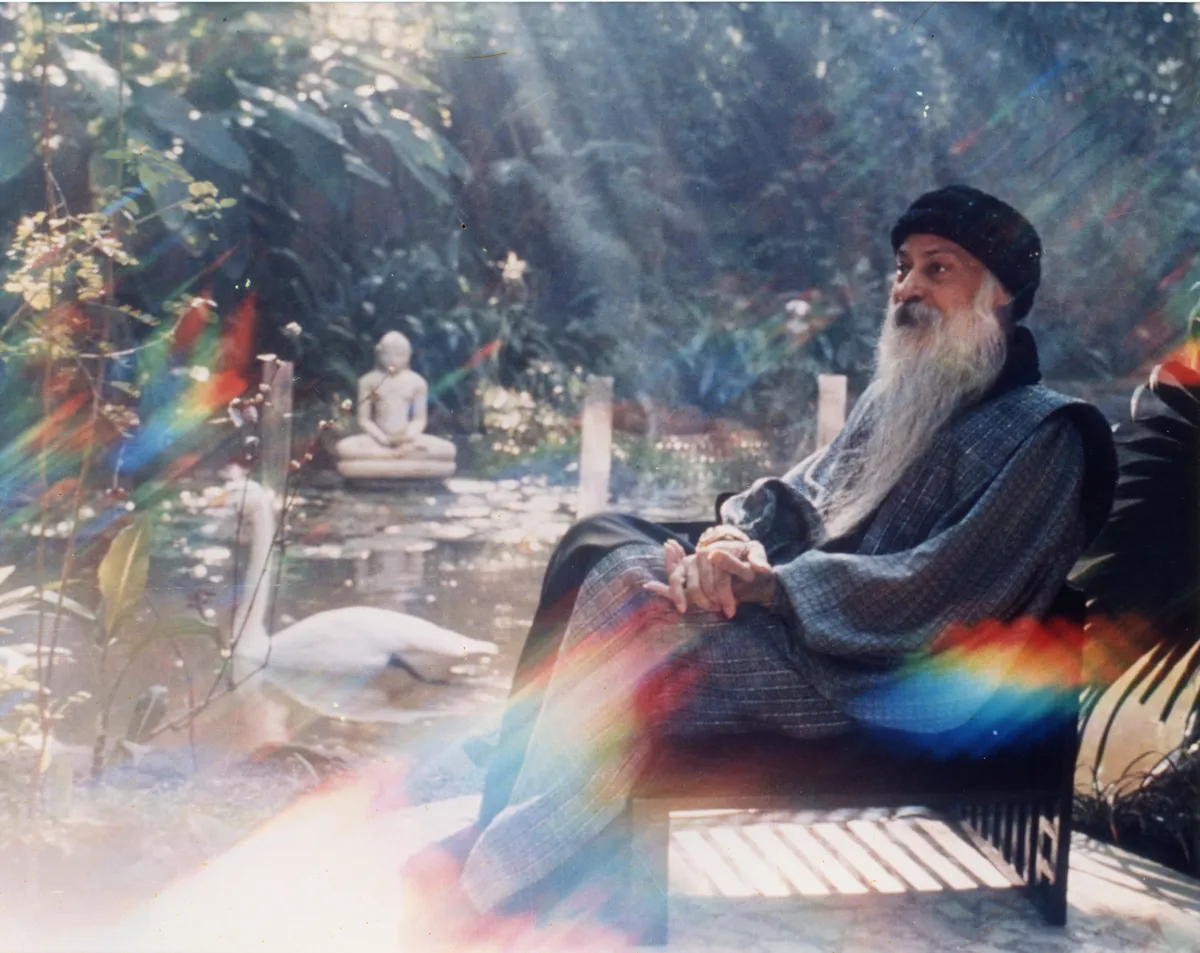
Osho's perspective on Upanishad
When Osho Spoke About Upanishad
Passages from the discourses where this theme comes alive.
Beloved master, is there really upanishad happening here when we sit near you and you say something to us?
So I am grateful for your suggestion that you want to donate those four acres to me, but I want you to note that for thirty years I have not accepted any gift, I have not possessed anything. The closest center has to be given the land. If you want to give the land to me, I cannot take it. But you should donate the land to the meditation center in Kathmandu. They can make a place for me, and you will create a trouble for them, because then they will have to find hundreds of acres more land, because thousands of people will be coming here whenever I am here. Right now they are being prevented. I'm telling them not to come because I'm going on a world tour myself. So you need not come to be in one place and I can meet you around... if the governments…
Osho, according to the Paingala Upanishad there are four mahavakyas. First: tat tvam asi, That thou art; second: tvam tadasi, Thou art That; third: tvam brahmasmi, Thou art Brahman; and fourth: aham brahmasmi, I am Brahman. Osho, kindly explain the meanings and the subtle differences among these mahavakyas.
Kabir has said: the Master is a dyer. But before he dyes, he cleans; he washes, he brightens, he removes the grime from the cloth. Only when the cloth is clean can it be dyed; only then will the colors reveal their fullness. When these two points are complete—when it is clear that the disciple has understood: “I am not; Existence is”—then he is told the second point: do not fear, you too are that Existence. Yet the word “That” is still used. When it is understood that Existence, That, is all, the matter can be taken a little deeper, into the most subtle. “Tvam brahmasmi.” You are not only That; you are Brahman. Brahman means: now we have given “That” a face, personhood. We have endowed That with consciousness, with life. Now it is no longer an object, no longer a mere idol in a temple; now there is…
पहला प्रश्न: ओशो, पैंगल उपनिषद के अनुसार चार महावाक्य हैं। पहला: तत्वमसि, वह तू है; दूसरा: त्वं तदसि, तू वह है; तीसरा: त्वं ब्रह्मास्मि, तू ब्रह्म है; और चौथा: अहं ब्रह्मास्मि, मैं ब्रह्म हूं। ओशो, इन महावाक्यों के अर्थ और अर्थभेद बताने की अनुकंपा करें।
कबीर ने कहा है, गुरु तो रंगरेज है। मगर इसके पहले कि वह रंगे, सफाई करेगा, धोएगा, निखारेगा, गंदगी वस्त्र की दूर करेगा। साफ-स्वच्छ हो जाए वस्त्र तो ही रंगा जाए; तो ही रंग अपनी परिपूर्णता में प्रकट होंगे। जब ये दो बातें पूरी हो गईं, यह बात साफ हो गई कि शिष्य समझ गया कि वह नहीं है, स्वयं नहीं है, अस्तित्व है, तो उससे दूसरी बात कही कि भय मत कर, तू भी वह अस्तित्व है। मगर अभी वह का प्रयोग किया जा रहा है। जब यह भी बात समझ में आ गई कि अस्तित्व, वह सब कुछ है, तो अब बात को थोड़ा और गहराया जा सकता है। अब थोड़ा और भी सूक्ष्मातिसूक्ष्म में प्रवेश कराया जा सकता है। ‘त्वं ब्रह्मास्मि।’ वह ही नहीं है तू, ब्रह्म भी तू है। ब्रह्म का अर्थ होता है: अब हमने वह को व्यक्तित्व दिया। वह को चेतना दी, वह को जीवन दिया। अब वह कोई वस्तु न रही, कोई मंदिर की प्रतिमा न रही, अब तटस्थ रहने की कोई जरूरत न रही, अब तैयारी इतनी है कि हम उसको व्यक्ति की भांति स्वीकार कर सकते हैं। …
Osho, your discourse on the isa upanishad was so beautiful. I have heard it said that the upanishads are commentaries on or extensions of the vedas. Is this true? I bow to you.
Knowledgeability is not wisdom; knowledgeability is, on the contrary, a hindrance to wisdom. The more knowledgeable you become, the less is the possibility of attaining your own experience, because knowledge deceives -- it deceives others, it deceives you. It goes on giving you the sense as if you know, but that "as if" has not to be forgotten. That "as if" can easily be forgotten and one can be deceived. Remember one very significant saying in the Upanishads: Those who are ignorant, they are bound to be lost in darkness; and those who are knowledgeable, they are bound to be lost in a far more and far bigger darkness than the ignorant ones. The ignorant person is at least sincere: he knows that he does not know; at least this much truth is there. But the knowledgeable covers up his wounds, his ignorance, his black holes. He covers them by…
Beloved Osho, the master speaks, and the disciples listen. What is it that happens, and remains unsaid?
Yoga Chinmaya, the master speaks, the disciple listens -- yet there is much which the master does not speak, and the disciple listens. In fact, that is the whole secret of disciplehood. If you only listen to that which is said, you are a student. You listen to the words, you miss the wordless. The moment you start listening to the wordless, you are initiated into disciplehood. The master is speaking. Naturally he has to use words, but he is also leaving gaps in between. He is also using wordlessness. He is saying something, and he is also meaning something which cannot be said -- but it can be heard. If the disciple is silent, he will hear the words and he will also hear the wordlessness; he will hear what is being said, and he will hear also what is not being said and yet is transferred. You are…
Profound Quotes on Upanishad
Explore our structured collection of meaning-mapped quotes regarding Upanishad.