
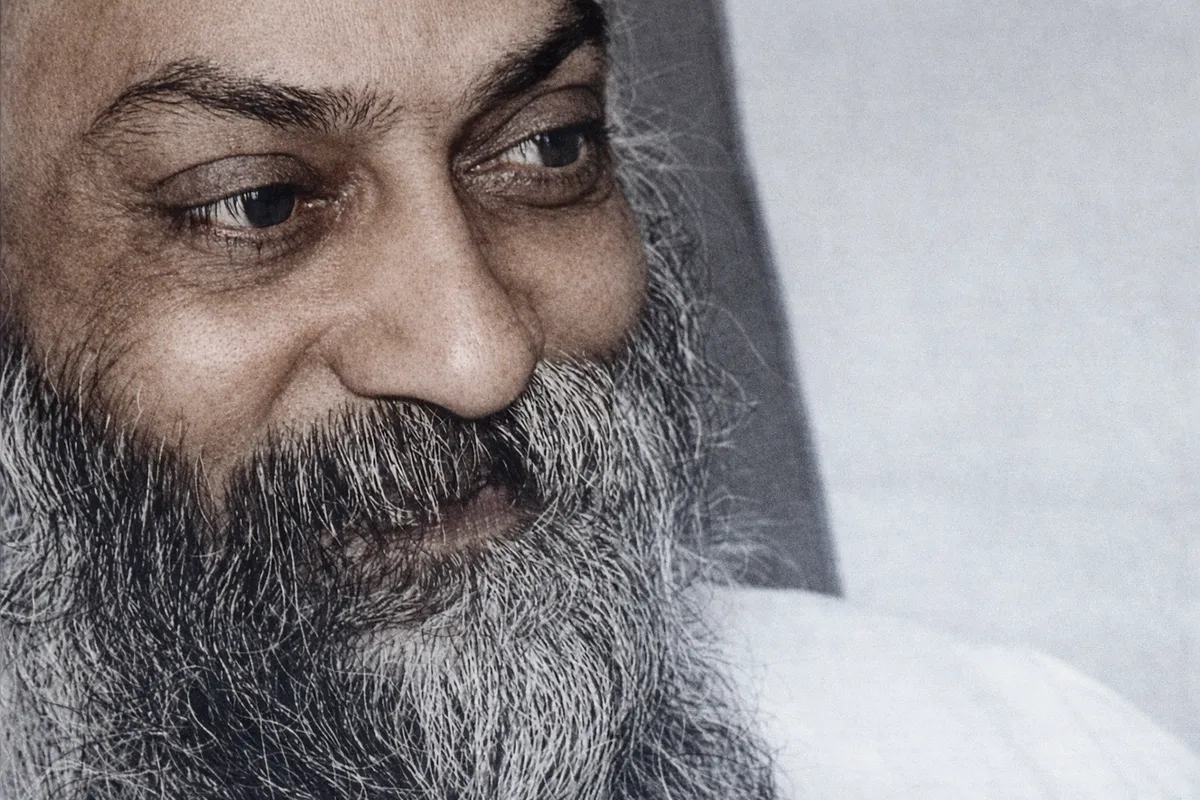
Osho's perspective on Symbolism
When Osho Spoke About Symbolism
Passages from the discourses where this theme comes alive.
Blooming. Yes, blooming. Inside there is an experience: when a center blossoms completely, it feels as if there was a bud that has opened into a flower. How to express this outwardly? So outwardly they adopted the symbol of the lotus in bloom. And as if that lotus were hanging upside down—the first experience of the chakras comes just like a flower hanging upside down.
Yes, blossoming. There is an inner experience: when a center fully blossoms, it feels as if there was a bud and it has opened into a flower. Now, how to express this outwardly? Outwardly they made a symbol of it—the lotus has bloomed. And then, as if this lotus were hanging upside down, the first experience of the chakras comes just like that—as if the flower is hanging upside down.
प्रश्न: खिलना।
हां, खिलना। तो भीतर एक अनुभव होता है, जब कोई सेंटर पूरी तरह से खिलता है तो ऐसा ही लगता है जैसे कोई बोड़ी थी और वह खिल कर फूल बन गई। अब इसको कैसे कहो बाहर? तो बाहर उन्होंने प्रतीक बना लिया है कि कमल खिल गया। फिर अब जैसे कि यह कमल ऐसा उलटा लटका हो, तो जो पहला अनुभव चक्रों का आता है वह ऐसा ही आता है जैसे फूल उलटा लटका हो।
‘Lotus’ is a beloved symbol for mystics—for many reasons. First, it is born in mud, in dirty mud. It arises from mud where no one would have suspected the possibility. Had we not known, seeing the mud no one could have imagined, dreamed, conceived that a lotus would be born from this! Mud and lotus—there seems no connection. Where the lotus, where the mud! The lotus appears so opposite to this earth—as though it has come from beyond, not of this earth. As though a stranger, descended from the sky. So untouched, so virginal, so beautiful, so delicate—how could it be born of mud! Such virginity belongs to the sky! Thus, in the lotus there is something of the sky, and something that has come from mud. Therefore it is a most significant symbol. Man too is mud—a form of clay! Yet the lotus can bloom.
‘कमल’ रहस्यवादियों का बड़ा प्यारा प्रतीक है। कई कारणों से। एक तो, कीचड़ में पैदा होता है, गंदी कीचड़ में पैदा होता है। कीचड़ से पैदा होता है, जिसमें संभावना हो भी नहीं सकती थी, मालूम भी नहीं हो सकती थी, कोई सोच भी नहीं सकता था! अगर पता न होता तो कीचड़ देख कर कोई यह सोच भी नहीं सकता सपना भी नहीं देख सकता, कल्पना भी नहीं कर सकता कि इससे कमल पैदा होगा! कीचड़ और कमल! कुछ जोड़ मालूम नहीं होता। कहां कमल, कहां कीचड़! कमल तो कीचड़ से बिलकुल विपरीत है। कमल तो इस पृथ्वी पर ऐसा है जैसे पार से आया हो, इस पृथ्वी का न हो। जैसे परदेशी है, आकाश से उतरा है। ऐसा अछूता ऐसा कुंआरा, ऐसा सुंदर, ऐसा कोमल, कीचड़ से कैसे पैदा होगा! इतना कुंआरापन तो आकाश का होता है! तो कमल में कुछ है जो आकाश का है और कुछ है जो कीचड़ से आया है। तो इसलिए बड़ा महत्वपूर्ण प्रतीक है कमल। आदमी भी है तो कीचड़--माटी की मूरत! मगर कमल खिल सकता है। है तो आदमी मिट्टी का हिस्सा, लेकिन आकाश उतर सकता है। …
Osho, that morning the Buddha bestowed the supreme treasure of silence upon Mahakashyapa by offering him the symbolic flower. A flower blooms in the morning and withers by evening. Yet the Zen tradition is alive to this day. Kindly explain the relation between the flower’s transience and the living vitality of Zen.
Seeing the meeting of these two lotuses, Mahakashyapa laughed—he blossomed. It was a unique event. Therefore the Buddha offered that lotus to Mahakashyapa and said to his monks, “What I could say in words, I have given you. What cannot be said in words and has not been said, I am giving to Mahakashyapa—wordlessly.” Thus, in the Zen tradition, from then on, one master has been giving to another in silence. One more story. In Mahakashyapa’s lineage there was Bodhidharma. Bodhidharma went to China, and from India the Zen tradition reached China. Bodhidharma was the twenty-eighth Indian patriarch. In China, Bodhidharma sat facing a wall for nine years. People came, but he would not look at them. He kept his back toward them. People asked, “We have seen many monks, many saints—but why do you keep your back to us?” Bodhidharma said, “When one worthy of falling within my eyes…
पहला प्रश्न: ओशो, उस सुबह बुद्ध ने मौन की परम संपदा महाकाश्यप को प्रतीक फूल देकर दी। फूल सुबह खिलता है और सांझ मुर्झा जाता है। पर झेन की परंपरा आज तक जीवंत है। फूल की क्षणभंगुरता और झेन की जीवंतता को कृपा करके हमें समझाइए।
इन दो कमलों के मिलन को देखकर महाकाश्यप हंसा; प्रफुल्लित हुआ। यह अपूर्व घटना थी। इसलिए बुद्ध ने यह कमल महाकाश्यप को भेंट कर दिया और कहा अपने संन्यासियों को--कि जो मैं शब्द से कह सकता था, तुम्हें दे दिया; और जो शब्द से नहीं कह सकता था और नहीं कहा जा सकता था, वह मैं महाकाश्यप को दे रहा हूं। निःशब्द दे रहा हूं महाकाश्यप को।
[NOTE: This is an unedited tape transcript of an unpublished darshan diary, which has been copy-typed on to the computer. It is for reference purposes only.] The lotus represents The ultimate unfolding of consciousness. The lotus is the biggest flower in the world And in the East the most respected flower For two reasons/ One: it grows in the mud, in the dirty mud. One cannot conceive that out of such dirty mud Such a beautiful flower is possible. Hence it represents something in man. Man ordinarily is nothing but dirt Just dirty mud But hidden in it is the possibility Of a lotus flower. So just don't condemn the dirt And don't condemn ordinary humanity. Secondly: the lotus grows in water. Out of dirty mud it rises and floats on the water. It has a very miraculous quality: It is so velvety that the water cannot touch it.
Profound Quotes on Symbolism
Explore our structured collection of meaning-mapped quotes regarding Symbolism.