
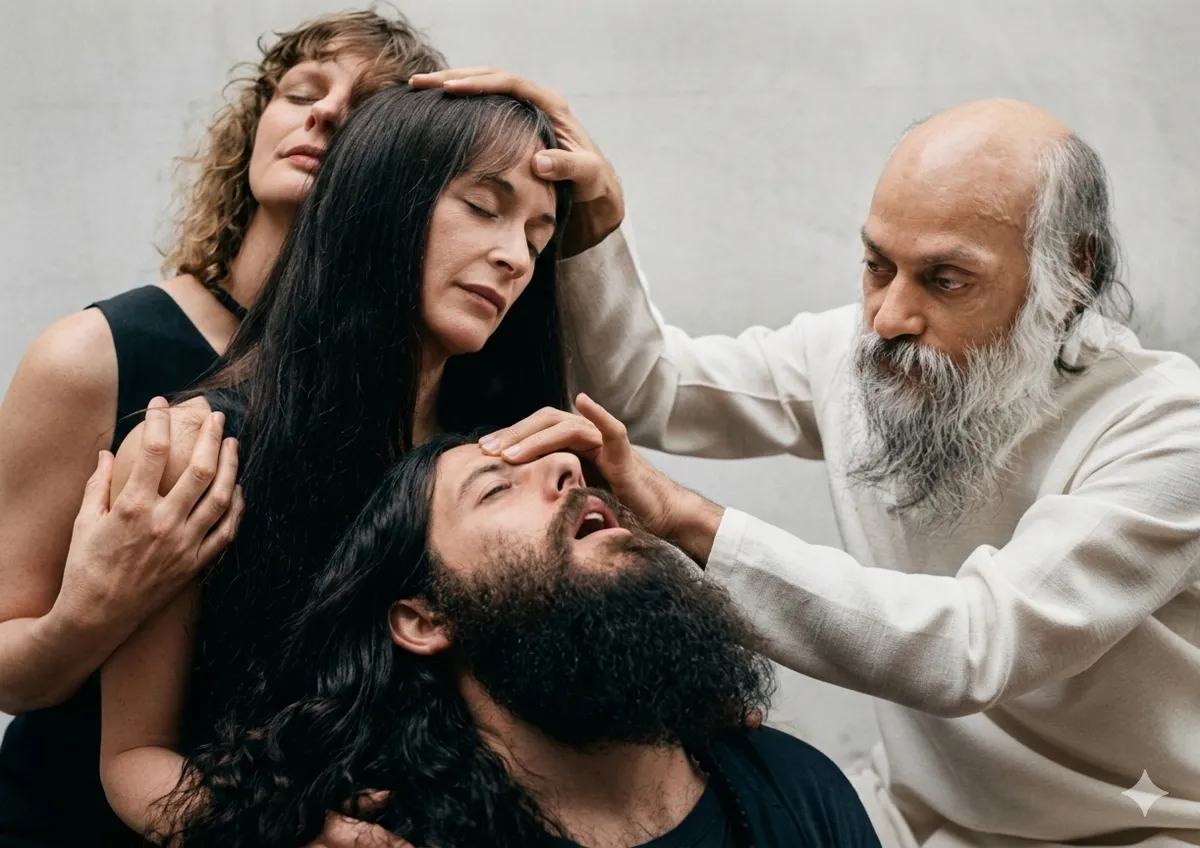
Osho's perspective on Symbolic Gesture
When Osho Spoke About Symbolic Gesture
Passages from the discourses where this theme comes alive.
Osho, you have said that sannyas is the realization of truth. Then are ochre robes and the mala also essential for sannyas? And can a person not walk on your path without initiation? Kindly guide.
The day before yesterday a friend asked—he has taken sannyas, a simple-hearted man—he asked, “What is the scientific reason for this mala?” How can a mala possibly have a scientific reason? Its reason is religious, inward—not scientific. I told him, “If you want something ‘scientific,’ ask Laxmi.” A scientific reason? Does love ever have a scientific reason? A young man fell in love with Mulla Nasruddin’s daughter. He came and said, “I am in love with your daughter; please permit me to marry her.” Mulla said, “First prove it—what is the cause of your love?” The young man replied, “There is no cause, sir! Love has happened. Where there is a cause, can there be love? Where there is a cause, there is business, a bargain. Love is causeless.” Your love has happened with me; mine with you. Now some symbol becomes necessary. Think of this mala as the seven…
ओशो, आपने कहा कि संन्यास सत्य का बोध है। फिर क्या संन्यास के लिए गैरिक वस्त्र और माला भी अनिवार्य हैं? और क्या कोई व्यक्ति बिना दीक्षा लिए आपके बताए मार्ग पर नहीं चल सकता है? कृपाकर मार्ग-दर्शन करें।
परसों एक मित्र पूछते थे--संन्यास उन्होंने लिया, भाव वाले व्यक्ति हैं। सरलचित्त हैं--पूछने लगे, इस माला का वैज्ञानिक कारण क्या है? वैज्ञानिक कारण माला का हो ही कैसे सकता है? वैज्ञानिक कारण--और माला का! कोई भी कारण वैज्ञानिक नहीं हो सकता माला का--कारण धार्मिक है। कारण आत्मिक है, वैज्ञानिक नहीं है। तो मैंने उनसे कहा, वैज्ञानिक पूछना हो तो ‘लक्ष्मी’ से पूछ लेना। वैज्ञानिक कारण? प्रेम का कहीं कोई वैज्ञानिक कारण होता? मुल्ला नसरुद्दीन की लड़की के प्रेम में एक युवक पड़ गया। वह आया, उसने मुल्ला को कहा कि आपकी लड़की से मुझे प्रेम हो गया है, मुझे विवाह की आज्ञा दें। मुल्ला ने कहा, पहले सिद्ध करो, प्रेम का कारण क्या है? …
Osho, for the attainment of the supreme state, how helpful are ochre robes, a mala, and the Guru? And after attaining the supreme state, what need remains for them?
So, in the final phase the complication is not that the disciple wants to leave and the Guru wants to hold. The final complication is this: the Guru says, “Leave now,” and the disciple will not. A disciple means one who has loved so totally—how will he leave! There is great pain. He is even ready to let liberation lie where it is; only let him lie at the Guru’s feet—that is enough. At the Guru’s feet he has found so much that the thought does not even arise that liberation could give more; and even if it could, no true disciple can be so ungrateful as to agree to leave in an instant. In the beginning, it was hard for the Guru to hold the disciple’s hand because the disciple kept pulling away. Now it is this same gentleman who is pulling away. I, too, would like to hold…
ओशो, परम पद की प्राप्ति के लिए गैरिक वस्त्र और माला और गुरु कहां तक सहयोगी हैं? और परम पद की प्राप्ति के बाद भी इनकी क्या आवश्यकता रहती है?
तो आखिरी समय में जो झंझट होती है, वह झंझट शिष्य की तरफ से नहीं होती कि वह छोड़ना चाहता है और गुरु पकड़ना चाहता है। आखिरी समय जो झंझट होती है वह यह होती है, गुरु कहता है छोड़ भी; और शिष्य नहीं छोड़ना चाहता। शिष्य का अर्थ ही यह होता है कि जिसने इतने समग्र भाव से प्रेम किया, वह कैसे छोड़ देगा! बड़ी पीड़ा होती है। वह इसके लिए भी राजी है कि मोक्ष पड़ा रहे तो पड़ा रहे चाहे; बस गुरु के चरणों में पड़ा रहूं, इतना काफी है। उसने गुरु के चरणों में इतना पाया कि मोक्ष और ज्यादा कुछ दे सकेगा, इसकी बात ही नहीं उठती; और दे भी सके तो भी शिष्य इतना अकृतज्ञ नहीं हो सकता कि एकदम छोड़ने को राजी हो जाए। जैसे पहले-पहले गुरु को शिष्य का हाथ पकड़ने में कठिनाई होती, क्योंकि शिष्य हाथ छुड़ाता है. अब ये ही सज्जन हैं, अब ये हाथ छुड़ा रहे हैं। अब मैं चाहूंगा कि इनका हाथ पकड़ लूं। नाम तो इनका बड़ा प्यारा है: श्याम कन्हैया! मगर नाम ही मालूम होता है। अभी न तो श्याम की तरफ जाने की कोई आकांक्षा जगी मालूम होती है, न हिम्मत मालूम होती है। …
Osho, you said, “Don’t get into any bondage; become quiet and happy.” Then isn’t sannyas also a bondage? And aren’t methods, techniques, and processes bondages too? Please explain!
A true knower is neither a renunciate nor an enjoyer. He knows only this much: I am just the witness. Then whether the money is in another’s pocket or your own—what difference does it make? He is the witness. If there is wealth, he is a witness; if not, he is a witness. If poor, witness; if rich, witness. Witnessing is not altered by poverty or wealth. Do you think a beggar’s witnessing will be a little less, and a king’s a little more? Does witnessing come in degrees? Whether one is poor or rich, healthy or ill, educated or uneducated, beautiful or ugly, famed or infamous—it makes no difference. Witnessing is a treasure equal in all; there is no more or less in it. We can be witnesses in every situation—of success and failure, of honor and insult. Be a witness—that is all Ashtavakra says. But if you find…
पांचवां प्रश्न: ओशो, आपने कहा कि किसी भी बंधन में मत पड़ो, शांत और सुखी हो जाओ। तो क्या संन्यास भी एक बंधन नहीं है? और क्या विधि, उपाय व प्रक्रिया भी बंधन नहीं हैं? कृपया समझाएं!
वास्तविक ज्ञानी न तो त्यागी होता, न भोगी होता। वह इतना ही जान लेता है कि मैं सिर्फ साक्षी हूं। अब पैसे दूसरे की जेब में रखो कि अपनी जेब में रखो, क्या फर्क पड़ता है? वह साक्षी है। हो, तो साक्षी है; न हो, तो साक्षी है। गरीब हो, तो साक्षी है; अमीर हो, तो साक्षी है। साक्षी में थोड़े ही गरीबी-अमीरी से फर्क पड़ता है! क्या तुम सोचते हो भिखमंगा साक्षी होगा तो उसका साक्षीपन थोड़ा कम होगा, और सम्राट साक्षी होगा तो उसका साक्षीपन थोड़ा ज्यादा होगा? साक्षीपन कहीं कम-ज्यादा होता है? गरीब हो कि अमीर, स्वस्थ हो कि अस्वस्थ, पढ़ा-लिखा हो कि बेपढ़ा-लिखा, सुंदर हो कि कुरूप, ख्यातिनाम हो कि बदनाम--इससे कोई फर्क नहीं पड़ता। साक्षी कुछ ऐसी संपदा है, जो सभी के भीतर बराबर है, उसमें कुछ कम-ज्यादा नहीं होता।
Beloved Osho, would you speak about the significance of the gachchhamis? How can we keep them fresh and alive and prevent them from becoming like the meaningless, stereotyped rituals practiced in other religions?
The first is, buddham sharanam gachchhami: I go to the feet of the awakened one. It does not say, "I go to the feet of Jesus, Mohammed, Mahavira, Gautam Buddha" -- no. Buddham is not Gautam Buddha. Gautam Buddha's original name was Gautam Siddharth. When he became awakened, then Siddharth was dropped and the world has know him since then as Gautam Buddha. "Buddha" is nobody's property. It simply means the sleep is over, you are no longer dreaming, no longer hallucinating; you are simply awake. Reminding yourself, "I go to the feet of the awakened one," is not worshipping, because the awakened one is not any person in particular. There are no feet of the awakened one. It simply says, and reminds you, that you are surrendered to the fact of awakening, that this is your decision, this is your commitment. The second line of the gachchhamis is, sangham…
What is meant by 'symbolic gesture'?
definitionProfound Quotes on Symbolic Gesture
Explore our structured collection of meaning-mapped quotes regarding Symbolic Gesture.