
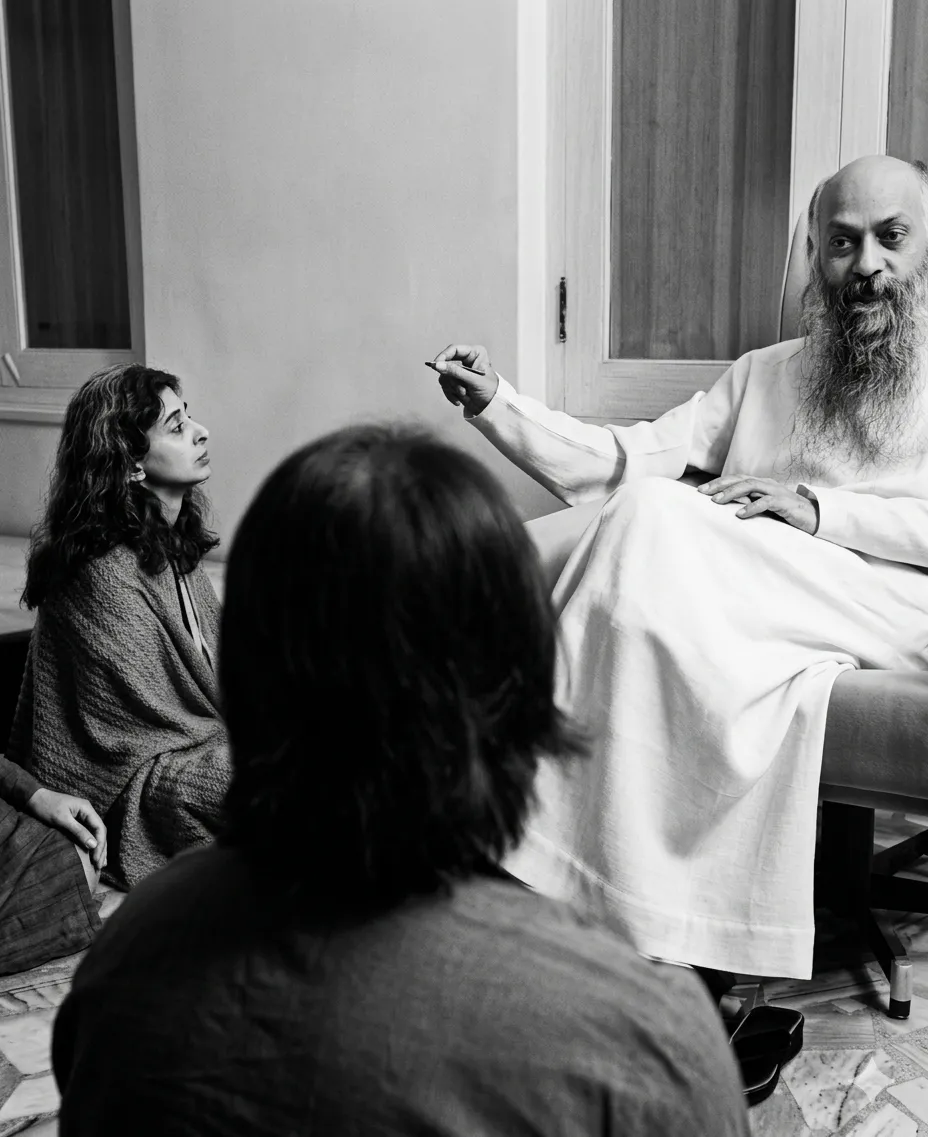
Osho's perspective on Spiritual Leaders
When Osho Spoke About Spiritual Leaders
Passages from the discourses where this theme comes alive.
Lao tzu may be superb, he may be the very peak of truth, but his very height renders him useless for ordinary people like us. Can't it be said, on the other hand, that mahavir and moses and mohammed are much more practical and helpful?
Lao Tzu was passing with his disciples and they came to a forest where hundreds of carpenters were cutting trees, because a great palace was being built. So the whole forest had been almost cut, but only one tree was standing there, a big tree with thousands of branches -- so big that ten thousand persons could sit under its shade. Lao Tzu asked his disciples to go and inquire why this tree had not been cut yet when the whole forest had been cut and was deserted. The disciples went and they asked the carpenters, "Why have you not cut this tree?" The carpenters said, "This tree is absolutely useless. You cannot make anything out of it because every branch has so many knots in it. Nothing is straight. You cannot make pillars out of it. You cannot make furniture out of it. You cannot use it as fuel…
Do you feel, Osho, that all leaders—whether political or religious—are caught in the same dilemma?
If someone were to ask Buddha, “Is there God?” Buddha would say, “There may be.” And if someone were to ask, “Is there no God?” he would say, “There may not be.” How can such a person assume leadership? Buddha is so perfectly in the middle. It is like this: in a room a glass is kept half-filled with water. One man comes out and says the glass is half empty; another says it is half full. These two can argue; two parties can form. A third man, utterly in the middle, having seen the whole, returns and says, “The glass is both half empty and half full.” He will say, “You are right, and you are right—and you are wrong, and you are wrong. It both is and is not half. It is half empty and also not; half full and also not.” Such a man makes such a…
डु यू फील ओशो, इट इ़ज ऑल लीडर्स, मे बी पॉलिटिकल ऑर रिलिजियस। ऑर दे आलसो मुविंग इन दि सेम डायलेमा?
… और कोई पूछे, ईश्वर नहीं है? तो बुद्ध कहेंगे, नहीं भी हो सकता है। अब ऐसा आदमी नेतृत्व कैसे ग्रहण करे? अब बुद्ध इतने मध्यस्थ हैं। वह वैसी ही हालत है, जैसे कि एक कमरे में एक गिलास आधा पानी से भरा हुआ रखा हो और एक आदमी बाहर आकर कहे कि गिलास आधा खाली है, और एक आदमी बाहर आकर कहे कि गिलास आधा भरा है। तो इन दोनों में विवाद हो सकता है। ये दो पार्टियां बन सकती हैं। एक तीसरा आदमी है जो बिलकुल मध्यस्थ है, जो पूरी बात देख कर लौटा है कि गिलास आधा खाली भी है और आधा भरा भी है। …
Osho, Krishna is supremely enlightened and beyond the three gunas, yet he deceives, lies, and wages war. Buddha, Mahavira, Lao Tzu, etc., do nothing of the sort. Kindly shed light on Krishna’s personality described above, in the context of the qualities of sattva, rajas, and tamas.
First, it is essential to understand that no comparison is possible between two enlightened ones. All comparisons are false. Every great being is unique; there is no second like him. In truth, even an ordinary person is unique. There is no other like you. The great one within you appears when you bring your own nature, your own destiny, to its fullness. You too are incomparable. There is no other person on earth exactly like you—neither today, nor ever before, nor ever after. Search the whole earth and you won’t find two identical leaves on a tree; not even two identical pebbles. And when your polish deepens and the supreme flowering of your life manifests, then you become like the summit of a Mount Everest. Even now you are unmatched; then you will be utterly unmatched. Now, perhaps, some accord with others is still possible; then there will be none.…
पहला प्रश्न: ओशो, कृष्ण परम ज्ञानी और त्रिगुणातीत हैं, फिर भी धोखा देते हैं, झूठ बोलते हैं, युद्ध करते हैं। बुद्ध, महावीर, लाओत्से आदि ऐसा कुछ भी नहीं करते। सत्व, रजस, तमस गुणों के संदर्भ में कृष्ण के उपरोक्त व्यक्तित्व पर प्रकाश डालने की कृपा करें।
… आप जैसा भी कोई दूसरा नहीं। आपके भीतर ही महापुरुष तब प्रकट होता है, जब आप अपने स्वभाव को, अपनी नियति को उसकी पूर्णता में ले आते हैं। आप भी बेजोड़ हैं। आप जैसा दूसरा कोई व्यक्ति पृथ्वी पर नहीं है। न आज है, न कल था, और न कल होगा। एक वृक्ष का पत्ता भी पूरी पृथ्वी पर खोजने जाएं, तो दूसरा वैसा ही पत्ता नहीं खोज पाएंगे। एक पत्थर का टुकड़ा भी, एक कंकड़ भी अपने ही जैसा है। और जब आपका निखार होगा, और आपके जीवन की परम सिद्धि प्रकट होगी, तब तो आप एक गौरीशंकर के शिखर बन जाएंगे। अभी भी आप बेजोड़ हैं। तब तो आप बिलकुल ही बेजोड़ होंगे। …
Osho, Mahavira and Gautam Buddha were contemporaries. From your talks it becomes clear that the two were saying the same thing. Yet their disciples would argue and quarrel among themselves. After they were gone, there was even violence and war among their followers. But if Mahavira and Buddha had said that we are speaking of the same religion and the only difference is in method, then such hostility would not have grown and the harm that befell both religions would not have occurred. Kindly explain. Amrit Bodhidharma has asked:
If someone is enchanted by the design of the mosque, by its minarets, let him go to the mosque. But this has nothing to do with religion; it has to do with architecture, with aesthetic sense. You build your house one way, I build mine another—this creates no quarrel. I build my God’s house one way, you build yours another—why should that create quarrel? I build mine round, you build yours square—there is no quarrel. The purpose of a house is one: that I will live in this round house, you will live in that square one. We build houses to live in. There must be that much freedom—that whoever wishes should build as he likes; in old style or new; ancient design or an invented one; with a high roof or low; with a garden or without; with plants or with sand—a matter of taste! We do not quarrel…
पहला प्रश्न: ओशो, महावीर और गौतम बुद्ध समकालीन थे। आपके प्रवचनों से स्पष्ट हो रहा है कि दोनों बात भी एक ही कहते थे। लेकिन दोनों के शिष्य आपस में विवाद और झगड़े भी करते थे। उनके जाने के बाद उनके अनुयायियों के बीच हिंसा और युद्ध भी हुए। लेकिन यदि महावीर और बुद्ध ने कहा होता कि हम एक ही धर्म की बात करते हैं, भेद सिर्फ पद्धति का है, तो इतनी शत्रुता नहीं बढ़ती और दोनों धर्मों की जो क्षति हुई वह न होती। कृपापूर्वक समझाएं। पूछा है अमृत बोधिधर्म ने।
फिर धर्म की शैलियां अलग हो सकती हैं। किसी को रुचिकर लगता है प्रार्थना, तो रुचि से प्रार्थना करे, लेकिन इससे कुछ झगड़ा नहीं है। किसी को रुचिकर लगता है ध्यान, तो ध्यान करे। और किसी को मंदिर के स्थापत्य में लगाव है, तो मंदिर जाए। और किसी को मस्जिद की बनावट में रुचि है और मस्जिद के मीनार मन को मोहते हैं, तो मस्जिद जाए। लेकिन यह धर्म से इसका कोई संबंध नहीं है, स्थापत्य से संबंध है, सौंदर्य-बोध से संबंध है। तुम अपना मकान एक ढंग से बनाते हो, मैं अपना मकान एक ढंग से बनाता हूं, इससे कोई झगड़ा तो खड़ा नहीं होता। मैं अपने भगवान का मकान एक ढंग से बनाता हूं, तुम अपने भगवान का मकान एक ढंग से बनाते हो, इससे झगड़ा खड़ा क्यों हो? मैं अपना मकान बनाता हूं गोल, तुम चौकोन, इससे कोई झगड़ा खड़ा नहीं होता। झगड़े की जरूरत ही नहीं, तुम्हारी पसंद अलग, मेरी पसंद अलग; हम दोनों जानते हैं कि मकान का प्रयोजन एक कि मैं इस गोल मकान में रहूंगा, तुम उस चौकोन मकान में रहोगे। रहने के लिए मकान बनाते हैं। …
Profound Quotes on Spiritual Leaders
Explore our structured collection of meaning-mapped quotes regarding Spiritual Leaders.