
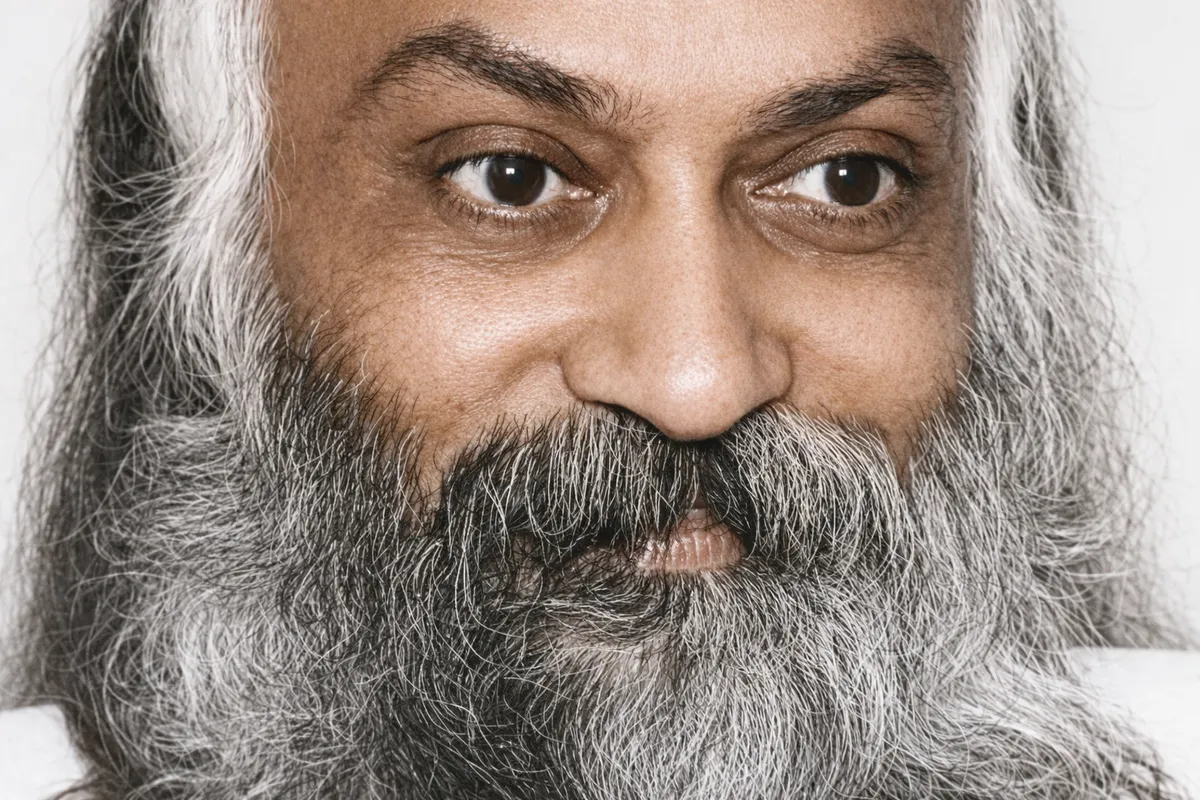
Osho's perspective on Dependency
When Osho Spoke About Dependency
Passages from the discourses where this theme comes alive.
Beloved Osho, the other day you said that as long as we are dependent on the other, we are bound to hate them. Are you also my "other"? I know that right now I depend on you and I say yes to it with all my heart, but it drives me to tears to think that I should ever hate you because I am dependent on you. Can you please fill my heart with understanding and ease the pain?
Nobody is dependent on me. I am not creating a mob of slaves. My whole effort is just the opposite: to drag you out of the crowd of the slaves and to make you independent individuals. But from your side, I can understand. From your side, you may be thinking you are dependent on me. That is a misunderstanding. You are absolutely free. Free to be with me, free not to be with me, free to be for me, free to be against me -- it is your joy. Don't make it heavy. Keep it light and playful. You love me; hence the fear has arisen that one day you may fall into the opposite and you may start hating me. Don't be worried, because your love is not just love. You love me not for any biological reason, you love me for some spiritual growth. Your love is part…
The love in me is dependent on the outside world. At the same time I see what you say about being complete within. What happens to love if there is nothing and nobody to recognise and taste it? Who are you without disciples?
The first thing: There are two kinds of love. C.S. Lewis has divided love into these two kinds: 'need-love' and 'gift-love'. Abraham Maslow also divides love into two kinds. The first he calls 'deficiency-love' and the second he calls 'being-love'. The distinction is significant and has to be understood. The 'need-love' or the 'deficiency-love' depends on the other; it is immature love. In fact it is not truly love -- it is a need. You use the other, you use the other as a means. You exploit, you manipulate, you dominate. But the other is reduced, the other is almost destroyed. And exactly the same is being done by the other. He is trying to manipulate you, to dominate you, to possess you, to use you. To use another human being is very unloving. So it only appears like love; it is a false coin. But this is what happens…
Osho, in a previous talk you said you prefer shaktipat to be as close to grace as possible. Doesn’t that imply that the method of shaktipat admits gradual refinement and development? In other words, is qualitative progress also possible in the process of shaktipat?
From one who has attained the seventh body, shaktipat becomes the purest—the purest. Yet it is still not grace. The purest state of shaktipat is reached at the seventh body—no further. On that side there is no veil now; for the one in the seventh there is no veil—he is one with the void. But on your side there is a veil. You will still take him to be a person. Your veil will now provide the final obstruction. From his side there is none, but for you he remains a person. The sense of personhood toward the medium is also an obstacle Understand: if I attain the seventh state, it is my affair that I know I am the void—but you? You will know me as a person. And your notion that I am a person becomes the last veil. That veil will fall only when the happening befalls…
प्रश्न: ओशो, पिछली एक चर्चा में कहा था आपने कि आप पसंद करते हैं कि शक्तिपात जितना ग्रेस के निकट हो सके उतना ही अच्छा है। इसका क्या यह अर्थ न हुआ कि शक्तिपात की पद्धति में क्रमिक सुधार और विकास की संभावना है? अर्थात क्या शक्तिपात की प्रक्रिया में क्वालिटेटिव प्रोग्रेस भी संभव है?
सातवें शरीर को उपलब्ध व्यक्ति से शक्तिपात शुद्धतम हो जाएगा। शुद्धतम हो जाएगा। ग्रेस फिर भी नहीं होगा। शक्तिपात की शुद्धतम स्थिति सातवें शरीर पर पहुंच जाएगी--शुद्धतम। जो, शक्तिपात जहां तक पहुंच सकता है, वहां तक पहुंच जाएगी। लेकिन उस तरफ से तो कोई पर्दा नहीं है अब, सातवें शरीर को उपलब्ध व्यक्ति की तरफ से कोई पर्दा नहीं है, उसकी तरफ से तो अब वह शून्य के साथ एक हो गया, लेकिन तुम्हारी तरफ से पर्दा है। तुम तो उसको व्यक्ति ही मानकर जीओगे। अब तुम्हारा पर्दा आखिरी बाधा डालेगा। अब उसकी तरफ से कोई पर्दा नहीं है, लेकिन तुम्हारे लिए तो वह व्यक्ति है। माध्यम के प्रति व्यक्ति-भाव भी बाधा समझो कि मैं अगर सातवीं स्थिति को उपलब्ध हो जाऊं, तो यह मेरी बात है कि मैं जानूं कि मैं शून्य हूं, लेकिन तुम? तुम तो मुझे जानोगे कि एक व्यक्ति हूं। और तुम्हारा यह खयाल कि मैं एक व्यक्ति हूं, आखिरी पर्दा हो जाएगा। यह पर्दा तो तुम्हारा तभी गिरेगा जब निर्व्यक्ति से तुम पर घटना घटे। …
A friend has asked, Osho, you say that if someone surrenders himself in every way to the divine—lets himself be absorbed, accepts it—then he attains the divine. Can worldly things also be obtained in the same way?
Don’t try that; you’ll get nothing! To get worldly things you have to employ means, you have to labor, you have to strive, you have to be restless, you have to be mad. The more mad a person is, the more successful he is in the world. A very eminent psychologist has just made a statement. He said that if the minds of the world’s great politicians were tested, they would be found deranged, because their success would be impossible if they were not utterly mad. That psychologist said that the reason for England’s great politician Winston Churchill’s success was that, in childhood, an astrologer told him—and then he got fixated on the notion—that he would not live beyond forty-five. From the day this idea took hold—“I will die at forty-five”—he plunged into competition like a madman. Others, who assumed they would live at least to seventy or eighty, were…
एक मित्र ने पूछा है कि ओशो,, आप कहते हैं कि अगर कोई व्यक्ति अपने को सब भांति परमात्मा में छोड़ दे, लीन कर दे, स्वीकार कर ले उसे, तो उसे परमात्मा मिल जाता है। क्या इसी तरह संसार की चीजें भी मिल सकती हैं?
भूलकर ऐसा मत करना; कुछ न मिलेगा! संसार की चीजों को पाने के लिए उपाय करना जरूरी है, श्रम करना जरूरी है, चेष्टा करनी जरूरी है, अशांत होना जरूरी है, पागल होना जरूरी है। तो जो जितना पागल है, संसार में उतना सफल होता है। अभी एक बहुत बड़े मनोवैज्ञानिक ने एक वक्तव्य दिया है। और उसने कहा है कि दुनिया के जितने बड़े राजनेता हैं, इन सबका मानसिक अगर परीक्षण किया जाए, तो ये विक्षिप्त पाए जाएंगे, क्योंकि इनकी सफलता हो ही नहीं सकती, अगर ये बिलकुल पागल न हों। उस मनोवैज्ञानिक ने कहा है कि इंग्लैंड के बड़े राजनीतिज्ञ विंसटन चर्चिल की सफलता का कारण यह था कि विंसटन चर्चिल को किसी ज्योतिषी ने बचपन में बता दिया और फिर उसे यह वहम बैठ गया कि वह पैंतालीस साल से ज्यादा नहीं जीएगा। जिस दिन से उसको यह खयाल आ गया कि पैंतालीस साल में मेरी मौत है, उस दिन से वह पागल की तरह कांपिटीशन में उतर गया, प्रतिस्पर्धा में। दूसरे लोग, जिनको सत्तर-अस्सी साल कम से कम खयाल था जीने का, वे धीरे-धीरे चल रहे थे। …
Profound Quotes on Dependency
Explore our structured collection of meaning-mapped quotes regarding Dependency.