
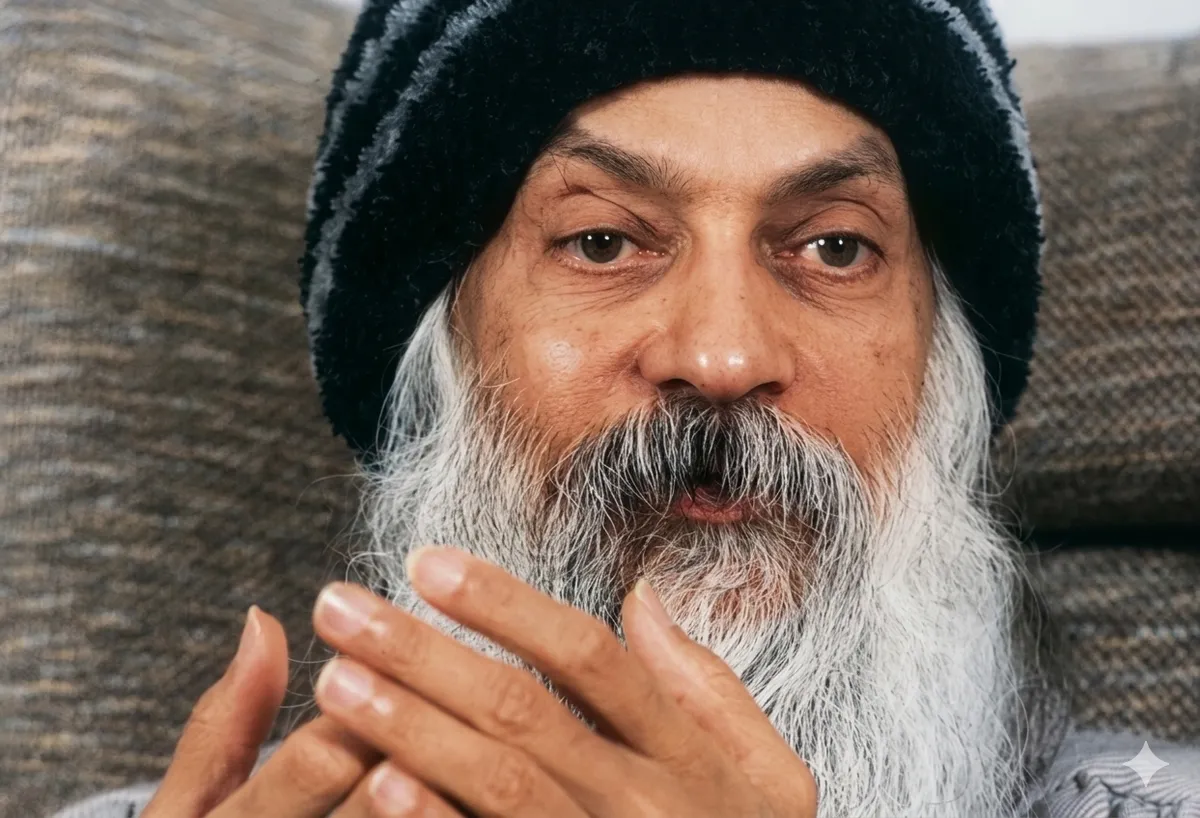
Osho's perspective on Chitta
When Osho Spoke About Chitta
Passages from the discourses where this theme comes alive.
Osho, it is commonly understood that in an enlightened person all passions are exhausted and they go beyond every kind of tendency. But in your talks yesterday and the day before you said that even after enlightenment their natural, inborn tendencies still function. They may even descend into lust, anger, and violence, although they themselves remain only as witnesses to it. Please explain this.
Therefore do not think of inactivity as real inactivity. If there is the sense of doership in it, it is just activity standing on its head—its inverted form. Someone is running with the sense of doership; someone is standing still with the sense of doership—but the sense of doership is present. Buddha has said somewhere: “I am now neither involved nor withdrawn; I am neither a householder now nor a renunciate; neither am I holding anything nor am I abandoning anything.” Take this well to heart, because in many aspects of life this very snag arises. We think: “We are doing something—let us not do it.” Our attention is on the act; our attention is not on the doer. Because in doing, I am the doer; and in not-doing, I am still the doer. All the endeavor of the seers is that the sense of doership should dissolve. Let me…
पहला प्रश्न: ओशो, आमतौर से समझा जाता है कि ज्ञानोपलब्ध व्यक्ति की समस्त वासनाएं निर्जरा हो जाती हैं और वे सभी तरह की प्रवृत्ति के पार हो जाते हैं। लेकिन आपने कल-परसों के प्रवचन में कहा कि ज्ञानार्जन के बाद भी उनकी प्रकृतिजन्य प्रवृत्तियां काम करती हैं। यहां तक कि वे काम, क्रोध और हिंसा में भी उतरते हैं, यद्यपि वे स्वयं उसकी ओर मात्र साक्षीभाव रखते हैं। इसे समझाएं।
इसलिए निवृत्ति को आप मत सोचना कि वह वास्तविक निवृत्ति है। अगर उसमें कर्ता का भाव है, तो वह प्रवृत्ति का ही शीर्षासन करता हुआ रूप है। वह उसका ही उलटा रूप है। कोई दौड़ रहा था कर्ता-भाव से, कोई खड़ा है कर्ता-भाव से; लेकिन कर्ता-भाव मौजूद है। बुद्ध ने कहीं कहा है कि न तो मैं प्रवृत्त हूं अब और न निवृत्त; न तो मैं गृहस्थ हूं अब और न संन्यस्त; न तो मैं कुछ पकड़े हूं और न मैं कुछ छोड़ता हूं।
Osho, we find that our tendencies are stronger than our understanding. When watched with awareness, the waves of hatred, jealousy, anger—all these tendencies—seem to rise from the navel center. The witnessing and the rising of the wave happen together. Please tell us why these waves arise from the navel center. Is the unconscious related to the navel center? And is there a large accumulation of these tendencies in the unconscious, or are they produced moment to moment?
The stream of consciousness itself is not divided. The split into conscious and unconscious exists because of repression. First understand this well. A child is born with consciousness one and undivided. There is neither a conscious mind nor an unconscious mind—no such two parts. But soon the division starts, because we teach the child what is right and what is wrong; what is auspicious and what is inauspicious; what to do and what not to do. And all that we brand as “don’t,” “bad”—what will the child do with it? Calling something bad does not destroy it. We say anger is bad. The child hears and understands—but anger doesn’t vanish just because we label it bad, because anger is natural. The child has not learned anger; he is born with it, just as he is born with a body, with eyes and hands. And existence uses anger: anger is energy.…
प्रश्न: ओशो, हम पाते हैं कि हमारी समझ से वृत्तियां ज्यादा मजबूत हैं। होश से देखने पर घृणा, ईर्ष्या, क्रोध,इन सारी वृत्तियों की लहरें नाभि-केंद्र से उठती हुई दिखाई देती हैं। साक्षीभाव और लहर का उठना एक साथ घटता है। कृपया यह बताएं कि ये लहरें नाभि-केंद्र से क्यों उठती हैं? क्या अचेतन नाभि-केंद्र से संबंधित है? तथा क्या इन वृत्तियों का अचेतन में बहुत बड़ा संचय है या क्षण-क्षण ये वृत्तियां पैदा होती रहती हैं?
चेतना की धारा विभाजित नहीं है। चेतन और अचेतन, दमन के कारण विभाजित हैं। पहले यह बात ठीक से समझ लें। बच्चा पैदा होता है, तो उसकी चेतना एक और अखंड है। न तो वहां कोई चेतन मन है और न अचेतन मन। ऐसे दो भाग नहीं हैं। लेकिन जल्दी ही भाग होने शुरू हो जाएंगे। क्योंकि हम बच्चे को सिखाएंगे, क्या ठीक है, क्या गलत है। हम उसे बताएंगे, क्या शुभ है, क्या अशुभ है; क्या तुम करो, क्या तुम न करो। और जो-जो हम कहेंगे न करो, जो-जो हम कहेंगे बुरा है, वह बच्चा क्या करेगा? बुरा कहने से कोई चीज नष्ट तो होती नहीं। कहा हमने कि क्रोध बुरा है। बच्चे ने सुना और समझा। लेकिन इतना कहने से कि क्रोध बुरा है, क्रोध नष्ट तो नहीं होता, क्योंकि क्रोध स्वाभाविक है। बच्चे ने क्रोध सीखा नहीं है, जन्म से पाया है। जैसे शरीर पाया है, आंखें और हाथ पाए हैं, ऐसे ही क्रोध भी पाया है। और प्रकृति क्रोध का उपयोग करती है। क्रोध ऊर्जा है। बिना क्रोध के बच्चा मर जाएगा। …
Beloved Osho, our impulses seem to be stronger than our understanding. When we look with awareness at our own feelings of hatred, jealousy and anger, they seem to be arising from the navel center. The witnessing and rising up of the waves happens simultaneously. Please, tell us why these waves arise from the navel center? Is our unconscious related to the navel center and is there a great store of these impulses in our unconscious, or are they created moment-to-moment?
So in the name of spirituality there are two possibilities available: either withdraw the fuel supply so that there is no fear of the steam being created, or go on adding weights on the kettle lid so that there is no fear that it will blow off. In one case the result is a dull person who is dead before he has died, and in the other a person doomed to go mad when the explosion finally happens. Those whom we call monks follow one or the other of these two paths of sickness. But look at Buddha or Mahavira; they look neither sick nor insane. It is rare to find a body as beautiful as Mahavira's. His every cell is the incarnation of dance and bliss. Looking at an image of Mahavira it is hard to imagine that we could ever find a more beautiful body. But just look…
Verse (Sanskrit): चित्तमूलो विकल्पोऽयं चित्ताभावे न कश्चन। अतश्चित्तं समाधेहि प्रत्यग्रूपे परात्मनि।। 26।। अखंडानंदमात्मनं विज्ञाय स्वस्वरूपतः। बहिरंतः सदानंदरसास्वादनमात्मनि।। 27।। वैराग्यस्य फलं बोधो बोधस्योपरतिः फलम्। स्वानंदानुभवाच्छान्तिरेषैवोपरतेः फलम् ।। 28।। यद्युत्तरोत्तराभावे पूर्वपूर्वं तु निष्फलम्। निवृक्तिः परमा तृप्तिरानन्दोऽनुपमः स्वतः।। 29।। Transliteration: cittamūlo vikalpo'yaṃ cittābhāve na kaścana| ataścittaṃ samādhehi pratyagrūpe parātmani|| 26|| akhaṃḍānaṃdamātmanaṃ vijñāya svasvarūpataḥ| bahiraṃtaḥ sadānaṃdarasāsvādanamātmani|| 27|| vairāgyasya phalaṃ bodho bodhasyoparatiḥ phalam| svānaṃdānubhavācchāntireṣaivoparateḥ phalam || 28|| yadyuttarottarābhāve pūrvapūrvaṃ tu niṣphalam| nivṛktiḥ paramā tṛptirānando'nupamaḥ svataḥ|| 29|| Translation: All thought-constructs have the mind as root; with the mind absent, none exists. Therefore, still the mind in samadhi, in the innermost form of the Supreme Self.।। 26।। Knowing the Self—undivided Bliss—as your own true nature, within and without, forever savor the nectar of bliss in the Self.।। 27।। The fruit of dispassion is knowledge; the fruit of knowledge is stillness. From the experience of one’s own bliss comes peace; this indeed is the fruit of stillness.
Profound Quotes on Chitta
Explore our structured collection of meaning-mapped quotes regarding Chitta.