
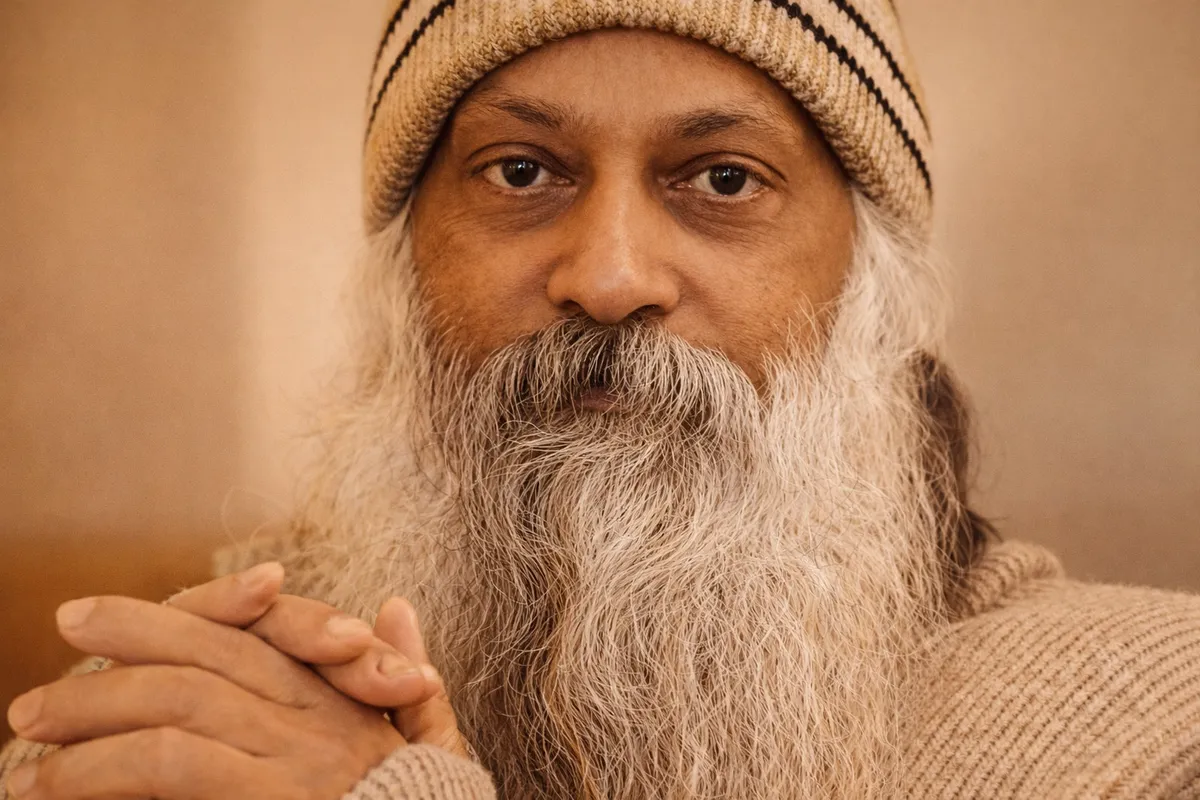
Osho's perspective on Anāshrava
When Osho Spoke About Anāshrava
Passages from the discourses where this theme comes alive.
Osho, what is the proof of God’s existence?
And you still ask for proof? There have been people who offered proofs, and all their proofs are futile. No proof works. All the proofs for God so far are not worth a penny. Someone says: everything that is made must have a maker; such a vast world—surely it must have a maker. But that proof commits suicide; the moment it meets an atheist, it goes lame. The atheist says: If every made thing must have a maker, if God is needed to make the world, then who made God? With that he tightens the noose around your neck. Who made God? You protest: No, no one made God. Then the atheist says: If God can be without being made, why can’t the world be without being made? The argument collapses; it falls flat. You say: just as the potter makes the pot, so that Great Potter made this world.…
आखिरी प्रश्न: ओशो, ईश्वर-अस्तित्व का प्रमाण क्या है?
और तुम प्रमाण पूछ रहे हो? और प्रमाण देनेवाले लोग हुए हैं। और उनके सब प्रमाण व्यर्थ हैं। कोई प्रमाण कारगर नहीं है। अब तक जितने प्रमाण दिये गये हैं परमात्मा के, सब दो कौड़ी के हैं। जैसे कोई कहता है कि हर चीज को बनानेवाला होना चाहिए; इतना बड़ा जगत तो इसका बनानेवाला कोई होगा। मगर उसका प्रमाण आत्मघात कर लेगा, नास्तिक के सामने जाते ही हाथ-पैर उसके लंगड़ा जायेंगे। क्योंकि नास्तिक कहता है, अगर हर बनाई गयी चीज का बनानेवाला होना चाहिए, अगर संसार को बनाने के लिए परमात्मा चाहिए तो फिर परमात्मा को किसने बनाया? बस उसने अटका दी तुम्हारी फांसी! परमात्मा को किसने बनाया है? तुम नाराज होने लगे कि नहीं, परमात्मा को किसी ने नहीं बनाया। तो नास्तिक कहता है, जब परमात्मा बिना बनाये हो सकता है तो संसार क्यों नहीं हो सकता? टूट गया तर्क, पोचा निकला।
Osho, the one who sees all and dwells within everyone—why does he still not come to be known? How does that Seer and Witness of all come to be known? Please explain.
Only such a light, subtle sensing will be there—a faint intimation. But you will not be able to see it. You cannot hold it in your hand. It is inexorably the Seer and cannot become the seen. So what to do? Then what to do? Only one thing can be done: bid farewell to the seen. Whatever is seen, let it be dismissed. Let no scene remain upon the screen. Have you ever noticed? You go to the cinema to watch a film. It begins—the play of light and shadow starts upon a blank white screen—and you become absorbed. When you are completely absorbed in watching, when the story grips your very life, you lose awareness of yourself—you forget that you are the watcher. The seen becomes everything; the Seer becomes null. The Seer is forgotten; the scenes become all in all. If the scene is tragic, tears stream from…
पांचवां प्रश्न: ओशो, जो सब का देखनेवाला है और सबके अंदर में ही रहता है, फिर भी जानने में क्यों नहीं आता? वह सर्व का द्रष्टा और साक्षी जो है, वह कैसे जानने में आता है? कृपया समझायें।
उसकी तो सिर्फ ऐसी हल्की-हल्की प्रतीति होगी, आभास होगा। लेकिन तुम उसे देख न पाओगे। तुम उसे हाथ में पकड़ न पाओगे। वह अपरिहार्य-रूपेण द्रष्टा है और दृश्य नहीं हो सकता है। इसलिये क्या करें? फिर क्या करें? एक ही काम किया जा सकता है: दृश्य को विदा करो। जो-जो दृश्य है उसे विदा करते जाओ। दृश्य-पटल पर कोई दृश्य न रह जाये। कभी तुमने खयाल किया कि तुम सिनेमा गये फिल्म देखने, फिल्म चली, सफेद कोरे पर्दे पर धूप-छाया का खेल शुरू हुआ, तुम तल्लीन हो गये। जब तुम फिल्म को देखने में पूरे तल्लीन हो जाते हो, जब कथा तुम्हारे प्राणों को पकड़ लेती है, तब तुम्हें अपनी याद नहीं रह जाती...तब तुम भूल जाते हो कि मैं देखनेवाला हूं। तब दृश्य ही सब कुछ हो जाते हैं, द्रष्टा शून्य हो जाता है। द्रष्टा की विस्मृति हो जाती है, दृश्य सब कुछ हो जाते हैं। अगर दृष्य कोई दुखांत होता है, तुम्हारी आंखों से झर-झर आंसू टपकते हैं। अगर दृश्य कोई उत्तेजक होता है तो तुम कुर्सी को छोड़कर रीढ़ सीधी करके बैठ जाते हो। …
Osho, is there any practical process for being in the realm of existence beyond thoughts, in the void?
The way to thin them out is non-cooperation. Right now we are their makers—that is, we are the ones maintaining them. When we sit idle, some thought or other is running, because without our cooperation they cannot run. Withdraw your cooperation from whatever thoughts are running, and do nothing else; regard just this as samayik, as meditation. If all thoughts dissolve, you will feel no ego and no person within. You will know only being—only being will be known, in which the distinction “I am an individual” or “I am the whole” will not be felt. Only pure being will remain—pure existence. In truth, because of the thoughts accumulated upon that pure existence, we appear to be a person. This sense that I am “A,” you are “B,” you are “C”—the A, B, C we have pasted on—is our thought-power. We commonly say, “I will become liberated”—this is not quite…
ओशो, क्या विचारों के पार अस्तित्व के जगत में, शून्य में होने की कोई व्यावहारिक प्रक्रिया है?
… जब खाली बैठते हैं तो कुछ न कुछ विचार चल रहे हैं। क्योंकि हमारे बिना सहयोग के वे चल नहीं सकते हैं। जो-जो विचार चल रहे हैं, उनसे सहयोग को खींच लें और कुछ न करें, बस इसी को सामायिक, इसी को ध्यान समझें। अगर सारे विचार विलीन हो जाएं तो आप में कोई ईगो, और कोई व्यक्ति नहीं मालूम होगा। आपको मालूम होगा केवल होना। केवल बीइंग मालूम होगा, जिसमें यह भेद मालूम नहीं होगा कि मैं व्यक्ति हूं या समष्टि हूं। केवल होना मात्र रह जाएगा। प्योर एक्झिस्टेंस मात्र होगा। वास्तव में उस प्योर एक्झिस्टेंस में जो विचार हमारे इकट्ठे हैं उन विचारों के कारण हम एक व्यक्ति मालूम होते हैं।
And someone has asked: Osho, who is it that thinks when one is witnessing?
As it is now, whenever we know, three things are present: the one who knows—the knower; that which is known—the known; and the relationship between the two—knowledge. Knowledge is bound and burdened by the knower and the known. Keval-gyan means the known dissolves—the object disappears. And when the known dissolves, where will the knower be? He was bound to the known. When the known dissolves, the knower dissolves. What remains then? Only knowledge remains. In that moment of pure knowing there is the sense of liberation and of freedom. So keval-gyan means to experience pure knowledge. What I have called samadhi is the experience of pure knowing. These are different names in different traditions: what Patanjali called samadhi, the Jains called keval-gyan, and Buddha called prajna. Keval-gyan does not mean telling what is going on in your head. That is very easy—a simple thing. That is ordinary telepathy, thought-reading; it…
और पूछा है, ओशो, साक्षी होकर कौन विचार करता है?
अभी जब भी हम कुछ जानते हैं, तो जानने में तीन चीजें होती हैं--जानने वाला होता है, वह ज्ञाता होता है; जिसको जानते हैं, वह होता है, वह ज्ञेय होता है; और इन दोनों के बीच जो संबंध होता है, वह ज्ञान होता है। तो ज्ञान जो है, ज्ञाता और ज्ञेय से दबा रहता है, उनसे बंधा रहता है। केवल-ज्ञान का अर्थ है कि ज्ञेय विलीन हो जाए, आब्जेक्ट विलीन हो जाए। और अगर ज्ञेय विलीन हो जाएगा, तो फिर ज्ञाता कहां रहेगा! वह तो ज्ञेय से बंधा हुआ था। जब ज्ञेय विलीन हो जाएगा, तो ज्ञाता विलीन हो जाएगा। तब क्या शेष रह जाएगा? तब मात्र ज्ञान शेष रह जाएगा। उस ज्ञान की घड़ी में मुक्ति का बोध होता है और स्वतंत्रता का बोध होता है। तो केवल-ज्ञान का अर्थ है, शुद्ध ज्ञान को अनुभव कर लेना। जिसको मैंने समाधि कहा है, वह शुद्ध ज्ञान का अनुभव है। यह अलग-अलग संप्रदायों के अलग-अगल सत्य हैं। जिसे पतंजलि ने समाधि कहा है, उसे जैनों ने केवल-ज्ञान कहा है, उसे बुद्ध ने प्रज्ञा कहा है।
What is meant by the anāshrava person?
definitionProfound Quotes on Anāshrava
Explore our structured collection of meaning-mapped quotes regarding Anāshrava.