
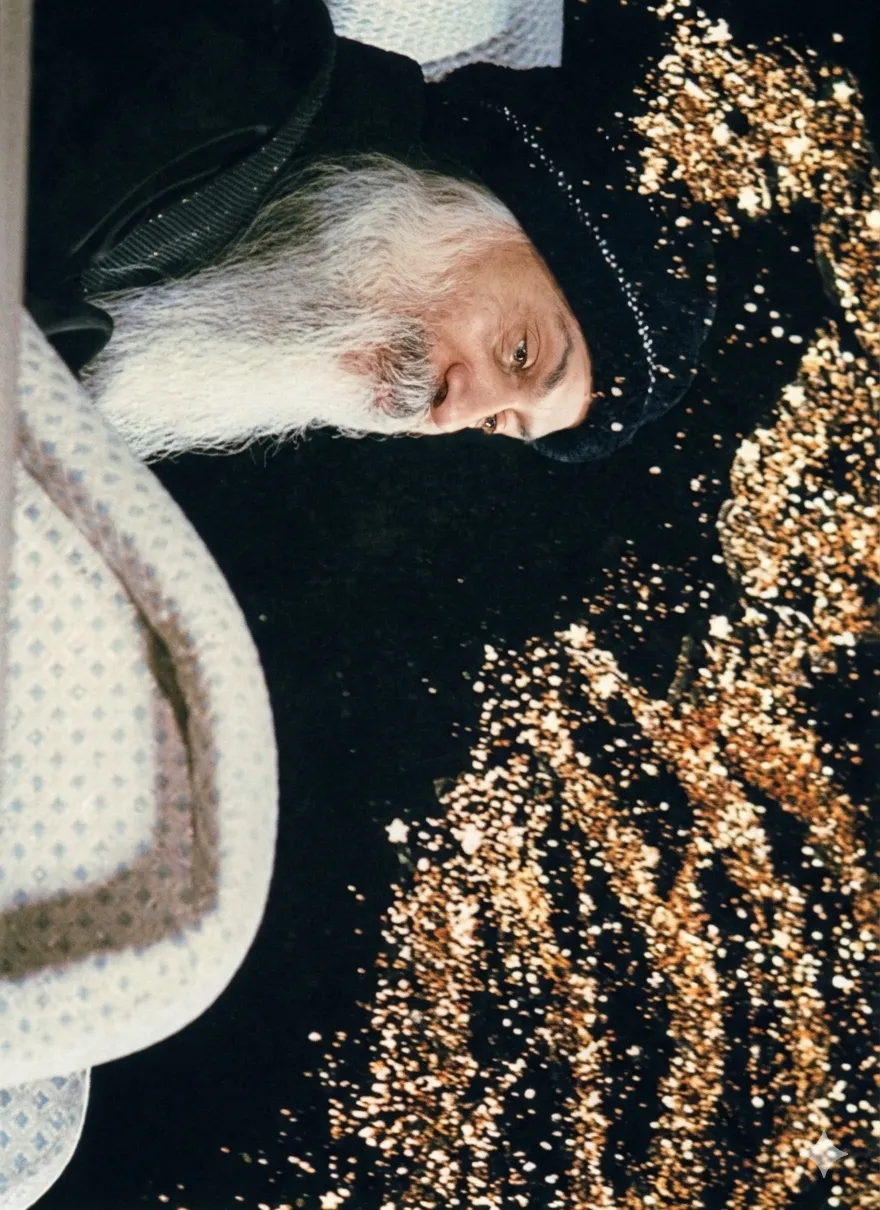
Osho's perspective on Agnosticism
When Osho Spoke About Agnosticism
Passages from the discourses where this theme comes alive.
Osho, what is the definition of God?
Words are very small. If you say God is light, then what of darkness? The scriptures have said that God is light. Suppose we accept this as a definition—then what about darkness? Where will darkness go? Darkness is too; in fact it is far more than light. Light sometimes is and sometimes is not; darkness is always, eternal. Where will you place darkness? If you say God is light, darkness is left out. If you say God is darkness, then light is left out. If you say God is both darkness and light, a contradiction arises: they cannot be together. Try to have both darkness and light in the same room. If you bring in light, darkness disappears; if you preserve darkness, you cannot have light. Then how can both be together? That becomes an impossibility. So you cannot say “both” either. Then the fourth device is to say: it…
पहला प्रश्न: ओशो, परमात्मा की परिभाषा क्या है?
शब्द तो बड़े छोटे-छोटे हैं। अगर कहो परमात्मा प्रकाश है, तो फिर अंधेरे का क्या होगा? ऐसा कहा है शास्त्रों में कि परमात्मा प्रकाश है। चलो मान लें इसे परिभाषा, फिर अंधेरे का क्या होगा? फिर अंधेरा कहां जायेगा? अंधेरा भी है, प्रकाश से कहीं ज्यादा है। प्रकाश तो कभी होता है कभी नहीं भी होता; अंधेरा सदा है, शाश्वत है। अंधेरे को कहां रखोगे? अगर कहा परमात्मा प्रकाश है, तो अंधेरा बाहर पड़ गया। अगर कहा परमात्मा अंधेरा है, तो प्रकाश बाहर पड़ गया। अगर कहो परमात्मा अंधेरा प्रकाश दोनों है, तो विरोधाभास होता है। दोनों एक साथ हो नहीं सकता। एक ही कमरे में अंधेरा और प्रकाश करके दिखाओ। प्रकाश करोगे, अंधेरा खो जायेगा; अंधेरा बचाओगे, प्रकाश न कर सकोगे। तो दोनों साथ कैसे होंगे? तब एक असंभव बात हो गई। तो यह भी नहीं कह सकते कि दोनों है।
Osho, you have earlier said, “Live moment to moment, live in the present.” Now you are saying, “Return to the past.” What should we do?
So it is with the mind—there are ruts. The past means endless grooves. However much you understand, your intellect agrees, you make decisions, you resolve—at the moment of resolve you feel something is going to change. But not even an hour passes before your decision breaks. Then only self-condemnation is produced, nothing else. Your saints, your fakirs, your priests and pundits—most of the time they only succeed in producing self-condemnation in you, nothing else. Their words are logically correct. You cannot even say they are wrong; you have to admit they are right. In that admission you take a decision. But against what are you deciding? Inside are grooves carved since who knows when, deep tracks. Walking in them has become a habit. It is easy to walk in them. They will pull you again and again. The meaning of returning into the past is: these grooves must be erased.…
दूसरा प्रश्न: ओशो, आपने पहले कहा है, क्षण-क्षण जीयो, वर्तमान में जीओ। अब आप कह रहे हैं, अतीत में लौटो। हम क्या करें?
ठीक मन पर लीकें हैं। अतीत का अर्थ है, अनंत लीकें। तो आप कितनी ही बातें समझ लेते हैं; बुद्धि सहमत हो जाती है; निर्णय ले लेते हैं; संकल्प कर लेते हैं। और जब संकल्प करते हैं, तब सोचते हैं कि कुछ होने-जाने वाला है। घड़ी भी नहीं बीत पाती कि जो आपने निर्णय लिया था, वह टूट जाता है। और तब सिर्फ आत्मग्लानि पैदा होती है, और कुछ भी नहीं। आपके संत, आपके फकीर, आपके पंडित-पुरोहित, आप में सिर्फ आत्मग्लानि पैदा करवा पाते हैं और कुछ भी नहीं। क्योंकि उनकी बातें तो तर्कयुक्त हैं। आप भी कह नहीं सकते कि वे गलत कह रहे हैं। स्वीकार करना पड़ता है कि ठीक कह रहे हैं। उस स्वीकृति में आप निर्णय लेते हैं। लेकिन निर्णय किसके खिलाफ ले रहे हैं! न मालूम कितनी लंबी लकीरें भीतर हैं, गहरे खांचे हैं। उनमें चलने की आदत हो गई है। उनमें चलना सुगम है। …
Beloved Osho, just a few days ago you spoke to us of three categories of belief: theist, atheist, and agnostic. What do you say about gnostic?
So people cling either to theism, or those who are a little stronger, intellectual, the intelligentsia -- they cling to atheism. But both are escapes from doubt. And to escape from doubt is to escape from inquiry -- because what is doubt? It is only a question mark. It is not your enemy. It is simply a question mark within you which prepares you to inquire. Doubt is your friend. And I had talked about the third category, the agnostic. The theist is the weakest of the three: less cultured, less educated, less intellectual -- just a mediocre person. The second category, the atheist, is more intellectual, more cultured, and tries hard not to be bothered by the question, and puts the question absolutely away as far as he is concerned, by arguing that there is no God. If an atheist and theist discuss and debate, the atheist is always…
Question: A friend has asked: Osho, do you teach atheism? Would the man who wants to save people even from learning theism teach atheism? I teach neither theism nor atheism. I teach neither belief nor disbelief. I say: remain free of belief as well as disbelief, and search in freedom. Do not be bound by partisanship. Seek impartially—there are two sides. And remember, opposing sides are two faces of the same coin. There is not much difference between them. The theist and the atheist are two faces of the same coin. There isn’t much difference: one is the back of the same thing, the other its face. ... Reason is a very fragile realm. I am not saying, “Cling to belief. The believer says, “We have reasons, arguments. The disbeliever also says, “We have reasons, arguments. We say there is no God, no soul. I am not speaking for either.
तर्क, बड़ी कमजोर दुनिया है तर्क की। मैं न कह रहा हूं कि विश्र्वास को पकड़ो। विश्र्वास वाला भी कहता है, तर्क है हमारे पास, आर्ग्युमेंट है। अविश्र्वास वाला भी कहता है, तर्क है हमारे पास, आर्ग्युमेंट है। हम कहते हैं कि ईश्र्वर नहीं है, आत्मा नहीं है। मैं दोनों की बात नहीं कह रहा। मैं कुछ तीसरी ही बात कह रहा हूं जो इन तीन दिनों में धीरे-धीरे साफ हो सकेगी। मैं यह कह रहा हूं, विश्र्वास से भी मत बंधना और अविश्र्वास से भी मत बंधना। और क्यों यह कह रहा हूं, क्योंकि जो आदमी ऊपर से विश्र्वास से बंधता है उसके भीतर अविश्र्वास होता है, उसका दूसरा पहलू उसके भीतर रहेगा। कांशस माइंड में, चेतन मन में, वह विश्र्वासी होगा, अचेतन में अविश्र्वासी होगा। चेतन में आस्तिक होगा, अचेतन में नास्तिक होगा। जो चेतन में नास्तिक होगा उसके भीतर आस्तिक छिप जाएगा। उलटा पहलू नीचे दब जाएगा। इसलिए ऐसा कोई नास्तिक नहीं है जिसके भीतर आस्तिक न बैठा हो। और ऐसा कोई आस्तिक नहीं है जिसके भीतर नास्तिक न बैठा हो। …
What is agnosticism?
definitionProfound Quotes on Agnosticism
Explore our structured collection of meaning-mapped quotes regarding Agnosticism.