
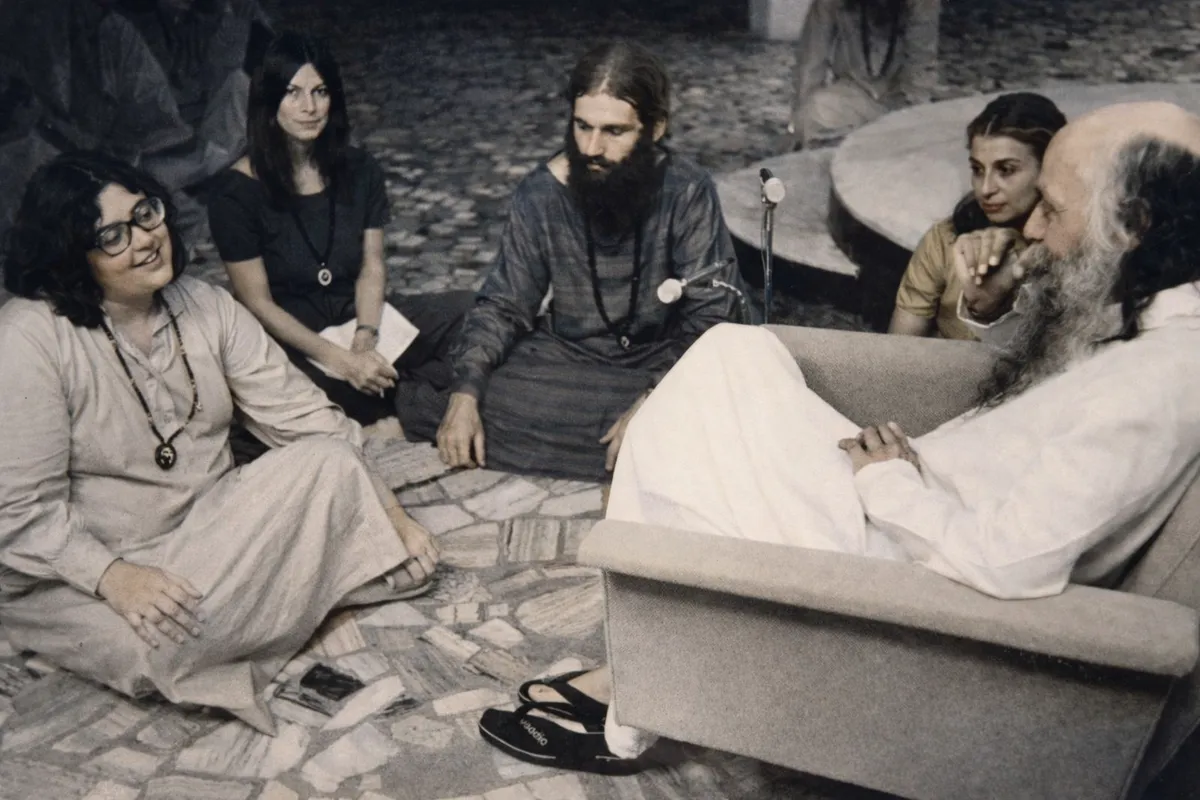
Your questions come from inner upset; ask them out loud to empty the noise, then quietness appears and you discover yourself.
From the Discourses
Passages where Osho speaks to this question — each links to the complete discourse.
You have said that any question is violent, yet we are encouraged to ask questions. Why is this?
BECAUSE YOU ARE VIOLENT and you need catharsis. You have questions to ask; you may not have the courage to ask them, that's why you are encouraged. You have questions to ask; you have to pass through that. Ask them. I'm not saying that my answers will destroy them -- no. My answers are not pointed that way. My answers have a totally different purpose. They will make you aware that all questions are useless, futile, absurd. I would like you to come to a point where the mind stops questioning, but that you cannot do because you are full of questions. Release them, don't suppress them. Be courageous. Even if you know that they are foolish, don't hide them, because if you hide them you will never be able to get rid of them. Even if they are ridiculous -- and all questions are -- ask. And I'm not…
Beloved Osho, after all, what can we ask? Yet you have made us ask questions!
In Japan there is a tradition: whenever someone comes to a Zen master, he brings his sitting mat with him. He unrolls the mat, sits on it, and asks his question. Then he has to leave his mat there, and each day, whenever he has a question to ask, he comes and sits on his mat and asks the question. This sometimes continues for years together. Then a day comes when he becomes tired of this asking and being answered, and he realizes that all this is just nonsense. He rolls up his mat, puts it under his arm, and leaves. The day he rolls up his mat, the master says, "Have you rolled up your mat? Good! My blessings to you!" Rolling up the mat is symbolic of getting tired of asking questions and getting answers to them, of asking and listening. Now he stops both, and from that…
Osho, what is there that we can even ask? Still, you have had us ask questions—why?
You may feel you cannot ask, that asking seems difficult—but the mind you have can hold nothing except questions. This is your catharsis. I say to you: ask, so that your catharsis can happen. The mind anyway goes on asking. You may not gather the courage to voice a question; you may hesitate, feel afraid—but the mind goes on asking continually. In the mind, only questions stick; answers never do. The mind is a process that produces questions. The mind raises questions about everything. So it may happen that out of modesty or etiquette you do not ask me, or out of fear of what people will say: that the question is too small, not worth asking; that it is absurd, irrelevant, unbecoming; that asking it will make you look so ignorant that even this has not been resolved in you. Because of such fears, you don’t ask. But you…
प्रश्न: ओशो, आखिर हम पूछ ही क्या सकते हैं, फिर भी आपने हमसे प्रश्न पुछवाए हैं! क्यों?
पूछ तुम भला न सको, पूछना भला कठिन मालूम पड़ता हो, लेकिन मन तुम्हारे पास जो है, उसमें सिवाय प्रश्नों के और कुछ लग नहीं सकता। यह रेचन है तुम्हारा। तुमसे कहता हूं: पूछो, ताकि तुम्हारा रेचन हो जाए। मन तो पूछता ही है। भला तुम हिम्मत न जुटा पाओ, भला तुम साहस न कर पाओ प्रश्न को रखने का, संकोच करो, डर लगे, लेकिन मन निरंतर पूछता है, मन में प्रश्न ही लगते हैं, उत्तर तो कभी लगते ही नहीं। मन प्रश्नों को पैदा करने का ही क्रम है। हर चीज पर मन प्रश्न उठाता है। तो यह भी हो सकता है, संकोच-शिष्टाचारवश तुम मुझसे न पूछो। या इस भयवश कि लोग क्या कहेंगे; कि प्रश्न छोटा-सा है, पूछने जैसा नहीं; कि प्रश्न बेतुका है, असंगत है, शोभा नहीं देता; कि प्रश्न पूछने से ऐसा लगता है कि तुम इतने अज्ञानी हो कि अभी यह प्रश्न भी तुम्हारा हल नहीं हुआ--इन सब भय के कारण तुम पूछते नहीं। लेकिन तुम प्रश्नों को दबाए बैठे रहोगे। वे दबे हुए प्रश्न तुम्हारे चित्त को सदा उद्विग्न करेंगे।
Osho, the questions we ask you all arise out of unconsciousness. And your replies come from total awareness. How can the two ever meet? And if they cannot meet, then asking itself seems wrong. Then what do you mean when you tell us to ask?
What is the difference between resonance and string? The string is gross, the resonance is subtle. The string can be grasped; the resonance cannot be grasped. Catch hold of the string and you remain on the surface. Catch the string and you will be bound—the string becomes a chain. Resonance enters your very life-breath. And resonance sets aquiver the resonance already asleep within you. Resonance is liberation. Do not take my strings, my words. Do not be concerned with what I say; be absorbed in what I am. Take the aura, not the form! If you take the form, you are bound. Take a form and you enter a prison. Take the aura! The halo that surrounds a lamp cannot be clutched in a fist, cannot be locked in a safe. But if you look at it with full eyes, your eyes will begin to shine. If you drink in…
पहला प्रश्न: ओशो, हम आपसे जो सवाल पूछ रहे हैं, वे तो सब मूर्च्छा से पूछे गए हैं। और आपका जवाब तो पूर्ण चैतन्य से आ रहा है। तो इन दोनों का मिलन ही कैसे संभव हो? और मिलन नहीं होता है, तब तो सवाल पूछना ही गलत है। तब आप हमें जो सवाल पूछने के लिए कहते हैं, उसका मतलब क्या?
झनकार और तार में क्या भेद है? तार स्थूल है, झनकार सूक्ष्म है। तार पकड़ में आता है, झनकार पकड़ में नहीं आती। तार ऊपर का ऊपर रह जाएगा। तार को पकड़ा तो तार से बंध जाओगे, तार जंजीर बन जाएगी। झनकार प्राणों में समा जाती है। और झनकार तुम्हारे भीतर सोई झनकार को आंदोलित कर देती है। झनकार मुक्ति है।
Osho, please explain how, in meditation practice, the dissolution and sublimation of violent tendencies—that is, dissolution and sublimation—take place?
Mahavira was standing near a village and some people came and beat him severely. Someone drove iron pegs into his ears. He stood watching. Later someone asked him, “You said nothing at all? You could at least have said, ‘Why are you beating me without cause?’” Mahavira said: “They were not beating me without cause. There must surely have been some cause in their minds to beat. Perhaps the cause was not related to me, but there was a cause within them. And I thought it would be better if they beat me; if they beat someone else, they would not return without receiving a return blow. Let their violence undergo nirjara. Better than me they would find it hard to find anyone.” Mahavira behaved like a pillow with those people. In meditation the nirjara of all suppressed surges takes place—whether of violence, of anger, of sex, or of greed—meditation…
ओशो, कृपया समझाएं कि ध्यान-साधना में हिंसक-वृत्तियों का विसर्जन और उदात्तीकरण अर्थात डिजोल्यूशन और सब्लीमेशन किस प्रकार घटित होता है?
महावीर एक गांव के पास खड़े थे और कुछ लोगों ने आकर उन्हें बहुत पीटा। किसी ने उनके कान में खीलियां ठोक दीं। वे खड़े देखते रहे। पीछे किसी ने उनसे पूछा कि आपने कुछ भी न कहा? आप कुछ तो बोलते, इतना तो कहते कि अकारण मुझे क्यों मार रहे हो? तो महावीर ने कहा: अकारण वे नहीं मार रहे थे। उनके भीतर मारने की बात का जरूर ही कोई कारण रहा होगा। हो सकता है, मुझसे संबंधित न हो कारण, लेकिन उनके भीतर तो कारण रहा ही होगा। और फिर मैंने सोचा कि वे मुझे ही मार लें तो बेहतर है, वे किसी दूसरे को मारेंगे, तो बिना मार का उत्तर पाए वापस न लौटेंगे। उनकी हिंसा की निर्जरा हो जाए। तो मुझसे बेहतर आदमी उन्हें खोजना मुश्किल है। …