
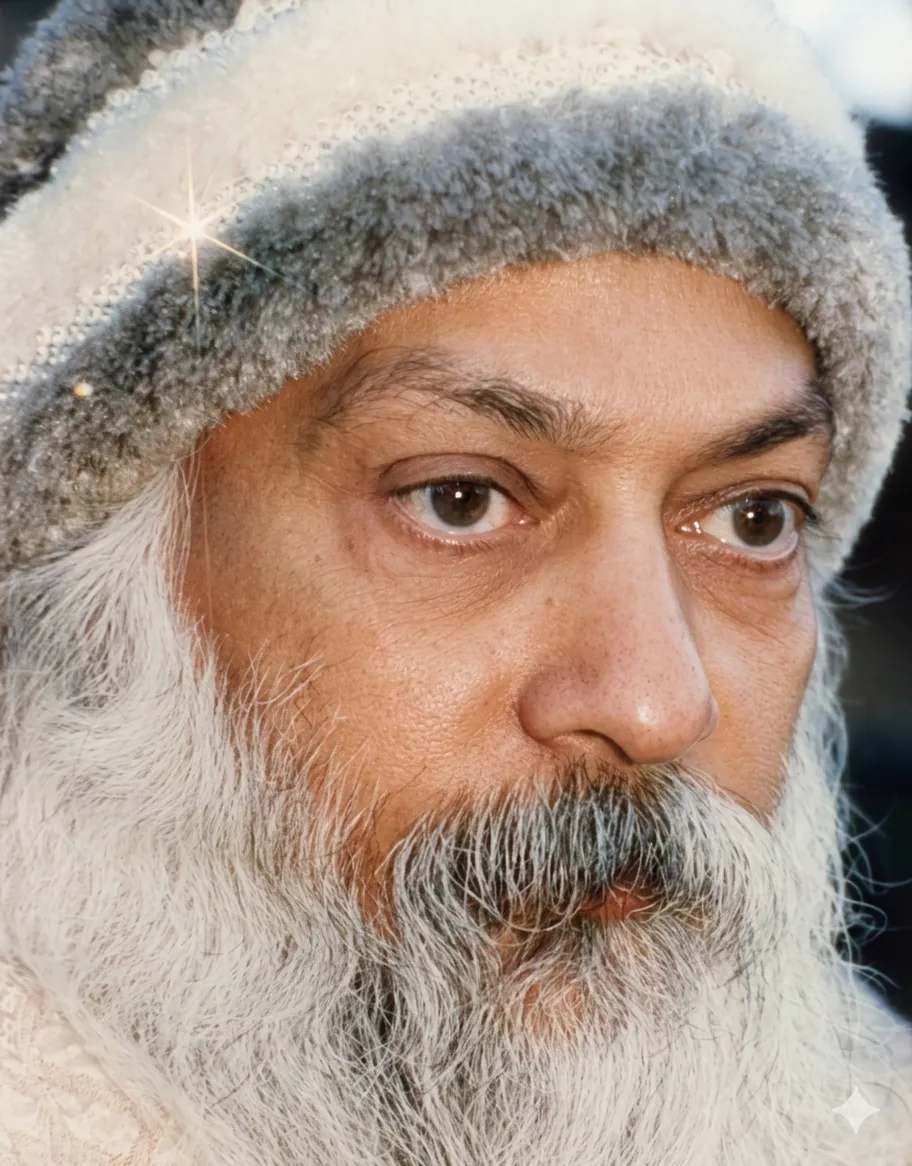
It’s hard because we’ve always gone outward with others, so walking inside alone feels strange and scary; brief practice of being alone makes it easier.
From the Discourses
Passages where Osho speaks to this question — each links to the complete discourse.
Osho, why does pratikraman—the return home—feel uneasy, difficult, almost impossible to us?
Hence whenever a living Master appears, those who uphold old scriptures become his opponents, because because of him people begin to set scriptures aside. When scriptures are set aside, the pandits are set aside, the whole business is set aside. It becomes hard. The pandits become enemies. Then when this Master dies, the same pandits who were his enemies gather at the cremation ground—to offer homage. They then make scriptures out of him. Their enmity was with the living, not with scripture. So they themselves make the scriptures. It is amusing: Mahavira was a Kshatriya, but all his ganadharas were Brahmins! Strange—what is this? The moment Mahavira died, the Brahmins rushed in: “Good opportunity—now we can make scriptures again.” At once they set up scriptures. Jainism got constructed. Now if once again someone brings living religion, the scholars, the pandits, the worshipers of scripture, are in trouble again; their business…
दूसरा प्रश्न: ओशो, प्रतिक्रमण, घर वापस लौटना, हमें असहज, कठिन और असंभव सा क्यों लगता है?
तो जब भी कोई शास्ता पैदा होता है, पुराने शास्त्रों को मानने वाले लोग उसके विपरीत हो जाते हैं, क्योंकि उस आदमी के कारण शास्त्रों को लोग हटाने लगते हैं। शास्त्रों को हटाते हैं तो पंडितों को हटाते हैं, तो सारा व्यवसाय हटाते हैं। कठिन हो जाता है। पंडित दुश्मन हो जाते हैं। फिर जब यह शास्ता मर जाता है, वही पंडित जो इसके दुश्मन थे, मरघट पर इकट्ठे हो जाते हैं--श्रद्धांजलि चढ़ाने को। फिर वे ही शास्त्र बना लेते हैं। उनकी दुश्मनी जीवंत से थी, शास्त्र से थोड़े ही थी। फिर वे ही शास्त्र बना लेते हैं। यह बड़े मजे की बात है। महावीर तो क्षत्रिय, लेकिन महावीर के जितने गणधर, सब ब्राह्मण! तो बड़ी हैरानी की बात है। क्या, मामला क्या है? महावीर के मरते ही ब्राह्मण झपटे, उन्होंने कहा, यह तो अच्छा अवसर मिला, फिर शास्त्र बना लो। उन्होंने तत्क्षण शास्त्र खड़े कर दिए। जैन धर्म निर्मित हो गया। …
Osho, inside me there seems to be a kind of stunned stillness, a hush. It feels empty, as if a void has spread over everything. And at the same time, the assault of good and bad thoughts keeps overpowering me. What should I do? I feel as if I’ve gone a bit mad. I find myself very helpless, alone, and insecure. I am afraid.
It is Saroj’s question. This happens. It is natural. Because the moment we turn within, we become alone. That is why people are afraid to go inside. Outside there are others; inside there is no one. Inside it is you, and only you. Outside are countless people, bustle and stir; inside, silence. Outside there is so much fullness; inside, the void. And for lifetimes we have lived outside—lived in relationships, with others, in the crowd and the marketplace, the house and household—thousands of occupations! So when you begin to move within, you suddenly start to feel: all that is left far behind, and into this inner space not even your nearest and dearest can come. This is your utterly solitary space. It is so private that you cannot invite even your lover into it. Here there is only you—simply you. In the beginning this great stillness, this hush, this emptiness…
दूसरा प्रश्न: ओशो, मेरे भीतर जैसे स्तब्धता, सन्नाटा-सा लग रहा है। खाली-खाली, शून्यता जैसे छा गई हो। और साथ ही अच्छे-बुरे विचारों का आक्रमण भी हावी होता रहता है। मैं क्या करूं? मैं बावरी-सी हो गई हूं। मैं अपने को बहुत असहाय, अकेली और असुरक्षित पा रही हूं। भय लगता है।
‘सरोज’ का प्रश्न है। ऐसा होता है। ऐसा होना स्वाभाविक है। क्योंकि जैसे ही हम भीतर जाते हैं, हम अकेले हो जाते हैं। इसीलिए तो लोग भीतर जाने से डरते हैं। बाहर हैं और लोग, भीतर तो कोई भी नहीं। भीतर तो तुम हो और बस तुम हो। बाहर अनंत लोग हैं, चहल-पहल है। भीतर तो सन्नाटा है। बाहर बहुत भरावट है, भीतर तो शून्य है। और जन्मों-जन्मों तक हम बाहर जीए, संबंधों में जीए, औरों के साथ जीए, भीड़-बाजार, घर-गृहस्थी--हजार व्यस्तताएं! तो जब भीतर चलना शुरू करोगे तो अचानक अनुभव में आना शुरू हो गया, वह सब तो दूर छूट गया और इस भीतर तो तुम्हारा निकटतम प्रियजन भी नहीं आ सकता। यह तो तुम्हारा नितांत एकांत है। यह तो इतना निजी है, इतना प्राइवेट है कि तुम अपने प्रेमी को भी इसमें निमंत्रित न कर सकोगे। यहां तो बस तुम हो और तुम हो। …
Running away from home is not sannyas. Escaping from home is easy. If it were up to everyone, all would run away—who is not harassed by home? Who is not afflicted by home? Who is not weary of home? To escape is no bravery. There is only one courage in life—the courage to be alone. So a man leaves his house, then gathers ten or twenty‑five disciples, builds an ashram, and lives there. Because there was no courage to be alone—leaving home, he must build an ashram. Leaving friends and family, he must gather disciples—because he needs a crowd. In aloneness there is a great danger—the danger of one’s self dissolving. Hence, the more disciples a sannyasin gathers, the greater a sannyasin he appears, and the more his ego swells. One who finds no disciples—he becomes a two‑penny sannyasin; his ego sinks.
तो घर से एक आदमी भाग जाता है, तो दस-पच्चीस शिष्यों को इकट्ठा करके एक आश्रम बना कर वहां रहने लगता है। क्योंकि अकेले रहने का साहस तो था नहीं, घर से निकल आए, तो फिर आश्रम बनाना पड़ता है। मित्रों को छोड़ कर आ गए, परिवार को छोड़ कर आ गए, तो फिर शिष्य और शिष्याएं इकट्ठे करने पड़ते हैं; क्योंकि भीड़ चाहिए। अकेले होने में बड़ा खतरा है--खुद के मिट जाने का खतरा है। इसलिए जिसके पास जितने शिष्य इकट्ठे हो जाते हैं, जिस संन्यासी के पास, वह उतना ही बड़ा संन्यासी हो जाता है, उसके अहंकार का पारा उतना ही ऊपर चढ़ जाता है। जिसको कोई शिष्य नहीं मिलते, वह बेचारा दो कौड़ी का संन्यासी हो जाता है, उसका अहंकार का पारा नीचे उतर जाता है। शिष्यों की खोज चलती है, भीड़ इकट्ठा करने की खोज चलती है, आश्रम बनते हैं। भागे थे, लेकिन फिर दूसरा चक्कर सामने खड़ा हो जाता है। क्यों? क्योंकि अकेले होने का साहस नहीं है।
Beloved Osho, this pratyahar looks like an impossible experiment. Is it possible for the ganges to return to gangotri and is it possible for the tree to again become a seedling and a seed? And shankara and you are both asking us to do this.
The return of the Ganges to its source, to Gangotri, and the tree becoming a seed looks impossible to you, but this is what is happening every day. The tree is becoming a seed again daily. Just look at the seeds hanging on that gulmohar tree: the whole tree has become seeds. And every day the Ganges returns to Gangotri through the dark clouds; it rains on the Himalayas and the Ganges returns to Gangotri. This is happening every day. You ask what has to be done. Really, this is happening unconsciously; you just have to see this happening in wakefulness. Many times you return home but you are not conscious. You have become so used to staying in guesthouses that even when you return to your own home you think it to be a guesthouse. A friend of mine has to travel day and night in connection with his…
Osho, why didn’t Mahavira do his spiritual practice while remaining at home? What need was there to go out?
In Gandhi’s ashram a hymn was sung: “Call only that person a Vaishnava who knows the pain of the other.” Someone once recited it to me and I said it needs a slight correction. In truth, a Vaishnava is one who does not even know that anyone is “other.” Knowing the pain of the other is a second thing. To know the other’s pain, you must first accept that there is “other” and there is “mine.” A Vaishnava is one who does not know anyone as other—and only then can the pain of the other be felt as one’s own, because there is no “other” left. We live within the circle of “I,” of “mine.” That is our home: my house, my wife, my father, my son, my friend—an entire world fabricated by “mine.” Around this “mine” we have raised many kinds of walls: of stone, of love, of hatred,…
प्रश्न: ओशो, महावीर ने घर में ही रह कर साधना क्यों नहीं की? बाहर जाने की क्या आवश्यकता थी?
गांधी जी के आश्रम में एक भजन गाया जाता था: वैष्णव जन तो तेने कहिए जे पीर पराई जाने रे। कोई मुझे पढ़ कर सुना रहा था तो मैंने कहा कि इसमें थोड़ा सुधार कर लेना चाहिए। असल में वैष्णव जन तो वह है, जो पराए को ही नहीं जानता, पराए की पीर बहुत दूसरी बात है। पराए की पीर भी जाननी हो तो पराए को मानना जरूरी है और अपने को भी मानना जरूरी है। …