
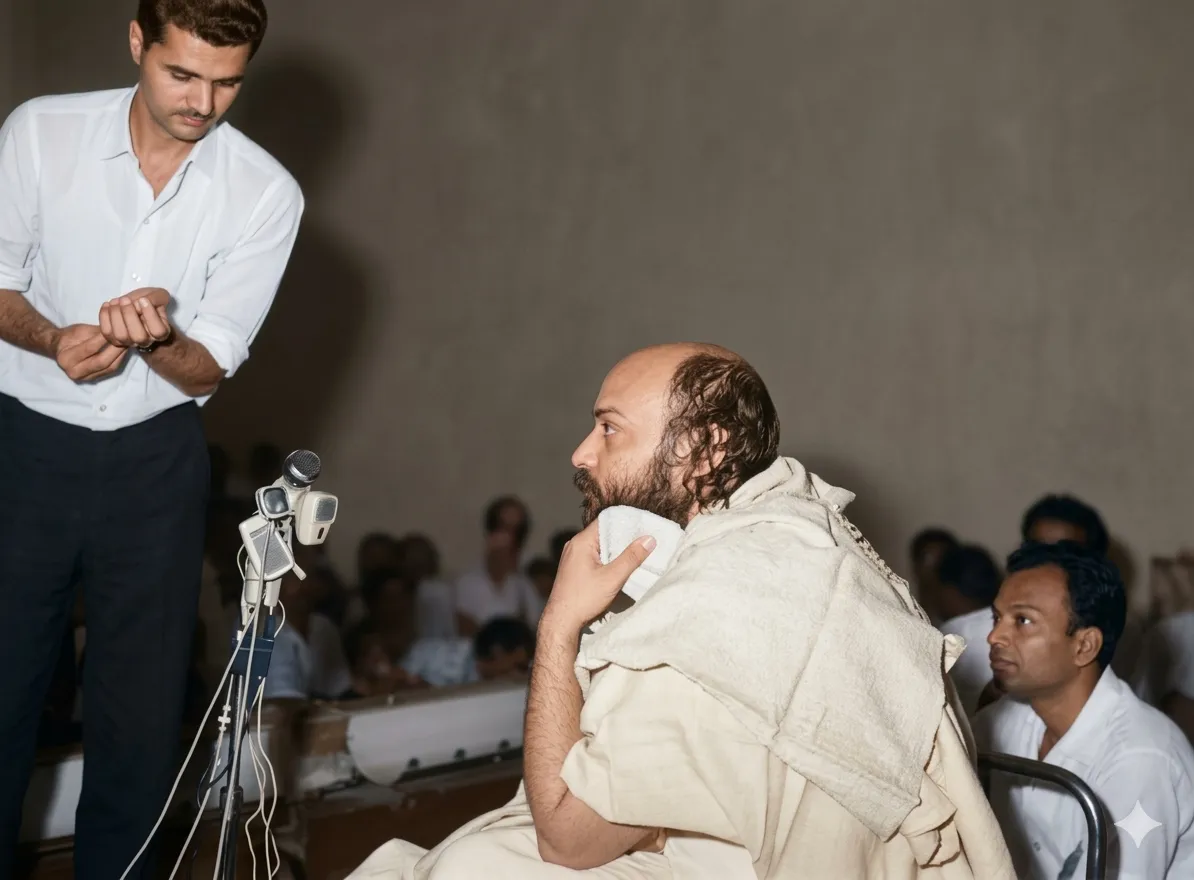
Build the house first (science and strength), then add the golden roof (spirituality); India skipped the building, the West started it, and both must be joined.
From the Discourses
Passages where Osho speaks to this question — each links to the complete discourse.
Osho, why do Shankara and you, before telling us to sing the praises of Govinda, always address us as fools?
Edison said, people say I know a great deal. My condition is like that of a small child on the seashore who has gathered a few shells and conches. That is the extent of my knowledge—just a few shells in my fists—while the vast ocean lies there, unknown to me. Your little knowledge seems very big to you! You have lit a small lamp; its flickering light falls a little around you, a small area gets illuminated—and you call this knowledge! And the infinite lies there filled with darkness; you have no awareness of it! When you understand your foolishness, you will say, “Is this knowledge—the flicker of a tiny lamp!” The infinite lies ahead to journey through, to explore, to search—and I, clutching these shells in my hands, am posing as a wise man! Then you will drop even this “knowledge.” And the day you know that you are…
दूसरा प्रश्न: ओशो, शंकर और आप गोविन्द का भजन करने को कहने के पहले हमें हर बार मूढ़ कह कर क्यों संबोधित करते हैं?
एडीसन ने कहा है कि लोग कहते हैं कि मैं बहुत जानता हूं। और मेरी हालत ऐसी है, जैसे एक छोटे बच्चे ने सागर के किनारे कुछ शंख और सीप इकट्ठे कर लिए हों। इतना ही मेरा ज्ञान है--मुट्ठियों में थोड़े से शंख-सीप। और विराट सागर पड़ा है जिसको मैं जानता नहीं हूं। तुम्हें अपना छोटा सा ज्ञान बहुत बड़ा मालूम पड़ता है! एक छोटा सा दीया जला लिया है, उसकी टिमटिमाती रोशनी पड़ती है चारों तरफ, थोड़ी सी जगह रोशन हो जाती है, इसको तुम ज्ञान कहते हो! और अनंत पड़ा है अंधकार से भरा, उसका तुम्हें कोई होश नहीं है! जब तुम समझोगे अपनी मूढ़ता को तो तुम कहोगे, यह भी कोई ज्ञान है--यह टिमटिमाती दीये की रोशनी! अनंत पड़ा है यात्रा के लिए, अनंत पड़ा है अन्वेषण के लिए, अनंत पड़ा है खोजने के लिए--और मैं इन शंख-सीपियों को हाथ में बटोर कर ज्ञानी हो रहा हूं! तब तुम इस ज्ञान को भी छोड़ दोगे। और जिस दिन तुम जानोगे कि तुम मूढ़ हो--इस होश से भरोगे--उसी दिन मूढ़ता पिघलने लगी। क्योंकि यह होश मूढ़ता के बाहर ले जाएगा। …
Osho, isn't Indian culture the greatest culture in the world?
They were students of philosophy, so they all said, “Philosophy.” He said, “Is anything left to prove? I am the head of the department of philosophy. I am the most superior person in the world.” This is the kind of reasoning: my scripture is supreme! My doctrine is supreme! My caste is supreme! My class is supreme! But why not say it straight? Say it straight, it’s better. If the disease is clear, it can be treated. When the disease comes hiding, treatment becomes difficult. When it keeps taking new shapes, diagnosis itself becomes difficult. Centuries have passed and the diagnosis is still not happening. If you say, “I am the greatest person in the world,” first you yourself will tremble: how to say it? And everyone will raise doubts. But you say, “Indian culture is supreme!” and those you say it among are also Indian; they will all nod…
पहला प्रश्न: ओशो, क्या भारतीय संस्कृति विश्व की श्रेष्ठतम संस्कृति नहीं है?
ऐसे ही तर्क...मेरा शास्त्र श्रेष्ठ! मेरा सिद्धांत श्रेष्ठ! मेरी जाति श्रेष्ठ! मेरा वर्ण श्रेष्ठ! लेकिन सीधी-सीधी बात क्यों नहीं कहते? सीधी कहो तो अच्छा। बीमारी साफ हो तो इलाज हो सके। बीमारी जब छुप-छुप कर आती है तो इलाज करना मुश्किल हो जाता है। बीमारी जब नयी-नयी शक्लें लेकर आती है तो इलाज करना मुश्किल हो जाता है, निदान ही मुश्किल हो जाता है। इसीलिए सदियां हो गईं और निदान नहीं हो पा रहा है। अगर तुम कहो कि मैं दुनिया का सबसे श्रेष्ठ व्यक्ति हूं, तो पहले तो तुम भी डरोगे, छाती कंपेगी, यह कहें कैसे? और सारे लोग संदेह उठाएंगे। लेकिन तुम कहते हो, भारतीय संस्कृति सर्वश्रेष्ठ! अब जिनके बीच तुम कह रहे हो वे भी भारतीय हैं; वे सब तुम्हारे साथ सिर में सिर हिलाएंगे, कहेंगे कि बिलकुल ठीक, सत्य ही कहते हैं आप, सत्य वचन महाराज! क्योंकि उनका अहंकार भी इसी में सिद्ध हो रहा है जिसमें तुम्हारा। फिर हिंदुओं के बीच कहो कि हिंदू श्रेष्ठ, स्वभावतः! …
Osho, someone once told me Poona is the Oxford of India—a city of culture and a representative of the country’s elite. But here, almost every night, well-dressed people ride scooters or cars around Koregaon Park and mercilessly beat sannyasins—especially sannyasinis—with sticks. And now, as if sticks were not enough, they’ve started using iron chains. Osho, what kind of people are these?
In the West you can bathe naked at the seashore—no problem. No man will pounce on you. Here the situation is the reverse. If your arm is showing, it means you lack character; you are attackable. If you were wrapped in a sari, you would be certified as a lady of a “good family.” Here people are weighed by their clothes. So Western visitors naturally face difficulties. They continue to behave as they learned from childhood. There is nothing wrong in that behavior. Among decent people, bathing naked at river or sea should be no issue. Nakedness is natural. Yes, wear clothes in office and market—but there should be some place where one can move free. Here there is none. Mulla Nasruddin went to his doctor. The doctor had hired a newly trained Western girl as an assistant. Mulla kept staring. Inside he said, “You’ve hired such a beautiful girl…
पहला प्रश्न: ओशो, एक बार किसी ने मुझे बतलाया था कि पूना भारत का ऑक्सफोर्ड है--संस्कृति का नगर और देश के विशिष्ट वर्ग का प्रतिनिधि। लेकिन यहां प्रायः हर रात अच्छी पोशाकें पहने लोग स्कूटर पर या कार पर चढ़ कर कोरेगांव पार्क के इर्द-गिर्द घूमते हैं और संन्यासियों को, खासकर संन्यासिनियों को डंडे से बेरहमी से पीटते हैं। और अब तो मानो डंडे पर्याप्त नहीं रहे, इसलिए उन्होंने लोहे की चेनों का उपयोग करना शुरू किया है। ओशो, ये कैसे लोग हैं?
जैसे पश्चिम में तुम समुद्र के तट पर नग्न भी स्नान करो तो कोई चिंता नहीं है। कोई पुरुष तुम पर आकर एकदम हमला नहीं कर देगा। यहां हालत बिलकुल उलटी है। यहां अगर तुम्हारी बांह भी उघड़ी है तो उसका मतलब यह है कि तुम कोई सच्चरित्र स्त्री नहीं हो, तुम पर हमला किया जा सकता है। साड़ी में छिपी होतीं तो सबूत होता कि कोई कुलीन घर की महिला है। यहां कपड़ों से आदमी तोले जाते हैं! पश्चिम से जो लोग आएंगे उनके लिए स्वाभाविक अड़चन होने वाली है। वे अपने उसी व्यवहार को जारी रखेंगे जो उन्होंने बचपन से सीखा है। और उस व्यवहार में कहीं भी कोई भूल नहीं है। अच्छे लोग हों तो नदी-तट पर, समुद्र-तट पर नग्न नहाने में कोई अड़चन नहीं होनी चाहिए। आखिर नग्नता स्वाभाविक है। ठीक है दफ्तर में, दुकान में, बाजार में कपड़े पहनो, लेकिन कभी तो कोई स्थान तो हो जहां आदमी मुक्त विचरण कर सके। मगर यहां कोई मुक्त विचरण का उपाय नहीं है। मुल्ला नसरुद्दीन अपने डॉक्टर के घर गया। …
Osho, will our darkness never be dispelled? Will we remain forever sunk in foolishness? Swami Akshayanand Maharaj has also said that Osho is misleading people by calling what he teaches “Indian culture.” His teaching is not in accordance with Indian culture or the scriptures. Osho belongs to the Kali age. Would you say something about this?
When did I ever say it was? I am anti-scripture. I certainly support the truths I have experienced—not because they are in the scriptures, but because I have known them. And if the scriptures happen to support them, I pat the scriptures on the back and say, “Child, you speak well.” Beyond my own experience, I trust nothing. What I have not known, what is not my own lived truth—I will not tell you. What have I to do with scriptures? Therefore, those who listen to me do face a little inconvenience. At times I support one saying of a scripture, and at times I refute another saying of the very same scripture. Naturally, this confuses them. They think I should either support the entire scripture or oppose it entirely. No—I have no interest in wholesale support or wholesale opposition. Whatever meets the touchstone of my own truth—wherever it is,…
पहला प्रश्न: ओशो, क्या हमारा अंधकार कभी न कटेगा? क्या हम सदा-सदा मूढ़ता में ही डूबे रहेंगे? स्वामी अक्षयानंद महाराज ने यह भी कहा है कि ओशो जो शिक्षा दे रहे हैं उसे वे भारतीय संस्कृति कहकर लोगों को भ्रमित कर रहे हैं। उनकी शिक्षा भारतीय संस्कृति या शास्त्रों के अनुसार नहीं है। ओशो कलियुगी हैं। क्या आप इस संबंध में कुछ कहेंगे?
मैंने कहा कब कि है? मैं तो शास्त्र-विरोधी हूं। जरूर मैं उन सत्यों का समर्थन करता हूं जो मैंने अनुभव किए हैं। शास्त्रों में हैं, इसलिए समर्थन नहीं करता। मैंने अनुभव किए हैं और अगर शास्त्र भी उनके समर्थन में हैं, तो जरूर मैं शास्त्रों की पीठ भी ठोंक देता हूं कि बच्चा, ठीक कहते हो! बाकी जो मैं कह रहा हूं, अपना अनुभव है। अपने अनुभव के अतिरिक्त मुझे और किसी बात पर भरोसा नहीं है। जो मैंने नहीं जाना है, जो मेरा स्वानुभव नहीं है, वह मैं तुमसे नहीं कहूंगा। शास्त्रों से मुझे क्या लेना-देना? इसलिए मुझे सुनने वाले थोड़ी अड़चन में भी पड़ते हैं, थोड़ी झंझट में भी पड़ते हैं। क्योंकि कभी मैं उसी शास्त्र के एक वचन का समर्थन कर देता हूं और कभी उसी शास्त्र के दूसरे वचन का खंडन कर देता हूं। स्वभावतः उनकी समझ में यह बात नहीं आती। उनको समझ में आती है यह बात कि या तो मैं पूरे शास्त्र का समर्थन करूं या पूरे शास्त्र का विरोध करूं। नहीं, मुझे पूरे का विरोध या समर्थन इसमें रस नहीं है। …
Question: First question: Osho, the ‘Indian Culture Parliament’ is completing twenty-five years. On this occasion, Dr. Prabhakar Machwe, addressing you as a thinker, philosopher, and sage, has invited your views for the volume ‘Indian Culture’, which he will publish at the beginning of the book and thereby feel honored. Osho, a request: please say something! Chaitanya Kirti! I am neither a brooder, nor a thinker, nor a man of intellect. We give great value to contemplation; we take thought to be a great fortune; in our view, intellectual acumen is the highest peak of life. But the truth is something else. Neither Buddha is a thinker, nor Mahavira, nor Kabir. Whoever has known is not a thinker. The one who does not know thinks. Thought is ignorance. A blind man wonders: what is light like, what is it? The one with eyes knows—he doesn’t think. So what sort of contemplation?