
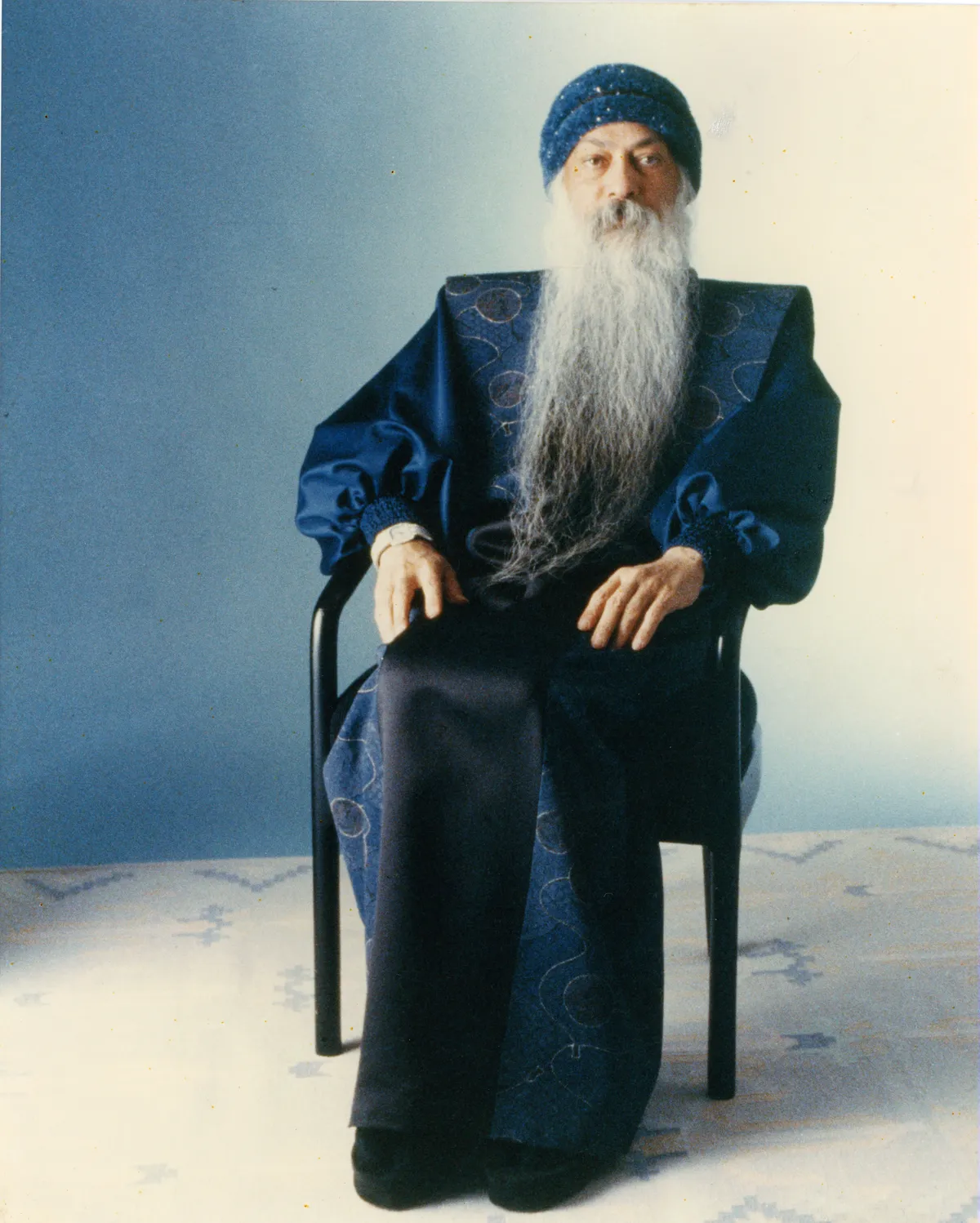
According to Osho, wearing a mala—even with its 108 beads—is an innocent, poetic ritual that spices life, fosters belonging, and gently orients the mind, but it is not the essence of religion. Use such symbols as supportive fictions: helpful reminders on the way, enjoyed in moderation, without becoming either slavishly ritualistic or rigidly anti-ritual.
A 108-bead mala is a friendly reminder to stay calm and connected, not magic—use it lightly and don’t cling to it.
From the Discourses
Passages where Osho speaks to this question — each links to the complete discourse.
Why do we wear one hundred and eight beads on our malas? Does this belong to the world of ritualistic religion?
Yes, it belongs to ritualistic religion. Don't become ritualistic, but don't become anti-ritualistic either. A little ritual is beautiful. To become ritualistic is wrong, but a little ritual is just fine. A little ritual adds spice to life. It gives salt to your food, it is tasteful. A life without any ritual will be a very poor, impoverished life. You meet somebody on the road and you say, "Hello"; it is a ritual. And he says, "How are you?" and you say, "Fine"; it is a ritual. You are not fine -- he knows, you know, everybody knows. You meet somebody on the road, you smile; it is a ritual. You just watch: you will find that life needs a little ritual. It makes life run smoothly, it is lubricating. If the whole life becomes ritualistic, then it is dangerous; then you are only eating salt. A little salt in…
Questioner: is there a special significance in changing one's name and wearing a mala given by you?
Yes, it has significance, great significance. The change of name has great significance for a sannyasin. It is an index, a symbol. Everything in our life is symbolic. You have a name; you are identified with this name. This name has become your symbol; it is identified with your individuality. Your name has an association with everything that you have been before yesterday. Changing the name of a sannyasin means we disconnect him from his old identity, from his old associations. We say to him, now you are not the same as you were before yesterday. Now you are starting on a new journey with a new name, a new identity. Since ancient times they have had a small ceremony at the time of one's initiation into sannyas. It is a kind of cremation ceremony. Exactly as we bathe a dead body and shave its head before putting it on…
Osho, do the mala and the renaming have any special significance?
Yes, they do; there is great meaning. Changing a sannyasin’s name has deep significance. It is symbolic. And in our lives, everything is symbolic. You have lived with one name; your identity is tied to it. A name has been your symbol. Your personality has become connected with it. Your name is associated with all that you were till yesterday; it is linked to that. The meaning of changing a sannyasin’s name is that we break him from his old identity. We say: now you are not who you were till yesterday. Now you set out on a new journey, carrying a new identity. In the old days, when initiation was given, they performed a small experiment. It was like this: just as we bathe a corpse before placing it on the bier, so they would bathe him. Just as we shave a corpse’s hair, shave the head, so they…
Question: BELOVED MASTER, DOES IT MEAN THE SAME TO WEAR A MALA OR A CROSS? Jan, it does not mean the same -- they are polar opposites. The people who have become interested in the cross are pathological. They are not interested in Christ, they are interested in the cross. If they were really interested in Christ they would have also been interested in Buddha, in Lao Tzu, in Krishna, in Kabir. But they are not interested in Christ, they are interested in the cross. Hence I don't call Christianity "Christianity," I call it "Crossianity." If Jesus had not been crucified there would have been no such thing as you find all over the world in the name of Christianity. These people became interested in death; this interest is morbid. They became interested in worshipping death. Jesus is secondary, the cross became primary.
Beloved Osho, in the last sitting you spoke about the mala, about changing the color of the clothing, about changing the name, and the reasons for these things. Why do you wish your own picture to be worn around the neck, especially when you deny being a guru?
If someone comes, I give him the mala and the picture with it. It is predictable that he should ask, "Why this picture of yours?" This is very predictable. But if he does not ask -- if he simply takes the mala and asks no questions, if he is not curious -- he has given a deeper hint about himself, that things which cannot be questioned can be delivered to him. There are things which cannot be delivered if questioned, because no proof can be given for them, no reasoning can be given for them. There cannot be answers to some questions. They are bare statements of knowing -- with no proofs, with no criteria. So if I see someone who comes to me, and I have given him things about which the ordinary mind is prone to ask questions and he does not ask them, he has proven capable…