
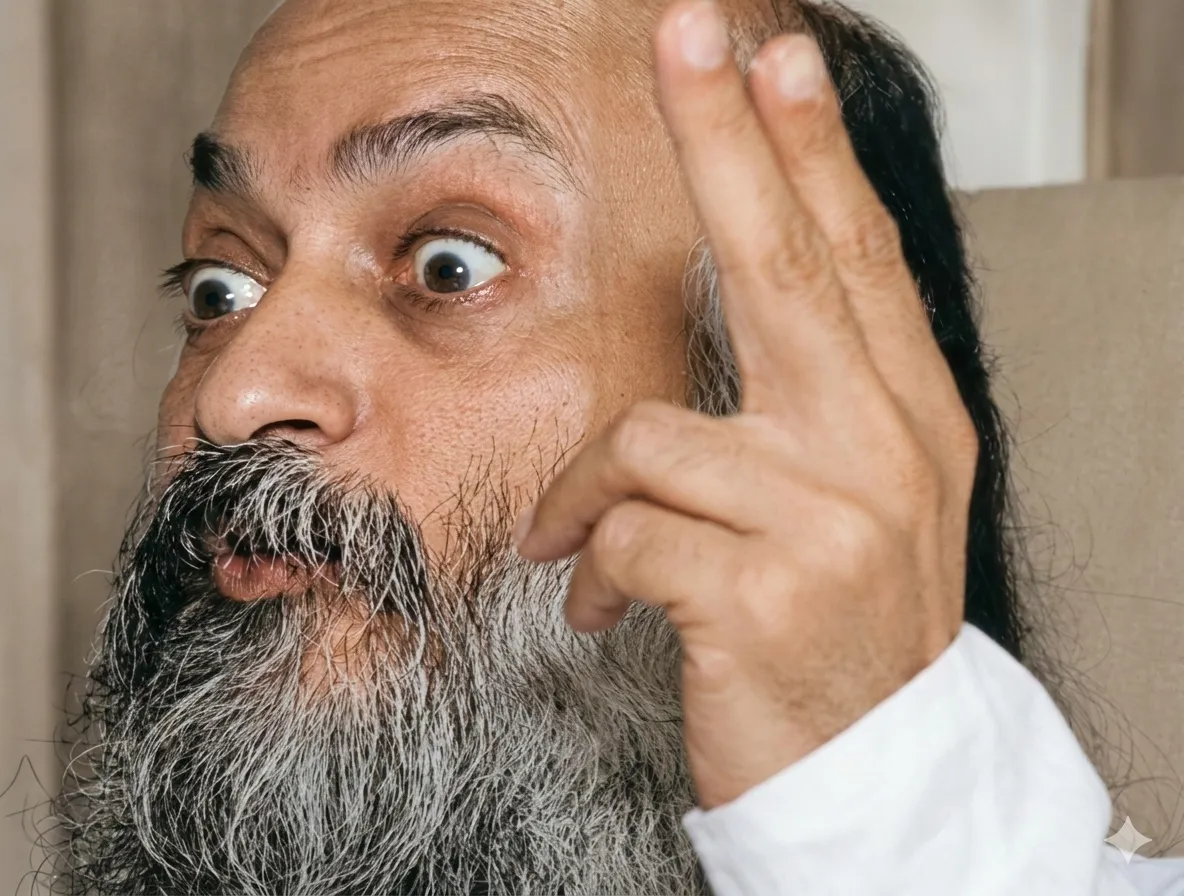
Take care of what you truly need and listen to your soul, not the mind’s endless wishes that never satisfy.
From the Discourses
Passages where Osho speaks to this question — each links to the complete discourse.
You said that needs are to do with the body and desires are to do with the mind. Which of these two brought us to you?
Before I answer this, one thing more has to be understood; then it will be possible for you to understand the answer to this question. You are not only body and mind: you are something else also -- the soul, the self -- the atman. Body has needs, the atman also has needs; just between the two is the mind which has desires. Body has needs -- hunger to be satisfied, thirst. A shelter is needed, food is needed, water is needed. Body has needs; the mind has desires. Nothing is needed, but mind creates false needs. A desire is a false need. If you don't attend to it, you feel frustrated, a failure. If you attend to it, nothing is attained because in the first place, it was never a need: it never existed as a need. You can fulfill a need; you cannot fulfill a desire. Desire is…
Fishes are born in water, man is born in tao. If fishes, born in water, seek the deep shadow of pond and pool, all their needs are satisfied. If man, born in tao, sinks into the deep shadow of non-action to forget aggression and concern, he lacks nothing, his life is secure.
When you move towards meditation from the world of activity, you are falling like a dead leaf or a feather of a bird. There will be a few shakings, waverings on the breeze, here and there you will move, and by and by you go deeper until you settle on the earth. You have reached the root and everything settles. Then there is no worry, no thought, no world no you -- only that which is, remains. That is Tao. Then enriched, rejuvenated, you come back to the world, and by and by it becomes as easy as coming out of your house and going in. It becomes that easy. When you want to, be active, but remember that this activity should follow your bodily need, not your mental desire. Become active when energy is flowing and you feel the energy has to be used -- because energy needs action,…
How can one cut desires without suppressing them?
If you want to drop needs, you will have to suppress them -- because they are real If you fast, you have to suppress hunger. Then there is suppression, and every suppression is wrong because suppression is a fight inside, and you are wanting to kill the body, and the body is your anchor, your ship which will lead you to the other shore. Body keeps the treasure, the seeds of divine within you, protected. Food is needed for that protection, water is needed, shelter is needed, comfort is needed -- for the body, because the mind doesn't want any comfort. Look at the modern furniture: it is not comfortable at all, but the mind says, "This is modern, and what are you doing sitting in an old chair? The world has changed and the modern furniture has come." The modern furniture is really weird. You feel uncomfortable in it;…
Osho, the famous psychologist A. H. Maslow has placed self-actualization at the last rung in the hierarchy of human needs. In your view, is enlightenment an essential need of human life, and have terms like religion and spirituality been unnecessarily attached to enlightenment? Please explain.
Hunger is a man’s first need, but van Gogh must have been receiving something that no one could see—some stream of savor must have been flowing. Otherwise why? What purpose? No prestige, no name, no money—hunger, pain, poverty—yet he goes on painting. When he began to paint, hunger vanished, the body vanished—he became bodiless. When all the paintings he had to create were done, he committed suicide. In the letter he left he wrote: “Now there is no meaning left in living.” This is most intriguing. He wrote: “What I had to paint, I have painted; what I had to hum, I have hummed; what I had to pour into colors, I have poured; what I had to say, I have said; what was hidden within me has been expressed; now there is no meaning in staying.” Those “meaningless” paintings were his very meaning. When that work was finished, he…
पहला प्रश्न: ओशो, प्रसिद्ध मनोवैज्ञानिक ए. एच. मैसलो ने मनुष्य की जीवन आवश्यकताओं के क्रम में आत्मज्ञान (सेल्फ-एक्चुअलाइजेशन) को अंतिम स्थान दिया है। क्या आपके जाने आत्मज्ञान मनुष्य-जीवन की एक अनिवार्य आवश्यकता है, और धर्म, अध्यात्म जैसे संबोधन अनावश्यक रूप से आत्मज्ञान के साथ जोड़ दिए गए हैं? कृपा करके समझाएं।
आदमी की भूख पहली जरूरत है, लेकिन कुछ मिल रहा होगा वानगॉग को, जो किसी को दिखाई नहीं पड़ रहा था। कोई रसधार बह रही होगी! नहीं तो क्यों, क्या प्रयोजन? न प्रतिष्ठा मिल रही है, न नाम मिल रहा है, न धन मिल रहा है; भूख मिल रही, पीड़ा मिल रही, दरिद्रता मिल रही--लेकिन वह है कि अपने चित्र बनाए जा रहा है। जब वह चित्र बनाने लगता तो न भूख रह जाती, न देह रह जाती--वह देहातीत हो जाता। जब उसके सारे चित्र बन गए, जो उसे बनाने थे, तो उसने आत्महत्या कर ली। और वह जो पत्र लिखकर छोड़ गया, उसमें लिख गया कि अब जीने में कुछ अर्थ नहीं रहा। अब यह बड़े मजे की बात है। वह लिख गया कि जो मुझे बनाना था, बना लिया; जो मुझे गुनगुनाना था, गुनगुना लिया; जो मुझे रंगों में ढालना था, ढाल दिया; जो मुझे कहनी थी बात, कह दी; जो मेरे भीतर छिपा था, वह प्रगट हो गया; अब कुछ अर्थ नहीं है रहने का।
A friend has asked: Osho, if a person feels he is adequately meeting his needs, does he also need to be discontent?
In this regard, two or three things must be understood. First, a person who thinks his needs are being met stops the process of growth—his own and others’. One who believes that what he has is sufficient stops moving forward. It may be that he himself does not suffer much from this, but the society of which he is a part certainly does. And he himself will also be harmed. Ordinarily we have been taught to arrest our needs at some point and to assume they are fulfilled. We have gone on defining the religious person as one who reduces his needs and becomes content. The truth is quite the opposite. In my view, the religious person is of a different kind altogether. I call religious the person whose needs begin to touch the sky beyond the earth. I call religious the one whose needs rise above the body and…
एक मित्र ने पूछा है कि ओशो, जो व्यक्ति समझता है कि उसकी आवश्यकताएं जितनी हैं, वह उनको ठीक तरह से पूरी कर रहा है, तो क्या उसे भी असंतुष्ट होने की आवश्यकता है?
इस संबंध में दो-तीन बातें समझ लेनी जरूरी हैं। पहली बात तो यह कि जो व्यक्ति ऐसा समझता है कि उसकी आवश्यकताएं पूरी हो रही हैं, वह व्यक्ति स्वयं के या अन्य के विकास के क्रम से रुक जाता है। ऐसा व्यक्ति जो समझता है कि जो उसे मिल गया वह पर्याप्त है, वह आगे बढ़ने से रुक जाता है। और हो सकता है कि उसे स्वयं को तो इससे बहुत ज्यादा नुकसान न पहुंचे, लेकिन जिस समाज का वह हिस्सा है उस समाज को जरूर नुकसान पहुंचता है। उसे स्वयं भी बहुत नुकसान पहुंचेगा। लेकिन साधारणतः हमें ऐसा ही समझाया गया है कि अपनी आवश्यकताओं को एक जगह रोक कर हमें समझना चाहिए कि वे पूरी हो गई हैं। धार्मिक आदमी की हम ऐसी ही परिभाषा करते रहे हैं कि वह अपनी आवश्यकताओं को कम कर लेता है और संतुष्ट हो जाता है। सच्चाई बहुत उलटी है। मेरी दृष्टि में धार्मिक आदमी और ही प्रकार का आदमी है। मैं उस आदमी को धार्मिक कहता हूं, जिसकी आवश्यकताएं इस पृथ्वी को छोड़ कर आकाश को भी छूने लगती हैं। …