
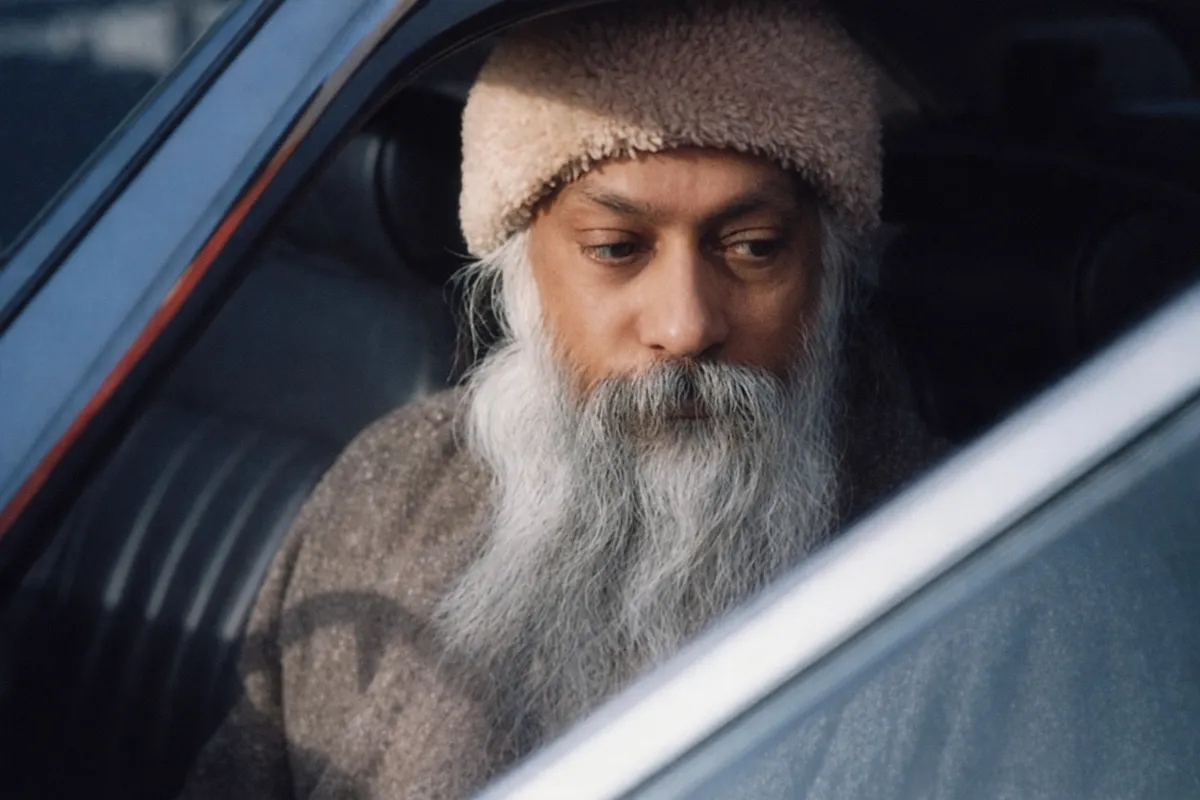
According to Osho, nothing disastrous happens if you don’t take sannyas—you simply miss the “souvenir picture.” Sannyas is an open, playful invitation, not a commandment or threat. He rejects being a pope-like authority and offers friendship instead. Choose it only if your courage and joy say yes; otherwise relax—no guilt, no punishment.
If you don’t become a sannyasin, nothing bad happens—you just skip the group photo; come only if it feels joyful and brave.
From the Discourses
Passages where Osho speaks to this question — each links to the complete discourse.
I want to become a sannyasin but what will happen then?
Nothing sir, nothing in particular. Exactly nothing: that's the commodity I deal in. Literally, it is much ado about nothing. But the nothing is not just nothing; it is the source of all. Sannyas means you are tired of being yourself and you are ready to drop that burden. You are tired of being and you would like to rest in nonbeing. Sannyas is a state of nonbeing. You drop yourself and you enter the realm of nothingness... and suddenly everything is beautiful -- because things were ugly because of you. They were not ugly in the first place, not ugly themselves, it was your interpretation; you were corrupting them. Now the corrupting agent is no more there, eyes are clear and one can see through and through; one's vision is transparent. YOU disappear in sannyas. And the moment you disappear, immediately, instantly, God appears. When you are not, God…
To me, sannyas is not something very serious. Life itself is not very serious, and one who is serious is always dead. Life is just an overflowing energy without any purpose, so to me, sannyas is to lead life purposelessly. Live life as a play and not as a work. If you can take this whole life just as a play, you are a sannyasin; then you have renounced. Renunciation is not leaving the world, but changing the attitude. That is why I can initiate anyone into sannyas. To me, initiation itself is a play. And I will not ask for any qualifications -- whether you are qualified or not -- because qualifications are asked when something serious is done.
Osho, I am eager to take sannyas, yet I have been hesitating for a year. I also have this doubt in my mind: what will happen by taking sannyas?
You are still living. Breath still moves. The heart still beats. The blood still runs. However many days may have been wasted, much is still left. The as-yet-unarrived is still there; the future remains. Live this future in a new way, Krishnaraj! Will you keep beating the same old track? Just as you think, “What will happen by taking sannyas?” now think this: what will happen by not taking sannyas? Until now you have not been a sannyasin. What has happened so far? One thing is certain: at least sannyas will be a new experiment. Whether anything happens or not, a new path will be cut. Who knows—what didn’t happen on the old path may happen on the new! Walk with at least that much curiosity. Who knows! The old path is familiar; will you keep circling on it? And not think even once that after so many rounds nothing…
Osho, I do want to take sannyas, but I am very frightened of the world. If I take sannyas, will I be able to withstand the whirlwinds that will rise around me or not? Please reassure me.
Sannyas means: stepping into insecurity. Sannyas means: placing your feet in the unknown. Sannyas means: leaving the known, falling in love with the unknowable. How can I reassure you? The whirlwind will arise. My reassurance would be a lie. I can only say this much: the whirlwind is certain to arise—it should arise. If it does not, how will sannyas ripen? If there is no sun, no heat, how will the fruit ripen? If no wind blows, no storm arises, the trees will lose their spine. Only by bearing the gusts of storm and gale does a tree grow sturdy. The whirlwind will arise. I can assure you of at least this much: be absolutely certain, don’t worry in the least—the whirlwind will arise. And it will be far greater than you imagine. Nor will it be that it comes today and is gone tomorrow. As long as you live,…
Question: First question: Osho, I want to take sannyas; when should I take it? I have heard an amazing story. There was a wondrous true master named Fachang. His entire teaching was only this: “Now, here.” Just two words. The emperor had invited him to Japan to give discourses. He stood on the platform—the emperor seated, his courtiers present, a great arrangement; Fachang was a famous master. He struck the table loudly and said, “Now, here.” He stepped down and left. The emperor was startled. He asked his ministers, “What is this? What kind of discourse is this—banging the table and saying ‘Now and here’? What does it mean?” The ministers said, “Your Majesty, that is his whole teaching. In it he has said all that the Buddhas of all times have said.” If you are to do the auspicious—now and here.