
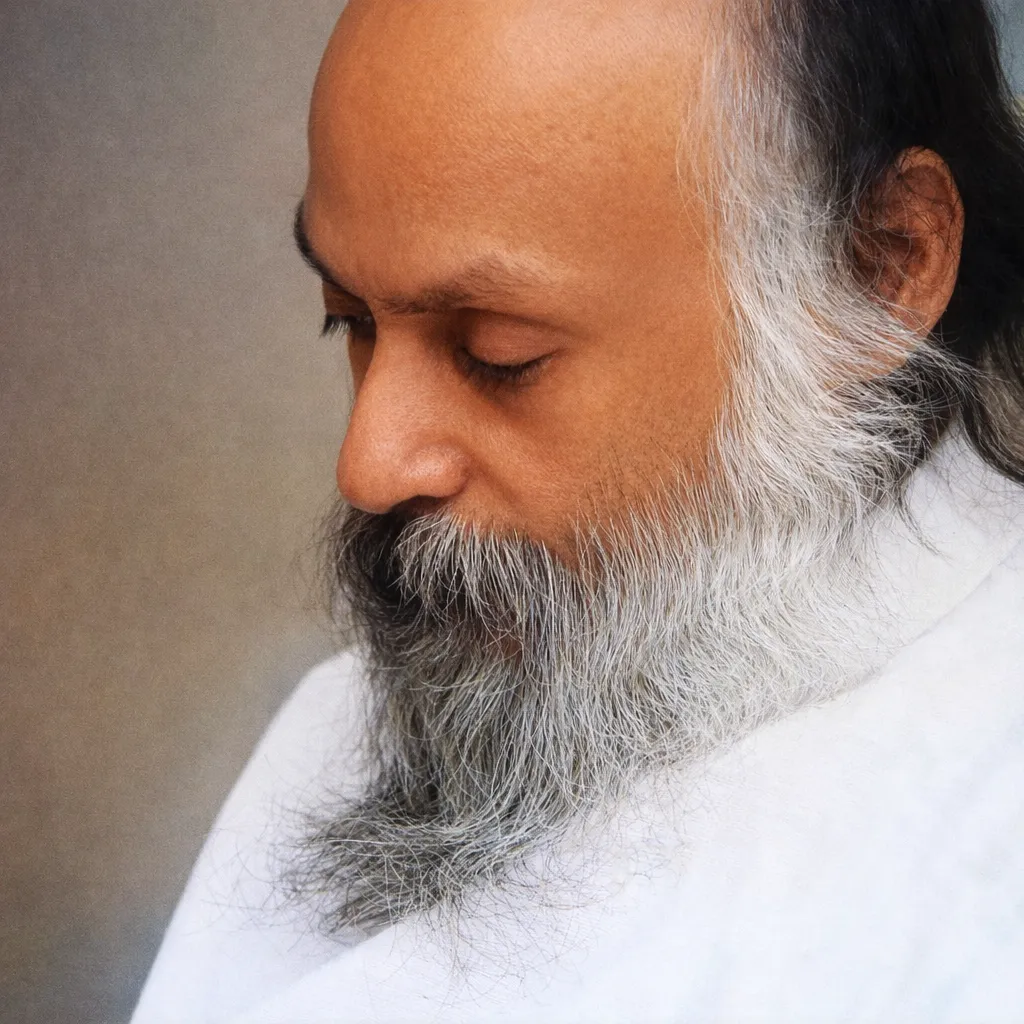
He wasn’t inspired by any person; seeing lifeless, copycat living made him choose his own path.
From the Discourses
Passages where Osho speaks to this question — each links to the complete discourse.
Question: BELOVED OSHO, YOU ARE MY INSPIRATION. I HAVE HEARD YOU SAY YOU NEVER HAD A MASTER; BUT WAS THERE ANY SOURCE OF INSPIRATION FOR YOU WHEN YOU BEGAN YOUR JOURNEY? ... His wife said, "Come to your senses! -- because he spoke in the same way, in an accent one hundred years old. His wife said, "Don't stretch the joke too much. Just become your real self and come home. He said, "I am my real self, I am Abraham Lincoln. For one year continuously he had lived as Abraham Lincoln, he died thousands of deaths as Abraham Lincoln; he had completely forgotten that he was ever anybody else. He was brought to a doctor. The doctor talked to him, but he was still in his dramatic role. The doctor said, "Just forget that drama. The man said, "What drama?
Osho, you have said that stealing faces, trying to become like another, becoming a disciple and a follower is subtle theft. Then is taking inspiration from others, learning practices, going to the experienced and awakened—are all these also thefts? If these are thefts, then what would right education look like? Please explain.
Go to those who know, but do not take what they know on faith! Investigate it. Do not turn what they know into belief; turn it into inquiry. Do not clench your fists around it blindly; open your eyes to it, probe it. Inspiration does not mean accepting the other. Inspiration means accepting the other’s challenge. If you go to Mahavira, inspiration does not mean you set about becoming like Mahavira. Going to Mahavira, the meaning of inspiration is: if this light could blossom within Mahavira, why can it not blossom within me? That is the challenge! In English there is the word “inspiration.” It is a very precious word. One must pay attention to the “in” in inspiration. But we always take inspiration from the other; then the word is quite wrong. Inspiration means inner-spiration. The other can serve as a catalyst, but not as a foundation. The other…
ओशो, आपने कहा है कि चेहरे चुराना, दूसरे जैसा बनने का प्रयास करना, शिष्य व अनुयायी बनना सूक्ष्म चोरी है। तब दूसरे व्यक्तियों से प्रेरणा पाना, साधना सीखना, अनुभवी, जाग्रत लोगों के पास जाना, यह सब भी क्या चोरियां हैं? यदि ये सब चोरियां हैं, तो सम्यक शिक्षा का क्या रूप होगा? कृपया इसे समझाइए।
जो जानते हैं उनके पास जाएं, लेकिन जो वे जानते हैं उसे मान मत लें! उसे खोजें। जो वे जानते हैं उसे विश्वास न बना लें, उसे भी जिज्ञासा बनाएं। जो वे जानते हैं उसके प्रति अंधे होकर मुट्ठियां न बांध लें, उसके प्रति आंख खोलें, टटोलें। प्रेरणा का अर्थ दूसरे को स्वीकार कर लेना नहीं है। प्रेरणा का अर्थ दूसरे की चुनौती स्वीकार करना है, चैलेंज। महावीर के पास जाएं तो प्रेरणा का अर्थ यह नहीं कि महावीर जैसे होने में लग जाएं। महावीर के पास जाकर प्रेरणा का अर्थ यह है कि अगर इस महावीर के भीतर यह प्रकाश पैदा हो सका तो मेरे भीतर क्यों पैदा नहीं हो सकता है? यह चुनौती है! अंग्रेजी में शब्द है--‘इंस्पिरेशन।’ वह शब्द बहुत कीमती है। उसमें ‘इन’ शब्द पर ध्यान देना जरूरी है--इंस्पिरेशन। लेकिन इंस्पिरेशन लेते हम सदा दूसरे से हैं। तब तो शब्द बड़ा गलत है। …
Your inspiration must be yours, it must be. Only then will you be able to move; otherwise you will not move at all—rather, you will get entangled in new complications. In fact, we all are moving on someone else’s inspiration. And this is where the difficulty arises—this is how the whole matter has become. Just now a gentleman came to me with his wife. The wife is perfectly fine, healthy. But whenever she reads the description of some illness in any magazine, in any book, she immediately gets that very illness. The suggestion grips her. In the magazine Dharm-Yug, whenever an issue appears with something related to medicine, she reads it. And whatever is written there—if it says that in this disease there is pain in the stomach—then her stomach starts hurting. They have been harried, going from doctor to doctor. The doctors are prescribing medicines.
प्रेरणा आपकी होनी चाहिए, होनी चाहिए। तो ही आप जा पाएंगे, अन्यथा आप जा नहीं पाएंगे। बल्कि और पचड़े में पड़ जाएंगे आप। यह हम सारे लोग दूसरे की प्रेरणा से ही चल रहे हैं। इसमें कठिनाई क्या है, यह मामला ऐसा हो गया। अभी मेरे पास एक सज्जन अपनी पत्नी को लेकर आए। पत्नी भली चंगी है, स्वस्थ है। लेकिन कहीं भी किसी पत्रिका में, किसी किताब में, किसी बीमारी का वर्णन पढ़ लेती है तो वही बीमारी उसको हो जाती है।
Osho, do devotion, knowledge, and action arise from one’s own nature or from outside influence? Osho, please explain.
Om, you ask: from influence or from nature? Influence is worth two pennies. To be influenced is already to go wrong. Devotion under influence will have some other motive hidden within; only the label will be devotion. Knowledge will be parroted; of little worth. Action you will do in the hope of heaven arriving any minute—the Pushpak chariot descending to carry you bodily to paradise. Your service will be dipped in desire: serving in hope of a payoff—pressing the poor man’s feet today so that gods and goddesses will press yours forever. Is that service? That is not karma. Until action is desireless, it is bondage; a hidden craving slips in through the back door. And here, everyone seems “knowledgeable.” In this land, hard to find anyone who admits ignorance. Read ten books, compile an eleventh, and you are a great scholar; people will discuss you. People come to me…
Osho, I want to walk in your footsteps. I seek your blessing.
Your hem is many-colored; each hue carries a fresh fragrance. The hope in my heart is old; the thirst upon your body is new. Be the butterfly of the garden, swinging from flower to flower, deepening love with each bud, forgetting the griefs of each season. One and the same enchantment holds you—be it monsoon or mustard bloom. Your youth is a riddle; your longing is newly fresh. Your hem is many-colored; each hue carries a fresh fragrance. In face and form you flaunt a frank, playful charm; beauty poised upon every limb. Alongside it, the sheen of unseen dreams waves. At every turn of life your longing weaves a new romance. Your hem is many-colored; each hue carries a fresh fragrance. You tire of one flight, yet weigh yourself again and again; one gait does not please you—you sway at every step. Even so, my foolish heart sings only…
चौथा प्रश्न: ओशो, मैं आपके पद-चिह्नों पर चलना चाहता हूं। आपका आशीर्वाद चाहिए।
तुम अगर पुरानी लकीरों को पकड़ कर चलोगे, तो परमात्मा से चूकते रहोगे, क्योंकि परमात्मा कभी पुराना होता ही नहीं। परमात्मा सदा नया है, उसके साथ संबंध जोड़ना हो तो तुमको भी नये होने की कला और कीमिया सीखनी पड़ेगी। तेरा आंचल रंग-रंगीला रंग-रंग में बास नई मेरे मन की आस पुरानी तेरे तन की प्यास नई तू बगिया की तितली बन कर फूल-फूल पर झूले कली-कली से प्यार बढ़ाए ऋत-ऋत के दुख भूले एक समां है तुझको सावन हो या सरसों फूले तेरा जोबन एक पहेली तेरी आस निरास नई तेरा आंचल रंग-रंगीला रंग-रंग में बास नई रूप-रंग में तेरी मुंहफट चंचलता इतराए अंग-अंग में सजी-सजाई सुंदरता बल खाए संग-संग अनदेखे सपनों की शोभा लहराए जीवन के हर मोड़ पे तेरी आस रचाए रास नई तेरा आंचल रंग-रंगीला रंग-रंग में बास नई एक उड़ान से तू उकताए बार-बार पर तौले एक चाल न भाए तुझको कदम-कदम पर डोले इस पर भी मन मूरख मेरा तेरी ही जय बोले मेरे साथ पुरानी छाया, काया तेरे पास नई तेरा आंचल रंग-रंगीला रंग-रंग में बास नई