
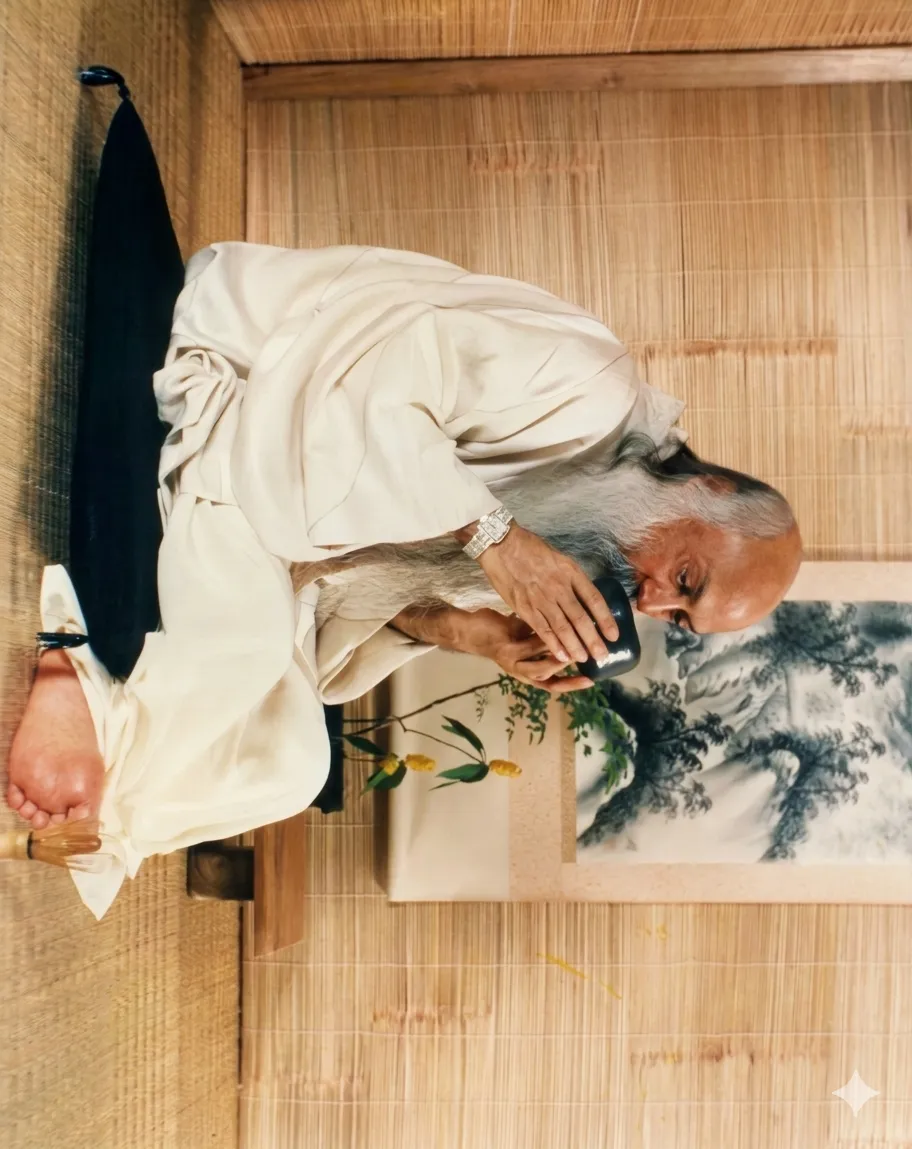
Keep remembering the peaceful feeling many times a day and tell yourself at bedtime it will stay with you all day, until it stays by itself.
From the Discourses
Passages where Osho speaks to this question — each links to the complete discourse.
Osho, when a seeker receives a ray of light, what should be done to keep it continuous?
So if this morning you felt good in meditation, then remembering it five or ten times during the day will be very important. In this way, that memory will deepen; and by remembering it again and again, it will begin to become part of the mind’s enduring nature. If this question is approached experimentally in this way, there will be benefit—and it should be done. Often man’s mistake is that he remembers what is wrong and does not remember what is auspicious. One of man’s basic errors is to remember what is negative and to forget what is constructive. Rarely do you recall the moments when you were filled with love; rarely the moments when you felt some wondrous sense of well‑being; rarely the moments when you became very quiet. But what you recall daily are the times you were angry, you were restless; when someone insulted you, or when…
ओशो, साधक को प्रकाश की किरण मिले, उसको सतत बनाए रखने के लिए क्या किया जाए?
तो अगर आज सुबह आपको ध्यान में अच्छा लगा हो, तो दिन में दस-पांच बार उसका पुनर्स्मरण बहुत महत्वपूर्ण होगा। उस भांति वह स्मृति गहरी होगी। और बार-बार स्मरण आ जाने से वह चित्त के स्थायी स्वभाव का हिस्सा बनने लगेगी। इसे, यह जो प्रश्न पूछा है, इस भांति अगर इस पर प्रयोग हुआ, तो लाभ होगा। और यह करना चाहिए। अक्सर मनुष्य की भूल यह है कि जो भी गलत है, उसका तो वह स्मरण करता है; और जो भी शुभ है, उसका स्मरण नहीं करता। मनुष्य की बुनियादी भूलों में से एक यह है कि जो भी नकारात्मक है, निगेटिव है, उसका वह स्मरण करता है; और जो भी विधायक है, उसका स्मरण नहीं करता। आपको शायद ही वे क्षण याद आते हों, जब आप प्रेम से भरे हुए थे; शायद ही वे क्षण याद आते हों, जब आपने स्वास्थ्य की कोई बहुत अदभुत अनुभूति की थी; शायद ही वे क्षण याद आते हों, जब आप बहुत शांत हो गए थे। लेकिन आपको वे स्मरण रोज आते हैं, जब आप क्रोधित हुए थे, जब आप अशांत हुए थे; जब किसी ने आपका अपमान किया था, या आपने किसी से बदला लिया था। …
Osho, when we sit in meditation we feel bliss. But later, when we return to work and daily dealings, we forget. The mind gets caught again in activity. By what way can the experience of bliss remain constant?
The essential point is this—the essential point is this: that which comes for a little while in meditation and then is lost is not joy, first of all. It is only the absence of misery. One must understand the difference. It is not bliss. In fact, for an hour you simply forget the web of your life’s suffering—your occupations, anxieties, shop, market, relationships—because your energy is moving in a different direction. From this forgetting the illusion arises that bliss is being attained. Bliss is not being attained; only the usual suffering is, for the time being, not being felt. Hence the misunderstanding. That is not the bliss of meditation. It is only that, because the mind moves in another direction, it forgets the directions in which it is ordinarily entangled. The day the bliss of meditation happens, you will not say that it has gone. It does not go; the…
प्रश्न: ओशो, उस आनंद के जब हम खयाल में बैठते हैं, तब तक तो आनंद की अनुभूति होती है। लेकिन बाद में जब कार्य-व्यवहार में फिर लग जाते हैं, तो भूल जाते हैं। फिर मन जो है कार्य-व्यवहार में लग जाता है। तो आनंद की अनुभूति सदा बनी रहे, इसके लिए क्या मार्ग हो सकता है?
असल बात यह है, असल बात यह है कि वह जो ध्यान में थोड़ी देर को आनंद मिलता है और फिर खो जाता है, तो वह आनंद नहीं है, पहली बात। वह सिर्फ दुख का अभाव है। इस बात के फर्क को समझ लेना चाहिए। वह आनंद नहीं है। असल में एक घंटे आपकी जिंदगी के दुखों का जो जाल है, आप एक विभिन्न दिशा में काम करने की वजह से उस जाल को भूल जाते हैं--व्यस्तताओं की, चिंताओं की, दुकान की, बाजार की, संबंधों की वह जो दुनिया है, वह आप एक घंटे के लिए भूल जाते हैं। उस भूलने के कारण आपको भ्रम पैदा होता है कि आनंद मिल रहा है। आनंद नहीं मिल रहा है। सिर्फ जो दुख मिल रहा था, वह फिलहाल नहीं मिल रहा है। तो उसकी वजह से भ्रांति पैदा होती है। वह ध्यान का आनंद नहीं है। वह सिर्फ ध्यान का दूसरी दिशा में गतिमान होने के कारण, जिन दिशाओं में वह निरंतर उलझा रहता है, उनको भूल जाना है।
Osho, the inner lamp of equanimity and bliss, even after remaining steady for a long time, sometimes begins to flicker. Is this a phase in my growth, or the result of some slackness on my part? Please, from your experience, illumine my path so that this well-being, this joy of rightness, may remain forever unshaken.
If you understand this rightly, you have the whole principle of karma and conditioning. What you did yesterday will affect your today. Yesterday is gone; there is no way to change it now. Be gracious enough to change today—because today will become the tomorrow that harasses you. What you did in your past birth you are reaping now. And now you are busy thinking about the next birth, and this birth is slipping out of your hands. This empty, wasted life will again set you wandering on a road full of darkness. You ask how the lamp of equanimity can burn forever. Simply taste it for a moment. When equanimity is thick, hum, dance, drown in it. When equanimity is thick, drink—don’t delay. Don’t bring in even so much thought as, “Will it stop?” There is a Zen story: At a temple gate two monks are arguing about what is…
दूसरा प्रश्न: ओशो, भीतर समता का, आनंद का दीया अधिक समय स्थिर रहने पर भी कभी टिमटिमाने लगता है। क्या यह मेरे निर्माण की भूमिका है, अथवा मेरी किसी शिथिलता का परिणाम? यह ठीकपन या सम्यकत्व का आनंद सदा अकंपित रहे, इसके लिए अपने अनुभव से मेरा मार्ग प्रकाशित करने की कृपा करें।
इसको ही अगर तुम ठीक से समझो, तो कर्म का, संस्कार का पूरा सिद्धांत है। तुमने जो कल किया था, वह तुम्हारे आज को प्रभावित करेगा। अब कल तो गया, अब कल को तो बदलने का कोई उपाय नहीं, इतनी कृपा करो कि आज को बदल लो, क्योंकि आज फिर कल सतायेगा। जो तुमने पिछले जन्म में किया था, वह तुम अभी भोग रहे हो। और अभी तुम अगले जन्म का विचार कर रहे हो, और यह जन्म भी हाथ से जा रहा है। यह खाली-खाली गया हुआ जन्म, फिर अंधेरे से भरे हुए रास्ते पर तुम्हें भटका देगा। पूछते हो कि समता का दीया सदा कैसे जलता रहे? बस, क्षण भर तुम उसे भोगो। जब समता घनी हो, गुनगुनाओ, नाचो, डूबो उसमें। जब समता घनी हो, पीओ, फिर देर न करो। इतना भी बीच में विचार मत लाओ कि यह रुकेगी?
A: Hm mm. To be meditation means an effort to be aware. To be aware of the whole process of life, but in the beginning one can chose some object like breathing. It is a very natural object to be aware: The ingoing and the outgoing of the breath. Be aware constantly: the breath has gone out, it has come in; and the rhythm and the process and the in and out going phenomena, be aware of it. The moment you will be aware, you feel a certain change, a certain chemical change within your mind. Because when you become aware of the breathing process, mind becomes silent. The silence is automatically created. Because your total mind is engaged in seeing, in witnessing the breathing. And the rhythmic circle of breath creates an inner music. That inner music too leads you to more and more silent and sweeter moments within.
You have asked a question: we experience bliss for a short while, and then it disappears. How can that bliss remain for longer?
So an ordinary person is sometimes in hell, sometimes in heaven. A very bad person mostly lives in hell. The utterly bad person lives in hell all the time. A good person begins to live in heaven. A very good person lives more and more in heaven. The utterly good person lives wholly in heaven. One who is free of both good and bad begins to live in liberation. To live in liberation means: it is not a place. You will not find it in space by searching: “Here is heaven, here is hell.” These are divisions of the mental world—of the psychology of man. Thus the mental world has three divisions: hell, heaven, and liberation. Hell is what I called sorrow this morning; heaven, pleasure; and by liberation I mean: neither pleasure nor pain—that which is bliss. So do not think that someday, later, we will get the fruit—that…
आपने एक प्रश्न पूछा है कि आनंद का थोड़ी देर को अनुभव होता है, फिर वह आनंद चला जाता है। तो वह आनंद और अधिक देर तक कैसे रहे?
तो आदमी, आम आदमी कभी नरक में होता है, कभी स्वर्ग में होता है। फिर बहुत बुरा आदमी, अधिकतर नरक में रहने लगता है। फिर बिलकुल बुरा आदमी, चौबीस घंटे नरक में रहने लगता है। भला आदमी स्वर्ग में रहने लगता है। और भला आदमी और स्वर्ग में रहने लगता है। बिलकुल भला आदमी बिलकुल स्वर्ग में रहने लगता है। जो भले और बुरे दोनों से मुक्त है, वह आदमी मोक्ष में रहने लगता है। मोक्ष में रहने लगने का मतलब यह है: कोई स्थान नहीं है यह, कहीं स्पेस में खोजने पर यह जगह नहीं मिलेंगी कि यह रहा स्वर्ग और यह रहा नरक। यह मनुष्य की जो साइकोलॉजी है, उसका जो मानसिक जगत है, उसके विभाजन हैं।